Νέα κυκλοφορία
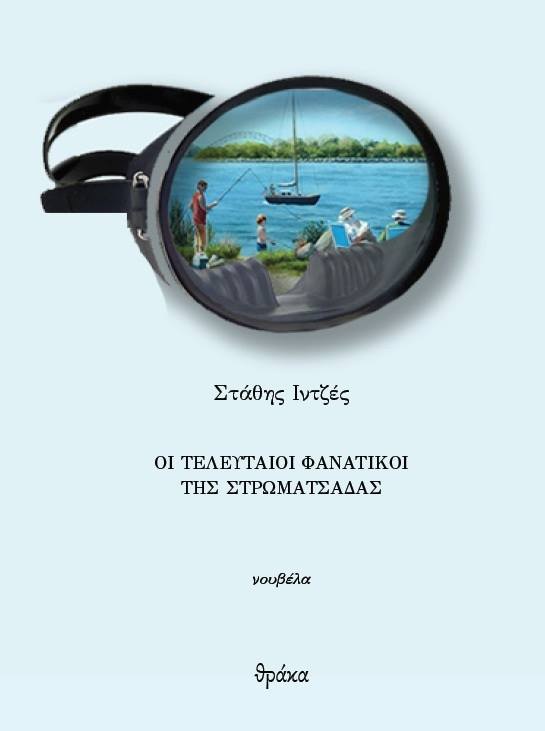
Στάθης Ιντζές, Οι τελευταίοι φανατικοί της στρωματσάδας, Εκδόσεις Θράκα
Νέα κυκλοφορία
Στάθης Ιντζές, Οι τελευταίοι φανατικοί της στρωματσάδας, Εκδόσεις Θράκα

INVITATION
Owl Publishing takes great pleasure in inviting you to the launch of its latest publication
ANTIGONE KEFALA: A WRITER’S JOURNEY
Co-edited and with an introduction by Vrasidas Karalis (Professor of Greek, University of Sydney)
and Helen Nickas (former academic, editor and publisher)
The distinguished Australian poet Judith Rodriguez will launch the book.
Date: Tuesday, 27 May, 6.30pm
Venue: Steps Gallery, 62 Lygon Street, Carlton
Refreshments will be served. All welcome
RSVP and enquiries:
Telephone Helen on 9596 6064
Email: owlbooks@bigpond.com
About the book
The book is a critical look at the life and works of Antigone Kefala, a poet and prose writer who came to the Antipodes in the early fifties and since 1960 calls Australia home. It comprises a selection of interviews, reviews and essays (previously published, or newly commissioned), giving a fascinating insight into this writer – originally a Greek from Romania. The book aims to stimulate a wide-ranging dialogue on the state of Australian literature and the place within it of writers like Antigone Kefala.
Antigone Kefala’s books include Absence: new and selected poems; The Island; Alexia; Summer Visit: three novellas; Sydney Journals and several others. Four of her works are available in bilingual editions.
Owl Publishing thanks the Greek-Australian Cultural League for offering the venue for the launch. Their annual exhibition of Greek-Australian artists titled “Antipodean Palette” will be on show during the launch.
*Here download the Invitation:
BOOK LAUNCH INVITATION
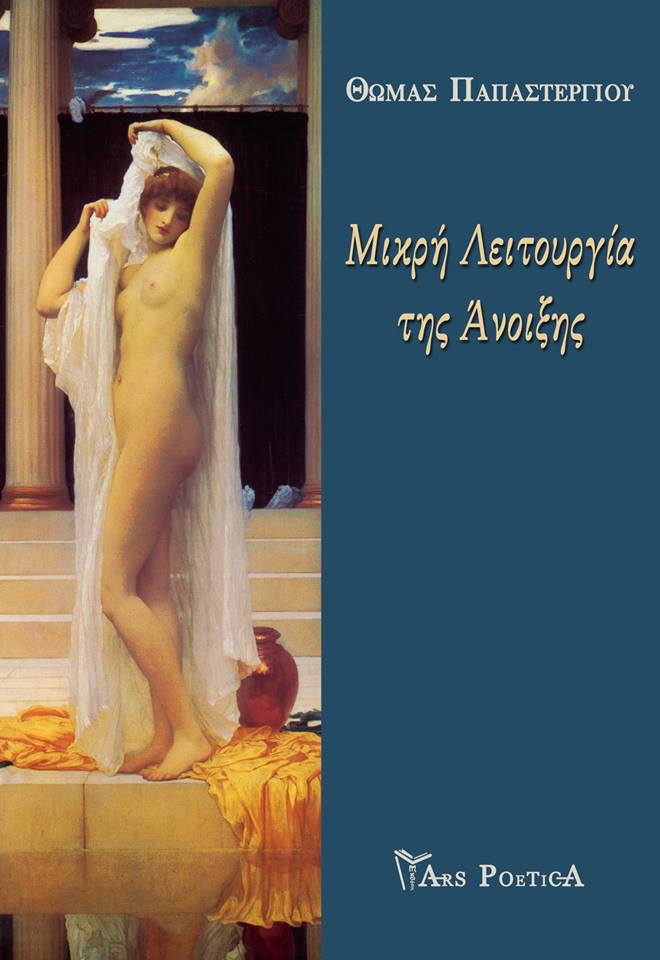
Κυκλοφόρησε η πρώτη ποιητική συλλογή του Θωμά Παπαστεργίου με τίτλο “Μικρή Λειτουργία της Άνοιξης”.
Μπορείτε να το βρείτε στο stand των εκδόσεων μας Εκδόσεις Ars Poetica στην 11η Διεθνή Έκθεση Βιβλίου Θεσσαλονίκης. Θα μας βρείτε στο stand 92 στο Περίπτερο 15.

Striving to repeal those not repealable
joining forces even with your enemy
to accomplish even a breath
inkling of an invisible wraith
that creaks in your ears and traps your meninxes
dragging your footsteps in unknown places
with roads of abandonment
and imitations of trees
with just formed their complexions
everything on the other side
are declared as your opponents
and commute like guards in borders
unrepentant and menacing
like the curved swords in the hands of Hagarenes
you cannot even pausing
it would looks like a bloodless treason
with veins far away from your being
trying to cross the ditch
that separates you from life
but the paths are burning
and remain abeyance
with trembling feelings
surfaces wobbling
and slogans not reflecting
Civil war has now been sealed
*The original poem in Greek is here: https://tokoskino.wordpress.com/2013/07/28/%CE%B4%CE%B7%CE%BC%CE%AE%CF%84%CF%81%CE%B7%CF%82-%CF%84%CF%81%CF%89%CE%B1%CE%B4%CE%AF%CF%84%CE%B7%CF%82-%CE%BF-%CE%B5%CE%BC%CF%86%CF%8D%CE%BB%CE%B9%CE%BF%CF%82-%CE%AD%CF%87%CE%B5%CE%B9-%CF%80%CE%B9 Translation: Dimitris Troaditis

Αυτό που για σένα νοιώθω
Αυτό που εγώ για σένα νοιώθω τόσο δύσκολο είναι.
Από τριαντάφυλλα δεν είναι που στον άνεμο ανοίγουν,
μα από ρόδα που ανθίζουν στο νερό.
Αυτό που εγώ για ‘σένα νοιώθω… Αυτό το κάτι που γυρίζει
ή που με τις τόσες σου εκφράσεις λυγίζει
ή που με τα λόγια σου κομματιάζεις
και που μετά σε μια σου κίνηση περιμαζεύεις
και με εισβάλλει τις ώρες τις χλωμές
αφήνοντας εντός μου μια δίψα γλυκιά ζαρωμένη.
Αυτό που εγώ για σένα νοιώθω τόσο οδυνηρό
ως το φως το φτωχικό από τα αστέρια
που πονεμένο ξεπνοημένο φτάνει.
Αυτό που εγώ για σένα νοιώθω∙
και που ωστόσο τόσο προχωρεί
που φορές-φορές ούτε σε φτάνει.
————————-
Μεσημέρι
Διάφανοι οι αιθέρες, από κρύσταλλο
η χαράδρα του πρωινού,
τα λευκά βουνά τα γυάλινα, οι κινήσεις των κυμάτων,
όλη ετούτη η θάλασσα∙ όλη ετούτη η θάλασσα
που το βαθύ καθήκον της εκπληρώνει,
η θάλασσα η αυτάρεσκη
η θάλασσα την ώρα αυτή την όλο μέλι, όπου το ένστικτο
σα μέλισσα βομβίζει νυσταγμένη…
Ήλιος, έρωτας, κρίνα ολάνοιχτα, μαρίνες,
εύθραυστα κλαδιά ξανθά, τρυφερά ως σώματα,
χλωμές αμμουδιές απέραντες.
Διάφανοι οι αιθέρες, από κρύσταλλο
οι φωνές, η σιωπή.
Στις όχθες του έρωτα, της θάλασσας, του πρωινού,
πάνω στην άμμο τη ζεστή που τρέμει εμπρός στο άσπρο
καθένας μας καρπό θυμίζει που για το θάνατο ωριμάζει.
*Μετάφραση: Έλενα Σταγκουράκη.
Personal Weather
by Peter Bakowski
Hunter Publishing, 2014
Bakowski looks into the lens in the photograph by Nick Walton-Healey on the cover of Personal Weather. The poems are also direct. They eschew simile, ambiguity, and the abstract. Were he an etcher, Bakowski’s work would be figurative with clear outlines and orderly perspective. There is no hesitation in his lines. His skies might be cloudy but there would be no obscuring storms of angst, only fugitive rays spotlighting the quirky in the mundane.
The preface to his 1995 prize winning book, In the Human Night, states that he was ‘Born with a hole in the heart to Polish-German parents in Melbourne on 15 October 1954 … On 21 January 1993 he survived an eight hour heart operation.‘
In this volume birds fluttered through the verses with unabashed lyrical abandon. Natural imagery abounded:
In the mean time there are
more poems to write,
I like to try to put
a small truth in each one.
Say, about the size
of a mouse or a matchbox.
(‘Self-portrait in East Melbourne flat, 22 June 1994’)
This is Bakowski’s credo. The poems presented as found objects the poet picks up on his daily walk:
The streets, of course
are full of poems
rushing off to work
fretting at each kerb,
waiting for the hiccup
of each cursed traffic-light
…
Undress them carefully
as you would, a peacock
as you would, a panther
(‘The Dictionary is just a beautiful menu, for Frank O’Hara’)
In Bakowski’s last collection, Beneath our Armour (Hunter 2009) he says ‘My aim as a poet is to write clear and accessible poems, to use ordinary words to say extraordinary things. No matter how many books I write in my life time they will all be about what it’s like to be a human being.’
The poems displayed international ambition. There were vignettes of writers such as ‘Portrait of Cyril Connolly’ and in another he had Sylvia Plath writing about Ted’s new lover.
Not all these life studies entranced but they reflect a working method:
learning the difference
between the necessary and the overworked line.
(‘Caspar Morton, portrait artist, talking about his life and work’)
Personal Weather, Bakowski’s seventh book, continues this minimalist, sharp eyed project. In ‘Self-portrait in the shadow of scalpels, Melbourne, 26 March 2013’, Bakowski is glad he ‘wasn’t born a century before/the common use of antiseptics,/blood transfusions,/general anaesthetization,/morphine and oxygen.’
There are five portraits of other writers, including Plath. Maybe there should be a century embargo on Plath poems. There is ‘A Melbourne letter poem to Ken Bolton’ and ‘A letter from Rebecca Cartello in Scarborough, England, to her sister Carla in Longreach, Queensland, 15 December 1955’. There are four poems about letters, including:
‘The letter Y’
invented the martini. (p 20)
There is a sextet of epigrams, including:
‘The pickpocket’
Wishing to reform
he joins
a nudist colony.
(p 45)
There is a foreword by Barry Humphries, set out like blank verse. It could be taking the mickey. It reads, in part:
Most modern poetry like nearly all modern
architecture
is awful
but these poems are good.
Very good.
(p 1)
A Spanish proverb prefaces the poems: ‘Tomorrow is often the busiest day of the week.’ A man with a serious heart condition may have a special relationship with tomorrow.
The poems in Personal Weather look similar: left justified, un-rhyming views through a 50mm normal lens with straightforward syntax. They have no interest in their own concreteness. They aim to mean. They aim beyond the delectation of other poets.
The book’s first poem is ‘City workers during morning rush hour, Collins Street’, alludes to John Brack’s painting of 5pm in the same street. The second stanza is:
What a gift is hunger. Because of it your ancestors left their caves,
Explored plains, valleys, rivers, seas. These
Adventures became paintings, songs, tall tales, family legends, headlines.
There’s the story of each person, on the trains, trams and street corners.
How vulnerable you are, how strong you are. I want to reveal your
Essence via the camera of this poem, as you swarm and
Rush in the business district, glancing at your wristwatches.
(p 3)
This has the yearning of Whitman without his music. It relies on lists and the close observation of a Cartier-Bresson.
Bakowski blogs poems and musings on poetry and his influences. He pays homage online in ‘One for Charles Bukowski’:
You’ve taught me
to be lean in the poem,
to say the thing
directly,
the way the hammer
says things
to the nail.
Online he discusses pruning and sifting his poetry: ‘I’ve realized in my twenty years of writing poetry I’ve now used the words ‘sparrow’ and ‘sofa’ enough.’
He talks about being inspired by crime fiction and biography. He describes writing poetry as ‘ambling with your thoughts on a long leash in the park of your skull.’
Do the words he finds in this park excite? His corner of the playground may not entice all players but there is a whittled, sly serenity in his best lines. From the book’s last poem, ‘Some observations and a wish, for Ron Padgett’ come:
During your life the speed at which your remove your clothes may vary.
If pigs could fly, there’d be less bacon.
To ants, a twig is a battering ram.
May your mind resist the impulse to be a closed fist.
(p 72)
One hundred years of games in literature do not trouble this work but there should be some quiet in our hubbub for Bakowski to be heard.
*Campbell Thomson is a Melbourne writer, artist, and barrister. He acted for the Wimmera mob in their successful native title claim. He acted for five of the ‘Gunns 20′ environmental activists, sued by the Tasmanian timber company. He prosecutes and defends alleged murderers. In 2009 he produced & performed in Othello at 45downstairs. He is a judicial officer for Super 15 Rugby, helps coach the Melbourne Uni Colts, & plays touch rugby in Edinburgh Gardens with other has beens.
**Taken fromhttp://cordite.org.au/reviews/thomson-bakowskis/
I painted the room green
silky sage green
both days were hot
the paint dried too fast.
I placed Auntie Louise’s
Jaara Jaara country painting
against the long wall
Goden and grey cooling.
I sat at the window
pink laminex on its side
looked out to the vege garden
willow empty pond.
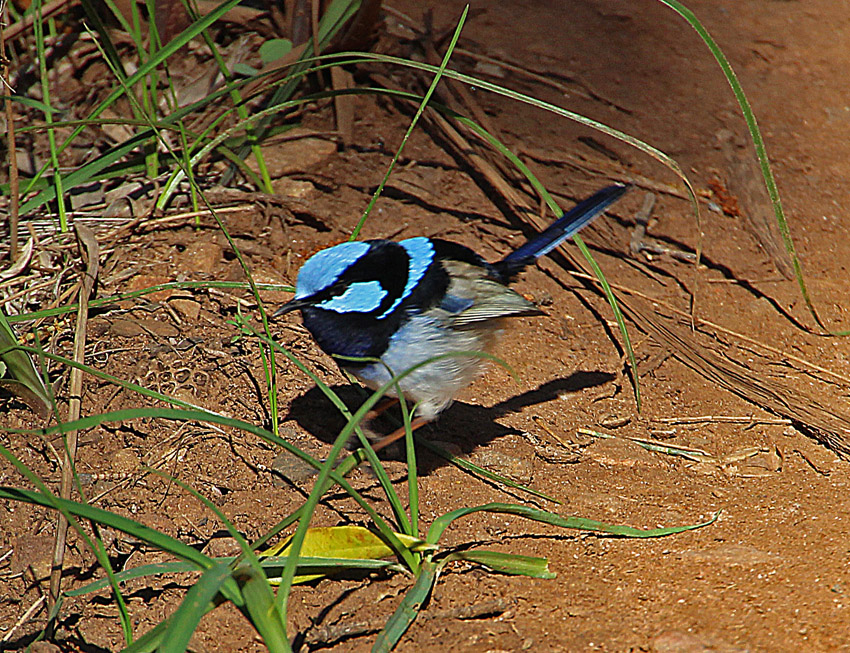
I smiled at a blue wren
picking at dried-out crab apples
cried as other birds fell gasping
from the sky.
Janet Galbraith, Κλιματική Αλλαγή
Έβαψα το δωμάτιο πράσινο
μεταξένιο σοφιστικέ πράσινο
δύο ημέρες έκανε ζέστη
η μπογιά στέγνωσε πολύ γρήγορα.
Τοποθέτησα της Θείας Λουίζας
τη ζωγραφιά της γης Jaara Jaara
απέναντι από τον μακρύ τοίχο
χρυσό και γκρι ησυχάζοντας.
Κάθισα στο παράθυρο
ροζ Laminex στα πλευρά του
κοίταξα έξω στον λαχανόκηπο
την ιτιά την άδεια λιμνούλα.
Χαμογέλασα σε έναν μπλε τρυποφράκτη
που μάζευε αποξηραμένα κομμάτια μήλου
κραυγάζοντας καθώς τα άλλα πουλιά εφόρμησαν λαχανιασμένα
από τον ουρανό.
*From the collection ““re-membering” / Από τη συλλογή “re-membering”, Walleah Press, 2013 (σελ. 40). Translation: Dimitris Troaditis / Μετάφραση: Δημήτρης Τρωαδίτης.

Ένα μοναχικό ουρλιαχτό
μεσ’ τη νύχτα
μακρόσυρτο και κοφτερό
Σαν γυαλί κομματιασμένο με βία
τρυπώνει στ’ αυτιά
των κοιμισμένων
Φτάνει ώς τα μύχια της ύπαρξής τους
και τους ξυπνάει…
Φοβισμένους, συγχισμένους.
Ανάβουν τα φώτα
Στα φωτισμενα παράθυρα
Αναμαλλιασμενα κεφάλια
Κόκκινα μάτια θολά
Ξερά απ’ τη δίψα
Φοβισμένα λαρύγγια
ρωτούν με φωνή
που θυμιζει παλιά ξύλινη πόρτα
π’ ανοίγει αργά
πάνω στους σκουριασμένους
πολυκαιρισμένους μεντεσέδες της.
Τι έγινε…
Έγινε τιποτα…
Μα η νύχτα σιωπηλή,
υπομονετική, σίγουρη
κρατά καλά τα μυστικά της.
Και να σε λίγο
κερδίζει πάλι η νύχτα
τα φώτα σιγά-σιγά σβήνουν
τα μάτια κλείνουν
ο φόβος, η κούραση,
ο αγώνας που θα ξεκινήσει το πρωί,
που αμείλικτα πλησιάζει
κλείνουν τα μάτια, τα αυτιά, το στόμα
σφαλίζουν τις ανθρώπινες καρδιές.
Κι η νύχτα κερδίζει
άλλη μια φορά
την ανθρώπινη, την απάνθρωπη
σοδειά της.
*Δημοσιεύτηκε στο τεύχος Ιούλη 1985 της αναρχικής εφημερίδας “Δοκιμή” (σελ. 15). Δεν έχουμε βιογραφικά και εργογραφικά στοιχεία για τον ποιητή. Αν κάποιος/α γνωρίζει κάτι ας επικοινωνήσει. Η εικόνα της ανάρτησης είναι έργο του Craig Persel.
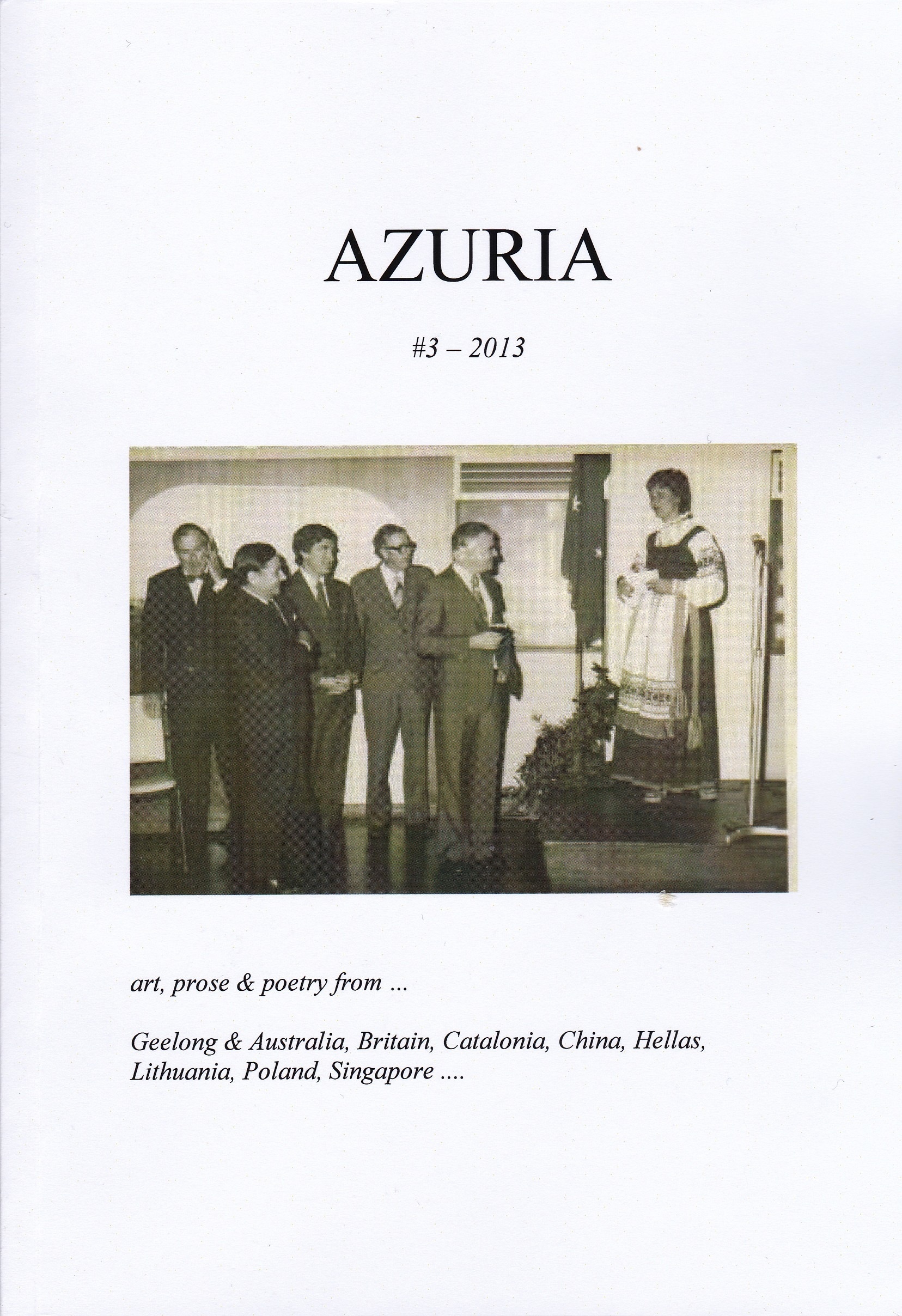
Στην Αυστραλία και ειδικά στη Βικτώρια κυκλοφορούν αρκετά λογοτεχνικά περιοδικά, τα οποία φιλοξενούν και προάγουν όλα τα είδη του γραπτού λόγου, ποίηση, πεζό, μυθιστόρημα, κριτική, ταξιδιωτικές εντυπώσεις και άλλα. Υπάρχει μια πανσπερμία τέτοιων περιοδικών, μικρών ή μεγάλων, με μεγάλο ή περιορισμένο τιράζ, άλλα γνωστά ευρέως και άλλα γνωστά σε μικρούς σχετικά κύκλους, που προάγουν μια πανσπερμία, επίσης, προσεγγίσεων και προσλήψεων των διαφόρων λογοτεχνικών ειδών και τεχνοτροπιών γραφής, άρα και διαφορετικών ιδεολογικών και πολιτικών -αν θέλετε- απόψεων.
Απηχούν, δε, το ευρύ και ποικίλο λογοτεχνικό και, γενικότερα, πολιτιστικό φάσμα που ευδοκιμεί στην πολιτεία μας, και στην ευρύτερη χώρα.
Ένα από αυτά τα περιοδικά μάς έρχεται από το Geelong της Βικτώριας, αν και το βεληνεκές του εκτείνεται πολύ πιο μακριά, πέρα από τα στενά όρια και δρώμενα της σφύζουσας αυτής επαρχιακής μεγαλούπολης της Βικτώριας, καθώς απ΄ το εξώφυλλο κιόλας διαβάζουμε ότι το βεληνεκές αυτό ξεκινά, μεν, από το Geelong, εκτείνεται σε όλη σχεδόν την Αυστραλία, αλλά ανοίγει τα φτερά του και στη Βρετανία, την Καταλωνία, την Κίνα, την Ελλάδα (αναφέρεται ως Hellas και όχι ως Greece), τη Λιθουανία, την Πολωνία, τη Σιγκαπούρη.
Είναι δε το τρίτο τεύχος του εν λόγω περιοδικού που φιλοδοξεί να κατακτήσει καρδιές, πέννες, ποιητές και συγγραφείς, κοινό και εραστές του λόγου και της γραφής.
Το ανά χείρας τεύχος, όπως πάντα λιτό και… απέριττο, στεγάζει μικρά πεζά ή πρόζα, ποίηση, αναλύσεις και κριτικές καθώς και μικρό βιογραφικό των συμμετεχόντων.
Η ποίηση έχει τη μερίδα του λέοντος καθώς καταλαμβάνει το 75% σχεδόν της ύλης του τεύχους. Φιλοξενούνται εδώ οι ποιητές/ποιήτριες Juli Capilla, Kristiina Ehin, Anna Habryn, Aidas Marcenas, Lidija Simkute, Ouyang Yu, Yu Cong, Janet Baird, Brian Edwards, Rory Hudson, Richard Kakol, Jerry Shawn Keys, Loh Guang Liang, Rose Lucas, Elizabeth Murawski, Christopher Kingrose, Ian C. Smith, Jorge Salavert και Vicky Tsaconas. Όπως καταλαβαίνετε, η συντριπτική πλειοψηφία των ποιητών/ποιητριών προέρχονται από ποικίλα εθνοτικά και γλωσσικά επίπεδα, ενώ όπως και σε κάθε τευχος έτσι και στο παρόν οι συμμετοχές τους δημοσιεύονται και στη μητρική γλώσσα και σε αγγλική μετάφραση, αποδεικνύοντας περίτρανα την πολυεθνική και πολυγλωσσική κατεύθυνση των εκδοτών, κάτι που τους τιμά ιδιαίτερα.
Στις άλλες κατηγορίες, στο μικρό πεζό-πρόζα δημοσιεύονται δουλειές των Birute Jonuskaite, R. Martinez Mendoza, Natasha Sampson, Jean Thornton και Johnathan TG Tiong.
Στις αναλύσεις δημοσιεύονται κείμενα των Dzavid Haveric, Richard Benesevich και Yasmin L. Wallace, τα οποία αφορούν, κυρίως, το έργο ποιητών και ποιητριών που ηδη δημοσιεύονται στο περιοδικό (ή έχουν δημοσιευτεί στα προηγούμενα τεύχη) π.χ. για τους Lidija Simkute και Ouyang Yu.
Δημοσιεύεται, ακόμα, η κριτική παρουσίαση του Martin Hooper για το βιβλίο της ντόπιας λογοτέχνιδας Jura Reilly “A Wolf At Our Door”, ενώ ο Edward Reilly παραθέτει κατάλογο βιβλίων και περιοδικών που έλαβε το περιοδικό.
Το περιοδικό κυκλοφορεί από το Geelong Writers Inc. (εκδοτική ομάδα Edward Reilly, Martin Hooper, Jura Reilly, Christopher Kingrose και Natasha Sampson). Απευθυνθείτε στη διεύθυνση PO BOX 1306, Geelong, Victoria 3220 και http://www.geelongwriters.com
View of the Other Side
In winter I see the river,
In summer I see the trees,
But always I see the mainland
That rises up on a cliff
On the other side of the Hudson
Where Julian’s body lies buried
Under a white stone.
In winter I wait for summer,
In summer I wait for wind,
And wonder how long forever
Will loom like a cliff
On the other side of the river
Till I am there body to body
Under a stone.
Η θέα από την άλλη πλευρά
Το χειμώνα βλέπω το ποτάμι,
Το καλοκαίρι βλέπω τα δέντρα,
Πάντα, όμως, βλέπω την ενδοχώρα
Που αναρριχάται πάνω σε ένα βράχο
Από την άλλη πλευρά του Hudson
Όπου βρίσκεται θαμμένο το σώμα του Τζούλιαν
Κάτω από μια άσπρη πέτρα.
Το χειμώνα περιμένω το καλοκαίρι,
Το καλοκαίρι περιμένω τον άνεμο
Και αναρωτιέμαι πόσο καιρό για πάντα
Θα φαντάζει σαν ένας βράχος
Από την άλλη πλευρά του ποταμού
Μέχρι που να είμαι εκεί σώμα με σώμα
Κατω από μια πέτρα.
———
Now I am Making Movies
Oh, the weeping in the hotel rooms
On the long Living Theatre tour!
One could walk from door to door
On the spattered corridor carpets,
And savor the various tears
Of old friends and former lovers,
Or stop for a while and weep too,
Sitting on luggage, or piles of programs, or
A roll of posters, afloat on those flowing tears.
Now I am making movies.
On the set there are smiles
Of satisfaction.
No one admits to suffering.
Why should we suffer? Aren’t we making movies?
The stars are gentle as lambs,
And joke with the background,
Everyone is “wonderful to work with,”
Everyone here is terrific.
Now I am making movies. No tears.
Τώρα κάνω ταινίες
Ω, το κλάμα στα δωμάτια των ξενοδοχείων
Στις μεγάλες περιοδείες του Living Theatre!
Κάποιος μπορούσε να περπατά από πόρτα σε πόρτα
Στα πιτσιλισμλενα χαλιά των διαδρόμων
Και να απολαμβάνει τα διάφορα δάκρυα
Των παλιών φίλων και των πρώην εραστών
Ή να σταματά για λίγο και να κλαίει κι αυτός,
Καθισμένος στις αποσκευές, ή στις σωρούς των προγραμμάτων ή
Σε ρολά αφίσες, να κολυμπά σ’ αυτά τα ρέοντα δάκρυα.
Τώρα κάνω ταινίες.
Στο σκηνικό υπάρχουν χαμόγελα
Ικανοποίησης.
Κανείς δεν παραδέχεται ότι υποφέρει.
Γιατί θα πρέπει να υποφέρουν; Δεν κάνουμε ταινίες;
Τα αστέρια είναι απαλά, όπως τα αρνιά
Και αστειεύονται με το φόντο,
Ο καθένας είναι “υπέροχος να δουλεύεις μαζί του”
Ο καθένας εδώ είναι καταπληκτικός.
Τώρα κάνω ταινίες. Χωρίς δάκρυα.
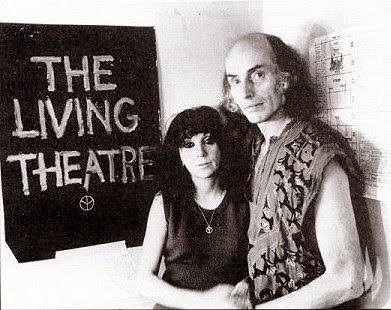
*Από την ποιητική συλλογή της Judith Malina «Love and Politics» (Black and Red, Detroit 2001). Μετάφραση: Δημήτρης Τρωαδίτης. Ευχαριστίες στην Έστα Παπαγεωργίου για τη φωτογραφία της ανάρτησης όπου εικονίζονται η Judith Malina με τον Julian Beck τις μέρες του Living Theatre.
**Η Judith Malina γεννήθηκε στη Γερμανία το 1926, αλλά μεγάλωσε στις ΗΠΑ. Είναι αναρχική ηθοποιός, σκηνοθέτης, ποιήτρια, συγγραφέας και ακτιβίστρια. Μαζί με τον σύντροφό της, Julian Beck (1925-1985), ίδρυσαν και λειτούργησαν στη Νέα Υόρκη και το Παρίσι στις δεκαετίες ’50 και ’60 το ριζοσπαστικό, πολιτικό θεατρικό σχήμα Living Theatre.
 To Koskino