Sylvia Plath Reads Her Poetry: 23 Poems from the Last 6 Years of Her Life

In March of last year, Toronto collector Greg Gatenby auctioned off “some 1,700 LPs, 45s, and 10-inch discs”-worth of recorded literary history, containing readings by such canonical figures as “Auden and Atwood, Camus and Capote, Eliot, Faulkner, Kipling, Shaw and Yeats,” and the recordings featured here from Sylvia Plath. Gatenby’s entire collection went on sale for a buy-it-now price of $85,000 (I assume it’s sold by now), and while we might have preferred that he donated these artifacts to libraries, there may have been no need. Most of them are already, or we hope soon will be, digitized and free online. Sylvia Plath reading her poetry (now out of print) was originally released on vinyl and cassette in 1977 by prolific spoken word record label Caedmon, but of course the readings they document all took place over fifteen years earlier, some at least as early as 1959, the year before the publication of her first book, The Colossus and Other Poems.

Many of the poems here appeared in The Colossus, the only collection of poems Plath published in her lifetime. Some, like “November Graveyard”—first published in Mademoiselle in 1958—were collected late, in the Ted Hughes-edited Collected Poems in 1981, and the rest appeared in Ariel and other posthumous collections. Oddly, the title poem of her first book doesn’t appear, nor will you hear any of the poems that made Plath an infamous literary figure: no “Ariel,” no “Daddy,” no “Lady Lazarus,” though you can hear her read those poems elsewhere. Many of these poems are more lush, less visceral and personal, though no less rich with arresting and sometimes disturbing imagery. Several of these readings took place in February 1959 at Harvard’s Woodberry Poetry Room. The album’s official description tells us these are “selections from the last 6 years of her life,” and also include “readings for the BBC before she wrote her controversial novel, The Bell Jar.”

Before Caedmon collected these lesser-known poems recorded readings of “Daddy” and “Lady Lazarus” had already been released on the compilation record The Poet Speaks in 1965. Listening to Plath read these poems may prompt you to pull out your own editions to read them for yourself, whether again or for the first time.

*For this many thanks to comrade Eleni Dimitriadi.

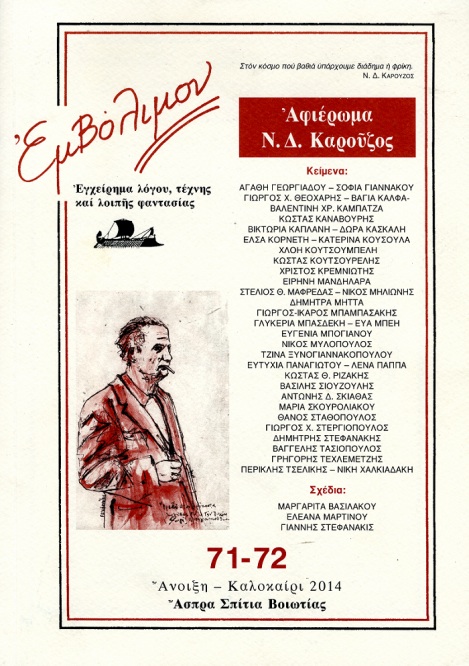
Εμβόλιμον, Νο 71-72, Άνοιξη-Καλοκαίρι 2014 – Αφιέρωμα στον Νίκο Καρούζο

dtbook041014

Στον ποιητή Νίκο Καρούζο, 24 χρόνια μετά την αναχώρησή του “για το μηδέν που θάλλει”, είναι αφιερωμένο το τελευταίο διπλό, τεύχος του περιοδικού Εμβόλιμον, ενός “εγχειρήματος λόγου, τέχνης και λοιπής φαντασίας”, όπως αυτοχαρακτηρίζεται στον υπότιτλό του. Ένα εγχείρημα που, ορμώμενο από τις δύσκολες συνθήκες μιας περιφερειακής πόλης, τα Άσπρα Σπίτια Βοιωτίας, όπου και εκδίδεται, συνεισφέρει στην όλη νεοελληνική λογοτεχνία, μια συνεισφορά που αναγνωρίζεται όχι μονάχα από τους κύκλους των ενδιαφερομένων αλλά και από το ίδιο το υπουργείο Πολιτισμού, που φέτος τίμησε το Εμβόλιμον, μαζί με την Παρέμβαση της Κοζάνης, με ένα από τα ετήσια Κρατικά Βραβεία. Στο πολυσέλιδο αφιέρωμα στον Νίκο Καρούζο, συνεισφέρουν γνωστοί λογοτέχνες και κριτικοί, ξαναδιαβάζοντας την ποίησή του, μελετώντας την κριτική υποδοχή του, καταθέτοντας αναμνήσεις, ενθυμούμενοι τις συνεντεύξεις του ή τον τρόπο με τον οποίο τους επηρέασε.

Περιεχόμενα

Αγάθη Γεωργιάδου: Απομαγνητοφωνώντας τη “Σύντομη μαγνητοφώνηση” του Νίκου Καρούζου
Σοφία Γιαννάκου: (Αναπάντεχα συναντώντας [Όλα κοστίζουν ένα παίξιμο] τον Καρούζο)
Γιώργος Χ. Θεοχάρης: Η υποδοχή της κριτικής στην ποίηση του Ν. Δ. Καρούζου και τα σχετικά γύρω από τη θρυλούμενη θρησκευτικότητα
Βάγια Κάλφα: Νίκου Καρούζου, Τα Ποιήματα, τόμ. Α’ (1961-1978), Ίκαρος 2013: Μία ανάγνωση
Βαλεντίνη Χρ. Καμπατζά: “Η αντίληψη της Τέχνης ως βασικού διαύλου επικοινωνίας με τη Ζωή, όπως διαφαίνεται μέσα από τις ανατρεπτικές γλωσσικές επιλογές του ποιητή Νίκου Καρούζου”
Κώστας Καναβούρης: Το χαστούκι
Βικτωρία Καπλάνη: Τα δώρα της Μαρίας
Δώρα Κασκάλη: Ο ακέραιος κυρ Νίκος
Έλσα Κορνέτη: Νίκος Καρούζος, Ερυθρογράφος
Κατερίνα Κούσουλα: Νίκος Καρούζος, Πενθήματα (1969)
Χλόη Κουτσουμπέλη: Δώδεκα σχόλια σε ένα ποίημα του Νίκου Καρούζου ή περί ποιητικής
Κώστας Κουτσουρέλης: Ο Νίκος Καρούζος μέσα στ’ όνειρο μιας άθλιας Πέμπτης
Χρίστος Κρεμνιώτης: Με τις ριπές του ανέμου
Ειρήνη Μανδηλαρά: Νίκος Καρούζος, Όπως αγγίζει
Στέλιος Θ. Μαφρέδας: Νίκος Καρούζος: Ρομαντικός επίλογος, ή οι προϋποθέσεις της ανάγνωσης
Νίκος Μηλιώνης: Νίκος Καρούζος και ζωγραφική: “Η καρδιά μου καιγότανε στης ομορφιάς τη θράκα”
Δήμητρα Μήττα: Λέξεις, γλώσσα, ομιλία
Γιώργος-Ίκαρος Μπαμπασάκης: Η ζωή δεν έχει πώμα
Γλυκερία Μπασδέκη: Και στην Αυλίδα και στην Ταυρίδα
Εύα Μπέη: [Ας γίνει η Τέχνη μας η έκφραση του ανέφικτου]
Ευγενία Μπογιάνου: Σαγήνη
Νίκος Μυλόπουλος: Λέξεις για τον Απόγονο της νύχτας
Τζίνα Ξυνογιαννακοπούλου: H μυστική γεωγραφία της Αθήνας
Ευτυχία Παναγιώτου: Φανταστικός επίλογος
Λένα Παππά: Νίκος Καρούζος, O πενθήμονας, απαρηγόρητος ποιητής
Κώστας Θ. Ριζάκης: Ποίημα
Βασίλης Σιουζουλής: Ποίημα
Αντώνης Δ. Σκιαθάς: Η μοναξιά του Νικολάου Καρούζου
Αντώνης Δ. Σκιαθάς: Ερωτοτροπώντας με την αμηχανία της ύπαρξης
Μαρία Σκουρολιάκου: Νίκος Καρούζος, “Ας μην αφήσουμε το μέλλον ανυπεράσπιστο”
Θάνος Σταθόπουλος: Σπαράγματα για τον Νίκο Καρούζο
Γιώργος Στεργιόπουλος: Νίκος Καρούζος, πίσω δεν πάει ο καιρός μονάχα σέβεται
Δημήτρης Στεφανάκης: Επίγραμμα για το Νίκο Καρούζο
Βαγγέλης Τασιόπουλος: Το αστικό τοπίο στην ποίηση του Νίκου Καρούζου ή ό,τι βλέπει ο ποιητής μες στην πολύτροπη μέθη του
Γρηγόρης Τεχλεμετζής: Κοιτώντας μέσα από το πρίσμα των “πιστεύω”
Περικλής Τσελίκης: Ερμηνευτική προσέγγιση του ποιήματος “Απολέλυσαι της ασθενείας σου” του Νίκου Καρούζου
Νίκη Χαλκιαδάκη: Σημείωμα για τον Νίκο Καρούζο

Three Poems from Yannis Ritsos’s “Diaries of Exile”

Diaries of Exile cover

By: Yannis Ritsos
Translated By: Edmund Keeley, Karen Emmerich
Published on September 16, 2014

One of Greece’s most prolific and widely translated poets, Yannis Ritsos (1909-1999) was born in Monemvasia. He lost his mother and an older brother to tuberculosis when he was young, and later contracted the disease himself. A lifelong, committed communist, he fought in the Greek Resistance to the Axis occupation, sided with the communists in the Greek Civil War, and subsequently spent years in detention centers and camps for political prisoners. The dictatorship of 1967-1974 landed him in internal exile yet again. Despite these many obstacles, Ritsos wrote more than a hundred volumes of poetry, plays, and translations. In 1976 he was awarded the Lenin Peace Prize.

Karen Emmerich and Edmund Keeley are the 2014 recipients of the PEN Poetry in Translation Award for a book-length translation of poetry into English published in 2013.


Three Poems from Diaries of Exile


November 6

Evening. The bell for the evening meal.

Shouts from the boys playing soccer.

Was it yesterday?—I don’t remember;—a stunning sunset

so violet, so gold, so rosy.

We stood there. We watched. We talked
alone,
alone, tossing our voices into the wind

so as to tie things together, to unbind our hearts.

A letter arrived in the yard:

Panousis’s son was killed.

Our talk nestled against the walls.

The sunset suddenly nothing.

The night had no hours. The knot loosened.

Panousis’s aluminum plate grew cold on the table.

We lay down. We covered ourselves. We loved one another

around that untouched plate that no longer steamed.

Around midnight the black cat came in through the window

and ate some of Panousis’s food.

Then the moon came in

and hung motionless over the plate.

Panousis’s arm on the blanket

was a severed plane tree.

Well then—must we really be so sad

in order to love one another?

January 25

For a moment we took refuge

against the latrine wall.

The wind was cutting.

An old man stared at a cloud.

I looked at him smiling

in the light of that cloud—so peaceful,

so far removed from desire and pain—

I was jealous.

Old people agree with the clouds.

And it’s taking us a long time to get old.

May 11

After the rain the buildings and the stones

change colors.

Two old men sit on the bench. They don’t talk.

So much shouting and so much silence remains.

The newspapers age in an hour.

Stressed, unstressed, stressed, unstressed

the monotony of change-stressed;

unstressed, stressed, strophe, antistrophe

and neither rage nor sorrow.

Evening lights out;

just as heavy for the one who struck

as for the one he struck.

The men sit on the stone
s
pare their nails.

The others died.

We forgot them.
 
Excerpted from Diaries of Exile by Yannis Ritsos. Copyright © 1975 by Yannis Ritsos. Translation copyright © 2013 by Karen Emmerich and Edmund Keeley.
See more at: http://www.pen.org/translation/three-poems-diaries-exile#sthash.IUIVnDy7.dpuf

Wallace Stevens, Lebensweisheitspielerei

Φωτογραφία: Sotiris Lamprou

Φωτογραφία: Sotiris Lamprou

Όλο και πιο αδύναμο, γέρνει το φως του ήλιου

Το απόγευμα. Οι υπερήφανοι κι οι δυνατοιί
Έχουν αποχωρήσει.

Αυτοί που απόμειναν είναι οι ανολοκλήρωτοι,

Οι οριστικά ανθρώπινοι,

Κάτοικοι μιας φθίνουσας σφαίρας.

Η φτώχεια τους είναι μια φτώχεια

Φτώχεια φωτός,

Χλωμάδα άστρου στην άκρη κλωστής.

Λίγο-λίγο, η ένδεια

Του φθινοπωρινού χώρου γίνεται

Ένα βλεμμα, κάποιες ειπωμένες λέξεις.

Ο κάθε άνθρωπος μας αγγίζει βαθιά
Μ’ αυτό που είναι κι όπως είναι,

Στο ξεπεσμένο μεγαλείο του αφανισμού.

*Μετάφραση: Μάρω Παπαδημητρίου. παρμένο από τον τοίχο της Thalassa Mystica στο facebook.

Φωτογραφία Sotiris Lamprou

2014 PEN Poetry in Translation Award: Four Questions for the Winners

Photograph © Beowulf Sheehan www.beowulfsheehan.com


Karen Emmerich
and Edmund Keeley are the 2014 recipients of the PEN Poetry in Translation Award for a book-length translation of poetry into English published in 2013. Diaries of Exile by Yannis Ritsos, is translated from the Greek and published by Archipelago Books.


PEN: What brought you to this book? 
Karen Emmerich: Archipelago Books had published my translations of the poet Miltos Sachtouris several years earlier, and Jill Schoolman, the editor of Archipelago, was interested in doing another book from Greek; she was particularly interested in publishing a volume of Ritsos’s work. At the time, I was a postdoc at Princeton, where Professor Keeley is an emeritus faculty member. Over dinner one night, I asked if he might want to collaborate with me, since he had translated several volumes of Ritsos’s poetry in the past, and had also known Ritsos personally. He very kindly assented, and we discussed a number of different projects, including a volume of selected poems. In the end we preferred to work on something that we could present in its entirety. Ritsos was so prolific, and his work varies so much in style and form, and even genre, that it was actually quite difficult to settle on what we would do. But we kept on coming back to these three diaries in poetry, written while Ritsos was a political prisoner on a series of desert islands in Greece. For me, there’s something about that in-between genre—part diary, part poem, part letter to the world—that felt both fascinating and important. The poems aren’t always polished, but taken as a whole, they’re witnesses to a certain time and place and experience.
Edmund Keeley: It is exactly Ritsos’s role as witness that most attracted me to his Diaries of Exile, especially since I was in Greece for part of the time that he was living in exile, not entirely aware of what the Greek government was then doing to torment the country’s communist citizens but conscious, as the son of an American Foreign Service officer serving in Athens, that the politics of that era in Greece was part of a dubious history involving my home country. It wasn’t until some time later, as a student and teacher of that history, that I sought out Ritsos’s work as a vital aspect of the literary rendering of those years, my conscience suffering because of the ignorance that had delayed knowledge of Ritsos’s contribution, and my collaboration with Karen Emmerich on these particular volumes is an effort to give the master more of what I felt was his due from two American translators.

PEN: How long did it take you to complete the translation, and what was the most challenging aspect of it? 
Emmerich: We worked on the translation for several months in Princeton, and then continued to work on it once I had moved away, meeting several times to read through and discuss the translations on my trips back to the area. I don’t know that I can point to a “most challenging” aspect of the project, but it was certainly difficult to try and remain accountable to these poems’ status also as historical documents. There were just so many things about life in the camps that we had to research—if there was electricity, for instance, which made a difference to the translation, since the same word could have meant “oil lamps” or “light bulbs.”
Keeley: What I found to be most challenging about this particular series of poems was establishing what W. H. Auden spoke of as a “unique tone of voice” in defining Cavafy’s poetry, the kind voice that most poets of the first order succeed in creating for themselves and their readers during a lifetime. I believe that underlying Ritsos’s somewhat shifting narrative voice in these poems lies a sensibility, a unique tone, if you will, that expresses his understanding of and feeling for the particular time and place that these poems inhabit. Attempting to capture the equivalent of that tone in English was a demanding enterprise.

PEN: Did you work any differently on this translation than you have on those in the past? 
Keeley: I have often collaborated with other translators in the past—Philip Sherrard and George Savidis in particular—but never with the pleasure and ease and inspiration that working with Karen Emmerich provided.
Emmerich: Well, I’ve never collaborated on a translation before, so that was a new experience for me. It was wonderful, actually. If one thing translation can allow you to do is to share work you care deeply about with others, collaboration lets you do that from the very first moment. It also means that those difficult decisions that can be fraught with feelings of responsibility and uncertainty are at least shared decisions. I was incredibly grateful to have the opportunity to work with Professor Keeley, first of all because of his vast knowledge of Greek literature, but also because it allowed us to develop a relationship, both professional and personal, that I now hold very dear.

PEN: Yours was a collaborative translation. Can you explain what form your collaboration took?
Emmerich: We divided up the poems, and each completed first drafts for half of the material. Then we switched, read over one another’s work, made revisions, noted questions, and came together to discuss the translations, always with the Greek at our side. Then we went through several more sets of revisions, combining work on our own with meetings where we discussed the poems together. During our last few sets of meetings, we just read the translations out loud, from start to finish, pausing where anything struck our ear as needing attention. And of course they all went to Jill, who has a wonderful ear, so there were her revisions to discuss as well.
Keeley: Karen’s account of the process of our collaboration is thorough and accurate, so there really isn’t anything for me to add, except to say that I was grateful, as in my earlier collaborations, to have an especially sensitive reader of Greek poetry and a creative translator working with me, sometimes by way of the internet and sometimes by my side, and I was also fortunate to have a publisher so thoroughly devoted to literary translation.

*Taken from http://www.pen.org/interview/2014-pen-poetry-translation-award-four-questions-winners

**See more at: http://www.pen.org/interview/2014-pen-poetry-translation-award-four-questions-winners#sthash.szQIA1du.dpuf
Ποίηση Βλαδιμίρ Μαγιακόφσκι

Φωτογραφία: Σοφία Αντωνακάκη

Φωτογραφία: Σοφία Αντωνακάκη

Τη πρώτη νύχτα πλησιάζουνε

και κλέβουν ένα λουλούδι

από τον κήπο μας

και δε λέμε τίποτα.

Τη δεύτερη νύχτα δε κρύβονται πλέον

περπατούνε στα λουλούδια,

σκοτώνουν το σκυλί μας

και δε λέμε τίποτα.

Ώσπου μια μέρα

-την πιο διάφανη απ’ όλες-

μπαίνουν άνετα στο σπίτι μας

ληστεύουν το φεγγάρι μας
γιατί ξέρουνε το φόβο μας
που πνίγει τη φωνή στο λαιμό μας.
Κι επειδή δεν είπαμε τίποτα
πλέον δε μπορούμε να πούμε τίποτα
Ποίηση:Βλαδ.Μαγιακόφσκι
Photo: Sofia Antonakaki.

Βασίλης Φαϊτάς, Ρους και ροή

rous

Στην ποιητική συλλογή Ρους και ροή του Βασίλη Φαϊτά συμβαίνουν ενδιαφέροντα πράγματα. Πρόκειται καταρχάς για ένα σύνολο 32 ποιημάτων, είναι δηλαδή αρκετά εκτενής ώστε να δώσει το στίγμα του ποιητή και να επιτρέψει στον αναγνώστη να αποκτήσει μια πιο σφαιρική εικόνα του ποιητικού σύμπαντος που ξεδιπλώνεται.

Δεν υπάρχει αμφιβολία ότι είναι μια δουλειά προσεγμένη τόσο λεξιλογικά όσο και δομικά γενικότερα, ο ποιητής έχει αφιερώσει τον απαραίτητο χρόνο για να φέρει τον στίχο του σε μια μορφή συνολικά άρτια. Τα περισσότερα ποιήματα είναι σύντομα με εξαίρεση το ομότιτλο που είναι και το εκτενέστερο, φωτίζοντας κατά κύριο λόγο την αναζήτηση του χρόνου στο διηνεκές, το στοιχείο δηλαδή που αποτελεί και τον κεντρικό άξονα της θεματολογίας του ποιητή. Η προσεγμένη γλώσσα εγκαθιδρύει ένα εννοιολογικά ενδιαφέρον «πλησίασμα των αντιθέτων», συναντά κανείς απρόσμενους συνδυασμούς που φαντάζομαι ενισχύουν την αίσθηση της έκπληξης, όμως ο ποιητής δεν αποφεύγει πάντα την παγίδα της ασάφειας: σε κάποιες περιπτώσεις, δείχνει να ερωτεύεται τις ίδιες του τις λέξεις.

Στο ποίημα «Γερνάει το σύμπαν» για παράδειγμα, οι στίχοι:

η αγωνία του τυχαίου να διαιωνίσει
έναν ανομολόγητο πόθο
αίσθηση ροής σε μια άδεια θάλασσα

στο τέλος προκαλούν μια αίσθηση απορίας, και ο αναγνώστης κινδυνεύει να χάσει την επαφή του με το κείμενο.

Ένα από τα ενδιαφέροντα στοιχεία αυτής της συλλογής είναι ο τρόπος με τον οποίο ο ποιητής επιχειρεί να κατανοήσει το πέρασμα του χρόνου, και στην προσπάθειά του αυτή τα όρια του χρόνου διαστέλλονται για να χάσουν το αρχικό τους περίγραμμα, βγαίνουν από την πεπατημένη και ακολουθούν πιο προσωπικά, εσωτερικά μονοπάτια. Το «εγώ» είναι πανταχού παρόν στο σύνολο των ποιημάτων, η ποίηση είναι σαφέστατα προσωποκεντρική χωρίς όμως να είναι εσωστρεφής, οι δίοδοι επικοινωνίας είναι σταθερά ανοιχτοί ανάμεσα στον ποιητή και τον αποδέκτη.

Είναι γεγονός ότι η αγωνία και το άγχος του θανάτου όπως σκιαγραφούνται για παράδειγμα στα ποιήματα «Ροή I» και «Συνομιλία με τη σκιά μου» δεν αποτελούν ιδιαίτερα πρωτότυπη προβληματική, ο ποιητής τελικά ανακαλύπτει ξανά γνωστά μονοπάτια. Από την άλλη μεριά, αυτό που εντυπωσιάζει είναι η εκκωφαντική σιωπή και απουσία του έρωτα και της γυναικείας φιγούρας, τόσο θεματικά όσο και στυλιστικά. Η έκφραση συναισθημάτων απέναντι στον Άλλον είναι σχεδόν ανύπαρκτη, το «εγώ» στο σύνολο αυτών των κειμένων πορεύεται μόνο του, με αποκλειστική συντροφιά κάποιες ισχυρές εικόνες που σίγουρα δεν στερούνται ομορφιάς.

Μερικά ποιήματα που τράβηξαν την προσοχή μου:

Εντός ορίων

Όσο οι ψυχές γεννιούνται εντός ορίων
αυτός ο κόσμος δεν θα αλλάξει ποτέ
έξω απ’τη σιωπή των στίχων
ο αργοπορημένος θάνατος ταχυδρομεί τον εαυτό του
σ’αυτούς που έχουν κι όλας πεθάνει.

Ταξιδεύω
αλληγορία, αναρχικό φωνήεν
ανάμεσα σε ασύμβατα σύμφωνα
ιχνηλατώντας
ένα παντοτινό πρωινό
την παλίρροια αιώνες.

***
Ολότητα

Με το αίμα αντιστεκόμαστε στο θάνατο
με τη γλώσσα κατανοούμε το φως
το όνειρο πάντα προϋπήρχε
να προετοιμάσει την ένωση με την ροή.

***
Tο δάκρυ του παντός

Κάποιοι λένε πως έφτασα
από μια διακύμανση του άχρονου
απομεινάρι του ολοκαυτώματος της φαντασίας
λένε πως είμαι η φαντασία του εαυτού μου
ίχνος ανάμεσα στο πριν και στο μετά
όχημα της άγνοιας η συνείδηση
βρόχος πιθανοτήτων μεταλλάσσεται
ό,τι ονομάσαμε εδώ ή τώρα
ρίζα της κοίτης
δεν είναι πια εδώ
ένα δέντρο από διάστικτες ματαιότητες
πάλλεται όπως ο γλάρος που πετά
σε γενέθλιες φανταστικές διαστάσεις.

Όμως γιατί μ’αφήνει άγρυπνο αυτή η σκέψη
να’μουν κάτι άλλο απ’ό,τι είμαι
γιατί τα μάτια μου τα τυραννάει
αυτό το δάκρυ του παντός
καθώς μια παρουσία αόριστη ερχομού
μακρινός καταρράχτης και γύρω
της αιωνιότητας ο αφρός.

Κρις Λιβανίου

Ο Βασίλης Φαϊτάς

Ο Βασίλης Φαϊτάς

*Κείμενο, ποιήματα και φωτογραφίες αναδημοσιεύονται από το Στίγμα Λόγου στο http://stigmalogou.blogspot.com.au/2014/10/blog-post.html?utm_source=feedburner&utm_medium=email&utm_campaign=Feed:+blogspot/JkQng+%28%CF%83%CF%84%CE%AF%CE%B3%CE%BC%CE%B1%CE%9B%CF%8C%CE%B3%CE%BF%CF%85%29

Αντώνης Θ. Παπαδόπουλος, Κέρματα IV

10626581_550642031702768_8933967336307529478_n

Δύει ο ήλιος.
Αρχίζει η αγρύπνια
της μοναξιάς μου.

***
Ψέματα λέω
πως έφυγες. Ακόμα σε
βλέπω παντού.

***
Tο τρένο φεύγει.
Πώς είσαι μέσα, αφού
μένεις μέσα μου;

***
Καλοκαιράκι,
κάποτε βρέχει κι εδώ
κι ανθίζουν πέτρες

***
Στα κλώνια καλούν
τζιτζίκια τα ταίρια τους
κι εγώ στη σκιά τους.

Μανόλης Αναγνωστάκης, Άρχισε μια σιγανή βροχή…

30RRRRRRR

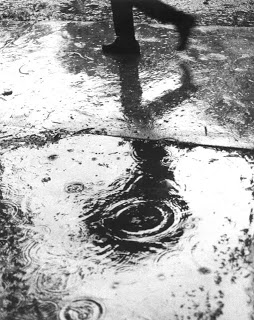
Έπεφτε μια κίτρινη παλιά βροχή…
Γ. Κ.

Άρχισε μια σιγανή βροχή αργά προς το βράδυ.
Στις πολιτείες ο ουρανός φαίνεται μιαν απέραντη λασπωμένη πεδιάδα
Κι η βροχή είναι μια καλοσύνη, όσο να πεις, δε μοιάζει διόλου με το θάνατο
Μπορείς να βαδίζεις κάποτε χωρίς κανένα σκοπό ή με σκοπό —σου είναι αδιάφορο—
Μιαν εποχή μακρινή και νεκρή σα μια βίαια σκισμένη πολυτέλεια.
Εγώ συλλογίζομαι πώς και γιατί άραγε μια βροχή μπορεί να σου θυμίζει τόσα πράγματα
—Χωρίς αμφιβολία είναι τόσο ανόητο να τα στοχάζεσαι όλα αυτά μια τέτοιαν ώρα—
Συλλογίζομαι όμως στις ζεστές χειμωνιάτικες κάμαρες μιαν αλλιώτικη μυρουδιά
Ύστερα από τις 6 με τα κλειστά παραθυρόφυλλα και τ’ αναμμένο φως
Ή μια γωνιά δίπλα στο τζάμι σ’ ένα μεγάλο καφενείο με τις αδιάφορες φωνές.
Τα συλλογίζεσαι όλα αυτά με τον πιο απλούστερο τρόπο ολωσδιόλου παιδιάστικα
Μπορείς να λησμονείς το κάθε τι, τί τάχα να γυρεύεις εδώ μια τέτοιαν ώρα
Εσύ, ο διπλανός σου, όλος αυτός ο κόσμος που πορεύεται δίπλα σου μες στο σκοτάδι
Αυτή η ανήσυχη σιωπή που πληγώνει περισσότερο κι απ’ το πιο κοφτερό λεπίδι
Να λησμονείς για μιαν ελάχιστη στιγμή πως ίσως δεν τέλειωσε ούτε και απόψε για σένανε το κάθε τι
Τόσο π’ αν τρίξει κάτι αναπάντεχα είναι να σου ξυπνήσει την ακριβήν υπόθεση μιας επιστροφής
Τη χειμωνιάτικη ζεστή κάμαρα, το καφενείο με τις πολύχρωμες φωνές.
…Έτσι βρέχει λοιπόν μια κίτρινη βροχή χωρίς τέλος.
Μια κίτρινη παλιά βροχή, τη νύχτα, σα μαστίγιο.

*Παρμένο από το ιστολόγιο της Μαρίας Πισιώτη στο http://hdyli.wordpress.com/