Kate Middleton Reviews Kim Cheng Boey

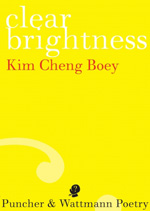
clear_brightness

Clear Brightness by Kim Cheng Boey

Puncher & Wattmann, 2012

With Clear Brightness Kim Cheng Boey offers a slim volume that, in addition to addressing notions of place, exile and travel, carries with it a deep melancholy of being written in ‘the lone wastes of middle age’. His explorations of worldliness are welcome, and Boey offers portraits of interconnectedness even as he displays and explores alienation. Moving from markets to Chinatowns, from Singapore’s National Theatre to California’s Santa Barbara, this collection often shows the objects that connect the past to the present, keepsakes available to keepers and gleaners alike.

Boey’s meditations on memory’s presence are inescapable. The poet is watchful as memories resurface, and the collection as a whole is ‘sleeved in the salt of memory’. We see the poet ‘Cruising for charms/ that will be memory’s currency’; contemplating ‘the Persian rug memory’s/ nameless longing fleshed in dye and skein’; following ‘memory’s story/ in the body’s passage through the bazaars’; wandering through ‘These Fez days in trance, in memory’s warp/ and weft, gathering tokens against the future’s loss’; listening for the ‘pentatonic measures between memory/ and home’. Throughout these poems he is ever:

on the fading
trail of letters, the emails, tokens, memories like tracks
fading fast, the memories, souvenirs, a disappearing trail
in the snow, in the shifting sand…

The weight of all this memory! Often bound up in souvenirs and objects, it marks this volume not as the exotic travelogue of a poet displaced – no matter where he finds himself, it seems – but instead as an example of the kind of accounting any of us might undertake upon reaching a certain age. Just as objects may help us understand who we are, we may also use them to:

accumulate
clues to the selves we never became
the shadowy half-lives, collecting and being
collected by these found things.

Continue reading →

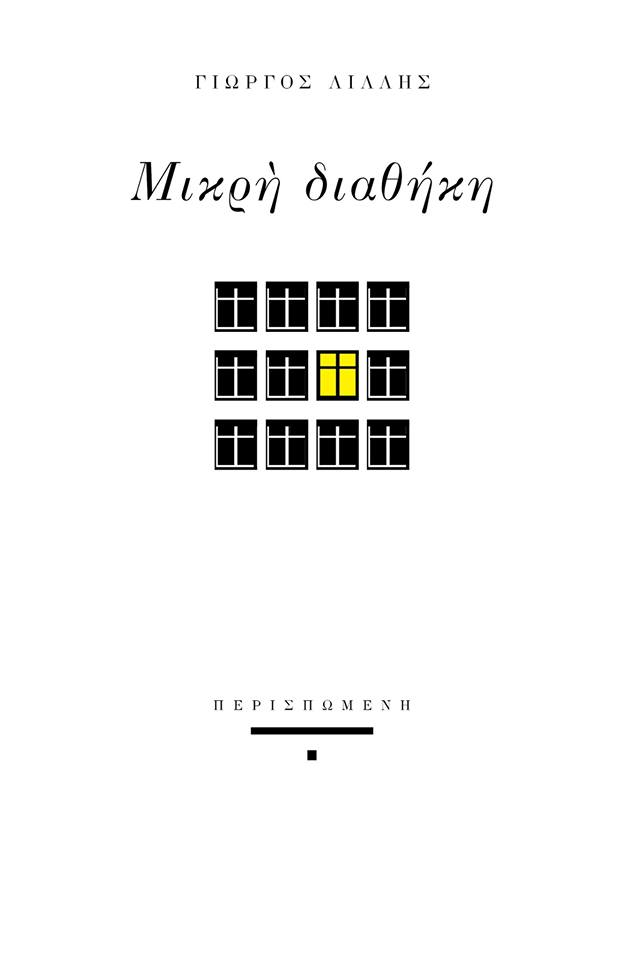
Γιώργος Λίλλης, Μικρή διαθήκη (Εκδόσεις Περισπωμένη)

dtbook080214

Σαν τον ερημίτη του Ουόρτζουορθ, ο Γιώργος Λίλλης, με την εσωτερική του λάμψη ζητά από την Ποίηση να φωτίσει μέσα στις ανθρώπινες σχέσεις την ουσία όσων μας περιτριγυρίζουν. Αντιπρόσωπος του «ποιητικού ανθρωπισμού» προσπαθεί να γιατρέψει τους αναγνώστες από το σαθρό του σύγχρονου κόσμου. Ακροβατώντας μεταξύ ύλης και απείρου, πατώντας γερά πάνω στο χωρόχρονο και εξαπατώντας τα γήινα θραύσματα – που τόσο επιδέξια μας κρατάνε εγκλωβισμένους στα αδιέξοδα της καθημερινότητας – παράγει το δικό του μοναδικό σημάδι στο ποιητικό τοπίο. Διαβάζοντας την “Μικρή διαθήκη” αισθάνεσαι σαν τον μαθητή – αναγνώστη του Γουάλας Στίβενς• γίνεσαι ο θαυμάσιος μαθητής της φαντασιακής αναζήτησης… Ο έφηβος που σιγά -σιγά βαίνει προς την ποιητική ωριμότητα. Το περιβάλλον γύρω σου ξεγυμνώνεται από την τετριμμένη του εικόνα, αναδεικνύοντας την Αλήθεια που εκπορεύεται απ’ αυτό. Η ποίησή του καταργεί τα όρια των συμβάσεων. Το αρχέτυπο χάνει την μυθολογία που το ακολουθεί και ξαναγίνεται το φωτεινό ακλόνητο στην σκοτεινή επιφάνεια του κόσμου.

Continue reading →

Amy Brown 
Reviews Selina Tusitala Marsh’s, Dark Sparring

dark-sparring

Dark Sparring
by Selina Tusitala Marsh
Auckland University Press, 2013

The first epigraph to Selina Tusitala Marsh’s new collection is from Muhammad Ali; ‘The fight,’ he says, ‘is won or lost far away from witnesses – behind the lines … long before I dance under these lights’. Behind Tusitala Marsh’s lines of poetry, there is an immense reserve of strength and grace, enough to sustain the poet through her mother’s death from cancer and to channel her fear and anger into rhythms of the Muay Thai kickboxing ring and the page.

A prologue, titled ‘Matariki’, acts as an invocation. Matariki is the Maori New Year, and the name of one of Tusitala Marsh’s students, who had recently lost her mother. The narrator urges Matariki to:

write what you remember
write your lost and found
write the toiling of the year’s grief
write the seeding of the new (1).

Continue reading →

Toby Davidson 
Reviews: Anthony Lawrence’s Signal Flare

signal_flare

Signal Flare by Anthony Lawrence
Puncher & Wattmann, 2013

Some months back, I ended up sitting next to a fairly eccentric white-bearded bloke on a Sydney bus. Upon hearing I was an Australian poetry researcher, my new acquaintance exclaimed ‘Australian poetry!’ with obvious distaste, followed by ‘Fu–ing Anthony Lawrence!’ He went on to detail how feral Aussie upstarts like Lawrence and ‘bloody Adamson’ were bastardising the great tradition of English Romanticism. As he rose to hop off, I asked for his name. He cheerfully declined.

Not long after, I met Lawrence for the first time and he couldn’t place this random public transport invective-hurler. But I did get to hear him read ‘Lines in Absentia’, the restless, unresolved (perhaps unresolvable) elegy which opens his fourteenth collection Signal Flare. I felt, as I did when reading it, that it is too long, that its sprawling oscillation between elegiac and confessional modes mimics rather than tackles the terrible intangibility of the subject matter, the reaching out to a friend who suicided by drowning in Sydney harbour which also doubles as a reaching in.

where the day breaks into flame
on this and on the other side
of despair, of whatever you made
from the spent breath of surrender

the harbour going on, the skyline
uneven, unsentimental
and hard as the currency it generates
I say goodbye and hello

and I will see your name
between blue apostrophes of wave light
in the wakes of boats… (17)

The sentiments here cannot be faulted. Yet what is already implied is made explicitly obvious in a way which is simultaneously evasive, unlike the superior elegy to the poet’s brother in ‘Appellations’ and ‘Eclipse’, where a distraught woman spared from drowning serves as a companion piece, even a resolution of sorts, to ‘Lines in Absentia’. ‘Lines in Absentia’ introduces the solar flare motif which melds with the ejection or interjection of signs/signals/signatures/signatories to create the titular signal flare in any given day. ‘Signatures’ intricately condenses an interlinked series of these:

The flash and gleam of isobars
on the face of a rainsquall
completed by the signature flourish
of a raptor lifting away
from a roadside window display of sweetmeats…

The stone fish again, with no interruptions
like an ink bleed clotting on a water table
its signature contained
as neurotoxins
with a row of sharpened quills
the graphology of the reef. (39)

Australian poetry is full of totemic, talismanic and symbiotic interactions with creatures. Lawrence distinguishes his approach by acknowledging (as he does here) that we interrupt and befuddle them, and also by refusing to rest on a single approach. Indeed, the greatest strength of this collection, more so than its insight and lyrical dexterity, may be that no two people will agree on which poems most move them, drawing as they must on their own life experiences and their own totemic, talismanic and symbiotic human and planetary relationships.

The one dimension which is understandably avoided in a collection which viscerally pursues aging, death and human legacy, is the comic. ‘Cattle Egret’, for example, chooses not to pursue how patently absurd the sight of an egret standing on a cow’s rump might look and how such absurdity in all its relativity can add something deeper to the most serious of poems. Moments of irreverence as spoken by creatures in ‘Gifts’ (‘We are wounded and in need of love / and mercy, can you dig it?’, 55) and wedding guests in the fabulous ‘Lepidoptera’ come as rare, but welcome, reminders of how Lawrence can also call upon on the radical slyness of a ΠO or the biting wit of a Michael Sharkey. Signal Flare is for the most part, however, a fearlessly sober exploration of the web of lives that were, are, and will be before us, and how they reveal themselves to the honed attention of a poet at the apex of his career. Each reading and re-reading of Signal Flare is bound to be stirringly different, a testament to the depth of this collection which very quickly becomes individualised to the reader, then refuses and resets that same individualisation. It is an ongoing gift to those daring to be curious – even to that f–king gent on the bus.
This entry was posted in BOOK REVIEWS and tagged Anthony Lawrence, Toby Davidson. Bookmark the permalink.

*Toby Davidson is a West Australian poet, editor and reviewer now living in Sydney where he is an Australian Literature researcher and lecturer at Macquarie University. He is the editor of Francis Webb Collected Poems (UWA Publishing 2011) and author of the critical study Christian Mysticism and Australian Poetry (Cambria Press). His first poetry collection Beast Language is now out through Five Island Press.

**From http://www.cordite.org.au

Dan Disney 
Reviews: Cameron Lowe’s Circle Work

circle_work

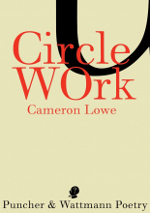
Circle Work by Cameron Lowe
Puncher & Wattmann, 2013

The poems in Cameron Lowe’s Circle Work swing across each page at a strangely measured, athletic tilt. The scope is local and vast, the gaze muscular, and Lowe sweeps the vistas (from Corio to the universe) for details apprehended as preternatural. His rapture typified in the lines, ‘the body’s cruel admission// that close is never close enough’ (56), these poems skirt edges of realness without entering the domain of things. Lowe’s is a poetics of evanescence, not arrival, and Circle Work frames the contours of human habitats as noise-filled within <> of silence. This book, a ‘stage of surfaces’ (31), watches carefully the play of order: birds and cats and dogs, flower-filled gardens and houses, dark bays and intersected hills and, everywhere, sound and light tinged by season or time.

At heart an outsider, Lowe is a transcendentalist who botanises everyday scenes grasped as events within chthonic dimensions (what else?). Self-conscious, and like the ‘silhouettes of trees/ so dark against the sky’ (67), perhaps Lowe too can be categorized a silhouette, lurching across all-too-defamiliarised territories. He satirises himself as a self-italicised ‘I-as-sensitive-register’ (12), signaling a style promised in the book’s title: is ‘circle work’ a matter of doing donuts in a carpark? Or beyond the vernacular is a different labour intended, in which the poet is cognizant of elemental cycles? One suspects both; deploying a highly-functioning depth perception, Lowe writes of –

The men talking
on the porch in the pool of light
(10)

and half-listens to the noise of their chatter while scrutinising beyond, where leaves touch in darkness. This nocturne then swerves, toward the sublime –

And in the blur of words,
the way those hands move
is a thing to watch –

It is a thing to hear
the leaves shifting in the night,
to believe in that yellow moon.
(11)

So many of these poems act like small incisions in mundane realms, letting in either the light or a darkness defined variously by the sheens, hard edges, folds, reflections. Lowe’s language is anything but blurred, and his poems are belief-filled, believable, and self-believing moments of clarity, each a ‘diligent tracing of form and beyond’ (15), as if that is possible, from where the poet might fathom the shapes of us in all the in/glorious weirdness.

There are a range of poems about poetry in Circle Work – ‘A kind of music’, ‘At the Geelong Art Gallery, the Great Australian Poet discovers a potato cake in his pocket’, ‘Notes toward a possible haiku, or deliberations on the usage of metaphor’, ‘Borders’, ‘Some thoughts by Michael Basinski on the American poetry scene, reconsidered as the Australian poetry scene’, ‘A lazy Sunday afternoon in which …’ – and Lowe seems anxious to somehow critique (more than satire, less than straight piss take) what he perceives to be the value (or valuelessness) of poetry. Which begs the question, necessarily: what is a poet hoping to do when critiquing poetry within their poem? One possible answer is ‘to provoke: what has been (or currently is), I am not’. Circle Work, then, as demography (blokes-in-cars, etc) and demonology (human strangeness within sublime sites), and a circling on other poets: this, less an anxiety of influence as an anxiety toward peers, is fitting for any outsider (and an impulse perhaps best held in check).

This is also a collection of domesticity and self-situation – in which can be found ‘cicadas already screeching in the evening trees’ (23), and onions ‘frying/ in the pan’ (45) while the wind is ‘driving petroleum fumes/ over the green water of Corio Bay’ (54); when a cat regards ‘the humming fridge/ still enough milk for tomorrow’ (19) it is here, sheltered and intensely connected, that Lowe locates a mode of ‘“no need/ to really think” ease’ (68). But herein lies the irony: outside his sanctum, the poet adopts a meditative ‘vacant gaze’ (9) (indeed, the opening poem, ‘In memory of flowers’, scans like a thinned-down, wiry text from Wallace Stevens), and the majority of the poems in Circle Work are anything but ease-filled. Each thinks laboriously, virtuously and often hilariously, toward the lucidity of often-uneasy contexts. Unlike his dog, who ‘doesn’t know/ what to do’ (28), Lowe remains sure-footed in these succinct and unpredictably beautiful poems; his aphoristic grasp of uncanniness works like a precision technology, and this poet-mediator stays fixed on scanning theatres of the real, swerving and verving robust toward

a clarity,
as if we’d never walked there before (73)

*Dan Disney‘s collection, And then when the, was published in 2011. He is currently working on a new collection of poems and a collection of essays on the sublime. He teaches twentieth century poetries and poetics at Sogang University, and divides his time between Seoul, Turin, and Melbourne.

**From http://www.cordite.org.au
Δύο λόγια για μετά το… Φυσικό Αντίδοτο

1534995_610732045663815_1206702395_n

Του Τάσου Κάρτα

Για την ποιητική συλλογή της Τζούλιας Φορτούνη “Φυσικό Αντίδοτο”, εκδ. Μανδραγόρας 2013

Ανέκαθεν «ιδανικός και ανάξιος εραστής» των λέξεων που είναι «παιδιά πολλών ανθρώπων» και συναγελάζονται στα ποιήματα και με μαγεύουν, άλλοτε με την «υπεροψία και τη μέθη» που έχουν τα φωνήεντα τους, μα πιο πολύ μένοντας ενεός όταν νιώθω ότι έχουν συναίσθηση «της ματαιότητας των μεγαλείων» που έχουν τα σύμφωνα του κόσμου τούτου, παρακαλώ τη μούσα να μου δώσει έμπνευση να βρω λέξεις-κλειδιά, «νάρκης του άλγους δοκιμές», που θ’ ανοίγουν την ανοιχτή έτσι κι αλλιώς πόρτα της ποιήσεως μήπως κάποτε μπορέσω να ιδώ στο βάθος της μια μπαλάντα κρυφή για τους «άδοξους» στίχους ποιητών που άκουγα μια βραδιά την αγωνία τους να «σπέρνεται και να γεννιέται σαν τα βρέφη».

Γιατί, όπως λέει κι ο Ποιητής, «τα πεύκα κρατούν τη μορφή του αγέρα ενώ ο αγέρας έφυγε, δεν είναι εκεί, το ίδιο κι οι στίχοι φυλάγουν τη μορφή του ανθρώπου ενώ άνθρωπος φεύγει δεν είναι εκεί», στον μαγικό εκείνο χώρο, πανταχού παρόντα, κοινό για όλους, ποιητές φανερούς και λανθάνοντες, γιατί η Ποίηση, στην πρωτογενή της έκφραση, θα είναι πάντα η κοινή ανθρώπινη ανάγκη για ουρανό, το ΤΕΛΕΙΟ ΦΥΣΙΚΟ ΑΝΤΙΔΟΤΟ!

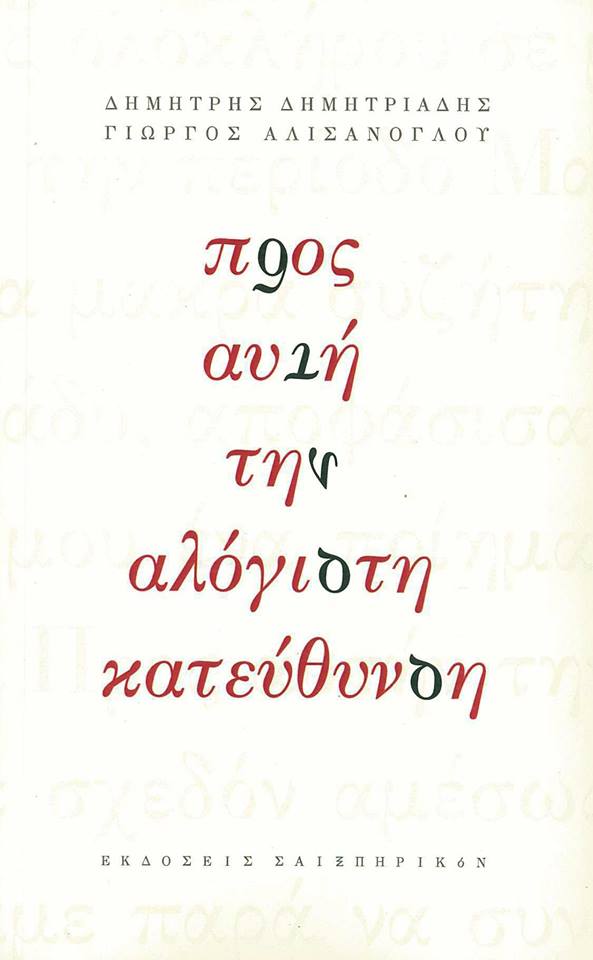
Δημήτρης Δημητριάδης – Γιώργος Αλισάνογλου, Προς αυτή την αλόγιστη κατεύθυνση, Εκδόσεις ΣΑΙΞΠΗΡΙΚόΝ, Θεσσαλονίκη

dtbook010214

Σύμφωνα με τον Γ. Αλισάνογλου, το τομίδιο αυτό, γραμμένο εξ ολοκλήρου σε μορφή ηλεκτρονικών μηνυμάτων κατά την περίοδο Μαρτίου-Ιουνίου 2013, προέκυψε από μία μακρά συζήτηση μετά το πέρας τής οποίας, το ίδιο βράδυ, αποφάσισε να στείλει στο μαίηλ τού συνομιλητή του ένα ποίημα, απαύγασμα τής συζήτησής τους, το “Προς αυτήν την αλόγιστη κατεύθυνση”. Τού απάντησε σχεδόν αμέσως με το “Η εδώ κατεύθυνση”. Δεν είχαν παρά να συνεχίσουν.

Τα δεκατέσσερα ποιήματα που συνιστούν το παρόν βιβλίο είναι, λοιπόν, γραμμένα ε ξ ο λ ο κ λ ή ρ ο υ σε μορφή ηλεκτρονικών μηνυμάτων. Είναι δηλαδή μία αλληλογραφία πολλαπλών, αλληλοσυμπληρούμενων και αντιμαχόμενων, κατευθύνσεων, γραμμένη εν θερμώ, εξ ου και στο τέλος κάθε «επιστολής» μιας και οι δυο ποιητές θεώρησαν σκόπιμο να αναγράφεται η ημερομηνία και η ώρα τής αποστολής τους.

Το κείμενο με τον τίτλο «Η ενέσιμη ποίηση» που συντάχθηκε για να αποτελέσει το επίμετρο τού βιβλίου, αποφάσισαν να ενταχθεί κι αυτό στο κυρίως «σώμα» των ποιητικών ανταλλαγών αφού είναι γραμμένο λίγες μόλις μέρες πριν την ολοκλήρωση των δύο τελευταίων «επιστολών», άρα μέσα στον βρασμό τών αμοιβαίων ανταποκρίσεων. Η ένταξη αυτή γίνεται για να υπογραμμιστεί η έγχρονη διάσταση τής ανταλλαγής αλλά και να τονιστεί ο ζέων, δηλαδή τυχαίος, απρόβλεπτος και απρογραμμάτιστος, χαρακτήρας τού όλου εγχειρήματος.

Continue reading →

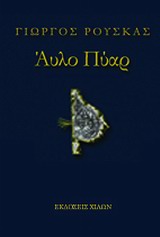
Γιώργος Ρούσκας, Άυλο πύαρ, Εκδόσεις Χίλων 2013

6 - rouskas


Του Σέργιου Μαυροκέφαλου

Μας ταξιδεύουν οι ποιητές; Ιδιαίτερα, τώρα σε τούτο το μικρόψυχο καιρό, όπως θα τον αποκαλούσε ο Χέντερλιν; Χρειάζονται ακόμη, οι ποιητές; Τώρα, μες στην πραγματικότητα – κινούμενη άμμο, όπου θαρρείς ότι αργά ή γρήγορα θα καταπιεί εσένα, τον διπλανό σου και το όποιο μέλλον σας αλλά και το μέλλον των παιδιών σας; Μήπως βιώνουμε, όπως οι ήρωες του Σελίν, ένα άλλο ταξίδι στην άκρη της νύχτας, όπου οι πρώην φίλιες σχέσεις γίνονται εχθρικές; Σ’ έναν κοινωνικό ιστό που δηλητηριάζεται, διαβρώνεται, ρήγνυται, αλλά δεν εκρήγνυται – προς το παρόν – από το κέντρο μέχρι τις άκρες της χώρας μας; Η κόπωση από τη ζωή δεν είναι έκδηλη σ’ ένα πλήθος συμπεριφορών μέσα στην ελληνική κοινωνία; Κι αν, κομψά και υποκριτικά, όλα αυτά ασφυκτιούν μέσα στη λέξη αβεβαιότητα, υπάρχει γύρω μας μια διάχυτη αίσθηση πανικού και απόγνωσης σε σκέψεις και συμπεριφορές.

Κι αν ολοένα και περισσότεροι εμποδίζονται, από τα πράγματα ως έχουν, να δουν με διαύγεια το όλον της ύπαρξής μας, το παν, υπάρχουν εκείνοι – αλλά κι όλοι εμείς αν το θελήσουμε – που επιμένουν να βλέπουν καθαρά να φανερώνουν. Ίσως είναι οι πιο τυφλοί ανάμεσά μας ,οι μη ορώντες αποκλειστικά και μόνον το όποιο τηλεδάχτυλο, που διαρκώς δεικνύει και υποδεικνύει. Ίσως είναι οι ατενίζοντες κατευθείαν το φεγγάρι των ονείρων και των μύχιων πόθων μας. Όσοι δεν λησμόνησαν ότι είμαστε πλασμένοι «από το υλικό των ονείρων», όπως διαπίστωνε ο Σαίξπηρ. Όσοι θέλουν να είναι, να ζουν, όσοι είναι ερωτευμένοι με τη ζωή και δεν την προσλαμβάνουν ως μία διαρκή υπο-χρέωση, η οποία μοιραία οδηγεί στην κόπωση, στην κάθε λογής μιζέρια, στους καθημερινούς θανάτους. «τέτοια στο δρόμο σου ποτέ σου δεν θα βρεις, / αν μέν’ η σκέψις σου υψηλή, αν εκλεκτή / συγκίνησις το πνεύμα και το σώμα σου αγγίζει.» Αυτή, λοιπόν, η εκλεκτή συγκίνηση του Καβάφη ποιεί ζωή. Και ποιο είναι κατά τον σημερινό μας ποιητή, τον Γιώργο Ρούσκα, το πρώτο, μοναδικό ανεπανάληπτο, θεϊκό ποίημα της ζωής; Η γυναίκα. Αλλά και η ίδια η διαδικασία της γραφής είναι, για τον ποιητικό αφηγητή, από μόνη της ένα ποίημα. Είναι μια θαυμαστή διαδρομή μέσα στο ανθρώπινο σώμα, όπου μεταμορφώνεται η Ιδέα σε Λόγο.

Continue reading →

Kate Middleton
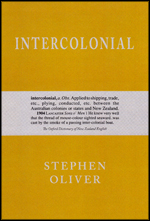
 Reviews Stephen Oliver’s Intercolonial

intercolonial

Intercolonial by Stephen Oliver

Puriri Press, 2013

Intercolonial, a new book-length poem by Stephen Oliver, focuses its attention on New Zealand, Australia, and the sea that lies between them. With sweeping long lines, Stephen Oliver zooms in on the details of place and geology: the poem is full of cinematic pans over landscape, seascape and human history, fulfilling what is often a purview of the long poem in naming the world and its inhabitants. His tight focus is evident from the very first lines of the poem:

Tusked cauliflowers and herded carrots, onions in piles,
tumbled pumpkins, potato scree, boxed and stall in between
scales that swung and creaked from the cream cabin roof
of the Indian greengrocer’s Bedford truck …

This close-up leads us to follow the truck into the streets of Wellington, and then to follow the unfolding map of the city as its roads, buildings and natural landmarks come into focus. We see the ‘council-red, No. 8 Brooklyn-west bus’, and pass under ‘Radio ZLW, the telegraph station on/ top of Tinakori Hill’, before looking out over the water. Reaching Wellington Harbour, our sense of timescale expands as we recognise the slower pace of oceanic and geological time unfolding beneath human history.

Continue reading →

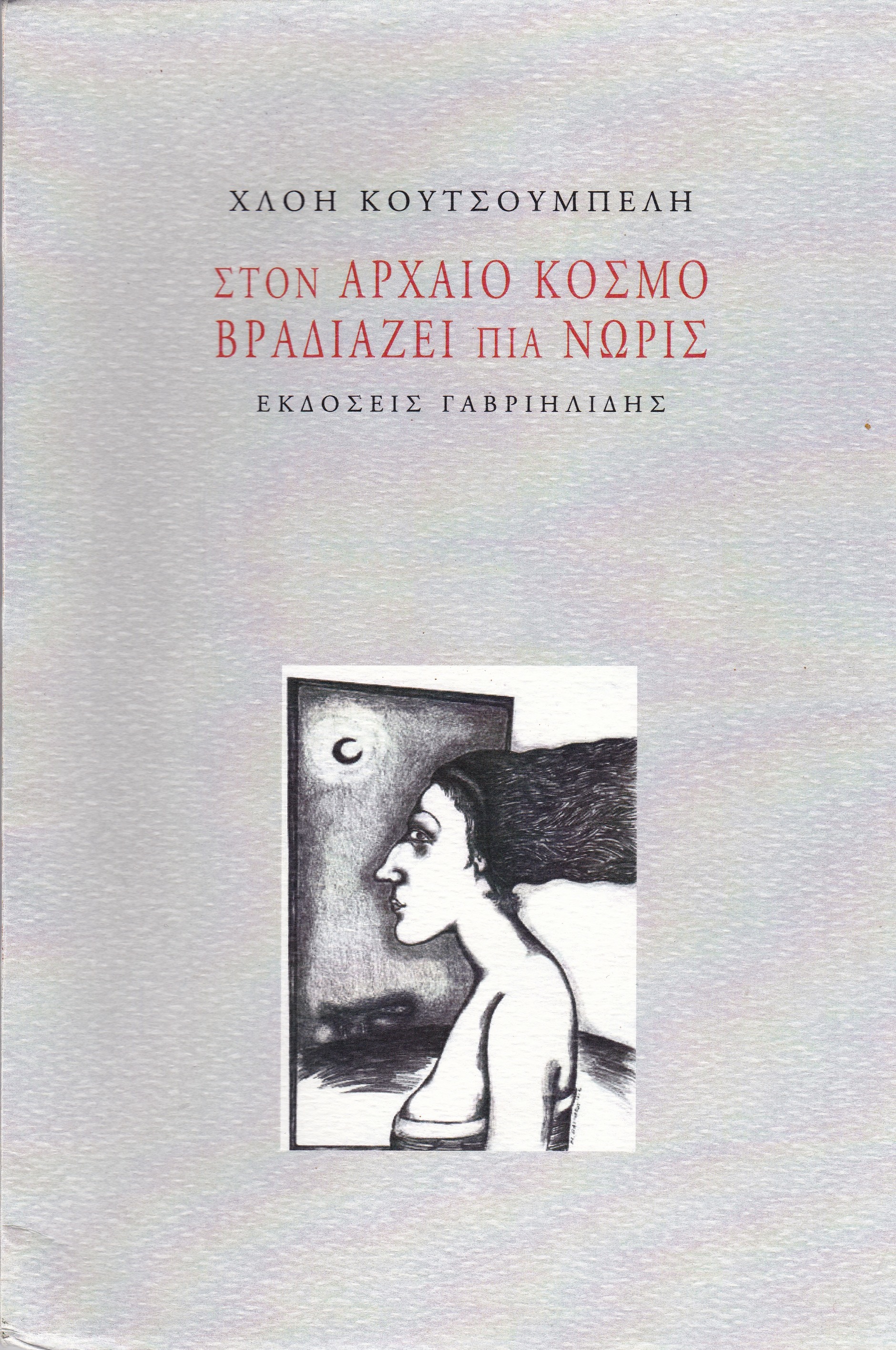
Συνέντευξη της Χλόης Κουτσουμπέλη στην Ασημίνα Ξηρογιάννη

Χλόη Κουτσουμπέλη

Ποίηση είναι… Δεν θέλω έναν ακόμα ορισμό, αλλά την δική σου προσέγγιση…

Από όλα τα άνθη της πορτοκαλιάς ,ένα στα δέκα δένει πορτοκάλι. Ποίηση είναι αυτοί οι εννέα μικροί θάνατοι. Δεν είναι ένας ακόμα ορισμός, είναι βίωμα και προσέγγιση.

Έχεις ποιητικά ”πρότυπα”;

Ασυνείδητα ίσως ναι ,αφού έχω διαβάσει πολλή ποίηση, συνειδητά προσπαθώ να διαμορφώνω την δική μου φωνή.

Ποίηση και διαδίκτυο.

Πολλά τα στρείδια λίγα τα μαργαριτάρια, ωστόσο είναι χρήσιμη η εξοικείωση μίας μεγάλης μερίδας κόσμου με την ποίηση, περισσότερο καλό παρά κακό επομένως.

Ποιά άλλη Τέχνη αγαπάς εκτός από την Τεχνη του Λόγου;

Την τέχνη της ζωής.

Τρία βιβλία που σε σημάδεψαν και άλλαξαν το βλέμμα σου στα πράγματα.

Όλα είναι ψηφίδες στο απέραντο ψηφιδωτό της ψυχής ενδεικτικά θα αναφέρω Ντοστογιέφσκι, Τόμας Μαν και Προυστ. Α, και το Άσμα Ασμάτων που αφορά στην περιπλάνηση της ψυχής.

Ποίηση κι έρωτας (κι αντίστροφα)

Αλληλένδετα, αλληλεξαρτώμενα, αναπόσπαστα.

Διαβάζουν ποίηση οι νέοι σήμερα ή τη θεωρούν κάτι παρωχημένο;

Οι νέοι σήμερα δεν διαβάζουν γενικά, κάθονται μπροστά σε μία οθόνη και έτσι παίρνουν όλη την γνώση και την πληροφόρηση. Φυσικά υπάρχουν και οι φωτεινές εξαιρέσεις και γι’ αυτές αξίζει να παλεύουμε.

Πιστεύεις στην επίσημη Κριτική;

Ναι αν δεν επηρεάζεται και δεν κατευθύνεται από τα συμφέροντα εκδοτικών οίκων

Αν σου ζητούσαν να γράψεις τη βιογραφία ενός μόνο προσώπου… ποιό θα ήταν αυτό και γιατί;

Της Αλίκης στην χώρα των θαυμάτων. Θεωρώ ότι είναι αποκαλυπτική για την ανθρώπινη φύση.

Ποιο από τα βιβλία σου αγαπάς περισσότερο;

Κάθε φορά το τελευταίο αφού το θεωρώ πιο πλήρες από το προηγούμενο.

Η άποψή σου για τους λογοτεχνικούς διαγωνισμούς;

Σπάνια έχω πάρει μέρος σε λογοτεχνικούς διαγωνισμούς, δεν μου αρέσει ίσως η έννοια του διαγωνισμού στην ποίηση, συγκρίνονται τα ποιήματα άραγε και οι ποιητές μεταξύ τους; Και ποιος είναι αρμόδιος να κρίνει;

Σε γυρνάω πίσω… θυμήσου το πρώτο-πρώτο ποίημα που έγραψες στη ζωή σου.

Δημοτικό, στα Μουδανιά που παραθερίζαμε, ήταν με ομοιοκαταληξία.

Πέντε λέξεις που πιστεύεις ότι περιγράφουν την ποίησή σου.

Βυθός, απώλεια, κύκνος, καθρέφτης, είδωλο.

Κάποιο λογοτεχνικό περιοδικό που αγαπάς.

Πολλά, ωστόσο αν πρέπει να διαλέξω θα μνημόνευα την «Πάροδο» του Κώστα Ριζάκη, που έχει όμως σταματήσει πια να εκδίδεται

Αν σου ζητούσαν να χαράξεις με τατουάζ στο χέρι σου ΕΝΑΝ ΜΟΝΟ στίχο…ποιός θα ήταν αυτός;

Αγαπώ νεκρά γιατρέ.

*Από το ιστολόγιο της Ασημίνας Ξηρογιάννη Βαρελάξκι στη διεύθυνση http://varelaki.blogspot.com