Lucy Van
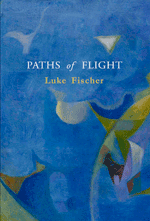
 Reviews Luke Fischer’s Paths of Flight

paths-of-light

In Shakespeare’s last great poem, The Phoenix and the Turtle, the owl is banished from the allegorical proceedings of the bird funeral:

But thou, shrieking harbinger,
Foul pre-currer of the fiend,
Augur of the fever’s end,
To this troop come thou not near

Whether you read this poem as dense figural allegory, enigmatic elegy or refined coterie poem, you should mark this ironic moment of exclusion. The tradition of augury in poetry is richly prefigured here, not only in the careful inclusion and exclusion of birds, but in the deceptive formal simplicity of the stanzas. Devolving into triplets in the threnody coda, the rhythm of the poem is incantatory, reminiscent of the magic of prophetic language. Why, then, the prohibition on the augur owl?
Luke Fischer’s first collection, Paths of Flight, is deeply alert to the signs made by birds. Fischer displays an affinity with a certain notion of the ‘natural’ world, as well as a temperament for classical poetic tropes. Birds, depicted in both mythical and parochial attitudes, populate the collection. And while not every poem depicts the physical manifestations of a bird, many actually do. The owl keeps ‘vigil in a cell/ of twisted boughs’; the swift’s brow is ‘planed by supernal winds’; the punk cockatoo ‘flares his pineapple Mohawk.’ Conversely, more enigmatic figures are infused with bird-like qualities. The first line of the collection, from the poem ‘Portrait of a Thinker,’ is unequivocal: ‘His eyebrows are falcon wings/ gliding on a constant current.’ There is a certain satisfaction to be taken from such thematic consistency. Like Shakespeare’s poem, Fischer’s book takes up an allegorical mode, calling forth the presences of ‘Owl,’ ‘Swift,’ ‘Corellas,’ ‘Raven,’ and a ‘Band of Cockatoos’ through the direct titles of the poems. The collection’s undertaking as a work of augury is emphasised by its omnibus title. How do we read a bird’s flight, which once foretold the will of the gods? What is the relation between poetry and prophesy?

Continue reading →

Μαρτυρίες για τον Πέτρο

Koutsiabasakos.JPG

Αν είναι να ακριβολογούμε με τις λέξεις, ο συγγραφέας Πέτρος Κουτσιαμπασάκος που πέθανε στα 48 του χρόνια, ήταν σχεδόν γείτονάς μου και σχεδόν φίλος μου.  Ο Πέτρος έμενε στα Άνω Πετράλωνα όταν εγώ έμενα για πολλά χρόνια στα Κάτω.  Η ξενιτιά κι ο θάνατος δεν μας έδωσαν περισσότερο χρόνο…

Συναντιόμασταν, πίναμε, τρώγαμε, κουβεντιάζαμε,  με άλλους οι μόνοι μας, στην Πλατεία Μερκούρη, στου Οικονόμου, ή στο Ζέφυρο βλέποντας «Το γεράκι της Μάλτας» και άλλα κλασικά του σινεμά.  Μια δυο φορές συναντηθήκαμε και στο Φίλιον…  Τη γνωριμία μας την οφείλαμε στον διηγηματογράφο Ηλία Παπαμόσχο.

Η τελευταία εικόνα που έχω στο μυαλό μου από τον Πέτρο είναι σχεδόν εικαστική…  Πέρυσι τον Απρίλη ενώ καθόμουν σχεδόν ολομόναχος σε βαγόνι του Μετρό με κατεύθυνση το σταθμό του Αγίου Δημητρίου, αυτός καθόταν ολομόναχος, όχι σχεδόν, ήταν ολομόναχος σε μια καρέκλα της αποβάθρας της Δάφνης διαβάζοντας ένα βιβλίο, νηφάλια, χαμηλότονα, προσεχτικά…

Τον αδερφό του σκηνοθέτη Δημήτρη Κουτσιαμπασάκο τον αποκαλούσε πολλές φορές  στις κουβέντες μας το αδερφάκι μου…  Ήμουν αυτός που του μετέφερα τηλεφωνικά την καλή υποδοχή που επεφύλαξαν οι σινεφίλ στην πρεμιέρα του ντοκιμαντέρ του αδερφού του «Ο μανάβης» στο Φεστιβάλ ντοκιμαντέρ Θεσσαλονίκης.  Χαιρόταν με τις επιτυχίες του μικρού του αδερφού, στενοχωριόταν με τα όποια καλλιτεχνικά του ζόρια.

Continue reading →

Lucy Van 
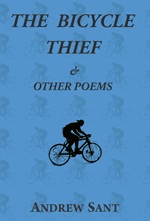
Revieww Andrew Sant’s The Bicycle Thief & Other Poems

bicycle-thief

The Bicycle Thief & Other Poems by Andrew Sant
Black Pepper Publishing, 2012

It’s no current reference, but reading Andrew Sant’s recent collection, The Bicycle Thief, Andrew McGahan’s Praise springs to mind. When I studied McGahan’s novel, a more astute student than I pointed out that Gordon’s only romantic relationship was with his car, and that, accordingly, his only romantic response was towards the sad demise of that Holden. His relationship with Cynthia (who he develops a relationship with) was conversely defined by emotional inertia and moral detachment. This observation struck me as highly sophisticated. It did not endorse a clichéd view of Australian men and their cars, rather it subtly suggested a masculine romance for an idyll of mobility.

I think that for all the mischief and conversational flare of The Bicycle Thief, Sant is a romantic. Sant constructs a romantic idiom around various modes of transport that is not simply commodity fetishism, but as with McGahan, a desire for transcendence through acceleration and movement. There is no strict narrative progression yet the collection does riff around the twinned themes of movement and stasis. Somewhere in the middle of the book the speaker presents an Ur-scene in ‘Jack and Yves and Their Many Transports,’ where children are observed locking language to movement:

Train! Jack calls out once
and once again. He lives
near a railway station.

He stops. His index finger
is a little wand. Transport
attracts his first vocabulary.

Continue reading →

Η ποίηση της Ασημίνας Ξηρογιάννη – παρουσίαση από την Αλεξάνδρα Μπακονίκα

581353_david_hockney_gallery_20-564x272

Θα σχολιάσω την ποίηση της Ασημίνας Ξηρογιάννη για όσα ένιωσα και απεκόμισα από τις δύο τελευταίες συλλογές της με τους τίτλους Πληγές και Εποχή μου είναι η ποίηση. Οι στίχοι της Ξηρογιάννη χαρακτηρίζονται από έντονη εξομολογητικότητα. Εκθέτει το μύχιο του εαυτού της με θαρραλέα καθαρότητα και διαύγεια, αποφεύγοντας να κρυφτεί πίσω από σύμβολα, περίπλοκες εικονοποιίες, μύθους και παραπλανητικά προσωπεία. Με ένα αφοπλιστικό, πεζολογικό σχεδόν, γνήσιο και ανεπιτήδευτο ύφος καταθέτει τα σπαράγματα του εσώτερου εαυτού της. Κάνει τον αναγνώστη να σκύψει με κατάνυξη σε ό,τι τη συγκλονίζει από όνειρα, επιθυμίες, φόβους, διαψεύσεις, προδοσίες και σκοτεινούς εφιάλτες. Η Ασημίνα λάτρεψε και μυήθηκε στην ποίηση από τους μεγάλους έρωτες που βίωσε με ένταση στη ζωή της. Μέσα από τους στίχους προβάλλει το πορτραίτο ενός ωραίου, θελκτικού και δυνατού άνδρα που καταλυτικά τη σαγήνεψε (διαβάζω το ποίημα από τη σελ. 39 της συλλογής της Πληγές): Σε βύζαξα σαν μωρό./Το μεγάλο μου μωρό. / /Άντρα μου όμορφε,/ κρυφή μου δύναμη,/η νοσταλγία μου μιλάει απόψε./Είναι μια όμορφη βραδιά. / Μα τη φοβάμαι τούτη την ομορφιά/ που μου θυμίζει/ πως το λίγο σου απόλαυσα μονάχα.

Η ποίηση της Ξηρογιάννη είναι δραματική από την άποψη ότι το θαύμα του έρωτα διαλύεται κάποτε μέσα στην απώλεια, στο αναπότρεπτο τέλος των φωτεινών και μοναδικών αισθημάτων που η θεϊκή αυτή δύναμη της ζωής μας χαρίζει. Ακόμη όμως και μέσα στην απώλεια και τον πόνο που την τυλίγει δεν μπορεί να αποσυνδεθεί από τις αναμνήσεις. Τρέφεται και ευδαιμονικά επιστρέφει στις παλιές ερωτικές της μνήμες. Εμπλουτίζεται και η ίδια να τις σκέπτεται συνεχώς, αλλά και η ποίησή της που παίρνει χρώματα, ορμή και ουσία ζωής για να υμνήσει την χαρά που χάθηκε, και που σταθερά ανατροφοδοτεί την έμπνευσή της (διαβάζω στίχους από τη σελ. 7): Την άρνησή σου την έκανα καράβι που θα με ταξιδεύει στα χρόνια που θα ‘ρθουν. / Κυματάκι της θάλασσας που πάνω του θα χαϊδεύομαι, φωνούλα μέσα μου που τραγουδάει για αθωότητα. Την άρνησή σου / την έκανα στίχους ηχηρούς. / Την έκανα στιγμή ολόκληρη / γεμάτη από σένα / ελπίδα / ότι μπροστά μου θα σταθείς μια μέρα. / Κι εγώ / ελεύθερη/ θα σου ψιθυρίζω την αλήθεια μας / και σύ, / για πρώτη φορά, θα την αποδέχεσαι.

Continue reading →

About Kenneth Patchen

07-KP-with-Kitten-date-unknown1

By Eugene Plawiuk
Le Revue Gauche
Monday, Jun 19 2006

Kenneth Patchen was and is an underrated American poet, a surrealist, an anarchist, a founder of the Beat movement, a painter and illustrator.

I came across his works when we ran Erewhon Books, the Anarchist Bookstore in Edmonton in the seventies and eighties.

His stream of conciousness novel The Journal of Albion Moonlight has many memorable mise et scenes. Like Jesus and Hitler arguing about capital punishment, murder and war on a train. Hitler wins the argument.

Or the tale of the little light bulb that hides in the impoverished home of a poor working class family, keeping them in light to live and learn, hiding from the nameless electrical company which wants to kill this lightbulb because unlike its mates, it is eternal. It can provide light forever, but the evil corporation that makes light bulbs has created all the other bulbs to die out, planned obselecence.
He was anti-war, a true anarchist pacifist. He spoke out against WWII when it was far from popular to do so, even amongst the left. His wife Miriam was his muse and his most ardent advocate.

«For more than thirty years, Patchen lived with a severe spinal ailment that caused him almost constant physical pain. The weight of this personal battle was compounded by his sensitivity to greater issues of humanity, and his poetry paid special attention to the horrors of war. With his work he tried to create a kind of sanctuary for the reader, apart from reality, where larger-than-life characters were motivated by their loving and benevolent natures. Kenneth Patchen died in 1972.»

Continue reading →

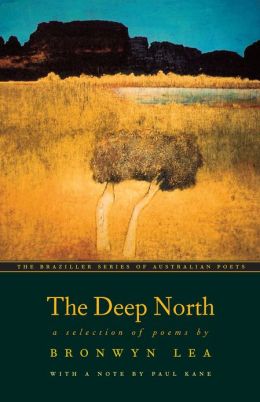
Maria Takolander Reviews Bronwyn Lea

9780807616260_p0_v1_s260x420

The Deep North by Bronwyn Lea
, George Braziller, New York, 2013

It is a tribute to the quality and readability of Bronwyn Lea’s poetry that a selection of her work forms the second volume in the new George Braziller series (edited by Paul Kane), which aims to introduce contemporary Australian poets to American readers. True to lyric poetry, Lea’s poems are musical in their composition, and they can be intimate in their subject matter. However, Lea’s work is never just about crafting agreeable verse, and it is never just about her personal experience. What makes Lea’s poetry so striking and meaningful is its acknowledgement of a wider and worldly context: historical, geographical, biological, political. In fact, Lea’s poetry might be said to enact an ironic rejection of the claustrophobic potential of autobiographical verse by continually fleeing from it to something else. This might be typical of contemporary post-Romantic poetry generally, though in Lea’s poetry—highlighting the importance of gender to the work—that flight is often symbolised by the rejection of the trappings of romantic love for a liberating movement into ‘a vantage point … a vista’ (as we read in ‘Driving into Distance’). This makes Lea’s work reminiscent of Emily Dickinson’s restless verse, with Dickinson’s presence apparent in the exquisite poem ‘Insufficient Knowledge.’

Continue reading →

The PEN Ten with Karen Emmerich

OLYMPUS DIGITAL CAMERA

The PEN Ten is PEN America’s biweekly interview series curated by Lauren Cerand. This week Lauren talks to Karen Emmerich, a translator of Greek poetry and prose, and an Assistant Professor of Comparative Literature at the University of Oregon. Her recent and forthcoming books include poetry by Miltos Sachtouris, Yannis Ritsos, and Eleni Vakalo, and fiction by Sophia Nikolaidou, Amanda Michalopoulou, Ersi Sotiropoulos, Margarita Karapanou, and Vassilis Vassilikos. She is the recipient of translation grants and honors from PEN, the NEA, and the Modern Greek Studies Association; her translation of Sachtouris’s POEMS (1945-1971) was a finalist for a National Book Critics’ Circle Award in 2006.

When did being a translator begin to inform your sense of purpose?

I somehow find it much easier to switch those terms, and to say that a sense of purpose has always informed my translating, from the very first book I translated, Margarita Karapanou’s novel Rien ne va plus. It was actually the first book I ever read in Greek, when I was eighteen, and it gutted me. Of all the books I’ve translated, it’s the one I’ve gotten the most emails from strangers about. Knowing that her work now affects people in English as it did me in Greek—that provides an incredible sense of purpose. And of course now that Greece is constantly in the news, portrayed in frustratingly distorted and unfair ways, I feel an increased sense of obligation to keep bringing across as much Greek literature as I can, to counter these media representations and misrepresentations.

Whose work would you like to steal without attribution or consequences?

Well, as a translator, I’m always “stealing,” in a sense, and yet acutely aware of the ethical implications of what I do. I’m also a professor, which makes me sort of a stickler for proper citation.

Continue reading →

Stephen Edgar Launches Jakob Ziguras

Chains-of-Snow

From time to time, a genuinely exciting poetry discovery arrives – I was going to say in the letterbox, but more usually now in the email inbox. So it was when Jakob Ziguras first sent me some of his poems, nearly two years ago now. He told me that he had been writing for some fifteen years but had made few attempts to publish his work. I could hardly reconcile the second fact with the first.

It was immediately apparent, when I began to read what he had sent me, that I was not dealing with a mere beginner. Here was someone who had not only pretty well mastered the technical skills of formal verse but could employ them – and this does not always follow – to compose poetry. He was already writing with authority and a clearly individual voice. I urged him to begin sending out his work as widely as possible. His poetry soon began to appear in print and be shortlisted for prizes – and indeed to win the Harri Jones Memorial Prize, which is offered by the University of Newcastle for an outstanding body of work by a younger poet (Ziguras was born in Poland in 1977). And now we have Chains of Snow, his first collection.

Continue reading →

Αγγέλα Γαβρίλη, “Iridium” (εκδ. Momentum)

BKS.0155001

ΤΟΥ ΘΕΟΧΑΡΗ ΠΑΠΑΔΟΠΟΥΛΟΥ

Στις μέρες μας, που υπάρχει μια πληθώρα εκδόσεων ποιητικών συλλογών, δύσκολα βρίσκει κανείς κάτι, που θα τον εντυπωσιάσει ευχάριστα και αν ακόμα βρει, συνήθως, η όμορφη εντύπωση περιορίζεται σε δυο – τρία ποιήματα. Ευτυχώς, υπάρχουν και μερικές εξαιρέσεις, όπου ολόκληρη η ποιητική συλλογή είναι αξιόλογη και οι όποιες αδυναμίες είναι λίγες και περιορισμένες.

Μια τέτοια εξαίρεση συναντάμε και στην ποιητική συλλογή της Αγγέλας Γαβρίλη: “Iridium”, που κυκλοφορεί από τις εκδόσεις “Momentum”. Ξεκινώντας, έχουμε να παρατηρήσουμε ότι ολόκληρη η ποιητική συλλογή περιέχει έξυπνους συμβολισμούς, ενώ ορισμένες υπερρεαλιστικές εικόνες δίνουν στα ποιήματα της Αγγέλας Γαβρίλη μια αίσθηση, που ξαφνιάζει ευχάριστα τον αναγνώστη.

Στα ποιήματα της ποιητικής συλλογής “iridium” συναντάμε μια κοινωνική διαμαρτυρία, όπου μιλώντας σε πρόσωπο α΄ πληθυντικό η Αγγέλα Γαβρίλη συμπεριλαμβάνει και τον εαυτό της στα όσα κατηγορεί: «Αλλά κατά κάποιο τρόπο, / εμείς παραμένουμε ασφαλείς, / σχεδόν ικανοποιημένοι. / Κι η μόνη λογική εξήγηση που μπορώ να βρω, / είναι ότι είμαστε νεκροί. / Αλλά για γραφειοκρατικούς λόγους / δεν μας έχουν ακόμα ενημερώσει» .

Και που μπορούμε να βρούμε καταφύγιο απ’ όλα αυτά, που καθημερινά νιώθουμε να μας βαραίνουν; Στην ποίηση, που δεν έχουμε παρά να τη βρούμε στα δέντρα της Πλατείας Συντάγματος: «που υπάρχουν / που αντέχουν / που δεν κόπηκαν / που δεν κάηκαν / που δεν πέθαναν από αηδία. / Που δεν σηκώθηκαν να φύγουν, περπατώντας στις ρίζες τους».

Όμως, υπάρχει ελπίδα; Υπάρχει αν προσπαθήσουμε να πάρουμε τις τύχες μας στα χέρια μας, όπως το κοριτσάκι, που πουλάει στο δρόμο «αναπτήρες, χαρτομάντιλα, στιλό, / μισοπεθαμένα λουλούδια».

Η Αγγέλα Γαβρίλη στέκεται αλληλέγγυα στο μικρό κοριτσάκι: «Γιατί θα έρθει η μέρα που δεν θα είσαι πια κοριτσάκι. / Και τότε εσύ και οι βιτρίνες αυτού του κόσμου, / θα κλείσετε τους λογαριασμούς σας.» Αλλά, πέρα από την κοινωνική διαμαρτυρία, στην ποιητική συλλογή της Αγγέλας Γαβρίλη “iridium” υπάρχει και η υπαρξιακή διαμαρτυρία, όπου το ερώτημα γιατί να σκοτώνονται νέα παιδιά, εκφράζεται στο συγκλονιστικό ποίημα «Τάλιθα Κούμι», όπου ένα μικρό κοριτσάκι πνίγεται και κανείς δεν υπάρχει για να το σώσει: «Μόνο το νερό σε σκέφτηκε / κι έπνιξε κι άλλους. / Τουλάχιστον, μιαν αγκαλιά στο βυθό θα την έχεις.» Κλείνοντας, θα θέλαμε να συγχαρούμε την ποιήτρια για τα μηνύματα, που κατάφερε να μας μεταδώσει μέσα από την ποιητική της συλλογή “Iridium”, γιατί, όπως η ίδια αναφέρει στον πρόλογο του βιβλίου της: «Η ποίηση από τέτοιο υλικό είναι φτιαγμένη: υλικό προορισμένο να αντέχει, να γεννά χρώματα και να ταξιδεύει, μεταφέροντας μηνύματα».

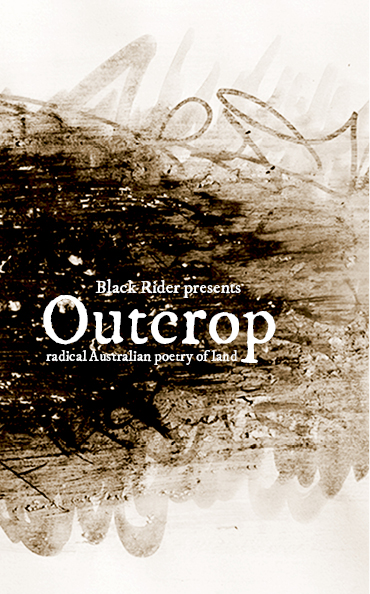
Outcrop: radical Australian poetry of land

Outcrop final front cover

Review by James Stuart*


Outcrop: radical Australian poetry of land
Jeremy Balius and Corey Wakeling, eds
Black Rider Press, 2013

As I write this review, sunlight filtered through a pall of smoke casts a dull orange glow over my kitchen bench. The Blue Mountains are burning. Sydney’s haze resembles downtown Beijing’s and it’s only October. Such an apocalyptic scene – part of the ‘Australian experience’ I am assured by our Prime Minister – provides context for the world into which Outcrop and its ‘radical poetry of land’ emerges. This is not to suggest that the anthology’s outlook is primarily environmental, but that alternative ways of examining land are sorely needed.

On the whole, Outcrop, compiled by Corey Wakeling and Jeremy Balius, is experimental – a distinct and welcome contrast to an often straight-forward field. Sadly, Wakeling’s editorial lacks the clarity of the subtitle’s territorial claim. His scholarly credentials are not in question, but his opening remarks resound with statements so close in meaning that a PhD seems necessary to distinguish their nuances. At times his stated territory becomes so inclusive as to seem self-contradictory, for example:

‘Moreover, the ecological itself disturbs the primacy of the figural image when its concerns are micro as well as macro, disguised as well as visible, and subsistent as well as existent.’
But this does not detract from the importance of the works, all of which invariably, as Wakeling notes, ‘express[es] a crisis in relation to land.’ He continues, more directly:
‘This collection believes in not only poetry’s potential for critique and dissent, but too the possibility of recuperation and efflorescence of land’s multiplicity in a theatre of language. This theatre of language may entail utopia or dystopia, realism or surrealism, but I feel more so that this collection in its radicalism welcomes the gamut of these contrary forces.’

Continue reading →