Gig Ryan Reviews Emma Lew, Bella Li, Kate Lilley, and Jennifer Maiden

lew

li

lilley

maiden

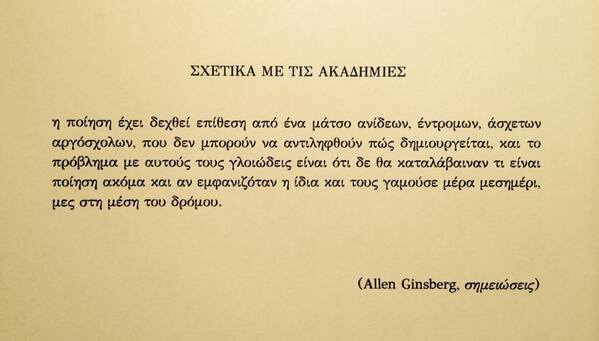
Luminous Animals
by Emma Lew
Vagabond Press, Rare Objects series, 2014

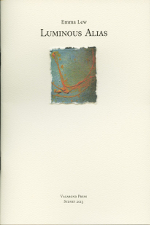
Maps, Cargo
by Bella Li
Vagabond Press, Rare Objects series, 2014

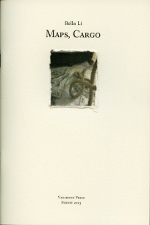
Realia
by Kate Lilley
Vagabond Press, Rare Objects series, 2014

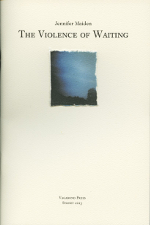
The Violence of Waiting
by Jennifer Maiden
Vagabond Press, Rare Objects series, 2014

Elegy intensifies around the objects that remain, those keepsakes that must signify a spent life. In Kate Lilley’s Realia, the first poem ‘GG’ is an auction listing from Greta Garbo’s estate in which the repetition of Garbo’s name intones like a docked requiem. Only things exist timeless, immutable, saleable, as shining representatives of the once-living. Life’s fraught event is reduced to its acquisitions, and transformed, satirised, into capitalism’s ultimate wearer of labels: the former consumer of commodities is now more amenably cast purely as a selection of those objects, whose value her absence increases. Lilley’s ‘realia’ hammer to the page like Luther’s Theses, each new item increasingly absurd, poignant, etiolated: ‘Greta Garbo bear metal figurine / Greta Garbo stamped Edelweiss doe skin gloves gauntlet length … Greta Garbo mechanical terrier … Greta Garbo wind-up puppy in pink basket … Greta Garbo roulette ashtray.’ The list loyally refrains from any enhancing or explanatory judgement. Each described object vainly attempts to serve as metonym, a distilled abbreviation of its once owner, an aide mémoire, an attribute, such as Athena’s aegis, or Hermes’s winged heels. Objects replace the person and the poem attempts its rite of transubstantiation, exposing this as futile bid. The four poems of Realia are composed of carefully placed fragments, evoking, through sentiment they strategically evade yet imply, the unseen vanishing points of pathos and humour. Precise description memorialises: the ‘antler inkwell’ from Melbourne’s Trades Hall, in ‘Valet de Chambre’ signifying a past era, an obsolete trade; the ‘shaded o-mouth / painted sideglance … glad plaid’ of a doll from ‘Wax Composition 1926’ spins to life like Coppélia, with its sudden flush of present participles, or gerunds, ‘sleeping walking kissing’; ‘Plantation Dainty’ takes lines from Cajun and Creole slave songs, ‘les jours du temps passé’ (auld land syne), that stretch desire into death, as if yearning is always for obliteration:

She comes at night to croon me
les jours du temps passé

cream-top, picayune
she’s what I want and her I’ll have

lowers her face to mine
when love’s chains upon thee lie

buttons down her back as she goes
bonsoir bonsoir mes beaux yeux noirs

Only the poem can remember, as objects stack these radiant caskets. The last poem, ‘Letters of Caption’ – a formal term meaning, roughly, to request to bring an offender of the church into line – wittily re-charges some common phrases in unpredictable contexts: ‘Presentation feedback: good to see you! … Brevity fabrication error … Cheek to cheek in the unabridged / Yours forthwith to thrall and bond.’ In Emma Lew’s Luminous Animals, each poem plays an irresolvable dramatis personae of pronouncements, justifications, and opinions, some seeming to address one who stands accused for unspecified reasons. The Other in these poems may be frightening, yet contemptible, as each narrator enacts a paradox of both revelation and withdrawal, embalming and erasing their own integrity:

Chaos persists and leads to inner haunting,
spreading ruinously, as in dreams.

So I’ll go on suffering with a kind of relish
in the shadow of heroic virtues,
until my errors of allegiance are forgotten
or I fall into a brook one morning, very simple!

(‘Speculative Realms’)

Some poems tally instructions that parody conventional roles:

You must try to touch his heart.
Concoct a special soup in his honour.
Laugh and cry and be afraid, and so on.

(‘Mysteries and Lacquers’)

It is bitterness I want to teach her …
Sweet dreams, delusive hopes.
The taint is passed on from parent to child.
How could anyone as pale as she, I wonder, sit so silently?
I’ll never tire of punishing her.

(‘Finishing School’)

These brusque explainers define their separateness with many end-stopped statements gathering around them like moats, yet they also wildly yield (The Wild Reply was Lew’s first book). The Other is alternately wooed and rejected as hoodwinked despot, witness, or invigilator, the narrator’s character always a flagrantly unknowable display, deflecting with spurious gambits. These narrations twist through self-analysis, repeating and dissolving, with any sense of agency brokered with qualifications and self-sabotaging contradictions, sometimes mirroring the doublespeak of so much twentieth century history:

I concluded in a very slow and clear manner,
so as to assist the person whose job it is to write
everything down and
make a report,
“The death of the Red Army man should remain in our memories
all our lives as a lesson:
If the horse drowns,
proceed on foot.”

(‘Lesson’)

There is an element of the Gothic in these minatory phrases, these haunted apologias of defiant resignation or offhanded incantation that are declaimed and yet, with almost Gothic camp, wryly toyed into discontinuous narrative. Another interest is season: two poems mention autumn, and three allude to spring, one locating it in May – the air is tinged with the upheavals of European history and literature, a fitting setting from which to parry the interpolations of shadowy off-stage quibblers.

The first poem in Jennifer Maiden’s The Violence of Waiting, ‘George Jeffreys: 15: The Fourth Terrace’, takes us into Dante’s Inferno, the abode of the slothful imagined as a casino, in which some Labor Party politicians have gathered. Dante’s sloth is that of ungrasped opportunities, of insufficient love (of the good), and on the fourth terrace these blighted souls now rush in frenzy to compensate for their earthly sloth:

The air in here swirled that colour,
she thought, like aerated wine, all
restless, tired pearls, a hiss
of penitential moonlight, love
that was not enough at the start becoming
overwrought and angry at the last …
Upstairs,
Matilda offered some cold, flasked
forgetfulness and sublime
selective memory, but Clare
remained steeled to remember,
and George knew his own knowledge
of her history itself a steel anchor.

In this sweaty, tinselly atmosphere, Maiden’s George and Clare sharpen their philosophical positions while sceptically observing the ensuing procession. In ‘Diary Poems: Uses of Cosiness’, Sylvia Plath’s facility with homecrafts is described as being ‘desperate / for humanity and control’, that is, as in Lilley, such minutiae may signify, or even magically contain, character. As in previous collections, here Maiden directs odd-couple dialogues: Kevin Rudd and Dietrich Bonhoeffer, Princess Diana and Mother Teresa, Hillary Clinton and Eleanor Roosevelt, along with George and Clare who appear through many volumes. These talismanic guides interpret the existing world as if time-travellers, wise elders whose ethics are more stable than those of their admiring adherents – partly confessors, partly loved parent-figures. Eleanor speaks to Hillary of the Osama Bin Laden assassination, critical of those televised reactions: ‘to have trapped oneself as an audience / to prove onself an actor isn’t what / I would ever want for you’ (‘Hillary and Eleanor: 10: the Coppice’).

The final poem ‘Maps in the Mind’ is similar in its economy and rhythm to ‘My heart has an embassy’, which imagined Julian Assange, in Maiden’s last book Liquid Nitrogen:

The isle of the dead is always sand …
The isle of the dead is never solved
by jungle fast last answers, planned
sensitive-isolate like species evolved
in feral fight and fear on Manus Island,
in fear on Manus Island.

This lyrical poem is partly in couplets whose repetitions and melody, not its matter, remind of Hopkins. The plaint of Hopkins’s ‘Spring and Fall: to a Young Child’ echoes in Mother Teresa’s words to Princess Diana, ‘we will now mourn for ourself.’ This pair converge as if painted in a Renaissance Visitation: ‘now she was wistfully, stilly alone / and Teresa stood beside her.’ Maiden’s poems are naturally political, wrangling the catastrophic here and now. The Violence of Waiting refers to those lukewarm souls who wait in the Inferno’s antechamber, but also refers to those, deemed guilty of the recently-invented ‘sin’ of seeking asylum, who wait in much nearer Infernos.

In his introduction to Contemporary Asian Australian Poets, Adam Aitken writes that Bella Li’s ‘poems are more like deracinated explorers’ journals … China is not hers … China is a library.’ In Li’s Maps, Cargo, prose poems expose the solipsism of early explorers – Cortés in South America, Franklin in the North-West Passage – who see only a desired ‘terra nullius’, just as Judith Wright exposed the Wilderness Society’s presumption of an unnamed wilderness.1 Yet it is colonisers and explorers, at once unbearable and sympathetic, who narrate these poems as they dauntlessly proceed to erase ‘wilderness’: only they possess character, as if the indigenous inhabitants form merely homogenised backdrops for an extinguishing gaze. This pocket atlas of colonialism moves from China to the Americas and elsewhere, through time. Facts frame tired or rapt asides, but Li’s interest is in the Melvillean quest itself, its compulsion and audacity. The second prose poem ‘Voyage’, indicating Baudelaire et al, also positions discovery as play: ‘The hold littered with props. Flat clouds drifting idly along the cardboard coast … my eyes reeked of distance’, and in ‘Three views of the Hindenburg, Ocean County’, part three simply states ‘(Stock photo.)’ – highlighting the writer as collagist and guardian of information. Another tracks the exiled prophet Muhammed:

Massacred, according to custom, the vast number of the inhabitants … One morning, according to the vast number of oriental historians, the sun ‘a little after rising, completely lost its light’. To the great astonishment of the astronomers, this darkness (in the easter palace persisting). Persisted until noon.
(‘E 44 10 N 33 15’)

Dashes, ellipses, are often deployed, as if any word can be arbitrarily assigned: place and time become generic components of colonialism. To own a thing is to desecrate, its attributes miniaturised into a performance of obedience. Reminiscent of Susan Howe’s suggestive gaps, Li’s gaps function as cynicism, a yawn for randomly designated place. This is reiterated in her use of a type of anadiplosis: beginning a line with the last word of the previous line, (a technique Maiden employs in her earlier ‘cluster’ poems) but more often, simply reiteration, or anaphora, beginning lines with the same words. Images are layered like houses around a harbour, theatrically doubling their importance, the solid thing suspended above then caught in the permeable waves re-interpreting it. Li uses lines from, among others, Pound, Ashbery, Seferis, Sexton, and the Guyana-born British poet David Dabydeen, as departure points in many prose poems. The last poem ‘Windows’, a somewhat jarring break from the ebbing dream-like prose, looks out from, or into, an americanised universe as if past feats of exploration are now transposed into the blandishments of a more insidious conquest.

1.‘… the Wilderness Society of Australia’s … aim, to ‘preserve Australia’s wilderness’ assumes that it is the right of the invaders, not the original owners, which is dominant everywhere except where Aborigines may be able to prove, before our tribunals, ‘traditional attachment … (Its) policy thus adds up to a confirmation and endorsement of the terra nullius judgement … That judgement has resulted, over the past two hundred years, in dispossession, destruction and the denial of all human rights to Aborigines, has turned all Aboriginal land in Australia over to destructive interests, and is the chief stumbling-block to justice and reconciliation’. Judith Wright, Born Of The Conquerors, Aboriginal Studies Press, 1991, p49 ↩

*Gig Ryan is author of New and Selected Poems, Giramondo 2011 and Selected Poems, Bloodaxe Books 2012.

**Taken from Cordire Poetry Review at http://www.cordite.org.au
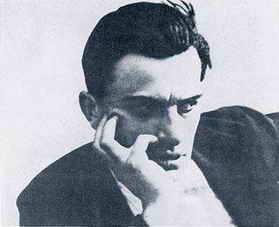
Βλαντιμίρ Μαγιακόφσκι, Αδύνατο

60magiakofski

Μόνος δεν μπορώ –
να κουβαλήσω ένα πιάνο
(πολύ περισσότερο –
μια σιδερένια κασέλα).
Κι αν δεν μπορώ την κασέλα,
Ούτε το πιάνο,
Τότε πως
Να κουβαλήσω την καρδιά μου, παίρνοντάς την πίσω.
Οι τραπεζίτες ξέρουν:
«Πλούτη αμύθητα έχουμε.
Οι τσέπες δε φτάνουν –
Τα βάζουμε στην κασέλα».
Η αγάπη
είναι μέσα σου –
σαν πλούτος σε σίδερο –
την έκρυψες,
γυρίζω
και χαίρομαι σαν Κροίσος
Και πάλι,
αν το θελήσω πολύ,
ένα χαμόγελο να πάρω,
μισό χαμόγελο
και πιο λίγο,
με άλλες ξεφαντώνοντας,
θα ξοδέψω τα μεσάνυχτα
ρούβλια δεκαπέντε λυρικά ψιλά.

Νίκος Καρούζος, Ἡ ἔναστρη φωτεινότητα

-1

Ὁ ἄνθρωπος ποὺ εἰσόρμησε πιὰ στὴν ἀπώτερη θλίψη
μὲ δίχως ἔστω ἕνα τριαντάφυλλο
μ᾿ ἐκεῖνα τ᾿ ἀκατέργαστα στὴν ὤχρα μεινεσμένα μάτια
στὸ μισοσκέπαστο ἐρημόκκλησο σέρνοντας
τὴ μεγάλη ἀνάπηρη σιωπὴ στὸ καροτσάκι τῆς ὁμιλίας
ἀνέκαθεν ἤξερε τὴν ἄσωστη κατάσταση-: πὼς εἴμαστε
καθημαγμένοι ἐρασιτέχνες τοῦ Πραγματικοῦ
μ᾿ ἕνα μυστήριο ποὺ βεβηλώνει τὴ διάνοια διχάζοντας
πρὶν ἡ δορὰ τῆς θάλασσας σηκώσει τὸ ἀνάστημα τοῦ Ἅδη.
Πολύκρουνη ἡ θύελλα σπάζει τὰ ματογυάλια της κι ὁ μέγας
τρόμος ἀδράχνει τὰ μελλούμενα
σχηματίζοντας ἀποστήματα στὴ μνήμη.
Κατάχαμα τῆς ἀσίγαστης σιγῇς ἕνα κινούμενο
κειμήλιο-σκουλῆκι.
Ἡ ζωὴ ποὺ μικραίνει: ἡ μεγάλη ἀλήθεια.
Στὸν ὁποὺ πιάνει τὸ τσαπὶ γίνεται τσάπισμα
στὸν ὁποὺ πίνει τὸ νερὸ γίνεται πιόμα.
Ἔρχεται ἔαρ ἀειπάρθενο προφέροντας ἀρώματα
κρατεῖ μία κατάμαυρη λεπτότατη κλωστὴ
στὰ ὕπαιθρα τῆς νύχτας
τὸ σημεῖο τοῦ γκιώνη ποὺ εἶν᾿ ἄγνωστο πέρα…

Ένας αλύγιστος ποιητής με «ευλύγιστες μελαγχολίες»

ceb5cf85cebbcf8dceb3ceb9cf83cf84ceb5cf82-cebcceb5cebbceb1ceb3cf87cebfcebbceafceb5cf82

ΤΟΥ ΔΗΜΟΥ ΧΛΩΠΤΣΙΟΥΔΗ

Το πορθμείο για τη νησίδα της Ποίησης είναι απάνεμο και φιλόξενο. Πολλοί καταφεύγουν εκεί με το όνειρο του ταξιδιού. Η θάλασσα του εμπορευματοποιημένου πολιτισμού και της υποκουλτούρας είναι τρικυμιώδης και τα εμπόδια πολλά. Λίγοι τολμούν το επικίνδυνο ταξίδι και ακόμα λιγότεροι αγκυροβολούν στην Ποίηση, λίγοι πραγματώνουν το στόχο του “ταξιδιού”.  

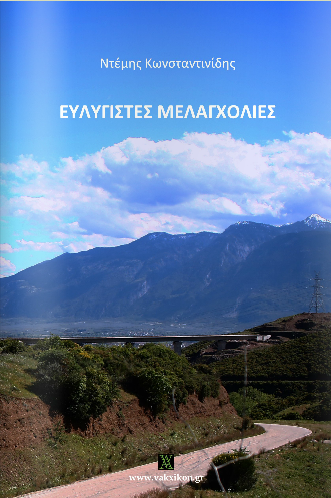
Ο Ντέμης Κωνσταντινίδης έφτασε στο λιμάνι το 2009. Το ανήσυχο ταξίδι τον έφερε αντιμέτωπο με λογής θηρία. Στο νησί φτάνοντας ναυαγός είχε να επιδείξει ήδη τέσσερις ποιητικές συλλογές και μία πανελλήνια βράβευση: Διαθέσεις (UniversityStudioPress, 2009), Ιχθύων λόγος (UniversityStudioPress, 2011), Κι όμως, γελούν καλύτερα οι τζίτζικες (UniversityStudioPress, 2013), Ευλύγιστες μελαγχολίες(Vakxikon, 2014).
Οι «ευλύγιστες μελαγχολίες» είναι μία συλλογή από ποιητικά θραύσματα. Ο δημιουργός πειραματίζεται με τον έμμετρο στίχο και την ομοιοκαταληξία και με τον ελεύθερο στίχο. Γνωρίζει ότι ο ελεύθερος στίχος δεν τον καθιστά ελεύθερο, αλλά του επιβάλλει τους δικούς του νόμους, ότι απαιτεί ρυθμό και έχει τη δική του τελετουργία. Επιμένει στο στίχο, εγκαταλείποντας το πεζολογικό ύφος και την ποιητική πρόζα. Ελλειπτικοί στίχοι αναδύουν την αγωνία για το παρόν και το μέλλον.

Η διατύπωσή του αποφθεγματική, με στίχους σπαράγματα, απότομους και κοφτούς που λειτουργούν ως κραυγής αγωνίας. Η σάτιρα αποτελεί ένα άλλο μέσο έκφρασης για τα σύγχρονα αδιέξοδα. Η Θεσσαλονίκη του παρόντος και των παθών βρίσκεται στο ποιητικό του επίκεντρο (κλειστά καταστήματα, πολύπαθη Εγνατία, Χαλκιδική). Η ανατροπή ακόμα στέκει μακριά, ο εξανδραποδισμός και οι ανθρωποθυσίες συναγωνίζονται την οργή, την απογοήτευση.

Θραύσματα εικόνων ξεπηδούν μέσα από τις λέξεις. Στίχοι αμφίσημοι, όπως ο δημόσιος λόγος. Η εικονοπλασία με τη δύναμη της εκφραστικής λιτότητας που τον διακρίνει γίνεται εκρηκτική. Η θάλασσα είναι πολλά υποσχόμενη, αλλά τελικά και τούτη συμμετέχει στην κοινωνική ένταση (αυτοκτονίες, ανεργία, σκληρές συνθήκες εργασίας). Ακόμα και η φύση μοιάζει να συνωμοτεί κατά του σύγχρονου ανθρώπου.
Η μελαγχολία των καιρών που διακρίνει όλη την κοινωνία αποτυπώνεται στον ποιητικό καμβά του Κωνσταντινίδη. Η απογοήτευση και η ελπίδα αποτυπώνονται με λέξεις αιμάτινες σαν τις πληγές του ποιητή που αγωνίζεται στην τρικυμία της φίλαυτης κι αντιπνευματικής κουλτούρας της ήττας. Κι όμως ο ποιητής συμμετέχει, δίνει το δικό του παρών στο κοινωνικό κάλεσμα. Απέναντι στον εφιάλτη όμως ο ποιητής αντιτάσσει την τέχνη με στόχο να αφυπνίσει από τη νάρκη. 

Η γενιά της κρίσης αντιστέκεται σθεναρά στην υποταγή και την αδιαφορία των σκοτεινών μας χρόνων. Ο ποιητής είναι μέλος της κοινωνίας, άνθρωπος των τεχνών και των γραμμάτων, βιώνει τα κοινωνικά πάθη, τους μετασχηματισμούς. Οι λέξεις είναι το δικό του μέσο για να εξωτερικεύσει το δικό του ψυχοσυναισθηματισμό. Άλλωστε, όπως έλεγε και ο Προυστ και «οι ποιητές ανατρέφονται με σκαμπίλια (της ζωής)»… Δρουν σε μία κοινωνία πόθων και βασάνων.

*Παρμένο από το http://tovivlio.net/%CE%AD%CE%BD%CE%B1%CF%82-%CE%B1%CE%BB%CF%8D%CE%B3%CE%B9%CF%83%CF%84%CE%BF%CF%82-%CF%80%CE%BF%CE%B9%CE%B7%CF%84%CE%AE%CF%82-%CE%BC%CE%B5-%CE%B5%CF%85%CE%BB%CF%8D%CE%B3%CE%B9%CF%83%CF%84%CE%B5/

Δήμος Βιλαέτης, Η ομάδα

10352958_808704592485273_2564728705184663064_n

Πως άλλαξε
η Τραπεζούντα
μόλις
έφτασε κοντά μας.
Ολονυχτίς
Περιμέναμε
τα τελευταία της σπίτια,
αλλά το πρωί
φάνηκε στρατός.

Κυνηγημένοι
απ’ το ζώο Ισλάμ,
μ’ όλα
τ’ αρχεία καημένα
και τη ζωή
αμπολυτή σαν κοπρόσκυλο,
δίχως παρελθόν,
μ’ όλες τις μνήμες
συμπυκνωμένες
απάνου στο πετσί,
είπαμε.

«Αξίζει ο άνθρωπος».
Και φύγαμε
για τη πόλη Ταρσό
να συζητήσουμε
για το δικαίωμα
του εμετού,
και τη τύχη

των θριάμβων,
για το τέλος
της εξουσίας του χώρου.

Ασφυχτικά
στριμωγμένοι στο τραίνο
μ’ άρχοντες
φοβηθήκαμε
τη σφαγή.

Αλλοίμονον
ο πλούτος.
Ο καρδινάλιος
ερωτευμένος
με το βαρονέτο,
ανταλλάσουνε τα κλειδιά
των πόλεων.

Βαρύτητα
είναι
η εθνική ιστορία!
Το ιδιωτικό
μουσείο των Ελλήνων.
Οι κοντυλοφόροι.
Η κρατική τους
χορηγεία.
Αυτό
το συμπαγές ζεύγος.
Ο έρως
των πραγμάτων.
Τ’ όνομά σας

Το κενό..
Το κενό…

Κάπου
έξω απ’ το μούτρο σας
αρχίζει
το Πάνθεο των πληβείων.

Το όλον μου
αντιμετωπίζει
το κάτι σας.

Θα συλληφτούμε.
Θα θέσουμε τη σάρκα μας
στη διάθεση
των πυγμαίων σας.

Κι ύστερα
θα μετρηθούμε.
Όλοι κι όλοι
χίλια εκατομμύρια
μεταχειρισμένοι,
άχρονοι, ανυπόληφτοι,
προικισμένοι
με το λαϊκό ελάττωμα
της αγάπης,
υπήρχαμε.

*Από τη συλλογή “Η Πράξη”, Πύργος Ηλείας, 1985.

Alyson Miller
 reviews Lucy Williams’s Internal Weather

lucy-williams

Internal Weather
by Lucy Williams

Walleah Press, 2014

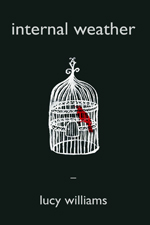
While Lucy Williams’s Internal Weather is split into the unavoidable cycle of life – birth, childhood, and death – the collection as a whole is a love song, a tribute to ‘difficult events’ and ‘unattended shadows’. The poems emphasise how the ‘forming of words’ and the ‘making of stories’ locates these instances in specific moments of memory and time. Indeed, love is the lung-set of Internal Weather: love for a child, first love, romantic love, love lost, love for the dead, love that ‘surprises … like religion’ and thickens ‘doubt into determination’.

Fittingly, then, much of Williams’s imagery, with its striking use of defamiliarisation, is embedded in notions of familial connection, which are simultaneously ethereal and visceral. There is the wonder of family in ‘baby’, for example, ‘how all of us / are linked by blood—by memory and hope’, and in ‘magnolia’, the ‘ghost’ of afterbirth, which ‘moves inside me again as though my heart has fallen’. It is this grounding in the bodily or the ‘real’ which resists Williams’s poetry, more often than not, from lapsing into sentimentalism – instead, this approach anchors notions of love and loss with a corporeality that is often as tragic as it is beautiful, if not domestic. This delicate balance is captured particularly well in ‘miscarriage’; ‘I’m sorry that you will never learn / about the human heart—unbuttoned / like a giant pocket’, and in ‘hindsight’; a haunting image of collision and death:

I would wish for death fast as new love
his car into a tree, windshield glass like
diamonds connecting with a face
a fall from a great height like a dream of falling.

The graceful fluidity of Internal Weather’s prose poems – sometimes fragmentary and elliptical, other times perfectly compressed micro-narratives – emphasises a storying of memory or operating as a keep-safe in its most literal understanding of protecting precious things. The poems are undoubtedly cohesive, but the distinct changes in style and form are suggestive of memoir in the epistolary tradition; or, more prosaically, a scrapbook. It is an image most evocatively captured in the poem ‘the place where things collect’ which describes ‘pine-needle memories’, flashes or pricks of history that culminate to define the generations of a family: ‘a girl on a swing’; a crying mother; ‘emotions boxed like groceries’; a birth that ‘filled her / with dumb animal love’; four funerals a reminder of ‘the people we want to protect but can’t’.

Williams writes of bodies and night skies, a child’s paintings and chasing dogs, ‘hearts bruised as oysters’ and ‘guilt like spoiled fruit’. These are ordinary things – the experiences and encounters of the everyday – but there is nothing clichéd about Internal Weather, with its constant hints of darkness and fear, and its underlying anxiety about the ease with which ‘the beginning or the end’ might occur. It is an edginess best observed in Williams’s talent for the simplicity of images that border on violence and despair that suggests the threat of an abyss from which the subject might not return: a ‘tiny coffin’ is likened to ‘a huge mistake in the arms of men’, while the silence of a dying son is ‘a baby / that wouldn’t stop screaming’. In the eponymous poem,

I am saddened, suddenly, by what is not here.
All of this internal weather
blueprints for every possible
thing aching in the rib cage.

The synthesis of materiality with the abstract denotes the quiet beauty of this collection. Rich with hearts that ache ‘like a caught fish’ and oceans that ‘boil over and dry up’, Internal Weather is, as noted, a song about love, but it is simultaneously an ode to small pains and large tragedies, ‘the phenomena of the earth’ and all those things ‘that shocked or floored us’.

*Alyson Miller teaches literary studies at Deakin University, Geelong. Her short stories and prose poetry have been published in both national and international publications, alongside a book of literary criticism, Haunted by Words. Her collection of prose poems, Dream Animals, is forthcoming.

**Taken from Cordite Poetry Review at http://www.cordite.org.au

Αλέξανδρος Ίσαρης, Θα επιστρέψω φωτεινός

10614166_10204704897648407_2879713933131939663_n

Έφτιαξα μια ζωή από πηλό
Που ράγισε στα χέρια μου
Λερώθηκε στα χέρια αλλωνών
Μέχρι που κομματιάστηκε.
Ζωγράφισα τη μοναξιά·
Με το βλέμμα τρομαγμένο ταξίδεψα
Σε έρημα νησιά χωρίς φωνή.
Αγάπησα φαντάσματα που σύρθηκαν
Μαζί μου σε κρεβάτια ηδονικά
Κι έπειτα πέταξαν από κοντά μου κρώζοντας.
Αρρώστησα σε κάτασπρα δωμάτια
Κρατώντας το κορμί να μη σκορπίσει.
Έκλαψα από πόνο κι από στέρηση.
Πύργους ονειρεμένους έχτισα
Μα η αρχιτεκτονική λειψή και χάλασαν,
Στον δεύτερο σεισμό δεν άντεξαν,
Κρίθηκαν κατεδαφιστέοι.
Με βλέμμα άτονο την παγωνιά προσμένω.
Νοέμβριος και στο μυαλό μου βρέχει καλοκαίρια.
Μα είμαι σίγουρος πως κάποτε
Μέσα από του χωραφιού την πρωινή δροσιά
Μέσα από τη λίμνη την ακύμαντη θα βγω
Και θα επιστρέψω φωτεινός.

Nanja Noterdaeme, Άνοιξη

1375935_582465258486102_1256517783_n

Η επιθυμία θαμμένη σε
χιονισμένο τάφο,
είμαστε τόσο μικροί κι εμείς
τόσο αδύνατοι και όλοι μαζί δυνατοί
λένε…
Όλοι μαζί μια εικονική πραγματικότητα
αντικαθιστούμε μια κοινωνία,
Είμαστε, δεν είμαστε,
Το έχουν ξαναπεί, είμαστε τόσο μικροί
και οι εικόνες πολλαπλασιάζονται.

Σε φαντασμένες σκιές νερού
παίζουμε βατραχάκια,
με πετραδάκια, πετρούλες, βότσαλα,
σφεντόνες στα πελάγη των αναμνήσεων,
τεντωμένη αναζήτηση της συντροφικότητας,
επέκταση του κύκλου, δυο τρία, τέσσερα,
πέντε κύκλους αλλά
τόσο μικροί στα πελάγη των επιθυμιών,
ανήμποροι
σκαλίζουμε ειδώλια, μερικά μικρά,
τα μεγάλα προσδοκούν την
αιωνιότητα, προσπαθούν να στέκονται
στις μύτες για να φτάσουν ψηλά.

Ελεύθερη, η άνοιξη μας προειδοποιεί
μας αγκαλιάζει η λάμψη της,
το χάδι του σούσουρου, το φεγγάρι, το μαγικό
πανσέληνο, χρυσαφένιο στεφάνι
που ξυπνάει τα σπουργίτια,
φτερουγίσματα των ψυχών μας,
φυσική κίνηση της καθημερινής μας ζωή,
υπόκλιση στην φύση.

John Jenkins
 reviews Chris Mansell’s, STUNG

cm-scan

STUNG

by Chris Mansell

Wellsprung Productions, 2014

Chris Mansell is a widely published poet with a lively range of interests, a multi-talented writer who bridges various creative worlds; her work sometimes fusing with music, the visual arts, and theatre. Her departure from a narrow specialisation in poetry is highly admirable, but may have made her somewhat under-appreciated both as an energetic innovator and important poet of her generation. Mansell’s first book of poetry appeared in 1978, and she has published more than 25 books and chapbooks in the intervening decades; while her Schadenvale Road, a collection of short stories, appeared in 2011.

STUNG represents a return to some of Mansell’s ongoing experimental concerns, foregrounding this vital dimension of her work. There is an obvious first clue in the typography, with the S of STUNG printed in grey ink, and TUNG (appropriately ‘sticking out’, as it does) in pink. Twin colours continue to alternate throughout the book.

STUNG consists of 72 square-shaped units of text, or ‘text tiles’, four of which are diagonally disposed across most of the book’s right hand pages. All the left-hand pages remain blank, providing a sort of conceptual breathing space.

Just one glance immediately reveals the pattern, with its ‘squads of quads’ joining across their adjacent corners, so one can read from one to the next, then down the page like stepping stones.

We have entered the territory of concrete poetry here, where the extreme formality of the book’s layout begins to shape content. Running counter to this, however, while cleverly mining a certain frisson it allows, the text itself – uniform within these severely formalistic, four-sided containers – immediately plunges readers into a stepping-down, breathless and heady onrush of words, entirely without punctuation. The expressionistic and often elevated lyricism of STUNG is thus held in a fine balance by the book’s formal restraint, and Oulipo meets concrete poetry in the service of conceptual play. But there is also passionate protest, mostly against the inescapable crap of life!

A lyrical passage which begins STUNG could refer to Sydney’s Circular Quay, or industrial port setting: ‘afternoon ferry hips a wharf goes feral in the light a wondrous jam of metal and wood ….’
The poem, after achieving very rapid liftoff, then rebukes two-faced summer: ‘… summer spilt hard on the street … promises futures summer lies its head off … summer you lying dog low smiling before you kill us you darer of fate and tickler of whim torch torturer wonder ….’

With tongue now fully free to sing or sting, we hear how many on Earth have been comprehensively stung (and in this context, conned). In the following ambiguous passage, summer’s rays of light seem glamorously life-enhancing at one moment, then like death-dealing military lasers the next: ‘… the glitzdom of over the edge of limelight of fantasms of lightfooted imaginary night spotlighting the flash of daylight an eyeflash straight to the brainstem arch over the edge … instant blisterglam ….’
STUNG then delivers a fusillade of pungent mini-diatribes against everything restricting and ugly in the human condition, including war, preventable global poverty, perceived crazy religions, the international arms trade, and particularly the one rule of thumb of economic exploitation. In these sections, images tumble chaotically: ‘… religion claiming the earth … fantastical dressups impress the poor dancing dreams around the ugly roofs … surely unbelievable to those who speak it as to those who hear … o god save something from the rubble if not truth then money render unto concrete what is abstraction power into glory into gore how it goes ….’

stung

Energy runs in tandem with much verbal invention, particularly towards the end, where we are left waiting, if not in God’s – then at least in Beckett’s – waiting room; waiting, that is, for things (not likely, on the evidence) to somehow improve: ‘ … next millennium gone to the hogs faster a violation wait waits waited waiting will wait was waiting will have waited will have to have waited…’.

STUNG is a spirited cry of protest, while remaining defiantly creative; and sympathetic too, to all those rowing in ever smaller circles in the same little tragi-comic boat on earth, or is that barb-wire canoe? This book is an excellent example of small-scale publishing, with care and attention to detail consistently evident, from concept to writing, through to text design, paper and binding.

*John Jenkins is best known as a poet. He also writes short fiction, non-fiction and occasionally for radio and live performance. He has worked as a journalist and book editor and taught in universities. He lives near Victoria’s Yarra Valley, and is widely travelled. His most recent poetry book is Growing up with Mr Menzies (John Leonard Press, 2008). Website: http://www.johnjenkins.com.au/

**Taken from Cordire Poetry Review at http://www.cordite.org.au