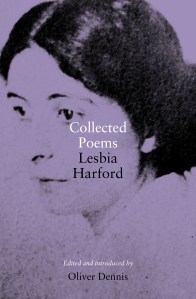
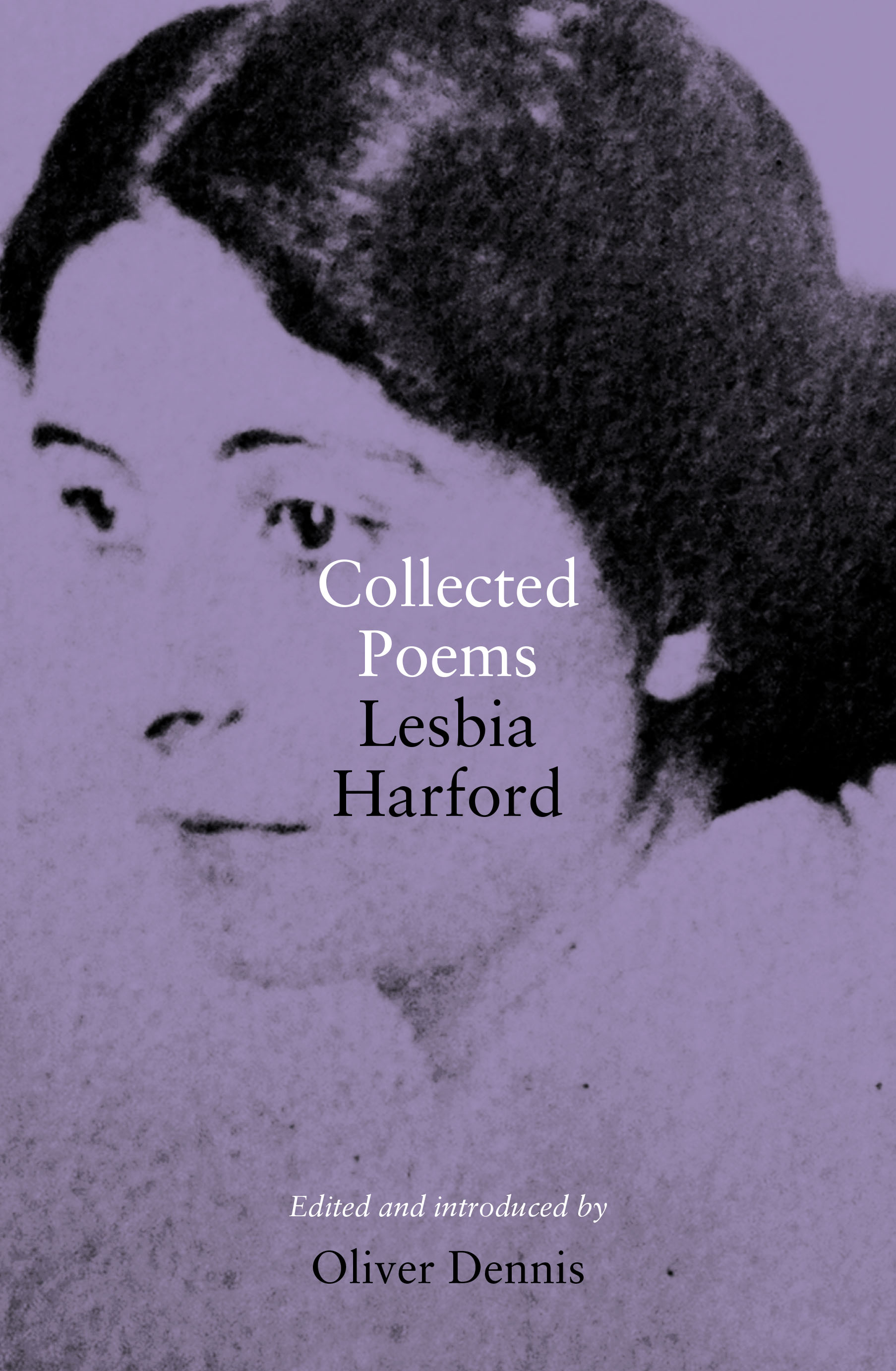
Collected Poems: Lesbia Harford
edited by Oliver Dennis
UWA Publishing, 2014
In the foreword of this long overdue volume, Les Murray writes that he considers Lesbia Harford to be ‘one of the two finest female poets so far seen in Australia; the other has to be Judith Wright’ (xviii). This is an extravagant contention, but it is not without foundation. Further, Murray’s claim warrants being extended beyond the confines of gender for, to my mind, Harford should be just as readily compared to some of Australia’s finest male poets including Les Murray, Kenneth Slessor, A. D. Hope, Bruce Dawe, Douglas Stewart, David Malouf and David Brooks (albeit that the tenor of Harford’s poetry is decidedly less conservative than some of these poets). Accordingly, it is quite tragic that Harford has, up until now, occupied such a minor place in Australian literary history for, as this volume amply attests, she produced what can only be described as some of Australia’s most evocative poetry.
Born in 1891 and dying in 1927 at the age of only thirty-six from the combined effects of pulmonary tuberculosis and a bacterial infection of the heart, Harford published very little in her lifetime and held so strongly to her uncompromisingly modern and free-spirited vision that she turned down opportunities for publication. Indeed, she refused to give Percival Serle, renowned Australian biographer, permission to publish one of her poems because her need to live an authentic life took precedence over concerns about her artistic after-life: ‘Your anthology will be read in many places for many years. I would not care to be recalled to the memory of distant friends by the poem you have chosen … You see, I take my poetry seriously and I am in no hurry to be read’ (xx). It is fortunate that Harford took this approach because the fluid nature of her sexual identity and her unselfconscious ability to express this within her poetry would, no doubt, have met with rejection and/or hostility at the time that she was writing. Being in no hurry to publish thereby gave her the freedom to commit wholeheartedly to her unflinchingly honest and searingly personal poetic vision. Moreover, it ultimately worked to preserve the wonderfully uninhibited nature of her poetry for posterity. During the years that she was writing, it is highly unlikely, for instance, that the following words from her poem ‘I can’t feel the sunshine’ would have been published:
Would that I were Sappho,
Greece my land, not this!
There the noblest women,
When they loved, would kiss.
Continue reading →
 To Koskino