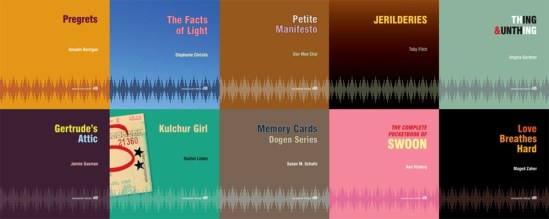
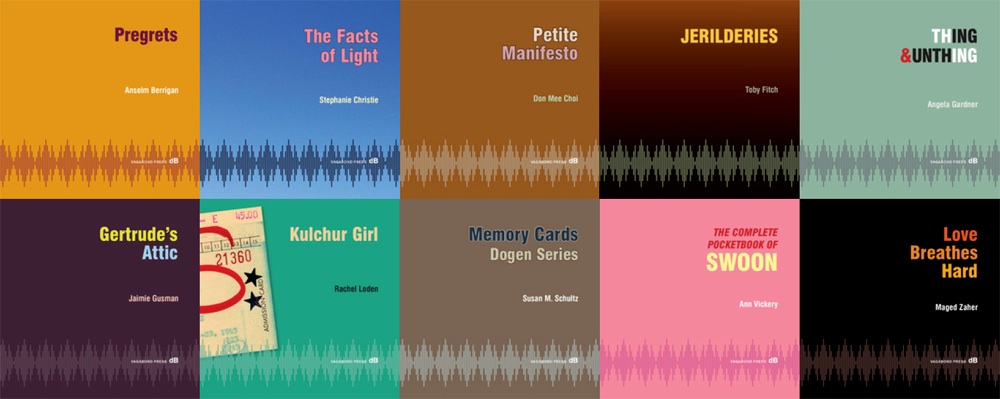
These ten tiny tomes from Vagabond Press each speak (squawk, swoon, glitch, muse, lyricise, confess) of how there is something not ticking precisely inside the reality machine. Or perhaps these books shine light onto how we’ve all gone slightly spectral within our anthropocenic phantasmagorias, lost and unmoored in an experiment that’s become dreadfully strange. Some of these books turn exclusively toward the world, others perhaps come from particular critical engagements; each serves to extend conversation both on what poets do, and what poems are for. Collectively, they map the uncanny infrastructures of all-too-human behaviour and the results are bewilderments, unsettlings, detours and dérives across netherworlds to which most of us haven’t a set of keys. There is enough in this first pack of deciBels to generate joy, dissent, close (or distant) reading and, ultimately, celebration – another step by Vagabond Press into the future (wherever that may be), and led by the fleet-footed Pam Brown.
Thing & Unthing by Angela Gardner
Angela Gardner’s elegiac thing-poems act like ‘breathing the phenomenal / world to shadows, to speckle righted // on the retina’; indeed, these texts are tracking devices monitoring a perhaps delirious odyssey:
the day a broken head, the car a ship of fools
*
In this telling
the sky is weighted
we drive south into ochre and bruise
the hills just an outline fading
These lines – are they end-stopped or enjambed, or both? – jerk us through unstable weirdness, with Gardner modulating precisely. So often, these haunting and defamiliarising noirs trigger an immediate wish to re-read:
It is the end of the road.
Just beyond the hotel
the high tide has been obsessively collecting.
It throws up
a headless seal
plastic bottles
a car tire.
The woman behind the bar says
‘this weather will turn to crap later
We make beer rings on formica
and look out the window
Gardner’s explorations of immanence are startling, revelatory, the poet not so much punctuating as puncturing appearances mistaken as realities. So many of these images have an afterlife, returning semi-coherent and artefactual, resonating long after each page is turned. Yes, this is a book of careful engagements interrogating how ‘ideas start to cluster around objects’: the Queen Anne chairs have ‘firmly muscled legs’ and ‘sun shines closest to childhood, now remembered as longest, warmest’, but Thing & Unthing is also an existential meditation. While early in the book, ‘the body is incoherent’, and the poet showcases just how garbled our intimacies can be, in the final poems Gardner shifts her gaze skyward, apprehending the ‘Pull of air (collective sky)’ as if to scan not only the strangeness of a mundane world, but also beyond.
Continue reading →


 To Koskino