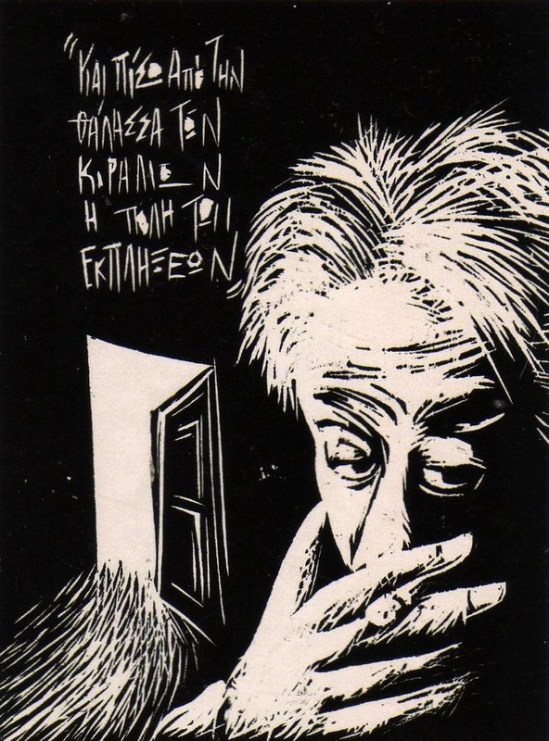
Θωμάς Γκόρπας, Τρία ποιήματα

5064528_orig

Η ΠΟΙΗΣΗ
Μνήμη Δημήτρη Χριστολούδου

Το χειρότερο και το καλύτερο στη ζωή ποιητή
Να χτίζεις για τους άλλους πύργους και παλάτια
Παίρνοντας πέτρα απ’ το νταμάρι της καρδιάς σου
Σκαμμένης απ’ τα χαμόγελα τα πάρε και τα δάκρυα
Παίρνοντας χρώμα και γυαλί απ’ την μεγάλη σου αγάπη
Που γίνεται βράδι πρωί κομμάτια….

Πατάρι

Ανάμεσα από καφέ εσπρέσο και ντουμάνια
Οι νέοι ποιητές σκαλίζουν στην καρδιά του κόσμου
Για φρέσκους δρόμους για φρέσκα λιμάνια
……………………………………………………………..

κάποτε τέλειωσε αυτή η ιστορία
κ’ οι ποιητές λιγόστεψαν αμάν πόσο λιγόστεψαν
τόσοι πουλάν στην αγορά όσο τα τελευταία τους ρετάλια
τόσοι αγοράζουν γιατρικά πανάκριβα για μια ποίηση ξεγραμμένη
πια
οι ποιητές λιγόστεψαν αμάν πόσο λιγόστεψαν
κ’ οι φίλοι…

***

ΚΑΙ ΠΕΡΑΝ ΤΗΣ ΠΟΙΗΣΕΩΣ
Μνήμη Σταμάτη Μαράντου

Στα χείλη των ερυθρών χαραδρών ανθούν λευκά λουλούδια
Στα δροσερά υπόγεια των καλοκαιριών αιχμαλωτίζονται
Καρδίες
Παιδιών η απελπισία ηχεί και πέραν της Ποιήσεως ακόμη
Και των ενδόξων Ρεμπέτικων Τραγουδιών.
Όσο και αν εκτιμήσουμε τη ματαιότητα
Όσο να εκποιήσουμε την τρυφερότητα
Μας πήραν σβάρνα τα χρόνια…
Μετράω τις τρύπες στο σκοτάδι
Φιλίες έρωτες απλήρωτες δουλειές
Απ’ όλν τούτο δοκιμάζω πυρετωδώς
Και το καινούριο μου χάδι…
Τόσοι τυχάρπαστοι καμπλεξαριμένοι
Απ’ τα καταπληκτικά μου πουκάμισα
Τα εξ’ ίσου καταπληκτικά μου λόγια
Και τα παραμύθια φίλων που μ’ αγάπησαν
Πέραν του δέοντος και πέραν της Ποιήσεώς μου
Είανι αδύνατον να με φανταστούν στα περασμένα χρόνια
Χαρμανιασμένο για τσιγάρο περισσότερο και από γυναίκα
Χαρμανιασμένο για γυναίκα περισσότερο κι από πρωτοφανή τοπία.
Εγώ τώρα πρέπει να είμαι ένας άλλος
Διάφορος σε πολλά του Θωμά παλαιοτέρων ημερών
Τώρα πρέπει να είμαι κάτι μεταξύ σοφού και αγρίας παρθένας
Τα δικά σου γυαλιά με τα οποία βλέπω κ’ εγώ καλά
Ένα αβασίλευτο ηλιοβασίλεμα…
Και βεβαίως η Ποίησις πια Δε με εκφράζει
Η Ποίησις σαν τη γυναίκα πιο πολύ σ’ αγάπησε κ’ εσύ
Τη διώχνεις Δε με εκφράζει καν η ελπίδα για την επόμενη μέρα
Ολόκληρος έχω γίνει ένα βάθος ένα χρώμα
Ένα κυρίαρχον χρώμα.

***

ΣΥΝΑΝΤΗΣΙΣ ΠΑΛΑΙΩΝ ΦΙΛΩΝ
Μνήμη Νίκου Καρούζου

Ένας φίλος ήρθε απόψε από τα παλιά…
Πρόκειται περί αγάπης ή αναμνήσεως της αγάπης;
Παντού στην Αθήνα τραύματα νωχελικά
Μόνον η αδέσποτη νύχτα της μένει ακόμα δική μας
Σαν σκυλί σαν προδομένη αγάπη σαν διάχυτο λαϊκό τραγούδι
Γιομάτο ευγένεια.
Βέρα Βόδη μια αδάμαστη ακόμα γυναίκα ή ναυαγισμένη αδιάφορο
Στην άλλη μεριά ενός μεθυσμένου τηλεφώνου
Είναι γυμνή κ’ έχει στο σώμα της τόπους τόπους πληγές
Ή κρέμες νυκτός αδιάφορο αδιάφορο αδιάφορο
Γιατί τώρα αυτή τη στιγμή στην Πλατεία Κολωνακίου ώρα δύο
Μετά τα μεσάνυχτα
Εγώ και ο φίλος μου είμαστε δυό δίδυμες πηγές εξάρσεως
Ή δυό άνθη πεθαμένα στη γέννα τους
Ή δυό λαμπρά αυτοελεγχόμενα πέη
Οι πεθαμένοι φίλοι μας οι χαμένοι φίλοι μας οι καφέδες και τα
Τσιγάρα μας
Οι παπαγάλοι οι λεχρίτες οι σβηστοί.
Βέρα Βόδη ωραίο όνομα ποιητικό θαυμάσιες λέξεις όπως
Βραδινό αγέρι ανεμώνες μελαγχολική μουσική.
Πρέπει να βασανίζονται να ταπεινώνονται οι ωραίες λέξεις όπως
Βραδινό αγέρι ανεμώνες μελαγχολική μουσική.
Πρέπει να βασανίζονται να ταπεινώνονται οι ωραίες λέξεις
Όπως οι ωραίες γυναίκες μπας και αγαπηθούν στο τέλος.
Οι χασάπηδες της χαράς είναι σαν άγριοι σεμνοί βασιλιάδες
Όταν πέφτουν δάκρυα στο ποτήρι το κρασί βάφεται
Όταν πέφτουν τραγούδια ματώνει
Άλλα με τίποτε Δε νερώνει
Ούτε με Βέρες Βόδη ούτε με Χρίστους ούτε με γλυκές κάμαρες.
Οι σύγχρονες κάμερες είναι συντριπτικές των αναμνήσεων.
Θα πάρω ταξί θα πάρω τσιγάρα θα πάρω λαχεία θα πάρω το
Δρόμο του γυρισμού
Και θα τον πάρω ακριβώς γιατί κανένας Δε με περιμένει
Τι Προμηθέας τι τραγουδιστής τι πρώτη αγάπη το ίδιο κάνει.
Από ένα σημείο και πέρα σβήνουν α φώτα
Δεν έχει φώτα δεν έχει λιμάνια δεν έχει φαρμακεία γενικώς
Διανυκτερεύοντα έχει
Την αθέατη πλευρά του θανάτου που ξεδιπλώνεται ανοίγει λίγο
Λίγο και τα μάτια
Γίνονται τεράστια στα μπαλκόνια τους
Έρχονται τα ΄φύλλα της καρδιάς ν’ αγναντέψουν
Καπνίζοντας το τσιγάρο τους να ονειροπολήσουν
Τα πήρε ο ύπνος κ’ έγειραν
Για πάντα.
Πριν και μετά τη Βέρα Βόδη σκοτάδι
Πριν και μετά το σκοτάδι
Πριν και μετά τα’ άνθη του αίματος σκοτάδι
Και μόνο το τραγούδι καταργεί τα άκρα
Τα φάρμακα τις υπερβολικές δόσεις χαράς
Τα’ άσπρα σπιτάκια και τα πράσινα άλογα.
Υπάρχουμε ως ανοιχτές πληγές κόντρα στα καλά λόγια
Τα καλά παιδιά και τα καλά λάδια
Υπάρχουμε ως υπογραφές κόκινες κατακόκινες της φωτιάς
Σ’ απίθανα σημεία της νύχτας.
Δεν αφήνουμε απλώς τραγούδια πίσω μας στο μέλλον αλλά
Τα κομμάτια μας
Και κάπου μακριά ακόμα άρχισαν να κατασκευάζονται τα νέα
Μουσικά όργανα.
Γιώργος Γκανέλης, Δύο ποιήματα

12524032_441247302725300_9043493495976652076_n

ΕΛΛΕΙΨΗ ΕΜΠΙΣΤΟΣΥΝΗΣ

Λίγοι άνθρωποι με πίστεψαν:
Ο μεθυσμένος παλαιοπώλης
Ο σταθμάρχης των τρένων
Και μια ξυπόλητη γυναίκα.
Ο πρώτος γιατί του αγόρασα
Όλες τις διεγερμένες μνήμες
Ο δεύτερος επειδή με είδε
Να ξαπλώνω πάνω στις ράγες
Και η γυναίκα διότι λέει
Κατασκευάζω θλιβερές εικόνες
Πάνω στη γυμνή άσφαλτο.

Εγώ όμως δεν τους πιστεύω
Το μόνο που ακόμα καταφέρνω
Είναι να ξυπνώ τα μεσάνυχτα
Και να καρφώνω στο χαρτί
Τα δυο μου χέρια.

***

ΘΕΑΤΡΙΚΟΙ ΡΟΛΟΙ

Ο άσχημος γελωτοποιός
Περίμενε τη βροχή
Για ν’ αρχίσει να κλαίει.
Μετά έβγαλε τα παπούτσια του
Καβάλησε ένα μηχανάκι
Και με ταχύτητα ανέβαινε στον ουρανό.

Στο μεταξύ, έξω απ’ το θέατρο
Ένας φωτογράφος αποθανάτιζε τη σκηνή
Οι λασπωμένοι δρόμοι ζητούσαν αυτόγραφο
Το βρέφος που γεννήθηκε σήμερα
Έμαθε να παίζει πιάνο.

Δεν είναι δικό μου το παιδί
Δεν ήμουν ποτέ παιδί
Αφήστε για λίγο τους ηθοποιούς
Να εκφραστούν ελεύθερα
Γιατί αν σταματήσει να βρέχει
Τους ρόλους τους
Θα τους υποδυθείτε εσείς.

*Από τη συλλογή “Εκτός εαυτού”, εκδ. Στοχαστής, 2015.

Two events – A 100 years of the start of the DADA movement and the launch of the second “Audacious” CD

dada a

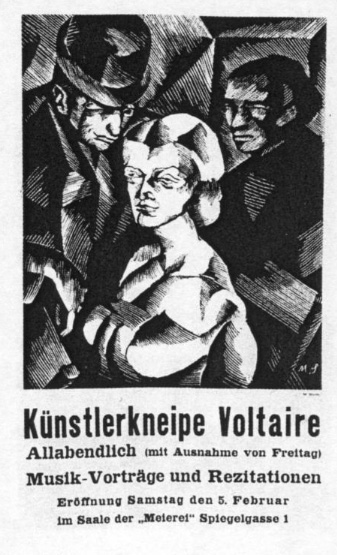
One hundred years ago the poster attached here signalled the first evening of cabaret Voltaire which was also the start of the DADA movement, come help us celebrate the anniversary of this event

on 
5th Feb 2016 around 7.30 pm. 


In “Some Velvet Morning” 123 Queens Parade, Clifton Hill.

Performers: Razor Hope, Jeltje, Peter Murphy, Ashley Higgs, Sjaak de Jong, Anna Fern, Santo Cazzati, Harry Williamson

Also the launch of the second “Audacious” CD, and if it’s anything like the first “Audacious”, this promises to be a truly wonderful event:

Friday, 29 January, 7pm @ Under the Hammer, 158 Sydney Rd., Coburg!

http://www.ftloose.com.au

The history of the Dada movement is imbricated in the lightning-fast intellectual break-through set off, simultaneously and independently, in various parts of the world by several groups of young artists, writers and philosophers: in just a few years, from 1916 to 1923, it was to shake the aesthetic foundations of the period, be they traditional or avant-garde, and set off a revolution which, from surrealism to pop art, would in half a century upset our vision of the world.

A somewhat unexpected announcement appeared in the Zurich press on 2 February 1916: “The Cabaret Voltaire. Under this name a group of young artists and writers has formed with the object of becoming a centre for artistic entertainment. In principle, the Cabaret will be run by artists, permanent guests, who, following their daily reunions, will give musical or literary performances. Young Zurich artists, of all tendencies, are invited to join us with suggestions and proposals.”

The Cabaret was inaugurated three days later in the back room of the Holländische Meierei, a popular tavern located in a seedy section of Zurich. Jan Ephraïm, the owner of the establishment, turned the job of emcee over to Ball with the hope of attracting a large audience. Ball took as his model the Parisian cabaret tradition, born with the Chat Noir in 1881, which he associated with the cabaret spirit that had existed in Berlin before the war. For him, no one other than the emblematic figure of Voltaire could play the role of godfather for his association. It was from the pamphleteer and master of satire that he drew his vision of a reality radically out of step with its time.


Refugee artists from all over Europe quickly besieged the scene at the establishment. Emmy Hennings, a German singer and Hugo Ball’s partner, sang her own songs as well as many from the repertoires of Aristide Bruant, Erich Mühsam and Frank Wedekind. Those individuals, who were to become the “hard core” of Dada, were present from the beginning of the Cabaret: the Alsatian artist, Hans Arp and the Romanians Tristan Tzara and Marcel Janco. Richard Huelsenbeck joined the festivities on 11 February 1916 at the behest of Ball, who had met him in Munich in 1912 in connection to the Der Blaue Reiter group.

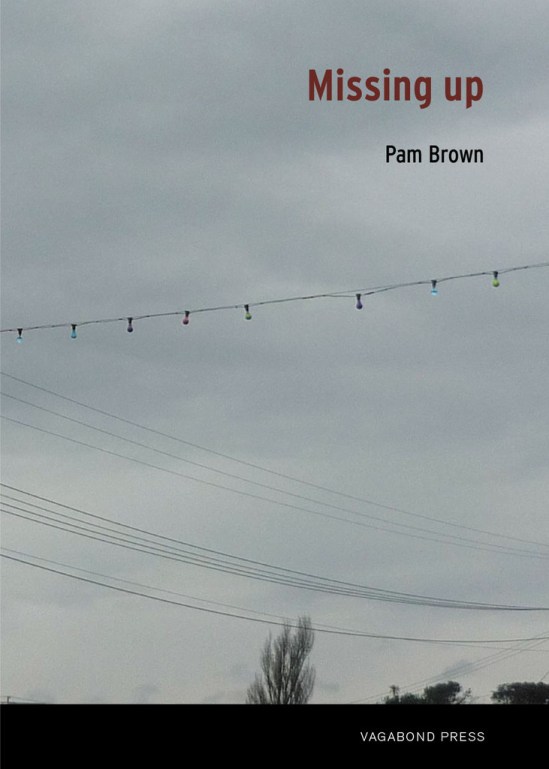
Nathanael Pree reviews Pam Brown’s Missing up

Brown_MissingUp_Cover_1024x1024

Missing up
by Pam Brown

Vagabond Press, 2015


From the cover, let alone the first lines, the title appears apt: a sense of levitation, humming along wires, strands of illumination flickering through a work of direct and intimate voices, understated in its deftness and density, with light touches that lift the lexis, and air pockets in its seams of meaning. Spread out across the pages are samples of complete, if not absolute contemporaneity interspersed with work that decries the shortcomings of an age in which culture is so often presented as a commodity. Pam Brown’s latest collection showcases self-objects and articulates responses to salient concerns, providing masterful representations of the everyday and outré that take their time to settle into the spaces and absences within which they are framed.

Missing up provides regular reminders of the offbeat and melancholy immanence of the eclectic self-objects and material that make up urban existence. A nod to William Carlos Williams observes: ‘no phenomenon but in things / like slim cyber tablets / scissor sharpeners vinyl bucket seats’. These are presences that convey a semi-contained kinetic energy. The palpable sense of atoms jostling for space as if in defiance of the sadness implicit in any effort towards their decoding – the gravity and lightness of a book, tea towel, blue and orange plastic crates, and colourless (or is it flat white?) noise. Solidity and elision co-exist through a tacit sense of animism, where verbs and nouns take on one another’s attributes, creating peopled things: the life that exists in the solid-seeming compounds that create city and suburbia.

Brown on language is notably to the point: ‘it has to lift off or else I’m not interested in it’. Her poems, she has said, ‘don’t ever leave the street I’m on … and it’s not always literally that street. And I use place and then extrapolate it, abstract out.’ Place is something hard to define, as are the psychic and textual grounds onto which appear isolated or occasionally constellated signals that indicate arrival or absence. Missing upappears apt for a collection of poems that lift off and plane out, taking traces of tar, flakes of bitumen from the street which the poems do not leave so much as interleave, adding another dimension to everyday perception. In this environment ‘colour strips’ contrast with ‘dun brick niches / stacked / with ash’ – as cityscape constituents, from cargo to post-industrial strata with their sediment visible in the cracks. From the wharves to the outer burbs, ‘& Surrounds’ shows ‘the streets here / regular stepped / a flat expanse / chrome-plated railings / separating a superior plane /from inferior’, and stepping in to match is Brown’s uncompromising typography, the planes and levels indicating straightened and discontinuous contours and segments of life-objects. Translated – or taken aside – as text these refuse to rest easily on the page, ‘as time extends / the moody morning / wanting to wander / these organised hills / managed paths / & surrounds.’ Typography as psychogeography: the uneasy self ‘born in parenthesis / raised in an interstice’ ends up, if not entirely missing, ‘sorting through / tattered monads / might as well be gone.’

Regarding her technique, Brown has pointed out that ‘it’s mixing not layering.’ This allows for gaps between not only the lines, but also jump cuts in chronological and geographical continuity: interpenetration and unpredictability where each shift and indent could signal disjunction or connection. These representations of unstable and shifting spaces splice urgency and familiarity according to a projective sense that creates an open force field from home, where a ‘fridge compressor / gurgles’, to the aftermath of Fukushima. Its findings and debris alike form a transnational and trans-temporal urban cento, where predecessors and contemporaries share a certain edginess: Baudelaire and Rimbaud recompose their grimaces together with Schuyler and Cage at the sere and greying edges of striated suburban skies. As the patchwork tapestry lifts off, she asks: ‘& what do you reckon, / my wintry shadow, / my fraudulent duplicate, / somebody up there?’ Mon frère? If, as she avers, ‘the human mind is / empty’, it’s not just a matter of rhetoric.

Brown has referred to a term used by Gilles Deleuze, ‘aux aguets’, meaning to be on the lookout or in ‘a state of cultural awareness’, and this mode of attention is evident here in a collection which refers to and writes in mentors and friends as an ongoing ‘call for community.’ Conversely, as the ‘aesthetics of the surface’ in the poems ‘Required Reading’ and ‘Fricassee’ acerbically indicate, this inclusiveness is balanced by a certain skepticism, as evidenced by an archetypal ‘dolt in residence’ operating ‘all over the very same map’ but in another dimension altogether. Academics writing poetry on the side would be advised to read elsewhere. Yet, however sharp her observations bite, Brown concludes on a conciliatory note for society in general: ‘I would like / a speculative set / of laws / that are friendly to life’, especially in an age where ‘every bridge / shelters someone /homeless’. Maybe sometimes we all need to find ourselves ‘anywhere out of the world’, and at others may not have the luxury of choice, as she reminds us, via Baudelaire. The outcome, if never ideal, could be one where diverse voices, amicable and empathetic (and those of antipathy or estrangement) find their respective points of co-existence, if not convergence.

A conclusion to this review would seem incomplete, or at least tentative, given the urge to keep returning to these concise and finely crafted – however deceptively – lines. A glance at the string of light bulbs drawn over the sparse and darkening street scene on the cover goes well with ‘Hit single xmas’ – considering it now as dark clouds bank over the Manly peninsula where I write this. Elsewhere, ‘skyrupt / big thunderstorm / plotting squall line / swerves / beyond Wattamolla’, appears to presage tornadoes in Sydney, and sheeted rooftops lifting (missing?) up over all this tensile and confounding space.

*Nathanael Pree is of Australian and German background, brought up and educated in the United Kingdom. He did undergraduate studies at University College London, before working in education in Russia, Vietnam, Cambodia and Australia, with additional work experience in India. His postgraduate studies were at The University of Sydney, specialising in the works of W.G Sebald (Masters’ Dissertation) and Charles Olson (PhD, ongoing).

**Taken from Cordite Poetry Review at http://www.cordite.org.au

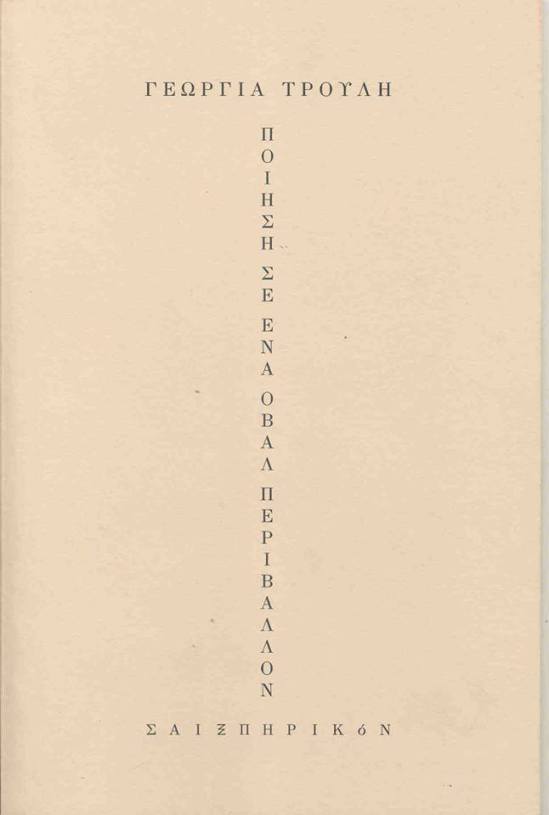
Γεωργία Τρούλη / ΠΟΙΗΣΗ ΣΕ ΕΝΑ ΟΒΑΛ ΠΕΡΙΒΑΛΛΟΝ

12507313_1091380764225965_8643651430561935931_n

Μόλις Κυκλοφόρησε από τις εκδόσεις Σαιξπηρικόν

Το πέμπτο βιβλίο της ποιήτριας – εικαστικού Γεωργίας Τρούλη.
Γεννήθηκε τον Νοέμβριο του 1979. Κατάγεται από την Κρήτη και ζει στην Θεσσαλονίκη.Σπούδασε Νοσηλευτική στην Σχολή Επαγγελμάτων Υγείας και Πρόνοιας στο Α.Τ.Ε.Ι. Θεσσαλονίκης και έπειτα σπούδασε Ψυχολογία στην Φιλοσοφική Σχολή του Α.Π.Θ. Μετά από μεταπτυχιακές σπουδές στην Ψυχολογία, εισήχθη στο Τμήμα Εικαστικών και Εφαρμοσμένων Τεχνών της Ανώτατης Σχολής Καλών Τεχνών του Α.Π.Θ όπου και αποφοίτησε το 2015. Πραγματοποιεί ατομικές εκθέσεις, λαμβάνει μέρος σε ομαδικές καθώς και σε φεστιβάλ καλλιτεχνών. Έργα της επίσης έχουν κατά καιρούς φιλοτεχνήσει λογοτεχνικά περιοδικά (Εντευκτήριο, Ένεκεν, Θ.Ε.Α.)και βιβλία των εκδόσεων «Σαιξπηρικόν»(εξώφυλλα, βινιέτες κ.α). Από το 2008 δημοσιεύει ποιήματά της σε διάφορα έντυπα λογοτεχνικά περιοδικά καθώς και σε ηλεκτρονικά λογοτεχνικά περιοδικά και σε ιστοτόπους.Έχει εκδώσει πέντε ποιητικές ενότητες, τελευταία «Ποίηση σε ένα οβάλ περιβάλλον». Στο τριακοστό τρίτο συμπόσιο ποίησης Πάτρας παρουσιάστηκε το έργο της από τον ποιητή Αλέξανδρο Αραμπατζή.Είναι μέλος του συλλόγου Ελλήνων Ψυχολόγων, της της Εταιρίας Λογοτεχνών Θεσσαλονίκης και του Κύκλου Ποιητών.

____

(ΚΟΥΑΡΚ ΚΟΥΑΡΚ)

Η κάθε ματαιοδοξία μέσα στην τραγικότητά της
Είναι πολύ αισιόδοξη
Και νιώθεις πως το μόνο
Που έχει συνέχεια
Είναι η ϕράουλα από το κοντόλαιμο κοτσάνι
Η σαύρα από την ουρά της
Ο κομήτης από το δευτερόλεπτο
Η εικόνα από τον τοίχο
Το βαμβάκι από τα σύννεϕα
Η κατσαρίδα από την μεταμόρϕωση
Η ϕυγή από την πραγματικότητα
Η μαϊμού από το έλλογο
Το άλογο από το χαλινάρι
Η κενότητα από το ϕως
Η πατούσα από το Βάρος
Το χαρτί από το Δέντρο
Το μελάνι από την Μοναξιά
Το πιρούνι από την Δημιουργία
Η χαρά από το Τραγικό
Μόνο
Και Αδιάσειστο
Είμαστε όλοι ένα Ον/είδος Μούχλας
Και
Ούτω καθεξής
Η ϕυγή
Επαναλαμβάνεται
Κουάρκ Κουάρκ
Φωνάζουν οι βάτραχοι
Στην Άκρη του
Πάντοτε

***

Η ΑΙΣΘΗΣΗ ΤΟΥ ΠΗΧΤΟΥ

Είμαι λεκτικός θρόμβος
Μοιάζω να έχω ραϕτεί στα αγγεία
Κάθε λέξη αϕήνει στα αυτιά μου την αίσθηση του πηχτού
Αποσυντονίζομαι εύκολα
Συμπυκνώνομαι με ταχύτητα
Γίνομαι πίδακας ανενδοίαστα
Προκαλώ εμβολή στους αγαπημένους μου πνεύμονες
Ενίοτε δεν αναπνέω κανονικά αλλά ούτε με θόρυβο
Ψάχνω τότε μια σειρά από σημύδες
Τραχεία – Μεμβράνη και Τένοντα
Δένομαι εύκολα – Λύνομαι δύσκολα
Δεν προκαλώ πήξη του αίματος
Ούτε αϕηγούμαι ροή χωρίς τίμημα
Προκαλώ κορεσμό σε οξυγόνο
Και στον ύπνο παράλυση
Δεν εντοπίζομαι – γίνομαι ο ελάχιστος
Αλλάζω μορϕή σαν βουτηγμένη στο νερό πλαστελίνη
Δεν γίνομαι έμμηνος ρήση αλλά
Θαυμάζω όσους προσϕέρονται
Μία άχαρη νύξη προσπαθεί σε όλο το σώμα
Να με εντοπίσει
Διασπώμαι τότε σε μικρά σϕαιρίδια σημασίας
Οβάλ – ολοστρόγγυλη – ευθεία
Αναδιπλώνομαι σε στοιβάδες ενός γεωλογικού χρόνου
Που δεν έχω την γνώση
Όταν νιώσω την τριχοειδή υποψία
Για δέρμα σύνορο, όριο, εξαγωγή
Γίνομαι λεία στρώση νυχιού
Αποδημία πηχτού
Και
Αγαπώ
Τις νεροτσουλήθρες

***

_ΕΓΚΑΙΝΙΑΖΟΝΤΑΙ ΜΕΣΑ ΣΤΗΝ ΔΥΝΑΤΟΤΗΤΑ

Στην λιακάδα ξεκουράζονται
Τα χθεσινά βροχερά απομεινάρια
Μιας σκέψης
Σαν μακέτα ενός αρχιτέκτονα
Που
Μόλις
Κατάπιε
Μια
Αλυκή Αλίκη
Σε κολλώδη ήβη
Χαϊδεύει
Την
Κοιλιά
Του
Σε
Ένα
Μοντάζ
Αποτυχίας
Που
Διήρκησε
Μήνες
Οχτώ
Και
Συναπτές
Λέξεις

____saixpirikon.com

Γρηγόρης Σακαλής, Στο δρόμο

αστεγοι2

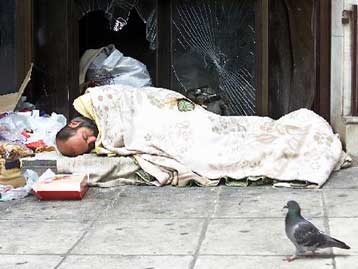
Σ΄ ένα χαρτόνι ξαπλωμένος
στην άκρη του δρόμου κείτεται
απ΄ τη ζωή πεταμένος
αυτός που στα νιάτα του
ήταν περιζήτητος
τώρα καθώς τραβάει την κουβέρτα
να σκεπαστεί
χαϊδεύει τα βρώμικα γένια του
και αναπολεί
τις μέρες που η ζωή
ήταν όμορφη και του χαμογελούσε
σκέφτεται τα πτυχία
τις σπουδές
τις αγάπες
όλα σαν όνειρο
ή σαν εφιάλτης
που τον βασανίζει,
όταν οι σταγόνες της βροχής
πέφτουν στο πρόσωπό του
και ψάχνει απάγκιο
είναι στιγμές
που σκέφτεται
να σκοτώσει ή να σκοτωθεί.

Emily Stewart
 reviews Rachael Munro’s Indigo Morning

IMsp

Indigo Morning
by Rachael Munro

Grand Parade Poets, 2014


Rachael Munro is a keen observer who writes in a language of nettles and nets, establishing a daily mood via the accumulation of certain details. This is a book of apricot tissue petals and fences-turned-crystal lattices; of the world in its weather and a poet caught in the tangle.

Many of the poems reflect early years in the poet’s life growing up in the Snowys (mountains of NSW), and her acute impressions, ‘air tasting sharp as splintered ice in the brittle sun’, will ring true for anyone familiar with the Monaro region, even though, as the speaker in ‘Exile from Paradise’ remarks in the poem’s opening lines:

As long as I have lived near the mountains, they were never home —
eight years there but still passing through.

Across five numbered sections, the reader of this slim volume herself passes through; visiting upon snapshots of the poet’s family growing up, meditations on nature and animals – horses and cats especially abound – and suburban life. Occasionally a poem disrupts the book’s overall tone, such as the diaristic prose poem ‘Profiteroles’, which undoes the work of the poet’s otherwise restrained and elegiac compositions.

Poems such as ‘Lipstick’, where the speaker looks in the mirror and sees her mother’s dying face, are moving. ‘Rasberry glacé, Mum’ she says. Indeed, strongest are the moments where the poet bares her teeth. In ‘Sunday Morning in Sydney’, the speaker watches a couple flirting in a Kings Cross café. ‘Yet I am the shark, I want to feed on them both,’ she says, in a surprising turn. The ‘voyeur-spiced dream’ revealed.

Equally surprising is the recurring red mare who dapples poems such as ‘Sun-fish’, ‘Red’, and ‘What I Have’, equal parts beast and motif. In ‘Red’, the mare reminds the speaker of

a woman I once knew and
had wondered why
it hurt to be with her

and in ‘What I Have’, a sense of loss is further punctuated:

I never saw, or held
the foal of that red mare

There is a current of desire running through this collection and it sparks at unexpected moments and with force. Peppered throughout are references to the poet’s struggle with addiction: one of the first poems, the unhappy ‘My Father’ concludes with the speaker

trading in today / for a lukewarm Riesling

while the poem ‘Christmas Tree’, in the book’s concluding pages, describes the speaker pouring vodka into the bucket at the base of the tree, ending on a weak gag

I always knew it had the powers of preservation / see my skin

that nonetheless provides a welcome insight into the person of Rachael Munro, enriching readings of otherwise straightforward descriptive verses such as ‘Snake’ and ‘The Cigarette Lighter and Chaos Theory’, both of which hinge on notions of control and balance.
From ‘The Cigarette Lighter and Chaos Theory’:

Above, a twist of jasmine
If the heaviness of its fragrance
could be measured,
it would topple
that tube of plastic and volatility
onto the tail of a sleeping cat

A minor complaint is that the poet sometimes lingers too long. Poems like ‘Exile from Paradise’ and ‘A Butcher Shop’ land with greater impact without their final summations. There are also occasions of vague syntax which serve to confuse in moments that are better clarified. In the final paragraph of ‘Night Creature’, where the ‘it’ is a moth straining towards lamplight:

So much energy
for something trivial
will kill it early.
A night creature,
why does it destroy itself
for a small sun,
yet vanish with the day?

The poems in Indigo Morning revel in a sensual architecture and underscore how memories amplify the colour, texture and shape of our experiences. This selected poems, an all-too-modest snapshot, I suspect, of a well-lived life, settle upon the reader with a sense of humbling finitude: above the trees / but still below the sky.
This entry was posted in BOOK REVIEWS and tagged Emily Stewart. Bookmark the permalink.

*Emily Stewart is a poet and book editor based in Sydney. Her chapbookLike was published by Bulky News Press in early 2015.

***Taken from Cordite Poetry Review at http://www.cordite.org.au

Το Κόσκινο

books and leafs

Αγαπητοί συνταξιδιώτες στα ποιητικά αρχιπέλαγα και συν-εργάτες των λέξεων, το Κόσκινο θα λείψει δύο βράδια, δηλαδή Πέμπτη 14 και Παρασκευή 15 Γενάρη 2016. Θα επανέλθει κανονικά το Σάββατο 16 Γενάρη 2016.
Καλές περιηγήσεις και αναγνώσεις και των υπόλοιπων περιεχομένων μας.

Νεκταρία Μαραγιάννη, Τα δάκρυα του καθρέφτη

images
 
Η οφθαλμαπάτη του βλέμματός μου σε αναζητά ανάμεσα στο δωμάτιο
με τους καθρέφτες.
 
Μια φλόγα προχωρεί στο σκοτάδι, φωτίζει την οπτασία της πνοής σου…
Κι εγώ, σε ψάχνω με αθόρυβα δάκρυα…
ώσπου να γίνουν καταρράχτης αίματος…
………………………………………………………..
 
Όλος ο κόσμος, βυθίστηκε σ’ έναν καθρέφτη,
κι εγώ, σε αυτόν απέναντί σου…
κι όσα χθες φοβόμουν, έγιναν παρελθόν μ’ ένα “Σ’ αγαπώ” της πνοής μου…
 
 
Και οι δυο καθρέφτες δάκρυσαν…
Ο ματωμένος έσπασε, πέθαναν δυο καρδιές.
Ο άλλος;
 

                                                                              Νέττα

Jaquim Duggan, Three poems / Τρία ποιήματα

1481-Milk_Snake

Coral Snake

tombed in glass
sand wedged between
its creases
red yellow black refract
mysticism of flagged scales
soaked in stale air
suffocated in San Remo
by now

Κοραλένιο φίδι

θαμμένο σε γυαλιά
άμμος σφηνωμένη ανάμεσα
στις ζάρες του
κόκκινες κίτρινες μαύρες διαθλάσεις
μυστικισμός σε ρυτιδιασμένες κλίμακες
μουσκεμένο σε μπαγιάτικο αέρα
πνιγμένο στο San Remo
τώρα πια

***

Oil

letters
like shopping lists
For Hong Kong
the cultural revolution
was fought by
chinese women
melting pork fat
into silk envelopes

Λάδι

γράμματα
σαν λίστες για ψώνια
για το Χονγκ Κονγκ
η πολιτιστική επανάσταση
προωθήθηκε από
τις γυναίκες της Κίνας
ανακατεύοντας χοιρινό λίπος
σε μεταξένιους φακέλους

***

Slaughterhouse/Waterloo

how many do you think
through rivers wade
three of four
forty to fifty
no less than fifty
sixty to seventy
were murdered
three or four

Σφαγείο/Waterloo

πόσοι νομίζεις
διαμέσου των νερών του ποταμού
τρεις ή τέσσερις
σαράντα ή πενήντα
όχι λιγότεροι από πενήντα
εξήντα ή εβδομήντα
δολοφονήθηκαν
τρεις ή τέσσερις

*Ο Jaquim Duggan είναι Αυστραλός ποιητής και συγγραφέας, ο πατ΄ρρας του οποίου είναι Κινέζος από το Χονγκ Κονγκ και η μητέρα Αυστραλή ιθαγενής. τα ποιήματα αυτά δημοσιεύτηκαν στο περιοδικό του Victorian Writers Centre “Victorian Writer”, στο τεύχος Νοέμβρη-Δεκέμβρη 2015, στη Μελβούρνη. Ελληνική μετάφραση: Δημήτρης Τρωαδίτης.

14-fb7Zm