Linda Weste revies Nhã Thuyên’s, words breathe, creatures of elsewhere

unnamed

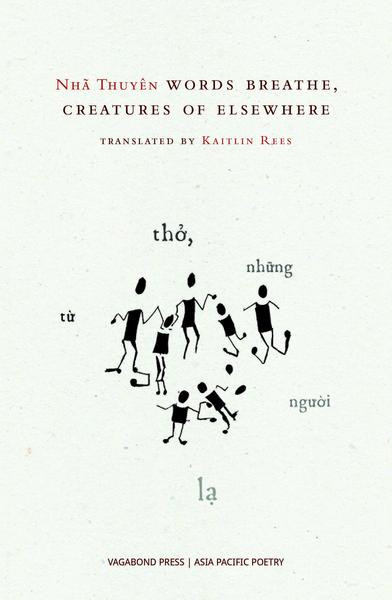
words breathe, creatures of elsewhere
by Nhã Thuyên
Translated by Kaitlin Rees
Vagabond Press, 2016

The relation of place to identity and self-making is central to much poetry, indeed to writing more generally. It won’t be lost on the reader, therefore, that Nhã Thuyên, writing from Hanoi (‘river within / inside’) – a city built on lowlands; a city of lakes situated in the Red River delta, where rainfall is high – makes an impassioned plea for poetry (and thinking) that is fluid, unbounded, borderless.

In this, the author’s second full-length book of poetry and her first in English translation, Nhã Thuyên cautions that ‘ideologies can unconsciously lie in the life of our languages, and wish to frame us in narrow windows’ (12). A safeguard this poet proposes is the possibility of eschewing tradition, even form:

… poetry’s Vietnamese is where readers and writers strive to not give themselves over naively to the frames, to endlessly question those frames, with the possibility to leave them and not belong to them (12)

That said, the book elaborates rather than relinquishes structure. The prologue, ‘that intimate corner,’ accommodates five subheadings in a mere six pages. The body of the collection – just short of one hundred pages – encompasses a further five sections: ‘traces,’ ‘apparitions,’ ‘fire,’ ‘ash,’ ‘necromancy,’ and ‘words breathe, creatures of elsewhere.’ The number of poems in each section varies, from just a few in ‘ash,’ to a maximum of eighteen. Curiously, the contents page only contains poem-titles for three sections – absent are nine poem-titles from the ‘necromancy’ section and a further 18 poem-titles from ‘words breathe, creatures of elsewhere.’ The omission belies the extent of the collection’s aesthetic framework.

The poems, for their part, do articulate a desire to be unbounded and elusive, by gesturing toward that which might be said, or not; implied, or imagined. The language is frequently playful; its rhythms – marked by circling and questioning – exploratory. Nevertheless most poems utilise the entire line, and seldom abandon their prose poem form.

Early in the collection, the poetry presents as an exercise in free association writing. Journal jottings are indeed suggested by the dates in the right hand bottom corner of 12 poems. These textual features disappear halfway through the collection, at the section ‘necromancy’ – a turning point, for here the book’s earlier preoccupations are revisited but reinvigorated with a more assured tone. The body of the work, while still introspective, anchors more readily to the world through resonant imagery.

A stylistic feature of the collection is the accumulation of words and images. The impact of this varies. When disparate words create an amalgam the effect tends to be abstruse. Several similar in a row consolidate: ‘we were saturated in night smell, traffic smell, street smell, silent absence smell, in which i, nearly suffocated’ (39). In other examples, such as that below, words amass in a mushrooming formation; the effect of this hoard is dilatory:

at a corner of a wall stained sick fingernail yellow, we sat breathing in
time, a tied breath, a calm breath, a sneering breath, a peaceful breath,
a tingling breath, a hollow breath, a deserted breath, a euphoric breath,
a penitent breath, an innocent breath (36)
In extended sequences, words and phrases cascade, gathering momentum, resulting in prose poems that are discursive, yet not lacking in poetic quality.

puncutation marks exile
themselves, a couple of scrappy words lounge around, a game draws
to an end, a music is silenced, and edge of the abyss is thick with reeds,
a sun rises, a bird flies from a bush, a wind fiercely blows at a precipice,
the sound of your distant laughter ceased to make me wince, bit by
bit letting each other go, not a single trace can be kept, not a single
moment can be remembered, nothing can be carried, no-one can be
called, nothing more of the early mornings, the noons, the twilights,
the late nights of wild thirst for the moon, a panicked psychological
disorder, an overwrought fever demands solace, this love will burn
itself to death (97)

Discursive poems preoccupy the tail end of the collection; there are 18 in all: ‘discourse on distance,’ ‘discourse on reminiscence,’ ‘discourse on possibilities,’ on a storm, on a game, on water, on grass, on fire, on dreams, on a miracle, on light, on an explosion, on the call of the herd, on the body, on choice, on parting, on the loser, on the denouements – one after the other like a row of hurdles. Surprisingly, though a reader might anticipate a dull inventory, these prose poems are buoyant, in the main, and rich with sensual imagery.

Ironically, despite the intention to eschew form and keep meaning intangible, the recurrence of words throughout this collection proposes a narrative: Love – in so many metaphors. Love is a journey, a fire, a plant, the result of natural forces, unity, and exchange. To cognitive linguists, such metaphors demonstrate the conceptual systems underlying language, frameworks no less. Even the loss of love and its concomitant narrative of suffering – craving, lost attachment, anxiety, incompleteness, all that is unsatisfactory when love is unsatisfactory – is thrust into ontological correspondence. The biographical border of subject / lover is thus foremost of concerns.

‘an infinite ending’ is the translator’s response to the work and to the act of translation. These parting words provide an exegetical lead out of the collection – though with the promise of a continuing conversation.

That conversation seems likely, given the affinity between Nhã Thuyên and translator, Kaitlin Rees. Their collaboration for this collection achieves appreciable synergy.

This entry was posted in BOOK REVIEWS and tagged Kaitlin Rees, Linda Weste, Nhã Thuyên. Bookmark the permalink.

*Linda Weste’s verse novel set in late Republican Rome, Nothing Sacred, was highly commended in the Fellowship of Australian Writers 2015 Anne Elder Award.

**Taken from http://cordite.org.au/reviews/weste-thuyen/

Μίλτος Σαχτούρης, Πέντε ποιήματα

hqdefault-1

Το μαρτύριο

Μοσχοβολούσε το φεγγάρι
σκύλοι μ’ άσπρα λουλούδια στο κεφάλι
περνούσανε στο δρόμο εκστατικοί
κι ο δρόμος κάτω έφεγγε από κρύσταλλο
και μέσα φαίνονταν
τα σφυριά και τα μαχαίρια
Μέσα στα χέρια μου έσπασα το κρύσταλλο
Και τότε είδα το κόκκινο το σύννεφο
να μεγαλώνει ν’ ανάβει την καρδιά μου
και τ’ άλλο το γκρίζο σαν καπνός
ν’ αδειάζει από μέσα μου να φεύγει

Το αεροπλάνο

Δεν αγαπώ το αεροπλάνο
πάντα θά ‘χουμε ανάγκη από ουρανό
η ωραία γυναίκα αγαπάει την πίσσα
πάντα θά ‘χουμε ανάγκη από ουρανό
Η γυναίκα στάθηκε στη Μεγάλη Πόρτα
πάντα θά ‘χουμε ανάγκη από ουρανό
το παιδί απ’ το Στενό Παράθυρο βγήκε
κι έμεινε μετέωρο στο Κενό
Τέλειωσε τέλειωσε το εκτόπλασμά μου
πάντα θά ‘χουμε ανάγκη από ουρανό
δε θα σας ταράζω πια με τα όνειρά μου
πάντα θά ‘χουμε ανάγκη από ουρανό
Ούτε όμως θα με ξεσκίζετε με τα σύρματά σας
πάντα θά ‘χουμε ανάγκη από ουρανό
δεν αγαπώ το αεροπλάνο
πάντα θά ‘χουμε ανάγκη από ουρανό

Συμπέρασμα

Η γάτα ήρθε σα φωνή από έναν ορίζοντα φοβισμένο
έβρεχε και πρησμένα όνειρα βογγούσαν οληνύχτα
το πρωί ο άνθρωπος πλύθηκε και ξυρίστηκε
όπως πάντα
και γύρω του χτυπούσαν τα σφυριά όπως πάντα
στο δρόμο καθώς έβγαινε απάντησε μιαν αγία
ντυμένη στα βυσσινιά
είχε πεθάνει πάνω στον τροχό πριν από
εκατοντάδες χρόνια
ο γαλατάς τον είδε και τον χαιρέτησε
έπειτα τον χαιρέτησε ο ταχυδρόμος
κι ύστερα τί ν’ απόγινε αυτός ο άνθρωπος
τα ρούχα του κυκλοφόρησαν σ’ εφημερίδες
το ένα του μάτι το κρατούσε κι έπαιζε
ένα μικρό κορίτσι
μαύρα αυτοκίνητα μεταφέραν τα κομμένα
μέλη του
και η καρδιά του αερόστατο γελούσε στο κενό

*Από τη συλλογή “Ο Περίπατος”.

Τοπίο

Ένα κορίτσι πνίγεται μέσα στο μαύρο
εγώ ανεβαίνω σ’ έναν άσπρο ουρανό
Μέσα στον έρημο χιονιά
ένας παπάς κατάμαυρος μέσα στην παγωνιά
λίγα μαύρα πουλιά σ’ ένα κλαδί
κι ένα μόνο λουλούδι
και μιά φωνή:
Εγώ ανεβαίνω σ’ έναν άσπρο ουρανό
μέσα στο μαύρο πνίγεται ένα κορίτσι

Το πρωί και το βράδυ

Το πρωί
βλέπεις το θάνατο
να κοιτάζει απ’ το παράθυρο
τον κήπο
το σκληρό πουλί
και την ήσυχη γάτα
πάνω στο κλαδί
έξω στο δρόμο
περνάει
τ’ αυτοκίνητο-φάντασμα
ο υποθετικός σωφέρ
ο άνθρωπος με τη σκούπα
τα χρυσά δόντια
γελάει
και το βράδυ
στον κινηματογράφο
βλέπεις
ό,τι δεν είδες το πρωί
το χαρούμενο κηπουρό
το αληθινό αυτοκίνητο
τα φιλιά με το αληθινό ζευγάρι
ότι δεν αγαπάει το θάνατο
ο κινηματογράφος

*Από τη συλλογή “Τα Στίγματα”.

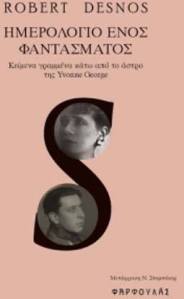
Robert Desnos, από το “Ημερολόγιο ενός φαντάσματος”

13528761_10209199420038281_8697071837708947736_n

ΣΤΗ ΜΥΣΤΗΡΙΩΔΗ

Ω οδύνες του έρωτα!
Πόσο μου είστε αναγκαίες και πόσο μου είστε ακριβές.
Τα μάτια μου που κλείνουν πάνω σε δάκρυα φανταστικά,

τα χέρια μου που απλώνονται ατέρμονα προς το κενό.

Ονειρεύτηκα απόψε τοπία παράφρονα και περιπέτειες ριψοκίνδυνες από τη
σκοπιά του θανάτου όσο κι από αυτήν της ζωής, που είναι επίσης του έρωτα.

Στο ξύπνημα ήσασταν παρούσες, ω οδύνες του έρωτα, ω μούσες της ερήμου,
ω μούσες απαιτητικές. 

[…]

***

“Γύρω στις 2 το πρωί, ξυπνώ ολότελα. Η σιωπή συρίζει με αυτόν τον ιδιαίτερο
τρόπο που παρατηρεί κανείς όταν έχει αϋπνίες. Μια στιγμή περνά, κι έπειτα,
πολύ καθαρά, ακούω ν’ ανοίγει η πόρτα μου, αν κι είναι κλειδωμένη (το πρωί θα
το επιβεβαιώσω). Ακούω να γυρνούν οι μεντεσέδες, ακόμη και τον πολύ
χαρακτηριστικό θόρυβο από το γλωσσίδι της κλειδαριάς που έχει σπάσει και
πρέπει να σπρώξεις με το χέρι για να ξανακλείσει η πόρτα.
Κι απαλά, αθόρυβα, η *** μπαίνει στο δωμάτιό μου. Είναι αυτή, δεν χωρά
αμφιβολία.
Αναγνωρίζω την όψη, το βάδισμα, την έκφραση του χαμόγελού της.
Αναγνωρίζω ακόμη και το φόρεμά της: φόρεμα πολύ χαρακτηριστικό, που το
φορά μόνο σε ορισμένες περιστάσεις.
Με πλησιάζει και κάθεται σε κάποια απόσταση από το κρεβάτι μου, σε μια
πολυθρόνα όπου απέθεσα τα ρούχα μου προτού ξαπλώσω. Κάθεται αναπαυτικά
και με κοιτά επίμονα.
Παρατηρώ ότι την βλέπω τόσο καθαρά σαν να ήταν φωτισμένο το δωμάτιο, κι η φωτεινότητα της νύχτας δεν εξηγεί το γεγονός, ούτε η φωσφορίζουσα γραμμή
χρώματος απαλού γαλάζιου που περιβάλλει όλο το κορμί της, ούτε και το
κοκκίνισμα της σόμπας. Όπως σαλεύει το δεξί της πόδι, καμιά φορά χτυπά στο
πάτωμα, που αντηχεί”.

***

ΥΠΟ ΤΗΝ ΠΡΟΣΤΑΣΙΑ ΤΗΣ ΝΥΧΤΑΣ

Να γλιστρώ μες στη σκιά σου υπό την προστασία της νύχτας.
Ν’ ακολουθώ τα βήματά σου, τη σκιά σου στο παράθυρο.
Αυτή η σκιά στο παράθυρο είσ’ εσύ, δεν είναι άλλη, είσ’ εσύ.
Μην ανοίγεις αυτό το παράθυρο που πίσω απ’ τις κουρτίνες του σαλεύεις.
Κλείσε τα μάτια σου.
Θα’ θελα να τα κλείσω με τα χείλη μου.
Μα το παράθυρο ανοίγει κι ο άνεμος, ο άνεμος που αναδεύει αλλόκοτα τη
φλόγα και τη σημαία, περιβάλλει τη φυγή μου με το πανωφόρι του.
Το παράθυρο ανοίγει: δεν είσ’ εσύ.
Το ‘ξερα καλά.

*”Ημερολόγιο ενός φαντάσματος”. Κείμενα γραμμένα κάτω από το άστρο της Yvonne George. Μετάφραση: Νίκος Σταμπάκης.

13615304_10209199419478267_1719290695883398868_n

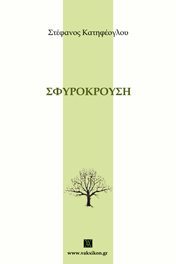
Στέφανος Κατηφέογλου, Σφυρόκρουση, vakxikon.gr

sfyrokroush

ΤΟΥ ΘΕΟΧΑΡΗ ΠΑΠΑΔΟΠΟΥΛΟΥ

Συνήθως, όταν διαλέγουμε για να διαβάσουμε μια ποιητική συλλογή, αν δεν γνωρίζουμε το όνομα του ποιητή, τότε μπορεί να μας τραβήξει ο τίτλος του βιβλίου. Πόσο μάλλον, όταν ο τίτλος είναι μια ασυνήθιστη λέξη. Ας μην ξεχνάμε, ότι πολλοί ποιητές χρησιμοποιούν σπάνιες λέξεις, αδόκιμους όρους, κάποιες φορές και δικές τους λέξεις. Τότε λέμε ότι υπάρχει ποιητική αδεία ή ότι οι ποιητές είναι γλωσσοπλάστες. Τρανό παράδειγμα ο Οδυσσέας Ελύτης με τη λέξη ηλιάτορας. Το ερώτημα, που τίθεται από την παραπάνω παρατήρηση είναι αν το περιεχόμενο της ποιητικής συλλογής, της οποίας μας τράβηξε το ενδιαφέρον ο τίτλος, θα μας αποζημιώσει.

Μια παρόμοια περίπτωση έχουμε στην ποιητική συλλογή του Στέφανου Κατηφέογλου με τον ευρηματικό τίτλο: «Σφυρόκρουση», που κυκλοφορεί από τις εκδόσεις “Vakxikon.gr”. Ο τίτλος είναι σύνθετη λέξη. Περιφραστικά μπορούμε να πούμε η κρούση του σφυριού. Το σφυρί είναι το αντικείμενο, που χτυπάει δυνατά, όμως, η κρούση έχει διττή σημασία. Είναι η κρούση, που κάνουμε διερευνητικά για να δούμε τις διαθέσεις κάποιου ή η κρούση, που χτυπάει δυνατά και χρησιμοποιείται για να δηλώσει δυνατό χτύπημα, όπως η τυμπανοκρουσία; Μπορεί ένα σφυρί να χτυπήσει διερευνητικά; Η γνώμη μας είναι πως ο ποιητής με αυτόν τον τίτλο δηλώνει δυνατό χτύπημα. Τα ποιήματα χτυπούν δυνατά, τραντάζουν και ξεσηκώνουν.

Η ποιητική συλλογή του Στέφανου Κατηφέογλου περιλαμβάνει ποιήματα γραμμένα σε παραδοσιακές φόρμες, όμως, με τον τρόπο, που χειρίζεται ο ποιητής τον στίχο και με το νόημα, που δίνει στα ποιήματα, πολλά θα μπορούσαν να χαρακτηριστούν μεταμοντέρνα.

Η ποίηση του Στέφανου Κατηφέογλου έχει κυρίως κοινωνικό υπόβαθρο. Περνάει μηνύματα, χωρίς να κραυγάζει. «Γέννα μου περαστικά…» θα γράψει με ειρωνική διάθεση, ενώ αλλού θα πει στεναχωρημένος ότι οι παιδικοί φίλοι «κλειστήκαν στα μαντριά των…»

Δεν θα παραθέσουμε κάποιο άλλο απόσπασμα γιατί τα ποιήματα του Στέφανου Κατηφέογλου πρέπει να διαβάζονται ολόκληρα για να κατανοηθούν και ούτε είναι σωστό να παραθέσουμε ολόκληρα πολύστιχα ποιήματα. Όμως, θα απαντήσουμε στο ερώτημα, που θέσαμε στην αρχή θετικά, δηλαδή, ότι ο Στέφανος Κατηφέογλου με την ποιητική συλλογή «Σφυρόκρουση» μας τράβηξε με τον τίτλο και κατάφερε να μας αποζημιώσει με το περιεχόμενο.

05343f9-300x300

Τα δώρα……

yorona's avatarγια τη φωτογραφία και την κριτική

IMG_4945Σήμερα φόρεσα ένα
ζεστό κόκκινο αίμα
σήμερα οι άνθρωποι μ ‘αγαπούν
μια γυναίκα μού χαμογέλασε
ένα κορίτσι μού χάρισε ένα κοχύλι
ένα παιδί μού χάρισε ένα σφυρί

Σήμερα γονατίζω στο πεζοδρόμιο
καρφώνω πάνω στις πλάκες
τα γυμνά άσπρα ποδάρια των περαστικών
είναι όλοι τους δακρυσμένοι
όμως κανείς δεν τρομάζει
όλοι μείναν στις θέσεις που πρόφτασα
είναι όλοι τους δακρυσμένοι
όμως κοιτάζουν τις ουράνιες ρεκλάμες
και μια ζητιάνα που πουλάει τσουρέκια
στον ουρανό

Δυο άνθρωποι ψιθυρίζουν
τι κάνει την καρδιά μας καρφώνει;
ναι την καρδιά μας καρφώνει
ώστε λοιπόν είναι ποιητής

ΜΙΛΤΟΣ ΣΑΧΤΟΥΡΗΣ

«Από τη συλλογή η πληγωμένη άνοιξη»

ποιήματα του Μίλτου Σαχτούρη μπορείτε να βρείτε εδω:http://users.uoa.gr/~nektar/arts/poetry/miltos_saxtoyrhs_poems.htm

View original post

Το σώμα | Φανή Αθανασιάδου

fteraxinas's avatarΦτερά Χήνας

fa

Σκληροτράχηλο το σώμα
οι μύες παλεύουν μεταξύ τους
ποια ομάδα θα κυριαρχήσει στην άλλη
βλέπεις δεν αιματώνονται το ίδιο καλά όλες
έτσι οι συσπάσεις και οι απρόσμενες
εκρήξεις πόνου είναι συχνές
γι’ αυτό η νίκη θα κριθεί στα σημεία.

[Μέχρι τότε η καθημερινή άσκηση
έχει τον λόγο]

 [εικόνα: Jaya Suberg]

View original post

Αντώνης Αντωνάκος, Από τα “Γλυκόλογα για μολότοφ”

kolaz-redlineagrinio-erotologa-me-molotof

ΑΝΙΚΑΤΕ ΜΑΧΑΝ

ανίκατε μάχαν ο έρως

κι ας κατουράνε μπύρα οι χωροφύλακες

ας ξεψειρίζουν αρκούδες οι φονιάδες

εδώ βουίζουν περίστροφα

εδώ αρραβωνιάζεται ο θάνατος

την αναμμένη δάδα

εδώ ο έρωτας δηλητήριο και γιατρικό

ΚΑΘΩΣ ΒΑΡΑΕΙ Ο ΗΛΙΟΣ ΤΟ ΤΑΜΠΟΥΡΛΟ ΤΟΥ

καθώς βαράει ο ήλιος το ταμπούρλο του

κι έρχεται στα ρουθούνια μου

μια μυρουδιά από τσιγαρισμένο λίπος

και περπατώ δίπλα σε γυναίκες τρυφερές κι απελπισμένες

που κανείς δεν τις αγκάλιασε βαθιά μέσα στη νύχτα

που κανείς δε φίλησε το κόκκινο κογχύλι τους

τ’ αστραφτερό τους δέρμα

και περπατώ σα ματιασμένος σκύλος στα χαλάσματα

πάνω στο άστρο που γυρνά σαν το φτερό του παγωνιού

και περπατώ αιώνες τώρα με τα διαβολικά μου φρύδια

με το αγγελικό μου πρόσωπο με τις δαγκάνες μου

με την τραγιάσκα μου και με τ’ αστροπελέκι μου

άθεος και τρομοκράτης με τη μυρουδιά της πέστροφας

με το χνώτο του πιθήκου και τη ζέστα των κανονιών

που φυτεύουν οβίδες μέσα στα όνειρα των πεινασμένων

που φυτεύουν τριαντάφυλλα στις κωλοτρυπίδες των ιερωμένων

που φυτεύουν σπόρους από κάρβουνο στον παγωμένο αέρα

κι όλοι οι σπασμένοι καθρέφτες σαλεύουν

μέσα στο γέλιο του σκοτωμένου

και περπατώ με την παιδική καρδιά του δολοφόνου

και χαϊδεύω με τα ματωμένα χέρια μου την πληγή

χαϊδεύω το πρωινό που έρχεται

απ’ τις χώρες του κάτω κόσμου

ΤΙ ΟΜΟΡΦΗ ΜΕΡΑ!

Τι όμορφη μέρα! τι ζεστό πρωινό

σαν τα στήθη μιας κοκκινομάλλας νοσοκόμας

με το σπαρταριστό κορμί κρυμμένο

με το άσπρο φλούδι του λουλουδιού

με το σημάδι στο λαιμό

με τις δαγκωματιές

με τις παλίρροιες στα μακριά μαλλιά

και τα ρέματα που τραβιούνται στη θάλασσα

Τι όμορφη μέρα! τι ζεστό πρωινό

σαν ταύρος που αντάμωσε με τις μέλλουσες γενιές

σα θεός που έγινε γάιδαρος για να τον καβαλήσουνε

τα καυλωμένα χωριατόπαιδα

σαν κρασί χυμένο σε στιφάδο με τη διαβολικιά

θεσπέσια γεύση

σα γυναίκα όμορφη χοντρή που ρίχνει τη σκιά της

που ρίχνει τουφεκιά

που κατουράει σα γάτα τις πέτρες του Σεφέρη

που γουργουρίζει ευτυχισμένη

όταν τη χορταίνει πούτσο ο εραστής της

που γουργουρίζει ευτυχισμένη

όταν καταπίνει του αγαπημένου της το σπέρμα

Τι όμορφη μέρα! τι ζεστό πρωινό

σα διάβολος ζουλάπι που τρυπώνει στα μυαλά

ζουλάπι που χιμά μέσα στο ανθρώπινο κοπάδι

με το αστρικό του γέλιο
με την κραυγή από αιωνιότητα

Τι όμορφη μέρα σα γουρούνα

που ξεγεννά στριγκλίζοντας το μέλλον

που ξεγεννά τα νέα σφαχτά μέσα στο αίμα.

Ο ΗΛΙΟΣ ΠΟΥ ΑΓΑΠΩ

εγώ που ξέρω πως μοσχοβολά η επανάσταση

μέσ’ τα ρουθούνια των μοσχαριών

σας λέω πως ο ήλιος των συντρόφων μου

είναι ο ήλιος που αγαπώ.

ΟΙ ΤΡΕΛΟΙ ΔΕΝ ΕΧΟΥΝ ΑΝΑΓΚΗ ΤΑ ΠΑΡΑΜΥΘΙΑ

οι τρελοί δεν έχουν ανάγκη τα παραμύθια
οι γλώσσες τους τσακίζουν σαν τσεκούρια

με τα δόντια τους ροκανάνε τη μέρα σα μαμούθ

παίζουν κρυφτό

παίζουν κουτσό

παίζουνε το φονιά

παίζουνε με τον ήλιο

και κατουράν τους τάφους των ηρώων

κι ανθίζουνε ξυπόλητοι κρύβοντας μεσ’ τις λέξεις τους

τα χνώτα του θεού

κι είναι μέσα στον κόσμο η απουσία του κόσμου

κι είναι η μύξα στο μανίκι της θρησκείας

δε λέν αντίο ποτέ γιατί ποτέ δε φεύγουνε

είναι διαβόλοι που φυτεύουν άγριους σπόρους

είναι το πυρωμένο μάτι της κουζίνας που ξεχάστηκε

το σαλεμένο μάτι του θεού που είναι ένας τράγος καυλωμένος

χωρίς ελπίδες

χιμώντας σα θηρίο πάνω σε όλες τις χαρές

οι τρελοί πάνω σ’ αυτό το άστρο της γης

δεν έχουν ανάγκη τα παραμύθια.

ΕΙΝΑΙ Η ΕΠΟΧΗ ΠΟΥ ΟΙ ΠΟΙΗΤΕΣ ΓΡΑΦΟΥΝΕ ΦΛΥΑΡΕΣ ΩΔΕΣ

είναι η εποχή που οι ποιητές γράφουνε φλύαρες ωδές

ξεψειρίζοντας της άρχουσας τάξης το μουνί

είναι η εποχή που το παίζουνε καλοί

ποζάροντας με Πλάτωνα και μεταφυσική

κρατώντας το ρυθμό πάνω στα τούμπανα

γράφοντας ποιηματάκια για ψιψίνες και γατάκια

την τεμπελιά εξασφαλίζοντας γι’ αυτούς έχοντας δούλους

το παίζουνε καλά παιδιά υμνολογώντας τη δουλειά

κι ανθολογίες κάνουνε ζαρώνοντας τα φρύδια

και για τον πόνο του ανθρώπου νοιάζονται πολύ

μα μέσα στα ποιήματα δεν αναφέρουν πουθενά τον εκμεταλλευτή

το παίζουν θυμωμένοι τάχατες πολύ

γιατί δεν γράψανε γι’ αυτούς στο Βήμα κριτική

σαν μουτρωμένα μένουν κοριτσάκια

μέχρι να’ ρθεί με το φτερό της η κυρία Κατεστημένου

να τους χαϊδέψει το μιμί μ’ ένα βραβείο

μια χορηγία εις την αλλοδαπή όπου θα γράψουνε ποιήματα

σπουδαία εκεί
για το τι φάγανε το βράδυ τι το πρωί

για το αν γαμήσαν την ποιήτρια Λιλή

για το αν τραβήξαν μαλακία το πρωί

καθώς ξυπνήσαν από λήθαργο βαθύ

Δεκέμβρης 2008

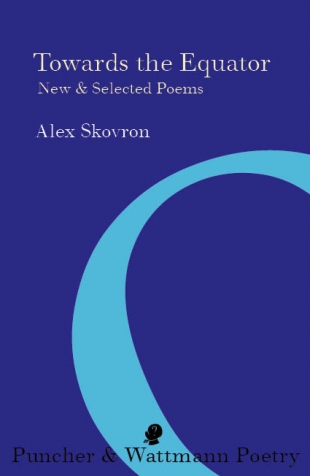
Alex Skovron: A Sweeping Range

Towards_the_equator_310_476_s

Towards the Equator: New & Selected Poems
by Alex Skovron
Puncher and Wattmann
293pp
$29.95 AU
Published January, 2014
ISBN 9781922186553

Towards the Equator, a selection of poems from Alex Skovron’s five volumes of poetry, plus 38 new poems, showcases powerfully his fine contribution to Australian poetry over the last thirty years.

In some ways Skovron occupies a minority space in Australian poetry. His position is somewhat similar to that of Antigone Kefala, in as far as he has a European background and sensibility informed by socio-political, cultural and linguistic disruption. Many scholars have discussed how difficult it can be for a writer with a non-Australian background to be seen as an Australian writer, their work not fully explored or discussed beyond the label of post-war emigrant. This literary reception is tangled up with issues of social, contextual and linguistic understandings as well as the political narratives that have been dominant during the previous decades.
Skovron’s work falls across a number of complex cultural modes. While he has many important things to say about the migrant experience, he also has much to say about more general issues relating to human ontology, as well as to his experience of living in Sydney and Melbourne. It would be incorrect to label him just an immigrant writer, he is far broader and more far reaching, and what Vrasidas Karalis has written of Antigone Kefala can also apply to Skovron:

The poet is the ultimate pragmatist, even when she dreams of another reality and of another self. Her gaze on the mundane episodes of everyday experience cannot be explained by grand theories and imagined narratives; her verses develop the strange privilege that cannot be reduced to the particulars of their contextual circumstances.

Born in Poland, Skovron immigrated to Australia in 1958 at the age of nine, unable then to speak English. In much of his work he explores the legacy of war and oppressive cultural forces, the difficulties of the Jewish émigré placed in cross-currents of culture, the value of the imagination to mediate and unmask the absurdity of reality constrained by dogmatic authority.

Of course many countries outside Europe have also been witnesses to socio-political cruelties, but one of the strongest poetries to have emerged in reaction against post-second world war totalitarianism has been Polish poetry, represented by Czesław Miłosz, Tadeusz Różewicz, Julia Hartwig, Wisława Szymborska, Zbigniew Herbert and Adam Zagajewski, to name just a few. This is rich and inspirational work for any poet, let alone for one who shares birthplace, mother tongue and cultural heritage. The influence of poets such as these is palpable in Skovron’s work, especially in the way they have used irony as a defensive weapon, a means by which to view the paradoxes and contradictions in history more clearly, and also for their historical consciousness and interest in mythological approaches. Stanisław Barańczak in his introduction to Polish Poetry of the Last Two Decades of Communist Rule: Spoiling Cannibals’ Fun notes, for example, that
Szymborska’s method is to take an element of everyday experience and refract it through a prism of a specific narrative or stylistic device so that reality’s absurdity or senselessness compromises itself.

While Skovron is stylistically different from Szymborska, this mode of approach does surface in some of his later work.

Generally speaking, Skovron’s earlier poetry is one of cultural inferences and reference, propositions and assumptions, and one of bearing witness, more closely akin to the work of Miłosz and Herbert. Perhaps this sensibility comes from his experience and understanding of history, his deep cultural knowledge and Polish background. It is a position that has not been all that common in Australian poetry. Martin Langford in the introduction to Contemporary Australian Poetry (2016) argues that Australia is a kind of ‘natural’ post-modern country — one that arrived at the groundlessness of post-modernism through cultural and geographic circumstance, rather than through the more painstaking process of wrestling with traditions and assumptions many found difficult to relinquish… Irrespective of the degree of post-modern practice in one’s style, a suspicion of assumption is common to a great deal of Australian verse.

Skovron is a poet for whom culture is an important moral interpreter, a vehicle by which to understand and to bring together psychic and social experience. This accounts for the number of poems about libraries and books, music and composers. One of the most inventive poems in the volume is ‘The Rearrangement’, a poem comprised of sixteen sonnets. All the lines from the first sonnet and the first line of the second sonnet reappear as consecutive end-lines for the remaining sonnets. The speaker in the poem is preoccupied with rearranging his 1200 volumes, which he does periodically, each time using different criteria, which over time become more and more absurd, his obsession more crazed. The repeated lines and form highlight the speaker’s entrenchment in compulsion and order. By the end of the poem we realise how much a prisoner the speaker is of his desire to impose irrational arrangement on his life and his books. Of course we can also read the poem as a comment on irrational ways of controlling and organising societies, the parallel with totalitarianism can be easily made.

Skovron’s poetry is intelligent, witty, erudite, inventive, versatile in both subject and execution. It has a great deal to say about the questions that history and culture pose to the individual human life. The collection is arranged chronologically, except that the new poems are placed first. This stratagem suggests that Skovron wants to focus the reader’s attention back onto one of his major preoccupations: places undergoing violence and oppression. The first poem in the volume is ‘Four Nights’, which you could assume is set in the past; the exact era is uncertain, though there are searchlights, trains, a horse-drawn wagon, a costumed mob — it could easily be post-war, or is it? Perhaps it could just as easily be set in the future. The Serbian town of Kostolac is mentioned in the third stanza, and though the other stanzas are deliberately less specific, we can assume they are also European: ‘Somewhere a dog barks’, ‘A child somewhere’, ‘Two trains cross each other somewhere’, ‘Somewhere nothing changes’. Each of the four scenarios is chilling, the enacted violence made all the more horrific because of the generalised locales. When the moon appears in the last stanza craning into a woman’s first-floor apartment window, it re-evokes the searchlights of stanza two and the razor line in stanza three. The horror in each of the scenarios is abstracted, but you feel its pervasiveness, its inevitability and total infiltration into everyday life: ‘the costumed mob/ that any minute must appear’. The use of the word ‘must’ in the poem is devastating, a testament to the inevitability of suffering and subjugation.
History and memory are potent touchstones throughout Skovron’s oeuvre: ‘History is our cross and our salvation’, he writes in ‘Imperium’. ‘Lines from the Horizon’, an early long poem in three parts, opens with immediate political context: the family, still in Poland, are listening to the radio broadcast from Moscow of Stalin’s funeral. It throws into stark relief later parts of the poem which describe life in Australia five years on, so far removed from the cultural and geo-political circumstances of Poland:

… whole cultures to unlearn
unravel, beyond the jawbreak diction, perversities
of mad spelling, impossible grammar. This,
and then communicate. It’s an art to inhabit
the vernacular Australia from within: finer art
if you’ve abandoned much more than a decade
anchored elsewhere.

Skovron soberly ruminates on the way in which the juggernaut of history seems to constantly roll on without much changing: ‘The myths and ideologies soon regroup, cluster… But the inhabitants:/ The Same. History keeps doing it to us… doesn’t it?’ We may have utopian hopes but Skovron constantly reminds us that we live in a world where there will always be victims and oppressors.

This theme and preoccupation with history is picked up overtly and more subtly throughout the collection. In ‘The Centuries’ the speaker informs us that time is always re-enacting the suffering that humans seem destined to undergo. In ‘Ambit’ we could read ‘the old white spider’ as a metaphor for history that ensnares the speaker, whose fate is death. In ‘After the Future’ the sense of futility and forgetfulness, the danger of living hubristically in the present become dire warnings.

Time as the great repeater of evil, the cruel destroyer of the good is brought out movingly in ‘Elegy’. The poem’s long-breathed lines follow trajectories of thought and observation, while delivering melancholy cadences and rhythms; they use the image of a child’s coloured windmill to evoke the sadness of inescapable loss. The grief in this poem is palpable, Skovron’s music carrying the swell of emotion and thought. The more abstract language in the poem is counterpoised with sensuous descriptions of the toy, and the ruminative tone is underscored with sorrowful resignation:

That which we must tarnish, over and over again,
desperate to encircle it through knowledge,
through one ultimate savouring that must resolve all questions
and put our spirit and our skin to rest —
for which we will forever rummage and jostle among the toys
allowed us, or forbidden, until
we discover them broken, barely known, unravelled at last.

Skovron’s poetry is engaged with philosophical ideas, literary references, fictive speakers, imaginative elaborations of the phenomenological world, states of memory, time and causality, music and eros. This is a sweeping range and one of the pleasures of reading Skovron’s work is his obvious erudition and his immersion in different forms, styles and perspectives. His poems on music and composers display his obvious passion. He writes movingly about Mozart (‘Sleeve Notes’), Mahler (‘After a Meeting of the Mahler Society, Melbourne, 1952’), Elgar’s ghost (‘Elgar Revisits Worcestershire,1984’), Beethoven and Schoenberg (from ‘Vienna’). One of my favourites is the three-part fairy tale-like poem ‘The Violin Maker, the Forest and the Clock’. Skovron’s ability with longer narrative, description, atmosphere comes to the fore in this piece. The entrancing descriptions of the journey through the forest to the violin-maker’s cottage put the reader in another time and world, and the way he evokes the interior of the cottage where the violins are kept is a triumph. It is obvious that Skovron in his personal life has an enduring and passionate relationship with books and music.

Although there has always been an absurdist stream running through the work, Skovron’s later volumes develop this more extensively. Earlier poems, such as ‘The Rearrangement’, ‘The Attic’, ‘The Sky-Tree’, ‘The Face in the Flower’, prefigure pieces from his 1999 volume, Infinite City. In this work Skovron moves away from the historical and towards the mythological; perhaps his influences here are Michaux, Ponge, Borges, Calvino and Popa. Skovron is one of those poets who has been able to participate in both categories which have defined European poetry since the post-war period: the historical and the mythological. In the poems from Infinite City the miraculous becomes familiar, the speakers interrogate the irrational and depict values which are arbitrary, psyches which are ruptured and distorted. One of the impressive features of these poems is that they are all ten lines long, mostly configured as a sestet followed by a quatrain. I imagine that Skovon’s sonnet-writing in ‘The Rearrangement’ and ‘The Waterline Poems’ was good training for this short form, though it is even more restrictive. The majority of these poems are superbly executed, the brevity, the symmetry and asymmetry of the form enhancing the content. Given little room to move, Skovron must be precise and sharp, epigrammatic almost. One of my favourite pieces is ‘Narcissus’, which depicts a man marrying himself, the ceremony attended by ‘a reporter from the Mirror, the odd flame/ from the past, a waiter with icy water; his watery parents…/’ and ends with the man in the Bridal Suite ‘nervous, a little beery, he sat there blushing on the edge of a single bed.’ These poems rest on an ability to create powerful, convincing scenes, most of which are supported through an authoritative tone which refracts the narrative into belief. Skovron at times is delightfully humorous – the wordplay in ‘Outrageous Fortune’ is a highlight, as is what he achieves in ‘Syzygy’, personifying the word and having it reflect on its multiple meanings and its odd orthography:

What I connote is both conjunction
And opposition, I’m where the moon
Meets the sun; I’m a combination
Of two feet in a measure, an immov-
Able union, or a cluster of functions;
A couple of linked things, or their relation…
Yet sometimes the other s’s gang up on me,
They mock my vocalic rut, my rash of descenders,
They call me Three-y’s, and remind me I’ll always be
The last … Who cares! Yesterday, I met Xystus.

Few Australian poets have written collections of prose poems. Peter Boyle often works in this form, and similarly Boyle is a poet who also turns to Europe as well as Central and South America for inspiration and influence. Skovron’s 2008 book Autographs was composed entirely of prose poems and he has selected twenty-six of these pieces for this volume. The tone ranges from the humorous, the sardonic, the melancholic, to the mock-serious. It is no surprise that Skovron is attracted to the prose poem form, especially given the earlier dreamlike, neo-surrealist narratives from Infinite City and also given his fluid poetic identity, and his penchant for turning narrative inside out. As the American poet and critic David Young says in his introduction to the anthology of prose poems, Models of the Universe,
The appeal of the prose poem… is in the attraction of a little world made out of everyday materials, unpredictable in its contours and wonderfully satisfying in its paradoxical way of combining suggestiveness and completeness.

Many of Skovron’s prose poems contain surprising, quirky turns, especially in the narrative or in the language itself. In Amphora, a man is holding a seventh-century ceramic jar. Over the course of the story the man comes to understand that the jar is not merely an antique receptacle, but an emblem of history, of survival, of fragility. He reflects on some of the historical circumstances and conditions that existed and enabled such a beautiful object to be brought into being:

From Great Gregory’s twilight and the first churchbell in Rome,
to Wang Wei and the last death in Carthage. In between, the relentless
tapestry – stones climbing and rocks crumbling, seasons rotating,
the birth of new faiths.

The man knows that in a reckless moment he could easily let this jar drop. The tension builds almost unbearably as the reader is encouraged to feel exactly what would be lost if the jar were to be dropped: ‘Abruptly he is overwhelmed by the fragility — of time, the unheard melodies, everything.’ The way in which time is both stretched and reduced in the piece is marvellous, and the mischievousness playfulness of the final sentence is a general feature of these prose poems. As the man considers letting the jar fall, ‘His wrist trembles, the sky glimmers with thunder. He tarries, lets the thought drop.’

In ‘Some Precepts of Postmodern Mourning’ Skovron’s wit reaches full bore as he iterates how a funeral keeping faith with postmodern ideas might be experienced and conducted.

There must be a body, but there needn’t be…
Black must be avoided,
except in socks and sunglasses, which must be worn
during the service as well as outside afterwards.
The poet’s genius here has been to pick a social/cultural occasion in which values such as moral relativism, pluralism, self-referentiality and irony break down and become absurd.

Throughout the collection Skovron displays impressive skill with various forms. He can use supple, free verse styles, as in ‘Once We Crossed the Equator’, where the lines embody ranging, searching rhythms, and the verbal structures are conversational and kinetic. Punctuation is dropped and the syntax begins to feel as flexible and fluid as the water on which the speaker is carried:

Once we crossed the equator
we understood that we could never turn back
for all the seabirds were flowing in the opposite direction
and the disturbance we created
in the air and on the water was always behind us
the sea an endless terrain of low peaks and ranges
rising, falling, rising until snow broke out on their crests…

As well, he can employ formal structures with consummate ease: strict rhyme schemes, sonnets, sestinas, villanelles, his architectonic shapes giving his poems elegance and cohesion. In his finely accomplished sestina, ‘Boy’, which appears in the section of new poems, the traditional six-line stanza form is broken up into two stanzas of three lines, the 39 lines are thus configured into thirteen three-line stanzas, the three-line envoi undifferentiated from the rest of the poem, except for its traditional deployment of all the end-line words. This change of structure is an excellent move, given the subject matter: a miserable young boy who hides in a tangle of wisteria in the backyard to escape the pain of family and school. The thirteen stanzas underscore his misfortune. The extra white space aerates what could otherwise be a heavy burden of end-words, which include night, pain, lies, dark; the three-line stanza form enhances the sestina’s circular narrative yet lets the reader experience the end-words in a different spatial relationship than would occur normally. The grouping of end-words into three rather than six gives them a changed emphasis, and also a more evenly distributed weight, the fixed distances of the repetitions no longer as obvious. Unfortunately, it is difficult to show these effects without quoting the whole poem. Skovron’s breaking the rules of the sestina seems to have paid off remarkably well.

Over the whole collection, Skovron’s work is sensate and highly finessed. He sets up alliances between beauty and strangeness, seriousness and humour, the narrative and the lyric, the forces of history and the quotidian. His poetic and syntactical structures are often complex, but his use of music and the balancing and positioning of thoughts over the lines disencumber any heaviness that might result. His broad range of material, from the historical and speculative, to the conceptual and personal, has authority and flair, the way his poems yield their many perceptions and positions so keenly, and with such virtuosity, is immensely impressive.

References:
Stanisław Barańczak and Clare Cavanagh (eds.). Polish Poetry of the Last Two Decades of Communist Rule: Spoiling Cannibals’ Fun. Northwestern University Press, 1991.
Stuart Friebert and David Young (eds.). Models of the universe: an anthology of the prose poem. Oberlin College Press, 1995.
Vrasidas Karalis and Helen Nickas (eds). Antigone Kefala: a writer’s journey. Owl Publishing, 2013.
Martin Langford et al (eds.) Contemporary Australian Poetry. Puncher & Wattmann, forthcoming 2016.

*Taken from http://sydneyreviewofbooks.com/towards-the-equator-alex-skovron/
Poetic inspirations @ Emerald – Saturday 6 August

tumblr_o0rxxhOEHE1rv33k2o10_500

Poetic inspirations @ Emerald is on again

Next reading is in

Saturday 6 August, 11.45am-1.45pm

at Emerald Hill Library & Heritage Centre

with

Alix Phelan


Mary Jones

George Genovese

plus open mic

195 Bank St.,
South Melbourne
(opposite South Melbourne Town Hall)
11.45am- 1.45pm
(Library closes at 2pm on Saturdays)

Every first Saturday of the second month
With guest poets and open mic

The room can seat up to 30 persons. There is a kitchen available to use, with the usual facilities, including crockery and a hot water urn. The room also has audio visual equipment and screen if it will be required. 
 
The following Reading dates through out 2016 are as follows:

October 1, 11.45am – 1.45pm
December 3, 11.45am -1.45pm

For more information:
– Dimitri Troaditis troaditisdimitris@gmail.com and/or 0432 094 342
– Emerald Library and Heritage Centre
Art & Heritage Programs | Arts & Culture 9209 6416