Alyson Miller reviews Rose Lucas’s Unexpected Clearing

unnamed-1

Unexpected Clearing
by Rose Lucas

UWA Publishing, 2016

In ‘Balancing,’ Rose Lucas describes how Philippe Petit, the French high-wire artist made famous by his walk between the Twin Towers of the World Trade Center, ‘launched into a fitful middle space.’ With a ‘steady grip of muscle,’ Petit is imaged as a ‘machine riding air and sky,’ defying gravity as he dances ‘from element to element.’ The poem, which is part of the opening sequence of Lucas’ second collection of poetry, Unexpected Clearing, offers a delicate yet startling vision of the major preoccupation of the series: the connection of the human with the natural world. Certainly, with ‘feet curled around earthen ropes,’ Petit floating between the skyscrapers of New York is an apt metaphor, located precariously within an ‘aerial corridor’ that speaks of the liberation of open skies (and of flight), yet also of the entrapments of a constructed environment. Moreover, in a post-9/11 context, it is impossible not to also recognise the suggestion of violence and terrorism at play – that the Twin Towers fell makes all the more poignant Petit’s suspension between them, evoking a balancing act between terror and freedom. With its attention to spaces both inhabited and wild, and motifs and images which repeatedly connect the most routine elements of life with the vicissitudes and beauty of climate, landscape, and animality, Unexpected Clearing is an exploration of the need to have ‘roots in soil’; or, indeed, in the sky.

As Cassandra Atherton has observed, ‘Lucas’ poems are composed of vivid bursts of colour,’ a feature made especially apparent in their interest in the fluctuations of the seasons. In ‘Cool Change,’ for instance, ‘the air on Albert Street,’ with its ‘distant promise of / moisture,’ is as pink as the ‘clusters of quivering’ roses clinging to the garden arbor. In ‘Orb,’ ‘the world is / a ripe peach … / delicately furred,’ while in the sequence dedicated to paintings by Monet, the ‘dizzying’ heat of summer is captured by the ‘swirling bright pink blooms — / clustering on leggy stems … blowsy and heavy-headed / across a swathe of summer blue.’ Even sleep is figured in shades that suggest the tones and textures of colour, such as in ‘Reaping,’ which portrays the unconscious mind like an unfurling of fabric, a ‘rich swathe’ unleashing ‘the deep curve of dreaming.’ It is an image that re-appears in ‘Bolt,’ which envisions a new day as ‘rolled out before us like a bolt of cloth / vivid and / tumbling, / this particularity of sunshine.’ There is, admittedly, a tendency towards sentimentality in the first section of the collection, in which similes of and references to nature maintain a saccharine quality. The final lines of ‘Orb,’ for example, detail the juice of the peach running from ‘lip, to wrist, / sticky / to the elbow,’ to conclude: ‘taste this world; / it is the sweetness of your / entire life.’ This is mitigated, however, by the stark juxtaposition in the concluding stanza of ‘My Mother in Hospital,’ in which a glowing bag of mandarins contrasts against ‘the antiseptic neutrality of the ward.’

In the merging of images of natural environments and place, however, Unexpected Clearing gains darkness and complexity. In ‘Cloudless: Australian Summer,’ there is a violence inherent in ‘the pounding of the sun,’ as ‘houses crouch / helpless’ beneath ‘the simmer / of sky.’ ‘Clunes, Central Victorian Goldfields’ offers a desolate portrait of a town swept dry by a ‘north wind’ that swirls against the ‘closed / faces of shops’; in a town where ‘the heaviness of / gold lingers / in the air,’ the only sign of wealth is a ‘sudden flash of crimson rosella’ against the ‘heady roll of blue.’ These locations are not always geographical: ‘Daughters,’ which uses clichéd images of spring to depict the ‘unfurling’ of girls who push ‘lanky into the air,’ also includes a haunting evocation of a suffocating beginnings: ‘these girls who were pods, / knuckled close into / a fecund dark.’ Certainly, in many of Lucas’ poems, there is an echo of trauma or unsettling forces; ordinary life is marked as ‘relentless,’ for instance, while a massage results in the ‘undoing’ or unbecoming of a body and its histories:

wilting beneath the firm pressure of these working hands
I am transparent;
my right ovary pulses out this month’s lost cargo,
its own fist of tightness,
my spine and pelvis become visible,
x-rayed to the soft music of dawn in some Japanese garden

The sense of exposure and discomfort is significant here, highlighting a fascination in the latter parts of Unexpected Clearing with moments that focus on abjection and ambiguity. In ‘Eye,’ Lucas’ description is as erotic as it is unnerving, a visual haunting akin to the first images of Buñuel and Dalí’s Un Chien Andalou: ‘Viscous / jellied lens through which a / pour of silken light / might enter me.’ While the image is undoubtedly sexual, it also remains connected to the natural world, of floating ocean life, compounded by the final lines of the poem: ‘a still pool / drawing me in.’ The reality of the body is further explored in ‘After Bosworth Field,’ which narrates how the remains of Richard III are scraped into the mud after battle, left ‘quite broken’; he is ‘an abject thing’ destroyed by ‘the sweated force of body slammed on human body,’ now only a ‘sedimentation of bone and mud.’ These poems are striking and graphic, a reminder of the human return to the ground – of life and death – but also on the violence of the body more widely, of its penetration, absorption, and collapse.

It makes sense that in a collection obsessed with location – with the geographies of landscapes as well as of bodies – that there is also a drive towards escape, particularly in terms of a desire to occupy in-between spaces. In ‘Not Here,’ a protagonist ‘checks into a suburban motel’ in order to experience ‘the neutral sparseness of the room,’ a place defined by transience. Similarly, in ‘Night Road,’ a rural landscape is traversed as though in a dream, a kind of liminal inhabitance. In this strange and ambiguous realm, morning is like ‘another place / distinct from the velvet of night’s surrender, / from sleep’s strange, adjacent space — / a somewhere country without shadow.’ The impulse, nonetheless, is always towards a sense of grounding, as in ‘Night Fog,’ which draws towards ‘the tenacious possibility of home.’ Indeed, while Unexpected Clearing often brings together opposing elements, the emphasis is not on collision but on fusion. Like Petit, whose dance across the cable wires made ‘the world seem[…] / solid’ –albeit a pre-9/11 delusion – Lucas’ poems are invested in harmony rather than fragmentation, in how ‘we forge our lives’ through difficulty, but also through the mundane experiences of the everyday.

*Alyson Miller teaches literary studies at Deakin University, Geelong. Her short stories and prose poetry have been published in both national and international publications, alongside a book of literary criticism, Haunted by Words. Her collection of prose poems, Dream Animals, is forthcoming.

**Taken from http://cordite.org.au/reviews/miller-lucas/

Mahmoud´s Impressions 1977 or Later? by Marjon Van Bruggen

reubenwoolley's avatarI am not a silent poet

Living with the horror of horrors

each day

how many murderers…it could be an army

too many victims for small groups.

Cutting throats

of a hundred people a day is conjecture.

An abattoir

visit comes to mind

I saw

how they cut throats of sheep on a conveyor belt

pandemonium in red

imagine human beings…..no, don´t imagine it

it is insane.

View original post

Τασία Σταματοπούλου, Τέσσερα ποιήματα

OpsimiSpora - Αντιγραφή

Mαιμακτηριών –Ο σκοτεινός μου προάγγελος

Σου δίνω το αρχαίο σου όνομα για να σε ξορκίσω
ποτέ -εξόν από ΄κείνο το Νοέμβρη- δε σε είδα με καλό μάτι
και μόνο η σκοτεινιά σου νωρίς το απόγευμα
προαναγγελία αιώνιου σκότους
[το σκοτάδι είναι για να το μοιράζεσαι
το σκοτάδι είναι για να ονειρεύεσαι
και δεν έχω τίποτα από τα δύο]

***

Τραγούδα καρδιά μου

Τραγούδα καρδιά μου μέσα στο χειμώνα
Ισως αύριο ο βραχνοκόκορας να μη λαλήσει
Να μην ακουστεί ο αντίλαλος της φωνής σου
Στον Πάρνωνα και στου Ελικώνα το βουητό
Μην περιμένεις την άνοιξη για να ξανοίξεις
Το βλέμμα πάνω στα φύλλα στ΄ανθη που προσπερνάς
Στα ερειμωμένα δρομάκια ξαναβγές θαραλλέα
Στους ανθρώπους με το σκυθρωπό πρόσωπο
Τραγούδα καρδιά μου κάτι εύθυμο και κάτι λυπημένο
Κι ισως ναρθεί και το ακορντεόν που ονειρεύτηκες
Και να σηκωθεί φωνή και να σπάσει η σιωπή
Στη μοναχική λεωφόρο με τους αόμματους
Να λάμψει μια κραυγή ως τον ουρανό
Να σηκωθούν κι οι πεθαμένοι να τραγουδήσουν

***

Ασκήσεις διαρκείας

Η ζωή είναι μια διαρκής
άσκηση
αλοίμονο σε αυτούς
που δεν γυμνάζονται
στην υπομονή
που δεν εφευρίσκουν παραμυθία
και παραμύθια
Αλλόφρονεςς παραπαίουν
εδω κι εκεί
απο της χαράς τα ξέφρενα τερτίπια
στης οδύνης τη φωτιά

Οσοι τομάθουν τυχαία
[πως η ζωή ειναι μια διαρκής άσκηση]
ή απο ασκηση επίγνωσης
η απο δώρο της φύσης
θα περπατήσουν ορθιοι
και ορθιοι θα πεθάνουν
Τουλάχιστον δεν θα βρεθούν
απορημένοι και απορούντες
στη φάκα της συνήθειας
που γλυκαίνει το βίο
οταν αυτός πάψει
για λιγο ή για πάντα
να είναι γλυκός

***

Τα σπίτια που κατοικήσαμε

Τα σπίτια που κατοικήσαμε
Μας ακολουθούν αθόρυβα
Γίνονται ανάλαφρα τα ντουβάρια
Παρόλο το βάρος των βιωμάτων
Των σιωπών και των ήχων
Των καλών και των κακών ημερών
Μας παίρνουν στο κατόπι ακούραστα
Ακριβές στιγμές πρόσωπα παράθυρα
Κουρτίνες κιτρινισμένες κρεβάτια που τρίζουν
Ασήκωτα βάσανα αναμνήσεις χαρούμενες
Φωνές μυρωδιές μωρών και κανέλας
Θηλιά το λαιμό τα σπίτια που κατοικήσαμε
Μην επενδύσεις στα ντουβάρια
Θα σε κυνηγάει το μισοφαγωμένο μάρμαρο
Η φωλιά που άδειασε χωρίς να το καταλάβεις
Το λούκι που δε διορθώθηκε
Η μισοτελειωμένη καθαρτήρια μπουγάδα
Η μούχλα μιας υγρασίας αρχαίας

Το παρελθόν με το παρελθόν
Το παρόν με το παρόν
Μην επενδύσεις σε ντουβάρια

*Από τη συλλογή “Όψιμη σπορά”, εκδόσεις Κοροντζή.

Linda Weste revies Nhã Thuyên’s, words breathe, creatures of elsewhere

unnamed

words breathe, creatures of elsewhere
by Nhã Thuyên
Translated by Kaitlin Rees
Vagabond Press, 2016

The relation of place to identity and self-making is central to much poetry, indeed to writing more generally. It won’t be lost on the reader, therefore, that Nhã Thuyên, writing from Hanoi (‘river within / inside’) – a city built on lowlands; a city of lakes situated in the Red River delta, where rainfall is high – makes an impassioned plea for poetry (and thinking) that is fluid, unbounded, borderless.

In this, the author’s second full-length book of poetry and her first in English translation, Nhã Thuyên cautions that ‘ideologies can unconsciously lie in the life of our languages, and wish to frame us in narrow windows’ (12). A safeguard this poet proposes is the possibility of eschewing tradition, even form:

… poetry’s Vietnamese is where readers and writers strive to not give themselves over naively to the frames, to endlessly question those frames, with the possibility to leave them and not belong to them (12)

That said, the book elaborates rather than relinquishes structure. The prologue, ‘that intimate corner,’ accommodates five subheadings in a mere six pages. The body of the collection – just short of one hundred pages – encompasses a further five sections: ‘traces,’ ‘apparitions,’ ‘fire,’ ‘ash,’ ‘necromancy,’ and ‘words breathe, creatures of elsewhere.’ The number of poems in each section varies, from just a few in ‘ash,’ to a maximum of eighteen. Curiously, the contents page only contains poem-titles for three sections – absent are nine poem-titles from the ‘necromancy’ section and a further 18 poem-titles from ‘words breathe, creatures of elsewhere.’ The omission belies the extent of the collection’s aesthetic framework.

The poems, for their part, do articulate a desire to be unbounded and elusive, by gesturing toward that which might be said, or not; implied, or imagined. The language is frequently playful; its rhythms – marked by circling and questioning – exploratory. Nevertheless most poems utilise the entire line, and seldom abandon their prose poem form.

Early in the collection, the poetry presents as an exercise in free association writing. Journal jottings are indeed suggested by the dates in the right hand bottom corner of 12 poems. These textual features disappear halfway through the collection, at the section ‘necromancy’ – a turning point, for here the book’s earlier preoccupations are revisited but reinvigorated with a more assured tone. The body of the work, while still introspective, anchors more readily to the world through resonant imagery.

A stylistic feature of the collection is the accumulation of words and images. The impact of this varies. When disparate words create an amalgam the effect tends to be abstruse. Several similar in a row consolidate: ‘we were saturated in night smell, traffic smell, street smell, silent absence smell, in which i, nearly suffocated’ (39). In other examples, such as that below, words amass in a mushrooming formation; the effect of this hoard is dilatory:

at a corner of a wall stained sick fingernail yellow, we sat breathing in
time, a tied breath, a calm breath, a sneering breath, a peaceful breath,
a tingling breath, a hollow breath, a deserted breath, a euphoric breath,
a penitent breath, an innocent breath (36)
In extended sequences, words and phrases cascade, gathering momentum, resulting in prose poems that are discursive, yet not lacking in poetic quality.

puncutation marks exile
themselves, a couple of scrappy words lounge around, a game draws
to an end, a music is silenced, and edge of the abyss is thick with reeds,
a sun rises, a bird flies from a bush, a wind fiercely blows at a precipice,
the sound of your distant laughter ceased to make me wince, bit by
bit letting each other go, not a single trace can be kept, not a single
moment can be remembered, nothing can be carried, no-one can be
called, nothing more of the early mornings, the noons, the twilights,
the late nights of wild thirst for the moon, a panicked psychological
disorder, an overwrought fever demands solace, this love will burn
itself to death (97)

Discursive poems preoccupy the tail end of the collection; there are 18 in all: ‘discourse on distance,’ ‘discourse on reminiscence,’ ‘discourse on possibilities,’ on a storm, on a game, on water, on grass, on fire, on dreams, on a miracle, on light, on an explosion, on the call of the herd, on the body, on choice, on parting, on the loser, on the denouements – one after the other like a row of hurdles. Surprisingly, though a reader might anticipate a dull inventory, these prose poems are buoyant, in the main, and rich with sensual imagery.

Ironically, despite the intention to eschew form and keep meaning intangible, the recurrence of words throughout this collection proposes a narrative: Love – in so many metaphors. Love is a journey, a fire, a plant, the result of natural forces, unity, and exchange. To cognitive linguists, such metaphors demonstrate the conceptual systems underlying language, frameworks no less. Even the loss of love and its concomitant narrative of suffering – craving, lost attachment, anxiety, incompleteness, all that is unsatisfactory when love is unsatisfactory – is thrust into ontological correspondence. The biographical border of subject / lover is thus foremost of concerns.

‘an infinite ending’ is the translator’s response to the work and to the act of translation. These parting words provide an exegetical lead out of the collection – though with the promise of a continuing conversation.

That conversation seems likely, given the affinity between Nhã Thuyên and translator, Kaitlin Rees. Their collaboration for this collection achieves appreciable synergy.

This entry was posted in BOOK REVIEWS and tagged Kaitlin Rees, Linda Weste, Nhã Thuyên. Bookmark the permalink.

*Linda Weste’s verse novel set in late Republican Rome, Nothing Sacred, was highly commended in the Fellowship of Australian Writers 2015 Anne Elder Award.

**Taken from http://cordite.org.au/reviews/weste-thuyen/

Μίλτος Σαχτούρης, Πέντε ποιήματα

hqdefault-1

Το μαρτύριο

Μοσχοβολούσε το φεγγάρι
σκύλοι μ’ άσπρα λουλούδια στο κεφάλι
περνούσανε στο δρόμο εκστατικοί
κι ο δρόμος κάτω έφεγγε από κρύσταλλο
και μέσα φαίνονταν
τα σφυριά και τα μαχαίρια
Μέσα στα χέρια μου έσπασα το κρύσταλλο
Και τότε είδα το κόκκινο το σύννεφο
να μεγαλώνει ν’ ανάβει την καρδιά μου
και τ’ άλλο το γκρίζο σαν καπνός
ν’ αδειάζει από μέσα μου να φεύγει

Το αεροπλάνο

Δεν αγαπώ το αεροπλάνο
πάντα θά ‘χουμε ανάγκη από ουρανό
η ωραία γυναίκα αγαπάει την πίσσα
πάντα θά ‘χουμε ανάγκη από ουρανό
Η γυναίκα στάθηκε στη Μεγάλη Πόρτα
πάντα θά ‘χουμε ανάγκη από ουρανό
το παιδί απ’ το Στενό Παράθυρο βγήκε
κι έμεινε μετέωρο στο Κενό
Τέλειωσε τέλειωσε το εκτόπλασμά μου
πάντα θά ‘χουμε ανάγκη από ουρανό
δε θα σας ταράζω πια με τα όνειρά μου
πάντα θά ‘χουμε ανάγκη από ουρανό
Ούτε όμως θα με ξεσκίζετε με τα σύρματά σας
πάντα θά ‘χουμε ανάγκη από ουρανό
δεν αγαπώ το αεροπλάνο
πάντα θά ‘χουμε ανάγκη από ουρανό

Συμπέρασμα

Η γάτα ήρθε σα φωνή από έναν ορίζοντα φοβισμένο
έβρεχε και πρησμένα όνειρα βογγούσαν οληνύχτα
το πρωί ο άνθρωπος πλύθηκε και ξυρίστηκε
όπως πάντα
και γύρω του χτυπούσαν τα σφυριά όπως πάντα
στο δρόμο καθώς έβγαινε απάντησε μιαν αγία
ντυμένη στα βυσσινιά
είχε πεθάνει πάνω στον τροχό πριν από
εκατοντάδες χρόνια
ο γαλατάς τον είδε και τον χαιρέτησε
έπειτα τον χαιρέτησε ο ταχυδρόμος
κι ύστερα τί ν’ απόγινε αυτός ο άνθρωπος
τα ρούχα του κυκλοφόρησαν σ’ εφημερίδες
το ένα του μάτι το κρατούσε κι έπαιζε
ένα μικρό κορίτσι
μαύρα αυτοκίνητα μεταφέραν τα κομμένα
μέλη του
και η καρδιά του αερόστατο γελούσε στο κενό

*Από τη συλλογή “Ο Περίπατος”.

Τοπίο

Ένα κορίτσι πνίγεται μέσα στο μαύρο
εγώ ανεβαίνω σ’ έναν άσπρο ουρανό
Μέσα στον έρημο χιονιά
ένας παπάς κατάμαυρος μέσα στην παγωνιά
λίγα μαύρα πουλιά σ’ ένα κλαδί
κι ένα μόνο λουλούδι
και μιά φωνή:
Εγώ ανεβαίνω σ’ έναν άσπρο ουρανό
μέσα στο μαύρο πνίγεται ένα κορίτσι

Το πρωί και το βράδυ

Το πρωί
βλέπεις το θάνατο
να κοιτάζει απ’ το παράθυρο
τον κήπο
το σκληρό πουλί
και την ήσυχη γάτα
πάνω στο κλαδί
έξω στο δρόμο
περνάει
τ’ αυτοκίνητο-φάντασμα
ο υποθετικός σωφέρ
ο άνθρωπος με τη σκούπα
τα χρυσά δόντια
γελάει
και το βράδυ
στον κινηματογράφο
βλέπεις
ό,τι δεν είδες το πρωί
το χαρούμενο κηπουρό
το αληθινό αυτοκίνητο
τα φιλιά με το αληθινό ζευγάρι
ότι δεν αγαπάει το θάνατο
ο κινηματογράφος

*Από τη συλλογή “Τα Στίγματα”.

Robert Desnos, από το “Ημερολόγιο ενός φαντάσματος”

13528761_10209199420038281_8697071837708947736_n

ΣΤΗ ΜΥΣΤΗΡΙΩΔΗ

Ω οδύνες του έρωτα!
Πόσο μου είστε αναγκαίες και πόσο μου είστε ακριβές.
Τα μάτια μου που κλείνουν πάνω σε δάκρυα φανταστικά,

τα χέρια μου που απλώνονται ατέρμονα προς το κενό.

Ονειρεύτηκα απόψε τοπία παράφρονα και περιπέτειες ριψοκίνδυνες από τη
σκοπιά του θανάτου όσο κι από αυτήν της ζωής, που είναι επίσης του έρωτα.

Στο ξύπνημα ήσασταν παρούσες, ω οδύνες του έρωτα, ω μούσες της ερήμου,
ω μούσες απαιτητικές. 

[…]

***

“Γύρω στις 2 το πρωί, ξυπνώ ολότελα. Η σιωπή συρίζει με αυτόν τον ιδιαίτερο
τρόπο που παρατηρεί κανείς όταν έχει αϋπνίες. Μια στιγμή περνά, κι έπειτα,
πολύ καθαρά, ακούω ν’ ανοίγει η πόρτα μου, αν κι είναι κλειδωμένη (το πρωί θα
το επιβεβαιώσω). Ακούω να γυρνούν οι μεντεσέδες, ακόμη και τον πολύ
χαρακτηριστικό θόρυβο από το γλωσσίδι της κλειδαριάς που έχει σπάσει και
πρέπει να σπρώξεις με το χέρι για να ξανακλείσει η πόρτα.
Κι απαλά, αθόρυβα, η *** μπαίνει στο δωμάτιό μου. Είναι αυτή, δεν χωρά
αμφιβολία.
Αναγνωρίζω την όψη, το βάδισμα, την έκφραση του χαμόγελού της.
Αναγνωρίζω ακόμη και το φόρεμά της: φόρεμα πολύ χαρακτηριστικό, που το
φορά μόνο σε ορισμένες περιστάσεις.
Με πλησιάζει και κάθεται σε κάποια απόσταση από το κρεβάτι μου, σε μια
πολυθρόνα όπου απέθεσα τα ρούχα μου προτού ξαπλώσω. Κάθεται αναπαυτικά
και με κοιτά επίμονα.
Παρατηρώ ότι την βλέπω τόσο καθαρά σαν να ήταν φωτισμένο το δωμάτιο, κι η φωτεινότητα της νύχτας δεν εξηγεί το γεγονός, ούτε η φωσφορίζουσα γραμμή
χρώματος απαλού γαλάζιου που περιβάλλει όλο το κορμί της, ούτε και το
κοκκίνισμα της σόμπας. Όπως σαλεύει το δεξί της πόδι, καμιά φορά χτυπά στο
πάτωμα, που αντηχεί”.

***

ΥΠΟ ΤΗΝ ΠΡΟΣΤΑΣΙΑ ΤΗΣ ΝΥΧΤΑΣ

Να γλιστρώ μες στη σκιά σου υπό την προστασία της νύχτας.
Ν’ ακολουθώ τα βήματά σου, τη σκιά σου στο παράθυρο.
Αυτή η σκιά στο παράθυρο είσ’ εσύ, δεν είναι άλλη, είσ’ εσύ.
Μην ανοίγεις αυτό το παράθυρο που πίσω απ’ τις κουρτίνες του σαλεύεις.
Κλείσε τα μάτια σου.
Θα’ θελα να τα κλείσω με τα χείλη μου.
Μα το παράθυρο ανοίγει κι ο άνεμος, ο άνεμος που αναδεύει αλλόκοτα τη
φλόγα και τη σημαία, περιβάλλει τη φυγή μου με το πανωφόρι του.
Το παράθυρο ανοίγει: δεν είσ’ εσύ.
Το ‘ξερα καλά.

*”Ημερολόγιο ενός φαντάσματος”. Κείμενα γραμμένα κάτω από το άστρο της Yvonne George. Μετάφραση: Νίκος Σταμπάκης.

13615304_10209199419478267_1719290695883398868_n

Στέφανος Κατηφέογλου, Σφυρόκρουση, vakxikon.gr

sfyrokroush

ΤΟΥ ΘΕΟΧΑΡΗ ΠΑΠΑΔΟΠΟΥΛΟΥ

Συνήθως, όταν διαλέγουμε για να διαβάσουμε μια ποιητική συλλογή, αν δεν γνωρίζουμε το όνομα του ποιητή, τότε μπορεί να μας τραβήξει ο τίτλος του βιβλίου. Πόσο μάλλον, όταν ο τίτλος είναι μια ασυνήθιστη λέξη. Ας μην ξεχνάμε, ότι πολλοί ποιητές χρησιμοποιούν σπάνιες λέξεις, αδόκιμους όρους, κάποιες φορές και δικές τους λέξεις. Τότε λέμε ότι υπάρχει ποιητική αδεία ή ότι οι ποιητές είναι γλωσσοπλάστες. Τρανό παράδειγμα ο Οδυσσέας Ελύτης με τη λέξη ηλιάτορας. Το ερώτημα, που τίθεται από την παραπάνω παρατήρηση είναι αν το περιεχόμενο της ποιητικής συλλογής, της οποίας μας τράβηξε το ενδιαφέρον ο τίτλος, θα μας αποζημιώσει.

Μια παρόμοια περίπτωση έχουμε στην ποιητική συλλογή του Στέφανου Κατηφέογλου με τον ευρηματικό τίτλο: «Σφυρόκρουση», που κυκλοφορεί από τις εκδόσεις “Vakxikon.gr”. Ο τίτλος είναι σύνθετη λέξη. Περιφραστικά μπορούμε να πούμε η κρούση του σφυριού. Το σφυρί είναι το αντικείμενο, που χτυπάει δυνατά, όμως, η κρούση έχει διττή σημασία. Είναι η κρούση, που κάνουμε διερευνητικά για να δούμε τις διαθέσεις κάποιου ή η κρούση, που χτυπάει δυνατά και χρησιμοποιείται για να δηλώσει δυνατό χτύπημα, όπως η τυμπανοκρουσία; Μπορεί ένα σφυρί να χτυπήσει διερευνητικά; Η γνώμη μας είναι πως ο ποιητής με αυτόν τον τίτλο δηλώνει δυνατό χτύπημα. Τα ποιήματα χτυπούν δυνατά, τραντάζουν και ξεσηκώνουν.

Η ποιητική συλλογή του Στέφανου Κατηφέογλου περιλαμβάνει ποιήματα γραμμένα σε παραδοσιακές φόρμες, όμως, με τον τρόπο, που χειρίζεται ο ποιητής τον στίχο και με το νόημα, που δίνει στα ποιήματα, πολλά θα μπορούσαν να χαρακτηριστούν μεταμοντέρνα.

Η ποίηση του Στέφανου Κατηφέογλου έχει κυρίως κοινωνικό υπόβαθρο. Περνάει μηνύματα, χωρίς να κραυγάζει. «Γέννα μου περαστικά…» θα γράψει με ειρωνική διάθεση, ενώ αλλού θα πει στεναχωρημένος ότι οι παιδικοί φίλοι «κλειστήκαν στα μαντριά των…»

Δεν θα παραθέσουμε κάποιο άλλο απόσπασμα γιατί τα ποιήματα του Στέφανου Κατηφέογλου πρέπει να διαβάζονται ολόκληρα για να κατανοηθούν και ούτε είναι σωστό να παραθέσουμε ολόκληρα πολύστιχα ποιήματα. Όμως, θα απαντήσουμε στο ερώτημα, που θέσαμε στην αρχή θετικά, δηλαδή, ότι ο Στέφανος Κατηφέογλου με την ποιητική συλλογή «Σφυρόκρουση» μας τράβηξε με τον τίτλο και κατάφερε να μας αποζημιώσει με το περιεχόμενο.

05343f9-300x300

Τα δώρα……

yorona's avatarγια τη φωτογραφία και την κριτική

IMG_4945Σήμερα φόρεσα ένα
ζεστό κόκκινο αίμα
σήμερα οι άνθρωποι μ ‘αγαπούν
μια γυναίκα μού χαμογέλασε
ένα κορίτσι μού χάρισε ένα κοχύλι
ένα παιδί μού χάρισε ένα σφυρί

Σήμερα γονατίζω στο πεζοδρόμιο
καρφώνω πάνω στις πλάκες
τα γυμνά άσπρα ποδάρια των περαστικών
είναι όλοι τους δακρυσμένοι
όμως κανείς δεν τρομάζει
όλοι μείναν στις θέσεις που πρόφτασα
είναι όλοι τους δακρυσμένοι
όμως κοιτάζουν τις ουράνιες ρεκλάμες
και μια ζητιάνα που πουλάει τσουρέκια
στον ουρανό

Δυο άνθρωποι ψιθυρίζουν
τι κάνει την καρδιά μας καρφώνει;
ναι την καρδιά μας καρφώνει
ώστε λοιπόν είναι ποιητής

ΜΙΛΤΟΣ ΣΑΧΤΟΥΡΗΣ

«Από τη συλλογή η πληγωμένη άνοιξη»

ποιήματα του Μίλτου Σαχτούρη μπορείτε να βρείτε εδω:http://users.uoa.gr/~nektar/arts/poetry/miltos_saxtoyrhs_poems.htm

View original post

Το σώμα | Φανή Αθανασιάδου

fteraxinas's avatarΦτερά Χήνας

fa

Σκληροτράχηλο το σώμα
οι μύες παλεύουν μεταξύ τους
ποια ομάδα θα κυριαρχήσει στην άλλη
βλέπεις δεν αιματώνονται το ίδιο καλά όλες
έτσι οι συσπάσεις και οι απρόσμενες
εκρήξεις πόνου είναι συχνές
γι’ αυτό η νίκη θα κριθεί στα σημεία.

[Μέχρι τότε η καθημερινή άσκηση
έχει τον λόγο]

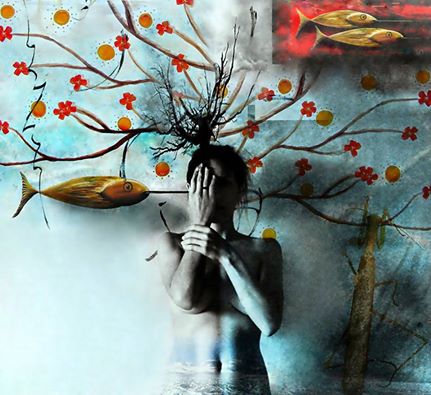
 [εικόνα: Jaya Suberg]

View original post