In Journeys Begin Dreams: Antigone Kefala and Ania Walwicz

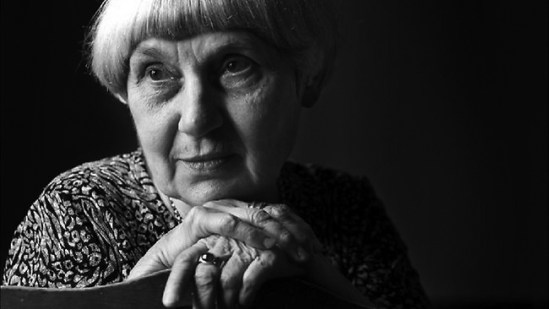
Antigone Kerala

Antigone Kerala

Ania Walwicz

Ania Walwicz

By Sneja Gunew*

In dreams begins the journey. . . (Kefala, 1973:5)

How easy is it, even now, to attach notions of the literary to ethnic minority writing? If not, then what are the implications for practitioners who wish to participate in selecting the words which, according to Barthes, consolidate social meaning? ‘Literature remains the currency in use in a society apprised, by the very form of words, of the meaning of what it consumes’ (Barthes, 1967:38). What kind of signification is ethnic minority writing permitted within Australia? Such writing is not usually received as ‘literature’ which, for the moment, can be described as a textuality which is visibly more worked over, and more conscious of textual conventions, than other forms of writing, and whose implicit opposite is the apparent ‘disorder’ of speech (ibid.:25). If we accept the suggestion that ethnic minority writing signifies only within the formations of sociology and history then, paradoxically, its value lies here with speech rather than writing. In other words, when made synonymous with migrant writing, it is the migrant’s speech (rather than writing) which is solicited, and the more disordered it is the more authentic it supposedly sounds. In those terms, ethnic minority writing is valued precisely in so far as it is inscribed with the marks of linguistic naivety and (even) incompetence: broken language is perceived as symptomatic of subjects not yet ‘assimilated’ (rendered the same) or ‘naturalised’.

In the little writing of this kind which receives limited exposure (whether autobiographical or autobiographically based), any obvious signs that the language has been crafted are read nonetheless as relatively unmediated confessions (see chapter 5). Complexities, if acknowledged, are thought of as provided by ‘life’, the complicated history of the migrant or marginalised subject–rather than by any consciously wrought textuality. To consider ethnic minority poetry, for instance, is under those circumstances therefore perverse. Poetry, the least transparently functional manifestation of linguistic self-consciousness, can be read only with difficulty for sociological or historical content. In Barthes’ terms, classical poetry is ‘a speech which is made more socially acceptable by virtue of the very conspicuousness of its conventions’ (ibid.:48). To write poetry means that one is staking a claim to the literary and hence to public cultural participation. On what grounds can this be legitimated, more particularly when the language used is patently either not English, or, if English, then filtered through other languages and literary traditions with their own codes, canons and conventions? Those ‘conspicuous conventions’ alluded to by Barthes are not simply acquired when setting foot on this continent, nor are they part of the naturalisation certificate. Rather, they belong to that cultural ghosting which floats above the home territory and signifies a mystery only gradually comprehended after many rites of passage. Poetry? From ethnic minorities? Classic realist narratives, perhaps, and reluctantly, but not poetry.

To some extent, as I have argued elsewhere (Gunew, 1985), the experience of migration, particularly when it involves negotiating another language, changes the conditions governing signification. In some ways, speaking psychoanalytically, it may be seen as analogous to re-entering the Lacanian symbolic (Wilden, 1968:xii), or (in classic Freudian terms) changing the secondary, censoring processes of the preconscious (Silverman, 1983). In either model we are dealing with a foundational process in the construction of human subjectivity, namely the conditions under which subjects both participate in and are produced by signification. To enter language is to become a social being rescued from the incoherence and anarchy of drives, ‘the mental representative of a somatic impulse’ (ibid.:67); but inevitably this is achieved at the cost of certain repressions, including degrees of alienation from the drive.

In the last few decades there have been considerable efforts to mark the discursive formation of Australian literature, in gendered and cultural terms, as predominantly Anglo-Celtic and male. Hence the work of those who consider the implications of treating Aboriginal writing as either true to oral traditions or colonised by white forms (Davis and Hodge, 1985; Benterrak, Muecke and Roe, 1984), and also of those who see women’s writing as throwing new light on, for example, foundation myths of mateship and the bush (Modjeska, 1981; Ferrier, 1985; Schaffer, 1988). The further complications offered by poetry written from non-Anglo-Celtic perspectives raise questions about the modernity of such writings that relate as much to form as content (Sollors, 1986). Those able to think from the beginning in more than one language find it impossible to consider language as a ‘natural’ and unproblematic expression of experience. And those who have experience of more than one culture may find it more difficult to regard one culture as universal. As David Malouf points out:

What we may have to be vigilant about is the groups in our society who feel that the culture belongs to them, who insist that their version of the culture is central or the only authentic one. Mostly the only cultural history we get of a society is the one that is passed down to us by those who have power, privilege and the use of language. (Malouf, 1985:61)

The reception of Walwicz and Kefala has been instructive in so far as it can be read symptomatically to gauge the ways in which ethnic minority writers are positioned in Australian culture. Let us consider Kefala first.

I am tired, living at home among strangers,

sitting at the same tables,

waiting for an acceptance that never comes,

an understanding that would not be born,

the measure in us already spent. (Kefala,1973:8)

Continue reading

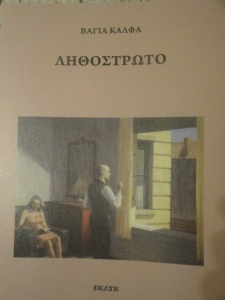
Βάγια Κάλφα – Τέσσερα ποιήματα

antipoihsh's avatarΤΟ ΠΑΡΑΘΥΡΟ

φωτό

ΠΡΟΒΑ ΘΑΝΑΤΟΥ

Όταν έβγαινε
Του έδωσαν το εξιτήριο
Σα νίκη. Τα φτερά σου
Είναι από γερή κράση
Άνοιξέ τα, μη φοβάσαι
Του είπαν και του έδωσαν
Μια γενναία σπρωξιά

Μα ο πατέρας, δύσκαμπτος
Διάθεση καμιά. Τον είδε
-Ορκιζόταν-
Πριν φύγει του γέλασε
Και του πέταξε
Χώμα

Κι υπόσχεση επιστροφής

ΟΙ ΕΥΣΥΝΕΙΔΗΤΟΙ

Σηκώνονταν
Χρόνια ολόκληρα
Στις έξι κάθε μέρα
Όταν βγήκαν στη σύνταξη
Ορκίστηκαν πως
Θα έπαιρναν
Το αίμα τους πίσω
Θα περνούσαν
Όλη μέρα στο κρεβάτι
-Δεν θα τους κουνούσε
Τίποτα

Όμως το ρολόι τους
Καλά ρυθμισμένο
Τους πετούσε πάνω

Ώρα έξι ακριβώς

ΕΡΓΑΖΟΜΕΝΟΙ

Πρόσωπα
Το ένα δίπλα στο άλλο
Κι απέναντι
Γεμάτα σκαλωσιές
Όπου μύες εργάζονται σκληρά
Να φτιάξουν ένα άρτιο χαμόγελο
Εγκεκριμένο από την πολεοδομία
Που αγαπά

Τις καλές προσόψεις

BON APETIT

Απ’ την κονσέρβα
Της κόκκινης ιστορίας
Δραπετεύει ένα ψάρι

Από την ποιητική συλλογή Ληθόστρωτο, Εκδόσεις Εκάτη, 2014

DSC01149


View original post

Ε. Μύρων, Τρία ποιήματα

ayta2_0

Ο Αζόρ

Δεν είναι από pet-shop
(δεν είναι καν ημίαιμος)
Δεν τρώει σκυλοτροφές
ούτε κονσέρβες

Δε δέχεται λουρί στο λαιμό
κι ας λατρεύει τις βόλτες
Είναι αλλεργικός στα ψεύτικα
χάδια και στα κουνούπια
Δεν κουνάει την ουρά του
όταν χαίρεται (δεν έχει τρόπους)
Συνήθως γυρνάει με άλλους
ανυπάκουους σκύλους,
που γαβγίζουν αλλιώτικα
ή τρέχει μονάχος στους δρόμους
Πάντα μισούσε τις αγέλες
ο μπαγάσας,
όσο και το λουρί
Γι΄αυτό δεν επωλήθη

***

Για ‘κείνους γράφω

…που τσακώθηκαν με την άνοιξη
κι έζησαν μόνο με χειμώνες
αναλωμένοι
σ’ ένα ημιτελές και
άρρυθμο πολλές φορές, περπάτημα.
Μ’ένα βηματισμό που αγνοεί
τις όποιες χειρολαβές
αυτού του κόσμου.

Με τους απόκληρους
του συρμού θέλω να μιλώ,
που κραδαίνοντας το ακυρωθέν
εισιτήριό τους, ήλπιζαν
σ’ ένα βαγόνι επόμενο
μα τακτοποιήθηκαν στριμωχτά
σε λίγα εκατοστά φτωχού τσιμέντου.
Ξεχασμένοι απ’ το κομβόι
σε κάποιο αδιέξοδο
χωρίς καν μια ειδοποίηση,
έστω μια πινακίδα επικίνδυνης στροφής
μια έξοδο κινδύνου.
Θα ΄χουν, φαντάζομαι,
έναν άλλο τρόπο ανάγνωσης
των όσων γράφω.

***

Αερόστατο

Έχω ένα αερόστατο
μέσα μου κρυμμένο
Ίσως κάποιες φορές
το αέριο του είναι ελλιπές
ή ο αέρας μέσα μου βαρύς
και δεν πετά
– ζαρώνει στάσιμο στα χαμηλά.
Βαρίδι γίνεται στα πόδια
και το σέρνω.
Είναι όμως εν δυνάμει πτητικό
Αυτό το αιθεροβάμων υλικό
που κρύβω μέσα μου
με στιλώνει και με κρατά ορθό
όταν απογειώνεται.
Γι’ αυτές τις πτήσεις του
και μόνο
αξίζει το κουβάλημα.

*Ο Ε. Μύρων διατηρεί το ιστολόγιο Αλέκτωρ στη διεύθυνση http://a-lektor.blogspot.gr

Jennifer Mackenzie Reviews Lưu Diệu Vân

unnamed

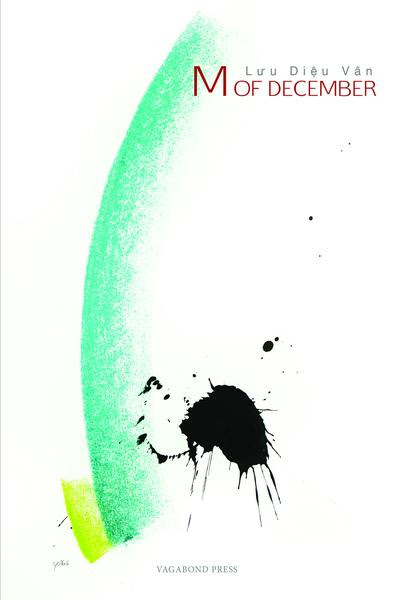
M of December
by Lưu Diệu Vân
Vagabond Press, 2016

Reading M of December is rather like going to a spectacular exhibition at a gallery where images of all kind swirl, proclaim, collide and re-form – the viewer takes the opportunity of a brief leave to attempt to come up with a coherent response. Having gone into this gallery, and exited on a number of occasions, what I have come up with is a response to the formed fragmentation of its individual poems, travelling through discordancy via the robust vigour of forceful lines and sharp elisions.

In the first section of the collection, ‘December’, individual poems read as constructed assemblages with dazzling juxtapositions of imagery. In ‘B.C. bees’, perception is presented as molten, contested, as chthonically and chronologically unsettled:

the fire has eyes that glide through lies
beyond B.C. and cunning centuries
the sage offers secrets to the universe
seeing is a plague
the distance between heaven and death is a U turn

The artist at work then makes a selection process by constructing a verbal installation:

each century’s special promotion
written in the DNA of people making headlines
the telling bees dash for the wedlocked bedrock
like thumbtacks on a topsoil cork board
sucking out stories as big as Vesuvius’ pumice
mortality preserves in conceding hives

This sense of poem as installation, or constructed artefact, is also on display in ‘micro exhibition’, where images of the artefact and that of the natural world play off each other, reflecting both boldness and uncertainty – wonderment in the faith of what the poet has created. The poem starts out with a strong image:

a religious artefact stands imposingly, sanctimoniously reflecting
the recondite sea beneath

The imposing nature of the image could be seen to conflate into the act of perception itself:

the glass incrustation patiently collects black and white
stones of uncertainty, downplays the six senses, magnifies the
perception

This culminates in the final verse, where the act of writing itself presents ambivalently:

on top of the mountain lays a hesitating temple of ink, half
wanting to leap, half keeping hold of subsistence
Essentially, Vân works herself out of hesitation; boldly placing the natural and the constructed to achieve a momentary interlocking of effect.

In ‘imaginary holy friend’, the robust somehow distils itself into an evocation of lyric, socially sanctioned violence. Here, the gendered de-formations of ‘people playing god’ merge into a joint reflection of the abused body and nature, with the short lines being particularly effec-tive:

god frolicking people
elongated neck binding
people playing god
moon-blade foot binding
slippers stumped by lotus ponds
punctured meat of the bony flute
meshes pain
filtered cries
hair side-parted
slope of decisiveness
gossamer crease hidden in plain terrain
mountain
goiter of the soil
lake
urethra of the deep
volcano
mouth of the inflamed
smoke
lung of the unsung

a favourite blacksmith of mortal parts
to play Operation with in the bedridden darkness
The poem ‘inside an armoured chrysalis’ pursues the vision of metaphysical clash in its expressionistic and apocalyptic tableau of war:

the cloak of war rips open like a caterpillar’s final grip on innocence
seas of poppies barrage from rising towers

Its imagery is strong and confrontational, for instance: ‘stench of fresh fir’, ‘molecules of gassed up bodies’ and ‘thinning polyskies of barebones and sulking skulls’. The delicacy (and the shorter line) seen in ‘imaginary holy friend’ effectively returns in the final two lines, playing out the metamorphic import of ‘chrysalis and caterpillar’:

the rest of us frantically disperse
in search of a butterfly that can cry

The section, ‘December’, continues with an enthralling juxtaposition of imagery from nature, the world of objects, and the body, all morphing into each other in unexpected combinations. ‘coiling forest’ presents a take on the Cinderella story, of ‘tales of a princess always needing rescues / of a prince.’ Vân portrays a set in motion, in which ‘a vanishing forest [is] coiling into itself’ and ‘doors are pushing upwardly silently within the forest like wild / mushrooms.’ The poet abruptly segues from this protean vision, into savage reflection:

Cinderella never made it
that last second of the forest’s final new year’s eve
when no one can own sadness
but merely takes care of it for the next victim in line

In a similar vein, ‘melancholia of caramel afternoons’ moves from the mythical to the contemporary with spectacular elision:

nirvana
the night’s cologne caging in
missing hinges from its macho wings
on the wall of memory
Sabrina arrives through the urgent ringtone

The second section of the collection, ‘M’ is akin to work seen in Poems of Lưu Diệu Vân, Lưu Mêlan & Nhã Thuyên (Vagabond Press, 2013), extending Vân’s poetry both in theme and imagery, nailing the acerbic line. ‘to a younger poet self’ and ‘naïve writer’ respectively look back in sardonic reappraisal: of, firstly, an early love affair; and, secondly, of early flurries onto the literary circuit. In ‘to a younger poet self’, the ‘Big Heartbreak’ is framed with literary reference:

all your twenty-two self-pities
a fatal infatuation for Rumi and e.e.cummings
insomnias yet of age
jolts of maiden pain
love smog tints grays of verses
laments vicariously postaged to Neruda

Its references morph into an effectively crafted take on writing and the body:

you shatter into creation
the feminist phoenix way
riding in the dark on the biro’s horn
rendering poisoned sensations savable
chastity’s optional to tame metaphors
you jump through a needle’s eye
avoiding the thread’s pull

‘naïve writer’ also sees the collection open itself up to some narrative savagery. In Vân’s view, literary PR appears as the selling of self, where ‘the writer’s skin must be as thick as their copious flows of / topless appearance on the fictional bed’, this ‘literary reception / bed, on which not a single space is deserted’, from which the speaker is suddenly excluded, ‘forever trapped outside’.

‘M’ explores the evolving world of feminist critique, drawing on history, culture and patriarchy, putting the poet’s skills at dramatic scene-setting to good effect. ‘feminine reconciliation’ reads as a pithy riff on popular magazines and their penchant for advice columns: ;what a woman wants is shoes that go with every mood / what she needs is an attitude that can wear many hats.’ In ‘the bindi escape’, a living deity leaves ritual behind:

12 days of purifying in isolation
she wipes the red sun
belated dreams off her charcoal-rimmed eyes
the spirit vacates the body
light escaping between her remoistenable thighs
two entities lie languidly
in the corona of midnight innocence
making bolts out of peepal with burgeoning tongues

the bindi’s making a scandalous cross
towards freedom

In ‘here comes the truth’ the rituals of a traditional upbringing are laid waste by sudden flight at the end of the Vietnam War, when the refrain of ‘White Christmas’ signalled the urgency to evacuate:
she was not privy to
the monk’s staged self-immolation
White Christmas and Bing Crosby’s common key
the entire village fumbling in the red land

The poem concludes with an epiphany of arrival in the United States, where the speaker ‘got all the answers from the immaculate self-cleaning airport toilets / no P. M. of W. C. forcing a tip from her.’

‘my would be sister’ reflects on this flight, and the alternative histories it represents. Growing up as ‘an au fait young woman’, she sees her home country as a place where ‘female laborers’ [sic] take ‘routine / beatings from their husbands like cultural norms.’ However, ‘if the night-sea escape had failed’ she might be, at 15, ‘prime age for pre-arranged marriage, lying leisurely on the hammock in the coconut grove.’

Another particularly strong poem in the collection, ‘on the 7thfloor’ skillfully employs the trope of a movie shot to suggest dark emotions within a contained and eroticised space – the theatre of the room:

the ceiling fan’s blades decapitate the plump moon of the 7th floor
flashes of light contaminate the eerie air
absolute silence
spirit possessed with an obvious sixth sense
a woman
plunging a needle through each fingernail
sewing a secret lover’s name on the inside of her longing thighs
without uttering a cry

Although issues of gender predominate in the second section of the collection, it is not an exclusive preoccupation. Among poems of a different timbre and subject, ‘the cloud hunter’ is a delightful, witty response to pareidoia, as the poem transforms from observations of cultural predilections: ‘the Vietnamese see a pixy dragon / the Chinese see a bad omen’, to being a somewhat rueful celebration of poetry:

I am proud of my trade regardless
protecting the hangover of our fading faction
there are so few of us left
surviving barely on the illicitly traded puff of time
and in order to avoid detection
we now call ourselves poets

Overall, this lively and impressive collection showcases feminist humour shaping the sharp cut of the poetic line. It sees Lưu Diệu Vân extending her range, and presenting a number of compelling poems, which invite rewarding re-reading.

*Jennifer Mackenzie is the author of Borobudur (Transit Lounge, 2009), republished in Indonesia as Borobudur and Other Poems (Lontar, 2012) and has been busy promoting it at festivals and conferences in Asia. She is now working on a number of projects, including an exploration of poetry and dance, ‘Map/Feet’. Her participation in the Irrawaddy Festival was supported by a writer’s travel grant from the Australia Council for the Arts.

**Taken from Cordite Poetry Review at http://cordite.org.au/reviews/mackenzie-van/

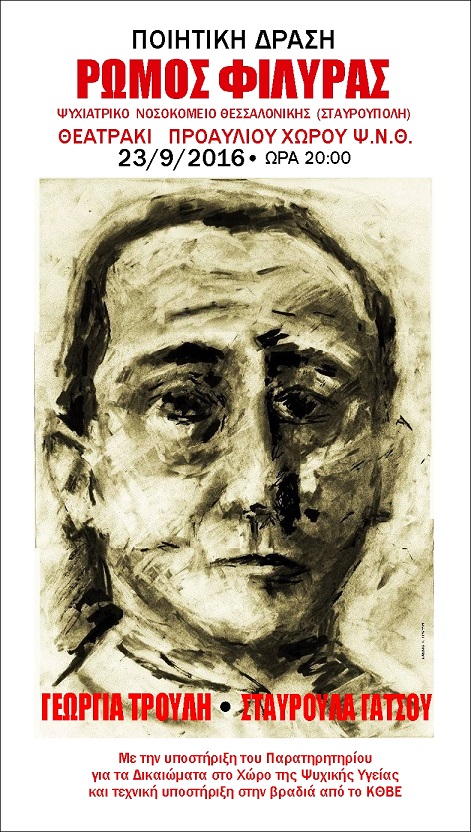
23 Σεπτεμβρίου, Ρώμος Φιλύρας στο Ψυχιατρικό Νοσοκομείο Θεσσαλονίκης

%22gc

23 Σεπτεμβρίου, Ρώμος Φιλύρας στο Ψυχιατρικό Νοσοκομείο Θεσσαλονίκης (θεατράκι). Εκδήλωση-Ποιητική δράση. Είσοδος Ελεύθερη
 
Την Παρασκευή 23 Σεπτεμβρίου και ώρα 8 το βράδυ, με πρωτοβουλία των Γεωργία Τρούλη και Σταυρούλα Γάτσου, ποιητριών, καλλιτεχνών της πόλης, σε συνεργασία με την Διοίκηση του Ψυχιατρικού Νοσοκομείου θα λάβει χώρα ανάγνωση ποίησης του Ρώμου Φιλύρα, διάρκειας περίπου μιας ώρας, από το δίτομο “Ποιήματα: άπαντα τα ευρεθέντα” Ρώμος Φιλύρας, εκδόσεις University studio press (2013) σε φιλολογική επιμέλεια του Χ. Καράογλου και της Αμαλίας Ξυνογαλά. 
 
Η δράση αυτή εντάσσεται, ως συνέχεια, σε μια σειρά από αντίστοιχες εκδηλώσεις σε σημεία και με φορείς της πόλης που στοχεύουν στην ευαισθητοποίηση και στον κοινωνικό διάλογο με αφορμή και μέσο την ποίηση (‘Ασμα Ασμάτων Ροτόντα με ΚΘΒΕ, ΚΡΑΥΓΗ  Μέγαρο Μουσικής Θεσσαλονίκης με Θετική Φωνή (άνθρωποι+HIV)).
 
Η δράση αυτή έρχεται επίσης να υπενθυμίσει την προσπάθεια που γίνεται από τους φορείς και τους πολίτες στις δύσκολες κοινωνικοοικονομικές συνθήκες των τελευταίων χρόνων να διατηρηθεί και να βελτιωθεί η μέριμνα προς τις ευπαθείς κοινωνικές ομάδες, καθώς και να προωθηθεί η ιδέα της ενσωμάτωσης της τέχνης στις παράλληλες δράσεις ενθάρρυνσης και υποστήριξης των ψυχικά ασθενών.  
 
Η συγκεκριμένη δράση  αποτελεί έναν φόρο τιμής στον Ρώμο Φιλύρα ως ποιητή-δημιουργό μέσα από την ανάγνωση με πλαισίωση ηχητικών τοπίων  επιλεγμένων ποιημάτων από το δίτομο Ρώμος Φιλύρας (1888-1942) “Ποιήματα – Άπαντα τα ευρεθέντα” (2013), αλλά και ως ψυχιατρικό ασθενή που ποτέ, μετά τον εγκλεισμό του, δεν επανεντάχτηκε. Στη συλλογή αυτή συμπεριλαμβάνονται, και θα ακούσουμε, ποιήματα που έγραψε ο ποιητής και κατά την διαμονή του στο Δρομοκαΐτειο (εισήχθη το 1927 όπου και πέθανε), ποιήματα που συλλέχθηκαν έπειτα από έκκληση σε ανθρώπους που τον γνώριζαν καθώς ο ίδιος τα χάριζε σε τσαλακωμένα χαρτιά σε όποιον τον επισκεπτόταν.
 
Με την ποστήριξη του Παρατηρητηρίου για τα Δικαιώματα στον χώρο της Ψυχικής Υγείας, και  τεχνική υποστήριξη της βραδιάς από το Κρατικό Θέατρο Βορείου Ελλάδος,

Επικοινωνία
Γεωργία Τρούλη, 6943 07 91 81
Σταυρούλα Γάτσου, 6944 66 66 83

Fernando Pessoa, Ο φύλακας των κοπαδιών Ι

fernando_pessoa_heteronimia-cover

Εγώ ποτέ δεν φύλαξα κοπάδια,
αλλά σαν να τα φύλαξα είναι.
Η ψυχή μου είναι ένας βοσκός,
γνωρίζει τον άνεμο και τον ήλιο
κι απ’ τα χέρι κρατώντας τις Εποχές
ακολουθεί και κοιτάζει.
Όλη ή γαλήνη της Φύσης δίχως ανθρώπους
έρχεται να καθίσει δίπλα μου.
Άλλα εγώ μένω θλιμμένος όπως ένα ηλιοβασίλεμα
στη Φαντασία μας,
όταν πέφτει παγωνιά μακριά στην κοιλάδα
και νιώθεις τη νύχτα να μπαίνει
σαν πεταλούδα από τό παράθυρο.

Αλλά η θλίψη μου είναι ηρεμία
γιατί είναι φυσική και δίκαιη
και είναι αυτό που πρέπει να νιώθει η ψυχή
σαν σκέφτεται πως υπάρχει
και τα χέρια μαζεύουν λουλούδια χωρίς καν να το βλέπει.

Σαν θόρυβος από κουδούνια
πέρα από τη στροφή του δρόμου,
οι σκέψεις μου είναι ευχαριστημένες.
Λυπάμαι μόνο που ξέρω πως είναι ευχαριστημένες,
γιατί, αν δεν το ήξερα,
αντί να είναι εύχαριστημένες και θλιμμένες,
θα ήταν ευχαριστημένες και χαρούμενες.

Να σκέφτεσαι είναι ενοχλητικό σαν να βαδίζεις στη βροχή
όταν ο άνεμος δυναμώνει και μοιάζει σαν να βρέχει περισσότερο.

Δεν έχω φιλοδοξίες μήτε επιθυμίες
να ’μαι ποιητής δεν είναι δική μου φιλοδοξία.
Είναι ο τρόπος μου να είμαι μόνος.

Κι αν κάποτε επιθυμώ,
με τη φαντασία μου, αρνάκι να ’μαι
(ή το κοπάδι ολόκληρο
σκόρπιο να τρέχει σ’ όλη την πλαγιά,
να ’μαι πολλά πράγματα ευτυχισμένα τήν ίδια στιγμή),
είναι μόνο γιατί αισθάνομαι αυτό που γράφω στο ηλιοβασίλεμα,
ή όταν ένα σύννεφο απλώνει το χέρι του πάνω από το φως
κι η σιωπή τρέχει έξω στο χορτάρι.

Όταν κάθομαι να γράψω στίχους ή,
βαδίζοντας σε δρόμους και μονοπάτια,
γράφω στίχους στο χαρτί που υπάρχει στη σκέψη μου,
νιώθω μιαν αγκλίτσα στα χέρια
και βλέπω το περίγραμμα του εαυτού μου
στην κορφή του λόφου,
να κοιτάζει το κοπάδι μου και να βλέπει τις ιδέες μου
ή να κοιτάζει τις ιδέες μου και να βλέπει το κοπάδι μου,
και να χαμογελάει αόριστα σαν κάποιος που δεν καταλαβαίνει τι λένε
και θέλει να παριστάνει πως καταλαβαίνει.

Χαιρετάω όλους όσοι θα με διαβάσουν,
βγάζοντάς τους το πλατύγυρο καπέλο μου
όταν θά με δουν στην πόρτα μου
μόλις η άμαξα φανεί στην κορφή του λόφου.
Τους χαιρετώ και τους εύχομαι ήλιο,
και βροχή, όταν η βροχή είναι αναγκαία,
και τα σπίτια τους να ’χουν
ένα παράθυρο ανοιχτό και στο πλάι
την αγαπημένη τους καρέκλα
για να κάθονται να διαβάζουν τους στίχους μου.
Και διαβάζοντάς τους να σκέφτονται
πως είμαι κάτι φυσικό —
για παράδειγμα, το αρχαίο δέντρο
που στη σκιά του παιδιά όταν ήταν
σωριάζονταν, κουρασμένα απ’ το παιχνίδι,
σκουπίζοντας τον ιδρώτα του ζεστού μετώπου τους
με το μανίκι της ριγέ ποδιάς τους.

*Από το βιβλίο “Τα ποιήματα του Αλμπέρτο Καέϊρο”, σε μετάφραση Μαρίας Παπαδήμα, εκδόσεις Gutenberg 2014.

Γιώργος Γκανέλης, Τρία ανέκδοτα ποιήματα

sadness1

ΤΟ ΛΕΩΦΟΡΕΙΟ

Σε λίγο θα περάσει το λεωφορείο
Ο θάνατος με δίπλωμα οδήγησης
Στην πόρτα θ’ αφήσει ένα γράμμα
Κάποια παιδιά θα το διαβάσουν
Εγώ θα τρέξω να σε συναντήσω
Θα σε βρω σε μια στάση να κλαις
Μετά θα μπούμε στο λεωφορείο
Θα καθίσουμε δίπλα στον οδηγό
Μοναδικοί επιβάτες του εμείς
Θα έχεις χρόνο να μ’ αγαπήσεις
Και περισσότερο να με μισήσεις
Θα ανοίξω όλα τα παράθυρα
Να μπούνε τα μαύρα πουλιά
Ο δρόμος για την άβυσσο μακρύς
Δυστυχώς τελειώνει κι η βενζίνη

Κι ήθελα τόσο να πεθάνουμε μαζί.

***

ΤΑ ΦΤΕΡΑ

Δεν τα πουλάω τα φτερά μου
Τα δίνω μόνο για ανακατασκευή
Έμαθα μ’ αυτά να μην αυτοκτονώ
Να πέφτω γυμνός απ’ την ταράτσα
Και να προσγειώνομαι στον κήπο
Να επισκέπτομαι τη στρατόσφαιρα
Να συναντώ μέλισσες στο φεγγάρι
Γυρνώντας από ταξίδι αναψυχής
Να τα δανείζω στα αεροπλάνα
Σε περίπτωση μηχανικής βλάβης
Ν’ ακολουθώ τις ψυχές μεσάνυχτα
Που ανηφορίζουν στον ουρανό.

Δεν τα πουλάω τα φτερά μου
Τα προσφέρω μόνο για σωτηρία
Στις πεταλούδες που ζαλίστηκαν
Κι έπεσαν στο χώμα αιμόφυρτες
Στα σακάτικα πουλιά των πόλεων
Που πηδούν απ’ τις πολυκατοικίες
Σ’ όσους σκαρφάλωσαν στον ήλιο
Άνοιξαν μετά τις ομπρέλες τους
Και λιπόθυμοι βούτηξαν στο κενό
Στα μόρια απ’ τη σκόνη του αέρα
Που έχασαν τις αισθήσεις τους
Σωματίδια σε κατακόρυφη πτώση.

Άλλωστε κανείς πια δεν αγοράζει
Δυο παλιά μεταχειρισμένα φτερά.

***

ΤΟ ΣΠΙΤΙ

Γυρίζοντας στην παλιά γειτονιά
Θα σκοντάψω τυχαία σε φίλο
Σε ακέφαλο σώμα που με κοιτά
«Αν είσαι όπως σε ήξερα φύγε»
Τότε αρχίζω να τον πυροβολώ
Σκοτώνω την αθωότητά του
Μετά μπαίνω στο πατρικό σπίτι
Όλα είναι όπως τα άφησα τότε
Ο γάτος κοιμάται στον καναπέ
Δε με αναγνωρίζει καθόλου
Έχουν ασπρίσει τα γένια μου
Σκοντάφτω πάνω σε δυο βιβλία
Που δεν κατάφερα να διαβάσω
Μέσα απ’ το κάδρο ένα παιδί
Πετά στ’ αυτοκίνητα νεράντζια
Κι ο πατέρας με τις παντόφλες
Ξέχασε πια πως είχε πεθάνει
Ψάχνει το κλειδί στη γλάστρα
Μαζεύω το χώμα για ενθύμιο
Με περίμενε κι η μητέρα μου
«Αν θέλεις απόψε να κοιμηθείς
Ξάπλωσε σε αυτό το κρεβάτι
Μόλις έβαλα καθαρά σεντόνια».

Βέβαια κανείς δεν της είπε
Πως υπήρχε κάποια απόσταση
Μεταξύ κρεβατιού και ουρανού.

Γρηγόριος Σακαλής, Παζάρι

5539745183_4ded1b0502_b

Τρέξτε, τρέξτε
στο μεγάλο παζάρι
όλη η πλατεία γέμισε
εδώ πωλούνται όλα
από χρυσό μέχρι μπακίρια
από καρφίτσα μέχρι λευκή σάρκα
πωλούνται κι αγοράζονται
πένες και στιχουργοί
στοχαστές και δημιουργοί
όλοι στον κοινό παρονομαστή
το χαρτονόμισμα
αυτό το παζάρι
δεν σταματάει ποτέ
τρέξτε λοιπόν
προλάβετε
υπάρχουν ευκαιρίες πολλές
για επενδύσεις καλές
μα πριν πάτε, σκεφτείτε
πως ήδη
έχετε πουληθεί κι εσείς.

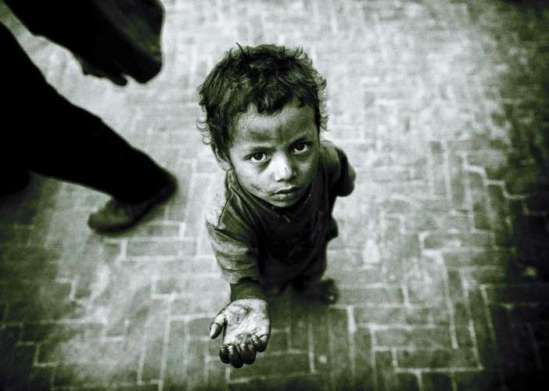
What a Little Boy should never See by Marjon Van Bruggen

reubenwoolley's avatarI am not a silent poet

The poor city bathed in blood

each drop in the name of one god or another

aftermath of a violent, destructive

and inhuman storm.

His mum, his dad, both are gone.

Are they dead? He does not know.

Home, he seizes the small statues,

once a cherished gift from them,

now they enrage him; they stand

so placid and silent on bookshelves

and table tops they seem out of place.

Decapitated heads, amputated arms

and severed legs crash in all directions

in splashes of marble, stone and porcelain.

Explosive red flares before his eyes

equalising the street scenes.

This is what he sees the rest of his life.

View original post

Γεωργία Τρούλη, Υψηλός Αιματοκρίτης

14365298_944343425688443_1147166022_n

Το στόμα του πατέρα μου μπορεί να μας καταπιεί όλους.

Έχει μυθική καταγωγή

Όταν γελά, νευριάζει ή ειρωνεύεται παίρνει πάντα το ίδιο σχήμα

Νομίζω το κληρονόμησα.
 
Το χέρι της μητέρας μου μπορεί να μας πνίξει κύτταρο κύτταρο

Έχει ευκαρυωτική καταγωγή

Όταν ακούει μουσική το δωμάτιο γίνεται υγρό και αιωρείται

Νομίζω την κληρονόμησα
 
Τα μάτια του αδερφού μου αλλά κυρίως τα αυτιά μπορούν να φτιάξουν

από σάπια υλικά- παιχνίδια. Έπειτα τα χαρίζει χωρίς περιτύλιγμα.

Νομίζω με μιμήθηκε.
 
-Όταν κάνει πολύ θόρυβο καταλαβαίνεις πως κάποιος του στέρησε χρόνο

Και αφή-
 
Το σώμα του γιου μου έχει πάντα έναν τονισμό μεγαλύτερο.

Όλα τα μέλη τα συνθέτει απότομα και με ένταση. Το κεφάλι του ένα συνεχές καρουζέλ.

Όταν με κοιτάει στα μάτια καταλαβαίνω τι θα πει μεγάλο νιώσιμο σε μικρό εμβαδό.

Νομίζω κάπως του μεταγγίστηκε

Η κόρη μου αφήνεται εύκολα σε έναν ύπνο που μοιάζει ατάραχο

Όταν μου ζητάει μελάνη, διαρκώς ξέρω πως η ροή της είναι οικεία

Νομίζω την αγαπάμε μαζί.

Ξέρω – θα κληρονομήσει μυρωδιά και σκληρότητα=
 
Όταν συναντιόμαστε όλοι μαζί στο διάδρομο ή σε κάποιο στικάκι φωτογραφιών

Ξέρουμε ο ένας για τον άλλον τα πάντα
 
Όταν τρώμε, εγώ κρύβομαι κάτω από το τραπέζι και τους δένω όλους

Με μακαρόνια. Περίτεχνα χωρίς τίποτα

να καταλάβουν. Όταν σηκώνονται διαλύεται το πλέγμα, το πατάνε, λένε ‘μάλλον κάποιος

Θα έφαγε άτσαλα’

Δεν με ενοχλεί γιατί ό,τι έχει σημασία παράγεται σαν μια διαρκής ροή σημασίας
Δεν αιχμαλωτίζεται

Έπειτα με φιλούν ένας- ένας

Φεύγουν και μου λένε περιπαικτικά

‘Ξέρουμε τι καπνό φουμάρεις‘

Κι εγώ τους απαντώ

‘Ξέρω καλά τι σόι είστε’

Φεύγουν ήρεμοι

Τους κληρονομώ κάθε μέρα

Τους στέλνω μια ευχή από τα σωθικά μου

Επιστρέφουν μετά από χρόνια

Θέλουν αίμα

Τους μεταγγίζω-

*Το σχέδιο της ανάρτησης είναι της Γεωργίας Τρούλη.