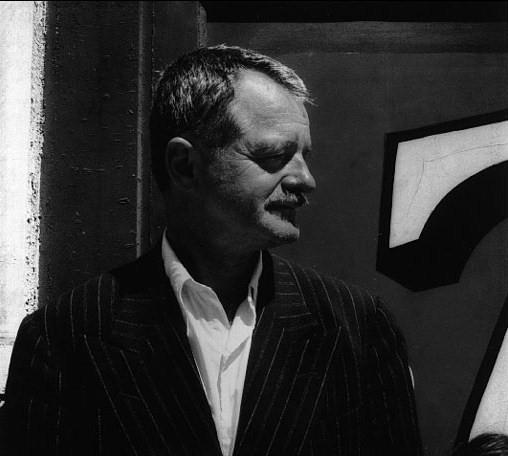
A short biography of poet, anarchist and pioneer of the Beat movement Kenneth Rexroth
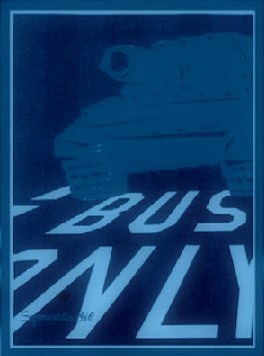
Labor power on the market,
Firepower on the battlefield,
It is all one merely two
Aspects of the same monster.
The Dragon and the Unicorn
Kenneth Rexroth was born in 1905 in Indiana, into a family that had a long line of freethinkers, feminists, abolitionists, socialists and anarchists. His father used to drink whisky with Eugene Debs, the socialist leader. He had an enlightened upbringing but then had the misfortune of being orphaned at the age of 12. Most of his adolescence was spent in Chicago, where he worked as a newspaper reporter and was involved in running a jazz tea shop. Here he came in contact with the bohemian world of musicians, poets, writers, artists, hobos, revolutionaries and outsiders.
Rexroth was almost completely self-educated, with only five years of formal schooling. He read avidly, began to write poetry, paint abstract paintings, worked in avant-garde theatre and taught himself several languages. Like the European writer Jean Malaquais, he took to the road in his late teens, He ranged, he roamed, he rambled. He worked at all sorts of jobs, sometimes as a cowboy cook, sometimes as a wrangler, and in farm and forestry jobs. He worked as a toothbrush maker and as a peddler of pamphlets on diet. He even managed to make it to Paris and back as a stowaway. There he met many important radical artists, including many surrealists. The anarchist Alexander Berkman told him whilst he was in France not to become another expatriate and he returned. Becoming an anarchist at an early range, he saw through the Bolshevik myth of the Russian Revolution as soon as 1921 when the Kronstadt sailors uprising was crushed by Lenin and co.
In 1927 he joined the Industrial Workers of the World, working for a while on its newspaper. In Chicago he set up a Dadaist group. He carried on independent activity in the thirties. Settling in San Francisco he was involved in the newssheet the Waterfront Worker which exhorted dockers to organise. (In later life he entertained his friends with renditions of IWW and Spanish anarchist songs and sometimes used the IWW address “Dear Fellow Worker” in letters).
With the collapse of the revolutionary wave he began to dig in, maintaining and seeking out contact with those who had preserved their radicalism, looking for reassessment and reappraisal. Where possible he spoke out against the established order. We have to remember that in this most grievous period, it was an extraordinary achievement to maintain revolutionary optimism. The perversions of Bolshevism had meant that as Kenneth said “There was no one left who was not completely centred on the Kremlin, either as a mindless Stalinist hatchet man or a psychopathic anti-Bolshevik”. He was also able to make the acute observation that: “the socialist and trade union movements in the West have functioned in reality – not just as governors to insure that steam is let off when the pressure gets too high, not just as what are now called “fail safe” devices, though they certainly are that – but as essential parts of the motive organisation of capitalism, more, in other words, like carburettors that insure there will be just the right mixture of fuel and air for each new demand on the engine”.
In World War II he refused to take part in the clash of opposing capitalist states and was a conscientious objector. He did alternative service working in a psychiatric ward. During the war he formed the antimilitarist Randolph Bourne Council (named after the libertarian writer who had coined the phrase “War is the health of the state”). He helped Japanese-Americans who were being interned by the thousands in concentration camps, devising ways by which many were able to avoid internment. Down in Berkeley from 1944 to 1948 the magazine Circle which united local Berkeley Renaissance writers and exiled European Surrealist poets expressed anarchist and anti-authoritarian views (Rexroth contributed to it). In their last issue an ad for a New Writers Group stated that “ We believe in the possibility of a culture which fights for its freedom, which protects the economic interests of its workers in all fields including the arts, and which can create for itself new forms and new voices, against reaction and the threat of war”.
After the war Rexroth was involved in the setting up of the San Francisco Anarchist Circle. (later the Libertarian Circle). Anarchists like David Koven, surviving old Italian and Spanish anarchists, and conscientious objectors returning from the Waldorf detention camp took part. Lively weekly meetings discussed all sorts of subjects from the Spanish Revolution, Kronstadt and Ukrainian rebel Nestor Makhno, to the ideas of anarchists like Emma Goldman, Berkman , Voltairine de Cleyre , Peter Kropotkin, the anarchist women’s movement, and sex and anarchy. The sessions at Rexroth’s house were enriched by his food (he was a superb cook) and his huge and encyclopaedic knowledge. Rexroth’s actions were designed to trigger what he felt was needed for a successful transition to an anarchist society- the development of a new consciousness. The little magazine Ark that was set up (printed on a small hand press from 1947) was more militant than its forebear to the south, Circle. It proclaimed: “Today, at this catastrophic point in time, the validity if not the future of the anarchist position is more than ever established. It has become a polished mirror in which the falsehoods of political modes stand naked”.
When all the other social commentators were bluntly asserting that all revolt and dissidence had ended he was able to say “The youngest generation is in a state of revolt so absolute that its elders cannot even recognise it”. Members of the Libertarian Circle were to be key players in the radical upsurge that became known as the San Francisco Renaissance, as poets and artists, in free radio, in experimental theatre and in the little magazine movement.
Rexroth was to be the midwife of the Beat movement that emerged, that succeeded in uniting the dissident poets and writers of both the East and West Coasts. Kenneth hated being called the Father of the Beats – a movement of which he had many criticisms – but he was able to see that he and they were united in their mutual antagonism to the “ruling convergence of interest- the business community, military imperialism, political reaction, the hysterical, tear and mud drenched guilt of the ex-Stalinist, ex-Trotskyist American intellectuals”.
Rexroth was to preside at the birth pains of the San Francisco Renaissance, which led directly on to the emergence of the Beat movement, at the Six Gallery event in San Francisco where Allen Ginsburg’s powerful anti-authoritarian poem Howl was read out to a eager and excited audience of several hundreds in an electric, drunken atmosphere, where Jack Kerouac was cheerleader and rhythm-maker.
William Everson says what I feel about Rexroth better than I could so let’s hear him speak: “He is a powerful spokesman for any cause he espouses. A born journalist, he has a flair for vigorous public speech and the guts to speak out in unequivocal terms. He has fantastic intellectual and moral courage, taking on the establishment and throwing it on the defensive through the sheer force of his invective. His rhetoric is savage, sometimes shockingly so, but it is never ineffectual. His faults are the excesses of his virtues and he quarrels with his friends as readily as he clobbers his enemies. He tends to drop the movement he has fostered as soon as it shows signs of fragmenting. But his constitutional restlessness could not jeopardise the work he actually accomplished. He touched the nerve of the future and more than any other voice in the movement called it into being. Though others picked up his mantle and received the plaudits, it remains true that today we enjoy the freedom of expression and lifestyle we actually possess largely because he convinced us that it was not only desirable but possible, and inspired us to make it be”.
Rexroth placed too much stress on the development of a radical lifestyle as a fortress against capitalism to the detriment of struggle. His increasingly religious turn in the last years of his life are jarring for many atheists and agnostics. Nevertheless, both his prose and his poems are deeply anarchist and deeply combative. In the long poem The Phoenix and the Tortoise he wrote: “The State is the organisation of the evil instincts of mankind”. In For Eli Jacobson, one of his most moving poems, Rexroth remembers a dead friend:
We were comrades
Together, we believed we
Would see with our own eyes the new
World where man was no longer
Wolf to man, but men and women
Were all brothers and lovers
Together. We will not see it.
We will not see it, none of us.
It is farther off than we thought
We will be remembered, all
Of us, always, by all men,
In the good days now so far away.
If the good days never come,
We will not know. We will not care.
Our lives were the best. We were the
Happiest men alive in our day.
In one of his angriest poems Thou Shalt Not Kill Rexroth talks of the toll that the collapse of the revolutionary wave had on so many writers, artists and intellectuals.
How many stopped writing at thirty?
How many died of prefrontal
Lobotomies in the Communist Party?
How many are lost in the back wards
Of provincial madhouses?
How many on the advice of
Their psychoanalysts, decided
A business career was best after all?
How many are hopeless alcoholics?
One critic snidely called Rexroth (and Gary Snyder and Philip Whalen) “members of the bear-shit-on-the-trail school of poetry.” Rexroth did indeed spend a lot of time in mountain and wilderness, thought that this time was a splendid antidote to the scourges of urban capitalist life, and wrote beautifully about these experiences. But often, in the middle of such a poem, we are pulled back to ideas of struggle, just as I myself, walking in the mountains, have turned to thoughts of revolution. Here Rexroth thinks about the Italian-American anarchist Bartomeleo Vanzetti and his comrade Nicola Sacco, murdered by the State (He had visited them both in prison).
I saw you both marching in an army
You with the red and black flag, Sacco with the rattlesnake banner.
I kicked steps up the last snow bank and came To the indescribably blue and fragrant Polemonium and the dead sky and the sterile Crystalline granite and final monolith of the summit. These are the things that will last a long time, Vanzetti, I am glad that once on your day I have stood among them. Some day mountains will be named after you and Sacco. They will be here and your name with them, When these days are but a dim remembering of the time When man was wolf to man.
I think men will be remembering you a long time Standing on the mountains Many men, a long time, comrade.
From Climbing Milestone Mountain August 22, 1937
By Nick Heath
Slightly edited by libcom
More information
Read The Relevance of Rexroth, a pamphlet written by the Situationist Ken Knabb for a passionate appreciation of what Rexroth was about. Published by the Bureau of Public Secrets PO Box 1044, Berkeley, California 94701. See also the Kenneth Rexroth Archive on BOPS.





 To Koskino