In Shakespeare’s last great poem, The Phoenix and the Turtle, the owl is banished from the allegorical proceedings of the bird funeral:
But thou, shrieking harbinger,
Foul pre-currer of the fiend,
Augur of the fever’s end,
To this troop come thou not near
Whether you read this poem as dense figural allegory, enigmatic elegy or refined coterie poem, you should mark this ironic moment of exclusion. The tradition of augury in poetry is richly prefigured here, not only in the careful inclusion and exclusion of birds, but in the deceptive formal simplicity of the stanzas. Devolving into triplets in the threnody coda, the rhythm of the poem is incantatory, reminiscent of the magic of prophetic language. Why, then, the prohibition on the augur owl?
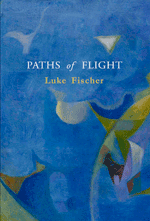
Luke Fischer’s first collection, Paths of Flight, is deeply alert to the signs made by birds. Fischer displays an affinity with a certain notion of the ‘natural’ world, as well as a temperament for classical poetic tropes. Birds, depicted in both mythical and parochial attitudes, populate the collection. And while not every poem depicts the physical manifestations of a bird, many actually do. The owl keeps ‘vigil in a cell/ of twisted boughs’; the swift’s brow is ‘planed by supernal winds’; the punk cockatoo ‘flares his pineapple Mohawk.’ Conversely, more enigmatic figures are infused with bird-like qualities. The first line of the collection, from the poem ‘Portrait of a Thinker,’ is unequivocal: ‘His eyebrows are falcon wings/ gliding on a constant current.’ There is a certain satisfaction to be taken from such thematic consistency. Like Shakespeare’s poem, Fischer’s book takes up an allegorical mode, calling forth the presences of ‘Owl,’ ‘Swift,’ ‘Corellas,’ ‘Raven,’ and a ‘Band of Cockatoos’ through the direct titles of the poems. The collection’s undertaking as a work of augury is emphasised by its omnibus title. How do we read a bird’s flight, which once foretold the will of the gods? What is the relation between poetry and prophesy?


 To Koskino