Toby Davidson 
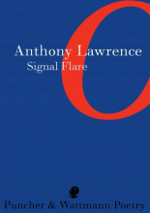
Reviews: Anthony Lawrence’s Signal Flare

signal_flare

Signal Flare by Anthony Lawrence
Puncher & Wattmann, 2013

Some months back, I ended up sitting next to a fairly eccentric white-bearded bloke on a Sydney bus. Upon hearing I was an Australian poetry researcher, my new acquaintance exclaimed ‘Australian poetry!’ with obvious distaste, followed by ‘Fu–ing Anthony Lawrence!’ He went on to detail how feral Aussie upstarts like Lawrence and ‘bloody Adamson’ were bastardising the great tradition of English Romanticism. As he rose to hop off, I asked for his name. He cheerfully declined.

Not long after, I met Lawrence for the first time and he couldn’t place this random public transport invective-hurler. But I did get to hear him read ‘Lines in Absentia’, the restless, unresolved (perhaps unresolvable) elegy which opens his fourteenth collection Signal Flare. I felt, as I did when reading it, that it is too long, that its sprawling oscillation between elegiac and confessional modes mimics rather than tackles the terrible intangibility of the subject matter, the reaching out to a friend who suicided by drowning in Sydney harbour which also doubles as a reaching in.

where the day breaks into flame
on this and on the other side
of despair, of whatever you made
from the spent breath of surrender

the harbour going on, the skyline
uneven, unsentimental
and hard as the currency it generates
I say goodbye and hello

and I will see your name
between blue apostrophes of wave light
in the wakes of boats… (17)

The sentiments here cannot be faulted. Yet what is already implied is made explicitly obvious in a way which is simultaneously evasive, unlike the superior elegy to the poet’s brother in ‘Appellations’ and ‘Eclipse’, where a distraught woman spared from drowning serves as a companion piece, even a resolution of sorts, to ‘Lines in Absentia’. ‘Lines in Absentia’ introduces the solar flare motif which melds with the ejection or interjection of signs/signals/signatures/signatories to create the titular signal flare in any given day. ‘Signatures’ intricately condenses an interlinked series of these:

The flash and gleam of isobars
on the face of a rainsquall
completed by the signature flourish
of a raptor lifting away
from a roadside window display of sweetmeats…

The stone fish again, with no interruptions
like an ink bleed clotting on a water table
its signature contained
as neurotoxins
with a row of sharpened quills
the graphology of the reef. (39)

Australian poetry is full of totemic, talismanic and symbiotic interactions with creatures. Lawrence distinguishes his approach by acknowledging (as he does here) that we interrupt and befuddle them, and also by refusing to rest on a single approach. Indeed, the greatest strength of this collection, more so than its insight and lyrical dexterity, may be that no two people will agree on which poems most move them, drawing as they must on their own life experiences and their own totemic, talismanic and symbiotic human and planetary relationships.

The one dimension which is understandably avoided in a collection which viscerally pursues aging, death and human legacy, is the comic. ‘Cattle Egret’, for example, chooses not to pursue how patently absurd the sight of an egret standing on a cow’s rump might look and how such absurdity in all its relativity can add something deeper to the most serious of poems. Moments of irreverence as spoken by creatures in ‘Gifts’ (‘We are wounded and in need of love / and mercy, can you dig it?’, 55) and wedding guests in the fabulous ‘Lepidoptera’ come as rare, but welcome, reminders of how Lawrence can also call upon on the radical slyness of a ΠO or the biting wit of a Michael Sharkey. Signal Flare is for the most part, however, a fearlessly sober exploration of the web of lives that were, are, and will be before us, and how they reveal themselves to the honed attention of a poet at the apex of his career. Each reading and re-reading of Signal Flare is bound to be stirringly different, a testament to the depth of this collection which very quickly becomes individualised to the reader, then refuses and resets that same individualisation. It is an ongoing gift to those daring to be curious – even to that f–king gent on the bus.
This entry was posted in BOOK REVIEWS and tagged Anthony Lawrence, Toby Davidson. Bookmark the permalink.

*Toby Davidson is a West Australian poet, editor and reviewer now living in Sydney where he is an Australian Literature researcher and lecturer at Macquarie University. He is the editor of Francis Webb Collected Poems (UWA Publishing 2011) and author of the critical study Christian Mysticism and Australian Poetry (Cambria Press). His first poetry collection Beast Language is now out through Five Island Press.

**From http://www.cordite.org.au

Dan Disney 
Reviews: Cameron Lowe’s Circle Work

circle_work

Circle Work by Cameron Lowe
Puncher & Wattmann, 2013

The poems in Cameron Lowe’s Circle Work swing across each page at a strangely measured, athletic tilt. The scope is local and vast, the gaze muscular, and Lowe sweeps the vistas (from Corio to the universe) for details apprehended as preternatural. His rapture typified in the lines, ‘the body’s cruel admission// that close is never close enough’ (56), these poems skirt edges of realness without entering the domain of things. Lowe’s is a poetics of evanescence, not arrival, and Circle Work frames the contours of human habitats as noise-filled within <> of silence. This book, a ‘stage of surfaces’ (31), watches carefully the play of order: birds and cats and dogs, flower-filled gardens and houses, dark bays and intersected hills and, everywhere, sound and light tinged by season or time.

At heart an outsider, Lowe is a transcendentalist who botanises everyday scenes grasped as events within chthonic dimensions (what else?). Self-conscious, and like the ‘silhouettes of trees/ so dark against the sky’ (67), perhaps Lowe too can be categorized a silhouette, lurching across all-too-defamiliarised territories. He satirises himself as a self-italicised ‘I-as-sensitive-register’ (12), signaling a style promised in the book’s title: is ‘circle work’ a matter of doing donuts in a carpark? Or beyond the vernacular is a different labour intended, in which the poet is cognizant of elemental cycles? One suspects both; deploying a highly-functioning depth perception, Lowe writes of –

The men talking
on the porch in the pool of light
(10)

and half-listens to the noise of their chatter while scrutinising beyond, where leaves touch in darkness. This nocturne then swerves, toward the sublime –

And in the blur of words,
the way those hands move
is a thing to watch –

It is a thing to hear
the leaves shifting in the night,
to believe in that yellow moon.
(11)

So many of these poems act like small incisions in mundane realms, letting in either the light or a darkness defined variously by the sheens, hard edges, folds, reflections. Lowe’s language is anything but blurred, and his poems are belief-filled, believable, and self-believing moments of clarity, each a ‘diligent tracing of form and beyond’ (15), as if that is possible, from where the poet might fathom the shapes of us in all the in/glorious weirdness.

There are a range of poems about poetry in Circle Work – ‘A kind of music’, ‘At the Geelong Art Gallery, the Great Australian Poet discovers a potato cake in his pocket’, ‘Notes toward a possible haiku, or deliberations on the usage of metaphor’, ‘Borders’, ‘Some thoughts by Michael Basinski on the American poetry scene, reconsidered as the Australian poetry scene’, ‘A lazy Sunday afternoon in which …’ – and Lowe seems anxious to somehow critique (more than satire, less than straight piss take) what he perceives to be the value (or valuelessness) of poetry. Which begs the question, necessarily: what is a poet hoping to do when critiquing poetry within their poem? One possible answer is ‘to provoke: what has been (or currently is), I am not’. Circle Work, then, as demography (blokes-in-cars, etc) and demonology (human strangeness within sublime sites), and a circling on other poets: this, less an anxiety of influence as an anxiety toward peers, is fitting for any outsider (and an impulse perhaps best held in check).

This is also a collection of domesticity and self-situation – in which can be found ‘cicadas already screeching in the evening trees’ (23), and onions ‘frying/ in the pan’ (45) while the wind is ‘driving petroleum fumes/ over the green water of Corio Bay’ (54); when a cat regards ‘the humming fridge/ still enough milk for tomorrow’ (19) it is here, sheltered and intensely connected, that Lowe locates a mode of ‘“no need/ to really think” ease’ (68). But herein lies the irony: outside his sanctum, the poet adopts a meditative ‘vacant gaze’ (9) (indeed, the opening poem, ‘In memory of flowers’, scans like a thinned-down, wiry text from Wallace Stevens), and the majority of the poems in Circle Work are anything but ease-filled. Each thinks laboriously, virtuously and often hilariously, toward the lucidity of often-uneasy contexts. Unlike his dog, who ‘doesn’t know/ what to do’ (28), Lowe remains sure-footed in these succinct and unpredictably beautiful poems; his aphoristic grasp of uncanniness works like a precision technology, and this poet-mediator stays fixed on scanning theatres of the real, swerving and verving robust toward

a clarity,
as if we’d never walked there before (73)

*Dan Disney‘s collection, And then when the, was published in 2011. He is currently working on a new collection of poems and a collection of essays on the sublime. He teaches twentieth century poetries and poetics at Sogang University, and divides his time between Seoul, Turin, and Melbourne.

**From http://www.cordite.org.au
Δημήτρης Τρωαδίτης, Από τις “υπολήψεις – απόπειρες”

Fly_Away_Sparrow_by_AlinaKurbiel

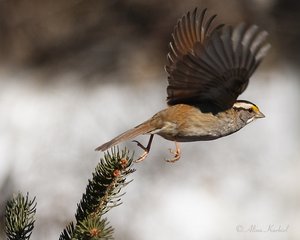
στιγμή δέκατη τρίτη

η σιγανή φωνή μας
τιτίβισμα σπουργιτιού
που δεν ήρθε με χέρια
ολόλευκα κλαίει τη νύχτα
πίσω από καθρέφτες
ή συνωστίζεται
σε χοροπηδάδικα ευκαιρίας
για μια στιγμή υπόληψης

*Για να διαβάσετε ή κατεβάσετε τη συλλογή αυτή πηγαίνετε εδώ: http://www.apostaktirio.gr/index.php?option=com_content&view=article&id=2738:test&catid=57:e-books&Itemid=66

Fernando Pessoa, Αποσπάσματα από το “Καπνοπωλείο”

1609622_10152016488379620_352995842_n

Σήμερα είμαι ηττημένος, λες και γνώρισα την αλήθεια.
Σήμερα είμαι διαυγής, λες και πρόκειται να πεθάνω.
Λες και η επαφή μου με τα πράγματα δεν ήταν μεγαλύτερη
απ’το να πω ένα αντίο, αυτό το σπίτι κι αυτή η γωνιά του δρόμου να γίνονται
μια σειρά από βαγόνια, που αναχωρούν στο άκουσμα μιας σφυρίχτρας
που αντηχεί μέσα απ’ το κεφάλι μου,
και ένα τίναγμα των νεύρων κι ένα ράγισμα των οστών καθώς πηγαίνουν.

Σήμερα είμαι συγχυσμένος, σαν κάποιος που αναρωτήθηκε, ανακάλυψε και ξέχασε.
Σήμερα είμαι διχασμένος ανάμεσα στην πίστη μου,
στην εξωτερική πραγματικότητα του Καπνοπωλείου στην άλλη άκρη του δρόμου
και στην εσωτερική αλήθεια του αισθήματός μου, πως όλα δεν είναι παρά ένα όνειρο.

Απέτυχα σε όλα.
Μη έχοντας κανέναν σκοπό, ίσως πράγματι όλα να ήταν ένα τίποτα.
Γνωρίζοντας τι έχω,
γλίστρησα από το παράθυρο στο πίσω μέρος του σπιτιού,
κι ύστερα ξεχύθηκα στον κάμπο με προσδοκίες μεγάλες,
αλλά δεν βρήκα παρά δέντρα και χόρτα,
κι όταν υπήρχαν άνθρωποι δεν ήταν παρά ίδιοι μ’ όλους τους άλλους.
Απομακρύνομαι μ’ ένα βήμα απ’ το παράθυρο και κάθομαι στην καρέκλα.
Τι πρέπει να σκεφτώ τώρα?

{…}

Έπειτα, αφήνομαι πίσω στην καρέκλα
Και συνεχίζω να καπνίζω.
Όσο μου το επιτρέπει το πεπρωμένο θα συνεχίζω να καπνίζω.

Εννέα βήματα και μια στάση

1454412_464101947032881_2134087525_n

Έμβολο της μηχανής
του σύννεφου κατοικία και κόσκινο συνάμα
Στην ακρόπολη ακόμα σε θρηνούν
Μα εσύ θα ανασάνεις μες στο θαύμα

διαβήκαμε την έρημο
με την δίψα δεύτερο ίσκιο
και την τυφλότητα
σαν όρνεο να τρυγάει τη ματιά μας

και στον ωκεανό του ψεύδους
της βυθοσκόπησης η πρώτη μαθητεία
της περιέργειας η αμαρτία
βαραίνει τα μελλούμενα μας

Ζούμε ήσυχα κάτω από το δέρμα
Δεν είναι ψέμα και ας μοιάζει αλήθεια
ώσπου από την κοιλότητα της νύχτας
στο φως νέας μέρας να ξανασαρκωθούμε

Μα η αντανάκλαση σαν φευγαλέα νιότη
Ένα εξαπτέρυγο που στροβιλίζεται αιωνίως
Και ο χορός που συνεπαίρνει τα κορμιά μας
Εννέα βήματα και μια στάση

*Αναρτήθηκε μαζί με την εικόνα από το παιδί-φάντασμα στην Επικράτεια του Μηδενός στο http://epikrateiatoumidenos.blogspot.com απ’ όπου και αναδημοσιεύεται.

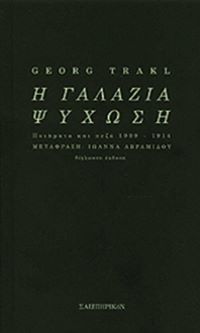
Georg Trakl, Άσμα των ωρών

1621981_10152045811619272_1758883614_n

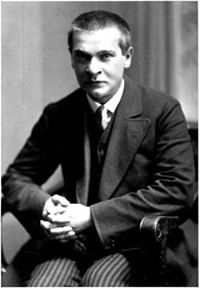
*Εκατό χρόνια συμπληρώνονται φέτος από τον πρώιμο θάνατό του
*127 χρόνια χθες (3/2/2014) από την γέννησή του

Με σκοτεινά βλέμματα κοιτάζονται οι εραστές
Οι ξανθοί, οι αστραφτεροί. Μέσα σε αλύγιστο σκοτάδι,
Αδύναμα από τον πόθο αγκαλιάζονται τα μπράτσα.
Πορφυρό συντρίφτηκε το στόμα των ευλογημένων. Τα
Στρογγυλά μάτια
Αντανακλούν το σκούρο χρυσάφι του ανοιξιάτικου
Δειλινού,
Την εσχατιά και την μαυρίλα του δάσους, φόβους εσπερινούς
Στο πράσινο,
Ίσως ένα ανομολόγητο πέταγμα πουλιών, το μονοπάτι
ενός αγέννητου μέσα από σκοτεινά χωριά προς καλοκαίρια μοναχικά.
Και από ξέθωρη γαλανότητα, ξέπνοο προβάλλει πότε-πότε ένα σώμα.
Το κίτρινο σιτάρι θροίζει ανάλαφρα στο χωράφι.
Σκληρή είναι η ζωή και ατσάλινο δρεπάνι
Κραδαίνει ο γεωργός,
Μεγάλα δοκάρια συνταιριάζει ο μαραγκός.
Το φθινόπωρο βάφονται πορφυρές οι φυλλωσιές· το
Μοναστικό πνεύμα
Περιδιαβαίνει ημέρες ιλαρές· το σταφύλι ωριμάζει
Και γιορτινός άνεμος φυσάει στις αυλές.
Γλυκύτερα ευωδιάζουν οι κιτρινισμένοι καρποί· σιγανό είναι το γέλιο
Του μακάριου, μουσική και χορός
Στα σκιερά καπηλειά·
Βήμα και σιωπή του πεθαμένου αγοριού στου κήπου το θαμπόφωτο.

* Μετάφραση Ιωάννα Αβραμίδου. Από το Georg Trakl “Η γαλάζια ψύχωση”, εκδόσεις ΣΑΙΞΠΗΡΙΚόΝ, 2010. (σελ. 15).

482550_10152045811349272_2094732652_n

Άγνωστος Μετανάστης, Μη με φωνάζεις “Ξένο”!

1558441_435634939903143_887775458_n

Επειδή άλλη μάνα με γέννησε
και σ’ άλλη γλώσσα άκουσες εσύ
τα όμορφα παιδικά σου παραμύθια…
μη με φωνάζεις «ξένο»

το ψωμί σου δε διαφέρει απ’ το δικό μου
το χέρι σου είναι όμοιο με το δικό μου,
σαν τη φωτιά καίει
και η δική μου φωτιά.
Γιατί λοιπόν με φωνάζεις «ξένο»;

Επειδή σ’ άλλους δρόμους βρέθηκα
και σ’ άλλο λαό γεννήθηκα
και άλλες θάλασσες γνώρισα
και απ’ αλλού σάλπαρα;

Αλλά το ίδιο άγχος κρύβουμε κι οι δυο
η ίδια εξάντληση
στην πλάτη μας βαραίνει,
αυτή που συντρίβει το κάθε θνητό
μέσ’ απ’ του χρόνου τα σκοτάδια
από τότε που σύνορα δεν είχαν τεθεί
κι ανάμεσά μας ακόμη δεν είχαν φθάσει
όσοι διχάζουν
και σκοτώνουν το φτωχό,
αυτοί που κλέβουν
και μοιράζουν ψέμματα,
αυτοί που εμπορεύονται κι εμάς
και θάβουν αδίστακτα τα όνειρά μας
όσοι εφεύραν αυτή τη λέξη
τη σκληρή: «ξένος».

λέξη παγωμένη και γεμάτη θλίψη
που θυμίζει αλησμοσύνη κι εξορία.

Αν θέλεις το καλό μου να είσαι καλός
σταμάτα τώρα να με φωνάζεις «ξένο»
αν θέλεις, κοίταξέ με στα μάτια,
ποιο πέρα απ’ το μίσος
ας φθάσει η ματιά σου,
ας ξεπεράσει φόβο, εγωισμό.

Για δες, άνθρωπος είμαι κι εγώ
Όχι, δεν είμαι «ξένος»!

Αλέξης Αντωνόπουλος, Προσευχή

Naked-In-The-Wind

α’

Δεν μπορώ να γράψω εδώ.
Συνέχεια θόρυβος.
Συνέχεια.
Δεν
σκάνε
ποτέ.
Και όλοι φαίνονται το ίδιο
κι εγώ φαίνομαι το ίδιο με αυτούς.

Και τώρα έχει θόρυβο.
00:32 και δεν σκάνε.
Δεν σκάνε.

Αλλά πρέπει να συνεχίσω να γράφω.
Δεν μπορώ να χάσω κι αυτό.
Δεν πρέπει να ξεχάσω.

β΄

Εύχομαι να διαβάζεις αυτό το ποίημα.
Αν το διαβάζεις, σημαίνει πως τα κατάφερα.
Ή τουλάχιστον κατάφερα να πω κάτι αληθινό εδώ
και ν’ ακουστώ από σένα.

Έχει ησυχία εκεί που είσαι τώρα;

Αν έχει ησυχία, μην κρίνεις τις λέξεις μου αυστηρά.
Οι λέξεις είναι δύσκολες για μένα τώρα, μα θέλω να τις έχεις.

Αν έχει θόρυβο εκεί που είσαι
ή αν ακόμα κι η ησυχία σε κουφαίνει,

όπως συμβαίνει όταν η σιωπή κρύβει
τα όνειρα
που κάποτε μας χρέωσαν ως αμαρτίες,

τότε θέλω να ξέρεις πως είμαι εδώ
με το τετράδιό μου ανοιχτό
και προσπαθώ να μην ξεχάσω.

Παλεύουμε ενάντια σε μια αόρατη απειλή
έναν αιώνιο πόλεμο
που σαν ονομάσουμε με λέξεις
χάνεται
για να επανεμφανιστεί ως μια καινούργια λέξη
ένα καινούργιο δόλωμα που θα ματώσει τα χέρια
όσων προσπαθήσουν να το πνίξουν.

Και κοιτάζοντας τις παλάμες μας
θα δούμε μονάχα το αίμα·
το δικό μας και των αδελφών μας.

Κι εκείνο που προσπαθήσαμε να πνίξουμε
θα ζει και θα μας μαστιγώνει
και θα μας σκοτώνει
κάθε μέρα
μέχρι εσύ
να ονειρευτείς το όνειρο που μας αξίζει.

*Για περισσότερα κείμενα του Αλέξη Αντωνόπουλου, μπορείτε να επισκεφτείτε τον ιστότοπό του στη διεύθυνση http://www.alexantonopoulos.com

Janet Galbraith, This Day / Αυτή η Μέρα

011


(for Bally)

The scent of sweat and toxins
climbs to my nose
my skin expelling what it can
there have been days of this
days

and yet now that I am here
sitting in front of my computer
I find that anxiety has lifted a little
sits beside me
not on top.

My blue heeler lies behind me
snoring
warmed by the heater
and my presence.

Earlier he was bounding through the front yard
watching the blue wrens
skitter in and out of the gate
in what little sun this day allows.


*From the collection “re-membering”, Walleah Press 2013, page 5.

Janet Galbraith, Αυτή η Μέρα

(στον Bally)

Η μυρωδιά του ιδρώτα και των τοξινών
σκαρφαλώνει στη μύτη μου,
το δέρμα μου αποβάλει ό,τι μπορεί
υπήρξαν ημέρες σαν κι αυτές
μέρες

και όμως τώρα που είμαι εδώ
κάθοντας μπροστά στον υπολογιστή μου,
βλέπω ότι το άγχος έχει ελαττωθεί λίγο
κάθεται δίπλα μου
αλλά όχι πάνω μου.

Το γαλάζιο σκυλί μου ξαπλώνει πίσω μου
ροχαλίζοντας
ζεσταμένο από τη θέρμανση
και την παρουσία μου.

Νωρίτερα είχε πηδήξει απ’ την μπροστινή αυλή
παρατηρώντας τα γαλάζια τζιτζίκια
κινούμενος ελαφρά μέσα και έξω από την πόρτα
σ’ αυτό τον ελάχιστο ήλιο
που επιτρέπει αυτή η μέρα.

*Από την ποιητική συλλογή “re-membering”, Walleah Press 2013, σελίδα 5.

**Μετάφραση: Δημήτρης Τρωαδίτης.

Δημήτρης Α. Δημητριάδης, Ο Λόγος

ea1

Αυτός ο λόγος που αιωρείται είναι πουλί
κουρνιάζει στα δωμάτια
ακροβατώντας μεταφέρει μηνύματα
στροβιλίζεται
μην τον αγγίξεις
νομίζοντας πως γνωρίζεις την ψυχή του
νομίζοντας πως μπορείς να παιξεις μαζί του
αυτός ο λόγος σε κοιτά ερευνητικά
ζυγιάζεται

θα σου χυμήξει