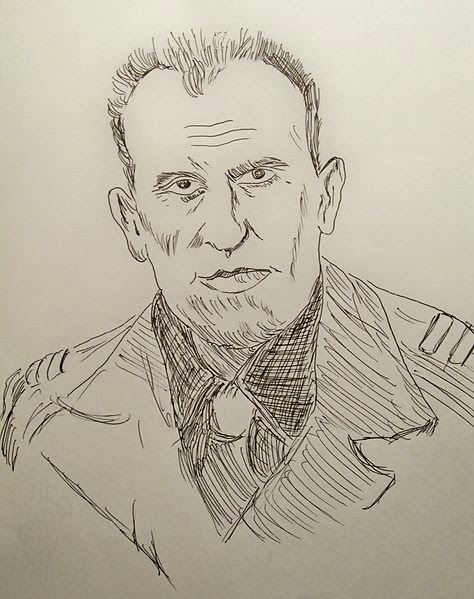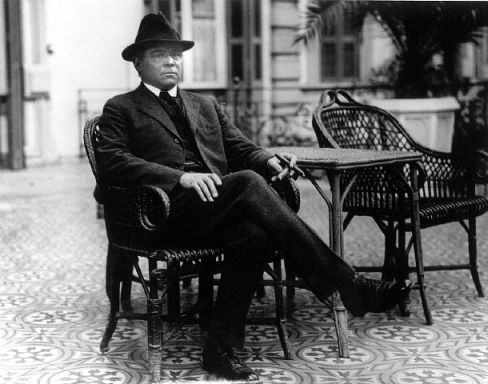
Στη φωτογραφία ο Edgar Lee Masters στην Αίγυπτο, 19 Μαρτίου 1921
ΝΟΟΥΛΤ ΧΟΧΑΪΜΕΡ
Ήμουν από τους πρώτους καρπούς της μάχης του Μίσιονερυ Ρίτζ.
Όταν ένιωσα το βόλι να τρυπάει την καρδιά μου
Λαχτάρησα να βρισκόμουν σπίτι μου και να πήγαινα φυλακή
Επειδής είχα κλέψει τα γουρούνια του Κερλ Τρέναρυ
Παρά που το ‘σκασα και πήγα στρατιώτης.
Χίλιες φορές καλύτερα σ’ επαρχιακή φυλακή,
Παρά να πλαγιάζεις κάτω απ’ τη φτερωτή αυτή μαρμάρινη μορφή
Κι από το γρανιτένιο ετούτο βάθρο
Που έχει τις λέξεις «Pro Patria».
Τι σημασία έχουν όλα αυτά, τέλος πάντων;
ΧΕΑΡ ΝΤΡΑΜΜΕΡ
Πηγαίνουν ακόμα τ’ αγόρια και τα κορίτσια στου Σίηβερ
Για μηλίτη, ύστερα απ’ το σχολειό, στα τέλη του Σεπτέμβρη;
Ή μαζεύουνε φουντούκια ανάμεσα στα σύδεντρα
Στη φάρμα του Ααρών Χάτφιηλντ όταν αρχίζουνε τα κρύα;
Γιατί πολλές φορές με τα γελαστά κορίτσια και τ’ αγόρια
Έπαιξα σ’ όλο το δρόμο και στους λόφους πάνω
Όταν ο ήλιος είχε πέσει κι ήταν ψυχρό τ’ αγέρι,
Σταματώντας για να ραβδίσω την καρυδιά
Που στέκονταν γυμνή από φύλλα στη φλογισμένη δύση αντίκρυ.
Τώρα, η μυρωδιά του φθινοπωρινού καπνού,
Και τα βελανίδια στις κοιλάδες
Φέρνουνε όνειρα ζωής.
Ζυγιάζονται πάνωθέ μου.
Και με ρωτούν:
Πόσοι είναι μαζί μου, πόσοι
Μέσα στο παλιό δεντρόκηπο στο δρόμο για του Σίηβερ,
Και μες στα δάση που δεσπόζουν πάνω
Απ’ τα ήρεμα νερά;
*Από την περίφημη Ανθολογία του Σπουν Ρίβερ (Spoon River Anthology, 1915), όπου καταγράφονται τα ταφικά επιγράμματα 212 φανταστικών (ή λιγότερο φανταστικών) προσώπων, τα οποία μιλούν για τη ζωή και τα πάθη τους. Μετάφραση: Ιάσων Δεπούντης. Τπ πήραμε από το Φρέαρ στο http://frear.gr/?p=6169