Chris Wallace-Crabbe 
Reviews David Malouf’s Earth Hour

earth-hour

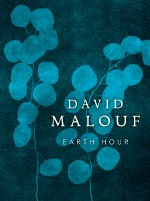
Earth Hour
by David Malouf
UQP, 2014

It is a delight to have, after seven years, a new collection of poems from David Malouf who remains, in his ever-modest way, one of the central figures in Australian writing. As a poet, he glimpses the big currents, but is constantly alert to the tiny epiphanies of dailiness, as when he evokes ‘Shy gifts that come to us from a world that may not/ even know that we are here. Windfalls, scantlings.’

From a world, yes, from a galaxy and many of them, in the midst or even at the edge of which we happen to be: bipedal creatures gifted with language, curiosity, violence, bewilderment and the arts, among them poetry, which notices a great deal but makes very little happen.

Continue reading

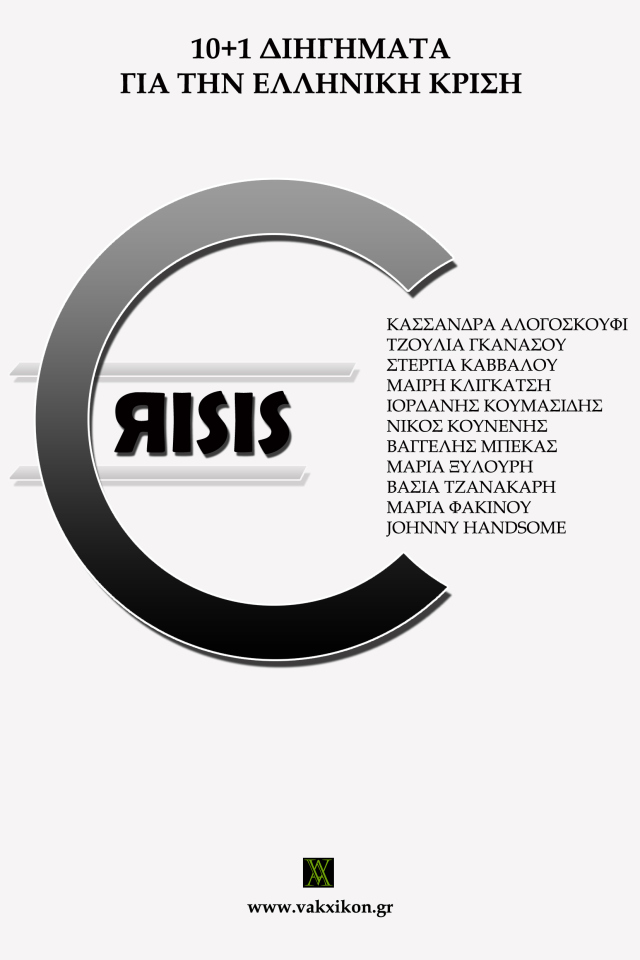
CRISIS – 10+1 διηγήματα για την ελληνική κρίση

crisi

10+1 ΔΙΗΓΗΜΑΤΑ ΓΙΑ ΤΗΝ ΕΛΛΗΝΙΚΗ ΚΡΙΣΗ
ΕΚΔΟΣΕΙΣ: WWW.VAKXIKON.GR

Στις μέρες μας, εκδίδονται αρκετές λογοτεχνικές ανθολογίες, όμως, στις περισσότερες από αυτές συναντάμε ένα τεράστιο αριθμό συμμετοχών και μια πληθώρα θεματικών ενοτήτων, καθώς ο σκοπός, για τον οποίο εκδίδονται είναι μόνο το κέρδος του εκάστοτε εκδότη.

Μια πολύ δυνατή εξαίρεση στα παραπάνω είναι η ανθολογία: “Crisis”. Πρόκειται για μια ανθολογία, όπως αναφέρει και ο υπότιτλος 10+1 διηγημάτων για την ελληνική κρίση, που κυκλοφορεί από τις εκδόσεις: http://www.Vakxikon.gr.

Στη συγκεκριμένη ανθολογία συνεργάζονται οι: Κασσάνδρα Αλογοσκούφι, Τζούλια Γκανάσου, Στέργια Κάββαλου, Μαίρη Κλιγκάτση, Ιορδάνης Κουμασίδης, Νίκος Κουνενής, Βαγγέλης Μπέκας, Μαρία Ξυλούρη, Βάσια Τζανακάρη, Μαρία Φακίνου και Johnny Handsome.

Από τον τίτλο και μόνο, θα μπορούσε να σκεφτεί κανείς ότι πρόκειται για διηγήματα, που αναφέρονται στην κρίση και να περιμένει να διαβάσει ιστορίες σε ένα φόντο μίζερο, μαύρο και καταθλιπτικό. Όμως, η πρωτοτυπία, που χαρακτηρίζει τα διηγήματα και το λεπτό χιούμορ, που διαθέτουν τα περισσότερα κάνει το διάβασμα του βιβλίου ευχάριστο και διασκεδαστικό.

Όμως, γιατί θεωρούμε σημαντική την έκδοση της συγκεκριμένης ανθολογίας; «Η παρούσα συλλογή ιστοριών είναι μια έκδοση αναπόφευκτη», γράφει στο επίμετρο του βιβλίου ο Νέστορας Πουλάκος, άποψη, που την προσυπογράφουμε γιατί, ενώ είναι μεγάλος ο αριθμός των συγγραφέων, που έχουν ασχοληθεί με την ελληνική κρίση, δεν έχουμε δει άλλο τέτοιο εγχείρημα και έτσι μπορούμε να πούμε ότι το βιβλίο “Crisis” είναι η πρώτη ανθολογία διηγημάτων με θέμα την ελληνική κρίση.

Συνεπώς, το “Crisis” είναι ένα βιβλίο, που καταφέρνει να περιγράψει με γλαφυρά χρώματα την κρίση του καιρού μας, γιατί, όπως αναφέρει και ο Ιορδάνης Κουμασίδης στον πρόλογο του βιβλίου: «Για τη λογοτεχνία όλοι οι καιροί έχουν ενδιαφέρον».

ΘΕΟΧΑΡΗΣ ΠΑΠΑΔΟΠΟΥΛΟΣ

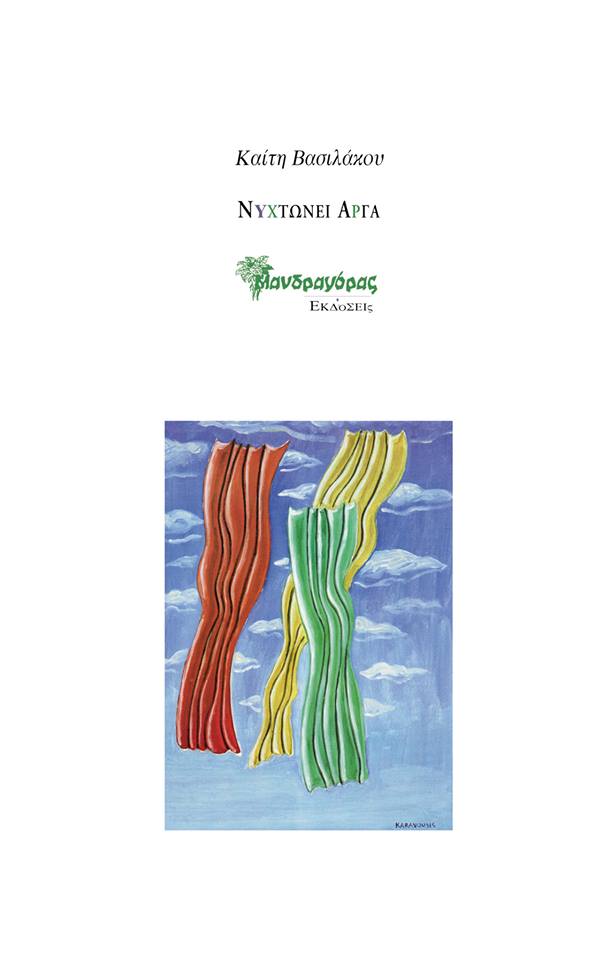
Kαίτη Βασιλάκου, Νυχτώνει αργά

1010777_470704213052285_815573711_n

Kαίτη Βασιλάκου, Νυχτώνει αργά, Ποιήματα,
Eκδ. «Mανδραγόρας», Αθήνα 2014, σελ. 64
Έργο εξωφύλλου: Σαράντης Καραβούζης

Ιστορίες του κόσμου, του ανθρώπου και της ζωής

Παράξενες μορφές από ασβέστη/ τρέχουν γύρω – γύρω στο ταβάνι/ να εδώ ένας γέρος/ πιο πέρα δυο κορίτσια/ μια γυναίκα παραμορφωμένη/ και μια γριά σκυφτή/ ένας άντρας με καπέλο/ μια παχιά κυρία/ αυτό μπορεί να είναι το φεγγάρι/ και τούτο εδώ ένας κήπος/ και κάτι σπίτια παραπέρα.

Με τη νέα ποιητική συλλογή της Kαίτης Βασιλάκου ΝΥΧΤΩΝΕΙ ΑΡΓΑ που είναι χωρισμένη σε πέντε ενότητες: Του παιδιού, Των μεγάλων, Των ερώτων, Της μοναξιάς, Του χρόνου. Εδώ η Καίτη Βασιλάκου συνεχίζει την εσωτερικευμένη διήγηση με τον εξομολογητικό καθημερινό τόνο που ξεκίνησε στην πρώτη της συλλογή «Αγαπημένε μου ψυχίατρε πες μου…».

Με απλές βατές λέξεις και έννοιες, παρατηρεί τη γέννηση ενός παιδιού, την παράξενη ενηλικίωσή του στον κόσμο της μοναξιάς και του φόβου:

Αυτός ο κόσμος πάντα/ μέσα στα δάκρυα και το φόβο/ θα είναι βουτηγμένος.// Το παιδί υπογράφει/ το μέλλον του.

Στην ίδια ενότητα ξεχωρίζει η σταθερά επανερχόμενη εικόνα του ακίνητου βλέμματος πάνω στο γύψινο περίγραμμα του ταβανιού:

Παράξενες μορφές από ασβέστη/ τρέχουν γύρω-γύρω στο ταβάνι

ή αλλού:

Είμαι εδώ δίπλα σας/ ένα βουβό στοιχείο/ μια ακίνητη μορφή/ μέσα σε πλαίσιο/ το γύψινο σχέδιο στο ταβάνι,

στίχοι που μπορούν να διαβαστούν παράλληλα με το «Εμβατήριο πένθιμο και κατακόρυφο» του Καρυωτάκη:

Στο ταβάνι βλέπω τους γύψους./ Mαίανδροι στο χορό τους με τραβάνε./ H ευτυχία μου, σκέπτομαι, θά ’ναι ζήτημα ύψους.// Α! πρέπει τώρα να φορέσω/ τ’ ωραίο εκείνο γύψινο στεφάνι./ Έτσι, με πλαίσιο γύρω το ταβάνι,/ πολύ θ’ αρέσω.

Στην επόμενη ενότητα Των μεγάλων η ποιήτρια διεκτραγωδεί τον πάταγο του χρόνου/ που τα σάρωνε όλα για να μείνουν αδειανά τώρα τα χέρια και η μνήμη βαριά.

Η ευτυχία μου έχει μια ποιότητα πόνου/ Ταξιδεύω στην κόψη του ξυραφιού/ και φτάνω κομματιασμένη στον παράδεισο, γράφει στην τρίτη ενότητα η ποιήτρια, για να περάσει στο επόμενο συνδετικό που διατρέχει όλο το βιβλίο της, στο αίσθημα της μοναξιάς –παντού και πάντα κυρίαρχο. Η μοναξιά είναι απαλή/ σαν χάδι αγαπημένου,/ είναι ευγενική διακριτική./ Σε κάθε κάμαρη/ σε υποδέχεται σεμνά/ έτοιμη πάντα/ να υπηρετήσει τις επιθυμίες σου.// Η μοναξιά […] είναι μια σκλάβα υποταχτική. […] Θέλει τόσο πολύ να σε υπακούσει/ να σε κάνει να την ερωτευτείς.

Τέλος στην τελευταία ενότητα Του χρόνου η ποιήτρια εστιάζει στην ώρα του απολογισμού: Προσευχήσου/ να είναι εύκολο/ το Τέλος, -το πέρας του ανέμελου καλοκαιριού, μέσα από την όμορφη αναλογία που εφευρίσκει η ποιήτρια με το σταμάτημα των ήχων απ’ τα τζιτζίκια, το ξεθώριασμα του πολύχρωμου κόσμου, την επίπονη κι επίμονη αναζήτηση των αναμνήσεων.
Και ο καιρός/ λες και αφηνίασε τελευταία,/ τρέχει σαν άλογο ιπποδρόμου/ προς το τέρμα,/ με τίποτα δεν συγκρατείται πια.

Η Καίτη Βασιλάκου σπούδασε Ιστορία και Αρχαιολογία στο Πανεπιστήμιο
Αθηνών και δίδαξε ως φιλόλογος στη Μέση Εκπαίδευση. Mέχρι σήμερα έχουν κυκλοφορήσει πέντε βιβλία της που περιλαμβάνουν ποιήματα, διηγήματα και μια νουβέλα.

*Από τη σελίδα της ποιήτριας Χλόης Κουτσουμπέλη στο facebook.

Γιάννης Υφαντής: «Ο ποιητής είναι επικίνδυνος για την παρούσα πολιτική συγκυρία»

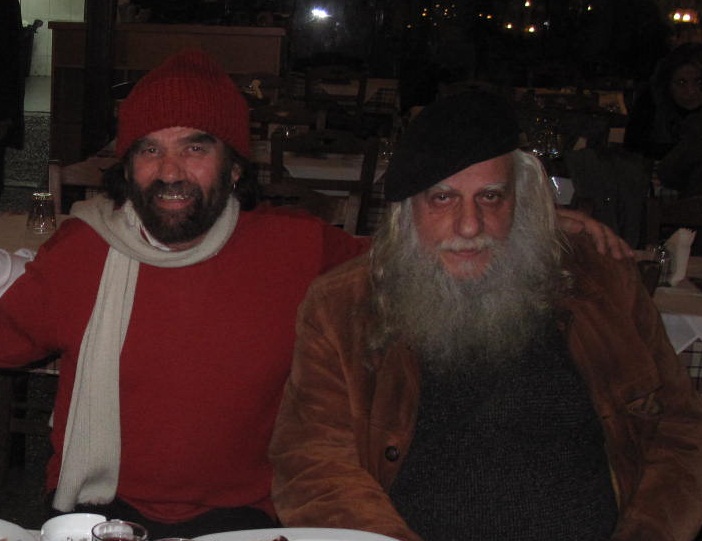
Ο Γιάννης Υφαντής (αριστερά) με τον ποιητή Λευτέρη Πούλιο σε ταβέρνα των Εξαρχείων το Μάρτη του 2012,

Ο Γιάννης Υφαντής (αριστερά) με τον ποιητή Λευτέρη Πούλιο σε ταβέρνα των Εξαρχείων το Μάρτη του 2012,

ΣΥΝΕΝΤΕΥΞΗ στον Γιάννη Παλαβό, ΠΕΡΙΟΔΙΚΟ “MONKEY” (2007)

Η ποίηση του Γιάννη Υφαντή είναι ένα πραγματικό δώρο. Σχεδόν αποσιωπημένος από τους διαμορφωτές του λογοτεχνικού κανόνα, τα λογοτεχνικά έντυπα και τις στήλες των εφημερίδων, ο Υφαντής διαγράφει εδώ και τρεις δεκαετίες μια σπουδαία πορεία, όντας σχεδόν στο περιθώριο. Σε μια πλασματική μιντιακή πραγματικότητα, όπου η προκλητικότητα και το προβοκατόρικο ύφος περισσεύουν, τα ποιήματα του Υφαντή αστράφτουν με την γνήσια ανατρεπτικότητα, τον ερωτισμό και την απλότητά τους. Πρόκειται για έναν από τους σημαντικότερους νεοέλληνες ποιητές. Το Monkey παρουσιάζει με μεγάλη χαρά τη συζήτηση με τον ποιητή.

1. Είχατε δυσκολίες να εκδώσετε, όταν πρωτοξεκινήσατε;
1. Περιέργως, όχι. Ήδη στα 19 μου είχα δημοσιεύσει σε περιοδικά κι εφημερίδες αρκετά ποιήματα. Ήταν δικτατορία ακόμα, όταν το περιοδικό «Ευθύνη» και οι «Εκδόσεις των Φίλων» ζήτησαν να μου κάνουν μια έκδοση. Συγκέντρωσα τα προς έκδοσιν ποιήματά μου, αλλά σ’ ένα δεύτερο γράμμα που μου έστειλαν, ζητούσαν ν’ αφαιρέσω μερικές «βλάσφημες» λέξεις. Τους είπα ότι μου είναι αδύνατον να αυτολογοκριθώ, κι έτσι τελειώσαμε μ’ αυτή την εκδοτική πρόταση. Λίγα χρόνια αργότερα, ο Χατζηδάκις κι ο Γκάτσος (με τους οποίους εννοείται δεν σχετιζόμουν εκείνο τον καιρό), ζήτησαν από τις εκδόσεις «Τραμ» να μου εκδώσουν οπωσδήποτε βιβλίο.

2. Αλήθεια ποιες ήταν οι «κακές» λέξεις που οι «Εκδόσεις των Φίλων» ζήτησαν ν’ αφαιρέσετε;
2. Αλίμονο. Είμαι ο πρώτος Νεοέλλην ποιητής που δημοσίευσε ποίημα με τη λέξη «μουνί». Και είμαι ο πρώτος που διάβασε στην ελληνική τηλεόραση ποίημά του με τη λέξη «πούτσος». Και να ξεκαθαρίσω, μιλάμε για δημοσιευμένη ποίηση. Διότι αδημοσίευτη ποίηση με τις λέξεις αυτές έχει γραφτεί πολύ πριν από μένα. Και μάλιστα από ιερέα ποιητή. Είναι ο θαυμάσιος Ζακύνθιος ιερέας, ζωγράφος και ποιητής, Νικολός Κουτούζης, σύγχρονος του Σολωμού, που έγραψε ποίηση, χρησιμοποιώντας χωρίς κανένα δισταγμό όλες τις λέξεις της ελληνικής γλώσσας.
Θυμώνω όταν διαβάζω ανθρώπους που ενώ δηλώνουν θαυμαστές του Καραϊσκάκη, μόλις φτάνουν στις λέξεις που χρησιμοποιούσε ο Καραϊσκάκης, βάζουν αποσιωπητικά. Δηλώνοντας έτσι, κατ’ εμέ, την αναξιότητά τους. Όποιος δεν μπορεί να προφέρει τις λέξεις που πρόφερε ο Καραϊσκάκης, είναι αδύνατο να πράξει αυτά που έπραξε ο Καραϊσκάκης, τουτέστιν να δράσει υπέρ της ελευθερίας, διότι ελευθερία και γλώσσα όπως κι ο Σολωμός μας λέει, πάνε μαζί.

Continue reading

ΠΟΙΗΣΗ: [ΜΑΡΤΥΡΙΑ] του Γιάννη Βούλτου

%CE%95%CE%B9%CE%BA%CF%8C%CE%BD%CE%B1185

Όταν γενεί το ποίημα
Καθρέφτης της ψυχής
Το είδωλό σου μέσα του
Αιώνια κομματιάζεται

Γιάννης Βούλτος

Προλογίζει η Μαρία Ροδοπούλου

Μια εσωτερική ‘φωνή’ της ποίησης επανέρχεται με το e-book “Μαρτυρία”. Ο ποιητής, λιτός με μια εξαιρετική διαχείρηση,χωρίς μπιχλιμπίδια και κοσμήματα, του λόγου εκπλήσσει τον αναγνώστη με την αιφνίδια φωτιά που κρύβουν τα ποιήματά στο νέο του βιβλίο. Ο Γιάννης Βούλτος μας ξεναγεί στα μυστικά υφαίστεια της Ποίησης χωρίς να μας προειδοποιεί για τον κίνδυνο έκρηξης. Η ποίηση του ξεκινά κυρίως από το προσωπικό του κόσμο, από την προσωπική του πορεία στην ζωή, για να εξαπλωθεί με αστραπιαία ταχύτητα στην κοινωνία και να καταδείξει τον καθένα από εμάς ως συνοδοιπόρους σε ένα δρόμο που μπορεί να είναι είτε πολύ μακρύς είτε πολύ σύντομος.

ΒΙΟΓΡΑΦΙΚΟ

Ο Γιάννης Βούλτος γεννήθηκε στην Αθήνα το 1969. Σπούδασε Αρχαιολογία στην ίδια πόλη και ειδικεύτηκε στη βυζαντινή τέχνη. Εργάζεται ως φιλόλογος στη δημόσια εκπαίδευση. Ποιήματά του έχουν δημοσιευτεί σε ανθολογίες, περιοδικά, ιστοσελίδες του διαδικτύου και έχουν μεταφραστεί στα αγγλικά. Ο ίδιος έχει μεταφράσει αγγλόφωνη, γαλλόφωνη και ιταλόφωνη ποίηση. Το ποιητικό του έργο έχει παρουσιαστεί από το Συμπόσιο Ποίησης της Πάτρας.

Έργα:
Μυστράς, Η αρχιτεκτονική των υστεροβυζαντινών ναών του, εκδ. Ιδιομορφή, Σπάρτη 2005.
Παραθήκη, Ποιήματα 1990-2007, ιδιωτική έκδοση, Πάτρα 2007.
Ανθρωποθυσία, Ποιήματα, ιδιωτική έκδοση εκτός εμπορίου, Ναύπακτος 2010.
ΜΑΡΤΥΡΙΑ, Ποιήματα, ιδιωτική ψηφιακή έκδοση εκτός εμπορίου, Άγιος Νικόλαος, Ηλείας 2014.

Ο ποιητής διατηρεί την προσωπική του ιστοσελίδα στο http://voultos.blogspot.com

ΤΕΛΕΣΙΔΙΚΟ

Στον ίσκιο του χαμού
Αποσταμένος
Λόγια ξεπουλώ
Γιατί μονάχα λόγια
Μου ’χουν απομείνει
Τα έργα μου
Μια κάλπικη πραμάτεια
Που τη σκορπά η νύχτα

Τόσο πλατύς τούτος ο ίσκιος
Και πολεμάω
Δίχως όπλα
Να φύγω στο φως

ΣΤΟ ΧΩΡΙΟ
Μνήμη Γεράσιμου Γαλιατσάτου

Σε κείνο το περβόλι
με τις πορτοκαλιές τις λεμονιές
και το πηγάδι
πλάι στο παλιό το σπίτι
με τις πλίθρες
Ο παππούς με την αξίνα
περασμένα τα ογδόντα του
απόβραδο τη γης να σκάβει
Κι εγώ να τον ρωτώ
– Γιατί παππού δεν ξαποσταίνεις
Δε σου ’φτασαν οι κόποι
μιας ολάκερης ζωής
Κι εκείνος
– Δεν είναι τούτη δω που κάνω
δύσκολη δουλειά παιδί μου
το σκέπασμά μου συγυρίζω
Γιατί σε λίγο θα πλαγιάσω

Τώρα πια
Όρθιο τίποτα δε στέκει
Ο παππούς έχει πλαγιάσει
Το περιβόλι κάηκε
Το σπίτι το ρήμαξε σεισμός
Κι εγώ Έχω πάψει από καιρό τις ερωτήσεις

ΕΠΙ ΣΚΟΠΟΝ

Αντιπαθούσε το χαρτί
Απεχθανόταν το φως της μέρας
Ήθελε τη νύχτα
Τους στίχους του
Να τους γράφει στον τοίχο
Να τους στήνει στον τοίχο
Και κατόπιν ο ίδιος
Να τραβά τη σκανδάλη

ΒΟΥΤΙΑ

Βουτάει απ’ τον ψηλότερο βράχο
στο νερό
Βουτάει απ’ τον πέμπτο
στο κενό
Η θάλασσα
αφρισμένη
Ο δρόμος
πολυσύχναστος
Καθώς εκείνος
Σηκώνεται
Και περπατάει
Στα κύματα

*Αναδημοσίευση από την ιστοσελίδα του περιοδικού “Σοδειά” στο http://www.sodeia.net/2014/02/blog-post_7.html#more

Kate Middleton Reviews Kim Cheng Boey

clear_brightness

Clear Brightness by Kim Cheng Boey

Puncher & Wattmann, 2012

With Clear Brightness Kim Cheng Boey offers a slim volume that, in addition to addressing notions of place, exile and travel, carries with it a deep melancholy of being written in ‘the lone wastes of middle age’. His explorations of worldliness are welcome, and Boey offers portraits of interconnectedness even as he displays and explores alienation. Moving from markets to Chinatowns, from Singapore’s National Theatre to California’s Santa Barbara, this collection often shows the objects that connect the past to the present, keepsakes available to keepers and gleaners alike.

Boey’s meditations on memory’s presence are inescapable. The poet is watchful as memories resurface, and the collection as a whole is ‘sleeved in the salt of memory’. We see the poet ‘Cruising for charms/ that will be memory’s currency’; contemplating ‘the Persian rug memory’s/ nameless longing fleshed in dye and skein’; following ‘memory’s story/ in the body’s passage through the bazaars’; wandering through ‘These Fez days in trance, in memory’s warp/ and weft, gathering tokens against the future’s loss’; listening for the ‘pentatonic measures between memory/ and home’. Throughout these poems he is ever:

on the fading
trail of letters, the emails, tokens, memories like tracks
fading fast, the memories, souvenirs, a disappearing trail
in the snow, in the shifting sand…

The weight of all this memory! Often bound up in souvenirs and objects, it marks this volume not as the exotic travelogue of a poet displaced – no matter where he finds himself, it seems – but instead as an example of the kind of accounting any of us might undertake upon reaching a certain age. Just as objects may help us understand who we are, we may also use them to:

accumulate
clues to the selves we never became
the shadowy half-lives, collecting and being
collected by these found things.

Continue reading

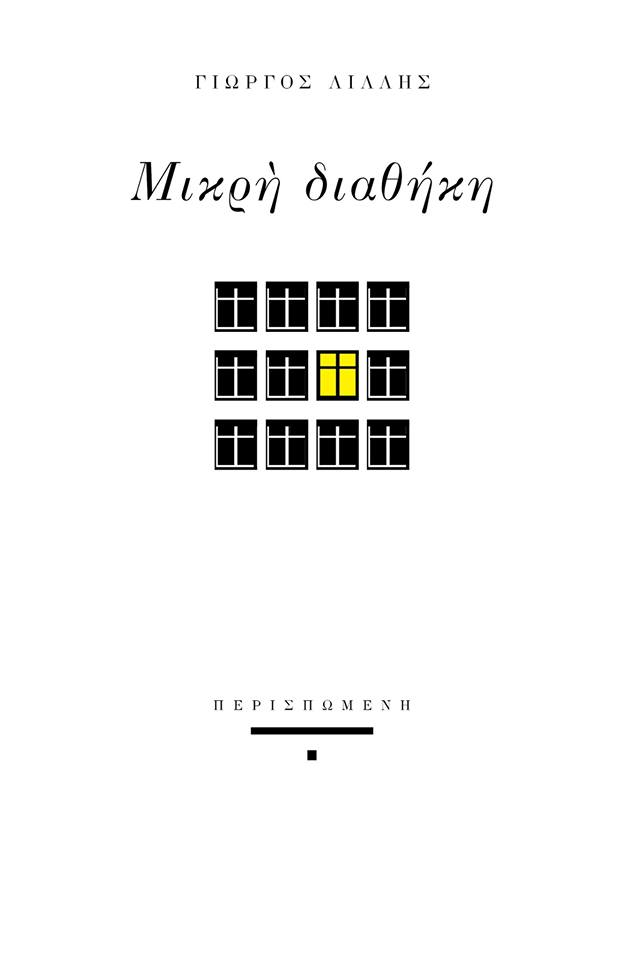
Γιώργος Λίλλης, Μικρή διαθήκη (Εκδόσεις Περισπωμένη)

dtbook080214

Σαν τον ερημίτη του Ουόρτζουορθ, ο Γιώργος Λίλλης, με την εσωτερική του λάμψη ζητά από την Ποίηση να φωτίσει μέσα στις ανθρώπινες σχέσεις την ουσία όσων μας περιτριγυρίζουν. Αντιπρόσωπος του «ποιητικού ανθρωπισμού» προσπαθεί να γιατρέψει τους αναγνώστες από το σαθρό του σύγχρονου κόσμου. Ακροβατώντας μεταξύ ύλης και απείρου, πατώντας γερά πάνω στο χωρόχρονο και εξαπατώντας τα γήινα θραύσματα – που τόσο επιδέξια μας κρατάνε εγκλωβισμένους στα αδιέξοδα της καθημερινότητας – παράγει το δικό του μοναδικό σημάδι στο ποιητικό τοπίο. Διαβάζοντας την “Μικρή διαθήκη” αισθάνεσαι σαν τον μαθητή – αναγνώστη του Γουάλας Στίβενς• γίνεσαι ο θαυμάσιος μαθητής της φαντασιακής αναζήτησης… Ο έφηβος που σιγά -σιγά βαίνει προς την ποιητική ωριμότητα. Το περιβάλλον γύρω σου ξεγυμνώνεται από την τετριμμένη του εικόνα, αναδεικνύοντας την Αλήθεια που εκπορεύεται απ’ αυτό. Η ποίησή του καταργεί τα όρια των συμβάσεων. Το αρχέτυπο χάνει την μυθολογία που το ακολουθεί και ξαναγίνεται το φωτεινό ακλόνητο στην σκοτεινή επιφάνεια του κόσμου.

Continue reading

Amy Brown 
Reviews Selina Tusitala Marsh’s, Dark Sparring

dark-sparring

Dark Sparring
by Selina Tusitala Marsh
Auckland University Press, 2013

The first epigraph to Selina Tusitala Marsh’s new collection is from Muhammad Ali; ‘The fight,’ he says, ‘is won or lost far away from witnesses – behind the lines … long before I dance under these lights’. Behind Tusitala Marsh’s lines of poetry, there is an immense reserve of strength and grace, enough to sustain the poet through her mother’s death from cancer and to channel her fear and anger into rhythms of the Muay Thai kickboxing ring and the page.

A prologue, titled ‘Matariki’, acts as an invocation. Matariki is the Maori New Year, and the name of one of Tusitala Marsh’s students, who had recently lost her mother. The narrator urges Matariki to:

write what you remember
write your lost and found
write the toiling of the year’s grief
write the seeding of the new (1).

Continue reading

Toby Davidson 
Reviews: Anthony Lawrence’s Signal Flare

signal_flare

Signal Flare by Anthony Lawrence
Puncher & Wattmann, 2013

Some months back, I ended up sitting next to a fairly eccentric white-bearded bloke on a Sydney bus. Upon hearing I was an Australian poetry researcher, my new acquaintance exclaimed ‘Australian poetry!’ with obvious distaste, followed by ‘Fu–ing Anthony Lawrence!’ He went on to detail how feral Aussie upstarts like Lawrence and ‘bloody Adamson’ were bastardising the great tradition of English Romanticism. As he rose to hop off, I asked for his name. He cheerfully declined.

Not long after, I met Lawrence for the first time and he couldn’t place this random public transport invective-hurler. But I did get to hear him read ‘Lines in Absentia’, the restless, unresolved (perhaps unresolvable) elegy which opens his fourteenth collection Signal Flare. I felt, as I did when reading it, that it is too long, that its sprawling oscillation between elegiac and confessional modes mimics rather than tackles the terrible intangibility of the subject matter, the reaching out to a friend who suicided by drowning in Sydney harbour which also doubles as a reaching in.

where the day breaks into flame
on this and on the other side
of despair, of whatever you made
from the spent breath of surrender

the harbour going on, the skyline
uneven, unsentimental
and hard as the currency it generates
I say goodbye and hello

and I will see your name
between blue apostrophes of wave light
in the wakes of boats… (17)

The sentiments here cannot be faulted. Yet what is already implied is made explicitly obvious in a way which is simultaneously evasive, unlike the superior elegy to the poet’s brother in ‘Appellations’ and ‘Eclipse’, where a distraught woman spared from drowning serves as a companion piece, even a resolution of sorts, to ‘Lines in Absentia’. ‘Lines in Absentia’ introduces the solar flare motif which melds with the ejection or interjection of signs/signals/signatures/signatories to create the titular signal flare in any given day. ‘Signatures’ intricately condenses an interlinked series of these:

The flash and gleam of isobars
on the face of a rainsquall
completed by the signature flourish
of a raptor lifting away
from a roadside window display of sweetmeats…

The stone fish again, with no interruptions
like an ink bleed clotting on a water table
its signature contained
as neurotoxins
with a row of sharpened quills
the graphology of the reef. (39)

Australian poetry is full of totemic, talismanic and symbiotic interactions with creatures. Lawrence distinguishes his approach by acknowledging (as he does here) that we interrupt and befuddle them, and also by refusing to rest on a single approach. Indeed, the greatest strength of this collection, more so than its insight and lyrical dexterity, may be that no two people will agree on which poems most move them, drawing as they must on their own life experiences and their own totemic, talismanic and symbiotic human and planetary relationships.

The one dimension which is understandably avoided in a collection which viscerally pursues aging, death and human legacy, is the comic. ‘Cattle Egret’, for example, chooses not to pursue how patently absurd the sight of an egret standing on a cow’s rump might look and how such absurdity in all its relativity can add something deeper to the most serious of poems. Moments of irreverence as spoken by creatures in ‘Gifts’ (‘We are wounded and in need of love / and mercy, can you dig it?’, 55) and wedding guests in the fabulous ‘Lepidoptera’ come as rare, but welcome, reminders of how Lawrence can also call upon on the radical slyness of a ΠO or the biting wit of a Michael Sharkey. Signal Flare is for the most part, however, a fearlessly sober exploration of the web of lives that were, are, and will be before us, and how they reveal themselves to the honed attention of a poet at the apex of his career. Each reading and re-reading of Signal Flare is bound to be stirringly different, a testament to the depth of this collection which very quickly becomes individualised to the reader, then refuses and resets that same individualisation. It is an ongoing gift to those daring to be curious – even to that f–king gent on the bus.
This entry was posted in BOOK REVIEWS and tagged Anthony Lawrence, Toby Davidson. Bookmark the permalink.

*Toby Davidson is a West Australian poet, editor and reviewer now living in Sydney where he is an Australian Literature researcher and lecturer at Macquarie University. He is the editor of Francis Webb Collected Poems (UWA Publishing 2011) and author of the critical study Christian Mysticism and Australian Poetry (Cambria Press). His first poetry collection Beast Language is now out through Five Island Press.

**From http://www.cordite.org.au

Dan Disney 
Reviews: Cameron Lowe’s Circle Work

circle_work

Circle Work by Cameron Lowe
Puncher & Wattmann, 2013

The poems in Cameron Lowe’s Circle Work swing across each page at a strangely measured, athletic tilt. The scope is local and vast, the gaze muscular, and Lowe sweeps the vistas (from Corio to the universe) for details apprehended as preternatural. His rapture typified in the lines, ‘the body’s cruel admission// that close is never close enough’ (56), these poems skirt edges of realness without entering the domain of things. Lowe’s is a poetics of evanescence, not arrival, and Circle Work frames the contours of human habitats as noise-filled within <> of silence. This book, a ‘stage of surfaces’ (31), watches carefully the play of order: birds and cats and dogs, flower-filled gardens and houses, dark bays and intersected hills and, everywhere, sound and light tinged by season or time.

At heart an outsider, Lowe is a transcendentalist who botanises everyday scenes grasped as events within chthonic dimensions (what else?). Self-conscious, and like the ‘silhouettes of trees/ so dark against the sky’ (67), perhaps Lowe too can be categorized a silhouette, lurching across all-too-defamiliarised territories. He satirises himself as a self-italicised ‘I-as-sensitive-register’ (12), signaling a style promised in the book’s title: is ‘circle work’ a matter of doing donuts in a carpark? Or beyond the vernacular is a different labour intended, in which the poet is cognizant of elemental cycles? One suspects both; deploying a highly-functioning depth perception, Lowe writes of –

The men talking
on the porch in the pool of light
(10)

and half-listens to the noise of their chatter while scrutinising beyond, where leaves touch in darkness. This nocturne then swerves, toward the sublime –

And in the blur of words,
the way those hands move
is a thing to watch –

It is a thing to hear
the leaves shifting in the night,
to believe in that yellow moon.
(11)

So many of these poems act like small incisions in mundane realms, letting in either the light or a darkness defined variously by the sheens, hard edges, folds, reflections. Lowe’s language is anything but blurred, and his poems are belief-filled, believable, and self-believing moments of clarity, each a ‘diligent tracing of form and beyond’ (15), as if that is possible, from where the poet might fathom the shapes of us in all the in/glorious weirdness.

There are a range of poems about poetry in Circle Work – ‘A kind of music’, ‘At the Geelong Art Gallery, the Great Australian Poet discovers a potato cake in his pocket’, ‘Notes toward a possible haiku, or deliberations on the usage of metaphor’, ‘Borders’, ‘Some thoughts by Michael Basinski on the American poetry scene, reconsidered as the Australian poetry scene’, ‘A lazy Sunday afternoon in which …’ – and Lowe seems anxious to somehow critique (more than satire, less than straight piss take) what he perceives to be the value (or valuelessness) of poetry. Which begs the question, necessarily: what is a poet hoping to do when critiquing poetry within their poem? One possible answer is ‘to provoke: what has been (or currently is), I am not’. Circle Work, then, as demography (blokes-in-cars, etc) and demonology (human strangeness within sublime sites), and a circling on other poets: this, less an anxiety of influence as an anxiety toward peers, is fitting for any outsider (and an impulse perhaps best held in check).

This is also a collection of domesticity and self-situation – in which can be found ‘cicadas already screeching in the evening trees’ (23), and onions ‘frying/ in the pan’ (45) while the wind is ‘driving petroleum fumes/ over the green water of Corio Bay’ (54); when a cat regards ‘the humming fridge/ still enough milk for tomorrow’ (19) it is here, sheltered and intensely connected, that Lowe locates a mode of ‘“no need/ to really think” ease’ (68). But herein lies the irony: outside his sanctum, the poet adopts a meditative ‘vacant gaze’ (9) (indeed, the opening poem, ‘In memory of flowers’, scans like a thinned-down, wiry text from Wallace Stevens), and the majority of the poems in Circle Work are anything but ease-filled. Each thinks laboriously, virtuously and often hilariously, toward the lucidity of often-uneasy contexts. Unlike his dog, who ‘doesn’t know/ what to do’ (28), Lowe remains sure-footed in these succinct and unpredictably beautiful poems; his aphoristic grasp of uncanniness works like a precision technology, and this poet-mediator stays fixed on scanning theatres of the real, swerving and verving robust toward

a clarity,
as if we’d never walked there before (73)

*Dan Disney‘s collection, And then when the, was published in 2011. He is currently working on a new collection of poems and a collection of essays on the sublime. He teaches twentieth century poetries and poetics at Sogang University, and divides his time between Seoul, Turin, and Melbourne.

**From http://www.cordite.org.au