Η Ασημίνα Ξηρογιάννη για τη συλλογή , “Πριν εισέλθετε, βεβαιωθείτε” της Γεωργίας Τρούλη

1947443_723065824390796_607361336_n

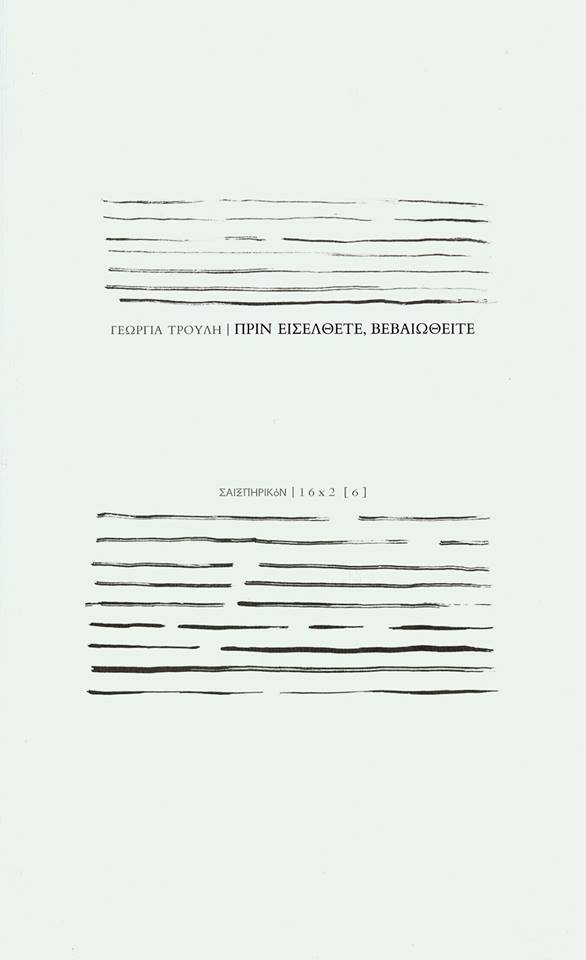
ΓΕΩΡΓΙΑ ΤΡΟΥΛΗ
ΠΡΙΝ ΕΙΣΕΛΘΕΤΕ, ΒΕΒΑΙΩΘΕΙΤΕ
ΕΚΔ.ΣΑΙΞΠΗΡΙΚΟΝ, 2013

Όταν ένα βιβλίο σε βυθίζει στο όνειρο, μοιραία αναστοχάζεσαι πάνω στην πραγματικότητα. «Τα όνειρα τα καταβροχθίζει κανείς με όλες του τις αισθήσεις», μας λέει η Γεωργία Τρούλη. Πώς είναι όταν ο άνθρωπος ονειρεύεται ιστορίες και έρχεται αντιμέτωπος με χαώδεις καταστάσεις του υποσυνείδητου και του εσώτερου εγώ; Πώς είναι όταν ο διαρκής διχασμός συνιστά μια αλλοπρόσαλλη διαδρομή και καταλήγει να γίνει μια άλλη ταυτότητα; Βρισκόμαστε ανίσχυροι απέναντι στο εξής αντιφατικό φαινόμενο: την εναλλαγή απώλειας και επανάκτησης του εαυτού. Η Γεωργία Τρούλη, ζωηρά και αποφασιστικά, αφηγείται διχασμούς και μας βυθίζει σε δεκάδες μυστικές διαδρομές που διαθέτουν αγριότητα. Ζωγραφίζει σκληρές ποιητικές εικόνες, κάποιες από αυτές μένουν ανολοκλήρωτες να αιωρούνται μαγικά στις συνειδήσεις μας, διαθέτοντας μικρή ή μεγαλύτερη ποσότητα φρίκης, απαραίτητο συστατικό για να νιώσουμε το σοκ μιας πρωτοφανούς ψυχρότητας.

Δεν υπάρχουν ζεστά χρώματα για να βάψουν τα επιμέρους τοπία που δημιουργεί η Τρούλη. Διχάζεται μέσα της ο κόσμος ή μάλλον κομματιάζεται, γίνεται θρύψαλα σχεδόν. Όμως εκείνη έχει την ψυχραιμία να τον δει από ψηλά και να τον περιγράψει. Έχει την τόλμη να αφηγηθεί το ανείπωτο, το τερατώδες, το τραυματικό. Η αλλοίωση του κόσμου στη συνείδησή της ελλοχεύει ένα σοβαρό κίνδυνο. Να μην αναπλαστεί πάλι, να βυθιστεί στο αιώνιο σκοτάδι.Εδώ που διαβάζουμε η διαύγεια μοιάζει ξεχασμένη υπόθεση. Μάταιη είναι κι η αναζήτηση ταυτότητας του βιώματος, του αρχικού ερεθίσματος που φιλτράρεται με ιδιαίτερο τρόπο από την δημιουργό. Εκείνη έχει καλά κρυμμένο το εγώ της. Ξαναγυρίζω πάλι στην εικονοποιία, πιάνω το νήμα από κει που το άφησα. Άπειρες μικρές ή πιο μεγάλες εικόνες, σαφείς ή ασαφείς, ρεαλιστικές ή μη ρεαλιστικές, σουρεαλιστικές και (μετα)μοντέρνες, ίσως, στα σημεία. Άπειρες εκδοχές και συνειρμοί που φλερτάρουν ασύστολα με μια ιδιάζουσα ποιητικότητα. Κοφτές φράσεις, άλλες ανολοκλήρωτες, στίχοι ριγμένοι επιμελώς ατημέλητα πάνω στο χαρτί για να πυροδοτήσουν μια κάποια δραματικότητα και να γεννήσουν ερωτήματα. Ρωτάω όπως αναπνέω. Υπάρχει ποίηση στην πεζή πραγματικότητα; Yπάρχει ποίηση μέσα στα όνειρα; Yπάρχει ποίηση στο θάνατο; Ποίηση στο φόβο; Ποίηση στον πόνο; Aνιχνεύοντας αν υπάρχει ποίηση μέσα σε όλα τα παραπάνω, η ποιήτρια βουτάει για τα καλά μέσα την ποιητική διαδικασία,’ «αγκυλώνει το χάος», έστω για λίγο, κι είναι έτσι σαν να το νικά, φλερτάροντας με το αιώνιο και το άφθαρτο.

Τραγουδώντας το κενό κι αντέχοντας συρρικνώσεις. «Πηγαινοφέρνοντας λέξεις» και παραληρώντας αναπόφευκτα λίγο πριν την τελική απόσχιση. Αποταμιεύοντας γλωσσικές και νοηματικές αντιφάσεις. Καταγράφοντας με σθένος ό,τι καταργεί και καταστρέφει και απολαμβάνοντας τις αποδομήσεις και την ενέργειά τους, δεν στοχεύει στην ανάπλαση και αναδόμηση απαραίτητα. Τιμά τα ερείπια. Εγώ ως αναγνώστης αγαπώ πάντα τις ιστορίες με κακό τέλος. Τις θεωρώ πιο αληθινές και πιο αυθεντικές. Κλείνοντας, δεν μας νοιάζουν οι σαφείς προθέσεις σε αυτήν την περίπτωση. Είναι το strong feeling, η δημιουργική ένταση, οι άπειρες διάχυτες αισθήσεις που σαν δώρα σου προσφέρονται. Ναι, δεν μας νοιάζουν οι σαφείς προθέσεις, όταν ο αναγνώστης είναι διαρκώς υπ’ ατμόν και απορημένος βαθιά μπροστά στο θαυμαστό.

*Αναδημοσίευση απο το http://varelaki.blogspot.gr/2014/05/notationes-m-i-o-2014_2886.html
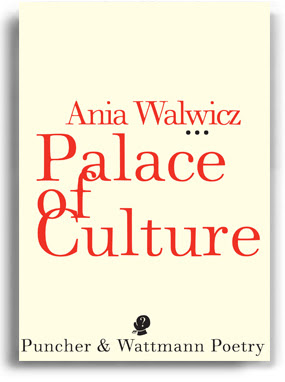
Launch of Palace of Culture by Ania Walwicz

YzHUwBte7GA3q4cABZRlYhoJfAhpeSamF-SWFh9mbWkcAmapwS5EbugSSAy9xLI7bpH7Ut49Pd8uED0ZLpQEISG-AjptZ4lmXtCHKq-zIeXxhxSZ82c63zKWUSXoxErjv-nAAFv8MOXv_yw=s0-d-e1-ft

The book will be launched by Jessica Wilkinson

WHEN:  Sat 3 May at 2pm

WHERE: La Mama Theatre, Faraday Street, Carlton, Melbourne


RSVP: news@puncherandwattmann.com

Palace of Culture is a dream diary, leading the reader into a personal and surreal engagement with the bewildering complexity of contemporary popular culture. Like her previous work Red Roses, Palace is a freewheeling work drawing the reader in to participate in its very construction. The layering of the oneiric on top of popular culture results in an intriguing interweaving of symbolic meanings (the notation and enactment of inner-states of feeling and being) with the arbitrary marketing decisions of our broader cultural stage. The language of Palace of Culture is not only the subject’s medium, but a source of revelation itself, a phantasm – something dreamt by its author and its reader, in the palace, at four a.m.

“Ania Walwicz’s work has always moved across genres, modes and registers, bringing self-reflexivity and metapoetics as material presences into the scene of the production, staging the subject in process, the subject in progress… Inspired by the great fabulists like Kafka and Dostoevsky [she] reactivates the avant-garde traditions from Stein, Joyce, Schwitters through the multiple lenses of psychoanalysis.”

Marion Campbell

*
Ania Walwicz was born 1951 in Swidnica, Poland (Palace of Culture is a building in Warsaw). She studied at the Victorian College of the Arts, Melbourne, and has been teaching in the area of creative writing since 1981. She is also involved in visual art, theatre and performance, and is currently completing a Phd at Victoria University and teaches at RMIT.

http://www.puncherandwattmann.com
PO Box 441
Glebe NSW 2037

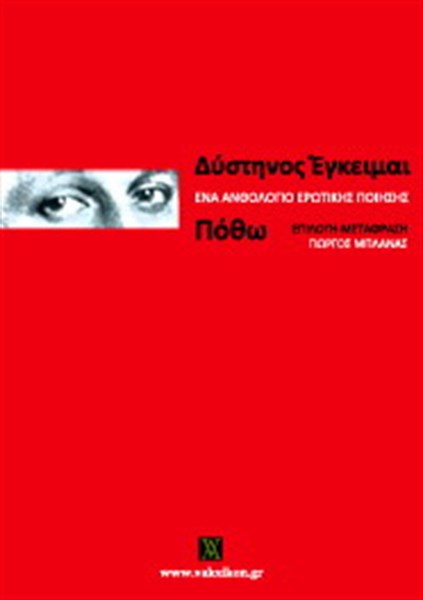
Δύστηνος έγκειμαι πόθω

distinos_egkimai_potho

ΔΥΣΤΗΝΟΣ ΕΓΚΕΙΜΑΙ ΠΟΘΩ
ΕΚΔΟΣΕΙΣ: VAKXIKON.GR

ΤΟΥ ΘΕΟΧΑΡΗ ΠΑΠΑΔΟΠΟΥΛΟΥ

Πριν από λίγο καιρό είχαμε την ευκαιρία να διαβάσουμε την ερωτική ποιητική ανθολογία: «Δύστηνος Έγκειμαι Πόθω», που κυκλοφόρησε πρόσφατα από τις εκδόσεις: Vakxikon.gr σε μετάφραση Γιώργου Μπλάνα.

Πρόκειται για μια επιλογή ερωτικών ποιημάτων, που ξεκινά από την Αρχαία Ελλάδα για να φτάσει στο σήμερα, διαλέγοντας πάντα τους πιο αντιπροσωπευτικούς ποιητές από κάθε εποχή και από κάθε λογοτεχνικό είδος. Από τη Σαπφώ και τον Μπιλχάνα μέχρι τον Τριστάν Τζαρά και τον Μαγιακόβσκι.

Ένα στοιχείο, που παρατηρούμε είναι ότι ο κάθε ποιητής με τον τρόπο του μιλάει ερωτικά και ότι η γλώσσα του έρωτα είναι πάνω από ρεύματα και από λογοτεχνικές σχολές. Μπορεί ορισμένοι ποιητές, που συναντάμε στη συγκεκριμένη ανθολογία να έχουν χαρακτηριστεί σαν εκπρόσωποι του φουτουρισμού, του ντανταϊσμού και του σοσιαλιστικού ρεαλισμού, όμως, τα ποιήματα, που συναντάμε ξεφεύγουν από τα λογοτεχνικά είδη, που αναφέρθηκαν πιο πάνω, δείχνοντας ότι η έμπνευση, που προέρχεται από τον έρωτα ξεπερνά τα στεγανά και τους κανόνες των διαφορετικών ποιητικών ρευμάτων.

Αρκετά ενδιαφέρον είναι επίσης, ότι διαβάζοντας τη συγκεκριμένη ανθολογία, γνωρίζουμε τα έργα ορισμένων ποιητών, που μέχρι τώρα δεν έχουν μελετηθεί αρκετά, όπως, για παράδειγμα του Σαίξπηρ έχουν μελετηθεί στο έπακρο οι τραγωδίες του, όχι, όμως και τα ερωτικά του σονέτα.

Μια ακόμα από τις αρετές της ανθολογίας: Δύστηνος Έγκειμαι Πόθω, είναι και η μεταφραστική δεινότητα του Γιώργου Μπλάνα και αυτό φαίνεται περισσότερο στα ποιήματα, που είναι γραμμένα σε παραδοσιακές φόρμες, καθώς έχουν αποδοθεί με σωστό μέτρημα των στίχων και με ομοιοκαταληξία στα σημεία, που απαιτείται.

Κλείνοντας, δεν έχουμε παρά να συνυπογράψουμε την τελευταία φράση από τον πρόλογο του Γιώργου Μπλάνα στην ανθολογία: «Τα έργα τέχνης και ιδίως τα ποιήματα μας μαθαίνουν να ερωτευόμαστε.»

Pam Brown reviews Beyond the Ohlala Mountains: Alan Brunton, Poems 1968-2002

8xZsV1Wti0wHQLgNnThOHGowRCH8umNbM2gIIeQUdyi9OnVgpFoQ2kjROM72XQ6DGg93Ee8VXOMgCUSRjKSkmKNTYwKEa-z_-37faTwYwN_V=s0-d-e1-ft

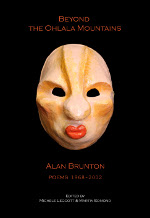
Beyond the Ohlala Mountains: Alan Brunton, Poems 1968 – 2002
edited by Martin Edmond and Michele Leggott
Titus Books, 2014

The mask on the cover of ‘Beyond the Ohlala Mountains’ suggests that there’ll be some odd theatrics inside the book. It’s a plain papier-mâché mask of a slightly jowly head with a bulbous nose and a pair of puckered, pouting, full red lips. What does it express – is it a superior sneer? Is it bourgeois disdain? Is it about to say ‘oh là là’? The mask was made by Sally Rodwell, the now-deceased partner of the New Zealand poet collected here, Alan Brunton. It was made for a theatre work called Cabaret of the Unlikely that was performed three years after Brunton had died at 55, in 2002.

Alan Brunton wrote ‘I adopted strangeness as my routine’ and that line sums up the poetry placed between photos of masks, figurines and puppets in this substantial memorial collection edited by Martin Edmond and Michele Leggott.

Continue reading →

Sally Evans Reviews David Prater

Leaves-of-Glass

Leaves of Glass
by David Prater

Puncher & Wattmann, 2013

David Prater’s latest collection Leaves of Glass is based on three years’ correspondence in the late nineteenth century between young Australian poet Bernard O’Dowd and the ageing master Walt Whitman. The epistolary material between these two men, a collection of twenty or so letters currently archived at the State Library of Victoria, forms the skeleton for this collection. Prater deftly plays with these two personae, offering a kaleidoscopic vision of their relationship alongside a number of poems that experiment with the ambiguities of written language and the shifting levels of intimacy revealed by the O’Dowd–Whitman letters. Many of the poems will speak most strongly to a reader who is more than passingly familiar with Whitman’s work. It is not a book to be picked up idly, but one that engages with the often-overlooked sympathies between Australian and American poetic traditions, and offers a compelling insight into the lesser-known figure of Bernard O’Dowd. Beyond this, however, Prater’s artisanal use of language and style demonstrates his flexibility and intelligence as a contemporary poet.

Personal correspondence is a tricky source for creative material. Balancing these individuals’ inner thoughts, their intimate writings to another, and publicly available archived material requires careful attention and creativity. The tension between the categories of private, intimate and public leads to spaces and ambiguity: gaps between what is felt and what is expressed, between what is answered and what is ignored, between what can be found, later, in the archives and what has been left out or lost. Personal letters, or what Dierkz terms ‘familiar letters’, which are ‘devoted to the expression of affection and duty among kin, family and friends’, are used to close the distance between individuals, usually on a very intimate level. Prater’s poems create a fictionalised account of these two men’s lives around the details found in their correspondences, often drawing epigraphs from the archival material to contextualise the poems. For example, epigraphs from O’Dowd’s letters head the poems written from O’Dowd’s point of view. These poetic personae, part real and part imagined, are vibrantly formed, with the O’Dowd persona in particular being marked by a clear and distinctive style. This collection is dominated by O’Dowd’s voice – fittingly, perhaps, given the abundance of critical and creative material written on Whitman and the comparative dearth of writing by and on O’Dowd. O’Dowd’s work, as Judith Wright acknowledges, ‘has dated badly’ despite public appreciation for his poetry during his life (quoted in Prater’s book). Prater offers a poignant and troubled vision of the aspiring young poet: a man beset by self-doubt, entering into a correspondence, both epistolary and spiritual, with Whitman the ‘revered Master’.

Continue reading →

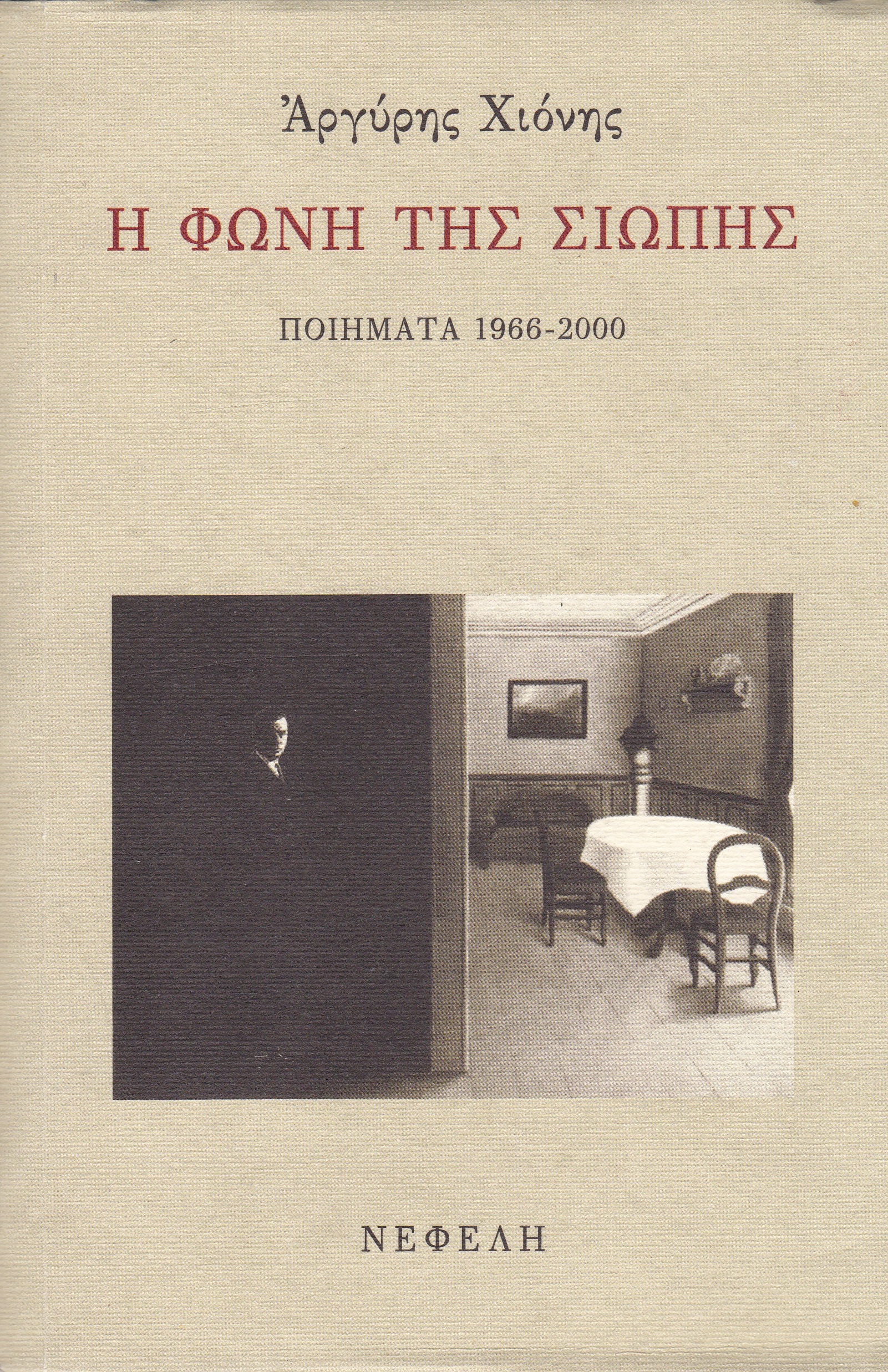
Αργύρης Χιόνης, Η φωνή της σιωπής, Ποιήματα 1966-2000

dtbok220314

Το βιβλίο αυτό είναι συγκεντρωτική έκδοση των ποιητικών συλλογών του Αργύρη Χιόνη “Απόπειρες φωτός” (1966), “Σχήματα απουσίας” (1973), “Μεταμορφώσεις” (1974), “Τύποι ήλων” (1978), “Λεκτικά τοπία” (1983), “Σαν τον τυφλό μπροστά στον καθρέφτη” (1986), “Εσωτικά τοπία” (1991), “Ο ακίνητος δρομέας” (1996), “Ιδεογράμματα” (1997) και “Τότε που η σιωπή τραγούδησε” (2000) και μας έρχεται από τις Εκδόσεις Νεφέλη.


Για τον ποιητή και μοναχικό δρομέα της ζωής Αργύρη Χιόνη, εμείς δεν έχουμε να πούμε τίποτα. Ας αφήσουμε να μιλήσει ο ίδιος: “Αν και είμαι μόλις 63 ετών και έχω εκτίσει μόνο 40 χρόνια ποίησης, αποφάσισα να προβώ στη συγκεντρωτική αυτή έκδοση των ποιημάτων μου, φοβούμενος ότι, επειδή οι Θεοί αγαπούν τους νέους, δεν θα έχω τον απαιτούμενο χρόνο για να δώσω στη δουλειά μου τη μορφή που θα έπρεπε να έχει, πριν παραδοθεί στην αιωνιότητα. Αν δεν το κάνω αυτό εγώ, θα το κάνει, ίσως, κάποιος συμπαθής τυμβωρύχος (βλέπε φιλόλογος), όταν δεν θα ‘μαι πια εδώ και δεν θα μπορώ να του τραβήξω το αφτί για τις τυχόν αυθαίρετες (τι άλλο θα μπορούσαν να είναι;) αναπαλαιώσεις. Στον τόμο αυτόν («Η φωνή της σιωπής», εκδόσεις Νεφέλη 2006) περιλαμβάνονται οι δέκα από τις ένδεκα ποιητικές συλλογές μου που έχουν εκδοθεί μέχρι σήμερα. Η ενδέκατη («Στο υπόγειο», εκδόσεις Νεφέλη 2004) δεν συμπεριελήφθη για δύο λόγους που, στην ουσία, συνιστούν έναν και μοναδικόν: θεωρώ ότι το βιβλίο αυτό προοιωνίζεται μια νέα στροφή στη δουλειά μου και, συνεπώς, το κρατώ ως μαγιά για την επόμενη συγκεντρωτική έκδοση, εφόσον, βέβαια, υπάρξει συνέχεια ζωής και έργου. Στις σελίδες της συλλογής «Οντα και μη όντα» (εκδόσεις Γαβριηλίδης 2006) αναμιγνύονται όλα σχεδόν τα είδη του λόγου, καταργώντας τα μεταξύ τους όρια. Το παραμύθι σμίγει με το δοκίμιο, το δοκίμιο με την ποίηση, η ποίηση με τη φυσική ιστορία…

Continue reading →

Jo Langdon
 Reviews Jill Jones’s The Beautiful Anxiety

beautiful-anxiety

The Beautiful Anxiety
by Jill Jones

Puncher & Wattmann, 2013

Frank O’Hara has a poem unambiguously and humorously titled ‘You Are Gorgeous and I’m Coming’. As pastiche or homage – even incidentally – the first two poems from the six-part sequence that opens Jill Jones’s stunning new collection The Beautiful Anxiety are titled: ‘1. Hold On’, and ‘2. I’m Coming’ (‘My Ruined Lyrics’). The present continuous tense of the verb ‘to come’ is thematically apt everywhere in this collection. Not only are poems throughout The Beautiful Anxiety sensual and frequented by moments of desire or quiet ecstasy, they are constantly ‘coming’ in the sense that they are arriving.

Sometimes these arrivals make their way through lines that rush at the reader, swerving in as though ready to collide; other times they sway the direction of the poems gently, offering surprising segues into new and unexpected terrains. From ‘My Ruined Lyrics’, ‘5. Flesh and Spark’ begins: ‘And when I came / to you / it was raining’. Pages later this preoccupation with coming, with arrival, continues with ‘What’s Coming Next’, a superb poem in which Jones offers: ‘In the glass is another world. / You can bare silence and find it neither golden nor clean.’ The poem veers between moments that apprehend the familiar world – even the mundane – and departures into the surreal, dreamlike, and wholly imaginary or abstract. Wry lines such as ‘We are coughing because the train is late’, ‘Maybe it’s easier to focus on cloudy days’, and ‘An expensive perfume arises out of damp air’, are interspersed with ‘Do dreams stand up in the slashing gravel?’ Weather lore rhymes and idioms are also alluded to, yet these presences are continually deflecting, defamiliarising: ‘If today is streaky, tomorrow will be unreasonable’, and ‘All bets are off. / You have to go through with it.’ Each line or couplet offers a surprising connection or shift between registers, yet these slants and disconnects feel natural, never contrived.

Continue reading →

Via Dolorosa, Εκδόσεις Βακχικόν

via-dolorosa-cover

VIA DOLOROSA
ΕΚΔΟΣΕΙΣ “VAKXIKON.GR”

ΤΟΥ ΘΕΟΧΑΡΗ ΠΑΠΑΔΟΠΟΥΛΟΥ

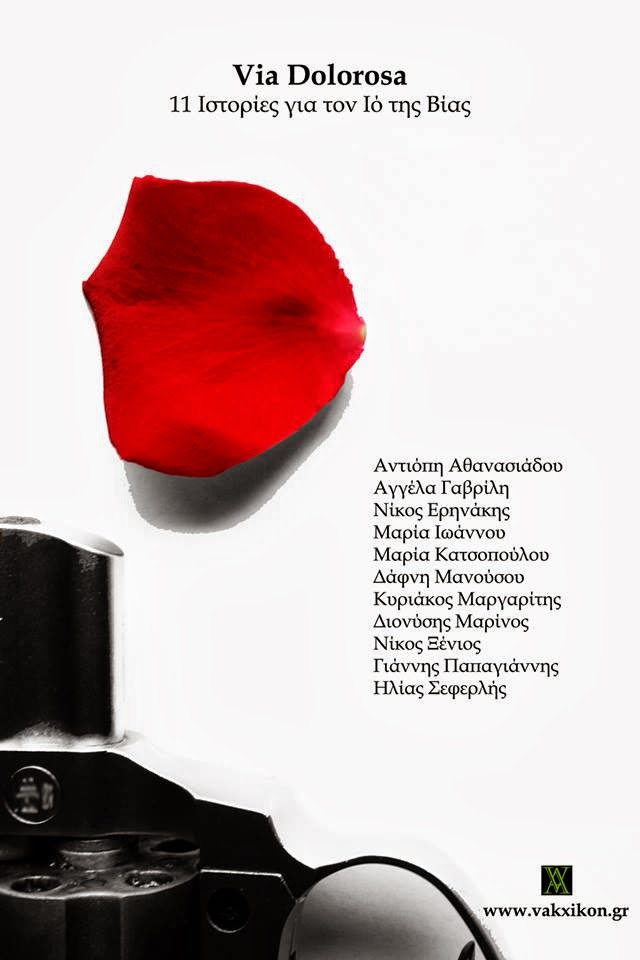
Πριν από λίγο καιρό κυκλοφόρησε η συλλογή διηγημάτων “Via Dolorosa”, ολοκληρώνοντας την «Τριλογία της Κρίσης», από τις εκδόσεις: “Vakxikon.gr”.

Σε αυτή τη συλλογή διηγημάτων συμμετέχουν οι: Αντιόπη Αθανασιάδου, Αγγέλα Γαβρίλη, Νίκος Ερηνάκης, Μαρία Α. Ιωάννου, Μαρία Κατσοπούλου, Δάφνη Μανούσου, Κυριάκος Μαργαρίτης, Διονύσης Μαρίνος, Νίκος Ξένιος, Γιάννης Παπαγιάννης και Ηλίας Σεφερλής.

Το πρώτο, που πρέπει να τονίσουμε είναι το λογοπαίγνιο του τίτλου, καθώς via dolorosa σημαίνει ο δρόμος του μαρτυρίου και τα διηγήματα, που περιλαμβάνει η συλλογή αναφέρονται στη βία και άρα το νήμα, που συνδέει όλες αυτές τις ιστορίες είναι σαν ένας δρόμος μαρτυρίου, που καλούνται να μας περιγράψουν οι συγγραφείς.

Στα έντεκα διηγήματα, που περιλαμβάνει η συλλογή θίγονται διάφορες μορφές βίας όπως: Η φτώχεια, ο ρατσισμός, τα ναρκωτικά, η ενδο-οικογενειακή βία, ο κοινωνικός δαρβινισμός, η κρατική καταστολή και ο ψυχολογικός εκβιασμός. Χαρακτηριστική μορφή βίας είναι ο ψυχολογικός εκβιασμός, που ασκείται από την υπερπροστατευτική μάνα προς το γιο της, που δεν έχει ακόμα συνειδητοποιήσει πως το παιδί της μεγάλωσε.

Μια μεγάλη αρετή του βιβλίου είναι ότι κανένα διήγημα δεν εξυπηρετεί τη θεωρία των δύο άκρων. Επίσης, ορισμένα από τα διηγήματα αναγνωρίζουν τη φτώχεια και την εξαθλίωση ως μορφές κοινωνικής βίας.

Μένουν ατιμώρητες οι πράξεις βίας; Όχι απαραίτητα. Ο ρατσιστής θα σκοτώσει εν βρασμώ ψυχής τη μοναδική γυναίκα, που του στάθηκε και ο άντρας, που αποζητά την πληρωμένη ικανοποίηση χωρίς τις απαραίτητες προφυλάξεις, θα προσβληθεί από aids.

Κλείνοντας, δεν έχουμε παρά να συγχαρούμε τις εκδόσεις: “Vakxikon.gr” για την έκδοση του συγκεκριμένου έργου, γιατί, όπως πολύ σωστά αναφέρουν οι Αγγέλα Γαβρίλη και Μαρία Κατσοπούλου στον πρόλογο του βιβλίου: «Η λογοτεχνία οφείλει να μιλήσει για εκείνο που όλοι αρνούνται ή κάνουν ότι δεν βλέπουν».

Ella O’Keefe Reviews Claire Gaskin

claire_gaskin

Paperweight
by Claire Gaskin

Hunter Publishers, 2014

In Paperweight, her third full-length collection, Claire Gaskin shows her talent for observing fluctuations in the state of things – personal, political and environmental. Within this, she does not turn from the darker corners of the human psyche. ‘Just do the best you can’ opens with a frank acknowledgement of mortality: ‘your death keeps growing/or your life keeps contracting’. Themes of loss surface elsewhere in the collection. In ‘to construct is to omit’ she writes, ‘I grieve the self that lived here / the graves my shoes are / by the door that doesn’t open’. There are also moments of violence, such as the accident in ‘ensoul’: ‘hell loses colour in the constant rain / no emergency vehicle was called’. These poems permit the world and all its wildness, and yet remain grounded. The notion that a witness has an ethical position is significant in Gaskin’s writing. The trauma of these poems is often gendered. In ‘(after Greer)’ a woman leaves the house ‘with his handprint on her face’. In ‘Just do the best you can’, the speaker writes: ‘and yet I dreamt I was raped / wearing my sister’s wedding dress’. These are feminist poems. Some, such as ‘(after Greer), are direct critiques; in other poems resistance lies in the disquiet of Gaskin’s lucid account of dispossession, rather than an outright call for struggle.

The ability to witness events and emotional states without getting caught up in them is often associated with meditation practices. Gaskin’s poems are meditative in the sense that they are accretions of the world, gathered through calm attention. In the yoga class that I attend, meditation is called sitting, which to me suggests an open, chance-based practice. Gaskin’s poems sit with the world. Yoga could be another analogue for the poems’ attention to the presence and experience of the body. One poem, ‘dreaming of the dreamer’, suggests ‘drawing a line around your body and living within it’. More frequently, though, Gaskin’s poems blur the boundaries of the body and its surrounds. There is rain that ‘fills the pelvis bone / a bird bath’ (‘a liberty of flowers’). In her poem ‘the breeze’, the architecture of the body and the built environment mingle: ‘the breeze flattens to include / spinal staircase to a balcony brow’. Her poem ‘hippocampus’ has the body not as a temple but, pragmatically, a rental property:

I am rent free
I have been living in the house of my body
all the windows and doors open
curtains wet with rain billow and whip

Continue reading →

Amanda Joy Reviews Rose Lucas’s Even in the Dark

rose_lucas

Even in the Dark
by Rose Lucas

UWA Publishing, 2013

Rose Lucas is a name often found in anthologies, awards and shortlists, so it is no misnomer to call this first collection of poems long-awaited. Time calibrates the scale in Even In The Dark, which span detail in lives from pre-conception and birth to the discovery of a cremated woman’s body 40,000 years in the earth.

The word ‘Even’ from the title gives notice to the grace with which each subject, word and sensation are dealt. With ‘In the dark’ Lucas shows us, with a shortened visual depth of field, a space of shifting equanimity. There is no excess, no jostling assertions and we are not displaced. Rather, with a rare and fascinating steadiness of poetic crafting, a strange familiarity of closeness coheres wild reverence for the elemental and is sustained. Lucas’s ‘dark’ is a listening place and it is not opaque. In these poems the focus is sharp and meticulously directed, Lucas has deftly supplanted our watchfulness with her own. From ‘Weekender’:

and of the moths
caught indoors,
still making their mad dashes at any little patch of light

(p 22)

Continue reading →