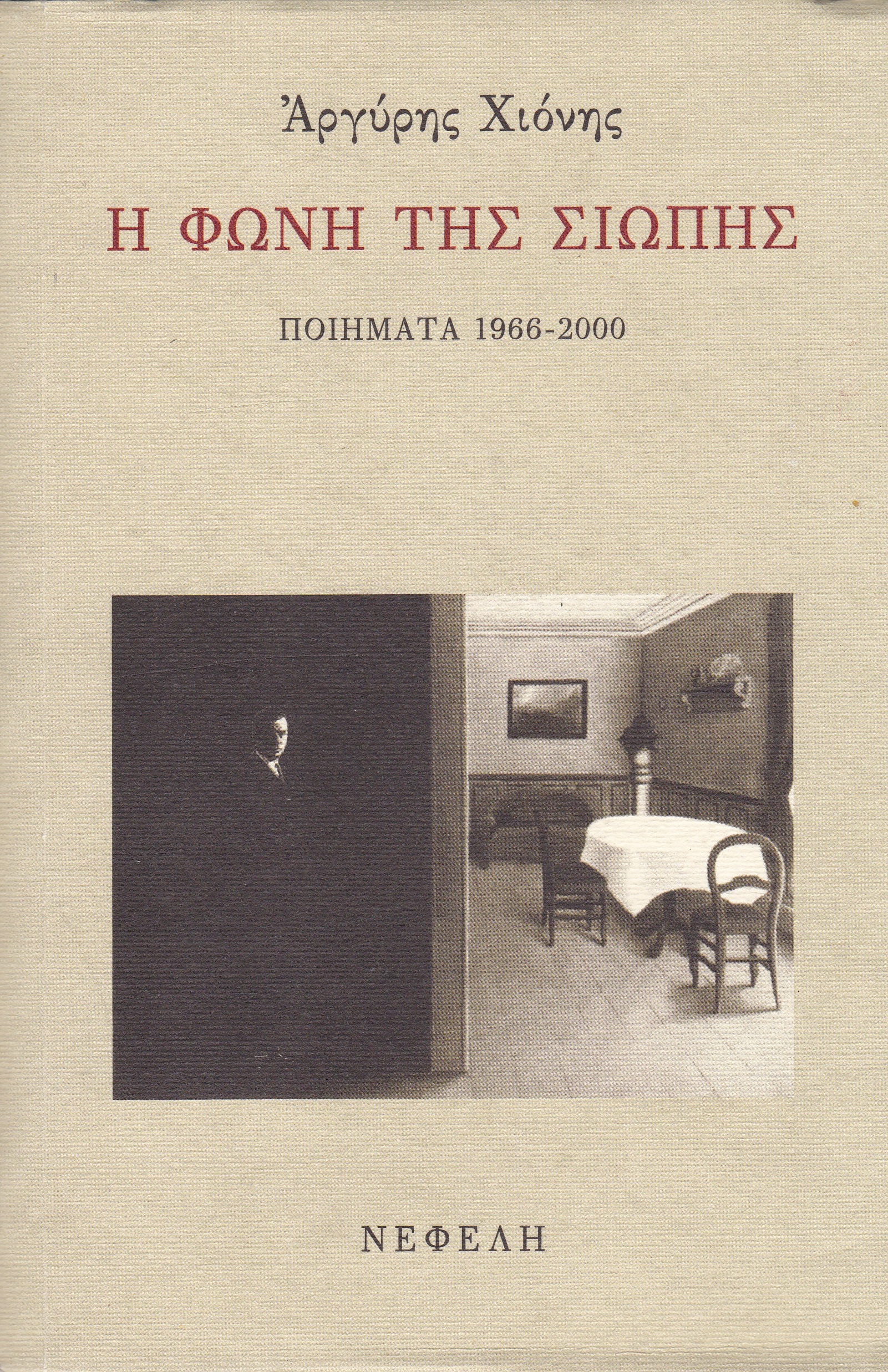
Αργύρης Χιόνης, Η φωνή της σιωπής, Ποιήματα 1966-2000

dtbok220314

Το βιβλίο αυτό είναι συγκεντρωτική έκδοση των ποιητικών συλλογών του Αργύρη Χιόνη “Απόπειρες φωτός” (1966), “Σχήματα απουσίας” (1973), “Μεταμορφώσεις” (1974), “Τύποι ήλων” (1978), “Λεκτικά τοπία” (1983), “Σαν τον τυφλό μπροστά στον καθρέφτη” (1986), “Εσωτικά τοπία” (1991), “Ο ακίνητος δρομέας” (1996), “Ιδεογράμματα” (1997) και “Τότε που η σιωπή τραγούδησε” (2000) και μας έρχεται από τις Εκδόσεις Νεφέλη.


Για τον ποιητή και μοναχικό δρομέα της ζωής Αργύρη Χιόνη, εμείς δεν έχουμε να πούμε τίποτα. Ας αφήσουμε να μιλήσει ο ίδιος: “Αν και είμαι μόλις 63 ετών και έχω εκτίσει μόνο 40 χρόνια ποίησης, αποφάσισα να προβώ στη συγκεντρωτική αυτή έκδοση των ποιημάτων μου, φοβούμενος ότι, επειδή οι Θεοί αγαπούν τους νέους, δεν θα έχω τον απαιτούμενο χρόνο για να δώσω στη δουλειά μου τη μορφή που θα έπρεπε να έχει, πριν παραδοθεί στην αιωνιότητα. Αν δεν το κάνω αυτό εγώ, θα το κάνει, ίσως, κάποιος συμπαθής τυμβωρύχος (βλέπε φιλόλογος), όταν δεν θα ‘μαι πια εδώ και δεν θα μπορώ να του τραβήξω το αφτί για τις τυχόν αυθαίρετες (τι άλλο θα μπορούσαν να είναι;) αναπαλαιώσεις. Στον τόμο αυτόν («Η φωνή της σιωπής», εκδόσεις Νεφέλη 2006) περιλαμβάνονται οι δέκα από τις ένδεκα ποιητικές συλλογές μου που έχουν εκδοθεί μέχρι σήμερα. Η ενδέκατη («Στο υπόγειο», εκδόσεις Νεφέλη 2004) δεν συμπεριελήφθη για δύο λόγους που, στην ουσία, συνιστούν έναν και μοναδικόν: θεωρώ ότι το βιβλίο αυτό προοιωνίζεται μια νέα στροφή στη δουλειά μου και, συνεπώς, το κρατώ ως μαγιά για την επόμενη συγκεντρωτική έκδοση, εφόσον, βέβαια, υπάρξει συνέχεια ζωής και έργου. Στις σελίδες της συλλογής «Οντα και μη όντα» (εκδόσεις Γαβριηλίδης 2006) αναμιγνύονται όλα σχεδόν τα είδη του λόγου, καταργώντας τα μεταξύ τους όρια. Το παραμύθι σμίγει με το δοκίμιο, το δοκίμιο με την ποίηση, η ποίηση με τη φυσική ιστορία…
Continue reading

Jo Langdon
 Reviews Jill Jones’s The Beautiful Anxiety

beautiful-anxiety

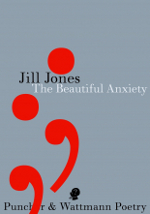
The Beautiful Anxiety
by Jill Jones

Puncher & Wattmann, 2013

Frank O’Hara has a poem unambiguously and humorously titled ‘You Are Gorgeous and I’m Coming’. As pastiche or homage – even incidentally – the first two poems from the six-part sequence that opens Jill Jones’s stunning new collection The Beautiful Anxiety are titled: ‘1. Hold On’, and ‘2. I’m Coming’ (‘My Ruined Lyrics’). The present continuous tense of the verb ‘to come’ is thematically apt everywhere in this collection. Not only are poems throughout The Beautiful Anxiety sensual and frequented by moments of desire or quiet ecstasy, they are constantly ‘coming’ in the sense that they are arriving.

Sometimes these arrivals make their way through lines that rush at the reader, swerving in as though ready to collide; other times they sway the direction of the poems gently, offering surprising segues into new and unexpected terrains. From ‘My Ruined Lyrics’, ‘5. Flesh and Spark’ begins: ‘And when I came / to you / it was raining’. Pages later this preoccupation with coming, with arrival, continues with ‘What’s Coming Next’, a superb poem in which Jones offers: ‘In the glass is another world. / You can bare silence and find it neither golden nor clean.’ The poem veers between moments that apprehend the familiar world – even the mundane – and departures into the surreal, dreamlike, and wholly imaginary or abstract. Wry lines such as ‘We are coughing because the train is late’, ‘Maybe it’s easier to focus on cloudy days’, and ‘An expensive perfume arises out of damp air’, are interspersed with ‘Do dreams stand up in the slashing gravel?’ Weather lore rhymes and idioms are also alluded to, yet these presences are continually deflecting, defamiliarising: ‘If today is streaky, tomorrow will be unreasonable’, and ‘All bets are off. / You have to go through with it.’ Each line or couplet offers a surprising connection or shift between registers, yet these slants and disconnects feel natural, never contrived.

Continue reading

Via Dolorosa, Εκδόσεις Βακχικόν

via-dolorosa-cover

VIA DOLOROSA
ΕΚΔΟΣΕΙΣ “VAKXIKON.GR”

ΤΟΥ ΘΕΟΧΑΡΗ ΠΑΠΑΔΟΠΟΥΛΟΥ

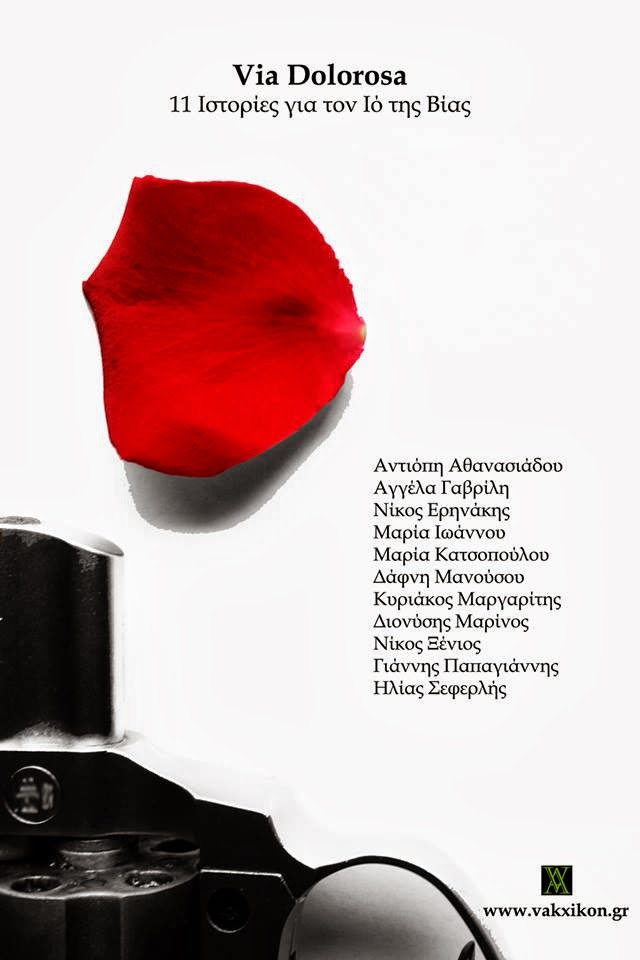
Πριν από λίγο καιρό κυκλοφόρησε η συλλογή διηγημάτων “Via Dolorosa”, ολοκληρώνοντας την «Τριλογία της Κρίσης», από τις εκδόσεις: “Vakxikon.gr”.

Σε αυτή τη συλλογή διηγημάτων συμμετέχουν οι: Αντιόπη Αθανασιάδου, Αγγέλα Γαβρίλη, Νίκος Ερηνάκης, Μαρία Α. Ιωάννου, Μαρία Κατσοπούλου, Δάφνη Μανούσου, Κυριάκος Μαργαρίτης, Διονύσης Μαρίνος, Νίκος Ξένιος, Γιάννης Παπαγιάννης και Ηλίας Σεφερλής.

Το πρώτο, που πρέπει να τονίσουμε είναι το λογοπαίγνιο του τίτλου, καθώς via dolorosa σημαίνει ο δρόμος του μαρτυρίου και τα διηγήματα, που περιλαμβάνει η συλλογή αναφέρονται στη βία και άρα το νήμα, που συνδέει όλες αυτές τις ιστορίες είναι σαν ένας δρόμος μαρτυρίου, που καλούνται να μας περιγράψουν οι συγγραφείς.

Στα έντεκα διηγήματα, που περιλαμβάνει η συλλογή θίγονται διάφορες μορφές βίας όπως: Η φτώχεια, ο ρατσισμός, τα ναρκωτικά, η ενδο-οικογενειακή βία, ο κοινωνικός δαρβινισμός, η κρατική καταστολή και ο ψυχολογικός εκβιασμός. Χαρακτηριστική μορφή βίας είναι ο ψυχολογικός εκβιασμός, που ασκείται από την υπερπροστατευτική μάνα προς το γιο της, που δεν έχει ακόμα συνειδητοποιήσει πως το παιδί της μεγάλωσε.

Μια μεγάλη αρετή του βιβλίου είναι ότι κανένα διήγημα δεν εξυπηρετεί τη θεωρία των δύο άκρων. Επίσης, ορισμένα από τα διηγήματα αναγνωρίζουν τη φτώχεια και την εξαθλίωση ως μορφές κοινωνικής βίας.

Μένουν ατιμώρητες οι πράξεις βίας; Όχι απαραίτητα. Ο ρατσιστής θα σκοτώσει εν βρασμώ ψυχής τη μοναδική γυναίκα, που του στάθηκε και ο άντρας, που αποζητά την πληρωμένη ικανοποίηση χωρίς τις απαραίτητες προφυλάξεις, θα προσβληθεί από aids.

Κλείνοντας, δεν έχουμε παρά να συγχαρούμε τις εκδόσεις: “Vakxikon.gr” για την έκδοση του συγκεκριμένου έργου, γιατί, όπως πολύ σωστά αναφέρουν οι Αγγέλα Γαβρίλη και Μαρία Κατσοπούλου στον πρόλογο του βιβλίου: «Η λογοτεχνία οφείλει να μιλήσει για εκείνο που όλοι αρνούνται ή κάνουν ότι δεν βλέπουν».

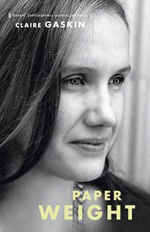
Ella O’Keefe Reviews Claire Gaskin

claire_gaskin

Paperweight
by Claire Gaskin

Hunter Publishers, 2014

In Paperweight, her third full-length collection, Claire Gaskin shows her talent for observing fluctuations in the state of things – personal, political and environmental. Within this, she does not turn from the darker corners of the human psyche. ‘Just do the best you can’ opens with a frank acknowledgement of mortality: ‘your death keeps growing/or your life keeps contracting’. Themes of loss surface elsewhere in the collection. In ‘to construct is to omit’ she writes, ‘I grieve the self that lived here / the graves my shoes are / by the door that doesn’t open’. There are also moments of violence, such as the accident in ‘ensoul’: ‘hell loses colour in the constant rain / no emergency vehicle was called’. These poems permit the world and all its wildness, and yet remain grounded. The notion that a witness has an ethical position is significant in Gaskin’s writing. The trauma of these poems is often gendered. In ‘(after Greer)’ a woman leaves the house ‘with his handprint on her face’. In ‘Just do the best you can’, the speaker writes: ‘and yet I dreamt I was raped / wearing my sister’s wedding dress’. These are feminist poems. Some, such as ‘(after Greer), are direct critiques; in other poems resistance lies in the disquiet of Gaskin’s lucid account of dispossession, rather than an outright call for struggle.

The ability to witness events and emotional states without getting caught up in them is often associated with meditation practices. Gaskin’s poems are meditative in the sense that they are accretions of the world, gathered through calm attention. In the yoga class that I attend, meditation is called sitting, which to me suggests an open, chance-based practice. Gaskin’s poems sit with the world. Yoga could be another analogue for the poems’ attention to the presence and experience of the body. One poem, ‘dreaming of the dreamer’, suggests ‘drawing a line around your body and living within it’. More frequently, though, Gaskin’s poems blur the boundaries of the body and its surrounds. There is rain that ‘fills the pelvis bone / a bird bath’ (‘a liberty of flowers’). In her poem ‘the breeze’, the architecture of the body and the built environment mingle: ‘the breeze flattens to include / spinal staircase to a balcony brow’. Her poem ‘hippocampus’ has the body not as a temple but, pragmatically, a rental property:

I am rent free
I have been living in the house of my body
all the windows and doors open
curtains wet with rain billow and whip

Continue reading

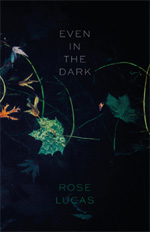
Amanda Joy Reviews Rose Lucas’s Even in the Dark

rose_lucas

Even in the Dark
by Rose Lucas

UWA Publishing, 2013

Rose Lucas is a name often found in anthologies, awards and shortlists, so it is no misnomer to call this first collection of poems long-awaited. Time calibrates the scale in Even In The Dark, which span detail in lives from pre-conception and birth to the discovery of a cremated woman’s body 40,000 years in the earth.

The word ‘Even’ from the title gives notice to the grace with which each subject, word and sensation are dealt. With ‘In the dark’ Lucas shows us, with a shortened visual depth of field, a space of shifting equanimity. There is no excess, no jostling assertions and we are not displaced. Rather, with a rare and fascinating steadiness of poetic crafting, a strange familiarity of closeness coheres wild reverence for the elemental and is sustained. Lucas’s ‘dark’ is a listening place and it is not opaque. In these poems the focus is sharp and meticulously directed, Lucas has deftly supplanted our watchfulness with her own. From ‘Weekender’:

and of the moths
caught indoors,
still making their mad dashes at any little patch of light

(p 22)

Continue reading

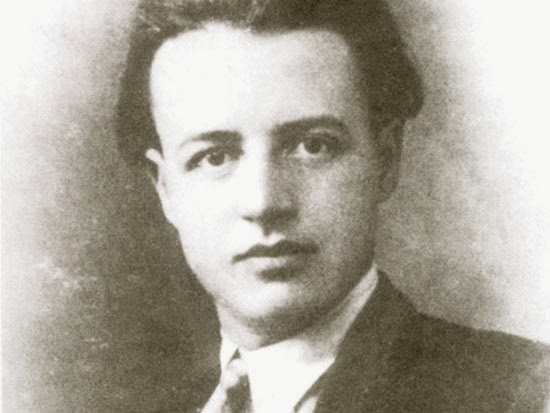
Γιώργος Σαραντάρης, ένας ποιητής της βαθιάς υπαρξιακής μοναξιάς…

σαραντάρης

Δεν είχε ιδιαίτερες παρέες ο Γιώργος Σαραντάρης , ήταν κλειστό άτομο, και κατά την διάρκεια των παιδικών και εφηβικών του χρόνων, βίωσε μια πιεστική μοναξιά, που απέδωσε μ’ ένα χαρακτηριστικό ποίημα στην συλλογή ”Αιώνες”… 

I.

μακριά από την κοσμογονία με παράτησαν μοναχό
σαν πτώμα, ή χτήνος
και περάσαν οι μέρες πάνω μου
στάχτη φέρνοντας και καπνό.
Περνούσαν κι’ απ’ τον ύπνο όπου επνιγώμουνα,
έβλεπα τα θολά τραγούδια,
τα δάκρυα που είχαν γίνει ουρανός,
και την σιωπή του χρόνου…

II. 

Τι έμεινε από το έργο του Καβάφη; 
Κάτι σαν κυπαρίσσι.
Τι μένει από τα ολοζώντανα φιλιά του Γρυπάρη;
Mένουμε ίσως εμείς, 
οι ακοίμητες νύμφες του Ιονίου Πελάγους. Εμείς, ο Κάλβος 

Continue reading

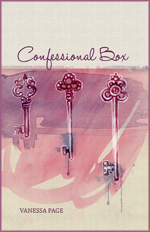
Siobhan Hodge Reviews Vanessa Page’s Confessional Box

Vanessa_Page

Confessional Box by Vanessa Page
Walleah Press, 2013

Australian poet Vanessa Page’s latest collection, Confessional Box, is equal parts personal and critical, examining emotional relationships with a terse, engaging style. As the title suggests, there is a strongly self-aware element to Confessional Box. The poems are relatively open, encompassing a range of points of view and personas, but these are not wholly simple reflections of human relationships. Rather, Page presents a series of evolving sections, embellishing on memories and balancing broader criticisms against more personally orientated notions of access and invitation.

In an interview discussing the collection, Vanessa Page alludes to personal experiences and observations as sources of inspiration, implementing memories into different settings in order to create adaptable, relatable fictions. In this sense, the collection is highly effective. As the title indicates, there is an overarching focus on ‘unpacking’ memories and perceptions, but unlike a conventional confessional box, Page’s collection is not exclusive or exclusionary. However, it is certainly not a passive receptacle, nor are Page’s speakers demure confidantes. Page relishes familial settings and romantic encounters between her speakers, but connections are often fraught with what has been left unsaid, metaphorically and literally distanced by a range of imageries.

In ‘Wife’, a poem strongly reminiscent of Gwen Harwood’s ‘In the Park’, Page’s speaker shies from a perceived threat of depersonalisation:

You see her down the street with the kids
wedge heels and plastic bag hands

three caricatures fleshed out
in a sudden domestic sketch

your heart snaps like a snare drum
as you hesitate; a mid-thrum cicada

tail lights warning you back.

Continue reading

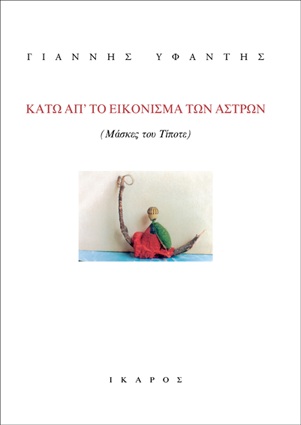
Γιάννης Υφαντής, Κάτω από το εικόνισμα των άστρων, Εκδόσεις Ίκαρος 2013

dtbook080314

Πριν από λίγο καιρό κυκλοφόρησε η νέα ποιητική συλλογή του Γιάννη Υφαντή “Κάτω απ’ το εικόνισμα των άστρων”, από τις εκδόσεις Ίκαρος. Όπως γράφει, ο ποιητής και κριτικός, Θεοχάρης Παπαδόπουλος, “πρόκειται για ποίηση ανατρεπτική, γραμμένη σε γλώσσα λαϊκή και ανεπιτήδευτη, που χωρίς λεκτικούς ακροβατισμούς μιλάει φιλικά με τον αναγνώστη και αυτή η φιλική διάθεση, που δείχνει ο ποιητής δίνει μια μεγαλύτερη αμεσότητα στα μηνύματα, που θέλει κάθε φορά να περάσει.

Το βιβλίο χωρίζεται σε 4 μέρη: Στο πρώτο μέρος συναντάμε ποιήματα, που είτε χρησιμοποιώντας πολλούς, είτε λίγους στίχους καταφέρνουν να αποδώσουν έξυπνα νοήματα χωρίς να κουράζουν. Για μεγαλύτερη κατανόηση παραθέτουμε ένα σύντομο ποίημα: «Πήγαινε, όλο πήγαινε, προσεχτικά, όλα τα πρόσεχε, κρατώντας τον μεγάλο του καθρέφτη. / Προσεχτικά πολύ προσεχτικά. / Να μην του πέσει ο καθρέφτης έλεγε / και σπάσει ο κόσμος». Επίσης, ένα χαρακτηριστικό, που συναντάμε είναι η περιγραφή συνηθειών ορισμένων ζώων, όπως γάτες, κίσσες κλπ. με εύστοχους παραλληλισμούς.

Continue reading

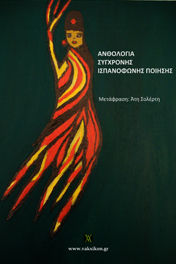
Ανθολογία Σύγχρονης Ισπανόφωνης Ποίησης

Ανθολογία+Σύγχρονης+Ισπανόφωνης+Ποίησης

ΑΝΘΟΛΟΓΙΑ ΣΥΓΧΡΟΝΗΣ ΙΣΠΑΝΟΦΩΝΗΣ ΠΟΙΗΣΗΣ ΣΕ ΜΕΤΑΦΡΑΣΗ ΤΗΣ ΑΤΗΣ ΣΟΛΕΡΤΗ ΑΠO ΤΙΣ ΕΚΔΟΣΕΙΣ VAKXIKON.GR

Οι Εκδόσεις Vakxikon.gr και η ποιήτρια και μεταφράστρια Άτη Σολέρτη (κατά κόσμον Σοφία Αργυροπούλου) παρουσιάζουν την «Ανθολογία Σύγχρονης Ισπανόφωνης Ποίησης». Με την πολύτιμη βοήθεια του ποιητή-μεταφραστή-μελετητή Mario Domínguez Parra, η Σολέρτη ανθολογεί ένα πολύχρωμο πανόραμα ποιητών και ποιητριών που συνδέονται μεταξύ τους από το γεγονός ότι γράφουν στην ισπανική γλώσσα. Με έμφαση στους ποιητές των Καναρίων Νήσων αλλά και με συμμετοχές από τη Λατινική Αμερική και την ισπανική ενδοχώρα, η έκδοση αυτή μας προσφέρει ένα χορταστικό μενού 186 σελίδων μεταφρασμένης ισπανόφωνης ποίησης.

Η παρουσίαση κάθε συμμετέχοντος/συμμετεχούσης συνοδεύεται και από ένα σύντομο βιογραφικό που οριοθετεί την καταγωγή του/της, καθώς και το πολιτιστικό και μορφωτικό του υπόβαθρο. Ίσως να προτιμούσαμε μία δίγλωσση έκδοση, η οποία θα ανεδείκνυε καλύτερα το τιτάνιο μεταφραστικό έργο της Σολέρτη, αλλά αντιλαμβανόμεθα ότι κάτι τέτοιο θα οδηγούσε σε ένα βιβλίο που θα ξεπερνούσε τις 400 σελίδες και θα συνιστούσε δυσβάστακτο φορτίο για τον ταλαιπωρημένο αναγνώστη της εποχής μας.

Continue reading

Aidan Coleman
 Reviews Andrew Lansdown’s Inadvertent Things

lansdown

Inadvertent Things
– Poems in traditional Japanese forms

by Andrew Lansdown,
Walleah Press, 2013

Andrew Lansdown’s poetry has long been defined by the primacy of the image and a preoccupation with form. Inadvertent Things revisits the themes of nature, family and God through the familiar Japanese forms of tanka and haiku, and also the choka, a sort of extended tanka. The haiku is the form that features most often and always as part of a suite called a gunsaku, where the poems work independently but also cumulatively. All the terms are explained in a short introduction for the uninitiated, in which Lansdown expresses his intention to follow the spirit rather than the letter of the law.

As in Lansdown’s other collections, small details matter. Take the tanka ‘Azure’:

Surely a piece is
missing from the azure robe
of the Madonna
in some ancient mosaic
because of that fairy wren!

Continue reading