Bella Li
 reviews James Stuart’s Anonymous Folk Songs

james-stewart

Anonymous Folk Songs
by James Stuart

Vagabond Press, 2013

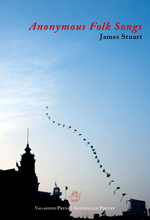
On the cover of James Stuart’s debut collection Anonymous Folk Songs is an image of a series of kites strung together; tethered to a darkened cityscape, they stretch away from it, curving upwards into the sky above. In any scene where the light falling upon subjects differs, the photographer must choose which part of the image to correctly expose – and therefore to highlight – the earth or sky, the kites or clouds. The photograph is Stuart’s own, and it is the sky that takes up most of the frame, that retains depth and a complexity of colour and tone. And yet the unbroken black silhouette of an urban skyline anchors the sky, just as a barely visible line of string anchors the desiring kites to ground. The same impulse that animates this image on the cover is embedded in the poems within.

Stuart’s anchors are often a recognisable Australia, in both its rural and urban manifestations, and a similarly distinct Asia, In poems such as ‘Blow-ins’, populated with mynas, eucalypts and ‘spinifex spanning ridges’, and ‘Hội An’, set amongst ‘paper-lantern streets’, ‘ivory charms’ and incense, we are clearly in particular, defined spaces. In others, the borders blur: ‘Sudden rain, Tilba Tilba’ begins with a quote from a Qing Dynasty painter, before opening on a vista of fly-screen doors, hills ‘scraped…bare/of spotted gums & blackbutts’, and the ‘fruit preserves/& 70s bric-à-brac’ of a gentrified Australian country town.

Continue reading

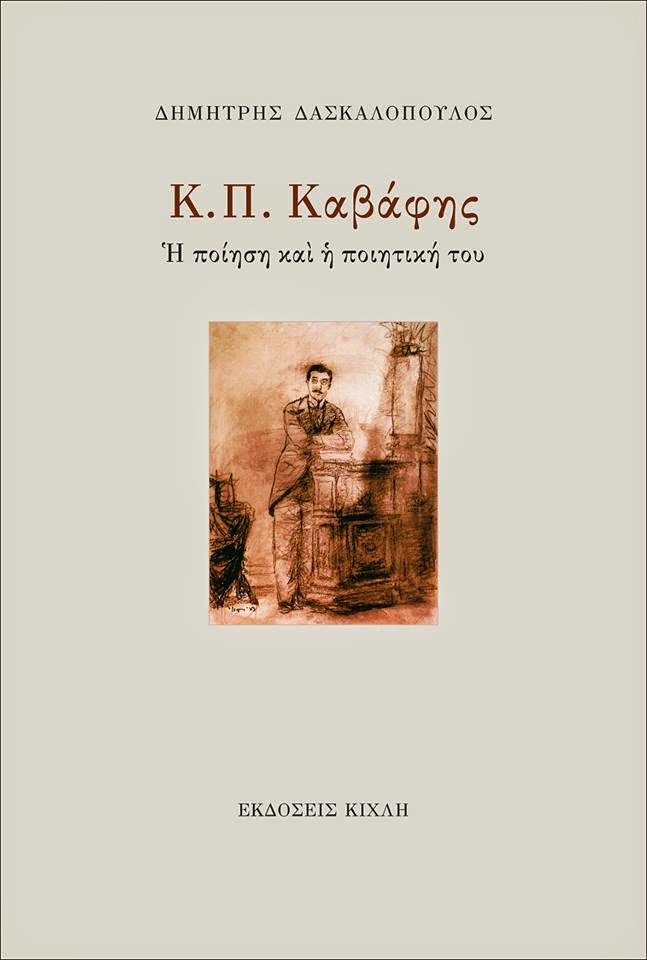
O Καβάφης του Δ. Δασκαλόπουλου, εκδόσεις Κίχλη

10349975_393707390771887_4134916440009378714_n

Του Κώστα Λογαρά

Το βιβλίο του Δημήτρη Δασκαλόπουλου για τον Καβάφη, που κυκλοφόρησε πρόσφατα από τις εκδόσεις Κίχλη, περιέχει 20 κείμενα-μελέτες που αφορούν στον Αλεξανδρινό ποιητή. Γίνεται αναφορά στις επιρροές τού μεγάλου ποιητή, στις πρώτες εκδόσεις των έργων του, στα ψυχικά τοπία των ηρώων του· αλλά και σε συγκρούσεις, σε διενέξεις, στις απόψεις Ξενόπουλου και Παλαμά για την ποίηση του Καβάφη καθώς και μεταγενέστερων ομοτέχνων του (του Σεφέρη, αίφνης). Πρόκειται για επιλεγμένα κείμενα, δημοσιευμένα και αδημοσίευτα, που ο Δημήτρης Δασκαλόπουλος συγκέντρωσε στα 40 χρόνια ενασχόλησής του με το έργο του  Αλεξανδρινού.
Όλα, ενδιαφέροντα, συμπεριλαμβάνονται σε μια εξαιρετική έκδοση καταταγμένα όχι με τη χρονική σειρά της δημοσίευσής τους (από το 1983 έως το 2013) αλλά παρακολουθούν, κατά το δυνατόν, την πορεία της ζωής και του έργου του Καβάφη. Την ποιητική του τέχνη.
Συστηματικός και αναγνωρισμένος ερευνητής του βίου και του έργου του Καβάφη,  ο Δ. Δ. έχει εκδώσει ως τώρα 6  βιβλία για τον Αλεξανδρινό ποιητή. Στο ευρύ κοινό είναι γνωστό το βιβλίο του Δημήτρη Δασκαλόπουλου – Μαρίας Στασινοπούλου Ο βίος και το έργο του Κ. Π .Καβάφη, Μεταίχμιο, 2002. Αλλά το θεμελιώδες βιβλίο του είναι αναμφίβολα η Βιβλιογραφία Κ. Π. Καβάφη 1886- 2000 – ογκώδες έργο 1300 σελίδων.  
   
Τα 20 μελετήματα τής πρόσφατης έκδοσης — μικρής έκτασης το καθένα—  τα διάβασα όχι με τη σειρά που έχουν στον τόμο. Αλλά, βάσει του ενδιαφέροντος που μου προκαλούσε κάθε φορά το ιδιαίτερο θέμα. Οδηγούμενος από την περιέργειά μου, οσμιζόμενος μάλλον το περιεχόμενο. Και, βεβαίως, με βάση τις δικές μου ελλείψεις ή ανάγκες αναφορικά με τον Καβάφη. Πρώτα τις παρωδίες των Καβαφικών ποιημάτων, στη συνέχεια την απόψεις του Παλαμά και του Ξενόπουλου καθώς και τις παρενέργειες που αυτές προκάλεσαν, ύστερα για τον Καβάφη στον 21ο αιώνα, ακολούθως για την εικονοποιία του καθώς και τις επιρροές του στους εικαστικούς καλλιτέχνες και πάει λέγοντας.

Έτσι προέκυψε ένα σπονδυλωτό ‘μυθιστόρημα’ για τον Αλεξανδρινό και την ποιητική του πορεία· μια σφαιρική καταγραφή για τον ίδιον, για την εποχή του και το έργο του,  που φτάνει ως τις μέρες μας. ( Σαν μια ιδιαίτερη γραμματειακή μορφή εργο-βιογραφίας : με τα πληρέστατα στοιχεία της έρευνας τού Δημήτρη Δασκαλόπουλου και με την ιδιότυπη πλοκή που τη δημιούργησε η αναγνωστική μου περιέργεια – από την οποία δεν απουσίαζε, ενίοτε, και το απαραίτητο σασπένς).

Continue reading

Autumn Royal Reviews Todd Turner’s Woodsmoke

todd-ruener

Woodsmoke
by Todd Turner

Black Pepper Publishing, 2014

The poetry in Todd Turner’s debut collection Woodsmoke explores topographies of land and memory. Comparable to the approach of Australian poets such as Philip Hodgins and Brendan Ryan, many of Turner’s poems explore human interactions with rural landscapes. Turner’s biographical note indicates that his ‘parents were from farming families in the town of Koorawatha, situated on the Western Plains of New South Wales’ (v). Like Hodgins and Ryan, Turner is unafraid to include autobiographical references within many of his poems.

The collection opens with ‘Shelling Peas’, a poem that may be read metapoetically for the way it details the poetic qualities of the quotidian. The speaking ‘I’ in the poem, presumably Turner, refers to a childhood memory of shelling peas, a monotonous task the poet ‘hardly tired of…just eased into a certain / order, felt a kind of rhythm at hand’ (1). This ‘rhythm at hand’ puns on the crafting of poetry and also emphasises the cadences of domestic labour, the obligatory cycles that can inform our imagination.

Continue reading

Campbell Thomson Reviews Peter Bakowski’s Personal Weather

bakowski


Personal Weather
by Peter Bakowski

Hunter Publishing, 2014

Bakowski looks into the lens in the photograph by Nick Walton-Healey on the cover of Personal Weather. The poems are also direct. They eschew simile, ambiguity, and the abstract. Were he an etcher, Bakowski’s work would be figurative with clear outlines and orderly perspective. There is no hesitation in his lines. His skies might be cloudy but there would be no obscuring storms of angst, only fugitive rays spotlighting the quirky in the mundane.

The preface to his 1995 prize winning book, In the Human Night, states that he was ‘Born with a hole in the heart to Polish-German parents in Melbourne on 15 October 1954 … On 21 January 1993 he survived an eight hour heart operation.‘
In this volume birds fluttered through the verses with unabashed lyrical abandon. Natural imagery abounded:

In the mean time there are
more poems to write,
I like to try to put
a small truth in each one.
Say, about the size
of a mouse or a matchbox.

(‘Self-portrait in East Melbourne flat, 22 June 1994’)
This is Bakowski’s credo. The poems presented as found objects the poet picks up on his daily walk:

The streets, of course
are full of poems
rushing off to work
fretting at each kerb,
waiting for the hiccup
of each cursed traffic-light

Undress them carefully
as you would, a peacock
as you would, a panther

(‘The Dictionary is just a beautiful menu, for Frank O’Hara’)
In Bakowski’s last collection, Beneath our Armour (Hunter 2009) he says ‘My aim as a poet is to write clear and accessible poems, to use ordinary words to say extraordinary things. No matter how many books I write in my life time they will all be about what it’s like to be a human being.’

The poems displayed international ambition. There were vignettes of writers such as ‘Portrait of Cyril Connolly’ and in another he had Sylvia Plath writing about Ted’s new lover.

Not all these life studies entranced but they reflect a working method:

learning the difference
between the necessary and the overworked line.

(‘Caspar Morton, portrait artist, talking about his life and work’)
Personal Weather, Bakowski’s seventh book, continues this minimalist, sharp eyed project. In ‘Self-portrait in the shadow of scalpels, Melbourne, 26 March 2013’, Bakowski is glad he ‘wasn’t born a century before/the common use of antiseptics,/blood transfusions,/general anaesthetization,/morphine and oxygen.’

There are five portraits of other writers, including Plath. Maybe there should be a century embargo on Plath poems. There is ‘A Melbourne letter poem to Ken Bolton’ and ‘A letter from Rebecca Cartello in Scarborough, England, to her sister Carla in Longreach, Queensland, 15 December 1955’. There are four poems about letters, including:

‘The letter Y’

invented the martini. (p 20)

There is a sextet of epigrams, including:

‘The pickpocket’

Wishing to reform
he joins
a nudist colony.

(p 45)

There is a foreword by Barry Humphries, set out like blank verse. It could be taking the mickey. It reads, in part:

Most modern poetry like nearly all modern
architecture
is awful
but these poems are good.
Very good.

(p 1)

A Spanish proverb prefaces the poems: ‘Tomorrow is often the busiest day of the week.’ A man with a serious heart condition may have a special relationship with tomorrow.
The poems in Personal Weather look similar: left justified, un-rhyming views through a 50mm normal lens with straightforward syntax. They have no interest in their own concreteness. They aim to mean. They aim beyond the delectation of other poets.

The book’s first poem is ‘City workers during morning rush hour, Collins Street’, alludes to John Brack’s painting of 5pm in the same street. The second stanza is:

What a gift is hunger. Because of it your ancestors left their caves,
Explored plains, valleys, rivers, seas. These
Adventures became paintings, songs, tall tales, family legends, headlines.
There’s the story of each person, on the trains, trams and street corners.
How vulnerable you are, how strong you are. I want to reveal your
Essence via the camera of this poem, as you swarm and
Rush in the business district, glancing at your wristwatches.

(p 3)

This has the yearning of Whitman without his music. It relies on lists and the close observation of a Cartier-Bresson.

Bakowski blogs poems and musings on poetry and his influences. He pays homage online in ‘One for Charles Bukowski’:

You’ve taught me
to be lean in the poem,
to say the thing
directly,
the way the hammer
says things
to the nail.

Online he discusses pruning and sifting his poetry: ‘I’ve realized in my twenty years of writing poetry I’ve now used the words ‘sparrow’ and ‘sofa’ enough.’

He talks about being inspired by crime fiction and biography. He describes writing poetry as ‘ambling with your thoughts on a long leash in the park of your skull.’

Do the words he finds in this park excite? His corner of the playground may not entice all players but there is a whittled, sly serenity in his best lines. From the book’s last poem, ‘Some observations and a wish, for Ron Padgett’ come:

During your life the speed at which your remove your clothes may vary.

If pigs could fly, there’d be less bacon.

To ants, a twig is a battering ram.

May your mind resist the impulse to be a closed fist.
(p 72)

One hundred years of games in literature do not trouble this work but there should be some quiet in our hubbub for Bakowski to be heard.

*Campbell Thomson is a Melbourne writer, artist, and barrister. He acted for the Wimmera mob in their successful native title claim. He acted for five of the ‘Gunns 20′ environmental activists, sued by the Tasmanian timber company. He prosecutes and defends alleged murderers. In 2009 he produced & performed in Othello at 45downstairs. He is a judicial officer for Super 15 Rugby, helps coach the Melbourne Uni Colts, & plays touch rugby in Edinburgh Gardens with other has beens.

**Taken fromhttp://cordite.org.au/reviews/thomson-bakowskis/
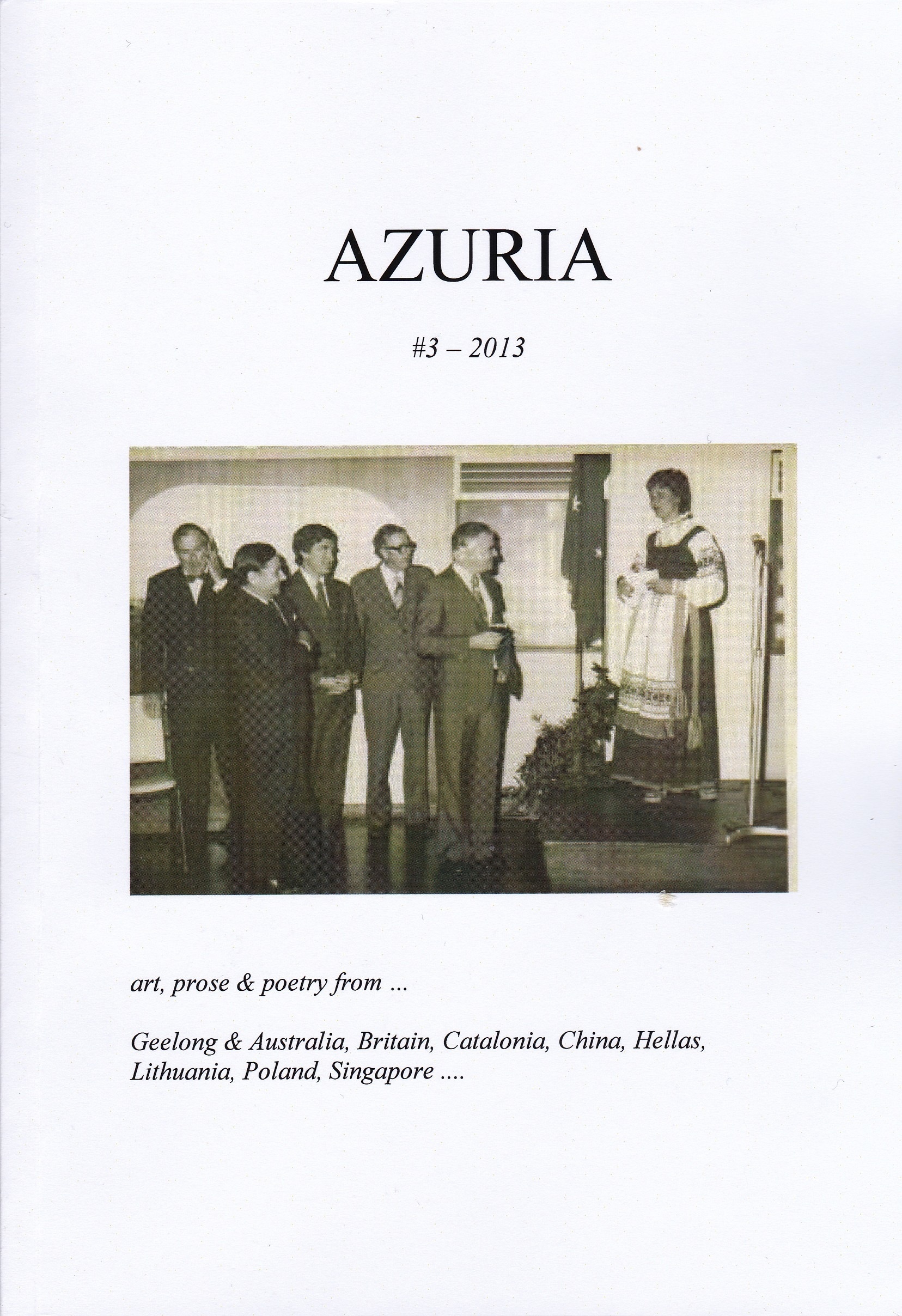
Azuria No 3, Summer 2013-2014

dtbook100514a

Στην Αυστραλία και ειδικά στη Βικτώρια κυκλοφορούν αρκετά λογοτεχνικά περιοδικά, τα οποία φιλοξενούν και προάγουν όλα τα είδη του γραπτού λόγου, ποίηση, πεζό, μυθιστόρημα, κριτική, ταξιδιωτικές εντυπώσεις και άλλα. Υπάρχει μια πανσπερμία τέτοιων περιοδικών, μικρών ή μεγάλων, με μεγάλο ή περιορισμένο τιράζ, άλλα γνωστά ευρέως και άλλα γνωστά σε μικρούς σχετικά κύκλους, που προάγουν μια πανσπερμία, επίσης, προσεγγίσεων και προσλήψεων των διαφόρων λογοτεχνικών ειδών και τεχνοτροπιών γραφής, άρα και διαφορετικών ιδεολογικών και πολιτικών -αν θέλετε- απόψεων.

Απηχούν, δε, το ευρύ και ποικίλο λογοτεχνικό και, γενικότερα, πολιτιστικό φάσμα που ευδοκιμεί στην πολιτεία μας, και στην ευρύτερη χώρα.

Ένα από αυτά τα περιοδικά μάς έρχεται από το Geelong της Βικτώριας, αν και το βεληνεκές του εκτείνεται πολύ πιο μακριά, πέρα από τα στενά όρια και δρώμενα της σφύζουσας αυτής επαρχιακής μεγαλούπολης της Βικτώριας, καθώς απ΄ το εξώφυλλο κιόλας διαβάζουμε ότι το βεληνεκές αυτό ξεκινά, μεν, από το Geelong, εκτείνεται σε όλη σχεδόν την Αυστραλία, αλλά ανοίγει τα φτερά του και στη Βρετανία, την Καταλωνία, την Κίνα, την Ελλάδα (αναφέρεται ως Hellas και όχι ως Greece), τη Λιθουανία, την Πολωνία, τη Σιγκαπούρη.

Είναι δε το τρίτο τεύχος του εν λόγω περιοδικού που φιλοδοξεί να κατακτήσει καρδιές, πέννες, ποιητές και συγγραφείς, κοινό και εραστές του λόγου και της γραφής.

Το ανά χείρας τεύχος, όπως πάντα λιτό και… απέριττο, στεγάζει μικρά πεζά ή πρόζα, ποίηση, αναλύσεις και κριτικές καθώς και μικρό βιογραφικό των συμμετεχόντων.

Η ποίηση έχει τη μερίδα του λέοντος καθώς καταλαμβάνει το 75% σχεδόν της ύλης του τεύχους. Φιλοξενούνται εδώ οι ποιητές/ποιήτριες Juli Capilla, Kristiina Ehin, Anna Habryn, Aidas Marcenas, Lidija Simkute, Ouyang Yu, Yu Cong, Janet Baird, Brian Edwards, Rory Hudson, Richard Kakol, Jerry Shawn Keys, Loh Guang Liang, Rose Lucas, Elizabeth Murawski, Christopher Kingrose, Ian C. Smith, Jorge Salavert και Vicky Tsaconas. Όπως καταλαβαίνετε, η συντριπτική πλειοψηφία των ποιητών/ποιητριών προέρχονται από ποικίλα εθνοτικά και γλωσσικά επίπεδα, ενώ όπως και σε κάθε τευχος έτσι και στο παρόν οι συμμετοχές τους δημοσιεύονται και στη μητρική γλώσσα και σε αγγλική μετάφραση, αποδεικνύοντας περίτρανα την πολυεθνική και πολυγλωσσική κατεύθυνση των εκδοτών, κάτι που τους τιμά ιδιαίτερα.
Στις άλλες κατηγορίες, στο μικρό πεζό-πρόζα δημοσιεύονται δουλειές των Birute Jonuskaite, R. Martinez Mendoza, Natasha Sampson, Jean Thornton και Johnathan TG Tiong.

Στις αναλύσεις δημοσιεύονται κείμενα των Dzavid Haveric, Richard Benesevich και Yasmin L. Wallace, τα οποία αφορούν, κυρίως, το έργο ποιητών και ποιητριών που ηδη δημοσιεύονται στο περιοδικό (ή έχουν δημοσιευτεί στα προηγούμενα τεύχη) π.χ. για τους Lidija Simkute και Ouyang Yu.

Δημοσιεύεται, ακόμα, η κριτική παρουσίαση του Martin Hooper για το βιβλίο της ντόπιας λογοτέχνιδας Jura Reilly “A Wolf At Our Door”, ενώ ο Edward Reilly παραθέτει κατάλογο βιβλίων και περιοδικών που έλαβε το περιοδικό.

Το περιοδικό κυκλοφορεί από το Geelong Writers Inc. (εκδοτική ομάδα Edward Reilly, Martin Hooper, Jura Reilly, Christopher Kingrose και Natasha Sampson). Απευθυνθείτε στη διεύθυνση PO BOX 1306, Geelong, Victoria 3220 και http://www.geelongwriters.com

Η Ασημίνα Ξηρογιάννη για τη συλλογή , “Πριν εισέλθετε, βεβαιωθείτε” της Γεωργίας Τρούλη

1947443_723065824390796_607361336_n

ΓΕΩΡΓΙΑ ΤΡΟΥΛΗ
ΠΡΙΝ ΕΙΣΕΛΘΕΤΕ, ΒΕΒΑΙΩΘΕΙΤΕ
ΕΚΔ.ΣΑΙΞΠΗΡΙΚΟΝ, 2013

Όταν ένα βιβλίο σε βυθίζει στο όνειρο, μοιραία αναστοχάζεσαι πάνω στην πραγματικότητα. «Τα όνειρα τα καταβροχθίζει κανείς με όλες του τις αισθήσεις», μας λέει η Γεωργία Τρούλη. Πώς είναι όταν ο άνθρωπος ονειρεύεται ιστορίες και έρχεται αντιμέτωπος με χαώδεις καταστάσεις του υποσυνείδητου και του εσώτερου εγώ; Πώς είναι όταν ο διαρκής διχασμός συνιστά μια αλλοπρόσαλλη διαδρομή και καταλήγει να γίνει μια άλλη ταυτότητα; Βρισκόμαστε ανίσχυροι απέναντι στο εξής αντιφατικό φαινόμενο: την εναλλαγή απώλειας και επανάκτησης του εαυτού. Η Γεωργία Τρούλη, ζωηρά και αποφασιστικά, αφηγείται διχασμούς και μας βυθίζει σε δεκάδες μυστικές διαδρομές που διαθέτουν αγριότητα. Ζωγραφίζει σκληρές ποιητικές εικόνες, κάποιες από αυτές μένουν ανολοκλήρωτες να αιωρούνται μαγικά στις συνειδήσεις μας, διαθέτοντας μικρή ή μεγαλύτερη ποσότητα φρίκης, απαραίτητο συστατικό για να νιώσουμε το σοκ μιας πρωτοφανούς ψυχρότητας.

Δεν υπάρχουν ζεστά χρώματα για να βάψουν τα επιμέρους τοπία που δημιουργεί η Τρούλη. Διχάζεται μέσα της ο κόσμος ή μάλλον κομματιάζεται, γίνεται θρύψαλα σχεδόν. Όμως εκείνη έχει την ψυχραιμία να τον δει από ψηλά και να τον περιγράψει. Έχει την τόλμη να αφηγηθεί το ανείπωτο, το τερατώδες, το τραυματικό. Η αλλοίωση του κόσμου στη συνείδησή της ελλοχεύει ένα σοβαρό κίνδυνο. Να μην αναπλαστεί πάλι, να βυθιστεί στο αιώνιο σκοτάδι.Εδώ που διαβάζουμε η διαύγεια μοιάζει ξεχασμένη υπόθεση. Μάταιη είναι κι η αναζήτηση ταυτότητας του βιώματος, του αρχικού ερεθίσματος που φιλτράρεται με ιδιαίτερο τρόπο από την δημιουργό. Εκείνη έχει καλά κρυμμένο το εγώ της. Ξαναγυρίζω πάλι στην εικονοποιία, πιάνω το νήμα από κει που το άφησα. Άπειρες μικρές ή πιο μεγάλες εικόνες, σαφείς ή ασαφείς, ρεαλιστικές ή μη ρεαλιστικές, σουρεαλιστικές και (μετα)μοντέρνες, ίσως, στα σημεία. Άπειρες εκδοχές και συνειρμοί που φλερτάρουν ασύστολα με μια ιδιάζουσα ποιητικότητα. Κοφτές φράσεις, άλλες ανολοκλήρωτες, στίχοι ριγμένοι επιμελώς ατημέλητα πάνω στο χαρτί για να πυροδοτήσουν μια κάποια δραματικότητα και να γεννήσουν ερωτήματα. Ρωτάω όπως αναπνέω. Υπάρχει ποίηση στην πεζή πραγματικότητα; Yπάρχει ποίηση μέσα στα όνειρα; Yπάρχει ποίηση στο θάνατο; Ποίηση στο φόβο; Ποίηση στον πόνο; Aνιχνεύοντας αν υπάρχει ποίηση μέσα σε όλα τα παραπάνω, η ποιήτρια βουτάει για τα καλά μέσα την ποιητική διαδικασία,’ «αγκυλώνει το χάος», έστω για λίγο, κι είναι έτσι σαν να το νικά, φλερτάροντας με το αιώνιο και το άφθαρτο.

Τραγουδώντας το κενό κι αντέχοντας συρρικνώσεις. «Πηγαινοφέρνοντας λέξεις» και παραληρώντας αναπόφευκτα λίγο πριν την τελική απόσχιση. Αποταμιεύοντας γλωσσικές και νοηματικές αντιφάσεις. Καταγράφοντας με σθένος ό,τι καταργεί και καταστρέφει και απολαμβάνοντας τις αποδομήσεις και την ενέργειά τους, δεν στοχεύει στην ανάπλαση και αναδόμηση απαραίτητα. Τιμά τα ερείπια. Εγώ ως αναγνώστης αγαπώ πάντα τις ιστορίες με κακό τέλος. Τις θεωρώ πιο αληθινές και πιο αυθεντικές. Κλείνοντας, δεν μας νοιάζουν οι σαφείς προθέσεις σε αυτήν την περίπτωση. Είναι το strong feeling, η δημιουργική ένταση, οι άπειρες διάχυτες αισθήσεις που σαν δώρα σου προσφέρονται. Ναι, δεν μας νοιάζουν οι σαφείς προθέσεις, όταν ο αναγνώστης είναι διαρκώς υπ’ ατμόν και απορημένος βαθιά μπροστά στο θαυμαστό.

*Αναδημοσίευση απο το http://varelaki.blogspot.gr/2014/05/notationes-m-i-o-2014_2886.html

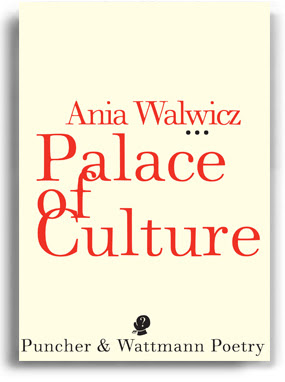
Launch of Palace of Culture by Ania Walwicz

YzHUwBte7GA3q4cABZRlYhoJfAhpeSamF-SWFh9mbWkcAmapwS5EbugSSAy9xLI7bpH7Ut49Pd8uED0ZLpQEISG-AjptZ4lmXtCHKq-zIeXxhxSZ82c63zKWUSXoxErjv-nAAFv8MOXv_yw=s0-d-e1-ft

The book will be launched by Jessica Wilkinson

WHEN:  Sat 3 May at 2pm

WHERE: La Mama Theatre, Faraday Street, Carlton, Melbourne


RSVP: news@puncherandwattmann.com

Palace of Culture is a dream diary, leading the reader into a personal and surreal engagement with the bewildering complexity of contemporary popular culture. Like her previous work Red Roses, Palace is a freewheeling work drawing the reader in to participate in its very construction. The layering of the oneiric on top of popular culture results in an intriguing interweaving of symbolic meanings (the notation and enactment of inner-states of feeling and being) with the arbitrary marketing decisions of our broader cultural stage. The language of Palace of Culture is not only the subject’s medium, but a source of revelation itself, a phantasm – something dreamt by its author and its reader, in the palace, at four a.m.

“Ania Walwicz’s work has always moved across genres, modes and registers, bringing self-reflexivity and metapoetics as material presences into the scene of the production, staging the subject in process, the subject in progress… Inspired by the great fabulists like Kafka and Dostoevsky [she] reactivates the avant-garde traditions from Stein, Joyce, Schwitters through the multiple lenses of psychoanalysis.”

Marion Campbell

*
Ania Walwicz was born 1951 in Swidnica, Poland (Palace of Culture is a building in Warsaw). She studied at the Victorian College of the Arts, Melbourne, and has been teaching in the area of creative writing since 1981. She is also involved in visual art, theatre and performance, and is currently completing a Phd at Victoria University and teaches at RMIT.

http://www.puncherandwattmann.com
PO Box 441
Glebe NSW 2037

Δύστηνος έγκειμαι πόθω

distinos_egkimai_potho

ΔΥΣΤΗΝΟΣ ΕΓΚΕΙΜΑΙ ΠΟΘΩ
ΕΚΔΟΣΕΙΣ: VAKXIKON.GR

ΤΟΥ ΘΕΟΧΑΡΗ ΠΑΠΑΔΟΠΟΥΛΟΥ

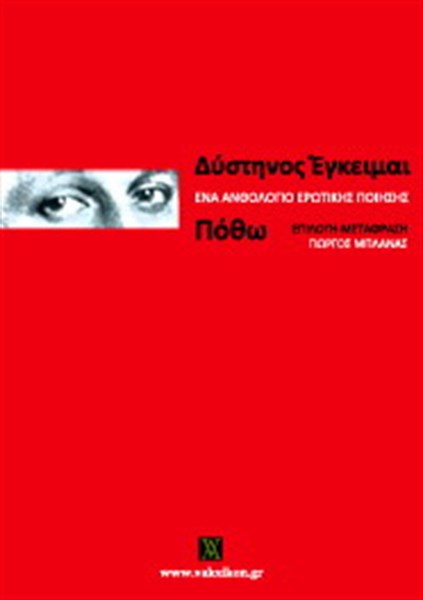
Πριν από λίγο καιρό είχαμε την ευκαιρία να διαβάσουμε την ερωτική ποιητική ανθολογία: «Δύστηνος Έγκειμαι Πόθω», που κυκλοφόρησε πρόσφατα από τις εκδόσεις: Vakxikon.gr σε μετάφραση Γιώργου Μπλάνα.

Πρόκειται για μια επιλογή ερωτικών ποιημάτων, που ξεκινά από την Αρχαία Ελλάδα για να φτάσει στο σήμερα, διαλέγοντας πάντα τους πιο αντιπροσωπευτικούς ποιητές από κάθε εποχή και από κάθε λογοτεχνικό είδος. Από τη Σαπφώ και τον Μπιλχάνα μέχρι τον Τριστάν Τζαρά και τον Μαγιακόβσκι.

Ένα στοιχείο, που παρατηρούμε είναι ότι ο κάθε ποιητής με τον τρόπο του μιλάει ερωτικά και ότι η γλώσσα του έρωτα είναι πάνω από ρεύματα και από λογοτεχνικές σχολές. Μπορεί ορισμένοι ποιητές, που συναντάμε στη συγκεκριμένη ανθολογία να έχουν χαρακτηριστεί σαν εκπρόσωποι του φουτουρισμού, του ντανταϊσμού και του σοσιαλιστικού ρεαλισμού, όμως, τα ποιήματα, που συναντάμε ξεφεύγουν από τα λογοτεχνικά είδη, που αναφέρθηκαν πιο πάνω, δείχνοντας ότι η έμπνευση, που προέρχεται από τον έρωτα ξεπερνά τα στεγανά και τους κανόνες των διαφορετικών ποιητικών ρευμάτων.

Αρκετά ενδιαφέρον είναι επίσης, ότι διαβάζοντας τη συγκεκριμένη ανθολογία, γνωρίζουμε τα έργα ορισμένων ποιητών, που μέχρι τώρα δεν έχουν μελετηθεί αρκετά, όπως, για παράδειγμα του Σαίξπηρ έχουν μελετηθεί στο έπακρο οι τραγωδίες του, όχι, όμως και τα ερωτικά του σονέτα.

Μια ακόμα από τις αρετές της ανθολογίας: Δύστηνος Έγκειμαι Πόθω, είναι και η μεταφραστική δεινότητα του Γιώργου Μπλάνα και αυτό φαίνεται περισσότερο στα ποιήματα, που είναι γραμμένα σε παραδοσιακές φόρμες, καθώς έχουν αποδοθεί με σωστό μέτρημα των στίχων και με ομοιοκαταληξία στα σημεία, που απαιτείται.

Κλείνοντας, δεν έχουμε παρά να συνυπογράψουμε την τελευταία φράση από τον πρόλογο του Γιώργου Μπλάνα στην ανθολογία: «Τα έργα τέχνης και ιδίως τα ποιήματα μας μαθαίνουν να ερωτευόμαστε.»

Pam Brown reviews Beyond the Ohlala Mountains: Alan Brunton, Poems 1968-2002

8xZsV1Wti0wHQLgNnThOHGowRCH8umNbM2gIIeQUdyi9OnVgpFoQ2kjROM72XQ6DGg93Ee8VXOMgCUSRjKSkmKNTYwKEa-z_-37faTwYwN_V=s0-d-e1-ft

Beyond the Ohlala Mountains: Alan Brunton, Poems 1968 – 2002
edited by Martin Edmond and Michele Leggott
Titus Books, 2014

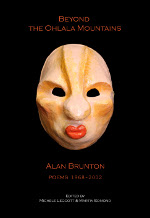
The mask on the cover of ‘Beyond the Ohlala Mountains’ suggests that there’ll be some odd theatrics inside the book. It’s a plain papier-mâché mask of a slightly jowly head with a bulbous nose and a pair of puckered, pouting, full red lips. What does it express – is it a superior sneer? Is it bourgeois disdain? Is it about to say ‘oh là là’? The mask was made by Sally Rodwell, the now-deceased partner of the New Zealand poet collected here, Alan Brunton. It was made for a theatre work called Cabaret of the Unlikely that was performed three years after Brunton had died at 55, in 2002.

Alan Brunton wrote ‘I adopted strangeness as my routine’ and that line sums up the poetry placed between photos of masks, figurines and puppets in this substantial memorial collection edited by Martin Edmond and Michele Leggott.

Continue reading

Sally Evans Reviews David Prater

Leaves-of-Glass

Leaves of Glass
by David Prater

Puncher & Wattmann, 2013

David Prater’s latest collection Leaves of Glass is based on three years’ correspondence in the late nineteenth century between young Australian poet Bernard O’Dowd and the ageing master Walt Whitman. The epistolary material between these two men, a collection of twenty or so letters currently archived at the State Library of Victoria, forms the skeleton for this collection. Prater deftly plays with these two personae, offering a kaleidoscopic vision of their relationship alongside a number of poems that experiment with the ambiguities of written language and the shifting levels of intimacy revealed by the O’Dowd–Whitman letters. Many of the poems will speak most strongly to a reader who is more than passingly familiar with Whitman’s work. It is not a book to be picked up idly, but one that engages with the often-overlooked sympathies between Australian and American poetic traditions, and offers a compelling insight into the lesser-known figure of Bernard O’Dowd. Beyond this, however, Prater’s artisanal use of language and style demonstrates his flexibility and intelligence as a contemporary poet.

Personal correspondence is a tricky source for creative material. Balancing these individuals’ inner thoughts, their intimate writings to another, and publicly available archived material requires careful attention and creativity. The tension between the categories of private, intimate and public leads to spaces and ambiguity: gaps between what is felt and what is expressed, between what is answered and what is ignored, between what can be found, later, in the archives and what has been left out or lost. Personal letters, or what Dierkz terms ‘familiar letters’, which are ‘devoted to the expression of affection and duty among kin, family and friends’, are used to close the distance between individuals, usually on a very intimate level. Prater’s poems create a fictionalised account of these two men’s lives around the details found in their correspondences, often drawing epigraphs from the archival material to contextualise the poems. For example, epigraphs from O’Dowd’s letters head the poems written from O’Dowd’s point of view. These poetic personae, part real and part imagined, are vibrantly formed, with the O’Dowd persona in particular being marked by a clear and distinctive style. This collection is dominated by O’Dowd’s voice – fittingly, perhaps, given the abundance of critical and creative material written on Whitman and the comparative dearth of writing by and on O’Dowd. O’Dowd’s work, as Judith Wright acknowledges, ‘has dated badly’ despite public appreciation for his poetry during his life (quoted in Prater’s book). Prater offers a poignant and troubled vision of the aspiring young poet: a man beset by self-doubt, entering into a correspondence, both epistolary and spiritual, with Whitman the ‘revered Master’.

Continue reading