Για τον Άρη Ταστάνη

10312348_1467775260166294_6438245700734694747_n

Πέρασε ένας χρόνος.
Και είναι σαν ήτανε χτες που έφυγε ,
αναπάντεχα, την Παρασκευή 20-9-2013 
για τις γειτονιές των κατατρεγμένων και αλαφροισκιωτων αυτού του κόσμου, που τόσα ποιήματα είχε γράψει
ο Αρης Ταστάνης, ο φίλος μας, ο σύντροφος, ο συναγωνιστής, ο αδερφός μας,
 ένας μεγάλος καταπληκτικός άνθρωπος, 
ένα μεγάλο χαμόγελο, 
μια μεγάλη αγκαλιά.

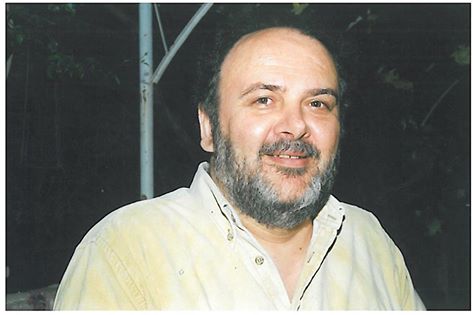
Ο ποιητής Αρης Ταστάνης ,ίσως ο σπουδαιότερος ποιητής με αναπηρία στην Ελλάδα. 
Τυχεροί όσοι τον γνώρισαν, όσοι έζησαν μαζί του, όσοι μοιράστηκαν μαζί του 
χαρές, λύπες, γέλια ,τραγούδια, γλέντια, χορούς, ταξίδια, ξενύχτια, ντουμάνια και γεμάτα τασάκια με αποτσίγαρα, άδεια μπουκάλια με αλκόλ και σπασμένα ποτήρια, όσοι ήπιαν καφέ και έπαιξαν μαζί του τάβλι κάτω από την κληματαριά στην φιλόξενη αυλή στη Τερψιθέα, όσοι μαζί του είδαν την ανατολή στο καράβι που τον πήγαινε στην αγαπημένη του Μυτιλήνη, φίλοι που έφυγαν νωρίς, ανεκπλήρωτοι και προδομένοι έρωτες, δάκρυα, όνειρα, ελπίδες, ,ατελείωτες συζητήσεις, συγκρούσεις, διαδηλώσεις, υποσχέσεις για το αύριο, υποσχέσεις για έναν καλύτερο κόσμο. 

Ο Αρης δεν ζήτησε ποτέ τίποτα, 
μόνο έδινε
, έσκαβε 
απλόχερα, το παράδειγμα 
ότι μόνο με αγώνα θα αλλάξουν τα πράγματα ότι μόνο με μάχες θα έρθουν καλύτερες μέρες. 
Ο Αρης έφυγε ξαφνικά, 
κοινώς μας την έκανε,
 μας τσάντισε, μας θύμωσε,
 λες και πήγε μια βόλτα να πιει ένα καφέ και όπου να ναι θα ξανάρθει. 
Άφησε πίσω του ένα μεγάλο πολύ βαρυ σημαντικό ποιητικό έργο, ανήκει σε όλους τους αγαπημένους του συνταξιδιωτες στο όνειρο.

…

Απο τις πρωτες κριτικες της δουλειάς του απ΄π τον μεγαλο ποιητή Τάσο Λειβαδιτη.

Εφ. ΑΥΓΗ: (Κυρ. 13 Απρ. 1980)

{…μεστός και ανανεωμένος παρουσιάζεται ο Α.Τ. με το τέταρτο βιβλίο του…
Φυσικά την πορεία του την είχε χαράξει από την πρώτη κι όλας συλλογή του με πυξίδα που να δείχνει πάντα τη μεγάλη και σκληρή εποχή μας.
Τους μακρόχρονους αγώνες του λαού μας για ελευθερία, το μόχθο των ταπεινών, τα δάκρια των καταφρονεμένων, αλλά συγχρόνως και την ελπίδα στη ζωή και το μέλλον, που σ’ αυτό το βιβλίο του παίρνουν πλατύτερες διαστάσεις:


<>.

<>.

<>.

Ο «ΣΥΝΟΙΚΙΣΜΟΣ» του Ταστάνη, δεν είναι μόνον οι απόμερες γωνιές της Αθήνας, αλλά όλου του κόσμου. 
Κι οι άνθρωποι, στην πιο ακραία τους καθημερινότητα, αλλά και στο πιο λαμπρό μεγαλείο τους συνωστίζονται μες στις σελίδες του: εργάτες, λαϊκοί αγωνιστές, άτομα δυστυχισμένα, αποκλεισμένα, όμως με αξιοπρέπεια και περηφάνια παλεύουν για το δικό τους αύριο!

<>.

Ο «ΣΥΝΟΙΚΙΣΜΟΣ» του ποιητή διαθέτει ό,τι καλύτερο έχει το ανθρώπινο στοιχείο: ειλικρίνεια, ευψυχία, δύναμη, ευαισθησία, ιδανικά.
Όλα αυτά που συναντάει κανείς λίγο μακρύτερα απ’ τις ολόφωτες και άψυχες βιτρίνες των μεγαλουπόλεων.
Ακόμα κι ο πόνος είναι γεμάτος καρτερία:

<>.

Ακριβώς όμως επειδή ο νεαρός ποιητής παρουσιάζει μια τέτοια αναμφισβήτητη εξέλιξη , πρέπει και η κριτική να επισημάνει κάποιες αδυναμίες του, όπως η περιττολογία κι η εύκολη αισθηματικότητα καμιά φορά.
Αν ο Ταστάνης πυκνώσει το λόγο του και του αφαιρέσει κάθε περιττό, είναι βέβαιο ότι θα δώσει ποίηση υψηλής στάθμης.
Γιατί κι εδώ , όπου κατορθώνει ν’ αποδεσμεύεται απ’ το περιττό, μας χαρίζει μικρά κείμενα υποδειγματικά:

<>.

ΤΑΣΟΣ ΛΕΙΒΑΔΙΤΗΣ (Ποιητής)


…

Η ΑΥΓΗ 20-9-2014
Για τον ΑΡΗ ΤΑΣΤΑΝΗ.
΄Εφερε το αποτύπωμα των αξιών της Αριστεράς
Καθώς τις μέρες αυτές κλείνει ένας χρόνος από τον ξαφνικό θάνατο του Άρη Ταστάνη, σκέφτομαι ότι υπάρχουν αρκετοί λόγοι για να θυμόμαστε συχνά τον Άρη.
Ένας προφανής λόγος είναι το πείσμα του. Χτυπημένος από μια σκληρότατη μοίρα, ο Άρης έζησε παρ’όλα αυτά προσηλωμένος με πείσμα στην τέχνη, τη δημιουργία και τον αγώνα. Η τέχνη και η δημιουργία για τον Άρη ήταν ένα ολόκληρο σύμπαν μέσα στο οποίο κινούταν με γνώση και με πάθος. Διαβάσματα, βιβλία, ιστορίες και λεπτομέρειες, και η συνεχής άσκηση της γραφής. Νομίζω ότι ο Άρης – παρ’όλο που είχε πλήρη συνείδηση του άνισου αγώνα που έδινε – είχε αποφασίσει να μην παραιτηθεί, να φτιάξει ένα δικό του κόσμο δημιουργίας και επικοινωνίας. Και τον έφτιαξε. Όχι με την αγωνία της υστεροφημίας, αλλά με την ανάγκη να νοηματοδοτήσει μια ζωή που ήταν αρκετά νωρίς φανερό ότι θα ήταν εξαιρετικά δύσκολη.

Σκέφτομαι επίσης τον Άρη σα σύντροφο. Ο Άρης ήταν ένας από τους συντρόφους (και τις συντρόφισσες, φυσικά) που ήταν πάντα εκεί και που ξέρεις ότι θα είναι πάντα εκεί. Τους συντρόφους που δε στελεχώνουν τις κεντρικές επιτροπές ή τα κομματικά όργανα, που δεν είναι επαγγελματικά στελέχη, αλλά είναι σταθεροί στις επιλογές τους, παρόντες στις καλές και τις κακές στιγμές του κινήματος. Που οι ανάγκες τους ξεπερνούν την τρέχουσα ανάλυση της καθοδήγησης. Που κουράζονται και αδιαφορούν για την ατελείωτη εσωκομματική ίντριγκα. Τους συντρόφους δηλαδή που αποτελούν τη ραχοκοκκαλιά του ιστορικού ρεύματος της ελληνικής Αριστεράς.

Για τον Άρη η ένταξη στην Αριστερά ήταν μια βαθιά ανθρωπιστική επιλογή. Η βασική πηγή της έμπνευσής του – τόσο στην ποίηση όσο και στην κοινωνική του δράση – ήταν οι αγώνες των ανθρώπων σε όλο τον κόσμο. Η αγωνία του για το κίνημα της κοινωνικής απελευθέρωσης αποτυπωνόταν στα διαβάσματά του και τη βαθιά γνώση της ιστορίας των κοινωνικών αγώνων όπου γης. 

Ήταν τύχη αγαθή που τα τελευταία χρόνια της ζωής του, ζώντας στα νότια προάστια, ο Άρης συνδέθηκε με τον αγώνα της υπεράσπισης του Ελληνικού και της πρόσβασης στην παραλία του, ένα υποδειγματικό αγώνα που συμπύκνωνε τις αξίες και τα νοήματα που ενέπνευσαν και τον Άρη σε όλη του ζωή. Οι “ανυπότακτοι γαλάτες” του Ελληνικού αποτέλεσαν για τον Άρη μια νέα πολιτική οικογένεια. Και με πολύ μεγάλη ικανοποίηση συχνά ανέφερε ότι με τον αγώνα αυτό μπορούσε και ο ίδιος πλέον να κάνει μπάνιο στην απελευθερωμένη παραλία χάρη στην ειδική πρόβλεψη που υπήρχε για τους ανθρώπους με αναπηρία. Μια φαινομενικά μικρή, αλλά εξαιρετικά σημαντική (συμβολικά και πραγματικά) νίκη.

Θα μπορούσε κανείς να πει ότι ο Άρης ήταν ο άνθρωπος μιας άλλης εποχής, που έφερε το αποτύπωμα των αξιών της Αριστεράς των αγώνων της δεκαετίας του ’60, του αντιδικτατορικού αγώνα, του ενθουσιασμού της μεταπολίτευσης. Ελπίζω ότι δεν είναι ακριβώς έτσι τα πράγματα. Ελπίζω ότι ο Άρης είναι ο άνθρωπος μιας ενδιαφέρουσας εποχής που έρχεται, ένας άνθρωπος της εποχής “των σεισμών που μέλλονται για να’ρθουν”.

ΒΑΣΙΛΗΣ ΠΑΠΑΣΤΕΡΓΙΟΥ
…

ΒΙΟΓΡΑΦΙΚΟ του ΑΡΗ ΤΑΣΤΑΝΗ


Ο Άρης Ταστάνης γεννήθηκε στα Παράκοιλα Λέσβου, το 1953.
Η αντιστασιακή δράση του πατέρα του, οι διώξεις στον εμφύλιο, καθώς και οι πρώτες ενδείξεις της σκληρής ασθένειας στο παιδικό του σώμα, υποχρεώνουν την οικογένειά του να εγκαταλείψει το νησί και να μεταναστεύσει στην Αθήνα.
Από το 1966 κατοικούσε στην Τερψιθέα – Γλυφάδας.

Υπήρξε δεσμώτης μιας ανίατης ασθένειας (μυϊκή δυστροφία των άκρων) καθηλωμένος από 20 ετών, σε αναπηρικό καρότσι.

Από παιδί γνώρισε καλά, όλες τις αρνητικές πτυχές του νοσηλευτικού συστήματος και της κοινωνικής επανένταξης.
Μεγάλωσε σ’ εποχές γκρίζες κι άγονες για τ’ άτομα με αναπηρία. Σε δύσκολες συνθήκες κοινωνικού αποκλεισμού. Τότε που ήταν «στίγμα» για το άτομο και την οικογένειά του η «αναπηρία» κι όνειρο η πρόσβαση στην πόλη και τη ζωή, στη μέριμνα της πολιτείας, στη μόρφωση και την αποκατάσταση…
Μέσα σε αυτές οι συνιστώσες, μαζί με το προσωπικό πρόβλημα, και την ανάγκη να δραπετεύσει από τα ψηλά τείχη του αποκλεισμού,
αρχίζει να γράφει ποιήματα και να μελετά λογοτεχνικά κείμενα.

Από τότε θα σημαδέψουν βαθύτατα όλη την ποιητική του διαδρομή, τα πάθη και οι αγώνες των καθημερινών ανθρώπων. Τα όνειρα και οι αγωνίες στις υποβαθμισμένες γειτονιές της μεγαλούπολης. 
Μαζί πάντα ο νόστος και θύμηση της Αιολίδας, (τόπος, χρόνος, ιστορία, άνθρωποι, αγώνες, θυσίες, οράματα).
Υπήρξε μέλος της «ΕΤΑΙΡΙΑΣ ΕΛΛΗΝΩΝ ΛΟΓΟΤΕΧΝΩΝ» (ΕΕΛ) 1980, της «ΔΙΕΘΝΟΥΣ ΑΜΝΗΣΤΙΑΣ», της 
«ΕΠΙΤΡΟΠΗΣ ΣΥΜΠΑΡΑΣΤΑΣΗΣ ΠΟΛΙΤΙΚΩΝ ΠΡΟΣΦΥΓΩΝ» 1981.
 Ιδρυτικό μέλος του σωμ. «ΠΑΡΑΠΛΗΓΙΚΩΝ ΕΛΛΑΔΑΣ». 
Μέλος της «ΠΑΡΕΜΒΑΣΗΣ ΑΝΑΠΗΡΩΝ ΠΟΛΙΤΩΝ».
Το 1983 εκδίδει το λαογραφικό περ. «ΤΑ ΠΑΡΑΚΟΙΛΙΩΤΙΚΑ».

Το 2002 εκδίδει το πολιτιστικό περ. «ΓΛΥΦΑΔΑ – ΑΝΩ ΚΑΤΩ».

Συνεργάζεται και αρθρογραφεί σε περ. και εφημ. στις συνοικίες και στην περιφέρεια
για ποίηση, λογοτεχνία, άρθρα για τον κοινωνικό αποκλεισμό, ιστορία – λαογραφία Λέσβου, κοινωνικά θέματα.
Στην καθημερινή εφ. της Μυτιλήνης «ΕΜΠΡΟΣ» γράφει τη στήλη: «Της Καθημερινής Ζωής μας».
Το πρώτο ποίημα του που εκδόθηκε: «ΜΠΟΡΕΙΣ», (αφιερωμένο στους ζωγράφους με το στόμα και το πόδι) θα κυκλοφορήσει μεταφρασμένο σε 14 γλώσσες στο ημερο-λόγιο της «Διεθνούς Ένωσης Αναπήρων Καλλιτεχνών» (1976).
Το 1981 από την TV: ΕΡΤ 2 η δημοσιογράφος Άννα Παναγιωταρέα, παρουσιάζει ημίωρο ντοκιμαντέρ για τη ζωή και το έργο του. Μιλάνε για τον Α.Τ. οι συγγραφείς Ασημάκης Πανσέληνος και Τατιάνα Γκρίτση-Μιλλιέξ.
Το 1981 λαμβάνει μέρος στην εκπομπή της ΕΡΤ 1 του Ν. Δήμου «ΜΙΑ ΤΑΙΝΙΑ – ΜΙΑ ΣΥΖΗΤΗΣΗ» με θέμα : ‘’Αναπηρία και Κοινωνικός Ρατσισμός’’ είναι η πρώτη
απόπειρα που γίνεται από τα Μ.Μ.Ε. να δείξουν το πρόβλημα ρεαλιστικά…
Το 1983 α΄ έτος παγκόσμια αφιερωμένο από τον ΟΗΕ για τ’ Α.Μ.Ε.Α. επιμελείται και παρουσιάζει μια σειρά από 15 εβδομαδιαίες εκπομπές στο ραδιόφωνο ΕΡΤ 2, με θέμα: ‘’Ανάπηρος πολίτης και Κοινωνία’’.
1983 – 84 από τον ραδιοφωνικό σταθμό «GERONIMO GRUVI» επιμελείται και παρουσιάζει την εκπομπή: ‘’Νυχτερινές Στάσεις στην Ποίηση και τη Μουσική’’.
Τα βιβλία του:

1. ΠΙΣΩ ΑΠΟ ΓΥΑΛΙΝΟΥΣ ΤΟΙΧΟΥΣ, ΑΘΗΝΑ 1976

2. ΑΙΟΛΙΚΑ, Εκδ. ΙΩΛΚΟΣ 1977

3. 14 ΠΟΙΗΜΑΤΑ ΓΙΑ ΤΟΝ ΦΩΤΗ ΑΓΓΟΥΛΕ, Εκδ. ΔΙΟΓΕΝΗΣ 1979

4. ΣΥΝΟΙΚΙΣΜΟΣ, Εκδ. ΔΙΟΓΕΝΗΣ 1979 

5. ΑΠΟΠΕΙΡΕΣ ΠΡΟΣΑΡΜΟΓΗΣ, Εκδ. ΚΕΔΡΟΣ 1982 (σχ.εξ. Β. Κατράκη)

6. ΝΥΧΤΕΡΙΝΕΣ ΣΤΑΣΕΙΣ, Εκδ.ΔΙΟΓΕΝΗΣ 1985 (σχ. εξ. Β. Κατράκη.)

7. ΑΙΟΛΙΚΑ ΙΙ, Εκδ. ΚΑΛΑΜΑΣ 1992

8. ΚΑΙ ΑΚΟΥΓΕ ΤΟΝ ΑΝΕΜΟ, Εκδ. ΚΑΛΑΜΑΣ 1992 (σχ.εξ. Β. Κατράκη)

9. ΤΑ ΜΥΣΤΙΚΑ ΤΩΝ ΟΔΟΙΠΟΡΩΝ, Εκδ. ΗΡΑ 1999 (σχ.εξ.Τζέλη Χατζηδημητρίου)

10. ΤΟ ΕΓΩ ΜΟΥ ΚΑΙ Ο ΧΡΟΝΟΣ, Εκδ. ΗΡΑ 2003
11. TAΞΙΔΙΑ ΣΤΗ ΜΝΗΜΗ ΤΗΣ ΑΛΙΣΑΧΝΗΣ, Εκδ. ΑΣΤΕΡΙΑΣ 2005 

12. ΠΡΟΚΟΠΗΣ ΠΑΝΤΑΖΗΣ, Εκδ. Κ.Ψ.Μ 2007
13. ΤΑ ΤΑΞΙΔΙΑ ΜΟΥ, Εκδ.ΚΨΜ 2011
Gig Ryan Reviews Emma Lew, Bella Li, Kate Lilley, and Jennifer Maiden

lew

li

lilley

maiden

Luminous Animals
by Emma Lew
Vagabond Press, Rare Objects series, 2014

Maps, Cargo
by Bella Li
Vagabond Press, Rare Objects series, 2014

Realia
by Kate Lilley
Vagabond Press, Rare Objects series, 2014

The Violence of Waiting
by Jennifer Maiden
Vagabond Press, Rare Objects series, 2014

Elegy intensifies around the objects that remain, those keepsakes that must signify a spent life. In Kate Lilley’s Realia, the first poem ‘GG’ is an auction listing from Greta Garbo’s estate in which the repetition of Garbo’s name intones like a docked requiem. Only things exist timeless, immutable, saleable, as shining representatives of the once-living. Life’s fraught event is reduced to its acquisitions, and transformed, satirised, into capitalism’s ultimate wearer of labels: the former consumer of commodities is now more amenably cast purely as a selection of those objects, whose value her absence increases. Lilley’s ‘realia’ hammer to the page like Luther’s Theses, each new item increasingly absurd, poignant, etiolated: ‘Greta Garbo bear metal figurine / Greta Garbo stamped Edelweiss doe skin gloves gauntlet length … Greta Garbo mechanical terrier … Greta Garbo wind-up puppy in pink basket … Greta Garbo roulette ashtray.’ The list loyally refrains from any enhancing or explanatory judgement. Each described object vainly attempts to serve as metonym, a distilled abbreviation of its once owner, an aide mémoire, an attribute, such as Athena’s aegis, or Hermes’s winged heels. Objects replace the person and the poem attempts its rite of transubstantiation, exposing this as futile bid. The four poems of Realia are composed of carefully placed fragments, evoking, through sentiment they strategically evade yet imply, the unseen vanishing points of pathos and humour. Precise description memorialises: the ‘antler inkwell’ from Melbourne’s Trades Hall, in ‘Valet de Chambre’ signifying a past era, an obsolete trade; the ‘shaded o-mouth / painted sideglance … glad plaid’ of a doll from ‘Wax Composition 1926’ spins to life like Coppélia, with its sudden flush of present participles, or gerunds, ‘sleeping walking kissing’; ‘Plantation Dainty’ takes lines from Cajun and Creole slave songs, ‘les jours du temps passé’ (auld land syne), that stretch desire into death, as if yearning is always for obliteration:

She comes at night to croon me
les jours du temps passé

cream-top, picayune
she’s what I want and her I’ll have

lowers her face to mine
when love’s chains upon thee lie

buttons down her back as she goes
bonsoir bonsoir mes beaux yeux noirs

Only the poem can remember, as objects stack these radiant caskets. The last poem, ‘Letters of Caption’ – a formal term meaning, roughly, to request to bring an offender of the church into line – wittily re-charges some common phrases in unpredictable contexts: ‘Presentation feedback: good to see you! … Brevity fabrication error … Cheek to cheek in the unabridged / Yours forthwith to thrall and bond.’ In Emma Lew’s Luminous Animals, each poem plays an irresolvable dramatis personae of pronouncements, justifications, and opinions, some seeming to address one who stands accused for unspecified reasons. The Other in these poems may be frightening, yet contemptible, as each narrator enacts a paradox of both revelation and withdrawal, embalming and erasing their own integrity:

Chaos persists and leads to inner haunting,
spreading ruinously, as in dreams.

So I’ll go on suffering with a kind of relish
in the shadow of heroic virtues,
until my errors of allegiance are forgotten
or I fall into a brook one morning, very simple!

(‘Speculative Realms’)

Some poems tally instructions that parody conventional roles:

You must try to touch his heart.
Concoct a special soup in his honour.
Laugh and cry and be afraid, and so on.

(‘Mysteries and Lacquers’)

It is bitterness I want to teach her …
Sweet dreams, delusive hopes.
The taint is passed on from parent to child.
How could anyone as pale as she, I wonder, sit so silently?
I’ll never tire of punishing her.

(‘Finishing School’)

These brusque explainers define their separateness with many end-stopped statements gathering around them like moats, yet they also wildly yield (The Wild Reply was Lew’s first book). The Other is alternately wooed and rejected as hoodwinked despot, witness, or invigilator, the narrator’s character always a flagrantly unknowable display, deflecting with spurious gambits. These narrations twist through self-analysis, repeating and dissolving, with any sense of agency brokered with qualifications and self-sabotaging contradictions, sometimes mirroring the doublespeak of so much twentieth century history:

I concluded in a very slow and clear manner,
so as to assist the person whose job it is to write
everything down and
make a report,
“The death of the Red Army man should remain in our memories
all our lives as a lesson:
If the horse drowns,
proceed on foot.”

(‘Lesson’)

There is an element of the Gothic in these minatory phrases, these haunted apologias of defiant resignation or offhanded incantation that are declaimed and yet, with almost Gothic camp, wryly toyed into discontinuous narrative. Another interest is season: two poems mention autumn, and three allude to spring, one locating it in May – the air is tinged with the upheavals of European history and literature, a fitting setting from which to parry the interpolations of shadowy off-stage quibblers.

The first poem in Jennifer Maiden’s The Violence of Waiting, ‘George Jeffreys: 15: The Fourth Terrace’, takes us into Dante’s Inferno, the abode of the slothful imagined as a casino, in which some Labor Party politicians have gathered. Dante’s sloth is that of ungrasped opportunities, of insufficient love (of the good), and on the fourth terrace these blighted souls now rush in frenzy to compensate for their earthly sloth:

The air in here swirled that colour,
she thought, like aerated wine, all
restless, tired pearls, a hiss
of penitential moonlight, love
that was not enough at the start becoming
overwrought and angry at the last …
Upstairs,
Matilda offered some cold, flasked
forgetfulness and sublime
selective memory, but Clare
remained steeled to remember,
and George knew his own knowledge
of her history itself a steel anchor.

In this sweaty, tinselly atmosphere, Maiden’s George and Clare sharpen their philosophical positions while sceptically observing the ensuing procession. In ‘Diary Poems: Uses of Cosiness’, Sylvia Plath’s facility with homecrafts is described as being ‘desperate / for humanity and control’, that is, as in Lilley, such minutiae may signify, or even magically contain, character. As in previous collections, here Maiden directs odd-couple dialogues: Kevin Rudd and Dietrich Bonhoeffer, Princess Diana and Mother Teresa, Hillary Clinton and Eleanor Roosevelt, along with George and Clare who appear through many volumes. These talismanic guides interpret the existing world as if time-travellers, wise elders whose ethics are more stable than those of their admiring adherents – partly confessors, partly loved parent-figures. Eleanor speaks to Hillary of the Osama Bin Laden assassination, critical of those televised reactions: ‘to have trapped oneself as an audience / to prove onself an actor isn’t what / I would ever want for you’ (‘Hillary and Eleanor: 10: the Coppice’).

The final poem ‘Maps in the Mind’ is similar in its economy and rhythm to ‘My heart has an embassy’, which imagined Julian Assange, in Maiden’s last book Liquid Nitrogen:

The isle of the dead is always sand …
The isle of the dead is never solved
by jungle fast last answers, planned
sensitive-isolate like species evolved
in feral fight and fear on Manus Island,
in fear on Manus Island.

This lyrical poem is partly in couplets whose repetitions and melody, not its matter, remind of Hopkins. The plaint of Hopkins’s ‘Spring and Fall: to a Young Child’ echoes in Mother Teresa’s words to Princess Diana, ‘we will now mourn for ourself.’ This pair converge as if painted in a Renaissance Visitation: ‘now she was wistfully, stilly alone / and Teresa stood beside her.’ Maiden’s poems are naturally political, wrangling the catastrophic here and now. The Violence of Waiting refers to those lukewarm souls who wait in the Inferno’s antechamber, but also refers to those, deemed guilty of the recently-invented ‘sin’ of seeking asylum, who wait in much nearer Infernos.

In his introduction to Contemporary Asian Australian Poets, Adam Aitken writes that Bella Li’s ‘poems are more like deracinated explorers’ journals … China is not hers … China is a library.’ In Li’s Maps, Cargo, prose poems expose the solipsism of early explorers – Cortés in South America, Franklin in the North-West Passage – who see only a desired ‘terra nullius’, just as Judith Wright exposed the Wilderness Society’s presumption of an unnamed wilderness.1 Yet it is colonisers and explorers, at once unbearable and sympathetic, who narrate these poems as they dauntlessly proceed to erase ‘wilderness’: only they possess character, as if the indigenous inhabitants form merely homogenised backdrops for an extinguishing gaze. This pocket atlas of colonialism moves from China to the Americas and elsewhere, through time. Facts frame tired or rapt asides, but Li’s interest is in the Melvillean quest itself, its compulsion and audacity. The second prose poem ‘Voyage’, indicating Baudelaire et al, also positions discovery as play: ‘The hold littered with props. Flat clouds drifting idly along the cardboard coast … my eyes reeked of distance’, and in ‘Three views of the Hindenburg, Ocean County’, part three simply states ‘(Stock photo.)’ – highlighting the writer as collagist and guardian of information. Another tracks the exiled prophet Muhammed:

Massacred, according to custom, the vast number of the inhabitants … One morning, according to the vast number of oriental historians, the sun ‘a little after rising, completely lost its light’. To the great astonishment of the astronomers, this darkness (in the easter palace persisting). Persisted until noon.
(‘E 44 10 N 33 15’)

Dashes, ellipses, are often deployed, as if any word can be arbitrarily assigned: place and time become generic components of colonialism. To own a thing is to desecrate, its attributes miniaturised into a performance of obedience. Reminiscent of Susan Howe’s suggestive gaps, Li’s gaps function as cynicism, a yawn for randomly designated place. This is reiterated in her use of a type of anadiplosis: beginning a line with the last word of the previous line, (a technique Maiden employs in her earlier ‘cluster’ poems) but more often, simply reiteration, or anaphora, beginning lines with the same words. Images are layered like houses around a harbour, theatrically doubling their importance, the solid thing suspended above then caught in the permeable waves re-interpreting it. Li uses lines from, among others, Pound, Ashbery, Seferis, Sexton, and the Guyana-born British poet David Dabydeen, as departure points in many prose poems. The last poem ‘Windows’, a somewhat jarring break from the ebbing dream-like prose, looks out from, or into, an americanised universe as if past feats of exploration are now transposed into the blandishments of a more insidious conquest.

1.‘… the Wilderness Society of Australia’s … aim, to ‘preserve Australia’s wilderness’ assumes that it is the right of the invaders, not the original owners, which is dominant everywhere except where Aborigines may be able to prove, before our tribunals, ‘traditional attachment … (Its) policy thus adds up to a confirmation and endorsement of the terra nullius judgement … That judgement has resulted, over the past two hundred years, in dispossession, destruction and the denial of all human rights to Aborigines, has turned all Aboriginal land in Australia over to destructive interests, and is the chief stumbling-block to justice and reconciliation’. Judith Wright, Born Of The Conquerors, Aboriginal Studies Press, 1991, p49 ↩

*Gig Ryan is author of New and Selected Poems, Giramondo 2011 and Selected Poems, Bloodaxe Books 2012.

**Taken from Cordire Poetry Review at http://www.cordite.org.au

Ένας αλύγιστος ποιητής με «ευλύγιστες μελαγχολίες»

ceb5cf85cebbcf8dceb3ceb9cf83cf84ceb5cf82-cebcceb5cebbceb1ceb3cf87cebfcebbceafceb5cf82

ΤΟΥ ΔΗΜΟΥ ΧΛΩΠΤΣΙΟΥΔΗ

Το πορθμείο για τη νησίδα της Ποίησης είναι απάνεμο και φιλόξενο. Πολλοί καταφεύγουν εκεί με το όνειρο του ταξιδιού. Η θάλασσα του εμπορευματοποιημένου πολιτισμού και της υποκουλτούρας είναι τρικυμιώδης και τα εμπόδια πολλά. Λίγοι τολμούν το επικίνδυνο ταξίδι και ακόμα λιγότεροι αγκυροβολούν στην Ποίηση, λίγοι πραγματώνουν το στόχο του “ταξιδιού”.  

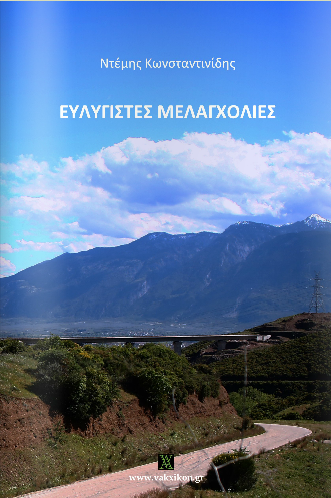
Ο Ντέμης Κωνσταντινίδης έφτασε στο λιμάνι το 2009. Το ανήσυχο ταξίδι τον έφερε αντιμέτωπο με λογής θηρία. Στο νησί φτάνοντας ναυαγός είχε να επιδείξει ήδη τέσσερις ποιητικές συλλογές και μία πανελλήνια βράβευση: Διαθέσεις (UniversityStudioPress, 2009), Ιχθύων λόγος (UniversityStudioPress, 2011), Κι όμως, γελούν καλύτερα οι τζίτζικες (UniversityStudioPress, 2013), Ευλύγιστες μελαγχολίες(Vakxikon, 2014).
Οι «ευλύγιστες μελαγχολίες» είναι μία συλλογή από ποιητικά θραύσματα. Ο δημιουργός πειραματίζεται με τον έμμετρο στίχο και την ομοιοκαταληξία και με τον ελεύθερο στίχο. Γνωρίζει ότι ο ελεύθερος στίχος δεν τον καθιστά ελεύθερο, αλλά του επιβάλλει τους δικούς του νόμους, ότι απαιτεί ρυθμό και έχει τη δική του τελετουργία. Επιμένει στο στίχο, εγκαταλείποντας το πεζολογικό ύφος και την ποιητική πρόζα. Ελλειπτικοί στίχοι αναδύουν την αγωνία για το παρόν και το μέλλον.

Η διατύπωσή του αποφθεγματική, με στίχους σπαράγματα, απότομους και κοφτούς που λειτουργούν ως κραυγής αγωνίας. Η σάτιρα αποτελεί ένα άλλο μέσο έκφρασης για τα σύγχρονα αδιέξοδα. Η Θεσσαλονίκη του παρόντος και των παθών βρίσκεται στο ποιητικό του επίκεντρο (κλειστά καταστήματα, πολύπαθη Εγνατία, Χαλκιδική). Η ανατροπή ακόμα στέκει μακριά, ο εξανδραποδισμός και οι ανθρωποθυσίες συναγωνίζονται την οργή, την απογοήτευση.

Θραύσματα εικόνων ξεπηδούν μέσα από τις λέξεις. Στίχοι αμφίσημοι, όπως ο δημόσιος λόγος. Η εικονοπλασία με τη δύναμη της εκφραστικής λιτότητας που τον διακρίνει γίνεται εκρηκτική. Η θάλασσα είναι πολλά υποσχόμενη, αλλά τελικά και τούτη συμμετέχει στην κοινωνική ένταση (αυτοκτονίες, ανεργία, σκληρές συνθήκες εργασίας). Ακόμα και η φύση μοιάζει να συνωμοτεί κατά του σύγχρονου ανθρώπου.
Η μελαγχολία των καιρών που διακρίνει όλη την κοινωνία αποτυπώνεται στον ποιητικό καμβά του Κωνσταντινίδη. Η απογοήτευση και η ελπίδα αποτυπώνονται με λέξεις αιμάτινες σαν τις πληγές του ποιητή που αγωνίζεται στην τρικυμία της φίλαυτης κι αντιπνευματικής κουλτούρας της ήττας. Κι όμως ο ποιητής συμμετέχει, δίνει το δικό του παρών στο κοινωνικό κάλεσμα. Απέναντι στον εφιάλτη όμως ο ποιητής αντιτάσσει την τέχνη με στόχο να αφυπνίσει από τη νάρκη. 

Η γενιά της κρίσης αντιστέκεται σθεναρά στην υποταγή και την αδιαφορία των σκοτεινών μας χρόνων. Ο ποιητής είναι μέλος της κοινωνίας, άνθρωπος των τεχνών και των γραμμάτων, βιώνει τα κοινωνικά πάθη, τους μετασχηματισμούς. Οι λέξεις είναι το δικό του μέσο για να εξωτερικεύσει το δικό του ψυχοσυναισθηματισμό. Άλλωστε, όπως έλεγε και ο Προυστ και «οι ποιητές ανατρέφονται με σκαμπίλια (της ζωής)»… Δρουν σε μία κοινωνία πόθων και βασάνων.

*Παρμένο από το http://tovivlio.net/%CE%AD%CE%BD%CE%B1%CF%82-%CE%B1%CE%BB%CF%8D%CE%B3%CE%B9%CF%83%CF%84%CE%BF%CF%82-%CF%80%CE%BF%CE%B9%CE%B7%CF%84%CE%AE%CF%82-%CE%BC%CE%B5-%CE%B5%CF%85%CE%BB%CF%8D%CE%B3%CE%B9%CF%83%CF%84%CE%B5/

Alyson Miller
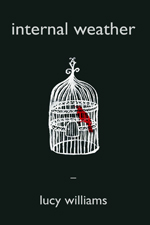
 reviews Lucy Williams’s Internal Weather

lucy-williams

Internal Weather
by Lucy Williams

Walleah Press, 2014

While Lucy Williams’s Internal Weather is split into the unavoidable cycle of life – birth, childhood, and death – the collection as a whole is a love song, a tribute to ‘difficult events’ and ‘unattended shadows’. The poems emphasise how the ‘forming of words’ and the ‘making of stories’ locates these instances in specific moments of memory and time. Indeed, love is the lung-set of Internal Weather: love for a child, first love, romantic love, love lost, love for the dead, love that ‘surprises … like religion’ and thickens ‘doubt into determination’.

Fittingly, then, much of Williams’s imagery, with its striking use of defamiliarisation, is embedded in notions of familial connection, which are simultaneously ethereal and visceral. There is the wonder of family in ‘baby’, for example, ‘how all of us / are linked by blood—by memory and hope’, and in ‘magnolia’, the ‘ghost’ of afterbirth, which ‘moves inside me again as though my heart has fallen’. It is this grounding in the bodily or the ‘real’ which resists Williams’s poetry, more often than not, from lapsing into sentimentalism – instead, this approach anchors notions of love and loss with a corporeality that is often as tragic as it is beautiful, if not domestic. This delicate balance is captured particularly well in ‘miscarriage’; ‘I’m sorry that you will never learn / about the human heart—unbuttoned / like a giant pocket’, and in ‘hindsight’; a haunting image of collision and death:

I would wish for death fast as new love
his car into a tree, windshield glass like
diamonds connecting with a face
a fall from a great height like a dream of falling.

The graceful fluidity of Internal Weather’s prose poems – sometimes fragmentary and elliptical, other times perfectly compressed micro-narratives – emphasises a storying of memory or operating as a keep-safe in its most literal understanding of protecting precious things. The poems are undoubtedly cohesive, but the distinct changes in style and form are suggestive of memoir in the epistolary tradition; or, more prosaically, a scrapbook. It is an image most evocatively captured in the poem ‘the place where things collect’ which describes ‘pine-needle memories’, flashes or pricks of history that culminate to define the generations of a family: ‘a girl on a swing’; a crying mother; ‘emotions boxed like groceries’; a birth that ‘filled her / with dumb animal love’; four funerals a reminder of ‘the people we want to protect but can’t’.

Williams writes of bodies and night skies, a child’s paintings and chasing dogs, ‘hearts bruised as oysters’ and ‘guilt like spoiled fruit’. These are ordinary things – the experiences and encounters of the everyday – but there is nothing clichéd about Internal Weather, with its constant hints of darkness and fear, and its underlying anxiety about the ease with which ‘the beginning or the end’ might occur. It is an edginess best observed in Williams’s talent for the simplicity of images that border on violence and despair that suggests the threat of an abyss from which the subject might not return: a ‘tiny coffin’ is likened to ‘a huge mistake in the arms of men’, while the silence of a dying son is ‘a baby / that wouldn’t stop screaming’. In the eponymous poem,

I am saddened, suddenly, by what is not here.
All of this internal weather
blueprints for every possible
thing aching in the rib cage.

The synthesis of materiality with the abstract denotes the quiet beauty of this collection. Rich with hearts that ache ‘like a caught fish’ and oceans that ‘boil over and dry up’, Internal Weather is, as noted, a song about love, but it is simultaneously an ode to small pains and large tragedies, ‘the phenomena of the earth’ and all those things ‘that shocked or floored us’.

*Alyson Miller teaches literary studies at Deakin University, Geelong. Her short stories and prose poetry have been published in both national and international publications, alongside a book of literary criticism, Haunted by Words. Her collection of prose poems, Dream Animals, is forthcoming.

**Taken from Cordite Poetry Review at http://www.cordite.org.au

John Jenkins
 reviews Chris Mansell’s, STUNG

cm-scan

STUNG

by Chris Mansell

Wellsprung Productions, 2014

Chris Mansell is a widely published poet with a lively range of interests, a multi-talented writer who bridges various creative worlds; her work sometimes fusing with music, the visual arts, and theatre. Her departure from a narrow specialisation in poetry is highly admirable, but may have made her somewhat under-appreciated both as an energetic innovator and important poet of her generation. Mansell’s first book of poetry appeared in 1978, and she has published more than 25 books and chapbooks in the intervening decades; while her Schadenvale Road, a collection of short stories, appeared in 2011.

STUNG represents a return to some of Mansell’s ongoing experimental concerns, foregrounding this vital dimension of her work. There is an obvious first clue in the typography, with the S of STUNG printed in grey ink, and TUNG (appropriately ‘sticking out’, as it does) in pink. Twin colours continue to alternate throughout the book.

STUNG consists of 72 square-shaped units of text, or ‘text tiles’, four of which are diagonally disposed across most of the book’s right hand pages. All the left-hand pages remain blank, providing a sort of conceptual breathing space.

Just one glance immediately reveals the pattern, with its ‘squads of quads’ joining across their adjacent corners, so one can read from one to the next, then down the page like stepping stones.

We have entered the territory of concrete poetry here, where the extreme formality of the book’s layout begins to shape content. Running counter to this, however, while cleverly mining a certain frisson it allows, the text itself – uniform within these severely formalistic, four-sided containers – immediately plunges readers into a stepping-down, breathless and heady onrush of words, entirely without punctuation. The expressionistic and often elevated lyricism of STUNG is thus held in a fine balance by the book’s formal restraint, and Oulipo meets concrete poetry in the service of conceptual play. But there is also passionate protest, mostly against the inescapable crap of life!

A lyrical passage which begins STUNG could refer to Sydney’s Circular Quay, or industrial port setting: ‘afternoon ferry hips a wharf goes feral in the light a wondrous jam of metal and wood ….’
The poem, after achieving very rapid liftoff, then rebukes two-faced summer: ‘… summer spilt hard on the street … promises futures summer lies its head off … summer you lying dog low smiling before you kill us you darer of fate and tickler of whim torch torturer wonder ….’

With tongue now fully free to sing or sting, we hear how many on Earth have been comprehensively stung (and in this context, conned). In the following ambiguous passage, summer’s rays of light seem glamorously life-enhancing at one moment, then like death-dealing military lasers the next: ‘… the glitzdom of over the edge of limelight of fantasms of lightfooted imaginary night spotlighting the flash of daylight an eyeflash straight to the brainstem arch over the edge … instant blisterglam ….’
STUNG then delivers a fusillade of pungent mini-diatribes against everything restricting and ugly in the human condition, including war, preventable global poverty, perceived crazy religions, the international arms trade, and particularly the one rule of thumb of economic exploitation. In these sections, images tumble chaotically: ‘… religion claiming the earth … fantastical dressups impress the poor dancing dreams around the ugly roofs … surely unbelievable to those who speak it as to those who hear … o god save something from the rubble if not truth then money render unto concrete what is abstraction power into glory into gore how it goes ….’

stung

Energy runs in tandem with much verbal invention, particularly towards the end, where we are left waiting, if not in God’s – then at least in Beckett’s – waiting room; waiting, that is, for things (not likely, on the evidence) to somehow improve: ‘ … next millennium gone to the hogs faster a violation wait waits waited waiting will wait was waiting will have waited will have to have waited…’.

STUNG is a spirited cry of protest, while remaining defiantly creative; and sympathetic too, to all those rowing in ever smaller circles in the same little tragi-comic boat on earth, or is that barb-wire canoe? This book is an excellent example of small-scale publishing, with care and attention to detail consistently evident, from concept to writing, through to text design, paper and binding.

*John Jenkins is best known as a poet. He also writes short fiction, non-fiction and occasionally for radio and live performance. He has worked as a journalist and book editor and taught in universities. He lives near Victoria’s Yarra Valley, and is widely travelled. His most recent poetry book is Growing up with Mr Menzies (John Leonard Press, 2008). Website: http://www.johnjenkins.com.au/

**Taken from Cordire Poetry Review at http://www.cordite.org.au

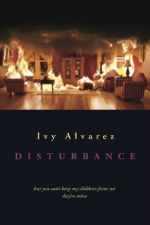
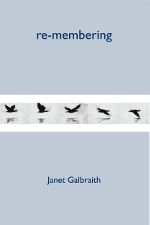
Andy Jackson Reviews Ivy Alvarez and Janet Galbraith

disturbance

galbraith

Disturbance
by Ivy Alvarez

Seren Books, 2013

re-membering
by Janet Galbraith

Walleah Press, 2013

How do we truly belong here on this continent, come to terms with our collective and personal history and build a genuine home for the future? And what of the ongoing legacy of violence on an intimate scale, by men against their partners and children – how can this be challenged and interrupted, changed into mutual trust? These are crucial questions; complicated and painful, yet unavoidable. Two new books recognise this and respond with what, to me, are poetry’s great strengths: the generation of an empathic interpersonal encounter, and that aching paradoxical space of both knowledge and productive ignorance.

Disturbance is Ivy Alvarez’s second collection of poetry. Its dedication to Dorothy Porter, Ai and Gwen Harwood is not at all surprising given that, Alvarez’s poems are comparably unflinching, unsettling and precise, exposing the horrors of family violence with an artistry that is always in the service of its compassion. Furthering the link with Porter’s work, it is also a verse novel, but a relatively unconventional one. Rather than following a linear progression, Disturbance throws us immediately into atrocity and its aftermath – the murder of a mother and a son by the father, who takes his own life, leaving a daughter alive. Each poem that follows is a fragment, retrospective and prospective, accumulating a picture of what we want to know but feel disturbed to approach – how did this happen?
When I began reading it, I assumed that the story at the heart of the book was fictional, a composite of many cases synthesised from research. Subsequently, I began to wonder how ‘real’ the poems were; in a way, attempting to measure the gap between poem and reality, I was reaching for the real, yearning for it. But Alvarez notes that Disturbance is ‘an imaginative retelling of and a response to actual events’. Like an exhibition of documentary photography, it presents framed yet incomplete impressions from particular perspectives, which confront us with the existence of the real while acknowledging the gap between an account and its source.

The book is both kaleidoscopic and choral. We are presented with the thoughts and memories of the mother, Jane; the police officers, in their enculturated impotence; the journalists, with their condensations and abstraction; and the son and daughter, with their confusion, bravery and cornered-ness. While the poet’s own aesthetic temperament gives them a certain consistency, each of these character voices is distinct and convincing. The grammar, vocabulary, emotional tone, punctuation and lineation, are all finely attuned to reflect their individual posture and energy. Yet the music of the poems is subtle and unobtrusive; Alvarez doesn’t want anything to overshadow what is being exposed and examined. Sentences are generally complete and naturalistic, a fusion of the mundane and the metaphoric, of the composed and the chaotic, which is quietly chilling:

My dinner rests warm in my belly.
I’ve just come in for my shift.
Familiar smell of old coffee,
stale sweat accumulates,
hovers near the ceiling.
…

‘What is the nature
of your emergency?’
Weariness
wears my voice.

But then she speaks.
I type quickly. I press buttons.

‘What is your address?’
The pads of my fingers prickle,
become slick. Keys slip beneath my skin.
(‘Operator’)

Appropriately, there are also occasions where the language itself breaks down or fragments. Here, the poetry draws on an almost risky knowingness and wit, but it never loses its focus and visceral impact, as in ‘The Detective Inspector II’, which begins ‘ – eyes make/in/cre/mental/adjustments/in the dark’. Or, in ‘Hannah’s Statement’, where the breath catches and is held in white space:

once after my brother ran
he placed my hand on his heart

Alvarez’s language is most chaotic and unmoored when we hear from Tony, the father, whose ‘own hands must do something’. His confusion and possessiveness seem fuelled by a profound detachment – of his self from his body and from others. If there is any summary of his motivation to be found, Alvarez provides it negatively, as Tony states: ‘there is no explanation for me’; ‘Real things seem untouchable to me’; ‘I pass for someone ordinary/someone who looks like me’ (‘Tony’). Near the end of the book, we spend quite some time in his mind, which is populated by familiar and archetypal metaphors of ‘red’, ‘hunting’ and ‘dark’, yet also with surreal and unexpected images, such as ‘dust that skims/across your eyeballs’, ‘the subdermal itch’, ‘rank/bin juice’, and an account of the aerodynamics of golf balls. These bring us closer to a kind of visceral intimacy, rather than understanding.

The one poem which I am still ambivalent about is ‘See Jane Run’. Here, the central murderous event of the book is depicted through the truncated sentences and simple language of the iconic children’s characters, Dick and Jane. While only two-thirds of a page and in short paragraphs, this prose-poem seems to be Alvarez’s way of conveying, through parody, the unconveyable horror. It’s an undeniably affecting poem, but one that I am not drawn to read again.

By contrast, ‘Disturbance’ compellingly revolves around a black hole at its core – the mundanity of evil and the seeming inevitability of violence. And the short poem that opens the book, ‘Inquest’ signals silence as a response to inexplicability:

Members of the family wept
as the coroner read out
her pleas for help.

Nothing softened as they cried.
The wood in the room stayed hard
and square.

The windows clear.
The stenographer impassive.
The spider under the bench
intent on its fly.

I say ‘seeming inevitability’, because while there is an echo of a kind of ‘natural’ hunter and prey in the poem’s chilling conclusion, and while the wood stays ‘hard/and square’, the reader is constantly drawn into a state of empathy and resistance. These events, condensed into black text with such articulate and meticulous white space around them, are given to us in all their horror as artefacts, made things, which can conceivably be unmade. It is Alvarez’s great talent to frustrate us, to refuse to provide easy explanations. The only possible response is outside the book.

This ambivalent and productive attitude towards resolution is also one of the key strengths of Janet Galbraith’s first collection of poetry, re-membering, another striking book from Walleah Press. The hyphen is crucial, and not only in the title – these poems are about connection, integration, drawing things together through acts of language. They are poems of process, where the reader observes (and participates in) movements towards healing, both familial and political, but always personal.
In this way, re-membering often reminds me of elements of Adrienne Rich’s poetry, where the public political world is always erupting into the quotidian, revealing the interpenetration of these spheres.

Galbraith is a tireless advocate for the rights and wellbeing of asylum seekers, including the Writing Through Fences project, so it is no surprise to see political concerns throughout this book, and an awareness of how language can make, unmake and remake. The poems touch on family violence, mental illness, hospitalisation, inherited trauma, belonging to land and country, as well as asylum seeker policies. But they are infused with a thoughtfulness and empathy, rather than didacticism.

The language here is reflective and poised, yet with an irresistible sense of immediacy and intimacy. Galbraith writes from places deep inside the body, places of hurt and desire. There is much at stake. But it is in a kind of post-confessional mode; she is not determined to reveal everything, but is forging a workable path forwards, recalibrating inheritance. The poems are generous and explicit, while always maintaining a productive gap between what the poet knows and what the reader might infer:

It is not that I forgive
your needy presence
the tortures
you placed upon my body
fed into my soul.

You who could have been
as the yellow box tree
outside my window
nourished by the decomposing debris
of what has been.
(‘Something Other’)

The addressee of this poem is never named, which makes reading the poem feel painfully intimate, almost voyeuristic, while paradoxically also giving it a sense of mobility that allows the reader to enter into it entirely – Galbraith’s ‘you’ is also my ‘you’. This is true of the collection overall, but occasionally we come upon poems which are very particular, such as ‘A shared knowing’ and ‘Listen to the children’, which quote from the poet’s mother and sister. Here, the vernacular is immediately familiar and moving (‘Mum can you do something nice for yourself today?’ and ‘I am lookin afta Janet’). The quotes are repeated, almost to the point of deconstruction, which amplifies the impact of what is left unsaid.
Galbraith’s meditations on personal history are interwoven with images of the non-human world, so that each speaks to the other, revealing connections and separations. In ‘The Pond’, the poet stands ‘in mud up to [her] thighs’, finds an old nail and feels ‘the pulse of stories’. The mud and the nail are actual and physical, while also pointing outwards to emotional and political realities. In her evocation of the human within nature, Galbraith at times edges towards romanticism, but her matter-of-fact delivery, which is also arrestingly clear and musical, ensures that the reader is placed within an encounter with the real. Birds appear often, never quite motif or symbol, but invariably in their actual presence. They offer not a way to escape from the world but a way of being able to live here:

And the magpies, the song and quarrelling of the magpies,
gurgling their song deep in their throat til it comes out open
and melodious. The day is here they call, the day is here. They
aren’t calling to me. I see the world go on without me …
… like that poppy popping
up in the weedy lawn – bright red, suddenly there. Not
blooming for me, but I noticed,
regarded its life, regarded its song.
(‘A love poem’)

Galbraith does not hesitate to use words like love and soul, as well as shit and cunt. In a sense, re-membering is an anti-poetic collection, and all the more poetic for it. Its primary focus is life rather than language; therefore, while its attention to language is profound, the poems are always viscerally felt. The poems often operate in the mode of mantra or prayer, journal entry or mini-essay. The poem ‘My body’ consists mostly of the refrain ‘my body my solace/my body my memory/my body’, a repetition that demands sensitivity and a slowing down on the part of the reader. It is a powerful poem of resonance and sound, resting uncomfortably on the page.

While there is overall a focus on the bodily and personal resonance of words, re-membering also includes some poems that show an alertness to the physicality of the page. ‘Disappearing Darling’ begins indented, then jolts to the left margin and the right, to drift slowly down and left – river-like, precipitous and sensual as the body it conjures. ‘Kookaburra’ throws the syllables of the bird in an arc across the page. ‘My friend’ is less surprising in its shape, with its curve echoing the pregnancy it describes, but effective and affecting nonetheless.

The very satisfying modesty and minimalism of these poems is only occasionally undercut by the inclusion of footnotes, which at times imply an overly enthusiastic determination to ensure the reader understands Galbraith’s intention; but this is a minor qualm, more of design than substance. re-membering is a book of poetry that understands ‘that to bring back the dead/is a slow and gentle thing’ (‘that one’). The dead, both departed people and unspoken experience, are brought into the light of language. This is poetry not as therapy but as an essential part of re-knitting the fabric of life. This re-knitting is by necessity incomplete and paradoxical, and (as with Alvarez’s writing) the reader is implicated and involved while the potential response is outside the book, in silence. Perhaps this poetics can best be summed up by quoting the final section of Galbraith’s poem, ‘Mother Love’, where parentheses allow the reader to experience both speech and silence: these ‘borrowed words/that soothe the fear/of speaking//what must (not) be said.’

*Andy Jackson’s collection, Among the Regulars (papertiger media, 2010) was shortlisted for the Kenneth Slessor Prize. His poems have appeared in Heat, Going Down Swinging, Island, The Age and Mascara. In 2011, he was an Asialink resident at Chennai, India, where he began a series of poems exploring the medical tourism industry. He blogs at http://amongtheregulars.wordpress.com

**Taken from Cordire Poetry Review at http://cordite.org.au/reviews/jackson-alvarez-galbraith/2/

Francesca Sasnaitis
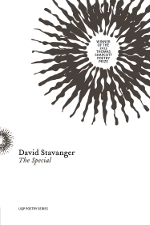
 reviews David Stavanger’s The Special

stavanger

The Special
by David Stavanger

UQP, 2014

David Stavanger won the 2013 Thomas Shapcott Poetry Prize. The resulting book, The Special, is his first full-length collection of poetry, and is dedicated to ‘the dead/ who are bravely living/ (and to those who wake wild-eyed in the dark)‘, a salute to people who suffer the acute distress of mental illness. Stavanger draws on his personal and professional experience as a psychologist to explore, communicate and transcend disjunctive states. He begins with a list of definitions for the word ‘special’, including the Latin ‘individual, particular’, the colloquial for sale-item, the euphemism for disability, and his own invention, the verb ‘to special’ meaning to observe patients on suicide-watch. The implication is clear: people with mental health issues are marginalised, ignored and discarded.

The Special is divided into six sections, Axis I to V, and an Appendix. Each section deals with an aspect of loss or disassociation, and generally contains a mix of verse and shorthand, staccato prose pieces.

‘Optimism’, the first poem of Axis I, quotes Oscar Wilde: ‘The basis of optimism is sheer terror.’ In other words, optimism is hope beyond reason, a step into fear. The tone of ‘when the plane crashes into the sea/ the sea is the least of your worries// the pilot announces/ I have nothing in front of me’ may appear cynical, but is actually a wide-eyed statement of fact, the utterance of which we usually keep to ourselves.

Continue reading →

Η ποιητική τομή του Αχιλλέα Κατσαρού

ceb7-cf87ceb5ceb9cf81cebfcf85cf81ceb3ceb9cebaceae-cf84cf89cebd-ceadcf83cf89-cebfcf85cf81ceb1cebdcf8ecebd

ΤΟΥ ΔΗΜΟΥ ΧΛΩΠΤΣΙΟΥΔΗ

Ο ποιητής είναι ένας πολεμιστής των γραμμάτων. Και όπως κάθε πολεμιστής προγυμνάζεται, έτσι και ο ποιητής μελετά την ποιητική παράδοση, τη γλώσσα, τρόπους έκφρασης και τάσεις σύγχρονες και προηγούμενες. Πολεμά με τον εαυτό του, με τα πάθη του, με την καθημερινότητα. Γιατί η τελική νίκη στη μάχη τούτη είναι να απελευθερώσει από τις αδυναμίες του και τον πολιτισμό της υποκουλτούρας έναν παράδρομο για τη μεταφορά λίθων προς τη νήσο της Ποίησης. Και με σισύφειο σθένος να συμβάλει προσωπικά προκειμένου να σωρευτούν νέες πέτρες σε κείνες των προηγούμενων ποιητών, ώστε να δημιουργηθεί μία νησίδα μέσα στον ωκεανό του εμπορευματοποιημένου τίποτα που μας κατακλύζει. 
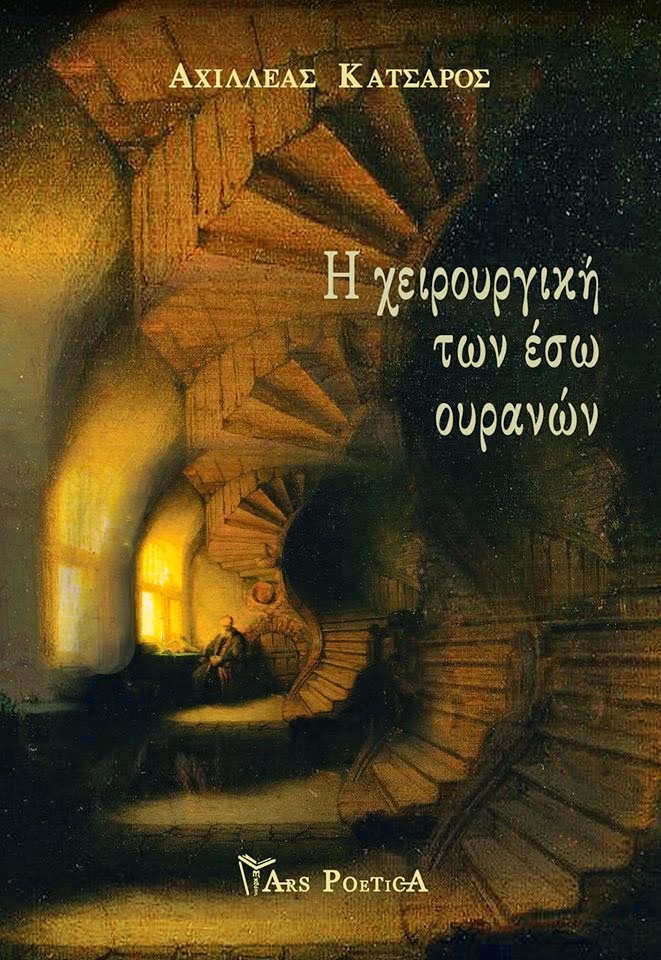
Ο Αχιλλέας Κατσαρός συμμετέχει με τη δική του συνθετική δύναμη στη δημιουργία τούτης της ποιητικής νησίδας.  Πρωτοεμφανίστηκε στα ελληνικά γράμματα με τη συλλογή “Ιχνηλάτες ανέμων” (2013) όπου με ένα πλούσιο υλικό απαντώνται ποιήματα σουρεαλιστικά δίπλα σε παραδοσιακά, συμβολικά έργα πλάι σε υπαρξιακά και άλλα κοινωνικής εφόρμησης με πολλές εμπνεύσεις. Ακολούθησε η δεύτερη συλλογή του από τις εκδόσεις Ars Poetica “Η χειρουργική των έσω ουρανών” (2014).

Η συλλογή απαρτίζεται από 42 συνθέσεις. Σύντομα ποιήματα διαδέχονται άλλα μέσης έκτασης. Μηνύματα άλλοτε σύντομα και κοφτά κι άλλες φορές περιγραφικά, όπου σκηνές φύσης συνδέονται με κλωνάρια κοινωνικών εικόνων συνθέτοντας ένα ποιητικό δέντρο. Εικόνες, σχεδόν σουρεαλιστικές, με συνειρμική σύνδεση, στολίζουν τους ποιητικούς του πίνακες.  

Continue reading →

βύρωνα λεοντάρη, μικρά αλλά μεγάλα πεζά

Από το φανταστικό ιστολόγιο της Χάρης Σταθάτου Σημειωματάριο Κήπων με πολλές και θερμές ευχαριστίες για τα πάντα.

βύρωνα λεοντάρη, μικρά αλλά μεγάλα πεζά.

Fiona Wright
 Reviews Ainslee Meredith’s Pinetorch and Joel Ephraims’s Through the Forest

meredith

ephraims

Pinetorch

by Ainslee Meredith

Australia Poetry / Express Media, 2013

Through the Forest

by Joel Ephraims

Australia Poetry / Express Media, 2013

The two latest chapbooks in Australian Poetry’s new voices series are remarkable because they occupy two very different kinds of poetic practice to equally interesting and impressive ends. Both are playful, and push against the boundaries of form, with a crisp lyric impulse at play in Meredith’s work and an almost psychedelic sensibility animating Ephraims’s collection.

Ainslee Meredith’s Pinetorch is a dreamy and dark collection of poems, deeply interested in the unconscious and the vaguely surreal. Many of the poems are allusive and slippery, connected by a gentle dream-logic that is perhaps most overt in the four prose poems interspersed across the book. Some of these work by accruing and then disturbing small and disconcerting details. ‘Idee Fixe’, for example, opens with the lines: ‘A long table in someone else’s nightmare. Three white plates, unused. Cutlery on a sideboard […] It rains outside, but someone has not dreamt of drainpipes.’

Continue reading →