…τριάντα πέντε εικαστικά σχόλια από τη Τζούλια Φορτούνη για το “Κλινικά Απών” της ευτυχώς Ποιητικά Παρούσας Χλόης Κουτσουμπέλη.
(το πρωτογενές υλικό των εικονοσυνθέσεων είναι από το deviantart.com)
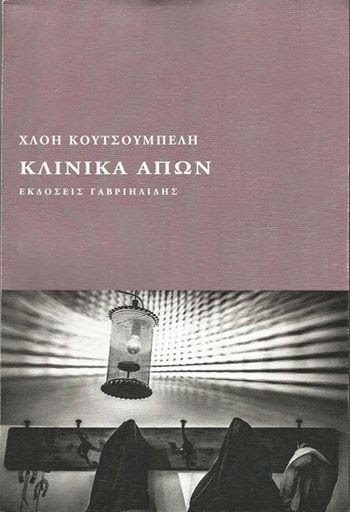
…τριάντα πέντε εικαστικά σχόλια από τη Τζούλια Φορτούνη για το “Κλινικά Απών” της ευτυχώς Ποιητικά Παρούσας Χλόης Κουτσουμπέλη.
(το πρωτογενές υλικό των εικονοσυνθέσεων είναι από το deviantart.com)
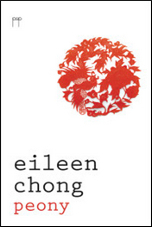
Peony
by Eileen Chong
Pitt Street Poetry, 2014
In a suite of three poems praising the legendary beauty, Consort Yang Guifei, the Tang poet Li Bai draws on the virtues of the peony, a flower that with its luxuriant petals and luminous colours embodies feminine beauty and allure. After Li Bai, the peony became a perennial bloom in Chinese poetry, with the mid-Tang poet Bai Juyi’s ‘Regret for Peony Flowers’ evoking the emotional nuances associated with it: ‘Saddened by the peonies before the steps, so red,/As evening came I found that only two remained./Once morning’s winds have blown, they surely won’t survive;/At night I gaze by lamplight, to cherish the fading red.’ The fragile beauty of the rose-like flower lies at the heart of Eileen Chong’s second collection of poems. In adopting the peony as the titular emblem, she not only affirms the flower as a prized literary icon, but also positions her work in the context of classical Chinese poetry, and in doing so articulates the complex relationship with tradition and origins that has informed her work since her debut collection, Burning Rice.
Chong’s ‘Only a Peony’ carries on the peony poem tradition, sensitive to the literary and cultural symbolism bestowed on the flower; however, it departs from the representations of it as a passive object of beauty subject to the male gaze. Instead, the apostrophic address treats the flower as a living subject:
Peony, Chinese rose, history taught me about you.
You adorn the headdresses of Manchurian princesses,
pinned above tassels that swung back and forth,
mimicking their mincing walk. An upturned bowl placed
under a platform, the sway of hands for balance. A fiction
of bound feet. Were you real, flower of fortune?
The poem questions traditional concepts of beauty in Chinese culture, and explores the intimate secrets of the flower without reducing it to a mere poetic emblem. The poem makes a switch from past to present tense in the succeeding stanzas, establishing a mood of contemplative enquiry, reinforced by a parallel shift from the second-person address to detached observations, evoking in the process not just ambivalent feelings about the flower, but also about the speaker, a modern Chinese woman poet, writing in a foreign culture and in a non-native language, doubly transplanted, first from her ancestral homeland in China, and from her place of birth, Singapore. Chong then wrenches the flower out of its Chinese context, and encounters it anew in a shophouse in her adopted country, where she sees ‘bottles containing the essence of peonies. Pivoine magnifica,/the magnificent peony.’ Here, Chong’s associative eye seizes a cross-cultural moment, juxtaposing Greek myth with Chinese legend, conjoining Paean (from which ‘peony’ is derived), the ‘Healer of the gods’, and Guan Yu, the Chinese martial god whose crimson face is ‘the shade of these peonies before they rot.’ The male gods here are glimpsed through the emblematic prism of a feminine icon, thus in a way reversing the male gaze. The poem ends with a surprising image of the flower appearing on a carpet; ‘a lady friend’ remarks, ‘China’s national flower’, to which the speaker replies, ‘Is it? Am I? I’ve forgotten.’ The conflation of the poet’s subjectivity and the flower recalls the peony’s cultural symbolism, but the questions and the uncertain voice at the end are deconstructive of inherited values.
Chong’s peony poem invokes remote literary forebears, but the affinities of the peony with the rose, and an epigraph from Matisse as well as the reference to the peony as a Chinese rose, reflect a more contemporary tutelary presence: the Asian-American poet Li-Young Lee. In his first collection Rose, Lee rings the changes on the floral image as he seeks to graft his Chinese heritage onto the American poetic tradition that he is now part of. Chong, in the opening poem of her collection, acknowledges Lee as an influence: ‘Chinese Singing’ owes its inspiration to Lee’s ‘I Ask My Mother to Sing’ in emotional theme and trope. In Lee’s poem, his mother and grandmother unite in a song that evokes a lost landscape – the China that they had fled. The use of the present tense, the absence of the father, and the figure of the listening poet suggest a matrilineal inheritance that has shaped the poet’s identity and work. At the end of the poem, Lee is still listening: ‘Both women have begun to cry./But neither stops her song.’ Chong’s poem establishes a dramatic setting of her family engaged in a karaoke session, the grandmother kicking off with her rendition of a song in Hakka, followed by her parents in Mandarin, the lyrics of the song undergoing translation as it is taken up in turns. This generational turn-taking suggests continuity and bond in the transmission of familial and cultural heritage; however, the translation process implies cultural metissage, and the fact that heritage is not possessed once and for all or passed down complete and whole, but renewed and altered in the act of migration. When it comes to the speaker’s turn, she sings not in her mother tongue, but in the language of the former colonisers of a country to which her ancestors had migrated, the only language she is at home in: ‘It is my turn to sing. I don’t know/any Chinese songs, so I sing in English./My family is listening.’ The song brings together three generations and languages, and the interstitial spaces between them create a liminal zone where the issues of postcoloniality, diasporic history, and the tangled webs of personal and cultural identity can be mapped out.
Chong’s ability to fuse the dramatic, narrative and lyric in the balance of line and form – already much in evidence in Burning Rice – allows her to address complex issues in a beguilingly simple way. Her attentive eye fashions from a few concrete particulars a whole mood or situation, and mundane occasions can trigger off sensuous contemplations of love and belonging. In ‘Evensong’ the domestic act and a simple object furnish a sort of ars poetica, mediating the conflicting claims of poetry and domestic commitments, and assuaging the migrant woman poet’s burden of memory and heritage: ‘A poem is a heavy thing. It weighs/as you scrub the potatoes,/rub them with salt, then decide/to boil them instead.’ Culinary motifs, abundant in her debut collection, persist here, enacting the relationship between food, memory and identity. In ‘Rice-dumplings’ the poet and her friend are ‘Reviving the art/of rice-dumplings in an inner-city apartment in Sydney/five minutes’ walk from Chinatown.’ The poem celebrates the food of memory, the contradictions and am-bivalence of being Chinese migrants living in Chinatown captured in the act of food preparation and consumption, as they eat, ‘marvelling at our true selves, so far, yet so close to home.’ With subtle irony, the poem dramatises the complex sense of home and belonging.
Another food poem is ‘Noodles in Hong Kong’, where Hong Kong, China and Singapore come together in a moment of poetic gastronomy made possible by a bowl of wonton or ‘swallowing clouds noodles’. In Burning Rice, the culinary moments revolve around the binary of Singapore and Australia, with spatial memories focusing more on the place of birth. Peony rehearses this binary but the attention is more balanced, and the poems given a more transnational and transcultural spin. The first two sections of the collection are anchored in family history and Singapore, revisiting in memory the places of childhood and resurrecting the figure of the grandfather; and the Confucian reflex in ‘Chinese Wake’, ‘Kumquat’, ‘Death-Houses’ and ‘Release’ enacts rites concerning the dead, foregrounding the poet’s ethnic commitments. While the first half of Peony locates Chinese identity in a Singapore context, the second half is informed by a movement towards global citizenship, as the well-travelled poems cover Rome, Paris, New York and San Fran-cisco, providing a contrapuntal motif to the return to roots and origins.
This transnational or cosmopolitan spatiality reveals an attempt to transcend the Singapore/Australia binary, but the more engaging poems are those that are rooted in Australian locales, more precisely, Sydney’s cityscapes. ‘El-Alamein, Kings Cross’ offers a vivid snap-shot of the iconic fountain: ‘A single child dangles his hand in the water. Mist wets my face/ like a benediction. The seagull bows, then rises in a blur of wings.’ The photographic instant is captured with the visual precision and economy of language characteristic of Tang poetry. The poetry is also attentive to the marginalised: ‘In the corner old Nick kneels before his oiled/wood-box. Yesterday, his birthday; today/the cardboard sign reads only “Home-less/Shoe Shine”.’ This is the heartland of Chong’s second home, and she is staking out her place in these poems of urban topography. In another street poem, ‘The Way Back’, the poet joins a crowd listening to a girl grinding out ‘Waltzing Matilda’ on a music box and is trans-ported momentarily to her childhood in Singapore, before arriving at the realisation: ‘We ad-vance step by slow step, discarding memories like the way back./At some point you must know: the past can no longer be relieved.’ There is a refusal of nostalgia but the feeling of loss and longing abides.
The spatial poetics in Peony offers new readings of place that extend and at the same time disrupt the binaries of past/present, home/elsewhere, Singapore/Australia established in Burning Rice. The naturalness of form, the fusion of image and emotion, the arresting metaphor and phrasing, and the unpretentious language ensure that the themes of love and death, migration and displacement, identity and belonging, are never broached in a portentous way, but are implicit in the occasion and the observed detail. There is weight and heft of subject matter (‘A poem is a heavy thing’), but as with good lyric poetry there is also grace and lightness, like the glass-blower’s art described in ‘Glass-blowing’, where the artisan ‘catches in a gloved hand the clear glass globe/in which swirls a cerulean sea.’ Perhaps Chong’s greatest strength derives from the fact that she is not afraid of feeling, and of capturing it in fitting form and imagery. Li-Young Lee declares in an interview: ‘I value feeling. I think a lot of times in North American poetry there is not a value of feeling.’ This is what Chong’s work offers: a poetry of feeling, rendered in luminous detail and language, alive to the sorrows and joys of daily living.
*Kim Cheng Boey has published five collections of poetry and a travel memoir. He teaches at the University of Newcastle.
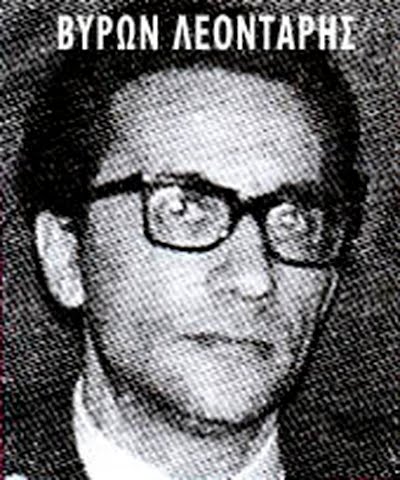
Aπό την «ποίηση της ήττας» στο «Kαβάφης ο έγκλειστος» δύο μικρές συλλογές που κυκλοφορούν εδώ και χρόνια ως αυτόνομα βιβλία
ΤΟΥ ΦΩΤΗ ΤΕΡΖΑΚΗ*
H συγκεντρωτική έκδοση των ποιητικών δοκιμίων του Bύρωνα Λεοντάρη, όσων έχουν γραφτεί από το 1971 κι εντεύθεν (εκτός από τα δύο δοκίμια για τον Kαβάφη που απαρτίζουν τον σχετικό τόμο), μας δίνει την ευκαιρία να επισκοπήσουμε το σύνολο της κριτικογραφίας του, η οποία συνοδεύει, πλαισιώνει και από πολλές πλευρές φωτίζει με ένα ερμηνευτικό φως την καθαυτό ποιητική του παραγωγή. Για λόγους πληρότητας ωστόσο, πριν συζητήσουμε το σώμα των κειμένων που περιέχει τούτη η έκδοση της Nεφέλης με τίτλο «Kείμενα για την ποίηση» (2001), θα ήταν σκόπιμο να ρίξουμε μια σύντομη ματιά στις δύο μικρές συλλογές που δεν έχουν περιληφθεί και οι οποίες, άλλωστε, κυκλοφορούν εδώ και χρόνια ως αυτόνομα βιβλία από τον «Eρασμο», με τους τίτλους «H ποίηση της ήττας» και «Kαβάφης ο έγκλειστος».
Eχουμε ξαναπεί πως η ουσιαστική ανυπαρξία θεωρητικού στοχασμού στην Eλλάδα είναι αποκαρδιωτικά εμφανής και στον χώρο της λογοτεχνικής κριτικογραφίας. Iδίως εδώ, μάλιστα, είναι που γίνεται οδυνηρό το παράδοξο, σε μια χώρα με πληθωρική πρωτογενή παραγωγή, κυρίως ποίησης και διηγηματογραφίας, να μην μπορεί να αναδειχθεί ένας αντίστοιχα σημαντικός και βαρύνων κριτικός λόγος. Kαι παραμένει διδακτικό επ’ αυτού το πολυπαρατηρημένο άλλωστε, ότι οι σημαντικότεροι κριτικογράφοι ήταν οι ίδιοι μείζονες ποιητές – παραδείγματον χάριν ο Παλαμάς, ο Σεφέρης…
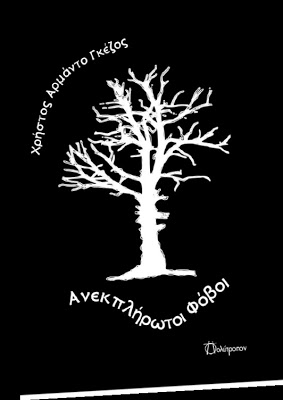
Η προσωπική ιστορία του Χρήστου, γραμμένη λιτά στο αυτί του πρώτου του βιβλίου Ανεκπλήρωτοι φόβοι, μιλά σε πολύ χαμηλούς τόνους για έναν νεαρό (26χρονο μόλις) Βορειοηπειρώτη, απόφοιτο του ΕΜΠ. Χάρηκα πολύ όταν την πρωτοδιάβασα. Μου άρεσε η ταπεινοφροσύνη που τη χαρακτηρίζει. Επιπλέον, το βρήκα εξαιρετικό που το κρατικό βραβείο δόθηκε σε έναν ποιητή με τέτοιο προφίλ: το γεγονός ανανέωσε την πίστη μου στον θεσμό. Και αυτό που τη βάθυνε, στη συνέχεια, ήταν η ανάγνωση των ποιημάτων της συλλογής, διότι πράγματι άξιζε βραβείο ο Γκέζος.
Αντίθετα με την προσωπική ιστορία του ποιητή στο αυτί του βιβλίου, οι ιστορίες που ο ίδιος αφηγείται μέσα από τα ποιήματά του δεν είναι γραμμένες σε χαμηλούς τόνους. Είναι επιτακτικές, ακανθώδεις, συχνά άβολες αφηγήσεις που πραγματεύονται την παραίτηση, τη μοναξιά, την αποξένωση, τη θλίψη. Είναι μάλλον εντυπωσιακό για έναν τόσο νέο άνθρωπο να μπορεί να μιλά με τέτοιο βάθος για όλα αυτά, να τα επισκέπτεται ξανά και ξανά από τόσο διαφορετικές οπτικές γωνίες. Ο ήρωάς του – και δεν θα πω ήρωας κατ’ ευφημισμόν, αν και θα μπορούσα, το γιατί θα το εξηγήσω αμέσως παρακάτω – βιώνει τα συναισθήματα και τις καταστάσεις που αφηγείται σαν να ΄ταν ομιλών νεκρός, όπως απερίφραστα δηλώνεται σε κάθε ευκαιρία. Παραδόξως, όμως, αυτός ο οιονεί νεκρός δεν διακατέχεται από καμία διάθεση παραίτησης.
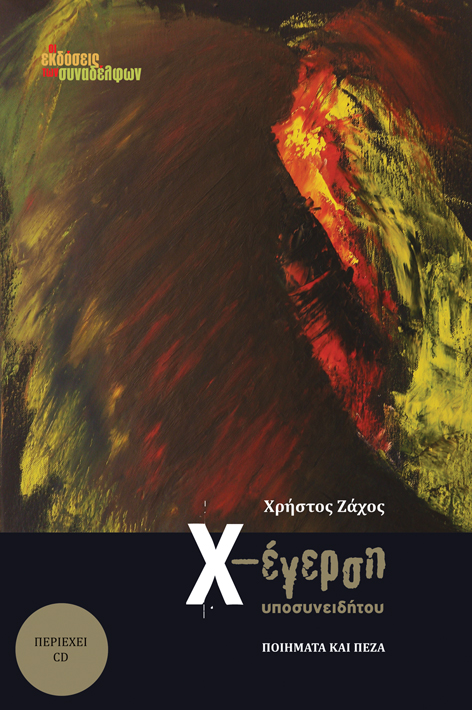
Το μικρό αυτό βιβλίο δεν είναι μία ακόμη ποιητική συλλογή, από τις πολλές που κυκλοφορούν. Ο προφανής λόγος είναι ότι περιέχει και πεζά κείμενα. Ο βαθύτερος είναι ότι τα γραπτά του Χρήστου Ζάχου (ποιήματα και πεζά) κρύβουν μέσα τους τη δύναμη που δηλώνεται ρητώς και στον τίτλο: τη δύναμη της εξέγερσης.
Μιας εξέγερσης που δεν έχει να κάνει υποχρεωτικά με συγκρούσεις στο δρόμο και με πολυπληθείς διαδηλώσεις, αλλά με μια εσωτερική διαδικασία αποτινάγματος των αλυσίδων που κρατούν τον άνθρωπο μακριά από την ουσία της ζωής: την ελευθερία. Ο έρωτας, η φιλία, η απόγνωση, η διαφορετικότητα, η ελευθερία είναι έννοιες πανταχού παρούσες σε ένα βιβλίο που διαβάζεται απολαυστικά και σημαδεύει βαθιά τον αναγνώστη.
Το βιβλίο συνοδεύεται από CD με μουσικές απαγγελίες.
*Ο Χρήστος Ζάχος, γεννήθηκε στην Αθήνα το 1978. Η πρώτη του εμφάνιση στα γράμματα ήταν το 2009 με την ποιητική συλλογή “Η νόσος της Ποίησης” από τις εκδόσεις Ίαμβος. Ακολούθησαν η “Κραταιά ως θάνατος αγάπη” με τον ίδιο εκδότη και “Οι εμπειρίες ενός πνιγμένου” το 2011 από τις εκδόσεις Γαβριηλίδης. Η “Χ–έγερση υποσυνειδήτου” είναι η νέα του λογοτεχνική δουλειά σε συνεργασία με τις Εκδόσεις των Συναδέλφων.
Kin
by Anne Elvey
Five Islands Press, 2014
The kinship Elvey forges between her poems and ecological criticism lends both rigour and reverence to her first full-length collection of poetry. There is a radiant stasis at the core of her poems that encourages the reader to listen to the susurration of multiple, overlapping conversations to which Elvey is contributing.
Elvey is a significant voice in Australian ecological theology. Her research and poetry blog, Leaf Litter, charts a series of important papers and pertinent thoughts about the link between ‘teaching, research and writing as a response to ecological crisis’. The most recent feature of this blog is Elvey’s presentation from the Ecofaith conference in May 2014, entitled ‘On (not) speaking about God ecologically’. In this paper, she considers scholarship on the kinship model, most importantly, extending eco-theologian Denis Edwards’ work on ‘challenging the model of domination and exploitation’. Elvey’s Kin puts into practice Edwards’ suggestion that we ‘have much to learn about kin-ship from the traditional cultures of indigenous peoples.’ Her ‘Claimed by Country’ sequence addresses, in her own words, her responses as:
a non-Aboriginal woman to the places I lived in and visited and my sense
of being “claimed” in part through a practice of attentiveness to the places that
are “country” for their Aboriginal, traditional owners.
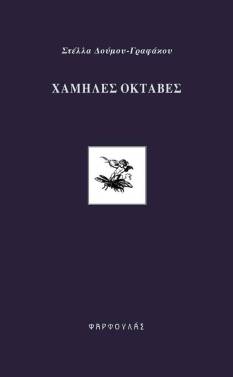
Η Στέλλα Δούμου γεννήθηκε το 1962 στην Αθήνα και κατάγεται από τη Μάνη. Ποιήματά της έχουν συμπεριληφθεί στη συλλογική έκδοση Craftbook 2013 (εκδ. Γαβριηλίδης) και έχουν δημοσιευτεί στο διαδίκτυο. Το ανά χείρας βιβλίο, Χαμηλές Οκτάβες περιλαμβάνει δυο συλλογές, την ομώνυμη βραβευμένη συλλογή και τη συλλογή Μέλισσες σφουγγαρίζουν τις κοιλάδες.
Η ποιητική γραφή της χαρακτηρίζεται από έντονη μεταφορικότητα, καλυμμένα νοήματα, προσφυγές σε μυθικές προσωπικότητες και μυθικά γεγονότα αλλά και χρήση εικόνων που εκφράζουν τις ψυχοσυναισθηματικές εντάσεις του ποιητικού υποκειμένου. Παρόλα αυτά, οι «ποιητικές οκτάβες» παραμένουν χαμηλές μιας και η ένταση των συναισθημάτων συγκρατείται δικαιολογώντας και τον τίτλο της συλλογής.
Οι λέξεις που χρησιμοποιεί είναι ανεπιτήδευτες και απλές, κατορθώνει όμως να συνθέσει ποιήματα υπαρξιακά, που απαιτούν πολλαπλές αναγνώσεις για να γίνουν κτήμα του αναγνώστη. Η γραφή της Δούμου είναι απαιτητική, σε αναγκάζει να απομονωθείς από το περιβάλλον, να σκεφτείς, να βυθιστείς στα νοήματά της και να τα αποκρυπτογραφήσεις. Σε προσκαλεί σε ένα απόκοσμο πολλές φορές ταξίδι με πρόσωπα υπαρκτά και φανταστικά, πρόσωπα όπως ο Φεντερίκο Γκαρσία Λόρκα, ο Πινόκιο, η Άννα Μπόλειν, σε ένα παιχνίδι λέξεων και νοημάτων.
Ξεχώρισα το ποίημα Πινόκιο, «Σκουριασμένο σούρουπο με θύλακες νύχτας να παραμονεύουν γωνία ασήμαντης οδού και βορεινής ακτής μιας σύμπτωσης, άγγιξες την άκρη του βιαστικού παλτού μου και σταμάτησες. Φύσηξε λίγο μια άρρωστη νιότη πολύ λίγο, να, ώσπου να πάρεις σχήμα.»
Στεφανία Κοκκόση
*Από το Βακχικόν στο http://www.vkxikon.gr
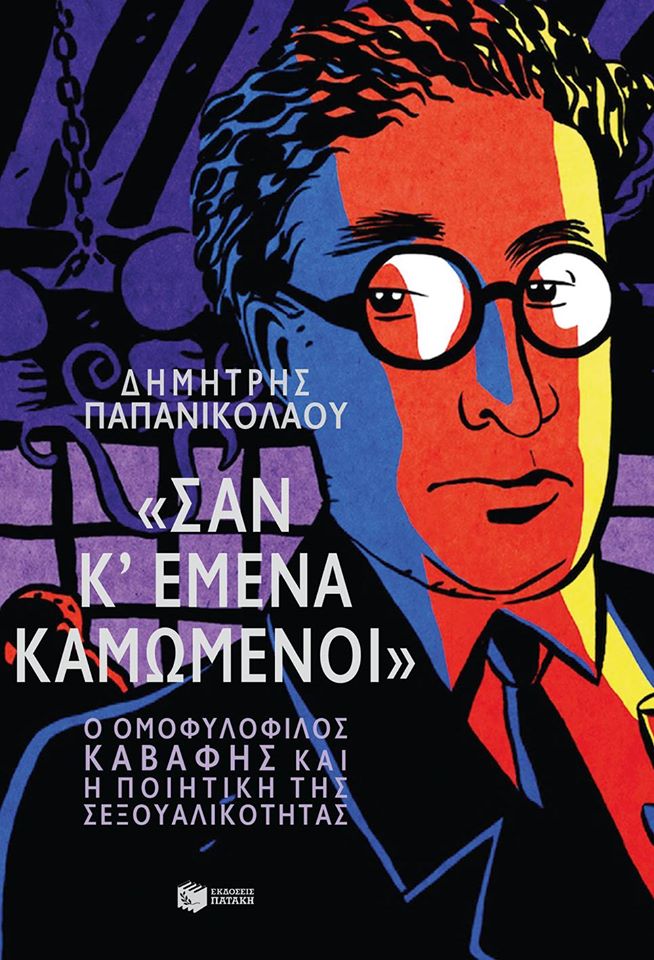
Έχουμε συνηθίσει να θεωρούμε ότι η καβαφική ποιητική ενέργεια παράγεται επειδή ο Καβάφης προσπάθησε να βρει λοχμώδεις τρόπους για να αποφύγει την κοινωνική κατακραυγή, τον καταπιεσμένο έρωτα ή το στίγμα της αντικανονικής σεξουαλικότητας. Το βιβλίο αυτό υποστηρίζει το αντίθετο. Τον Καβάφη η σεξουαλικότητα δεν τον κάνει να θέλει να κρυφτεί. Τον κάνει να συνειδητοποιεί και να ιστορικοποιεί. Δεν τον κάνει να αλληγορεί και να σιωπά. Τον κάνει να αντιδρά.
Να, λοιπόν, για τι μιλάει αυτό το βιβλίο. Για την καβαφική “κάμαρη” και την κατασκευή της. Για την καβαφική ορμή και τη ριζοσπαστική της δυναμική. Για τον πόθο, την επιθυμία, την ηδονή, και το πώς αυτά συνδέονται με τη σεξουαλικότητα, την ταυτότητα και την πολιτική! Για το πώς γενιές κριτικών προτίμησαν να μιλούν για ερωτισμό και ερωτικότητα ακριβώς για να μην αντιμετωπίσουν τη ριζοσπαστική δυναμική της σεξουαλικότητας και της ταυτότητας στο έργο του Καβάφη. Και για τη βαθιά ηθική στιγμή με την οποία σε φέρνει αντιμέτωπο -σε πείσμα όσων δεν μπορούν να την κατανοήσουν- η σεξουαλική επιθυμία και η αναπόφευκτη σύνδεση της με τον χρόνο, την εξουσία, τη γνώση και την επαφή.
Ο Δημήτρης Παπανικολάου είναι αναπληρωτής καθηγητής Νεοελληνικών Σπουδών και εταίρος του Κολεγίου St Cross στο Πανεπιστήµιο της Οξφόρδης, όπου διδάσκει από το 2004. Σπούδασε στα πανεπιστήµια Αθηνών (Κλασική και Νεοελληνική Φιλολογία) και Λονδίνου (Συγκριτική Φιλολογία). Ως ερευνητής ή επισκέπτης καθηγητής έχει συνεργαστεί µε τα πανεπιστήµια UCL, NYU, Columbia και Princeton. Έχει επίσης εργαστεί ως δηµοσιογράφος στην εφηµερίδα «Επενδυτής» και στην Ελληνική Υπηρεσία του BBC. Στα αγγλικά κυκλοφορεί το βιβλίο του «Singing Poets: Literature and Popular Music in France and Greece» (Legenda, 2007). Μέλος της συντακτικής ομάδας του περιοδικού «Unfollow» και της εκδοτικής επιτροπής του Journal of Greek Media and Culture· τακτικός συνεργάτης της Αυγής.
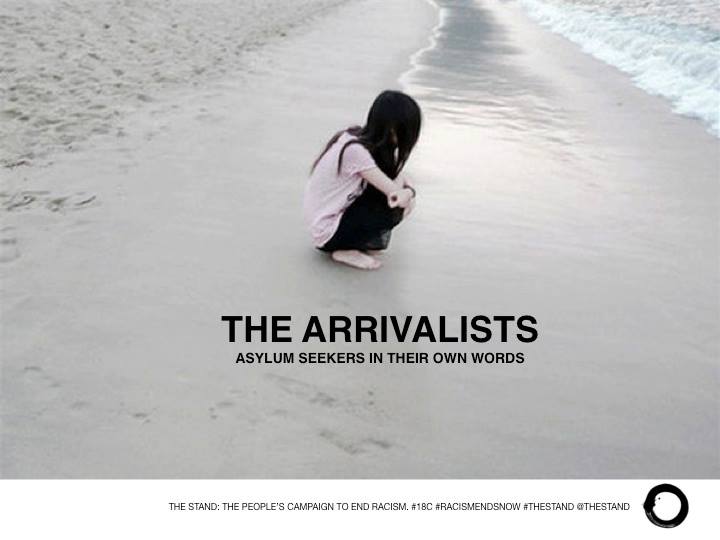
Writing Through Fences, is a writing group primarily made up of people who are or have been directly affected by the Australian immigration industry. It was established in 2013 by Janet Galbraith.
The name Writing Through Fences refers to the ability of writers and artists to reach beyond fences and walls that attempt to contain, define and silence them. The name also situates this group within the long colonial practices of division of country, of displacement and incarceration characteristic of Australia’s ongoing racist history. Writing Through Fences recognises that we live, create and are imprisoned on stolen lands.
Integrity of the writer/artist’s voice is integral to WTF, thus each writer/artist plays an active and determining role in how the group evolves and whether, when, where and how work is published or presented. Arbitrary detention removes an individuals power to make decisions about their own lives – even the most intimate of matters – thus control over voice and representation are not only essential to the individual writer/artist but constitute a breach of the divisive and destructive aims of arbitrary detention. As these writers and artists voices breach the walls that would confine them, those outside the fences are challenged to listen and re-connect.
Throughout history, writing and art-making have been a matter of life and death. Some of these writers and artists have fled persecution and torture as a direct result of their creative work. The writers and artists of Writing Through Fences engage in acts of creation in order to remain alive, in order to survive. Through these creative acts they bear witness to the practices and policies that are played out on their bodies and psyches, practices and policies that would deny their very existence by presenting them as, what one young writers terms, ‘the waste of population’(S. 2014).
Over the past eleven months the group has grown into a strong community of creativity and support. It has become a place of refuge for many. Writing and art-making is an enlivening process where the practitioners are able to define and re-create selves that reach beyond and before the current violences they are experiencing, asserting their different experiences, personalities, styles, histories and literary traditions.
Creation is necessary in all times of destruction. It is necessary to ward off the killing effects of despair. It is necessary in order to assert humanity and sanity within an inhumane and insane system that actively attempts to destroy both of these.
You can find our work at http://thearrivalists.tumblr.com/. If you wish to support this group you can find Friends of Writing Through Fences at https://www.facebook.com/friendsofWTF
To contact Janet Galbraith: galbraith_janet@yahoo.com.au
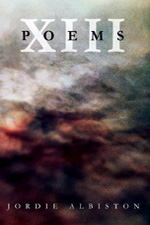
XIII Poems
by Jordie Albiston
Rabbit Poet Series, 2013
XIII Poems might be seen as a snapshot of what Albiston’s main concerns have been since Botany Bay Document (1996) appeared culminating with, I think, Vertigo (2007). Her publications since the mid-2000s reflect on similar concerns but with more biographical tones. Albiston’s main interests have been history, limitations or framed lives, their voices and interpretations of them, often using easily located words to tie groups of poems (‘heart,’ ‘black,’ and ‘white’ feature in XIII Poems).
These Albiston poems, however, have arrived with a stated purpose to them. XIII Poems has been published as the first volume of Rabbit Poets Series of ‘non-fiction’ poetry books, raising some old questions about the relationship between artistic intention and works of art as constructed artefacts. I tried to find a way into the issue via Anthony Savile’s 1969 essay to which I keep returning, ‘The Place of Intention in the Concept of Art.’1

