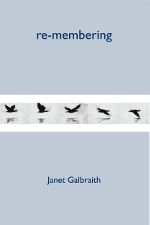
Andy Jackson Reviews Ivy Alvarez and Janet Galbraith

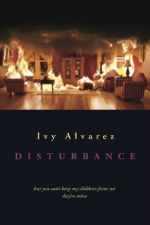
disturbance

galbraith

Disturbance
by Ivy Alvarez

Seren Books, 2013

re-membering
by Janet Galbraith

Walleah Press, 2013

How do we truly belong here on this continent, come to terms with our collective and personal history and build a genuine home for the future? And what of the ongoing legacy of violence on an intimate scale, by men against their partners and children – how can this be challenged and interrupted, changed into mutual trust? These are crucial questions; complicated and painful, yet unavoidable. Two new books recognise this and respond with what, to me, are poetry’s great strengths: the generation of an empathic interpersonal encounter, and that aching paradoxical space of both knowledge and productive ignorance.

Disturbance is Ivy Alvarez’s second collection of poetry. Its dedication to Dorothy Porter, Ai and Gwen Harwood is not at all surprising given that, Alvarez’s poems are comparably unflinching, unsettling and precise, exposing the horrors of family violence with an artistry that is always in the service of its compassion. Furthering the link with Porter’s work, it is also a verse novel, but a relatively unconventional one. Rather than following a linear progression, Disturbance throws us immediately into atrocity and its aftermath – the murder of a mother and a son by the father, who takes his own life, leaving a daughter alive. Each poem that follows is a fragment, retrospective and prospective, accumulating a picture of what we want to know but feel disturbed to approach – how did this happen?
When I began reading it, I assumed that the story at the heart of the book was fictional, a composite of many cases synthesised from research. Subsequently, I began to wonder how ‘real’ the poems were; in a way, attempting to measure the gap between poem and reality, I was reaching for the real, yearning for it. But Alvarez notes that Disturbance is ‘an imaginative retelling of and a response to actual events’. Like an exhibition of documentary photography, it presents framed yet incomplete impressions from particular perspectives, which confront us with the existence of the real while acknowledging the gap between an account and its source.

The book is both kaleidoscopic and choral. We are presented with the thoughts and memories of the mother, Jane; the police officers, in their enculturated impotence; the journalists, with their condensations and abstraction; and the son and daughter, with their confusion, bravery and cornered-ness. While the poet’s own aesthetic temperament gives them a certain consistency, each of these character voices is distinct and convincing. The grammar, vocabulary, emotional tone, punctuation and lineation, are all finely attuned to reflect their individual posture and energy. Yet the music of the poems is subtle and unobtrusive; Alvarez doesn’t want anything to overshadow what is being exposed and examined. Sentences are generally complete and naturalistic, a fusion of the mundane and the metaphoric, of the composed and the chaotic, which is quietly chilling:

My dinner rests warm in my belly.
I’ve just come in for my shift.
Familiar smell of old coffee,
stale sweat accumulates,
hovers near the ceiling.

‘What is the nature
of your emergency?’
Weariness
wears my voice.

But then she speaks.
I type quickly. I press buttons.

‘What is your address?’
The pads of my fingers prickle,
become slick. Keys slip beneath my skin.
(‘Operator’)

Appropriately, there are also occasions where the language itself breaks down or fragments. Here, the poetry draws on an almost risky knowingness and wit, but it never loses its focus and visceral impact, as in ‘The Detective Inspector II’, which begins ‘ – eyes make/in/cre/mental/adjustments/in the dark’. Or, in ‘Hannah’s Statement’, where the breath catches and is held in white space:

once after my brother ran
he placed my hand on his heart

Alvarez’s language is most chaotic and unmoored when we hear from Tony, the father, whose ‘own hands must do something’. His confusion and possessiveness seem fuelled by a profound detachment – of his self from his body and from others. If there is any summary of his motivation to be found, Alvarez provides it negatively, as Tony states: ‘there is no explanation for me’; ‘Real things seem untouchable to me’; ‘I pass for someone ordinary/someone who looks like me’ (‘Tony’). Near the end of the book, we spend quite some time in his mind, which is populated by familiar and archetypal metaphors of ‘red’, ‘hunting’ and ‘dark’, yet also with surreal and unexpected images, such as ‘dust that skims/across your eyeballs’, ‘the subdermal itch’, ‘rank/bin juice’, and an account of the aerodynamics of golf balls. These bring us closer to a kind of visceral intimacy, rather than understanding.

The one poem which I am still ambivalent about is ‘See Jane Run’. Here, the central murderous event of the book is depicted through the truncated sentences and simple language of the iconic children’s characters, Dick and Jane. While only two-thirds of a page and in short paragraphs, this prose-poem seems to be Alvarez’s way of conveying, through parody, the unconveyable horror. It’s an undeniably affecting poem, but one that I am not drawn to read again.

By contrast, ‘Disturbance’ compellingly revolves around a black hole at its core – the mundanity of evil and the seeming inevitability of violence. And the short poem that opens the book, ‘Inquest’ signals silence as a response to inexplicability:

Members of the family wept
as the coroner read out
her pleas for help.

Nothing softened as they cried.
The wood in the room stayed hard
and square.

The windows clear.
The stenographer impassive.
The spider under the bench
intent on its fly.

I say ‘seeming inevitability’, because while there is an echo of a kind of ‘natural’ hunter and prey in the poem’s chilling conclusion, and while the wood stays ‘hard/and square’, the reader is constantly drawn into a state of empathy and resistance. These events, condensed into black text with such articulate and meticulous white space around them, are given to us in all their horror as artefacts, made things, which can conceivably be unmade. It is Alvarez’s great talent to frustrate us, to refuse to provide easy explanations. The only possible response is outside the book.

This ambivalent and productive attitude towards resolution is also one of the key strengths of Janet Galbraith’s first collection of poetry, re-membering, another striking book from Walleah Press. The hyphen is crucial, and not only in the title – these poems are about connection, integration, drawing things together through acts of language. They are poems of process, where the reader observes (and participates in) movements towards healing, both familial and political, but always personal.
In this way, re-membering often reminds me of elements of Adrienne Rich’s poetry, where the public political world is always erupting into the quotidian, revealing the interpenetration of these spheres.

Galbraith is a tireless advocate for the rights and wellbeing of asylum seekers, including the Writing Through Fences project, so it is no surprise to see political concerns throughout this book, and an awareness of how language can make, unmake and remake. The poems touch on family violence, mental illness, hospitalisation, inherited trauma, belonging to land and country, as well as asylum seeker policies. But they are infused with a thoughtfulness and empathy, rather than didacticism.

The language here is reflective and poised, yet with an irresistible sense of immediacy and intimacy. Galbraith writes from places deep inside the body, places of hurt and desire. There is much at stake. But it is in a kind of post-confessional mode; she is not determined to reveal everything, but is forging a workable path forwards, recalibrating inheritance. The poems are generous and explicit, while always maintaining a productive gap between what the poet knows and what the reader might infer:

It is not that I forgive
your needy presence
the tortures
you placed upon my body
fed into my soul.

You who could have been
as the yellow box tree
outside my window
nourished by the decomposing debris
of what has been.
(‘Something Other’)

The addressee of this poem is never named, which makes reading the poem feel painfully intimate, almost voyeuristic, while paradoxically also giving it a sense of mobility that allows the reader to enter into it entirely – Galbraith’s ‘you’ is also my ‘you’. This is true of the collection overall, but occasionally we come upon poems which are very particular, such as ‘A shared knowing’ and ‘Listen to the children’, which quote from the poet’s mother and sister. Here, the vernacular is immediately familiar and moving (‘Mum can you do something nice for yourself today?’ and ‘I am lookin afta Janet’). The quotes are repeated, almost to the point of deconstruction, which amplifies the impact of what is left unsaid.
Galbraith’s meditations on personal history are interwoven with images of the non-human world, so that each speaks to the other, revealing connections and separations. In ‘The Pond’, the poet stands ‘in mud up to [her] thighs’, finds an old nail and feels ‘the pulse of stories’. The mud and the nail are actual and physical, while also pointing outwards to emotional and political realities. In her evocation of the human within nature, Galbraith at times edges towards romanticism, but her matter-of-fact delivery, which is also arrestingly clear and musical, ensures that the reader is placed within an encounter with the real. Birds appear often, never quite motif or symbol, but invariably in their actual presence. They offer not a way to escape from the world but a way of being able to live here:

And the magpies, the song and quarrelling of the magpies,
gurgling their song deep in their throat til it comes out open
and melodious. The day is here they call, the day is here. They
aren’t calling to me. I see the world go on without me …
… like that poppy popping
up in the weedy lawn – bright red, suddenly there. Not
blooming for me, but I noticed,
regarded its life, regarded its song.
(‘A love poem’)

Galbraith does not hesitate to use words like love and soul, as well as shit and cunt. In a sense, re-membering is an anti-poetic collection, and all the more poetic for it. Its primary focus is life rather than language; therefore, while its attention to language is profound, the poems are always viscerally felt. The poems often operate in the mode of mantra or prayer, journal entry or mini-essay. The poem ‘My body’ consists mostly of the refrain ‘my body my solace/my body my memory/my body’, a repetition that demands sensitivity and a slowing down on the part of the reader. It is a powerful poem of resonance and sound, resting uncomfortably on the page.

While there is overall a focus on the bodily and personal resonance of words, re-membering also includes some poems that show an alertness to the physicality of the page. ‘Disappearing Darling’ begins indented, then jolts to the left margin and the right, to drift slowly down and left – river-like, precipitous and sensual as the body it conjures. ‘Kookaburra’ throws the syllables of the bird in an arc across the page. ‘My friend’ is less surprising in its shape, with its curve echoing the pregnancy it describes, but effective and affecting nonetheless.

The very satisfying modesty and minimalism of these poems is only occasionally undercut by the inclusion of footnotes, which at times imply an overly enthusiastic determination to ensure the reader understands Galbraith’s intention; but this is a minor qualm, more of design than substance. re-membering is a book of poetry that understands ‘that to bring back the dead/is a slow and gentle thing’ (‘that one’). The dead, both departed people and unspoken experience, are brought into the light of language. This is poetry not as therapy but as an essential part of re-knitting the fabric of life. This re-knitting is by necessity incomplete and paradoxical, and (as with Alvarez’s writing) the reader is implicated and involved while the potential response is outside the book, in silence. Perhaps this poetics can best be summed up by quoting the final section of Galbraith’s poem, ‘Mother Love’, where parentheses allow the reader to experience both speech and silence: these ‘borrowed words/that soothe the fear/of speaking//what must (not) be said.’

*Andy Jackson’s collection, Among the Regulars (papertiger media, 2010) was shortlisted for the Kenneth Slessor Prize. His poems have appeared in Heat, Going Down Swinging, Island, The Age and Mascara. In 2011, he was an Asialink resident at Chennai, India, where he began a series of poems exploring the medical tourism industry. He blogs at http://amongtheregulars.wordpress.com

**Taken from Cordire Poetry Review at http://cordite.org.au/reviews/jackson-alvarez-galbraith/2/
Francesca Sasnaitis
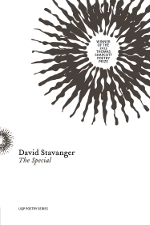
 reviews David Stavanger’s The Special

stavanger

The Special
by David Stavanger

UQP, 2014

David Stavanger won the 2013 Thomas Shapcott Poetry Prize. The resulting book, The Special, is his first full-length collection of poetry, and is dedicated to ‘the dead/ who are bravely living/ (and to those who wake wild-eyed in the dark)‘, a salute to people who suffer the acute distress of mental illness. Stavanger draws on his personal and professional experience as a psychologist to explore, communicate and transcend disjunctive states. He begins with a list of definitions for the word ‘special’, including the Latin ‘individual, particular’, the colloquial for sale-item, the euphemism for disability, and his own invention, the verb ‘to special’ meaning to observe patients on suicide-watch. The implication is clear: people with mental health issues are marginalised, ignored and discarded.

The Special is divided into six sections, Axis I to V, and an Appendix. Each section deals with an aspect of loss or disassociation, and generally contains a mix of verse and shorthand, staccato prose pieces.

‘Optimism’, the first poem of Axis I, quotes Oscar Wilde: ‘The basis of optimism is sheer terror.’ In other words, optimism is hope beyond reason, a step into fear. The tone of ‘when the plane crashes into the sea/ the sea is the least of your worries// the pilot announces/ I have nothing in front of me’ may appear cynical, but is actually a wide-eyed statement of fact, the utterance of which we usually keep to ourselves.

Continue reading

Η ποιητική τομή του Αχιλλέα Κατσαρού

ceb7-cf87ceb5ceb9cf81cebfcf85cf81ceb3ceb9cebaceae-cf84cf89cebd-ceadcf83cf89-cebfcf85cf81ceb1cebdcf8ecebd

ΤΟΥ ΔΗΜΟΥ ΧΛΩΠΤΣΙΟΥΔΗ

Ο ποιητής είναι ένας πολεμιστής των γραμμάτων. Και όπως κάθε πολεμιστής προγυμνάζεται, έτσι και ο ποιητής μελετά την ποιητική παράδοση, τη γλώσσα, τρόπους έκφρασης και τάσεις σύγχρονες και προηγούμενες. Πολεμά με τον εαυτό του, με τα πάθη του, με την καθημερινότητα. Γιατί η τελική νίκη στη μάχη τούτη είναι να απελευθερώσει από τις αδυναμίες του και τον πολιτισμό της υποκουλτούρας έναν παράδρομο για τη μεταφορά λίθων προς τη νήσο της Ποίησης. Και με σισύφειο σθένος να συμβάλει προσωπικά προκειμένου να σωρευτούν νέες πέτρες σε κείνες των προηγούμενων ποιητών, ώστε να δημιουργηθεί μία νησίδα μέσα στον ωκεανό του εμπορευματοποιημένου τίποτα που μας κατακλύζει. 
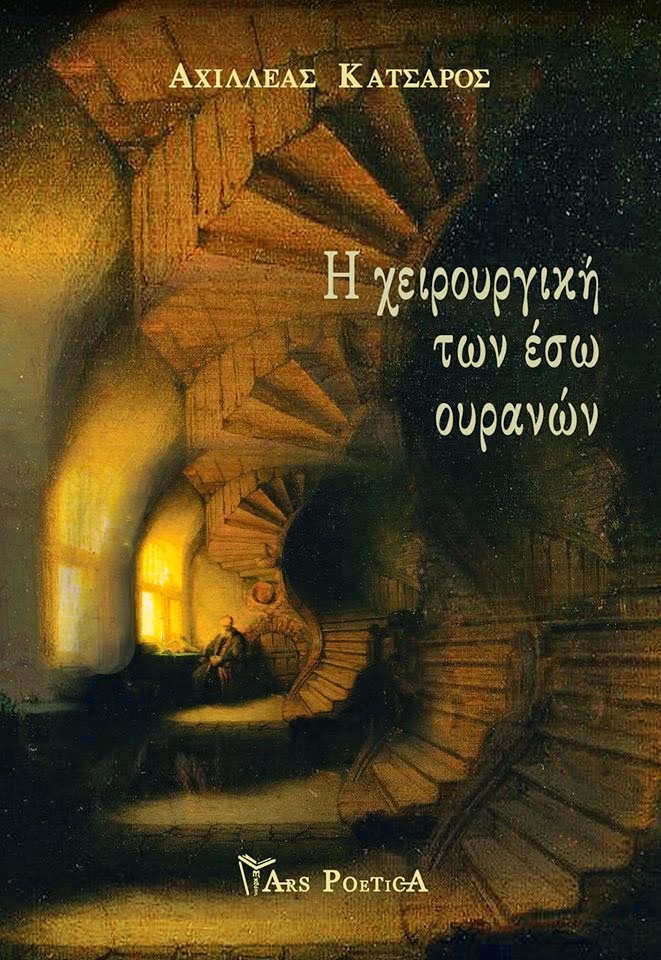
Ο Αχιλλέας Κατσαρός συμμετέχει με τη δική του συνθετική δύναμη στη δημιουργία τούτης της ποιητικής νησίδας.  Πρωτοεμφανίστηκε στα ελληνικά γράμματα με τη συλλογή “Ιχνηλάτες ανέμων” (2013) όπου με ένα πλούσιο υλικό απαντώνται ποιήματα σουρεαλιστικά δίπλα σε παραδοσιακά, συμβολικά έργα πλάι σε υπαρξιακά και άλλα κοινωνικής εφόρμησης με πολλές εμπνεύσεις. Ακολούθησε η δεύτερη συλλογή του από τις εκδόσεις Ars Poetica “Η χειρουργική των έσω ουρανών” (2014).

Η συλλογή απαρτίζεται από 42 συνθέσεις. Σύντομα ποιήματα διαδέχονται άλλα μέσης έκτασης. Μηνύματα άλλοτε σύντομα και κοφτά κι άλλες φορές περιγραφικά, όπου σκηνές φύσης συνδέονται με κλωνάρια κοινωνικών εικόνων συνθέτοντας ένα ποιητικό δέντρο. Εικόνες, σχεδόν σουρεαλιστικές, με συνειρμική σύνδεση, στολίζουν τους ποιητικούς του πίνακες.  

Continue reading

βύρωνα λεοντάρη, μικρά αλλά μεγάλα πεζά

Από το φανταστικό ιστολόγιο της Χάρης Σταθάτου Σημειωματάριο Κήπων με πολλές και θερμές ευχαριστίες για τα πάντα.

βύρωνα λεοντάρη, μικρά αλλά μεγάλα πεζά.

Fiona Wright
 Reviews Ainslee Meredith’s Pinetorch and Joel Ephraims’s Through the Forest

meredith

ephraims

Pinetorch

by Ainslee Meredith

Australia Poetry / Express Media, 2013

Through the Forest

by Joel Ephraims

Australia Poetry / Express Media, 2013

The two latest chapbooks in Australian Poetry’s new voices series are remarkable because they occupy two very different kinds of poetic practice to equally interesting and impressive ends. Both are playful, and push against the boundaries of form, with a crisp lyric impulse at play in Meredith’s work and an almost psychedelic sensibility animating Ephraims’s collection.

Ainslee Meredith’s Pinetorch is a dreamy and dark collection of poems, deeply interested in the unconscious and the vaguely surreal. Many of the poems are allusive and slippery, connected by a gentle dream-logic that is perhaps most overt in the four prose poems interspersed across the book. Some of these work by accruing and then disturbing small and disconcerting details. ‘Idee Fixe’, for example, opens with the lines: ‘A long table in someone else’s nightmare. Three white plates, unused. Cutlery on a sideboard […] It rains outside, but someone has not dreamt of drainpipes.’

Continue reading

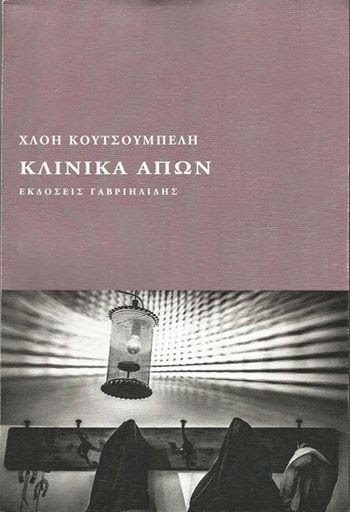
Η Τζούλια Φορτούνη για τη συλλογή “Κλινικά Απών” της Χλόης Κουτσουμπέλη

…τριάντα πέντε εικαστικά σχόλια από τη Τζούλια Φορτούνη για το “Κλινικά Απών” της ευτυχώς Ποιητικά Παρούσας Χλόης Κουτσουμπέλη.
(το πρωτογενές υλικό των εικονοσυνθέσεων είναι από το deviantart.com)

Χλόη+Κουτσουμπέλη-Κλινικά+Απών

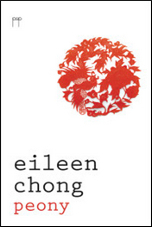
Kim Cheng Boey Reviews Eileen Chong

peony

Peony
by Eileen Chong

Pitt Street Poetry, 2014

In a suite of three poems praising the legendary beauty, Consort Yang Guifei, the Tang poet Li Bai draws on the virtues of the peony, a flower that with its luxuriant petals and luminous colours embodies feminine beauty and allure. After Li Bai, the peony became a perennial bloom in Chinese poetry, with the mid-Tang poet Bai Juyi’s ‘Regret for Peony Flowers’ evoking the emotional nuances associated with it: ‘Saddened by the peonies before the steps, so red,/As evening came I found that only two remained./Once morning’s winds have blown, they surely won’t survive;/At night I gaze by lamplight, to cherish the fading red.’ The fragile beauty of the rose-like flower lies at the heart of Eileen Chong’s second collection of poems. In adopting the peony as the titular emblem, she not only affirms the flower as a prized literary icon, but also positions her work in the context of classical Chinese poetry, and in doing so articulates the complex relationship with tradition and origins that has informed her work since her debut collection, Burning Rice.
Chong’s ‘Only a Peony’ carries on the peony poem tradition, sensitive to the literary and cultural symbolism bestowed on the flower; however, it departs from the representations of it as a passive object of beauty subject to the male gaze. Instead, the apostrophic address treats the flower as a living subject:
Peony, Chinese rose, history taught me about you.

You adorn the headdresses of Manchurian princesses,
pinned above tassels that swung back and forth,
mimicking their mincing walk. An upturned bowl placed
under a platform, the sway of hands for balance. A fiction
of bound feet. Were you real, flower of fortune?

The poem questions traditional concepts of beauty in Chinese culture, and explores the intimate secrets of the flower without reducing it to a mere poetic emblem. The poem makes a switch from past to present tense in the succeeding stanzas, establishing a mood of contemplative enquiry, reinforced by a parallel shift from the second-person address to detached observations, evoking in the process not just ambivalent feelings about the flower, but also about the speaker, a modern Chinese woman poet, writing in a foreign culture and in a non-native language, doubly transplanted, first from her ancestral homeland in China, and from her place of birth, Singapore. Chong then wrenches the flower out of its Chinese context, and encounters it anew in a shophouse in her adopted country, where she sees ‘bottles containing the essence of peonies. Pivoine magnifica,/the magnificent peony.’ Here, Chong’s associative eye seizes a cross-cultural moment, juxtaposing Greek myth with Chinese legend, conjoining Paean (from which ‘peony’ is derived), the ‘Healer of the gods’, and Guan Yu, the Chinese martial god whose crimson face is ‘the shade of these peonies before they rot.’ The male gods here are glimpsed through the emblematic prism of a feminine icon, thus in a way reversing the male gaze. The poem ends with a surprising image of the flower appearing on a carpet; ‘a lady friend’ remarks, ‘China’s national flower’, to which the speaker replies, ‘Is it? Am I? I’ve forgotten.’ The conflation of the poet’s subjectivity and the flower recalls the peony’s cultural symbolism, but the questions and the uncertain voice at the end are deconstructive of inherited values.

Chong’s peony poem invokes remote literary forebears, but the affinities of the peony with the rose, and an epigraph from Matisse as well as the reference to the peony as a Chinese rose, reflect a more contemporary tutelary presence: the Asian-American poet Li-Young Lee. In his first collection Rose, Lee rings the changes on the floral image as he seeks to graft his Chinese heritage onto the American poetic tradition that he is now part of. Chong, in the opening poem of her collection, acknowledges Lee as an influence: ‘Chinese Singing’ owes its inspiration to Lee’s ‘I Ask My Mother to Sing’ in emotional theme and trope. In Lee’s poem, his mother and grandmother unite in a song that evokes a lost landscape – the China that they had fled. The use of the present tense, the absence of the father, and the figure of the listening poet suggest a matrilineal inheritance that has shaped the poet’s identity and work. At the end of the poem, Lee is still listening: ‘Both women have begun to cry./But neither stops her song.’ Chong’s poem establishes a dramatic setting of her family engaged in a karaoke session, the grandmother kicking off with her rendition of a song in Hakka, followed by her parents in Mandarin, the lyrics of the song undergoing translation as it is taken up in turns. This generational turn-taking suggests continuity and bond in the transmission of familial and cultural heritage; however, the translation process implies cultural metissage, and the fact that heritage is not possessed once and for all or passed down complete and whole, but renewed and altered in the act of migration. When it comes to the speaker’s turn, she sings not in her mother tongue, but in the language of the former colonisers of a country to which her ancestors had migrated, the only language she is at home in: ‘It is my turn to sing. I don’t know/any Chinese songs, so I sing in English./My family is listening.’ The song brings together three generations and languages, and the interstitial spaces between them create a liminal zone where the issues of postcoloniality, diasporic history, and the tangled webs of personal and cultural identity can be mapped out.

Chong’s ability to fuse the dramatic, narrative and lyric in the balance of line and form – already much in evidence in Burning Rice – allows her to address complex issues in a beguilingly simple way. Her attentive eye fashions from a few concrete particulars a whole mood or situation, and mundane occasions can trigger off sensuous contemplations of love and belonging. In ‘Evensong’ the domestic act and a simple object furnish a sort of ars poetica, mediating the conflicting claims of poetry and domestic commitments, and assuaging the migrant woman poet’s burden of memory and heritage: ‘A poem is a heavy thing. It weighs/as you scrub the potatoes,/rub them with salt, then decide/to boil them instead.’ Culinary motifs, abundant in her debut collection, persist here, enacting the relationship between food, memory and identity. In ‘Rice-dumplings’ the poet and her friend are ‘Reviving the art/of rice-dumplings in an inner-city apartment in Sydney/five minutes’ walk from Chinatown.’ The poem celebrates the food of memory, the contradictions and am-bivalence of being Chinese migrants living in Chinatown captured in the act of food preparation and consumption, as they eat, ‘marvelling at our true selves, so far, yet so close to home.’ With subtle irony, the poem dramatises the complex sense of home and belonging.

Another food poem is ‘Noodles in Hong Kong’, where Hong Kong, China and Singapore come together in a moment of poetic gastronomy made possible by a bowl of wonton or ‘swallowing clouds noodles’. In Burning Rice, the culinary moments revolve around the binary of Singapore and Australia, with spatial memories focusing more on the place of birth. Peony rehearses this binary but the attention is more balanced, and the poems given a more transnational and transcultural spin. The first two sections of the collection are anchored in family history and Singapore, revisiting in memory the places of childhood and resurrecting the figure of the grandfather; and the Confucian reflex in ‘Chinese Wake’, ‘Kumquat’, ‘Death-Houses’ and ‘Release’ enacts rites concerning the dead, foregrounding the poet’s ethnic commitments. While the first half of Peony locates Chinese identity in a Singapore context, the second half is informed by a movement towards global citizenship, as the well-travelled poems cover Rome, Paris, New York and San Fran-cisco, providing a contrapuntal motif to the return to roots and origins.

This transnational or cosmopolitan spatiality reveals an attempt to transcend the Singapore/Australia binary, but the more engaging poems are those that are rooted in Australian locales, more precisely, Sydney’s cityscapes. ‘El-Alamein, Kings Cross’ offers a vivid snap-shot of the iconic fountain: ‘A single child dangles his hand in the water. Mist wets my face/ like a benediction. The seagull bows, then rises in a blur of wings.’ The photographic instant is captured with the visual precision and economy of language characteristic of Tang poetry. The poetry is also attentive to the marginalised: ‘In the corner old Nick kneels before his oiled/wood-box. Yesterday, his birthday; today/the cardboard sign reads only “Home-less/Shoe Shine”.’ This is the heartland of Chong’s second home, and she is staking out her place in these poems of urban topography. In another street poem, ‘The Way Back’, the poet joins a crowd listening to a girl grinding out ‘Waltzing Matilda’ on a music box and is trans-ported momentarily to her childhood in Singapore, before arriving at the realisation: ‘We ad-vance step by slow step, discarding memories like the way back./At some point you must know: the past can no longer be relieved.’ There is a refusal of nostalgia but the feeling of loss and longing abides.

The spatial poetics in Peony offers new readings of place that extend and at the same time disrupt the binaries of past/present, home/elsewhere, Singapore/Australia established in Burning Rice. The naturalness of form, the fusion of image and emotion, the arresting metaphor and phrasing, and the unpretentious language ensure that the themes of love and death, migration and displacement, identity and belonging, are never broached in a portentous way, but are implicit in the occasion and the observed detail. There is weight and heft of subject matter (‘A poem is a heavy thing’), but as with good lyric poetry there is also grace and lightness, like the glass-blower’s art described in ‘Glass-blowing’, where the artisan ‘catches in a gloved hand the clear glass globe/in which swirls a cerulean sea.’ Perhaps Chong’s greatest strength derives from the fact that she is not afraid of feeling, and of capturing it in fitting form and imagery. Li-Young Lee declares in an interview: ‘I value feeling. I think a lot of times in North American poetry there is not a value of feeling.’ This is what Chong’s work offers: a poetry of feeling, rendered in luminous detail and language, alive to the sorrows and joys of daily living.

*Kim Cheng Boey has published five collections of poetry and a travel memoir. He teaches at the University of Newcastle.

H κριτικογραφία του ποιητή Bύρωνα Λεοντάρη

leodaris

Aπό την «ποίηση της ήττας» στο «Kαβάφης ο έγκλειστος» δύο μικρές συλλογές που κυκλοφορούν εδώ και χρόνια ως αυτόνομα βιβλία

ΤΟΥ ΦΩΤΗ ΤΕΡΖΑΚΗ*

H συγκεντρωτική έκδοση των ποιητικών δοκιμίων του Bύρωνα Λεοντάρη, όσων έχουν γραφτεί από το 1971 κι εντεύθεν (εκτός από τα δύο δοκίμια για τον Kαβάφη που απαρτίζουν τον σχετικό τόμο), μας δίνει την ευκαιρία να επισκοπήσουμε το σύνολο της κριτικογραφίας του, η οποία συνοδεύει, πλαισιώνει και από πολλές πλευρές φωτίζει με ένα ερμηνευτικό φως την καθαυτό ποιητική του παραγωγή. Για λόγους πληρότητας ωστόσο, πριν συζητήσουμε το σώμα των κειμένων που περιέχει τούτη η έκδοση της Nεφέλης με τίτλο «Kείμενα για την ποίηση» (2001), θα ήταν σκόπιμο να ρίξουμε μια σύντομη ματιά στις δύο μικρές συλλογές που δεν έχουν περιληφθεί και οι οποίες, άλλωστε, κυκλοφορούν εδώ και χρόνια ως αυτόνομα βιβλία από τον «Eρασμο», με τους τίτλους «H ποίηση της ήττας» και «Kαβάφης ο έγκλειστος».

Eχουμε ξαναπεί πως η ουσιαστική ανυπαρξία θεωρητικού στοχασμού στην Eλλάδα είναι αποκαρδιωτικά εμφανής και στον χώρο της λογοτεχνικής κριτικογραφίας. Iδίως εδώ, μάλιστα, είναι που γίνεται οδυνηρό το παράδοξο, σε μια χώρα με πληθωρική πρωτογενή παραγωγή, κυρίως ποίησης και διηγηματογραφίας, να μην μπορεί να αναδειχθεί ένας αντίστοιχα σημαντικός και βαρύνων κριτικός λόγος. Kαι παραμένει διδακτικό επ’ αυτού το πολυπαρατηρημένο άλλωστε, ότι οι σημαντικότεροι κριτικογράφοι ήταν οι ίδιοι μείζονες ποιητές – παραδείγματον χάριν ο Παλαμάς, ο Σεφέρης…

Continue reading

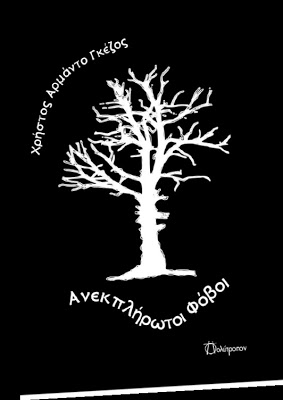
Ανεκπλήρωτοι φόβοι, ποίηση, Χρήστος Αρμάντο Γκέζος, Εκδόσεις Πολύτροπον 2013

__1_~1

Η προσωπική ιστορία του Χρήστου, γραμμένη λιτά στο αυτί του πρώτου του βιβλίου Ανεκπλήρωτοι φόβοι, μιλά σε πολύ χαμηλούς τόνους για έναν νεαρό (26χρονο μόλις) Βορειοηπειρώτη, απόφοιτο του ΕΜΠ. Χάρηκα πολύ όταν την πρωτοδιάβασα. Μου άρεσε η ταπεινοφροσύνη που τη χαρακτηρίζει. Επιπλέον, το βρήκα εξαιρετικό που το κρατικό βραβείο δόθηκε σε έναν ποιητή με τέτοιο προφίλ: το γεγονός ανανέωσε την πίστη μου στον θεσμό. Και αυτό που τη βάθυνε, στη συνέχεια, ήταν η ανάγνωση των ποιημάτων της συλλογής, διότι πράγματι άξιζε βραβείο ο Γκέζος.

Αντίθετα με την προσωπική ιστορία του ποιητή στο αυτί του βιβλίου, οι ιστορίες που ο ίδιος αφηγείται μέσα από τα ποιήματά του δεν είναι γραμμένες σε χαμηλούς τόνους. Είναι επιτακτικές, ακανθώδεις, συχνά άβολες αφηγήσεις που πραγματεύονται την παραίτηση, τη μοναξιά, την αποξένωση, τη θλίψη. Είναι μάλλον εντυπωσιακό για έναν τόσο νέο άνθρωπο να μπορεί να μιλά με τέτοιο βάθος για όλα αυτά, να τα επισκέπτεται ξανά και ξανά από τόσο διαφορετικές οπτικές γωνίες. Ο ήρωάς του – και δεν θα πω ήρωας κατ’ ευφημισμόν, αν και θα μπορούσα, το γιατί θα το εξηγήσω αμέσως παρακάτω – βιώνει τα συναισθήματα και τις καταστάσεις που αφηγείται σαν να ΄ταν ομιλών νεκρός, όπως απερίφραστα δηλώνεται σε κάθε ευκαιρία. Παραδόξως, όμως, αυτός ο οιονεί νεκρός δεν διακατέχεται από καμία διάθεση παραίτησης.

Continue reading

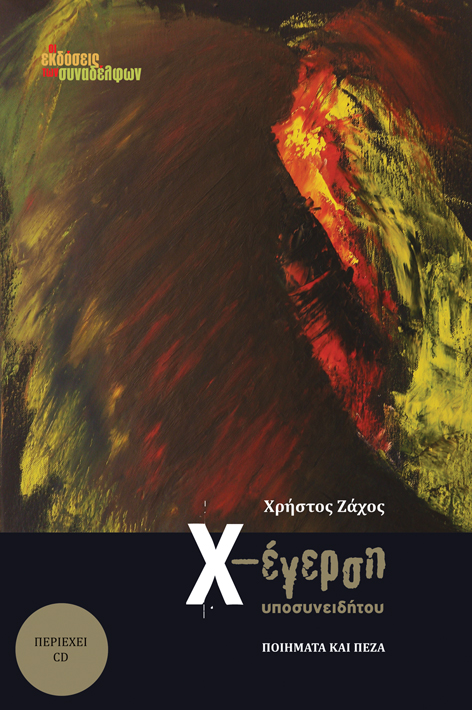
Χρήστος Ζάχος Χ–έγερση υποσυνειδήτου Ποιήματα και πεζά, Εκδόσεις των Συναδέλφων

Print

Το μικρό αυτό βιβλίο δεν είναι μία ακόμη ποιητική συλλογή, από τις πολλές που κυκλοφορούν. Ο προφανής λόγος είναι ότι περιέχει και πεζά κείμενα. Ο βαθύτερος είναι ότι τα γραπτά του Χρήστου Ζάχου (ποιήματα και πεζά) κρύβουν μέσα τους τη δύναμη που δηλώνεται ρητώς και στον τίτλο: τη δύναμη της εξέγερσης.

Μιας εξέγερσης που δεν έχει να κάνει υποχρεωτικά με συγκρούσεις στο δρόμο και με πολυπληθείς διαδηλώσεις, αλλά με μια εσωτερική διαδικασία αποτινάγματος των αλυσίδων που κρατούν τον άνθρωπο μακριά από την ουσία της ζωής: την ελευθερία. Ο έρωτας, η φιλία, η απόγνωση, η διαφορετικότητα, η ελευθερία είναι έννοιες πανταχού παρούσες σε ένα βιβλίο που διαβάζεται απολαυστικά και σημαδεύει βαθιά τον αναγνώστη.

Το βιβλίο συνοδεύεται από CD με μουσικές απαγγελίες.

*Ο Χρήστος Ζάχος, γεννήθηκε στην Αθήνα το 1978. Η πρώτη του εμφάνιση στα γράμματα ήταν το 2009 με την ποιητική συλλογή “Η νόσος της Ποίησης” από τις εκδόσεις Ίαμβος. Ακολούθησαν η “Κραταιά ως θάνατος αγάπη” με τον ίδιο εκδότη και “Οι εμπειρίες ενός πνιγμένου” το 2011 από τις εκδόσεις Γαβριηλίδης. Η “Χ–έγερση υποσυνειδήτου” είναι η νέα του λογοτεχνική δουλειά σε συνεργασία με τις Εκδόσεις των Συναδέλφων.