Autumn Royal
 ρeviews Omar Musa’s Here Come the Dogs

omar-dogs

Here Come the Dogs
by Omar Musa

Hamish Hamilton, 2014

Primarily known as a performance poet and rapper, Omar Musa has embarked on another textual form with his latest publication, Here Come the Dogs. Written in a combination of verse and prose, Here Comes the Dogs offers an intimate portrait of three young men negotiating issues of identity and marginalisation in an unnamed Australian city. Musa, who is Malaysian-Australian, positions his poetry and prose in a manner that allows for his book to confront themes surrounding cultural and ethnic identities, intersectional discrimination and problematic expressions of masculinity and power.

Here Come the Dogs begins with the perspective of Solomon as he impatiently waits for his closet friend, Aleks, and his half-brother, Jimmy, to meet him at the greyhound races. Conflict between ethnicity and nationality are directly introduced as the reader follows Solomon’s internal dialogue. Upon seeing Aleks and Jimmy emerge from the crowd Solomon observes:

What a crew –
a Samoan, a Maco and my half-brother, a something.

The only ethnics at the dog races.

(8).

By introducing the trio in this way, Musa positions their ethnicity as a predominant factor in their negotiations of identity. Yet this emphasis on ethnicity also allows for Musa to play with and expose the limitations and problems that an essentialist understanding of ethnicity has for contemporary Australia. During one scene Aleks, who is Macedonian, goes to meet Solomon and finds him in the street ‘telling a story to two Tongan blokes’ (41), after which Aleks asks himself: ‘Aren’t Samoans and Tongans supposed to hate each other? ’ (41-42). Musa continually challenges the prejudices that prowl beneath these sequences of thought.
One of the primary ways in which Musa confronts preconceived ideas of ethnicity is by refusing to define the background of the character Jimmy. Although it’s established that Jimmy is Solomon’s ‘half-brother’ (8), Jimmy’s ethnicity remains unspecified. At one point a character gazes at Jimmy, ‘obviously trying to figure out what he is’ (49). This is a startling line, highlighting the harmful impact caused by people accustomed to categorisation. Musa delves into the consequences of such prejudices as Jimmy stumbles into a world of increasing hallucinations and a burning madness.

Continue reading

Liam Ferney
 reviews Ania Walwicz’s The Palace of Culture

palace_of_culture

The Palace of Culture
by Ania Walwicz

Puncher & Wattmann, 2013

Ania Walwicz’s first book in more than twenty years, Palace of Culture, confirms her reputation as one of Australia’s leading conceptual poets. It consists of fifty (almost) prose poems, each between two and five pages length. The poems use the suggestion of narratives as a key organising principle. But suggestion is as far as any of the narratives get. Characters, places and events all seem about to emerge but Palace of Culture is a sublime work of disruption in which almost every word, phrase and line is designed to both suggest meaning and to disrupt it. In fact even the act of reading, which the poetics seem to infer as straightforward, is constantly interrupted.

Poems with titles like ‘prince’, ‘leave’ and ‘see’ use the title words as the building blocks of narratives; however, constant disruptions render those narratives illusory and fleeting. Using derivatives and variations of words, the poems spiral off in new directions. They seem connected to what has been written before, and after, but exist almost entirely independent of context. She describes the process in ‘The language of desire’:

the text forms a vortex, without focus or centre, desire
that remains unfulfilled, language that streams out without a
real objective, a delirium,

Continue reading

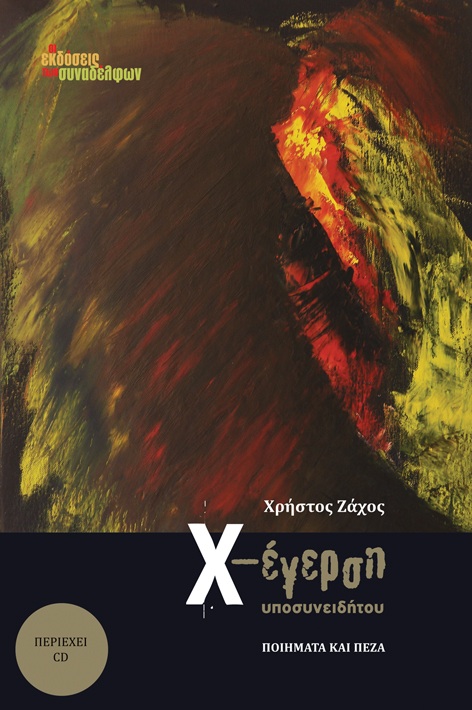
Χρήστος Ζάχος, Χ–έγερση υποσυνειδήτου, Εκδόσεις των Συναδέλφων

Print

ΤΟΥ ΔΗΜΗΤΡΗ ΤΡΩΑΔΙΤΗ

Μια ακόμα πολύ αξιόλογη ποιητικολογοτεχνική αλλά και εκδοτική δουλειά που μας έρχεται ξανά από τις Εκδόσεις των Συναδέλφων. Επαναλαμβάνω, οι Εκδόσεις των Συναδέλφων είναι μια συνεργατική κολλεκτίβα που αποτελείται απο εργαζόμενους στο χώρο του βιβλίου που εδώ και αρκετό καιρό καταθέτουν τη δικήτους αντιεμπορευματική και εναλλακτική άποψη, διακηρύσσοντας ότι το βιβλίο δεν είν αι εμπόρευμα, αλλά κοινωνικό αγαθό, ταυτόχρονα δε ένα όπλο στον αγώνα για μια καλύτερη ζωή, στον αγώνα για μια καλύτερη κοινωνία.

Το βιβλίο αυτό περιλαμβάνει ποιήματα, πεζά και πεζοποιήματα, και αποτελεί την τρίτη κατά σειρά δουλειά του Χρήστου Ζάχου, ενός νέου και καθ΄ όλα ανήσυχου δημιουργού που ζει και δημιουργεί στο Ρέθυμνο. Από μια άποψη, το μικρό αυτό βιβλίο (80 περίπου σελίδων) χαρακτηρίζεται από αρκετές α-συμβατότητες. Κατ’ αρχάς, δεν είναι μία ακόμη ποιητική συλλογή, από τις πολλές που κυκλοφορούν. Υπάρχει ένας προφανής και ένας βαθύτερος λόγος γι’ αυτό. Ο προφανής λόγος είναι ότι περιέχει και πεζά κείμενα καθώς και λεγόμενα πεζοποιήματα, ποιήματα δηλαδή που μοιάζουν με μικρά πεζά ή και το ανάποδο. Ο βαθύτερος λόγος είναι ότι τα γραπτά του Χρήστου Ζάχου (ποιήματα και πεζά) κρύβουν μέσα τους τη δύναμη που δηλώνεται ρητώς και στον τίτλο: τη δύναμη της εξέγερσης. Μιας εξέγερσης που δεν έχει να κάνει υποχρεωτικά με συγκρούσεις στο δρόμο και με πολυπληθείς διαδηλώσεις, αλλά με μια εσωτερική διαδικασία αποτινάγματος των αλυσίδων που κρατούν τον άνθρωπο μακριά από την ουσία της ζωής: την ελευθερία. Ο έρωτας, η φιλία, η απόγνωση, η διαφορετικότητα, η ελευθερία είναι έννοιες πανταχού παρούσες σε ένα βιβλίο που διαβάζεται απολαυστικά και σημαδεύει βαθιά τον αναγνώστη. Το εν λόγω βιβλίο χαρακτηρίζεται και από μια άλλη ασυμβατότητα. Συνοδεύεται από CD με μουσικές απαγγελίες.
Continue reading

Antonio Tabucchi, Η νοσταλγία του πιθανού-γραπτά για τον Φερνάντο Πεσσόα, μτφ. Ανταίος Χρυσοστομίδης

807

ΓΡΑΠΤΑ ΓΙΑ ΤΟΝ ΦΕΡΝΑΝΤΟ ΠΕΣΣΟΑ

Παρουσίαση

« Η γέννηση των ετερωνύμων μου οφείλεται σε ένα σοβαρό κομμάτι υστερίας που υπάρχει μέσα μου. Δεν ξέρω αν είμαι απλώς υστερικός ή αν είμαι, πιο συγκεκριμένα, ένας υστερικο-νευρασθενικός. Κλίνω προς την δεύτερη υπόθεση, γιατί υπάρχουν μέσα μου φαινόμενα αβουλίας που η κανονική υστερία δεν τα περιλαμβάνει στα συμπτώματά της. Όπως όμως και να έχει το πράγμα, η νοητική γέννηση των ετερωνύμων μου μπορεί να εντοπιστεί στην οργανική και μόνιμη τάση μου στην αποπροσωποποίηση και την προσποίηση. Τα φαινόμενα αυτά, ευτυχώς για μένα και τους άλλους, σ’ εμένα πήραν έναν νοητικό χαρακτήρα· θέλω να πω πως δεν εκδηλώνονται στην καθημερινή, εξωτερική μου ζωή, ή στην επαφή μου με τους άλλους· εκρήγνυνται μέσα μου και τα ζω μόνος με τον εαυτό μου. Έτσι όλα καταλήγουν στη σιωπή και στην ποίηση …»
ΦΕΡΝΑΝΤΟ ΠΕΣΣΟΑ

Από τα δοκίμια που ο Αντόνιο Ταμπούκι έχει κατά καιρούς γράψει, στο ελληνικό κοινό είναι γνωστό μόνο το δοκίμιο Η γαστρίτιδα του Πλάτωνα γύρω από την ευθύνη των διανοουμένων. Ο Ταμπούκι υπήρξε για πολλά χρόνια καθηγητής Πορτογαλικής Λογοτεχνίας στο Πανεπιστήμιο της Σιένα, και στην ιβηρική λογοτεχνία έχει αφιερώσει πολλές μελέτες, κυρίως για τη μπαρόκ και τη σύγχρονη εποχή. Μεταξύ άλλων υπήρξε ένας από τους πρώτους μελετητές του Φερνάντο Πεσσόα, του οποίου το έργο μετέφρασε, μόνος ή με τη σύζυγό του Μαρία Ζοζέ ντε Λανκάστρε, ήδη από το 1970, όταν στην Ευρώπη ο μεγάλος Πορτογάλος ποιητής ήταν ακόμα άγνωστος.

Continue reading

Ειρήνη Παραδεισανού, Ο Φερνάντο Πεσσόα και η ηλιθιότητα των ευφυών

F.+Pessoa

«Δεδομένου ότι ο Φερνάντο διαθέτει μια ευαισθησία σε υπερβολική ετοιμότητα καθότι συνοδεύεται από μια ευφυΐα σε υπερβολική ετοιμότητα, αντέδρασε πάραυτα στο Μεγάλο Εμβόλιο – το εμβόλιο που προστατεύει από την ηλιθιότητα των ευφυών».

Αυτά γράφει ο Άλβαρο Ντε Κάμπος, ένας από τους ετερώνυμους του Φερνάντο Πεσσόα για τον δημιουργό του.
Τη βλέπω γύρω μου αυτήν την ηλιθιότητα.

Στην κλειδωμένη ματιά του νέου ανθρώπου που στα είκοσι νομίζει πως βρήκε όλες τις απαντήσεις και δεν καταδέχεται να θέσει ερωτήματα.

Στην αλαζονεία του «επιτυχημένου» μεσήλικα που, αυτάρεσκα κλειδωμένος στο κουτί της γνώσης του, απορρίπτει μετά βδελυγμίας – καλά οχυρωμένης πίσω από ένα προσωπείο συναίνεσης και μετριοπάθειας – οτιδήποτε δε χωράει στα κουτάκια της μικρονοϊκής σκέψης του.

Continue reading

Erich Mühsam, Η απόφαση

page1-220px-Kain_–_Zeitschrift_für_Menschlichkeit_1-1.djvu

Όταν σε ρώτησα: «Έχω την άδεια να σας προστατεύσω ο καημένος;»

Είπες: «Μα, κύριε μου, είστε τόσο τετριμμένος!»

Όταν σε ρώτησα: «Μπορώ σε κάτι να σας βοηθήσω;»

Είπες: «Ίσως μια άλλη φορά… Όχι τώρα, θα αργήσω».

Όταν σου ζήτησα: «Μικρή μου, δώσε μου για ανταμοιβή ένα φιλί!»

Είπες: «Θεέ μου, φιλί; Τι είναι αυτό που θέλετε από μένα, δηλαδή;»

Όταν διέταξα: « Έλα μαζί μου, πάμε εκεί που μένω!»

Είπες: «Αχ, επιτέλους! Έτσι σε θέλω: αποφασισμένο!»
`
ΕΠΙΜΕΤΡΟ:

Ο Έριχ Μύσαμ γεννήθηκε στις 6 Απριλίου 1878 στο Βερολίνο. Υπήρξε γιος του εβραϊκής καταγωγής φαρμακοποιού Ζίγκφριντ Ζέλιχμαν και της συζύγου του Ρόζαλη και είχε τρία ακόμα αδέλφια. Μεγάλωσε στην πόλη Λύμπεκ.

1896 -1900
: Αποβάλλεται από το Γυμνάσιο εξαιτίας «σοσιαλιστικών εξτρεμιστικών ενεργειών». Μεταξύ 1896 – 1899 ολοκληρώνει την μαθητεία του ως φαρμακοποιός και εργάζεται ακολούθως ως βοηθός φαρμακοποιού μέχρι το 1900 σε διάφορες πόλεις της Γερμανίας.

Το 1901 εγκαθίσταται ως συγγραφέας στο Βερολίνο και γίνεται μέλος της ομάδας ποιητών «Νέα Κοινωνία». Έρχεται σε επαφή με το αναρχοκομμουνιστικό κίνημα της εποχής.

1901 – 1904
: Στα χρόνια που ακολουθούν εξελίσσεται σε εκπρόσωπο ενός «λογοτεχνικού Αναρχισμού» και εκφράζεται κατά των αστικών κανόνων και της κρατικής επιβολής. Σ΄αυτόν τον «Συναισθηματικό Αναρχισμό», όπως τον ονόμαζε, συνυπάρχουν θέσεις διάφορων θεωρητικών της Αναρχίας, όπως του Μπακούνιν και του Κροπότκιν, αλλά και στοιχεία ενός αστικού Ιντιβιντουαλισμού, όπως αυτά απαντιούνται στον Νίτσε. Το ίδιο χρονικό διάστημα δημοσιεύει κείμενα του σε διάφορα πολιτικά περιοδικά επικρίνοντας το Σοσιαλδημοκρατικό Κόμμα για αστικές τάσεις και απορρίπτοντας τον Μαρξισμό εξαιτίας αυταρχικών χαρακτηριστικών.

1904 – 1924
: Καλεσμένος από φίλους επιχειρεί με τον ερωτικό του σύντροφο Γιοχάνες Νολ εκτενή ταξίδια στην Ζυρίχη, Ασκόνα, την Βόρεια Ιταλία, στο Μόναχο και την Βιέννη. Επιστρέφοντας στην Γερμανία ιδρύει την «Ομάδα Πράξη» για την προπαγάνδα του υποπρολεταριάτου. Συλλαμβάνεται το 1910 κατηγορούμενος για συνομωσία, αλλά αθωώνεται λίγο αργότερα.


Μεταξύ 1911 – 1919 εκδίδει το έντυπο «Κάιν, Περιοδικό για την ανθρωπιά». Κατά την διάρκεια του Πρώτου Παγκοσμίου Πολέμου προσπαθεί να ιδρύσει χωρίς επιτυχία ένα σύλλογο ακτιβιστών κατά του πολέμου.
Επειδή αρνείται να πάρει όπλο καταδικάζεται σε εξάμηνη φυλάκιση το 1915. Το 1916 έρχεται σε επαφή με την ομάδα «Σπάρτακος» και γίνεται ο κύριος διοργανωτής διαμαρτυριών και απεργιών εναντίον του πολέμου.
 Μετά την καταστολή της λεγόμενης Βαυαρικής Σοβιετικής Δημοκρατίας καταδικάστηκε σε φυλάκιση 15 ετών, αφέθηκε όμως ελεύθερος το 1924. Εγκαθίσταται στο Βερολίνο όπου εκδίδει το αναρχικό περιοδικό «Ένδειξη».

Ανάμεσα στα έτη 1925 και 1929 δραστηριοποιήθηκε στους κόλπους της οργάνωσης «Κόκκινη Βοήθεια», φιλικά προσκείμενης στο Κομμουνιστικό Κόμμα Γερμανίας. Από την οργάνωση αποχώρησε το 1929, αφού στο μεταξύ είχε αποτάξει και το Ιουδαϊκό θρήσκευμα. Λίγο μετά την άνοδο των εθνικοσοσιαλιστών στην εξουσία, συνελήφθη το 1934, βασανίστηκε και δολοφονήθηκε στο στρατόπεδο συγκέντρωσης Οράνιενμπουργκ. Η ανακοίνωση που δημοσιεύθηκε στον φασιστικό τύπο έλεγε: «Ο Εβραίος Έριχ Μύζαμ κρεμάστηκε στο κρατητήριο».


Εκτός από πολιτικά κείμενα, ο Μύζαμ έγραψε πλήθος ποιημάτων, θεατρικά έργα και ημερολόγια.

Muehsam_1193_Kopie2

*Μετάφραση: Γιώργος Καρτάκης. Από το http://www.poiein.gr/archives/28014/index.html#more-28014

Kevin Brophy
 reviews Libby Hart’s Wild

wild

Wild
by Libby Hart

Pitt Street Poetry, 2014

Poetry might be whispering these days, but only fools fail to hear it. The whisper might be the tough sibilance of protest, it might be the swirl of nostalgia for what will soon be lost and irretrievable, it might be the resilient, gnomish murmur that tells of what cannot be suppressed, and cannot either ever be quite directly expressed. And so, Huginn and Muninn open Libby Hart’s new collection of poetry.

It is fitting that they are the voices of two ravens. The Little Raven, Melbourne’s ubiquitous crow, was the constant presence at the local tip across the road, or in vacant blocks of land nearby, or in the backyard trees of my childhood; they were the strong and insistent scavengers growing healthy on the detritus of our suburb. When we are gone, they will be there, still feasting.

Libby Hart’s ravens are whispering to the gods about the stars, encouraging the ferocity of the bear-woman of Ursa Major, singing a song to the song of the Southern Right Whale, meditating on the washed up corpse of a cormorant, and then there is the inked raven itself in a poem. The poet’s namesake, her ‘stag’, is given a small portrait among these wild ones:

Startled heat, tremble of branch,
a breath-cloud half hidden
By the rain’s slant. Hold still. (from ‘Stag’)

Continue reading

David Gilbey Reviews Lisa Jacobson

sitw

South in the World
by Lisa Jacobson
UWA Publishing, 2014

For three weeks in Japan I’ve read and re-read Lisa Jacobson’s new collection of poems: in subways, on shinkansen, in parks, cafés, restaurants and my apartment – up on the twelfth floor of the hilly suburb, Dainohara, in Sendai. The poems, now fiercely dog-eared, have become my familiars; challenging, apostrophising and snaking/drifting/sidling into my consciousness, they have shaped my thinking and insinuated themselves into my conversations with ‘native English-speaking’ colleagues, Japanese friends and ex-students.

These are deftly subtle and insightful poems – worldly and ‘spiritual’, artificed to bring out the particularities of a ‘glocal’ Australian consciousness, youthful idealism and a difficult complexity.

Section One opens with the wry ‘Several Ways to Fall Out of the Sky’ and ends with the mock heroic, ‘Habits formed by Eternity’, where ‘God falls to earth with a resounding clang … Dog-tired … in his faded cardigan.’ This is antipodean iconoclasm, as ‘blowflies hover like small black angels’. In ‘Why, When we Fall off things, We Fall Down’, a more venal fall ‘from a car’ to escape the ‘Stable Boys’, some ‘mates’ intent on sexual assault, and the tongue-in-cheek advice to a daughter about gravity add a sense of real danger and whimsical metaphysics to the post-lapsarian consciousness. For Jacobson, the sadness and dividuality of ordinary experience, the ‘deadweight of oxygen; / its brash insistence’, slows our ‘Traffic with Angels’. Though even here, there are ‘Signs of Life’ that, in her womb-with-a-view sonnet ‘Emergence’, Jacobson can see quickening: God’s ‘slow reading’ and the ‘longevity of a prayer’ might register as ‘clouds of budgerigars’ or ‘A woman [turning] like fruit / to the light’. These are rich, suggestive, metaphorical explorations of the ‘wheelbarrow’ that is human life.

Continue reading

Render it barely

9781742585352

By Jeff Sparrow*

Collected Poems: Lesbia Harford
by Oliver Dennis (editor)
UWA Publishing
152pp
$29.99AU
Published September, 2014
ISBN 9781742585352

When Lesbia Harford died in 1927, she left behind three thick and neatly-lined exercise books full of handwritten poetry. These, now housed in the Mitchell Library, provided the basis for Nettie Palmer’s The Poems of Lesbia Harford (1941) and, in 1985, Drusilla Modjeska and Marjorie Pizer’s expanded collection, published under the same title.

Now we have a new and even more comprehensive edition, courtesy of Oliver Dennis and UWA Press. In his introduction to Collected Poems, Dennis writes:

Of the nearly four hundred poems in manuscript, just over half that number are reproduced here; of these, a third or so … have not, to my knowledge appeared in print previously.

Bringing so much writing by an important but under-appreciated Australian poet into the public arena is a major achievement, for which both editor and publisher should be congratulated. It is, however, regrettable that the new volume diminishes Harford’s work with an editorial framing that feels unpleasantly gendered.
Much of what we know about Harford’s life comes from research conducted by Pizer, a former Communist Party member personally acquainted with some of Harford’s circle. Dennis bases his introduction almost exclusively upon this material, ignoring, for instance, Ann Vickery’s recent study in Stressing the Modern (2007). Perhaps lacking Pizer and Modjeska’s political sympathies, he interprets it in ways that are frustrating and tendentious. For example, he writes:

Whereas many poets of the time – Mary Gilmore or Banjo Paterson, for example – wrote with an eye to establishing an Australian literature, Harford clearly never gave a moment’s thought to abstract notions of culture or nationhood … She instead found her place out of view, where she was free to articulate a distinctive brand of pure, incidental song.

Continue reading

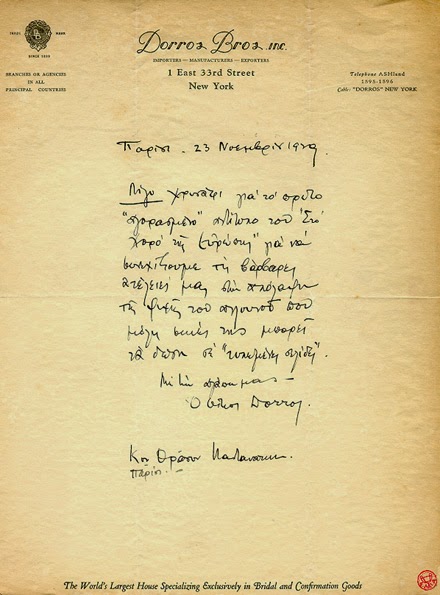
Θεόδωρος Ντόρρος ο αγνοημένος

NtorrosUeodvros.JPG

Ελάχιστοι θυμούνται σήμερον τον Θεόδωρον Ντόρρον, τον πρώτον υπερρεαλιστήν Έλληνα ποιητήν, ο οποίος με την μοναδική του ποιητικήν συλλογή “Στου γλυτωμού το χάζι” τάραξε τα λιμνάζοντα ποιητικά ύδατα της πατρίδος μας. Η συλλογή αυτή του Θεοδώρου Ντόρρου εξεδόθη εις το Παρίσι και διανέμετο δωρεάν εις τας Αθήνας.

ΙΙ. Πολλαί εικασίαι εγένοντο αναφορικώς προς το όνομα του ποιητού. Ο Γιάννης Κορδάτος δεν γνωρίζει αν το Θεόδωρος Ντόρρος είναι ψευδώνυμον ή το πραγματικόν όνομά του. Ο Μάρκος Αυγέρης το θεωρεί ως ψευδώνυμον ανθρώπου ο οποίος θέλει να δημιουργήσει θόρυβον, “να κάνει ντόρο” και ο οποίος δεν επίστευεν αρκετά εις την σοβαρότητα του εγχειρήματός του. Ωστόσον ο Θεόδωρος Ντόρρος ήτο υπαρκτόν πρόσωπον. Επρόκειτο περί Ελληνοαμερικανού εγκατεστημένου εις το Παρίσι τα στοιχεία του οποίου ευρέθησαν εις τα κατάλοιπα του Θράσου Καστανάκη και είναι σήμερον κατατεθειμένα στο ΕΛΙΑ. Πέραν πάντως όλων αυτών ο Ντόρρος δεν ενεφανίσθη ξανά εις τα γράμματα.
Continue reading