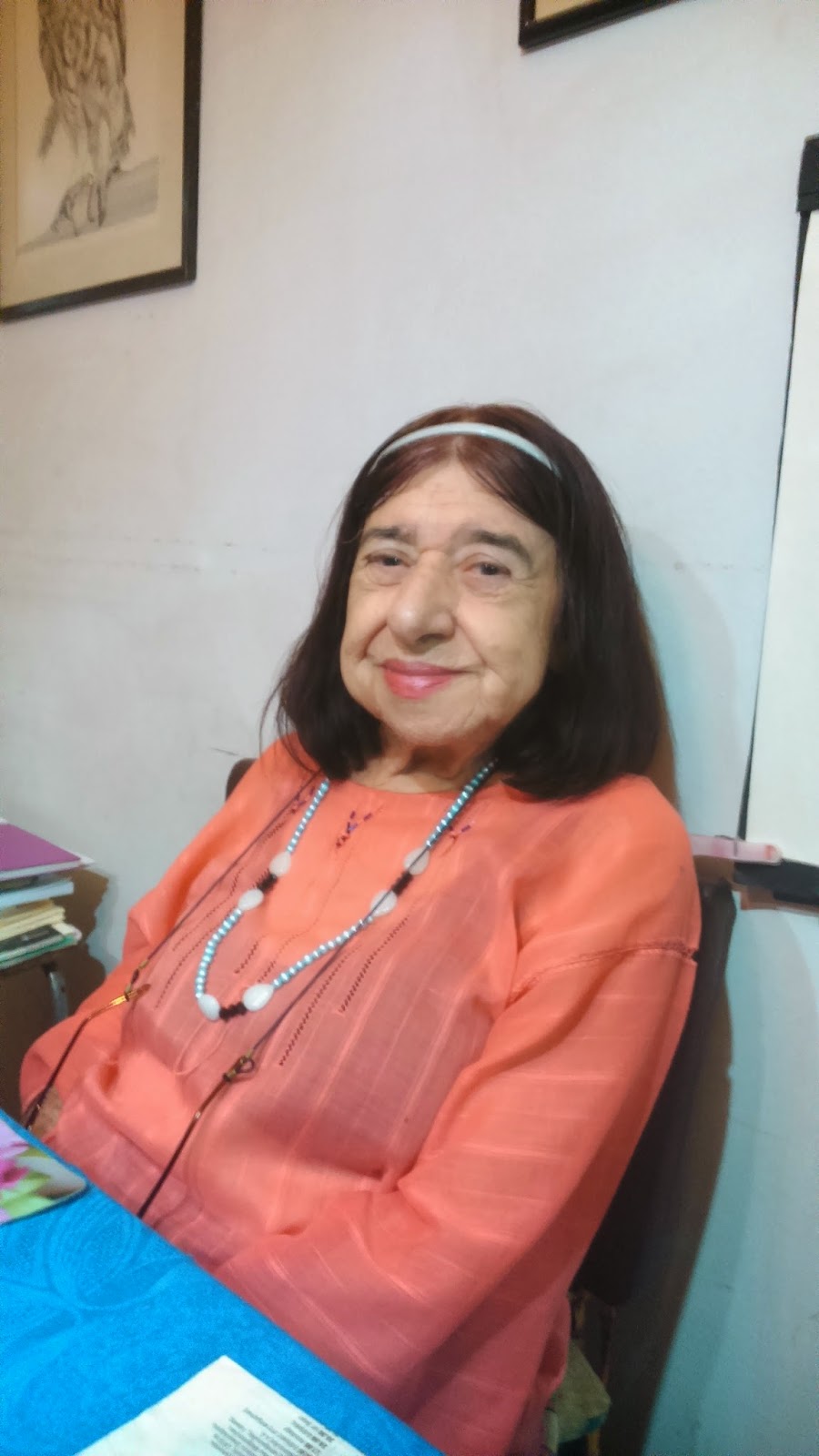
Συνέντευξη της Κατερίνας Αγγελάκη-Ρουκ στο στίγμα Λόγου

DSC_0153

Είναι γλυκύτατη, είναι πολυαγαπημένη, είναι η Κατερίνα Αγγελάκη-Ρουκ! Με δέχθηκε στο σπίτι της και καθ’ όλο το διάστημα της συνάντησής μας είχα επίγνωση του ότι συνομιλώ με έναν μύθο… έναν μύθο ανθρώπινο, προσηνή και ευαίσθητο, όπως μόνο εκείνη μπορεί να είναι.

Χριστίνα Λιναρδάκη: Η πρώτη σας παρουσία στα γράμματα έγινε με ένα ποίημά σας, τη «Μοναξιά», που δημοσιεύσατε σε ηλικία 17 μόλις ετών στην «Καινούρια εποχή» του Γουδέλη. Ένα παιδί 17 ετών ήξερε τι σημαίνει μοναξιά;

Κατερίνα Αγγελάκη-Ρουκ: Έγραφα και πριν απ’ αυτό, δεν θυμάμαι ποτέ μου να μην έγραφα. Πάνω από μισό αιώνα μετά, μου κάνει και μένα εντύπωση πώς μπόρεσα τότε να γράψω για τη μοναξιά. Νομίζω ότι έχει σχέση με την αναπηρία μου που έπρεπε κι εγώ να ξεπεράσω ψυχολογικά, για να προχωρήσω.

Χ.Λ.: Αναφέρεστε στη γνωστή ιστορία με τον σταφυλόκοκκο, έτσι δεν είναι;

Κ.Α.-Ρ.: Ναι. Μόλις γεννήθηκα, με καισαρική, κάτι λάθος θα έγινε και προσβλήθηκα αμέσως. Το ότι έζησα ήταν σκέτο θαύμα και, βέβαια, επηρεάστηκαν τα οστά μου, ο μυελός και το χέρι. Σκέφτομαι καμιά φορά ότι οι γονείς μου με έκαναν μεγάλοι και βιάζονταν, ο πατέρας μου ήταν 60 χρονών όταν γεννήθηκα, γεννήθηκε το 1881, ήταν δύο χρόνια μεγαλύτερος από τον Καζαντζάκη. Αν λοιπόν οι γονείς μου είχαν καθυστερήσει έναν χρόνο – τι ήταν ένας χρόνος ακόμη – θα είχε εφευρεθεί η πενικιλίνη και θα ήμουν μια χαρά. Αλλά, όπως λέω και ξαναλέω και ξαναλέω, η ζωή είναι μια ζυγαριά: βάζεις το κακό στο ένα δισκάκι και λες «γιατί Θεέ μου να μου τύχει αυτό» και δεν βλέπεις ότι από την άλλη μεριά μπαίνει το καλό, ακριβώς στην ίδια ποσότητα. Σ’ αυτήν ακριβώς την αναπηρία, λοιπόν, χρωστάω την ώριμη από νωρίς αίσθηση της ζωής και την ώριμη σκέψη μου.

Χ.Λ.: Σίγουρα… Με εκείνο το ποίημα, τη «Μοναξιά», ο νονός σας Νίκος Καζαντζάκης είχε ενθουσιαστεί, έτσι δεν είναι;

Κ.Α.-Ρ.: Ο Καζαντζάκης με είχε συστήσει στον Γουδέλη και είχε γράψει ένα σημείωμα: «διαβάστε αυτό το ποίημα, είναι το καλύτερο που έχω διαβάσει ποτέ». Ένα από τα πράγματα που είμαι υπερήφανη στη ζωή μου, τα ελάχιστα, είναι ότι δεν το πήρα επάνω μου. Αντίθετα, είπα: «ωχ, υπερβολές του Καζαντζάκη», γιατί ήταν στις εκφράσεις του πολύ πλούσιος. Επίσης, του ταίριαζε πολύ η μοναξιά γιατί ήταν ένα από τα βασικά θέματα, παρότι έζησε ωραία με την Ελένη, αλλά το είχε κάνει θρησκεία μέσα του.
Continue reading

Poetry in motion: mobile site brings new audience to African writers

Mbali-Kgosidintsi-012

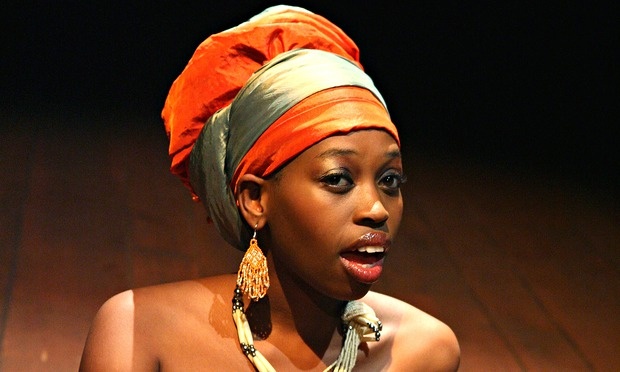
Continent’s ancient oral tradition gets new hearing on pioneering mobile site Badilisha Poetry X-Change

Mbali Kgosidintsi, from Botswana, can be heard reading her poem I Stand Between My Africa and Me on the site. Photograph: Tristram Kenton

“These days, the language of death
is a dialect of betrayals; the bodies
broken, placid as saints, hobble 
along the tiled corridors, from room 
to room. Below the dormitories
is a white squat bungalow, a chapel 
from which the handclaps and choruses 
rise and reach us like the scent 
of a more innocent time.”

These are the opening lines of Hope’s Hospice, written by Ghanaian-born Jamaican poet Kwame Dawes. He is among nearly 400 African poets from 24 countries in 14 languages who can now be heard reading their work via mobile phones – a first for Africa and the world.
Continue reading

Alyson Miller
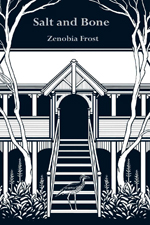
 reviews Zenobia Frost’s Salt and Bone

salt-and-bone

Salt and Bone
by Zenobia Frost

Walleah Press, 2014

In its own words, Zenobia Frost’s Salt and Bone slinks ‘between ibis-legged houses / and wakeful graveyard’, and belongs to ‘the hour of the curlew’, a liminal space that speaks of ghosts and transformation. As a collection, the poems are pervaded with a sense of haunting, plagued by abject bodies ‘aching for salt and bone’, the suffocating presence of water, and the archeology of death. It is noteworthy that Frost’s work both begins and ends with a warning of the power of unknown and strange things; a reminder, perhaps, of the gaps that exist between the ‘real’ and the imagined.

Indeed, Salt and Bone is a collection that relishes in the gothic and the macabre, often anchored in the physicality of the body or objects rendered as bodies. In ‘Auf Wiedersehen Spiegeltent’, for example, the deconstruction of the circus tent is figured as a kind of flaying – ‘the circus is gone/ big top / stripped to bone’ – while its performers bend and collapse like origami: ‘their drunken limbs forget / the ways they should not bend /[…] they fold back into boxes / like costumes like paper’. Frost’s manipulation of bodies is both unsettling and striking, at times even verging on a form of delightful masochism, as demonstrated so vividly in ‘Odontophilia’ (a fetish with teeth), in which the poem describes a fixation ‘on the ache as teeth / shimmy loose’. As the poem replays ‘this ritual of / fidgeting pressure’ that is at once so alien and so familiar, it conjures a vicarious pleasure that is simultaneously alluring and othering, a quality that marks a number of the poems throughout the collection:

‘this first infant pleasure
worries the bruise of your mouth

long to press just one peg free
to tongue the root red
gum erupts
in shards of molar

Continue reading

Peter Kenneally 
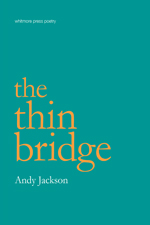
reviews Andy Jackson’s The thin bridge

thin-bridge

The thin bridge
by Andy Jackson

Whitmore Press, 2014

‘Poetry from a body shaped like a question mark’ That is the tag line for Andy Jackson’s blog, and it perfectly sums up the to and fro in his work. Jackson, who has Marfan’s Syndrome, has said that he came to write poetry partly ‘ to control the way people see me. I’d lived with the staring and comments that having an unusual body brings, and I wanted to be in charge.’

In a recent blog post he deals with this issue; the paradox of having ‘an unusual shape, but no pain’, and the confusion this causes for the ‘concerned stranger’. This new collection, which won the 2013 Whitmore Press Manuscript Prize, condenses these concerns with the confidence it takes to let them be understated, if ever present. The relation of bodies to themselves, and to the world, is rehearsed over and over again, tentatively, ironically, quizzically.
Continue reading

Graeme Miles
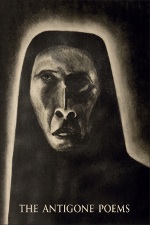
 reviews Marie Slaight and Terrence Tasker’s The Antigone Poems

antigone

The Antigone Poems
by Marie Slaight and Terrence Tasker

Altaire, 2014

The Antigone Poems is a collaborative work, made up of poetry by Marie Slaight and drawings by Terrence Tasker. Created in the 1970s when the writer and artist were living in Montreal and Toronto, and published in 2014, it is an attractively produced book. The drawings, most depicting faces like tragic masks, divide the five chapters. These images are archaic and chthonic in mood, free from any twee classicising, and match well the equally chthonic mood of the poetry. Most of the poems are brief, suggesting fragments of some larger lost work. Such world as they sketch is made out of primary things: sun, blood, bones.

The book presents itself, in the words of the blurb, as ‘an intensely personal invocation of the ancient Greek tragedy’. The less definite ‘invocation’ rather than ‘retelling’ is a wise choice, though the latter term does appear in the promotional material. These poems are rather a lyric engagement with the story, which really requires its readers to know the narrative ahead of time. This is itself an ancient practice, found for instance in some tragic lyric. The blurb’s reference to ‘the ancient Greek tragedy’ suggests Sophocles’ Antigone, though other plays also featured Oedipus’s daughter (among extant tragedies: Sophocles’s Oedipus at Colonus, Euripides’s Phoenissae). There is a decided theatricality to this book: not only the choice of a character primarily associated with drama and the style of the art-works, but the monologue style of the poems suggest a character performing herself.

Continue reading

Τοπία μιας νυχτερινής ψυχής – Fernando Pessoa

fernando_pessoa1_logos+kai+texni

Του Νίκου Ξένιου 

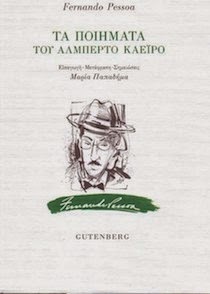
από το http://www.bookpress.gr/, για τα ποιητικά βιβλία του Fernando Pessoa Τα ποιήματα του Αλμπέρτο Καέιρο καιΤα ποιήματα του Άλβαρο ντε Κάμπος  (Gutenberg).

pessoa_kaeiro_logos+kai+texni

«Οι μυστικιστές ποιητές είναι άρρωστοι φιλόσοφοι,
και οι φιλόσοφοι είναι άνθρωποι τρελοί»

F. Pessoa

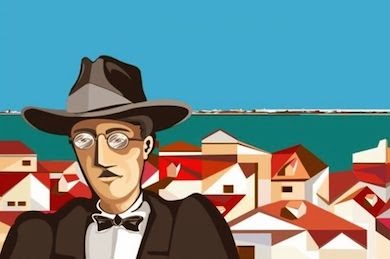
Το 1912, κι ενώ ο Φερνάντο Πεσσόα (1888–1935) επιχειρούσε να γράψει κάποια ποιήματα παγανιστικού περιεχομένου, γεννήθηκε ένα από τα πιο σημαντικά του ετερώνυμα[1]: Ο Αλμπέρτο Καέιρο, το όνομα του οποίου είναι παραφθορά του ονόματος του πορτογάλου ποιητή Σα-Καρνέιρο, με μιαν εικονική ζωή τοποθετημένη ανάμεσα στο 1889 (Λισαβώνα) και το 1915. Τον Μάρτιο του 1912, λοιπόν, ο Πορτογάλος ποιητής έγραψε τον Φύλακα των Κοπαδιών, αποδίδοντάς τoν στην πέννα του Αλμπέρτο Καέιρο και ανασύροντας, έτσι, ποιμενικές μνήμες από τις δέκα Εκλογές (Βουκολικά) του Βιργίλιου. Τα ποιήματα του Αλμπέρτο Καέιρο –μέρος αυτών πρωτομεταφράστηκε στην Ελλάδα από τον Φίλιππο Δρακονταειδή, το 1982– τώρα, σε μια συνολική παρουσίασή τους από τη Μαρία Παπαδήμα στις εκδόσεις Gutenberg, δίνουν την ευκαιρία στο ελληνικό αναγνωστικό κοινό να απολαύσει μιαν ισορροπημένη, ομαλή μετάφραση με ποιητικές αξιώσεις, μαζί με δύο κατατοπιστικά κείμενα εισαγωγής, ένα της μεταφράστριας και ένα του ίδιου του Πεσσόα, υπό το προσωπείο του Ρικάρντο Ρέις.

Poesia pastorale: μια πολυπλοκότητα εν εξελίξει

“Ακολουθεί τη φωνή της συνείδησής του για τον κόσμο και υπακούει στην προοδευτική ανάδυση των αισθήσεων, που θα εδραιώσουν μιαν ιδιόμορφη, σχεδόν θρησκευτική, εικόνα της φύσης”

Αντι-διανοούμενος, αντι-ρομαντικός, αντι-ϋποκειμενιστής, αντι-μεταφυσικός, ο Καέιρο δεν είναι πια αυτός που ήταν ο Πεσσόα, είναι ένας άλλος: αυτός ο «Άλλος» είναι, στην προκειμένη περίπτωση, οιονεί βοσκός, φέρει όλα τα γνωρίσματα αθωότητας που έχει κάθε βοσκός, ακολουθεί τη φωνή της συνείδησής του για τον κόσμο και υπακούει στην προοδευτική ανάδυση των αισθήσεων, που θα εδραιώσουν μιαν ιδιόμορφη, σχεδόν θρησκευτική, εικόνα της φύσης και της ανθρώπινης παρουσίας μέσα σ’αυτήν:

«να με ξετυλίξω και να είμαι εγώ, όχι ο Αλμπέρτο Καέιρο, αλλά ένα ανθρώπινο ζώο που γέννησε η φύση».

Continue reading

Νεότεροι κύπριοι ποιητές

Σάρωση+4

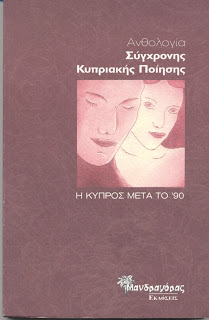
Ανθολογία Σύγχρονης Κυπριακής Ποίησης. Η Κύπρος μετά το ’90,
επιμ. Βάκης Λοϊζίδης, Αθήνα, Μανδραγόρας, 2011, σελ. 150

Ανθολογίες κυπριακής ποίησης έχουν γίνει πολλές· προηγήθηκε η Ανθολογία των κυπρίων ποιητών 1878-1934 (1934) του Άδωνη Βερνάλη, ακολούθησαν η πιο ευπρόσωπη Ανθολογία κυπρίων ποιητών (1951) του Ανδρέα Σ. Ιωάννου και η πιο αναλυτική Ανθολογία κυπριακής ποιήσεως (1965, συμπληρωμένη έκδοση: 1973) των Κώστα Μόντη και Ανδρέα Χριστοφίδη, για να φτάσουμε σε πιο πρόσφατες ανάλογες εκδόσεις, όπως η Ανθολογία σύγχρονης κυπριακής ποίησης (1985) των Λεύκιου Ζαφειρίου και Λουκά Αξελού και η πιο πληθωρική και μάλλον ισοπεδωτική Ανθολογία κυπρίων ποιητών (2008) των Σωκράτη Σκαρτσή και Σωτήρη Βαρνάβα. Αξίζει να σημειωθεί ότι, με εξαίρεση την ανθολογία του Άδωνη Βερνάλη, οι υπόλοιπες τυπώθηκαν στην Αθήνα· και ότι οι περισσότερες από αυτές έγιναν από ποιητές. Υπάρχουν, βέβαια, αρκετές άλλες Ανθολογίες κυπριακής ποίησης, θεματικές, τοπικές ή πιο ειδικές, μερικές από τις οποίες είναι ενδιαφέρουσες. Κάποιοι υποστηρίζουν ότι τέτοιες ανθολογήσεις κυπριακής ποίησης (και κυπριακής λογοτεχνίας γενικότερα) είναι αχρείαστες και βλαβερές, γιατί, κατά την άποψή τους, διαχωρίζουν, τάχα, την κυπριακή από την ευρύτερη νεοελληνική λογοτεχνία. Δεν συμφωνώ με μια τέτοια άποψη. Όσο ο Βασίλης Μιχαηλίδης και άλλοι σημαντικοί κύπριοι λογοτέχνες εξακολουθούν να απουσιάζουν και από τις πιο αξιόπιστες και πιο πρόσφατες Ανθολογίες νεοελληνικής ποίησης ή πεζογραφίας, είναι καλά να εκδίδονται τέτοιες ανθολογήσεις και άλλες εργασίες υποδομής· με την προοπτική οι κύπριοι λογοτέχνες (αλλά και συγγραφείς από άλλες περιοχές του ελληνισμού και της διασποράς) να αξιολογηθούν κάποτε όπως τους ταιριάζει στο πλαίσιο της ευρύτερης νεοελληνικής λογοτεχνίας: «Οι σημαντικότεροι με τους σημαντικότερους, και ο συρφετός με τον συρφετό», για να θυμηθούμε τα λόγια του Γ. Π. Σαββίδη.

Continue reading

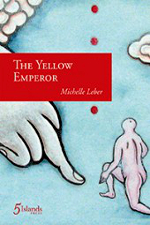
Lucy Van reviews Michelle Leber

yellow-emperor

The Yellow Emperor
by Michelle Leber
Five Islands Press, 2014

Medical diagnosis could be thought of as a form of storytelling; an analytic as well as creative process that translates the unclear expressions of the body into a plausible narrative, ideally one that directs the way to healing. Just as diagnosis might be considered an art – a speculative performance that is highly contingent, at times inspired or risky – the discipline of medical observation has itself often inflected and animated art forms. For instance, many readers would be familiar with the idea of the nineteenth century realist novel as a cultural form that was shaped by methods of ‘objective’ medical observation. Gustave Flaubert made much of his experience as the son of a senior surgeon at a Rouen hospital, recalling in a letter to Louise Colet that: (t)he amphitheatre of the General Hospital looked out onto our garden. On many occasions, with my sister, we climbed the lattice fence and, dangling among the vines, we watched with curiosity the corpses lying there!

The sun was shining on them: the same flies that flew on us and on the flowers went down on them and came back buzzing! … I can still see my father lifting up his eyes from his dissection and telling us to go away.1 In the same letter, Flaubert attributes his fiction’s funereal tone and cynicism to this early proximity to surgery and death. The father’s scalpel may be reimagined as the probing, dispassionate pen of the son, and Flaubert’s fixed sight on his characters as echoing the non-judgemental medical gaze of ‘accurate recording.’ ‘Literary medicine’ and clinical medicine may not be simply analogues, or the products of biographical proximity, but perhaps, as the critic Lawrence Rothfield suggests, two manifestations of the same epistemological force.2

Continue reading

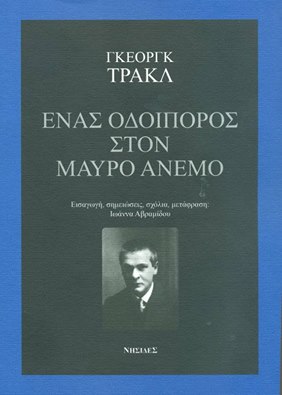
Georg Trakl, Δύο ποιήματα

10428550_10205297436374579_2336784341381751684_n

ΤΟ ΒΡΑΔΥ ΤΗΣ ΚΑΤΑΙΓΙΔΑΣ

Ω, οι κόκκινες ώρες της βραδιάς! 

Ιριδίζοντας σείεται στ” ανοιχτό παράθυρο 

Χαοτικά πλεγμένο στο γαλάζιο, φύλλο κληματαριάς 

Μέσα φωλιάζουν φαντάσματα παραφοράς.

Σκόνη στροβιλίζεται στων ρείθρων τη βρωμιά. 

Μαίνεται ο άνεμος και τα τζάμια δονούνται,

Ένα κοπάδι από άγρια φαριά 

Αστραπές ολόλαμπρα σύννεφα κυνηγούνε.

Με πάταγο ο καθρέφτης της λίμνης σπάζει

Γλάροι κρώζουν στου παραθύρου το υαλοστάσι. 

Πύρινος καβαλάρης από τον λόφο καλπάζει 

Και τσακίζεται στα φλογισμένα πευκοδάση.

Άρρωστοι ουρλιάζουν στα νοσοκομεία. 

Γαλαζωπό το φτέρωμα της νύχτας φτερουγίζει.

Τρεμοφέγγοντας ο υετός 

Αιφνίδια τις στέγες μαστίζει.

***


Η ΝΥΧΤΑ

Εσένα τραγουδώ άγρια ρωγμή,

Μέσα στη νύχτια θύελλα

Πάνω στα στοιβαγμένα βουνά•

Εσείς πύργοι φαιοί

Που ξεχειλίζετε από καταχθόνιους μορφασμούς,

Πύρινα ζώα,

Φτέρες τραχιές, πεύκα,

Κρυστάλλινα άνθη.

βάσανο δίχως τελειωμό

Να κυνηγάς τον Θεό,

Πνεύμα τρυφερό,

Ρίχνοντας αναστεναγμούς στον καταρράκτη,

Στα κυματιστά άγρια πεύκα.

Γύρω από τους λαούς

Χρυσαφένιες αστράφτουνε οι φωτιές.

Η μνηστή του ανέμου αναφλέγεται,

Και μεθυσμένη από θάνατο

Γκρεμίζεται στα μαύρα βράχια,

Το γαλάζιο κύμα

Του παγετώνα

Και η καμπάνα της κοιλάδας

Βροντά δυνατά:

Φλόγες, κατάρες,

Και τα σκοτεινά παιχνίδια

Της λαγνείας,

Μια πετρωμένη κεφαλή

Στον ουρανό εφορμά.

*Μετάφραση: Ιωάννα Αβραμίδου
.
**Από τη συλλογή “Ένας οδοιπόρος στον μαύρο άνεμο”, Εκδόσεις Νησίδες 2014.

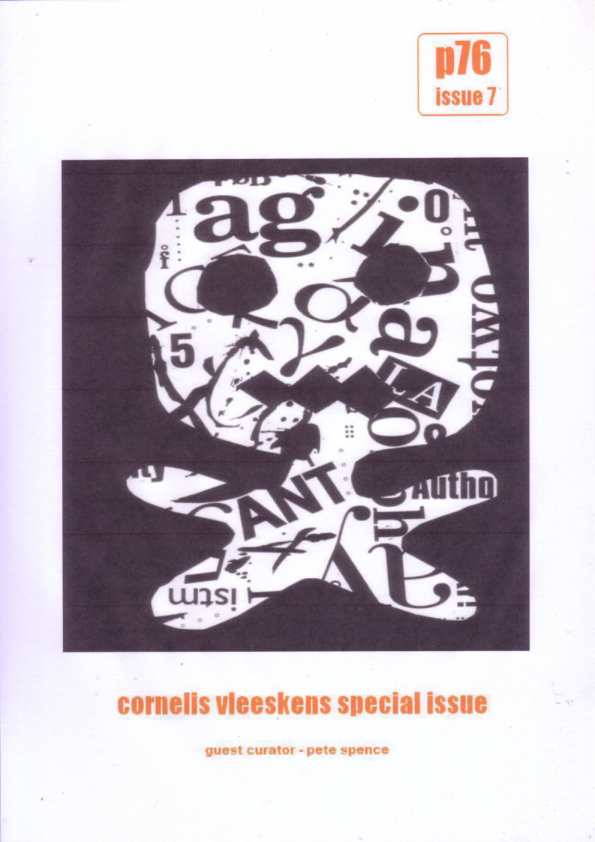
Caren Florance reviews p76’s Cornelis Vleeskens Special Issue

p76-issue-7-cover

Cornelis Vleeskens
Special Issue

Pete Spence, ed.

p76, Issue 7, 2014

The first indication that the contents of this special issue hovers in the Venn overlap of art and poetry lies in its ‘curation’, not ‘edit’. Spence’s project was to ‘sample from a mass of work … to (make) a small but intense window’ (p. 5), and he does this by being true to the materiality of Vleeskens’s visual output. The nostalgic production values of the journal itself – photocopied in black and white on A4 paper, stapled, and with no frilly bits – is a perfect match for Spence’s vision and Vleeskens’s visual practice, which was firmly embedded in the intersections of text and image.

Cornelis Vleeskens (1948–2012) was a Dutch immigrant, arriving in Australia in 1958. From various accounts he was prolific, experimental and wide-ranging in his interests. At the end of the issue, his published poetry is listed ‘towards a bibliography’, with over 100 works cited, a number of them in Dutch. An increasingly bilingual practitioner, he also translated Dutch poetry into English, and was involved in international text art activities such as fluxus-style exercises (p. 19) and mail art: see David Dellafiora’s digital epitaph at Field Studies.

Many of his publications are self-published, also hovering in the coloured overlap between chapbook and zine in our contemporary publishing taxonomy. Spence omitted Vleeskens’s prose works, commercially published work and collaborative work, but he did include an essay written about ‘the portrayal of Aboriginal culture on Australian postage stamps and related philatelic products’, an important empirical survey connecting his political and mail art interests, as well as a small collection of personal recollections of the man and a review of some of his more conventionally-published work by p76 editor Mark Roberts that were originally included in the Rochford Street Review. What this collection exhibits is the visual poetry strand of Vleeskens’s life work.

Continue reading