Mark Roberts
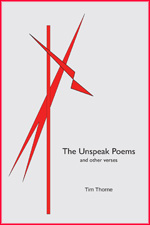
 reviews Tim Thorne’s The Unspeak Poems and other Verses

thorne

The Unspeak Poems and other Verses
by Tim Thorne

Walleah Press, 2014

I first came across Tim Thorne’s work through his fifth book of poetry The Atlas, published in 1983. I was struck by the cover – a globe featuring Tasmania at its centre, huge, and taking up more than half of the earth. The rest of Australia stretches away in the distance, small, a fraction of the size. As for the rest of the world, I could only assume that it was crammed away on the dark side of the Earth.

The book consisted of a single poem, ‘The Atlas’, which begins with Thorne’s childhood in Tasmania and slowly moves out to expand on the personal, political social and artistic elements that had shaped his life to that point. At the end of that book he writes:

The ideal atlas would have
a decade of blank pages
on which to be your own cartographer

But after the ideal comes
the man who goes after the real.
After the accurate maps
have pinned the rivers, walled the cities
in clean circles, after the breath has caught
at the sheer closeness of the contour lines,
there is the need to study the underlying
trends, the tensions and contentions
and to chart what we have learned
with attention to detail as if
each statistic was a breve or rhyme.
‘Envoi’

Continue reading

Philip Levine, 1928–2015

philip-levine

Philip Levine was one of the leading poetic voices of his generation, “a large, ironic Whitman of the industrial heartland,” according to Edward Hirsch. The son of Russian-Jewish immigrants, Levine was born and raised in industrial Detroit, where he began working in the auto factories at the age of 14. As a young boy in the midst of the Great Depression of the 1930s, he was fascinated by the events of the Spanish Civil War. His heroes were not only those individuals who struggled against fascism but also ordinary folks who worked at hopeless jobs simply to stave off poverty. Noted for his interest in the grim reality of blue-collar work and workers, Levine resolved “to find a voice for the voiceless” while working in the auto plants of Detroit during the 1950s. “I saw that the people that I was working with … were voiceless in a way,” he explained in Detroit Magazine. “In terms of the literature of the United States they weren’t being heard. Nobody was speaking for them. And as young people will, you know, I took this foolish vow that I would speak for them and that’s what my life would be. And sure enough I’ve gone and done it. Or I’ve tried anyway.”

Levine earned his BA from Wayne State University in 1950 and began attending writing workshops at the University of Iowa, as an unregistered student, in 1953. He took classes with Robert Lowell and John Berryman, and would later pay tribute to Berryman’s teaching influence on his development as a poet. Levine officially earned an MFA from the University of Iowa in 1957, and later that year won a Jones Fellowship at Stanford University. Shortly thereafter, he began teaching at the University of California, Irvine, where he would remain until 1992. Levine also taught at Columbia, Princeton, NYU, Brown, the University of California at Berkeley, and Tufts.

Though Levine did not return to live in Detroit, its people and economy would remain central concerns of his poetry. Critic Herbert Leibowitz, commenting on Levine’s 1980 National Book award and National Books Critics Circle award-winning collection Ashes: Poems New and Old, wrote: “Levine has returned again and again in his poems to the lives of factory workers trapped by poverty and the drudgery of the assembly line, which breaks the body and scars the spirit.”
Continue reading

“Μισές αλήθειες” του Κυριάκου Συφιλτζόγλου

mises+aleth

Αν οι λέξεις είναι το όχημα της ποίησης και το όχημα δημιουργεί την πρώτη εικόνα, τι εντύπωση δίνει άραγε ένας ποιητής που μεταχειρίζεται λέξεις καθημερινές, απλές, άμεσες; Που τολμά να γράφει ποίηση χωρίς να χρησιμοποιεί βαρύγδουπα και πολυποίκιλτα επίθετα; Που αφήνει τον Χο Τσι Μινχ να ξεχορταριάσει τη λέξη «ακράδαντα»; Που με αυτόν τον τρόπο παράγει ειλικρίνεια και ταυτόχρονα ένα αποτέλεσμα αμιγώς ποιητικό; Προφανώς την καλύτερη. Γι’ αυτό και δεν είναι τυχαίο που, δύο χρόνια μετά την έκδοση της τελευταίας του συλλογής « Μισές αλήθειες», ο Κυριάκος Συφιλτζόγλου εξακολουθεί να συζητείται και που οι πιο αξιόλογοι σύγχρονοι ποιητές ορκίζονται στο όνομά του.

Καθόλου άδικα, οφείλω να ομολογήσω. Δεν πάει πολύς καιρός που διάβασα τις «Μισές αλήθειες», αφού λίγες μέρες νωρίτερα είχα φάει κατσάδα, όταν σε σχετική ερώτηση παραδέχτηκα ότι δεν τον γνωρίζω. Και ορθώς με κατσάδιασαν, γιατί πράγματι ο Συφιλτζόγλου αξίζει και είναι άδικο να μην είναι περισσότερο γνωστός. Είναι σπάνιο να καταφέρνει ένας ποιητής με τα πρώτα κιόλας ποιήματα της συλλογής του, κάτι που για άλλους μένει όνειρο απατηλό ακόμη και μετά από τόνους μελάνι: να κερδίσει τον αναγνώστη. Τον κερδίζει, επειδή του δίνει τον τρόπο να καταλάβει την αλήθεια της εμπειρίας που διαβάζει και να την ενστερνιστεί. Κι ας είναι αυτή η αλήθεια μισή, όπως ευθαρσώς δηλώνει στον τίτλο.
Continue reading

Graeme Miles reviews Tim Wright and Rob Wilson

wright

The night’s live changes
by Tim Wright

Rabbit Poets, 2014

Free Will and the Clouds
by Rob Wilson

Grand Parade Poets, 2014

For all their contemporaneity, both of these books work with themes, or better, anxieties, that have always been at the heart of lyric poetry. In different ways, they are concerned with avoiding easy comfort in language and shying away from time and mortality.

Both books use the old trick (and a good one) of starting with a quietly atmospheric poem. Tim Wright’s The night’s live changes begins with: ‘sky currently gold’. Despite the suggestion of a romantic soft-focus in the title, the poem itself sparely and rapidly sketches the surroundings in which the rest of the book unfolds:
the room links into place
a light

where it wasn’t; tv
-buzz,
rooves, a shuttle of air
weighs
on a fringe
it’s
the usual –

walking
the long way around
dense
not porous blocks –
remember how

the sound of the band
would carry
in each time the door opened
to the beer garden

Continue reading

Dimitris Tsaloumas, A Winter Journey / Χειμερινό Ταξίδι, Owl Publishing 2014

Tsaloumas - cover

ΤΟΥ ΔΗΜΗΤΡΗ ΤΡΩΑΔΙΤΗ

Με το βιβλιάριο (chapbook) αυτό (καθώς και με το βιβλιάριο της Angela Costi, Lost in Mid-Verse – που θα παρουσιάσω την επόμενη βδομάδα), οι Owl Publishing εγκαινίασαν, τον περασμένο χρόνο, μια νέα σειρά ολιγοσέλιδων εκδόσεων με σκοπό να δώσουν τόσο στο ελληνόφωνο, αλλά και στο γενικότερο αυστραλιανό κοινό ενδεικτικά αποσπάσματα του έργου Ελληνοαυστραλών ποιητών που έχουν να παρουσιάσουν μια αξιόλογη παρουσία στα Γράμματα της πόλης και της χώρας που ζούμε.

Έτσι με το ολιγοσέλιδο αυτό βιβλιαράκι (40 σελίδων) δίνεται στο αναγνωστικό κοινό η ενότητα ποιημάτων του Δημήτρη Τσαλουμά A Winter Journey / Χειμερινό Ταξίδι, σε μια αυτοτελή έκδοση και στις δύο γλώσσες, αγγλικά και ελληνικά. Η ενότητα “A Winter Journey” γράφτηκε από τον Τσαλουμά στα αγγλικά και ως τέτοια είδε το φως της δημοσιότητας ως μέρος του βιβλίου Helen of Troy and Other Poems, που εκδόθηκε το 2007 από το University of Queensland Press (UQP). Στη συνέχεια μεταφράστηκαν από τον ίδιο τον Τσαλουμά στα ελληνικά ο οποίος και τα εμπιστεύτηκε στην υπεύθυνη των Owl Publishing, Ελένη Νίκα. Έτσι, ευελπιστώ να (ανα)δημοσιεύσω μερικα ή όλα απο αυτά τα ποιήματα στο δικό μου ιστολόγιο Το Κόσκινο στη διεύθυνση https://tokoskino.wordpress.com
Continue reading

Anne Elvey 
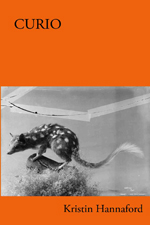
reviews Julie Maclean’s When I saw Jimi, Kiss of the Viking and Kristin Hannaford’s Curio

9781909357242

When I saw Jimi
by Julie Maclean

Indigo Dreams Publishing, 2013

Kiss of the Viking
by Julie Maclean

Poetry Salzburg, 2014

unnamed

Curio
by Kristin Hannaford

Walleah Press, 2014

The identity of the Jimi of the title of Julie Maclean’s When I saw Jimi becomes evident early on:
When he dropped to his knees making
rough love to the white

Flying V with the psychedelic motif
I screamed

then swooned when he bent it
from behind

( ‘Losing it to Hendrix’, When I saw Jimi, 12)

Poems of England in the 1960s, youthful romanticism, experimentation and love are threaded with a wry understanding of gender relations and choices made, then move to more sober reflections. In ‘Brides that Never Became’, standing in an English church the speaker wonders about a relationship that might have been, had she not ‘looked over the lichened / fence, dry stone wall, / swollen ocean to another land’ (When I saw Jimi, 31). Outside by a river she finds a ‘flimsy tribute to a young Indian couple’ who have died there; their wedding also ‘never became’. The poem’s closes:

… a solitary swan tucks
herself up under the
weeping tree like a comma

(When I saw Jimi, 32)

That final ‘comma’ saves ‘the / weeping tree’ from cliché.

‘Bosnia boy sends postcard home’ is more biting. The boy in Australia is ‘gagged / by the desert grit that gets / shaved off the salt lake’ (When I saw Jimi, 41). He dreams of warriors and dragons, and his mother in Bosnia pregnant with him. The poem closes with the boy imagining himself cutting open his mother’s belly and escaping ‘into the / mountains, at home in the cold, / with tata and the warlords’ (When I saw Jimi, 41).
Continue reading

Siobhan Hodge
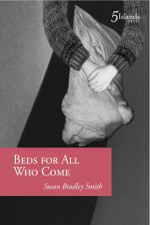
 reviews Susan Bradley Smith’s Beds For All Who Come

sbs

Beds For All Who Come
by Susan Bradley Smith

Five Islands Press, 2014

Susan Bradley Smith’s newest collection, Beds For All Who Come, is a delicate investigation into the lives of multiple historical figures, transitioning between the public and the personal. The collection is an excellent example of écriture féminine in that a range of individual female voices write to one another, but also acknowledge a fringe of male figures, assessing imagined and historical feelings and experiences, while also exposing some potential issues with this model.

In keeping with Smith’s keen interests in women’s theatre, Beds For All Who Come is presented as if a play: the collection traverses several Acts and is headed by a cast of characters, introduced before the poems commence. Each section is clearly denoted for a particular character and deals with proposed events from that figure’s life. Smith’s historicism ties in well with her personal and direct approach to these individuals, sympathetically grounding each poetic engagement, but also linking a broader poetic concern with modes of communication and support.

Absence is one of the strongest sensations in the collection. Desires for mentors and maternal figures permeate all sections, but particularly the Frieda Hughes part, as Smith’s Frieda persona writes to her lost mother, Sylvia Plath. Each persona speaks as though to a lost originary figure, grounding herself as part of a chorus of ‘abandoned women’. However, in keeping with Lawrence Lipking’s assessment of such women, Smith’s speakers are not lost to vulnerability, but given voice, agency, and activity by their abjection and oppression.1 In a double connection to female predecessors, Smith’s Frieda writes after the style of Sharon Olds in ‘I go back to 1963’:

… Frightened of this
strange breakfast in bed
and the silence, I tried
the kitchen door. Later,
I learned you’d sealed
it to stop the gas

from taking us with
you…
Continue reading

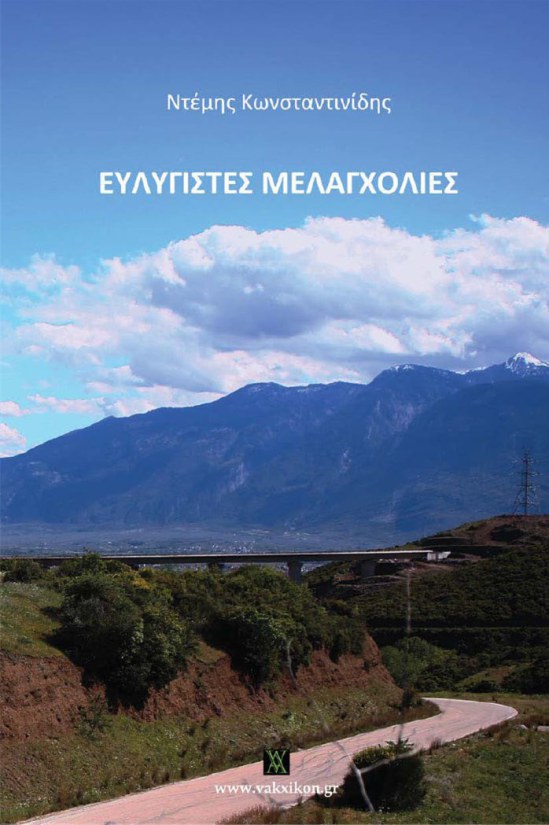
Ντέμης Κωνσταντινίδης, Ευλύγιστες μελαγχολίες, εκδ. Vakxinon

ceb5cf85cebbcf85ceb3ceb9cf83cf84ceb5cf83-cebcceb5cebbceb1ceb3cf87cebfcebbceb9ceb5cf83_1

TOY ΘΕΟΧΑΡΗ ΠΑΠΑΔΟΠΟΥΛΟY

Όταν μια ποιητική συλλογή παίρνει αρκετές καλές κριτικές, στο πρώτο καιρό της κυκλοφορίας της, τότε τίθεται το ερώτημα τι θα μπορούσε να προσθέσει μια ακόμη, που γράφεται αρκετά αργότερα από την έκδοσή της. Όμως, πάντα θα υπάρχει ενδιαφέρον, όταν γράφουμε για μια ποιητική συλλογή, που μας έχει εντυπωσιάσει.

Έχουμε, λοιπόν, στα χέρια μας την ποιητική συλλογή του Ντέμη Κωνσταντινίδη: «Ευλύγιστες μελαγχολίες», που κυκλοφορεί από τις εκδόσεις «www.Vakxikon.gr».

Το πρώτο, που παρατηρούμε είναι ότι η συγκεκριμένη ποιητική συλλογή περιέχει πολλά μικρά ποιήματα. Ο στίχος είναι άλλοτε ελεύθερος και άλλοτε παραδοσιακός, πάντα, όμως, σύγχρονος, καθώς καταπιάνεται με θέματα υπαρξιακά, ερωτικά, κοινωνικά, που απασχολούν τον σύγχρονο άνθρωπο. Ιδιαίτερα στον παραδοσιακό στίχο ο Ντέμης Κωνσταντινίδης παρουσιάζει μια μεταμοντέρνα τάση μετρώντας αυστηρά το στίχο και χρησιμοποιώντας χαλαρή ομοιοκαταληξία: «Στα σχολεία διδάσκουν δυστυχία / τα κάγκελά τους είναι η πρώτη φυλακή / αυτοδιδάξου την ευτυχία / κάνε κατάληψη στην εξοχή».

Η χαμένη παιδική αθωότητα και η αδιαφορία για τον διπλανό είναι κάποιες από τις πτυχές της σύγχρονης κοινωνίας, που απασχολούν το ποιητή. Έτσι, θυμάται τον παλιό έρημο παιδότοπο και διαπιστώνει με πίκρα: «ξεχάστηκα εκεί μικρό παιδί και βρέθηκα με μιας / σχεδόν σαράντα…», ενώ παρατηρώντας μια Δευτέρα πρωί τους περαστικούς θα γράψει: «στο στύλο της ΔΕΗ, ένα χαρτί / -Άλλος ένας που τον παρέσυρε ο χρόνος».

Ένα άλλο σημείο, που πρέπει να σταθούμε στην ποιητική συλλογή του Ντέμη Κωνσταντινίδη «Ευλύγιστες μελαγχολίες» είναι η ειρωνεία, που διαπερνά κάποια από τα ποιήματα, που αρκετές φορές γίνεται τραγική: «Ναι, είμαστε έξυπνοι! / Πήραμε δίπλωμα ευρεσιτεχνίας… / Εφηύραμε αδιάρρηκτες μπάρες ασφαλείας… / Φυλακιστήκαμε οικειοθελώς στα διαμερίσματά μας, / μαντρώσαμε και τα παιδιά μας!»

Κλείνοντας, οφείλουμε να συγχαρούμε τον Ντέμη Κωνσταντινίδη, για αυτή την ποιητική του συλλογή, περιμένοντας τις νέες τους πνευματικές δημιουργίες.

Jennifer Compton, Now You Shall Know, Five Islands Press

Jennifer-Compton-cover-170x240

Launch Thursday, 5 February, 6pm

at Collected Works Bookshop
Nicholas Building, Level 1, 37 Swanston Street, Melbourne, Victoria, Australia.

Launched by Geoffrey Lehmann with the kind support of Andy Jackson who will read from his own work.

The usual deal at a Five Islands Press launch – excellent wine and excellent nibbles – shoulder rubbing, schmoozing, flying kites, finding friends – and poetry!

Please come and help swell the throng even if Melbourne is doing weather. The book costs $24-99 but this information is obligation free.

‘You can never get away from where you come from. This is poetry that confronts those difficult connections, gutsy work with a deep understanding of people. Tough, staring down the truth. Loving, too, but never sentimental.’
—Anna Fern

‘From tender observations of children to the tortuous witnessing of a mother’s dying, Jennifer Compton’s poems zing and sting with the joys and complexities of real living. Her ‘dazzling intimacies’ and sharp, but generous watchfulness of all the world lead to swooping narratives that are poignant, funny, sensitive and fiercely intelligent. Now You Shall Know is a wondrously wide-ranging, disarming and haunting collection.’
—Jean Kent

‘This is generous, mercurial poetry with linguistic and dramatic verve and telling silences. In Now You Shall Know Jennifer Compton claims her space con brio: I think of a rider or ballet dancer and also of a long-distance traveller since these poems cover so much ground. I warmed to the intimate, ironic assurance, to the trust placed in the reader and to the almost palpable presence of this witty, provocative, perceptive raconteuse prepared to tell me, in confidence, everything. There are such sparkling images in this book, and such acknowledged darkness too, a truthfulness and brusque compassion ‘as human as anything is’.’
—Jan Owen

*From Five Islands Press at http://fiveislandspress.com/catalogue/now-you-shall-know

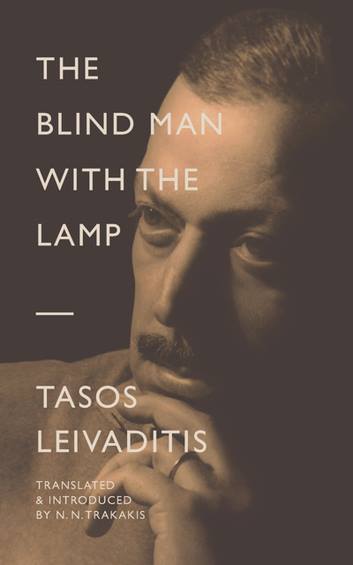
N.N. Trakakis (trans. and ed.), The Blind Man With The Lamp – Tasos Leivaditis, Denise Harvey Publ., 2014

dtbook070215

ΤΟΥ ΔΗΜΗΤΡΗ ΤΡΩΑΔΙΤΗ

Ο Τάσος Λειβαδίτης (1922-1988) είναι μία από τις μεγάλες μορφές της ελληνικής λογοτεχνίας, και ειδικά της ποίησης, κατά τον 20ό αιώνα. Όχι μόνο από την πλευρά της ποιητικής και λογοτεχνικής του “παραγωγής”, αλλά και για το ότι υπήρξε ένας από εκείνους που βίωσαν το δράμα της ήττας της Αριστεράς στην Ελλάδα και -κατά κύριο λόγο- τη ζοφερή δεκαετία του 1950 που την ακολούθησε αμέσως μετά, με όλα τα επακόλουθα: φυλακίσεις, εξορίες, εκτελέσεις, μαζική μετανάστευση, φτώχεια, ερήμωση, κοινωνικός αποκλεισμός. Είναι ένας από εκείνους τους ποιητές, το σύνολο σχεδόν του έργου των οποίων έδωσε ανάγλυφα όλα αυτά τα ασφυκτικά και πνιγηρά επακόλουθα, μια μεγάλη ομάδα ποιητών η συντριπτική πλειοψηφία των οποίων ανήκαν στην Αριστερά και η οποία ονομάστηκε “γενιά της ήττας”. Αν και, κατά τη γνώμη μου, αυτός ο ποιητής ο οποίος δικαιούται τον “τίτλο” του κατ’ εξοχήν ποιητή της ήττας είναι ο Άρης Αλεξάνδρου.

Ωστόσο, ο Τάσος Λειβαδίτης, παρ’ όλη τη στράτευση στην Αριστερά και όλα τα παρεπόμενα, παρέμεινε και εξακολουθεί να παραμένει στη σκιά των άλλων μεγάλων ονομάτων της ελληνικής ποίησης και λογοτεχνίας που είναι παγκοίνως γνωστοί έξω από τα στενά ελλαδικά όρια, όπως οι Κ. Καβάφης, Γιάννης Ρίτσος, Γ. Σεφέρης, Οδ. Ελύτης και Ν. Καζαντζάκης.

Από αυτή την άποψη, η πρώτη αγγλική μετάφραση του έργου του Λειβαδίτη “Ο τυφλός με τον λύχνο” (εκδ. Κέδρος), που πρωτοκυκλοφόρησε το 1983 και ανήκει στην ύστερη φάση του έργου του ποιητή, από τον Ελληνοαυστραλό πανεπιστημιακό Ν.Ν. Τρακάκη, αποτελεί ένα σημαντικό βήμα προς την κατεύθυνση του να γίνει γνωστό και έξω από τα ελλαδικά όρια ένα μέρος του έργου του άκρως σημαντικού αυτού ποιητή μας. Το έργο αυτό είναι μια πρωτοποριακή συλλογή ποιητικής πρόζας η οποία με τον άκρατο δυναμισμό της επιχειρεί να δώσει φωνή στη μεταπολεμική εκείνη γενιά που απογυμνώθηκε από ιδεολογίες και διαποτίστηκε από τον πόνο για την απώλεια και το θρήνο και, από την άλλη, πάντα αναζητούσε το Άλλο, στην περίπτωσή μας το ιερό Άλλο.
Ο Ν.Ν. Τρακάκης παραθέτει, επίσης, μια εκτεταμένη και αρκετά δουλεμένη εισαγωγή στο έργο του Λειβαδίτη σε συνάρτηση με τη στράτευσή του στην Αριστερά και με το πολιτικό και κοινωνικό κλίμα που επικράτησε στην Ελλάδα μετά το τέλος του Εμφυλίου. Πιστεύω, όμως, ότι ένας ποιητής της κλάσης και του εύρους του Λειβαδίτη αξίζει μια ενδελεχή ανάλυση όχι μόνο για τη γραφή του αλλά και γενικά για τη ζωή του και τις θρησκευτικές του πεποιθήσεις (ένας από τους ελάχιστους αριστερούς ποιητές με έντονο, κυρίαρχο θα έλεγα, το θρησκευτικό στοιχείο, ειδικά στην ύστερη φάση της ποιητικής του δημιουργίας).

Ο Νεκτάριος Νικόλαος Τρακάκης γεννήθηκε στη Μελβούρνη από Κρητικούς γονείς και είναι λέκτορας Φιλοσοφίας στο Australian Catholic University. Ποιητής και ο ίδιος (η πιο πρόσφατη συλλογή του έχει τίτλο From Dusk to Dawn, 2012), έχει επίσης εκδώσει το βιβλίο Southern Sun, Aegean Light: Poetry of Second Generation Greek-Australian (Australian Scholarly Publishing, 2011).