Dimitris Tsaloumas and the music of the unseen

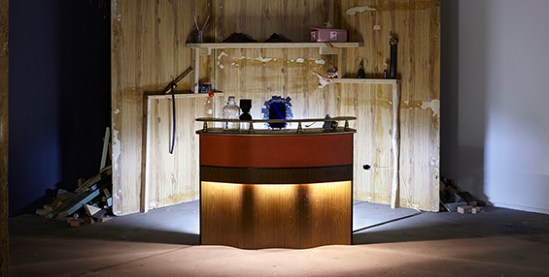
Nick Dorey, An ointment isn’t an antidote, 2016, site-specific mixed media installation. Courtesy the artist. Photo: Zan Wimberley. Part of the exhibition Dämmerschlaf at Artspaceuntil 28 February 2016

Nick Dorey, An ointment isn’t an antidote, 2016, site-specific mixed media installation. Courtesy the artist. Photo: Zan Wimberley. Part of the exhibition Dämmerschlaf at Artspaceuntil 28 February 2016

BY VRASIDAS KARALIS

The recent death of the poet Dimitris Tsaloumas (1921-2016) offers the sad but necessary opportunity to revisit and re-read his work — not only as a conventional tribute to his life but mostly as a re-interpretation of his moment in the literary life of Australia. It is true that it took some time to include his work in the official anthologies of mainstream Australian poetry. By the nature of his work also he was never included in anthologies of anti-mainstream poetry; his work had something profoundly conservative in its own constitution yet at the same time, when he appeared in Australian letters in 1983, he brought something new, somehow challenging to the reading and writing addictions of that era.

Tsaloumas’ work evolved during a period when all possibilities were re-opened in Australian society. It was a period of intense optimism, curiosity and existential naiveté. Borders collapsed, communications were intensified and the need to express the visible social differentiation became imperative. Such optimism was both a need and a desire: by the 80s, the old elaborate poetic edifices of Kenneth Slessor, A.D. Hope and Judith Wright were revered but seriously questioned by the anarchic voices of Les Murray, John Tranter, Bruce Beaver, John Blight, Robert Adamson, Robert Gray amongst others. His first translated collection of poems The Observatory (1983) was in a way the culmination of his poetic trajectory in Greek, one which had started almost 35 years earlier. In the collection, through the mediation of Philip Grundy, Tsaloumas entered the English language, expressing, like so many bicultural creators, Greek emotions in English words. His second translated work The Book of Epigrams (1985) characterised by its constant concern for formal completeness, framed the iconography of a deep poetic territory full of symbols and images that reached back to classical Greece.
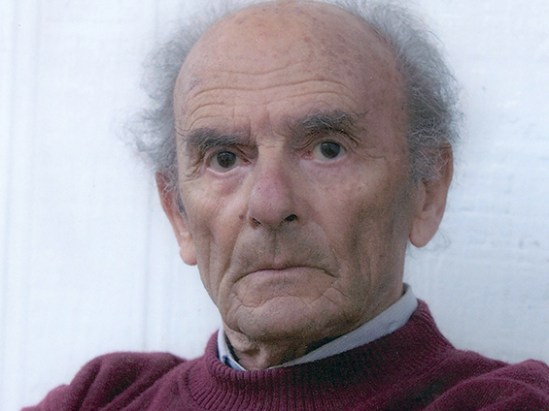
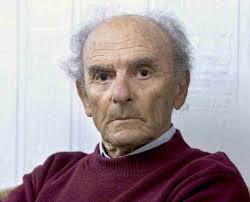
Dimitris Tsaloumas. Image thanks to UQP

Dimitris Tsaloumas. Image thanks to UQP

After 1988, Tsaloumas wrote his work in English. He became an Australian writer—although identity politics or the need to belong, the faddish ideologies of the period, never played any significant role in his work. HisFalcon Drinking (1988) is one of the most intricate and complex poetic works of the 80s in Australia. It is characterized by many competing voices, (he calls them variations,) which somehow converged on the solidity and the precision of a ‘strong’ poetic form. Tsaloumas’ poetry is structured around the music pattern of theme and variation—and most of his works in English maintain this tonal configuration as the basis of his poetic voice. In a sense he is the Stravinsky of Australian English: through his Hellenic classicism he tamed and subdued the fierce outbursts of his romanticism. His romanticism was the result of his nostalgia for his native island as well as a consequence of his politics. Tsaloumas migrated to Australia in 1952 for political reasons, and ideological rage against injustice can be felt throughout his poetry, as it could through his personality. His migration to English, however, established the need for what W.H. Auden called ‘formal order’—and this essentially provided the poet with a focused landscape and a centred vision of the world.

Even before this translingualism, there was always a unified poetic subjectivity in his verses. Furthermore, despite his modernist origins, in the works of T.S. Eliot and George Seferis, the aesthetics of fragmentation never exercised any serious allure for him. By writing in English, Tsaloumas experimented with new formal arrangements and formations, testing the limits of his own poetic world and the limitations of his Australian English. Sometimes, his language is heavy and slow, but when he succeeds, his work is full of energetic fluency and vibrant demoticism. This can be felt in Portrait of Dog (1991), The Barge (1993) and The Harbour (1998), three collections replete with the irregularities of Australian colloquialisms, the emotional force of oral directness and the agility of vocal intonations all tamed by the steady pace of versification, the exactness of verbal expression and the precision of his stanzas.

In his later work, like New Poems (1999), Sunrise with Sparrow (2000) andHelen of Troy and Other Poems (2007), Tsaloumas simplified his idiom, by dissolving the dense patterns of theme and variations and exploring the absolute simplicity of expression, through the rediscovery of the trite and the banal. These works are precious examples of Edward Said’s ‘late style’ as the poet abandoned all the verbal complexities that gave his known style its very specificity. With them he immersed himself into what Roland Barthes considered the ‘zero degree of writing,’ discarding all metaphors and pre-ordained orders of expression. His last works are structured around verses of felicitous transparency and Edenic freshness, despite the fact that they resonate with ominous feelings and articulate necromantic utterances. His modernist experimentation with form received in them its most astute re-imagining. Now the subtle rhythmic patterns underneath the verses marked the imperceptible transitions to musical tonalities beyond meaning; the central theme of these poems, that all explore the ‘truth of noble substance’ (‘Helen of Troy’), is the ineffability of death, the silence of all history in front of the unanswerable mysteries of being. The Greek word ‘telos’, meaning both end and purpose would have been the proper way of finishing a complete life, a life of juxtapositions and convergences.

Tsaloumas’ work is an emblematic achievement of poetic translingualism. Poets live in specific places and specific times: the quest of the critic is to find that place and time, localize its coordinates and give it a name. Sometimes the homelessness of the critics and their mind is projected on the imaginative universe of the poet; thus the very specificity of the poem becomes a shadow marker of the critic’s own question for domesticity. The critical task is to reconstruct the homeliness of the specific poetic language, to see the poet’s world as an autotelic form and not as a comment on society, politics or sexuality.

Tsaloumas’ poetry is prone to be fragmented by its interpretation: Greek-Australian, Australian-Greek, modernist, formalist, conservative, diasporic and much more. We must see his work as a totality, as the formal crystalisation in language of the existential experience of a specific individual and not as the fragment of a missing reality. He was all of the above and his language clearly shows it: from his early poems in Greek to his mature poems in English and Greek, the poetic world was expanding, contracting and simplifying itself in an admirable and somehow challenging way. If there is a constant parameter of his language, it can be characterised as an assembly of nouns and not as a collection of adjectives. Structured around raw materials and based on the gravity of solid references, his verses resonate with the staunch attempt of many poets worldwide in the same period to save the language of poetry from the danger of meaninglessness and the anxiety of trivialisation.

With his deep classical education, he avoided the over-sophistication of contemporary self-referential modernist forms. His verses are rough and somehow harsh; so they have to be read as unities, as complete stanzas, and not as isolated verses. Tsaloumas was the poet of formal quest; he struggled to formulate the density and the regularity of a distinct formal configuration in order to localise his poetic voice and avoid the accusation of a poet writing in a foreign language, de-territorialised, un-centred, homeless.

His poems will be read time and again by young poets who want to feel the otherness of poetic language or experience the otherness within the poetic language. His translingualism is the home of contemporary sensitivity: ‘I arrived on time though I had no address,’ he says one of his poems. He reached Australian poetry at the right moment, when a poetic regime change was necessary and desired. He contributed with his polyphonic variations to re-arrange the tonalities of poetic language until he reached the limitations of his own idiom. ‘Your struggle,’ he says in another poem, ‘is with the unseen, the beast that never yields.’ In his best poems, we have the impression that the unseen had found its proper musical translation and has localised a home for his poetic existence. As long as young poets exist who worship the plasticity and the solidity of poetic expression, his work will be read—and that’s greatest praise anyone can give a poet.
*
Our first essay this week is by Sophia Barnes, who considers three new books by Australian women writers: Beth Yahp’s Eat First, Talk Later, Drusilla Modjeska’s Second Half First and Debra Adelaide’s The Women’s Pages. What these books share is an interest in how the stories of women are told and retold. In ‘What To Leave Out’, Barnes writes:

Two memoirs, one fiction? Or one family history, two fictions entwined into a single narrative, and a ‘reflection on the arc of a life’? All three of these books show women writing themselves into being, as they construct narrative from the raw materials of unwieldy lives, whether imagined or real. Each writes and rewrites sensation, tactile detail, exchange or confrontation, revising and rediscovering through the process. The compulsion to self-transcription is persistent, whether it be in the service of self-discovery, exploration or interrogation; whether it comprises reflection, hindsight, or the recovery of stories which might otherwise be lost; whether it functions to challenge or to reinforce, as transformation or as testament – or simply as record.

William Finnegan’s memoir of surfing is the subject of our second essay this week, ‘Mushburgers’ by Knox Peden. Finnegan is a writer for the New Yorkerwho has filed stories from around the world, including Australia. Peden writes:

The expectation in reading Barbarian Days is that one will learn the roots of this passion, that we will see its organic emergence from the world travel treated in its pages. But this passion seems incidental too. The memoir is, after all, of a surfing life. And herein lies the book’s most enchanting aspect. Figurative language abounds—I defy anyone to find better descriptions of surfing, whatever the criteria might be, and regardless of whether you’ve surfed or tried to. But the book as a whole is not a metaphor; it is astonishingly literal. We expect a child of the 1950s to take us through the disappointments of the counterculture. We expect a memoir dedicated to the author’s teenage daughter to take us through the challenges of marriage and the miracle of fatherhood. The wife and kid are in the book, but they are never its subject, much less its object. The wonder of Barbarian Days is to provide us with a literary experience that is not a stand in for other experiences, that is not an allegory of effort and victory and disappointment and loss that memoir culture has conditioned us to expect.

This week in From the Archive, we return to Kerryn Goldsworthy’s essay on the launch of Text Classics, ‘What We Talk About When We Talk About Australian Literature’,  one of the first to appear on the Sydney Review of Books on our launch in early 2013. In that essay, Goldsworthy reflects on the transformation of the idea of ‘Australian literature’ since 1988, both within the academy and beyond it:

Why 1988? The Bicentennial celebrations and the lead-up to them had made a lot of people do some hard thinking about exactly what we talk about when we talk about Australian literature, and that was reflected in the way it had begun to be taught in universities. Nor was it just the academics; many of the writers themselves were suspicious of the historical triumphalism that the Bicentennial unavoidably represented. Kate Grenville’s 1988 novel Joan Makes History was a witty bit of feminist revisionism intended to destabilise traditional accounts of Australian history, while Patrick White, as David Marr reports in his biography, ‘decided that nothing of his would be performed or published in Australia in the bicentennial year of white settlement.’ In a 1985 letter to a friend, White had written ‘I hope I am dead before 1988 when we are supposed to celebrate our emptiness in a great shower of bullshit.’ Grenville sent him a copy of Joan Makes History, which he liked. ‘I was carried away,’ he wrote to her. ‘When I finished I even had a cry.’

Karalis-author-pic
*Vrasidas Karalis teaches Modern Greek at the University of Sydney. He has published Recollections of Mr Manoly Lascaris (2007), The Demons of Athens (2014) and Reflections on Presence (2016).

**This article published in Sydney Review of Books at http://www.sydneyreviewofbooks.com/dmitris-tsaloumas-and-the-music-of-the-unseen/
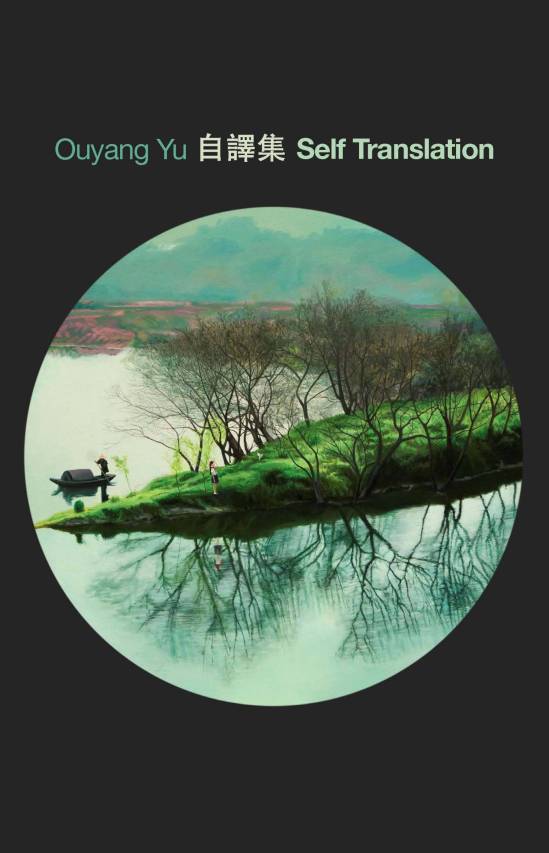
Ouyang Yu, Self Translation (Transit Lounge)

self_translation_1500_wide

In the ambiguity of Ouyang Yu’s title, Self Translation, we can read not just a creolised or transformed Chinese Australian self, but two selves: a Chinese self on the left page and an Australian on the right. Nor are the two selves completely discrete. Yu’s poetry is as central – and essential – as anyone’s else’s to Australia right now: if the concept of centrality is useful. My point is that he is not just doing his own unique thing, but is writing Australian lyrics that state ‘the death of nature is most beautiful’ without being obvious or obviously ironical (‘Beautiful Death’); he can also begin a poem called ‘Christmas, 1993’, with the line ‘this is the season of death’. In Yu’s poetry the excoriation of the nation is rejuvenated; in ‘Song for an Exile in Australia’ Yu writes, ‘in a loveless season in Australia’, ‘in a poemless season in Australia’ and, in a brilliant image, of ‘the/wheelchair of imagination’. But it’s not all bleak. ‘On a Sunny Noon’ is a hilarious take on the migrant poem:

on a sunny noon
i was eating
a delicious fish head
sucking
its eyes
one by one
it was

the head

of a fish
that used to swim

in the murray

Racism is a continuing theme in Yu’s poetry, one that receives innovative treatment in ‘My Country’, which sympathises with a ‘filipino woman … yelling: back to the philippines!’. Here the going back (from Japan) is presented as the migrant’s desire. The poem is further complicated by its allusions to Australian national literary tropes. The title of course recalls Dorothea Mackellar’s poem of the same name, whereas the ending: ‘you bastard, my country!’ – aimed at China – recalls Xavier Herbert. As indicated there is an occasional bleed or fissure between the selves of the book. In ‘The Double Man’ (whose name is ‘australia china’ or vice versa), Yu puns on ‘Motherland’ and ‘Otherland’ (the latter being the name of the journal Yu founded and edits).

But to make this pun, where ‘Mother’ loses its ‘M’, Yu writes the English word and the letter ‘M’ on the Chinese side also. ‘At Dusk’ gestures to further mobility, with a note that is parenthetical on the Chinese side only: that the lines could be read in a different, suggested order. The Chinese version of ‘The Train’ ends with an exclamation mark but not the English, whereas ‘My Country’ ends with an exclamation mark in English but not Chinese; and while there is apparently a Chinese equivalent for ‘Marlboro’ in this poem, ‘extra mild’ is given in English on both sides.

Further, in ‘Zero Distance’ ‘zero’ is a word in the English title and poem, but the number ‘0’ in the Chinese. Yu also occasionally uses phonetic Roman versions of Chinese words, such as ‘hua’ for China and ‘ao’ for Australia, which are the names of ‘two women’ in the poem of that name. The romantic and the sexual are both present in Self Translation but as distinct concepts. In ‘Zero Distance’, Yu writes ‘Human relationship … It’s the standard thickness of a condom’, and in ‘No Title’: ‘When the English language comes flooding in/ I’ve lost my memory// The 5,000-year-old structure collapses overnight/ As my tongue straightens like a penis’. The poem points to the relation of language to memory: ‘Pretty soon, I’ll forget my parents/ And brothers altogether’. Yu brings a refreshing oddness to the oddness of Australian poetry when he writes lines like: ‘i take you/ in my arms/ as a mother/ caressing her baby/ a mature baby’ (‘Untitled’). Another ‘Untitled’ poem aligns the phrases ‘some become lines of poetry’ with ‘fish enter the arts’.

The book ends with three visually exciting poems that combine Chinese and English, self and self. ‘The Double’ translates line by line; it plays thematically with alternation, with black- and whiteness. ‘My Sadness’ begins with a quote from a letter by W.B. Yeats to J.M. Synge that Yu has translated, followed by the English original; the poem translates from an Irish and French context to Yu’s Chinese Australian. The final poem returns to the double bilingual mode: except that both sides include Chinese and English, alternating. The poem is a meditation on Robert Frost’s ‘The Road Not Taken’, which encourages the monolingual reader to take both roads (poems) by reading the Chinese or the English back and forth from left to right pages. The last stanza in both poems is in both languages, with the word ‘taken’ taken from English and replaced by Chinese, and placed in the Chinese text on the left. Finally the poem ends with an extra line in English in the left, mainly Chinese stanza: ‘There’s nothing you can’t do that you do’. The blank that corresponds on the right is our yet-to-be translated future.

*From http://www.cordite.org.au

Ouyang Yu_original

Δημήτρης Τσαλουμάς 1921-2016

Πληροφορήθηκα μερικές ώρες πριν, σήμερα, τον θάνατο στο νησί του, στη Λέρο, ενός από τους μεγαλύτερους -κατά τη γνώμη μου- ποιητές που ανέδειξε η ελληνο-αυστραλιανή παροικία της Μελβούρνης, της Αυστραλίας, αλλά και, γενικότερα, της Ελληνικής Διασποράς, του Δημήτρη Τσαλουμά.

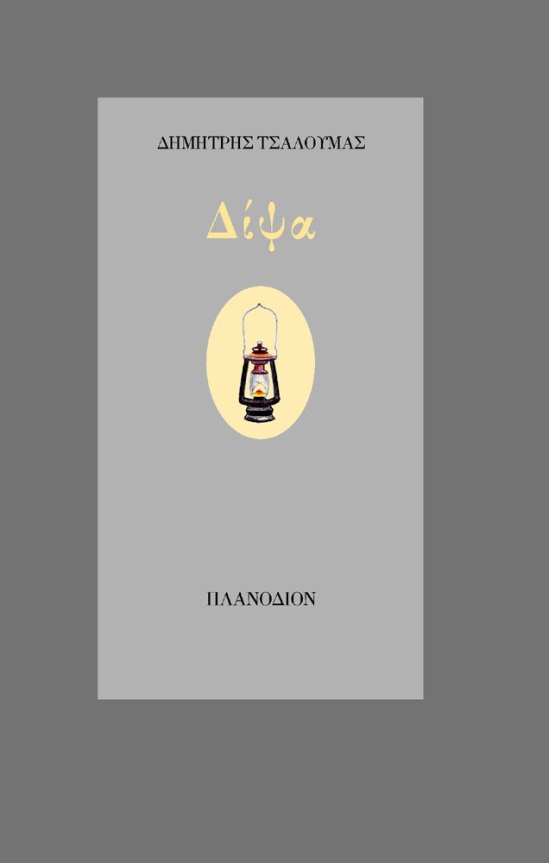
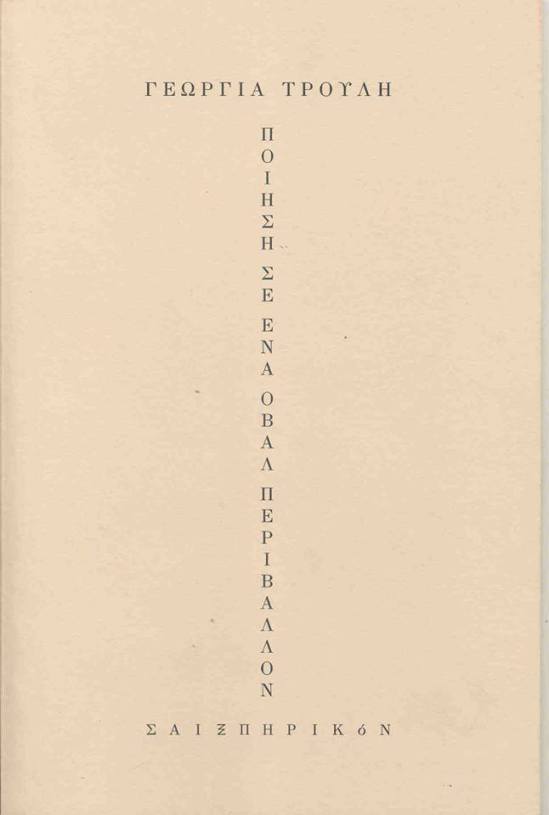
Αν και θα επανέλθω, κυρίως με ποιήματα του Δημήτρη Τσαλουμά, στο άμεσο μέλλον, εν είδει ελάχιστου φόρου τιμής και μικρού αφιερώματος, παραθέτω λίγα πράγματα: ένα βίντεο από εκδήλωση προς τιμήν του στη Λέρο, μια φωτογραφία, ένα εξώφυλλο ποιητικής του συλλογής καθώς και συνδέσμους δημοσιευμάτων που έχω κάνει μέσα από το ιστολόγιο αυτό.

Αν και αναγνωρισμένος ποιητής στην Αυστραλία, μιας και δίγλωσσος και μεταφρασμένος, στην Ελλάδα δεν είναι τόσο γνωστός, ίσως και παντελώς άγνωστος από αρκετούς ποιητικούς κύκλους. Εμείς εδώ στο Κόσκινο επιφυλασσόμαστε να καλύψουμε αυτό το κενό, όπως μπορούμε.

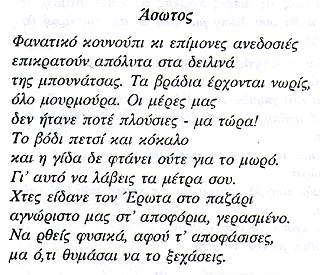
Δημήτρης Τσαλουμάς – Το ψυγείο

Στις στοές των ψυγείων κρέμονται αναιμικά
τα σφαχτά. Ξαφνικός και επιδέξιος
με ριγωτή ποδιά στο σκίρτημα του φωτός
εμφανίζεται μες στα τσιγκέλια αυτός ,
κι επιλέγοντας γυμνότατον αμνόν απέρχεται
σφραγίζοντας ξανά το σκοτάδι .

aiol8

HN05(1)

**Ο Δημήτρης Τσαλουμάς γεννήθηκε στη Λέρο το 1921. Τελείωσε το ελληνικό ημιγυμνάσιο και το ιταλικό γυμνάσιο στο νησί του και λίγο αργότερα, τα πρώτα χρόνια του πολέμου, το ιταλικό Κλασσικό Λύκειο της Ρόδου. Ζει από το 1952 στην Αυστραλία, όπου σπούδασε Αγγλική και Γαλλική Φιλολογία και δίδαξε ώς το 1982 στα κρατικά σχολεία μέσης εκπαίδευσης στη Μελβούρνη. Δίδαξε, επίσης, σε διάφορα πανεπιστήμια ως επισκέπτης συγγραφέας. Τιμήθηκε με έξι από τις σημαντικότερες διακρίσεις της Αυστραλίας τόσο για τα αγγλόγλωσσα βιβλία του, όσο και για έναν τόμο που μεταφράστηκε από τις ελληνικές του συλλογές από τον Philip Grundy με τον τίτλο The Observatory (Το παρατηρητήριο). Τα τελευταία χρόνια μοιράζει το χρόνο του μεταξύ Λέρου και Μελβούρνης. Δύο νέες συλλογές ποιημάτων του (γραμμένες στα Ελληνικά), δημοσιεύτηκαν πρόσφατα στην Ελλάδα.

https://tokoskino.wordpress.com/2013/01/13/%CE%B4%CE%B7%CE%BC%CE%AE%CF%84%CF%81%CE%B7%CF%82-%CF%84%CF%83%CE%B1%CE%BB%CE%BF%CF%85%CE%BC%CE%AC%CF%82-%CE%B7-%CF%80%CE%B1%CF%81%CE%B1%CE%B3%CE%B3%CE%B5%CE%BB%CE%AF%CE%B1/

https://tokoskino.wordpress.com/2012/12/01/%CE%B4%CE%B7%CE%BC%CE%AE%CF%84%CF%81%CE%B7%CF%82-%CF%84%CF%83%CE%B1%CE%BB%CE%BF%CF%85%CE%BC%CE%AC%CF%82-%CE%B3%CF%81%CE%AC%CE%BC%CE%BC%CE%B1-%CF%83-%CE%AD%CE%BD%CE%B1-%CE%AC%CF%81%CF%81%CF%89%CF%83/

https://tokoskino.wordpress.com/2011/09/08/%CE%B4%CE%B7%CE%BC%CE%AE%CF%84%CF%81%CE%B7%CF%82-%CF%84%CF%83%CE%B1%CE%BB%CE%BF%CF%85%CE%BC%CE%AC%CF%82-%CE%AC%CF%83%CF%89%CF%84%CE%BF%CF%82-%CE%BA%CE%B1%CE%B9-%CE%AC%CF%83%CF%89%CF%84%CE%BF%CF%82-2/

https://tokoskino.wordpress.com/2012/05/24/%CE%B4%CE%B7%CE%BC%CE%AE%CF%84%CF%81%CE%B7%CF%82-%CF%84%CF%83%CE%B1%CE%BB%CE%BF%CF%85%CE%BC%CE%AC%CF%82-%CE%BD%CF%85%CF%87%CF%84%CE%B5%CF%81%CE%B9%CE%BD%CF%8C/

https://tokoskino.wordpress.com/2014/05/14/%CE%B4%CE%B7%CE%BC%CE%AE%CF%84%CF%81%CE%B7%CF%82-%CF%84%CF%83%CE%B1%CE%BB%CE%BF%CF%85%CE%BC%CE%AC%CF%82-%CE%B5%CF%80%CE%B5%CE%B9%CE%B4%CE%AE%CF%82-%CE%AE%CF%84%CE%B1%CE%BD-%CF%80%CF%8C%CE%BB%CE%B5/

https://tokoskino.wordpress.com/2015/02/08/%CE%B4%CE%B7%CE%BC%CE%AE%CF%84%CF%81%CE%B7%CF%82-%CF%84%CF%83%CE%B1%CE%BB%CE%BF%CF%85%CE%BC%CE%AC%CF%82-vigil-%CE%B1%CE%B3%CF%81%CF%85%CF%80%CE%BD%CE%AF%CE%B1/

https://tokoskino.wordpress.com/2011/04/02/%CE%AD%CE%BD%CE%B1-%CE%B1%CF%80%CF%8C%CE%B3%CE%B5%CF%85%CE%BC%CE%B1-%CF%80%CE%BF%CE%AF%CE%B7%CF%83%CE%B7%CF%82-%CE%BC%CE%B5-%CF%84%CE%BF%CE%BD-%CE%B4%CE%B7%CE%BC%CE%AE%CF%84%CF%81%CE%B7-%CF%84%CF%83/

https://tokoskino.wordpress.com/2015/02/14/dimitris-tsaloumas-a-winter-journey-%CF%87%CE%B5%CE%B9%CE%BC%CE%B5%CF%81%CE%B9%CE%BD%CF%8C-%CF%84%CE%B1%CE%BE%CE%AF%CE%B4%CE%B9-owl-publishing-2014/

https://tokoskino.wordpress.com/2016/01/22/the-leap-over-the-bounds-of-self-a-tribute-to-the-poetry-of-dimitris-tsaloumas-in-celebration-of-two-recent-bilingual-poetry-publications-honouring-the-poet-and-his-art/

https://tokoskino.wordpress.com/2011/03/07/dimitris-tsaloumas-a-voluntary-exile-%E2%80%93-selected-writings-on-his-life-and-work-owl-publishing-%CE%BC%CE%B5%CE%BB%CE%B2%CE%BF%CF%8D%CF%81%CE%BD%CE%B7-1999/

https://tokoskino.wordpress.com/2014/05/18/dimitris-tsaloumas-un-chant-du-soir-orphee-la-difference-%CE%B3%CE%B5%CE%BD%CE%AC%CF%81%CE%B7%CF%82-2014/

https://tokoskino.wordpress.com/2015/02/14/dimitris-tsaloumas-a-winter-journey-%CF%87%CE%B5%CE%B9%CE%BC%CE%B5%CF%81%CE%B9%CE%BD%CF%8C-%CF%84%CE%B1%CE%BE%CE%AF%CE%B4%CE%B9-owl-publishing-2014/

Γιάννης Λειβαδάς: «Η μοναδική κουλτούρα είναι η ελευθερία»

vakxikon_to_neo_leivadasneo9

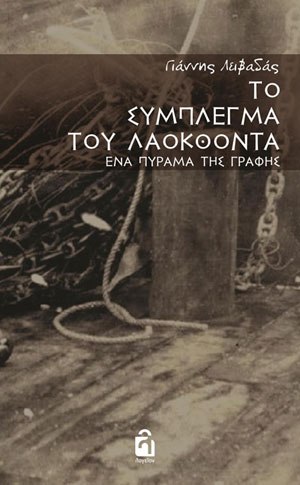
Συνέντευξη στην Ελπίδα Πασαμιχάλη για “Το σύμπλεγμα του Λαοκόοντα”

Μαδρίτη, Λισαβόνα, Παρίσι, Βαρκελώνη, Τογκούρτ, Ταγγέρη, Γένοβα, Νίκαια,  Μαρόκο είναι κάποιοι από τους τόπους που επισκέπτεται και αναπολεί το νέο πεζογράφημα του Γιάννη Λειβαδά. Ωστόσο “Το Σύμπλεγμα του Λαοκόοντα” δεν έχει καμία σχέση με ένα βιβλίο ταξιδιωτικών εντυπώσεων του συνήθους και κατ’ επίφαση κοσμοπολιτισμού, των διήμερων τριήμερων ή και πενταήμερων διανυκτερεύσεων με πρωινό ούτε ακολουθεί άλλωστε κάποια από τις πεπατημένες αφηγηματικές διαδρομές στην εξέλιξή του.

Το Σύμπλεγμα του Λαοκόοντα ξαφνιάζει, σαν ένα αναπάντεχο χαστούκι, τον αμύητο αλλά και τον μυημένο αναγνώστη και τον προκαλεί να πάψει να είναι θεατής και να συμμετάσχει σε μια λογοτεχνία ατίθαση, ασυμβίβαστη, αιρετική, μια λογοτεχνία πυρετική και αυθεντική,  μια λογοτεχνία που πίνει, καπνίζει, ξενυχτάει, περιπλανιέται άσκοπα, μπαινοβγαίνει στα μπαρ,  συνομιλεί με αγνώστους, φιλοσοφεί με αστέγους, κοιμάται σε υπόγεια, ξυπνάει στο δρόμο και μπορεί να βρεθεί να πίνει νερό από την ίδια λιμνούλα με έναν σκύλο αδέσποτο.

Το Σύμπλεγμα του Λαοκόοντα  είναι  ένα ημερολόγιο εξερεύνησης σε άγνωστους τόπους της λογοτεχνίας, όπου τίποτα δεν είναι δεδομένο, τίποτα δεν είναι όπως πριν και με αυτή την έννοια δικαιώνει τον χαρακτηρισμό του ως ένα «Πύραμα της  γραφής». Την ίδια στιγμή είναι από μόνο του ένα ταξίδι. Ένα ταξίδι με το Magic Bus της γραφής, Παρίσι, Λονδίνο , Άμστερνταμ ή Βερολίνο, δεν έχει σημασία τελικά, σαν παρατεταμένος αυτοσχεδιασμός στις  μουσικές  κλίμακες των μπλούζ.

Ο Γιάννης Λειβαδάς μιλά στο Book Bar για το νέο του βιβλίο,  τους ποιητές, τις πόλεις, το Παρίσι, την Αθήνα, τη λογοτεχνία, την κρίση, τις εκλογές και για το ταξίδι της ζωής. Αν ο Λαοκόοντας προκάλεσε την οργή της Αθηνάς και πλήρωσε με την ίδια του τη ζωή την προσπάθεια να διαλύσει την πλάνη του πλήθους των Τρώων, ο Γιάννης Λειβαδάς, δείχνει πιο σοφός:  «Αν έχεις μικρά φτερά μην κάνεις μεγάλο ταξίδι, αν πάλι  έχεις φτερά μεγάλα πρόσεξε να μην κάνεις μικρό», γράφει  σε ένα σημείο του βιβλίου.

Πώς γράφτηκε «Το σύμπλεγμα του Λαοκόοντα»; Ποια ανάγκη ή ποια επιθυμία σε ώθησε να ξεφύγεις από την ποιητική φόρμα και να περάσεις λογοτεχνικά σε έναν ποιητικό-πεζό λόγο;

Μακριά από την κοινοτυπία και την συν-ευθύνη. Το βιβλίο άρχισα να το γράφω όταν ήμουν μόλις είκοσι ενός χρόνων. Το μόνο που γνώριζα ήταν ότι ήθελα να αφήσω τα πράγματα να μιλήσουν από μόνα τους, συντελώντας ναι μεν καταλυτικά, αλλά παρεμβαίνοντας κατά το ελάχιστο δυνατό. Μέχρι τα τέλη του 2010 είχαν συσσωρευτεί 970 σελίδες α4 από τις οποίες κράτησα τελικά ελάχιστες. Δεν πιστεύω ότι μετατοπίστηκα και τόσο, όλα είναι ποίηση, όταν κάνω λόγο για μυθιστόρημα εννοώ απλά μια ποίηση που απολαμβάνει συνάμα, σε πραγματικό χρόνο, την ονειροπόληση του εαυτού της. Σε αντίθεση με το ποίημα, το οποίο δεν ονειροπολεί αλλά επαγρυπνεί. Όλα οφείλονται στη ζωή, ό,τι υπάρχει, υπάρχει γιατί γίνεται πράξη. Η πράξη είναι η νομοτέλεια της τέχνης της γραφής, η οποία παραμένει ύστατη προσωπική ευθύνη. Ακριβώς επειδή το πεδίο της ανθρώπινης εμπειρίας συρρικνώνεται σταδιακά όλο και περισσότερο, τα βιβλία που περιέχουν σπέκουλες, φαντασιώσεις και εικασίες κάνουν μόνο για ευπώλητα. Οτιδήποτε είναι εμπειρικά ανεφάρμοστο, στη ζωή του ποιητή, είναι απολύτως ανούσιο για την τέχνη της γραφής.

Μαδρίτη, Λισαβόνα, Παρίσι, Βαρκελώνη, Τογκούρτ, Μαρόκο, Ινδία είναι κάποιοι από τους πολλούς τόπους που αναφέρονται στην αφήγηση. Υπάρχει κάποιος ημερολογιακός χαρακτήρας στα κείμενα του βιβλίου;

Στην αρχή το βιβλίο δεν ήταν παρά μια ροή ημερολογιακών σημειώσεων αλλά πολύ σύντομα άρχισε να διαστέλλει τον χρόνο και να αποκτά μια ανεξαρτησία σε σχέση με το χέρι και το σημειωματάριο. Ακόμη και σε σχέση με τη διάνοια του συγγραφέα. Πιστεύω ότι το βιβλίο δεν κατάφερε απλά να γίνει άνθρωπος αλλά ξανάγινε βιβλίο• το βιβλίο ενός δημόσιου θανάτου. Δεν θέλησα να πω τίποτα γράφοντάς το, θέλησα μόνο να κάνω στην άκρη και να αφήσω τα πράγματα να μιλήσουν για τον εαυτό τους. Μιλώντας κατ’ αυτόν τον τρόπο για το ανήκουστο θαύμα της ζωής η οποία κερδίζει μόνο σαν ηττάται από τον άνθρωπο.

Τα ταξίδια με τη ζωή έχουν συμβάλλει στα ταξίδια του μυαλού και τα ταξίδια της γραφής σου;

Η ζωή είναι το μεγαλύτερο και πιο απίθανο σχήμα, εμπεριέχει τα πάντα. Συνεπώς έχει συμβάλλει τα μέγιστα. Το μυαλό και η γραφή ωθούν συχνά-πυκνά προς τη μία ή την άλλη κατεύθυνση, η ζωή όμως είναι ο χάρτης και όλα όσα βρίσκονται εκτός χάρτη. Δεν θυμάμαι ποτέ τον εαυτό μου να έχει ταξιδέψει περισσότερο με το μυαλό ή τη γραφή, όπως λες, απ’ όσο με την πραγματική ζωή.

Ο αφηγητής είναι ένα πρόσωπο ελεύθερο, ατίθασο, αντισυμβατικό, σε πλήρη αντίθεση με τις σημερινές απαγορεύσεις, πίνει, καπνίζει, αλητεύει και ζει τη ζωή στα όρια. Ένα πρόσωπο που μοιάζει να έρχεται από μιαν άλλη κουλτούρα και μιαν άλλη εποχή. Τι πιθανότητες θα είχε το πρόσωπο αυτό να… επιβιώσει στη σημερινή εποχή;

Αφηγητής δεν υπάρχει, υπάρχει μόνο εκείνος που κάθισε να γράψει. Και αυτός είναι ένας πραγματικός άνθρωπος, με πραγματικές εμπειρίες, ο υποφαινόμενος. Δεν μπορώ να συνηγορήσω σε όσα αναφέρεις σχετικά με τις εμπειρίες και τα όρια. Η αντίθεση που αναφέρεις βρίσκεται στο πλήθος, στην πληθο-κρατία που στερείται  σχεδόν τα πάντα.
Στο βιβλίο εμπεριέχεται η πραγματική μου εμπειρία μόνο ως όχημα, όχι τόσο ως σημασία. Το ζήτημα της κουλτούρας, αυτό είναι το σημαντικότερο απ’ όλα. Γιατί η μοναδική κουλτούρα είναι η ελευθερία. Τα υπόλοιπα αποτελούν συνονθυλεύματα, επιτυχίες ή αστοχίες της προσωπικής περιπέτειας του καθένα. «Το Σύμπλεγμα Του Λαοκόοντα» αφορά, πράγματι, την ελευθερία. Η εποχή, είναι η προσωπική εποχή του συγγραφέα• αυτό που θα εμφανιστεί όταν πιάσει τόπο, κάποτε, η επίκληση του ανθρώπου στον άνθρωπο.
Το ζήτημα είναι αν η κοινωνία έχει την ικανότητα να επιβιώσει μ’ εμένα και όχι το αντίθετο.

Υπάρχουν πόλεις που ταιριάζουν στους ποιητές ή μήπως ο ποιητής πρέπει να επινοήσει τη δική του πόλη;

Οι πόλεις γίνονται σημαντικές εφόσον φιλοξενήσουν τους ποιητές. Από μόνες τους δεν αποτελούν, πια, ιδιαίτερη αξία. Ο ένας άνθρωπος, ή περισσότεροι, είναι που κάνουν τη διαφορά. Αυτή είναι η σημερινή πραγματικότητα, εφόσον η πληροφόρηση και η εικόνα διατίθενται δωρεάν, υπό της έννοια πως τείνει να αχρηστευθεί παντελώς η εμπειρία. Βλέπει κάποιος το Βαρανάσι στην τηλεόραση και νιώθει πως βρίσκεται πράγματι εκεί. Με τον ίδιο τρόπο κοροϊδεύει τον εαυτό του πιστεύοντας ότι συμμετέχει στα κοινά, έχει αντίληψη της πραγματικότητας και είναι σε θέση να εκφέρει μόνον εύστοχες κρίσεις, σχεδόν για οτιδήποτε. Επίφαση και ανία.

 Ένας από τους πρόσφατους «σταθμούς» σου είναι το ταξίδι στο Παρίσι το οποίο και επέλεξες ως τόπο διαμονής. Τι σε έκανε να φύγεις από την Αθήνα; Κάτι που σε πλήγωσε ή κάτι που σε εξόργισε;

Η τύχη είναι πάντα με το μέρος εκείνου που δεν φοβάται το πεπρωμένο του. Η τύχη με έφερε στο Παρίσι και η τύχη θα με οδηγήσει κάπου αλλού αύριο. Η Αθήνα έχει πνεύσει τα λοίσθια προ καιρού, ταυτόχρονα εννοώ το ίδιο και για την Ελλάδα. Η χώρα με πλήγωσε και με εξόργισε εξίσου, από πολύ νωρίς. Αλλά δεν ήταν αυτός ο λόγος για τον οποίο ξεκίνησα να ταξιδεύω. Το αυτονόητο ήταν ανέκαθεν μια υπερβολή ή μια πολυτέλεια για τους Έλληνες και την Ελλάδα.

Πώς είναι η Αθήνα και η σημερινή Ελλάδα από …μακριά;

Δεν διακρίνω τίποτε άλλο από τις κουκίδες των αγαπημένων προσώπων που ταλανίζονται καθημερινά. Τους σκέφτομαι όλους. 
Χαίρομαι που απουσιάζω. Αναρωτιέμαι που θα στραφεί εντέλει αυτή η χώρα για να ορθώσει ξανά ανάστημα. Υποπτεύομαι πως δεν θα τα καταφέρει. Είναι γεγονός πως όλη η ανθρωπότητα, όχι μόνο η Ελλάδα, μεταλλάσσεται σταδιακά σε κάτι πρωτόγνωρο, ηθικά και αισθητικά. (Βλέπεις, κάνω εντελώς σχηματικά τη διάκριση ανάμεσα στην ηθική και την αισθητική ενώ είναι ακριβώς το ίδιο πράγμα. Αυτή είναι μια τρανή απόδειξη πως οι άνθρωποι δεν μπορούν ακόμα να καταλάβουν ο ένας τον άλλο).

Ποια είναι η δική σου “ανάγνωση” για τις επιλογές των ψηφοφόρων στη Γαλλία και την Ελλάδα;  Διαπιστώνεις κοινά σημεία;

 Δεν είμαι καθόλου σίγουρος πως τα εκλογικά αποτελέσματα αντικατοπτρίζουν κάποιες ιδέες. Μάλλον την τραγική απουσία ιδεών, η οποία οδηγεί και σε φαινόμενα όπως αυτό της ανόδου του φασισμού. Όταν η εξουσία, ως σύστημα, αδυνατεί να εξαγοράσει άμεσα τους ψηφοφόρους εμφανίζονται δραματικές αλλαγές στον πολιτικό χάρτη. Η κοινωνία, από την άλλη, αναδεικνύει νικήτρια την παράταξη που εξαγοράζει με τον πιο αρεστό τρόπο. Για να υποδηλωθεί ταυτόχρονα κάποια πραγματική αλλαγή θα πρέπει το καθημερινό ήθος και η πρακτική των πολιτών να εμφανίζει χαρακτηριστικά που σήμερα δεν συναντά κανείς, άμεσες ρήξεις με το σύστημα. Απεναντίας, τόσο η δεξιά όσο και η αριστερά προσφέρουν η κάθε μια τους μία συστημική εξάρτηση, μια, μεταξύ τους, παραλλαγμένη συμφωνία κυρίων που αφορά, ανά ιστορική περίπτωση, κάποιους βαθμούς εκχώρησης των φυσικών δυνατοτήτων. Αυτό ισχύει παντού, απ’ άκρη σ’ άκρη του κόσμου.

Ποια σκέψη ή ποια εικόνα σού φέρνει στο μυαλό η λέξη «κρίση»;

Σε μεγάλο βαθμό η «κρίση» είναι το σοκ που υπέστη η κοινωνία σαν συνειδητοποίησε ότι θα ζει με λιγότερα χρήματα. Δεν πιστεύω πως αυτό είναι το πρόβλημα. Σημασία έχει ποιον τρόπο ζωής θα επιλέξει για να ζήσει. Το κρίμα είναι ότι οι άνθρωποι εξακολουθούν να βρίσκονται σε καθεστώς πλήρους εξάρτησης από τον δυνάστη, που δεν είναι άλλος από την πολιτική. Όλη η ιστορία του ανθρώπινου πολιτισμού βρισκόταν ανέκαθεν σε κρίση.

Ποια είναι η χειρότερη απώλεια που έχει επιφέρει η οικονομική ύφεση κατά τη γνώμη σου;

Την εξαφάνιση του ελαχίστου της ανθρωπιάς και της ενότητας που είχε απομείνει. Την προσωρινή, έστω, απουσία μιας κάποιας προοπτικής. Σκέψου την ιστορία του Λαοκόοντα σε συνδυασμό με την απουσία της ιστορίας του Λαοκόοντα.

Πώς σχολιάζεις την άποψη ότι «η κρίση έπιασε τη λογοτεχνία στον ύπνο»;

Η σύγχρονη πραγματικότητα έπιασε στον ύπνο μόνον αυτό που πωλείται και διαφημίζεται σαν λογοτεχνία. Το προϊόν μιας τυποποιημένης και αλαζονικής ημιμάθειας που σέρνει πίσω της έναν γλυκερό και ημιδιάφανο σκοταδισμό. Η πραγματική λογοτεχνία δεν υπέφερε ποτέ από τίποτα και ουδέποτε πιάστηκε στον ύπνο κάποιας ιστορικής περιόδου. 
Αυτήν την άποψη μπορεί να την έχουν όσοι κοιμούνται τον ύπνο του δικαίου της αριστερής ή της δεξιάς ορθότητας. 


Μέσα σε μια τεράστια εκδοτική παραγωγή σε παγκόσμιο επίπεδο, εκδίδονται σημαντικά βιβλία και ποια είναι η τύχη τους; Πότε είναι κατά τη γνώμη σου σημαντικό ένα βιβλίο;

Εκδίδονται και σημαντικά βιβλία, αλίμονο – αλλά περνούν μάλλον απαρατήρητα, ακόμη και όταν αποκτούν κάποιους αναγνώστες. Ένα βιβλίο μπορεί να αποδειχθεί για κάποιον πολύ σημαντικό, για πάρα πολλούς λόγους. Αυτό όμως δεν συνεπάγεται την ύπαρξη της τέχνης του λόγου. Ακόμη και το αλφάβητο είναι σημαντικότατο, για κάποιον που δεν γνωρίζει γράμματα. Η σημαντικότητα, η αξία, συνεπάγεται και από τη δυναμική συνεύρεση μιας υπαρκτικής ομοθυμίας, μιας κοινής δράσης για υπερβάσεις που έχει ξεπεράσει τα στενά όρια της συνείδησης. Δεν έχει τόση σημασία λοιπόν αυτό που ονομάζουν κοινώς «σημαντικό» βιβλίο. Σημασία έχει το πόσο διαφορετικό και τόσο πρωτότυπο είναι ένα βιβλίο.

Υπάρχει λογοτεχνία του «μέσου όρου»;

Βεβαίως και υπάρχει, αποτελεί το κυρίως σώμα της λογοτεχνικής παραγωγής. Εάν και εφόσον χρησιμοποιούμε εισαγωγικά σε ορισμένες λέξεις. Είναι ο μηχανισμός συντήρησης του εκδοτικού εμπορίου. Η λογοτεχνία δεν ξεπερνά, σε ποσοστό, το ένα τοις εκατό της συνολικής παραγωγής βιβλίου παγκοσμίως.
Η καπηλεία, η ζημιά που προκλήθηκε στη λογοτεχνία έχει άμεση σχέση με το γεγονός ότι ο καθένας γράφει από ένα βιβλίο ή δυο. Είναι σημάδι των καιρών, κάτι ανάλογο συμβαίνει σε όλες τις τέχνες. Οι άνθρωποι αντί να αλλάξουν τρόπο ζωής, τρόπο σκέψης, υποδύονται τους καλλιτέχνες, όντας μάλιστα σίγουροι ότι διαπρέπουν στον τομέα τους.

Τι είδους βιβλία επιλέγεις εσύ για να διαβάσεις;

Τα τελευταία χρόνια διαβάζω όλο και λιγότερο. Τα βιβλία του γούστου μου σπανίζουν ολοένα και περισσότερο. Με ενδιαφέρει η τόλμη και η πρωτοτυπία. Η μοναδικότητα της φωνής. Με ενδιαφέρει αυτό που δεν έχω συναντήσει. Συχνά επιστρέφω σε ποιητές και συγγραφείς που ήδη γνωρίζω, μόνο και μόνο για την εμπειρία της απόλαυσης λίγων λεπτών, μιας αράδας, ακόμη κι ενός τίτλου.

Αν μπορούσες να επιλέξεις τους αναγνώστες των βιβλίων σου, σε ποιους θα ήθελες να απευθύνονται;

Αν μπορούσα πράγματι να επιλέξω θα επέλεγα να μην είχα κανέναν αναγνώστη, να μην υπήρχε κανείς που θα είχε ανάγκη αυτά που γράφω. Τότε θα μπορούσα να αλλάξω κι εγώ επάγγελμα και να γίνω μαραγκός σε έναν μικρό ταρσανά. Μα ίσως μετά από λίγα χρόνια να το καταφέρω κι αυτό εξακολουθώντας να γράφω.

Είσαι αισιόδοξος ή είσαι ανήσυχος για το μέλλον;

Είμαι μέλλων.

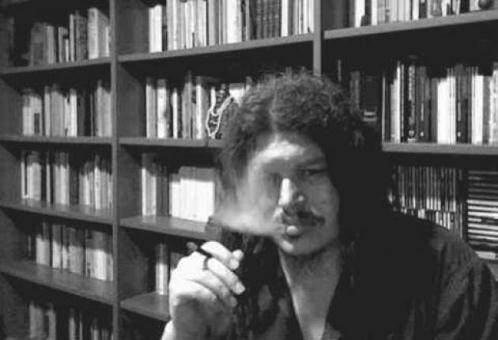
*Ο Γιάννης Λειβαδάς γεννήθηκε το 1969 στην Καλαμάτα. Πέρα από εκδότης, βιβλιοπώλης, αρθρογράφος και μεταφραστής έχει εργαστεί σε πάμπολλους άλλους τομείς. Ποιήματά του έχουν δημοσιευθεί επίσης στον αμερικανικό, τον γαλλικό, τον κροατικό, τον ινδικό, τον ιρλανδικό και τον ισπανικό λογοτεχνικό Τύπο. Ζει στο Παρίσι. Ιστοσελίδα http://livadaspoetry.blogspot.com/   

Γιάννης Λειβαδάς, Το σύμπλεγμα του Λαοκόοντα 
Ένα πύραμα της γραφής
, 
Εκδόσεις Λογείον 2012 
Σελ. 207.

http://www.bookbar.gr/yannis-livadas-i-monadiki-coultoura-einai-i-eleftheria/

yannis_livadas_480

Οι αφιερώσεις και οι επιγραφές στην ποίηση της Alejandra Pizarnik

του Στάθη Ιντζέ

ΚΕΦΑΛΑΙΟ 2. ΑΦΙΕΡΩΣΕΙΣ
(ταξινόμηση ανά ποιητική συλλογή)

2.1. Η ΤΕΛΕΥΤΑΙΑ ΑΘΩΟΤΗΤΑ, 1955

– Το σύνολο της ποιητικής συλλογής.
Αφιέρωση: στον León Ostrov

Ο León Ostrov υπήρξε ψυχαναλητής τής Αλεχάντρα Πισαρνίκ, από τα 18 της χρόνια, με τον οποίο διατήρησε επικοινωνία πολύ ιδιαίτερη και —κατά τη διαμονή της στο Παρίσι— αλληλογραφία που διήρκησε χρόνια. Ο León Ostrov, ποιητής και λόγιος, ήταν καθηγητής τής Πειραματικής Ψυχολογίας στο Πανεπιστήμιο του Μπουένος Άιρες. Και τους δύο τούς ένωνε η κοινή ρωσο-εβραϊκή καταγωγή τους, η αίσθηση να πατούν ανάμεσα σε δύο διαφορετικούς κόσμους και κουλτούρες.

– Τίτλος ποιήματος: Balada de la piedra que llora
Αφιέρωση: στη Josefina Gómez Errázuriz

H Josefina Gómez Errázuriz, υπήρξε φίλη της Πισαρνίκ.

2.2. ΟΙ ΧΑΜΕΝΕΣ ΠΕΡΙΠΕΤΕΙΕΣ, 1958

– Τίτλος ποιήματος: ολόκληρη η ποιητική συλλογή, καθώς και το ποίημα Siempre
Αφιέρωση: στον Rubén Vela

Ο Ρουμπέν Βέλα είναι πολυταξιδευμένος ποιητής. Γεννήθηκε τις 3 Μαΐου του 1928 στη Σάντα Φε ντε λα Βέρα Κρους, στην Αργεντινή. Το 1954, ο Ραούλ Γκουστάβο Αγκίρε, ήδη δημιουργούσε τη λογοτεχνική ομάδα Poesía Buenos Aires και του πρότεινε να γίνει μέλος της. Αφιέρωσε πλήθος ποιημάτων στην Αλεχάντρα Πισαρνίκ.

– Τίτλος ποιήματος: Tiempo
Αφιέρωση: στην Όλγα Ορόσκο

Η Όλγα Ορόσκο (1920-1999), ήταν Αργεντίνα ποιήτρια. Σπούδασε στο Τμήμα της Φιλοσοφίας και Γραμμάτων του Πανεπιστημίου του Μπουένος Άιρες. Ήταν ένα από τα μέλη τής υπερρεαλιστικής ομάδας Tercera Vanguardia, μέλος της οποία ήταν επίσης ο σπουδαίος, εκείνον τον καιρό, Ολιβέριο Χιρόνδο. Ποιητές που επηρέασαν το ποιητικό της έργο, θεωρούνται οι San Juan de la Cruz, Rimbaud, Nerval, Baudelaire, Milosz και Rilke.

Η ποίηση της Όλγα Ορόσκο και της Αλεχάντρα Πισαρνίκ διατρέχονται από την κοινή μαθητεία τους στους καταραμένους ποιητές, τους ποιητές τού ρομαντισμού και του συμβολισμού όπως οι Blake, Nerval, Baudelaire, Rimbaud. Οι συνεχείς αναφορές τους στον θάνατο είναι ένας τρόπος εξορκισμού του. Αναφορές στις οποίες βρίθουν οι λέξεις-σύμβολα όπως οι καθρέφτες, το φεγγάρι ή οι κούκλες. Η μαγεία και η ενόραση συνθέτουν έναν κεντρικό άξονα στα ποιήματά τους. Το φανταστικό και το ονειρικό πρωταγωνιστούν στους στίχους τους. Η σχέση μεταξύ των δύο ποιητριών ήταν έντονα φιλική, δεν αρκείται στη συγγένεια των στίχων τους. Μετά τον θάνατο της Αλεχάντρα, η Όλγα τής αφιέρωσε ένα από τα πιο όμορφα ποιήματά της με τίτλο Χορός για μια Νεκρή Πριγκήπισσα.

– Τίτλος ποιήματος: Exilio
Αφιέρωση: στον Raúl Gustavo Aguirre

Ο Ραούλ Γκουστάβο Αγκίρε (1927-1983) ήταν Αργεντίνος ποιητής, κριτικός λογοτεχνίας, πανεπιστημιακός καθηγητής και περίφημος μεταφραστής του Apollinaire.. Σε συνεργασία με τον ποιητή και δραματουγό Έντγκαρ Μπέιλι, ίδρυσε, το 1950, το λογοτεχνικό περιοδικό Poesía Buenos Aires [9], το οποίο κατά τα δέκα έτη που κυκλοφόρησε, φιλοξένησε στις σελίδες του τους πιο γνωστούς Αργεντίνους ποιητές τής δεκαετίας τού πενήντα. Στα τεύχη 13 και 14, το 1954, δημοσίευσε μια ανθολογία με τίτλο «Ποιητές του σήμερα: Μπουένος Άιρες, 1953», μέσα στην οποία συμπεριέλαβε τα πιο πρόσφατα δείγματα της ποιητικής παραγωγής τής χώρας του. Υπήρξε ένας από τους θεμελιωτές ενός νέου ποιητικού κινήματος, του «ινβενσιονισμού».

Για τη σχέση του με την Αλεχάντρα Πισαρνίκ, ο Jorge Carrol αναφέρει:
«Ένα Σάββατο, ο Αγκίρε, ο ποιητής και ιδρυτής του περιοδικού Μπουένος Άιρες μαζί με τον Χόρχε Ενρίκε Μόμπιλι, μας ανακοίνωσαν ότι θα μας επισκεπτόταν ένα κορίτσι που μόλις είχε κυκλοφορήσει το πρώτο της βιβλίο, Η πιο ξένη γη. Εκείνο το απόγευμα γνωρίσαμε μια ντροπαλή Φλόρα Αλεχάντρα Πισαρνίκ. […]».

– Τίτλος ποιήματος: Peregrinaje
Αφιέρωση: στην Elizabeth Azcona Cranwell

από δεξιά προ τα αριστερά: Pizarnik,Aguirre. Elizabeth Azcona Cranwell
Η Elizabeth Azcona Cranwell (1933-2004) ήταν Αργεντίνα ποιήτρια, μεταφράστρια και κριτικός λογοτεχνίας. Σπούδασε στο Τμήμα της Φιλοσοφίας και Γραμμάτων του Πανεπιστημίου του Μπουένος Άιρες, όπως και η Όλγα Ορόσκο. (Έγραψε κριτικές στην εφημερίδα La Nación και μετέφρασε Ντύλαν Τόμας και Έντγκαρ Άλαν Πόε). Η ποίησή της χαρακτηρίζεται ως υπερρεαλιστική, επηρεασμένη από την Όλγα Ορόσκο.

– Τίτλος ποιήματος: El Despertar
Αφιέρωση: στον León Ostrov

(Βλέπε 2.1.)

2.3. ΤΟ ΔΕΝΤΡΟ ΤΗΣ ΑΡΤΕΜΙΔΟΣ, 1962

– Τίτλος ποιήματος: 20
Αφιέρωση: στη Laure Bataillon

Η Laure Bataillon (1928-1990) ήταν Γαλλίδα μεταφράστρια και φίλη τής Πισαρνίκ. Μετά το 1957, μετέφρασε και προώθησε έργα Λατινοαμερικάνων, μεταξύ των οποίων και του Χούλιο Κορτάσαρ.

– Τίτλος ποιήματος: 29
Αφιέρωση: στον André Pieyre de Mandiargues

Ο André Pieyre de Mandiargues (1909 –1991) ήταν Γάλλος συγγραφέας, γεννημένος στο Παρίσι που συμμετείχε στο κίνημα του Υπερρεαλισμού. Ήταν ένας από τους συγγραφείς που γνώρισε η ποιήτρια κατά την παραμονή της στο Παρίσι.

– Τίτλος ποιήματος: 33
Αφιέρωση: στην Ester Singer (Esther Singer)

Το ποίημα αυτό, η Πισαρνίκ, το αφιερώνει στην Αργεντίνα γυναίκα τού Καλβίνο και συγγραφέα με την οποία τους ένωνε η κοινή τους καταγωγή. Ο Καλβίνο γνώρισε την Esther Singer το 1962 και την παντρεύτηκε στην Αβάνα, το 1964, όπου πραγματοποίησε ταξίδι για να επισκεφτεί τη γεννέτηρά του και να γνωρίσει τον Ερνέστο ‘’Τσε’’ Γκεβάρα.

– Τίτλος ποιήματος: 36
Αφιέρωση: στον Alain Glass

Υπερρεαλιστής γλύπτης που έζησε στο Μεξικό.

2.4. ΑΛΛΑ ΠΟΙΗΜΑΤΑ, 1959

– Τίτλος ποιήματος: Caroline de Gunderode
Αφιέρωση: στον Enrique Molina

Μεταξύ των Αργεντίνων υπερρεαλιστών, υπάρχουν δύο ποιητές που συμπίπτουν, όσον αφορά τις επιρροές στα έργα τους, με την Αλεχάντρα: ο Ενρίκε Μολίνα (1910-1997) και η Όλγα Ορόσκο. Ο Ενρίκε Μολίνα, σε έναν πρόλογο του 1976, την αποκάλεσε «κορίτσι προορισμένο να ξεχωρίσει», ενώ κάποια άλλη στιγμή, ενθουσιασμένος από την ποίησή της έγραψε για εκείνη: «Βγαίνει αλώβητη από εκείνη την τήρηση των κανόνων που συνιστούν στο να ανοίγει τις πόρτες του ποιήματος, προορισμένο να αναδημιουργήσει έναν παλμό ή μια στιγμή, όπως αντιλαμβάνομαι την ποίηση, με μια μεταστοιχείωση μιας άμεσης πραγματικότητας σε ένα επίπεδο αποκάλυψης». Αξίζει τέλος να πούμε ότι ο Ενρίκε Μολίνα, υπηρέτησε την τέχνη και ως ζωγράφος. (βλ. 1.4.)

2.5. ΤΑ ΕΡΓΑ ΚΑΙ ΟΙ ΝΥΧΤΕΣ, 1965

– Τίτλος ποιήματος: Anillos de ceniza
Αφιέρωση: στην Cristina Campo

Η Κριστίνα Κάμπο, ψευδώνυμο της Vittoria Guerrini (1923-1977), ήταν Ιταλίδα συγγραφέας, ποιήτρια και μεταφράστρια με την οποία η Πισαρνίκ διατήρησε φιλική σχέση μέσω αλληλογραφίας, επί δέκα έτη.

– Τίτλος ποιήματος: Grandes palabras
Αφιέρωση: στον Antonio Porchia

Στην Αλληλογραφία της Πισαρνίκ, διαβάζουμε το παρακάτω γράμμα:

30, rue Saint Sulpice, Παρίσι, Φεβρουάριος 1963
«Αγαπητέ κύριε Αντόνιο Πορτσία,

Σας σκέφτομαι πάντα και είναι αναρίθμητες οι φορές που θέλησα να σας γράψω. Όμως πάντα ήθελα να έρθει μια μοναδική στιγμή, ιδιαίτερη, ξεχωριστή από τις υπόλοιπες, που να μην μοιάζει με καμιά άλλη, για να σας στείλω κάποιες γραμμές. Πόσο τρόμερα σημαντικό ήταν —είναι— να έχω γνωρίσει τη φωνή σας, τις Φωνές[10] σας. Σας ευχαριστώ απέραντα για εκείνες που μου στείλατε. Η οικογένειά μου μου τις προώθησε. Τώρα εκείνα τα δύο φύλλα με τη γραφή σας έχουν λεηλατηθεί (από τα μάτια μου) γι΄αυτό τις φέρω μαζί μου σαν κάποιος που είναι υποχρεωμένος να φέρει μαζί του τα έγγραφα της ταυτότητας. Και, αλήθεια, τέτοια είναι.

Θα γνωρίζετε από τον κοινό μας φίλο Ρομπέρτο Χουαρός ότι πάνε ήδη τρία χρόνια που βρίσκομαι στο Παρίσι. Συχνά σκέφτομαι την επιτροφή, να δω εσάς, τον Ρομπέρτο, και μερικούς ακόμα… Τώρα πιστεύω ότι θα μπορούσα να συνομιλίσω «καλύτερα» από πριν, ίσως γιατί έχασα την εφηβεία μου ή έχω υποφέρει περισσότερο ή γέρασα, δεν ξέρω, αλλά ξαναδιαβάζοντας το υπέροχο βιβλιαράκι σας η έξαψή μου ήταν μοναδική. […]

Επιστρέφοντας στο θέμα του Παρισιού, αυτό που με γαληνεύει εδώ είναι το ότι ζω μόνη, δίχως οικογένεια, βλέποντας τον κόσμο μονάχα όταν το επιθυμώ. Αυτό είναι πολύ σημαντικό για μένα. Χρειάζομαι τη σιωπή (ή ίσως η σιωπή χρειάζεται εμένα). «Ήρθες σε αυτόν τον κόσμο που δεν καταλαβαίνει τίποτα δίχως λέξεις, σχεδόν δίχως λέξεις».

Αυτή η φράση αντηχεί μέσα μου και μου τραγουδά με ακραία συχνότητα. Αλήθεια, δεν κάνω τίποτα άλλο από το να σκέφτομαι τη σιωπή. Και κατέληξα να αναρωτιέμαι αν η σιωπή υπάρχει. Αλλά αν το ρωτώ δεν υπάρχει σιωπή πια.

Αν κάποια φορά θελήσετε να μου γράψετε μερικές γραμμές θα μου δώσετε πολύ μεγάλη χαρά. Από τη μεριά μου, μετανιώνω που δεν έχει έρθει ακόμα εκείνη η ξεχωριστή στιγμή να σας μιλήσω και να σας ρωτήσω με έναν τρόπο ομορφότερο από αυτόν της αλληλογραφίας. Αλλά καθώς δεν έχω τόση υπομονή, εξ ου και το γράμμα».

– Τίτλος ποιήματος: Memoria
Αφιέρωση: στον Jorge Gaitán Durán

Ο Χόρχε Γκαϊτάν Ντουράν (1924-1962), Κολομβιανός ποιητής και κριτικός, υπήρξε ιδρύτης ενός εκ των σημαντικότερων λογοτεχνικών περιοδικών στην Κολομβία, το περιοδικό Revista Cultural Mito, στο οποίο υπήρξε συνεργάτιδα η Αλεχάντρα Πισαρνίκ κι έτσι ξεκίνησε μια φιλία με τον Κολομβιανό ποιητή στο Παρίσι, στις αρχές τής δεκαετίας τού εξήντα. Από τη μεταξύ τους φιλία, ο Πέδρο Γκόμες Βαλντεράμα (Κολομβιανός συγγραφέας) αναφέρθηκε κάποτε σε ένα γράμμα που του έστειλε η Πισαρνίκ, λίγες βδομάδες μετά τον θάνατο του Χόρχε Γκαϊτάν Ντουράν: «Είχαμε γίνει φίλοι, και ήμουν μαζί του λίγες μέρες πριν το τρομερό ατύχημα…[6]» . Αξίζει να σημειωθεί ότι το «τρομερό ατύχημα» στο οποίο αναφέρθηκε η Πισαρνίκ, ήταν ένα ατύχημα κατά την προσγείωση της πτήσης τής Air France, στο αεροδρόμιο Point-á-Pitre τής Γουαδελούπης.

– Τίτλος ποιήματος: Sombra de los días a venir
Αφιέρωση: στην Ivonne A. Bordelois

Η Ιβόν Μπορντελουά (Μπουένος Άιρες, 1934), είναι Αργεντίνα ποιήτρια. Σπούδασε στο Τμήμα Φιλοσοφίας και Γραμμάτων του Πανεπιστημίου του Μπουένος Άιρες και συνέχισε τις σπουδές της στη Σορβόνη. Εργάστηκε στο περιοδικό Sur[11] και πραγματοποίησε συνεντεύξεις και δημοσιεύσεις μαζί με την Αλεχάντρα Πισαρνίκ.

Σε ένα γράμμα της, στις 5 Ιουλίου του 1972, η Πισαρνίκ γράφει στην Μπορντελουά:
«Σε παρακαλώ ας μην ζητάμε εξηγήσεις για τη σιωπή (υπάρχει η σιωπή;) Δεν χρειάζεται να σου πω ότι όχι μόνο μου λείπεις αλλά και σε χρειάζομαι. Ίσως γιατί είμαστε διαφορετικές και συμπληρώνουμε η μία την άλλη. Δεν θα σου μιλήσω για μένα σε αυτό το γράμμα… […] Αντιμετώπισα κάποιες δοκιμασίες κάπως ακραίες (αλλά ουδέν κακό αμιγές καλού!) και τώρα ξέρω κάποια πράγματα περισσότερο (γι’ αυτό πλέον δεν κάθομαι στο τραπέζι και συλλογίζομαι με τις ώρες το επίθετο κάποιου ποιήματος). Γνωρίζω κάποια πράγματα περισσότερο, καταλαβαίνω περισσότερο. Και αν, είναι τόσο τρομερό και ζωηρό και ζωντανό αυτό που ενισχύει αυτό που είμαι. Δεν ξέρω σε τι έχω μεταμορφωθεί. Αλλά το μεγαλύτερο ελάττωμά μου το γνωρίζεις, είναι η εμπιστοσύνη».

– Τίτλος ποιήματος: Moradas
Αφιέρωση: στον Théodore Fraenkel

Ο Théodore Fraenkel (1896-1964) ήταν Γάλλος συγγραφέας και ιατρός. Υπήρξε φίλος τού Αντρέ Μπρετόν και συνέβαλλε στη δημιουργία τού κινήματος του υπερρεαλισμού. Η ημερομηνία και ο τόπος του θανάτου του, (Παρίσι, 25 Ιανουαρίου του 1964), συμπίπτει με το τελευταίο έτος διαμονής τής Πισαρνίκ στο Παρίσι και αν λάβουμε υπόψη ότι η συγκεκριμένη ποιητική συλλογή εκδόθηκε το 1965 —στο Μπουένος Άιρες— πράγμα που σημαίνει ότι γράφτηκε, υποθέτουμε, τουλάχιστον ένα ή δύο χρόνια νωρίτερα και κατά τη διαμονή τής Πισαρνίκ στο Παρίσι, είναι πολύ πιθανόν η ίδια να γνώρισε τον Théodore Fraenkel ή να ήρθε σε επαφή έστω με τη γραφή του, μιας και μας είναι γνωστό ότι υπήρξε θερμή αναγνώστρια υπερρεαλιστικών βιβλίων (βλέπε Κεφάλαιο 1).

2.6. ΕΞΑΓΩΓΗ ΤΗΣ ΠΕΤΡΑΣ ΤΗΣ ΠΑΡΑΦΡΟΣΥΝΗΣ, 1968

– Τίτλος Ποιήματος: το σύνολο του βιβλίου
Αφιέρωση: στη μητέρα μου

Η Αλεχάντρα με τους γονείς της, το 1936.
Από τις λίγες αναφορές στο πρόσωπό της, γνωρίζουμε ότι η μητέρα τής Αλεχάντρα Πισαρνίκ, Rosa ή Rezja Bromiker de Pizarnik, μόλις τελείωσε το σχολείο (κάτι ασυνήθιστο για τις γυναίκες εκείνης της εποχής), αφιέρωσε τη ζωή της στην οικογένειά της. Μετά τον θάνατο του πατέρα της, η Αλεχάντρα, μετακομίζει με τη μητέρα της σε ένα διαμέρισμα στο Μπουένος Άιρες, το οποίο αγόρασε.

– Τίτλος ποιήματος: Cantora Nocturna
Αφιέρωση: στην Όλγα Ορόσκο (βλ. 2.2.)

– Τίτλος Ποιήματος: TÊTE DE JEUNE FILLE (ODILON REDON)
Αφιέρωση: στον André Pieyre de Mandiargues (Βλ 2.3.)

– Τίτλος ποιήματος: Rescate
Αφιέρωση: στον Octavio Paz

Έγραψε τον πρόλογο [12] στην ποιητική συλλογή τής Πισαρνίκ με τίτλο «Το δέντρο της Αρτέμιδος, 1962». Μας είναι ήδη γνωστό (βλ. Κεφάλαιο 1) ότι μέσω τού Οκτάβιο Πας, η Αλεχάντρα Πισαρνίκ γνώρισε πολλούς λογοτέχνες που έμεναν στο Παρίσι κατά την περίοδο 1960 ως 1964.

2.7. ΠΟΙΗΜΑΤΑ ΠΟΥ ΔΕΝ ΠΕΡΙΛΑΜΒΑΝΟΝΤΑΙ ΣΤΑ ΒΙΒΛΙΑ

2.7.1. 1962-1972

– Τίτλος ποιήματος: La celeste silenciosa al borde del pantano
Αφιέρωση: στον Enrique Pichon Riviére

O Enrique Pichon Riviére (1907-1977) ήταν Ελβετός ψυχίατρος, γεννημένος από Γάλλους γονείς και πολιτογραφημένος Αργεντίνος, ο οποίος θεωρείται ένας από τους πρώτους υποστηρικτές τής ψυχανάλυσης στην Αργεντινή και εμπνευστής τής ομαδικής ψυχοθεραπείας. Κατά την περίοδο 1930-1931 έδειξε ιδιαίτερο ενδιαφέρον για τους καταραμένους ποιητές.

Η Πισαρνίκ, ήρθε σε επαφή με τον Enrique Pichon Riviére, ως ασθενής του, μετά την επιστροφή της από το Παρίσι, στο Μπουένος Άιρες. Το 1971, η θεραπευτική αγωγή που της υπέδειξε, βελτίωσε προσωρινά της κατάστασή της, κάτι που τη βοήθησε να γράψει τα βιβλία La condesa sangrienta και El infierno musical.

– Τίτλος ποιήματος: A un poema acerca del agua, de Silvina Ocampo
Αφιέρωση: στη Silvina

Η Σιλβίνα Οκάμπο (1903-1993) ήταν Αργεντίνα διηγηματογράφος και ποιήτρια. Μεγάλο μέρος τής ζωής της μονοπώλησαν η αδερφής της, Βικτόρια, ο σύζυγός της Αντόλφο Μπιόυ Κασάρες και ο καλός της φίλος Χόρχε Λουίς Μπόρχες. Αλλά με το πέρασμα του χρόνου, το έργο της έγινε γνωστό και έφτασε στο σημείο να θεωρείται, η ίδια, μια από τις πιο σημαντικές ποιήτριες της αργεντίνικης λογοτενίας του 20ου αιώνα.

Τον Ιανουάριο του 1972, μερικούς μήνες πριν αυτοκτονήσει η Πισαρνίκ, έγραψε στη Σιλβίνα Οκάμπο ένα γράμμα, στο οποίο της υπενθύμιζε ότι την αγαπά «απύθμενα», ότι ήθελε να την έχει δίπλα της γυμνή και να της διαβάζει ένα ποίημα[7].

– Τίτλος ποιήματος: Una palabra
Αφιέρωση: στον Juan Batlle Planas

( Βλ.1.4.)

2.7.2. ΑΥΤΗ ΤΗ ΝΥΧΤΑ ΣΕ ΑΥΤΟΝ ΤΟΝ ΚΟΣΜΟ

– Τίτλος ποιήματος: Sobre un poema de Rubén Dario
Αφιέρωση 1η: στη μνήμη του L.C.

Εννοεί τον Lewis Carroll. Τα διηγήματα του Carroll μας ταξιδεύουν στο ανεξήγητο, το ανεξήγητο που εκφράσει και η Αλεχάντρα μέσω του φόβου της για την ανεπάρκεια της γλώσσας να σώσει την παραφροσύνη.

Αφιέρωση 2η: στην Marguerite Duras

Η Μαργκερίτ Ντυράς, (1914-1996) ήταν Γαλλίδα συγγραφέας και σκηνοθέτις γεννημένη στην Ινδοκίνα. Στα 17 της σπούδασε μαθηματικά στο Παρίσι, αλλά τα παράτησε και στράφηκε στις πολιτικές επιστήμες και νομική. Κατά τον Β΄ Παγκόσμιο Πόλεμο δούλευε για την κυβέρνηση του Βισύ, αλλά ταυτόχρονα ήταν μέλος τής Γαλλικής Αντίστασης και γι’ αυτό στάλθηκε στο Μπούχενβαλντ, απ’ όπου μετά βίας επέζησε.

Η Μαργκερίτ Ντυράς και η Πισαρνίκ, υπήρξαν συγγραφείς το έργο των οποίων έχει έναν κοινό αυτοβιογραφικό χαρακτήρα και στο οποίο αντανακλάται τόσο η αναγκαιότητα της συγγραφής όπως και μία τάση προς την αυτοκαταστροφή. Και οι δυο τους εξέφρασαν σε πολύ μικρή ηλικία το πάθος τους για τη συγγραφή, όπως και την επιθυμία τους να εξελιχθούν λογοτεχνικά παρά τις όποιες συνέπειες θα επέφερε αυτό στις οικογένειές τους.

Η Μαργκερίτ Ντυράς έγραψε:

«Θέλω να γράψω. Ήδη το είπα στην μητέρα μου. Αυτό που θέλω να κάνω είναι να γράψω. Την πρώτη φορά καμία απάντηση. Και μετά με ρώτησε: ‘’να γράψεις τι;’’ Είπα βιβλία, μυθιστορήματα. Είπε με αυστηρότητα ‘’μετά τις ασκήσεις των μαθηματικών σου, αν θέλεις, γράψε, αυτό δεν με αφορά’’». [7]

Η Πισαρνίκ, έγραψε:

«Η μητέρα μου δεν αποδέχεται την πιθανότητα της λογοτεχνικής μου ολοκλήρωσης. ‘’Όχι! Είναι καπρίτσια, παιδικές εμμονές που θα περάσουν’’». [8]

Αφιέρωση 3η: στον Francesco Tentori Montalto

O Francesco Tentori Montalto (1924–1995) ήταν Ιταλός ποιητής, μεταφραστής και ισπανιστής.

Το 1975 εξέδωσε το βιβλίο με τίτλο Brevi testi di Alejandra Pizarnik.

– Τίτλος ποιήματος: Alguien cae en su primera caída
Αφιέρωση: στον Ramón Xirau

Ο Ramón Xirau (Βαρκελώνη, 1920) είναι Μεξικάνος ποιητής και φιλόσοφος, με καταλανικές ρίζες.

Η Ιβόν Μπορντελουά, δημοσιεύει το παρακάτω γράμμα της Πισαρνίκ στην Monique Altschul το 1968, όπου η Πισαρνίκ τής αναφέρει:

«Με χαροποιεί το ταξίδι σου στο Μεξικό. Σε παρακαλώ να χαιρετήσεις εκ μέρους μου τους ‘’Μεγάλους’’, δηλαδή: Leonora Carrington (την οποία δεν γνωρίζω), τους φίλους μου Ramón Xirau, Pedro Coronel και Mondragón, και τους λατρεμένους Homero Aridjis και Emilio Pacheco. Και αν δεν βαριέσαι να γνωρίσεις αξιαγάπητους ανθρώπους, πήγαινε να δεις τη διηγηματογράφο φίλη μου Amparo Davila».[9]

2.7.3. ΟΙ ΧΑΜΕΝΕΣ ΩΔΕΣ [10]

– Τίτλος ποιήματος: το σύνολο της ενότητας
Αφιέρωση 1η: στον Pablo Azcona

«Η πρώτη μου επαφή με το έργο τής Αλεχάντρα Πισαρνίκ, ήταν μερικά σκόρπια ποιήματα και από τότε με γοήτευσε ο αυθεντικός της τρόπος της συγγραφής. Ένας κοινός μας φίλος, ο Pablo Azcona, μου τα δώρισε μόλις έκλεισα τα είκοσι χρόνια. Το θυμάμαι καλά. Ήταν στις αρχές της δεκαετίας του εβδομήντα. Εκείνη ακόμα ζούσε».
Laura Calvo

Αφιέρωση 2η: και στον Víctor Richini

«Και τις φωτογραφίες σου της Greta Garbo [13], που θαύμαζες και τις είχες κόψει από ένα βιβλίο που ‘’έκλεψες’’ από τον Víctor Richini. Φαίνεται ότι ο Víctor σου θύμωσε αλλά υποχώρησε. ‘’Μην μου πεις ότι αυτός ο τοίχος δεν φαίνεται όμορφος με αυτές τις καρφιτσωμένες φωτογραφίες’’. Κι έτσι ήταν».[11]

– Τίτλος ποιήματος: V
Αφιέρωση: στη Jean

Αναφέρεται στη Jean Aristeguieta. Η Jean Aristeguieta (Μπολιβάρ, 1925) είναι Βενεζουελανή ποιήτρια. Το 1968, ίδρυσε το περιοδικό Árbol de fuego, στο οποίο η Πισαρνίκ υπήρξε συνεργάτιδα.

– Τίτλος ποιήματος: En esta noche, en este mundo12
Αφιέρωση: στη Martha Isabel Moia

Η Αλεχάντρα Πισαρνίκ έδωσε μια συνέντευξη στη Martha Isabel Moia, που δημοσιεύτηκε στο βιβλίο της δεύτερης με τίτλο El deseo de la Palabra, εκδόσεις Ocnos, Βαρκελώνη, 1972.

2.7.4. ΚΕΙΜΕΝΑ ΤΗΣ ΣΚΙΑΣ [13]

– Τίτλος κειμένου: Sous la nuit [14]
Αφιέρωση: στον Y. Yván Pizarnik de Kolikovski, τον πατέρα μου

Ο πατέρα της Πισαρνίκ ήταν κοσμηματοποιός και η αιτία που την ανάγκασε να επιστρέψει από το Παρίσι, το 1964 ήταν η επιδείνωση της υγείας του. Πέθανε το 1967.

– Τίτλος ποιήματος: Solamente las noches
Αφιέρωση: στη Jean Aristeguieta του Árbol de Fuego (Βλ. 2.7.3.)

– Τίτλος ποιήματος: Άτιτλο
Αφιέρωση: στην Ana Becciú

Η Ana Becciú (1948, Μπουένος Άιρες), είναι Αργεντίνα ποιήτρια, καθηγήτρια και μεταφράστρια. Είναι η επιμελήτρια της συγκεντρωτικής έκδοσης των ποιημάτων της Πισαρνίκ, που κυκλοφορεί από τις εκδόσεις Lumen με έδρα τη Βαρκελώνη.

– Τίτλος ποιήματος: A modo de tregua
Αφιέρωση: στον Francisco Porrúa

O Φρανσίσκο Πορρούα (1922-2014), γνωστός και ως Πάκο Ποροούα, ήταν Ισπανός εκδότης και μεταφραστής με αργεντίνικη υπηκοότητα. Εξέδωσε το έργο Rayuela τού Χούλιο Κορτάσαρ και τα Εκατό χρόνια μοναξιάς τού Γκάμπριελ Γκαρσία Μάρκες.

Από την αλληλογραφία του Χούλιο Κορτάσαρ προς τον Φρανσίσκο Πορρούα, γνωρίζουμε:

Παρίσι, 13 Φεβρουαρίου de 1964
«Στο ίδιο μέρος βρίσκεται και η Αλεχάντρα Πισαρνίκ, Αργεντινή ποιήτρια και μαγεμένη cronopio [14]. Πιστεύω ότι κάποια μέρα θα σε καλέσει για να σου δώσει νέα μου, και αν έχεις χρόνο θα ήθελα να πιεις ένα καφέ μαζί της, γιατί πραγματικά αξίζει τον κόπο».

– Τίτλος ποιήματος: …Al alba venid…
Αφιέρωση: στη Silvina Ocampo (Βλ. 2.7.1.)

Το κείμενο αποτελεί μέρος τη μελέτης
“Οι αφιερώσεις και οι επιγραφές στην ποίηση
της Αλεχάντρα Πισαρνίκ”
του Στάθη Ιντζέ

ΣΥΝΕΧΙΖΕΤΑΙ…

*

ΥΠΟΣΗΜΕΙΩΣΕΙΣ ΚΕΦΑΛΑΙΟΥ 2

1. Y. Bordelois, 1998, σελ. 211-212
2. Duras, 1997, σελ. 30-31
3. Pizarnik, 2003, σελ. 37
4. Piña, Cristina: ALEJANDRA PIZARNIK, Buenos Aires, Planeta, 1992. Στη σελίδα 12.
5. Δημοσιεύτηκαν στο περιοδικό Árbol de Fuego, Νο 45, Καράκας, 1971
6. Emilio Gimenez Zapiola, 1972, περιοδικό Gente
7. Δημοσιεύτηκε στο περιοδικό Árbol de Fuego, τον Δεκέμβριο του 1971
8. Υπό αυτόν τον τίτλο δημοσιεύτηκαν οκτώ κείμενα.
9. Δημοσιεύτηκε στο περιοδικό Cuadernos Hispanoamericanos, τον Αύγουστο του 1972
Το λογοτεχνικό περιοδικό Poesía Buenos Aires, κυκλοφόρησε τη δεκαετία του ’50 και έφτασε τα τριάντα τεύχη συνολικά, χωρισμένα σε δύο μεγάλες περιόδους. Κατά τη διάρκεια αυτών των δέκα ετών, ο μόνιμος και μοναδικός εκδότης του περιοδικού υπήρξε ο Ραούλ Γκουστάβο Αγκίρε, ενώ άλλοι ποιητές όπως ο Χόρχε Μόμπιλι, ο Νικολάς Εσπίρο και ο Έντγκαρ Μπέιλυ, υπήρξαν μέλη της εκδοτικής ομάδας για συντομότερες περιόδους.
10. Έργο του Αντόνιο Πορτσία. Κυκλοφορεί στην ελληνική γλώσσα σε μετάφραση Ε.Χ. Γονατά, εκδόσεις τιγμή και σε μετάφραση Βασίλη Λαλιώτη, από τις εκδόσεις Ίνδικτος
11. Το εμβληματικό λογοτεχνικό περιοδικό Sur εμφανίστηκε στην Αργεντινή το 1931. Εκδότριά του ήταν η Βικτόρια Οκάμπο.
12 βλ. Αλεχάντρα Πισαρνίκ, Το δέντρο της Αρτέμιδος, μετάφραση: Βασίλη Λαλιώτη, εκδόσεις Bibliotheque, 2014
13. ήταν διάσημη Σουηδο-Αμερικανίδα ηθοποιός τής Χρυσής εποχής τού Χόλιγουντ.
14. είδος φανταστικού χαρακτήρα που εμφανίζεται στα έργα του Χούλιο Κορτάσαρ.

*Από τη “Θράκα” στο http://thraka-magazine.blogspot.gr/2016/01/2.html

‘The leap over the bounds of self’: a tribute to the poetry of Dimitris Tsaloumas – In celebration of two recent bilingual poetry publications honouring the poet and his art

By Jena Woodhouse*

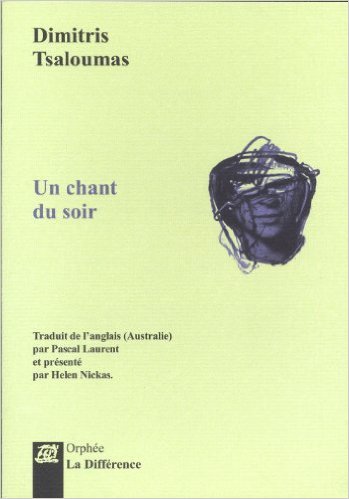
Un chant du soir [selected poems from Tsaloumas’s collections in English], translated into French by Pascal Laurent. A bilingual edition [English and French], 128 pages. France: Orphee/ La Difference, 2014. ISBN 978-2-7291-2066-5

41OD4u-olcL._SX347_BO1,204,203,200_

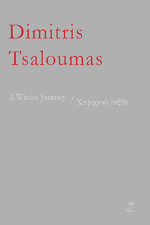
Dimitris Tsaloumas, A Winter Journey.(Chapbook) A bilingual edition in English and Greek. New Greek-language versions of the original English poems prepared by the poet. Brighton, Victoria, Australia: Owl Publishing, 2014. ISBN 0 9775433 1 5

tsaloumas

The Introduction to both publications is by Helen Nickas, author, academic, and a publisher who, along with the GACL Committee who publish Antipodes, has done so much to bring Greek-Australian writers and writing to the attention of a wider readership.

As ever, Dimitris Tsaloumas brings to his creative practice a distillation of experience, observation and perception enriched and filtered by several cultural and linguistic sources, animated by personal memory and a mythopoeic imagination that characteristically taps into memory’s aquifers to elicit dramatisations and evocations unconstrained by time. It seems that he is able to bring a divinatory instinct to bear on this process.

Although Dimitris Tsaloumas was born in Greece, on the island of Leros in the Dodecanese archipelago, his formal education was initially in Italian, as those islands were under Italian hegemony from 1912 to 1947. By the time he left Greece in 1951 to migrate to Australia, he had already published two collections of poetry in Greek. In the course of his studies at the University of Melbourne, he later acquired fluency in French, and embarked on what would be a lifelong journey into the English language, which was to become the medium for nine collections of poems.

Rich textures of language and structures of thought are matched by thematic abundance, yet while the heart of the matter may sometimes prove elusive, luminous presences pervade the poems that deal with love and ideal beauty, loss and memory. Tsaloumas has commented that Helen of Troy is his symbol of beauty in general, and this title poem of the collection Helen of Troy and Other Poems (2007) is one of those included in Pascal Laurent’s beautifully presented bilingual selection of 45 poems, Un chant du soir (pp. 108-9), translated into French in consultation with the poet, thereby giving Francophone readers access to the stylistic and linguistic pleophony and polyphony of Tsaloumas’s poetry.

Other iconic poems that seem to travel effortlessly from the original English texts to the French – testimony to the dedication, care and skill of the translator, Pascal Laurent — include selections from Falcon Drinking (UQP 1988); Portrait of a Dog (UQP 1991); The Barge (UQP 1993); The Harbour (UQP 1998); New and Selected Poems (UQP 2000) and Helen of Troy and Other Poems (UQP 2007).

Tsaloumas’s abiding themes and concerns cohere as a preoccupation with beauty, the ideal as sometimes glimpsed in the actual, but more often purged of worldly impurities by memory or art, as in the case of Helen, the poet’s mnemonic for beauty. But the supreme muse is perhaps memory, not only personal, but also collective and cultural, whose role is pivotal to poetry. Without memory, beauty lacks awareness of its antecedents.

The quest, the journey, the return, nostalgia in the Greek sense of the word (a yearning for the homeland); the hovering, luminous presences of seasons past; mutability and the idea of the immutable, which exists as memory: these motifs recur in the fabric and fibre of Tsaloumas’s poems as guests and visitants of the cosmology from which he draws consolation and renewed inspiration. Persephone incarnate, ‘partridge-breast proud’: a local girl glimpsed gathering flowers in spring near the mouth of the Underworld at Cape Tainaron (‘The Traveller and the Maiden’ Un chant du soir, pp. 102-3); Eurydice (‘Orpheus’ lament’ , number 11 in the sequence A Winter Journey); the mother (who is a recurring visitant in the corpus of Tsaloumas’s poetry, as for instance in ‘Visits’, poem number 4 of A Winter Journey); the mysterious ‘lady of ships’ in the poem “Aubade for the Lady of Ships’ (Un chant du soir, pp. 56-7) are among many feminine personae who perform multiple roles, as couriers of memory and psychopomps plying between past and present, between dream archetype and the physical world of sensory impressions.

The sequence of 14 poems titled A Winter Journey (originally published in Helen of Troy and Other Poems), references Schubert’s eponymous song cycle in its title, and also seems to contain allusions to Ovid, the poet in exile, in images of deprivation, wolves, the steppe. Hints and clues in the sequence seemingly support a reading of it on one level as an encrypting of Ovid’s experience, paralleled in part by that of Tsaloumas himself.

However, when I decided to put this hypothesis to the test, and asked the poet in a letter (in early 2008) if this were the case, he replied as follows:

‘It amazes me that the Ovid association never occurred to me before, during the writing or after. And yet your comment makes the connection so obvious that I can only wonder. However, this is only circumstantial…. My sequence has to do with the burden of memory in the desolation of old age and the return or revival of that mysterious sense of guilt that was ‘buried’ and forgotten in the vigour of youth. Memory, even the memory of beautiful moments, is now a source of pain….

‘This collection (Helen of Troy and Other Poems), in spite of the sadness of its tone, was meant to constitute a celebration of beauty in all things in life, including death!’

Irrespective of how readers may interpret A Winter Journey, the calibre of the work places it among Tsaloumas’s finest achievements, a poetic ‘leap/ over the bounds of self’.
….
yet I know temptation
is in the weave of sainthood
the test by fire before the leap
over the bounds of self

(A Winter Journey 9, ‘Temptation’)

Although the title of this sequence seems to presage a journey, the persona of the poems is snowbound, waiting for the spring, the thaw, and his journey is an inward one. Visitants arrive from afar in place and time, as do wolves:

After the wolves came mother
though the door was barred
….
others too came from albums
of yellowing years
faces blurred
though not unfamiliar
….
mother’s eye steady
burning through the hut’s murk

(A Winter Journey 4, ‘Visits’)

‘Summoned by unknown spirits’, ‘against [his] will’, the poet waits at a

point of static motion
dead centre of the rose
of winds

(A Winter Journey 1, ‘The call’)

But the reader is given to understand that

this is no public gesture
this voyage
no trespassing on alien land

(A Winter Journey 9, ‘Temptation’)

The essential paradox (in various guises) that lies at the heart of many of Tsaloumas’s poems here surfaces in the eleventh poem of this cycle, ‘Orpheus’ lament’:
….

Back under the sun
Orpheus blinks and sings again
of love regained and lost
never bestowed whole
and therefore imperishable.

Strange that Orpheus’ song
should have made famous
love’s impotence
and its division beautiful
beyond compare and reach
of man-born time.

The cycle ends with a burial in poem no. 14, ‘Songs of the woodworm’, alluding to the ambiguous nature of the poet’s journey, with implications for the ultimate and inescapable destination of each person’s life.

While Tsaloumas’s language of choice in the original poems of the present collections is English, his poetics are illumined by ‘the rich glow of an older tongue’ (‘Washing-up’, Un chant du soir, pp. 106-7), and informed by structures of thought and emotion whose origins lie elsewhere. Tsaloumas’s art is nourished by many sources, among them the context and continuity of cultures older than the one whose language he composes in. Perhaps it is this circumstance that imbues the content and language of the poems with a distinctive timbre and patina, the rich glow of an older tongue: resonances from a cultural milieu not alien to English – since Greek culture and thought is one of the antecedents of modern European cultures – but not innate to it either. Tsaloumas’s nightingale, his rossignol (Un chant du soir, pp. 60-61), is a far cry from Keats’s bird of the same name:

Last night in our square of rubble,
on the stroke of twelve, a nightingale
was heard. And panic-stricken folk
leaned out of gutted windows
above lamp-posts that bent distraught
over the brinks of craters
wondering, bitter that such a bird
should visit in their grief with not
a tree, not even a spire to support
its crazy song.

.…

I laughed, and from the shadows cried
don’t be such fools, brothers,
the song proffers no hope. That gift
you’ve squandered long since.
This is the hour of its perfection.
Be grateful to the bird that scores
the vastness of that loss.
….

The haunting texts selected for translation into French by Pascal Laurent include, in addition to those already cited, many of Tsaloumas’s finest poems: songs for out times and for all times, of the here and the hereafter, embodying an uncanny instinct for locating the eternal in the moment. They include the iconic ‘Falcon Drinking’; Old Man with Canary’; ‘The Barge’; ‘To the Poet’, with its sardonic, slant allusions to Plato’s Republic; ‘A Summer House’; ‘The Harbour’; ‘The Shrine’; ‘Morning Coffee’ — a dual portrait viewed in the light of the quotidian; ‘Stoneland’; ‘The Veranda’; ‘The Inheritance’; ‘Helen of Troy’…. and, among my personal favourites, the delicately drawn charm of ‘A Postcard to Matina’, which I quote in full:

A Postcard to Matina

The boats by the tamarisks on the far left
will sail again before dawn, and with the sun

dripping forge-red a mere three fathoms
above my bed in the horizon-filled window

I’ll be thinking again of my fishing days and all
the water loveliness of child-bright summers.

I linger under the sun. There’s no pleasure
in triumphs no longer shared. I write this card

a mile past its frame, on the far right, against
the harbour breeze. Splinters of laughter point

the lime-rock light thorn-deep, and as before
you walk between the festive sea

and the white of houses as if these days
belonged to another year. Yet nothing’s changed,

in spite of memory. A stained-glass autumn
hangs near the door on our pomegranate tree,

olives are crushed and fish is fried at dusk
in every kitchen, and all the island cats

shine peaceably in the bounty of the season.
The moon’s back huge as ever, platter-full.

(Un chant du soir, pp. 38-9)

This symbiosis between cultures, paralleled in these two new publications by the twin versions of the poems presented side by side, in English and Greek (A Winter Journey) and English and French (Un chant du soir), evokes sublimated relationships and nostalgias, as well as generating productive tensions, implicit rather than explicit, between different emotional landscapes and the syntactical shapes of ideas, the grammar of thought.

Ambiguity, ellipsis, antithesis and dichotomy, contradiction and paradox, shadows and luminosity abound in the art of Dimitris Tsaloumas, romantic idealist, peerless lyricist, excoriating sceptic, and poet of all life’s seasons. Yet amplitude and kenosis, feast and frugality and fast, flow and ebb are surely also the rhythms of the natural world, and Tsaloumas, who for much of his long life has migrated annually between homelands, Australia and the Aegean, is attuned to this language as well, the primal and maternal one, an awareness of origins and eternal cycles of renewal, and the blueprint for beauty that is nature’s gift to art and memory.

Note: Dimitris Tsaloumas’s most recent publication of new poems in Greek is Thirst (Dipsa), a chapbook published by the literary journal Planodion, Nea Smyrni, Athens 2010, which contains some of the most remarkable poetry he has ever composed. Only Dimitris Tsaloumas could have written these incandescent poems.

*This piece firstly published in “Antipodes” 2015, annual literary journal of Greek-Australian Cultural League of Melbourne.

images

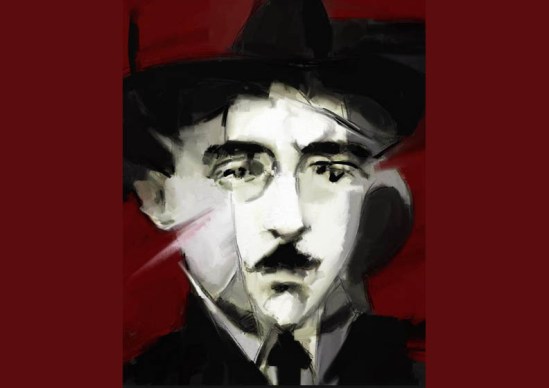
Φερνάντο Πεσσόα: «Το πιο χυδαίο στα όνειρα είναι πως όλοι ονειρεύονται»

fernando_pessoa_heteronimia-cover

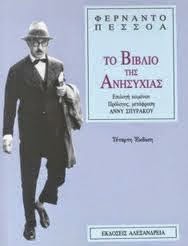
Φερνάντο Πεσσόα, Το Βιβλίο της Ανησυχίας
Εκδόσεις Αλεξάνδρεια

«Γράφω, λυπημένος, στο ήσυχο δωμάτιό μου, μόνος όπως υπήρξα πάντα, μόνος όπως θα υπάρχω πάντα. Κι αναρωτιέμαι αν η φωνή μου, φαινομενικά τόσο ασήμαντη, δεν ενσαρκώνει την ουσία χιλιάδων φωνών, τη δίψα να μιλήσουν χιλιάδων ζωών, την υπομονή εκατομμυρίων ψυχών υποταγμένων σαν την δική μου στο καθημερινό πεπρωμένο, στο ανώφελο όνειρο, στην ελπίδα που δεν αφήνει ίχνη. Αυτές τις στιγμές η καρδιά μου χτυπά πιο δυνατά γιατί έχω συνείδηση πως υπάρχει».

Αποτελούμενο από 520 αποσπάσματα, Το Βιβλίο της Ανησυχίας είναι το κορυφαίο έργο του Πορτογάλου Φερνάντο Πεσσόα. Σχεδόν όλη την ενήλικη ζωή του και μέχρι το θάνατό του, από το 1913 έως το 1935, ο Φερνάντο Πεσσόα γράφει, με κάποιες διακοπές αλλά χωρίς να το εγκαταλείψει ποτέ. Δημοσιεύτηκε πολλά χρόνια μετά το θάνατό του. Το βιβλίο της ανησυχίας είναι ο απολογισμός της καθημερινότητας, η καταγραφή των αισθήσεων, η οξύτητα της ειρωνικής σκέψης, η ανεπανάληπτη γραφή ενός από τους σημαντικότερους συγγραφείς του 20ου αιώνα.
«Να ταξιδέψω; Για να ταξιδέψω φτάνει να υπάρχω: πηγαίνω από μέρα σε μέρα, σαν από σταθμό σε σταθμό στο σιδηρόδρομο του κορμιού μου ή του πεπρωμένου μου, σκυμμένος πάνω από τους δρόμους και τις πλατείες, πάνω από τα πρόσωπα και τις χειρονομίες, πάντα ίδια και πάντα διαφορετικά, όπως τελικά είναι και τα τοπία».

« Η ζωή είναι αυτό που εμείς την κάνουμε να είναι. Τα ταξίδια είναι οι ταξιδιώτες. Αυτό που βλέπουμε δεν είναι αυτό που βλέπουμε, είναι αυτό που είμαστε».
 
«Υπάρχει μια κούραση της αφηρημένης ευφυΐας, και είναι η πιο φρικτή κούραση που υπάρχει. Δεν βαραίνει όπως η σωματική κούραση, ούτε ανησυχεί όπως η κούραση της γνώσης που αποκτάται μέσω της συγκίνησης. Είναι το βάρος από τη συνείδηση του κόσμου, σαν να μη μπορείς να αναπνέεις από την ψυχή».

«Για τον κοινό άνθρωπο, αισθάνομαι είναι ζω και σκέφτομαι είναι ξέρω να ζω. Για μένα, σκέφτομαι είναι ζω, και αισθάνομαι δεν είναι τίποτε άλλο πέρα από την τροφή της σκέψης».

«Όσο πιο διαφορετικός είναι ο κάποιος από μένα, τόσο πιο πνευματικός μου φαίνεται, γιατί εξαρτάται λιγότερο από την υποκειμενικότητα μου. Και γι᾽ αυτό ακριβώς η επιμελής και διαρκής μου μελέτη είναι αυτή η κοινή ανθρωπότητα που απεχθάνομαι και από την οποία απέχω. Την αγαπώ γιατί τη μισώ. Μου αρέσει να τη βλέπω γιατί απεχθάνομαι να την αισθάνομαι.

«Όσο περισσότερο βυθίζομαι μέσα μου, όλα τα μονοπάτια του ονείρου με οδηγούν στα ξέφωτα της αγωνίας.»
«Η ζωή μου είναι σαν να με χτυπούσαν με αυτήν….»

«Για μένα η ποίηση δεν είναι φιλοδοξία, αλλά τρόπος για να μένω πάντα μόνος.
Είτε υπάρχουν είτε δεν υπάρχουν θεοί, είμαστε σκλάβοι τους.
Το πιο χυδαίο στα όνειρα είναι πως όλοι ονειρεύονται».

« Είναι ανθρώπινο να θέλουμε αυτό που μας είναι απαραίτητο, και είναι ανθρώπινο να επιθυμούμε αυτό που δεν μας είναι απαραίτητο, αλλά που μας είναι επιθυμητό. Αυτό που είναι αρρωστημένο είναι να επιθυμούμε με την ίδια ένταση αυτό που είναι απαραίτητο και αυτό που είναι επιθυμητό, και να υποφέρουμε από την έλλειψη τελειότητας σαν να υποφέραμε από την έλλειψη ψωμιού. Η ασθένεια του ρομαντισμού είναι ακριβώς αυτή: να θέλουμε το φεγγάρι σαν να υπήρχε η δυνατότητα να το αποκτήσουμε. Ζω πάντα στο παρόν. Το μέλλον δεν το γνωρίζω. Το παρελθόν δεν το έχω πια. Το ένα με βαραίνει σαν τη δυνατότητα των πάντων, το άλλο σαν την πραγματικότητα του τίποτα».

Ποτέ δεν αγαπάμε κάποιον. Αγαπάμε απλώς την ιδέα που σχηματίζουμε για κάποιον. Τελικά αυτό που αγαπάμε είναι μια δική μας έννοια και ο εαυτός μας.

«Μη φοβάστε, δεν υπάρχει κανένας κίνδυνος να καταρρεύσει η κοινωνία από υπερβολικό αλτρουισμό».

*Από το http://freethinking.gr/fernado-pessoa-to-pio-xidaio-sta-oneira-einai-pws-oloi-oneireuontai/

01.06.14_________ ______ _ __ ______ ___ _________

Simon Eales reviews Jennifer Maiden and Stefanie Bennett

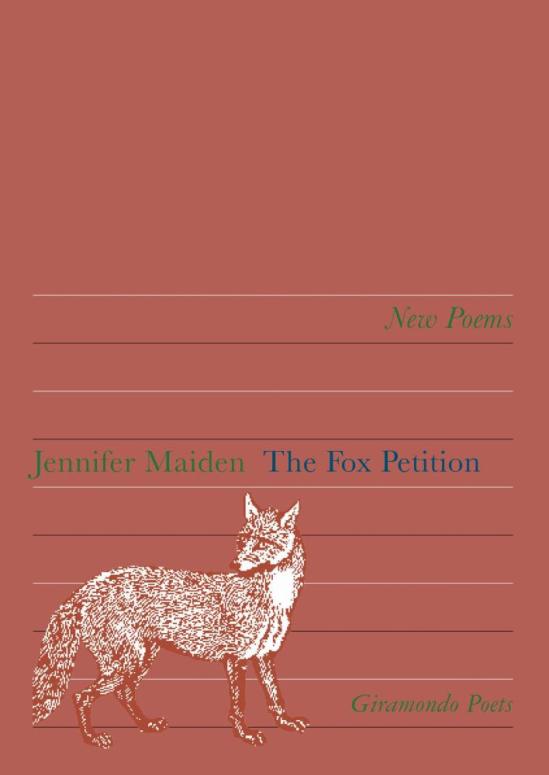
the-fox-petition

The Fox Petition
by Jennifer Maiden

Giramondo, 2015

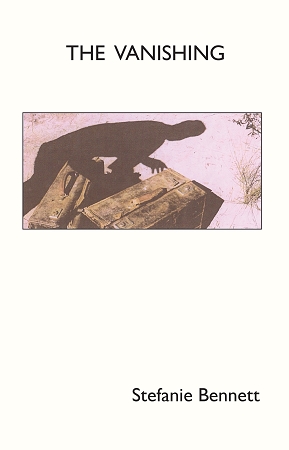
stefanie-bennett-cover-small

The Vanishing
by Stefanie Bennett

Walleah Press, 2015


We are already vanishing. Believe that!
Believe with the same candour
You show in believing me. (Bennett, ‘Believe That’, The Vanishing)

Stefanie Bennett woke up alongside Jennifer Maiden one morning, remarking, ‘An enemy is nothing to sneeze at: / Often his eau-de-Cologne’s / All embracing’ (‘Stratum’). This might be the too-cute, not-clever start to an amalgamating take on these two books from two poets with similar concerns and different styles. On the thirty-fourth page of the The Vanishing, Bennett quotes Maiden in square brackets: ‘But you might as well at this stage ask: / what Civil War is it we are enjoying.’ It is one of many mentions, quotes, and dedications to established poets in Bennett’s book, and it carries a similar sentiment to what I said she said in bed: we can be seduced by opposition. The consequences of this seduction are wide-ranging. Both books clearly stage oppositions and comparisons, not only to connect their poetries with the real world, but also to engage with the tensions of its adversarial discourse.

Maiden’s most delightful representation of this – the matchmaking of strange bedfellows – will be familiar to readers of her previous work. In The Fox Petition, ‘The Harvard Business School woke up next / to Julie Bishop,’ (‘Animism’) and, on a plane, ‘Kevin / Rudd and Dietrich Bonhoeffer, [are] still / trying to sort out Manus Island’ (‘Diary Poem: Uses of Xenophobia’). These couplings allow Maiden to unravel knots of hypocrisy without advocating for one side or another. As each pages-long poem continues, the multiplying ironies that result from these hypocrisies stew, becoming more discomfiting and delicious. In the second section of ‘Uses of Xenophobia’, which is framed as an autobiographical interlude, Maiden reflects on her ‘mad’ next-door neighbours, who have ‘pasted a picture of Rasputin / on their window,’ and ‘placed / a blue cube of rat poison over / [her] fence’: ‘to them / it is vital to be Australian, which / seems to mean rat poison and a flag’. This microcosmic, urban passive aggression brings into relief Rudd’s political – read, dehumanising – equivocations regarding the best ‘solution’ to the ‘asylum seeker problem’.

Maiden’s autobiographical voice is familiar, too. It transmits the kind of insight her poetry advocates, which is also, in musical terms, the tonic to dialogic friction. In the Diary Poem, ‘Uses of the Female Duet’, similar pairings, between Tanya Plibersek and Julie Bishop, opera singers Rosa Ponselle and Marion Telva, and Penny Wong and Gillian Triggs, give way to a resonant Melissa Parke, Federal Member for Fremantle (with Jenny Macklin in harmonic support), who, like Maiden in The Fox Petition, ‘does seem / devoted to the innocence in living’.

Both books bow deeply, if also ironically, to European influence. The title of Maiden’s book refers most directly to the petition circulated in New South Wales in 2015 calling for an official bounty system for foxes (imported from England in order for colonials to have something to hunt). The Shooters and Fishers party of NSW, unsurprisingly, were all over it. In Parliament in May 2014, ridiculing another petition seeking to allow foxes to be kept as pets, their member, Robert Borsak, lamented, ‘I dread the day I walk down George Street and pass a yuppy with a fox on a lead or indeed see a fox sticking its head out of a man bag.’ The title also alludes to the eighteenth-century Whig statesman and politician, Charles James Fox, who Maiden claims as her ‘favourite politician / of all time’ (‘Uses of the Female Duet’). Like Melissa Parke, Fox, known for his support of the French Revolution, abolitionism, and the deepening of juridical capability, might be described as ‘devoted to the innocence in living.’ And, significantly to The Fox Petition, he spent almost his entire career in political opposition.

Stefanie Bennett looks across the Channel to the little-translated, northern French and quotidian poetics of Guillevic. James Sallis’s piece on John Montague’s translation of Guillevic’s Carnap, for the Boston Review, suggests that ‘even in French, Guillevic can be an elusive read. Slight, elliptical, gnomic, the poems vanish when looked at straight on. ‘Les mots / C’est pour savoir,’ he says. Words are for knowing.’ Bennett attains many of these traits. In her Foreword, she invokes Guillevic as a model meditator on the complex relationship between ‘man’ and the natural world. His sparse lines suggest that while he may have considered a multitude of phenomena, in keeping with the tradition of the mystic, he delivers only a few symbolic points for us connect ourselves. Inviting us, too, into such thought, Bennett writes, ‘we had best gather together what’s left of all we’ve scattered, abused and refused to take notice of in memorandum.’ We – in all senses of the word: individual human subjects; the zeitgeist; collective culture; and the ecology we share and are destroying – are vanishing. We best believe it, because memento mori is the best we can do. Only our totems of this remembering, the menhirs, will continue to objectively exist.

In her Part II poem, ‘Memoir,’ for example, Bennett links the ancient Celtic religious practices of ‘the Menhir people,’ carried out on Guillevic’s home turf in Brittany, with the conditions for a ‘con- / Structed future.’ She describes the agent of this connection as ‘A kinetic Mammon / Wearing / Two hats,’ the one hat belonging to complex history, and the other to present action. The collection also wears two hats: one, the first part, posited as a present lyricism, with universalising titles such as ‘Stratum,’ ‘Arrival,’ and ‘Exit,’ and the second as a history, subtitled ‘Repel & Attract: An Orphic Conflict.’ There are certainly elements of religious Orphism present, of transmigration, the ascetic life, and having seen the underworld and returned. However, this is perhaps only inasmuch as the collection proceeds from Guillaume Apollinaire’s artistic Orphism, with its fauvism, colour theory, and pure lyric abstraction.

The next poem, ‘Variable Contrasts’, dedicated to Thomas Shapcott, stages a significant oscillation between unlikely opposites, suspension and coagulation, under this tarp of surrealism:

Now you’ve returned
From the Baltics
Hurling broken oars
At the strait’s
Dizzying
Shock-waves,
An irrepressible
Frontier
Beckons:
Klee’s
Aspic renaissance
And Eluard’s ‘the wind,
Undecided rolls
A cigarette of air …’

Within the Charnel-house
You’re knee-high deep again
– Hesitating.
It’s not Passé fanaticism
that coagulates,
But the knowledge
Of it.

The idea of an ‘Aspic’ renaissance suggests that the ‘pure psychic automatism’ of surrealism is aesthetically upheld as an aperitif of stasis. The gelatinous mould can change – it can be French surrealist Paul Éluard’s ‘wind, / Undecided,’ for example – but it remains some version of discrete and wobbly. The micro-variations in this state’s definition (‘Aspic,’ ‘Undecided,’ ‘Hesitating,’ and ‘coagulates’) each take a turn, none acceding to preeminence. As the final lines reveal, awareness of this free agitation of thought is different to being involved in it. Neither ‘Passé fanaticism,’ nor having ‘knowledge / Of it,’ sounds desirable, but they constitute Bennett’s two necessary poetic and, perhaps, human, processes. The aspic metaphor suggests that, for Bennett, the meat of life, its events and physical objects, are irrepressibly transformed into poetic symbols. And, then, if we frame her as a surrealist following poets like Éluard and Aragon, we are able to view these symbols as expressions of some notion of true life.

Treating Bennett as a visionary poet, we can discern an isotope of essentialism in The Vanishing. Her poems are titled for us to be led in this direction. ‘Kinship,’ for example, gives the reader access to the feeling of kinship, setting an archetypical scene of warmth and comfort at the hearth, or around the campfire, while reinforcing instincts for togetherness, sensuality, and our commingling with ‘the elements.’ Each poem is linked to its neighbour in a similar way. The poem following ‘Kinship’, called ‘Smoke’, can be read as a reconstitution of kinship’s overflow (the fire around which we develop kinship produces smoke). This poem produces an imperative that seems to resonate through the collection. It’s a Jacob’s Ladder to the Tower of Babel. Poets not feeling well, as one line suggests, is indicative of ecological sickness. Bennett’s answer is to remain receptive, ‘stay / Sober. Stay serene. / Play / Pat-a-cake / With the screech-owl / in God’s sweet acre’. This imploration to realise what we have and appreciate it occurs repeatedly under different guises. In ‘Rilke’s Desk: A Postscript’, it is ‘Don’t / Scramble / The cornucopia!’. The Vanishing is a humble because fatalistic call to appreciation a la Guillevic, before ‘All’s well!’ disappears.

I wanted to reflect at some point on the status of vermin in both of these books. What happens with the pestilential creatures that often so delightfully hive through subversive poetic works? But neither The Fox Petition nor The Vanishing entertains the idea. Instead, the creatures that would be called so are incorporated. Because both texts stage contests without actualising them, there are no victors; no one stranded on Manus Island, and only people left speaking who can imagine extraordinary compassion. For both, such compassion involves Bartleby-like refusal to play along. Maiden, especially, expresses the importance of maintaining the capacity to resist; to oppose; to imagine difference. She does so sympathetically, mindful that weakened and traumatised creatures can read a helping hand as another backhand whack. Under the spell of ‘eau-de-Cologne,’ regular people who should not be are kept in remote prisons, and foxes are obliged to be shot.

Now,
since new laws for Biosecurity,
if I spoke to the fox without
killing it, I would be charged, but
we once had much in common. A quality
spare and wild with desperation
in its streetlamp eyes, its old headlight
eyes could still suggest a city
in shifting shapes, its identity
aristocratic in lost deceptions.
On an empty
road by the Lakes, I once met a fox
whose eyes were ghosts with pity. (‘Once I Met a Fox’)

Empathy might not save the day, but we must muster it regardless.

*Simon Eales was born and lives in Melbourne. He recently completed a MA on Australian satirical poetics at the University of Melbourne.

**Taken from Cordire Poetry review at http://www.cordite.org.au

Nathanael Pree reviews Pam Brown’s Missing up

Brown_MissingUp_Cover_1024x1024

Missing up
by Pam Brown

Vagabond Press, 2015


From the cover, let alone the first lines, the title appears apt: a sense of levitation, humming along wires, strands of illumination flickering through a work of direct and intimate voices, understated in its deftness and density, with light touches that lift the lexis, and air pockets in its seams of meaning. Spread out across the pages are samples of complete, if not absolute contemporaneity interspersed with work that decries the shortcomings of an age in which culture is so often presented as a commodity. Pam Brown’s latest collection showcases self-objects and articulates responses to salient concerns, providing masterful representations of the everyday and outré that take their time to settle into the spaces and absences within which they are framed.

Missing up provides regular reminders of the offbeat and melancholy immanence of the eclectic self-objects and material that make up urban existence. A nod to William Carlos Williams observes: ‘no phenomenon but in things / like slim cyber tablets / scissor sharpeners vinyl bucket seats’. These are presences that convey a semi-contained kinetic energy. The palpable sense of atoms jostling for space as if in defiance of the sadness implicit in any effort towards their decoding – the gravity and lightness of a book, tea towel, blue and orange plastic crates, and colourless (or is it flat white?) noise. Solidity and elision co-exist through a tacit sense of animism, where verbs and nouns take on one another’s attributes, creating peopled things: the life that exists in the solid-seeming compounds that create city and suburbia.

Brown on language is notably to the point: ‘it has to lift off or else I’m not interested in it’. Her poems, she has said, ‘don’t ever leave the street I’m on … and it’s not always literally that street. And I use place and then extrapolate it, abstract out.’ Place is something hard to define, as are the psychic and textual grounds onto which appear isolated or occasionally constellated signals that indicate arrival or absence. Missing upappears apt for a collection of poems that lift off and plane out, taking traces of tar, flakes of bitumen from the street which the poems do not leave so much as interleave, adding another dimension to everyday perception. In this environment ‘colour strips’ contrast with ‘dun brick niches / stacked / with ash’ – as cityscape constituents, from cargo to post-industrial strata with their sediment visible in the cracks. From the wharves to the outer burbs, ‘& Surrounds’ shows ‘the streets here / regular stepped / a flat expanse / chrome-plated railings / separating a superior plane /from inferior’, and stepping in to match is Brown’s uncompromising typography, the planes and levels indicating straightened and discontinuous contours and segments of life-objects. Translated – or taken aside – as text these refuse to rest easily on the page, ‘as time extends / the moody morning / wanting to wander / these organised hills / managed paths / & surrounds.’ Typography as psychogeography: the uneasy self ‘born in parenthesis / raised in an interstice’ ends up, if not entirely missing, ‘sorting through / tattered monads / might as well be gone.’

Regarding her technique, Brown has pointed out that ‘it’s mixing not layering.’ This allows for gaps between not only the lines, but also jump cuts in chronological and geographical continuity: interpenetration and unpredictability where each shift and indent could signal disjunction or connection. These representations of unstable and shifting spaces splice urgency and familiarity according to a projective sense that creates an open force field from home, where a ‘fridge compressor / gurgles’, to the aftermath of Fukushima. Its findings and debris alike form a transnational and trans-temporal urban cento, where predecessors and contemporaries share a certain edginess: Baudelaire and Rimbaud recompose their grimaces together with Schuyler and Cage at the sere and greying edges of striated suburban skies. As the patchwork tapestry lifts off, she asks: ‘& what do you reckon, / my wintry shadow, / my fraudulent duplicate, / somebody up there?’ Mon frère? If, as she avers, ‘the human mind is / empty’, it’s not just a matter of rhetoric.

Brown has referred to a term used by Gilles Deleuze, ‘aux aguets’, meaning to be on the lookout or in ‘a state of cultural awareness’, and this mode of attention is evident here in a collection which refers to and writes in mentors and friends as an ongoing ‘call for community.’ Conversely, as the ‘aesthetics of the surface’ in the poems ‘Required Reading’ and ‘Fricassee’ acerbically indicate, this inclusiveness is balanced by a certain skepticism, as evidenced by an archetypal ‘dolt in residence’ operating ‘all over the very same map’ but in another dimension altogether. Academics writing poetry on the side would be advised to read elsewhere. Yet, however sharp her observations bite, Brown concludes on a conciliatory note for society in general: ‘I would like / a speculative set / of laws / that are friendly to life’, especially in an age where ‘every bridge / shelters someone /homeless’. Maybe sometimes we all need to find ourselves ‘anywhere out of the world’, and at others may not have the luxury of choice, as she reminds us, via Baudelaire. The outcome, if never ideal, could be one where diverse voices, amicable and empathetic (and those of antipathy or estrangement) find their respective points of co-existence, if not convergence.

A conclusion to this review would seem incomplete, or at least tentative, given the urge to keep returning to these concise and finely crafted – however deceptively – lines. A glance at the string of light bulbs drawn over the sparse and darkening street scene on the cover goes well with ‘Hit single xmas’ – considering it now as dark clouds bank over the Manly peninsula where I write this. Elsewhere, ‘skyrupt / big thunderstorm / plotting squall line / swerves / beyond Wattamolla’, appears to presage tornadoes in Sydney, and sheeted rooftops lifting (missing?) up over all this tensile and confounding space.

*Nathanael Pree is of Australian and German background, brought up and educated in the United Kingdom. He did undergraduate studies at University College London, before working in education in Russia, Vietnam, Cambodia and Australia, with additional work experience in India. His postgraduate studies were at The University of Sydney, specialising in the works of W.G Sebald (Masters’ Dissertation) and Charles Olson (PhD, ongoing).

**Taken from Cordite Poetry Review at http://www.cordite.org.au

Γεωργία Τρούλη / ΠΟΙΗΣΗ ΣΕ ΕΝΑ ΟΒΑΛ ΠΕΡΙΒΑΛΛΟΝ

12507313_1091380764225965_8643651430561935931_n

Μόλις Κυκλοφόρησε από τις εκδόσεις Σαιξπηρικόν

Το πέμπτο βιβλίο της ποιήτριας – εικαστικού Γεωργίας Τρούλη.
Γεννήθηκε τον Νοέμβριο του 1979. Κατάγεται από την Κρήτη και ζει στην Θεσσαλονίκη.Σπούδασε Νοσηλευτική στην Σχολή Επαγγελμάτων Υγείας και Πρόνοιας στο Α.Τ.Ε.Ι. Θεσσαλονίκης και έπειτα σπούδασε Ψυχολογία στην Φιλοσοφική Σχολή του Α.Π.Θ. Μετά από μεταπτυχιακές σπουδές στην Ψυχολογία, εισήχθη στο Τμήμα Εικαστικών και Εφαρμοσμένων Τεχνών της Ανώτατης Σχολής Καλών Τεχνών του Α.Π.Θ όπου και αποφοίτησε το 2015. Πραγματοποιεί ατομικές εκθέσεις, λαμβάνει μέρος σε ομαδικές καθώς και σε φεστιβάλ καλλιτεχνών. Έργα της επίσης έχουν κατά καιρούς φιλοτεχνήσει λογοτεχνικά περιοδικά (Εντευκτήριο, Ένεκεν, Θ.Ε.Α.)και βιβλία των εκδόσεων «Σαιξπηρικόν»(εξώφυλλα, βινιέτες κ.α). Από το 2008 δημοσιεύει ποιήματά της σε διάφορα έντυπα λογοτεχνικά περιοδικά καθώς και σε ηλεκτρονικά λογοτεχνικά περιοδικά και σε ιστοτόπους.Έχει εκδώσει πέντε ποιητικές ενότητες, τελευταία «Ποίηση σε ένα οβάλ περιβάλλον». Στο τριακοστό τρίτο συμπόσιο ποίησης Πάτρας παρουσιάστηκε το έργο της από τον ποιητή Αλέξανδρο Αραμπατζή.Είναι μέλος του συλλόγου Ελλήνων Ψυχολόγων, της της Εταιρίας Λογοτεχνών Θεσσαλονίκης και του Κύκλου Ποιητών.

____

(ΚΟΥΑΡΚ ΚΟΥΑΡΚ)

Η κάθε ματαιοδοξία μέσα στην τραγικότητά της
Είναι πολύ αισιόδοξη
Και νιώθεις πως το μόνο
Που έχει συνέχεια
Είναι η ϕράουλα από το κοντόλαιμο κοτσάνι
Η σαύρα από την ουρά της
Ο κομήτης από το δευτερόλεπτο
Η εικόνα από τον τοίχο
Το βαμβάκι από τα σύννεϕα
Η κατσαρίδα από την μεταμόρϕωση
Η ϕυγή από την πραγματικότητα
Η μαϊμού από το έλλογο
Το άλογο από το χαλινάρι
Η κενότητα από το ϕως
Η πατούσα από το Βάρος
Το χαρτί από το Δέντρο
Το μελάνι από την Μοναξιά
Το πιρούνι από την Δημιουργία
Η χαρά από το Τραγικό
Μόνο
Και Αδιάσειστο
Είμαστε όλοι ένα Ον/είδος Μούχλας
Και
Ούτω καθεξής
Η ϕυγή
Επαναλαμβάνεται
Κουάρκ Κουάρκ
Φωνάζουν οι βάτραχοι
Στην Άκρη του
Πάντοτε

***

Η ΑΙΣΘΗΣΗ ΤΟΥ ΠΗΧΤΟΥ

Είμαι λεκτικός θρόμβος
Μοιάζω να έχω ραϕτεί στα αγγεία
Κάθε λέξη αϕήνει στα αυτιά μου την αίσθηση του πηχτού
Αποσυντονίζομαι εύκολα
Συμπυκνώνομαι με ταχύτητα
Γίνομαι πίδακας ανενδοίαστα
Προκαλώ εμβολή στους αγαπημένους μου πνεύμονες
Ενίοτε δεν αναπνέω κανονικά αλλά ούτε με θόρυβο
Ψάχνω τότε μια σειρά από σημύδες
Τραχεία – Μεμβράνη και Τένοντα
Δένομαι εύκολα – Λύνομαι δύσκολα
Δεν προκαλώ πήξη του αίματος
Ούτε αϕηγούμαι ροή χωρίς τίμημα
Προκαλώ κορεσμό σε οξυγόνο
Και στον ύπνο παράλυση
Δεν εντοπίζομαι – γίνομαι ο ελάχιστος
Αλλάζω μορϕή σαν βουτηγμένη στο νερό πλαστελίνη
Δεν γίνομαι έμμηνος ρήση αλλά
Θαυμάζω όσους προσϕέρονται
Μία άχαρη νύξη προσπαθεί σε όλο το σώμα
Να με εντοπίσει
Διασπώμαι τότε σε μικρά σϕαιρίδια σημασίας
Οβάλ – ολοστρόγγυλη – ευθεία
Αναδιπλώνομαι σε στοιβάδες ενός γεωλογικού χρόνου
Που δεν έχω την γνώση
Όταν νιώσω την τριχοειδή υποψία
Για δέρμα σύνορο, όριο, εξαγωγή
Γίνομαι λεία στρώση νυχιού
Αποδημία πηχτού
Και
Αγαπώ
Τις νεροτσουλήθρες

***

_ΕΓΚΑΙΝΙΑΖΟΝΤΑΙ ΜΕΣΑ ΣΤΗΝ ΔΥΝΑΤΟΤΗΤΑ

Στην λιακάδα ξεκουράζονται
Τα χθεσινά βροχερά απομεινάρια
Μιας σκέψης
Σαν μακέτα ενός αρχιτέκτονα
Που
Μόλις
Κατάπιε
Μια
Αλυκή Αλίκη
Σε κολλώδη ήβη
Χαϊδεύει
Την
Κοιλιά
Του
Σε
Ένα
Μοντάζ
Αποτυχίας
Που
Διήρκησε
Μήνες
Οχτώ
Και
Συναπτές
Λέξεις

____saixpirikon.com