Emily Stewart
 reviews Rachael Munro’s Indigo Morning

IMsp

Indigo Morning
by Rachael Munro

Grand Parade Poets, 2014


Rachael Munro is a keen observer who writes in a language of nettles and nets, establishing a daily mood via the accumulation of certain details. This is a book of apricot tissue petals and fences-turned-crystal lattices; of the world in its weather and a poet caught in the tangle.

Many of the poems reflect early years in the poet’s life growing up in the Snowys (mountains of NSW), and her acute impressions, ‘air tasting sharp as splintered ice in the brittle sun’, will ring true for anyone familiar with the Monaro region, even though, as the speaker in ‘Exile from Paradise’ remarks in the poem’s opening lines:

As long as I have lived near the mountains, they were never home —
eight years there but still passing through.

Across five numbered sections, the reader of this slim volume herself passes through; visiting upon snapshots of the poet’s family growing up, meditations on nature and animals – horses and cats especially abound – and suburban life. Occasionally a poem disrupts the book’s overall tone, such as the diaristic prose poem ‘Profiteroles’, which undoes the work of the poet’s otherwise restrained and elegiac compositions.

Poems such as ‘Lipstick’, where the speaker looks in the mirror and sees her mother’s dying face, are moving. ‘Rasberry glacé, Mum’ she says. Indeed, strongest are the moments where the poet bares her teeth. In ‘Sunday Morning in Sydney’, the speaker watches a couple flirting in a Kings Cross café. ‘Yet I am the shark, I want to feed on them both,’ she says, in a surprising turn. The ‘voyeur-spiced dream’ revealed.

Equally surprising is the recurring red mare who dapples poems such as ‘Sun-fish’, ‘Red’, and ‘What I Have’, equal parts beast and motif. In ‘Red’, the mare reminds the speaker of

a woman I once knew and
had wondered why
it hurt to be with her

and in ‘What I Have’, a sense of loss is further punctuated:

I never saw, or held
the foal of that red mare

There is a current of desire running through this collection and it sparks at unexpected moments and with force. Peppered throughout are references to the poet’s struggle with addiction: one of the first poems, the unhappy ‘My Father’ concludes with the speaker

trading in today / for a lukewarm Riesling

while the poem ‘Christmas Tree’, in the book’s concluding pages, describes the speaker pouring vodka into the bucket at the base of the tree, ending on a weak gag

I always knew it had the powers of preservation / see my skin

that nonetheless provides a welcome insight into the person of Rachael Munro, enriching readings of otherwise straightforward descriptive verses such as ‘Snake’ and ‘The Cigarette Lighter and Chaos Theory’, both of which hinge on notions of control and balance.
From ‘The Cigarette Lighter and Chaos Theory’:

Above, a twist of jasmine
If the heaviness of its fragrance
could be measured,
it would topple
that tube of plastic and volatility
onto the tail of a sleeping cat

A minor complaint is that the poet sometimes lingers too long. Poems like ‘Exile from Paradise’ and ‘A Butcher Shop’ land with greater impact without their final summations. There are also occasions of vague syntax which serve to confuse in moments that are better clarified. In the final paragraph of ‘Night Creature’, where the ‘it’ is a moth straining towards lamplight:

So much energy
for something trivial
will kill it early.
A night creature,
why does it destroy itself
for a small sun,
yet vanish with the day?

The poems in Indigo Morning revel in a sensual architecture and underscore how memories amplify the colour, texture and shape of our experiences. This selected poems, an all-too-modest snapshot, I suspect, of a well-lived life, settle upon the reader with a sense of humbling finitude: above the trees / but still below the sky.
This entry was posted in BOOK REVIEWS and tagged Emily Stewart. Bookmark the permalink.

*Emily Stewart is a poet and book editor based in Sydney. Her chapbookLike was published by Bulky News Press in early 2015.

***Taken from Cordite Poetry Review at http://www.cordite.org.au

Anna Kerdijk Nicholson, Everyday Epic

2f5d65da-4543-4782-888b-84071058ca39

By Alyson Miller
*

Everyday Epic
by Anna Kerdijk Nicholson

Puncher & Wattmann, 2015


In the untitled preface to Everyday Epic, Kerdijk Nicholson describes how ‘the poet grinds down / a sum of parts / to atoms’. The result is a world in which the most quotidian of instances and images are made ‘alchemically new’, an echo of Ezra Pound’s credo to repeat, but with difference. These lines also suggest that the process of grinding down is at once violent and erotic, displacing and magical, disturbing and strangely familiar. Everyday Epic is a collection that often appears contrary in its aims: it is as political and nostalgic, for example, as it is playful and serious. Yet in its collision of forms and content, there is an abiding sense of cohesion, a quality that reminds readers of the shocking qualities of the ordinary, and the ordinariness of the shocking. This is most often explored in relation to tragedy, and the histories that shape discourses around the politics of national identity.

As the title of the collection makes clear, it is in its attention to details that are diurnal or circadian that marks the uncanny nature of these poems, at once both intimate and distant. In ‘Griefs’, ‘just the kettle on the boil / is a completeness / the perfect one hundred degrees’, a ritual dedicated to the ‘small civilities’ that eases the pain of mourning. In ‘How and Why’, ‘a shock of ginger broken cat’ breaks the smooth road of a freeway, while an ‘old handbag of an electrocuted bat’ hangs alongside ‘late afternoon lorikeets’ in a eulogy to the quiet lives and deaths of an animal-littered suburbia. As Kerdijk Nicholson notes, the poems are something of a ‘catalogue’ that ‘places time and again’ collect the minutiae that comprise the cycles of experience and being:

Catalytic nows, colour, eye-harvest
bring more, and more intense, to

that old crucible, bring near the new—
taking within, paying of respect

This homage to the commonplace is often figured in images of unexpected and curious violence. In ‘Allotment’, for instance, digging in the earth is likened to Seppuku, evoking a gut-response to what is, essentially, gardening – a juxtaposition that is as alarming as it is amusing: ‘I stood my weight on the fork / rasped into the mud’s belly / and encountered worms’. Not unconnected are the images of erotic consumption, such as ‘The First Mango of Summer’: ‘Your juices / run down my wrists / I’m waiting to mouth you’. Similarly, in a poem about sending pears to a lover, Kerdijk Nicholson writes how ‘the juice will pool on the plate. / I will suck my fingers’, while ‘I Have Left You—’ links love, bodies and desire in a sequence of punning food images about consumption and emptiness: ‘this salad of winter leaves / made from small bitter / hearts, tight against the cold’. The playful, associative language of these poems is both luscious and cruel, with their suggestions of sex and passion, but also, fittingly and – perhaps, naturally – of death and depletion.

This attention to the intricate, however, is not without a greater historical and political context; indeed, the eponymously ‘epic’ quality of Everyday Epic is in the counterbalancing weight given to images of migration, refugees, and post-colonialism. A scattered sequence of ekphrastic poems, for example, imagines the plight of Sri Lankans and Aboriginal Australians, as well as refugees in Villawood, Christmas Island and remote detention centres. As these poems are drawn from paintings, photographs, and accounts of suffering, there is not only a sense of echoing or mimicry through which an original attains a kind of double-life, but also a questioning of perception, and of power; specifically in relation to perspectives of seeing and hearing. In ‘The Subject – Lallah Rookh 1866’, based upon a photograph by C A Wolley, the second-person voice borders on didacticism – ‘You are the neat grey curls / that fine supple skin’ – which is complicated by suggesting an ambiguous relationship of exchange: ‘we are watcher and watched’.

There is a persistent sense of intimacy in the narration of the body being recounted, however the power of the gaze is not necessarily that of the reader/viewer but shared by the female subject, whose camera-stare resists commodification both in the original photograph, and in the poem that it produces: ‘No doubt who looks at whom.’ The question of domination here challenges traditional self/other binaries, and thus it seems apt that the collection finishes with a mock-epic of Burke and Wills’ outback expedition, contesting an official narrative history that is often, as Burke muses, ‘empty empty words; / bullshit to the last’. Indeed, in line with issues of gaze, the poems dealing with the complex identity politics of nationhood and belonging are tied to vivid and haunting representations of landscape, either explicitly, such as in ‘Desert—’, in which the ‘no man’s land’ of the outback ‘accepts troop-carriers, / razorwire’, or more tacitly, in which foreign bodies are othered and transformed as panoramas: ‘This watercolour gives no safe ground… / A line binds tight above your breasts / cuts your chest: pectoral mass above, / below watercolour’s deep, deep brown, / bosom-defined’.

Most importantly, however, is the repeated focus on the telling of stories, the need to ‘language our withouts’. While this is a theme present throughout most of the collection, it is most vividly realised in relation to those poems concerned with anxieties about home and trauma, especially in terms of the refugee experience, and the fear of a loss of self. In ‘Villawood’, quoted as though voiced by an unseen narrator, men are described as ‘burnt-out shells’ who ‘can barely speak their names’. Trapped in a world that is not their own, ‘If they could talk, they would / tell stories like myth’ which ‘their tongues would struggle to describe’ as they ‘are defeated by new words’. There is an impetus both to tell and to be heard, but also the inability to do so – a reminder of the redemptive powers of language, but also of its destructive potential. In ‘The Poems of His Country’, for example, a young poet who wants to ‘write out our culture’s / great poems’, is brutally stoned to death, after which ‘the poems faded / word by word, page by page’.

Poetry and storytelling thus become a series of impossibilities, a situation of right and wrong languages, of compulsions and prohibitions, and of public and private acts that are as essential as they are taboo. In its balancing of contradictions, in its doublings, detail, playfulness, and violence, Everyday Epic is as enormous as a crisis, and as familiar as ‘that which can be found in the sun’.

*Alyson Miller teaches literary studies at Deakin University, Geelong. Her short stories and prose poetry have been published in both national and international publications, alongside a book of literary criticism,Haunted by Words. Her collection of prose poems, Dream Animals, is forthcoming.

***Taken from Cordite Poetry Review http://www.cordite.org.au

Κυριάκος  Συφιλτζόγλου, Στο σπίτι του κρεμασμένου, εκδόσεις “Θράκα”, 2015

Kiriakos_cover (515x800)

*Στη σειρά “ΤΟ ΒΙΒΛΙΟ ΤΗΣ ΕΒΔΟΜΑΔΑΣ” #29, Γράφει και παρουσιάζει ο Αντώνης Ψάλτης.

Η βιογραφία των “επώνυμων”  και διάσημων ανθρώπων πάντα απασχολούσε τους υπόλοιπους. Είτε με μια αδιάκριτη περιέργεια, είτε με την αίσθηση ότι η γνώση λεπτομερειών του βίου θα συμπλήρωνε το παζλ της εικόνας, πιστεύοντας ότι έτσι θα εισχωρήσουμε στα άδυτα της ψυχής τους, και ότι πιο βαθιά και ουσιαστικά θα κατανοήσουμε το έργο τους. Πιθανώς να συμβαίνει, αλλά δεν γίνεται να βασιστούμε απόλυτα σε τέτοιες πληροφορίες που ενίοτε ακυρώνουν ολοκληρωτικά και άδικα το δημιούργημα.

Κάπως έτσι έχουμε να συνοδεύουν τα τυπωμένα έργα (λογοτεχνία, φιλοσοφία, πίνακες ζωγραφικής, φωτογραφίες) και τα λοιπά δημιουργήματα των ανθρώπων της τέχνης και της (ας το πώ έτσι συμβατικά) φιλοσοφίας, οι επιστολογραφία τους, τα ημερολόγιά τους (συνήθως σε μετα θάνατον έκδοση), αλλά και ασήμαντες, ουσιώδεις ή όχι λεπτομέρειες από τον προσωπικό τους βίο. Γιατί, για παράδειγμα, να ασχολούμεθα και με τον έρωτα του Νίτσε που ήτο και έρωτας του Βάγκνερ, και να υποστηρίζουμε (ίσως και αναληθώς) ότι αυτή η ερωτική διαφορά και ρήξη της φιλίας να συντέλεσε (εκτός των άλλων) στο να γαρφεί το “Νίτσε εναντίον Βάγκνερ”.

Τα παραδείγματα είναι άπειρα. Όπως συχνά συμβαίνει το να γνωρίζουμε δια ζώσης έναν άνθρωπο, το έργο του οποίου εκτιμάμε, αλλά ο ίδιος ως καθημερινή φιγούρα να μας απογοητεύει.
Το 2004 ο ποιητής Χάρης Βλαβιανός θα μας δώσει μια εκτενή συλλογή εξακοσίων εξήντα έξι (διαολεμένο black humor του ιδίου του Βλαβιανού) πικάντικων πραγματικών περιστατικών υπό τον τίτλο “britannica” (που ειπώθηκαν ή συνέβησαν) και αφορούσαν λογοτέχνες (κυρίως, αλλά όχι μόνο) όλης της υφηλίου και ανεξαρτήτου χρονολογίας. Έτσι θα πληροφορηθούμε και θα γελάσουμε με μια πλευρά των ανθρώπων έργα των οποίων θαυμάζουμε, κατανοώντας ότι ή επίπεδη σοβαροφάνεια και η αστική ευγένεια δεν είναι αναγκαστικο (ως διαβατήριο) ίδιον των ανθρώπων της τέχνης. [Ένα από τα πολλά και απολαυστικά επεισόδια που καταγράφονται στην “britannica” είναι η ειρωνική απάντηση του Σολωμού ότι δεν γνωρίζει κανέναν ποιητή Σούτσο, όταν ο δεύτερος με την ποιητική του ιδιότητα αιτούνταν να γνωρίσει τον πρώτο.]

Αντίθετα καλλιτεχνικές και προσωπικές εμμονές, μανίες, κακεντρέχιες, συμπλεγματικές συμπεριφορές και ιοβόλες απόψεις περικυκλώνουν και συμπληρώνουν την αλλοπρόσαλη εικόνα τους. Αυτά κι άλλα πολλά από τον απέρνατο θόλο της πραγματικότητας. Ο Κυριάκος Συφιλτζόγλου στο βιβλίο του “Στο σπίτι του κρεμασμένου” θα επιχειρήσει ένα αντίστροφο βήμα. Θα συνθέσει, δηλαδή, φανταστικά μικροεπεισόδεια, θα εμπλέξει ανθρώπους που χρονικά και τοπογραφικά δεν θα γινόταν να βρεθούν ποτέ μαζι, θα στείλει αποκόμματα επιστολών ο ίδιος σε άλλους, με άλλα λόγια θα συνθέσει μια φανταστική “μεταμυθολογία” (συγχωρήστε μου την φτιαχτή αυτή λέξη) των ανθρώπων – δημιουργών που (προφανώς) από λίγο ως πολύ τον απασχόλησαν.

Αντί λοιπόν να αποκαλύπτονται οι δημιουργοί μέσω πραγματικών περιστατικών, καλούνται να ανταποκριθούν σαν μαριονέτες στη μελάνι του συγγραφέα (αυτά τα πραγματικά ονόματα! Χάϊντεγκερ, Μπένζαμιν π.χ.) ως ήρωες εγκλωβισμένοι σε μυθοπλαστικά περιστατικά. Δεν προτίθεται ο Συφιλτζόγλου να εισχωρήσει με αυτό το λογοτεχνικό κόλπο στο ενδότερον του χαρακτήρα τους, λες και είναι ένας ψυχαναλυτής. Τα κείμενα του Συφιλτζόγλου στο “σπίτι του κρεμασμένου” δεν λειτουργούν ως “ντιβάνι”. Τα μικροπεριστατιά του βιβλίου σκηνοθετούν ένα πεδίο “λογοτεχνικής” βολής. Εκεί ο Συφιλτζόγλου θα περιγελάσει τους ήρωές του, θα τους χλευάσει, θα τους απευθυνθεί με αγάπη, με στοργή, θα τους προστατέψει από τις φτηνές “λογοτεχνικές φήμες” που εν είδει θαυμασμού τους περιβάλλουν και πολλά άλλα που θα τα διαπιστώσετε εντός του κειμένου Εν τέλει και ως εκ τούτου του σκηνοθετημέτου πυροβολισμού ο συγγραφέας αντί να αναρρωτηθεί [προς πιθανό παραδειγματισμό] για το τι έπραξαν οι εκάστοτε ήρωές του στην αληθνινή ζωή τους, θα αναρρωτηθεί για τον νόημα και την ουσία της ίδιας της δημιουργίας αλλά και για την καθημερινή υπαρξιακή και πρακτική συνέπεια (μέσα στο πολύπλοκο) του καθενός εξ’ ημών που επιθυμούμε να εγγραφούμε ως πολίχνεις του παγκόσμιου χάρτη της τέχνης.

Δεν είναι αναγκαίο αυτό το παιχνιδιάρικο πείραμα του Συφιλτζόγλου να οδηγεί στα δικά μου συμπεράσματα. Μπορεί ο συγγραφέας να μην είχε κάτι (οτιδήποτε) κατά νου, μπορεί απλώς να ήθελε, όπως το πρώτο “σπάσιμο” στις μπάλες στο μπιλιάρδο να ανακατέψει τυχαία μια τράπουλα προσώπων και συμβάντων και να αφήσει τον κάθε αναγνώστη να βγάλει τα δικά του συμπεράσματα, να χτίσει τις δικές του σκέψεις. Μια εξ’ αυτών είναι και το κείμενο που διαβάζετε τώρα.

Η γραφή του Συφιλτζόγλου, όπως πάντα, υπαινικτική, ονειρική, σαρκαστική, μα πάντα με συνέπεια ρυθμού και εκπάγλου γλωσσικής λάξευσης, απλώνει το σεντόνι των “μικρού μήκους” αφηγήσεών του στο χαρτί έτσι ώστε γρατζουνιά καμία να μην πονέσει τα μάτια του αναγνώστη, αλλά να εισβάλλει στη σκέψη του καθενός ως σκλήθρα (ανα)στοχαστικού φωτός. 

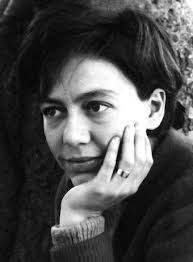
Στάθης Ιντζές, Οι αφιερώσεις και οι επιγραφές στην ποίηση της Αλεχάνδρα Πισαρνίκ

images

1.    ΠΡΟΛΟΓΟΣ

1.1.    Η ΣΧΕΣΗ ΤΗΣ ΑΛΕΧΑΝΤΡΑ ΠΙΣΑΡΝΙΚ ΜΕ ΤΗ ΓΑΛΛΙΑ ΚΑΙ ΤΟ ΚΙΝΗΜΑ ΤΟΥ ΥΠΕΡΡΕΑΛΙΣΜΟΥ

Για να προσεγγίσουμε τις αφιερώσεις και τις επιγραφές τής Αλεχάντρα Πισαρνίκ στην ποίησή της, χρειάζεται να κατανοήσουμε τη σχέση της με το κίνημα του Υπερρεαλισμού, που γεννήθηκε στο Παρίσι, αλλά και τη σχέση τής ίδιας με τη Γαλλία. Τα γράμματα τής Πισαρνίκ μαρτυρούν ότι κατά το διάστημα που έζησε στο Παρίσι, έμαθε τα απαιτούμενα γαλλικά ώστε να συμμετέχει στη λογοτεχνική ζωή της πόλης. Είχε ήδη συνείδηση της ελευθερίας του πνεύματός της, «του αμαρτήματος να είσαι ποιήτρια, να έχεις αφήσει μόνη τη μητέρα σου»1. Από τα 18 της, ονειρευόταν να ταξιδέψει στο εξωτερικό και να ζήσει το όνειρό της ως ποιήτρια «Ω! πόσο θέλω να ζω αποκλειστικά για να γράφω!»2. Κάπου αλλού αναφέρει για το Παρίσι: «Είμαι ερωτευμένη με αυτήν την πόλη»3. Έγραψε, αργότερα, για τα χρόνια που έζησε στο Παρίσι: «η μοναδική περίοδος της ζωής μου που γνώρισα την ευτυχία και την ακμή ήταν εκείνα τα τέσσερα χρόνια στο Παρίσι»4. Μέρος εκείνης της ευτυχίας συνίστατο στο ότι μπόρεσε να διαβάσει υπερρεαλιστικά βιβλία στον τόπο όπου το ρεύμα αυτό διείπε τη λογοτεχνική έκφραση και την παραγωγή  λογοτεχνικού έργου και όχι από τα ένα-δύο βιβλιοπωλεία τού Μπουένος Άιρες, όπως το Galatea, που ήταν το πιο ενημερωμένο αναφορικά με τα γαλλικά κείμενα. Τα αναγνώσματά της έγιναν ο τόπος στον οποίο ήθελε να ζει. «Τα αγαπημένα ποιήματα είναι σαν μια πατρίδα»5.
Το Παρίσι δημιουργήθηκε από τους συγγραφείς και τους στοχαστές του. Ο τρόπος ζωής και οι ελευθερίες που προσέφερε σε έναν ποιητή αυτή η πόλη ήταν για την Αλεχάντρα το «υπερρεαλιστικό όνειρο» που ήθελε πάντα να ζήσει. Έζησε στο Παρίσι από το 1960 ως το 1964, όπου εργάστηκε για το περιοδικό Cuadernos και μερικούς γαλλικούς εκδοτικούς οίκους. Δημοσίευσε ποιήματα, κριτικές και μετέφρασε Αρτώ, Μισώ, Σεζάρ και Μπονφουά.
   

1.2.    ΣΧΕΤΙΚΕΣ ΚΑΤΑΧΩΡΗΣΕΙΣ ΑΠΟ ΤΟ ΗΜΕΡΟΛΟΓΙΟ ΤΗΣ

–    8 Ιανουαρίου, Παρίσι, 1961

«Στον δρόμο Gay-Lussac ένα παλιό αυτοκίνητο γεμάτο από χαρτόκουτες. Καθισμένος ανάμεσά της, ένας ηλικιωμένος λευκής επιδερμίδας, μαύρο πανωφόρι και μαύρο καπέλο, πρόσωπο όμορφο και λυπημένο. Συλλογίστηκα ότι κανείς, πέραν εμού, δεν γνωρίζει ότι είναι λυπημένος μέσα σε ένα πολύ παλιό αυτοκίνητο σε έναν έρημο δρόμο. Αλλά ξαφνικά είπα στον εαυτό μου: ‘’Κι αν αυτός ο άνδρας δεν υπάρχει, αν δεν υπήρξε;’’ Πλησίασα και πράγματι, δεν υπήρχε κανείς».

–    15 Οκτωβρίου, Μπουένος Άιρες, 1964

«Η μοναξιά τού καθενός. Να μην είσαι αντικείμενο των βλεμμάτων. Να κοιτάς και μερικες φορές να σε κοιτούν. Να χρησιμοποιείς τα μάτια. Όρια. Να μην γράφεις, να μην σε απασχολεί να γράφεις. Να μην παριστάνεις τον Φλωμπέρ. Σε καταλαβαίνει. Αυτή που δεν καταλαβαίνει είμαι εγώ».

1.3.    Η ΣΧΕΣΗ ΤΗΣ ΜΕ ΤΟΥΣ ΑΛΛΟΥΣ ΛΟΓΟΤΕΧΝΕΣ ΤΟΥ ΠΑΡΙΣΙΟΥ

–    ΤΟ «ΧΡΕΟΣ» ΤΗΣ ΑΠΕΝΑΝΤΙ ΣΤΟΝ ΑΝΤΡΕ ΜΠΡΕΤΟΝ

Η απόσταση που κράτησε από τον κλασσικό υπερρεαλισμό εξηγείται από το γεγονός ότι ο υπερρεαλιστικός κύκλος του Παρισίου τη δέχτηκε μόλις στις αρχές του 1960, όπου και πήρε την απόφαση να ζήσει εκεί. Η Πισαρνίκ όχι μόνο διάβαζε κλασικά υπερρεαλιστικά κείμενα, όπως το αυτοβιογραφικό μυθιστόρημα του Μπρετόν Nadja (1928), αλλά και απορρόφησε την ακμάζουσα κριτική διαπλάθοντάς τη σε κριτικό τού υπερρεαλισμού. Επιτέθηκε στον Μπρετόν για το «απελευθερωμένο ασυνείδητο» που διακύρησε. Η Πισαρνίκ δεν μπόρεσε να απελευθερώσει το ασυνείδητό της καθώς χαρακτήριζε τον εσωτερικό της κόσμο σκοτεινό, απειλητικό και μη προσβάσιμο. «Όχι, οι λέξεις δεν συνθέτουν τον έρωτα συνθέτουν την απουσία»6. Έτσι, τον πιο κρίσιμο ρόλο στο έργο της θα τον έπαιζε το αποκρυφιστικό στοιχείο στον χαρακτήρα του Μπρετόν. Η Πισαρνίκ απορρόφησε τα στοιχεία που συνέθεταν τον υπερρεαλισμό την εποχή που εκείνη βρισκόταν στο Παρίσι, δηλαδή τη δεκαετία που οδήγησε στον θάνατο του Μπρετόν το 1966.
Η Πισαρνίκ, ως αναγνώστρια, ταυτίζεται τόσο έντονα με αυτό που διαβάζει κατά τρόπο τέτοιο ώστε να μεταμορφώνεται σε αυτό και υποφέρει από τις συνέπειες. Στο ημερολόγιό της σημειώνει για το «χρέος» της απέναντι στον Μπρετόν « Ίσως είναι εκείνο που ποτέ δεν μου έμαθε και παρόλο αυτά είναι εκείνο που είχε τη μεγαλύτερη επίδραση πάνω μου»7.

–    ΑΝΡΙ ΜΙΣΩ Ή «Η ΚΑΛΥΤΕΡΗ ΠΟΙΗΣΗ ΤΟΥ ΑΙΩΝΑ ΜΑΣ»

Η Αλεχάντρα Πισαρνίκ, επηρεασμένη από το κίνημα του Υπερρεαλισμού, με τις αφιερώσεις και τις επιγραφές στο έργο της, θέλει να δείξει στον αναγνώστη ότι και η ίδια διάβαζε. Και διάβαζε κυρίως υπερρεαλιστές συγγραφείς. Μέσω τού Οκτάβιο Πας, γνώρισε και μελέτησε τον Ανρί Μισώ, ο οποίος ήταν γνωστός ως ο πιο αυθεντικός υπερρεαλιστης, γιατί αρνήθηκε να εισχωρήσει στο κίνημα του Μπρετόν το 1920. Η Πισαρνίκ έγραψε ένα δοκίμιο για τον Ανρί Μισώ ως παρουσίαση για τον βιβλίο του Passages, 1963. Βλέπει τον Μισώ ως «μεγάλο θεραπευτή» και τη γραφή του ως γιατρειά για τη ψυχική διαταραχή. «Η καλύτερη ποίηση του αιώνα μας» έγραψε για τον Μισώ τοποθετώντας τον στο ίδιο ύψος με τον Ρεμπώ και τον Λουτρεαμών. Αναγνωρίζει ότι το έργο του είναι κάτι σαν εξορκισμός, ένας όρος που η ίδια κουβαλά στην ποίησή της, των δικών του δεινών και εμμονών.

–    ΛΑΤΙΝΟΑΜΕΡΙΚΑΝΟΙ ΣΥΓΓΡΑΦΕΙΣ ΣΤΟ ΠΑΡΙΣΙ

Για να αντιληφθούμε τη θέση των Λατινοαμερικάνων λογοτεχνών στον Παρίσι εκείνη την εποχή, αξίζει να σημειώσουμε ότι η Πισαρίνκ υπαινισσόταν ότι η ίδια «ήταν και δεν ήταν υπερρεαλιστής» κάτι που ίσχυε και για τους υπόλοιπους Λατινοαμερικάνους λογοτέχνες που ζούσαν στον Παρίσι την ίδια εποχή.

1.4.    ΓΙΑ ΤΗ ΣΧΕΣΗ ΤΗΣ ΜΕ ΤΗ ΖΩΓΡΑΦΙΚΗ

σκίτσο της ποιήτριας

Πολλές είναι οι αναφορές ζωγράφων στην ποίηση της Αλεχάντρα Πισαρνίκ (βλ. Κεφάλαιο 3). Η ίδια, πίσω στο Μπουένος Άιρες, επέδειξε ένα ενδιαφέρον για τη ζωγραφική και σπούδασε πλάι στον υπερρεαλιστή Αργεντίνο, με καταλανικές ρίζες, Juan Battle Planas.

Δεν χωρά αμφιβολία ότι αυτή η εξέλιξη επηρέασε αποφασιστικά τον τρόπο που η ποιήτρια θα έγραφε, αργότερα, τα ποιήματά της. «Ευφορία βλέποντας τα κάδρα του Ενρίκε Μολίνα (βλέπε Κεφάλαιο 2, αφιέρωση στον Ενρίκε Μολίνα). Η υπερρεαλιστική ζωγραφική μου αρέσει όσο τίποτα στον κόσμο. Μου αρέσει και με ηρεμεί».8

το κείμενο αποτελεί μέρος της μελέτης
“Οι αφιερώσεις και οι επιγραφές 
στην ποίηση της Αλεχάντρα Πισαρνίκ”
 του Στάθη Ιντζέ

Συνεχίζεται…

*

ΥΠΟΣΗΜΕΙΩΣΕΙΣ
ΚΕΦΑΛΑΙΟΥ 1

1(Ημερολόγια, σελ 442)
2(Ημερολόγια, σελ. 27 και 64). 
3(Αλληλογραφία, σελ. 68)
4(Αλληλογραφία, σελ. 288)
5(Αλληλογραφία, σελ. 175)
6(Αλληλογραφία, σελ. 304)
7(Ημερολόγια, σελ. 422).
8 Pizarnik, Alejandra: Op. cit., 1992, Buenos Aires, 1964, 8 Ιουλίου, σελ. 261

*Αναδημοσίευση από το ιστολόγιο της “Θράκας” στο σύνδεσμο http://thraka-magazine.blogspot.gr/2016/01/1.html

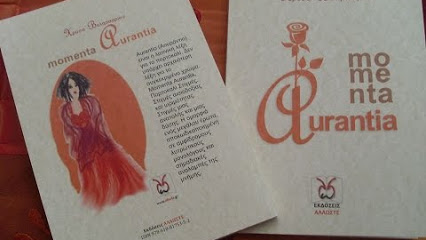
“Momenta Aurantia”. Μια ποιητική συλλογή της Χρύσας Βελησσαρίου

unnamed-1

ΤΗΣ ΕΛΕΝΗΣ ΣΤΑΣΙΝΟΥ

Καλώς βρισκόμαστε. Θα αρχίσω κάνοντας μια διαπίστωση κοινή σε όλους. Γνωρίζουμε πως ένας έρωτας μπορεί να κάνει την διαφορά στην ζωή μας. Πως μια μέρα μπορεί να γίνει ορόσημο, μια βραδιά ποιητική να ξεχωρίσει από κοινότοπες κλισαρισμένες βραδιές Έτσι και κάποιο πρόσωπο έχει την δυνατότητα να σε κάνει αρκετά θαρραλέο ώστε να υπερβείς τον εαυτό σου και τα πιστεύω σου, κι έτσι να κάνεις έναν πόλεμο, έναν έρωτα η και να τολμήσεις να μιλήσεις για ποίηση. Καθώς Απόψε.
Δεν υπερβάλλω. Είναι δύσκολος τομέας της τέχνης, και ο δυσκολότερος ίσως, της ποίησης. Πως να διαχειριστείς ένα θέμα που καλά-καλά δεν του έχει αποδοθεί ορισμός. Ίσως λόγω αυτής της δυσκολίας βλέπουμε ακατάλληλα πρόσωπα να γράφουν ποίηση η να παρουσιάζουν, ελπίζοντας στο να την καταστήσουν έτσι προσιτή σε αυτούς και τους άλλους. Δεν θα δοκιμάσω να δώσω ερμηνεία στην έννοια της ποίησης. Μάλλον αν αθροίσουμε όλων των ποιητών τις απόψεις , θα έχουμε το νόημα της και πάλι κατά προσέγγισιν. Απλώς θα θυμίσω πώς η ανάγκη του ανθρώπου να ποιήσει, προφανώς προέκυψε την στιγμή που ο άνθρωπος έμεινε έκθαμβος και τρομοκρατημένος μπροστά στα δεσμά του. Αφού δέσμιος είναι ο άνθρωπος σε δυο σε δύο διαφορετικά είδη αναπόφευκτου.Τα φυσικά του δεσμά και τα πέραν αυτής της ζωής.

Το ένα το καθαρά μεταφυσικό είναι το ανθρώπινο πεπερασμένο. Το άλλο, είναι η πάλλουσα ζωή με όλα όσα την αποτελούν. Όσα συνιστούν την ζωή, με τα συνεπακόλουθα συναισθήματα. Τον φόβο για μια εύθραυστη ειρήνη, τον πόλεμο με τα γνωστά του αποτελέσματα, τις δύσοσμες αναθυμιάσεις της εποχής, τις υποκριτικές συμπεριφορές της καθημερινότητα μας με την ανάλογη αποδόμηση των αξιών. Το πώς ο άνθρωπος θα ξεφύγει από αυτά τα δύο ανυπόφορα είδη δεσμών, η το πώς θα τα κάνει να φαντάζουν ελαφρύτερα, από καταβολής του τα ανακάλυψε και τα υπηρέτησε ο άνθρωπος. Με τα δυο μέσα που κατείχε.Τον Έρωτα. Και την Τέχνη. Μόνο που σε αυτά τα δύο «Τέλη-Σκοπούς» ο άνθρωπος οδηγείται με το πάθος ως «μέσον». Στην περίπτωση μας προσπαθώντας να προσεγγίσουμε την ποίηση της Χρύσας θα διαπιστώσουμε πως αντί να ξορκίσει απλώς τους φόβους μετατρέπει το ίδιο το «μέσον» σε ποίηση. Αντί να το θεωρήσει αγωγό, ώστε να πλησιάσει τα έμφοβα Δέη, μένει στην διαδρομή ερωτοτροπώντας με το μέσον που θα την οδηγούσε στην λύτρωση.

Έτσι την βλέπουμε αντί να γιατρεύεται να πρέπει να πεθαίνει κάθε στιγμή. Λόγω αυτών των απανωτών θανάτων κραυγάζει συναισθήματα, λες και είναι η τελευταία στιγμή που τα νοιώθει. Τους λόγους των απανωτών θανάτων της, που μοιάζουν ερωτικοί σπασμοί, κάποιοι τους φανταζόμαστε, οι άλλοι προσπαθούμε να τους ανιχνεύσουμε μέσα από τους στίχους της.

Γιατί αυτό είναι η ποίηση της. Ένα πάλεμα, μια αγωνία, μια κορύφωση. Κάποτε μια διάσωση. Μια αθώωση. Διαβάζοντας την ποίηση της Χρύσας αποδεικνύεται πως τελικά έχουν δίκιο όσοι πιστεύουν πως ο δημιουργός για να αναδείξει αυτό που θέλει με την ανάπτυξη ενός ποιήματος κυριολεκτικώς συντρίβει.

Θα ανατρέψει τα γεγονότα, θα τα κατακερματίσει, και από τα θραύσματα στα χέρια της θα γεννηθούν λέξεις που θα ρέουν, θα καίνε η θα κόβουν, θα ελευθερώνουν η και θα θανατώνουν και αναλόγως το που θα εστιάζει θα επαναδημιουργεί τόπο, και χρόνο αναδημιουργώντας είτε τον ατομικό της κόσμο, είτε τον πλατύ μας κόσμο που περικλείει τους πάντες και τα πάντα.
Continue reading →

Εκεί που τα φίδια δεν αλλάζουν δέρμα – Η ποίηση των αυτοχθόνων της Αυστραλίας

Αborigines-7

Επιμέλεια-Εισαγωγή: Shon Arieh-Lerer, Jazra Khaleed. Μετάφραση: Δανάη Σιώζιου, Jazra Khaleed.

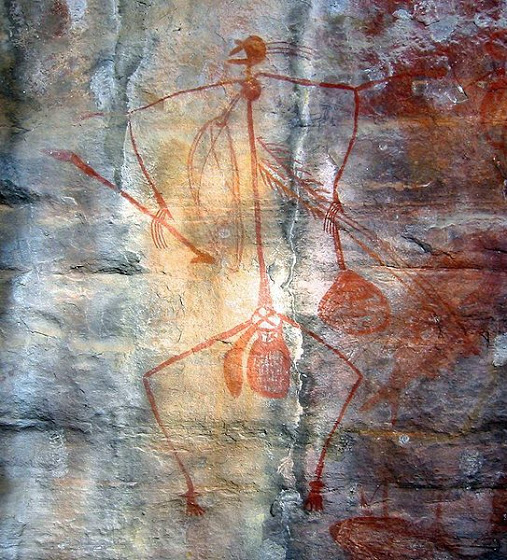
Αν και οι Αβορίγινες ζουν στην Αυστραλία εδώ και 40.000 χρόνια, σήμερα αποτελούν μια μικρή μειονότητα, λιγότερο από το 2% του συνολικού πληθυσμού. Δεν ήταν πάντα έτσι. Όταν ο Captain Cook πάτησε το πόδι του στην Αυστραλία το 1788, ανακήρυξε το νησί terra nullius, χώρα έρημη και ακατοίκητη, αν και από την πρώτη στιγμή ήρθε σε επαφή με τους αυτόχθονες. Οι αποικιοκράτες κατάλαβαν από νωρίς ότι ο τρόπος ζωής των φυλών που ζούσαν στην Αυστραλία ήταν τελείως διαφορετικός από αυτόν των Ευρωπαίων. Επιπλέον, ήταν φανερό ότι δεν μπορούσαν να τους διώξουν από τη γη τους χαρίζοντάς τους καθρεφτάκια και χάντρες. Κάτι τέτοιο θα γινόταν μόνο με τη βία. Η συστηματική γενοκτονία των αυτοχθόνων από τους αποικιοκράτες διήρκησε περισσότερο από εκατό χρόνια, έως τις αρχές του εικοστού αιώνα. Χιλιάδες Αβορίγινες απομακρύνθηκαν από τις εστίες τους, βασανίστηκαν, βιάστηκαν και οδηγήθηκαν στη σκλαβιά -περισσότερο από το 75% του πληθυσμού εξολοθρεύτηκε. Οι άποικοι κατέλαβαν τη γη τους και απαγόρεψαν τις τελετές και τις διαλέκτους που μιλούσαν.

Ακόμα και μετά το 1901, όταν η αποικία της Αυστραλίας ανακηρύχτηκε κυρίαρχο και αυτόνομο κράτος, οι διωγμοί δεν σταμάτησαν. Οι αυτόχθονες ήταν αναγκασμένοι να ζουν σε συνθήκες apartheid. Χιλιάδες παιδιά απομακρύνθηκαν από τους δικούς τους και είτε δόθηκαν σε λευκές οικογένειες είτε κλείστηκαν σε ιδρύματα που έμοιαζαν περισσότερο με στρατόπεδα συγκέντρωσης. Ακόμα και όταν το 1948 τους δόθηκε η ιθαγένεια, πολλοί Αβορίγινες δεν είχαν το δικαίωμα να ψηφίσουν μέχρι τη δεκαετία του ’60. Μάλιστα, μέχρι το 1967, το Σύνταγμα της Αυστραλίας διευκρίνιζε ότι «οι αυτόχθονες Αβορίγινες δεν πρέπει να υπολογίζονται» ως κομμάτι του πληθυσμού της Αυστραλίας.

Αυτή η αδυσώπητη επίθεση στη ζωή και τον πολιτισμό των αυτοχθόνων δεν έμεινε αναπάντητη. Από την πρώτη στιγμή, οι φυλές που κατοικούσαν στην Αυστραλία απέδειξαν ότι ήταν «περήφανοι πολεμιστές», όπως γράφει η Bobbi Sykes (1945-) στο ποίημα «Ρέκβιεμ», που έχουμε μεταφράσει. Οι αγώνες των Αβορίγινων ενάντια στην εκμετάλλευση και την καταπίεση κορυφώθηκαν στις δεκαετίες του ’60 και του ’70. Με το βλέμμα στραμμένο στην ανταρσία των μαύρων στην Αμερική και στα απελευθερωτικά κινήματα στην Αφρική, οι αυτόχθονες της Αυστραλίας εξεγέρθηκαν ενάντια στη λευκή εξουσία. Βασική απαίτησή τους ήταν, και παραμένει, το δικαίωμα στη γη των προγόνων τους.

Μέσα από αυτές τις κοινωνικές και πολιτικές συνθήκες ξεπήδησαν οι ποιητικές φωνές που παρουσιάζουμε. Αξίζει να σημειώσουμε εδώ ότι παρόλο που η ποίηση και το τραγούδι των αυτοχθόνων της Αυστραλίας έχουν παράδοση αιώνων, αποσιωπήθηκαν και καταπιέστηκαν συστηματικά από τους αποικιοκράτες. Όλοι οι ποιητές και όλες οι ποιήτριες που φιλοξενούνται σ’ αυτό το τεύχος του Τεφλόν υπήρξαν θύματα ρατσιστικών επιθέσεων, διωγμών και καταπίεσης, ειδικά στα νεανικά τους χρόνια. Η Bobbi Sykes συνελήφθη σε διαμαρτυρία. Ο Kevin Gilbert και ο Mudrooroo φυλακίστηκαν για εγκληματικές ενέργειες -ο Gilbert για φόνο. Τραγικότερος όλων ο Robert Walker (1958-1984), ο οποίος ξυλοκοπήθηκε μέχρι θανάτου από τους φρουρούς της φυλακής.

Το μικρό αυτό αφιέρωμα στην ποίηση των αυτοχθόνων της Αυστραλίας ξεκινάει με δύο ποιήματα από τη συλλογή We Are Going (1964) της Oodgeroo Noonuccal (1920-1993), την πρώτη ποιητική συλλογή που εξέδωσε ποτέ Αβορίγινας ποιητής ή ποιήτρια. Η Noonuccal -επιφανής ποιήτρια, συγγραφέας και ακτιβίστρια- χρησιμοποιεί συνειδητά τον στίχο ως μέσο προπαγάνδας με σκοπό να διατρανώσει την περηφάνια για την καταγωγή της, να περιγράφει τα δεινά της φυλής της και να απαιτήσει ισότητα και ισονομία. Όπως φαίνεται και στο ποίημα «Η δυστυχισμένη φυλή», η Noonuccal στρέφεται ενάντια στον τρόπο ζωής των λευκών, την εκμετάλλευση της εργασίας και την ιεραρχική δομή εξουσίας.

Την ακολουθούν ποιητές όπως ο Jack Davis (1917-2000) και ο Kevin Gilbert (1933-1993). Ο πρώτος, ιδιαίτερα δραστήριος πολιτικά, δίνει συχνά στα ποιήματά του μία παγκόσμια διάσταση εκφράζοντας τις σκέψεις του για γεγονότα που συμβαίνουν εκτός Αυστραλίας και πέρα από την καθημερινότητα των Αβορίγινων. Ο δεύτερος υιοθετεί έναν πιο καυστικό, ορμητικό τρόπο γραφής και δεν διστάζει να χρησιμοποιήσει ιδιωματισμούς των αυτοχθόνων. Στο ποίημα «Δέντρο», που θα διαβάσετε παρακάτω, καταπιάνεται με ένα θέμα που συναντάμε συχνά στην ποίηση των Αβορίγινων: τους πανάρχαιους δεσμούς τους με τη γη και τη φύση.

Η πλειοψηφία της κριτικής στην Αυστραλία αντιμετώπισε από την αρχή την ποίηση των Αβορίγινων με καχυποψία και αρκετές φορές με εχθρότητα. Όπως οι άποικοι δεν μπόρεσαν να καταλάβουν ή θεώρησαν εχθρικό προς αυτούς τον τρόπο ζωής των Αβορίγινων, έτσι και οι λευκοί διανοούμενοι, είτε συνειδητά ως απολογητές της εξουσίας είτε λόγω της αδυναμίας τους να δουν πέρα από τον ποιητικό «κανόνα», αρνούνται να αναγνωρίσουν τη δύναμη και την αμεσότητα του ποιητικού έργου των αυτοχθόνων. Η ποίησή τους ενοχλεί, καθώς αποτελεί όχι μόνο υπενθύμιση των κτηνωδιών του παρελθόντος και του ρατσισμού του παρόντος αλλά και απειλή για την εξουσία και τη νομιμοποίησή της.

Παρά τις όποιες τεχνικές αδυναμίες τους, πολλά από τα ποιήματα των Αβορίγινων αψηφούν και ταρακουνούν τους ποιητικούς κανόνες. Δεν είναι λίγοι οι ποιητές και οι ποιήτριες που πειραματίζονται με την επαναληπτικότητα, τον ελεύθερο στίχο, τον ρυθμό και τις διακυμάνσεις στον βηματισμό. Ταυτόχρονα, όμως, το έργο τους συγκλονίζεται από, πολλές φορές οδυνηρά, αδιέξοδα και αντιφάσεις, καθώς συχνά βρίσκονται εγκλωβισμένοι/ες μεταξύ της προφορικής παράδοσης της φυλής τους, η οποία έχει ιστορία χιλιάδων ετών, και μιας γλώσσας ξένης προς αυτούς/ές, η οποία όχι μόνο τους επιβλήθηκε μέσω μιας ελλιπούς εκπαίδευσης αλλά και κουβαλάει μέσα της επώδυνες αναμνήσεις. Δεν είναι τυχαίο ότι κάποιοι/ες από τους Αβορίγινες ποιητές και ποιήτριες υιοθετούν συχνά, ίσως και λόγω έλλειψης αυτοπεποίθησης, απλοϊκές και συμβατικές φόρμες της ευρωπαϊκής ποιητικής παράδοσης (όπως ο Jack Davis στο ποίημα «Οι Αβορίγινες των πόλεων»).

Οι δεσμοί της ποίησης των Αβορίγινων με τη Δύση διαρρηγνύονται με την εμφάνιση των Mudrooroo (1938-) και Lionel Fogarty (1958-). Αυτοί οι δύο ξεκινούν τη δεκαετία του ’80 ένα σημειωτικό αντάρτικο ενάντια στην αγγλική γλώσσα φέρνοντας στο προσκήνιο την προφορική παράδοση των αυτοχθόνων. Και οι δύο συχνά χρησιμοποιούν στοιχεία των διαλέκτων που μιλούν οι φυλές τους, λέξεις και φράσεις που κάνουν δύσκολη την κατανόηση των ποιημάτων τους από τους μη Αβορίγινες. Ο πρώτος, ο οποίος το 1988 άλλαξε το όνομά του από Colin Johnson σε Mudrooroo, χρησιμοποιεί σε ποιήματα όπως το «Δίνουν στον Jacky δικαιώματα» στοιχεία από τον παραδοσιακό «κύκλο» τραγουδιών των Αβορίγινων. Αλλού μπλέκει τα Αγγλικά με λέξεις της διαλέκτου των Nyungar (ΝΔ Αυστραλία) και επαναπροσδιορίζει τον τρόπο με τον οποίο μιλιέται η διάλεκτος αυτή (Neo-Nyungar). Ο Fogarty, ο οποίος συστήνεται ως ρήτορας και όχι ως συγγραφέας, χειρίζεται την αγγλική γλώσσα όπως «ένας δερβίσης χειρίζεται ένα ραβδί», σύμφωνα με τον Kevin Gilbert. Χρησιμοποιεί τη γλώσσα των αποίκων με σκοπό να ακυρώσει την επιβολή της και να δημιουργήσει μια νέα αντι-γλώσσα ελεύθερη από κανόνες και περιορισμούς, μια έκρηξη αμφισημίας και πολυσημίας.

Επιτρέψτε μας να κλείσουμε αυτή την εισαγωγή με τα λόγια του ίδιου του Lionel Fogarty: «Η ποίησή μου είναι μια παράσταση της λογοτεχνικής προφορικής παράδοσης, ένας τρόπος να χρησιμοποιήσω τα αγγλικά που μιλά η φυλή μου ενάντια στα Αγγλικά. Με τα γραπτά μου θέλω να καθοδηγήσω τις επερχόμενες γενεές των Αβορίγινων μακριά από τον ευρωπαϊκό αποικιοκρατικό τρόπο γραφής (…) Στο έργο μου δεν πιστεύω στον συμβιβασμό σε καμία περίπτωση. Δεν θέλω να είμαι ένας συγγραφέας της συμφιλίωσης ή ένας ρεφορμιστής. Θέλω να χτυπάω στο μυαλό και να ξεπερνάω τα όρια. Δεν έχει σημασία αν χρησιμοποιώ τους σωστούς γραμματικούς κανόνες ή το δικό τους στιλ γραφής, γιατί ο λευκός πάντα θα επικρίνει τα γραπτά. Ο λευκός δεν θα καταλάβει ποτέ πλήρως τι σκέφτεται ένας μαύρος όταν γράφει. Ίσως αυτό αλλάξει στις επερχόμενες γενεές».

*Το κείμενο αυτό δημοσιεύτηκε στο ποιητικό περιοδικό “Τεφλόν”, τεύχος 2, Φθινόπωρο-Χειμώνας 2009-2010, απ’ όπου και το αναδημοσιεύουμε. Από τα ποιήματα του αφιερώματος αυτού του περιοδικού ‘Τεφλόν”, θα καταβάλουμε προσπάθεια να τα (ανα)δημοσιεύσουμε όλα, αρχίζοντας από το ποίημα του Lionel Fogarty “Τρελές ψυχές” σε μετάφραση Jazra Khaleed.

Luka Lesson, Anonymous

Here it is team… the new video for “Anonymous”!
Massive, massive thanks to Toby Finlayson, Isa Catepillán and Nicky Akehurst for all your help with my vision and the hectic shoot.
And special mention for the cameos by the brothers Deekay and Douglas Patrick AKA DCP – Kings the pair of you.
Shout outs also to Jordan Mitchell on the beat.
Enjoy!!

Robert Wood
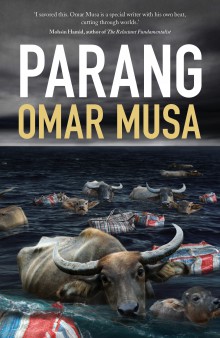
 reviews Omar Musa’s Parang

parang

Parang
by Omar Musa

Penguin, 2015


Omar Musa is something of a phenomenon. I mean that both in the demotic and the philosophical senses. Self-publisher, author of the successful novel Here Come the Dogs (longlisted for the Miles Franklin), lyricist with international hip hop outfit MoneyKat, Wikipedia subject. As demonstrated by the author photo in this book Parang, autobiographical promotional videos (‘Live and Direct from Kingsley’s Chicken’), comparisons to Junot Diaz and his sartorial style, Musa has made a career from ‘the street’.

Yet he is also from the elite – Canberra Grammar School, private prep school for politician’s boys, is his alma mater. Its old boys include six Rhodes Scholars, Kerry Packer and Gough Whitlam. His writerly image then is a fractal performance, for the public persona is only part of the story, which trades heavily on authenticity and realness. That frisson though is what gives his work energy; however, that dialectic, which is essentially a class conflict, is something we must be mindful of when we read his work.
Parang is a series of short to medium length prose poems. This is not poetry’s poetry, but prose’s poetry – short narratives marked by images and judicious line breaks. There is nothing syncopated or contrapuntal, no great difficulty in finding out the message in this medium. The only layout distinction is the oft-repeated placement of the last third of a poem on the lower half of a second page (once the first page is ‘full’). Other than that it is a straight man talking straight. Musa covers a lot of territory though.

The first section is composed of poems set in Malaysia, his fatherland. There are poems on many themes, including: family (‘Muhammed and Muhammed’ and ‘The Rotten Tooth’); history and the past more generally (‘A trance’); belonging (‘Collapsed Star’); animals and death (‘The Old Rooster’). Close attention is paid to the body and the physical but, thankfully, it is not lyrically saccharine. This is despite giving a good sense of what is happening. It evokes then without being evocative. This is because the work is essentially narrative rather than still portraiture, which means there need be propulsive momentum that could rob a lingering gaze. I found the wry, observant, rhythmic piece ‘Homeland’ to be a standout, but it also typifies some of the problems of an early work, which is evident in this book as a whole. For example, the phrase ‘brown shouldered woman’ is strikingly awkward, and the rhyming is sometimes overdone (sweet air//her hair). From this section though the phrase that resonated most for me though was from ‘The Parang and the Keris’, namely:

or with swish calligraphic
take a head
clean
off.

This is in part to do with the puncturing of the line break and the yoking of writing and violence together. But it is also because of a personal story: in what is now southern Malayasia my uncle’s father was murdered by Japanese soldiers in World War Two. When I was growing up my uncle used to recall how he found his father’s head on a spike not far from their family home when he was a boy, ‘about your age’. My connection to this part of the world, where my mother grew up, made reading the first section of Parang a moving experience. It brought to mind some of my own childhood memories, but what is interesting is how sectioned off Malaysia seems from the rest of this poetic world. Integrating it, like a neo Paul Gilroy, might be the next aesthetic challenge.

Section two has longer poems and is more global (‘Lost Planet’, ‘In Amsterdam’ and ‘Birds on the Bosphorus’) but the voice remains even and consistent. The third section is where Musa’s hip hop influence shows the most (see ‘My Generation’ in particular). It is rhymy, slangy, blingy, conscious. This is not only an observation of Musa’s work though, but also enables the reader to glimpse a symptomatic critique of the fetishised reification of authenticity. Parang is, after all, published by Penguin. No mean feat. Unlikely as it sounds, the urban, trading on realness, is starting to become a more pronounced form of official verse culture here. And that is possible because that is what the market wants, or rather that is what tastemakers perceive the market wants.

Hip hop, which trades most obviously on authentic performance and is the root of this work’s inner beat, is a certain language of the urban that seems at odds with the story of ‘Australia’. We might be a long way from Chris Wallace-Crabbe’s The Australian Nationalists, which analysed the Bulletin debates and the long 1890s decade, but Australian poetry is weighted rural in the contemporary imagination too, from Les Murray to Peter Rose to John Kinsella. Think the Banjo Patterson Bush Ballad Festival rather than the Slam Championship. Parang can be a challenge to that, that can be what it machetes away; not simply because of the identity politics of its author, but also because of the form and style of expression, which after all are never more than an extension of context. Despite being repetitive (which could just be consistency) and sometimes bordering on the banal (which could just be quotidian), and sometimes misperceiving insight for colonial braggadocio (which depends on how one sees the importation of hip hop as lexicon and organising principle), Parang is tight, and for that Musa should be applauded.

*Robert Wood has published work in Southerly, Overland, Plumwood Mountain and a variety of academic journals. He is currently completing a PhD at UWA and is a regular contributor to Cultural Weekly. His next book, heart-teeth light-bitten crownland, is due out from Electio Editions later this year. Website:
http://www.rdwood.org/

**Taken from Cordite Poetry Review at http://www.cordite.org.au

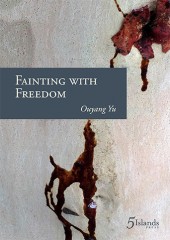
Michael Aiken reviews Ouyang Yu

yu-fwf

Fainting with Freedom
by Ouyang Yu

Five Islands Press, 2015

Ouyang Yu is a prolific writer whose combination of occupations – poet, novelist, translator, academic – gives some context to this book’s obsessive engagement with word, language and meaning. His biographical note mentions that he came to Australia at the age of 35, and there’s a pervasive trope in Fainting with Freedom of a stranger-in-a-strange-land’s curiosity for the materiality of language and its malleability: something akin to what Kerouac once alluded to when he described his relationship to English – a language he didn’t learn until he was eight – as a tool he could very consciously manipulate as necessary for effect and meaning. For Yu, this fascination is not limited to the experiences of a foreigner acculturating to a new socio-linguistic circumstance, but goes much further and deeper (presumably due in part to or concomitant with his work as a translator and teacher), investigating and playing with the complexes that emerge from the interaction back and forth between languages and his own movements across them. What emerges is a burgeoning sense of a meta-culture, not merely a bigger, hybrid, Chinese-Australian context, but a richer, more meaningful bilingual world available to those with the knowledge and awareness to perceive it.

For the rest of us, the contents of Yu’s poems offer tantalising windows into that world, especially in combination with his formal versatility. In form and style his poems are typically full of disruptive, unexpected lines, deploying enjambment, malapropism, skilful grammar (as well as wilful disregard for grammar) in service of profundity, humour, and intellectual interrogation. Moments emerge from Yu’s work as a translator and as a language teacher, and his fascinations capture not only an other’s perception of his second language and culture, but also a revision of his first language, and glimpses into parallels (as well as enormous divergences) between the two. There’s something enormously heartening about reading such a living, adventurous book published in English in Australia that can nonchalantly presume the relevance of a treatise on individual Chinese words or characters, or their relationship with English. Poems like ‘Talking about ’ and ‘Round’, with their matter of fact use and discussion of non-Latin characters, as well as non-European cultural referents, expand the palette of the possible for contemporary Australian poetry.

Perhaps the poem most emblematic of the book as a whole, ‘Round’ in particular wrestles with the inexactitude of translation, the ‘primitiveness’ of English and its inability to capture the nuance of a two-character Chinese word. The opening and closing stanzas summarise much of the story:

One student stood up and said,
“the subtle factor that makes live endurable” is not right
as the word “endurable” is not a correct
translation of the Chinese characters yuanhua

(…)

on his way home, the teacher was defeated again
when he thought of the impossibility of match
making the two languages in this single expression
that describes a person’s unctuousness, like oil or an eel

or that denotes life’s smoothness
in a round manner
as round
as a ball

Ostensibly about translation but produced for an English (only) speaking audience, this poem is as much about the futility of trying to express anything in any language, the flawed nature of language as a system, the unbridgeable difference between the uniqueness of individual aesthetic perception and the conventionality of language.

Elsewhere, at first encounter ‘Serendipity’ (particularly located as it is in a section called ‘Mathematics and Fog’) looks wilfully difficult, like a puzzle of typography as much as one of language:

it’s not that i don’t like it i actually do i mean the film that i saw tonight
it was actually a quite funny word when i first heard it
i thought it had something to do with being senile like senile dementia

It proves, however, to be quite a straight narrative about a night out at the cinema, a condensed memoir, meditating on this one word (and film of the same name) to explore the speaker’s relationship with life, work, marriage, friendship, and transnationalism. At its heart is the single brief line, ‘did you see it just for her?’, a question posed by the speaker’s wife that betrays a glimmer of tension in their marriage, a conceit that alters the light cast on every other part of the poem, demonstrating a deftness with narrative detail, just the right amount, that belies a novelist’s feel for drama. Such careful and attentive use of story, particularly in those poems in the book that are so strongly located in modern urban settings, combines with the linguistic play evident throughout the book, to offer a tangible sense of the here and now in which these works were created and exist.
Opening with ‘Manufactured by no one but this/Is a morning that harks back to 1787’, the poem ‘A cloud’ similarly manages to invoke multitudes from small, precise detail (in this case, mention of the year prior to British invasion invokes the Australia of pre-European colonisation and pre-industrialisation, in part as a proxy for pre-pollution). This starts a riff that culminates half way through the poem with: ‘The city that is changing rolling into/a nation that soon disintegrates and fragments/in multiple communities of digital photographs.’ Such striking power to sketch an entire national history from colonial pre-nationhood, through to the contemporary era of multiculturalism and social media, and tell it without dull prosaics, is one of the key powers of this book. Moments like these emerge continuously, seemingly effortlessly. Later in this same poem Yu flexes his talent for Steinian word play and linguistic interrogation, an awareness of the language as a toolbox or machine that can be repurposed through close and careful modification: ‘cloud and rain, cloud into rain/clout encapsulated in the rain’.

At times Yu’s urban lyric pieces recall Lorca with the quiet intensity of their observation, and the modest yet clever use of metaphor and simile. Such pieces also demonstrate an appreciation for one of the fundamental purposes of artistic experimentation: application. Where elsewhere in the book sentiment and content are overtaken by grammatical and linguistic play, in a poem like ‘The evening walk’, Yu’s awareness of the power to disrupt or extenuate meaning by manipulating word order, line breaks and voice, enables the poem to more deeply evoke experience in the reader. Line combinations like ‘the air is strong with horse/shit’ capture brilliantly the slow-seeping disruption of an idyllic rural moment by the dawning awareness at first of something bestial, and then more precisely of just which aspect of the beast is present. The delicate play and balance between humour and earnest quietude in this poem suggests the author is closely familiar with needing time for reflection in order to make art, while still living in the contemporary world. Similarly, ‘I’m feeling sad tonight’ manages to create a simultaneously earnest, deeply felt confessional moment, and a parodic critique of the same:

“I’m feeling sad tonight”
I turn around but see no-one saying that

“I must admit I have not felt this way for quite some time
As night is gathering its dark colours

The earth is taut and loud
With crickets like someone has switched a symphony on

Two died in the same year
Closest to my skin

I’m going somewhere else alone
To celebrate my 50th

Birth day
As he said he would do his 21st

A family of loners
In a rootless

Country
Loud again

Before death”
My heart lowers its head to listen.

It’s a quite extraordinary poem. The apparently arbitrary form – a blank line after every couplet – seems to contribute little until the final couplet, where two lines separated grammatically by the end of the quotation are brought together. That pairing drives home an intense profundity, the sort of brief, dashed-off moment of deep clarity characteristic of a lone poet like James Wright: “Before death’/My heart lowers its head to listen.” In turn, the use of the long-running quotation as a framing device emphasises the self-mockery of the opening lines, but particularly through that final coupling – half within the quote, half without – the same device also serves to intricately explicate the dichotomy a fearless experimentalist must feel when confronted with a desire to express earnest confession in verse. Yu’s slightly odd word manipulation – the synaesthetic ‘see no-one saying that’, or ‘Birth day’ as two words – recall once more his obsession with language play, but also evoke that ‘family of loners/In a rootless//Country’ and the cross-cultural uprooting (and perhaps attendant isolation) this poet has gone through. The use of ‘rootless’ in particular is strikingly clever, at once a near-cliché in keeping with the running parody of the confessional, but also so evocative of Australia and the strangeness of its vernacular – what does it mean in this particular culture to be alone and ‘rootless’ on a night of celebration? Indeed, to follow that word with the single-word line ‘Country’ approaches the Shakespearian in both bawdiness and skilful wordplay.
This book contains microcosms of alertness to the oddity of language as language, the arbitrary way meaning is distorted or inflected by unfamiliar acts of repetition, the use of phrases grammatically correct but somehow socially bizarre/inept, or the inappropriate use of passive or active voice. The actual subject of many of the poems is books and writing, literature or art as convention, with a particular concern for the non-creative aspects of the creative arts as an industry. In ‘Paintings’ for example, Yu calls out the exclusionary nature of acquired taste in a single line: ‘the eyes have to be trained but the names are more important’.

The second section of the book, titled ‘Leaf or fallen bank’, is preoccupied with questions of authorship and authenticity, while also making fun of arguing for a final position on these:
books, according to him, are not worth writing, having written one book that went back many centuries examining a time similar to ours in every aspect of time except the sound of their voices, which, unfortunately, have not been recorded, and the details that could not have been noticed by themselves or filed away (‘Books’)

As is so often the case in this book, here Yu seems to be revealing an endless fixation with investigating the absolute truth of things that are fascinating because they have no absolute truth.
The playful self-deprecation in this book feels honest without being earnest, self-critical without being self-effacing; subtle but showy. ‘Banality’ for example, makes art of email spam with a flight of fancy into the repercussions of seriously considering an unsolicited offer of marriage: ‘If I were to marry you I would have had to divorce (…) if I were to re-marry I’d have to bear/with all this day after day after night after night’, and ‘what is this based on except I stayed up late or went to the (online) market’, end the prevarications through banal email interactions with the closer, ‘I want to disappear into creative/banality just gauge how close the bin is to my brain’. Yu’s is an honesty that couldn’t be otherwise; the whole value of his investigations seems to be in getting to the truth, not of objective ‘fact’, but of subjective perception and reception. The minutiae of the everyday (and the timeless) are fair game in this endless, unending quest to expose the fact that the referent is always ultimately deferred. Life is in the living – or in the becoming, might be another way to put it.

The subjects in this book are unrepentantly contemporary, with references (and hyperlinks) to Wikipedia, current politics, and matters of popular culture like the SBS-syndicated Chinese dating show Feicheng Wurao. Amongst such material, the natural world also makes appearances, yet in characteristically unique ways. Yu’s ecopoetics is one of problematics, and both the inevitable collisions between human culture and nature, as well as the timeless disregard the former has for the latter, inform his investigations of each domain. In ‘Self publishing’, for example, he critiques our arbitrarily gate-keeping literary culture by noting that, ‘birds never remain quiet because they don’t get paid for calling’. After admonishing at length the ridiculousness of worrying about the legitimacy of self-publishing, and citing numerous canonical authors who are guilty of that very crime, he closes summarily with, ‘Now listen, to the rain self publishing again as it did 3000 million years ago,/on the page that is my roof’. Meanwhile in ‘Installation 001’ he indicts both our artificial sanctions on what is aesthetically valuable as well as our concomitant ignorant misuse of the natural world:
you want to cut this roadside slope with wild grass and a few trees and relocate
them into the national gallery

you want to cut that sky where a cloud is so big it bursts the car window and
install it inside the brain of the country

you want to pull the lone tree by the root and stand it in the middle of all galleries,
blocking the view

At once wholly contemporary and somehow timeless, Yu’s approach doesn’t interrogate the interactions between the human and ‘natural’ so much as expose the hierarchy: that is, the artificial and therefore apparently subordinate human world, subordinate to (or just a pale shadow of) the totalising essentialness of all-that-is-not-human. We might debate amongst ourselves whether self-publishing our art removes its value, but in the meantime the fundamental beauties of reality – rain, birdsong – don’t have time (or need) for such crises of worth; they simply are, they exist and they act because they must. Yu seems to be telling us: if your art is not a function of your essential self, if you need ponder whether you should be doing it, you probably shouldn’t.

This book as a whole zooms from the macro to the micro, the personal to the national, in a way that feels frantic, encyclopaedic, and entirely subjective. Reasserting the value of the subject in the living world seems to be a driving mission of the verse. Whether or not we can describe the ineffable, or comprehend it, to exist is to know the ineffable exists. This book is a celebration, a condemnation, and a defiant incitement to go with boldness, to be amongst it.

*Michael Aiken is a writer living and working in Sydney. His first book, A Vicious Example: Sydney 1934 1392k1-1811 1682k2 and other poems, was shortlisted for the NSW Premier’s Kenneth Slessor Prize for poetry.

**From Cordite Poetry Review at http://www.cordite.org.au

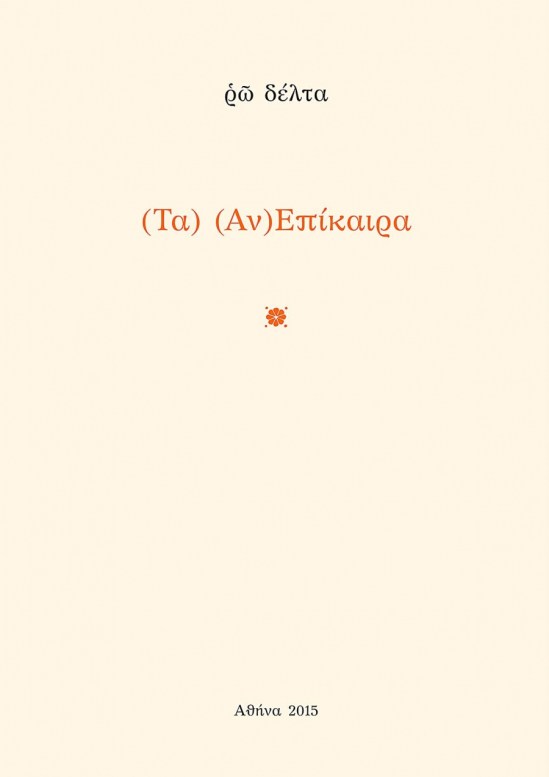
Ρω Δέλτα, (Τα) (Αν)Επίκαιρα, Εκδόσεις Ωκεανίδα

a05812a6ea54f32db80b865f7cd66f25_XL

ΤΟΥ ΘΕΟΧΑΡΗ ΠΑΠΑΔΟΠΟΥΛΟΥ

Έχουν περάσει αρκετά χρόνια από τότε, που η Κατερίνα Γώγου εμφανίστηκε στα γράμματα. Τότε, η οργισμένη ποιήτρια των Εξαρχείων παρουσίαζε κάτι το καινούργιο και πρωτόγνωρο για τα ελληνικά ποιητικά δεδομένα της εποχής. Από τότε έχουν ακολουθήσει αρκετές επίδοξες μιμήτριες, όμως, οι περισσότερες απλά μιμούνται χωρίς ταλέντο καταλήγοντας τις περισσότερες φορές σε μια απλή διαμαρτυρία χωρίς να έχουν να μας πουν κάτι το ιδιαίτερο.

Εξαίρεση στα παραπάνω είναι το βιβλίο της Ρω Δέλτα «(Τα) (Αν)Επίκαιρα», που κυκλοφορεί από τις εκδόσεις: «Ωκεανίδα». Πρόκειται για μια ποιητική συλλογή, που αν δεν κινδυνεύαμε να κατηγορηθούμε για ιεροσυλία θα τη χαρακτηρίζαμε εφάμιλλη αν όχι καλύτερη των ποιητικών συλλογών της Κατερίνας Γώγου και αυτό γιατί η Ρω Δέλτα δεν στέκεται σε μια απλή μίμηση, αλλά καταφέρνει να προσαρμόσει την οργισμένη ποίηση στην σύγχρονη εποχή της κρίσης και της παρακμής.

«(Τα) (Αν)Επίκαιρα» περιλαμβάνουν ποιήματα άλλοτε πολύστιχα και άλλοτε ολιγόστιχα, άλλοτε σε ελεύθερο και άλλοτε σε παραδοσιακό στίχο με μέτρο και ομοιοκαταληξία, άλλοτε σαν πεζά και άλλοτε σχηματικά, δείχνοντάς μας πως η ποιήτρια γνωρίζει καλά όλους τους τρόπους και όλες τις τεχνικές της ποίησης, και τις προσαρμόζει ανάλογα με τις απαιτήσεις του νοήματος, που θέλει να δώσει.

Η ποίηση της Ρω Δέλτα είναι χειμαρρώδης. Ακόμα και στα πιο πολύστιχα ποιήματά της δεν πλατειάζει, αλλά σα φουσκωμένο ποτάμι παρασέρνει τον αναγνώστη. Σαν την οργή, που θα ανατρέψει και θα πνίξει τους εκμεταλλευτές: «Η όξυνση των πεινασμένων / κορμιών / σαν θεριέψει / να δεις, ποιος σας σώζει…» Για την υποκατάσταση των αγώνων και τις υποσχέσεις του στυλ: Κάντε υπομονή και όλα θα αλλάξουν, θα ειρωνευτεί τραγικά: «Μη φοβάσαι, Το καλύτερο δεν έχει φτάσει / Ακόμα Υπομονή / Εν ευθέτω χρόνω η ανταμοιβή / Υπομονή ως τη δευτέρα παρουσία / Ως τότε, απουσία».

Ένα άλλο κοινωνικό ζήτημα, που απασχολεί την ποιήτρια είναι η μοναξιά του σύγχρονου ανθρώπου, που νιώθει απομονωμένος μέσα στο πλήθος, στη ζούγκλα της σύγχρονης πόλης και του κυβερνοχώρου. «Ξέρω τι συμβαίνει τα Σάββατα στους απομονωμένους», γράφει στο ποίημα «Εϊμυ», ενώ στο ποίημα «το εφάπαξ» θα γράψει: «5.000 διαδικτυακοί φίλοι – μα πούν ‘ν ‘τοι;;………», για να καταλήξει στο συμπέρασμα ότι: «είν’ η αναπηρία, που σου αφήνει κατάκοιτο το εγώ της προηγούμενης ζωής σου, κι ο εαυτός, που ξερίζωσες, για να επιβιώσει εκείνη…»

Το ερωτικό στοιχείο δεν θα μπορούσε να λείπει από την ποίηση της Ρω Δέλτα. Με πιο χαρακτηριστικό το ποίημα «Γυμνοί στα Βράχια», η ποιήτρια γράφει για έρωτα, που δεν γνωρίζει απαγορεύσεις και ψευτοηθικά διλήμματα. Η γυναίκα ορίζει το κορμί της κατά πως το θέλει η ίδια και όχι όπως το επιβάλλουν όσοι θέλουν να πνίξουν την ελευθερία.

Θα κλείσουμε εδώ, αυτή τη μικρή προσέγγιση στην ποιητική συλλογή της Ρω Δέλτα «(Τα) (Αν)Επίκαιρα» διαπιστώνοντας ότι η ποιήτρια καταφέρνει να συνδυάσει το επίκαιρο με το διαχρονικό και περιμένουμε να συνεχίσει να γράφει και άλλα ποιήματα γιατί όπως χαρακτηριστικά αναφέρει η ίδια στο ποίημα της: «Επίλογος»: «Η Ζωή είναι Πάλη Όχι παραίτηση».