“Άγγελοι εκδικητές” του Μεχμέτ Γιασίν (μετάφραση: Ζ. Δ. Αϊναλής)

cover_high

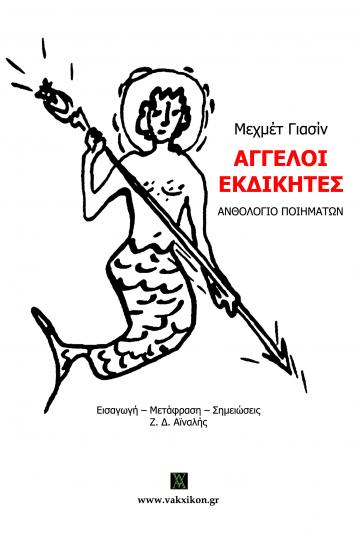
Βάζω αυτό το βιβλίο στα Σφηνάκια ακριβώς επειδή του αξίζει μακροσκελέστατη ανάλυση, την οποία σκοπεύω να κάνω σε σχετικό κείμενό μου που θα υποβάλω στον “Μανδραγόρα”. Επειδή όμως ο “Μανδραγόρας” είναι εξαμηνιαίος και το επόμενο τεύχος θα κυκλοφορήσει το καλοκαίρι, δεν μπορούσα να μη γράψω τώρα δύο λόγια έστω για το συγκλονιστικό αυτό ποιητικό βιβλίο.

Ο Μεχμέτ Γιασίν είναι Τουρκοκύπριος ποιητής. Γεννήθηκε στη Λευκωσία και η ιστορία του σφραγίστηκε από τις κάθε είδους συγκρούσεις που στιγμάτισαν την ίδια την ιστορία της Κύπρου. Στην ανθολογία “Άγγελοι εκδικητές”, που με περισσό μεράκι και ευαισθησία επιμελήθηκε και μετέφρασε ο κ. Αϊναλής, ο ποιητής προβληματίζεται για τις ανθρώπινες (δευτερευόντως και τις πολιτικές) προεκτάσεις του κυπριακού ζητήματος και διερευνά το περιεχόμενο της λέξης “πατρίδα”. Τα ποιήματά του αντανακλούν βαθύτατο πλούτο συναισθημάτων, αλλά και ευρύτατο ψυχικό πλούτο που βρίσκουν διέξοδο σε μια έκφραση χωρίς αναστολές και γεμάτη ειλικρίνεια.

Θεέ μου! Πού μπορώ να πάω και να ουρλιάξω;
Συρματοπλέγματα, περιβάλλομαι από συρματοπλέγματα
κάθε μέρα τα τείχη υψώνονται, τούβλο το τούβλο, κατάτι ψηλότερα.
(…)
Αν αποστείλω τα γράμματά μου “Στη μητέρα μου”,
πού θα πάνε;
Αν γράψω “Κύπρος”… πού;

Γυρνάω γύρω-γύρω κι επιστρέφω από την κάθε διεύθυνση
μέσα σ’  ένα φάκελο με τις άκρες καμένες.

Δεν θα υπερβάλλω αν πω ότι αυτό το βιβλίο μού άλλαξε τον τρόπο που σκέφτομαι για το κυπριακό.

Χριστίνα Λιναρδάκη

*Από το Στίγμα Λόγου στο http://stigmalogou.blogspot.gr

mexmet-giasin1

“Ανακωχή” της Μαρίας Τσιράκου

tsirakouANAKOXH1-947x1471

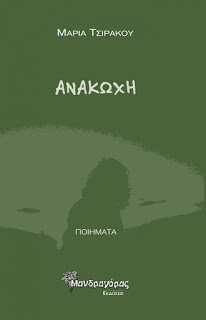
Ενδιαφέρουσα και συγκινητική η “Ανακωχή”, ένα μικρό σε διαστάσεις αλλά άρτιο αισθητικά ποιητικό βιβλίο, το πιο πρόσφατο της Μαρίας Τσιράκου, περιέχει 50 περίπου ποιήματα, όλα άτιτλα. 

Έτσι όπως ΄”κρέμονται” από το πάνω μέρος των σελίδων, χωρίς διακριτικά που να τα ξεχωρίζουν το ένα από το άλλο, δημιουργούν την αίσθηση ενός συνεχούς χωρίς αρχή, μέση και τέλος, σαν να ‘ναι λέξεις που αιωρούνται ελεύθερες κάπου μες στο σύμπαν. Κι όμως, η συλλογή έχει άρτια δομή. 

Στη Ζεν αίσθηση της εμφάνισης συνηγορεί και το περιεχόμενο των ποιημάτων: λιτό και ευθύβολο, μιλά για προσωπικές υποθέσεις όχι μόνο της Μαρίας Τσιράκου αλλά και του (κάθε) αναγνώστη, με μελαγχολική διάθεση που ορμείται από μια αίσθηση ματαιότητας απέναντι στην απώλεια και που η διαχείρισή της γίνεται με περισσή ευαισθησία. 

Αν υπάρχει κάτι μεμπτό στη συλλογή, αυτό είναι η μικρή έκταση των ποιημάτων. Πολλά αριθμούν τέσσερεις ή πέντε μόλις γραμμές και μοιάζουν περισσότερο με σκέψεις ποιητικά δοσμένες παρά με ολοκληρωμένα ποιήματα. “Ουκ εν τω πολλώ το ευ”, θα πείτε, όμως μερικές φορές χρειάζεται και αυτό το κάτι παραπάνω.

Ένα ποίημα, ίσως το πιο αγαπημένο μου από τη συλλογή:

μετά από κάθε παράδοση
ψηλαφίζω το πάτωμα

ανταλλάσσω θερμότητα
κάθε που σπέρνεις στο σώμα μου το σώμα σου

ονειρεύομαι
ή ερωτεύομαι;

Χριστίνα Λιναρδάκη

*Αναδημοσίευση από το ιστολόγιο Στίγμα Λόγου στο http://stigmalogou.blogspot.gr

Michael Farrell reviews Grant Caldwell

thumbnail257picture

Reflections of A Temporary Self
by Grant Caldwell

Collective Effort Press, 2015


Publishing a selected poems is an act of confidence. While no one who writes poems would want to be judged on their worst effort, a selection suggests these are the poems that – if readers must judge – the poet be judged upon. The act is, however, doubly denied by Caldwell in the qualified title, Reflections of a Temporary Self, and by the front cover author photo: is he asleep or isn’t he? The I-don’t-necessarily-give-a-fuck attitude is part of the package. I qualify the attitude because Caldwell, in producing an eighth book (consisting of poems from six previous books and new poems), clearly does give one.

The large type will be welcomed by the poorer sighted and it has a poster effect that gives the pages authority, suggesting that this is public poetry: it’s what I saw, heard, thought; what do you reckon? The poet might have moved on, into a new self, but the gesture remains. In noting my impression of the unapologetic strain in Caldwell’s work I don’t mean that it is necessarily aggressive. It can be unapologetically sweet:
wallabies kissing in a twilight field
holding straws in their little hands
ears revolving
all this and the joey
and the young shoots of clover
they love so much (‘ontos farm’)
Like John Shaw Neilson with the death taken out. You could say with the lilt out, as well; by analogy the impression is of a rock’n’roll Zen, especially this aspect cited by Wikipedia: ‘the personal expression of … insight in daily life, especially for the benefit of others’. The latter part of the quote is pure ironic Caldwell. Reflections contains a sarcastic poem about the facile adoption of Buddhism as an identity (‘einstein, buddhism and my stiff neck’) and it is one of the poems that verges on the genre of the grumpy-old-man poem. Yet, typically, the judgment is on Caldwell, or at least his narrator: thinking about Buddhists, he falls in the creek and bangs his hip. (It seems quintessentially Australian to fall in a creek and hurt yourself, rather than get wet or drown.)

There’s rhythm, there are images, and sometimes they meet. Caldwell is interested in the melancholy affects of repetition, as in ‘across the sea’ (‘the sea comes … it never stops/it never stops’); and in mundane investigations of logic in these concluding lines from ‘thirteen ways of looking at a window’:

with the dark the window becomes a mirror
when you turn on the kitchen light and you
watch yourself reflecting reflected in the light
though you can’t see your face for the shadow

This circularity is given its major form in ‘two black chairs’; as the poem goes on it becomes replete with chairs and tables, and a purse and fairy lights, and ‘elvis before his dissipation’, losing its sense of line (or gaining fullness) as the page becomes full with the swirl of words. All poems are concerned with the logic of their structures, but logic is also a theme of these poems, as if they want to work out the possibilities of logic in poetry. ‘like a tennis ball’ resembles a song structure – what could easily be read as a hip-hop structure, though I think it’s too unromanticised for that – where the abjection of alcoholic (prosaic) unhappiness is redeemed (poetically) by the mundane-lyrical image of a tennis ball in the last line.

Caldwell’s untitled haiku are read to advantage in a column of four, where the effect is of reading a series, rather than one per page, which might well have seemed flat or inconsequential. His haiku momentarily slow down reading by offering change in tone, voice and space. The mode is not completely distinct, however. The following two haiku from a camping sequence point to Caldwell’s interest in logic, circularity and repetition:

red hot coals
in the late night camp fire
tomorrow’s ashes

in last night’s ashes
yesterday’s potatoes
never to be eaten

‘yarra yarra (ever flowing river)’ is a three part collage of Aboriginal place names, and includes many that have negative connotations (‘ONNUA white man with gun’; ‘BOGONG place infested with fleas’) but ultimately the momentum is towards a more positive affect: the final section including terms like ‘WOONINGCANNING where wild ducks flock and play together’, ‘MANGOPLAH people singing’ and ‘QUINDALUP a happy place’.
As a record of ‘more than thirty years’ of writing that tries different modes, the book’s diction is, inevitably, a mixture. At times the disparity’s too great: while irony can give a lot of weight to the vague ending (‘yair … sure …’) of ‘bar-b-q in blue’’s comic anecdote, it’s not so easy for irony to lighten the load of the following poem’s conclusion: ‘into new depths of ontology’ (‘mundane avenues of compensation’).
Caldwell’s version of the ‘I do this, I do that’ poem is one of white poverty: the drug and scam milieu. In ‘the colour of black light’ the narrator makes money from secondhand books then talks to the bookseller about Charles Bukowski, as if he defined the extreme version of white poverty as poetry and he probably does. It’s not as nice or as affectionate as O’Hara, but there is the same compositional thought and structure, where the elements of a day are brought together to make a poem. You can have no money, but if you have a TV you can still watch a documentary on Matisse. Class culture is complicated, and complications are normal.

Other poems (‘terra nullius’ and ‘baghdad etc.’) deal with the logic of hyperbole. Extreme comparisons are made to suggest the fabric of everyday power struggles that are implicated in greater ones everyday intolerance as a sliding scale to that of big business, government, the military. ‘baghdad etc’ begins, ‘it is better not to think’, and in this again, Caldwell is a kind of anti-O’Hara that is not quite paranoid.
When reading his poetry in performance, Caldwell characteristically makes enjambment explicit through a pronounced pause, and enjambment is something that figures in his poetry as much as the line as such. The poem ‘the fat bread’ employs spacing and line breaks to an extreme extent, in a way that is both highly contrived and wonderful; something about this poem – and the way it faces a photo of a child (presumably the author) as a scarecrow with arms wide – makes it seem an original contribution, both obvious and unique. It’s like a couple of haiku added together then stretched apart till breaking point:

in the park
the arrowfast tortoise
shell
cat
stalks
the fat bread
bloated
pigeons
pecking in the sun
dry
grass

Yet it is not completely obvious, because the syntactic inversions are not predictable; yet they do fit, and enliven and ironise the images. ‘the arrowfast tortoise’ evokes the fable of the tortoise and the hare, and makes it a character of the poem, along with the fat bread, neither of which are strictly visible. That ‘fat bread/bloated/pigeons’ are still pecking is itself ironic, but narrative irony is less emphasised than that of syntax, while spacing ironises both word and phrase as image. It is a wry little masterpiece.

The title of ‘the neverending poem’ suggests its relation to πO’s ‘Everything Poem’. It collects found moments of text, facts and observations. It is not that long, ending with a shudder-making quote from Margaret Thatcher. Its overall tone might be described as rueful. Another found poem, ‘amerika’ is like a dub version of Allen Ginsberg’s ‘America’, with the tone and apostrophe stripped from it. A collage drawn from a 1960s textbook, it is revealing of sexual and economic oppression:

sue is more attractive than ann
jean is more attractive than sue

[…]

i will have steak but sue will not
she will have lobster

[…]

if you left your jobs
you would look for other jobs

Caldwell brings the two aspects together in the couplet, ‘it is time you bought a new car/it is time sue got married’.

Apart from the typos, there’s a rough and ready feel to this selection, resulting in the inclusion of some poems that do no more than those before them (sequentially if not chronologically), and in some wonky enjambments (‘you have control now’), but these can also have a payoff. Caldwell’s line breaks replicate, at least some of the time, an idiosyncratic verbal style that speeds up and slows down, and can make lines seem strained or truncated on the page. But not all of them; and the style can turn up a great line like ‘there to back him mainly’: ‘him’ being the poem’s titular horse, ‘tobin bronze’. The story of the race is strung out a bit long (if you don’t define being an adult as the ability to defer gratification) before finally arriving at the end’s kicker: no spoilers from me.

Caldwell, as someone who has been teaching creative writing for some time, is under the radar in terms of his influence on thousands of young readers and writers of poetry. Teaching, however, can sideline a poet’s own work. Reflections of a Temporary Self might seem as necessary as a white pepper milkshake, but taste is produced by reading, not by not reading: and besides, conventional poetry readers are the last thing a various place like Australia needs.

*Michael Farrell‘s Cocky’s Joy was published by Giramondo in 2015. His scholarly book, Writing Australian Unsettlement: Modes of Poetic Invention 1796-1945, was published by Palgrave Macmillan.

***From Cordite Poetry Review at http://www.cordite.org.au
Amy Brown reviews Π.O.’s Fitzroy: the biography

unnamed

Fitzroy: the biography
by Π.O.
Collective Effort Press, 2015

For Π.O., ‘Fitzroy is what you, bump into/ when you leave home’ (599). It was outside his family’s first front door after they escaped the Bonegilla migrant reception centre in 1954. After sixty years and homes in other suburbs, it is still the place that his poems gravitate towards. If anyone were to attempt writing the biography of Melbourne’s first suburb, Π.O. is the poet.

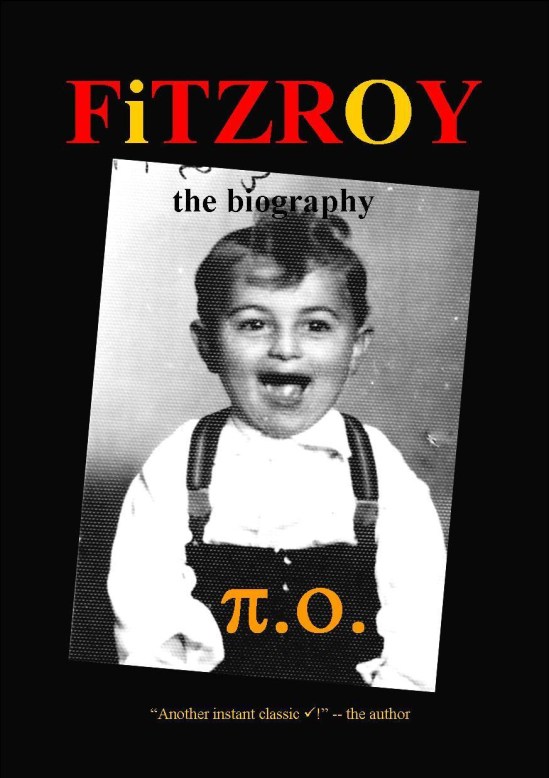
It’d be reasonable to assume that Fitzroy: the biography is about a person rather than a place. On the cover is a photo of Π.O. as a grinning infant, about the age he would have been on first moving to the suburb. The vowels of the title (Fitzroy) are highlighted yellow signalling that the poet, Π.O. (or Pi.O.), is integral to this version of the suburb. The 740-page epic (the same length as his 1996 Fitzroy-based poem, 24 Hours) recounts the life of Π.O.’s Fitzroy. While acknowledging that the suburb has many different selves – is a palimpsest; a space of competing narratives – this study is as much autobiography as biography.

With a contents page arranged alphabetically like a scholarly index, the poem initially appears to be performing as a reference item. Really, it is a catalogue (like Ovid’s Metamorphoses) of the suburb’s changes. Roughly chronological, beginning with a series of portraits and imagined monologues from 19th century settlement and ending with the poet’s own memories, the poem’s scale is vast. In between is a series of ‘creation myths’. We hear how the streets got their names (Young, Webb, George) and the origin of Alcock’s Billiard Table store, on Gertrude Street since 1854 and miraculously still there. We see the Builder’s Arms Hotel, before it was painted white and turned into a restaurant called Moon Under Water. We learn about the Fitzroy childhoods of chocolate millionaire, Macpherson Robertson, and second prime minister of Australia, Alfred Deakin. The advent of footie in Fitzroy, the rise and fall of Squizzy Taylor, the extraordinary role of Pastor Doug Nicholls, and the erection of the council flats (‘Modernism destroyed my whole life’ [607]) are all described with Π.O.’s idiosyncratic specificity, rhythm, and unabashed bias. The same ghostly resonances that were achieved in 24 Hours are present here; the layers of stories convey how contested the space of the suburb is.

In ‘Geoffrey Eggleston (1944–2008)’, Π.O. writes, ‘i wanted to see/ everything, in Melbourne’ (673). As well as wanting to see everything, he appears to want to share with his readers everything he sees. While this is impossible, the mad, kaleidoscopic rush of details gives a sense of infinite completeness. In the fragments, psychic associations and rapid digressions, there is always something new to notice.

Although the structure and scale of Fitzroy: a biography are different to that of its predecessor, 24 Hours, the sensibility behind the poem is recognisable. Even in the imagined monologues of historical figures, and faux archival materials (letters, lists, advertisements, and crime records, which remind me of Charles Reznikoff’s Testimony), there is a latent autobiography. The collaging effect of abruptly juxtaposing miscellaneous facts, and the deliberate (Tarantino-like) anachronisms, stamp the work with Π.O.’s style. Often, the facts that are layered together to create an impression of an historical figure’s life also serve as a commentary on the poet’s writing process. For example, ‘The Latin verb “cogito” (for “to/ think”) etymologically, means “to shake together”./ To smash, to break, to kick down stairs’ (367).

In the later, explicitly autobiographical, poems, there is an openness that is less apparent in the imagined historical monologues, and it is this unmasked storytelling that I think is Π.O.’s forte. From leaving Bonegilla, to being forced to read racist Biggles as a schoolkid, to recalling Allen Ginsberg’s reading at the Town Hall, we see the poet and the suburb of Fitzroy aging in tandem. There are tall stories in which names are dropped (Ted Hughes at the Adelaide Writers’ Festival, whom Π.O. interrogates over Sylvia Plath’s death; Tom Waits, whom Π.O. interrupts while having sex), but also poignant vignettes. At the arrival of ‘students and artists’ in Fitzroy, Π.O.

wrote a poem: Get Out of Fitzroy, and (at night) put
copies of it under / their doors; past their Land Rovers
parked on the footpath, past their Afghan-dogs and
plush-orange carpets; dodging Night watchmen’s torches (in
the only suburb i knew)

(692).

Throughout the collection is the conviction that ‘the future is just “the past” with a bit of a twist’ (45). These changes that Π.O. witnesses in the suburb in his early twenties have always been happening in Fitzroy’s oldest suburb: ‘“Omne vivum ex ovo” (the complete/ description of the organism, is already/ written, in the egg’ (59). But, despite the inevitability of change, there is a sense of grief in these pages at the corrosive effects of gentrification on Fitzroy. Early in the poem, Π.O. writes, ‘The grit must of course, be in/ the oyster’ (133). In The Age this morning (Saturday 27th February, 2016), an article titled ‘Is this hipster heartland losing its cool?’ laments the addition of a Coles supermarket and Subway franchise to Smith Street. According to Fitzroy: a biography, the suburb started to lose its ‘cool’ decades ago, at the arrival of the first hipsters.

Π.O.’s love of his version of Fitzroy, evident on every page, is palpable in ‘Granite Terrace’, in which he wonders about the granite blocks that were removed from a vacant lot and replaced with ‘some shitty little brown-brick factory’ (78). He suggests that the Council should return the granite blocks and ‘scatter them at random (up and/ down) Gertrude and Nicholson Street, as part of/ some public art project’ (79). If this ever happens, Π.O.’s lines should be engraved in them. Meanwhile, perhaps copies of Fitzroy: a biography could be scattered instead, to remind the Coles- and Subway-goers of their suburb’s origins, to put a bit of grit back in the oyster.

*Amy Brown teaches creative writing at the University of Melbourne. Her first poetry collection, The Propaganda Poster Girl, was shortlisted for Best First Book at the 2009 New Zealand Book Awards. The Odour of Sanctity, a contemporary epic poem that formed the creative half of her doctoral thesis, will be released in July 2013.

**From Cordite Poetry Review at http://www.cordite.org.au
George Mouratidis 
reviews Audacious 1

IssueOneCover-copy

Audacious 1
by Benjamin Solah
 (ed.)
Melbourne Spoken Word, 2015


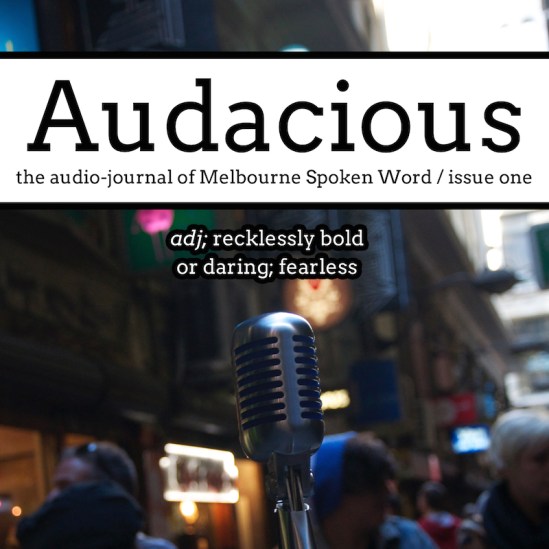
Coming straight at your inner eardrums is the debut volume of Audacious, the audio journal of Melbourne Spoken Word. Like a night at Passionate Tongues, or an afternoon at the Dan, this collection presents a variety of poets at different levels of artistic development. Some are seasoned and in full flight, while others are up-and-comers still finding their voice. In this volume at least, Audacious offers more of the latter. But the uneven, unpredictable quality of live poetry gigs – where sometimes you connect with just one poet – more often than not gives enough to make your night. In this sense, Audacious is an accurate reflection of local spoken word: certainly a gamble, but one well worth taking.

Live poetry in Melbourne is a jumping crisscrossing of mic leads and literary live wires where Melbourne Spoken Word (MSW) is ever-present, organising and promoting a broad spectrum of poetry events. In this spirit Audacious has potential as another developing platform for Melbourne’s spoken word scene. By no means the first of its kind, issue one is preceded by similar chronicles of audio poetry such as Project 3056(2010) compiled by poet Benjamin Theolonious Sanders (IQ), and sits alongside the recent audio accompaniment to Unusual Work 18. While these latter collections may be more nuanced in their focus, what makes Audacious distinct is precisely the unevenness characterising its inaugural outing. The loose, open-ended journal format suggests malleability – a potential to reflect changes in the scene as they come. The motley collection spotlights one camp in a diverse local scene: one frame of a landscape in constant flux, this is by no means a definitive guide, but rather a point of entry.

The best moments in Audacious are when the categories of poetry and performance support one another; or perhaps, when artists are least self-conscious of these categories. Jacky T’s ‘Landmark’ is exemplary of this and a highlight of the collection. The home truths of the poem – loss and the desperate banality of living in its wake – emerge painfully through voice and its tension with the music simmering underneath. Like a held breath, pushing the words forward, the listener is held by every impression until the poem’s final line: ‘As the traffic lets up, you hold a note and bend it / We listen as we pass.’ And then the music pours forth like an exhalation, a release for the grief that words cannot find.

In regrettable contrast are the frequent attempts to conform to tired notions of ‘poet’ or ‘slammer’. These are immediately apparent in clumsy, forced rhyme (‘this age of apathetic muscles, collapsing corpuscles […] lost in the vortex of your cerebral cortex’ – O’Sullivan’s ‘Language of Ghosts’; ‘gyrate with my mates in my irate pirate crew’ – Dennis’ ‘Pirates’), exaggerated breaths (Hassell’s ‘The Talk’), inexplicable climaxes and denouement (‘you couldn’t even decide between being a couch … or a bed / You don’t know who the fuck you are!’ – Weitzman’s ‘Couch’) and lackluster repetitions (‘we can’t see you we can’t see you we can’t see you’ – Fury’s ‘Google’). The self-loving arrogance evident in ‘I make love to the lyrics of the words of the songs I have written for the girls’ (‘The Talk’) is, contrary to the poem’s intentions, neither sensual nor liberating. The (mis)appropriation of once politically-charged forms like slam is the aural equivalent of donning a Che Guevara t-shirt – opportunistic and insincere in spite of the purported political awareness of the wearer. These poems and their delivery exemplify US slam poet Taylor Mali’s point about performance-poetry-by-numbers in his now classic ‘How to Write a Political Poem’: ‘Mix current events with platitudes of empowerment. / Wrap up in rhyme or r-r-r-r-rhyme it up in rap until it sounds cool.’ In other words, what is actually being said becomes secondary, incidental to the form. The uncritical adoption of the stylistic idiosyncrasies of performance poetry, slam, and hip-hop – from the punchy delivery and syncopations, down to the drawn breaths and American swagger – are imitation verging on parody. There are even instances where the accent shifts from Australian to American within the same piece.

Things don’t really start to cook until the third track. Anastasi’s ‘Initiation’ is conspicuous by its comparative modesty: at forty-four seconds it is lamentably short. ‘An abrasive lace-lined collar / the tickle of water winding between nose and cheek / the forming of hands into towers…’ delivers the listener directly into the sacramental moment. The economy of sound and word carves intimacy in earnest between poet and listener. Like any good performance, the occasional bum note or clichéd phrase is eclipsed by sincerity of feeling. Richardson’s ‘Love Song to Poetry’ is another case in point: ‘There among the used condom heaps of the world, among the McDonald’s wrappers and discarded babies’ toys I saw poets hanging on meat hooks … I saw the hero with a thousand names knowing anything is possible…’ Here, and in the poems that storm the album home (Woolf’s ‘Beloved Brother,’ Burrows’ ‘Cancer,’ Sapoznikoff’s ‘Grip’ and Supski’s ‘For Them / There’) delivery is unaffected, conjoining voice and word in unusual ways. Supski’s poem is another major highlight. A biting response to Audre Lorde’s maxim, ‘Poetry is not a luxury / It is a vital necessity of our existence,’ Supski asks, ‘Can a word unlock / unlock a door? / Can a word cut / cut a barbed wire / barbed wire fence?’ The urge to weed out tired devices and trite observations is enacted in poems such as this, with earnestness unfeigned and unafraid.

The journal’s editor and MSW’s founder, Benjamin Solah, navigates these disparate poems by underscoring their contrast to one another. Following Solah’s argument for a subjective definition of ‘slam’ in his article ‘In Defense of Slam,’ the interpretation of spoken word here is also subjective: we get from it what we bring to it. With this collection, Solah doesn’t attempt to unify these performances or define spoken word:Audacious invites the listener to make their own inquiries and reevaluate their own preconceptions. The first issue of Audacious may be a little unsure of itself, but these are the understandable growing pains of a debut. Proving that poetry is always in flux,Audacious is now already somewhere else. Its second volume, released earlier this year, suggests an encouraging improvement in content and a broader collection of voices. It is well on its way to becoming an important platform and proving ground for Melbourne’s spoken word artists.
This entry was posted in BOOK REVIEWS and tagged Benjamin Solah, George Mouratidis. Bookmark thepermalink.

*George Mouratidis is a Greek-born Beat scholar, poet, and translator of Modern Greek literature. He was a contributing editor of Jack Kerouac’s On the Road: The Original Scroll (2007), for which he wrote a critical introduction. He has taught Cultural Studies at RMIT University and American literature at The University of Melbourne where he is currently completing his PhD on the Beats. His translation of Greek-Australian poet Nikos Nomikos titled Noted Transparencies is due out in May with Owl Press, and his debut collection of poetry, Angel Frankenstein, is due later in the year with Soulbay Press.

**Taken from Cordite Poetry Review at http://www.cordite.org.au
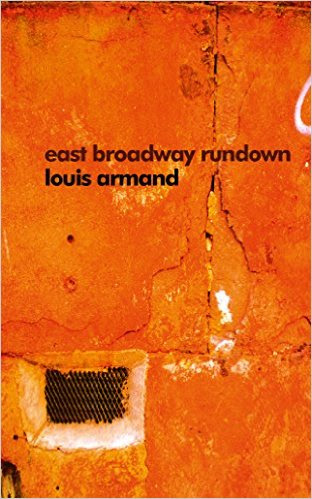
Nick Xuereb
 reviews Louis Armand’s East Broadway Rundown and The Rube Goldberg Variations

unnamed

East Broadway Rundown
by Louis Armand

Vlak Records, 2015

The Rube Goldberg Variations
by Louis Armand

Vlak Records, 2015


Louis Armand’s poetry is unbending in its loyalty to the aesthetic and moral responsibilities of the avant-garde. In these new chapbooks, both published by Vlak Records, Armand mines culture for its buried messages, showing how fraught with uncertain track is any search for truth and authenticity in a world made knowable by language.

With East Broadway Rundown, a poetic and photographic homage to jazz saxophonist Sonny Rollins’ album of the same name, Armand examines the presence of the written word as it appears on a particular street in Chinatown, New York. The collection opens with a description of the project’s beginnings, Armand explaining how Sonny Rollins’ sabbatical in 1959 would eventually lead to his 1966 album East Broadway Run Down: ‘the piece of music that was going to explain it all to him.’ Armand then narrates his own mimetic pilgrimage across ‘Houston, Delancy, Grand, East Broadway to Canal … Retracing the steps of Sonny Rollins.’

It struck me about halfway through East Broadway Rundown that Armand’s photographs were interrupting my spontaneous expectation that the poems would possess a feeling of completeness. As in the novels of W.G. Sebald, the function of the images in the book – whether intended or not – is to break the reader’s attention away from the author’s text. In this way and others, Armand’s poetry embodies the paradoxical mistrust of art that is at the nucleus of the avant-garde. He never permits the poem to become complacent with the truth of any particular image; each line seems vulnerable to modification and contradiction.
Continue reading

Η “Τελευταία χάρη” της Δήμητρας Καραφύλλη

b196126

Η Δήμητρα Καραφύλλη στην “Τελευταία χάρη” γράφει τους στίχους της κοφτερά και περιεκτικά, κλινικά σχεδόν. Αποτελείται από 20 ποιήματα και 30 χαϊκού, και για τον αναγνώστη που αναζητά ακρίβεια στον λόγο, μοντέρνα γραφή χωρίς εκκεντρικότητες, και ένα ρεαλισμό ιδωμένο μέσα από τον παραμορφωτικό φακό προσωπικής ποιητικής προσέγγισης, η Τελευταία χάρη είναι η συλλογή που θα χαιρόταν να ξεφυλλίσει. Η προφορικότητα του λόγου της ταιριάζει και ενισχύει την αμεσότητα που έτσι κι αλλιώς δεν λείπει από τα κείμενα, δίνει στον αναγνώστη την δυνατότητα να δει τον εαυτό του ως συμμέτοχο σε ό,τι συμβαίνει, να ακούσει ήχους και σκέψεις γνώριμες και οικείες.

ΕΛΕΥΘΕΡΟΣ ΣΤΙΧΟΣ[1]

Χαράματα ονειρεύτηκα προχτές
ένα ξενύχτη χαρταετό στην παραλία.
Η μακριά κυματιστή ουρά του
Πολύχρωμη, θαρρείς, ανατριχίλα.
απόκριση στο σφύριγμα του μπάτη.
Πλησίασα αθόρυβα, μα δεν κοιμόταν.
Τρεμόπαιζε στην άμμο καρφωμένος
με πένα αιχμηρή από φτερό αετίσιο.
Την ανασήκωσα ανάλαφρα και τότε
άρχισε άλικο να ρέει το μελάνι.

Τα ποιήματα είναι σύντομα αλλά ολοκληρώνονται με ακρίβεια χιλιοστού, τα θέματα είναι τα καθημερινά των περισσότερων από μας, ιδωμένα κάτω από περίεργα φώτα και σκιές.

Νεκρός πιανίστας
σε ξεκούρδιστο πιάνο
ακόμα παίζει.

Η Δήμητρα Καραφύλλη έχει μια ωραία σκηνογραφική ματιά, γράφει σαν να έχει μια κάμερα στον ώμο, δίνει διαδοχικές λήψεις της ίδιας πραγματικότητας. Σπασμένες οπτικές και συρραφή εικόνων είναι δύο από τα πιο ενδιαφέροντα χαρακτηριστικά κατά τη γνώμη μου: λειτουργούν σαν υπόβαθρο για την σκηνοθεσία των ποιημάτων, και εντείνουν ταυτόχρονα την αίσθηση μιας υποβόσκουσας αγωνίας για το πέρασμα του χρόνου, για την φθορά, για την απόσταση από τον ίδιο τον εαυτό και τις αναμνήσεις. Το εγώ στα κείμενα είναι τόσο υποκείμενο όσο και αντικείμενο, αλλάζει θέσεις, είναι στιγμές που δείχνει να διαβρώνεται χωρίς τίποτα να το αλλοιώνει στο τέλος, σχηματίζει τελικά μια καλειδοσκοπική εικόνα του εαυτού και του Άλλου. Το αποτέλεσμα είναι η ποιήτρια συχνά να αυτοπροσωπογραφείται, βλέποντας τον εαυτό της στον άνθρωπο (πραγματικό ή μη) που στέκεται απέναντι.

Αυτό που προσωπικά μου κάνει εντύπωση, είναι το γεγονός ότι υπάρχει στην Τελευταία χάρη μια αυθύπαρκτη αντικειμενικότητα. Οι στίχοι στέκονται ακριβώς στην κόψη ανάμεσα στο αισιόδοξο και το απαισιόδοξο σενάριο, έχω την αίσθηση ότι οι ισορροπίες παίζονται σε επίπεδο συλλαβών σχεδόν, και αρκεί η μικρότερη ανάσα για να βρεθούν οι λέξεις στη μία ή στην άλλη πλευρά.

Τα ποιήματα της Δήμητρας Καραφύλλη αποτελούν μια προσπάθεια να περικυκλώσει την πραγματικότητα όποια και αν είναι αυτή, ρεαλιστική, μυθική ή τρομαγμένη.

ΑΠΕΙΛΗ [2]

Σε οθόνη ολόφωτη
Σκιά μουντή
Σχήμα άσχημο
Ζωή που γέρνει
Δική μου. Ξένη.

Σε ταινία βωβού θεατής
Στους υπότιτλους κρύβομαι
Ακροβατώ
Με την ψευδαίσθηση ότι υπάρχει δίχτυ.

Καταλήγει να ακροβατεί ανάμεσα στην προσωπική και την εξωτερική πραγματικότητα, με την καθεμιά να μεταβάλλει και να μεταβάλλεται μέσα στην άλλη. Η ένταση είναι παρούσα και συχνά καταλυτική, η ποίηση της Δήμητρας Καραφύλλη είναι μια ποίηση των λέξεων και των αισθήσεων, εξίσου.

Τα χαϊκού από την άλλη, λειτουργούν σαν αναλαμπές συσχετισμών της πορείας δύο ανθρώπων. Φαίνονται σαν ένας ερωτικός διάλογος με τον άλλο, άπιαστο και συχνά απόντα, σαν μια ισότιμη χορογραφία συγκινήσεων. Η αναζήτηση της επαφής και της ανάμνησης είναι ο κινητήριος μοχλός, και η συντομία του τρίστιχου σαν να θέλει να παγώσει τις στιγμές στο χρόνο, για να μπορέσει το εγώ, να ψηλαφήσει και να πιστέψει τελικά τα όρια του Άλλου.

Τελικό συμπέρασμα; Μια ποίηση ψύχραιμη, χωρίς εξάρσεις, με πυξίδα και λέξεις βγαλμένες έξω στο φως.

Κρις Λιβανίου

ΓΡΑΜΜΗ 2 – ΤΕΘΛΑΣΜΕΝΗ [3]

Βαθιά φωνή από έγκατα.
-Βοήθεια.
Σκιά υπνοβάτη.
Χωρίς ηλικία.
Χωρίς εκτόπισμα.
Χωρίς πνοή.
Παραδομένος χρήστης.
Γλιστράει ανάμεσα μας στο βαγόνι
Κρατιέται, λες, μόνο από τα βλέμματα
τα φρικιασμένα.
Πενήντα λεπτά το ξέπλυμα ψυχής.
Περαστικά θα πει
να βγεις απ’ το συρμό
κι αμέσως να ξεχάσεις.
Ο ήλιος στη ράμπα.
Ο δρόμος παλκοσένικο να παίξεις.
Μα στην επιστροφή
στην άκρη της πλατφόρμας
η ίδια τεθλασμένη σιλουέτα
ο ίδιος βόμβος παρακαλεί.
Να ‘ρθει το τέλος.
Ένα τέλος.
Οποιοδήποτε.

[1] Σελ. 16
[2] Σελ. 12
[3] Σελ. 20

*Αναδημοσίευση από το Στίγμα Λόγου στο http://stigmalogou.blogspot.com.au/2016/02/blog-post_17.html?utm_source=feedburner&utm_medium=email&utm_campaign=Feed:+blogspot/JkQng+(%CF%83%CF%84%CE%AF%CE%B3%CE%BC%CE%B1%CE%9B%CF%8C%CE%B3%CE%BF%CF%85)

Dimitris Tsaloumas and the music of the unseen

Nick Dorey, An ointment isn’t an antidote, 2016, site-specific mixed media installation. Courtesy the artist. Photo: Zan Wimberley. Part of the exhibition Dämmerschlaf at Artspaceuntil 28 February 2016

Nick Dorey, An ointment isn’t an antidote, 2016, site-specific mixed media installation. Courtesy the artist. Photo: Zan Wimberley. Part of the exhibition Dämmerschlaf at Artspaceuntil 28 February 2016

BY VRASIDAS KARALIS

The recent death of the poet Dimitris Tsaloumas (1921-2016) offers the sad but necessary opportunity to revisit and re-read his work — not only as a conventional tribute to his life but mostly as a re-interpretation of his moment in the literary life of Australia. It is true that it took some time to include his work in the official anthologies of mainstream Australian poetry. By the nature of his work also he was never included in anthologies of anti-mainstream poetry; his work had something profoundly conservative in its own constitution yet at the same time, when he appeared in Australian letters in 1983, he brought something new, somehow challenging to the reading and writing addictions of that era.

Tsaloumas’ work evolved during a period when all possibilities were re-opened in Australian society. It was a period of intense optimism, curiosity and existential naiveté. Borders collapsed, communications were intensified and the need to express the visible social differentiation became imperative. Such optimism was both a need and a desire: by the 80s, the old elaborate poetic edifices of Kenneth Slessor, A.D. Hope and Judith Wright were revered but seriously questioned by the anarchic voices of Les Murray, John Tranter, Bruce Beaver, John Blight, Robert Adamson, Robert Gray amongst others. His first translated collection of poems The Observatory (1983) was in a way the culmination of his poetic trajectory in Greek, one which had started almost 35 years earlier. In the collection, through the mediation of Philip Grundy, Tsaloumas entered the English language, expressing, like so many bicultural creators, Greek emotions in English words. His second translated work The Book of Epigrams (1985) characterised by its constant concern for formal completeness, framed the iconography of a deep poetic territory full of symbols and images that reached back to classical Greece.

Dimitris Tsaloumas. Image thanks to UQP

Dimitris Tsaloumas. Image thanks to UQP

After 1988, Tsaloumas wrote his work in English. He became an Australian writer—although identity politics or the need to belong, the faddish ideologies of the period, never played any significant role in his work. HisFalcon Drinking (1988) is one of the most intricate and complex poetic works of the 80s in Australia. It is characterized by many competing voices, (he calls them variations,) which somehow converged on the solidity and the precision of a ‘strong’ poetic form. Tsaloumas’ poetry is structured around the music pattern of theme and variation—and most of his works in English maintain this tonal configuration as the basis of his poetic voice. In a sense he is the Stravinsky of Australian English: through his Hellenic classicism he tamed and subdued the fierce outbursts of his romanticism. His romanticism was the result of his nostalgia for his native island as well as a consequence of his politics. Tsaloumas migrated to Australia in 1952 for political reasons, and ideological rage against injustice can be felt throughout his poetry, as it could through his personality. His migration to English, however, established the need for what W.H. Auden called ‘formal order’—and this essentially provided the poet with a focused landscape and a centred vision of the world.

Even before this translingualism, there was always a unified poetic subjectivity in his verses. Furthermore, despite his modernist origins, in the works of T.S. Eliot and George Seferis, the aesthetics of fragmentation never exercised any serious allure for him. By writing in English, Tsaloumas experimented with new formal arrangements and formations, testing the limits of his own poetic world and the limitations of his Australian English. Sometimes, his language is heavy and slow, but when he succeeds, his work is full of energetic fluency and vibrant demoticism. This can be felt in Portrait of Dog (1991), The Barge (1993) and The Harbour (1998), three collections replete with the irregularities of Australian colloquialisms, the emotional force of oral directness and the agility of vocal intonations all tamed by the steady pace of versification, the exactness of verbal expression and the precision of his stanzas.

In his later work, like New Poems (1999), Sunrise with Sparrow (2000) andHelen of Troy and Other Poems (2007), Tsaloumas simplified his idiom, by dissolving the dense patterns of theme and variations and exploring the absolute simplicity of expression, through the rediscovery of the trite and the banal. These works are precious examples of Edward Said’s ‘late style’ as the poet abandoned all the verbal complexities that gave his known style its very specificity. With them he immersed himself into what Roland Barthes considered the ‘zero degree of writing,’ discarding all metaphors and pre-ordained orders of expression. His last works are structured around verses of felicitous transparency and Edenic freshness, despite the fact that they resonate with ominous feelings and articulate necromantic utterances. His modernist experimentation with form received in them its most astute re-imagining. Now the subtle rhythmic patterns underneath the verses marked the imperceptible transitions to musical tonalities beyond meaning; the central theme of these poems, that all explore the ‘truth of noble substance’ (‘Helen of Troy’), is the ineffability of death, the silence of all history in front of the unanswerable mysteries of being. The Greek word ‘telos’, meaning both end and purpose would have been the proper way of finishing a complete life, a life of juxtapositions and convergences.

Tsaloumas’ work is an emblematic achievement of poetic translingualism. Poets live in specific places and specific times: the quest of the critic is to find that place and time, localize its coordinates and give it a name. Sometimes the homelessness of the critics and their mind is projected on the imaginative universe of the poet; thus the very specificity of the poem becomes a shadow marker of the critic’s own question for domesticity. The critical task is to reconstruct the homeliness of the specific poetic language, to see the poet’s world as an autotelic form and not as a comment on society, politics or sexuality.

Tsaloumas’ poetry is prone to be fragmented by its interpretation: Greek-Australian, Australian-Greek, modernist, formalist, conservative, diasporic and much more. We must see his work as a totality, as the formal crystalisation in language of the existential experience of a specific individual and not as the fragment of a missing reality. He was all of the above and his language clearly shows it: from his early poems in Greek to his mature poems in English and Greek, the poetic world was expanding, contracting and simplifying itself in an admirable and somehow challenging way. If there is a constant parameter of his language, it can be characterised as an assembly of nouns and not as a collection of adjectives. Structured around raw materials and based on the gravity of solid references, his verses resonate with the staunch attempt of many poets worldwide in the same period to save the language of poetry from the danger of meaninglessness and the anxiety of trivialisation.

With his deep classical education, he avoided the over-sophistication of contemporary self-referential modernist forms. His verses are rough and somehow harsh; so they have to be read as unities, as complete stanzas, and not as isolated verses. Tsaloumas was the poet of formal quest; he struggled to formulate the density and the regularity of a distinct formal configuration in order to localise his poetic voice and avoid the accusation of a poet writing in a foreign language, de-territorialised, un-centred, homeless.

His poems will be read time and again by young poets who want to feel the otherness of poetic language or experience the otherness within the poetic language. His translingualism is the home of contemporary sensitivity: ‘I arrived on time though I had no address,’ he says one of his poems. He reached Australian poetry at the right moment, when a poetic regime change was necessary and desired. He contributed with his polyphonic variations to re-arrange the tonalities of poetic language until he reached the limitations of his own idiom. ‘Your struggle,’ he says in another poem, ‘is with the unseen, the beast that never yields.’ In his best poems, we have the impression that the unseen had found its proper musical translation and has localised a home for his poetic existence. As long as young poets exist who worship the plasticity and the solidity of poetic expression, his work will be read—and that’s greatest praise anyone can give a poet.
*
Our first essay this week is by Sophia Barnes, who considers three new books by Australian women writers: Beth Yahp’s Eat First, Talk Later, Drusilla Modjeska’s Second Half First and Debra Adelaide’s The Women’s Pages. What these books share is an interest in how the stories of women are told and retold. In ‘What To Leave Out’, Barnes writes:

Two memoirs, one fiction? Or one family history, two fictions entwined into a single narrative, and a ‘reflection on the arc of a life’? All three of these books show women writing themselves into being, as they construct narrative from the raw materials of unwieldy lives, whether imagined or real. Each writes and rewrites sensation, tactile detail, exchange or confrontation, revising and rediscovering through the process. The compulsion to self-transcription is persistent, whether it be in the service of self-discovery, exploration or interrogation; whether it comprises reflection, hindsight, or the recovery of stories which might otherwise be lost; whether it functions to challenge or to reinforce, as transformation or as testament – or simply as record.

William Finnegan’s memoir of surfing is the subject of our second essay this week, ‘Mushburgers’ by Knox Peden. Finnegan is a writer for the New Yorkerwho has filed stories from around the world, including Australia. Peden writes:

The expectation in reading Barbarian Days is that one will learn the roots of this passion, that we will see its organic emergence from the world travel treated in its pages. But this passion seems incidental too. The memoir is, after all, of a surfing life. And herein lies the book’s most enchanting aspect. Figurative language abounds—I defy anyone to find better descriptions of surfing, whatever the criteria might be, and regardless of whether you’ve surfed or tried to. But the book as a whole is not a metaphor; it is astonishingly literal. We expect a child of the 1950s to take us through the disappointments of the counterculture. We expect a memoir dedicated to the author’s teenage daughter to take us through the challenges of marriage and the miracle of fatherhood. The wife and kid are in the book, but they are never its subject, much less its object. The wonder of Barbarian Days is to provide us with a literary experience that is not a stand in for other experiences, that is not an allegory of effort and victory and disappointment and loss that memoir culture has conditioned us to expect.

This week in From the Archive, we return to Kerryn Goldsworthy’s essay on the launch of Text Classics, ‘What We Talk About When We Talk About Australian Literature’,  one of the first to appear on the Sydney Review of Books on our launch in early 2013. In that essay, Goldsworthy reflects on the transformation of the idea of ‘Australian literature’ since 1988, both within the academy and beyond it:

Why 1988? The Bicentennial celebrations and the lead-up to them had made a lot of people do some hard thinking about exactly what we talk about when we talk about Australian literature, and that was reflected in the way it had begun to be taught in universities. Nor was it just the academics; many of the writers themselves were suspicious of the historical triumphalism that the Bicentennial unavoidably represented. Kate Grenville’s 1988 novel Joan Makes History was a witty bit of feminist revisionism intended to destabilise traditional accounts of Australian history, while Patrick White, as David Marr reports in his biography, ‘decided that nothing of his would be performed or published in Australia in the bicentennial year of white settlement.’ In a 1985 letter to a friend, White had written ‘I hope I am dead before 1988 when we are supposed to celebrate our emptiness in a great shower of bullshit.’ Grenville sent him a copy of Joan Makes History, which he liked. ‘I was carried away,’ he wrote to her. ‘When I finished I even had a cry.’

Karalis-author-pic
*Vrasidas Karalis teaches Modern Greek at the University of Sydney. He has published Recollections of Mr Manoly Lascaris (2007), The Demons of Athens (2014) and Reflections on Presence (2016).

**This article published in Sydney Review of Books at http://www.sydneyreviewofbooks.com/dmitris-tsaloumas-and-the-music-of-the-unseen/

Ouyang Yu, Self Translation (Transit Lounge)

self_translation_1500_wide

In the ambiguity of Ouyang Yu’s title, Self Translation, we can read not just a creolised or transformed Chinese Australian self, but two selves: a Chinese self on the left page and an Australian on the right. Nor are the two selves completely discrete. Yu’s poetry is as central – and essential – as anyone’s else’s to Australia right now: if the concept of centrality is useful. My point is that he is not just doing his own unique thing, but is writing Australian lyrics that state ‘the death of nature is most beautiful’ without being obvious or obviously ironical (‘Beautiful Death’); he can also begin a poem called ‘Christmas, 1993’, with the line ‘this is the season of death’. In Yu’s poetry the excoriation of the nation is rejuvenated; in ‘Song for an Exile in Australia’ Yu writes, ‘in a loveless season in Australia’, ‘in a poemless season in Australia’ and, in a brilliant image, of ‘the/wheelchair of imagination’. But it’s not all bleak. ‘On a Sunny Noon’ is a hilarious take on the migrant poem:

on a sunny noon
i was eating
a delicious fish head
sucking
its eyes
one by one
it was

the head

of a fish
that used to swim

in the murray

Racism is a continuing theme in Yu’s poetry, one that receives innovative treatment in ‘My Country’, which sympathises with a ‘filipino woman … yelling: back to the philippines!’. Here the going back (from Japan) is presented as the migrant’s desire. The poem is further complicated by its allusions to Australian national literary tropes. The title of course recalls Dorothea Mackellar’s poem of the same name, whereas the ending: ‘you bastard, my country!’ – aimed at China – recalls Xavier Herbert. As indicated there is an occasional bleed or fissure between the selves of the book. In ‘The Double Man’ (whose name is ‘australia china’ or vice versa), Yu puns on ‘Motherland’ and ‘Otherland’ (the latter being the name of the journal Yu founded and edits).

But to make this pun, where ‘Mother’ loses its ‘M’, Yu writes the English word and the letter ‘M’ on the Chinese side also. ‘At Dusk’ gestures to further mobility, with a note that is parenthetical on the Chinese side only: that the lines could be read in a different, suggested order. The Chinese version of ‘The Train’ ends with an exclamation mark but not the English, whereas ‘My Country’ ends with an exclamation mark in English but not Chinese; and while there is apparently a Chinese equivalent for ‘Marlboro’ in this poem, ‘extra mild’ is given in English on both sides.

Further, in ‘Zero Distance’ ‘zero’ is a word in the English title and poem, but the number ‘0’ in the Chinese. Yu also occasionally uses phonetic Roman versions of Chinese words, such as ‘hua’ for China and ‘ao’ for Australia, which are the names of ‘two women’ in the poem of that name. The romantic and the sexual are both present in Self Translation but as distinct concepts. In ‘Zero Distance’, Yu writes ‘Human relationship … It’s the standard thickness of a condom’, and in ‘No Title’: ‘When the English language comes flooding in/ I’ve lost my memory// The 5,000-year-old structure collapses overnight/ As my tongue straightens like a penis’. The poem points to the relation of language to memory: ‘Pretty soon, I’ll forget my parents/ And brothers altogether’. Yu brings a refreshing oddness to the oddness of Australian poetry when he writes lines like: ‘i take you/ in my arms/ as a mother/ caressing her baby/ a mature baby’ (‘Untitled’). Another ‘Untitled’ poem aligns the phrases ‘some become lines of poetry’ with ‘fish enter the arts’.

The book ends with three visually exciting poems that combine Chinese and English, self and self. ‘The Double’ translates line by line; it plays thematically with alternation, with black- and whiteness. ‘My Sadness’ begins with a quote from a letter by W.B. Yeats to J.M. Synge that Yu has translated, followed by the English original; the poem translates from an Irish and French context to Yu’s Chinese Australian. The final poem returns to the double bilingual mode: except that both sides include Chinese and English, alternating. The poem is a meditation on Robert Frost’s ‘The Road Not Taken’, which encourages the monolingual reader to take both roads (poems) by reading the Chinese or the English back and forth from left to right pages. The last stanza in both poems is in both languages, with the word ‘taken’ taken from English and replaced by Chinese, and placed in the Chinese text on the left. Finally the poem ends with an extra line in English in the left, mainly Chinese stanza: ‘There’s nothing you can’t do that you do’. The blank that corresponds on the right is our yet-to-be translated future.

*From http://www.cordite.org.au

Ouyang Yu_original

Δημήτρης Τσαλουμάς 1921-2016

Πληροφορήθηκα μερικές ώρες πριν, σήμερα, τον θάνατο στο νησί του, στη Λέρο, ενός από τους μεγαλύτερους -κατά τη γνώμη μου- ποιητές που ανέδειξε η ελληνο-αυστραλιανή παροικία της Μελβούρνης, της Αυστραλίας, αλλά και, γενικότερα, της Ελληνικής Διασποράς, του Δημήτρη Τσαλουμά.

Αν και θα επανέλθω, κυρίως με ποιήματα του Δημήτρη Τσαλουμά, στο άμεσο μέλλον, εν είδει ελάχιστου φόρου τιμής και μικρού αφιερώματος, παραθέτω λίγα πράγματα: ένα βίντεο από εκδήλωση προς τιμήν του στη Λέρο, μια φωτογραφία, ένα εξώφυλλο ποιητικής του συλλογής καθώς και συνδέσμους δημοσιευμάτων που έχω κάνει μέσα από το ιστολόγιο αυτό.

Αν και αναγνωρισμένος ποιητής στην Αυστραλία, μιας και δίγλωσσος και μεταφρασμένος, στην Ελλάδα δεν είναι τόσο γνωστός, ίσως και παντελώς άγνωστος από αρκετούς ποιητικούς κύκλους. Εμείς εδώ στο Κόσκινο επιφυλασσόμαστε να καλύψουμε αυτό το κενό, όπως μπορούμε.

Δημήτρης Τσαλουμάς – Το ψυγείο

Στις στοές των ψυγείων κρέμονται αναιμικά
τα σφαχτά. Ξαφνικός και επιδέξιος
με ριγωτή ποδιά στο σκίρτημα του φωτός
εμφανίζεται μες στα τσιγκέλια αυτός ,
κι επιλέγοντας γυμνότατον αμνόν απέρχεται
σφραγίζοντας ξανά το σκοτάδι .

aiol8

HN05(1)

**Ο Δημήτρης Τσαλουμάς γεννήθηκε στη Λέρο το 1921. Τελείωσε το ελληνικό ημιγυμνάσιο και το ιταλικό γυμνάσιο στο νησί του και λίγο αργότερα, τα πρώτα χρόνια του πολέμου, το ιταλικό Κλασσικό Λύκειο της Ρόδου. Ζει από το 1952 στην Αυστραλία, όπου σπούδασε Αγγλική και Γαλλική Φιλολογία και δίδαξε ώς το 1982 στα κρατικά σχολεία μέσης εκπαίδευσης στη Μελβούρνη. Δίδαξε, επίσης, σε διάφορα πανεπιστήμια ως επισκέπτης συγγραφέας. Τιμήθηκε με έξι από τις σημαντικότερες διακρίσεις της Αυστραλίας τόσο για τα αγγλόγλωσσα βιβλία του, όσο και για έναν τόμο που μεταφράστηκε από τις ελληνικές του συλλογές από τον Philip Grundy με τον τίτλο The Observatory (Το παρατηρητήριο). Τα τελευταία χρόνια μοιράζει το χρόνο του μεταξύ Λέρου και Μελβούρνης. Δύο νέες συλλογές ποιημάτων του (γραμμένες στα Ελληνικά), δημοσιεύτηκαν πρόσφατα στην Ελλάδα.

https://tokoskino.wordpress.com/2013/01/13/%CE%B4%CE%B7%CE%BC%CE%AE%CF%84%CF%81%CE%B7%CF%82-%CF%84%CF%83%CE%B1%CE%BB%CE%BF%CF%85%CE%BC%CE%AC%CF%82-%CE%B7-%CF%80%CE%B1%CF%81%CE%B1%CE%B3%CE%B3%CE%B5%CE%BB%CE%AF%CE%B1/

https://tokoskino.wordpress.com/2012/12/01/%CE%B4%CE%B7%CE%BC%CE%AE%CF%84%CF%81%CE%B7%CF%82-%CF%84%CF%83%CE%B1%CE%BB%CE%BF%CF%85%CE%BC%CE%AC%CF%82-%CE%B3%CF%81%CE%AC%CE%BC%CE%BC%CE%B1-%CF%83-%CE%AD%CE%BD%CE%B1-%CE%AC%CF%81%CF%81%CF%89%CF%83/

https://tokoskino.wordpress.com/2011/09/08/%CE%B4%CE%B7%CE%BC%CE%AE%CF%84%CF%81%CE%B7%CF%82-%CF%84%CF%83%CE%B1%CE%BB%CE%BF%CF%85%CE%BC%CE%AC%CF%82-%CE%AC%CF%83%CF%89%CF%84%CE%BF%CF%82-%CE%BA%CE%B1%CE%B9-%CE%AC%CF%83%CF%89%CF%84%CE%BF%CF%82-2/

https://tokoskino.wordpress.com/2012/05/24/%CE%B4%CE%B7%CE%BC%CE%AE%CF%84%CF%81%CE%B7%CF%82-%CF%84%CF%83%CE%B1%CE%BB%CE%BF%CF%85%CE%BC%CE%AC%CF%82-%CE%BD%CF%85%CF%87%CF%84%CE%B5%CF%81%CE%B9%CE%BD%CF%8C/

https://tokoskino.wordpress.com/2014/05/14/%CE%B4%CE%B7%CE%BC%CE%AE%CF%84%CF%81%CE%B7%CF%82-%CF%84%CF%83%CE%B1%CE%BB%CE%BF%CF%85%CE%BC%CE%AC%CF%82-%CE%B5%CF%80%CE%B5%CE%B9%CE%B4%CE%AE%CF%82-%CE%AE%CF%84%CE%B1%CE%BD-%CF%80%CF%8C%CE%BB%CE%B5/

https://tokoskino.wordpress.com/2015/02/08/%CE%B4%CE%B7%CE%BC%CE%AE%CF%84%CF%81%CE%B7%CF%82-%CF%84%CF%83%CE%B1%CE%BB%CE%BF%CF%85%CE%BC%CE%AC%CF%82-vigil-%CE%B1%CE%B3%CF%81%CF%85%CF%80%CE%BD%CE%AF%CE%B1/

https://tokoskino.wordpress.com/2011/04/02/%CE%AD%CE%BD%CE%B1-%CE%B1%CF%80%CF%8C%CE%B3%CE%B5%CF%85%CE%BC%CE%B1-%CF%80%CE%BF%CE%AF%CE%B7%CF%83%CE%B7%CF%82-%CE%BC%CE%B5-%CF%84%CE%BF%CE%BD-%CE%B4%CE%B7%CE%BC%CE%AE%CF%84%CF%81%CE%B7-%CF%84%CF%83/

https://tokoskino.wordpress.com/2015/02/14/dimitris-tsaloumas-a-winter-journey-%CF%87%CE%B5%CE%B9%CE%BC%CE%B5%CF%81%CE%B9%CE%BD%CF%8C-%CF%84%CE%B1%CE%BE%CE%AF%CE%B4%CE%B9-owl-publishing-2014/

https://tokoskino.wordpress.com/2016/01/22/the-leap-over-the-bounds-of-self-a-tribute-to-the-poetry-of-dimitris-tsaloumas-in-celebration-of-two-recent-bilingual-poetry-publications-honouring-the-poet-and-his-art/

https://tokoskino.wordpress.com/2011/03/07/dimitris-tsaloumas-a-voluntary-exile-%E2%80%93-selected-writings-on-his-life-and-work-owl-publishing-%CE%BC%CE%B5%CE%BB%CE%B2%CE%BF%CF%8D%CF%81%CE%BD%CE%B7-1999/

https://tokoskino.wordpress.com/2014/05/18/dimitris-tsaloumas-un-chant-du-soir-orphee-la-difference-%CE%B3%CE%B5%CE%BD%CE%AC%CF%81%CE%B7%CF%82-2014/

https://tokoskino.wordpress.com/2015/02/14/dimitris-tsaloumas-a-winter-journey-%CF%87%CE%B5%CE%B9%CE%BC%CE%B5%CF%81%CE%B9%CE%BD%CF%8C-%CF%84%CE%B1%CE%BE%CE%AF%CE%B4%CE%B9-owl-publishing-2014/