‘The leap over the bounds of self’: a tribute to the poetry of Dimitris Tsaloumas – In celebration of two recent bilingual poetry publications honouring the poet and his art

By Jena Woodhouse*

Un chant du soir [selected poems from Tsaloumas’s collections in English], translated into French by Pascal Laurent. A bilingual edition [English and French], 128 pages. France: Orphee/ La Difference, 2014. ISBN 978-2-7291-2066-5
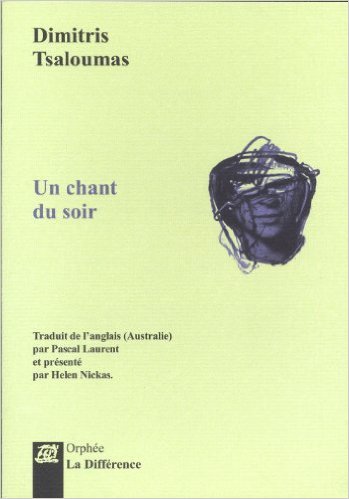
41OD4u-olcL._SX347_BO1,204,203,200_

Dimitris Tsaloumas, A Winter Journey.(Chapbook) A bilingual edition in English and Greek. New Greek-language versions of the original English poems prepared by the poet. Brighton, Victoria, Australia: Owl Publishing, 2014. ISBN 0 9775433 1 5
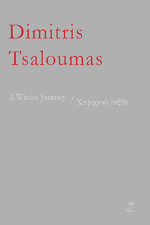
tsaloumas

The Introduction to both publications is by Helen Nickas, author, academic, and a publisher who, along with the GACL Committee who publish Antipodes, has done so much to bring Greek-Australian writers and writing to the attention of a wider readership.

As ever, Dimitris Tsaloumas brings to his creative practice a distillation of experience, observation and perception enriched and filtered by several cultural and linguistic sources, animated by personal memory and a mythopoeic imagination that characteristically taps into memory’s aquifers to elicit dramatisations and evocations unconstrained by time. It seems that he is able to bring a divinatory instinct to bear on this process.

Although Dimitris Tsaloumas was born in Greece, on the island of Leros in the Dodecanese archipelago, his formal education was initially in Italian, as those islands were under Italian hegemony from 1912 to 1947. By the time he left Greece in 1951 to migrate to Australia, he had already published two collections of poetry in Greek. In the course of his studies at the University of Melbourne, he later acquired fluency in French, and embarked on what would be a lifelong journey into the English language, which was to become the medium for nine collections of poems.

Rich textures of language and structures of thought are matched by thematic abundance, yet while the heart of the matter may sometimes prove elusive, luminous presences pervade the poems that deal with love and ideal beauty, loss and memory. Tsaloumas has commented that Helen of Troy is his symbol of beauty in general, and this title poem of the collection Helen of Troy and Other Poems (2007) is one of those included in Pascal Laurent’s beautifully presented bilingual selection of 45 poems, Un chant du soir (pp. 108-9), translated into French in consultation with the poet, thereby giving Francophone readers access to the stylistic and linguistic pleophony and polyphony of Tsaloumas’s poetry.

Other iconic poems that seem to travel effortlessly from the original English texts to the French – testimony to the dedication, care and skill of the translator, Pascal Laurent — include selections from Falcon Drinking (UQP 1988); Portrait of a Dog (UQP 1991); The Barge (UQP 1993); The Harbour (UQP 1998); New and Selected Poems (UQP 2000) and Helen of Troy and Other Poems (UQP 2007).

Tsaloumas’s abiding themes and concerns cohere as a preoccupation with beauty, the ideal as sometimes glimpsed in the actual, but more often purged of worldly impurities by memory or art, as in the case of Helen, the poet’s mnemonic for beauty. But the supreme muse is perhaps memory, not only personal, but also collective and cultural, whose role is pivotal to poetry. Without memory, beauty lacks awareness of its antecedents.

The quest, the journey, the return, nostalgia in the Greek sense of the word (a yearning for the homeland); the hovering, luminous presences of seasons past; mutability and the idea of the immutable, which exists as memory: these motifs recur in the fabric and fibre of Tsaloumas’s poems as guests and visitants of the cosmology from which he draws consolation and renewed inspiration. Persephone incarnate, ‘partridge-breast proud’: a local girl glimpsed gathering flowers in spring near the mouth of the Underworld at Cape Tainaron (‘The Traveller and the Maiden’ Un chant du soir, pp. 102-3); Eurydice (‘Orpheus’ lament’ , number 11 in the sequence A Winter Journey); the mother (who is a recurring visitant in the corpus of Tsaloumas’s poetry, as for instance in ‘Visits’, poem number 4 of A Winter Journey); the mysterious ‘lady of ships’ in the poem “Aubade for the Lady of Ships’ (Un chant du soir, pp. 56-7) are among many feminine personae who perform multiple roles, as couriers of memory and psychopomps plying between past and present, between dream archetype and the physical world of sensory impressions.

The sequence of 14 poems titled A Winter Journey (originally published in Helen of Troy and Other Poems), references Schubert’s eponymous song cycle in its title, and also seems to contain allusions to Ovid, the poet in exile, in images of deprivation, wolves, the steppe. Hints and clues in the sequence seemingly support a reading of it on one level as an encrypting of Ovid’s experience, paralleled in part by that of Tsaloumas himself.

However, when I decided to put this hypothesis to the test, and asked the poet in a letter (in early 2008) if this were the case, he replied as follows:

‘It amazes me that the Ovid association never occurred to me before, during the writing or after. And yet your comment makes the connection so obvious that I can only wonder. However, this is only circumstantial…. My sequence has to do with the burden of memory in the desolation of old age and the return or revival of that mysterious sense of guilt that was ‘buried’ and forgotten in the vigour of youth. Memory, even the memory of beautiful moments, is now a source of pain….

‘This collection (Helen of Troy and Other Poems), in spite of the sadness of its tone, was meant to constitute a celebration of beauty in all things in life, including death!’

Irrespective of how readers may interpret A Winter Journey, the calibre of the work places it among Tsaloumas’s finest achievements, a poetic ‘leap/ over the bounds of self’.
….
yet I know temptation
is in the weave of sainthood
the test by fire before the leap
over the bounds of self

(A Winter Journey 9, ‘Temptation’)

Although the title of this sequence seems to presage a journey, the persona of the poems is snowbound, waiting for the spring, the thaw, and his journey is an inward one. Visitants arrive from afar in place and time, as do wolves:

After the wolves came mother
though the door was barred
….
others too came from albums
of yellowing years
faces blurred
though not unfamiliar
….
mother’s eye steady
burning through the hut’s murk

(A Winter Journey 4, ‘Visits’)

‘Summoned by unknown spirits’, ‘against [his] will’, the poet waits at a

point of static motion
dead centre of the rose
of winds

(A Winter Journey 1, ‘The call’)

But the reader is given to understand that

this is no public gesture
this voyage
no trespassing on alien land

(A Winter Journey 9, ‘Temptation’)

The essential paradox (in various guises) that lies at the heart of many of Tsaloumas’s poems here surfaces in the eleventh poem of this cycle, ‘Orpheus’ lament’:
….

Back under the sun
Orpheus blinks and sings again
of love regained and lost
never bestowed whole
and therefore imperishable.

Strange that Orpheus’ song
should have made famous
love’s impotence
and its division beautiful
beyond compare and reach
of man-born time.

The cycle ends with a burial in poem no. 14, ‘Songs of the woodworm’, alluding to the ambiguous nature of the poet’s journey, with implications for the ultimate and inescapable destination of each person’s life.

While Tsaloumas’s language of choice in the original poems of the present collections is English, his poetics are illumined by ‘the rich glow of an older tongue’ (‘Washing-up’, Un chant du soir, pp. 106-7), and informed by structures of thought and emotion whose origins lie elsewhere. Tsaloumas’s art is nourished by many sources, among them the context and continuity of cultures older than the one whose language he composes in. Perhaps it is this circumstance that imbues the content and language of the poems with a distinctive timbre and patina, the rich glow of an older tongue: resonances from a cultural milieu not alien to English – since Greek culture and thought is one of the antecedents of modern European cultures – but not innate to it either. Tsaloumas’s nightingale, his rossignol (Un chant du soir, pp. 60-61), is a far cry from Keats’s bird of the same name:

Last night in our square of rubble,
on the stroke of twelve, a nightingale
was heard. And panic-stricken folk
leaned out of gutted windows
above lamp-posts that bent distraught
over the brinks of craters
wondering, bitter that such a bird
should visit in their grief with not
a tree, not even a spire to support
its crazy song.

.…

I laughed, and from the shadows cried
don’t be such fools, brothers,
the song proffers no hope. That gift
you’ve squandered long since.
This is the hour of its perfection.
Be grateful to the bird that scores
the vastness of that loss.
….

The haunting texts selected for translation into French by Pascal Laurent include, in addition to those already cited, many of Tsaloumas’s finest poems: songs for out times and for all times, of the here and the hereafter, embodying an uncanny instinct for locating the eternal in the moment. They include the iconic ‘Falcon Drinking’; Old Man with Canary’; ‘The Barge’; ‘To the Poet’, with its sardonic, slant allusions to Plato’s Republic; ‘A Summer House’; ‘The Harbour’; ‘The Shrine’; ‘Morning Coffee’ — a dual portrait viewed in the light of the quotidian; ‘Stoneland’; ‘The Veranda’; ‘The Inheritance’; ‘Helen of Troy’…. and, among my personal favourites, the delicately drawn charm of ‘A Postcard to Matina’, which I quote in full:

A Postcard to Matina

The boats by the tamarisks on the far left
will sail again before dawn, and with the sun

dripping forge-red a mere three fathoms
above my bed in the horizon-filled window

I’ll be thinking again of my fishing days and all
the water loveliness of child-bright summers.

I linger under the sun. There’s no pleasure
in triumphs no longer shared. I write this card

a mile past its frame, on the far right, against
the harbour breeze. Splinters of laughter point

the lime-rock light thorn-deep, and as before
you walk between the festive sea

and the white of houses as if these days
belonged to another year. Yet nothing’s changed,

in spite of memory. A stained-glass autumn
hangs near the door on our pomegranate tree,

olives are crushed and fish is fried at dusk
in every kitchen, and all the island cats

shine peaceably in the bounty of the season.
The moon’s back huge as ever, platter-full.

(Un chant du soir, pp. 38-9)

This symbiosis between cultures, paralleled in these two new publications by the twin versions of the poems presented side by side, in English and Greek (A Winter Journey) and English and French (Un chant du soir), evokes sublimated relationships and nostalgias, as well as generating productive tensions, implicit rather than explicit, between different emotional landscapes and the syntactical shapes of ideas, the grammar of thought.

Ambiguity, ellipsis, antithesis and dichotomy, contradiction and paradox, shadows and luminosity abound in the art of Dimitris Tsaloumas, romantic idealist, peerless lyricist, excoriating sceptic, and poet of all life’s seasons. Yet amplitude and kenosis, feast and frugality and fast, flow and ebb are surely also the rhythms of the natural world, and Tsaloumas, who for much of his long life has migrated annually between homelands, Australia and the Aegean, is attuned to this language as well, the primal and maternal one, an awareness of origins and eternal cycles of renewal, and the blueprint for beauty that is nature’s gift to art and memory.

Note: Dimitris Tsaloumas’s most recent publication of new poems in Greek is Thirst (Dipsa), a chapbook published by the literary journal Planodion, Nea Smyrni, Athens 2010, which contains some of the most remarkable poetry he has ever composed. Only Dimitris Tsaloumas could have written these incandescent poems.

*This piece firstly published in “Antipodes” 2015, annual literary journal of Greek-Australian Cultural League of Melbourne.
images

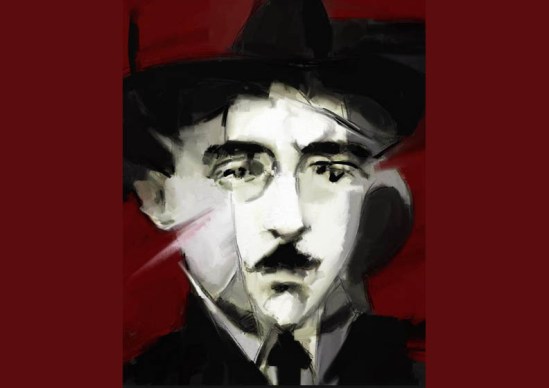
Φερνάντο Πεσσόα: «Το πιο χυδαίο στα όνειρα είναι πως όλοι ονειρεύονται»

fernando_pessoa_heteronimia-cover

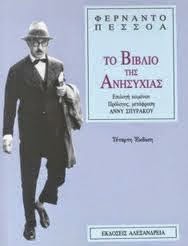
Φερνάντο Πεσσόα, Το Βιβλίο της Ανησυχίας
Εκδόσεις Αλεξάνδρεια

«Γράφω, λυπημένος, στο ήσυχο δωμάτιό μου, μόνος όπως υπήρξα πάντα, μόνος όπως θα υπάρχω πάντα. Κι αναρωτιέμαι αν η φωνή μου, φαινομενικά τόσο ασήμαντη, δεν ενσαρκώνει την ουσία χιλιάδων φωνών, τη δίψα να μιλήσουν χιλιάδων ζωών, την υπομονή εκατομμυρίων ψυχών υποταγμένων σαν την δική μου στο καθημερινό πεπρωμένο, στο ανώφελο όνειρο, στην ελπίδα που δεν αφήνει ίχνη. Αυτές τις στιγμές η καρδιά μου χτυπά πιο δυνατά γιατί έχω συνείδηση πως υπάρχει».

Αποτελούμενο από 520 αποσπάσματα, Το Βιβλίο της Ανησυχίας είναι το κορυφαίο έργο του Πορτογάλου Φερνάντο Πεσσόα. Σχεδόν όλη την ενήλικη ζωή του και μέχρι το θάνατό του, από το 1913 έως το 1935, ο Φερνάντο Πεσσόα γράφει, με κάποιες διακοπές αλλά χωρίς να το εγκαταλείψει ποτέ. Δημοσιεύτηκε πολλά χρόνια μετά το θάνατό του. Το βιβλίο της ανησυχίας είναι ο απολογισμός της καθημερινότητας, η καταγραφή των αισθήσεων, η οξύτητα της ειρωνικής σκέψης, η ανεπανάληπτη γραφή ενός από τους σημαντικότερους συγγραφείς του 20ου αιώνα.
«Να ταξιδέψω; Για να ταξιδέψω φτάνει να υπάρχω: πηγαίνω από μέρα σε μέρα, σαν από σταθμό σε σταθμό στο σιδηρόδρομο του κορμιού μου ή του πεπρωμένου μου, σκυμμένος πάνω από τους δρόμους και τις πλατείες, πάνω από τα πρόσωπα και τις χειρονομίες, πάντα ίδια και πάντα διαφορετικά, όπως τελικά είναι και τα τοπία».

« Η ζωή είναι αυτό που εμείς την κάνουμε να είναι. Τα ταξίδια είναι οι ταξιδιώτες. Αυτό που βλέπουμε δεν είναι αυτό που βλέπουμε, είναι αυτό που είμαστε».
 
«Υπάρχει μια κούραση της αφηρημένης ευφυΐας, και είναι η πιο φρικτή κούραση που υπάρχει. Δεν βαραίνει όπως η σωματική κούραση, ούτε ανησυχεί όπως η κούραση της γνώσης που αποκτάται μέσω της συγκίνησης. Είναι το βάρος από τη συνείδηση του κόσμου, σαν να μη μπορείς να αναπνέεις από την ψυχή».

«Για τον κοινό άνθρωπο, αισθάνομαι είναι ζω και σκέφτομαι είναι ξέρω να ζω. Για μένα, σκέφτομαι είναι ζω, και αισθάνομαι δεν είναι τίποτε άλλο πέρα από την τροφή της σκέψης».

«Όσο πιο διαφορετικός είναι ο κάποιος από μένα, τόσο πιο πνευματικός μου φαίνεται, γιατί εξαρτάται λιγότερο από την υποκειμενικότητα μου. Και γι᾽ αυτό ακριβώς η επιμελής και διαρκής μου μελέτη είναι αυτή η κοινή ανθρωπότητα που απεχθάνομαι και από την οποία απέχω. Την αγαπώ γιατί τη μισώ. Μου αρέσει να τη βλέπω γιατί απεχθάνομαι να την αισθάνομαι.

«Όσο περισσότερο βυθίζομαι μέσα μου, όλα τα μονοπάτια του ονείρου με οδηγούν στα ξέφωτα της αγωνίας.»
«Η ζωή μου είναι σαν να με χτυπούσαν με αυτήν….»

«Για μένα η ποίηση δεν είναι φιλοδοξία, αλλά τρόπος για να μένω πάντα μόνος.
Είτε υπάρχουν είτε δεν υπάρχουν θεοί, είμαστε σκλάβοι τους.
Το πιο χυδαίο στα όνειρα είναι πως όλοι ονειρεύονται».

« Είναι ανθρώπινο να θέλουμε αυτό που μας είναι απαραίτητο, και είναι ανθρώπινο να επιθυμούμε αυτό που δεν μας είναι απαραίτητο, αλλά που μας είναι επιθυμητό. Αυτό που είναι αρρωστημένο είναι να επιθυμούμε με την ίδια ένταση αυτό που είναι απαραίτητο και αυτό που είναι επιθυμητό, και να υποφέρουμε από την έλλειψη τελειότητας σαν να υποφέραμε από την έλλειψη ψωμιού. Η ασθένεια του ρομαντισμού είναι ακριβώς αυτή: να θέλουμε το φεγγάρι σαν να υπήρχε η δυνατότητα να το αποκτήσουμε. Ζω πάντα στο παρόν. Το μέλλον δεν το γνωρίζω. Το παρελθόν δεν το έχω πια. Το ένα με βαραίνει σαν τη δυνατότητα των πάντων, το άλλο σαν την πραγματικότητα του τίποτα».

Ποτέ δεν αγαπάμε κάποιον. Αγαπάμε απλώς την ιδέα που σχηματίζουμε για κάποιον. Τελικά αυτό που αγαπάμε είναι μια δική μας έννοια και ο εαυτός μας.

«Μη φοβάστε, δεν υπάρχει κανένας κίνδυνος να καταρρεύσει η κοινωνία από υπερβολικό αλτρουισμό».

*Από το http://freethinking.gr/fernado-pessoa-to-pio-xidaio-sta-oneira-einai-pws-oloi-oneireuontai/

01.06.14_________ ______ _ __ ______ ___ _________

Simon Eales reviews Jennifer Maiden and Stefanie Bennett

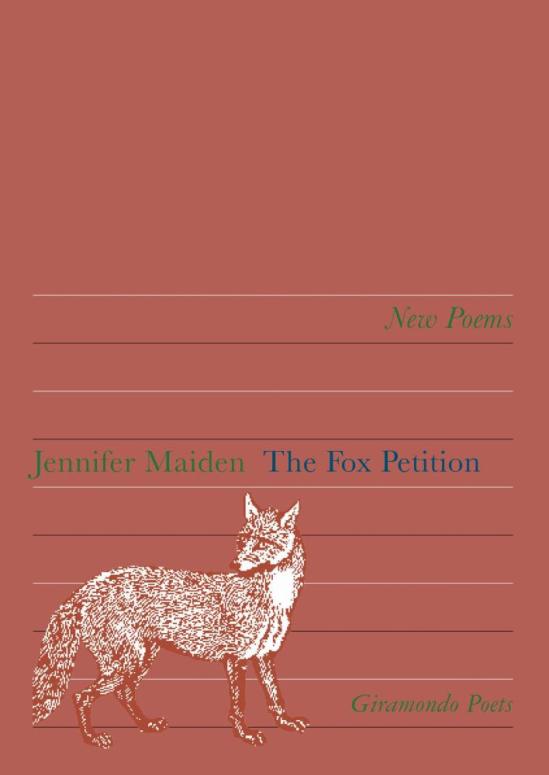
the-fox-petition

The Fox Petition
by Jennifer Maiden

Giramondo, 2015

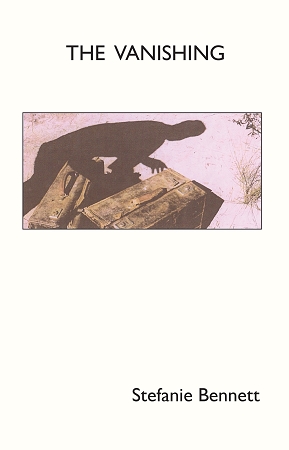
stefanie-bennett-cover-small

The Vanishing
by Stefanie Bennett

Walleah Press, 2015


We are already vanishing. Believe that!
Believe with the same candour
You show in believing me. (Bennett, ‘Believe That’, The Vanishing)

Stefanie Bennett woke up alongside Jennifer Maiden one morning, remarking, ‘An enemy is nothing to sneeze at: / Often his eau-de-Cologne’s / All embracing’ (‘Stratum’). This might be the too-cute, not-clever start to an amalgamating take on these two books from two poets with similar concerns and different styles. On the thirty-fourth page of the The Vanishing, Bennett quotes Maiden in square brackets: ‘But you might as well at this stage ask: / what Civil War is it we are enjoying.’ It is one of many mentions, quotes, and dedications to established poets in Bennett’s book, and it carries a similar sentiment to what I said she said in bed: we can be seduced by opposition. The consequences of this seduction are wide-ranging. Both books clearly stage oppositions and comparisons, not only to connect their poetries with the real world, but also to engage with the tensions of its adversarial discourse.

Maiden’s most delightful representation of this – the matchmaking of strange bedfellows – will be familiar to readers of her previous work. In The Fox Petition, ‘The Harvard Business School woke up next / to Julie Bishop,’ (‘Animism’) and, on a plane, ‘Kevin / Rudd and Dietrich Bonhoeffer, [are] still / trying to sort out Manus Island’ (‘Diary Poem: Uses of Xenophobia’). These couplings allow Maiden to unravel knots of hypocrisy without advocating for one side or another. As each pages-long poem continues, the multiplying ironies that result from these hypocrisies stew, becoming more discomfiting and delicious. In the second section of ‘Uses of Xenophobia’, which is framed as an autobiographical interlude, Maiden reflects on her ‘mad’ next-door neighbours, who have ‘pasted a picture of Rasputin / on their window,’ and ‘placed / a blue cube of rat poison over / [her] fence’: ‘to them / it is vital to be Australian, which / seems to mean rat poison and a flag’. This microcosmic, urban passive aggression brings into relief Rudd’s political – read, dehumanising – equivocations regarding the best ‘solution’ to the ‘asylum seeker problem’.

Maiden’s autobiographical voice is familiar, too. It transmits the kind of insight her poetry advocates, which is also, in musical terms, the tonic to dialogic friction. In the Diary Poem, ‘Uses of the Female Duet’, similar pairings, between Tanya Plibersek and Julie Bishop, opera singers Rosa Ponselle and Marion Telva, and Penny Wong and Gillian Triggs, give way to a resonant Melissa Parke, Federal Member for Fremantle (with Jenny Macklin in harmonic support), who, like Maiden in The Fox Petition, ‘does seem / devoted to the innocence in living’.

Both books bow deeply, if also ironically, to European influence. The title of Maiden’s book refers most directly to the petition circulated in New South Wales in 2015 calling for an official bounty system for foxes (imported from England in order for colonials to have something to hunt). The Shooters and Fishers party of NSW, unsurprisingly, were all over it. In Parliament in May 2014, ridiculing another petition seeking to allow foxes to be kept as pets, their member, Robert Borsak, lamented, ‘I dread the day I walk down George Street and pass a yuppy with a fox on a lead or indeed see a fox sticking its head out of a man bag.’ The title also alludes to the eighteenth-century Whig statesman and politician, Charles James Fox, who Maiden claims as her ‘favourite politician / of all time’ (‘Uses of the Female Duet’). Like Melissa Parke, Fox, known for his support of the French Revolution, abolitionism, and the deepening of juridical capability, might be described as ‘devoted to the innocence in living.’ And, significantly to The Fox Petition, he spent almost his entire career in political opposition.

Stefanie Bennett looks across the Channel to the little-translated, northern French and quotidian poetics of Guillevic. James Sallis’s piece on John Montague’s translation of Guillevic’s Carnap, for the Boston Review, suggests that ‘even in French, Guillevic can be an elusive read. Slight, elliptical, gnomic, the poems vanish when looked at straight on. ‘Les mots / C’est pour savoir,’ he says. Words are for knowing.’ Bennett attains many of these traits. In her Foreword, she invokes Guillevic as a model meditator on the complex relationship between ‘man’ and the natural world. His sparse lines suggest that while he may have considered a multitude of phenomena, in keeping with the tradition of the mystic, he delivers only a few symbolic points for us connect ourselves. Inviting us, too, into such thought, Bennett writes, ‘we had best gather together what’s left of all we’ve scattered, abused and refused to take notice of in memorandum.’ We – in all senses of the word: individual human subjects; the zeitgeist; collective culture; and the ecology we share and are destroying – are vanishing. We best believe it, because memento mori is the best we can do. Only our totems of this remembering, the menhirs, will continue to objectively exist.

In her Part II poem, ‘Memoir,’ for example, Bennett links the ancient Celtic religious practices of ‘the Menhir people,’ carried out on Guillevic’s home turf in Brittany, with the conditions for a ‘con- / Structed future.’ She describes the agent of this connection as ‘A kinetic Mammon / Wearing / Two hats,’ the one hat belonging to complex history, and the other to present action. The collection also wears two hats: one, the first part, posited as a present lyricism, with universalising titles such as ‘Stratum,’ ‘Arrival,’ and ‘Exit,’ and the second as a history, subtitled ‘Repel & Attract: An Orphic Conflict.’ There are certainly elements of religious Orphism present, of transmigration, the ascetic life, and having seen the underworld and returned. However, this is perhaps only inasmuch as the collection proceeds from Guillaume Apollinaire’s artistic Orphism, with its fauvism, colour theory, and pure lyric abstraction.

The next poem, ‘Variable Contrasts’, dedicated to Thomas Shapcott, stages a significant oscillation between unlikely opposites, suspension and coagulation, under this tarp of surrealism:

Now you’ve returned
From the Baltics
Hurling broken oars
At the strait’s
Dizzying
Shock-waves,
An irrepressible
Frontier
Beckons:
Klee’s
Aspic renaissance
And Eluard’s ‘the wind,
Undecided rolls
A cigarette of air …’

Within the Charnel-house
You’re knee-high deep again
– Hesitating.
It’s not Passé fanaticism
that coagulates,
But the knowledge
Of it.

The idea of an ‘Aspic’ renaissance suggests that the ‘pure psychic automatism’ of surrealism is aesthetically upheld as an aperitif of stasis. The gelatinous mould can change – it can be French surrealist Paul Éluard’s ‘wind, / Undecided,’ for example – but it remains some version of discrete and wobbly. The micro-variations in this state’s definition (‘Aspic,’ ‘Undecided,’ ‘Hesitating,’ and ‘coagulates’) each take a turn, none acceding to preeminence. As the final lines reveal, awareness of this free agitation of thought is different to being involved in it. Neither ‘Passé fanaticism,’ nor having ‘knowledge / Of it,’ sounds desirable, but they constitute Bennett’s two necessary poetic and, perhaps, human, processes. The aspic metaphor suggests that, for Bennett, the meat of life, its events and physical objects, are irrepressibly transformed into poetic symbols. And, then, if we frame her as a surrealist following poets like Éluard and Aragon, we are able to view these symbols as expressions of some notion of true life.

Treating Bennett as a visionary poet, we can discern an isotope of essentialism in The Vanishing. Her poems are titled for us to be led in this direction. ‘Kinship,’ for example, gives the reader access to the feeling of kinship, setting an archetypical scene of warmth and comfort at the hearth, or around the campfire, while reinforcing instincts for togetherness, sensuality, and our commingling with ‘the elements.’ Each poem is linked to its neighbour in a similar way. The poem following ‘Kinship’, called ‘Smoke’, can be read as a reconstitution of kinship’s overflow (the fire around which we develop kinship produces smoke). This poem produces an imperative that seems to resonate through the collection. It’s a Jacob’s Ladder to the Tower of Babel. Poets not feeling well, as one line suggests, is indicative of ecological sickness. Bennett’s answer is to remain receptive, ‘stay / Sober. Stay serene. / Play / Pat-a-cake / With the screech-owl / in God’s sweet acre’. This imploration to realise what we have and appreciate it occurs repeatedly under different guises. In ‘Rilke’s Desk: A Postscript’, it is ‘Don’t / Scramble / The cornucopia!’. The Vanishing is a humble because fatalistic call to appreciation a la Guillevic, before ‘All’s well!’ disappears.

I wanted to reflect at some point on the status of vermin in both of these books. What happens with the pestilential creatures that often so delightfully hive through subversive poetic works? But neither The Fox Petition nor The Vanishing entertains the idea. Instead, the creatures that would be called so are incorporated. Because both texts stage contests without actualising them, there are no victors; no one stranded on Manus Island, and only people left speaking who can imagine extraordinary compassion. For both, such compassion involves Bartleby-like refusal to play along. Maiden, especially, expresses the importance of maintaining the capacity to resist; to oppose; to imagine difference. She does so sympathetically, mindful that weakened and traumatised creatures can read a helping hand as another backhand whack. Under the spell of ‘eau-de-Cologne,’ regular people who should not be are kept in remote prisons, and foxes are obliged to be shot.

Now,
since new laws for Biosecurity,
if I spoke to the fox without
killing it, I would be charged, but
we once had much in common. A quality
spare and wild with desperation
in its streetlamp eyes, its old headlight
eyes could still suggest a city
in shifting shapes, its identity
aristocratic in lost deceptions.
On an empty
road by the Lakes, I once met a fox
whose eyes were ghosts with pity. (‘Once I Met a Fox’)

Empathy might not save the day, but we must muster it regardless.

*Simon Eales was born and lives in Melbourne. He recently completed a MA on Australian satirical poetics at the University of Melbourne.

**Taken from Cordire Poetry review at http://www.cordite.org.au

Nathanael Pree reviews Pam Brown’s Missing up

Brown_MissingUp_Cover_1024x1024

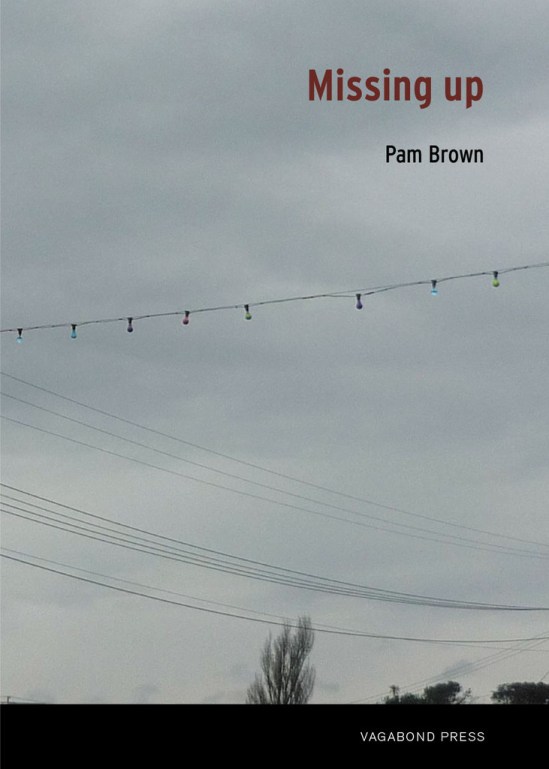
Missing up
by Pam Brown

Vagabond Press, 2015


From the cover, let alone the first lines, the title appears apt: a sense of levitation, humming along wires, strands of illumination flickering through a work of direct and intimate voices, understated in its deftness and density, with light touches that lift the lexis, and air pockets in its seams of meaning. Spread out across the pages are samples of complete, if not absolute contemporaneity interspersed with work that decries the shortcomings of an age in which culture is so often presented as a commodity. Pam Brown’s latest collection showcases self-objects and articulates responses to salient concerns, providing masterful representations of the everyday and outré that take their time to settle into the spaces and absences within which they are framed.

Missing up provides regular reminders of the offbeat and melancholy immanence of the eclectic self-objects and material that make up urban existence. A nod to William Carlos Williams observes: ‘no phenomenon but in things / like slim cyber tablets / scissor sharpeners vinyl bucket seats’. These are presences that convey a semi-contained kinetic energy. The palpable sense of atoms jostling for space as if in defiance of the sadness implicit in any effort towards their decoding – the gravity and lightness of a book, tea towel, blue and orange plastic crates, and colourless (or is it flat white?) noise. Solidity and elision co-exist through a tacit sense of animism, where verbs and nouns take on one another’s attributes, creating peopled things: the life that exists in the solid-seeming compounds that create city and suburbia.

Brown on language is notably to the point: ‘it has to lift off or else I’m not interested in it’. Her poems, she has said, ‘don’t ever leave the street I’m on … and it’s not always literally that street. And I use place and then extrapolate it, abstract out.’ Place is something hard to define, as are the psychic and textual grounds onto which appear isolated or occasionally constellated signals that indicate arrival or absence. Missing upappears apt for a collection of poems that lift off and plane out, taking traces of tar, flakes of bitumen from the street which the poems do not leave so much as interleave, adding another dimension to everyday perception. In this environment ‘colour strips’ contrast with ‘dun brick niches / stacked / with ash’ – as cityscape constituents, from cargo to post-industrial strata with their sediment visible in the cracks. From the wharves to the outer burbs, ‘& Surrounds’ shows ‘the streets here / regular stepped / a flat expanse / chrome-plated railings / separating a superior plane /from inferior’, and stepping in to match is Brown’s uncompromising typography, the planes and levels indicating straightened and discontinuous contours and segments of life-objects. Translated – or taken aside – as text these refuse to rest easily on the page, ‘as time extends / the moody morning / wanting to wander / these organised hills / managed paths / & surrounds.’ Typography as psychogeography: the uneasy self ‘born in parenthesis / raised in an interstice’ ends up, if not entirely missing, ‘sorting through / tattered monads / might as well be gone.’

Regarding her technique, Brown has pointed out that ‘it’s mixing not layering.’ This allows for gaps between not only the lines, but also jump cuts in chronological and geographical continuity: interpenetration and unpredictability where each shift and indent could signal disjunction or connection. These representations of unstable and shifting spaces splice urgency and familiarity according to a projective sense that creates an open force field from home, where a ‘fridge compressor / gurgles’, to the aftermath of Fukushima. Its findings and debris alike form a transnational and trans-temporal urban cento, where predecessors and contemporaries share a certain edginess: Baudelaire and Rimbaud recompose their grimaces together with Schuyler and Cage at the sere and greying edges of striated suburban skies. As the patchwork tapestry lifts off, she asks: ‘& what do you reckon, / my wintry shadow, / my fraudulent duplicate, / somebody up there?’ Mon frère? If, as she avers, ‘the human mind is / empty’, it’s not just a matter of rhetoric.

Brown has referred to a term used by Gilles Deleuze, ‘aux aguets’, meaning to be on the lookout or in ‘a state of cultural awareness’, and this mode of attention is evident here in a collection which refers to and writes in mentors and friends as an ongoing ‘call for community.’ Conversely, as the ‘aesthetics of the surface’ in the poems ‘Required Reading’ and ‘Fricassee’ acerbically indicate, this inclusiveness is balanced by a certain skepticism, as evidenced by an archetypal ‘dolt in residence’ operating ‘all over the very same map’ but in another dimension altogether. Academics writing poetry on the side would be advised to read elsewhere. Yet, however sharp her observations bite, Brown concludes on a conciliatory note for society in general: ‘I would like / a speculative set / of laws / that are friendly to life’, especially in an age where ‘every bridge / shelters someone /homeless’. Maybe sometimes we all need to find ourselves ‘anywhere out of the world’, and at others may not have the luxury of choice, as she reminds us, via Baudelaire. The outcome, if never ideal, could be one where diverse voices, amicable and empathetic (and those of antipathy or estrangement) find their respective points of co-existence, if not convergence.

A conclusion to this review would seem incomplete, or at least tentative, given the urge to keep returning to these concise and finely crafted – however deceptively – lines. A glance at the string of light bulbs drawn over the sparse and darkening street scene on the cover goes well with ‘Hit single xmas’ – considering it now as dark clouds bank over the Manly peninsula where I write this. Elsewhere, ‘skyrupt / big thunderstorm / plotting squall line / swerves / beyond Wattamolla’, appears to presage tornadoes in Sydney, and sheeted rooftops lifting (missing?) up over all this tensile and confounding space.

*Nathanael Pree is of Australian and German background, brought up and educated in the United Kingdom. He did undergraduate studies at University College London, before working in education in Russia, Vietnam, Cambodia and Australia, with additional work experience in India. His postgraduate studies were at The University of Sydney, specialising in the works of W.G Sebald (Masters’ Dissertation) and Charles Olson (PhD, ongoing).

**Taken from Cordite Poetry Review at http://www.cordite.org.au

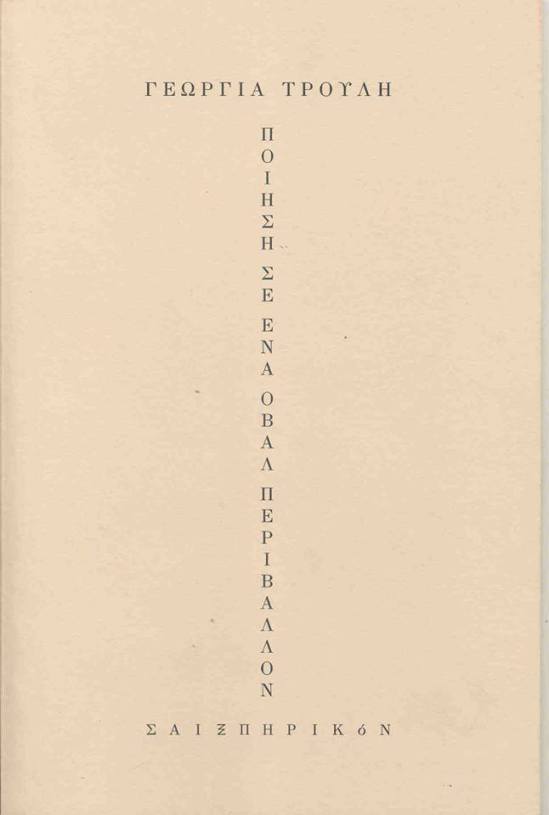
Γεωργία Τρούλη / ΠΟΙΗΣΗ ΣΕ ΕΝΑ ΟΒΑΛ ΠΕΡΙΒΑΛΛΟΝ

12507313_1091380764225965_8643651430561935931_n

Μόλις Κυκλοφόρησε από τις εκδόσεις Σαιξπηρικόν

Το πέμπτο βιβλίο της ποιήτριας – εικαστικού Γεωργίας Τρούλη.
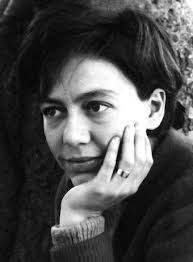
Γεννήθηκε τον Νοέμβριο του 1979. Κατάγεται από την Κρήτη και ζει στην Θεσσαλονίκη.Σπούδασε Νοσηλευτική στην Σχολή Επαγγελμάτων Υγείας και Πρόνοιας στο Α.Τ.Ε.Ι. Θεσσαλονίκης και έπειτα σπούδασε Ψυχολογία στην Φιλοσοφική Σχολή του Α.Π.Θ. Μετά από μεταπτυχιακές σπουδές στην Ψυχολογία, εισήχθη στο Τμήμα Εικαστικών και Εφαρμοσμένων Τεχνών της Ανώτατης Σχολής Καλών Τεχνών του Α.Π.Θ όπου και αποφοίτησε το 2015. Πραγματοποιεί ατομικές εκθέσεις, λαμβάνει μέρος σε ομαδικές καθώς και σε φεστιβάλ καλλιτεχνών. Έργα της επίσης έχουν κατά καιρούς φιλοτεχνήσει λογοτεχνικά περιοδικά (Εντευκτήριο, Ένεκεν, Θ.Ε.Α.)και βιβλία των εκδόσεων «Σαιξπηρικόν»(εξώφυλλα, βινιέτες κ.α). Από το 2008 δημοσιεύει ποιήματά της σε διάφορα έντυπα λογοτεχνικά περιοδικά καθώς και σε ηλεκτρονικά λογοτεχνικά περιοδικά και σε ιστοτόπους.Έχει εκδώσει πέντε ποιητικές ενότητες, τελευταία «Ποίηση σε ένα οβάλ περιβάλλον». Στο τριακοστό τρίτο συμπόσιο ποίησης Πάτρας παρουσιάστηκε το έργο της από τον ποιητή Αλέξανδρο Αραμπατζή.Είναι μέλος του συλλόγου Ελλήνων Ψυχολόγων, της της Εταιρίας Λογοτεχνών Θεσσαλονίκης και του Κύκλου Ποιητών.

____

(ΚΟΥΑΡΚ ΚΟΥΑΡΚ)

Η κάθε ματαιοδοξία μέσα στην τραγικότητά της
Είναι πολύ αισιόδοξη
Και νιώθεις πως το μόνο
Που έχει συνέχεια
Είναι η ϕράουλα από το κοντόλαιμο κοτσάνι
Η σαύρα από την ουρά της
Ο κομήτης από το δευτερόλεπτο
Η εικόνα από τον τοίχο
Το βαμβάκι από τα σύννεϕα
Η κατσαρίδα από την μεταμόρϕωση
Η ϕυγή από την πραγματικότητα
Η μαϊμού από το έλλογο
Το άλογο από το χαλινάρι
Η κενότητα από το ϕως
Η πατούσα από το Βάρος
Το χαρτί από το Δέντρο
Το μελάνι από την Μοναξιά
Το πιρούνι από την Δημιουργία
Η χαρά από το Τραγικό
Μόνο
Και Αδιάσειστο
Είμαστε όλοι ένα Ον/είδος Μούχλας
Και
Ούτω καθεξής
Η ϕυγή
Επαναλαμβάνεται
Κουάρκ Κουάρκ
Φωνάζουν οι βάτραχοι
Στην Άκρη του
Πάντοτε

***

Η ΑΙΣΘΗΣΗ ΤΟΥ ΠΗΧΤΟΥ

Είμαι λεκτικός θρόμβος
Μοιάζω να έχω ραϕτεί στα αγγεία
Κάθε λέξη αϕήνει στα αυτιά μου την αίσθηση του πηχτού
Αποσυντονίζομαι εύκολα
Συμπυκνώνομαι με ταχύτητα
Γίνομαι πίδακας ανενδοίαστα
Προκαλώ εμβολή στους αγαπημένους μου πνεύμονες
Ενίοτε δεν αναπνέω κανονικά αλλά ούτε με θόρυβο
Ψάχνω τότε μια σειρά από σημύδες
Τραχεία – Μεμβράνη και Τένοντα
Δένομαι εύκολα – Λύνομαι δύσκολα
Δεν προκαλώ πήξη του αίματος
Ούτε αϕηγούμαι ροή χωρίς τίμημα
Προκαλώ κορεσμό σε οξυγόνο
Και στον ύπνο παράλυση
Δεν εντοπίζομαι – γίνομαι ο ελάχιστος
Αλλάζω μορϕή σαν βουτηγμένη στο νερό πλαστελίνη
Δεν γίνομαι έμμηνος ρήση αλλά
Θαυμάζω όσους προσϕέρονται
Μία άχαρη νύξη προσπαθεί σε όλο το σώμα
Να με εντοπίσει
Διασπώμαι τότε σε μικρά σϕαιρίδια σημασίας
Οβάλ – ολοστρόγγυλη – ευθεία
Αναδιπλώνομαι σε στοιβάδες ενός γεωλογικού χρόνου
Που δεν έχω την γνώση
Όταν νιώσω την τριχοειδή υποψία
Για δέρμα σύνορο, όριο, εξαγωγή
Γίνομαι λεία στρώση νυχιού
Αποδημία πηχτού
Και
Αγαπώ
Τις νεροτσουλήθρες

***

_ΕΓΚΑΙΝΙΑΖΟΝΤΑΙ ΜΕΣΑ ΣΤΗΝ ΔΥΝΑΤΟΤΗΤΑ

Στην λιακάδα ξεκουράζονται
Τα χθεσινά βροχερά απομεινάρια
Μιας σκέψης
Σαν μακέτα ενός αρχιτέκτονα
Που
Μόλις
Κατάπιε
Μια
Αλυκή Αλίκη
Σε κολλώδη ήβη
Χαϊδεύει
Την
Κοιλιά
Του
Σε
Ένα
Μοντάζ
Αποτυχίας
Που
Διήρκησε
Μήνες
Οχτώ
Και
Συναπτές
Λέξεις

____saixpirikon.com

Emily Stewart
 reviews Rachael Munro’s Indigo Morning

IMsp

Indigo Morning
by Rachael Munro

Grand Parade Poets, 2014


Rachael Munro is a keen observer who writes in a language of nettles and nets, establishing a daily mood via the accumulation of certain details. This is a book of apricot tissue petals and fences-turned-crystal lattices; of the world in its weather and a poet caught in the tangle.

Many of the poems reflect early years in the poet’s life growing up in the Snowys (mountains of NSW), and her acute impressions, ‘air tasting sharp as splintered ice in the brittle sun’, will ring true for anyone familiar with the Monaro region, even though, as the speaker in ‘Exile from Paradise’ remarks in the poem’s opening lines:

As long as I have lived near the mountains, they were never home —
eight years there but still passing through.

Across five numbered sections, the reader of this slim volume herself passes through; visiting upon snapshots of the poet’s family growing up, meditations on nature and animals – horses and cats especially abound – and suburban life. Occasionally a poem disrupts the book’s overall tone, such as the diaristic prose poem ‘Profiteroles’, which undoes the work of the poet’s otherwise restrained and elegiac compositions.

Poems such as ‘Lipstick’, where the speaker looks in the mirror and sees her mother’s dying face, are moving. ‘Rasberry glacé, Mum’ she says. Indeed, strongest are the moments where the poet bares her teeth. In ‘Sunday Morning in Sydney’, the speaker watches a couple flirting in a Kings Cross café. ‘Yet I am the shark, I want to feed on them both,’ she says, in a surprising turn. The ‘voyeur-spiced dream’ revealed.

Equally surprising is the recurring red mare who dapples poems such as ‘Sun-fish’, ‘Red’, and ‘What I Have’, equal parts beast and motif. In ‘Red’, the mare reminds the speaker of

a woman I once knew and
had wondered why
it hurt to be with her

and in ‘What I Have’, a sense of loss is further punctuated:

I never saw, or held
the foal of that red mare

There is a current of desire running through this collection and it sparks at unexpected moments and with force. Peppered throughout are references to the poet’s struggle with addiction: one of the first poems, the unhappy ‘My Father’ concludes with the speaker

trading in today / for a lukewarm Riesling

while the poem ‘Christmas Tree’, in the book’s concluding pages, describes the speaker pouring vodka into the bucket at the base of the tree, ending on a weak gag

I always knew it had the powers of preservation / see my skin

that nonetheless provides a welcome insight into the person of Rachael Munro, enriching readings of otherwise straightforward descriptive verses such as ‘Snake’ and ‘The Cigarette Lighter and Chaos Theory’, both of which hinge on notions of control and balance.
From ‘The Cigarette Lighter and Chaos Theory’:

Above, a twist of jasmine
If the heaviness of its fragrance
could be measured,
it would topple
that tube of plastic and volatility
onto the tail of a sleeping cat

A minor complaint is that the poet sometimes lingers too long. Poems like ‘Exile from Paradise’ and ‘A Butcher Shop’ land with greater impact without their final summations. There are also occasions of vague syntax which serve to confuse in moments that are better clarified. In the final paragraph of ‘Night Creature’, where the ‘it’ is a moth straining towards lamplight:

So much energy
for something trivial
will kill it early.
A night creature,
why does it destroy itself
for a small sun,
yet vanish with the day?

The poems in Indigo Morning revel in a sensual architecture and underscore how memories amplify the colour, texture and shape of our experiences. This selected poems, an all-too-modest snapshot, I suspect, of a well-lived life, settle upon the reader with a sense of humbling finitude: above the trees / but still below the sky.
This entry was posted in BOOK REVIEWS and tagged Emily Stewart. Bookmark the permalink.

*Emily Stewart is a poet and book editor based in Sydney. Her chapbookLike was published by Bulky News Press in early 2015.

***Taken from Cordite Poetry Review at http://www.cordite.org.au

Anna Kerdijk Nicholson, Everyday Epic

2f5d65da-4543-4782-888b-84071058ca39

By Alyson Miller
*

Everyday Epic
by Anna Kerdijk Nicholson

Puncher & Wattmann, 2015


In the untitled preface to Everyday Epic, Kerdijk Nicholson describes how ‘the poet grinds down / a sum of parts / to atoms’. The result is a world in which the most quotidian of instances and images are made ‘alchemically new’, an echo of Ezra Pound’s credo to repeat, but with difference. These lines also suggest that the process of grinding down is at once violent and erotic, displacing and magical, disturbing and strangely familiar. Everyday Epic is a collection that often appears contrary in its aims: it is as political and nostalgic, for example, as it is playful and serious. Yet in its collision of forms and content, there is an abiding sense of cohesion, a quality that reminds readers of the shocking qualities of the ordinary, and the ordinariness of the shocking. This is most often explored in relation to tragedy, and the histories that shape discourses around the politics of national identity.

As the title of the collection makes clear, it is in its attention to details that are diurnal or circadian that marks the uncanny nature of these poems, at once both intimate and distant. In ‘Griefs’, ‘just the kettle on the boil / is a completeness / the perfect one hundred degrees’, a ritual dedicated to the ‘small civilities’ that eases the pain of mourning. In ‘How and Why’, ‘a shock of ginger broken cat’ breaks the smooth road of a freeway, while an ‘old handbag of an electrocuted bat’ hangs alongside ‘late afternoon lorikeets’ in a eulogy to the quiet lives and deaths of an animal-littered suburbia. As Kerdijk Nicholson notes, the poems are something of a ‘catalogue’ that ‘places time and again’ collect the minutiae that comprise the cycles of experience and being:

Catalytic nows, colour, eye-harvest
bring more, and more intense, to

that old crucible, bring near the new—
taking within, paying of respect

This homage to the commonplace is often figured in images of unexpected and curious violence. In ‘Allotment’, for instance, digging in the earth is likened to Seppuku, evoking a gut-response to what is, essentially, gardening – a juxtaposition that is as alarming as it is amusing: ‘I stood my weight on the fork / rasped into the mud’s belly / and encountered worms’. Not unconnected are the images of erotic consumption, such as ‘The First Mango of Summer’: ‘Your juices / run down my wrists / I’m waiting to mouth you’. Similarly, in a poem about sending pears to a lover, Kerdijk Nicholson writes how ‘the juice will pool on the plate. / I will suck my fingers’, while ‘I Have Left You—’ links love, bodies and desire in a sequence of punning food images about consumption and emptiness: ‘this salad of winter leaves / made from small bitter / hearts, tight against the cold’. The playful, associative language of these poems is both luscious and cruel, with their suggestions of sex and passion, but also, fittingly and – perhaps, naturally – of death and depletion.

This attention to the intricate, however, is not without a greater historical and political context; indeed, the eponymously ‘epic’ quality of Everyday Epic is in the counterbalancing weight given to images of migration, refugees, and post-colonialism. A scattered sequence of ekphrastic poems, for example, imagines the plight of Sri Lankans and Aboriginal Australians, as well as refugees in Villawood, Christmas Island and remote detention centres. As these poems are drawn from paintings, photographs, and accounts of suffering, there is not only a sense of echoing or mimicry through which an original attains a kind of double-life, but also a questioning of perception, and of power; specifically in relation to perspectives of seeing and hearing. In ‘The Subject – Lallah Rookh 1866’, based upon a photograph by C A Wolley, the second-person voice borders on didacticism – ‘You are the neat grey curls / that fine supple skin’ – which is complicated by suggesting an ambiguous relationship of exchange: ‘we are watcher and watched’.

There is a persistent sense of intimacy in the narration of the body being recounted, however the power of the gaze is not necessarily that of the reader/viewer but shared by the female subject, whose camera-stare resists commodification both in the original photograph, and in the poem that it produces: ‘No doubt who looks at whom.’ The question of domination here challenges traditional self/other binaries, and thus it seems apt that the collection finishes with a mock-epic of Burke and Wills’ outback expedition, contesting an official narrative history that is often, as Burke muses, ‘empty empty words; / bullshit to the last’. Indeed, in line with issues of gaze, the poems dealing with the complex identity politics of nationhood and belonging are tied to vivid and haunting representations of landscape, either explicitly, such as in ‘Desert—’, in which the ‘no man’s land’ of the outback ‘accepts troop-carriers, / razorwire’, or more tacitly, in which foreign bodies are othered and transformed as panoramas: ‘This watercolour gives no safe ground… / A line binds tight above your breasts / cuts your chest: pectoral mass above, / below watercolour’s deep, deep brown, / bosom-defined’.

Most importantly, however, is the repeated focus on the telling of stories, the need to ‘language our withouts’. While this is a theme present throughout most of the collection, it is most vividly realised in relation to those poems concerned with anxieties about home and trauma, especially in terms of the refugee experience, and the fear of a loss of self. In ‘Villawood’, quoted as though voiced by an unseen narrator, men are described as ‘burnt-out shells’ who ‘can barely speak their names’. Trapped in a world that is not their own, ‘If they could talk, they would / tell stories like myth’ which ‘their tongues would struggle to describe’ as they ‘are defeated by new words’. There is an impetus both to tell and to be heard, but also the inability to do so – a reminder of the redemptive powers of language, but also of its destructive potential. In ‘The Poems of His Country’, for example, a young poet who wants to ‘write out our culture’s / great poems’, is brutally stoned to death, after which ‘the poems faded / word by word, page by page’.

Poetry and storytelling thus become a series of impossibilities, a situation of right and wrong languages, of compulsions and prohibitions, and of public and private acts that are as essential as they are taboo. In its balancing of contradictions, in its doublings, detail, playfulness, and violence, Everyday Epic is as enormous as a crisis, and as familiar as ‘that which can be found in the sun’.

*Alyson Miller teaches literary studies at Deakin University, Geelong. Her short stories and prose poetry have been published in both national and international publications, alongside a book of literary criticism,Haunted by Words. Her collection of prose poems, Dream Animals, is forthcoming.

***Taken from Cordite Poetry Review http://www.cordite.org.au

Κυριάκος  Συφιλτζόγλου, Στο σπίτι του κρεμασμένου, εκδόσεις “Θράκα”, 2015

Kiriakos_cover (515x800)

*Στη σειρά “ΤΟ ΒΙΒΛΙΟ ΤΗΣ ΕΒΔΟΜΑΔΑΣ” #29, Γράφει και παρουσιάζει ο Αντώνης Ψάλτης.

Η βιογραφία των “επώνυμων”  και διάσημων ανθρώπων πάντα απασχολούσε τους υπόλοιπους. Είτε με μια αδιάκριτη περιέργεια, είτε με την αίσθηση ότι η γνώση λεπτομερειών του βίου θα συμπλήρωνε το παζλ της εικόνας, πιστεύοντας ότι έτσι θα εισχωρήσουμε στα άδυτα της ψυχής τους, και ότι πιο βαθιά και ουσιαστικά θα κατανοήσουμε το έργο τους. Πιθανώς να συμβαίνει, αλλά δεν γίνεται να βασιστούμε απόλυτα σε τέτοιες πληροφορίες που ενίοτε ακυρώνουν ολοκληρωτικά και άδικα το δημιούργημα.

Κάπως έτσι έχουμε να συνοδεύουν τα τυπωμένα έργα (λογοτεχνία, φιλοσοφία, πίνακες ζωγραφικής, φωτογραφίες) και τα λοιπά δημιουργήματα των ανθρώπων της τέχνης και της (ας το πώ έτσι συμβατικά) φιλοσοφίας, οι επιστολογραφία τους, τα ημερολόγιά τους (συνήθως σε μετα θάνατον έκδοση), αλλά και ασήμαντες, ουσιώδεις ή όχι λεπτομέρειες από τον προσωπικό τους βίο. Γιατί, για παράδειγμα, να ασχολούμεθα και με τον έρωτα του Νίτσε που ήτο και έρωτας του Βάγκνερ, και να υποστηρίζουμε (ίσως και αναληθώς) ότι αυτή η ερωτική διαφορά και ρήξη της φιλίας να συντέλεσε (εκτός των άλλων) στο να γαρφεί το “Νίτσε εναντίον Βάγκνερ”.

Τα παραδείγματα είναι άπειρα. Όπως συχνά συμβαίνει το να γνωρίζουμε δια ζώσης έναν άνθρωπο, το έργο του οποίου εκτιμάμε, αλλά ο ίδιος ως καθημερινή φιγούρα να μας απογοητεύει.
Το 2004 ο ποιητής Χάρης Βλαβιανός θα μας δώσει μια εκτενή συλλογή εξακοσίων εξήντα έξι (διαολεμένο black humor του ιδίου του Βλαβιανού) πικάντικων πραγματικών περιστατικών υπό τον τίτλο “britannica” (που ειπώθηκαν ή συνέβησαν) και αφορούσαν λογοτέχνες (κυρίως, αλλά όχι μόνο) όλης της υφηλίου και ανεξαρτήτου χρονολογίας. Έτσι θα πληροφορηθούμε και θα γελάσουμε με μια πλευρά των ανθρώπων έργα των οποίων θαυμάζουμε, κατανοώντας ότι ή επίπεδη σοβαροφάνεια και η αστική ευγένεια δεν είναι αναγκαστικο (ως διαβατήριο) ίδιον των ανθρώπων της τέχνης. [Ένα από τα πολλά και απολαυστικά επεισόδια που καταγράφονται στην “britannica” είναι η ειρωνική απάντηση του Σολωμού ότι δεν γνωρίζει κανέναν ποιητή Σούτσο, όταν ο δεύτερος με την ποιητική του ιδιότητα αιτούνταν να γνωρίσει τον πρώτο.]

Αντίθετα καλλιτεχνικές και προσωπικές εμμονές, μανίες, κακεντρέχιες, συμπλεγματικές συμπεριφορές και ιοβόλες απόψεις περικυκλώνουν και συμπληρώνουν την αλλοπρόσαλη εικόνα τους. Αυτά κι άλλα πολλά από τον απέρνατο θόλο της πραγματικότητας. Ο Κυριάκος Συφιλτζόγλου στο βιβλίο του “Στο σπίτι του κρεμασμένου” θα επιχειρήσει ένα αντίστροφο βήμα. Θα συνθέσει, δηλαδή, φανταστικά μικροεπεισόδεια, θα εμπλέξει ανθρώπους που χρονικά και τοπογραφικά δεν θα γινόταν να βρεθούν ποτέ μαζι, θα στείλει αποκόμματα επιστολών ο ίδιος σε άλλους, με άλλα λόγια θα συνθέσει μια φανταστική “μεταμυθολογία” (συγχωρήστε μου την φτιαχτή αυτή λέξη) των ανθρώπων – δημιουργών που (προφανώς) από λίγο ως πολύ τον απασχόλησαν.

Αντί λοιπόν να αποκαλύπτονται οι δημιουργοί μέσω πραγματικών περιστατικών, καλούνται να ανταποκριθούν σαν μαριονέτες στη μελάνι του συγγραφέα (αυτά τα πραγματικά ονόματα! Χάϊντεγκερ, Μπένζαμιν π.χ.) ως ήρωες εγκλωβισμένοι σε μυθοπλαστικά περιστατικά. Δεν προτίθεται ο Συφιλτζόγλου να εισχωρήσει με αυτό το λογοτεχνικό κόλπο στο ενδότερον του χαρακτήρα τους, λες και είναι ένας ψυχαναλυτής. Τα κείμενα του Συφιλτζόγλου στο “σπίτι του κρεμασμένου” δεν λειτουργούν ως “ντιβάνι”. Τα μικροπεριστατιά του βιβλίου σκηνοθετούν ένα πεδίο “λογοτεχνικής” βολής. Εκεί ο Συφιλτζόγλου θα περιγελάσει τους ήρωές του, θα τους χλευάσει, θα τους απευθυνθεί με αγάπη, με στοργή, θα τους προστατέψει από τις φτηνές “λογοτεχνικές φήμες” που εν είδει θαυμασμού τους περιβάλλουν και πολλά άλλα που θα τα διαπιστώσετε εντός του κειμένου Εν τέλει και ως εκ τούτου του σκηνοθετημέτου πυροβολισμού ο συγγραφέας αντί να αναρρωτηθεί [προς πιθανό παραδειγματισμό] για το τι έπραξαν οι εκάστοτε ήρωές του στην αληθνινή ζωή τους, θα αναρρωτηθεί για τον νόημα και την ουσία της ίδιας της δημιουργίας αλλά και για την καθημερινή υπαρξιακή και πρακτική συνέπεια (μέσα στο πολύπλοκο) του καθενός εξ’ ημών που επιθυμούμε να εγγραφούμε ως πολίχνεις του παγκόσμιου χάρτη της τέχνης.

Δεν είναι αναγκαίο αυτό το παιχνιδιάρικο πείραμα του Συφιλτζόγλου να οδηγεί στα δικά μου συμπεράσματα. Μπορεί ο συγγραφέας να μην είχε κάτι (οτιδήποτε) κατά νου, μπορεί απλώς να ήθελε, όπως το πρώτο “σπάσιμο” στις μπάλες στο μπιλιάρδο να ανακατέψει τυχαία μια τράπουλα προσώπων και συμβάντων και να αφήσει τον κάθε αναγνώστη να βγάλει τα δικά του συμπεράσματα, να χτίσει τις δικές του σκέψεις. Μια εξ’ αυτών είναι και το κείμενο που διαβάζετε τώρα.

Η γραφή του Συφιλτζόγλου, όπως πάντα, υπαινικτική, ονειρική, σαρκαστική, μα πάντα με συνέπεια ρυθμού και εκπάγλου γλωσσικής λάξευσης, απλώνει το σεντόνι των “μικρού μήκους” αφηγήσεών του στο χαρτί έτσι ώστε γρατζουνιά καμία να μην πονέσει τα μάτια του αναγνώστη, αλλά να εισβάλλει στη σκέψη του καθενός ως σκλήθρα (ανα)στοχαστικού φωτός. 

Στάθης Ιντζές, Οι αφιερώσεις και οι επιγραφές στην ποίηση της Αλεχάνδρα Πισαρνίκ

images

1.    ΠΡΟΛΟΓΟΣ

1.1.    Η ΣΧΕΣΗ ΤΗΣ ΑΛΕΧΑΝΤΡΑ ΠΙΣΑΡΝΙΚ ΜΕ ΤΗ ΓΑΛΛΙΑ ΚΑΙ ΤΟ ΚΙΝΗΜΑ ΤΟΥ ΥΠΕΡΡΕΑΛΙΣΜΟΥ

Για να προσεγγίσουμε τις αφιερώσεις και τις επιγραφές τής Αλεχάντρα Πισαρνίκ στην ποίησή της, χρειάζεται να κατανοήσουμε τη σχέση της με το κίνημα του Υπερρεαλισμού, που γεννήθηκε στο Παρίσι, αλλά και τη σχέση τής ίδιας με τη Γαλλία. Τα γράμματα τής Πισαρνίκ μαρτυρούν ότι κατά το διάστημα που έζησε στο Παρίσι, έμαθε τα απαιτούμενα γαλλικά ώστε να συμμετέχει στη λογοτεχνική ζωή της πόλης. Είχε ήδη συνείδηση της ελευθερίας του πνεύματός της, «του αμαρτήματος να είσαι ποιήτρια, να έχεις αφήσει μόνη τη μητέρα σου»1. Από τα 18 της, ονειρευόταν να ταξιδέψει στο εξωτερικό και να ζήσει το όνειρό της ως ποιήτρια «Ω! πόσο θέλω να ζω αποκλειστικά για να γράφω!»2. Κάπου αλλού αναφέρει για το Παρίσι: «Είμαι ερωτευμένη με αυτήν την πόλη»3. Έγραψε, αργότερα, για τα χρόνια που έζησε στο Παρίσι: «η μοναδική περίοδος της ζωής μου που γνώρισα την ευτυχία και την ακμή ήταν εκείνα τα τέσσερα χρόνια στο Παρίσι»4. Μέρος εκείνης της ευτυχίας συνίστατο στο ότι μπόρεσε να διαβάσει υπερρεαλιστικά βιβλία στον τόπο όπου το ρεύμα αυτό διείπε τη λογοτεχνική έκφραση και την παραγωγή  λογοτεχνικού έργου και όχι από τα ένα-δύο βιβλιοπωλεία τού Μπουένος Άιρες, όπως το Galatea, που ήταν το πιο ενημερωμένο αναφορικά με τα γαλλικά κείμενα. Τα αναγνώσματά της έγιναν ο τόπος στον οποίο ήθελε να ζει. «Τα αγαπημένα ποιήματα είναι σαν μια πατρίδα»5.
Το Παρίσι δημιουργήθηκε από τους συγγραφείς και τους στοχαστές του. Ο τρόπος ζωής και οι ελευθερίες που προσέφερε σε έναν ποιητή αυτή η πόλη ήταν για την Αλεχάντρα το «υπερρεαλιστικό όνειρο» που ήθελε πάντα να ζήσει. Έζησε στο Παρίσι από το 1960 ως το 1964, όπου εργάστηκε για το περιοδικό Cuadernos και μερικούς γαλλικούς εκδοτικούς οίκους. Δημοσίευσε ποιήματα, κριτικές και μετέφρασε Αρτώ, Μισώ, Σεζάρ και Μπονφουά.
   

1.2.    ΣΧΕΤΙΚΕΣ ΚΑΤΑΧΩΡΗΣΕΙΣ ΑΠΟ ΤΟ ΗΜΕΡΟΛΟΓΙΟ ΤΗΣ

–    8 Ιανουαρίου, Παρίσι, 1961

«Στον δρόμο Gay-Lussac ένα παλιό αυτοκίνητο γεμάτο από χαρτόκουτες. Καθισμένος ανάμεσά της, ένας ηλικιωμένος λευκής επιδερμίδας, μαύρο πανωφόρι και μαύρο καπέλο, πρόσωπο όμορφο και λυπημένο. Συλλογίστηκα ότι κανείς, πέραν εμού, δεν γνωρίζει ότι είναι λυπημένος μέσα σε ένα πολύ παλιό αυτοκίνητο σε έναν έρημο δρόμο. Αλλά ξαφνικά είπα στον εαυτό μου: ‘’Κι αν αυτός ο άνδρας δεν υπάρχει, αν δεν υπήρξε;’’ Πλησίασα και πράγματι, δεν υπήρχε κανείς».

–    15 Οκτωβρίου, Μπουένος Άιρες, 1964

«Η μοναξιά τού καθενός. Να μην είσαι αντικείμενο των βλεμμάτων. Να κοιτάς και μερικες φορές να σε κοιτούν. Να χρησιμοποιείς τα μάτια. Όρια. Να μην γράφεις, να μην σε απασχολεί να γράφεις. Να μην παριστάνεις τον Φλωμπέρ. Σε καταλαβαίνει. Αυτή που δεν καταλαβαίνει είμαι εγώ».

1.3.    Η ΣΧΕΣΗ ΤΗΣ ΜΕ ΤΟΥΣ ΑΛΛΟΥΣ ΛΟΓΟΤΕΧΝΕΣ ΤΟΥ ΠΑΡΙΣΙΟΥ

–    ΤΟ «ΧΡΕΟΣ» ΤΗΣ ΑΠΕΝΑΝΤΙ ΣΤΟΝ ΑΝΤΡΕ ΜΠΡΕΤΟΝ

Η απόσταση που κράτησε από τον κλασσικό υπερρεαλισμό εξηγείται από το γεγονός ότι ο υπερρεαλιστικός κύκλος του Παρισίου τη δέχτηκε μόλις στις αρχές του 1960, όπου και πήρε την απόφαση να ζήσει εκεί. Η Πισαρνίκ όχι μόνο διάβαζε κλασικά υπερρεαλιστικά κείμενα, όπως το αυτοβιογραφικό μυθιστόρημα του Μπρετόν Nadja (1928), αλλά και απορρόφησε την ακμάζουσα κριτική διαπλάθοντάς τη σε κριτικό τού υπερρεαλισμού. Επιτέθηκε στον Μπρετόν για το «απελευθερωμένο ασυνείδητο» που διακύρησε. Η Πισαρνίκ δεν μπόρεσε να απελευθερώσει το ασυνείδητό της καθώς χαρακτήριζε τον εσωτερικό της κόσμο σκοτεινό, απειλητικό και μη προσβάσιμο. «Όχι, οι λέξεις δεν συνθέτουν τον έρωτα συνθέτουν την απουσία»6. Έτσι, τον πιο κρίσιμο ρόλο στο έργο της θα τον έπαιζε το αποκρυφιστικό στοιχείο στον χαρακτήρα του Μπρετόν. Η Πισαρνίκ απορρόφησε τα στοιχεία που συνέθεταν τον υπερρεαλισμό την εποχή που εκείνη βρισκόταν στο Παρίσι, δηλαδή τη δεκαετία που οδήγησε στον θάνατο του Μπρετόν το 1966.
Η Πισαρνίκ, ως αναγνώστρια, ταυτίζεται τόσο έντονα με αυτό που διαβάζει κατά τρόπο τέτοιο ώστε να μεταμορφώνεται σε αυτό και υποφέρει από τις συνέπειες. Στο ημερολόγιό της σημειώνει για το «χρέος» της απέναντι στον Μπρετόν « Ίσως είναι εκείνο που ποτέ δεν μου έμαθε και παρόλο αυτά είναι εκείνο που είχε τη μεγαλύτερη επίδραση πάνω μου»7.

–    ΑΝΡΙ ΜΙΣΩ Ή «Η ΚΑΛΥΤΕΡΗ ΠΟΙΗΣΗ ΤΟΥ ΑΙΩΝΑ ΜΑΣ»

Η Αλεχάντρα Πισαρνίκ, επηρεασμένη από το κίνημα του Υπερρεαλισμού, με τις αφιερώσεις και τις επιγραφές στο έργο της, θέλει να δείξει στον αναγνώστη ότι και η ίδια διάβαζε. Και διάβαζε κυρίως υπερρεαλιστές συγγραφείς. Μέσω τού Οκτάβιο Πας, γνώρισε και μελέτησε τον Ανρί Μισώ, ο οποίος ήταν γνωστός ως ο πιο αυθεντικός υπερρεαλιστης, γιατί αρνήθηκε να εισχωρήσει στο κίνημα του Μπρετόν το 1920. Η Πισαρνίκ έγραψε ένα δοκίμιο για τον Ανρί Μισώ ως παρουσίαση για τον βιβλίο του Passages, 1963. Βλέπει τον Μισώ ως «μεγάλο θεραπευτή» και τη γραφή του ως γιατρειά για τη ψυχική διαταραχή. «Η καλύτερη ποίηση του αιώνα μας» έγραψε για τον Μισώ τοποθετώντας τον στο ίδιο ύψος με τον Ρεμπώ και τον Λουτρεαμών. Αναγνωρίζει ότι το έργο του είναι κάτι σαν εξορκισμός, ένας όρος που η ίδια κουβαλά στην ποίησή της, των δικών του δεινών και εμμονών.

–    ΛΑΤΙΝΟΑΜΕΡΙΚΑΝΟΙ ΣΥΓΓΡΑΦΕΙΣ ΣΤΟ ΠΑΡΙΣΙ

Για να αντιληφθούμε τη θέση των Λατινοαμερικάνων λογοτεχνών στον Παρίσι εκείνη την εποχή, αξίζει να σημειώσουμε ότι η Πισαρίνκ υπαινισσόταν ότι η ίδια «ήταν και δεν ήταν υπερρεαλιστής» κάτι που ίσχυε και για τους υπόλοιπους Λατινοαμερικάνους λογοτέχνες που ζούσαν στον Παρίσι την ίδια εποχή.

1.4.    ΓΙΑ ΤΗ ΣΧΕΣΗ ΤΗΣ ΜΕ ΤΗ ΖΩΓΡΑΦΙΚΗ

σκίτσο της ποιήτριας

Πολλές είναι οι αναφορές ζωγράφων στην ποίηση της Αλεχάντρα Πισαρνίκ (βλ. Κεφάλαιο 3). Η ίδια, πίσω στο Μπουένος Άιρες, επέδειξε ένα ενδιαφέρον για τη ζωγραφική και σπούδασε πλάι στον υπερρεαλιστή Αργεντίνο, με καταλανικές ρίζες, Juan Battle Planas.

Δεν χωρά αμφιβολία ότι αυτή η εξέλιξη επηρέασε αποφασιστικά τον τρόπο που η ποιήτρια θα έγραφε, αργότερα, τα ποιήματά της. «Ευφορία βλέποντας τα κάδρα του Ενρίκε Μολίνα (βλέπε Κεφάλαιο 2, αφιέρωση στον Ενρίκε Μολίνα). Η υπερρεαλιστική ζωγραφική μου αρέσει όσο τίποτα στον κόσμο. Μου αρέσει και με ηρεμεί».8

το κείμενο αποτελεί μέρος της μελέτης
“Οι αφιερώσεις και οι επιγραφές 
στην ποίηση της Αλεχάντρα Πισαρνίκ”
 του Στάθη Ιντζέ

Συνεχίζεται…

*

ΥΠΟΣΗΜΕΙΩΣΕΙΣ
ΚΕΦΑΛΑΙΟΥ 1

1(Ημερολόγια, σελ 442)
2(Ημερολόγια, σελ. 27 και 64). 
3(Αλληλογραφία, σελ. 68)
4(Αλληλογραφία, σελ. 288)
5(Αλληλογραφία, σελ. 175)
6(Αλληλογραφία, σελ. 304)
7(Ημερολόγια, σελ. 422).
8 Pizarnik, Alejandra: Op. cit., 1992, Buenos Aires, 1964, 8 Ιουλίου, σελ. 261

*Αναδημοσίευση από το ιστολόγιο της “Θράκας” στο σύνδεσμο http://thraka-magazine.blogspot.gr/2016/01/1.html

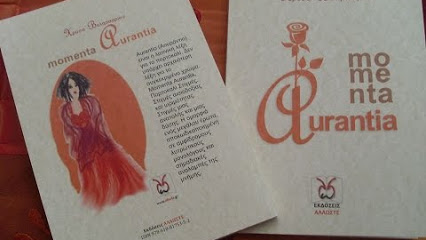
“Momenta Aurantia”. Μια ποιητική συλλογή της Χρύσας Βελησσαρίου

unnamed-1

ΤΗΣ ΕΛΕΝΗΣ ΣΤΑΣΙΝΟΥ

Καλώς βρισκόμαστε. Θα αρχίσω κάνοντας μια διαπίστωση κοινή σε όλους. Γνωρίζουμε πως ένας έρωτας μπορεί να κάνει την διαφορά στην ζωή μας. Πως μια μέρα μπορεί να γίνει ορόσημο, μια βραδιά ποιητική να ξεχωρίσει από κοινότοπες κλισαρισμένες βραδιές Έτσι και κάποιο πρόσωπο έχει την δυνατότητα να σε κάνει αρκετά θαρραλέο ώστε να υπερβείς τον εαυτό σου και τα πιστεύω σου, κι έτσι να κάνεις έναν πόλεμο, έναν έρωτα η και να τολμήσεις να μιλήσεις για ποίηση. Καθώς Απόψε.
Δεν υπερβάλλω. Είναι δύσκολος τομέας της τέχνης, και ο δυσκολότερος ίσως, της ποίησης. Πως να διαχειριστείς ένα θέμα που καλά-καλά δεν του έχει αποδοθεί ορισμός. Ίσως λόγω αυτής της δυσκολίας βλέπουμε ακατάλληλα πρόσωπα να γράφουν ποίηση η να παρουσιάζουν, ελπίζοντας στο να την καταστήσουν έτσι προσιτή σε αυτούς και τους άλλους. Δεν θα δοκιμάσω να δώσω ερμηνεία στην έννοια της ποίησης. Μάλλον αν αθροίσουμε όλων των ποιητών τις απόψεις , θα έχουμε το νόημα της και πάλι κατά προσέγγισιν. Απλώς θα θυμίσω πώς η ανάγκη του ανθρώπου να ποιήσει, προφανώς προέκυψε την στιγμή που ο άνθρωπος έμεινε έκθαμβος και τρομοκρατημένος μπροστά στα δεσμά του. Αφού δέσμιος είναι ο άνθρωπος σε δυο σε δύο διαφορετικά είδη αναπόφευκτου.Τα φυσικά του δεσμά και τα πέραν αυτής της ζωής.

Το ένα το καθαρά μεταφυσικό είναι το ανθρώπινο πεπερασμένο. Το άλλο, είναι η πάλλουσα ζωή με όλα όσα την αποτελούν. Όσα συνιστούν την ζωή, με τα συνεπακόλουθα συναισθήματα. Τον φόβο για μια εύθραυστη ειρήνη, τον πόλεμο με τα γνωστά του αποτελέσματα, τις δύσοσμες αναθυμιάσεις της εποχής, τις υποκριτικές συμπεριφορές της καθημερινότητα μας με την ανάλογη αποδόμηση των αξιών. Το πώς ο άνθρωπος θα ξεφύγει από αυτά τα δύο ανυπόφορα είδη δεσμών, η το πώς θα τα κάνει να φαντάζουν ελαφρύτερα, από καταβολής του τα ανακάλυψε και τα υπηρέτησε ο άνθρωπος. Με τα δυο μέσα που κατείχε.Τον Έρωτα. Και την Τέχνη. Μόνο που σε αυτά τα δύο «Τέλη-Σκοπούς» ο άνθρωπος οδηγείται με το πάθος ως «μέσον». Στην περίπτωση μας προσπαθώντας να προσεγγίσουμε την ποίηση της Χρύσας θα διαπιστώσουμε πως αντί να ξορκίσει απλώς τους φόβους μετατρέπει το ίδιο το «μέσον» σε ποίηση. Αντί να το θεωρήσει αγωγό, ώστε να πλησιάσει τα έμφοβα Δέη, μένει στην διαδρομή ερωτοτροπώντας με το μέσον που θα την οδηγούσε στην λύτρωση.

Έτσι την βλέπουμε αντί να γιατρεύεται να πρέπει να πεθαίνει κάθε στιγμή. Λόγω αυτών των απανωτών θανάτων κραυγάζει συναισθήματα, λες και είναι η τελευταία στιγμή που τα νοιώθει. Τους λόγους των απανωτών θανάτων της, που μοιάζουν ερωτικοί σπασμοί, κάποιοι τους φανταζόμαστε, οι άλλοι προσπαθούμε να τους ανιχνεύσουμε μέσα από τους στίχους της.

Γιατί αυτό είναι η ποίηση της. Ένα πάλεμα, μια αγωνία, μια κορύφωση. Κάποτε μια διάσωση. Μια αθώωση. Διαβάζοντας την ποίηση της Χρύσας αποδεικνύεται πως τελικά έχουν δίκιο όσοι πιστεύουν πως ο δημιουργός για να αναδείξει αυτό που θέλει με την ανάπτυξη ενός ποιήματος κυριολεκτικώς συντρίβει.

Θα ανατρέψει τα γεγονότα, θα τα κατακερματίσει, και από τα θραύσματα στα χέρια της θα γεννηθούν λέξεις που θα ρέουν, θα καίνε η θα κόβουν, θα ελευθερώνουν η και θα θανατώνουν και αναλόγως το που θα εστιάζει θα επαναδημιουργεί τόπο, και χρόνο αναδημιουργώντας είτε τον ατομικό της κόσμο, είτε τον πλατύ μας κόσμο που περικλείει τους πάντες και τα πάντα.
Continue reading