Στην αναζήτηση ισορροπιών μέσα από την ποίηση του Σκυθιώτη

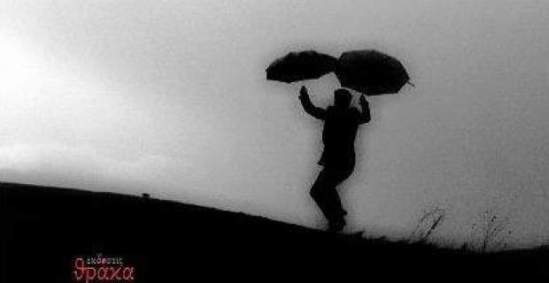
211632g-10245396_703546113017518_2189062766315061760_n

Του Δήμου Χλωπτσιούδη

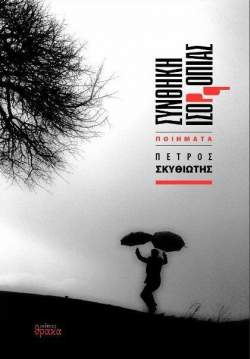
Πολύ συχνά οι συλλογές πρωτοεμφανιζόμενων ποιητών διακρίνονται από μία αποσπασματικότητα και μία άνευρη πολυθεματικότητα. Σε έναν κορεσμένο χώρο, η πρωτοτυπία λανθάνει στις σκιές των λέξεων, καθώς ακόμα εντοπίζεται μεγάλη ποικιλία ύφους, μια και ακόμα αναζητούν τη γραφή που τους εκφράζει καλύτερα. Έτσι, είναι λογικό, η πρώτη συλλογή του Πέτρου Σκυθιώτη, «συνθήκη ισορροπίας» (Θράκα, 2014), να προκαλέσει εντύπωση με τη γλωσσική αρτιότητά της που οικοδομείται σε ένα λιτό λεξιλόγιο με χαρακτηριστική ισορροπία στην ένταση των συνθέσεων.

Η προφορικότητα της εκφραστικής του με τα πεζολογικά χαρακτηριστικά της προσδίδει μία αμεσότητα στην ποιητική του. Σε μία κοινωνία που χειμάζεται από την ανισότητα και συνεχώς εμφανίζει αρρυθμίες και τάσεις κατάρρευσης, ο νέος ποιητής προσπαθεί να συνάψει τη δική του συνθήκη ισορροπίας· αποζητά τα δικά του βιώματα ως ισορροπιστής με δοκό την ίδια την ποίηση πάνω στο δηκτικό σκοινί που του όρισε μία κοινωνία άστοργη κι απάνθρωπη (2, 3, 4, 5, 26).

Η ποίησή του είναι βαθιά υπαρξιακή· ακόμα και στις συνθέσεις με ένα κοινωνικό υπόβαθρο και με ενσωματωμένες κοινωνικές παραστάσεις θεμελιώνεται πάνω σε έναν υπαρξιακής φύσης φόβο (1, 8, 17, 19, 27). Μόλο που κυριαρχεί η πρωτοενική έκφραση, η ανησυχία του α΄ ενικού εκφράζει έναν οικουμενισμό. Και τούτο αποκρυπτογραφείται ενίοτε με το α΄ πληθυντικό γραμματικό πρόσωπο (9, 21, 0) σε μία πανανθρώπινη προσέγγιση και κάποτε με αναφορές -άμεσες ή έμμεσες- σε ένα πλήθος ανθρώπων (7, 11, 20) ή ως απρόσωπη έκφραση (16).

Η γλώσσα του είναι συχνά σκληρή και “άκομψη” (9, 22, 23, 24) και άλλες φορές εκφράζει μία βαθύτερη σαρκαστική διάθεση (1, 3, 5, 7), ακόμα κι όταν κρίνουμε ότι ούτε η ποίηση τη χρειάζεται ούτε και οι συνθέσεις· ωστόσο, η “αγένεια” είναι πάντα επιτηδευμένη και ελεγχόμενη, συμβάλλοντας σημαντικά στη διοχέτευση του συναισθήματος και προκαλώντας τον αναγνώστη.

Άλλοτε υιοθετεί ένα ύφος πιο αποφθεγματικό (3, 5, 16, 20, 28) κι άλλες φορές πιο αφηγηματικό (1, 2, 6, 7, 8, 13, 21). Οι θρυμματισμένοι στίχοι αισθητοποιούν την ίδια την αγωνία του δημιουργού που αισθάνεται μετέωρος σε μια κοινωνία σχεδόν κανιβαλική· οι στίχοι του επιβάλλουν το δικό τους ρυθμό στις συνθέσεις, μεταδίδοντας το συναίσθημα των αβέβαιων αντιθέσεων της ζωής. Άλλωστε, ο ποιητής αναζητά συνεχώς την ισορροπία στις αβεβαιότητες της ζωής και τις αντιφάσεις του ευμετάβλητο ανθρώπινου βίου (1, 3, 4, 7, 8).

Αξίζει να υπογραμμίσουμε ότι η ποιητική ειρωνεία, με έντονο το τραγικό στοιχείο, διαπνέει όλη τη συλλογή, καθώς ο ποιητής εκθέτει όχι μόνο το σύγχρονο κοινωνικό κανιβαλισμό (7, 8, 10, 12) και την ασφυξία που τον πνίγει στο αδράστειο αστικό περιβάλλον (11, 13), μα και τον τρόπο που αντιμετωπίζουν οι άνθρωποι τον έρωτα (12, 22, 23), τη σχέση του με το φυσικό περιβάλλον (9, 24) ή ακόμα και τις μεταξύ τους επαφές (10, 11, 26).

Η ποίηση του Σκυθιώτη αφήνει ένα πικρό χαμόγελο στα χείλη. Ο βαθύς πόνος που εκφράζει ο δημιουργός σε συνδυασμό με το καυστικό χιούμορ του, λειτουργούν ως ποιητική μαχαιριά στι συνειδήσεις -ειδικά όταν προέρχεται από έναν νέο άνθρωπο. Και το χαμόγελο που αναδύεται καθαίρει στην δραματική ποιητική του τον πόνο που γεννούν οι στίχοι του. Απομακρύνει την απογοήτευση και την μελαγχολία· ο σαρκασμός γίνεται το αντίδοτο σε μία καταθλιπτική κοινότητα που αναζητά τη δική της ισορροπία στις νέες συνθήκες.

*Από το http://tvxs.gr/news/biblio/stin-anazitisi-isorropion-mesa-apo-tin-poiisi-toy-skythioti

211632-screen_shot_2016-10-03_at_10-44-54_p-m

Η περίπτωση Γιάζρα: Ποιήματα βουτηγμένα στη βενζίνη

1040356_giazra

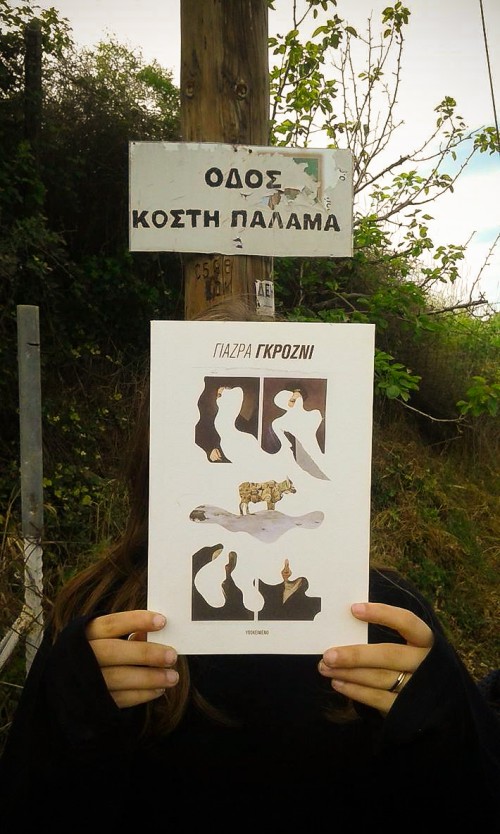
Το «Γκρόζνι» είναι η πρώτη συλλογή του πιο μεταφρασμένου νέου Έλληνα ποιητή που δίνει φωνή στη «γενιά της λιτότητας».

Φωτογραφίες: Solarski Liboska

Από τον Μ.ΗULOT*

Τα ποιήματα του Γιάζρα (ως Jazra Khaleed) εμφανίστηκαν για πρώτη φορά στο blog του το 2009. Σκληρά, με στίχους σαν ραπάρισμα που θύμιζαν την άγρια πλευρά του χιπ χοπ, κοφτερά, βίαια, ήταν η αστική ποίηση του τέλους των ’00s και πρελούδια της νέας, απρόβλεπτης δεκαετίας που δεν είχε ακόμα δείξει την αγριότητά της. Τα ποιήματα του Γιάζρα αντιπροσωπεύουν όσο τίποτα άλλο τη νέα κατάσταση που δημιουργήθηκε στην Ελλάδα μετά το 2008, είναι κραυγές, είναι πολιτική στάση, είναι η δύναμη του δρόμου και φωνές διαμαρτυρίας με την ίδια ένταση που είχαν το «The Message» του Grandmaster Flash, οι δυναμικοί στίχοι των Public Enemy ή οι οργισμένες και ενάντια στο σύστημα ρίμες των NWA. Ακόμα και αν λείπει το beat, αισθάνεσαι ότι το ακούς ως υπόβαθρο όταν συστήνεται «βουτώντας τα ποιήματά του στη βενζίνη»:

Με λένε Γ-Ι-Α-Ζ-Ρ-Α, γεννήθηκα στης Δύσης το σκοτάδι,
Λαθραίος μένω όσο κι αν λεν’ οι αριστεροί˙ όμορφα περνά το βράδυ, τσακίζοντας φασίστες στου Ψυρρή.
(…)

Δεν έχω ανθρώπους· η μοναξιά μου σαν ακονισμένο ξυράφι πάνω στη γυμνή σου καρωτίδα ακουμπά (σπόνσοράς μου η Gillete).

Μη με μπερδεύεις για Σάββατο, είμαι απλά μια γαμημένη Τρίτη, χωρίς ήλιο, χωρίς βροχή, τρώω σίδηρο για να ’χω καλή μνήμη.

Με το κεφάλι γεμάτο ρίμες βάζω την πένα στον αυτόματο, σκάβω το λάκκο σε κάθε νεοναζί·
γροθιές οι λέξεις, τον αφήνω να διαλέξει.

Μα θέλω να ξέρεις, αυτούς τους στίχους τούς έγραψα με τα γυμνά μου χέρια·
έκαψα τα δάχτυλά μου προσπαθώντας να βουτήξω τα ποιήματά μου στη βενζίνη.

Σε λίγο τα πιτσιρίκια στο δρόμο θα φωνάζουν τ’ όνομά μου: Γιάζρα, η πουτάνα της ποίησης.

Τ’ όνομά μου ήταν Παναγιώτης (τι σιχασιά!)·

θέλησα να ξεπλύνω από πάνω μου τη ντροπή του λευκού αρσενικού· επίτρεψέ όμως να κρατήσω λίγη απ’ τη βαρβαρότητα ενός καλού χριστιανού (προκαταβολικά).

Εγώ είμαι ο Γιάζρα, τραμπούκος ποιητής, σχιζομητροπολιτάνος, γιος μουσουλμάνας, πατέρας κανενός.
Εσύ ποια είσαι; Εσύ ποιος είσαι;

Θα μπορούσαν να είναι γραμμένα στους τοίχους, να γίνουν συνθήματα, να τραγουδιούνται σε αυτοσχέδια πάρτι στις γειτονιές, είναι η ποίηση της εργατικής τάξης που σχεδόν ποτέ δεν είχε χρόνο να γράφει ποιήματα. Ή δεν είχε τον τρόπο να τα δείξει στον κόσμο.

Δε μοιάζω στους άλλους ανθρώπους,
Είμαι ένα τέρας, ένας τρομοκράτης, είμαι ένας λαθροεισβολέας.
Δεν θα πεθάνω ποτέ, δεν έχω τίποτα να χάσω, δεν
υπάρχει τίποτα να διακινδυνεύσω.
Κάθε πράξη έχει νόημα πλέον: να κλέβεις παγκάρια εκκλησιών, να ξυλοφορτώνεις φασίστες, να καις το πανί με τις γαλάζιες κι άσπρες ρίγες, ν’ απαλλοτριώνεις σουπερμάρκετ.
Νοσταλγώ την εποχή των αναμορφωτηρίων και των ομάδων επανένταξης, την όμορφη εποχή των οδοφραγμάτων.
Κάθε δουλειά είναι ντροπή˙ ένας πωλητής παπουτσιών αξίζει όσο κι ένας χωροφύλακας.
Η εποχή των γενετιστών και των βιοτεχνολόγων αντικατέστησε επιτέλους αυτή των δικαστών και των ψυχιάτρων.
θα γίνω καρκίνος και θα σας χτυπήσω στον προστάτη,
θα βγάλω απ’ τη μέση κάθε υγιή˙
θα ζήσω μια στιγμή και θα εξαφανιστώ, σαν πυροτέχνημα στον ουρανό, σαν μολότοφ στο οδόστρωμα.
θα ουρλιάξω λέξεις από μέταλλο, λέξεις από κεραυνό˙ μέχρι να σπάσει η σιωπή, μέχρι η ζωή να επιστρέψει πεζή.
Δεν φοβάμαι πια.

«Στην Ελλάδα η ποίηση θεωρείται τέχνη της ανώτερης τάξης» λέει ο Γιάζρα στην επεισοδιακή συνέντευξή του στην Guardian, με αφορμή την κυκλοφορία της συλλογής Austerity Measures: The New Greek Poetry που κυκλοφόρησε πριν από λίγο καιρό η Penguin με υλικό από νέους Έλληνες ποιητές. «Αν θες να κυκλοφορήσεις ένα βιβλίο με ποίηση στην Ελλάδα, πρέπει να πληρώσεις τον εκδοτικό. Οι πιο πολλοί εκδοτικοί θεωρούν ότι είναι φίρμες και ζητούν από δύο έως πέντε χιλιάδες ευρώ για σου εκδώσουν το βιβλίο. Αυτό σημαίνει ότι οι πιο πολλοί άνθρωποι που κυκλοφορούν την ποίησή τους στην Ελλάδα ανήκουν στη μεσαία τάξη ή έχουν λεφτά να ξοδέψουν.

Το σημαντικό με την Austerity Measures είναι ότι περιλαμβάνει ποιητές που δεν είναι γνωστοί στους ποιητικούς κύκλους ή δεν έχουν πρόσβαση στους εκδοτικούς οίκους. Αυτή τη στιγμή στους δρόμους της Αθήνας συμβαίνουν συναρπαστικά πράγματα. Πολλά συγκροτήματα δεύτερης γενιάς Ελλήνων κάνουν χιπ χοπ και είναι πραγματικά underground, οργανώνουν δωρεάν συναυλίες μόνοι τους. Αισθάνομαι ότι όλο και πιο πολλοί άνθρωποι της εργατικής τάξης γράφουν ποίηση σήμερα. Υπάρχει κάποιος που ονομάζεται Ωμέγα που γράφει για τις εμπειρίες του ως εργάτης ή ως άνεργος. Η ποίησή του είναι άμεση, κατά πρόσωπο, κάτι που δεν είναι πολύ συνηθισμένο στην Ελλάδα». Στην παρουσίαση του βιβλίου στον Observer το μόνο ποίημα που χρησιμοποίησαν ήταν το Words του Γιάζρα (μεταφρασμένο από τον Peter Constantine).
1040355_20160428_164327

Tα ποιήματά του Γιάζρα προκάλεσαν την προσοχή του Peter Constantine από την αρχή, τα μετέφρασε στα αγγλικά και τα δημοσίευσε στο αμερικάνικο λογοτεχνικό περιοδικό World Literature Today. Από τότε άρχισε το μπαράζ των μεταφράσεων σε διάφορες γλώσσες και οι δημοσιεύσεις των ποιημάτων του σε σημαντικά λογοτεχνικά περιοδικά του κόσμου. Το 2012 το World Literature Today του έκανε μια μεγάλη συνέντευξη ως εξαιρετική σύγχρονη περίπτωση Έλληνα ποιητή -η οποία ήταν υποψήφια ως μία από τις πέντε καλύτερες της δεκαετίας.

Με τα ποιήματά του ο Γιάζρα ταξίδεψε στη Γερμανία, εκπροσωπώντας την Ελλάδα (μαζί με τον Τίτο Πατρίκιο, τη Δήμητρα Κοτούλα και το Γιάννη Στίγκα) στο Literaturwerkstatt, ένα από τα πιο σημαντικά λογοτεχνικά φεστιβάλ του κόσμου που γίνεται στο Βερολίνο. Την επόμενη φορά ξαναπήγε καλεσμένος, μαζί με την Κική Δημουλά. Η συνέχεια ήταν ακόμα πιο εντυπωσιακή: άρχισαν να τον καλούν σε διεθνή φεστιβάλ, έγινε ο πιο πολυμεταφρασμένος νέος Έλληνας ποιητής (χωρίς να έχει κυκλοφορήσει τίποτα σε βιβλίο), τα ποιήματά του βραβεύτηκαν και έγινε πρωτοσέλιδο σε γερμανικές εφημερίδες, κι όλα αυτά χωρίς καμία δημοσιότητα στα ελληνικά μέσα, χωρίς ούτε μία αναφορά. Από το 2009 ανήκει στη συντακτική ομάδα του Τεφλόν, του περιοδικού για την ποίηση που κυκλοφορεί δωρεάν συστήνοντας στο ελληνικό κοινό μια γενιά Ελλήνων δημιουργών που κινείται στο περιθώριο -από επιλογή ή από ανάγκη- και έργα σημαντικών ποιητών από κάθε μέρος του κόσμου που δεν είχαν ποτέ μεταφραστεί στα ελληνικά. Ο Γιάζρα έχει μεταφράσει ποιήματα αγνώστων ποιητών, έχει συστήσει στα ελληνικά την ποίηση των Αβοριγίνων, έχει μεταφράσει underground Γερμανική ποίηση και σύγχρονες Αραβίδες ποιήτριες.

«Όταν τα αγαθά μειώνονται και δεν επαρκούν, οι άνθρωποι παλεύουν, αρπάζουν, σκληραίνουν» γράφει η Karen Van Dyck, ποιήτρια και επιμελήτρια του βιβλίου Austerity Measures στην Guardian. «Τον τελευταίο καιρό, η Ελλάδα και τα Βαλκάνια ζουν με περισσότερες στερήσεις από το μερίδιο που τους αναλογεί. Η πείνα, η ανεργία, οι περικοπές των συντάξεων και οι κατεστραμμένες επιχειρήσεις χαρακτηρίζουν τη ζοφερή πραγματικότητα στην Αθήνα. Οι ελλείψεις σε ηλεκτρικό ρεύμα και νερό φτάνουν σε επίπεδα που συναντά κανείς σε χώρες που βρίσκονται σε εμπόλεμη κατάσταση. Περισσότεροι από το 27% των Ελλήνων είναι άνεργοι. Το 55% των νέων, ιδιαίτερα εκείνων που (θα έπρεπε να) απασχολούνται στους τομείς της τεχνολογίας και της εκπαίδευσης, έχουν φύγει από την Ελλάδα για να βρουν δουλειά αλλού. Το 40% των παιδιών ζούσαν σε συνθήκες φτώχειας το 2014, και το ποσοστό τώρα πλησιάζει το 50%. Το δημόσιο χρέος είναι το υψηλότερο στην Ευρώπη, πάνω από το 180% του ΑΕΠ, ενώ τα μέτρα λιτότητας κάνουν τη παραμονή στην ευρωζώνη τόσο δύσκολη όσο και το Grexit (…) Η ποίηση, όμως, αφθονεί. Υπεραφθονεί. Ποιητές γράφουν γκράφιτι στους τοίχους, διαβάζουν δημοσίως σε πλατείες, θέατρα και αλάνες, απαγγέλουν σε φτωχογειτονιές, φωνάζουν συνθήματα και τραγουδούν σε συλλαλητήρια, μπλογκάρουν και ποστάρουν στο ίντερνετ, συνεργάζονται με καλλιτέχνες και μουσικούς, διδάσκουν παιδιά και μετανάστες σε εργαστήρια. Μέσα στην όλη δυστυχία και την αταξία, η νέα ποίηση βρίσκεται παντού. Όσα γράφονται είναι τόσο πολλά και ποικίλα που δεν ταιριάζουν σε καμία πλευρά οποιουδήποτε ιδεολογικού ρεύματος. Μολονότι βιβλιοπωλεία συνεχώς κλείνουν, οι ποιητές καταφέρνουν και περνάνε τα ποιήματά τους στον κόσμο. Τα καθιερωμένα λογοτεχνικά περιοδικά ακμάζουν· οι μικροί εκδοτικοί οίκοι και τα νέα περιοδικά αφθονούν. Η παραγωγή ποίησης όχι μόνο αψηφά την οικονομική ύφεση, αλλά επίσης ξεπερνά και τις εθνικές, ταξικές και φυλετικές διακρίσεις. Τέτοια αφθονία νέας ποίησης έχει να σημειωθεί από την εποχή της στρατιωτικής χούντας, γνωστής ως η Δικτατορία των Συνταγματαρχών, στις αρχές της δεκαετίας του 1970, όταν εμφανίστηκαν για πρώτη φορά ποιήτριες όπως η Κατερίνα Αγγελάκη-Ρουκ, η Τζένη Μαστοράκη και η Παυλίνα Παμπούδη. Πράγματι, η ιστορική συγγένεια δεν σταματά εκεί: είναι και πάλι οι ποιητές που έχουν τη μερίδα του λέοντος στην καθοδήγηση της νέας γενιάς».

Μέσα σε αυτή τη νέα κατάσταση που έχει δημιουργηθεί κοινωνικά και λογοτεχνικά ο Γιάζρα κυκλοφόρησε το πρώτο του βιβλίο, την ποιητική συλλογή με τίτλο «Γκρόζνι» (είναι η πρωτεύουσα της Τσετσενίας), ίσως το πιο ενδιαφέρον βιβλίο ποίησης που μπορείς να βρεις στα ελληνικά αυτή τη στιγμή από νέο ποιητή.

Τα ποιήματα του Γιάζρα είναι σκληρά και ταυτόχρονα τρυφερά:

Δεν έχω τίποτα να προτείνω, είμαι απλώς ένα πρωτόκολλο˙
η ζωή μου, ενδεκασύλλαβη και σχοινοτενής, χωρίς μαχαίρι και κουτάλι, μα με τα μάτια δεκατέσσερα,
δε συμφωνεί ούτε σε γένος ούτε σε αριθμό μ’ όσα γράφουν οι εφημερίδες, μ’ όσα ψιθυρίζουν οι εραστές.
Κρυώνει από θάνατο η ζωή μου –πώς ορθώνεται κι αγροικά!- καθώς απομακρύνονται με τα κόκαλά τους υπό μάλης
το αλέτρι και το άλογο, η μάνα και οι εννιά της μήνες˙ μαζεύει τα χρόνια της, τον Μαρξ και τον Ένγκελς της,
ετοιμάζεται για την ξεροκαιριά, το θάνατο του σκύλου.

Είναι άγρια αλλά και σπαρακτικά, βλάσφημα και ιερά -ακόμα και όταν φαίνεται να περιφρονεί και να βαριέται την ελληνική ποίηση:

Διαβάζω ελληνική ποίηση: τους αναγνωστάκηδες, τους πατρίκιους και τους βάρναλεις, όλους αυτούς που θέλουν να φορτώσουν τις ήττες τους στην πλάτη μου.
Πίστεψαν σε μια ιδέα αλλά αυτή τους πρόδωσε τελικά (ή κάτι τέτοιο τέλος πάντων)
Προσπαθώ ν’ ακούσω τη χαμηλοφωνηποίησή τους, την τολμηρηγραφή τους, αλλά δεν ξέρω αν όλα αυτά είναι δικό μου πρόβλημα (δεν ξέρω αν καταλαβαίνεις).
Μπαίνω στο ίντερνετ και βλέπω τους «νέους ποιητές» να ποζάρουν για λαΪφστάιλ περιοδικά φορώντας ολ στάρ˙
μιλάνε για τη λοξή τους ματιά
ενώ κοιτάνε πάντα μπροστά.
Βγαίνω στο δρόμο, μπάτσοι σε κάθε γωνία και τικανειςτετοιαωρασταεξάρχεια, και ησουνμεεκεινουςπουεπιτεθηκανστηδιμοιρία˙ παίρνω μπίρες απ’ το περίπτερο κι έχω ξεχάσει σε ποια σελίδα ήμουν.

Ο Γιάζρα γράφει ποιήματα σαμπλάροντας φράσεις από χιπ χοπ ύμνους και σκόρπια κομμάτια από την έκδοση Πολεοδομία και δημόσια τάξη: Αθήνα οχυρωμένη πόλη της Λέσχης κατασκόπων του 21ου αιώνα. Καταγράφει την σημερινή πραγματικότητα με έναν τρόπο τολμηρό και to the face, χτυπάει κατά μέτωπο φτιάχνοντας μια περσόνα που είναι παγκόσμια και ρεαλιστική, σύγχρονη αλλά και διαχρονική, κάνει το διαμέρισμά του το όχημα για να ακουστεί η φωνή του παντού. Και πετυχαίνει τον σκοπό του. Τα ποιήματά του είναι κοφτερά σαν μαχαίρι και επικίνδυνα σαν σφαίρα, είναι οι αγωνιώδεις κραυγές των προσφύγων και των μεταναστών που όλοι ακούν ξώφαλτσα και αγνοούν:

Είμαι ένας γαμημένος μουσουλμάνος, γροθιά, κνήμη, πούτσος.
Δε θα γυρίσω πίσω στην πατρίδα μου (δεν έχω πατρίδα).
Είμαι μια υγειονομική απειλή, ένα μίασμα, δεν ανήκω σε καμία πολιτισμένη φυλή…

Γράφει για την καταπίεση, το ταξικό μίσος, για τους ανέργους και τους φτωχούς, για τη Συρία και τις χαμένες πατρίδες, για τα παιδιά της φωτιάς και την πόλη του.

«Η πόλη αυτή μοιάζει με τους προλετάριους προγόνους της, έχει τραχιά χέρια και μια σφαίρα βαθιά σφηνωμένη στη ραχοκοκαλιά της, μοιάζει με τον ταξικό πόλεμο που έθρεψε την πολεοδομία της, κηρύττει τον εμφύλιο δίχως ν’ απαρνιέται τη θλίψη, αυτή η πόλη είναι σάρκινη και υλική, ιδρώνει ολόκληρη, απ’ τον αφαλό ως τον αυχένα˙ προλετάριοι βλασταίνουν στην υγράδα της, εκείνη τους μετράει έναν έναν και τους βγάζει κοντούς σε καιρό πολέμου και ψηλούς σε καιρό ειρήνης, αυτή η πόλη είναι άνυδρη όπως η νύχτα που πιάστηκε στα μαλλιά της, αντιπαραγωγική όπως ένα ποίημα, σκανδαλιστική όπως ένα σαββατόβραδο, η πόλη αυτή πάντα με μάγευε με το ζοριλίκι της και τα σπασμένα πεζοδρόμιά της, πάντα με αποπλανούσε προφασιζόμενη τον διπλό χαρακτήρα της εργασίας, είναι μια πόλη που αν σε διασχίσει πάει, τελείωσες, θα σε καταπιεί μαζί με όλη τη θεολογία σου.
(…)
Αυτή η πόλη έχει μια αρρώστια στο αίμα, νοικοκυραίοι ιοί, μικροαστοί μύκητες, εθνίκια βακτήρια κρύβονται στο κόλον της, στο πίσω μέρος της γλώσσας της, κάτω απ’ την μπανέλα του σουτιέν της, περιμένουν ένα νεύμα του κράτους για να ξεχυθούν στις αρτηρίες της, να προκαλέσουν θρομβώσεις, πνευμονικές εμβολές, πογκρόμ, είναι ένας πόνος πισώπλατος, απ’ τα δυτικά προς τ’ ανατολικά, του λείπει ένα χέρι να δαγκάσει, του λείπει ένα πόδι να βαστάξει, αλλά του περισσεύει πατριωτισμός, του περισσεύει ρατσισμός, αυξάνονται τα λευκά αιμοσφαίρια, πιέζονται οι ιστοί, προκαλείται συμφόρηση καθώς πήζει το αίμα στους δρόμους, στις πλατείες, πρόκειται για μια κατάσταση έκτακτης ανάγκης, ακολουθεί εθνική ενότητα, λαϊκή κυριαρχία, ακολουθούν ακρωτηριασμοί, αυτή η αρρώστια είναι γενετική, έχει μια συνέχεια, κληροδοτείται από πατέρα σε γιο, το ιατρικό ιστορικό περιλαμβάνει εσχάτως συλλαλητήρια για τη μακεδονία, εθνοπανηγύρια και κυνήγι μεταναστών, σιωπηλές διαμαρτυρίες και αγανακτισμένους, στενεύουν οι αρτηρίες, συσσωρεύεται ο θυμός, ανεβαίνει το αίμα στο κεφάλι˙ όλ’ αυτά σε συνδυασμό με έλλειψη πρωτεΐνης C μπορεί να οδηγήσουν σε κεραυνοβόλο πορφύρα ή αλλιώς χούντα».
(…)
Στη γειτονιά μου οι μέρες περνάνε εν λευκώ, τα γεγονότα είναι κολλημένα στους τοίχους, η ευτυχία σαπίζει στα βουλκανιζατέρ. Στο σφαγείο της καθημερινότητας εγώ πουλάω μπαλτάδες˙ γράφω ένα ποίημα κάθε που πηγαίνω απ’ το σπίτι μου στο μετρό. Αναμένω μια συγκίνηση.

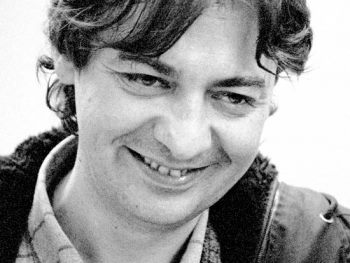
Ο Γιάζρα είναι 37 ετών και ζει στα Εξάρχεια.

###Η ποιητική συλλογή «Γκρόζνι» του Γιάζρα κυκλοφορεί από τις εκδόσεις Υποκείμενο.

*O M.Hulot είναι διευθυντής της έντυπης LIFO.
**Πηγή: http://www.lifo.gr
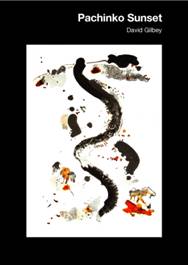
Siobhan Hodge reviews David Gilbey’s Pachinko Sunset

pachinko-sunset

Pachinko Sunset
by David Gilbey
Island Books, 2015

David Gilbey’s long-standing connections with Japan take centre stage in Pachinko Sunset, a collection that embraces simple, direct form to explore a layered series of issues linked with this relationship. The titular ‘pachinko’ refers to a popular Japanese game akin to pinball, in which a cascade of small metal balls are released to strike pins and be channelled off into different locations, with different prize implications for each. This image is a fair comparison for the text as a whole, as Pachinko Sunset delivers a sequence of poems in constant activity, heading in numerous directions at once, yet intrinsically caught up in the anxieties and ironies of travelling, translating, and relating Australia to Japan.

Written in English, Pachinko Sunset cannot help but engage with difficulties associated with language barriers. Gilbey’s linguistic interests are more down-to-earth than abstract, stemming perhaps from his considerable experience as an English teacher in Japan. Much of Pachinko Sunset is given over to scenes apparently taken from working with students. ‘Grammarian’ demonstrates some of the issues that can arise from these interactions, but undercuts these concerns with a playful tone. The poem is introduced with a line from Haruki Murakami: ‘Grammar is like the air: someone higher up might try to set rules for its use but people won’t necessarily follow them.’

Tonight at Sendai Toastmasters
my obsessions are given authority, my fetishes legitimized.
I must listen for mistakes and turn them into learning:
“but I drank many sakes”; “I have much movies on my browser”
and command felicities:
“They usually image that the stars have fallen downwards
very near the map of my heart.”
Never have I attended with such concentration.

Subtle, inquisitive thinkers speaking double tongues,
lips in two lands –
I am drawn into a 3D linguistic otherworld:
“You can spend very leisurely by this stick.”
“Before I got married with my husband.”
“It’s maybe destiny.”

I remember Hamlet: indirection finds direction out.
Accidental bathos gets a laugh:
“I felt a deep self-loathing and a headache.”
Most of us get the bi-cultural pun:
“I am an ankoholic.”

They know the power of oxymoron, if not its name:
“serious humour puts spice in your life… think crazy”
and challenge the gender bias of language and culture:
“It’s so surreal, this charming lady was jealoused by mother –
she seems like superwoman for me. Please be aggressive.”

I try to teach fun: don’t let the fear of making mistakes
stop you from speaking.
You will be understood and accepted
despite our imperfect agreements, wild prepositions,
odd adjectives and idiosyncratic verbs.
Native speakers are always making mistakes.
“The ordinary is amazing.”
The light-hearted tone and freedom of structure belie the potential for damage in more abrasive relationships with language. Grammatical fidelity is consciously pushed aside to permit a barrage of new, though un-named and faceless, voices. The speaker remains the only grounded, concrete presence, but the nameless other speakers all instate their own brief glimpses of perception, humour, and experience. The overall feeling is communal rather than condescending, but Gilbey recognises this risk.

Gilbey’s speakers are constantly reinventing ways to make connections through common ground, despite linguistic or contextual barriers. The first section is primarily preoccupied with teaching and day-to-day life in Japan, conscious of how things differ from life in Australia. The opening poem, ‘Australian Studies Conference, Hachioji’ sets out this contrast deftly, but as the collection continues, distance becomes far less obvious. By the time that Gilbey presents ‘Omi Hachiban: Ten Thumbnails’, an English and Romanji piece that links historical areas with the speaker’s present actions, this sense of potential isolation has been all but lost.

Gilbey has been a Visiting Professor of English on several occasions at Miyagi Gakuin Women’s University, Sendai, which accounts for the frequent presence of young Japanese women in his poems. Upon first reading, some poems raised concerns for their sexualised depictions, leaning towards stereotyping rather than the frankness and directness otherwise prevalent throughout Pachinko Sunset. The poetic speaker’s acknowledged sexism in ‘Iron Men’ clashes with the overt but tongue-in-cheek, farcical sexualisation of hats in ‘Hat Trick’. ‘Intercultural Communication’ quashes any fears of unconscious stereotyping as the speaker accidentally gives offence by stumbling over vowels and unintentionally pronounces an assessment of a female character’s body, combining chance humour with self-consciousness.

The final section, ‘Haibun Hikes’ is perhaps the strongest part of the text, as Gilbey experiments with longer verse styles in between shorter poems. Pachinko Sunset transforms into a ‘travel’ text, shifting between personal reflections whilst remaining consciously grounded in the differences between the familiar and unknown. Pachinko Sunset shares much in common with a travel narrative, but avoids indulgent tropes. Gilbey’s lightness of tone and efficient poetic style render cultural boundaries simultaneously clearer and less restrictive than ever in his strongly personal explorations of Japan.

*Siobhan Hodge is a doctoral candidate at the University of Western Australia from the discipline of English, studying Sappho’s poetry and its translation. Born in the UK, she divides her time between Australia and Hong Kong, and nurtures a passion for training horses. She recently published a chapbook, Picking Up the Pieces, and has had poetry published in several places, including Peril, Yellow Field and Page Seventeen.

**Taken from Cordite Poetry Review at http://www.cordite.org.au

Για το φευγιό του Ηλία Λάγιου

Στις 5 Οκτωβρίου 2005 αποδημεί, «χωρίς εισιτήριο», ο ποιητής Ηλίας Λάγιος. Επιχειρεί το απονενοημένο διάβημα με ένα salto mortale από το μπαλκόνι του σπιτιού του. Στα 47 χρόνια που πρόλαβε να ζήσει απέδειξε πως ο διανοούμενος, ο πνευματικός άνθρωπος, μπορεί να είναι «οργανωτής» μιας μαχητικής ουτοπίας.

Ο Λάγιος ρίχνει τον ποιητή από το βάθρο του, σαρκάζει και αυτοσαρκάζεται χωρίς να γίνεται γραφικός. Ο λόγος του είναι αψύς. Του αρέσει να «παίζει» με διάφορους τρόπους γραφής.Καταπιάνεται με την καθημερινότητα, την σαπίλα, το θεό και τον Έρωτα. Κυρίαρχο μοτίβο ο θάνατος. Η ποίηση του φοβίζει τον απαίδευτο και τρομάζει τον βολεμένο. Τίθεται ενάντια σε κάθε μορφής εξουσία, μισεί τους καθωσπρέπει και αγαπά τους περιθωριακούς. Γράφει για τη ζωή όπως είναι και λέει τα πράγματα με το όνομα τους.

Γεννήθηκε το 1958 στην Άρτα, μεγάλωσε στο Ναύπλιο και έζησε το μεγαλύτερο μέρος της ζωής του στην Αθήνα. Εργάστηκε ως επιμελητής εκδόσεων μεταξύ των οποίων η Νέα Εστία και η Αυγή. Μαζί με τον Γιώργο Κοροπούλη εξέδωσε το λογοτεχνικό περιοδικό “Ωλήν”.

Κατηγορήθηκε από τα μέσα, ως κακοποιός της ελληνικής γλώσσας.

****”Το πέρασμα [‘Ενας αθώος άνθρωπος να συμφωνεί / Του κάνω νεύματα απεγνωσμένα / ‘Οπως πάντα έφτασα αργά] / Το πέρασμα στον θάνατο / Είναι μια κόκκινη στρογγυλή γουλιά / Τη σκουπίζεις στα χείλια / στο πάτωμα ή στο μαξιλάρι / Τα ίχνη φεύγουν λίγο αργότερα.”

***Απόψε οι πεθαμένοι ξαγρυπνούν μες στων κεριών τις φλόγες,
Και μοναχή παρηγοριά τα παιδικά της χρόνια στην Αθήνα•
γίνε αγερίτσα του Θεού και πέταξε εδώ πάνω.
Δεν το ’νιωσες, κορμάκι μου, που ο θάνατος μας κέρδισε για πάντα;
[Από τη συλλογή Πράξη υποταγής (2000).]

****«Κι από μακριά κιόλας εμείς (παγώνουν οι ώρες κι οι μέρες και δεν αντέχονται κι αποχωρούμε), όσοι ακόμα μέσα στη ζωή μας ζωντανοί, πομποί και δείκτες μνήμης αυριανής – οι μηδέ φωνασκούντες, μηδέ είρωνες. Από μακριά, με το μακριά που βάζουν τάχα για εγγύηση οι λέξεις. Με όλες τις λέξεις που πήρε δανεικές και έκανε δικές του – χρησιδάνειο. ‘Οσες μιλούσαν, κι όσες παραμιλούσαν μέσα σε ό,τι ακατανόητο του καθενός για τον καθένα. Με από κοντά τις λέξεις να τον χαιρετούν».

Απόσπασμα από το ποίημα «Δεν βλέπω τίποτ’ άλλο», του Ηλία Λάγιου: Άντε γαμήσου και χάσου,
πουτανίτσα φτιαγμένη στο Γαίηλ.
Θα κτενίσω τη νύκτα με κοκταίηλ
μολότωφ τα μαλλιά σου.

Ο Νίκος Γ. Ξυδάκης έγραψε στην “Καθημερινή” της 9.10.2005: “Τρυφερός έφηβος 47 ετών, ανήλικος και υπερώριμος μαζί, αστραφτερό ταλέντο, σπάταλος με τις λέξεις και τα αισθήματα, σπάταλος προ πάντων με τον εαυτό του. Ποιητής. […]”

****Το έργο του είναι χρήσιμο σε κάθε άνθρωπο που θέλει να ζει ελεύθερος

**********************

Έργα:
Πρόοδοι εν προόδω (Ωλήν, 1981, ως Αλέξης Φωκάς)
Ασκήσεις Ι-ΙΧ (Ωλήν, 1984, ως Αλέξης Φωκάς)
Το κατά Αλέξιον και Μαρίαν (Βιβλιοπωλείον της Εστίας, 1990)
Συνεστίασις (1991)
Τριώδιο (Άγρα, 1991, με τους Διονύση Καψάλη και Γιώργο Κοροπούλη)
Η ιστορία της Λαίδης Οθέλλος (Βιβλιοπωλείον της Εστίας, 1992)
Το βιβλίο της Μαριάννας (Ίκαρος, 1993)
Ανθοδέσμη (Άγρα, 1993, με τους Μιχάλη Γκανά, Διονύση Καψάλη και Γιώργο Κοροπούλη)
Ο Μικρός Ήρως: το σκετσάκι (Αντί, 1996)
Η έρημη γη (Ερατώ, 1996)
Περί ζώου (Παρουσία, 1996)
Μουζικούλες (Ερατώ, 1997)
Το εικοσιτετράωρο της Δηούς (Καστανιώτης, 1998)
Θεατρολογία (Καστανιώτης, 1998)
Της γυναικογυναίκας (Ερατώ, 1998)
Πράξη υποταγής (Ερατώ, 2000)
Φεβρουάριος 2001 (Ερατώ, 2002)
Η αρπαγή της κούτας (Ερατώ, 2003)
Ο άνθρωπος από τη Γαλιλαία (Ερατώ, 2004)

%ce%bb%ce%b1%ce%b3%ce%b9%ce%bf%cf%82

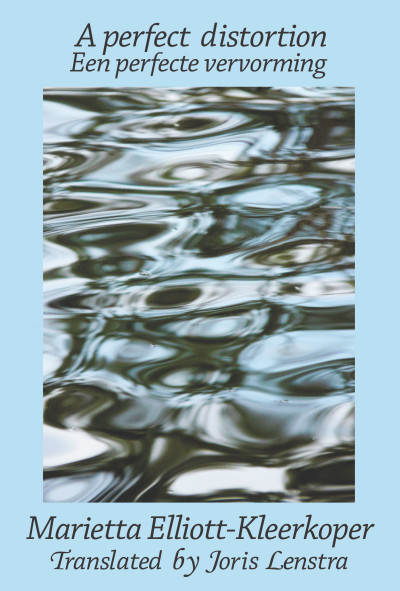
Roxanne Bodsworth reviews Marietta Elliot-Kleerkoper’s A Perfect Distortion

perfect-distortion

A Perfect Distortion
by Marietta Elliot-Kleerkoper
Translated by Joris Lenstra
Hybrid Books, 2016

The poems in this collection are provided in the original Dutch with an English translation; two languages and cultures that are intertwined in the poet and in the poetry. The mirroring effect of the parallel texts moves the reader beyond English language egocentricity, providing a continual reminder that language is constructed and understood in a variety of ways. There is a visual engagement as well as a cognitive one in sounding out the unfamiliar words (while wishing someone would read them aloud to me) and seeing how they balance in reflection.

Elliot-Kleerkoper has taught languages and been published in Australia and the Netherlands with her first Dutch-English collection, Island of Wakefulness / Eiland van waak zaamheaid, released by Hybrid Publishers in 2006. In this collection, she takes the reader on a stroll with her, frequently with an address to the reader in second person, while pointing out the beautiful details of the world she inhabits.

Terungkerend naar het oppervlak – de spil
Je blik glijdt af naar
de weerspiegeling – het water
als thee die te lang in een pot staat

Returning to the surface – the fulcrum
your gaze travels into
the reflection – the water
like tea too long in the pot

(‘Vier manieren om een vijver te zien /Four ways of looking at a pond’)
Unfortunately some poems are split by pictures and so the mirroring effect is lost. While the pictures support some poems, they simply interrupt others, or seem disconnected. For example, the photo-image of ‘Een perfect vervorming / A perfect distortion’ is many pages later than the title poem that it would otherwise illustrate. When there is a clearer ekphrastic connection, the poem can change the manner of visual perception, such as ‘Waterlelie / Waterlily’:

en als je in zijn diepte staart
zou je ogen

zien – goedaardige kleine ogen die terugkijken
oogjes van kleine visjes. Ze zullen jou voeden

zolang jij ogen hebt
om mee te zien

and if you stare into its depths
you’ll see

eyes – benign little eyes looking back at you
eyes of little fishes. They’ll nourish you

as long as you have eyes
to see
There is a careful attention to the arrangement of words and space in Elliot-Kleerkoper’s poetry, a meditative precision to her language. She leaves space for breathing between the images, enhancing their meditative quality.

een vlinder vast
in de heldere

lucht

a butterfly held
in the transparency

of air

(‘Vlinder’ / ‘Butterfly’)
This style of poetry Elliot-Kleerkoper does very well, far better than the formalistic requirements of the pantoum in ‘Hun eigen perfectie / Their own perfection’, which rather seems awkward and weighty in the midst of all the lightness conveyed by the rest of the collection. There are moments of shadow, such as her ‘Ode’, addressed to the ‘noble adversary’ of ‘Pain,’ where the couplets hammer in the effect just as the experience does.

Jij hebt me verrast
mijn nacht geroofd

en mijn onderwerping
aan jouw heerschappij afgedwongen

You surprise me
thieving my night

force me to submit
to your regime

There are times when the writing can become overly descriptive, lacking in depth, like skimming the surface of the water that is present in so many of her poems. The long poem, ‘Seizoenen, Darebin Parklands / Seasons, Darebin Parklands’, often seems merely observational:

LENTE

I
Eenden scharrelen rond
in het witte schuim
tussen groene algen

Op een bank heeft een man
één witte en één groen sok aan

SPRING

I
Ducks fossicking
in white scum
and green algae

On a bench, a man wearing
one white sock and one green sock
When the poetry is more than descriptive, capturing an idea as well as an engagement with the physical world, it captures the reader as well. ‘Het idee van een roos /The idea of a rose’ describes the transience of beauty:

Wat had ze graag
die roos geplukt
achter het hek

in een alledaagse tuin

maar ze kon het patron
van de regendruppels
niet onthouden

hoe het avondlicht
opgevangen werd

She would have liked
to pick the rose
behind the fence –

in an ordinary garden

but she couldn’t preserve
the way raindrops
were scattered

how they caught
the evening light
Mostly, these are gentle poems without harsh edges, confronting images or difficult twists. They provide an opportunity to join with Elliot-Kleerhopper in discovering the beauty of the natural world and using that as a way to carry on through the pain. And to very simply appreciate the crafting of words in two languages that echo and enhance each other.

*Roxanne Bodsworth (the proper name of the poet published as ‘Therese’) lives on a sheep farm in North East Victoria, is undertaking her PhD at Victoria University, and working as a celebrant in her spare time. Her verse novel, The Tangled Web, was published in 1989 by Openbook Publishers, and her non-fiction book, Sunwyse – celebrating the Wheel of the Year in Australia, in 2003 by Hihorse. Widely published in a range of genres, writing keeps her sane (almost).

**Taken from Cordite Poetry Review at http://www.cordite.org/au

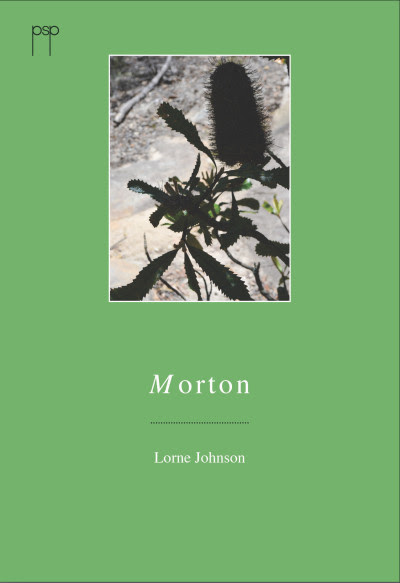
Nathanael O’Reilly reviews Lorne Johnson’s Morton

unnamed1

Morton
by Lorne Johnson
Pitt Street Poetry, 2016

Morton is Lorne Johnson’s first published collection. However, Johnson’s work should be familiar to avid readers of Australian poetry, since it has been published and commended in prizes for over a decade now. Johnson’s poetry has been published in many of Australia’s leading journals, including Mascara, Wet Ink, Island, Meanjin, Rabbit and Regime. In addition, Johnson’s poetry has already appeared in four anthologies (Writing to the Wire, Prayers of a Secular World, Australian Love Poems, and Eclogues, the 2007 Newcastle Poetry Prize anthology), which is quite an impressive publishing record for a poet who has not yet produced a full-length collection.

Johnson writes nature-based lyric poems, with the collection focusing primarily on Morton National Park in the Southern Highlands region of New South Wales. Morton opens with ‘Blue Note’, a twelve-line lyric divided into two six-line stanzas. The poem deftly combines several of Johnson’s passions (nature, birding and music), while stirring in a generous shot of humour and a few surprises. At dusk the speaker observes a ‘male Satin Bowerbird / on the edge of Gambells Rest’ (1-2). The bird is busy ‘decorating the forecourt of his / La Sagrada Familia bower’ (3-4), and here the reader encounters the first surprise, a bird’s nest in the Australian bush being compared to Antoni Gaudi’s glorious, unfinished masterpiece in Barcelona. The speaker goes on to list some of the bowerbird’s building materials, which include ‘milk bottle tops, pegs, straws,’ and, most surprisingly, a Smurf figurine (5-6). In the second stanza, the speaker returns ‘round midnight’ (7), just like a true jazz aficionado, to find the bird (no, not Charlie Parker), ‘kicking back, downing / Blue Curacao from a gumnut’ while ‘diggin’ Miles’ (8-10). Overall, the poem is a great success, a fine example of distillation, economy and wit. However, several of the line breaks could have been much more effective if Johnson had ended the lines with stronger words; instead, he ends several lines with articles and prepositions, such as ‘a,’ ‘of’ and ‘to,’ thus missing opportunities to create rhyme, rhythm and emphasis.

‘Destinations’, the third poem in the collection, is a found list poem consisting entirely of 18 place names, grouped into two stanzas, with each place name occupying a single line. Many of the place names are intriguing and / or amusing, such as ‘Hamlet Crown,’ ‘Blue Yodel Pass,’ ‘Mad Hatters Ridge,’ ‘Dungeon Creek,’ ‘Hell Hole’ and ‘Possibility Point’ (12-18). As Australian place names usually do, the names selected for the poem reveal hints of colonial history, cultural references, attempts at possession, hope, failure, and the displacement of Indigenous peoples. Indeed, the presence of just two Indigenous place names in the list is the most intriguing aspect of the poem. ‘Destinations’ contains some humour and inspires thought, though the names could have been arranged in a manner that would have created more juxtapositions, rhyme and unity.

‘Wishing Well’, the collection’s fourth poem, is the first to use the first person plural voice and situate the speaker in the poem with another human being. In the first three poems, humans are either absent or solitary observers. In the tradition of the English Romantic poets, Johnson’s poems often feature solitary individuals communing with nature. However, Johnson rarely uses the first person singular, preferring to convey his observations and ideas without direct reference to the individual speaker. The poem entitled ‘Crust’ is one of the rare exceptions, employing the first person singular in four of the six stanzas. ‘Crust’ is one of Morton’s standout poems, containing beautiful, creative and surprising images, such as ‘malt whisky paddocks’ (1), ‘tangled honeysuckle / and blackberry’ (3-4), ‘a tourist with lava inside him’ (7), and ‘Superb Lyrebirds’ that ‘shimmer like Mardi Gras boys’ (12).

Johnson’s sense of humour is on display in ‘yet another poem featuring gum trees’, which uses a variety of verbs (‘sporting,’ ‘harnessing’ and ‘scratching’) to describe gum trees engaged in various activities. One is ‘coping with a beehive in its armpit’ (11). The poem concludes with a gum tree ‘laughing at a bloke in a second hand bookstore in Bungedore, / who said he was over Australian poetry because of all the / bloody gum trees’ (9-11). Johnson’s poetics could be described as ‘contemporary pastoral’; he is clearly conversant with a wide range of Australian poetry and knows enough about his chosen field to be able to both situate himself in it and refrain from taking it too seriously. While Johnson’s work may fit within a poetic tradition including Judith Wright, Les Murray and John Kinsella, and he is surely widely read, having taught English in secondary schools for more than two decades, Johnson does not have any obvious poetic influences and has succeeded in developing his own voice.

In addition to his observations of birds and descriptions of sites within Morton National Park, Johnson addresses serious local issues, such as the dispossession of Indigenous people in ‘Sassafras, 1903’, the danger of bushfires in ‘when the fire needle leapt to catastrophic’, and threats to the local fauna in ‘A Reaction to a 2012 Hunting Proposal’. Johnson makes his position abundantly clear in the latter poem, describing the hunters as ‘blokes / with Southern Cross / tattoos and heads / full of dark energy;’ (1-4) who ‘hijack Morton / for days and run amok’ (9-10). In contrast, the victims of the hunters are ‘starlet-eyed, / powder-cheeked / Swamp Wallabies, / Hepburn-elegant in / smooth black gloves’ (16-20).

‘Pigeonhouse’, the collection’s final and most sophisticated poem, is by far the longest at 58 lines (most of the poems contain less than 20 lines). The poem contains many fine images and descriptions, such as ‘sweaty / morning skies’ (1-2), ‘vaulted emerald domes’ (4), and air tasting of ‘minted salt’ (8). One of the poem’s speakers states that Captain Cook named the mountain Pigeonhouse ‘after British dove boxes’ (32), while the primary speaker reveals that the site’s Indigenous name is ‘Didthul, after its / close resemblance / to a young woman’s breast’ (38-40). The existence of competing place names is just one example of several interweaving and overlapping narrative threads in the poem.

Morton is the standard chapbook length of 28 pages; however, it contains just twelve poems, and thus feels slight. Having encountered Johnson’s poetry in a variety of publications, I was excited to read this book, but disappointed to find it did not contain more of his excellent poems. I hope a full-length collection is forthcoming. Morton announces the arrival of a mature, insightful new voice in Australian poetry.

*Nathanael O’Reilly was born in Warrnambool and raised in Ballarat, Brisbane and Shepparton. He now resides in Texas. He is the author of Distance (2014) and two chapbooks, Suburban Exile: American Poems (2011) and Symptoms of Homesickness (2010), all published by Picaro Press. He is the recipient of an Emerging Writers Grant from the Australia Council for the Arts. Over one hundred of his poems have appeared in journals and anthologies around the world, including Antipodes, Australian Love Poems, Blackmail Press, fourW, LiNQ, Mascara, Postcolonial Text, Prosopisia, Red River Review, Snorkel, Social Alternatives, Tincture, Transnational Literature, Verity La and Windmills.
Website: http://tcu.academia.edu/NathanaelOReilly/About

**Taken from Cordite Poetry Review at http://www.cordite.org.au

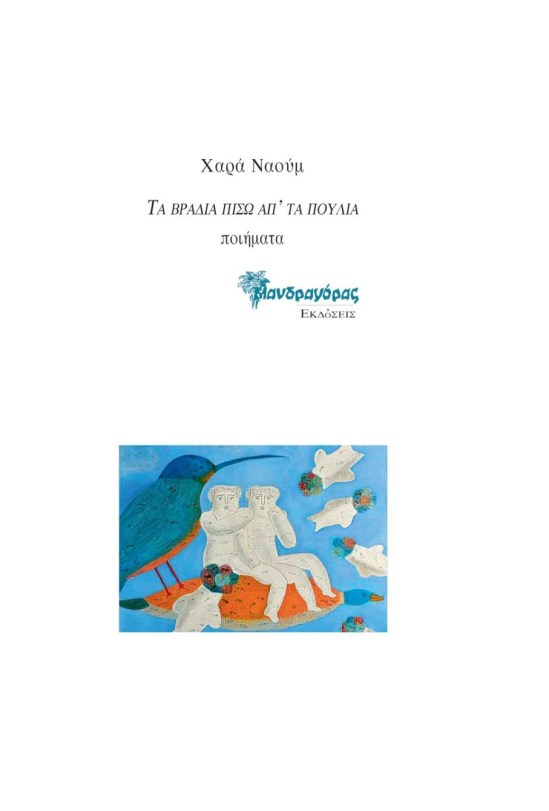
“Τα βράδια πάνω απ’ τα πουλιά” της Χαράς Ναούμ

%ce%a7%ce%b1%cf%81%ce%ac-%ce%9d%ce%b1%ce%bf%cf%8d%ce%bc-%ce%a4%ce%b1-%ce%b2%cf%81%ce%b1%ce%b4%ce%b9%ce%b1-%cf%80%ce%af%cf%83%cf%89-%ce%b1%cf%80-%cf%84%ce%b1-%cf%80%ce%bf%cf%85%ce%bb%ce%b9%ce%b1

Να βγαίνει η νύχτα από τα δέντρα
όπως βγαίνει η ψυχή απ’ τα πουλιά
[1]

Αποφάσισα να ξεκινήσω την παρουσίαση της συλλογής Τα βράδια πίσω απ’ τα πουλιά με τους συγκεκριμένους στίχους (είναι από το ποίημα «Τέλος – πευκοβελόνα») γιατί δίνουν μια καλή συνολική εικόνα της δουλειάς της Χαράς Ναούμ, και καθρεφτίζουν τα περισσότερα από τα χαρακτηριστικά της.

Η πρωτοτυπία και τελικά το ξάφνιασμα του αναγνώστη που προκύπτει από τον συγκερασμό «απομακρυσμένων» λέξεων είναι ένα από τα σταθερά στοιχεία μιας συλλογής που αν μη τι άλλο δεν στερείται συνέπειας στο λόγο. Διάλεξα αυτούς τους δύο στίχους επειδή σχεδόν «είδα» να παράγεται ήχος: ένα άκουσμα κάπου ανάμεσα στο ψυχανέμισμα και τη σιωπή, αυτή τη σιωπή που προηγείται αλλά και έπεται της ανάσας, ανεπαίσθητη αλλά αναμφίβολα παρούσα. Από την άλλη μεριά βέβαια, το συγκεκριμένο ποίημα υποφέρει από μια ασάφεια που ενώ δεν είναι καταστροφική, είναι αρκετά ισχυρή ώστε να μην μπορεί κανείς να την παρακάμψει, και αυτό είναι ένα χαρακτηριστικό που εμφανίζεται αρκετά συχνά και σε άλλα ποιήματα.

Η Χαρά Ναούμ έχει μια αποσπασματική οπτική στα πράγματα, όχι όμως και φωτογραφική, θα έλεγε κανείς ότι συνειδητά αγνοεί τις συνολικές εικόνες για να επικεντρωθεί στα θραύσματα. Δεν της λείπει ο ρεαλισμός, αντίθετα, θα έλεγα ότι γράφει μια σύγχρονη ποίηση ενός ανθρώπου με τους προβληματισμούς και τις ισοπεδωτικές ανασφάλειες της ηλικίας της: οι συνθήκες της ζωής στην Ελλάδα είναι τέτοιες που δεν αφήνουν και πολλά περιθώρια άλλωστε. Μπορεί η ποίηση που συναντά κανείς στα βράδια πίσω απ’ τα πουλιά να είναι κατά κάποιο τρόπο περιγραφική, αλλά η ποιήτρια διεκδικεί σθεναρά την υποκειμενικότητα της ματιάς της και την αυθεντικότητα της εκάστοτε διήγησης.

Εκτός από την προσέγγιση της πραγματικότητας, της αντικειμενικής και της όποιας άλλης, η Χαρά Ναούμ δημιουργεί ένα ποιητικό «εμείς» που ταυτόχρονα την περιλαμβάνει και την διαφοροποιεί ως εκφραστή της συγκίνησης και της εκάστοτε ανατροπής. Δίνει την αίσθηση ότι διατηρεί με ευλάβεια ίσες αποστάσεις τόσο από τα ποιήματα όσο και από τους αναγνώστες, με σεβασμό στα όρια, τα δικά της και των άλλων, ακόμα και των ίδιων της των στίχων. Εμπλέκεται λιγότερο για να προβληθεί και περισσότερο για να ψηλαφήσει τα συμβαίνοντα και να τα απεικονίσει, κάποιες φορές ιμπρεσσιονιστικά, με σκοπό άλλες φορές την κατανόηση και άλλες την αποδοχή.
Μια πιο γενική ματιά οδηγεί στο συμπέρασμα ότι ο αναγνώστης συναντάει πολύ καλούς στίχους όπως για παράδειγμα:

Αν δεις πάνω στα λιθόστρωτα
Υπάρχει μια αντανάκλαση ουρανού που δεν διαμαρτύρεται
[2]

σε συνολικά μετριότερα ποιήματα, και ενώ το σωστό ένστικτο είναι εκεί, κάποιες φορές οι ισορροπίες ανάμεσα στην σαφήνεια και την εσωστρέφεια των συμβολισμών κάπου χάνονται.

Το πέρασμα του χρόνου δεν ασκεί τον καταλυτικό του ρόλο όπως συμβαίνει συχνά στις συλλογές που έχω διαβάσει τελευταία, υπάρχει όμως ως στοιχείο πορείας και επαναπροσδιορισμού των σταθερών. Δίπλα σε ποιήματα χωρίς έντονη χρονική υπόσταση, συναντά κανείς άλλα που είναι σαν να γράφτηκαν για να στερεώσουν μια χρονική στιγμή μέσα στο σύμπαν, να παγώσουν τις συγκινήσεις και να προφυλάξουν τις εύθραυστες σκέψεις. Συμβαίνει κάποιες φορές οι συσχετισμοί που δημιουργούνται ανάμεσα στον χρόνο και τον όποιο ρεαλισμό να γεννούν ποιήματα «σουρεαλιστικά» με την αρνητική έννοια του όρου: η κατανόηση δέχεται πλήγμα και η επαφή του δημιουργού με τον αναγνώστη μπορεί να διασαλεύεται, αλλά στον αντίποδα αυτού η Χαρά Ναούμ βρίσκει τον χώρο να εξερευνήσει τους δρόμους της φαντασίας της.

Μια πιο στενή σχέση των ποιημάτων με τους τίτλους που τους έχουν δοθεί θα βοηθούσε στην κατεύθυνση της κατανόησης, στο κάτω-κάτω οι τίτλοι είναι καθαρά στην κρίση του δημιουργού, δεν είναι υποχρεωτικοί, κάτι που θεωρητικά σημαίνει ότι βρίσκονται εκεί για να ενισχύσουν τη δομή και την συνάφεια.

Παρόλο που δεν έχω διαβάσει την πρώτη της συλλογή ώστε να δω αν υπάρχει εξέλιξη στη γραφή και τη σκέψη, είναι γεγονός ότι τα θετικά στοιχεία υπερισχύουν των αρνητικών. Στα βράδια πίσω απ’ τα πουλιά, η Χαρά Ναούμ δείχνει ότι έχει άγκυρες στο παρόν και στην πραγματικότητα, αλλά ότι τα μετουσιώνει και τα δύο σε κάτι που τα ξεπερνάει: μπορεί έτσι να τους εξασφαλίσει μια πορεία στο μέλλον.

Παραθέτω δύο ποιήματα που μου άρεσαν περισσότερο:

ΕΡΩΤΙΚΟ [3]

Τα παλιά τρένα λένε
έγιναν επίσημα
είδος προς εξαφάνιση
τα γδέρνουν οι κερδοσκόποι
για τα περίφημα βαγόνια τους
ή τη μεταλλική σιωπή
ελλείψει επιβατών
-οι ράγες κλαίνε ανέγγιχτες

ΠΟΙΗΤΙΚΗ ΤΟΥ ΛΕΥΚΟΥ [4]

Κόλλησα πάνω μου την ποίηση σαν σώμα ξέντυτο
άχρωμο ερμαφρόδιτο
Το έσφιξα και το φύσηξα
κατά πως ρίχνει καταπάνω μας ο αέρας
τις οσμές των μόνων
-ίσως αυτό να είναι το μόνο λάθος που διαπράξαμε όλοι
Ποιος είναι άλλωστε υπάλληλος εντεταλμένος της ποιήσεως
ποιος ξέρει κατά γράμμα τους κανόνες
ή ποιος τους επιβάλλει
Όσο αγαθή κι αν μοιάζει η προαίρεση
απ’ όπου κι αν το πιάσεις το λευκό
δεν είναι χρώμα

Κρις Λιβανίου

[1] στ. 13-14, σελ.12
[2] Σελ. 13
[3] σελ. 23
[4] σελ. 20

*Το κείμενο αναδημοσιεύεται από το ιστολόγιο Στίγμα Λόγου στο http://stigmalogou.blogspot.com.au/2016/09/blog-post_28.html?utm_source=feedburner&utm_medium=email&utm_campaign=Feed:+blogspot/JkQng+(στίγμαΛόγου)

Dr Writer & Mr Editor: A guest post by Dmetri Kakmi

thumbnail_9781920882433-204x300

By Lee Kofman

As a writer who is also an editor, I’m often asked how it feels to be edited. In other words, how does it feel to be on the receiving end of criticism and someone else’s red pen, instead of being the one that dishes out the dirt?

The short answer is it’s discombobulating. The long answer is more complicated.

I edit for a living and when I have time I write; and that writing, should it be deemed publishable, is inevitably intensely scrutinised by other editors. As intensely, I hope, as I scrutinise other writers’ work before it is ready to be published.

When I gave the question serious consideration, I realised several things.

The first is that I love to be edited. The second is that I hate to be edited.

Following on from that, I saw that I am a split personality.

There are two Dmetris. One is a writer; the other is an editor. The former is an intuitive, imaginative creator and the latter a detached, analytical observer. They often contradict each other and have full-on arguments in my head. Over the years, I’ve learned to switch one voice on and to turn the other voice off, which is easier said than done, by the way. And it’s not always successful.

I’ll talk about my love/hate relationship with being edited shortly. First, l will digress slightly to tell you about a revelation I had when I saw the copy edited manuscript for my memoir Mother Land.

As a writer, I vacillate wildly between confidence and crippling uncertainty. One minute I’m Oscar Wilde, next minute I’m a dolt who can’t string two words together to make a sentence. Seeing the revisions of Mother Land the first time was humbling. Part of me was mortified by my infelicities. Another part was overjoyed and pathetically pleased that someone — anyone! — was paying attention to something I had slaved over for five solitary years.

The editor gave the manuscript an expert line-by-line copy edit and pushed my abilities to the utmost. However, if the editor was hard on me, I was harder on myself. After seeing what he had done, and agreeing with most of it, I rewrote almost the entire manuscript — a definite no-no at this late stage.

The editor in me knew it was the wrong thing to do, but the writer went, fuck it. It’s my name on the cover. I’ll do what I like. I wanted to get it right. The language, rhythm and pacing had to be unassailable. I would not get another chance.

The process made me see that good writing is rewriting. Bizarre as it sounds, it had not occurred to me before. At least it had not occurred to Dmetri, the writer. He thought his verbiage leaped fully formed from the keyboard. Of course, Dmetri, the editor, knew the truth and he sat in the wings going, ‘I told you so.’

Seeing the copy edited manuscript was a shock. It brought out the insecurities, the self-hatred and recrimination. I felt inept, despite the fact that, as an editor, I know being edited is par for the course, even for experienced authors. Your editor doesn’t think you’re a dolt. He or she is just trying to make a good thing even better, raise it to the next level.

At the time I worked as a senior editor at Penguin Books. In a flash, I saw that this is how my authors must feel when they see my scratches on their manuscript. That awful sinking feeling. The doubts; the questions. It would be sick-making no matter how practiced, professional or resilient one is.

From there on I began to be even more sensitive to the authors’ needs. I’d return the edited manuscript and followed up with a phone call to the writer a day or so later to make sure they hadn’t hanged themselves. Communication channels were open and I was there to give support, should it be required. It may sound absurd to a non-writer, but the support is a lifeline to a writer.

Being an editor isn’t merely about checking for typos; there’s a lot of handholding as well.

To get back to being edited. When I say I love to be edited I mean that I appreciate the editor’s objective eye. It helps to hone and refine a piece of writing until it zings.

It’s a mistake to think a writer who is also a professional editor can edit his own work. You’re too close to the manuscript. You can’t see the forest for the pencils, especially when it comes to structural matters.

An editor, on the other hand, has no vested interest. It’s business. This allows her to have an overview. She sees the big picture, strengths and failings. And, if she’s good, she can suggest how to resolve a problem. If you’re lost and wandering, she can guide you through the tangled undergrowth to the main path. For all that, you need a thick skin to survive the lacerations. And, unfortunately, I do not have a thick skin.

A short time ago, I entrusted the first draft of my new novel to my agent and to an author friend. Long story short, they were unimpressed. The consensus was that there’s a good story there, but there’s an even better one underneath. Interestingly, their feedback coincided on many points and even though Dmetri the editor knew they were right — the manuscript needs a lot of work before it can be shown to a publisher — Dmetri the writer was crushed.

A fortnight passed before I could look at the feedback and decide how to approach a new draft.

So if you ask how does it feel to be edited, I will say it’s awful. It’s like being crucified and pierced with spears; however, should you survive the ordeal, you will be triumphantly resurrected and adulation shall come to thee from all quarters. Or so I like to imagine.

I also take heart from a friend’s sage observation. ‘You’ve done it before and you’ll do it again.’

*Dmetri Kakmi is a writer and editor. His fictionalised memoir Mother Land was shortlisted for the New South Wales Premier’s Literary Awards; and is published in Australia, England and Turkey. He edited the acclaimed children’s anthology When We Were Young. His ghost story ‘The Boy by the Gate’ was reprinted in The Year’s Best Australian Fantasy and Horror 2013. Haunting Matilda was shortlisted in the Aurealis Awards Best Fantasy Novella category in 2015. His essays and short stories appear in anthologies and journals. He lives in Melbourne.

**Taken from Lee Kofman’s webpage at http://www.leekofman.com.au/the-writing-life/dr-writer-mr-editor-guest-post-dmetri-kakmi/

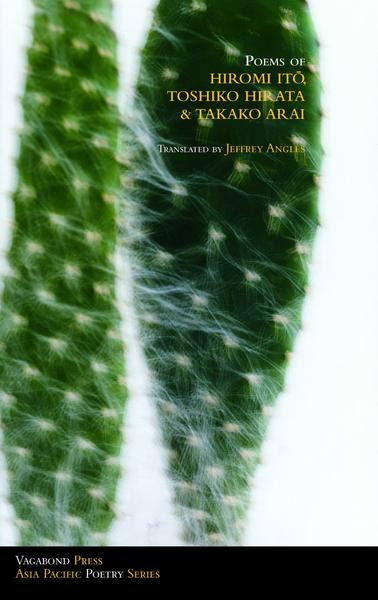
Pam Brown reviews Poems of Hiromi Itō, Toshiko Hirata & Takako Arai

unnamed

Poems of Hiromi Itō, Toshiko Hirata & Takako Arai
Translated from the Japanese by Jeffrey Angles
Vagabond Press, 2016

In the winter of Pokémon Go, I read quite a few new books of poetry. The collection Poems of Hiromi Itō, Toshiko Hirata & Takako Arai was the most cogent. These three Japanese poets are taboo-breaking women who write without reservation about ‘female experience’ in the political context of contemporary transnational capitalism.

There was a long tradition of separating literature from politics in Japan which fostered rarefied or, what translator Jeffrey Angles, in his invaluable introduction calls ‘staid, polished and artsy’ language. Eschewing tradition, Hiromi Itō, Toshiko Hirata and Takako Arai take a contemporary approach via dialectical sensitivity to the way poetry might sound and rhythmic direct speech. Sometimes this technique produces incantatory repetition, especially in Hiromi Itō’s shamanist poems.

Hiromi often addresses once-sensitive subjects like female eros, post-partum depression, sexual desire and inequity. Her poems are confronting. There’s a room of deformed and diseased body parts preserved in bottles in her poem from 1991, ‘Father’s Uterus, or the Map’ –

The men pointed to testicles with elephantiasis
Those are my father’s bones and spinal column
Those are my father’s joints
Those are us, the children our father gave birth to
The men pointed to foetuses with hydrocephalus
And that is you
The men pointed to a breast with cancer
And that is my father’s uterus
The men pointed to a uterus that had grown teet

Hiromi Itō moved to California in the early1990s and now lives in both Encinitas, near San Diego, and Kumamoto, on the Southern Japanese island of Kyūshū. Some of her poems, like ‘Mother Dies’ examine expatriate identity, the future of children born to Japanese expats and the sense of not belonging in either country –

I had thought my own existence was certain
But now I understand
Things are indeterminate, colors and shapes
Things are indeterminate, even sounds
Is it an /I/ or an /r/?
It all makes sense now
It is not just a problem with me but with all Nikkeijin
1

In ‘Yakisoba’ Hiromi recounts a confusing exchange in a supermarket with an old expatriate Japanese woman who shouts and yells out to promote the yakisoba (fried noodles) she is selling. The poem ends –

Here is a woman
Who comes back alive, who comes back dead
Who connects with the next woman
With tens and hundreds and thousands of women
With generations, dozens of generations down the line

Toshiko Hirata, together with Hiromi Itō, Matsui Keiko, outsider poet Shiraishi Kazuko, and others, is well known in Japan as a major figure in what was called the ‘women’s poetry boom’ of the 1980s. (Though, apparently, Hiromi Itō was not too impressed by the ‘boom’).

Toshiko Hirata uses irony and repetition to make poems that are deeply sceptical of relationships, of the strictures of society, of the normative family, and of poetry itself. Many of her poems are quietly and darkly sardonic.

In a recently published collection, The Freedom of the Joke, Toshiko considered small objects like staples in intimate contrast with the immense force of the disastrous earthquakes, tsunami and aftershocks of 2011 –

Some of the documents that came today
Were fastened with beautiful staples
The color of dayflowers
For me who had known nothing but gray staples
Their color was fresh and new

(‘Beautiful Staples’)

Just two weeks after the disasters Toshiko published ‘Do Not Tremble’ in the daily newspaper Yomiuri Shinbum (The Japan Times) . It was a poetic plea to the earth to stop shaking so that everyone could return to their ordinary lives –

It is March, it is spring
It should be a gentle season of vernal sleep
When one sleeps so deeply there is no dawn
But spring this year
Shakes us to keep us
From falling asleep

Earth, it is enough
For you to simply
Keep spinning happily
Leave the trembling
To windblown flowers and
Laundry hanging in the year
You should simply spin
Innocently

Eleven years younger than Hiromi and Toshiko, Takako Arai (born in 1966) is the daughter of a manager of a now-obsolete small traditional silk weaving factory in Central Japan. In early work Arai wrote about women textile workers. She moved to Tokyo for her education and lives there still.

Like Toshiko, Takako responds poetically to the ongoing consequences of the nuclear crisis. Her experimental and socially critical poetry uses repetition, direct speech, fragmentation and combined imagery. Her ironies are complicated. For instance, she uses euphemistic phrases like ‘womanly shadow’ for women’s genitals. (Jeffrey Angles’s extensive notes on the poems are essential to grasping the levels in all three poets work.)

Takako’s connection with the now redundant craft-textile industry remains a topic. In ‘Colored Glass’ a factory occupies a young woman’s body when she swallows a silkworm –

I swallowed it!
The eternal silkworm
On its mission forever
Crawling through the labyrinth of my bowels
The bitter worm squashed in my teeth

There is a factory floating like an isle inside
Its head turns round and round

Recently, a friend of mine visiting Sydney from Adelaide, where there is no Uniqlo (yet), made a shopping excursion to the Japanese global clothing shop. I had just read Takako Arai’s poem railing against corporatisation and this particular company’s threat to individuality. (I am wearing a Uniqlo blouse as I write this review – and I am repentant). Uniqlo’s recent expansions are seen, by capitalists, as bringing economic hope to Japanese business in the aftermath of the 2011 disasters. Not so for Takako Arai –

I’m sick of it
all this Goth clothing, all this Uniqlo-ing

Isn’t that all you’d ever let us wear?
Wasn’t that our national uniform?
Before the quake
The tsunami of the recession
All we ever worried about?

The reactor building about to fly off (buttobō)
Embankments (teibō), conspiracies (inbō), ministerial offices
(kanbō),
Unbelievabō
Incredibō
TEPCO2
Puts on their Uniqlo
To bulwark
The tsunami

(‘Galapagos’3)

As well as introducing new poems, this collection gathers work from various periods of publication by these dynamic women poets. It offers further complexity, exuberance, depth, variousness and challenge than I have canvassed in this brief review but my aim has been to give due attention to this startling and straightforward contemporary Japanese poetry.

Japanese descendants ↩
Tokyo Electric Power Company (responsible for decommissioning Fukushima nuclear power station. ↩
The title of Takako Arai’s poem ‘Galapagos’ is a metaphor in Japan for ‘island mentality’ syndrome (referring to the isolated fauna and flora of the Galapagos Islands). ↩
This entry was posted in BOOK REVIEWS and tagged Hiromi Itō, Jeffrey Angles, Pam Brown, Takako Arai, Toshiko Hirata. Bookmark the permalink.

*Pam Brown’s most recent of many books is Missing up (Vagabond Press, 2015). She lives in Sydney.

**Taken from Cordite Poetry Review at http://cordite.org.au/reviews/brown-ito-hirata-arai-angles/

Alice Allan reviews Lisa Brockwell and Tamryn Bennett

eg-cover-shadowed-202x300

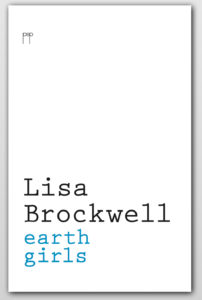
Earth Girls
by Lisa Brockwell
Pitt Street Poetry, 2016

unnamed

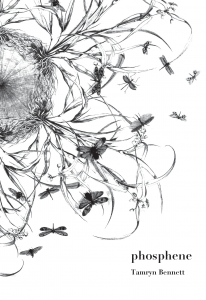
phosphene
by Tamryn Bennett
Rabbit Poets, 2016

Lisa Brockwell’s Earth Girls and Tamryn Bennett’s phosphene are both compelling first collections in their own right. Reading them side-by-side, however, an equally compelling contrast emerges. Where Brockwell looks for clarity and direct engagement with her audience, Bennett invites interpretation, offering many clues and few concrete answers. This contrast reveals something else: the strengths of one approach do not threaten, or cancel out, those of the other.

In an interview with Northerly editor Barnaby Smith earlier this year, Brockwell outlined her approach to writing poetry: ‘Accessibility is a priority for me, but not at the expense of intelligence, nuance or complexity,’ she said. ‘I want my poems to be accessible, but by that I just mean that I want a reader to be able to engage with the poems, to find something there. That doesn’t mean the poem is easy, or able to be explained.’

This balance is clear in every one of the poems that make up Earth Girls. Often it’s Brockwell’s titles that do the heavy lifting, spelling out a subject and allowing the rest of the poem to move freely around it. ‘On Becoming a Housewife for the First time at the Age of 41’, for example, begins:

I learn to cut up a melon, though remain unable to bring a knife to a whole chicken. I save small lizards from the dogs. I find myself on tuckshop duty with my dearest friend; at university we didn’t see this coming.

In other poems, such as the short, seething ‘Honey’, it’s the slow reveal of a story that holds our attention:

Where is the honey? You asked me
that morning, wide awake to the menu
of the world. I hadn’t seen the honey
in years: the jar a harem of sun,
radiant and louche, perfected by a city
of drones

In her interview with Smith, Brockwell explains that Earth Girls brings together seven years’ worth of work. The care she has taken in choosing pieces for the collection is obvious. With the exception of one or two minor poems, most are strong enough to hold their own ground. More than a few offer the satisfying jolt of an original comparison: ‘Window box platonic’ for example (‘Waiting for the train’), or ‘tambourine / of wind in trees’ (‘When I run’).

The two-part poem ‘Laika and Oleg’ is one of the high points in the collection. This is a moving account of the fate of the dog Laika, the first living creature to orbit the earth, and of the man who selected and trained her:

Metal walls, the only smell is chemical,
disorienting me like those blank
corridors in the lab. When I close my eyes
he comes to me with ‘good girl’, with his warm hands

It’s an unflinching poem, almost bruising to read. There are points when it’s tempting to stop altogether, but Brockwell leads us gently forward through Laika and Oleg’s story.

Brockwell consistently combines line breaks at natural pauses, with those that draw the reader down to the rest of a phrase. This technique creates a steady rhythm that supports her exploration of other difficult subject matter. For example, the three-part poem ‘Uluru’ – another crest in the collection – begins with characteristic openness: ‘Three days after my middle miscarriage / we went to the desert.’ Further into the poem we see another of Brockwell’s strengths: her insistence that her poems share personal experience, then stretch beyond it:

… Within minutes I knew
a dingo took that baby. Then grief grabbed me
with its jaws. This country could not
countenance a woman who did not collapse
on prime time, who would not unstitch herself
in front of strangers. A woman at her very edge.

In her acknowledgements Brockwell mentions contemporaries including Judith Beveridge and Dorothy Porter – two poets with a breathtaking ability to communicate both lurking menace and joy in apparently everyday subjects. At its best, Earth Girls reaches toward these unspoken things with the ‘lucidity’ Porter spoke about in her 2001 Judith Wright memorial lecture. ‘Lucidity can write with a tongue of fire,’ Porter said. ‘Often it’s a sense of urgency, a sense of dire times, that can make a poem searingly lucid.’

While Brockwell’s subjects generally remain close to home (her poems on the aftermath of Japan’s 2011 tsunami and the amusing ‘Jennifer & Angelina’ notwithstanding) this ‘sense of urgency’ is achieved on a local scale. Again she pushes beyond personal experience into wider social observations in the ekphrastic series ‘Point of View,’ which responds to the work of Tasmanian landscape artist Philip Wolfhagen. At one point, the speaker expresses her relief that the painting in front of her is not:

… one of those where she
is waiting around, always out of frame
while some idiot she is married to
takes their only horse, dresses up
in a tin hat and does some grandstanding.

The points where the collection could be stronger – and they are rare – occur when Brockwell strays beyond clarity into over-explication. Indeed, it’s the polish in the majority of the poems that makes a meticulous reader itch to pull out a word here and there. For example, the lines ‘Sitting / on the rocks in her swimming costume, / her hair wet and loose down her back’ (‘Seaworthy’) are enough to complete the picture without the next line: ‘a woman who has just finished her swim.’ Similarly the qualifiers in these lines could be left out: ‘For me, it’s after the harvest, only just / but even so, a different season’ (‘Waiting for the train’).

While Earth Girls generally adheres to structures and themes familiar to readers of Australian poetry today, Tamryn Bennett’s phosphene occupies an entirely different space. This is the fourth book in the Rabbit Poets Series published by Rabbit: A Journal of Non-fiction Poetry, adding to collections by Jordie Albiston, Tim Wright and Geraldine Burrowes plus three more debuts launched with Bennett’s collection. It continues editor Jessica L. Wilkinson’s exploration beyond the bounds of the poetry we’re used to – bringing attention to the experimental, and testing the limits of nonfiction.

Phosphene is made up of four poems and spans 50 pages, using meticulous typesetting and blank space to create movement – a sense that the poems are spreading across the pages. Each English stanza is mirrored by a Spanish translation courtesy of one of Bennett’s collaborators, composer Guillermo Batiz. The work of visual artist Jackie Cavallaro also complements the text, adding an intricate visual layer to the book. In Bennett’s introduction we learn that phosphene actually began life as a collaborative exhibition with Batiz, Cavallaro and performer Tamara Elkins.
Bennett explains that her work on phosphene began in Mexico ‘as a series of rituals and offerings at sacred sites’. ‘Offerings were tied with thread and placed in the ashes of shrines, cracks of temples and beneath desert dust,’ she explains. ‘Mirroring ruins and fractured histories, the fragmented elegies of phosphene are what remain after the light of the moment has passed.’ This is lofty subject matter and it’s to Bennett’s credit that she works toward her goals through scarcity of language, rather than weighing these ideas down with words. The following stanzas from the first poem, ‘at the temple of letters’, give some idea of Bennett’s compact approach:

white on red
we roam the ruins

blanco sobre rojo
rondamos las ruinas

the rocking bridge,
the dried river

el puente que mece,
el río seco

white on red
all sins, all saints

It’s clear that Bennett wants more than just the physical space created by short lines. There’s also expansiveness in terms of subject matter. The third poem in the collection, ‘the invisible’, best illustrates this. It begins in a misty valley before moving ‘through fields of cactus / to the desert by the sea’. The poem then begins to switch between confined spaces – rib bones, a wardrobe, a hall, a mirrored room and holes in a wall – and open spaces: a green stream, the sky, and a ‘garden of bones’. The elegiac quality of the book is perhaps most pronounced in this poem. ‘the invisible / keep living’, Bennett tells us, ‘sadness stacked / in towers / surround the bed’.
Along with Cavallaro’s finely detailed images, punctuation marks are also dotted around the poems on most pages, suggesting the desert dust Bennett encountered when first creating the work. This also adds to the sensation that the poems are floating, suspended above the page rather than printed onto it.
The fact that each line is doubled through its Spanish translation is another crucial element. As each poem progresses, it feels natural to match each English word with its Spanish translation. ‘Owl’ becomes buhó, ‘chance’ becomes azar and ‘holy nothing’ becomes bendita nada. This pattern concentrates each line, bringing the shape and meaning of every word into focus. With shorter lines, this focus becomes sharper still, as in this section from ‘the invisible’:

aquí,

here,

*

and here,

y aquí,

the ground remembers

el suelo recuerda

Taken as a whole, phosphene is a wild, open landscape with features that only gradually become familiar. Finishing a first reading, we find hints of this expansive, quiet world, but the full picture isn’t clear. This is a space that invites many repeat visits. It’s with each subsequent reading that phosphene rewards us.
As the book becomes more familiar, each page takes on the quality of an individual artwork as well as being part of a greater whole. The book’s rhythm can be heard as the speaker, the accompanying ‘you’ and the minor characters, move back and forth between confined and open spaces, and through time. This movement is anything but linear – it’s closer to a spiral or a layering of images and memories. As the book ends, Bennett hints at completion without giving in to neatness:

here is where you leave
your hair,

here,

in the desert,
in his hands

With each reading it becomes easier to see how Bennett is contributing to the tradition she notes in her introduction – that of the ‘xopan cuicatl’ or ‘spring song’ of Nahuatl poetry: ‘Each of these acts is part of a longer thread,’ Bennett says of her work. ‘Each a knot to remember the past and our place within it.’
It’s tempting to end here by finding similarities between phosphine and Earth Girls – to look for a way to bridge any perceived ‘gap’ between an experimental project and a lyric one. These two works do share many strengths. Both have a clear goal, are precise in working towards that goal, and show wholeheartedness in each step taken. But their real strengths are actually entirely independent. Far from placing them in opposition, these differences reinforce each poet’s place on the flourishing continuum of Australian poetry today.

*Alice Allan is a writer and editor living in Melbourne. Her work has been published in journals such as Rabbit, Going Down Swinging and Offset.

**Taken from Cordite Poetry Review at http://cordite.org.au/reviews/allan-brockwell-bennett/