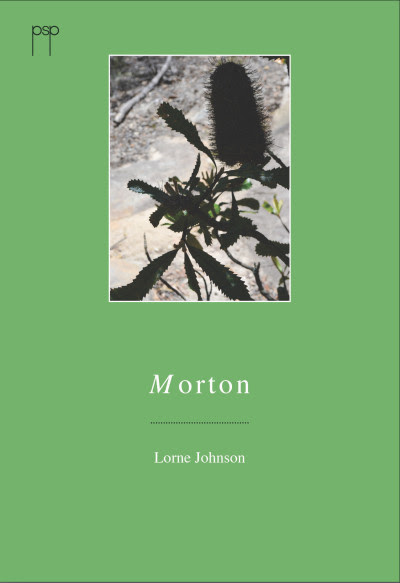
Nathanael O’Reilly reviews Lorne Johnson’s Morton

unnamed1

Morton
by Lorne Johnson
Pitt Street Poetry, 2016

Morton is Lorne Johnson’s first published collection. However, Johnson’s work should be familiar to avid readers of Australian poetry, since it has been published and commended in prizes for over a decade now. Johnson’s poetry has been published in many of Australia’s leading journals, including Mascara, Wet Ink, Island, Meanjin, Rabbit and Regime. In addition, Johnson’s poetry has already appeared in four anthologies (Writing to the Wire, Prayers of a Secular World, Australian Love Poems, and Eclogues, the 2007 Newcastle Poetry Prize anthology), which is quite an impressive publishing record for a poet who has not yet produced a full-length collection.

Johnson writes nature-based lyric poems, with the collection focusing primarily on Morton National Park in the Southern Highlands region of New South Wales. Morton opens with ‘Blue Note’, a twelve-line lyric divided into two six-line stanzas. The poem deftly combines several of Johnson’s passions (nature, birding and music), while stirring in a generous shot of humour and a few surprises. At dusk the speaker observes a ‘male Satin Bowerbird / on the edge of Gambells Rest’ (1-2). The bird is busy ‘decorating the forecourt of his / La Sagrada Familia bower’ (3-4), and here the reader encounters the first surprise, a bird’s nest in the Australian bush being compared to Antoni Gaudi’s glorious, unfinished masterpiece in Barcelona. The speaker goes on to list some of the bowerbird’s building materials, which include ‘milk bottle tops, pegs, straws,’ and, most surprisingly, a Smurf figurine (5-6). In the second stanza, the speaker returns ‘round midnight’ (7), just like a true jazz aficionado, to find the bird (no, not Charlie Parker), ‘kicking back, downing / Blue Curacao from a gumnut’ while ‘diggin’ Miles’ (8-10). Overall, the poem is a great success, a fine example of distillation, economy and wit. However, several of the line breaks could have been much more effective if Johnson had ended the lines with stronger words; instead, he ends several lines with articles and prepositions, such as ‘a,’ ‘of’ and ‘to,’ thus missing opportunities to create rhyme, rhythm and emphasis.

‘Destinations’, the third poem in the collection, is a found list poem consisting entirely of 18 place names, grouped into two stanzas, with each place name occupying a single line. Many of the place names are intriguing and / or amusing, such as ‘Hamlet Crown,’ ‘Blue Yodel Pass,’ ‘Mad Hatters Ridge,’ ‘Dungeon Creek,’ ‘Hell Hole’ and ‘Possibility Point’ (12-18). As Australian place names usually do, the names selected for the poem reveal hints of colonial history, cultural references, attempts at possession, hope, failure, and the displacement of Indigenous peoples. Indeed, the presence of just two Indigenous place names in the list is the most intriguing aspect of the poem. ‘Destinations’ contains some humour and inspires thought, though the names could have been arranged in a manner that would have created more juxtapositions, rhyme and unity.

‘Wishing Well’, the collection’s fourth poem, is the first to use the first person plural voice and situate the speaker in the poem with another human being. In the first three poems, humans are either absent or solitary observers. In the tradition of the English Romantic poets, Johnson’s poems often feature solitary individuals communing with nature. However, Johnson rarely uses the first person singular, preferring to convey his observations and ideas without direct reference to the individual speaker. The poem entitled ‘Crust’ is one of the rare exceptions, employing the first person singular in four of the six stanzas. ‘Crust’ is one of Morton’s standout poems, containing beautiful, creative and surprising images, such as ‘malt whisky paddocks’ (1), ‘tangled honeysuckle / and blackberry’ (3-4), ‘a tourist with lava inside him’ (7), and ‘Superb Lyrebirds’ that ‘shimmer like Mardi Gras boys’ (12).

Johnson’s sense of humour is on display in ‘yet another poem featuring gum trees’, which uses a variety of verbs (‘sporting,’ ‘harnessing’ and ‘scratching’) to describe gum trees engaged in various activities. One is ‘coping with a beehive in its armpit’ (11). The poem concludes with a gum tree ‘laughing at a bloke in a second hand bookstore in Bungedore, / who said he was over Australian poetry because of all the / bloody gum trees’ (9-11). Johnson’s poetics could be described as ‘contemporary pastoral’; he is clearly conversant with a wide range of Australian poetry and knows enough about his chosen field to be able to both situate himself in it and refrain from taking it too seriously. While Johnson’s work may fit within a poetic tradition including Judith Wright, Les Murray and John Kinsella, and he is surely widely read, having taught English in secondary schools for more than two decades, Johnson does not have any obvious poetic influences and has succeeded in developing his own voice.

In addition to his observations of birds and descriptions of sites within Morton National Park, Johnson addresses serious local issues, such as the dispossession of Indigenous people in ‘Sassafras, 1903’, the danger of bushfires in ‘when the fire needle leapt to catastrophic’, and threats to the local fauna in ‘A Reaction to a 2012 Hunting Proposal’. Johnson makes his position abundantly clear in the latter poem, describing the hunters as ‘blokes / with Southern Cross / tattoos and heads / full of dark energy;’ (1-4) who ‘hijack Morton / for days and run amok’ (9-10). In contrast, the victims of the hunters are ‘starlet-eyed, / powder-cheeked / Swamp Wallabies, / Hepburn-elegant in / smooth black gloves’ (16-20).

‘Pigeonhouse’, the collection’s final and most sophisticated poem, is by far the longest at 58 lines (most of the poems contain less than 20 lines). The poem contains many fine images and descriptions, such as ‘sweaty / morning skies’ (1-2), ‘vaulted emerald domes’ (4), and air tasting of ‘minted salt’ (8). One of the poem’s speakers states that Captain Cook named the mountain Pigeonhouse ‘after British dove boxes’ (32), while the primary speaker reveals that the site’s Indigenous name is ‘Didthul, after its / close resemblance / to a young woman’s breast’ (38-40). The existence of competing place names is just one example of several interweaving and overlapping narrative threads in the poem.

Morton is the standard chapbook length of 28 pages; however, it contains just twelve poems, and thus feels slight. Having encountered Johnson’s poetry in a variety of publications, I was excited to read this book, but disappointed to find it did not contain more of his excellent poems. I hope a full-length collection is forthcoming. Morton announces the arrival of a mature, insightful new voice in Australian poetry.

*Nathanael O’Reilly was born in Warrnambool and raised in Ballarat, Brisbane and Shepparton. He now resides in Texas. He is the author of Distance (2014) and two chapbooks, Suburban Exile: American Poems (2011) and Symptoms of Homesickness (2010), all published by Picaro Press. He is the recipient of an Emerging Writers Grant from the Australia Council for the Arts. Over one hundred of his poems have appeared in journals and anthologies around the world, including Antipodes, Australian Love Poems, Blackmail Press, fourW, LiNQ, Mascara, Postcolonial Text, Prosopisia, Red River Review, Snorkel, Social Alternatives, Tincture, Transnational Literature, Verity La and Windmills.
Website: http://tcu.academia.edu/NathanaelOReilly/About

**Taken from Cordite Poetry Review at http://www.cordite.org.au
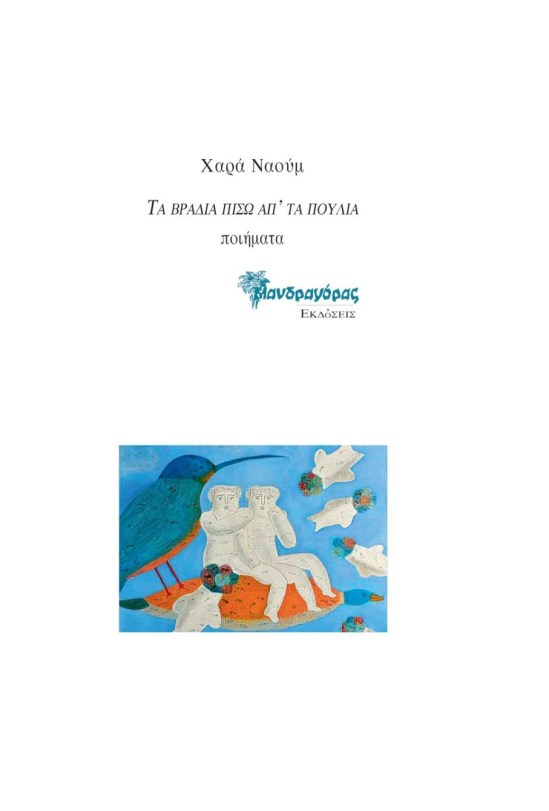
“Τα βράδια πάνω απ’ τα πουλιά” της Χαράς Ναούμ

%ce%a7%ce%b1%cf%81%ce%ac-%ce%9d%ce%b1%ce%bf%cf%8d%ce%bc-%ce%a4%ce%b1-%ce%b2%cf%81%ce%b1%ce%b4%ce%b9%ce%b1-%cf%80%ce%af%cf%83%cf%89-%ce%b1%cf%80-%cf%84%ce%b1-%cf%80%ce%bf%cf%85%ce%bb%ce%b9%ce%b1

Να βγαίνει η νύχτα από τα δέντρα
όπως βγαίνει η ψυχή απ’ τα πουλιά
[1]

Αποφάσισα να ξεκινήσω την παρουσίαση της συλλογής Τα βράδια πίσω απ’ τα πουλιά με τους συγκεκριμένους στίχους (είναι από το ποίημα «Τέλος – πευκοβελόνα») γιατί δίνουν μια καλή συνολική εικόνα της δουλειάς της Χαράς Ναούμ, και καθρεφτίζουν τα περισσότερα από τα χαρακτηριστικά της.

Η πρωτοτυπία και τελικά το ξάφνιασμα του αναγνώστη που προκύπτει από τον συγκερασμό «απομακρυσμένων» λέξεων είναι ένα από τα σταθερά στοιχεία μιας συλλογής που αν μη τι άλλο δεν στερείται συνέπειας στο λόγο. Διάλεξα αυτούς τους δύο στίχους επειδή σχεδόν «είδα» να παράγεται ήχος: ένα άκουσμα κάπου ανάμεσα στο ψυχανέμισμα και τη σιωπή, αυτή τη σιωπή που προηγείται αλλά και έπεται της ανάσας, ανεπαίσθητη αλλά αναμφίβολα παρούσα. Από την άλλη μεριά βέβαια, το συγκεκριμένο ποίημα υποφέρει από μια ασάφεια που ενώ δεν είναι καταστροφική, είναι αρκετά ισχυρή ώστε να μην μπορεί κανείς να την παρακάμψει, και αυτό είναι ένα χαρακτηριστικό που εμφανίζεται αρκετά συχνά και σε άλλα ποιήματα.

Η Χαρά Ναούμ έχει μια αποσπασματική οπτική στα πράγματα, όχι όμως και φωτογραφική, θα έλεγε κανείς ότι συνειδητά αγνοεί τις συνολικές εικόνες για να επικεντρωθεί στα θραύσματα. Δεν της λείπει ο ρεαλισμός, αντίθετα, θα έλεγα ότι γράφει μια σύγχρονη ποίηση ενός ανθρώπου με τους προβληματισμούς και τις ισοπεδωτικές ανασφάλειες της ηλικίας της: οι συνθήκες της ζωής στην Ελλάδα είναι τέτοιες που δεν αφήνουν και πολλά περιθώρια άλλωστε. Μπορεί η ποίηση που συναντά κανείς στα βράδια πίσω απ’ τα πουλιά να είναι κατά κάποιο τρόπο περιγραφική, αλλά η ποιήτρια διεκδικεί σθεναρά την υποκειμενικότητα της ματιάς της και την αυθεντικότητα της εκάστοτε διήγησης.

Εκτός από την προσέγγιση της πραγματικότητας, της αντικειμενικής και της όποιας άλλης, η Χαρά Ναούμ δημιουργεί ένα ποιητικό «εμείς» που ταυτόχρονα την περιλαμβάνει και την διαφοροποιεί ως εκφραστή της συγκίνησης και της εκάστοτε ανατροπής. Δίνει την αίσθηση ότι διατηρεί με ευλάβεια ίσες αποστάσεις τόσο από τα ποιήματα όσο και από τους αναγνώστες, με σεβασμό στα όρια, τα δικά της και των άλλων, ακόμα και των ίδιων της των στίχων. Εμπλέκεται λιγότερο για να προβληθεί και περισσότερο για να ψηλαφήσει τα συμβαίνοντα και να τα απεικονίσει, κάποιες φορές ιμπρεσσιονιστικά, με σκοπό άλλες φορές την κατανόηση και άλλες την αποδοχή.
Μια πιο γενική ματιά οδηγεί στο συμπέρασμα ότι ο αναγνώστης συναντάει πολύ καλούς στίχους όπως για παράδειγμα:

Αν δεις πάνω στα λιθόστρωτα
Υπάρχει μια αντανάκλαση ουρανού που δεν διαμαρτύρεται
[2]

σε συνολικά μετριότερα ποιήματα, και ενώ το σωστό ένστικτο είναι εκεί, κάποιες φορές οι ισορροπίες ανάμεσα στην σαφήνεια και την εσωστρέφεια των συμβολισμών κάπου χάνονται.

Το πέρασμα του χρόνου δεν ασκεί τον καταλυτικό του ρόλο όπως συμβαίνει συχνά στις συλλογές που έχω διαβάσει τελευταία, υπάρχει όμως ως στοιχείο πορείας και επαναπροσδιορισμού των σταθερών. Δίπλα σε ποιήματα χωρίς έντονη χρονική υπόσταση, συναντά κανείς άλλα που είναι σαν να γράφτηκαν για να στερεώσουν μια χρονική στιγμή μέσα στο σύμπαν, να παγώσουν τις συγκινήσεις και να προφυλάξουν τις εύθραυστες σκέψεις. Συμβαίνει κάποιες φορές οι συσχετισμοί που δημιουργούνται ανάμεσα στον χρόνο και τον όποιο ρεαλισμό να γεννούν ποιήματα «σουρεαλιστικά» με την αρνητική έννοια του όρου: η κατανόηση δέχεται πλήγμα και η επαφή του δημιουργού με τον αναγνώστη μπορεί να διασαλεύεται, αλλά στον αντίποδα αυτού η Χαρά Ναούμ βρίσκει τον χώρο να εξερευνήσει τους δρόμους της φαντασίας της.

Μια πιο στενή σχέση των ποιημάτων με τους τίτλους που τους έχουν δοθεί θα βοηθούσε στην κατεύθυνση της κατανόησης, στο κάτω-κάτω οι τίτλοι είναι καθαρά στην κρίση του δημιουργού, δεν είναι υποχρεωτικοί, κάτι που θεωρητικά σημαίνει ότι βρίσκονται εκεί για να ενισχύσουν τη δομή και την συνάφεια.

Παρόλο που δεν έχω διαβάσει την πρώτη της συλλογή ώστε να δω αν υπάρχει εξέλιξη στη γραφή και τη σκέψη, είναι γεγονός ότι τα θετικά στοιχεία υπερισχύουν των αρνητικών. Στα βράδια πίσω απ’ τα πουλιά, η Χαρά Ναούμ δείχνει ότι έχει άγκυρες στο παρόν και στην πραγματικότητα, αλλά ότι τα μετουσιώνει και τα δύο σε κάτι που τα ξεπερνάει: μπορεί έτσι να τους εξασφαλίσει μια πορεία στο μέλλον.

Παραθέτω δύο ποιήματα που μου άρεσαν περισσότερο:

ΕΡΩΤΙΚΟ [3]

Τα παλιά τρένα λένε
έγιναν επίσημα
είδος προς εξαφάνιση
τα γδέρνουν οι κερδοσκόποι
για τα περίφημα βαγόνια τους
ή τη μεταλλική σιωπή
ελλείψει επιβατών
-οι ράγες κλαίνε ανέγγιχτες

ΠΟΙΗΤΙΚΗ ΤΟΥ ΛΕΥΚΟΥ [4]

Κόλλησα πάνω μου την ποίηση σαν σώμα ξέντυτο
άχρωμο ερμαφρόδιτο
Το έσφιξα και το φύσηξα
κατά πως ρίχνει καταπάνω μας ο αέρας
τις οσμές των μόνων
-ίσως αυτό να είναι το μόνο λάθος που διαπράξαμε όλοι
Ποιος είναι άλλωστε υπάλληλος εντεταλμένος της ποιήσεως
ποιος ξέρει κατά γράμμα τους κανόνες
ή ποιος τους επιβάλλει
Όσο αγαθή κι αν μοιάζει η προαίρεση
απ’ όπου κι αν το πιάσεις το λευκό
δεν είναι χρώμα

Κρις Λιβανίου

[1] στ. 13-14, σελ.12
[2] Σελ. 13
[3] σελ. 23
[4] σελ. 20

*Το κείμενο αναδημοσιεύεται από το ιστολόγιο Στίγμα Λόγου στο http://stigmalogou.blogspot.com.au/2016/09/blog-post_28.html?utm_source=feedburner&utm_medium=email&utm_campaign=Feed:+blogspot/JkQng+(στίγμαΛόγου)

Dr Writer & Mr Editor: A guest post by Dmetri Kakmi

thumbnail_9781920882433-204x300

By Lee Kofman

As a writer who is also an editor, I’m often asked how it feels to be edited. In other words, how does it feel to be on the receiving end of criticism and someone else’s red pen, instead of being the one that dishes out the dirt?

The short answer is it’s discombobulating. The long answer is more complicated.

I edit for a living and when I have time I write; and that writing, should it be deemed publishable, is inevitably intensely scrutinised by other editors. As intensely, I hope, as I scrutinise other writers’ work before it is ready to be published.

When I gave the question serious consideration, I realised several things.

The first is that I love to be edited. The second is that I hate to be edited.

Following on from that, I saw that I am a split personality.

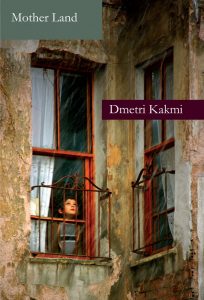
There are two Dmetris. One is a writer; the other is an editor. The former is an intuitive, imaginative creator and the latter a detached, analytical observer. They often contradict each other and have full-on arguments in my head. Over the years, I’ve learned to switch one voice on and to turn the other voice off, which is easier said than done, by the way. And it’s not always successful.

I’ll talk about my love/hate relationship with being edited shortly. First, l will digress slightly to tell you about a revelation I had when I saw the copy edited manuscript for my memoir Mother Land.

As a writer, I vacillate wildly between confidence and crippling uncertainty. One minute I’m Oscar Wilde, next minute I’m a dolt who can’t string two words together to make a sentence. Seeing the revisions of Mother Land the first time was humbling. Part of me was mortified by my infelicities. Another part was overjoyed and pathetically pleased that someone — anyone! — was paying attention to something I had slaved over for five solitary years.

The editor gave the manuscript an expert line-by-line copy edit and pushed my abilities to the utmost. However, if the editor was hard on me, I was harder on myself. After seeing what he had done, and agreeing with most of it, I rewrote almost the entire manuscript — a definite no-no at this late stage.

The editor in me knew it was the wrong thing to do, but the writer went, fuck it. It’s my name on the cover. I’ll do what I like. I wanted to get it right. The language, rhythm and pacing had to be unassailable. I would not get another chance.

The process made me see that good writing is rewriting. Bizarre as it sounds, it had not occurred to me before. At least it had not occurred to Dmetri, the writer. He thought his verbiage leaped fully formed from the keyboard. Of course, Dmetri, the editor, knew the truth and he sat in the wings going, ‘I told you so.’

Seeing the copy edited manuscript was a shock. It brought out the insecurities, the self-hatred and recrimination. I felt inept, despite the fact that, as an editor, I know being edited is par for the course, even for experienced authors. Your editor doesn’t think you’re a dolt. He or she is just trying to make a good thing even better, raise it to the next level.

At the time I worked as a senior editor at Penguin Books. In a flash, I saw that this is how my authors must feel when they see my scratches on their manuscript. That awful sinking feeling. The doubts; the questions. It would be sick-making no matter how practiced, professional or resilient one is.

From there on I began to be even more sensitive to the authors’ needs. I’d return the edited manuscript and followed up with a phone call to the writer a day or so later to make sure they hadn’t hanged themselves. Communication channels were open and I was there to give support, should it be required. It may sound absurd to a non-writer, but the support is a lifeline to a writer.

Being an editor isn’t merely about checking for typos; there’s a lot of handholding as well.

To get back to being edited. When I say I love to be edited I mean that I appreciate the editor’s objective eye. It helps to hone and refine a piece of writing until it zings.

It’s a mistake to think a writer who is also a professional editor can edit his own work. You’re too close to the manuscript. You can’t see the forest for the pencils, especially when it comes to structural matters.

An editor, on the other hand, has no vested interest. It’s business. This allows her to have an overview. She sees the big picture, strengths and failings. And, if she’s good, she can suggest how to resolve a problem. If you’re lost and wandering, she can guide you through the tangled undergrowth to the main path. For all that, you need a thick skin to survive the lacerations. And, unfortunately, I do not have a thick skin.

A short time ago, I entrusted the first draft of my new novel to my agent and to an author friend. Long story short, they were unimpressed. The consensus was that there’s a good story there, but there’s an even better one underneath. Interestingly, their feedback coincided on many points and even though Dmetri the editor knew they were right — the manuscript needs a lot of work before it can be shown to a publisher — Dmetri the writer was crushed.

A fortnight passed before I could look at the feedback and decide how to approach a new draft.

So if you ask how does it feel to be edited, I will say it’s awful. It’s like being crucified and pierced with spears; however, should you survive the ordeal, you will be triumphantly resurrected and adulation shall come to thee from all quarters. Or so I like to imagine.

I also take heart from a friend’s sage observation. ‘You’ve done it before and you’ll do it again.’

*Dmetri Kakmi is a writer and editor. His fictionalised memoir Mother Land was shortlisted for the New South Wales Premier’s Literary Awards; and is published in Australia, England and Turkey. He edited the acclaimed children’s anthology When We Were Young. His ghost story ‘The Boy by the Gate’ was reprinted in The Year’s Best Australian Fantasy and Horror 2013. Haunting Matilda was shortlisted in the Aurealis Awards Best Fantasy Novella category in 2015. His essays and short stories appear in anthologies and journals. He lives in Melbourne.

**Taken from Lee Kofman’s webpage at http://www.leekofman.com.au/the-writing-life/dr-writer-mr-editor-guest-post-dmetri-kakmi/

Pam Brown reviews Poems of Hiromi Itō, Toshiko Hirata & Takako Arai

unnamed

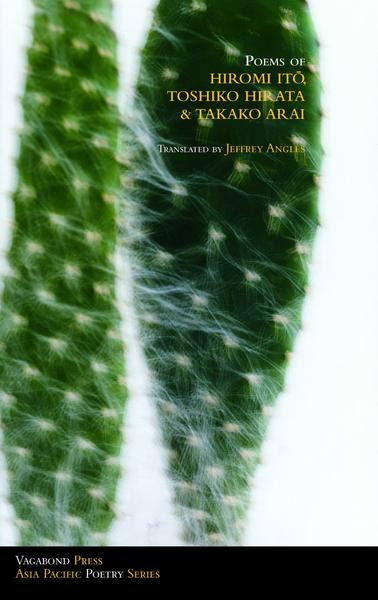
Poems of Hiromi Itō, Toshiko Hirata & Takako Arai
Translated from the Japanese by Jeffrey Angles
Vagabond Press, 2016

In the winter of Pokémon Go, I read quite a few new books of poetry. The collection Poems of Hiromi Itō, Toshiko Hirata & Takako Arai was the most cogent. These three Japanese poets are taboo-breaking women who write without reservation about ‘female experience’ in the political context of contemporary transnational capitalism.

There was a long tradition of separating literature from politics in Japan which fostered rarefied or, what translator Jeffrey Angles, in his invaluable introduction calls ‘staid, polished and artsy’ language. Eschewing tradition, Hiromi Itō, Toshiko Hirata and Takako Arai take a contemporary approach via dialectical sensitivity to the way poetry might sound and rhythmic direct speech. Sometimes this technique produces incantatory repetition, especially in Hiromi Itō’s shamanist poems.

Hiromi often addresses once-sensitive subjects like female eros, post-partum depression, sexual desire and inequity. Her poems are confronting. There’s a room of deformed and diseased body parts preserved in bottles in her poem from 1991, ‘Father’s Uterus, or the Map’ –

The men pointed to testicles with elephantiasis
Those are my father’s bones and spinal column
Those are my father’s joints
Those are us, the children our father gave birth to
The men pointed to foetuses with hydrocephalus
And that is you
The men pointed to a breast with cancer
And that is my father’s uterus
The men pointed to a uterus that had grown teet

Hiromi Itō moved to California in the early1990s and now lives in both Encinitas, near San Diego, and Kumamoto, on the Southern Japanese island of Kyūshū. Some of her poems, like ‘Mother Dies’ examine expatriate identity, the future of children born to Japanese expats and the sense of not belonging in either country –

I had thought my own existence was certain
But now I understand
Things are indeterminate, colors and shapes
Things are indeterminate, even sounds
Is it an /I/ or an /r/?
It all makes sense now
It is not just a problem with me but with all Nikkeijin
1

In ‘Yakisoba’ Hiromi recounts a confusing exchange in a supermarket with an old expatriate Japanese woman who shouts and yells out to promote the yakisoba (fried noodles) she is selling. The poem ends –

Here is a woman
Who comes back alive, who comes back dead
Who connects with the next woman
With tens and hundreds and thousands of women
With generations, dozens of generations down the line

Toshiko Hirata, together with Hiromi Itō, Matsui Keiko, outsider poet Shiraishi Kazuko, and others, is well known in Japan as a major figure in what was called the ‘women’s poetry boom’ of the 1980s. (Though, apparently, Hiromi Itō was not too impressed by the ‘boom’).

Toshiko Hirata uses irony and repetition to make poems that are deeply sceptical of relationships, of the strictures of society, of the normative family, and of poetry itself. Many of her poems are quietly and darkly sardonic.

In a recently published collection, The Freedom of the Joke, Toshiko considered small objects like staples in intimate contrast with the immense force of the disastrous earthquakes, tsunami and aftershocks of 2011 –

Some of the documents that came today
Were fastened with beautiful staples
The color of dayflowers
For me who had known nothing but gray staples
Their color was fresh and new

(‘Beautiful Staples’)

Just two weeks after the disasters Toshiko published ‘Do Not Tremble’ in the daily newspaper Yomiuri Shinbum (The Japan Times) . It was a poetic plea to the earth to stop shaking so that everyone could return to their ordinary lives –

It is March, it is spring
It should be a gentle season of vernal sleep
When one sleeps so deeply there is no dawn
But spring this year
Shakes us to keep us
From falling asleep

Earth, it is enough
For you to simply
Keep spinning happily
Leave the trembling
To windblown flowers and
Laundry hanging in the year
You should simply spin
Innocently

Eleven years younger than Hiromi and Toshiko, Takako Arai (born in 1966) is the daughter of a manager of a now-obsolete small traditional silk weaving factory in Central Japan. In early work Arai wrote about women textile workers. She moved to Tokyo for her education and lives there still.

Like Toshiko, Takako responds poetically to the ongoing consequences of the nuclear crisis. Her experimental and socially critical poetry uses repetition, direct speech, fragmentation and combined imagery. Her ironies are complicated. For instance, she uses euphemistic phrases like ‘womanly shadow’ for women’s genitals. (Jeffrey Angles’s extensive notes on the poems are essential to grasping the levels in all three poets work.)

Takako’s connection with the now redundant craft-textile industry remains a topic. In ‘Colored Glass’ a factory occupies a young woman’s body when she swallows a silkworm –

I swallowed it!
The eternal silkworm
On its mission forever
Crawling through the labyrinth of my bowels
The bitter worm squashed in my teeth
…

There is a factory floating like an isle inside
Its head turns round and round

Recently, a friend of mine visiting Sydney from Adelaide, where there is no Uniqlo (yet), made a shopping excursion to the Japanese global clothing shop. I had just read Takako Arai’s poem railing against corporatisation and this particular company’s threat to individuality. (I am wearing a Uniqlo blouse as I write this review – and I am repentant). Uniqlo’s recent expansions are seen, by capitalists, as bringing economic hope to Japanese business in the aftermath of the 2011 disasters. Not so for Takako Arai –

I’m sick of it
all this Goth clothing, all this Uniqlo-ing
…
Isn’t that all you’d ever let us wear?
Wasn’t that our national uniform?
Before the quake
The tsunami of the recession
All we ever worried about?
…

The reactor building about to fly off (buttobō)
Embankments (teibō), conspiracies (inbō), ministerial offices
(kanbō),
Unbelievabō
Incredibō
TEPCO2
Puts on their Uniqlo
To bulwark
The tsunami

(‘Galapagos’3)

As well as introducing new poems, this collection gathers work from various periods of publication by these dynamic women poets. It offers further complexity, exuberance, depth, variousness and challenge than I have canvassed in this brief review but my aim has been to give due attention to this startling and straightforward contemporary Japanese poetry.

Japanese descendants ↩
Tokyo Electric Power Company (responsible for decommissioning Fukushima nuclear power station. ↩
The title of Takako Arai’s poem ‘Galapagos’ is a metaphor in Japan for ‘island mentality’ syndrome (referring to the isolated fauna and flora of the Galapagos Islands). ↩
This entry was posted in BOOK REVIEWS and tagged Hiromi Itō, Jeffrey Angles, Pam Brown, Takako Arai, Toshiko Hirata. Bookmark the permalink.

*Pam Brown’s most recent of many books is Missing up (Vagabond Press, 2015). She lives in Sydney.

**Taken from Cordite Poetry Review at http://cordite.org.au/reviews/brown-ito-hirata-arai-angles/

Alice Allan reviews Lisa Brockwell and Tamryn Bennett

eg-cover-shadowed-202x300

Earth Girls
by Lisa Brockwell
Pitt Street Poetry, 2016

unnamed

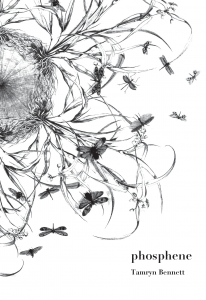
phosphene
by Tamryn Bennett
Rabbit Poets, 2016

Lisa Brockwell’s Earth Girls and Tamryn Bennett’s phosphene are both compelling first collections in their own right. Reading them side-by-side, however, an equally compelling contrast emerges. Where Brockwell looks for clarity and direct engagement with her audience, Bennett invites interpretation, offering many clues and few concrete answers. This contrast reveals something else: the strengths of one approach do not threaten, or cancel out, those of the other.

In an interview with Northerly editor Barnaby Smith earlier this year, Brockwell outlined her approach to writing poetry: ‘Accessibility is a priority for me, but not at the expense of intelligence, nuance or complexity,’ she said. ‘I want my poems to be accessible, but by that I just mean that I want a reader to be able to engage with the poems, to find something there. That doesn’t mean the poem is easy, or able to be explained.’

This balance is clear in every one of the poems that make up Earth Girls. Often it’s Brockwell’s titles that do the heavy lifting, spelling out a subject and allowing the rest of the poem to move freely around it. ‘On Becoming a Housewife for the First time at the Age of 41’, for example, begins:

I learn to cut up a melon, though remain unable to bring a knife to a whole chicken. I save small lizards from the dogs. I find myself on tuckshop duty with my dearest friend; at university we didn’t see this coming.

In other poems, such as the short, seething ‘Honey’, it’s the slow reveal of a story that holds our attention:

Where is the honey? You asked me
that morning, wide awake to the menu
of the world. I hadn’t seen the honey
in years: the jar a harem of sun,
radiant and louche, perfected by a city
of drones

In her interview with Smith, Brockwell explains that Earth Girls brings together seven years’ worth of work. The care she has taken in choosing pieces for the collection is obvious. With the exception of one or two minor poems, most are strong enough to hold their own ground. More than a few offer the satisfying jolt of an original comparison: ‘Window box platonic’ for example (‘Waiting for the train’), or ‘tambourine / of wind in trees’ (‘When I run’).

The two-part poem ‘Laika and Oleg’ is one of the high points in the collection. This is a moving account of the fate of the dog Laika, the first living creature to orbit the earth, and of the man who selected and trained her:

Metal walls, the only smell is chemical,
disorienting me like those blank
corridors in the lab. When I close my eyes
he comes to me with ‘good girl’, with his warm hands

It’s an unflinching poem, almost bruising to read. There are points when it’s tempting to stop altogether, but Brockwell leads us gently forward through Laika and Oleg’s story.

Brockwell consistently combines line breaks at natural pauses, with those that draw the reader down to the rest of a phrase. This technique creates a steady rhythm that supports her exploration of other difficult subject matter. For example, the three-part poem ‘Uluru’ – another crest in the collection – begins with characteristic openness: ‘Three days after my middle miscarriage / we went to the desert.’ Further into the poem we see another of Brockwell’s strengths: her insistence that her poems share personal experience, then stretch beyond it:

… Within minutes I knew
a dingo took that baby. Then grief grabbed me
with its jaws. This country could not
countenance a woman who did not collapse
on prime time, who would not unstitch herself
in front of strangers. A woman at her very edge.

In her acknowledgements Brockwell mentions contemporaries including Judith Beveridge and Dorothy Porter – two poets with a breathtaking ability to communicate both lurking menace and joy in apparently everyday subjects. At its best, Earth Girls reaches toward these unspoken things with the ‘lucidity’ Porter spoke about in her 2001 Judith Wright memorial lecture. ‘Lucidity can write with a tongue of fire,’ Porter said. ‘Often it’s a sense of urgency, a sense of dire times, that can make a poem searingly lucid.’

While Brockwell’s subjects generally remain close to home (her poems on the aftermath of Japan’s 2011 tsunami and the amusing ‘Jennifer & Angelina’ notwithstanding) this ‘sense of urgency’ is achieved on a local scale. Again she pushes beyond personal experience into wider social observations in the ekphrastic series ‘Point of View,’ which responds to the work of Tasmanian landscape artist Philip Wolfhagen. At one point, the speaker expresses her relief that the painting in front of her is not:

… one of those where she
is waiting around, always out of frame
while some idiot she is married to
takes their only horse, dresses up
in a tin hat and does some grandstanding.

The points where the collection could be stronger – and they are rare – occur when Brockwell strays beyond clarity into over-explication. Indeed, it’s the polish in the majority of the poems that makes a meticulous reader itch to pull out a word here and there. For example, the lines ‘Sitting / on the rocks in her swimming costume, / her hair wet and loose down her back’ (‘Seaworthy’) are enough to complete the picture without the next line: ‘a woman who has just finished her swim.’ Similarly the qualifiers in these lines could be left out: ‘For me, it’s after the harvest, only just / but even so, a different season’ (‘Waiting for the train’).

While Earth Girls generally adheres to structures and themes familiar to readers of Australian poetry today, Tamryn Bennett’s phosphene occupies an entirely different space. This is the fourth book in the Rabbit Poets Series published by Rabbit: A Journal of Non-fiction Poetry, adding to collections by Jordie Albiston, Tim Wright and Geraldine Burrowes plus three more debuts launched with Bennett’s collection. It continues editor Jessica L. Wilkinson’s exploration beyond the bounds of the poetry we’re used to – bringing attention to the experimental, and testing the limits of nonfiction.

Phosphene is made up of four poems and spans 50 pages, using meticulous typesetting and blank space to create movement – a sense that the poems are spreading across the pages. Each English stanza is mirrored by a Spanish translation courtesy of one of Bennett’s collaborators, composer Guillermo Batiz. The work of visual artist Jackie Cavallaro also complements the text, adding an intricate visual layer to the book. In Bennett’s introduction we learn that phosphene actually began life as a collaborative exhibition with Batiz, Cavallaro and performer Tamara Elkins.
Bennett explains that her work on phosphene began in Mexico ‘as a series of rituals and offerings at sacred sites’. ‘Offerings were tied with thread and placed in the ashes of shrines, cracks of temples and beneath desert dust,’ she explains. ‘Mirroring ruins and fractured histories, the fragmented elegies of phosphene are what remain after the light of the moment has passed.’ This is lofty subject matter and it’s to Bennett’s credit that she works toward her goals through scarcity of language, rather than weighing these ideas down with words. The following stanzas from the first poem, ‘at the temple of letters’, give some idea of Bennett’s compact approach:

white on red
we roam the ruins

blanco sobre rojo
rondamos las ruinas

the rocking bridge,
the dried river

el puente que mece,
el río seco

white on red
all sins, all saints

It’s clear that Bennett wants more than just the physical space created by short lines. There’s also expansiveness in terms of subject matter. The third poem in the collection, ‘the invisible’, best illustrates this. It begins in a misty valley before moving ‘through fields of cactus / to the desert by the sea’. The poem then begins to switch between confined spaces – rib bones, a wardrobe, a hall, a mirrored room and holes in a wall – and open spaces: a green stream, the sky, and a ‘garden of bones’. The elegiac quality of the book is perhaps most pronounced in this poem. ‘the invisible / keep living’, Bennett tells us, ‘sadness stacked / in towers / surround the bed’.
Along with Cavallaro’s finely detailed images, punctuation marks are also dotted around the poems on most pages, suggesting the desert dust Bennett encountered when first creating the work. This also adds to the sensation that the poems are floating, suspended above the page rather than printed onto it.
The fact that each line is doubled through its Spanish translation is another crucial element. As each poem progresses, it feels natural to match each English word with its Spanish translation. ‘Owl’ becomes buhó, ‘chance’ becomes azar and ‘holy nothing’ becomes bendita nada. This pattern concentrates each line, bringing the shape and meaning of every word into focus. With shorter lines, this focus becomes sharper still, as in this section from ‘the invisible’:

aquí,

here,

*

and here,

y aquí,

the ground remembers

el suelo recuerda

Taken as a whole, phosphene is a wild, open landscape with features that only gradually become familiar. Finishing a first reading, we find hints of this expansive, quiet world, but the full picture isn’t clear. This is a space that invites many repeat visits. It’s with each subsequent reading that phosphene rewards us.
As the book becomes more familiar, each page takes on the quality of an individual artwork as well as being part of a greater whole. The book’s rhythm can be heard as the speaker, the accompanying ‘you’ and the minor characters, move back and forth between confined and open spaces, and through time. This movement is anything but linear – it’s closer to a spiral or a layering of images and memories. As the book ends, Bennett hints at completion without giving in to neatness:

here is where you leave
your hair,

here,

in the desert,
in his hands

With each reading it becomes easier to see how Bennett is contributing to the tradition she notes in her introduction – that of the ‘xopan cuicatl’ or ‘spring song’ of Nahuatl poetry: ‘Each of these acts is part of a longer thread,’ Bennett says of her work. ‘Each a knot to remember the past and our place within it.’
It’s tempting to end here by finding similarities between phosphine and Earth Girls – to look for a way to bridge any perceived ‘gap’ between an experimental project and a lyric one. These two works do share many strengths. Both have a clear goal, are precise in working towards that goal, and show wholeheartedness in each step taken. But their real strengths are actually entirely independent. Far from placing them in opposition, these differences reinforce each poet’s place on the flourishing continuum of Australian poetry today.

*Alice Allan is a writer and editor living in Melbourne. Her work has been published in journals such as Rabbit, Going Down Swinging and Offset.

**Taken from Cordite Poetry Review at http://cordite.org.au/reviews/allan-brockwell-bennett/

In Journeys Begin Dreams: Antigone Kefala and Ania Walwicz

Antigone Kerala

Antigone Kerala

Ania Walwicz

Ania Walwicz

By Sneja Gunew*

In dreams begins the journey. . . (Kefala, 1973:5)

How easy is it, even now, to attach notions of the literary to ethnic minority writing? If not, then what are the implications for practitioners who wish to participate in selecting the words which, according to Barthes, consolidate social meaning? ‘Literature remains the currency in use in a society apprised, by the very form of words, of the meaning of what it consumes’ (Barthes, 1967:38). What kind of signification is ethnic minority writing permitted within Australia? Such writing is not usually received as ‘literature’ which, for the moment, can be described as a textuality which is visibly more worked over, and more conscious of textual conventions, than other forms of writing, and whose implicit opposite is the apparent ‘disorder’ of speech (ibid.:25). If we accept the suggestion that ethnic minority writing signifies only within the formations of sociology and history then, paradoxically, its value lies here with speech rather than writing. In other words, when made synonymous with migrant writing, it is the migrant’s speech (rather than writing) which is solicited, and the more disordered it is the more authentic it supposedly sounds. In those terms, ethnic minority writing is valued precisely in so far as it is inscribed with the marks of linguistic naivety and (even) incompetence: broken language is perceived as symptomatic of subjects not yet ‘assimilated’ (rendered the same) or ‘naturalised’.

In the little writing of this kind which receives limited exposure (whether autobiographical or autobiographically based), any obvious signs that the language has been crafted are read nonetheless as relatively unmediated confessions (see chapter 5). Complexities, if acknowledged, are thought of as provided by ‘life’, the complicated history of the migrant or marginalised subject–rather than by any consciously wrought textuality. To consider ethnic minority poetry, for instance, is under those circumstances therefore perverse. Poetry, the least transparently functional manifestation of linguistic self-consciousness, can be read only with difficulty for sociological or historical content. In Barthes’ terms, classical poetry is ‘a speech which is made more socially acceptable by virtue of the very conspicuousness of its conventions’ (ibid.:48). To write poetry means that one is staking a claim to the literary and hence to public cultural participation. On what grounds can this be legitimated, more particularly when the language used is patently either not English, or, if English, then filtered through other languages and literary traditions with their own codes, canons and conventions? Those ‘conspicuous conventions’ alluded to by Barthes are not simply acquired when setting foot on this continent, nor are they part of the naturalisation certificate. Rather, they belong to that cultural ghosting which floats above the home territory and signifies a mystery only gradually comprehended after many rites of passage. Poetry? From ethnic minorities? Classic realist narratives, perhaps, and reluctantly, but not poetry.

To some extent, as I have argued elsewhere (Gunew, 1985), the experience of migration, particularly when it involves negotiating another language, changes the conditions governing signification. In some ways, speaking psychoanalytically, it may be seen as analogous to re-entering the Lacanian symbolic (Wilden, 1968:xii), or (in classic Freudian terms) changing the secondary, censoring processes of the preconscious (Silverman, 1983). In either model we are dealing with a foundational process in the construction of human subjectivity, namely the conditions under which subjects both participate in and are produced by signification. To enter language is to become a social being rescued from the incoherence and anarchy of drives, ‘the mental representative of a somatic impulse’ (ibid.:67); but inevitably this is achieved at the cost of certain repressions, including degrees of alienation from the drive.

In the last few decades there have been considerable efforts to mark the discursive formation of Australian literature, in gendered and cultural terms, as predominantly Anglo-Celtic and male. Hence the work of those who consider the implications of treating Aboriginal writing as either true to oral traditions or colonised by white forms (Davis and Hodge, 1985; Benterrak, Muecke and Roe, 1984), and also of those who see women’s writing as throwing new light on, for example, foundation myths of mateship and the bush (Modjeska, 1981; Ferrier, 1985; Schaffer, 1988). The further complications offered by poetry written from non-Anglo-Celtic perspectives raise questions about the modernity of such writings that relate as much to form as content (Sollors, 1986). Those able to think from the beginning in more than one language find it impossible to consider language as a ‘natural’ and unproblematic expression of experience. And those who have experience of more than one culture may find it more difficult to regard one culture as universal. As David Malouf points out:

What we may have to be vigilant about is the groups in our society who feel that the culture belongs to them, who insist that their version of the culture is central or the only authentic one. Mostly the only cultural history we get of a society is the one that is passed down to us by those who have power, privilege and the use of language. (Malouf, 1985:61)

The reception of Walwicz and Kefala has been instructive in so far as it can be read symptomatically to gauge the ways in which ethnic minority writers are positioned in Australian culture. Let us consider Kefala first.

I am tired, living at home among strangers,

sitting at the same tables,

waiting for an acceptance that never comes,

an understanding that would not be born,

the measure in us already spent. (Kefala,1973:8)

Continue reading →

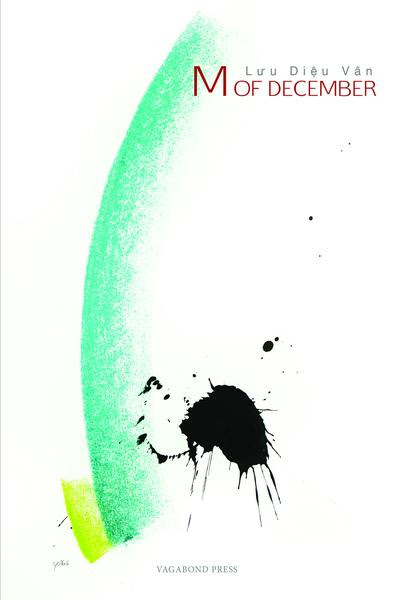
Jennifer Mackenzie Reviews Lưu Diệu Vân

unnamed

M of December
by Lưu Diệu Vân
Vagabond Press, 2016

Reading M of December is rather like going to a spectacular exhibition at a gallery where images of all kind swirl, proclaim, collide and re-form – the viewer takes the opportunity of a brief leave to attempt to come up with a coherent response. Having gone into this gallery, and exited on a number of occasions, what I have come up with is a response to the formed fragmentation of its individual poems, travelling through discordancy via the robust vigour of forceful lines and sharp elisions.

In the first section of the collection, ‘December’, individual poems read as constructed assemblages with dazzling juxtapositions of imagery. In ‘B.C. bees’, perception is presented as molten, contested, as chthonically and chronologically unsettled:

the fire has eyes that glide through lies
beyond B.C. and cunning centuries
the sage offers secrets to the universe
seeing is a plague
the distance between heaven and death is a U turn

The artist at work then makes a selection process by constructing a verbal installation:

each century’s special promotion
written in the DNA of people making headlines
the telling bees dash for the wedlocked bedrock
like thumbtacks on a topsoil cork board
sucking out stories as big as Vesuvius’ pumice
mortality preserves in conceding hives

This sense of poem as installation, or constructed artefact, is also on display in ‘micro exhibition’, where images of the artefact and that of the natural world play off each other, reflecting both boldness and uncertainty – wonderment in the faith of what the poet has created. The poem starts out with a strong image:

a religious artefact stands imposingly, sanctimoniously reflecting
the recondite sea beneath

The imposing nature of the image could be seen to conflate into the act of perception itself:

the glass incrustation patiently collects black and white
stones of uncertainty, downplays the six senses, magnifies the
perception

This culminates in the final verse, where the act of writing itself presents ambivalently:

on top of the mountain lays a hesitating temple of ink, half
wanting to leap, half keeping hold of subsistence
Essentially, Vân works herself out of hesitation; boldly placing the natural and the constructed to achieve a momentary interlocking of effect.

In ‘imaginary holy friend’, the robust somehow distils itself into an evocation of lyric, socially sanctioned violence. Here, the gendered de-formations of ‘people playing god’ merge into a joint reflection of the abused body and nature, with the short lines being particularly effec-tive:

god frolicking people
elongated neck binding
people playing god
moon-blade foot binding
slippers stumped by lotus ponds
punctured meat of the bony flute
meshes pain
filtered cries
hair side-parted
slope of decisiveness
gossamer crease hidden in plain terrain
mountain
goiter of the soil
lake
urethra of the deep
volcano
mouth of the inflamed
smoke
lung of the unsung

a favourite blacksmith of mortal parts
to play Operation with in the bedridden darkness
The poem ‘inside an armoured chrysalis’ pursues the vision of metaphysical clash in its expressionistic and apocalyptic tableau of war:

the cloak of war rips open like a caterpillar’s final grip on innocence
seas of poppies barrage from rising towers

Its imagery is strong and confrontational, for instance: ‘stench of fresh fir’, ‘molecules of gassed up bodies’ and ‘thinning polyskies of barebones and sulking skulls’. The delicacy (and the shorter line) seen in ‘imaginary holy friend’ effectively returns in the final two lines, playing out the metamorphic import of ‘chrysalis and caterpillar’:

the rest of us frantically disperse
in search of a butterfly that can cry

The section, ‘December’, continues with an enthralling juxtaposition of imagery from nature, the world of objects, and the body, all morphing into each other in unexpected combinations. ‘coiling forest’ presents a take on the Cinderella story, of ‘tales of a princess always needing rescues / of a prince.’ Vân portrays a set in motion, in which ‘a vanishing forest [is] coiling into itself’ and ‘doors are pushing upwardly silently within the forest like wild / mushrooms.’ The poet abruptly segues from this protean vision, into savage reflection:

Cinderella never made it
that last second of the forest’s final new year’s eve
when no one can own sadness
but merely takes care of it for the next victim in line

In a similar vein, ‘melancholia of caramel afternoons’ moves from the mythical to the contemporary with spectacular elision:

nirvana
the night’s cologne caging in
missing hinges from its macho wings
on the wall of memory
Sabrina arrives through the urgent ringtone

The second section of the collection, ‘M’ is akin to work seen in Poems of Lưu Diệu Vân, Lưu Mêlan & Nhã Thuyên (Vagabond Press, 2013), extending Vân’s poetry both in theme and imagery, nailing the acerbic line. ‘to a younger poet self’ and ‘naïve writer’ respectively look back in sardonic reappraisal: of, firstly, an early love affair; and, secondly, of early flurries onto the literary circuit. In ‘to a younger poet self’, the ‘Big Heartbreak’ is framed with literary reference:

all your twenty-two self-pities
a fatal infatuation for Rumi and e.e.cummings
insomnias yet of age
jolts of maiden pain
love smog tints grays of verses
laments vicariously postaged to Neruda

Its references morph into an effectively crafted take on writing and the body:

you shatter into creation
the feminist phoenix way
riding in the dark on the biro’s horn
rendering poisoned sensations savable
chastity’s optional to tame metaphors
you jump through a needle’s eye
avoiding the thread’s pull

‘naïve writer’ also sees the collection open itself up to some narrative savagery. In Vân’s view, literary PR appears as the selling of self, where ‘the writer’s skin must be as thick as their copious flows of / topless appearance on the fictional bed’, this ‘literary reception / bed, on which not a single space is deserted’, from which the speaker is suddenly excluded, ‘forever trapped outside’.

‘M’ explores the evolving world of feminist critique, drawing on history, culture and patriarchy, putting the poet’s skills at dramatic scene-setting to good effect. ‘feminine reconciliation’ reads as a pithy riff on popular magazines and their penchant for advice columns: ;what a woman wants is shoes that go with every mood / what she needs is an attitude that can wear many hats.’ In ‘the bindi escape’, a living deity leaves ritual behind:

12 days of purifying in isolation
she wipes the red sun
belated dreams off her charcoal-rimmed eyes
the spirit vacates the body
light escaping between her remoistenable thighs
two entities lie languidly
in the corona of midnight innocence
making bolts out of peepal with burgeoning tongues

the bindi’s making a scandalous cross
towards freedom

In ‘here comes the truth’ the rituals of a traditional upbringing are laid waste by sudden flight at the end of the Vietnam War, when the refrain of ‘White Christmas’ signalled the urgency to evacuate:
she was not privy to
the monk’s staged self-immolation
White Christmas and Bing Crosby’s common key
the entire village fumbling in the red land

The poem concludes with an epiphany of arrival in the United States, where the speaker ‘got all the answers from the immaculate self-cleaning airport toilets / no P. M. of W. C. forcing a tip from her.’

‘my would be sister’ reflects on this flight, and the alternative histories it represents. Growing up as ‘an au fait young woman’, she sees her home country as a place where ‘female laborers’ [sic] take ‘routine / beatings from their husbands like cultural norms.’ However, ‘if the night-sea escape had failed’ she might be, at 15, ‘prime age for pre-arranged marriage, lying leisurely on the hammock in the coconut grove.’

Another particularly strong poem in the collection, ‘on the 7thfloor’ skillfully employs the trope of a movie shot to suggest dark emotions within a contained and eroticised space – the theatre of the room:

the ceiling fan’s blades decapitate the plump moon of the 7th floor
flashes of light contaminate the eerie air
absolute silence
spirit possessed with an obvious sixth sense
a woman
plunging a needle through each fingernail
sewing a secret lover’s name on the inside of her longing thighs
without uttering a cry

Although issues of gender predominate in the second section of the collection, it is not an exclusive preoccupation. Among poems of a different timbre and subject, ‘the cloud hunter’ is a delightful, witty response to pareidoia, as the poem transforms from observations of cultural predilections: ‘the Vietnamese see a pixy dragon / the Chinese see a bad omen’, to being a somewhat rueful celebration of poetry:

I am proud of my trade regardless
protecting the hangover of our fading faction
there are so few of us left
surviving barely on the illicitly traded puff of time
and in order to avoid detection
we now call ourselves poets

Overall, this lively and impressive collection showcases feminist humour shaping the sharp cut of the poetic line. It sees Lưu Diệu Vân extending her range, and presenting a number of compelling poems, which invite rewarding re-reading.

*Jennifer Mackenzie is the author of Borobudur (Transit Lounge, 2009), republished in Indonesia as Borobudur and Other Poems (Lontar, 2012) and has been busy promoting it at festivals and conferences in Asia. She is now working on a number of projects, including an exploration of poetry and dance, ‘Map/Feet’. Her participation in the Irrawaddy Festival was supported by a writer’s travel grant from the Australia Council for the Arts.

**Taken from Cordite Poetry Review at http://cordite.org.au/reviews/mackenzie-van/

Πρωτοεμφανιζόμενες ποιητικές φωνές με προοπτική

ΤΟΥ ΠΕΤΡΟΥ ΓΚΟΛΙΤΣΗ*

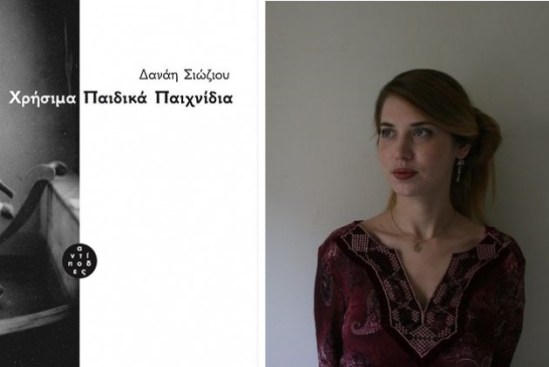
H Δανάη Σιώζιου (1987), μεγαλωμένη στην Καρλσρούη της Γερμανίας και στην Καρδίτσα, με σπουδές αγγλικής φιλολογίας στην Αθήνα και μέλος της ομάδας του περιοδικού «Τεφλόν», εμφανίζει την πρώτη ποιητική της συλλογή Χρήσιμα παιδικά παιχνίδια και ήδη από τον τίτλο της μας ανοίγει σε μια ιδιότυπη προβληματική.

vivlio_2_11

ΔΑΝΑΗ ΣΙΩΖΙΟΥ
«Χρήσιμα παιδικά παιχνίδια»
Αντίποδες, 2016
Σελ. 80

Χαρακτηρίζοντας τα παιδικά παιχνίδια ως «χρήσιμα» συναντά την ουσία του παιχνιδιού, μες στο βάρος και στην ιερότητά του, κάτι που υποδηλώνει ότι το ίδιο το παιχνίδι αποτελεί τάξη, δημιουργεί τάξη στην αταξία, άρα ίσως και να παρέχει έναν τρόπο ψυχικού οφέλους, μια μορφή αυτογνωσίας.

Απέναντι σε έναν ατελή κόσμο λοιπόν, στη σύγχυση και στη ρευστότητα της ζωής η ποιήτρια αντιτάσσει το παιχνίδι, την προσωρινή και περιορισμένη αυτή μορφή τελειότητας, ακινητώντας την ύπαρξη, δηλ. κατορθώνοντας μια μορφή μη μεταβολής, συναντώντας τον Homo Ludens του Γ. Χουιζίνγκα (εκδ. Γνώση, 2010) και ξορκίζοντας το επικείμενο του αφανισμού μας.
Αν μάλιστα ο Μίλτος Σαχτούρης είναι ο «τρελός λαγός» της ποίησής μας (ο οποίος και εμφανίζεται στη συλλογή με το θηρίο του, «μη φεύγεις θηρίο, θηρίο με τα σιδερένια δόντια») η Σιώζιου είναι μια ακρωτηριασμένη ποιήτρια-παιδί, μια τεμαχισμένη κούκλα που τελετουργικά, μες στο ακίνητο και διασκορπισμένο των μελών της, οργανώνει τον κόσμο γύρω της ώστε να αποκαταστήσει «οριστικά» την τάξη στην αταξία, την ακινησία στην ένταση, τα παιδικά χρόνια στο τώρα που μας συμβαίνει.

Βλέπουμε στη συλλογή, που απαρτίζεται από τέσσερα μέρη: «Ζωολογικός κήπος», «Κρύπτη», «Εγκληματολογικό μουσείο», «Στο πάρκο», μια δομή που ακολουθεί τον Βάλτερ Μπένγιαμιν (Μονόδρομος, εκδ. Αγρα, 2006), τη γιαγιά να κεντά δαντέλα ολόλευκη για τον γάμο της ποιήτριας, μα πλησιάζοντας στο τέλος της να τη χαλά αθόρυβα, πάλι τη γιαγιά να φορά τα Σάββατα το νυφικό και να «στέκεται πλάι στην πόρτα περιμένοντας» τον νεκρό παππού, μια νιόπαντρη επίσης, την Αλεξάνδρα, να πέφτει από την ταράτσα και να γίνεται πουλί, τη μαμά που αντί για καρδιά «έχει έναν καταψύκτη που η κοιλιά του δεν γουργουρίζει ποτέ», τα τρία κορίτσια της γιαγιάς φορώντας την ποδιά του χασάπη με μαχαίρια ακονισμένα να ξεσκίζουν τους τρυφερούς λαιμούς των πασχαλιάτικων ζώων, ακέφαλα κοτόπουλα να χοροπηδούν στους κήπους κ.λπ.

Η ποιήτρια διατηρώντας την αυτοερωτική ωμότητα του παιδιού («επιθυμώ να νυμφευτώ την καρδιά μου») εμφανίζεται συνολικά συνεπαρμένη από τον ρυθμό της γέννησης και του αφανισμού (λέει χαρακτηριστικά για τον παππού: «ο πρώτος μου έρωτας και ο πρώτος μου θάνατος») και αναμετράται με την ανθρώπινη μοίρα προσκολλώμενη σε έναν παιδικό-ονειρικό κόσμο όπου μετασχηματίζει το ρίγος και τον «συγκλονισμό» από τη συνάντηση της συνείδησής της με τον κόσμο σε ποίημα-ανάμνηση.

Δεν προτάσσει μάλιστα το παίζειν, αλλά το ίδιο το παιχνίδι που γίνεται μέσο για να αναψηλαφήσει το αδιέξοδό της, την ασφυκτική μοναξιά της και τη διαρκή αίσθηση της εγκατάλειψης-ναυτίας που νιώθει. Το ποίημα ως παιχνίδι-ξόρκι τελικά ασκεί μια ευεργετική επίδραση, στον ψυχισμό της και στον αναγνώστη, αξιώνοντας μια μορφή ασφάλειας και νηνεμίας.

Τέλος, σκαλίζοντας τις πληγές της, φαίνεται να ανακουφίζεται προσωρινά τουλάχιστον, προκαλώντας μια μορφή πόνου που δείχνει να την απολαμβάνει, αποκαλύπτοντας πως μέσω του παιχνιδιού επαληθεύουμε την ετερότητά μας, θέτουμε όρια και κανόνες και ίσως μετασχηματίζουμε τον λίγο κόσμο – χώρο που μας αναλογεί.

————————————–
georgota_0

ΑΝΤΖΕΛΑ ΓΕΩΡΓΟΤΑ
Στην πιθανότητα στηρίζεται η αγάπη
Ποίηση, Γαβριηλίδης, 2016, 
Σελ. 76

Στην ίδια γραμμή, πιο ώριμη όμως, ρυθμική και τραγική, η Αντζελα Γεωργοτά (Κέρκυρα, 1977) με σπουδές στη φιλοσοφική σχολή του Αριστοτελείου Πανεπιστημίου της Θεσσαλονίκης και δημιουργικής γραφής στο Πανεπιστήμιο Δυτικής Μακεδονίας, ενώ ξεκινά από την Κατερίνα Γώγου και την Αν Σέξτον, συναντώντας τη μετωπική αμεσότητα της μιας και την εξομολογητικότητα της δεύτερης, στην πρώτη της συλλογή Στην πιθανότητα στηρίζεται η αγάπη, μας ανοίγει σε έναν δικό της μορφικά και ατμοσφαιρικά κατακτημένο κόσμο.
Κινούμενη μακριά από έτοιμες φόρμες και στροφικά σχήματα, η ποίησή της −με ομοιοκαταληξίες και τονισμούς που ζευγαρώνουν σπειροειδώς σε φαινομενικά άτακτα σημεία του στίχου− βαδίζει έμμετρα σε μετα-σαχτουρικά μονοπάτια και ξέφωτα, πιστοποιώντας τη μέγιστη δυνατή μουσικότητα της ποίησης και τη χαρακτηριστική εξπρεσιονιστική της εικονοποιία, η οποία τελικά πυκνώνεται σ’ ένα ποίημα κάδρο.

Ας δούμε ένα χαρακτηριστικό παράδειγμα: «Στεκόμουν μετέωρη/κάτω από τα πόδια/το σύμπαν έκαιγε […] Ασπρες κυρίες μου μιλούσαν/και ένας Ανδρας με σιδερένιο πρόσωπο/με χτύπαγε στην πλάτη,/καθώς οι λέξεις του με κάρφωναν στο πάτωμα» ή συντομότερα: «Θυμόμουν το κόκκινο και έσταζαν τα χέρια παπαρούνες» ή «τα όνειρα τρυπώνουν μες στο στήθος,/γίνονται γάλα,/παίρνουν μορφή».

Είναι φανερό πως η εικόνα-κάδρο είναι αυτή που οδηγεί το ποίημα, ενώ το «νόημα» σαφώς έπεται. Η εικαστική-σκηνοθετική μάλιστα οργάνωση-άρθρωση του ποιήματος, η οποία συχνά αποκαλύπτεται ως πηγαία, ξεκομμένη από το «νόημα», λες και κάνει σημειωτόν στο ίδιο σημείο διανοίγοντας έναν μεταιχμιακό τόπο ή ενεργοποιώντας μια καταβύθιση.

Η ποιήτρια, προτάσσοντας έντονα το υποκείμενο, τον φορέα του προσωπικού θα λέγαμε βιώματος, σκηνοθετεί ή προσπαθεί να αδράξει ένα μεταίσθημα, κινούμενη ταυτόχρονα προς τον τόπο του απολόγου, με την έννοια του τελικού λόγου-απολογισμού, όπου και προσπαθεί να καταλήξει σε οριστικά σχετικά συμπεράσματα και σε ποιητικές μεταγραφές που αποτυπώνουν τη στιγμιαία αίσθηση-συναίσθημα.

Η νόηση εκ των υστέρων φιλτράρει και «λογοκρίνει» το βίωμα οδηγώντας το συχνά σε προειλημμένες θεωρήσεις και στάσεις.

Η ρυθμική και η φραστική λιτότητα της ποίησής της, ο χειρισμός του ρυθμού έως την τελευταία σελίδα της συλλογής με ωριμότητα, οι σαφώς προσεγμένες αλλαγές στίχων και στροφών, η λιτότητα και η πυκνότητα των ποιημάτων, η αξίωση μιας κάποιας αρχιτεκτονικότητας στο σύνολο, αλλά και ο παιγνιώδης διάλογος μεταξύ ρυθμού και περιεχομένου, όχι απλά αφήνουν μια αίσθηση πως ο αναγνώστης κοινώνησε-συμμετείχε σε ποίηση, αλλά επίσης καλούν και προς μια επαναφορά και μια μελλοντική επανατοποθέτηση απέναντι στο ποίημα το οποίο και αναμένει μες στην ερμητικότητα την επανεκτέλεσή του.

*Από την Εφημερίδα των Συντακτών http://www.efsyn.gr/arthro/protoemfanizomenes-poiitikes-fones-me-prooptiki

Ο ποιητής Θάνος Ανεστόπουλος

ΤΟΥ ΘΕΟΧΑΡΗ ΠΑΠΑΔΟΠΟΥΛΟΥ

Πριν από λίγες μέρες, μας ήρθε η είδηση του θανάτου του Θάνου Ανεστόπουλου. Αφήσαμε να περάσει λίγο ο θόρυβος της είδησης, «να κατακάτσει ο κουρνιαχτός», όπως λέει εύστοχα ένα δημοτικό τραγούδι, έτσι ώστε να μπορέσουμε με ησυχία και τον απαιτούμενο σεβασμό να αγγίξουμε το έργο του.

Το έργο του Ανεστόπουλου είναι πολυσχιδές, όμως, εδώ δεν θα ασχοληθούμε με τα σκίτσα του, ούτε με τους ποιητές, που μελοποίησε μαζί με τα υπόλοιπα μέλη των Διάφανων Κρίνων, αλλά με την ποίησή του. Γιατί ο Θάνος Ανεστόπουλος ήταν πάνω από όλα ποιητής.

Θα μπορούσε να πει κανείς, πως χαρακτηρίζουμε εύκολα ποιητή κάποιον, που εξέδωσε μόλις μία ποιητική συλλογή, μόλις το 2015 όταν ήταν 48 ετών, όμως, τότε θα έπρεπε να ξεχάσουμε τον Καβάφη, που δεν εξέδωσε ποτέ ποιητική συλλογή όσο ζούσε και αν δεν θέλουμε να πάμε τόσο πίσω, έχουμε το παράδειγμα του Νίκου Γκάτσου, που σε όλη του τη ζωή εξέδωσε μόλις μία ποιητική συλλογή. Βέβαια, ο Νίκος Γκάτσος είχε την τύχη να μελοποιήσουν στίχους του συνθέτες-ογκόλιθοι, όπως ο Χατζηδάκις, ο Θεοδωράκης και ο Ξαρχάκος. Ο Θάνος Ανεστόπουλος έγραφε στίχους, που τους μελοποιούσε και τους ερμήνευε ο ίδιος. Πολλά, λοιπόν, από τα τραγούδια της δισκογραφίας των Διάφανων Κρίνων είναι ποιήματα του Θάνου Ανεστόπουλου γι’ αυτό δεν θα σταθούμε στη μία και μόνη ποιητική συλλογή, που εξέδωσε, αλλά σε ορισμένα ποιήματα, που βρίσκονται αναρτημένα στο διαδίκτυο.

Το πρώτο, που παρατηρούμε, όταν ερχόμαστε σε επαφή με την ποίηση του Θάνου Ανεστόπουλου είναι ότι ο ποιητής ήταν γλωσσοπλάστης. Έφτιαχνε δικές του λέξεις, που φαντάζουν πιο ποιητικές και δίνουν μια άλλη χροιά στην ποίησή του. Για παράδειγμα, η λέξη «αΰπνωτος», που είναι πολύ πιο εύηχη από τη λέξη άυπνος. Επίσης, η λέξη «ηλιοκράτορας» παραπέμπει στη λέξη ηλιάτορας του Οδυσσέα Ελύτη.

Η ποίηση του Θάνου Ανεστόπουλου είναι ορμητική σαν χείμαρρος. Η πλούσια φαντασία του και η ευχέρεια του λόγου του και το πλούσιο και δημιουργικό λεξιλόγιό του φαίνονται κυρίως στα ποιήματα: «Αΰπνωτος», «Βλέφαρα του Φλεβάρη», «ΚΟΥΡΑΓΙΟ ΠΑΝΘΕΟΝ ΣΤΙΓΜΩΝ ΛΗΣΜΟΝΗΜΕΝΩΝ», «Ο Ρόντια στον πάγο» κ.α.

Όμως, οι καλύτερες στιγμές του Θάνου Ανεστόπουλου είναι στα κοινωνικά του ποιήματα(*). Εκεί, ο στίχος του γίνεται ασυμβίβαστος και αναρχικός. Εκεί, ο ποιητής οικτίρει τον άνθρωπο, που είναι κλεισμένος στον εαυτό του και δεν τον φτάνουν οι φωνές των κολασμένων της γης. Τον άνθρωπο, που έχει κλειστεί στον δικό του γυάλινο πύργο και φοβάται να βγει παραέξω. Ο άνθρωπος αυτός καταλήγει: «Να φθείρεται ακίνδυνα…. Χωρίς ποτέ ο ίδιος να υπήρξε. / Πεθαίνοντας χωρίς να έχει γεννηθεί.» Στο αφηγηματικό ποίημα «Οι κρεμάστρες» θα συναντήσουμε έναν μετανάστη ρακοσυλλέκτη, που δέχεται ρατσιστική επίθεση από έναν φασίστα μικροαστό.

Στα ποιήματα, που αναλύσαμε πιο πάνω ο Θάνος Ανεστόπουλος περιγράφει με αδρές πινελιές τις κοινωνικές αδικίες, όμως, σε άλλα ποιήματα δεν περιγράφει απλά, αλλά προτρέπει. «Ανοίξτε όλες τις φυλακές», γράφει στο ποίημα «Παράθυρα», για να καταλήξει: «Ανοίξτε τα λαμπερά μάτια των παιδιών / και κλείστε την τηλεόραση.» Σε άλλο ποίημα θα δείξει ότι η ελπίδα μένει ακέραια, όσες προδοσίες κι αν γίνουν χρησιμοποιώντας τον εύστοχο τίτλο: «Κάποτε τα δεσμά θα σπάσουνε», ενώ στο ποίημα «το αναντικατάστατο οστεοφυλάκιο» θα γράψει: «Είναι όλα έτοιμα. Οι καιροί αλλάζουν!»

Με αυτή, λοιπόν, τη σύντομη ανάλυση αποχαιρετάμε τον ποιητή Θάνο Ανεστόπουλο και κρατάμε ως παρακαταθήκη τους στίχους του, όπως και τους τελευταίους στίχους του ποιήματος «Σκάψιμο», που θα μπορούσε να είναι η ποιητική διαθήκη του: «Εγώ ο άγνωστο που υπήρξα / δεν είμαι πια εδώ. ……. ΚΟΙΜΗΣΟΥ ΚΙ ΕΓΩ ΘΑ ΚΟΙΜΗΘΩ…/ όταν πεθάνω.»

(*) Τα κοινωνικά ποιήματα του Θάνου Ανεστόπουλου βρίσκονται αναρτημένα στο διαδίκτυο σε αφιέρωμα, που έγινε στο blog: «ΠΟΙΗΤΙΚΟ ΣΤΑΥΡΟΔΡΟΜΙ» και μπορείτε να τα διαβάσετε ακολουθώντας τον σύνδεσμο: http://poihtikostayrodromi.blogspot.gr/2016/09/blog-post.html

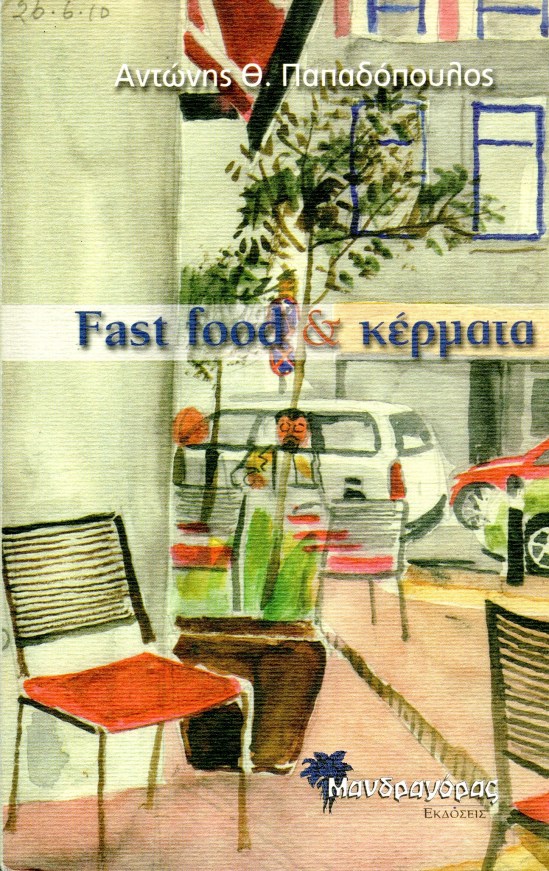
Αντώνης Θ. Παπαδόπουλος, Fast food & Κέρματα

theoxaris2034

Παρουσιάζει ο Ειρηναίος Μαράκης*

Σε προηγούμενη παρουσίαση ποιημάτων του Αντώνη Θ. Παπαδόπουλου σημειώναμε ότι η ποίηση του «είναι άμεση, απλή, ελεύθερη από δύσκολα νοήματα, με διάθεση για πειραματισμό – φέρνοντας έτσι τον ποιητή σε άμεση επαφή με την σύγχρονη ποιητική παραγωγή στη χώρα μας, αναδεικνύοντας φαινόμενα, καταστάσεις και προβληματισμούς όπως ακριβώς είναι». (Ατέχνως, 24/10/2015). Αυτή μας την εκτίμηση έρχεται να επιβεβαιώσει με τον καλύτερο τρόπο η πρόσφατη ποιητική συλλογή του Αντώνη Θ. Παπαδόπουλου «Fast food & Κέρματα» (2015) που κυκλοφορεί από τις εκδόσεις Μανδραγόρας.

Ο τίτλος της συλλογής εύκολα μας παραπέμπει (κι αν τον διαβάσουμε κυριολεκτικά, δηλαδή χωρίς φαντασία) σε κάτι που είναι γρήγορο και ευτελές, όχι απαραίτητα καλό, που ικανοποιεί τις ανάγκες μας για να ξεχαστεί αμέσως μετά. Αντίθετα τα ποιήματα του βιβλίου φαίνεται να παίζουν με τις παραπάνω καθιερωμένες έννοιες και να τις ανατρέπουν, γιατί ούτε γρήγορα είναι (ακόμα και η ανάγνωση τους θέλει προσοχή κι όχι ένα γρήγορο ξεπέταγμα, γιατί μετά θα χάσουμε την ουσία των λόγων του ποιητή), ούτε πρόχειρα και ευτελή. Ο προσεκτικός αναγνώστης θα αντιληφθεί με ευχαρίστηση ότι τα χαικού της συλλογής (γιατί σε αυτή τη μορφή επιλέγει να εκφραστεί ο ποιητής στο «Fast food & Κέρματα») δεν είναι ένα εύκολο είδος αλλά ένα απαιτητικό είδος όπου για να εκφράσεις με απλότητα τα συναισθήματα και τις απόψεις σου, απαιτείται μαστοριά, σκληρή δουλειά και γνώση των ποιητικών κανόνων, κάτι που κατέχει με πληρότητα ο Αντώνης Θ. Παπαδόπουλος. Δεν ξεχνάμε ότι στα χαικού μέσα σε δεκαεπτά (17) συλλαβές μπορούν να εκφραστούν τόσα πολλά νοήματα που ίσως ούτε σ’ ένα μακροσκελές ποίημα , δεν θα μπορούσε κάποιος να παρουσιάσει.

Το βιβλίο χωρίζεται σε δύο ενότητες (ή αν προτιμάτε, σε δύο ποιητικές συλλογές που συνδιαλέγονται μεταξύ τους) και με ποιήματα που θα μπορούσαν να βρίσκονται στη μία ή και στην άλλη ενότητα. Τα ποιήματα του βιβλίου, είναι ποιήματα λυρικά, γήινα, βαθειά ανθρώπινα κι εκφράζουν την απώλεια των ονείρων και των αγαπημένων προσώπων (δεν πρέπει να ξεχνάμε ότι η δεύτερη ενότητα του βιβλίου, τα «Κέρματα», είναι αφιερωμένα στην αλησμόνητη Μάρα, δηλαδή στην αγαπημένη σύντροφο του ποιητή), υπαρξιακά (με την έννοια ότι αναφέρονται σε καθημερινές εμπειρίες και εικόνες), κοινωνικά και πολιτικά (εδώ ο ποιητής δεν πολιτικολογεί αλλά αναφέρεται ρητά στην πόλη και στους ανθρώπους της – κατά τη γνώμη μας πολιτικός λόγος δεν είναι μόνο οι πολιτικές διακηρύξεις αλλά και η αίσθηση ότι δεν είσαι μόνος σε αυτό τον κόσμο). Η απώλεια του σώματος, τα φιλιά που δεν θα ‘ρθουν, τα λόγια αγάπης τα χαμένα αλλά όχι λησμονημένα, οι ανίεροι χτύποι της μοίρας αλλά κι ο αγώνας του ποιητή να μη λυγίσει, ο ήχος του μπουζουκιού που μένει φίλος παντοντινός ως στήριγμα και παρηγοριά, σκέψεις και προβληματισμοί, να τι εκφράζεται στην ποιητική συλλογή «Fast food & Κέρματα» εμποτισμένα με τη σοφία και την απλότητα που εκφράζει τον ποιητή.

Κλείνοντας, αξίζει να σημειώσουμε ότι το «Fast food & Κέρματα» αξίζει να διαβαστεί απ΄ όλους, τόσο από τη νέα γενιά ποιητών για να δει πόσο η παλαιότερη γενιά αναζητά και πειραματίζεται (πετυχημένα) με νέες μορφές ποιητικής έκφρασης, όσο κι από κάθε αναγνώστη που θεωρεί πως η διατήρηση της μνημοσύνης μπορεί να αποτελέσει φάρο φωτεινό για μια ζωή που δεν θα ξεχνά, που δεν θα απεμπολεί τις εμπειρίες και τα παθήματά της αλλά που θα προσπαθεί και για καλύτερες συνθήκες από τις προηγούμενες. Αυτό είναι το μήνυμα που κατά τη γνώμη μας πάντα, περνάει, ακούσια ή εκούσια δεν έχει σημασία, τούτο το αισιόδοξο μέσα στη μελαγχολία του βιβλίο.

ΠΟΙΗΜΑΤΑ

Fast food

IV
Ας ταξιδέψω.
Γι’ αποσκευές αρκούνε
οι λίγοι στίχοι.

V

Έρχονται… Φεύγουν…
Ο σταθμός ερημώνει.
Έρημος κι εσύ.

ΧΧ
Να γράψει στίχους
στο χαρτί ήθελε. Μα
αυτοί πετούσαν.

Κέρματα

Πάνω του λάμπει
ο ουρανός. Μέσα του
σκοτάδι βαθύ.

Δύει ο ήλιος.
Αρχίζει η αγρύπνια
της μοναξιάς μου.

Ψέματα λέω
πως έφυγες. Ακόμα
σε βλέπω παντού.

*Από το http://atexnos.gr/antonis-8-papadopoulos-fast-food-kermata/?utm_campaign=shareaholic&utm_medium=facebook&utm_source=socialnetwork