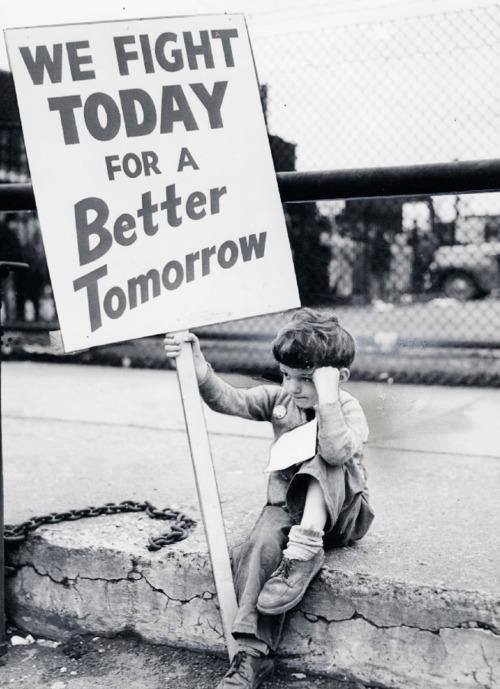
‘This machine surrounds hatred and forces it to surrender’ were the words inscribed on the banjo of American folk legend and activist Pete Seeger, who died at 94 in late January 2014. Reading the tributes to Seeger, I was struck by a recurrent theme: his moral courage, which he lived out unrelentingly across a lifetime. Commenting on the ‘not common behaviours’ which made his life exemplary, a New Yorker post by biographer Alec Wilkinson wrote of ‘his insistence on his right to entertain his own conscience’.
That ‘insistence’ began early; Seeger preferring to face jail rather than invoke the Fifth Amendment defense when called to testify before the House Un-American Activities Committee in 1955, and refusing to name personal and political associations. He avoided jail only on appeal in 1962. In October 2011 he was among the leaders of the ‘Occupy Wall Street’ march. The tributes also led me to think of the ways in which other high-profile figures in popular music – Bob Marley and Bob Dylan – have in the past century harnessed, insisting on their same right, the active, lyrical power of poetic language to express moral and political dissent.
This is one of the reasons for the diminished audience for poetry in the 21st century; its audience, lean as it has often been, has been further subsumed by other arts. Of course, at the same time, the meld of lyric and instrument harks to the days of the lyre, the bard and troubadour, lyric’s origins and tradition. Yet there is an essence in poetry, where a poem can be a pure or unique instance of language (to use Paul Celan’s thinking), giving it the capability to be a stand-alone language of resistance. It has been often, in the works of accomplished poets, a language of essence, able to name what is essential to the fully lived human experience, and what depraves it. There are abundant examples. Celan himself – in the words of translator Katherine Washburn, after being earlier a ‘pure poet of the intoxicating line’, and in the steep of the Surrealists – became ‘heir and hostage to the most lacerating of human memories.’ As a Romanian-born Jew, Celan worked in a forced labour camp for 18 months from 1942-1944. Both his parents died in Nazi camps. Just one excerpt here, from his 1952 book, Poppy and Memory:
Black milk of daybreak we drink you at night
we drink you at noon death is a master from Germany
we drink you at sundown and in the morning we drink and we drink you
death is a master from Germany his eyes are blue
(trans. Michael Hamburger)

 To Koskino