Καιρός από τις στάχτες μας να αναδυθούμε! Blackred Wildcat Καλώς ήρθες!

12308349_624485364359262_2238179713470907072_n

Φίλοι και φίλες, καλώς ορίσατε στην ποιητική μας ομάδα που σκοπός της είναι η αντίσταση και αφύπνιση, μέσω της ποιητικής και λογοτεχνικής δημιουργίας. Η εποχή μας είναι αυτή η σκοτεινή που όλοι λίγο πολύ έχουμε καταλάβει, βιώνουμε στο πετσί μας και αισθάνομαι την ανάγκη και την υποχρέωση, να συμβάλουμε κι εμείς όσο μπορούμε στην αφύπνιση και συνειδητοποίηση του κόσμου, μέσα από την τέχνη μας αυτή. Με έκπληξη ανακάλυψα ότι τον τελευταίο καιρό η αντιστασιακή, η καταραμένη και η αθεράπευτα ρομαντική – ουτοπική ποίηση εκφράζεται σπανίως. Ας δώσουμε λοιπόν τον καλύτερό μας εαυτό, ας καλύψουμε αυτό το μεγάλο καινό κι ας δώσουμε τη μάχη μας μέσα από τις λέξεις, τις λέξεις που σε πάμπολλες περιπτώσεις ξεπερνούν και τη δύναμη του ξίφους και της βόμβας της ατομικής.

Αν και αυτός ο όρος δεν μου άρεσε ποτέ… Ας στρατευθούμε γράφοντας, δημιουργώντας με τις πένες μας για όπλα. Όσο για τα άλλα όπλα καλύτερα να μην έρθει η ώρα να τα πάρουμε…

…όμως αν χρειαστεί…

Οι καιροί μας επιφυλάσουν πολλά.

Κι εμείς πολεμιστές με τον έναν η τον άλλον τρόπο είμαστε υποχρεωμένοι να αντισταθούμε μέχρι τέλους στο όνομα της ελευθερίας, της ανθρώπινης ανύψωσης, του έρωτα, της ισότητας και της ελεύθερης, απόλυτης και ασταμάτητης δημιουργίας, να μη σβήσει αυτή η δίψα για ζωή τίμια και δημιουργική, να μη σβήσει αυτό το αιώνιο αγνό, πεντακάθαρο παιδί που κατοικεί βαθιά μέσα στις καρδιές μας, πόσο μάλλον από τη δική μας αδιαφορία… Θα αποτελούσε τη μεγαλύτερη εσωτερική μας προδοσία. Δεν θα τους επιτρέψουμε να το σκοτώσουνε ποτέ, δεν θα επιτρέψουμε στους εαυτούς μας να το ξεχάσουνε ποτέ.
Κουβαλάμε κληρονομιά μεγάλη και νιώθω μεγάλη ανάγκη και υποχρέωση να εκφράζεται και να γεννά παιδιά του νου ελεύθερα και μαχητικά.

Μας έφεραν ξανά στο μεσαίωνα…

Φίλοι, φίλες, σύντροφοι και συντρόφισσες, συνοδοιπόροι στη μάχη αυτή, πιάστε τις πένες σας και αντιταχθείτε στην ψυχολογική, και όχι μόνο, βία, συγκρουστείτε με την παγκόσμια βαρβαρότητα.
Αντίσταση με κάθε τρόπο!

Καιρός από τις στάχτες μας να αναδυθούμε!

http://www.facebook.com/karagiozis.karabinatos?fref=ts

Ηλίας Τσέχος, Τα χάικου της αλεπούς

img_8971-2

.
Λουσμένη στο φως
Απειλούσες ωραία
Τις πονηρίες
.
Τι φύλλο ήσουν;
Θηλυκό, αρσενικό;
Αγαπήθηκες;
.
Ζητούσες γιατρό;
Φάρμακα, τις φωλέες;
Αυτομολούσες;
.
Πως μας κοιτούσες!
Ξαφνιασμένη, ντροπαλή
Και λυπημένη
.
Ορεσίβια
Όψη παραμυθένια
Πικρή Καστοριά
.
Αλεπουδάκι!
Γράφοντας ποιήματα
Πας δεν γυρίζεις

*Από το ιστολόγιο του ποιητή στη διεύθυνση http://thehos.wordpress.com

Κόκκινη Λάμια ή Αντωνία Μερτύρη, Βάρδιες αποκλειστικών

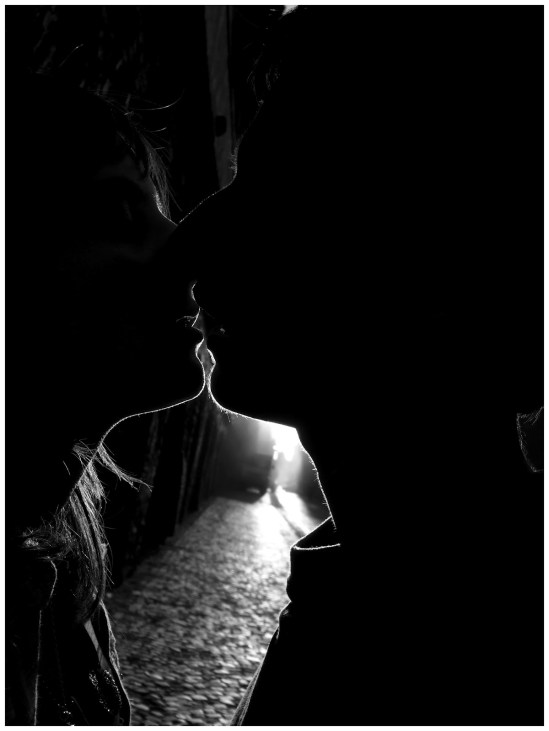
A_magical_kiss____by_L_time

Βραδιάζει
Ξημερώνει
Βραδιάζει
Βραδιάζει
Και βογγάει η διπλανή μου
Ατμομηχανή θανάτου
Στο θάλαμο 218
Στο τάδε τμήμα του λευκού εντέρου…
Χθες πάλι γέννησα σκατά
Χθες πάλι της φυσαρμόνικας ο ήχος
Και θά ‘λεγε κανείς πως παίζω
όπως ακριβώς και χέζω
Ύπτια και λαχανιαστά
Ύπτια και υπερβολικά
Ύπτια…
Όσο το επίτηδες και η θύμισή του
Σαν φθινοπωρινό “ατύχημα”.

10/10/1984

*Δημοσιεύτηκε στο πρώτο τεύχος της μηνιαίας αντιεξουσιαστικής εφημερίδας ‘Η Αρένα”, Αθήνα, Νοέμβρης 1984, σελίδα 5.

Simon Eales reviews Jennifer Maiden and Stefanie Bennett

the-fox-petition

The Fox Petition
by Jennifer Maiden

Giramondo, 2015
stefanie-bennett-cover-small

The Vanishing
by Stefanie Bennett

Walleah Press, 2015


We are already vanishing. Believe that!
Believe with the same candour
You show in believing me. (Bennett, ‘Believe That’, The Vanishing)

Stefanie Bennett woke up alongside Jennifer Maiden one morning, remarking, ‘An enemy is nothing to sneeze at: / Often his eau-de-Cologne’s / All embracing’ (‘Stratum’). This might be the too-cute, not-clever start to an amalgamating take on these two books from two poets with similar concerns and different styles. On the thirty-fourth page of the The Vanishing, Bennett quotes Maiden in square brackets: ‘But you might as well at this stage ask: / what Civil War is it we are enjoying.’ It is one of many mentions, quotes, and dedications to established poets in Bennett’s book, and it carries a similar sentiment to what I said she said in bed: we can be seduced by opposition. The consequences of this seduction are wide-ranging. Both books clearly stage oppositions and comparisons, not only to connect their poetries with the real world, but also to engage with the tensions of its adversarial discourse.

Maiden’s most delightful representation of this – the matchmaking of strange bedfellows – will be familiar to readers of her previous work. In The Fox Petition, ‘The Harvard Business School woke up next / to Julie Bishop,’ (‘Animism’) and, on a plane, ‘Kevin / Rudd and Dietrich Bonhoeffer, [are] still / trying to sort out Manus Island’ (‘Diary Poem: Uses of Xenophobia’). These couplings allow Maiden to unravel knots of hypocrisy without advocating for one side or another. As each pages-long poem continues, the multiplying ironies that result from these hypocrisies stew, becoming more discomfiting and delicious. In the second section of ‘Uses of Xenophobia’, which is framed as an autobiographical interlude, Maiden reflects on her ‘mad’ next-door neighbours, who have ‘pasted a picture of Rasputin / on their window,’ and ‘placed / a blue cube of rat poison over / [her] fence’: ‘to them / it is vital to be Australian, which / seems to mean rat poison and a flag’. This microcosmic, urban passive aggression brings into relief Rudd’s political – read, dehumanising – equivocations regarding the best ‘solution’ to the ‘asylum seeker problem’.

Maiden’s autobiographical voice is familiar, too. It transmits the kind of insight her poetry advocates, which is also, in musical terms, the tonic to dialogic friction. In the Diary Poem, ‘Uses of the Female Duet’, similar pairings, between Tanya Plibersek and Julie Bishop, opera singers Rosa Ponselle and Marion Telva, and Penny Wong and Gillian Triggs, give way to a resonant Melissa Parke, Federal Member for Fremantle (with Jenny Macklin in harmonic support), who, like Maiden in The Fox Petition, ‘does seem / devoted to the innocence in living’.

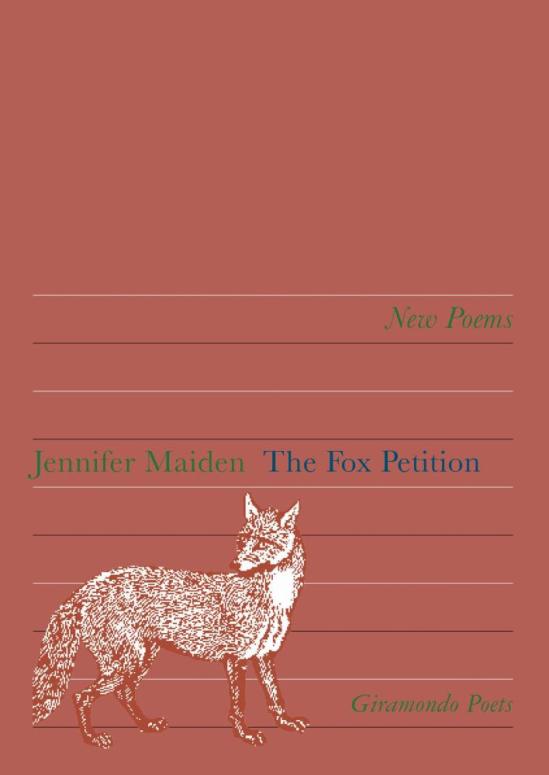
Both books bow deeply, if also ironically, to European influence. The title of Maiden’s book refers most directly to the petition circulated in New South Wales in 2015 calling for an official bounty system for foxes (imported from England in order for colonials to have something to hunt). The Shooters and Fishers party of NSW, unsurprisingly, were all over it. In Parliament in May 2014, ridiculing another petition seeking to allow foxes to be kept as pets, their member, Robert Borsak, lamented, ‘I dread the day I walk down George Street and pass a yuppy with a fox on a lead or indeed see a fox sticking its head out of a man bag.’ The title also alludes to the eighteenth-century Whig statesman and politician, Charles James Fox, who Maiden claims as her ‘favourite politician / of all time’ (‘Uses of the Female Duet’). Like Melissa Parke, Fox, known for his support of the French Revolution, abolitionism, and the deepening of juridical capability, might be described as ‘devoted to the innocence in living.’ And, significantly to The Fox Petition, he spent almost his entire career in political opposition.

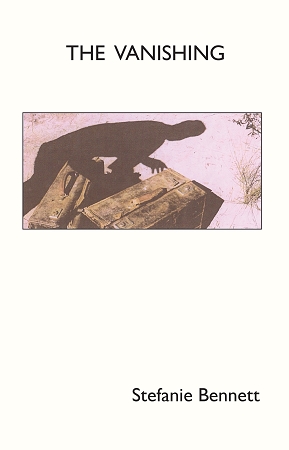
Stefanie Bennett looks across the Channel to the little-translated, northern French and quotidian poetics of Guillevic. James Sallis’s piece on John Montague’s translation of Guillevic’s Carnap, for the Boston Review, suggests that ‘even in French, Guillevic can be an elusive read. Slight, elliptical, gnomic, the poems vanish when looked at straight on. ‘Les mots / C’est pour savoir,’ he says. Words are for knowing.’ Bennett attains many of these traits. In her Foreword, she invokes Guillevic as a model meditator on the complex relationship between ‘man’ and the natural world. His sparse lines suggest that while he may have considered a multitude of phenomena, in keeping with the tradition of the mystic, he delivers only a few symbolic points for us connect ourselves. Inviting us, too, into such thought, Bennett writes, ‘we had best gather together what’s left of all we’ve scattered, abused and refused to take notice of in memorandum.’ We – in all senses of the word: individual human subjects; the zeitgeist; collective culture; and the ecology we share and are destroying – are vanishing. We best believe it, because memento mori is the best we can do. Only our totems of this remembering, the menhirs, will continue to objectively exist.

In her Part II poem, ‘Memoir,’ for example, Bennett links the ancient Celtic religious practices of ‘the Menhir people,’ carried out on Guillevic’s home turf in Brittany, with the conditions for a ‘con- / Structed future.’ She describes the agent of this connection as ‘A kinetic Mammon / Wearing / Two hats,’ the one hat belonging to complex history, and the other to present action. The collection also wears two hats: one, the first part, posited as a present lyricism, with universalising titles such as ‘Stratum,’ ‘Arrival,’ and ‘Exit,’ and the second as a history, subtitled ‘Repel & Attract: An Orphic Conflict.’ There are certainly elements of religious Orphism present, of transmigration, the ascetic life, and having seen the underworld and returned. However, this is perhaps only inasmuch as the collection proceeds from Guillaume Apollinaire’s artistic Orphism, with its fauvism, colour theory, and pure lyric abstraction.

The next poem, ‘Variable Contrasts’, dedicated to Thomas Shapcott, stages a significant oscillation between unlikely opposites, suspension and coagulation, under this tarp of surrealism:

Now you’ve returned
From the Baltics
Hurling broken oars
At the strait’s
Dizzying
Shock-waves,
An irrepressible
Frontier
Beckons:
Klee’s
Aspic renaissance
And Eluard’s ‘the wind,
Undecided rolls
A cigarette of air …’

Within the Charnel-house
You’re knee-high deep again
– Hesitating.
It’s not Passé fanaticism
that coagulates,
But the knowledge
Of it.

The idea of an ‘Aspic’ renaissance suggests that the ‘pure psychic automatism’ of surrealism is aesthetically upheld as an aperitif of stasis. The gelatinous mould can change – it can be French surrealist Paul Éluard’s ‘wind, / Undecided,’ for example – but it remains some version of discrete and wobbly. The micro-variations in this state’s definition (‘Aspic,’ ‘Undecided,’ ‘Hesitating,’ and ‘coagulates’) each take a turn, none acceding to preeminence. As the final lines reveal, awareness of this free agitation of thought is different to being involved in it. Neither ‘Passé fanaticism,’ nor having ‘knowledge / Of it,’ sounds desirable, but they constitute Bennett’s two necessary poetic and, perhaps, human, processes. The aspic metaphor suggests that, for Bennett, the meat of life, its events and physical objects, are irrepressibly transformed into poetic symbols. And, then, if we frame her as a surrealist following poets like Éluard and Aragon, we are able to view these symbols as expressions of some notion of true life.

Treating Bennett as a visionary poet, we can discern an isotope of essentialism in The Vanishing. Her poems are titled for us to be led in this direction. ‘Kinship,’ for example, gives the reader access to the feeling of kinship, setting an archetypical scene of warmth and comfort at the hearth, or around the campfire, while reinforcing instincts for togetherness, sensuality, and our commingling with ‘the elements.’ Each poem is linked to its neighbour in a similar way. The poem following ‘Kinship’, called ‘Smoke’, can be read as a reconstitution of kinship’s overflow (the fire around which we develop kinship produces smoke). This poem produces an imperative that seems to resonate through the collection. It’s a Jacob’s Ladder to the Tower of Babel. Poets not feeling well, as one line suggests, is indicative of ecological sickness. Bennett’s answer is to remain receptive, ‘stay / Sober. Stay serene. / Play / Pat-a-cake / With the screech-owl / in God’s sweet acre’. This imploration to realise what we have and appreciate it occurs repeatedly under different guises. In ‘Rilke’s Desk: A Postscript’, it is ‘Don’t / Scramble / The cornucopia!’. The Vanishing is a humble because fatalistic call to appreciation a la Guillevic, before ‘All’s well!’ disappears.

I wanted to reflect at some point on the status of vermin in both of these books. What happens with the pestilential creatures that often so delightfully hive through subversive poetic works? But neither The Fox Petition nor The Vanishing entertains the idea. Instead, the creatures that would be called so are incorporated. Because both texts stage contests without actualising them, there are no victors; no one stranded on Manus Island, and only people left speaking who can imagine extraordinary compassion. For both, such compassion involves Bartleby-like refusal to play along. Maiden, especially, expresses the importance of maintaining the capacity to resist; to oppose; to imagine difference. She does so sympathetically, mindful that weakened and traumatised creatures can read a helping hand as another backhand whack. Under the spell of ‘eau-de-Cologne,’ regular people who should not be are kept in remote prisons, and foxes are obliged to be shot.

Now,
since new laws for Biosecurity,
if I spoke to the fox without
killing it, I would be charged, but
we once had much in common. A quality
spare and wild with desperation
in its streetlamp eyes, its old headlight
eyes could still suggest a city
in shifting shapes, its identity
aristocratic in lost deceptions.
On an empty
road by the Lakes, I once met a fox
whose eyes were ghosts with pity. (‘Once I Met a Fox’)

Empathy might not save the day, but we must muster it regardless.

*Simon Eales was born and lives in Melbourne. He recently completed a MA on Australian satirical poetics at the University of Melbourne.

**Taken from Cordire Poetry review at http://www.cordite.org.au
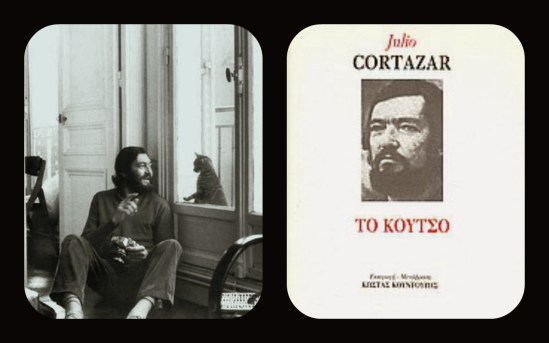
Χούλιο Κορτάσαρ, Από “Το Κουτσό”

koutso

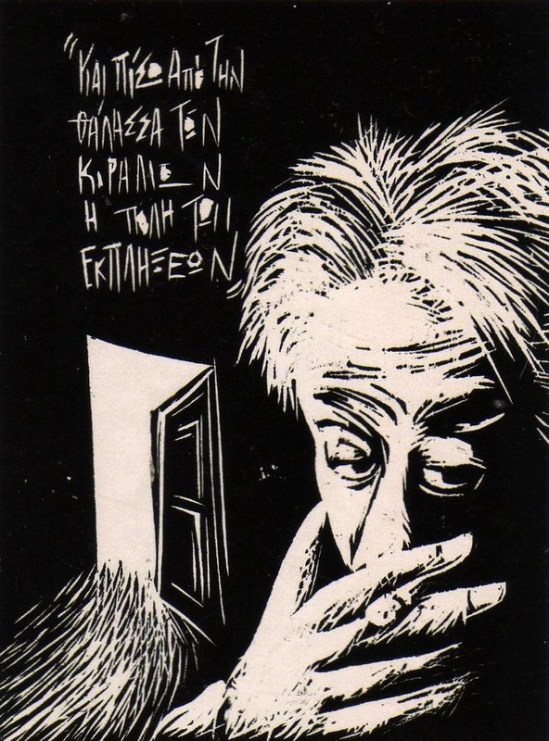
Αγγίζω το στόμα σου, με το δάχτυλό μου αγγίζω το περίγραμμα του σώματός σου, το σχεδιάζω σαν να το δημιουργεί το χέρι μου, σαν το στόμα σου να μισανοίγει για πρώτη φορά και αρκεί να κλείσω τα μάτια μου για να το σβήσω και να ξαναρχίσω να το φτιάχνω, και κάθε φορά κάνω να γεννιέται το στόμα που ποθώ, το στόμα που επιλέγει το χέρι μου και σχεδιάζει πάνω στο πρόσωπό σου, ένα στόμα επιλεγμένο ανάμεσα σε τόσα άλλα, επιλεγμένο με ηγεμονική ελευθερία από μένα για να το ζωγραφίσει το χέρι μου πάνω στο πρόσωπό σου και που από ένα γύρισμα της τύχης που δεν προσπαθώ να καταλάβω συμπίπτει ακριβώς με το στόμα σου που χαμογελάει κάτω από εκείνο που σχεδιάζει το χέρι μου.

Με κοιτάς, με κοιτάς από κοντά, κάθε φορά και από πιο κοντά και τότε παίζουμε τον κύκλωπα, κοιταζόμαστε όλο και από πιο κοντά και τα μάτια μεγαλώνουν, πλησιάζουν το ένα το άλλο, κολλάνε το ένα στο άλλο και οι κύκλωπες κοιτιούνται, οι ανάσες τους μπλέκουν, τα στόματα συναντιούνται και παλεύουν ανόρεχτα, δαγκώνονται χείλια με χείλια, ακουμπώντας μόλις τη γλώσσα πάνω στα δόντια, παίζουν μέσα στον περίβολό τους όπου πηγαινοέρχεται ένας βαρύς αέρας με ένα παλιό άρωμα και μια σιωπή.
Τότε τα χέρια μου θέλουν να βυθιστούν στα μαλλιά σου, να χαϊδέψουν αργά τα βάθη των μαλλιών σου ενώ φιλιόμαστε σαν το στόμα μας να είναι γεμάτο λουλούδια ή ψάρια, ζωηρές κινήσεις, σκοτεινή ευωδιά.
Και όταν δαγκωνόμαστε ο πόνος είναι γλυκός κι όταν πνιγόμαστε μ’ ένα σύντομο και τρομερό ταυτόχρονο ρούφηγμα της αναπνοής, αυτός ο στιγμιαίος θάνατος είναι όμορφος.
Και υπάρχει ένα και μόνο σάλιο, μια και μόνη γεύση από ώριμο φρούτο κι εγώ σε νιώθω ν’ ανατριχιάζεις απάνω μου όπως η σελήνη στο νερό.

*Από “Το κουτσό” (Κεφάλαιο 7).

Jaques Prevert, Τρία ποιήματα

Η ΩΡΑΙΑ ΕΠΟΧΗ

Νηστική χαμένη παγωμένη
Ολομόναχη άφραγκη
Μια κοπέλα δεκάξι χρόνων
Ακίνητη όρθια
Πλατεία Ομονοίας
Μεσημέρι Δεκαπενταύγουστου.

***

ΟΙΚΟΓΕΝΕΙΑΚΟ

Η μητέρα πλέκει
Ο γιος πολεμά
Το βρίσκει πολύ φυσικό η μητέρα
Και ο πατέρας τι κάνει ο πατέρας;
Κάνει επιχειρήσεις
Η γυναίκα του πλέκει
Ο γιος του πολεμά
Αυτός επιχειρήσεις
Το βρίσκει πολύ φυσικό ο πατέρας
Και ο γιος και ο γιος
Τι βρίσκει ο γιος;
Δε βρίσκει τίποτα απολύτως τίποτα ο γιος
Ο γιος η μητέρα του πλέκει ο πατέρας του επιχειρήσεις αυτός πόλεμο
Όταν θα έχει τελειώσει ο πόλεμος
Θα κάνει επιχειρήσεις με τον πατέρα του
Ο πόλεμος συνεχίζεται η μητέρα συνεχίζει πλέκει
Ο πατέρας συνεχίζει κάνει επιχειρήσεις
Ο γιος σκοτώθηκε δε συνεχίζει πια
Ο πατέρας και η μητέρα πηγαίνουν στο νεκροταφείο
Το βρίσκουν πολύ φυσικό ο πατέρας και η μητέρα
Η ζωή συνεχίζεται η ζωή με το πλεκτό τον πόλεμο τις επιχειρήσεις
Οι επιχειρήσεις ο πόλεμος το πλεκτό ο πόλεμος
Οι επιχειρήσεις οι επιχειρήσεις και οι επιχειρήσεις
Η ζωή με το νεκροταφείο.

***

ΠΡΩΙΝΟ ΓΕΥΜΑ

Έβαλε τον καφέ
Στο φλιτζάνι
Έβαλε το γάλα
Στο φλιτζάνι με τον καφέ
Έβαλε τη ζάχαρη
Στον καφέ με το γάλα
Με το κουταλάκι
Γύρισε
Ήπιε τον καφέ με το γάλα
Και ξανάφησε το φλιτζάνι
Χωρίς να μου μιλήσει
Άναψε
Ένα τσιγάρο
Έκανε δαχτυλίδια
Με τον καπνό
Έβαλε τις στάχτες
Στο τασάκι
Χωρίς να μου μιλήσει
Χωρίς να με κοιτάξει
Σηκώθηκε
Έβαλε
Το καπέλο του στο κεφάλι του
Έβαλε
Το αδιάβροχό του
Γιατί έβρεχε
Κι έφυγε
Μέσα στη βροχή
Χωρίς μια κουβέντα
Χωρίς να με κοιτάξει
Και ’γω πήρα
Το κεφάλι μου μέσα στα χέρια
Κι έκλαψα.

prevertpaper01

Θωμάς Γκόρπας, Τρία ποιήματα

5064528_orig

Η ΠΟΙΗΣΗ
Μνήμη Δημήτρη Χριστολούδου

Το χειρότερο και το καλύτερο στη ζωή ποιητή
Να χτίζεις για τους άλλους πύργους και παλάτια
Παίρνοντας πέτρα απ’ το νταμάρι της καρδιάς σου
Σκαμμένης απ’ τα χαμόγελα τα πάρε και τα δάκρυα
Παίρνοντας χρώμα και γυαλί απ’ την μεγάλη σου αγάπη
Που γίνεται βράδι πρωί κομμάτια….

Πατάρι

Ανάμεσα από καφέ εσπρέσο και ντουμάνια
Οι νέοι ποιητές σκαλίζουν στην καρδιά του κόσμου
Για φρέσκους δρόμους για φρέσκα λιμάνια
……………………………………………………………..

κάποτε τέλειωσε αυτή η ιστορία
κ’ οι ποιητές λιγόστεψαν αμάν πόσο λιγόστεψαν
τόσοι πουλάν στην αγορά όσο τα τελευταία τους ρετάλια
τόσοι αγοράζουν γιατρικά πανάκριβα για μια ποίηση ξεγραμμένη
πια
οι ποιητές λιγόστεψαν αμάν πόσο λιγόστεψαν
κ’ οι φίλοι…

***

ΚΑΙ ΠΕΡΑΝ ΤΗΣ ΠΟΙΗΣΕΩΣ
Μνήμη Σταμάτη Μαράντου

Στα χείλη των ερυθρών χαραδρών ανθούν λευκά λουλούδια
Στα δροσερά υπόγεια των καλοκαιριών αιχμαλωτίζονται
Καρδίες
Παιδιών η απελπισία ηχεί και πέραν της Ποιήσεως ακόμη
Και των ενδόξων Ρεμπέτικων Τραγουδιών.
Όσο και αν εκτιμήσουμε τη ματαιότητα
Όσο να εκποιήσουμε την τρυφερότητα
Μας πήραν σβάρνα τα χρόνια…
Μετράω τις τρύπες στο σκοτάδι
Φιλίες έρωτες απλήρωτες δουλειές
Απ’ όλν τούτο δοκιμάζω πυρετωδώς
Και το καινούριο μου χάδι…
Τόσοι τυχάρπαστοι καμπλεξαριμένοι
Απ’ τα καταπληκτικά μου πουκάμισα
Τα εξ’ ίσου καταπληκτικά μου λόγια
Και τα παραμύθια φίλων που μ’ αγάπησαν
Πέραν του δέοντος και πέραν της Ποιήσεώς μου
Είανι αδύνατον να με φανταστούν στα περασμένα χρόνια
Χαρμανιασμένο για τσιγάρο περισσότερο και από γυναίκα
Χαρμανιασμένο για γυναίκα περισσότερο κι από πρωτοφανή τοπία.
Εγώ τώρα πρέπει να είμαι ένας άλλος
Διάφορος σε πολλά του Θωμά παλαιοτέρων ημερών
Τώρα πρέπει να είμαι κάτι μεταξύ σοφού και αγρίας παρθένας
Τα δικά σου γυαλιά με τα οποία βλέπω κ’ εγώ καλά
Ένα αβασίλευτο ηλιοβασίλεμα…
Και βεβαίως η Ποίησις πια Δε με εκφράζει
Η Ποίησις σαν τη γυναίκα πιο πολύ σ’ αγάπησε κ’ εσύ
Τη διώχνεις Δε με εκφράζει καν η ελπίδα για την επόμενη μέρα
Ολόκληρος έχω γίνει ένα βάθος ένα χρώμα
Ένα κυρίαρχον χρώμα.

***

ΣΥΝΑΝΤΗΣΙΣ ΠΑΛΑΙΩΝ ΦΙΛΩΝ
Μνήμη Νίκου Καρούζου

Ένας φίλος ήρθε απόψε από τα παλιά…
Πρόκειται περί αγάπης ή αναμνήσεως της αγάπης;
Παντού στην Αθήνα τραύματα νωχελικά
Μόνον η αδέσποτη νύχτα της μένει ακόμα δική μας
Σαν σκυλί σαν προδομένη αγάπη σαν διάχυτο λαϊκό τραγούδι
Γιομάτο ευγένεια.
Βέρα Βόδη μια αδάμαστη ακόμα γυναίκα ή ναυαγισμένη αδιάφορο
Στην άλλη μεριά ενός μεθυσμένου τηλεφώνου
Είναι γυμνή κ’ έχει στο σώμα της τόπους τόπους πληγές
Ή κρέμες νυκτός αδιάφορο αδιάφορο αδιάφορο
Γιατί τώρα αυτή τη στιγμή στην Πλατεία Κολωνακίου ώρα δύο
Μετά τα μεσάνυχτα
Εγώ και ο φίλος μου είμαστε δυό δίδυμες πηγές εξάρσεως
Ή δυό άνθη πεθαμένα στη γέννα τους
Ή δυό λαμπρά αυτοελεγχόμενα πέη
Οι πεθαμένοι φίλοι μας οι χαμένοι φίλοι μας οι καφέδες και τα
Τσιγάρα μας
Οι παπαγάλοι οι λεχρίτες οι σβηστοί.
Βέρα Βόδη ωραίο όνομα ποιητικό θαυμάσιες λέξεις όπως
Βραδινό αγέρι ανεμώνες μελαγχολική μουσική.
Πρέπει να βασανίζονται να ταπεινώνονται οι ωραίες λέξεις όπως
Βραδινό αγέρι ανεμώνες μελαγχολική μουσική.
Πρέπει να βασανίζονται να ταπεινώνονται οι ωραίες λέξεις
Όπως οι ωραίες γυναίκες μπας και αγαπηθούν στο τέλος.
Οι χασάπηδες της χαράς είναι σαν άγριοι σεμνοί βασιλιάδες
Όταν πέφτουν δάκρυα στο ποτήρι το κρασί βάφεται
Όταν πέφτουν τραγούδια ματώνει
Άλλα με τίποτε Δε νερώνει
Ούτε με Βέρες Βόδη ούτε με Χρίστους ούτε με γλυκές κάμαρες.
Οι σύγχρονες κάμερες είναι συντριπτικές των αναμνήσεων.
Θα πάρω ταξί θα πάρω τσιγάρα θα πάρω λαχεία θα πάρω το
Δρόμο του γυρισμού
Και θα τον πάρω ακριβώς γιατί κανένας Δε με περιμένει
Τι Προμηθέας τι τραγουδιστής τι πρώτη αγάπη το ίδιο κάνει.
Από ένα σημείο και πέρα σβήνουν α φώτα
Δεν έχει φώτα δεν έχει λιμάνια δεν έχει φαρμακεία γενικώς
Διανυκτερεύοντα έχει
Την αθέατη πλευρά του θανάτου που ξεδιπλώνεται ανοίγει λίγο
Λίγο και τα μάτια
Γίνονται τεράστια στα μπαλκόνια τους
Έρχονται τα ΄φύλλα της καρδιάς ν’ αγναντέψουν
Καπνίζοντας το τσιγάρο τους να ονειροπολήσουν
Τα πήρε ο ύπνος κ’ έγειραν
Για πάντα.
Πριν και μετά τη Βέρα Βόδη σκοτάδι
Πριν και μετά το σκοτάδι
Πριν και μετά τα’ άνθη του αίματος σκοτάδι
Και μόνο το τραγούδι καταργεί τα άκρα
Τα φάρμακα τις υπερβολικές δόσεις χαράς
Τα’ άσπρα σπιτάκια και τα πράσινα άλογα.
Υπάρχουμε ως ανοιχτές πληγές κόντρα στα καλά λόγια
Τα καλά παιδιά και τα καλά λάδια
Υπάρχουμε ως υπογραφές κόκινες κατακόκινες της φωτιάς
Σ’ απίθανα σημεία της νύχτας.
Δεν αφήνουμε απλώς τραγούδια πίσω μας στο μέλλον αλλά
Τα κομμάτια μας
Και κάπου μακριά ακόμα άρχισαν να κατασκευάζονται τα νέα
Μουσικά όργανα.

Γιώργος Γκανέλης, Δύο ποιήματα

12524032_441247302725300_9043493495976652076_n

ΕΛΛΕΙΨΗ ΕΜΠΙΣΤΟΣΥΝΗΣ

Λίγοι άνθρωποι με πίστεψαν:
Ο μεθυσμένος παλαιοπώλης
Ο σταθμάρχης των τρένων
Και μια ξυπόλητη γυναίκα.
Ο πρώτος γιατί του αγόρασα
Όλες τις διεγερμένες μνήμες
Ο δεύτερος επειδή με είδε
Να ξαπλώνω πάνω στις ράγες
Και η γυναίκα διότι λέει
Κατασκευάζω θλιβερές εικόνες
Πάνω στη γυμνή άσφαλτο.

Εγώ όμως δεν τους πιστεύω
Το μόνο που ακόμα καταφέρνω
Είναι να ξυπνώ τα μεσάνυχτα
Και να καρφώνω στο χαρτί
Τα δυο μου χέρια.

***

ΘΕΑΤΡΙΚΟΙ ΡΟΛΟΙ

Ο άσχημος γελωτοποιός
Περίμενε τη βροχή
Για ν’ αρχίσει να κλαίει.
Μετά έβγαλε τα παπούτσια του
Καβάλησε ένα μηχανάκι
Και με ταχύτητα ανέβαινε στον ουρανό.

Στο μεταξύ, έξω απ’ το θέατρο
Ένας φωτογράφος αποθανάτιζε τη σκηνή
Οι λασπωμένοι δρόμοι ζητούσαν αυτόγραφο
Το βρέφος που γεννήθηκε σήμερα
Έμαθε να παίζει πιάνο.

Δεν είναι δικό μου το παιδί
Δεν ήμουν ποτέ παιδί
Αφήστε για λίγο τους ηθοποιούς
Να εκφραστούν ελεύθερα
Γιατί αν σταματήσει να βρέχει
Τους ρόλους τους
Θα τους υποδυθείτε εσείς.

*Από τη συλλογή “Εκτός εαυτού”, εκδ. Στοχαστής, 2015.

Two events – A 100 years of the start of the DADA movement and the launch of the second “Audacious” CD

dada a

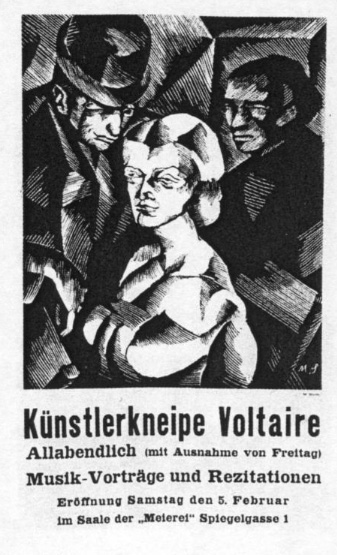
One hundred years ago the poster attached here signalled the first evening of cabaret Voltaire which was also the start of the DADA movement, come help us celebrate the anniversary of this event

on 
5th Feb 2016 around 7.30 pm. 


In “Some Velvet Morning” 123 Queens Parade, Clifton Hill.

Performers: Razor Hope, Jeltje, Peter Murphy, Ashley Higgs, Sjaak de Jong, Anna Fern, Santo Cazzati, Harry Williamson

Also the launch of the second “Audacious” CD, and if it’s anything like the first “Audacious”, this promises to be a truly wonderful event:

Friday, 29 January, 7pm @ Under the Hammer, 158 Sydney Rd., Coburg!

http://www.ftloose.com.au

The history of the Dada movement is imbricated in the lightning-fast intellectual break-through set off, simultaneously and independently, in various parts of the world by several groups of young artists, writers and philosophers: in just a few years, from 1916 to 1923, it was to shake the aesthetic foundations of the period, be they traditional or avant-garde, and set off a revolution which, from surrealism to pop art, would in half a century upset our vision of the world.

A somewhat unexpected announcement appeared in the Zurich press on 2 February 1916: “The Cabaret Voltaire. Under this name a group of young artists and writers has formed with the object of becoming a centre for artistic entertainment. In principle, the Cabaret will be run by artists, permanent guests, who, following their daily reunions, will give musical or literary performances. Young Zurich artists, of all tendencies, are invited to join us with suggestions and proposals.”

The Cabaret was inaugurated three days later in the back room of the Holländische Meierei, a popular tavern located in a seedy section of Zurich. Jan Ephraïm, the owner of the establishment, turned the job of emcee over to Ball with the hope of attracting a large audience. Ball took as his model the Parisian cabaret tradition, born with the Chat Noir in 1881, which he associated with the cabaret spirit that had existed in Berlin before the war. For him, no one other than the emblematic figure of Voltaire could play the role of godfather for his association. It was from the pamphleteer and master of satire that he drew his vision of a reality radically out of step with its time.


Refugee artists from all over Europe quickly besieged the scene at the establishment. Emmy Hennings, a German singer and Hugo Ball’s partner, sang her own songs as well as many from the repertoires of Aristide Bruant, Erich Mühsam and Frank Wedekind. Those individuals, who were to become the “hard core” of Dada, were present from the beginning of the Cabaret: the Alsatian artist, Hans Arp and the Romanians Tristan Tzara and Marcel Janco. Richard Huelsenbeck joined the festivities on 11 February 1916 at the behest of Ball, who had met him in Munich in 1912 in connection to the Der Blaue Reiter group.

Nathanael Pree reviews Pam Brown’s Missing up

Brown_MissingUp_Cover_1024x1024

Missing up
by Pam Brown

Vagabond Press, 2015


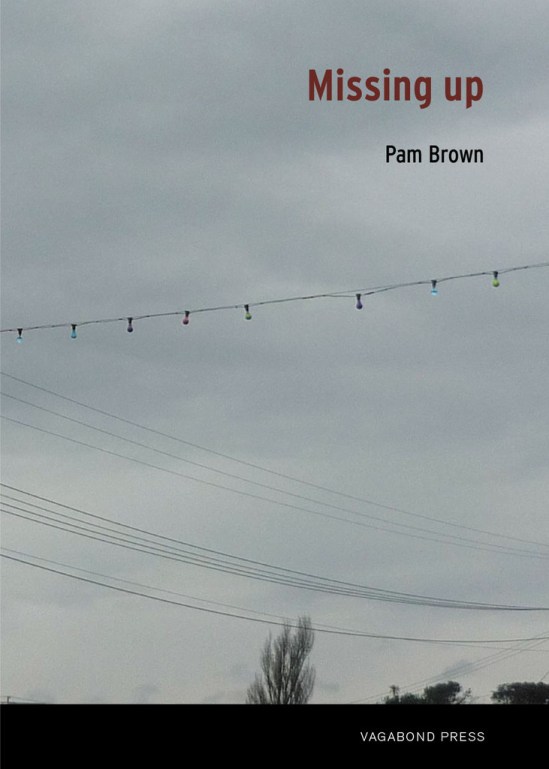
From the cover, let alone the first lines, the title appears apt: a sense of levitation, humming along wires, strands of illumination flickering through a work of direct and intimate voices, understated in its deftness and density, with light touches that lift the lexis, and air pockets in its seams of meaning. Spread out across the pages are samples of complete, if not absolute contemporaneity interspersed with work that decries the shortcomings of an age in which culture is so often presented as a commodity. Pam Brown’s latest collection showcases self-objects and articulates responses to salient concerns, providing masterful representations of the everyday and outré that take their time to settle into the spaces and absences within which they are framed.

Missing up provides regular reminders of the offbeat and melancholy immanence of the eclectic self-objects and material that make up urban existence. A nod to William Carlos Williams observes: ‘no phenomenon but in things / like slim cyber tablets / scissor sharpeners vinyl bucket seats’. These are presences that convey a semi-contained kinetic energy. The palpable sense of atoms jostling for space as if in defiance of the sadness implicit in any effort towards their decoding – the gravity and lightness of a book, tea towel, blue and orange plastic crates, and colourless (or is it flat white?) noise. Solidity and elision co-exist through a tacit sense of animism, where verbs and nouns take on one another’s attributes, creating peopled things: the life that exists in the solid-seeming compounds that create city and suburbia.

Brown on language is notably to the point: ‘it has to lift off or else I’m not interested in it’. Her poems, she has said, ‘don’t ever leave the street I’m on … and it’s not always literally that street. And I use place and then extrapolate it, abstract out.’ Place is something hard to define, as are the psychic and textual grounds onto which appear isolated or occasionally constellated signals that indicate arrival or absence. Missing upappears apt for a collection of poems that lift off and plane out, taking traces of tar, flakes of bitumen from the street which the poems do not leave so much as interleave, adding another dimension to everyday perception. In this environment ‘colour strips’ contrast with ‘dun brick niches / stacked / with ash’ – as cityscape constituents, from cargo to post-industrial strata with their sediment visible in the cracks. From the wharves to the outer burbs, ‘& Surrounds’ shows ‘the streets here / regular stepped / a flat expanse / chrome-plated railings / separating a superior plane /from inferior’, and stepping in to match is Brown’s uncompromising typography, the planes and levels indicating straightened and discontinuous contours and segments of life-objects. Translated – or taken aside – as text these refuse to rest easily on the page, ‘as time extends / the moody morning / wanting to wander / these organised hills / managed paths / & surrounds.’ Typography as psychogeography: the uneasy self ‘born in parenthesis / raised in an interstice’ ends up, if not entirely missing, ‘sorting through / tattered monads / might as well be gone.’

Regarding her technique, Brown has pointed out that ‘it’s mixing not layering.’ This allows for gaps between not only the lines, but also jump cuts in chronological and geographical continuity: interpenetration and unpredictability where each shift and indent could signal disjunction or connection. These representations of unstable and shifting spaces splice urgency and familiarity according to a projective sense that creates an open force field from home, where a ‘fridge compressor / gurgles’, to the aftermath of Fukushima. Its findings and debris alike form a transnational and trans-temporal urban cento, where predecessors and contemporaries share a certain edginess: Baudelaire and Rimbaud recompose their grimaces together with Schuyler and Cage at the sere and greying edges of striated suburban skies. As the patchwork tapestry lifts off, she asks: ‘& what do you reckon, / my wintry shadow, / my fraudulent duplicate, / somebody up there?’ Mon frère? If, as she avers, ‘the human mind is / empty’, it’s not just a matter of rhetoric.

Brown has referred to a term used by Gilles Deleuze, ‘aux aguets’, meaning to be on the lookout or in ‘a state of cultural awareness’, and this mode of attention is evident here in a collection which refers to and writes in mentors and friends as an ongoing ‘call for community.’ Conversely, as the ‘aesthetics of the surface’ in the poems ‘Required Reading’ and ‘Fricassee’ acerbically indicate, this inclusiveness is balanced by a certain skepticism, as evidenced by an archetypal ‘dolt in residence’ operating ‘all over the very same map’ but in another dimension altogether. Academics writing poetry on the side would be advised to read elsewhere. Yet, however sharp her observations bite, Brown concludes on a conciliatory note for society in general: ‘I would like / a speculative set / of laws / that are friendly to life’, especially in an age where ‘every bridge / shelters someone /homeless’. Maybe sometimes we all need to find ourselves ‘anywhere out of the world’, and at others may not have the luxury of choice, as she reminds us, via Baudelaire. The outcome, if never ideal, could be one where diverse voices, amicable and empathetic (and those of antipathy or estrangement) find their respective points of co-existence, if not convergence.

A conclusion to this review would seem incomplete, or at least tentative, given the urge to keep returning to these concise and finely crafted – however deceptively – lines. A glance at the string of light bulbs drawn over the sparse and darkening street scene on the cover goes well with ‘Hit single xmas’ – considering it now as dark clouds bank over the Manly peninsula where I write this. Elsewhere, ‘skyrupt / big thunderstorm / plotting squall line / swerves / beyond Wattamolla’, appears to presage tornadoes in Sydney, and sheeted rooftops lifting (missing?) up over all this tensile and confounding space.

*Nathanael Pree is of Australian and German background, brought up and educated in the United Kingdom. He did undergraduate studies at University College London, before working in education in Russia, Vietnam, Cambodia and Australia, with additional work experience in India. His postgraduate studies were at The University of Sydney, specialising in the works of W.G Sebald (Masters’ Dissertation) and Charles Olson (PhD, ongoing).

**Taken from Cordite Poetry Review at http://www.cordite.org.au