Stephanie Downing reviews Lizz Murphy’s Shebird

lizz-murphy-shebird-1

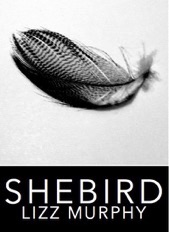
Shebird
by Lizz Murphy
PressPress, 2016

I am a slave to the cocoa bean
So too the children who harvest it

It was these lines from Lizz Murphy’s book of micro poetry, Shebird, which entranced me into selecting it for review. The simple yet effective metaphor, the point at which the mundanity of western life and the horrific reality of child labourers converge, at the crossroads of consumerism: this was what brought me into entering the world of Shebird, the ‘woman or girl who wears the shroud of widows, guards the new grave, tastes gun’. The physical and emotional pain that the Congolese women experience is conveyed expertly in the sensory language that Murphy wields.

When I received the book, I felt like I was holding something fragile and intimate. The paperback format of Shebird gives the volume a textile, delicate feeling, much like the downy feathers of a bird. As the sixth poetry volume in Murphy’s career, the work is highly refined, and finely crafted. Readers of Murphy will appreciate the continuation of the feminine perspective from previous collections such as her anthology Wee Girls, which focused on Irish women’s poetry in Australia. Murphy’s preoccupation with the marginalised voices of women and girls is astutely conveyed in this volume, which translates the pain and violence experienced by women into brief yet profound verses.

The micropoetry format is a continuation of Murphy’s Portraits, inspired by her work with visual art. In the summary of this collection, Murphy describes the micropoem as ‘a flashing wing, a story in a heartbeat, a scrap of the living, a satirical stir’. In Shebirds¸ Murphy continues this slant of ‘a punch in a line’ with many of her poems consisting of only a few lines. The poem I have quoted above, entitled ‘Chocolate Fix’, has been transcribed in its entirety of two epigrammatic lines, yet the implications are expansive. By linking two classes of women through a single image, the coffee bean, Murphy creates a portal into the world of Shebird, the world of the child worker, the girl slave, the global ‘other’ whose voice is unheard.

Murphy demonstrates her ability to concisely portray complex emotions, issues and situations with style and grace. In ‘Dangerous Women’ the stripped back syntax and intensely corporeal language communicate a pain that is at once sharp and compelling.

she scrapes off her own mouth
eyes lowered
grief tempest grey

Murphy’s poetics envelop the reader into the world in such a visceral manner, that it forces the reader to acknowledge the issue at hand. The poetry demands to be read, demands to be heard. Each poem is brief, sometimes only one line, yet it speaks to the heart of an issue that is so often left out of cold statistics.

The number of men
Who sexually assaulted
a twelve year old girl:
Reckoning 101

The colloquial tone of this poem, ‘Who’s Counting’, denies the news report’s cold distance of journalism, and instead gives the rape of this young girl a more human voice. Murphy addresses the issues of violence against women and girls in third world countries in apposite, yet highly imagistic poems. She refuses to let these women and girls be turned into statistics.

A bird motif recurs throughout the volume – in numerous incarnations it is deployed to allegorise the old woman, the child who toils, and the poet-narrator herself. The bird is a fragile, endlessly suffering creature, but also a figure of resilience, one that endures suffering and retains its beauty despite its trials. This culminates in one of the final poems, ‘A Woman is Raped’, in which the poet urges the figure to ‘rise like a shebird / against / the war on women’. As the notation indicates, this poem was inspired by an art and text work depicting the rape of Congolese women. These indices remind the reader that the girls, or shebirds, rendered in this volume are not simply poetic devices, but real human beings that theses horrors are currently being inflicted upon.

This ultimately gives the poetry a gravitas that is needed when handling such a distressing and often unheard of issue. Far from simply being a pleasing assortment of words and lines, though the collection is masterfully crafted, Murphy’s Shebird draws attention to the most vulnerable girls and women in the population, and urges the women’s voices be heard and their stories be told.

*Taken from http://cordite.org.au/reviews/downing-murphy/

Το ποίημα της εβδομάδας

sweet jane eyre's avatarstyle rive gauche

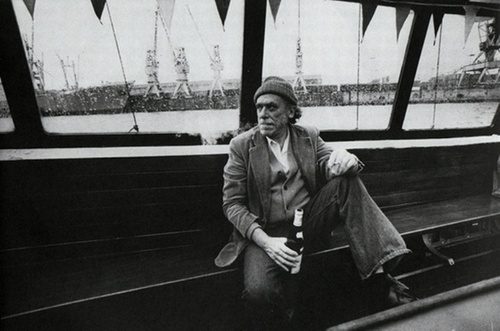
Καλό μήνα. Στο ποίημα της εβδομάδας θα απολαύσουμε το Σαν τον σπουργίτη του Τσαρλς Μπουκόβσκι. Το ποίημα περιλαμβάνεται στη συλλογή Τρόμου και αγωνίας γωνία από τις εκδόσεις Απόπειρα σε μετάφραση του Γιώργου Μπλάνα.

Σαν τον σπουργίτη

Για να δώσεις ζωή πρέπει πρώτα να πάρεις.

Καθώς η θλίψη μας σωριάζεται

στη χιλιοματωμένη θάλασσα,

προσπερνώ μυριάδες αυτοσπαραζόμενα κοπάδια

πλασμάτων με άσπρα πόδια και ξασπρισμένες κοιλιές.

Σαπίζουν ολοένα πεθαίνοντας. Ξεφωνίζουν

σε άγριους καβγάδες.

Καλό μου παιδί, σου πρόσφερα

μονάχα ότι κι ένας σπουργίτης.

Είμαι γέρος όταν της μόδας είναι να’σαι νέος.

Κλαίω όταν είναι της μόδας να γελάς. Σε μίσησα,

όταν χρειαζόταν πολύ λιγότερο κουράγιο ν’αγαπάς.

687474703a2f2f656c3132342e636f6d2f77702d636f6e74656e742f75706c6f6164732f323031342f30362f70756e746f732d6163657263612d64652d6c612d766964612d636f6e2d6672617365732d64652d636861726c65732d62756b6f77736b692e6a7067.jpg

View original post

ΚΥΡΙΑΚΗ.

yorona's avatarγια τη φωτογραφία και την κριτική

super super moon

Κύματα Κυριακής τα μάτια μου

κύματα μοναξιάς τα χέρια μου

τρίζουν από ύπνο αθώο

τα δόντια μέσα στην καρδιά μου

το πεθαμένο παιδί

δεν ξενιτεύεται

πάει κρατώντας ένα

       κόκκινο σκυλάκι

μέσα στο μαντίλι

τέρατα περπατούν ανάποδα στα όνειρα

φυσάει ένας άγριος αέρας

πάνω από τις λεμονάδες

πετάει μια νυχτερίδα

σαν πικραμένο ευαγγέλιο

μ’ ένα μαύρο πανί

μία γυναίκα

σκεπάζει το φεγγάρι.

ΜΙΛΤΟΣ ΣΑΧΤΟΥΡΗΣ

Από την ενότητα

ΣΦΡΑΓΙΔΑ

ή

Η ΟΓΔΟΟΗ ΣΕΛΗΝΗ

(1964)

View original post

Juan Manuel Macías, Γραφείο

alejandria

Στα σκοτάδια τις λέξεις
να τις αγγίζεις πρέπει να ξέρεις
με την ίδια πίστη με την οποία αγγίζεται ένα κορμί.

Κάποιες φορές ο άνεμος της καρδιάς υπερβολικά τους φωνάζει
για τη δική τους αδύναμη κατάσταση της λάσπης.
Ο άνεμος της καρδιάς περνά και συγχύζει
και παύουν τα χείλη νικημένα από το παρελθόν,
παρατατικό όταν πάντα,
όταν πάντα ήταν αργά κι ωστόσο κανείς
δεν κατάφερνε να φορέσει ένα κολάρο κατευνασμού σε ορισμένα ρήματα μεταβατικά:
«εγώ είχα», «εγώ ήθελα»
«εγώ ήξερα ή μπορούσα»…
κι ωστόσο
ένα βιβλίο συνέχιζε με όλες του τις ορισμένες ώρες να σαπίζει,
με όλη τη συσσωρευμένη και θλιμμένη οργή του,
με όλη την απαρηγόρητη γραμματική του,
πάντα ανοιχτό από την ίδια παγωνιά
στο γραφείο στο οποίο ποτέ δεν κάθισες.

Κάποιες φορές οι λέξεις
είναι μονάχα δρόμοι τεντωμένοι που οδηγούν στον πυρετό,
κι ο πυρετός δεν είναι παρά ένα μουτζουρωμένο από κίτρινο νοέμβρη κασκόλ
στο λαιμό των παράξενων παιδιών.

Και τη βροχή, μη ξεχνάμε τη βροχή, αγύριστη ηλακάτη κόσμων χωρίς ηθική διδαχή,
και τόση γέρικη ιστορία
στα κατώφλια κοιμισμένη,
και τόση ιστορία αδέξια αποσπασμένη
από τους καταλόγους των σπασμένων θεοτήτων,
βρώμικων από την απουσία, τη βιολέτα και την κιμωλία.

Αλλά είναι νύχτα τώρα, και οι λέξεις
θα γυρίσουν να σκοτεινιάσουν όπως σκοτεινιάζει ένα κορμί,
άμα οι πόλεις τα βλέφαρά τους κλείσουν από μακριά
και μία άβυσσος λεπτή στα χέρια μας χυθεί.
Γιατί ξέρουμε πως ανάμεσα σε σκιά και σκιά μπορεί να πέσει ένα δόγμα
και δεν υπάρχει ένα ναι πιο εμφατικό από αυτό του αγγιγμένου δέρματός σου, ακριβής σκόπελος,
όπου οι αμφιβολίες, συνεχίζουν να σπάνε, η μία μετά την άλλη, τον στείρο του κυματισμό.
Και τη μετατόπισή του.

Δεν υπάρχει άλλη επιστήμη πιο σαφής και χωρίς σίγαση
από τα χέρια που ακούνε και την καρδιά που αγγίζει.
Το σκοτάδι θεμελιώνει την αυστηρή του υπαγόρευση:
πως όλα μπορεί να είναι οποιοδήποτε πράγμα εκτός απ’ το κορμί σου
άμα να φτάνει ξέρει κάποιος από τον πιο σύντομο δρόμο,
από αυτόν που πάει απ’ την αλβαργκονθάλες στη μελαγχολία ή στο σύννεφο
περνώντας απ’ τη λήθη, την πισίνα, την κίρκη, τη βερενίκη, τον βοριά .                   

Κοίτα. Έχουμε φτάσει από πολύ μακριά
στο πιο δύσκολο μέρος της σύνταξης.
Έχουμε ανοίξει τις πιο παράξενες πόρτες και είδαμε πως πια δεν θα υπήρχε κανείς
παρά η άχρηστη τράπουλα του χαρτοπαίκτη, τα ρέστα κάποιας δευτέρας καταδικασμένης, ένα
μισοτελειωμένο πανηγύρι
και ένα σάπιο από αβεβαιότητα και φόβο τσαμπί.
Όλα ήταν, τελικά, στα δικά μας χέρια.
Εσύ επινοούσες λέξεις όταν κάποιος έσβηνε τις μέρες
κι εγώ συνέχιζα να τις περιμαζεύω για να κατανοήσω γιατί ένα σπίτι
σχεδιάζεται μονάχα με τα χέρια ενός παιδιού κι όχι ενός αρχιτέκτονα,
γιατί ένα σπίτι ποτέ δεν διαρκεί για πάντα,
γιατί ο χρόνος κι ο τρόπος και τα άτομα,
και κανείς δεν επινόησε έναν παράδεισο για τα σπασμένα παιχνίδια και τις ορφανές από ρίμα μετοχές.

Κοίτα.
Έχω φέρει τις λέξεις που επινόησες στα σκοτάδια,
φυλαγμένες μέσα στην ίδια τους τη σκοτεινιά.
Όλες είναι εδώ, δεν λείπει καμιά,
συμπεριλαμβανομένων και αυτών που στην απλή εντριβή πονάνε απ’ το αλάτι και τη θάλασσα τη μακρινή
ή εκείνες, τις πιο ανυπεράσπιστες, που άμα τις χαϊδεύεις υπερβολικά
μπορούνε με ένα δάκρυ ή μ’ έναν άγγελο να μπερδευτούνε εύκολα.
Πάμε να παίξουμε τις αλυσοδεμένες λέξεις.
Αλλά με την ευχαρίστηση που αντιλαμβάνονται μονάχα αυτοί που παίζουνε στα σοβαρά.

Ναι. Στα σοβαρά. Παρακαλώ. Είναι διασκεδαστικό.

Πάμε να τις τοποθετήσουμε τη μία μετά την άλλη, με του καπρίτσιου την πίστη, με την αφή που τους δρόμους επινοεί.
Τη μία μετά την άλλη, θα τις διασώσουμε απ’ την αργή τους των πιθανοτήτων αγωνία,
θα φέρουμε σ’αυτές ένα σπιτικό, ένα σύστημα ριζικό, και έναν ενεστώτα παρατατικό για πάντα,
τη μία μετά την άλλη, πρός της μέρας το φως.

*Από το βιβλίο Μετάβαση, DVD Ediciones, 2011. Στα ελληνικά από την Ανθολογία Σύγχρονης Ισπανικής Ποίησης σε μετάφραση και επιμέλεια Άτης Σολέρτη.

**Ο Juan Manuel Macías (Καρταγένα, 1970), είναι φιλόλογος, ελληνιστής και μεταφραστής. Συνεργάζεται με διάφορα λογοτεχνικά περιοδικά που σχετίζονται με τα κλασικά γράμματα, με άρθρα και μεταφράσεις ελληνικής ποίησης. Ποιήματά του και άρθρα του λογοτεχνικής κριτικής έχουν δημοσιευτεί σε αρκετά περιοδικά ποίησης. Έχει εκδώσει 3 ποιητικές συλλογές καθώς επίσης σε μετάφραση ποιήματα της Σαπφούς και την ποιητική συλλογή της Μαρίας Πολυδούρη με τίτλο «Οι τρίλλιες που σβήνουν». Διατηρεί το ιστολόγιο http://diosas-nubes.blogspot.com.es (απ΄όπου και η εικόνα της ανάρτησης).

George Mouratidis reviews John Foulcher’s 101 Poems

160108-jf101p-cover-194x300

101 Poems by John Foulcher
Pitt Street Poetry, 2015

Over a career spanning more than thirty years many critics have praised John Foulcher’s skill at ‘capturing a moment’. The simplicity of such an observation, however, is no platitude considering how fully Foulcher achieves this. 101 Poems is a retrospective collection that shows the poet’s ability to illustrate how time can be clear and immediate. To this end Foulcher shows great versatility, expressing non-linear shifts and jumps that nod to modernist tradition while remaining singular and unique. This collection affirms that Foulcher’s artistry lies in his ability to reveal how such moments interact, and even collide, with a sharp awareness of impermanence and mortality. A dialogue between these elements runs through 101 Poems, uniting the fluctuating pitches of poetic voice as it develops across three decades: ‘This moment that doesn’t drift away, / which is shared forever in the list / of all the remembered things, some of which have happened’ (‘Why I Go to Church’).

Selected from each of Foulcher’s nine poetry collections – from his debut, Light Pressure (1983) to his latest, The Sunset Assumption (2012) – this collection is divided accordingly, and presents poems in chronological order. However, 101 Poems is more than a linear career retrospective: it is a poet’s examination of the trajectory of his own craft. Foulcher himself makes plain the personal motivation for the selections: ‘Of all the hundreds of poems I’ve written, these are the ones I like most’ (‘Author’s Note’). This, the poet insists, is for a number of reasons – ‘some are my most personal, some are my most accomplished and others are, I feel, some of the most challenging poems I’ve ever written.’

Noting the importance of Australian poets such as Robert Gray, Les Murray and Geoff Page to his artistic development, Foulcher still maintains that ‘[a]t the heart of my inspiration is my family’. Family and interpersonal relationships constitute a significant part of Foulcher’s subject matter, which lends 101 Poems an intimacy through which the reader is invited to connect. In these poems, the speaker is an active participant, and yet also outside of the moment as an observer that records, recollects, interprets. In his most reflective moments, the poems often deal with aftermaths, especiallyin the wake of people and relationships that have passed. Equally, the speaker anticipates future circumstances. The speaker addresses his own inquiries: ‘What now?’ and ‘What if…?’ Instead of pensive detachment, there is a sense of the personal and immediate in these reflections. Foulcher engages with what he sees by imbuing it with his own personal experience. This is achieved in no small part through the uncomplicated immediacy of Foulcher’s language and uncluttered strophes, masterfully opening up the dimensions and depths. It appears almost effortless. Here we see how the immediate connects with the timeless, the idiosyncratic with the universal.

By offering different perspectives on a single moment – or an epoch – simultaneously, the speaker invites the reader to consider disparities in interrelation. As one eye fixes on a single memento, the other is askew, panning to something larger on the horizon. In ‘Pictures from the War’, Foulcher weaves a familial scene with its unimaginable destruction in one historical moment:

In 1945, on V-Day, my parents
first met. I still have the pictures; Dad in his slouch hat
and uniform, his arm linked through hers
The image tears vividly against:

I think of them,
looking at these photos
of Hiroshima and Nagasaki.
In those pictures, a woman holds the charred barrel of her child,
while another fizzes with burns.

Foulcher challenges the epoch-making power of icons, demonstrating how they can be reduced to mere incidental artefacts or people when entwined with ‘minor’ histories. In ‘Richard Simpson’s Sister’, for instance, what initially appears to be a quintessential boomer recollection of going to a friend’s house to listen to Sergeant Pepper’s abruptly shifts when the eager narrator’s arrival is met with news that his friend’s sister has just been killed in a car accident. Both the ‘landmark’ moment and text are consequently transformed: ‘I played it that night on my own record player, / a huge old coffin of ruffled sound … how crisp and full the sound would have been / on Richard Simpson’s stereo’. Similarly, ‘The Picture of David Bowie’ brings Barthes’ to mind, with a photograph that ruptures history rather than capturing it. An image of the star flanked by Lou Reed and Iggy Pop,

[…] would have been
the essential photo, icon of an age,
if some bastard

hadn’t strayed into the background. There,
over Bowie’s shoulder,
the face, so brutally
mundane. He’s looking beyond the camera,
as if someone were calling him
out of history.

The unassuming face of these poems complements, rather than masks their density and texture. Like B.B. King’s guitar playing, Foulcher’s economygives his statements their fullest impact. Evoking Blake’s ‘Labour well the Minute Particulars’ and Williams’ ‘No ideas but in things’, Foulcher’s is a poetics of detailed simplicity; insights arrive through the attention paid to the details of images and objects immediately at hand. This is the idiosyncratic vocabulary of experience and memory:

Afternoons laid neatly on the lawn

The first day
coats and jumpers slumped
useless in blending shade. The first day
spring begins to stretch

from a brittle year.
On the radio, a football match, scratching
among sparrows
and occasional bits of wind

[…]

Before, it was all
loneliness and desire,
Saturdays empty
as a classroom, weekdays cluttered with school;

such sudden love
of things
was quickly gone. But its tones
have lingered, long after
a final siren, and a score that doesn’t matter

(‘Listening’)
Such mindfulness of surrounds exhibits a spiritual, even religious quality not dissimilar to that of Buddhist poetry. This is especially evident in reflections composed through nature –‘Kosciusko in Summer’, ‘Tent’, ‘At the end of the day…’ – and may well speak to the open-heartedness of the poet’s own Christian faith. The latter is a constant yet unobtrusive presence across all the collections.

For Foulcher, writing poetry is both a learning experience as well as an experience of learning. All of the poems in 101 Poems, he insists, have one thing in common: ‘I’ve gained a greater understanding of myself and the world by writing them’. Poetry ‘holds up a mirror, so the lines of the face can be seen more clearly’. The key strength of this collection is the myriad points of entry it offers the reader, always intimate and ever surprising. Foulcher invites us to follow these lines, and find where they intersect with our own.

*George Mouratidis is a Greek-born Beat scholar, poet, and translator of Modern Greek literature. He was a contributing editor of Jack Kerouac’s On the Road: The Original Scroll (2007), for which he wrote a critical introduction. He has taught Cultural Studies at RMIT University and American literature at The University of Melbourne where he is currently completing his PhD on the Beats. His translation of Greek-Australian poet Nikos Nomikos titled Noted Transparencies is due out in May with Owl Press, and his debut collection of poetry, Angel Frankenstein, is due later in the year with Soulbay Press.

**Taken from http://cordite.org.au/reviews/mouratidis-foulcher/

Constantine P. Cavafy/Κωνσταντίνος Π. Καβάφης

vequinox's avatarManolis

Image

ΦΩΝΕΣ

Ιδανικές φωνές κι αγαπημένες

εκείνων πού πεθάναν, ή εκείνων πού είναι

γιά μάς χαμένοι σάν τούς πεθαμένους.

Κάποτε μές στά όνειρά μας ομιλούνε,

κάποτε μές στήν σκέψι τές ακούει τό μυαλό.

Καί μέ τόν ήχο των γιά μιά στιγμή επιστρέφουν

ήχοι από τήν πρώτη ποίησι τής ζωής μας—

σά μουσική, τήν νύχτα, μακρινή, πού σβύνει.

VOICES

Ideal and beloved voices

of the dead or those who

for us are lost like the dead.

At times they talk in our dreams;

at times our minds hear them when in thought.

And with their sound, for a moment, echoes

return from the first poetry of our lives—

like distant music, at night, that slowly fades away.

ΘΕΡΜΟΠΥΛΕΣ

Τιμή σ’ εκείνους όπου στήν ζωή των

ώρισαν καί φυλάγουν Θερμοπύλες.

Ποτέ από τό χρέος μή κινούντες,

δίκαιοι κ’ ίσιοι σ’ όλες των τές πράξεις,

αλλά μέ λύπη κιόλας κ’ ευσπλαχνία,

γενναίοι οσάκις είναι…

View original post 285 more words

Ζήσης Αϊναλής, Aπό τη “Μυθολογία”

siou

Και ο ήλιος τώρα που λάμποντας καθώς που το θέρος
και το σύννεφο ένα ξάφνου που γίνεται το σκοτάδι
και το στίλβος έρεβος ένα τους πόλους που ανατέμνοντας
που πολεμώντας τον υετό και βυθίζοντας η βροχή

στάλα τη στάλα που το νερό να σταλάζει την οροφή

καταποντισμένη οι τοίχοι πιο βαθιά μες τη γη

και μες το ναό των πεθαμένων θεών

μονάχα ο ερημίτης τώρα κοιμάται στις σαρκοφάγους γυμνός

μέρα τη μέρα να πολεμώντας τη σάρκα πληγή

και που ακινησία εκτείνονται όλα τα κύτταρα μες το κορμί

που να τρίζει ο άνεμος τη σιωπή απειλή 

κι όταν ήλιος σκουριάζοντας τα μούσκλα το πράσινο

στο λυκόφως μουγκό φεγγάρι πορφυρό που να καίγοντας 

στις κατακόμβες κεριά που να τρίζοντας η φωτιά

νύχτα τη νύχτα να πολεμώντας τα πνεύματα των πεθαμένων θεών

που να του ξεσκίζουν τα σωθικά μεγάλα αρπακτικά 

βράχοι το κύμα που γλείφοντας χαμηλά

γυναίκες κόκκινες χαλκάς τα αιδοία χείλια γυμνά

που ασθμαίνοντας μεγάλα στήθια βαριά 

κι ολολύζοντας αλυσοδεμένα τα τσακάλια παιδιά

κόκκινα μάτια μεγάλα στα σκοτάδια σκυλιά

μαύροι που άντρες υπάρχοντας τιτανικοί

και στην εστία ειδώλια μικρά προγονικά

κινήσεις ανύπαρχτες χέρια που να σέρνονται τα φίδια στη γη

κι οι λύκοι μεγάλοι να τρέχουν μαραμένοι ανθοί

από μέσα ν’ ανατινάζεται η σάρκα ναπάλμ 

βαλκυρίες ν’ αποτεφρώνουν τη ζούγκλα ελικόπτερα πυρκαγιά

και μες στις σαρκοφάγους ο ερημίτης που τώρα γυμνός

ιδρώτας το σπέρμα που στις παλάμες καυτό

απ’ τις χαραμάδες που να κοιτώντας τα μεταλλαγμένα κορμιά

ως τα χαράματα τα τσακάλια ουρλιαχτά

θύελλα ενοχή τ’ αναφιλητά

σαν το σκυλί γαβγίζοντας τη νύχτα τη φωνή του
μέσα στη γη θα σπείρω το κορμί μου

*”Μυθολογία”, εκδόσεις Πανοπτικόν, 2013.

η βροχή ΙΙ/ σπονδές

Κωνσταντίνος Λουκόπουλος's avatarΈΛΕΥΣΙΣ - ένα ταπεινό ενδιαίτημα αθανασίας

the-ramblas-in-the-rain-web.jpg

η βροχή, ένα φοιτητικό ημιυπόγειο
με έπιπλα που έτριζαν από αρθριτικά,
κι ένα ασταθές φουρνάκι,

η βροχή, ένα ποτάμι από μελάνι,
και η πηγές του,
-η παλιά Ολιβέττι-
σαν συνέρχονται οι λέξεις,
ντροπιασμένες από την ευεργετική οξείδωση
– άγριοι φίλοι που μας αγαπούν μέσα από την πάρτη τους,
κι η αγνή αδιαφορία μας
για το χρόνο γενικά,
κυριαρχεί –

η βροχή, ο Ρασκόλνικοφ,
κι όλες οι καιόμενες σπονδές της αφελούς νεότητας,
με καφέ και – παλαιότερα – τσιγάρα,
νωπές εφημερίδες,
και μια μακάβρια κουβέντα για τον Ντιντερό,
υποσκάπτουν την ανάγκη μας
σαν δάκρυα μετάνοιας δίχως αντικείμενο,
μια ζωή που μας διαφεύγει και τη νοσταλγούμε,
μια ζωή που βιώθηκε και πάει/

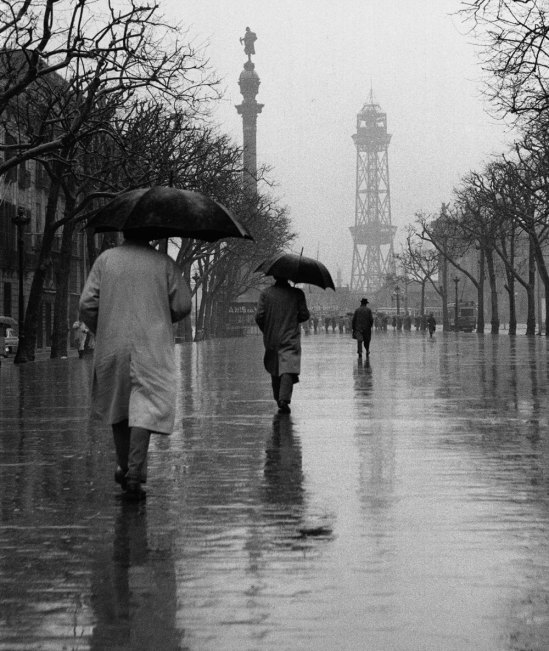
photo: Francesc Català-Roca (Valls, Tarragona, Spain, 1922 – Barcelona, Spain, 1998)
Las Ramblas con lluvia (The Ramblas in the Rain)
1950 (circa) / Posthumous print, 2003
Selenium-toned gelatin silver print on paper
47.7 x 37.5 cm

View original post

Γιώργος Καφταντζής, Ξέρω το λαό

Βίκυ Παπαπροδρόμου's avatarΒίκυ Παπαπροδρόμου: ό,τι πολύ αγάπησα (ποίηση, πεζογραφία & μουσική)

Μίκης Θεοδωράκης & Ιάκωβος Καμπανέλλης, Ο εχθρός λαός
(τραγούδι: Βασίλης Παπακωνταντίνου / δίσκος: Ο εχθρός λαός (1975))

Ξέρω το λαό

Ξέρω το λαό αυτό
τον καυχησιάρη και τον ευκολόπιστο
που όλα τα φτιάχνει με τα χέρια του
και το καρβέλι και τα στέμματα
και το βιολί και τα ντουφέκια
και το αλφαβητάρι και τις χειροπέδες.
Ό,τι ελπίζει κάποτε θα γίνει
ό,τι έχει λειψό θα συμπληρωθεί
και τη σαπίλα ο ίδιος ο λαός
με τον καιρό από πάνω του θα καθαρίσει.

Από τη συλλογή Το πανηγύρι της φωτιάς (Αναστενάρια) [1959] του Γιώργου Καφταντζή

Οι ποιητές της Θεσσαλονίκης τον 20ό αιώνα και ως σήμερα (ανθολογία) / Γιώργος Καφταντζής

View original post