Αντωνίνη Σμυρίλλη, Βλέπω ακόμα παιδικά

16681709_1109289402526723_1330082485512024910_n

Περιοδικό – Εκδόσεις ΘΡΑΚΑ
http://www.thraca.gr

ISBN: 978-618-5155-27-8 ​
σελ. 30
διαστάσεις 17χ12 εκ.

ΔΕΙΓΜΑ ΓΡΑΦΗΣ

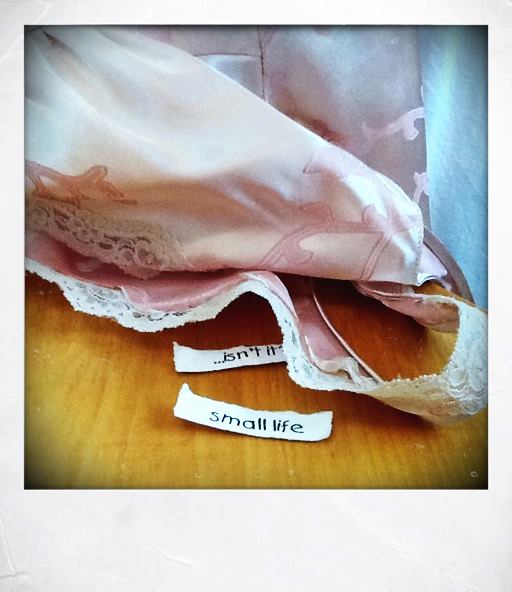
Εγώ και η Γάτα μου

Σήμερα είμαστε μελαγχολικές
Και άβαφες

Εγώ και η γάτα μου
Έχουμε μια παρά φύσιν σχέση
Μια διαστροφική επικοινωνία

Αρνούμαστε να συμβιβαστούμε
Να κανονικοποιηθούμε

Κουβαλούμε τη θλίψη μας
Και σα μαγνήτες
Τη θλίψη των άλλων

Σ’ έναν λαβύρινθο
Απομονωνόμαστε
Στις αναζητήσεις
Των σκέψεών μας

Μινώταυροι
Αδύνατο να βγούμε
Δεν υπάρχει Αριάδνη
Ούτε μίτος

Έτσι μόνο περιφερόμαστε
Μελαγχολικές
Και άβαφες

————————–

. gentle . by Sonja Benskinh Mesher

reubenwoolley's avatarI am not a silent poet

it has been so, so many years. dormant.

hurts and atrocities.

you did not know you said it.

did not remember.

did not mean it.

sixty years later, passed it forward

when you shouted.         this is how

things go                                   round.

for which i apologise.

hurts and atrocities.

gentle

View original post

Αναστασία Γκίτση, Γλυκό του κουταλιού από καιρό φυλαγμένο

Βίκυ Παπαπροδρόμου's avatarΒίκυ Παπαπροδρόμου: ό,τι πολύ αγάπησα (ποίηση, πεζογραφία & μουσική)

Στάμος Σέμσης & Μιχάλης Μπουρμπούλης, Είσαι γλυκό του κουταλιού
(τραγούδι: Μελίνα Κανά / δίσκος: Γενναίοι έρωτες (1997))

Γλυκό του κουταλιού από καιρό φυλαγμένο

Αχνάρια σμιλεύουν τα όνειρα μας
πρωινές έγνοιες μας ταλανίζουν
τα βράδια σαν γείρουμε ακάλεστοι
στην πικρία της νύχτας.

Με γλυκό του κουταλιού βιώσαμε
την ευτυχία κόντρα στο απόλυτο σκοτάδι
που αναδύουν κάτι παλιά σκονισμένα
στις σελίδες τους βιβλία.

Παραμάσχαλα θα σε πάρω κόσμε
να σου μάθω να χαμογελάς
στα πιο δύσκολα.

Ελπίζω μοναχά
να φτάσει το γλυκό του κουταλιού
π’ από καιρό σου ’χω φυλάξει.

Από τη συλλογή Ξέρω! Είναι κάπως αργά… (2000) της Αναστασίας Γκίτση

Οι ποιητές της Θεσσαλονίκης τον 20ό αιώνα και ως σήμερα (ανθολογία) / Αναστασία Γκίτση

View original post

Βασιλική Λόη, Ποιήματα

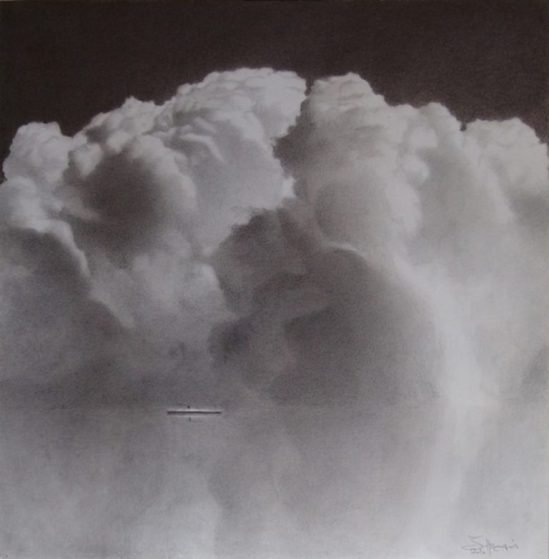
Zymvragos, Clouds

Zymvragos, Clouds

ο άνθρωπος είναι καιρός
με τη βροχή, με τη λιακάδα στα βλέφαρα
με την ομίχλη στη φωνή

***

λόγος δια την αργυρή δόση
των εξήντα πιστωτών χρόνων.
στο μωσαικό της εικόνας, λείπει
το γυρτό στόμα
που πληρώνει το τίμημα της καθυστέρησης.
και πάλι συνεχίζει αγόγγιχτα
ο λόγος δια την ενέργεια,
ανίδεη η τελευταία τιτλοφορεί
την λιπαρή έννοια της (αδράνειας)

***

χαμόγελο και πίσω το πλαίσιο που τοποθετείται
ιριδίζον χείλη
αναίμακτη θυσία της μοναχικής μου διαδρομής
δίνουν οι ήχοι τους άτακτα δομημένοι
σας χτύπησα;

***

αβαθή πραγματικότητα
κερματισμένη σε λεπτά
ασημάδευτων δεικτών,
οι νερωμένες χειραψίες
αντιγραφές

***

αρχειοθετώ τα βλέμματα
βαστάζουν πολλές κατευθύνσεις
της προσφοράς, του δισταγμού
αρχειοθετώ τις κινήσεις
κοφτές νότες
(αγέννητου τραγουδιού)
εγώ, σκυμμένος μικρός λογιστάκος
στα ριζά της λάμπας
που θρέφονται οι αριθμοί
και πληθαίνουν

*Από τη συλλογή “μελιδόνι”, ηλεκτρονική έκδοση, Θεσσαλονίκη Νοέμβριος 2016.

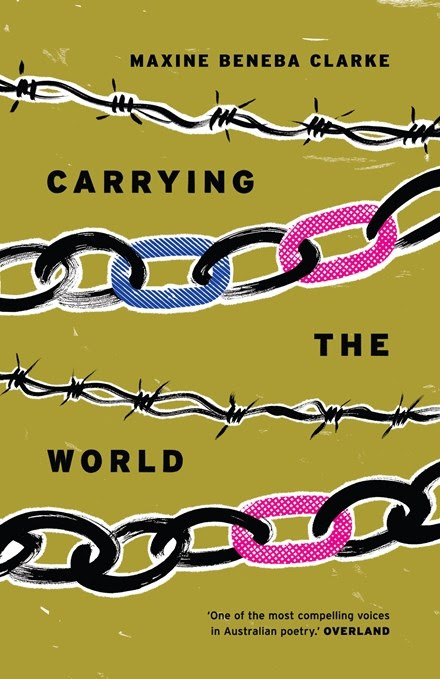
Lian Low and Timmah Ball review Maxine Beneba Clarke’s Carrying the World

unnamed

Carrying the World
by Maxine Beneba Clarke
Hachette, 2016

At the launch of Carrying the World, Maxine Beneba Clarke shared the mic with spoken word performers who were part of her decade long journey in poetry. The poignancy of Clarke’s gesture demonstrates how embedded she is in a literary community that erases the distinction between ‘high art’ (page) poetry and the spoken word.

In her poem ‘show us where you’re publishing’ she boldly declares:

and if so inclined
could mic some words across
and blow your fucking mind
Our review of Carrying the World is also a review of our journey into poetry, and our alienation from it. Both of our formal literary educations from high school to university, from the 1990s onwards, entailed a favouring of the Western English canon. While one of us studied Indigenous Australian playwright and poet’s Jack Davis’s play, No Sugar, none of his poems were offered by the curriculum. We struggled with our prescribed poetry and literary texts and missed the opportunity of reading and studying great Aboriginal Australian poets like Oodgeroo Noonuccal / Kath Walker, Lisa Bellear, Lionel Fogarty and Ali Cobby Eckermann. Also absent were non-Anglo poets like Pi O, Adam Aitken, Kim Cheng Boey, Ouyang Yu and Merlinda Bobis. Our experiences of poetry were dull and un-relatable. In contrast, Clarke’s poetry aches and roars of experiences that we can relate to as cis-gendered-identifying women of mixed race Ballardong Noongar and Peranakan-Chinese Malaysian descent.

Carrying the World traverses the autobiographical to the fictional, and ‘Demerara Sugar’ anticipates Clarke’s memoir, The Hate Race. Funded by the Hazel Rowley Fellowship, Clarke and her children traveled to England on a research trip tracing her family’s history and her diasporic Jamaican-Guyanese identity.

this niece of mine a-coming say
she going voyage west africa
some writer say she trace
our lineage /
Clarke’s clever use of patois in conversation effectively conveys intimate moments that
provides insight into her relationships with relatives and the uncovering of family secrets.

she going old country
what / she gon feed the chain
back through the black
atlantic /
The title poem ‘Carrying the World’ is fictional, historical and mythical; it’s a poem you would expect or imagine a black writer and activist to write. At the same time, it also highlights what it feels like to ‘carry the world’, being weighed down by the heavy social justice work that black women must do. Work that is hard, and rarely acknowledged:

the rocking chair strains
under weight of it all
the ole woman’s frail
but she’s carrying the world
In comparison to black male historical figures, women who have participated in this fight remain under-appreciated and anonymous:

y’all don’t know her name
so let’s call her Black History
The pressure that this responsibility places on black women writers like Clarke is further demonstrated in ‘what are you going to say’, where she directly confronts the expectation that she must respond to the shooting in the shopping mall in Nairobi.

people / they have been writing to me
what are you/ what
are you going to say/ about
what just happened
about the westgate mall siege

like they think I am
the oracle
or something
By the end she realises that ‘the only weapon I have at my immediate disposal is a pen’ resolving to take up the fight. But in the act of writing Clarke acknowledges the exhaustion that comes with ‘carrying the world’.

but just maybe / I don’t
want or have to be the one
to write it
However, with her growing reputation, she unintentionally falls into being ‘the voice’ for a community, a positioning she questions.

maybe they need a poem
to make sense of it all
In ‘skin’ she conveys the trauma of racism with an honest simplicity that reading it felt like the words reached out and slapped you.

some nights
i try to claw my way
out of this skin

but pull and scratch and bruise
seems i’m locked tight in
In short sharp sequences we witness the abject conditioning her body endures in a white settler nation. The nightmarish image is a shocking reminder of the experiences people of colour have come to live with. For this woman writer of Afro-Caribbean descent, race has a strong and powerful presence throughout her collection. Often it is Clarke’s depictions of racial injustice that are the most gruesome but leaves a powerful impact. For example, in ‘mali’ she describes the fear she carries for her unborn son, an emotion that eludes the baby’s father.

your dada said
chill out / these are different times
you’re behaving like it’s 1965
but when I looked in his eyes
all I could see were whites
The poet Lia Incognita wrote in the Overland article ‘Four perspectives on race & racism in Australian poetry’ that writers of colour are ‘largely ignored by publishers, critics, prize judges, anthology editors, curriculum writers.’ Carrying the World begins to redress this imbalance and for readers like us, it is thrilling to read someone who speaks a truth that is often silenced.

The collection also reveals how challenging her journey has been towards mainstream success. In ‘the end of the affair’ she expresses the struggle of pursuing a passion where race and gender discrimination lurk in the background.

between me and you
it was wild while it lasted
but poetry/ he got all single white male
for the last part there on me
it’s true

Carrying the World encapsulates the extraordinary journey of a single black mother, poet and author within an industry dominated by white men and women. From writing and performing poetry at the margins to her recent win at the 2017 Victorian Premier’s Literary Awards for poetry, Clarke’s work is breaking down preconceptions and prejudices in white publishing circles. However, what is equally important as her accolades is that her popularity and force is creating new spaces for other vital voices to emerge:

we want poetry back / we
are the children you
left / wailing / without a backward glance

oh / but when you cut down word
the roots undergrounded / and grew
This entry was posted in BOOK REVIEWS and tagged Lian Low, Timmah Ball. Bookmark the permalink.
Lian Low
About Lian Low

*Lian Low edited Peril from 2010-2014. She’s a writer who has created site-specific spoken word performances for the Melaka Art and Performance Festival in Malaysia and currently working on a memoir.

**Timmah Ball is a writer who uses memoir and creative nonfiction to engage with social justice issues and intersectional feminism. She is currently using zine making to critique mainstream publishing conventions and will produce Wild Tongue zine as part of Next Wave. She is excited to be working with Lian Low to challenge conventional practice and use collaborative writing to create new ways of thinking and expressing ideas.

***From Cordite Poetry Review at http://cordite.org.au/reviews/lian-hall-clarke/
Γεωργία Τρούλη, Παραλληλόγραμμο μαύρο

14331101_944345285688257_1516420757_n

Υπάρχει εκείνη η θάλασσα
Την ακούμε στην στρόφιγγα του κοχυλιού
Ο ήχος των κυμάτων
Παντού ίδιος ξεδιπλώνεται
Το διαρκές τούνελ το βλέπω πάνω
Στο ξύλινο παραλληλόγραμμο μαύρο
Θα ήθελες δύο ρώγες κεράσι;
Κερασμένο σαν γυαλιστερά δάχτυλα
Που μόλις μούλιασαν ελάχιστα στο σπαθόλαδο;
Και σύμπτυξη – Σύντηξη της γεύσης πάνω στο Αλμυρό και το άγλυκο της αναμονής
Σου λέω πάλι τις ασυνέχειες μιας στιγμής
Που γαντζώθηκε από τον εαυτό της
Σαν φτέρη πάνω σε κορμό
Που ανήκει στο δάσος
Και
Λικνίζει μοναδικότητα

Μόνο η επανάληψη του ίδιου
Προκαλεί το τρομερό
Εκεί γίνεται πολλαπλασιαστής ο φόβος
Και δεν αναγνωρίζει πώς γίνεται
Το χερούλι της καρέκλας
Να μιμείται προεξοχή χεριού
Που δεν θέλει τίποτα
Παραπάνω να γράψει
Πώς το ισόρροπο ρολόι
Κρέμεται τόσο ισορροπημένα και
Τόσο λάθος στον χρόνο

Κι ενώ βρισκόμαστε στην κουκκίδα
Μιας παραλίας που θυμίζει παιδικό παιχνίδι
Έφυγε η ορμή για το τυχαίο και το ορμητικό
Μόνο το νερό θα λαχταράει να στερεί
Από στερεότητα τον βράχο απέναντι
Κάπως έτσι θα αφεθούμε στην γεύση
Ενός φρούτου
Μόνο με σάλια
Και το αυτί θα έχει μάθει να ακούει
Αυτό που κατατρώει

Ναρκοθετημένο πεδίο
Τα όρνεα πάντα αρπάζουν
Ό,τι απομένει
Πώς να συμπυκνώσεις στο ίδιο
Φωτιά και ψυχρότητα;
Πώς να είσαι πάντα άλλη στο ίδιο;
Και η θάλασσα υπάρχει
Κάτω και περά
Και
Πώς να θέλεις να σχηματίσεις
Σε όχθες
έναν χείμαρρο
Που ξεχειλίζει;

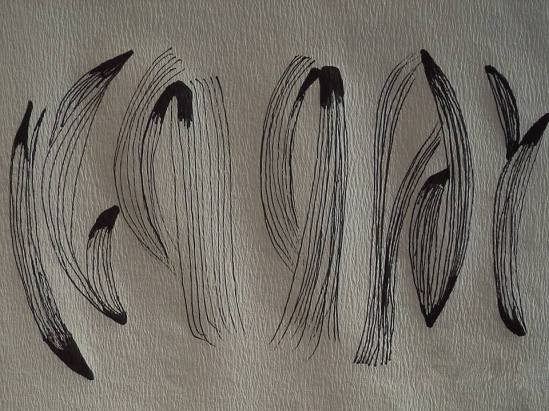
*Από τη συλλογή “ακρογωνιαία πορεία στο και”, εκδ. ΣΑΙΞΠΗΡΙΚόΝ, Φεβρουάριος 2012. Το σχέδιο της ανάρτησης είναι της ποιήτριας

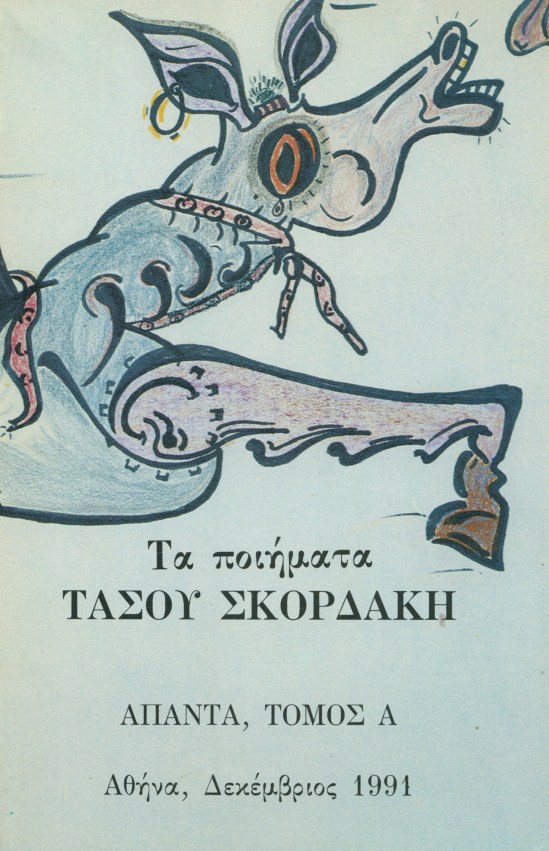
Τάσος Σκορδάκης, Ζωγραφιά

skordakis051

Κρύσταλλο αμεθύστου
από πάνω κατάμαυρο πανί
πιο πάνω ο ήλιος
φόντο: άσπρο πάνω από τό πανί ως τον ήλιο
λάμψη βιολέττας κάτω απ’ το πανί μέχρι τόν αμέθυστο
(το μαύρο πανί κρύβει τον ήλιο απ’ τόν καθρέπτη)
γυμνώνει την κατάντια των άθλιων ματιών του φρουρίου

Τρόμαζαν όχι για όσα κάνει το μαύρο πανί
αλλά γιά όσα δεν έκανε.
Το μαύρο μακελειό άξίζει μόνο, τ’ όνομα του ατελείωτου
κακού.

Για το φρούριο, η ματαιότητά του έχει ανάγκη όλη την αμάθεια.
Κοπιάζει απελπισμένα να βρει τον τελευταίο
άσπαστο καθρέφτη-φύλακά του.
Το μαύρο, στην δικιά του ανάγκη, επιφέρει όλα τα δεινά.
Χρειάζεται να ξεριζώσει όλα τα φλούδια της
υπομονής η κοντή πνοή του, να κυνηγήσει
θανάσιμα το τέχνασμα (το απόπληκτο),
όμως, αν χαθεί στην αυτογνωσία του,
τα πάντα είναι χαμένα,
αφού όλα (του τεχνάσματος) της μηχανής είναι πασίγνωστα,
ενώ γι’ αυτό η γύρη του είναι τα αγύρευτα,
με ταπεινοσύνη να τα δουλεύει

Μες την καταφρόνια του, ο τρυφερός αυτός γυρολόγος
στα ριζά της λασπερής άκριας γλυτώνει την
νερομάνα την ανάσα του, πηχτό μαύρο κατράμι,
να φέρνει την ανεμοζάλη, ο μεγάλος αυτός
μακελάρης
, στα μελιστάλαχτα φίδια του τέρατος
πού τό ‘παν προσευχή.

*Από το βιβλίο “Τάσος Σκορδάκης, Τα ποιήματα” , Άπαντα, Τόμος Α’, Αθήνα, Δεκέμβρης 1991.

Θάνατε ακαταμάχητε

ένα έτσι's avatarένα έτσι


Τελευταία έχω πεθάνει πολλές φορές. Είναι ο δρόμος, η κούραση, η βαρεμάρα. Δεν είμαι σίγουρος για τον ακριβή αριθμό των θανάτων μου ως τώρα. Έκανα αίτηση ενημέρωσης. Αν συνεχίσω έτσι όμως, είμαι σίγουρος πως θα χω πρόβλημα. Δυστυχώς το πρόγραμμα δεν αναβάλλεται. Πρέπει τουλάχιστον να αποφύγω τους εντελώς χαζούς θανάτους. Όπως το τρακάρισμα ψάχνοντας για το cd των Tribe ή το πήδημα απ’ το παράθυρο κάθε που-σου-κου. Σκέφτομαι να περνάω περισσότερη ώρα περπατώντας στην ύπαιθρο γύρω απ’ την πόλη. Ίσως η επαφή με τη φύση με γαληνέψει ή αν μη τι άλλο θα ναι κομμάτι παράταιρο να χτυπήσω το κεφάλι μου με καμιά πέτρα. Παρόλα αυτά περιμένω την απάντηση τους. Αν τα χω υπολογίσει καλά έχω καμιά εικοσαριά χρόνια με δυο, τρεις θανάτους τη βδομάδα. Θα στενοχωρηθώ αν έχει πέσει παρακάτω το προσδόκιμο μου. Θα φρικάρω πάλι όπως παλιά και θα χτυπήσω καθημερινό θάνατο κι άντε μετά βρες το κουράγιο…

View original post 121 more words

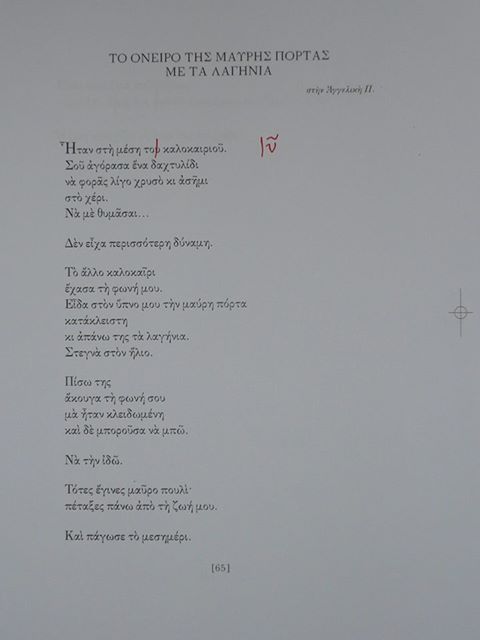
Δημήτρης Κανελλόπουλος, Το όνειρο της μαύρης πόρτας με τα λαγήνια

16806797_593642314171798_2010988710804516925_n

Από την υπό έκδοση ποιητική συλλογή:
Δημήτρης Κανελλόπουλος, “Το Φράγμα της Μνήμης”, Εκδόσεις Οροπέδιο…
Στις διορθώσεις…