Nathanael Pree reviews Peter Rose’s, The Subject of Feeling

unnamed

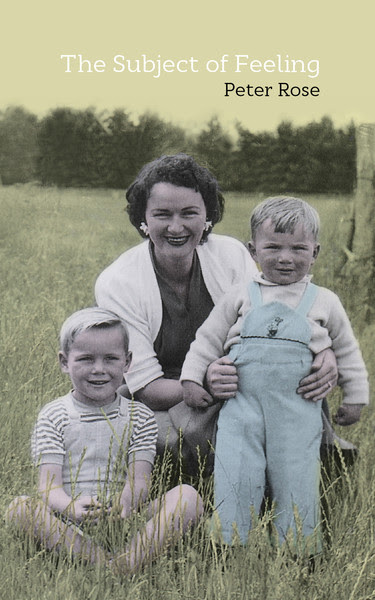
The Subject of Feeling
by Peter Rose
UWA Publishing, 2015

From the beginning of the latest work by Peter Rose, the reader is given the impression of an unfolding tableau or score, the creases and outlines of which to be generously shared. A sense of intimacy is engendered from the outset: we are let in on the scales and arpeggios that a musician practises, as if each poem, or note that it reaches, ‘might lead somewhere / or fail to ascend.’ The seemingly off-hand candour of such admission serves as an indication that one is in for a special experience from a master of the craft.

Consistent with the presentation of layers of the self comes a confessional tone touching on the bittersweet recognition of stages of life that are passing or have passed. This is evinced by familiar tropes of hidden childhood treasure, gold and dirt comingled – but also a sense of bemusement, mystification of the ages, such as a ‘Plantagenet cut’ as an almost hallucinatory image in a suburban park. This quasi-historical hallucination is echoed by expression of bewilderment in an art gallery, experiencing ‘something like mystification’ in the flashbacks revealing intensely personal strands that compose the nets of everyday life.

The very elusiveness of inter-personal recognition, in ‘Late Autograph’ and ‘Dux’ indirectly introduce walk-on parts in the work – once again a sense of the intimate, but with a sense of darkening and unease. This sense distils into moments of quiet, reflective beauty in ‘Days and Distance,’ recalling: ‘So many years ago. / Cruel to dislodge them / like moss in a grotto.’ A plane journey works as a vector for an elegiac and concisely rendered return to the past, which evokes the best moments of Bruce Beaver: lives connected to one another by literal and metaphorical roots and threads, which form ‘the ramifications between us,’ inescapable and tropic in their impact. In another poem, with a cherry as aide-memoire, Elizabeth Bishop and ‘all those lines about loneliness,’ makes their appearance to the lost narrator, and culminate in ‘an unexpectedly quick twilight.’ Impermanence and sliding scales of reality mark the first section as the initial scores of a composition, where notes are left visible even if unplayed, and what is unsaid resonates with a force equivalent to the words left on the page.

The ghostly presence of precursors, familial and famous, and a premonition of the book’s central event, a death in the family in a car crash, as the children chant in memory of Marilyn Monroe, shows a certain menace, a darkness close to home: ‘The Hume relentlessly narrowing, / a blur.’ and his father’s ‘terrifying’, if ‘brilliant,’ way of handling the wheel. The ‘old ones,’ as the epigraph from Donald Justice to ‘The Elders’ makes clear, are not about to let go. They demand their space in the realm of the living, and the present is pushed out to its limits with the resultant psychic friction. As the deceptively simple ‘Dead’ reminds us – ‘you’re dead a long time,’ and this length becomes spatial as well as temporal when considering the dimensions that people share, whatever stage of life or death they are passing through. Where better to ponder this process but from the bed of a hospital ward, ‘with its new admission every day, / the latest freckled youth dragged / from some creek or car wreck.’ Pervasive reminders of mortality are commonplace, as ‘the salt music of insinuation,’ yet this does little to diminish their impact. Likewise, the human carapace extends into housing: from ‘semi-detached graves’ in ever-expanding settlements, to ‘the precipitous hilltop cemetery’ from where the dead appear to keep watch.

The nexus and titular poem reveals a fatal accident, with physical feeling of the dying person departing; nerve endings deadened in a mangled wreck of metal and flesh. This poem is an understated tour-de-force along the edges that divide sentience and nothingness; worth starting or finishing a reading session, and very much vindicating the decision made to come with the poet so far. That the death of an elderly person whose discomfort has been building up for years occurs with a crash, but also in familiar, compressed surrounds elicits a wry observation: ‘eschatology is a slow / remorseless science.’ A stranger is present, hearing last words, by listening, as if to heal:

heard about a new daughter.

And then the subject of feeling –
why you had none in your feet.
Men ground the car with steel
and flung it open
like a sack of wheat

These final lines of the poem recall Thom Gunn’s mourning of ‘The Man with Night Sweats,’ testament to their power and depth. The alignments of time and circumstance that some refer to as inevitability may not be anything we can understand, but their presence on such occasions creates the clarity that comes, satori-like, at the very edges of life. The poet finds himself in the public domain again, figuring out the revenant presence of a doppelgänger, from a time where: ‘in place of accidents / and crumpled youth there is / space and more space,’ yet which engenders the awareness that a seemingly untrammelled existence will eventually be brought into line. His life becomes text, so that with ‘Senza Rancor,’ no acrimony is needed (although its playful attributes form a delightful coda in the return of Catullus in the book’s final section), given all that has past:

So much happens to the living.
Call it a phenomenal dust storm
Visiting the land, shrouding
The children who set off hand in hand
Unable to read their siblings faces.
Cling though we do and stumble.

The presence of death and a lack of certitudes engender a hard-won sense of humour with which to temper the personal and affecting touches that refuse to relinquish their hold on an astonishing range of immanence. The past has never seemed quite so musical, or alive.

*Nathanael Pree is of Australian and German background, brought up and educated in the United Kingdom. He did undergraduate studies at University College London, before working in education in Russia, Vietnam, Cambodia and Australia, with additional work experience in India. His postgraduate studies were at The University of Sydney, specialising in the works of W.G Sebald (Masters’ Dissertation) and Charles Olson (PhD, ongoing).

**Taken from here: http://cordite.org.au/reviews/pree-rose/

In crisis-stricken Greece, one thing is in prosperity: poetry

CfQ39fGXEAAAGtS.jpg-large

By Nikos Fotakis*

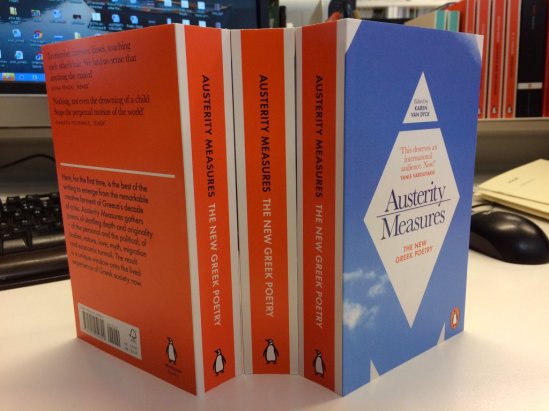
A collection of modern Greek poetry, aptly named Austerity Measures, proves a well-known truth: that great art can emerge from hard times. The book’s editor offers her insight on the anthology and recalls discovering the Greek language on the streets of Melbourne

It’s been six years since Greece got under the international spotlight, claiming centre stage as the worst possible example of a debt ridden country, brought to its knees by a combination of state corruption, overspending, neo-liberal dogmatism and the effects of the Global Financial Crisis. Struggling with high unemployment, harsh austerity, rising inequality and regressive taxation, the country has seen its middle class all but crushed and almost every sector gasping for air. One thing seems to be thriving, though.

After the initial shock, the Arts industry – the term becoming more and more ironic, as the sector has never been more deprived of funding – has been fighting back, responding to the ongoing crisis with creativity. Dissecting the greek psyche, the output of artists, writers, musicians and poets, offers valuable insight to the effect of the imposition of austerity on the social fabric, thus proving to be a much more useful tool of understanding what has been going on in Greece, than any analysis of a financial think tank could offer.

Karen Van Dyck seems to share this view. The Kimon A. Doukas Professor of Modern Greek Literature in the Classics Department at Columbia University where she directs the Program in Hellenic Studies and teaches courses on Modern Greek,Greek Diaspora literature, translation and gender, has recently edited a magnificent collection aptly named Austerity Measures: The New Greek Poetry (Penguin UK).

“When there is less to go around, people fight, grab, get tough. Lately, Greece and the Balkans have been living with more than their share of less”, she writes on the collection’s introduction, only to add: “Poetry, though, is one thing there is more of. Much more. Poets writing graffiti on walls, poets reading in public squares, theatres and empty lots, poets performing in slams, chanting slogans, and singing songs at rallies, poets blogging and posting on the internet, poets teaming up with artists and musicians, teaching workshops to school children and migrants. In all of the misery and mess, new poetry is everywhere, too large and various a body of writing to fit neatly on either side of any ideological rift”.

“GREECE EXCEEDS THE BOUNDARIES OF A NATION STATE”

It is this kind of poetry that she collected in the book. Poems that come from a whole range of different outlets and backgrounds; writings by established poets are presented next to the wordplay of rappers and non-Greek names are common fare in the book, in a striking display of heterogeneity one would normally not associate with Greece.

“I decided to organize the anthology around where poetry happens, rather than alphabetically, chronologically or thematically”, she says, explaining how the collection came to be. “This, I felt, would give the English-speaking reader a better sense of the poetry’s reach and diversity. It is happening everywhere; not just in literary magazines, but in DIY blogs, in theaters, abandoned lots, cafes, in villages on the borders, outside Greece… Also this approach allowed me to introduce poets who weren’t already known in the regular literary circles”, she adds.

How representative of modern Greek culture is the outcome, in her opinion? “Well, the answer to that is as varied as the poetry included”, she answers, giving some examples of the poets featured in the book. “Jazra Khaleed sees his poetry as a way of practicing politics. It’s not from the printers, he says, but from the mines. Doukas Kapandais thinks it has nothing at all to do with politics. Elena Penga is more East Greenwich Village than Salonican. The only thing they all agree on is that Greece exceeds the geographical and linguistic boundaries of a nation state. It is not representative in the traditional sense of political representation. And no, not really in the literary sense of mimesis either. To represent something, don’t you have to believe there is something fixed to represent? For these poets contemporary Greece, like the fox in Katerina Iliopoulou’s poem, is what exceeds definition. It’s what you chase after, not what you catch.”

“POETRY CAN TELL US SOMETHING THE NEWS CAN’T”

A philhellene in the truest sense of the word, Karen Van Dyck is one of the scholars who can claim to have a deep understanding of Greek poetry, as it evolved throughout the ages. Yet, she herself was surprised by some of the work she came across, while working on “Austerity Measures”, allowing her to draw some interesting conclusions on the state of Greek poetry.
“I was most surprised to find that many poets were bridging prose and poetry in their writing”, she says. “There was a new storytelling component that recalled the folk song tradition and ballads like “The Bridge of Arta,” but also spoke to contemporary international literary trends like flash fiction. I was also struck by the complete reinvention of the fifteen-syllable line, the political verse, as it is called. Yannis Efthymiades stretches it out to 27 syllables in his masterful meditation on a man falling from the World Trade Center. These poets seem fearless formally. Open to everything. Maybe it has to do with the fact that they feel there’s nothing to lose.”

The feeling of “nothing to lose” can be liberating, especially in times of oppression. Karen Van Dyck knows it all too well, being one of the world’s leading authorities of Greek poetry of the Dictatorship era, which she analyzed in her book Kassandra and the Censors: Greek Poetry since 1967 and collected in her anthology The Rehearsal of Misunderstanding Although she’s reluctant to compare the Crisis to the Junta (as many in Greece do), she can definitely see some similarities, at least in terms of the role of poetry as socio-political commentary. “”During the Dictatorship, poets, especially women, used the lessons of censorship to their own ends. Elliptical, parological, and full of ambiguity, their poetry told us that nothing can be taken at face value”, she explains. “Again, in recent years, poets, especially women, drawing on the work of poets from the generation of the ’70s such as Katerina Anghelaki-Rooke and Jenny Mastoraki, have turned to dreams and myth to rewrite the difficult times. This is particularly evident in the poets who write for Farmakon (ed. Note: “φρμκ” is a bi-annual literary magazine) such as Phoebe Giannisi, Anna Griva, Katerina Iliopoulou, and Eftychia Panayiotou, but also Yiannis Efthymiades and Yiannis Stiggas. The similarity between these two different historical moments lies in the sense that poetry can tell us something that the news and politicians can’t. The difference, I think, is what poets now take for granted: everything is at their fingertips through the internet; the Greek language includes so many hybrid forms – Gringlish, Gralbanian, Grurkish; Greekness is something borderless, nomadic, and the Greek literary tradition is not a necessary education for a Greek poet. Arabic feminism or Code Poetry might be equally useful.”

DISCOVERING GREEK IN AUSTRALIA

This approach should come as no surprise, given the way Karen Van Dyck’s ongoing interest in Greek language began. “From an early age I lived in cities with very strong Greek Diaspora communities – Melbourne, London, New York, and most recently Istanbul”, she says. “I was always fascinated by the Greek alphabet and language. In 1974, I remember travelling back and forth on the train from my home in South Melbourne, where my father had a parish, to PLC, the Presbyterian Ladies College. Going to an Australian private school rather than an American public school, wearing a uniform, even down to blue hair ribbons, eating pavlova and meat pies… Everything was new, but it was the anti-junta graffiti of the Greek immigrants that became my passion. I wanted to know what they were saying. It was a way of identifying with the foreignness I felt. A way of learning how to decipher it. At PLC I took Russian hoping that would help, but I didn’t find all the letters I was looking for. The ‘ξ’, for example, was missing. The long road to realizing the letters were Greek and then mastering this other language made it all the more rewarding. Only much later, writing my book on poetry under and after the Dictatorship, did I finally understand the urgency and politics I had sensed in the writing on the walls”. What kind of impact did these anti-junta scribblings on the walls of Melbourne would have on a young American expatriate?
“It made me want to know how words and politics were related”, she attests. “It made me cautious of generalizations. It taught me that if you want to understand the larger picture, you need to figure out the specifics. It also made me think from the position of the in-between, the translator. Though not officially a part of the Diaspora, not Greek by birth, I am Greek by work and experience. My constant struggle to think about Greek in the context of other cultures and languages, my decision to raise my three sons in Greek and to teach Greek literature and translation outside Greece have all meant that my take on the world is closer to that of a C. P. Cavafy, Olga Broumas or Antigone Kefala”.

This take on the world was influenced by much more than language, of course: “I remember wondering why each wave of migrants took out their frustrations on the next”, she says. “Fights would break out at the Foster’s brewery, where the parents of the kids in the South Melbourne parish worked. How to imagine forms of tolerance that don’t erase history? How to think through the eyes of the underdog even after one has achieved a middle-class status? Australia taught me that to be minor, and to stay minor, is a major accomplishment”.

*This article published in the English section of Neos Cosmos in Melbourne, Saturday, 11 June 2016.

Meet the Greek writers revolutionising poetry in the age of austerity

Clockwise from top left: Yiannis Efthymiades, Glykeria Basdeki, Eftychia Panayiotou, Yannis Stiggas, Danae Sioziou, Thomas Tsalapatis, Yiannis Doukas and Elena Penga.

Clockwise from top left: Yiannis Efthymiades, Glykeria Basdeki, Eftychia Panayiotou, Yannis Stiggas, Danae Sioziou, Thomas Tsalapatis, Yiannis Doukas and Elena Penga.

By Marta Bausells and Eleni Stefanou*

A new group of poets is changing the arts landscape in Greece. Fearless, global and with an artistic fervour unseen since the dictatorship, they tell us their hopes, the culture that excites them – and the Greek myths they’d like to debunk

A new kind of poetry is flourishing in Greece’s streets, bars and cafes. It is popping up not just on magazines, small presses and websites, but on graffiti walls, and in music, film, and art. Not since the dictatorship that shook the country in the 1970s has there been such an abundance being written. A new anthology in English translation, Austerity Measures, compiles some of the most revolutionary.

Former finance minister Yanis Varoufakis is a fan, calling it a “silver lining”, the one good upshot from austerity policies that have shattered the country. “Along with the mass unemployment and the rise of neo-Nazism that it engendered, austerity also occasioned a cultural renaissance,” he writes. “This volume is … living proof that the Greek crisis is of global significance.”

In a country where there is less to go around across the board – including fewer young people – poetry is “the one thing there is more of,” writes editor Karen Van Dyck. Despite the title, and the fact that many of the poems respond to the social and economic crisis, Van Dyck emphasises this is not a homogenous phenomenon. “A lot of these poets don’t even know the others exist. It’s a very disperse scene.” Nor are they really a generation. They are multicultural, multiethnic, multigenerational; some of them aren’t even Greek, just writing in it.

“They don’t even think they need to belong to Greek poetry. They have access to the whole world,” says Van Dyck. From the small pleasures of suburban gardens to the viciousness of streetfights, they use pop culture and post-capitalism, images of domestic machines and the internet and mix them all up with ancient myths. We talked to some of them about what drives them to create, and what hopes and fears they have for their country.

Eftychia Panayiotou, 36, Athens

An extract from The Outside of My Mind (translated by Karen Van Dyck):

I woke at sunrise to change

the window, warped from looking

across, slicing my view.

I open the shutters, wild

from the wind and misfortune.

What were you trying to convey with the poems in this collection?

Most of the poems in Austerity Measures were published nine years ago; they were my debut as a poet. They expose the suspicion that what we call “personal identity” is socially constructed. In these short poems the subject realises that pain and grief is part of the process of wanting to be free.

What has been your creative inspiration?

Entering a society that looked a lot like a bad movie and fear that I might end up playing a predetermined role in it.

What is the myth surrounding the Greek crisis you’d like to debunk?

I hear a lot of whispers that “the Greeks” have been really naughty and, most of all, very lazy. So they all have to be punished, like in Dante’s Purgatory.

What is giving you hope?
That we’ve managed so far to create a desirable life out of simplicity: love, friendship, knowledge, art. A bare life that is precarious, passionate, influential and rewarding.

How would you like your art to be remembered in a hundred years?

As poetry that isn’t just remembered, but also read and reread. As very much alive art with a positive impact on strangers.

Thomas Tsalapatis, 31, Athens

An extract from Word Monday [translated by Karen Van Dyck]:

Boiling water, always boiling water

Learning that what is scarce is what takes charge

Learning how Π and T lose their flat roofs

How ζ and ξ dry up at the roots

How vowels get murdered

How language bubbles up
An offering of the silent

For those who grew silent

How do you define your poetry?

An attempt to construct a personal modern poetical mythology, with sometimes non-poetical elements (borrowing from theatre, stand-up comedy, graphic novels, journalism or cinema) based in the absurd, slapstick of words, and expressed mainly in a prose poetry form, in dialogue with the rich Greek poetry tradition.

What were you trying to convey with the poems in Austerity Measures?

Word Monday is the first day of a journal. The poem speaks about the process of a boiling language, of losing words, letters and meanings in the steam, in grief and in silence. Regardless of that, the last word always belongs to the reader. I could be wrong about the meaning of my poems. He can’t. He is always right.

Which myth about the Greek crisis would you like to debunk?

I think that it is our duty to debunk the legions of stereotypes that fill newspapers every day (both Greek and European newspapers). The racist myth of the lazy Greek. The myth of the ouzo-drinking, opa-screaming Balkanian. The myth that the poor used to live above their means.

What is giving you hope?

The work of small groups, the creativity of small artistic cells. The never-ending conversations between a group of friends about art, politics or whatever. And of course the help given to refugees from volunteers (Greeks or non-Greeks) and common people every day in Athens and the islands.

How would you like your art to be remembered?

I hope to be remembered as a small handmade ark of a feeling and an era. Both old and (hopefully) new, open to new meanings.

Which other Greek poets and artists do you admire?

I strongly recommend George Prevedourakis. His book Kleftiko is a take on Allen Ginsberg’s Howl set in Greece amid the crisis; it’s a great book. In theatre, the director Theodoros Terzopoulos –he’s the most important Greek artist of our times. I would highly recommend younger directors like Savvas Stroubos and his Simeio Miden theatrical group; Aris Biniaris and his ‘holy goat’ performance; Stelios Faitakis’s mural paintings; Dimosthenis Papamarkos’s short stories; Mode Plagal’s blend of traditional music with jazz and funk elements; and the directors of the so-called ”weird wave’’ in cinema, which started with Giorgos Lanthimos’s Dogtooth in 2009.

Danae Sioziou, 29, Athens

An extract from Around the House (translated by Rachel Hadas):

imprisoned in a filthy cage

a ceiling without sunrise

little beetles on the floor

in the sink a dark lake

How would you like your art to be remembered
?
As heartfelt, I guess.

Which is the myth surrounding the Greek crisis you’d like to debunk?

That anything good can come out of such a crisis. Good things occur, but despite of it.

What is giving you hope?

Concerning the crisis? Lately, fewer and fewer things. People are being hunted, deprived, excluded. Walls, actual walls, as well as social and political ones are built upon. People who help bring them down give me hope.

What Greek cultural trends do you find most interesting?

The various voices emerging in poetry. The foundation of new publishing houses and literary journals. The experimentations of musicians and bands. The neighbourhood solidarity networks, which promote art among other things. The emergence of young artists who elaborate on the current condition in their own terms.

Which other Greek poets and artists do you admire?

Women poets of older generations who write and publish vivid poetry. There is a vast plurality trying to continue making art and survive. From opera and theatre to circus, music, poetry, filmmaking, photography, performance and more. Most of them collaborate with others. I especially admire those who reinvent themselves without betraying who they are.

Jazra Khaleed, 37, Athens

630

An extract from Words (translated by Peter Constantine):

My words are homeless

They sleep on the benches of Klafthmonos Square

covered in IKEA cartons

My words do not speak on the news

They’re out hustling every night

My words are proletarian, slaves like me

They work in sweatshops night and day

Can poetry be political?

Poetry can be part of the anti-fascist discourse and the working class discourse in Greece. There are autonomous anti-fascist groups and working class groups who publish magazines, do demonstrations, put posters on the walls.

What would you say to people who believe what is happening to Greece has been caused by external factors?

I blame the Greek middle class and the Greek capitalist system. I live in Greece so I don’t know what is going on in Germany or in England, I just know what’s going on in Greece. What’s called the crisis is used by the Greek state and the Greek middle class to push all the burden to the working class.

How is poetry perceived in Greece?

In Greece poetry is considered a high-class art. If you want to publish a poetry book, you have to pay a publishing house. So many publishing companies say that they are brands and they ask for £3,000 euros to publish your book. That means that most people who publish poetry in Greece belong to the middle class or are very rich. One important thing about Austerity Measures is that it includes poets that are not very well known in the poetry circles and who don’t have access to publishing houses.

What’s happening on the streets of Athens that you find exciting right now?

Many second-generation groups doing hip-hop and they’re really underground, doing self-organised free concerts. I can sense there are more people from a working class background that write poetry nowadays. There is a guy called Omega who writes about his experiences as working class or unemployed. His poetry is very direct, which is not very common in Greece.

Elena Penga, 50, Athens

An extract from Nightmare Pink (translated by Karen Van Dyck):

I open the balcony doors.

You’re singing.

But the rain is louder.

It comes into the house.

Hits the lampshades.

Knocks over the lights.

Collides with reality.

How would you define your poetry?

It uses fragments of personal memories to challenge our perception of what we are as a species and what we do here.

What were you trying to convey with the poems in Austerity Measures?

In this time of crisis what is the role of the personal, of the senses, of the body? Do people trust their body? Do they listen to it? How can they stop being just consumers, but active members of society who care about their environment? How do our senses and our body want us to live, work, relate, create?

How would you like your art to be remembered?

As meaningful and exciting and beautiful.

What is giving you hope?

In politics and society? Nothing. We are all shaken up and blinded by the shock. We have lost perspective and see no horizon.

Which Greek cultural trends do you find most interesting?

There is culture in Greece, but no money or real support for it. People worry about survival. This has killed all spirituality, inspiration, beauty. I find it remarkable that people want to work and do keep working in arts and culture, despite the hostile environment. All cultural trends in Greece are a kind of resistance to giving up.

Yiannis Doukas, 35, Galway (Ireland)

An extract from The Children of Abel (translated by Chloe Haralambous and Moira Egan):

The Danny F bound for Syria

Like an arc; for slaughterhouses

But it flounders with the waves

Of the sea that does not wash out

How do you define your art?

As bearing a sense of nostalgic irony towards the Greek and European cultural and political history.

What were you trying to convey with the poems in Austerity Measures?

They are attempting to encapsulate how my generation experiences reality and develops emotion in the digital age.

What has been your creative inspiration?

Interacting with memory, literature and the urban landscape. Also, trying to distil the times and the news.

Which myth of the Greek crisis would you like to debunk?

That the Greeks are a nation of lazies on a permanent vacation; that austerity measures, as they were implemented, were proportionally distributed or worth the sacrifice. But also, the over-simplistic populism that there was no need for reform in Greece; that we’d be better off outside the EU, trading in drachma. And, obviously, the neo-Nazi rhetoric that the foreigners – immigrants and refugees – are to blame for everything.

What is giving you hope?

Naïve as it may sound, the turning wheel of history: things are due to eventually get better. Also, whatever the disappointments and frustrations, the idea of a better world and a fairer society is still something worth fighting for.

What cultural trends in Greece do you find most interesting?

A hopeful moulding of community; people brought together around local and regional bookshops, publishing houses, galleries, concert venues; vibrant hubs and meeting points, new spaces and, hopefully, new ideas.

Which other current Greek poets and artists do you admire or recommend? 

For poets my age this anthology offers a balanced and representative specimen. From previous generations, I would have to single out Kiki Dimoula, Nasos Vayenas, Jenny Mastoraki, Christoforos Liontakis and Haris Vlavianos. In other fields: the films of Syllas Tzoumerkas, Yorgos Zois and Alexander Voulgaris (also the latter’s music, under the alias The Boy); the powerful photography of Enri Canaj and Myrto Papadopoulos, reinventing realism and reframing reality; finally, the marvellous theatrical work produced by the National Theatre of Greece, the Neos Kosmos Theatre and the Onassis Cultural Centre, featuring many young directors and thespians.

Glykeria Basdeki, 47, Ksanthi

An extract from Mama’s a Poet (translated by Karen Van Dyck):

Oh, yeah – Mama’s
an important poet
all day she cooks up commas

sweeps tenses under the rug

What were you trying to convey with the poems in Austerity Measures?

My poetry insists on being dark, ironic and sad. My poems are a kind of personal talisman that protects me from my evil self.

What has been your creative inspiration?

Family deaths, family births, sad sex memories. I turn the Greek folksongs into an autistic modern universe.

What is giving you hope?

My children, my friends, my faith in the revolution and life after death.

What Greek cultural trends do you find most interesting?

The dynamic Greek theatre groups (such as bijoux de kant, who I collaborate with) that survive without financial assistance. It’s a kind of miracle nowadays.

Which other current Greek poets and artists do you admire?

I love the post-Cavafian poetry of George Le Nonce, Stathi Tsagarousianos’s sad editorials in Lifo magazine, the wild romanticism of the bijoux de kant theatre group, Ersi Sotiropoulos, Maria Mitsora and Alexandro Kypriotis’s prose. And of course all of Jenny Mastoraki’s poetry, which is forever current.

Yannis Stiggas, 39, Athens

An extract from The Labrynth’s Perfect Acoustics (translated by Stephanos Papadopoulos):

Because

as much as I smoked

I never found my inner thread

so many loves

so many breathlessness
and the Minotaur,

my God, what a fiddler

If you had to define your poetry in one sentence, what would you say?

My poetry functions as a multitool: a pickaxe, a compass, a parachute, perhaps a first aid kit. Any of these is useful stuff for exploration. Poetry seems to involve all three dimensions of time: past, present and future. If someone is trying to comment only on current events, I suggest they would be better off using a polaroid camera.

What were you trying to convey with the poems in Austerity Measures?

They all bear the element of urgency and an agony for human destiny.

What is the myth surrounding the Greek crisis you’d like to debunk?

That Greeks are corrupted people. There are no corrupted nations, only corrupt power.
What cultural trends in Greece do you find most interesting?
After two decades of drought, poetry seems to blossom again, especially since 2004. It is very encouraging to see young people reading poetry, something which I regard as a political act.

Yiannis Efthymiades, 47, Athens

An extract from 9/11 or Falling Man (translated by Karen Van Dyck):

all of you think I was scared shitless that’s why I dove
head first into the abyss
god what idiots for once I took my life into my own hands
and let myself
drop provocative like in front of their eyes immense
ghoulish I stick my tongue out
then in that last moment I see a girl with a sad look in the
midst of the crowd

What has been your creative inspiration?

The thousands of people, my fellow citizens, who suffer from the austerity measures imposed on us, most of which threaten our dignity and our very existence. The source of my inspiration is the ominous future of young children, the frustrated life of older people and the puzzlement of us all against a ruthless technocratic monster that eats away our lives on a daily basis.

Which myth of the Greek crisis would you like to debunk?

That we are all to blame for the irregularities that have led us to this misery, that the Greeks do not work as hard as the rest of the Europeans and that all these austerity measures have been imposed with the sole purpose of purifying the economy and not to work as an experimental basis for undermining the institutions and manipulating the people.

Which other current Greek poets and artists do you admire or recommend?

The Greek poetic tradition happens to be one of the oldest and most important in Europe and the whole world. Great poems are still written today, poems that will define our future – poetic or not. I deeply admire Jenny Mastoraki, Christoforos Liontakis and many other younger poets of my generation, as I feel that my poetry interacts with theirs.
How would you like your art to be remembered in a hundred years?
As a testimony of truth and beauty.

• Austerity Measures: The New Greek Poetry is published by Penguin Books.

*http://www.theguardian.com/books/2016/may/11/meet-the-greek-writers-revolutionising-poetry-austerity
Φύλλα Τέχνης | Τεύχος #01

flyer-κυκλοφορίας-ΟΛΟ-1024x457

Κυκλοφορεί το Τεύχος #01 της νέας σειράς εκδόσεων «Φύλλα Τέχνης» του ανεξάρτητου περιοδικού Τέχνης & Γραμμάτων Παλινωδίαι/Palinodiae

|Δοκίμιο – Παρουσιάσεις – Νέοι Καλλιτέχνες – Μικρές Αναφορές|

σε 48σέλιδο έγχρωμο τεύχος |

Αυτοέκδοση Παλινωδίαι 2016

■ Xειμερινό Αστικό Τοπίο | Διαγωνισμός Φωτογραφίας

■ Το Γυμνό του Jules De Bruycker

■ Ο ζωγράφος Vaughn Beneteau

■ Nicolai Ivanovich Fechin

■ H Aurore Lephilipponnat και το Butoh

■ Oι Νόμοι της Ινδιάνικης Ζωγραφικής

■ Ο ωραίος Μοντιλιάνι

■ Η ζωγραφική της Στυλιάνας Κατσιάρης

■ Ο γλύπτης Kiko Urrusti, κ.ά.

___ ΠΡΟΛΟΓΟΣ

Αντί προλόγου το ποίημα «Όλο το 24ωρο» του Νάνου Βαλαωρίτη, από τη συλλογή «Εστίες Μικροβίων» που κυκλοφόρησε στο San Francisco το 1977:

Μισός αιώνας απογεύματα με τη γιαγιά μου
Σύννεφα σαύρες παρδαλές και άλλα τέρατα
Κορίτσια ελαφρόμυαλα σαν τα σπουργίτια
Με βάδισμα ενοχοποιητικό μες στα παλτά τους
Ένα σεντόνι ερημιάς πάνω στο πρόσωπό μου
Συναντήσεις καθημερινές σαν γκρεμισμένες εκκλησίες
Λιμουζίνες με περίεργες βλοσυρές εκφράσεις στο τιμόνι
Άγνωστοι στις γωνίες των δρόμων περιμένοντας
Άγνωστες που περνάνε στον πληθυντικό
Ζαχαροπλαστεία γεμάτα ερωτηματικές ματιές
Φάρμακα αντίδοτα για αισθήματα ασφυξίας
Ώρες που δεν ξανάρχονται και καφενεία φαντάσματα
Ξύπνημα πρωινό βαρύ ασήκωτο ή ευδιάθετο
Ξεκίνημα για μιας καρδιάς την πόρτα τη στενή
Αλλά κανείς στο σπίτι που είπανε πως έμενε
Τρελή Σουηδέζα με μάτια σα φανάρια
Αγώνες για τη Δημοκρατία αγώνες δρόμου και αγωνία
Μισός αιώνας παρά τέταρτο και κάτι ακόμα παραλίγο επάνω μου.

♠♠♠ Κείμενα: Αγγελική Λυδάκη | Μαρία Μ. | Γιάννης Καφούρος | Μιχάλης Μιλώνης Άλλων: Γιάννης Τσαρούχης

Σημεία διακίνησης

AΘΗΝΑ _______________________________________
Εξάρχεια • Κ*ΒΟΞ (Κατειλημμένο Κοινωνικό Κέντρο) Αραχώβης & Θεμιστοκλέους ______________________________________________
Δάφνη • ΦΥΣΙΚΟ ΚΙ ΕΠΟΜΕΝΟ (Καφενείο) Αντιόπης 43 & Λεωφόρος Αλ. Παπαναστασίου ______________________________________________
Ν. Σμύρνη • ΕΡΓΑΤΙΚΗ ΛΕΣΧΗ Ν. ΣΜΥΡΝΗΣ Ελευθερίου Βενιζέλου 12 & Αιγαίου ______________________________________________
Μπραχάμι • ΠΙΚΡΟΔΑΦΝΗ (Ελευθεριακό Στέκι) Αγ. Βασιλείου και Π.Π.Γερμανού 22
• ΓΑΙΑ (Καφεποτείον) Στρ. Αλ. Παπάγου & Ναυάρχου Νοταρά ______________________________________________
Άνω Ιλίσια • ΜΠΕΡΝΤΕΣ (Αυτοδιαχειριζόμενος Κοινωνικός Χώρος) Aράδου 55, πλατεία Κύπρου ______________________________________________
Περιστέρι • ΕΡΓΑΤΙΚΗ ΛΕΣΧΗ ΠΕΡΙΣΤΕΡΙΟΥ Θηβών 227 ______________________________________________
ΜΕΣΟΓΕΙΑ ΑΤΤΚΗΣ ______________________________________________
Κορωπί • ΟΠΤΙΚΑ ΒΑΣΙΛΙΚΗ ΣΑΚΚΟΥ Λ. Βασιλέως Κωνσταντίνου 134 ______________________________________________
ΘΕΣΣΑΛΟΝΙΚΗ _______________________________________ σύντομα ______________________________________________
ΠΡΟΣΟΧΗ: Οι χώροι διακίνησης μπορεί να αλλάξουν ανά πάσα στιγμή

∅ Contact: Info@Palinodiae[dot]com

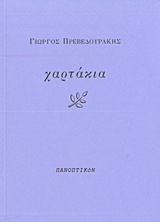
Η έκρηξη της μικρής φόρμας: Τα “χαρτάκια”, εκδ. Πανοπτικόν, 2016, του Γιώργου Πρεβεδουράκη

30088785

Γράφει η Κωνσταντίνα Γεωργαντά*

έχουμε χρόνο-
δεν έχουμε

αυτό κι αν είναι κέρμα
`
Χαρτάκια. Εναλλακτικά φέιγ-βολάν για πορείες. Πολεμοφόδια για εθισμένους. Εφημερίδες για φυλακισμένους. Τα κρατάς βαθιά μέσα στην τσέπη σου, τα κρεμάς στον τοίχο. Βγάλτε τα ρολόγια από το σπίτι∙ μετρήστε τον χρόνο με ‘χαρτάκια’.
`
περασμένα μεσάνυχτα
ψέλισσα «ελευθερία»
κι έβαλα το ξυπνητήρι στις 7
`
Αυτές θα μπορούσαν να είναι οι οδηγίες χρήσης της τρίτης ποιητικής συλλογής του Γιώργου Πρεβεδουράκη – μετά το Στιγμιόγραφο (Πλανόδιον, 2011) και το Κλέφτικο (Πανοπτικόν, 2013) – με τον τίτλο χαρτάκια (Πανοπτικόν, 2016), ένας όρος πυροτέχνημα που πυροδοτεί όλα τα σύντομα ποιήματα/επιγραμματικές φράσεις/μοντέρνα γνωμικά/αφορισμούς που βρίσκουμε στις σελίδες του.
`
με κίνδυνο να εξαϋλωθώ
κοιτάζω την ώρα
`
Η ποίηση δίνει νέο σκοπό στη γλώσσα που χρησιμοποιεί.
`
τι κι αν οι λίμνες αποξηράνθηκαν
εμείς συνεχίζουμε το κουπί μας
`
Η επιλογή της γλώσσας αυτής – λέξεων, ρυθμού, ήχων, κενών διαστημάτων, ορολογίας, αποσπασμάτων από άλλα κείμενα – γίνεται τόσο πιο συνειδητή για τον αναγνώστη εξαιτίας της συμπύκνωσης του λόγου σε μια μικρογραφία κειμένου, που είναι συχνά το ποιητικό κείμενο.`
[ένας μετρ του είδους του, δίχως αντικείμενο πια]
`
Η παράθεση αυτού του μείγματος λόγου στο ποίημα κάνει τον αναγνώστη να αναγνωρίσει, να ανακαλύψει ή να εφεύρει νέους τρόπους με τους οποίους τα στοιχεία του λόγου αυτού συνομιλούν μεταξύ τους και έτσι να διευρύνει ένα βήμα ακόμη τη φαντασία του αλλά και τον τρόπο που η λογική συνυπάρχει δημιουργικά με τη φαντασία.
στο δάσος είμαστε
οι λύκοι είναι σαφείς
και τα ζαρκάδια συγκεκριμένα
`
Η ποίηση, θα λέγαμε, μας κάνει να συνειδητοποιήσουμε περισσότερα πράγματα για εμάς, τους γύρω μας και την πραγματικότητά μας, όλα εξαιτίας του συνειδητού τρόπου με τον οποίο προσφέρει ένα μείγμα προσεκτικά διαλεγμένων στοιχείων από αυτά που, συγκεντρωμένα, δημιουργούν τον κόσμο μας.
`
μήπως το μόνο που κατορθώσαμε
ήταν ν’ αποστηθίσουμε την ενέδρα;
`
Η ποίηση έχει μια ιδιαίτερη ενέργεια αφού καταφέρνει να τροποποιεί το γύρω μας και το πέρα και, εάν προσθέσουμε σε αυτό τη διαπραγμάτευση που πάντα υπάρχει ανάμεσα στην ποιητική δημιουργία και τους περιορισμούς που εκείνη αντιμετωπίζει – είτε αυτό είναι κανόνες είτε τυχόν υλικοί περιορισμοί – τότε μπορούμε να κατανοήσουμε γιατί όλα αυτά που μπορεί να επιτύχει το ποιητικό κείμενο λαμβάνει νέες διαστάσεις όταν το κείμενο αυτό δείχνει να παραδίνεται σε κάποιο άλλο είδος γραφής, σε κάποιο άλλο ύφος, σε κάποιον άλλο μηχανισμό.
`
κατάθλιψη τύπου «λίμνη της Βουλιαγμένης»
(με παπάκια μέσα)
`
Όταν το ποίημα μοιάζει με απόκομμα εφημερίδας, παρουσιάζεται σαν άλλο γνωμικό, καθρεφτίζει την πραγματικότητά μας μέσω των πιο καθημερινών υλικών, τότε όλα όσα μπορεί να καταφέρει εκρήγνυνται.
`
τα τριζόνια δεν μεταπείθονται
αμέτρητα χρόνια εξέλιξης
ένα το πλήκτρο τους
και το πατούν
`
Α, και όλα αυτά με πολύ χιούμορ.
`
σκέψου τι σόι συμπλέγματα
θα κουβαλάνε οι στιγμές
που προηγούνται
της μεγάλης.
`
*Η Κωνσταντίνα Γεωργαντά είναι συγγραφέας του βιβλίου Conversing Identities: Encounters Between British, Irish and Greek Poetry, 1922-1952 (Rodopi, 2012). Εργάζεται ως καθηγήτρια Αγγλικής φιλολογίας και είναι επιστημονική συνεργάτης του τμήματος Αγγλικής Λογοτεχνίας του Πανεπιστημίου Αθηνών όπου διδάσκει Αγγλόφωνη Ποίηση του 20ού αιώνα και Λογοτεχνική Μετάφραση. Η πρώτη της ποιητική συλλογή με τον τίτλο “Ρακοσυλλέκτης χρόνος” κυκλοφόρησε από τις εκδόσεις Πανοπτικόν τον Ιούνιο 2015. Από το Μάιο 2014 λειτουργεί μαζί με την αρχιτέκτωνα Κανελία Κουτσανδρέα τη σελίδα http://www.athensinapoem.com αφιερωμένη στη συλλογή υλικού πάνω στην ποίηση της αστικής εμπειρίας με κέντρο την Αθήνα.

**Αναδημοσίευση από το Ποιείν http://www.poiein.gr/archives/33461/index.html#more-33461

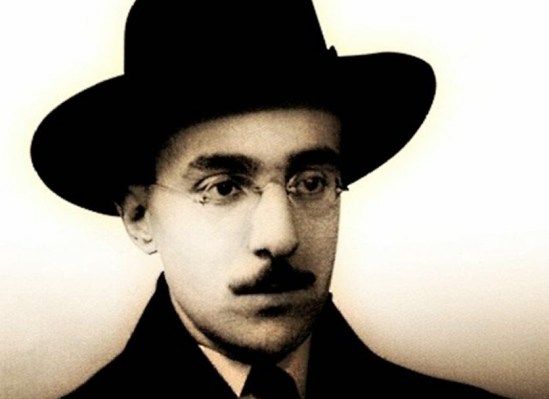
Ειρήνη Παραδεισανού, Ο Φερνάντο Πεσσόα και η ηλιθιότητα των ευφυών

F.+Pessoa

«Δεδομένου ότι ο Φερνάντο διαθέτει μια ευαισθησία σε υπερβολική ετοιμότητα καθότι συνοδεύεται από μια ευφυΐα σε υπερβολική ετοιμότητα, αντέδρασε πάραυτα στο Μεγάλο Εμβόλιο – το εμβόλιο που προστατεύει από την ηλιθιότητα των ευφυών».
Αυτά γράφει ο Άλβαρο Ντε Κάμπος, ένας από τους ετερώνυμους του Φερνάντο Πεσσόα για τον δημιουργό του.

Τη βλέπω γύρω μου αυτήν την ηλιθιότητα.

Στην κλειδωμένη ματιά του νέου ανθρώπου που στα είκοσι νομίζει πως βρήκε όλες τις απαντήσεις και δεν καταδέχεται να θέσει ερωτήματα.

Στην αλαζονεία του «επιτυχημένου» μεσήλικα που, αυτάρεσκα κλειδωμένος στο κουτί της γνώσης του, απορρίπτει μετά βδελυγμίας – καλά οχυρωμένης πίσω από ένα προσωπείο συναίνεσης και μετριοπάθειας – οτιδήποτε δε χωράει στα κουτάκια της μικρονοϊκής σκέψης του.

Μονάχα τα παιδιά στέκουν αλώβητα από αυτήν. Η ευφυΐα τους είναι στ’ αλήθεια μαγική, γιατί οι αλυσίδες της σκέψης δεν έχουν προλάβει ακόμη να τη μολέψουν. Και υποπτεύομαι πως η παιδική ματιά του είναι που έσωσε τον Φερνάντο Πεσσόα από την ηλιθιότητα των ευφυών.

«Σαν ένα παιδί προτού το μάθουν να είναι μεγάλος,
Υπήρξα αληθινός και πιστός σε ό,τι είδα και άκουσα».

Μονολογεί ο Φερνάντο Πεσσόα μέσα από τα ασύνδετα ποιήματα του Αλμπέρτο Καέιρο.

Το πιο σημαντικό: O ίδιος ο ποιητής δεν επαίρεται για τίποτα. Επινοεί τον ετερώνυμό του, τον Αλμπέρτο Καέιρο, ως τον υπέρτατο δάσκαλο που τον εμπνέει.

Νομίζω πως η ανάγκη του αυτή να επινοεί χαρακτήρες φανταστικούς πέρα για πέρα και αποστασιοποιημένος απ’ τον εαυτό του να γράφει τα ποιήματα που αυτοί του υπαγορεύουν, υπογράφοντας με τα ονόματά τους δεν είναι τυχαία. Πίσω απ’ αυτήν κρύβεται μια βαθιά εντιμότητα, μια αδήριτη ανάγκη για αλήθεια.

«Ο δάσκαλός μου Καέιρο δεν ήταν παγανιστής. Ο Ρικάρντο Ρέις είναι παγανιστής, ο Αντόνιο Μόρα είναι παγανιστής. Ο ίδιος ο Φερνάντο Πεσσόα θα ήταν παγανιστής, αν δεν ήταν ένα κουβάρι μπερδεμένο από μέσα».

Γράφει ο Άλβαρο Ντε Κάμπος.

Ο Πεσσόα έχει την εντιμότητα να σκάψει βαθιά μέσα του, να κοιτάξει την έρημο της ψυχής του και να παραδεχτεί πως «είναι ένα κουβάρι μπερδεμένο από μέσα».
Έχει όμως παράλληλα μέσα του τη σφραγίδα της δωρεάς που λίγοι εκλεκτοί έχουν, το κεντρί της αμφιβολίας, την ακόρεστη ανάγκη για αναζήτηση της αλήθειας. Κι όταν αυτή τον πληγώνει;

Ο αυθεντικός ποιητής φτιάχνει τη δική του αλήθεια. Γίνεται ο προφήτης της και την κηρύσσει μέσα από το έργο του. Εναγώνια προσπαθεί να την προστατεύσει από τα βρώμικα χνώτα των άλλων.

Και η αλήθεια του ποιητή Φερνάντο Πεσσόα δεν υπήρξε ποτέ μονοδιάστατη. Από κει και η ανάγκη του να υποδυθεί ρόλους, να επινοήσει τόσους ετερώνυμους όσα και τα πρόσωπα της αλήθειας του.

«Δεν αλλάζω. Ταξιδεύω (…) Εμπλουτίζω την ικανότητά μου δημιουργώντας νέες προσωπικότητες. Συγκρίνω αυτήν την πορεία προς τον ίδιο μου τον εαυτό όχι με κάποια εξέλιξη αλλά με κάποιο ταξίδι».

Πάνω απ’ όλα όμως υπερασπίζεται την παιδικότητα, τη ματιά την μπολιασμένη με το όνειρο.

«Έχουμε όλοι δυο ζωές:
Την πραγματική, αυτή που ονειρευόμαστε
Στην παιδική μας ηλικία, αυτή
Που συνεχίζουμε να ονειρευόμαστε, μεγάλοι,
Στο βάθος της ομίχλης
Και την ψεύτικη, αυτή που ζούμε
Στις συναλλαγές μας με τους άλλους.
Που είναι η πρακτική, η χρήσιμη,
Αυτή που την τελειώνουμε στο φέρετρο.

Στην άλλη δεν υπάρχουν φέρετρα, θάνατοι,
Μόνο εικόνες των παιδικών μας χρόνων:
Μεγάλα βιβλία χρωματιστά, για να δεις κι όχι για να διαβάσεις
Μεγάλες σελίδες χρωματιστές, για να θυμάσαι αργότερα.
Στην άλλη είμαστε εμείς,
Στην άλλη ζούμε.
Σ’ αυτή πεθαίνουμε, και ζωή σημαίνει αυτό ακριβώς.
Αυτή τη στιγμή, λόγω αηδίας, ζω στην άλλη…»

(Δακτυλογραφία, απόσπασμα, μετάφραση Γιάννης Σουλιώτης, εκδόσεις Printa)

Πόσοι τη νιώθουν αυτήν την αηδία; Ή μάλλον πόσοι είναι ικανοί να τη νιώσουν; Σ’ αυτούς απευθύνεται ο ποιητής. Ο ποιητής «με τη διανοητική πάντα ευαισθησία του, την έντονη και ανέμελη προσοχή του, τη θερμή λεπτότητα που δείχνει στην παγερή ανάλυση του εαυτού του».

Ο Φερνάντο Πεσσόα, ένας διανοητής με βλέμμα που στοχεύει στην ψίχα των πραγμάτων ανέγγιχτος από τις μικρονοϊκές θεωρήσεις των ευφυών ηλιθίων.

(Τα αποσπάσματα είναι από τα βιβλία: «Τα ποιήματα του Αλμπέρτο Καέιρο», μετάφραση, σημειώσεις Μαρία Παπαδήμα, εκδόσεις Gutenberg και «Fernando Pessoa, Ποιήματα», εισαγωγή-μετάφραση Γιάννης Σουλιώτης, εκδόσεις Printa)

*Αναδημοσίευση απο τον Ποιητικό Πυρήνα http://ppirinas.blogspot.com.au/2014/11/blog-post_30.html Η Ειρήνη Παραδεισανού διατηρεί το ιστολόγιο “Παρείσακτη” στη διεύθυνση http://wwwpareisakth.blogspot.com

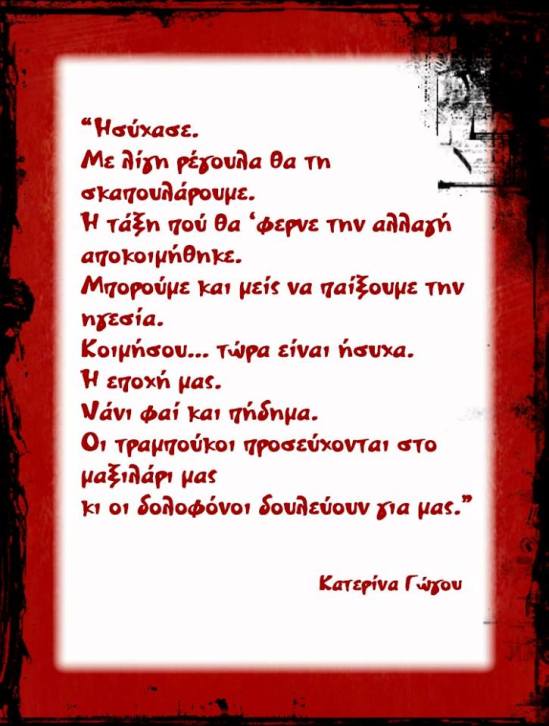
Οδός Κατερίνας Γώγου

942795_770211283084643_2142839881530591821_n

ΤΟΥ ΓΙΩΡΓΟΥ ΠΑΠΑΧΡΙΣΤΟΔΟΥΛΟΥ*

Το όνομα της ποιήτριας και ηθοποιού Κατερίνας Γώγου (1940-1993), ενός από τα εμβληματικότερα πρόσωπα του αναρχικού χώρου στα πρώτα του βήματα στην ταραγμένη μεταπολιτευτική Ελλάδα κι ευρύτερα ενός προσώπου που διαμόρφωσε το πολιτιστικό ρεύμα που συνδέθηκε με το διεθνές κι εγχώριο αντιεξουσιαστικό κίνημα, θα δοθεί σε δρόμο της πόλης των Ιωαννίνων στη συνοικία του Λασπότοπου.

Η σχετική πρόταση της επιτροπής ονοματοθεσίας οδών και πλατειών του Δήμου Ιωαννιτών (καταλήχτηκε στις 5 Δεκεμβρίου 2012) εγκρίθηκε από το Δημοτικό Συμβούλιο στη συνεδρίαση της 21ης Μαρτίου και έχει το δικό της, ιστορικό βάρος, όπως συμβαίνει με την κάθε ονοματοδοσία δρόμου.

Κι αυτό επειδή τα ονόματα που δίνουμε στις πλατείες και τους δρόμους αποτυπώνουν (ή δεν αποτυπώνουν) τους κοινωνικούς συσχετισμούς-είναι ένας καλός δείκτης για το ποια είναι τα σύμβολα της πόλης, ποιους επιλέγει να τιμήσει η εκάστοτε εξουσία, ποια κομμάτια της ιστορικής μνήμης επιλέγει να αποσιωπήσει, ποια επιλέγει να αναδείξει, ακόμη και κόντρα στα ιστορικά γεγονότα.

Για παράδειγμα, την κεντρική πλατεία κοσμεί ο ανδριάντας του Συρρακιώτη πολιτικού Ιωάννη Κωλέττη (πρώτος συνταγματικός Έλληνας πρωθυπουργός) που αμφιβάλλουμε κατά πόσο θα πρέπει να τιμάται όταν υπήρξε ένας από τους πολιτικούς που θεμελίωσε το πελατειακό κράτος με τα περίφημα ρουσφέτια, ενώ καταμαρτυρούν για αυτόν τα μύρια όσα οι αγωνιστές του ’21 για τον βίο και την πολιτεία του στην ελληνική επανάσταση.

11863437_10152950246150957_247798389147488940_n

Αντίστοιχα, με δεδομένη την στρατιωτική επικράτηση της Δεξιάς στον ελληνικό εμφύλιο πόλεμο (1946-1949), η πλειοψηφία των κεντρικών δρόμων της πόλης πήρε τα ονόματα πολιτικών και προσώπων της πλευράς των νικητών. Όταν οι ηττημένοι αργότερα “αποκαταστάθηκαν”, εκπληρώθηκε, το 1983- αν θυμόμαστε καλά- ένα πάγιο αίτημα της δημοκρατικής παράταξης της πόλης, ήδη από τη δεκαετία του ’60: στήθηκε ο ανδριάντας του Ελευθερίου Βενιζέλου στην κεντρική πλατεία (μεταφέρθηκε από την κάτω πλευρά, το 2005, μπροστά από την σημερινή περιφέρεια όταν ξεκίνησαν οι εργασίες για το γκαράζ). Ή αργότερα, δόθηκε το όνομα του αριστερού εξόριστου Δημήτρη Χατζή στην πλατεία των Αμπελοκήπων.

Σαν να μαλάκωσε η μνήμη ή έστω αρχίσαμε με λιγότερους δισταγμούς να συζητάμε για την υπόθεση Πρίντζου.Ας επιστρέψουμε στη Γώγου όμως η οποία, εκτός από το να αποτελεί, μαζί με τον Άσιμο και τον Σιδηρόπουλο,ακόμη ένα από τα σταθερά σύμβολα αναφοράς και έμπνευσης του αντιεξουσιαστικού ρεύματος και στην πόλη μας (“Εμένα οι φίλοι είναι μαύρα πουλιά..”, ένα από τα ποιήματα της που έγινε τραγούδι), δάνεισε τον τίτλο της ποιητικής της συλλογής“Τρία Κλικ Αριστερά” στη δημοτική παράταξη του ΣΥΡΙΖΑ στις δημοτικές εκλογές του 2010 με επικεφαλής τον Χρήστο Μαντά.Εντούτοις, η πρόταση να δοθεί το όνομή της σε ένα από τα δρομάκια του Λασπότοπου ήρθε από έναν…πρώην του ΣΥΡΙΖΑ και νυν της Δημοκρατικής Αριστεράς: τον αντιδήμαρχο Βασίλη Μασαλά!

Μία πρόχειρη θεωρία των τύψεων θα εξηγούσε την επιλογή του κ. Μασαλά (ο υπογράφων δεν την ασπάζεται). Υπάρχει κάτι άλλο πιο απλό, πέρα από την ευρύτερη κουλτούρα ποιυ κουβαλά η Γώγου και η οποία σίγουρα πότισε με αντιεξουσιαστικό πνεύμα την ελληνική αριστερά (ειδικά την ανανεωτική): ο αντιδήμαρχος τυγχάνει πρόεδρος της Επιτροπής ονοματοδοσίας του Δήμου στην οποία επίσης συμμετέχουν ακόμη οι δημοτικοί σύμβουλοι κκ. Μ. Ελισάφ, Φ. Τσουμάνης, Φ. Μπουραντάς και ο αντιπρύτανης του πανεπιστημίου Ιωαννίνων Γιώργος Καψάλης.

Όπως εξήγησε ο κ. Μασαλάς, μιλώντας στην “Ε”, η ονοματοδοσία των δρόμων γίνεται με δύο τρόπους: είτε αξιολογούνται προτάσεις πολιτών είτε κατατίθενται προτάσεις από τα μέλη της Επιτροπής. Στη συνέχεια οι προτάσεις εγκρίνονται από επιτροπή της Αποκεντρωμένης Διοίκησης κι επιστρέφουν στο Δήμο ώστε να παρθεί σχετική απόφαση του Δημοτικού Συμβουλίου.

Η γενικότερη λογική είναι σε μία συνοικία τα ονόματα να έχουν μία ενότητα μεταξύ τους- πχ. άνθρωποι της τέχνης με ανθρώπους της τέχνης. Για παράδειγμα, η οδός Κατερίνας Γώγου θα έχει “γείτονες” ορισμένους από τους εκπροσώπους της γενιάς του ’30: Καραγάτσης, Γκάτσος, Θεοτοκάς, Καββαδίας, Πρεβελάκης, Μυριβήλης.
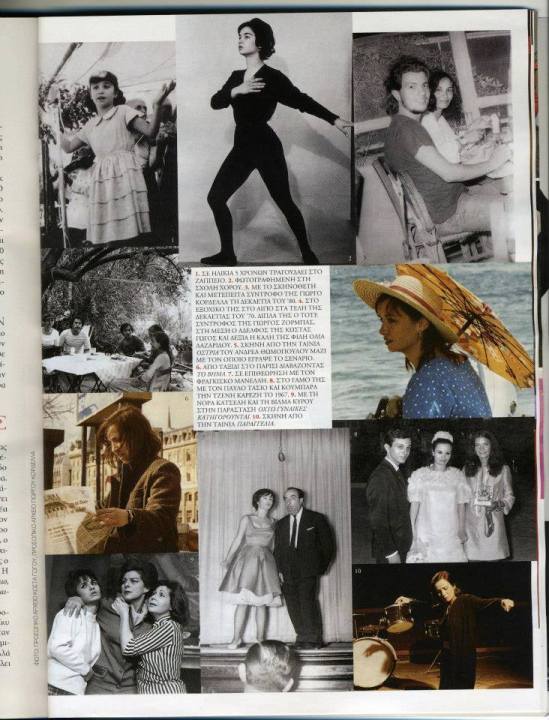
Η ίδια μπορεί να διαφωνούσε- άντε να τα έβρισκε με τον Καββαδία (λησμονημένος κι αυτός για καιρό) ή τον Γκάτσο. Ίσως θα ήθελε “γείτονες” τον Παύλο, τον Γιάννη, την Πάολα, τον Φίλιππο, το Νίκο, τον Μήτσο, την Μυρτώ…

 Είτε έτσι είτε αλλιώς, η επιλογή του Δήμου Ιωαννιτών είναι ιστορική: είναι ενδεχομένως ο πρώτος δήμος στην Ελλάδα που τιμά μία αναρχική ποιήτρια, ένα πρόσωπο των δαιμονοποιημένων Εξαρχείων τα οποία τόσο συκοφαντούνται, αλλά κανείς δεν μπορεί να τα αγνοήσει…

Γιατί γνωρίζουν όπως έλεγε και η Γώγου: “Ξέρω πως ποτέ δε σημαδεύουνε στα πόδια./ Στο μυαλό είναι ο Στόχος, το νου σου ε;”. 

*Αναδημοσίευση τη Δευτέρα, 9 Απριλίου 2012, από την τοπική εφημερίδα των Ιωαννίνων “Ενημέρωση”. Πρώτη δημοσίευση Babylonia.gr
http://www.babylonia.gr/news/topika-nea/politismos-texnes-istoria/istorika/to-onoma-tis-katerinas-gogou-se-dromo-ton-ioanninon.html

10393578_621281744644265_1820119378365130330_n

Γιάννης Τόλιας: “Η αμηχανία λειτουργεί σαν κίνητρο για να γράψω”

tolias

Συνέντευξη στην Άτη Σολέρτη

Συνομιλήσαμε με τον ποιητή Γιάννη Τόλια και μέσα από το βλέμμα της παρατήρησής του, συνδέσαμε τα κομμάτια των εικόνων που ξεδιπλώνουν οι αποκαλυπτικοί στίχοι του.

Διατηρείτε τις σελίδες: monody-monody.blogspot.gr, johntolias.wordpress.com – Ασκήσεις Συναισθήματος, jtolias.wordpress.com – Μεταφράσεις Ποιημάτων, poemsonpictures.wordpress.com – Εικονοποιήματα και http://www.youtube.com/results?search_query=ToliasJoh. Θα ήθελα να σας ρωτήσω σχετικά με τα Εικονοποιήματα, πώς προέκυψε η ανάγκη να συνδυάσετε την ποίηση με εικόνες;
Η εξοικείωση μου με την ψηφιακή τεχνολογία μου δίνει τη δυνατότητα να επιχειρήσω με τα εικονοποιήματα ένα συνδυασμό λόγου και εικόνας, όπου το ένα εν δυνάμει υποστηρίζει το άλλο. Η συγκεκριμένη εικόνα που συνοδεύει ένα εικονοποίημα είναι μια υποκειμενική επιλογή του δημιουργού. Μια εφήμερη παράσταση που φιλοξενεί το ποίημα. Ο στίχος, όμως, μέσα από μια βαθιά, δημιουργική ανάγνωση γεννάει άπειρες εικόνες. Έτσι, λοιπόν, μια προτεινόμενη εικόνα δεν πρέπει να λειτουργεί δεσμευτικά.

Μας υποδέχεστε λέγοντας:
«Οι μέρες είναι λίγες και φεύγουν γρήγορα.
Κι όποιος στη ζωή και τον έρωτα είναι θεατής
Δεν είναι αθώος.»
Ποιος ο ρόλος της παρατήρησης στις εμπνεύσεις σας;

Η οπτική παρατήρηση είναι πηγή γνώσης και έμπνευσης. Το βλέμμα ανιχνεύει την εικόνα και τις προθέσεις της. Με συγκινητική αφοσίωση, σχεδόν με αυταπάρνηση, υπερασπίζεσαι την ένταση της στιγμής. Αν είσαι τυχερός, επιβραβεύεσαι με αξιόλογους στίχους.

Τι μπορεί να σας δώσει κίνητρο για να γράψετε;
Η γραφή και ειδικά η περιεκτική, όπως είναι η ποίηση, προκύπτει σε κατάσταση αμηχανίας. Είναι η αμηχανία λοιπόν, που λειτουργεί σαν κίνητρο για να γράψω.

Υπάρχει κάποιο λογοτεχνικό είδος, στο οποίο να έχετε μια ιδιαίτερη προτίμηση ή ενδεχομένως και να έχει ασκήσει επιρροή στη γραφή σας;
Παρότι υπάρχουν σπάνιες εξαιρέσεις, όπου κάποιοι έγραψαν λογοτεχνία χωρίς να έχουν διαβάσει λογοτεχνία, ο κανόνας είναι να προηγείται πάντα σχεδόν αναγνωστική σχέση με το είδος που γράφει κάποιος. Οι ποιητές διαβάζουν ποιητές και οι μυθιστοριογράφοι μυθιστόρημα. Έτσι άλλωστε ανακύπτει και το θέμα των επιρροών και της ποιητικής πατροκτονίας.

Οι “Ασκήσεις Συναισθήματος” είναι η τελευταία σας ποιητική συλλογή. Περιλαμβάνει ποιήματα που μου έδωσαν την αίσθηση ενός φιλοσοφικού διαλόγου, εσωτερικού ενδεχομένως, έχοντας ως άξονα αναφοράς τα ζεύγη των αντιθέτων που ορίζουν την ύπαρξη. Παρών φυσικά σε ρόλο μάρτυρα ο Χρόνος. Γιατί επιλέξατε αυτόν τον τίτλο για τη συλλογή;
Ο τίτλος του βιβλίου φέρει την έννοια μιας εκπαιδευτικής άσκησης πολέμου συναισθημάτων. Άλλωστε η ποίηση δεν είναι άσκηση επί χάρτου. Είναι πόλεμος.

Έρωτας και Θάνατος. Οι ενορμήσεις της ζωής. Ποιος καταφέρνει να θριαμβεύσει άραγε;
Προσπερνώ την ψυχαναλυτική οπτική της ερώτησής σας και σας απαντώ ποιητικά, λέγοντάς σας ότι το ζητούμενο δεν είναι το ποιος θριαμβεύει. Το σίγουρο είναι ότι, εν τέλει, γράφουμε ποίηση γιατί υπάρχει και ο έρωτας και ο θάνατος.

ΛΥΓΙΖΩ ΑΠΟ ΝΟΣΤΑΛΓΙΑ

«Κι όμως υπάρχουν αυτοί οι σιωπηλοί αυτόπτες
των συγκλονισμών.
Άψυχα αντικείμενα, φυτά, δέντρα ή πετούμενα.
Όλο αυτό το σκηνικό που η επιθυμία κάποτε κατοίκησε.
Πάντα, σε κάτι που εμείς δεν θα γνωρίζουμε,
θα είναι χαραγμένη η θύμηση των αγγιγμάτων.

Να με πιστέψεις, όταν σου λέω πως όταν φυσάει
ο άνεμος του φθινόπωρου ταξιδεύει τόσες εικόνες
επισκέπτριες από το παρελθόν,
που τα βράδια αποκαμωμένες κουρνιάζουν
πάνω στα εύθραυστα κλαδάκια της μνήμης.

Κάθε τόσο λοιπόν, λυγίζω από νοσταλγία
κι έτσι πενθώ με σιωπή το θέρος».

Ποια η σχέση σας με τη μνήμη και τη λήθη;
Η μνήμη είναι ένα απέραντο νεκροταφείο βαλσαμωμένων πράξεων. Ίσως ένας χώρος συντριβής των επιθυμιών. Είναι η σκληρή τιμωρία του αμετάκλητου. Η λήθη ως θηρεύτρια των αναμνήσεων διαλέγει αυτή που θα βυθίσει τους κυνόδοντες της εξάλειψης. Απλός θεατής παρακολουθώ τη διαρκή σύρραξη της μνήμης με τη λήθη χωρίς να μπορώ να περιφρουρήσω τίποτα.

(…)
«Νοσούμε από απουσία, σημαίνει ότι μέσα μας ο ξενιστής
-που ονομάζεται μνήμη-
τρέφεται από τις αντοχές του συναισθήματος».
(…)

Στίχοι από το ποίημά σας που φέρει τον τίτλο: Η απουσία είναι ασθένεια. Πότε η απουσία λειτουργεί ευεργετικά;
Η απουσία είναι το θαυματουργό φάρμακο που κύρια συστατικά του είναι ο χρόνος, η επίγνωση, οι ατολμίες και οι παραλείψεις μας. Καταπραΰνει την ένταση του συναισθήματος απαλύνοντας το άλγος της μνήμης με την απόσταση των πράξεων.

«Η υπέρτατη τιμωρία της νύχτας
είναι όταν δεν σου επιστρέφει
το όνειρο τη μέρα».

Ποια η σχέση σας με τα όνειρα;
Το όνειρο είναι ο εφήμερος πλούτος των φτωχών της ελπίδας. Επειδή για τις πράξεις του ονείρου δεν θα βρεθεί ποτέ κανείς να σε κατακρίνει, φροντίζω οι επιθυμίες μου να κρατούν στοργικά το χέρι των ονείρων. Δεν πρέπει, όμως, να ξεχνάμε ότι τα όνειρα είναι μια διφορούμενη ευεργεσία.

Ποια πιστεύετε πως είναι η μεγαλύτερη αρετή που οφείλει να διασώσει ο άνθρωπος;
Υιοθετώντας το ότι «οι ποιητές είναι οι ακρίτες της ανθρώπινης αξιοπρέπειας», αυτό που πρέπει οπωσδήποτε να διασωθεί είναι η αξιοπρέπεια.

«Η μυστική συνάντηση με το γοητευτικό ψέμα
είναι η ανομολόγητη αμαρτία της αλήθειας».

Ποια είναι το πιο γοητευτικό ψέμα που μας λέει η ζωή;
Όταν χαρίζεις ένα ψέμα, είναι σαν να προσφέρεις ένα κομμάτι ζώντος εφήμερου ονείρου. Έτσι και η ζωή για να παρηγορήσει τη φθαρμένη πραγματικότητα, μας προσφέρει τη συναρπαστική διαδικασία της σύλληψης, της κυοφορίας, της γέννησης και τελικώς της δωρεάς μιας ελπίδας. Οι περισσότεροι υποκύπτουμε στον πειρασμό της ελπίδας.

«Η ταπεινότητα
και η αίσθηση του αγνοημένου.
Οι μοναδικοί δρόμοι
που οδηγούν στη γνησιότητα της γραφής».

Στις μέρες μας, πόσο γνήσια είναι όλα αυτά που συναντά το βλέμμα;
Στις μέρες το βλέμμα συναντά πολλά. Άλλα αυθεντικά, άλλα προσποιητά, υποκριτικά ή υπερβολικά. Η γνησιότητα πάντα θα καθορίζεται από αυτόν που βλέπει και παρατηρεί.

Πώς κρίνετε τη σύγχρονη κοινωνική και λογοτεχνική πραγματικότητα;
Επειδή τελικά η ελπίδα απ’ ότι φαίνεται δεν έχει έρθει ακόμα, η προοπτική από κοινωνική άποψη είναι δυσοίωνη. Λογοτεχνικά, θέλω να ελπίζω, ότι η δυσκολία θα δημιουργήσει συνθήκες για να γεννηθεί καλή λογοτεχνία.

Ποια είναι τα επόμενά σας σχέδια; Αναμένετε να εκδώσετε κάποιο βιβλίο;
Επειδή η γραφή είναι ανίατη κατάσταση, θέλω να πιστεύω ότι σίγουρα θα υπάρξει συνέχεια.

Τέλος, θα ήθελα να σας ευχαριστήσω από καρδιάς που με τιμήσατε με αυτή τη διαδικτυακή συνομιλία, να ευχηθώ καλή επιτυχία στο σημαντικό λογοτεχνικό έργο σας και να σας ζητήσω να κάνετε μια ευχή!
Κι εγώ σας ευχαριστώ για αυτή τη συνάντηση. Εύχομαι σε όλους υγεία και έμπνευση.

*Αναδημοσίευση απο το Βακχικόν, στο http://www.vakxikon.gr/γιάννης-τόλιας/

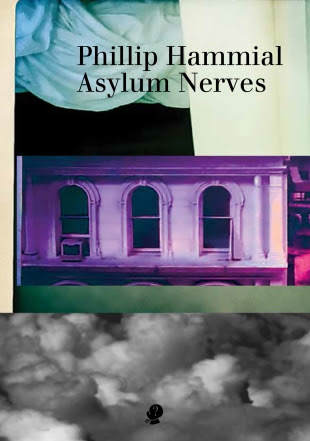
Michael Farrell reviews Philip Hammial

unnamed

Asylum Nerves: New and Selected Poems
by Philip Hammial
Puncher & Wattmann, 2015

Poems don’t need condescension any more than we do. If we pick up a book and the poems come to life only at a certain page, maybe it’s our brain that needed a refresh. Philip Hammial is certainly up for a refresh of everyday culture: of foodie-ness, for one, such as in the high school project scene of ‘The Float’, where food is garbage and his art teacher gives him an A; or the vegetables of death in ‘The Vehicle of Precious Little’. There are enough stories in his poetry – represented here through a selection from twenty-five collections – to replace a whole bookshelf of novels.

Hammial is a poet of at least two turns, meaning that he follows Jasper Johns’ ‘legendary instructions’: ‘Take an object. Do something to it. Do something else to it.’ If we substitute idea or concept for object, there arises an interesting comparison between poetry like Hammial’s and conceptual poetry (or between Johns and conceptual poetry). Where Hammial tropes narrative or theme, and Johns appropriates images which are then recycled, we might ask whether conceptual poems take a concept and do nothing to them, or do one thing. If we think of the best-known examples – Kenneth Goldsmith’s book-length Day or Traffic – there’s a satisfying radicalness in thinking of them as pure curation: of zero intervention. This is, of course, not the case: the poems have undergone at least one action of ‘something’: the medium has changed, the original newspaper and broadcast are published in book form. Yet other texts, such as Goldsmith’s ‘The Death of Michael Brown’, underwent at least two modes of change: an autopsy report given as a reading, its language has also, according to Goldsmith, been given ‘minor tweaks’. What of another press-worthy conceptual work, Vanessa Place’s Gone With the Wind tweets? Are they, as tweets of a whole novel, following Johns’ instructions or not? There is a change in medium, from book to internet, yet the twitter constraint of 140 characters means that the tweets are fragments. Is this one thing or two? Perhaps it’s a new grey area. Perhaps this is too circuitous a way of saying that different kinds of poetry can be criticised in simple, broad terms as having done too many – or not enough – things to be interesting.

For my money, Hammial is generally on the money in his selection (I’d drop the unlively ‘SOS’, though). The prose poem ‘Possessions’ tells of a man who carries his belongings inside himself, including his clothing and his dinner, which he then eats. The following poem, ‘Runners’ features a man wearing ‘fish shoes’ who is winning a race through a river, ahead of men wearing ‘rabbit shoes’. But then we learn that the race takes place over equal amounts of water and dry land: the winner, then, is ‘anyone’s guess’. (This impasse of equality is overcome in a later race poem, ‘Grand Prix’, where it appears that ‘a bicycle built for seventy-six’ nuns will beat ‘a bicycle built for twenty-two’ monks.) Less satisfying is ‘Wheels’, about a man with wheels who has them surgically removed to ‘stand on his own two feet’.

Hammial’s prose poems mean narratives and characters. There’s a lot of men, or, as Avital Ronell might say, a lot of loser sons – the better kind, who have read and understood Freud. Take the narrator of ‘The Country Is Belgium’, who appears to be trapped in a nightmare tennis contest with a ‘huge man’ named Flowerkranz: ‘I always lose’, he says. Or there’s Anthony Glitz, the patient of Dr Eva Plotz (a memorable woman character), who when taken to the woods to release his demons can’t, in the event, let them go. The drive back to the city has Dr Plotz surrounded with demons and detritus, as if an allegorical victim of the helping professions—such as academia. Yet, while Ronell’s sons are defined by fighting with their fathers, Hammial’s narrators – in the enjambed poems – are often haunted (if haunted is the right word when the dead have a physical presence) by their mothers (their grandmothers are another story).

Poems such as ‘Of Tubs, Sailors & Inflation’ and ‘Mad About Me’ resemble late Ashbery in their claims and tone, but both rely on narrative intentness and circularity. The latter is a signature move of Hammial: there are enough examples in this collection to suggest an alternative grouping, of poems that repeat their beginnings and those that don’t; whereas Ashbery relies on a particular enunciatory drive. More interesting is ‘What I Do In A Horn’, which flirts with aspects of lyric – address, persona, feeling – asking us what kind of person is saying this, and what is their situation? The scenario of being in a horn (what kind of horn, exactly?) is described in tones and terms by turns Borgesian, cliché, practical, novelistic, pathetic, parodic (of who? Beckett?) and tricky:

In a horn I find
the false notes & put them
out of their misery.

In a horn I reach
for a brook, to strangle it before it babbles
my shame, dirty and rotten.

In the horn I examine the stomach contents
of a fruit fly & come to this conclusion: food
is a fool’s game.

In a horn there’s a knot
that you can’t untie; I can,
but I won’t.
The poem’s last anaphoric stanza is the Kafkan ‘In a horn / I’m home safe’. A horn can be both corner and room, where ‘Beautiful it is to be unnoticed’, as Kafka wrote in a letter (Ronell calls Kafka ‘perhaps the best of the loser sons’).

A short lyric about ‘Money’ is not about doing things, but about the truth and image of getting rich: a rhyme implied, yet not supplied till seven lines later, by the first line: ‘It’s in a ditch.’ It might seem old-fashioned to think of money as having material substance, for the rich at least; for me there is something profound and timeless about this poem with its rich people jigging hand in hand, distant from the dirt they once had to climb in to get the money; but I can’t help seeing wigs and knickerbockers.

Hammial writes unusually smooth poems, keenly attuned to vowels and consonants. The alliteration of ‘Filthy because first, I fell from a family/of fifty’ is soft because of the fricatives, yet is further lightened by its patterning of ‘i’ sounds (‘Getting Clean’). In this passage from ‘Correspondence’ there is a shifting interplay between i, o, t, c, m, oo, l, g and p sounds:
Could
it be cyanide? Bite at your peril. I’ve lost
my appetite. Which is just as well because the party’s
over, the last guest leaving with my children
in tow. I’d like to go too but don’t have a ticket,
turned away by the conductor, the locomotive hissing
in the moonlight as its huge wheels slowly, reluctantly
begin to turn, my garden
ground to a pulp, Their nourishment
comes from elsewhere. From
Constantinople possibly …

So what? Well, the musically pleasing aspect of the poems is part of an overall effect of (ironic) mildness and subtlety, a thoroughgoing consistency which perhaps contributes to the reason Hammial’s work has not been given significant attention (admittedly relative in the poem-abnegating paradigm of public culture). Even the topical extremities of (Prime Minister) ‘Howard’ on all fours, or the sarcastic ‘Can’t/ afford to be concerned about a few reffos when / xenotransplantation risks are spreading epidemic / diseases to the whole of humanity / us included’ (‘Talking Trash’) end up being, ultimately, pleasing. This might go down well in places where pleasure has an intellectual cast. But our bourgeoisie is not good at enjoying anything that strains the brain. A ‘very major’ poet (quoting Martin Duwell on the back of the book) is a more appealing category than a plain major one, and an alternative to John Forbes’ notion of a minor major one. Yet any kind of major poet – good or bad – to be major, has to be discovered by an audience at some point.
We look overseas for international poetics but we have poets from the U. S., Asia, Africa and Europe living here. Originally from the U. S., Hammial has lived in Australia since the 1970s; his poems aren’t always indicative of place, but North American life is a distinct element in some. Perhaps Hammial is better thought of as an international poet, though there are, potentially, diasporic and postcolonial readings to be made of his work. It’s easy to imagine a version of Hammial being feted in Europe or elsewhere. Writing well is not enough, as all Australian poets realise quickly; what we do with that realisation determines whether we persist (as Hammial clearly has), and with what grace. Hammial’s career is comparable with that of π.O., in that both have published most of their work with their own presses—Island Press, in Hammial’s case. This hasn’t prevented a number of short-list appearances, but has perhaps limited his work’s distribution and critical reception. (Unfortunately, this Puncher and Wattmann selection of his work has spelled his name as Phillip rather than Philip on the cover.)
I get the impression that, in mid-career, Hammial attempts to up the ante with In the Year of Our Lord Slaughter’s Children. Poems from that book feature an anal sex exhibition with a Comtesse that gets grandmothers off (‘Grandmothers’); a vulture trainer (‘Discipline’); ‘Junkies who spank’ (‘Soft Targets’: still using that circular ending, however); and a gang-raped ‘Lucy’. The troping of narrative gets bleaker, too, as in ‘Bicycle’, where a five year-old ages sixty years while bike-riding through wars and ending at an open grave. That is the freedom of poetry: you can do anything but get attention. Doing more means more only; every prolific poet has this problem. Asylum Nerves feels like a lot of Hammial, yet as a selection from over twenty books (and seven new poems) it’s actually a fairly strict sampling. It’s still, perhaps, too generous. A few tickles, a few pokes in the eye, that’s all we need. Which is this?
Party

Bring your favourite corpse to the party.
Fun & games for everyone.

I take mother.

Egg & spoon: mother in a swoon,
I shuffle to the finish line.

Pin the tail: blindfolded & spun around three times,
I pin it to mother’s stomach.

Fox & geese: foxy lady, I’m the goose again.

Tag: levitating, she can’t be caught.

Treasure hunt: mother the treasure,
she can’t be found.

Parcel-parcel: unwrap my prize, she’s it.

Three-legged race: legs tied together,
we finish last.
Or if you like the language of cryptic crosswords and getting caught in the rain, try the beginning of ‘Cattle’: ‘Big wise cattle don’t / jell’. ‘Wig Hat On’ is a standout for reading aloud; its conclusion a chiming (with the poem’s beginning, natch) definition of a poet: ‘A big time singer / who could with a hatchet do’. Ouch, we might well say, for not only is writing well not enough, nor is assembling books of well-written poems. There doesn’t seem enough differentiation between the books excerpted in Asylum Nerves. A more severe selection – or infinite other organisations – might have been more suggestive of the energy that is in the poems. I find myself longing for metacommentary: ‘I took this poem, then I did x to it, and then I did y to it.’ Do the poems speak for themselves, or to themselves?

*Michael Farrell‘s Cocky’s Joy was published by Giramondo in 2015. His scholarly book, Writing Australian Unsettlement: Modes of Poetic Invention 1796-1945, was published by Palgrave Macmillan.

**From Cordite Poetry Review at http://www.cordite.org.au

Νίκος Παπαστεργιάδης: «Αξιοθαύμαστο και σημαντικό το έργο του Γιάννη Βασιλακάκου»

FullSizeRender (2)

Layout 1

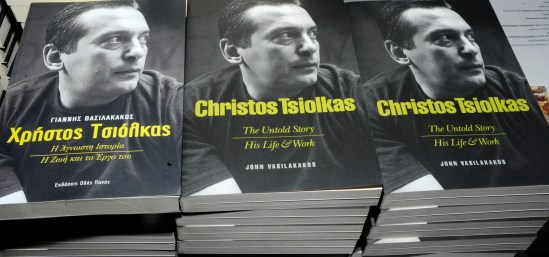
Την Τετάρτη, 25 Μαΐου 2016 έγινε η παρουσίαση των δύο τελευταίων βιβλίων του συγγραφέα Δρα Γιάννη Βασιλακάκου την οποία διοργάνωσε το Πολιτιστικό Κέντρο της Ελληνικής Κοινότητας Μελβούρνης, σε συνεργασία με το Πανεπιστήμιο Μελβούρνης. Το πρόγραμμα παρουσίασε ο κ. Νίκος Ντάλλας. Πρώτος ομιλητής ήταν ο καθηγητής κ. Νίκος Παπαστεργιάδης (επικεφαλής της Σχολής Πολιτισμού κι Επικοινωνίας) του Πανεπιστημίου Μελβούρνης, ο οποίος έκανε μία εις βάθος ανάλυση του πρώτου βιβλίου: «Χρήστος Τσιόλκας: Η Άγνωστη Ιστορία – Η Ζωή και το Έργο του» (εκδ. Οδός Πανός, Αθήνα 2015). Ένα χαρακτηριστικό απόσπασμα της ομιλίας του:

«Είναι μεγάλη τιμή που μιλώ σήμερα για το βιβλίο του Γιάννη Βασιλακάκου για τη ζωή και το έργο του Χρήστου Τσιόλκα. Το βιβλίο του Γιάννη είναι όντως ένα καταπληκτικό και αξιοθαύμαστο επίτευγμα. Το διάβασα με τεράστιο ενδιαφέρον και θαυμασμό και είμαι πραγματικά περήφανος που μου δίνεται η ευκαιρία να μιλήσω γι’ αυτό το πολύ σημαντικό έργο. Αναφερόμενος στην ποιότητα του βιβλίου, ξεκινώ από το Α΄ Μέρος (που αποτελείται από μια σειρά συνεντεύξεων με τον Χρήστο) το οποίο θεωρώ πολύ σημαντικό διότι τεκμηριώνει την όλη εξέλιξη του Τσιόλκα ως άτομο (από παιδί ως ενήλικα). Κι επίσης διότι, στη συνέχεια, επιχειρεί μια διερεύνηση ορισμένων σημαντικών ζητημάτων που τον απασχόλησαν στη ζωή, όπως για παράδειγμα: την πολιτική, τη θρησκεία, την ταυτότητα, τον πολιτισμό, το ρατσισμό κτλ. Ο Γιάννης διαθέτει αυτή την εκπληκτική ικανότητα να θέτει κάποιες ουσιωδέστατες ερωτήσεις, με τέτοιο άμεσο κι ευφυή τρόπο, έτσι που ο Χρήστος να αναγκάζεται να σκάψει βαθιά στην προσωπική του ιστορία και στις σκέψεις του προκειμένου να απαντήσει όσο πιο αυθεντικά και ειλικρινά γίνεται. […] Οι ερωτήσεις αυτές αγγίζουν τόσο ευαίσθητες χορδές, σε σημείο που να μην υπάρχουν εύκολες κι ετοιμοπαράδοτες απαντήσεις. Εξού και ο Χρήστος αναγκάζεται να αναγνωρίσει τα γνωσιολογικά του όρια καθώς και αυτά της ίδιας της γλώσσας. Εξυπακούεται ότι οι συνεντεύξεις αυτές δεν αποτελούν ρεπορτάζ ιδεών, αλλά δίνουν μια αίσθηση όχι μόνο για το ποια ήταν η πορεία του Χρήστου, αλλά επίσης και για το έργο που αναγνωρίζει ο Χρήστος ότι απομένει να γίνει. Κι αυτό είναι ένα απίστευτο επίτευγμα εκ μέρους του Γιάννη Βασιλακάκου – χωρίς να αναφερθώ ακόμη στα άλλα πλεονεκτήματα του βιβλίου αυτού – για το οποίο αξίζει να τον χαιρετίσω και να τον συγχαρώ…».

Ο καθηγητής Νίκος Παπαστεργιάδης

Ο καθηγητής Νίκος Παπαστεργιάδης

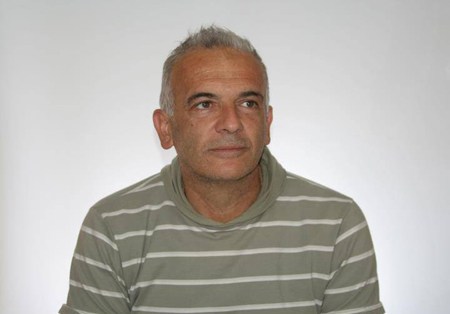
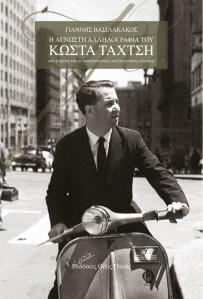
Δεύτερος ομιλητής ήταν ο δημοσιογράφος και ποιητής κ. Δημήτρης Τρωαδίτης, ο οποίος αναφέρθηκε στο δεύτερο βιβλίο του Βασιλακάκου με τίτλο: «Η άγνωστη αλληλογραφία του Κώστα Ταχτσή – και η σχέση του με αυστραλιανούς καλλιτεχνικούς κύκλους» (εκδ. Οδός Πανός, Αθήνα 2014). Ο κ. Τρωαδίτης, αφού έκανε μια σύντομη αναδρομή κι επισκόπηση στην πολυτάραχη ζωή και το έργο του Ταχτσή και τον μυστηριώδη θάνατό του, αναφέρθηκε λεπτομερειακά στο περιεχόμενο του εν λόγω βιβλίου, τη ζωή και τις περιπέτειες του συγγραφέα του «Τρίτου Στεφανιού» στην Αυστραλία, την θυελώδη απέλασή του και τη σπουδαιότητα των επιστολών του προς τον Αυστραλό ζωγράφο Καρλ Πλάτε και τη σύζυγό του Τζόσελιν. Επίσης, στη σχέση του Ταχτσή με τον Αυστραλό νομπελίστα Πάτρικ Γουάιτ και ιδιαίτερα τον σύντροφο του τελευταίου Μανόλη Λάσκαρη, και γενικότερα το αυστραλιανό καλλιτεχνικό συνάφι. Χαρακτήρισε τον Βασιλακάκο ως «κατ’ εξοχήν βιογράφο του Ταχτσή, αφού ήταν ο πρώτος που συνέγραψε την επίσημη βιογραφία του “Κώστας Ταχτσής: η αθέατη πλευρά της σελήνης” που εξέδωσαν οι εκδ. Ηλέκτρα το 2009 κι έγινε μπεστ σέλερ στην Ελλάδα, αλλά και χαλκέντερο ερευνητή-μελετητή αφού ξόδεψε χρόνια ερευνώντας τη ζωή και το έργο του μεγάλου δημιουργού». Ιδιαίτερη μνεία έκανε στον «Απόρρητο φάκελο Ταχτσή» ο οποίος, χάρη στο ενδιαφέρον και τις ενέργειες του Βασιλακάκου αποδεσμεύτηκε από τα Εθνικά Αρχεία της Αυστραλίας (τέλη του 2015), μετά από 55 ολόκληρα χρόνια. «Σημαντικότατο επίτευγμα», τόνισε, «καθώς ο εν λόγω “φάκελος” ρίχνει άπλετο φως στην πολυτάραχη ζωή και δράση του επίμαχου συγγραφέα στους Αντίποδες».

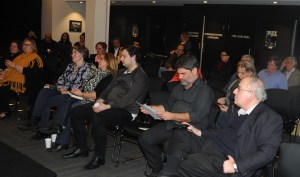
Μια άποψη του ακροατηρίου. Σε πρώτο πλάνο (από δεξιά) οι Γιάννης Βασιλακάος και Δημήτρης Τρωαδίτης

Μια άποψη του ακροατηρίου. Σε πρώτο πλάνο (από δεξιά) οι Γιάννης Βασιλακάκος και Δημήτρης Τρωαδίτης

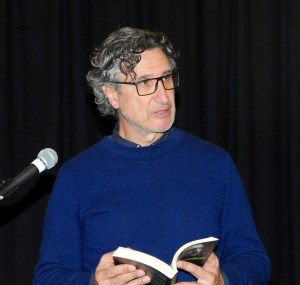
Τρίτος ομιλητής που ανέβηκε στο βήμα ήταν ο Δρ Γιάννης Βασιλακάκος, ο οποίος, στην αντιφώνησή του, αφού ευχαρίστησε όλους τους συμβαλλομένους στη διοργάνωση της εκδήλωσης – την Ελληνική Κοινότητα για το κάτερινγκ και την άψογη φροντίδα της διοργάνωσης, αλλά και τους έξοχους ομιλητές για τις οξυδερκείς αναλύσεις τους, μεταξύ άλλων τόνισε: «Πάντα με γοήτευε η ζωή των μεγάλων προσωπικοτήτων της τέχνης και των γραμμάτων – Ελλήνων και ξένων. Κυρίως των πρώτων, και ιδιαίτερα όσων υπήρξαν απόδημοι, ή παιδιά αποδήμων, οι οποίοι έζησαν την περιπέτεια του ξεριζωμού από πρώτο χέρι, όπως κι εγώ. Καθόλου τυχαίο λοιπόν που καταπιάνομαι με συγγραφείς που έζησαν εκτός Ελλάδας. Το κριτήριο της αποδημίας όμως δεν είναι το μόνο που λαβαίνω υπόψη. Εννοείται ότι πρωτίστως είναι η ποιότητα, σπουδαιότητα και γοητεία του έργου τους που με έλκει. Αλλά βεβαίως και η ζωή τους με αφορά άμεσα, καθώς, συχνά, είναι εξίσου ενδιαφέρουσα και σημαντική όσο και η δουλειά τους – ιδίως όταν υπάρχουν αχαρτογράφητα νερά όσον αφορά το ερευνητικό πεδίο». Και κατέληξε λέγοντας: «Παρακολουθώντας την αυτοεξομολογητική πορεία συγγραφέων σαν τους Τσιόλκα και Ταχτσή, εμμέσως πλην σαφώς, ιχνηλατώ, αναπόφευκτα, και τη δική μου συγγραφική πορεία. Είναι σα να πορευτήκαμε μαζί χέρι-χέρι όλα αυτά τα χρόνια, σα να συν-γράψαμε από κοινού, κομμάτι-κομμάτι τούτα τα βιβλία…»

Ακολούθησαν ερωταπαντήσεις από το ακροατήριο ενώ, στη συνέχεια, ο Γιάννης Βασιλακάκος υπέγραψε βιβλία του για το κοινό κατά τη διάρκεια της δεξίωσης.

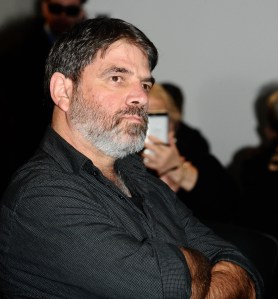
Ο Δημήτρης Τρωαδίτης

Ο Δημήτρης Τρωαδίτης