Γιώργος Γκανέλης, Δύο ποιήματα

Η ΣΤΙΓΜΗ

Οι μάσκες άρχισαν να υποχωρούν
τώρα τα πρόσωπα φωτίζονται από ρυτίδες
κι η αντοχή εγκλωβίστηκε σε δωμάτια μπαρόκ.
Στο μεταξύ το βιβλίο της ζωής
γεμίζει από παρενθέσεις
(όλη η ζωή μια παρένθεση χωρίς υπόθεση)
κι οι πρώτες πασχαλιές μια περιφρόνηση
από τα πολλά σκουπίδια
τα στοιβαγμένα μπροστά στις πόρτες μας
κι οι μαργαρίτες μια διαμαρτυρία.

Αυτά τα βλέπεις κάθε πρωί
που λογαριάζεις τη μέρα αλλιώς
ενώ εκείνη έχει τις δικές της αρχές
κι εσένα σ’ αφήνει να μετράς τις ώρες της
μήπως κι απομονώσεις μια Στιγμή
που χρόνια παζαρεύεις στα βιβλία,
ακόμη και σε γιορτές και σ’ επετείους
σ’ όλες τις αργίες που μυρίζουν ξεκούραση
εσύ κυνηγάς δύσκολους ουρανούς:
η κρυφή γοητεία της αλήθειας.

***

0Ι ΔΡΟΜΟΙ

Μαζέψαμε τα πανιά απ’ τον ορίζοντα
αφήσαμε ανοιχτή πληγή τις οπτασίες να μοχθούν για μας
και μαζευτήκαμε στις γωνιές της άνοιξης
διπλώνοντας καλά τα λίγα ακρογιάλια που απόμειναν·
γύρω μας η φωνή η πληρωμένη
να καλεί εθελοντές κι άλλους
που θα λατρέψουν τους ψεύτικους αρχηγούς –
μια στάχτη ιδανικών και δίπλα η φωτιά
μασάει τα ξύλα που εμείς κόψαμε.

Χωρίς πολλά λόγια κοιμηθήκαμε·
λίγα όσα είδαμε αυτή τη μέρα
τα όνειρα δείχνουν περισσότερα
αλλά κι αυτά μια εξαρτημένη παρουσία
στις ανάγκες μιας ζωής
παραγεμισμένης από φτηνά πούπουλα,
όγκοι οι πέτρες σχημάτισαν οροσειρές
και πάνω τους απολιθώματα ναυαγών·
αυξήθηκαν οι εξερευνητές χαμένων ψυχών
οι σκαπάνες χτυπούν ανελέητα τους βράχους
και καμιά φορά την εξώπορτά σου.

Οι δρόμοι τυλίχτηκαν καλά στο χώμα τους
και περιμένουν να τους πατήσεις.

*Από τη συλλογή “Ανάπηροι δρομείς”, Εκδόσεις Στοχαστής, 2012.

Αντώνης Στασινόπουλος, Πέντε ποιήματα

Αναζήτηση

ΒΑΦΤΙΖΩ το βλέμμα μου στο γαλάζιο της θάλασσας,
η ψυχή υψώνεται στο ουρανό.
Ένα φιλί για σένα,
στολίζεσαι με αστέρια και φεγγαρόσταλες.
Σε προσμένω.

***

Προσμονή

ΣΕ ΦΙΛΗΣΑ με τη ματιά μου,
παράξενη τριανταφυλλένια γυναίκα,
Αιθέριο το λίκνισμά σου.
Γυναίκα, τι προσμένεις εκεί πάνω
με το βυσσινί φουστάνι να ανεμοδέρνεται;
Περιμένω το άγγιγμά σου
Να προλάβουμε την αγάπη.

***

Άλλος Χρόνος

ΠΕΡΠΑΤΟΥΣΑΜΕ στη βροχή
αστραπές και βροντές
γίναμε μούσκεμα.
Αναριγούν τα σώματα
και σκιρτά η καρδιά.
Τούτη τη νύχτα λες και έχουμε μείνει σε άλλο χρόνο.
Πίνουμε κονιάκ να ξεσταθούμε
και μεθάμε το νου μας στο παρόν.

***

Πάλη

ΟΙ ΔΡΟΜΟΙ κυλάνε κατω από τα πόδια μου.
Το αερικό συναντά τη σκιά του στο λυκόφως.
Και αναρωτιέμαι τι φταίει για την περσινή λειψή σοδειά.
Τούτος ο αγρότης μόχθησε
Για να καρπίσει το δέντρο τη νιότης.
Ατέρμονη πάλη με τα στοιχεία της φύσης και του εαυτού.

***

Όνειρα

ΤΑ ΟΝΕΙΡΑ έγχρωμα εναλλάσσονται εντός μου,
αλλόκοτες μορφές εποσκέπτες στον ύμνο μου,
συνταξιδιώτες στο είναι και στο γίγνεσθαι,
μάρτυρες κατολισθήσεων και ανεγέρσεων.
Κι όμως συμβιώνουμε.

*Από τη συλλογή “Φεγγάρι Ολόγιομο”, εκδόσεις Βιβλιοπέλαγος, 2010.

Γιώργος Ζησιμόπουλος, Πέντε ποιήματα

ΠΡΟΠΑΓΑΝΔΑ ΜΕ ΔΡΑΣΗ

Στην αυθεντία
των γκρεμών
πιάνομαι
από τις άκρες

***

ΔΙΑΛΥΘΕΙΤΕ ΗΣΥΧΩΣ

Θεέ μου
σώσε μας
απ’ τους κινδύνοτς
που έχουνε σωπάσει

***

ΑΙΦΝΙΔΙΑ ΕΥΦΟΡΙΑ

Σε κάθε σκέψη μου
Ο φόβος της ερήμου
γεμίζει το μυαλό μου αγροφύλακες

***

ΟΜΟΙΟΠΑΘΗΤΙΚΗ ΑΣΚΗΣΗ
Ή
ΤΙ ΘΑ ΓΙΝΩ ΟΤΑΝ ΜΕΓΑΛΩΣΩ

Πόσα τίποτα
μου λείπουν ακόμα
να αγοράσω το θάνατό μου.
Ένα βλέμμα
ένα φιλί
ένα κορμί
ένας ακόμα ίσκιος
ληστής των φόβων μου
ξεφεύγει πάλι.

****

ΕΝΑΣ ΕΝΑΣ ΧΩΡΙΣΤΑ

Κι αν κάποτε
σταλαγματιά σταλαγματιά
τους έρωτές μας
σύραμε στη θάλασσα
μάτια μου
μαζί
ποτέ δεν ταξιδέψαμε
ματαίως.

*Από τη συλλογή “Αφήλιον ήμαρ”, εκδόσεις Γαβριηλίδη, 2017.

Δημήτρης Καφετζής, Εικόνες απ’ το μέλλον

Εικόνες απ’ το μέλλον
με χέρια σταυρωμένα
σε τοίχο το βλέμμα
εκείνοι και εμείς

Εικόνες απ’ το μέλλον
σαράβαλης κατεύθυνσης
δημοκρατία εν ώρα εξέγερσης
κατάσταση εξαίρεσης

Εικόνες απ’ το μέλλον
κελιά ψυχιατρείων και φυλακών
σπασμένες αλυσίδες
καμμένα έγγραφα δεσμών
με φρένα σπασμένα
σε ένα άγριο αύριο
δεκάδων ετών

Εικόνες απ’ το μέλλον
σφαίρες σε κεφάλια παιδιών
φωτιά στην καρδιά των μηχανών
κατάληψη πίσω απ’ τις γραμμές των ελεγκτών

Εικόνες απ’ το μέλλον
κραυγές απ’ τις ταράτσες πολυκατοικιών
σμπαράλια τα τσιμέντα
λιωμένα σίδερα
η βάση των επόμενων δασών

Εικόνες απ’ το μέλλον
εκδικείται η φύση
με έναν ήλιο ανελέητο
να καίει σχέδια προβλέψεις και στατιστικές
κι εμεις ωσάν ημιθανείς
εκτελώντας απ’ το πρωί ως το βράδυ εντολές

Εικόνες απ’ το μέλλον
καιόμενοι χιλιάδες
σε πλατείες, δρόμους
διαδρόμους και αίθουσες συνδιαλλαγής
καιόμενο το δέντρο της ζωής
κι εσύ ακόμα δίνεις διαταγές
νομίζεις κάπως έτσι θα σωθείς

Γρηγόρης Σακαλής, Ιερή φλόγα

Ήρθε χειμώνας.
Παγωμένα σπίτια
παγωμένα χείλη
οι άνθρωποι δεν γελούν
χαίρεται η κάθε εξουσία
να βλέπει
το ηθικό μας πεσμένο
γιατί ξέρει
ότι έτσι δεν κινδυνεύει.
Ήρθε χειμώνας,
στις καρδιές μας
έχουμε λύπη
το χιόνι μας σκέπασε
τουρτουρίζουμε
κι ο νους μας
δεν πάει στην εξέγερση
χαίρεται η εξουσία
όλοι μας πρέπει ν΄ανάψουμε
στις καρδιές μας ένα κερί
να γίνει η μαγιά, το προζύμι
της μεγάλης φλόγας
που θα γεννήσει το καινούργιο.

Κατερίνα Λιάτζουρα, Δύο ποιήματα

ΔΩΡΟ ΣΠΕΡΜΑΤΙΚΟ

Υπέρτατο δώρο
εναρκτήριο και σπερματικό
αγγελιοφόρος μιας νέας γης
ενός νέου ναού
αντικαθιστά τα φωνήεντα
την αναπνοή
εγκαθιδρύει τη σιωπή.

Το άστρο μου το καλό είναι ιδιότροπο στη σήμερον ημέρα
ανταποκρίνεται σε μια βαθειά εσχατολογική προσμονή.

Ο μύθος της ατομικής αντίστασης
μοναχική και παλλόμενη λεπίδα
προσδίδει στο λυκόφως
ανθρώπινη μεγαλειότητα.
Τότε που γεννήθηκε η επαναστατική μου προσδοκία
η ρύπανση της πολιτικής μού μαύρισε το μάτι.
Με κατέστησε ανίκανη
να κοιτώ κατάματα.
Μαύρος ήλιος
της διαύγειας.

Όμως δολοφόνησα τη σκέψη
ενώ έψαχνα τις λέξεις.
Με πιάνουν ρίγη νοσταλγίας
στη φυλακή του σαλονιού μου
όταν ξάφνου τα χελιδόνια
ταράζουν το σούρουπο.

***

ΦΩΝΕΣ ΑΝΘΡΩΠΙΝΕΣ

Γέμισαν τ’ αυτιά φωνές.
Φωνές χωρίς πρόσωπα.
Ασώματες.
Στερεότυπα απαράλλακτα
χωρίς απροσδόκητα
χωρίς ενδεχόμενα
η φωνή του ανθρώπου
παραμορφώνεται
νοθεύεται
και τέλος τέλος ακυρώνεται.

Μια εφιαλτική εντύπωση σφηνώθηκε στον λογισμό μου.
Πως ο άνθρωπος θα εκλείψει.
θα απομείνει μόνο η μιλιά
μηχανική
ηχογραφημένη
υπαγορευμένη
ξεκρέμαστη στον αέρα
δίχως στόμα, γλώσσα ή λαλιά
δίχως νόημα.
Κενή.

*Από τη συλλογή “Αποκαΐδια ηθικής”, Εκδόσεις Βακχικόν, 2017.

Ιωάννα Διαμαντοπούλου, O φόβος της απώλειας του εαυτού

1.Ο ΦΟΒΟΣ ΝΑ ΑΦΗΣΕΙΣ ΜΟΝΟ ΤΟΝ ΕΑΥΤΟ ΣΟΥ ΜΕ ΤΟΥΣ ΑΝΘΡΩΠΟΥΣ
Φοβάμαι να αφήσω τον εαυτό μου μόνο του
μην πέσει πάνω του κάποια τρομερή λέξη
και τον συνθλίψει.
Από μένα σε σένα
ένας πολύ μικρός δρόμος σιωπής
τον περπατάς κι αναρωτιέσαι
τι ώρα πήγε και που πήγαν τα λόγια.
Θα σε πετρώσουν οι αγωνίες που καταπίνεις,πρόσεξε είναι πολλές,
ήδη κάτι άρχισε να διαφαίνεται στο κάτω χείλος
αλλαγή υλικού,
κάτι σαν ρυτίδες αρχαίων ναών
σε κάθε χαμόγελο τής πόλης.
Ωστόσο τέτοια ώρα αφήνοντας τα νυχτοπερπατήματα,
αφήνοντας τα δέντρα στους ξυλοκόπους,
και τους ανθρώπους στους ανθρώπους
θα έπρεπε να επιστρέφεις από εκεί
να μπείς σε ένα ζεστό δωμάτιο,
άλλοι θα στο πούν θάλαμο,
αλλά έτσι δεν είναι,
δεν είναι κι έτσι,
να αποδυθείς τα όνειρα, τους εφιαλτεσ
με το ύφος κουρασμένου αντάρτη
ανυπόδητου
/
ω ναι επιμένω στην ξυπολησιά
με το ύφος αυτού που πετάει το όπλο του
μακριά γιατι βαρέθηκε να σκοτώνει
και βαρέθηκε και να αυτοπροστατεύεται
και θέλει μόνο να χαρεί ενα πιάτο σούπα
και ένα χέρι να διαβαίνει φιλήδονα τα μαλλιά του.

Κι είναι ελαφρύς χωρίς όνειρα
έχει πάθει κάποια φθορά συνειδήσεως
μονολογεί κοιτάζοντας τον εαυτό του
στον καθρέφτη
φοβάται να αφήσει τον εαυτό του
μόνο με τούς ανθρώπους
γυρίζει πάντα σαν άγριο ζώο στη φωλιά του
με την μυρωδιά των άλλων πάνω του,
όσων πάσχισαν να τον εξημερώσουν,
με τις σκέψεις των άλλων να αχνίζουν
στα ήδη θαμπωμένα τζάμια του
από κάθε μικρή χαραματιά του
να μπαίνουν οι ξένες λέξεις
να τού θυμίσουν
πως είναι ήδη αργά..
Μια Καληνύχτα λένε
και με ένα νεύμα τους καταργούν την αγάπη.

Μανώλης Αλιγιζάκης, Η πράξη του θανάτου / The act of death

Η πράξη του θανάτου μοναδική
μονόπρακτη, προσωπική
αλάνθαστη
σχισμή στο βράχο
του καιρού σημάδι αμετάκλητο
ένδειξη γεναιότητας
καθώς αφήνεις το κουφάρι
κι εισέρχεσαι σ’ ολόλευκο διάδρομο
προς τα Ηλύσια Πεδία
πράξη περήφανη
ανδροπρεπής
που προκαλεί και προσκαλεί
σε συνεστίαση το Χάρο
η πιο γενναία της ζωής απόκριση
εν απουσία άλλων, μοναχική
εκδήλωση συγκίνησης
όταν κραυγάζει η ψυχή
άρατε πύλας
μ’ άκρατο ενθουσιασμό τρέχοντας
στ’ άγνωστο γνώριμο δρομάκι
που μόνο οι γενναίοι ενεργούν
κάτω απ’ τη σκέπη της αυτογνωσίας
εκεί που να γνωρίσεις μέλλεται
τον μέλλοντα συνοδοιπόρο σου
τα βήματα του ήλιου να ωροσκοπίσεις
μοναδική η πράξη του θανάτου
που μαρτυρά το θάρρος του μονογενή
η πράξη του θανάτου, αλάνθαστη
μονόπρακτη, προσωπική
μοναδική, ιδιόρρυθμη
δήλωση τελική το κέλυφος
που αφήνεις του κορμιού
και εισχωρείς στο διάφανο εαυτό σου

THE ACT OF DEATH

The act of death unique
singular
errorless, personal
schism in the rock
irreversible incision in time
underscoring valiantness
when you leave the dead flesh
and you enter the whitewashed hallway
on your way to the Elysium
proud, manly act
of courage
that dares Hades and
invites Him to dinner
valiant answer of life
when you walk away from all others
emotional apex
when the soul cries out
open the gates
and as if in delirium it runs
to the unknown yet familiar path
only the courageous follow
where it’ll meet
its constant companion
the steps of the sun to rediscover
errorless act of death
witness to the courage of the few-begotten
the act of death, unique
single-handed, errorless
idiomorphic, individual
when you leave the husk of flesh
to enter your diaphanous self

*Από τη νέα δίγλωσση συλλογή “ΚΟΚΚΙΝΟ και ΜΑΥΡΟ” που θα εκδοθεί στη Β. Αμερική την άνοιξη του 2019/ From my latest poetry book RED and BLACK that will be released spring of 2019.

Κώστας Ρεούσης, τον εφιάλτη προσγειώνοντας

(τον εφιάλτη προσγειώνοντας

χάος

να τιτιβίζει 
στ’ όνειρο 

μίας καρδιάς απούσας 

αλκοολικά 

σεντόνια καπνισμένα
πίκρα στεγνώνουνε

και ρίγος 

δύσκολο των υδάτων

στο μονοθέσιο μπαλκόνι

κατάρα επανδρώνουνε

και μαστίγωμα 
συρματοπλεγματικό

των συνόρων)

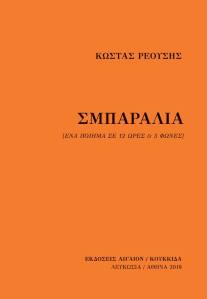
*Από τη συλλογή «Σμπαράλια – Ένα ποίημα σε 12 Ώρες & 3 Φωνές», Ευνομία, Πέμπτη Ώρα, εκδόσεις Αιγαίον / Κουκκίδα, Λευκωσία / Αθήνα, 2018, σ. 21.

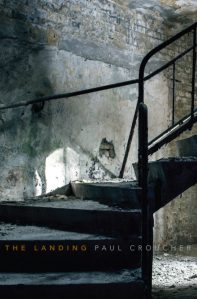
The Landing by Paul Croucher

Kishore Ryan Reviews
The Landing by Paul Croucher
Transit Lounge, 2017

While Paul Croucher has previously published A History of Buddhism in Australia 1848-1988, this is his first poetry collection. Embedded within the poet’s attention to nature is a Buddhist understanding of suffering as a necessary part of existence and at times his spiritual beliefs are expressed explicitly. In ‘Theravadin’ the speaker asks his ‘Ajahn’ (teacher) why he has been reincarnated and is told: ‘Not enough suffering / the first time’. The notion of ‘samsara’ – the cycle of birth and death to which non-enlightened beings are subjected – is reiterated in ‘After All’, a poem in which a courtesan states, ‘there’s / no future, / but there’s / no / end to it’. At first the courtesan’s attitude seems almost despondent, but this is undermined by the speaker’s description of an idyllic landscape:

In the sutra
the courtesan

says to
Sudhana

there’s
no future,

but there’s
no

end to it,
in the

foothills
of Nepal,

in the
clouds

of the
countless

rhododendrons.

Croucher’s tight enjambment – the poem consists of a single sentence spaced over eight couplets and a monostich – necessitates a pause after every couple of words. The pacing reinforces the Buddhist mindfulness and mystical themes of the book. That is, the poet’s spiritually informed comprehension of impermanence is both thematically and formally visible.
‘On a Bus Somewhere to the West of Minneapolis’, one of several poems which make reference to Croucher’s poetic influences, begins with the lines, ‘with a cask of wine / and a lover of Lorine / Niedecker’. At his best, Croucher, like Niedecker, demonstrates imagistic precision while maintaining a personal tone. Both poets are also very much concerned with the natural world and rural life, or at least the non-urban aspects of suburban life. For example, the opening couplets of ‘A Solitary Garden in the Seventies’:
Broad beans
in the winter sun.

The sounds of trucks
in the breeze.

Meghan O’Rourke and A E Stallings, in a 2004 review of Niedecker’s Collected Works, identify some of its main features, three of which show revealing relationships with Croucher’s poetics. These are ‘a chariness with syllables … the ‘I’ of the poet condensed out of existence … and a refusal to sentimentalize’, all of which are displayed in one of Niedecker’s untitled poems:

Popcorn-can cover
screwed to the wall
over a hole
so the cold
can’t mouse in

Niedecker, like Croucher, writes with a certain laconicism. In Niedecker’s words, ‘certain words of a sentence – prepositions, connectives, pronouns – belong up toward full consciousness, while strange and unused words appear only in [one’s] subconscious.’ In other words, her ‘chariness with syllables’ results from a prioritising of words she deems as expressive of something subliminal – ‘laurel in muskeg / Linnaeus’ twinflower’, or ‘mud squash / willow leaves’ (‘Wintergreen Ridge’) – over words whose principal function is grammatical. This is not to say that her poems are ungrammatical, rather there is a hierarchy with regards to the types of words she is likely to edit out.
Whereas Niedecker’s poems are syntactically economical, Croucher’s ‘chariness’ manifests in heavily enjambed verse with very few words per line. Moreover, his poems do not always conform to the rules of grammar and tend to be fairly quotidian – no precedence is given to unusual words. Croucher’s ungrammaticality is a technique which seems to evoke both stillness and a spiritual incompleteness – a sense that everything is temporary and therefore trivial. ‘Zen Keys’, for example, is a poem that consists of only two dependent clauses:

Recalling
how Thich Nhat
Hanh lost his

temper with
Frank, who had
lost his

keys.

In contrast to Niedecker, Croucher’s ‘I’ is not ‘condensed out of existence’ per se, rather the significance of ‘I’ is undermined by the spiritual tone of the book. For example, ‘A Proceeding’ from the ‘Arboreal’ sequence, is ostensibly about a mundane situation. On the surface, it deals with the speaker’s future lack of comfort, but there is also an implied reverence for nature:

A spring wind’s
snapped

the branch
of the

gum tree
which in

summer
was to shade

my room.

At times The Landing shows comparatively less of a ‘refusal to sentimentalize’:

The ordinary
things, like

a water buffalo
with a dozen

birds on
its back.

His focus on nature and the absence of a verb gives the poem a haiku-like quality, a sense of stillness suggestive of transcendence. However, the way in which the presence of the speaker is implied is a little self-conscious. That is, the image of the water buffalo is intellectualised, albeit very slightly, by the inclusion of the initial four words, ‘The ordinary / things, like’, whose gratuity, although slight, make the poem sound, if not faintly sentimental, at least un-Niedeckeresque.
Perhaps the most Niedeckeresque feature of Croucher’s poetics is his application of rhyme. Just as Niedecker frequently uses one-off occurrences of rhyme in her short poems – ‘My friend tree / I sawed you down / but I must attend / an older friend / the sun’ – Croucher, in the second section of his extended poem ‘The High Country’, rhymes only the first two lines of the first tercet:

As the embers
and the ambers
of the morning

become one
with an acid
clarity, we’ve

of a sudden
the immanence
of cattlemen

Once again Croucher’s heavily enjambed free verse requests a certain mindfulness of the reader. The poet’s newfound ‘immanence’ is something that he supposes is possessed by cattlemen because of the time they spend with animals in nature. The speaker’s epiphany, therefore, is based on a projection of his own philosophical beliefs and is perhaps a romanticisation of non-urban life. Whether or not the speaker’s epiphany is nothing but a temporary delusion is perhaps irrelevant. When the speaker in ‘Libre’, on the other hand, supposes that plants are sentient this seems somewhat incongruous with the animistic voice of the book:

Peach blossoms
blown

across the field
like snow.

Each knowing,
since the

beginning
of time,

where they will land.

The presence of the poet, despite the absence of the first-person pronoun, is perhaps too forceful. His anthropomorphisation of peach blossoms does not enhance the spiritual or immaterial qualities of nature, rather it does the opposite, it invalidates them. The romanticised ending jeopardises the impact of the first two couplets, which by themselves have the potential to be autotelic and reminiscent of William Carlos Williams.
Williams’ ‘Red Wheelbarrow’ happens to be the namesake of Croucher’s recently-closed bookshop in Brunswick, Victoria and The Landing, although at times less linguistically precise, is recurrently redolent of his work – ‘Rust / in a basin / left out / in / the rain’ (‘Rust’). Moreover, Williams’ famous tenet ‘no ideas but in things’ is quoted in ‘The High Country’. Following his epiphanic encounter with immanence, the speaker goes on to admit that writing about spiritual occurrences is a form of unnecessary intellectualisation. He defines his cattlemen-like capability as something
in which there’s

no Baudelaire,
no Satan,
no cosmic feud.

No abstractions
in the
log book.

Only
gratitude.

The ‘no’ anaphora combined with end-stops stand out against the other severely enjambed lines and this technique develops into something of a motif:

No coins.
No prayers.
No fountains.

(‘Chinese Pastoral’)
No wing.
No prayer.

(‘A Dream of the View From the Monastery On Khao Laem Dam’)
No positioning.
No posturing.

(‘A Drink With Eric’)

The occurrence of profound gratitude, according to the speaker in ‘The High Country’, is a non-cerebral experience analogous to Williams’ theory of poetics, which Croucher interprets from a Buddhist perspective to imply that what exists only in one’s head is meaningless:

And although
in the clear
light this

might be
an idea

it’s one that’s closer

to having no ideas
but in things.

Just being here.

[…]

we’re nothing
if not
in the flow
of things.

*Kishore Ryan recently interned at Cordite Poetry Review and is currently studying composition and literature at Monash University. He is the son of the poet Max Ryan, whom he plays in a band called Hexham with. He also plays drums with Mick Turner (Dirty Three) and Lisa Salvo (On Diamond). His composition ‘I Purchased Two Donkeys’ for percussion and electronics will be performed at the 2018 Bendigo International Festival of Exploratory Music by Line Upon Line (USA). His poems have been long-listed in Poetry Society’s National Poetry Competition and published in Malevolent Soap. He was also a semi-finalist in 92Y’s 2016 Discovery/Boston Review Poetry Contest.

**Taken from Cordite Poetry Review at http://cordite.org.au/reviews/ryan-croucher/