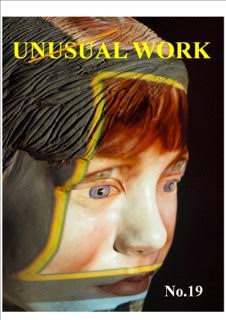
Unusual Work No 19 launch!!!

39daf340-e9f6-4f4e-baa7-b74c29366267

YOU
are invited
to the magazine launch of
UNUSUAL WORK
No.19!!!!!!
bring a friend, make a night of it at
“Grub FOOD VAN”
87 – 89 Moor St. Fitzroy
(inside and upstairs)
Friday the 26th Feb 2016
7:30 pm onwards
ENTRY: $10 + FREE COPY of magazine
(SUBSCRIBERS FREE ENTRY)
===========
PERFORMANCES BY
Sean O’Callaghan, James May,
TT.O, Grant Caldwell, Peter Zilahy
Sandy Caldow, Jas H. Duke +
Jeff Keen, + …..
———————
small magazines
— the life blood of a great literature
MAKE AN EFFORT

Βύρων Λεοντάρης, Από τη “Εν γή αλμυρά”

“…πως να διευκρίνησω μια ζωη;…”

έτσι που τραύλισα,….

(II)

Τώρα που δεν μπορώ παρά να με θυμάμαι μόνο

ξέρω, δεν ήταν έτσι, τίποτε δεν ήταν

αλλιώς έγιναν όλα

Η μαρτυρία μου ασαφής. Τι υπεκφυγές, τι συγκαλύψεις

σε λόγια, σε γραφτά και σε φερσίματα…

Αλλά πώς να τα πω και φαντασίας καμώματα όλα αυτά

Και τα σημάδια; και τα ερείπια; της φαντασίας κι αυτά;

Δε γίνεται.

Πώς να αναιρέσω μια κατάθεση

πώς να διευκρινίσω μια ζωή;

Το ειπωμένο με εκδικείται

κι ανεξιχνίαστο μένει πάντα το υπαρκτό

Σίγουρα κάτι μου διαφεύγει

κάτι που λάθος το έζησα και λάθος με έζησε

κι όλο και σκοτεινιάζει γύρω μου

κι όλο και σκοτεινιάζει

Πού βρίσκομαι

Τι ώρα να ’ναι.

*Εν γή αλμυρά, 
εκδ. Έρασμος, 1996.

Δημήτρης Α. Δημητριάδης, Δύο ποιήματα

12743557_558155757694447_1083688734589592094_n

Γενέθλιος τόπος

Ρήμαξε κι ο τόπος αυτός
έφυγε
περίσσεψαν κάτι υπόλοιπα
κάτι αποκόμματα
φωνές θρυμματισμένες νυχτοπούλια
να αιωρούνται μες στο χάρτη
και μια πάχνη που καίει.

Κάτι σε πιάνει
κοιτάζεις μα ξεφεύγει η ματιά
ακούς και μια σκιά σ’ εμποδίζει
κυλάς αργά σε κοίτες στεγνές
σε τσόφλια της φτώχειας
της ξενιτιάς

ποιος να συνθέσει πια την παράξενη μοίρα
και πώς να βρουν απαντήσεις οι ξεχασμένοι νεκροί

πονά
πονά της μνήμης μου το σώμα

πόνος παλιός
πόνος καινούριος
ατέλειωτη πληγή που δεν κλείνει.

***

Ο λόγος
του επίμονου θαυματοποιού

Σε χάσματα
σε αντοχές
σε καραβιών αφρούς
σε λυγμούς
σε ωδές
όπου κι αν στρέψεις τις κεραίες σου
εδώ θα με βρεις

να υγραίνω τα ναι
να εμψυχώνω τα όχι.

George Mouratidis 
reviews Audacious 1

IssueOneCover-copy

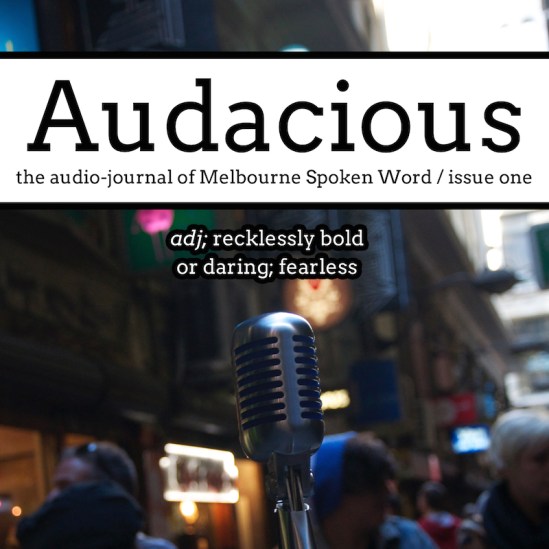
Audacious 1
by Benjamin Solah
 (ed.)
Melbourne Spoken Word, 2015


Coming straight at your inner eardrums is the debut volume of Audacious, the audio journal of Melbourne Spoken Word. Like a night at Passionate Tongues, or an afternoon at the Dan, this collection presents a variety of poets at different levels of artistic development. Some are seasoned and in full flight, while others are up-and-comers still finding their voice. In this volume at least, Audacious offers more of the latter. But the uneven, unpredictable quality of live poetry gigs – where sometimes you connect with just one poet – more often than not gives enough to make your night. In this sense, Audacious is an accurate reflection of local spoken word: certainly a gamble, but one well worth taking.

Live poetry in Melbourne is a jumping crisscrossing of mic leads and literary live wires where Melbourne Spoken Word (MSW) is ever-present, organising and promoting a broad spectrum of poetry events. In this spirit Audacious has potential as another developing platform for Melbourne’s spoken word scene. By no means the first of its kind, issue one is preceded by similar chronicles of audio poetry such as Project 3056(2010) compiled by poet Benjamin Theolonious Sanders (IQ), and sits alongside the recent audio accompaniment to Unusual Work 18. While these latter collections may be more nuanced in their focus, what makes Audacious distinct is precisely the unevenness characterising its inaugural outing. The loose, open-ended journal format suggests malleability – a potential to reflect changes in the scene as they come. The motley collection spotlights one camp in a diverse local scene: one frame of a landscape in constant flux, this is by no means a definitive guide, but rather a point of entry.

The best moments in Audacious are when the categories of poetry and performance support one another; or perhaps, when artists are least self-conscious of these categories. Jacky T’s ‘Landmark’ is exemplary of this and a highlight of the collection. The home truths of the poem – loss and the desperate banality of living in its wake – emerge painfully through voice and its tension with the music simmering underneath. Like a held breath, pushing the words forward, the listener is held by every impression until the poem’s final line: ‘As the traffic lets up, you hold a note and bend it / We listen as we pass.’ And then the music pours forth like an exhalation, a release for the grief that words cannot find.

In regrettable contrast are the frequent attempts to conform to tired notions of ‘poet’ or ‘slammer’. These are immediately apparent in clumsy, forced rhyme (‘this age of apathetic muscles, collapsing corpuscles […] lost in the vortex of your cerebral cortex’ – O’Sullivan’s ‘Language of Ghosts’; ‘gyrate with my mates in my irate pirate crew’ – Dennis’ ‘Pirates’), exaggerated breaths (Hassell’s ‘The Talk’), inexplicable climaxes and denouement (‘you couldn’t even decide between being a couch … or a bed / You don’t know who the fuck you are!’ – Weitzman’s ‘Couch’) and lackluster repetitions (‘we can’t see you we can’t see you we can’t see you’ – Fury’s ‘Google’). The self-loving arrogance evident in ‘I make love to the lyrics of the words of the songs I have written for the girls’ (‘The Talk’) is, contrary to the poem’s intentions, neither sensual nor liberating. The (mis)appropriation of once politically-charged forms like slam is the aural equivalent of donning a Che Guevara t-shirt – opportunistic and insincere in spite of the purported political awareness of the wearer. These poems and their delivery exemplify US slam poet Taylor Mali’s point about performance-poetry-by-numbers in his now classic ‘How to Write a Political Poem’: ‘Mix current events with platitudes of empowerment. / Wrap up in rhyme or r-r-r-r-rhyme it up in rap until it sounds cool.’ In other words, what is actually being said becomes secondary, incidental to the form. The uncritical adoption of the stylistic idiosyncrasies of performance poetry, slam, and hip-hop – from the punchy delivery and syncopations, down to the drawn breaths and American swagger – are imitation verging on parody. There are even instances where the accent shifts from Australian to American within the same piece.

Things don’t really start to cook until the third track. Anastasi’s ‘Initiation’ is conspicuous by its comparative modesty: at forty-four seconds it is lamentably short. ‘An abrasive lace-lined collar / the tickle of water winding between nose and cheek / the forming of hands into towers…’ delivers the listener directly into the sacramental moment. The economy of sound and word carves intimacy in earnest between poet and listener. Like any good performance, the occasional bum note or clichéd phrase is eclipsed by sincerity of feeling. Richardson’s ‘Love Song to Poetry’ is another case in point: ‘There among the used condom heaps of the world, among the McDonald’s wrappers and discarded babies’ toys I saw poets hanging on meat hooks … I saw the hero with a thousand names knowing anything is possible…’ Here, and in the poems that storm the album home (Woolf’s ‘Beloved Brother,’ Burrows’ ‘Cancer,’ Sapoznikoff’s ‘Grip’ and Supski’s ‘For Them / There’) delivery is unaffected, conjoining voice and word in unusual ways. Supski’s poem is another major highlight. A biting response to Audre Lorde’s maxim, ‘Poetry is not a luxury / It is a vital necessity of our existence,’ Supski asks, ‘Can a word unlock / unlock a door? / Can a word cut / cut a barbed wire / barbed wire fence?’ The urge to weed out tired devices and trite observations is enacted in poems such as this, with earnestness unfeigned and unafraid.

The journal’s editor and MSW’s founder, Benjamin Solah, navigates these disparate poems by underscoring their contrast to one another. Following Solah’s argument for a subjective definition of ‘slam’ in his article ‘In Defense of Slam,’ the interpretation of spoken word here is also subjective: we get from it what we bring to it. With this collection, Solah doesn’t attempt to unify these performances or define spoken word:Audacious invites the listener to make their own inquiries and reevaluate their own preconceptions. The first issue of Audacious may be a little unsure of itself, but these are the understandable growing pains of a debut. Proving that poetry is always in flux,Audacious is now already somewhere else. Its second volume, released earlier this year, suggests an encouraging improvement in content and a broader collection of voices. It is well on its way to becoming an important platform and proving ground for Melbourne’s spoken word artists.
This entry was posted in BOOK REVIEWS and tagged Benjamin Solah, George Mouratidis. Bookmark thepermalink.

*George Mouratidis is a Greek-born Beat scholar, poet, and translator of Modern Greek literature. He was a contributing editor of Jack Kerouac’s On the Road: The Original Scroll (2007), for which he wrote a critical introduction. He has taught Cultural Studies at RMIT University and American literature at The University of Melbourne where he is currently completing his PhD on the Beats. His translation of Greek-Australian poet Nikos Nomikos titled Noted Transparencies is due out in May with Owl Press, and his debut collection of poetry, Angel Frankenstein, is due later in the year with Soulbay Press.

**Taken from Cordite Poetry Review at http://www.cordite.org.au

Ζ. Δ. Αϊναλής, Rectification: Τρία Ποιήματα όπως θα έπρεπε να έχουν εκδοθεί…

maxresdefault

Μνήμη Μήτσου Αλεξανδρόπουλου

Κι όμως κι αυτοί ξεκίνησαν κάποτε με τη χαριτωμένη αφέλεια
και την κρυφή ματαιοδοξία ν’ αναμορφώσουν τον κόσμο. Ξεκίνησαν
όλοι μαζί, καθένας χώρια, και τόδαν και τόβλεπαν: καθένας
για ένα δικό του λόγο, μια ξεχωριστή φιλοδοξία, στεγασμένη
κάτω από μια μεγάλη ιδέα, έναν κοινό σκοπό, – διάφανη στέγη
που κάτω της διακρίνονταν καλύτερα του καθενός το κομμάτιασμα,
η δυστυχία κ’ η μικροπρέπεια όλων. Πώς νάβαζες, φίλε μου, τάξη
σ’ αυτό το χάος; Πώς να σταθείς κοντά τους; Τώρα καταλαβαίνω.
Γιάννης Ρίτσος, Φιλοκτήτης, 1965

Οδυσσέας

Την φυλακή που είχα μες το μυαλό μου
την εξαγόρασα φτηνά
για ένα πακέτο τσιγάρα
από ‘να περίπτερο με γυμνές στην Ομόνοια
τώρα περπατώ περίπου σαν ένας άνθρωπος ελεύθερος
ανεμίζοντας ειν’ αλήθεια κάπως περισσότερο του χρηστού
την ομπρέλα μου
ξάφνου φυσά ένας άνεμος σιρόκος
σηκώνομαι ολόκληρος
και περπατώ πάνω στις στέγες της πολιτείας
σάπιες απ’ τις βροχές και το άζωτο
και κάτω στο συλημένο πάτο
της γιγαντιαίας αχερουσίας ληκύθου
αναμοχλεύοντας τα κατακάθια από προγονικές οινοποσίες
σπέρματα χυμένα λάδια φονικά γόπες λιωμένες σάρκες
και οστά των νεκρών
αρχαίοι βασιλείς ήρωες ευκλεείς
μόνο τη μάνα μου δε περίμενα να δω
τι σκατά γυρεύει εδώ
κάτι πήρε να λέει
η προκομμένη η νύφη της σ’ ένα μπορντέλο στη Βεγγάζη
μετά ήβγε ο ποντικός της έφαγε τη γλώσσα
ότι κατάλαβε πως δεν ανήκα ακόμα κει
εποχικός
δουλειές του ποδαριού
οδοκαθαριστής συμβασιούχος
εμένα ψύλλοι στ’ αυτιά μου μια φορά
κι εκατοντάδες να ξεσκίζουνε μικρές καρφίτσες την καρδιά μου
πάρα ταύτα πρόσεχα πολύ μη σκίσω την περιβολή μου καινούργια
από ασβέστη λευκή
κι από κάτου αναφανεί η αγιογραφία γυμνή
αμόλευτη
συντριπτική
η εικόνα
η πραγματική

Πηνελόπη

Το πρόσωπο του ανθρώπου έτσι που το κατάντησαν γέμισε ρήγματα
κάθε πρωί που ξυπνάς μόλις πλυθείς προτού σκουπιστείς
έτσι βρεμένος
τα μετράς στον καθρέφτη
υπόμνηση ματαιωμένων υποσχέσεων ευτυχίας
μια μέρα πήρα με τα δάχτυλα να ψηλαφώ
τα χείλια του μεγαλύτερου απ’ αυτά
ανοίγαν ερεθισμένο αιδοίο
με φρίκη κοίταξα την άβυσσο που ξανοίγοταν κάτω
ως που φτάνει το μάτι σκοτάδι
έβαλα πιο μέσα τα δάχτυλα και
ξάφνου βούλιαζα
τόσο ανέλπιστα
βούλιαζα
σε μια υγρή ανυπαρξία
και να μην έχεις πουθενά ένα φως να πιαστείς
ίλιγγος
ευχήθηκα τότε τον πάτο σα λύτρωση γεμάτη αίμα
δεν πρόλαβα
στην τελευταία περιστροφή το πελώριο δίχτυ της αράχνης
να μου θυμίζει
τη μοίρα μου
Τηλέμαχος
Τις παλάμες μου κόψανε λάφυρα στον άλλο πόλεμο λαθροκυνηγοί
ό,τι περίσσεψε το χώρεσαν σε σκουριασμένους χαλκάδες
γι αυτό και τώρα βλέπεις να κρατώ με τα δόντια το καλαμάρι
με τη γλώσσα να βάφω
τη σελίδα κατάστικτη
σταγόνες το αίμα μου
τα χειλ’ υπολείμματα σάρκες σκισμένες
ούλα σμάλτα σπασμένα δόντια
κλάματα σάλια
και δε μιλώ για τον εαυτό μου
όμως τη μάνα μου τσούλα τη σιχάθηκα
να μπάζει απ’ το παράθυρο κατά δεκάδες τους πειρασμούς
πρόστυχη
να τους καυλώνει
κι έπειτα σύξυλους στα κρύα του λουτρού
απολαμβάνοντας τη μοναρχική κυριαρχία της στα τόσα σερνικά
κι ας τη μαστίγωνε φρικτά η λαίλαπα της σάρκας
κάθε που ξύπναγε τυλιγμένη της αυγής την ικμάδα
νικημένη απ’ τα φαντάσματα της νύχτας
κι όμως
δε μιλώ για τον εαυτό μου
γι αυτό και συλλογίζουμαι τόσο πολύ τούτες τις μέρες και τον Νεοπτόλεμο
και τόσους άλλους
καμένη γενιά
γενιά μου

Αθήνα,
Νοέμβρης 2005

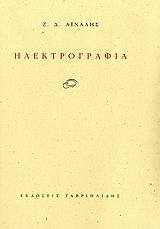
*Τα Τρία Ποιήματα έχουν περίπου εκδοθεί στη συλλογή “Ηλεκτρογραφία” (2006).
** Η αρχική δημοσίευση έγινε στον Κενό Τίτλο στη διεύθυνση http://mogolospolemistisvalkaniosagrotis.blogspot.com/2008/10/rectification.html

9603362077

Ντέμης Κωνσταντινίδης, Από τα “Εφημερόπτερα”

Apodosi topion

Τη ζωή που τόσο ωραία
Μπορούσε να ‘ναι
Βλάκες αφήσαμε
Χίλιους δυο διάολους
Να μας τη φάνε…

***

Εγώ δεν είμαι ηθοποιός
Δεν ζω για την αποδοχή
Λέω τα δικά μου πάντα λόγια
Χωρίς υπόκλιση στο τέλος…
Φριχτό προνόμιο του ποιητή
Η μοναξιά.

***

Βραδινές ώρες
Χρόνος να διαλέξεις…
Μυαλά αιώρες
Κρεμιούνται από λέξεις.

***

Τα τελευταία αποθέματα της μέρας
Οι τελευταίοι κωδικοί στη λαστιχολωρίδα
Τα τελευταία φώτα στους διαδρόμους
Το ταμείο όλο στο σκοτάδι…

***

Κείνο ακριβώς το βράδυ
Έκπληκτος ανακάλυψε
Πως έξω απ’ τις κρυψώνες
Δεν είχε άγρια θηρία.
Μόνο μία μισόγδυτη κυρία
Και μερικούς θαμώνες…

*Εφημερόπτερα”, διαδικτυακή έκδοση http://www.24grammata.com
 Θεσσαλονίκη, 2015.

Γιώργος Γκανέλης, Η πόρτα

tumblr_kzqjm5tX3b1qa29m6o1_500

Η πόρτα της Ποίησης είναι κλειστή.
Κανείς δεν την έχει δει
Στο εσωτερικό του σπιτιού.
Άλλοι λένε πως είναι κοπέλα
Άσκημη με μεγάλα γυαλιά
Κι άλλοι πως μοιάζει με γριά
Όμορφη και περιποιημένη.
Τα βράδια ακούγονται βήματα στην κουζίνα.
Υποθέτουν πως καταβροχθίζει λέξεις
Που τις διατηρούσε στο ψυγείο.
Το πρωί καπνός βγαίνει απ’ τις χαραμάδες
Σημάδι μιας γόνιμης αϋπνίας.

Κι όσοι ορκίζονται πως την έχουν δει
Το είδωλό της συνάντησαν
Μέσα στο βαθύ χάσμα του ύπνου τους
Κι όσοι την άκουσαν να μιλάει
Ένας αντίλαλος ήταν απ’ την έρημη πόλη
Ta aπογεύματα του Αυγούστου.

Ακόμη και για τους ποιητές
Η πόρτα του σπιτιού παραμένει κλειστή.

*Από τη συλλογή “Εκτός εαυτού”, εκδ. Στοχαστής, 2015.

Π. Ἔνιγουεϊ: Σὲ τοπικὴ ἐφημερίδα

planodion's avatarΠλανόδιον - Ιστορίες Μπονζάι

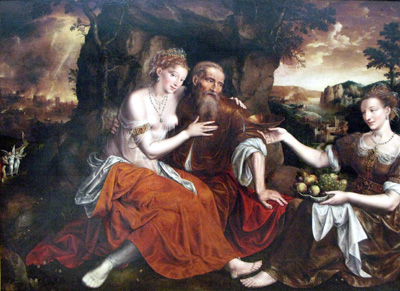
PanagiotisTheodorakis-SeTopikiEfimerida-Eikona-01a(JanMassys-OLotKaiOiKoresTou-1565)

Π. Ἔ­νι­γου­ε­ϊ


Σὲ το­πι­κὴ ἐ­φη­με­ρί­δα

Βό­λος 3/4/20..

ΑΠΟΤΡΟΠΑΙΟ ἔγ­κλη­μα ἔ­λα­βε χώ­ρα στὴν πό­λη μας χθὲς τὰ ξη­με­ρώ­μα­τα ἐ­πὶ τῆς ὁ­δοῦ Κλει­σθέ­νους. Νε­α­ρὴ μα­θή­τρια τῆς πρώ­της λυ­κεί­ου, ἀ­φοῦ εἰ­σῆλ­θε βια­ίως στὸ ὀ­ρο­φο­δι­α­μέ­ρι­σμα ἡ­λι­κι­ω­μέ­νου πά­σχον­τα ἀ­πὸ νε­φρι­κὴ ἀ­νε­πάρ­κεια, καὶ ἀ­φοῦ τὸν σο­δό­μι­σε ἐ­πὶ ἀρ­κε­τὴ ὥ­ρα μὲ μπα­στού­νι τοῦ baseball, ξυ­λο­κό­πη­σε στὴ συ­νέ­χεια τὸν ἄ­μοι­ρο με­σή­λι­κα μέ­χρι θα­νά­του. Ἔ­πει­τα ἔ­πε­σε ἀ­πὸ τὸν 5ο ὄ­ρο­φο τοῦ δι­α­με­ρί­σμα­τος, ὅ­που καὶ βρῆ­κε ἀ­κα­ρια­ῖο θά­να­το με­τὰ ἀ­πὸ πρό­σκρου­ση σὲ κα­ρό­τσα ἀ­γρο­τι­κοῦ. Ἡ ἀ­στυ­νο­μί­α δι­ε­ξά­γει ἔ­ρευ­νες.

Ἐ­φη­με­ρί­δα Θεσ­σα­λι­κὴ Φω­νή

Κη­δεί­α

Τὴν λα­τρευ­τή μου κό­ρη καὶ ἀ­δερ­φὴ

Αἰ­κα­τε­ρί­νη Πα­πα­δο­πού­λου

Ἐ­τῶν 15

Ποῦ πέ­θα­νε, ἀ­φοῦ ἐκ­πλή­ρω­σε προ­η­γου­μέ­νως τὸ κα­θῆ­κον της, κη­δεύ­ω σή­με­ρα στὸν Ἱ­ε­ρὸ Να­ὸ Ἁ­γί­ου Σπυ­ρί­δω­να καὶ ὥ­ρα 4 μ.μ. Πα­ρα­κα­λῶ τοὺς συγ­γε­νεῖς καὶ φί­λους νὰ συ­νο­δεύ­σουν τὴν ἐκ­φο­ρά της.

4/4/20..

Ἡ μά­να καὶ ἀ­δελ­φή: Ἰ­ου­λί­α Πα­πα­δο­πού­λου

Ὁ κα­φὲς θὰ δο­θεῖ στὸ κέν­τρο Ἀρ­γώ.

Ἐ­φη­με­ρί­δα Θεσ­σα­λι­κὴ Φω­νὴ

(στὰ «Κοι­νω­νι­κά»)

(Βα­σί­ζε­ται στὸ Ἐξ αἵ­μα­τος τοῦ Γι­ώρ­γου Χα­ρα­λαμ­πό­που­λου,

πρώ­τη δη­μο­σί­ευ­ση…

View original post 39 more words

Lucifugo, a diavolo in corpo, Διαδήλωση, ένα ποίημα

1558517_485138904928420_1069324053_n

Διαδήλωση


Τρίζεις τα δόντια των ομοίων σου


όταν απειλείς με ιαχές πολεμικές  

πως θα κινήσεις γη και ουρανό

για να βρεις τα ξεφτισμένα δίκια σου


ήσουνα νιος και νια και γέρασες

ικανός για όλα

και για τα πάντα δυνατή

κοιτάζοντας μόνο τη δουλειά σου


Τα μάτια σου και η οικογενειακή φωλιά σου! 


Με τις φτερούγες των παιδιών 

να καψαλίζουν μέσα στις αγκαλιές των γονιών τους 

σε κάτι μελλοντικά προσοδοφόρο να μεταλλάσσονται 

για να μάθουν να κερδίζουν τη ζωή τους δουλεύοντας

ριγμένα σ’ ένα άρρωστο παιχνίδι διαρκείας 

αιώνιων νικητών και αιώνιων συντετριμμένων   


Τρίζεις τα δόντια των ομοίων σου


όταν στην εμποροπανήγυρη των αιτημάτων

που εξασφαλίζουν το σατραπικό σου επαγγέλεσθαι  

διοργανώνεις μαζώξεις και καμαρωτές παρελάσεις 

όταν στο κλεινόν άστυ περιφέρεσαι αλλόφρων  

ικετεύοντας να εισακουστεί η πείνα σου

στους ηγεμόνες που διψούν για αίμα


Τρίζεις τα δόντια των ομοίων σου


όταν επικαλείσαι το θεό για τη δράση σου

όταν ορκίζεσαι επανάσταση  

στα εθνικά λάβαρα της μνησικακίας 

όταν φοράς το ράσο του περιούσιου λαού

για να δικαιώνεις εσαεί την κανιβαλική ψυχή σου


Τρίζεις τα δόντια των ομοίων σου


όταν φωνασκείς νυν υπέρ πάντων ο αιώνιος αγών  

σαν ακριβοδίκαιος μονομάχος που τον απέκλεισαν 

από την αρένα της επιβίωσης και αποτρελάθηκε 

γιατί προσελήφθησαν άλλοι φθηνότεροι κομπάρσοι

στο θέατρο του παραλόγου της ζωής  

γιατί βρέθηκαν άλλοι φθηνότεροι μισθοφόροι   

να κρατούν ανοιχτές τις επίγειες θύρες της κόλασης


Τρίζεις τα δόντια των ομοίων σου


όταν σπρώχνεις τα άρματα της πρόστυχης λευτεριάς 

της χυδαίας δόξας, της λερής τιμής σου

και είναι στους τροχούς χιλιάδες τα νεκρά αδέλφια μου


θαμμένα στα χωράφια που σε ταΐζουν 

πνιγμένα στις θάλασσες που σε ταξιδεύουν  

μαχαιρωμένα στην καρδιά και πισώπλατα 

στα χαντάκια των δρόμων που διαδηλώνεις

για τη δουλειά σου, τα εμπορεύματα 

και τα λεφτά σου


Όταν χαμογελώ τα δόντια μου

δε με αφήνουν να ξεχάσω

και πονάνε


άκλαυτα πάνε όλα τ’ αδέλφια μου

στα στρατόπεδα που συγκεντρώνονται 

κάτω από τη μύτη σου 

και στην κόψη των οραμάτων σου

δε σταματούν να ξεψυχάνε


ένα δικό σου κομμάτι ουρανού 

τούς φράζει το στόμα


στης πατρίδος σου το χώμα

γέρνουν τα κεφάλια τους

με τις ανάσες τους να λιγοστεύουν


ακαριαία όμως ανασηκώνουν το κεφάλι 

βαθιά μέσα στα μάτια σε κοιτούνε

και ύστερα και ύστερα

μόνο αν τους αφήσεις μόνους

σφίγγουν τα μάτια 

τα χείλη σφίγγουν  

και πεθαίνουν 

1919-1950: The politics of Surrealism

landscape

A history of Surrealism and its links with politics and, in particular, anarchism and socialism.

It’s noticeable how mainstream writers writing about Surrealism play down the politics. For example in the massive book on Breton, Revolution and the Mind: The Life of Andre Breton the author Mark Polizzotti passes over the links beween Surrealism and anarchism in a couple of sentences . This despite the signal devotion of Breton in showing solidarity, as one of a few intellectuals to support the libertarian movement in a period of repression. and despite the fact that the Surrealists wrote a weekly column for Le Libertaire, a paper with not an inconsiderable readership.

“It was in the black mirror of anarchism that surrealism first recognised itself.” Thus wrote unequivocally the “Pope of Surrealism”, Andre Breton in 1952. Breton had returned to France in 1947 and in April of that year Andre Julien welcomed his return in the pages of Le Libertaire the weekly paper of the Federation Anarchiste.

But why had not the Surrealists associated themselves before 1947 with the ideas of revolutionary anarchism? This radical art movement which had a fierce hatred of authority and religion was a natural ally. Indeed the art movement of Dada, in many ways a precursor and influence on Surrealism, had emerged in Zurich in 1916 as a reaction to the savagery and slaughter of the World War. Breton himself was influenced by the poet Jacques Vache whom he met in 1919. Breton was to note in the same 1952 article that: “At that time, the surrealist refusal was total, and absolutely incapable of allowing itself to be channelled at a political level.

All the institutions upon which the modern world rested-and which had just shown their worth in the First World War – were considered aberrant and scandalous to us. To begin with, it was the entire defence apparatus of society that we were attacking: the army, ‘justice’, the police, religion, psychiatric and legal medicine, and schooling”. He went on to demand: “Why was an organic fusion not operated at this moment between anarchist and surrealist elements?” and explained ” It was undoubtedly the idea of efficiency, which was the delusion of that period, that decided otherwise. What we took to be the triumph of the Russian Revolution and the advent of a workers’ state led to a great change in our outlook. The only dark spot in the picture – which became an indelible stain – was the crushing of theKronstadt insurrection of 18 March 1921.”

Solidarity
The surrealists had not hesitated in 1923 in showing solidarity with the young anarchist woman Germaine Berton who had killed an activist of the extreme right nationalist party L’Action Francaise and who was aqcquitted in a jury trial! Another member of the surrealist group, Robert Desnos, had associated with the individualist anarchist circles of Victor Serge and Rirette Maitrejean, whilst according to a police record, the surrealist poet Benjamin Peret had been active in an anarchist group in the Paris region and had contributed to the anarchist paper Le Libertaire. All the surrealists attentively read the anarchist press in this period. However, they were put off by the incoherence of the French movement and remembered how some had supported the Allied effort in the World War. When Breton took over as editor of the review La Revolution Surrealiste from Antonin Artaud he wrote most of the collective texts like the revolutionary Open the Prisons! Disband the Armies!

The Surrealists also leapt to the defence of the young woman Violette Noziere who had poisoned her father. Violette accused her father of having systematically raped her from the age of 12. The Surrealists used the trial to denounce the bourgeois family and bourgeois hypocrisy.

In January 1927 5 members of the Surrealist group joined the Communist Party: Breton, Aragon, Eluard, Unik and Peret. Others, like Desnos and Miro refused to join. Even with Breton, Party membership was with qualifications. He saw the Communist programme as only a minimum programme, and criticised the Party paper as “Puerile, uselessly declamatory, cretinous, unreadable; completely unworthy of the role of proletarian education that it tries to assume”. Whilst Aragon transformed from the “most libertarian spirit of the Surrealist group” into a horrific Stalinist hack who wrote poems honouring the Russian secret police the NKVD, others who had joined the Party began to feel distinctly uncomfortable about the Moscow show trials. It was a stormy period for the Surrealists as they tried to participate as they saw it in the workers’ revolution, whilst at the same time safeguarding their own specific preoccupations, and fighting against the Party leadership’s attempts to keep them on a tight rein. Breton was expelled in 1933, and at a Party-controlled International Congress for the Defence of Culture the Surrealists were denounced and were only allowed to speak on the last day at 2 in the morning!

Trotsky
By now some of the Surrealists were allying with Trotskyism and oppositional Bolshevism. Peret made contact in France and Brazil with the Communist Union and the Internationalist Workers Party. Breton made contact in Mexico with Trotsky when he was put in charge of a series of conferences at Mexico University on Poetry and Painting in Europe in 1938. Together with Trotsky and the Mexican painter Diego Rivera he drafted For an Independent Revolutionary Art which announced that “The revolution is obliged to erect a socialist regime with central planning; for intellectual creation it must, even from the start, establish an anarchist regime of intellectual liberty. No constraint, not the least trace of command”. This contradictory and bizarre document seems to have been written by Breton and amazingly Trotsky, with Rivera substituting for Trotsky’s signature when he got cold feet. It is not clear when Trotsky helped write this document what he thought he was doing, as it went against everything he had ever done or said.

Durruti
Peret for his part had gone as delegate of the Internationalist Workers Party to the Civil War and Revolution in Spain. Here he worked as a radio broadcaster for the anti-Stalinist Marxist party the POUM, but left this post when he criticised this organisation for participating in the Catalan government. He joined the anarchist Durruti Column on the Aragon front. “All collaboration with the POUM was impossible, they wanted very much to accept people to their right, but not to their left. I have decided to enter into an anarchist militia, and here I am at the front, at Pino de Ebro”, he wrote to Breton. Two years later he paid tribute to Buenaventura Durruti, after whom the Column was named. “I have always seen in Durruti the most revolutionary anarchist leader, whose attitude was most violently opposed to the capitulations of the anarchists who had entered the government and his killing moved me very much. I think that the lesson that was the life of Durruti should not be lost.” Returning to France, he was called up at the start of the war. He was arrested for distribution of leaflets of “an anarchist character” and after a prison term managed to escape to Mexico. Here he undertook a thoroughgoing critique of Trotskyism and distanced himself from its organisations. Writing later in a letter to Georges Fontenis, the French libertarian communist militant, he remarked: “If the disappearance of the State can not be envisaged in the immediate, it is no less true that the proletarian insurrection must mark the the first day of the death agony of the State”.

Arrogance
After the War the Surrealists began to collaborate with the Federation Anarchiste. Fontenis and another militant of the FA, Serge Ninn, maintained good contacts with the Surrealists, the former becoming a friend of Breton. In 1951, the Surrealist started to write a regular weekly column in Le Libertaire – Le Billet Surrealiste. A series of articles by Peret were also published in Le Libertaire which characterised the unions as counter-revolutionary organisms and put forward workers councils as an alternative. The FA were in disagreement with him on this and published a reply in the paper. Peret was certainly in advance of French anarchists on this question. The controversy here was fraternal, but in a later Billet the Surrealist Jean Schuster insisted that the Surrealists should take charge of the intellectual struggle, whilst the anarchists got on with the economic and social struggle. This elitist arrogance stirred up a lot of trouble, and the relationship between the Surrealists and the anarchists began to cool and the last Billet appeared in Le Libertaire in January 1953.

The article Poet, that is to say Revolutionary written by Peret, the most politicised and revolutionary of the Surrealists, that appeared in the paper in 1951 said the essential. He showed up to what point poetry is revolutionary but he added: “It does not follow that the (the poet) puts poetry at the service of political action, even if it is revolutionary,” (Which was certainly never the wish of the anarchist militants of the period) . “But his quality of poet makes him a revolutionary who must struggle on every terrain: that of poetry by his own means and on the terrain of social action , without ever confusing the two fields of action”.

Synthesis
Apart from Breton and Peret the other Surrealists were never seen on the field of social action. Breton was consistent in his support for the Federation Anarchiste and he continued to offer his solidarity after the Platformists around Fontenis transformed the FA into the Federation Communiste Libertaire. He was one of the few intellectuals who continued to offer his support to the FCL during the Algerian war when the FCL suffered severe repression and was forced underground. He sheltered Fontenis whilst he was in hiding. He refused to take sides on the splits in the French anarchist movement and both he and Peret expressed solidarity as well with the new FA set up by the synthesist anarchists and worked in the Antifascist Committees of the 60s alongside the FA.

Some were able to synthesise anarchism and Surrealism on an individual level even if it had not happened on a collective level.The poet Jehan Mayoux, great friend of Peret, the son of anarchists and anti-militarists, joined the Surrealists at the end of the 20s. Called up at the start of the war, he went AWOL and was imprisoned. Escaping, he was captured by the Germans and sent to a concentration camp from which he was liberated in 1945. He continued to take part in libertarian activity up to his death. Jean-Claude Tertrais participated in Surrealist activities in the 50s whilst Breton was still alive. Called up during the Algerian war, he went AWOL and was sent to the hellish “Disciplinary Battalions”. He joined the FA on his release, contributing articles on surrealism to the FA paper Le Monde Libertaire.

However, as Fontenis was to remark: “It is true that, too often, poets are just poets, without being really revolutionary, no insult to B. Peret intended, and if sometimes they attach themselves to the movement of the masses they often fixate on individual high deeds, on spectacular subversion, on illegalist deeds, rather than on the hard daily struggles… As much as it is preferable that the libertarian movement stays intimately linked to the spirit of revolt of the poets, as much it is prejudicial to subject its revolutionary views to the fantasies of men of letters. Yes to implacable revolt, yes to insurrection, yes to the libertarian spirit… but is this a reason to leave on the side the anarchist thought and the class action that nourishes it and that it inspires?”.

Further notes
Other criticisms can be made of Surrealism – the individual intolerance and authoritarianism of Breton, the sexism and homophobia, the cod Freudianism, the dubious celebration of sexual violence – but that would require an article in itself. 

Whatever you do read Breton’s Claire Tour – his enthusiastic ode to anarchism. It’s been translated into English as The Lighthouse in the Drunken Boat, an anthology of writings on anarchism and art available from Freedom and AK Press.

By Nick

*Written by Nick Heath, edited by libcom and published at https://libcom.org/history/1919-1950-the-politics-of-surrealism