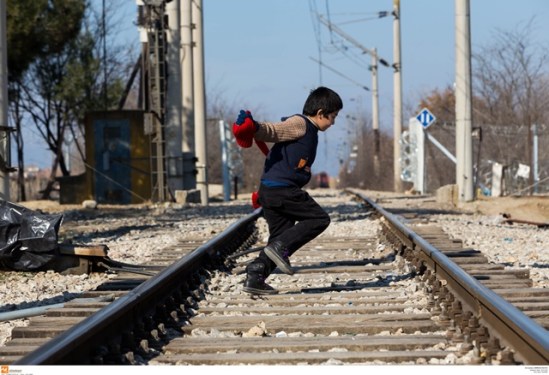
Δεν ζητείται Ελπίς
Στους γενέθλιους τόπους των ανθρώπων
Μ’ ένα μαχαίρι στο στόμα ζευγαρώνουν
Οι χοροί του Ησαΐα κάνουν το γύρο του θανάτου
Στον απόηχο του ανθόσπαρτου βίου ακούς
Το κλάμα των μελλοθάνατων παιδιών
Δεν ζητείται Ελπίς
Ο Νόμος και το Δίκαιο
Είναι το μαχαίρι που κόβει τον άρτο
Στους μυστικούς δείπνους των ανθρώπων
Δεν φτάνει τάχα όλους να τους θρέψει
Μετρημένα σε κάθε οίκο τα ψίχουλα της ανθρωπιάς
Πέφτουν από τα χείλη της απανθρωπιάς
Δεν ζητείται Ελπίς
Τα υψηλά ιδανικά γυαλίζουν
Τη μάχαιρα και το βωμό
Λάμπουν τ’ άστρα των πατρίδων
Μόνο με ανθρωποθυσίες
Και πάντα κάτω από σημαίες μεσίστιες
Μισαλλόδοξων πενθών
Η στάθμη του ξεκληρισμένου αίματος
Στο νοητό σύνορο των χωρών
Μέτρο της προόδου των λαών
Δεν ζητείται Ελπίς
Οι πολίτες ομονοούν αγορεύοντας
Τις έκτακτες απαγορεύσεις των ανθρώπων
Τα πνεύματα ηρεμούν με πολεμόχαρες ομοβροντίες
Δημοκρατικά στεφάνια από βασιλικό και φύλλα δυόσμου
Κρέμονται στις παρατεταγμένες κάννες των τουφεκιών
Δεν ζητείται Ελπίς
Ανάβει το καντήλι των προσευχών
Με το λάδι των οστών που η γλώσσα η εθνική τα τσάκισε
Εμφυσώντας στα σώματα των ανθρώπων χαίνουσες πληγές
Βαθιά στις ρίζες της συμφοράς
Τα παιδιά έχουν μπλεγμένα στα μαλλιά τους
Τα δακρυσμένα φεγγάρια της παντοτινής νύχτας
Και τις πλατιές οδύνες των θαλασσών
Τα πνιγμένα προσφυγόπουλα δεν αποδημούν
Ο θεός τα συγκεντρώνει έξω από τις κλειστές πύλες των ουρανών
Δεν ζητείται Ελπίς
Οι άνθρωποι
Τους άλλους ανθρώπους
Τούς αρνήθηκαν
Έξοδος αναζητείται
Απ’ όλες τις ελπίδες
Απ’ όλες τις φιλοδοξίες
Απ’ όλα τα μικρά και τα μεγάλα όνειρα
Αυτού-εδώ-του-κόσμου
Γεωργία Τρούλη, Άτιτλο
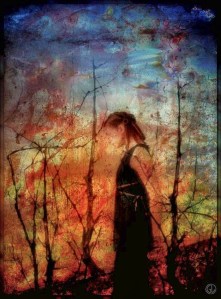
Gunsan, Contamplative walk
Έτσι συντηρείς τον έρωτα;
Βάζοντας στην κατάψυξη την ένταση;
Στη συντήρηση την επιθυμία;
Την αγωνία στο καλώδιο του τηλέφωνου;
Τον ρυθμό, σε ένα παλιό κασετόφωνο;
When the poetry ‘voice from outside’ came indoors – An obituary for Dimitris Tsaloumas
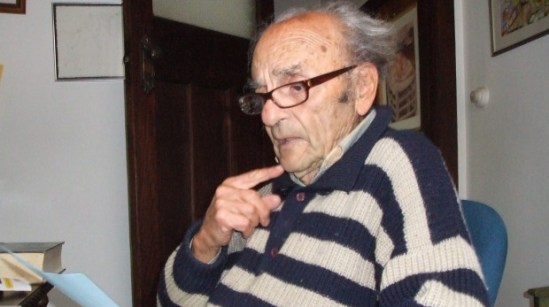
By Judith Rodriguez and Helen Nickas
February 26, 2016
In 1983 a handsome bilingual poetry book – with the original Greek facing Philip Grundy’s translations – won the Australia Book Council Award for best book of the year. Titled The Observatory, the book marked a new phase, as Dimitris Tsaloumas’ voice from “outside” was embraced by Australia’s still predominantly Anglo-Celtic literature.
Dimitris’ path to this award was long and anguished. Born on the Aegean island of Leros in 1921, he completed his high school education at the Lyceum in Rhodes. As with many other Greeks who lived through World War II and the ensuing catastrophic civil war, he left home for political reasons, migrating to Melbourne in 1952, aged 31.
Already a published poet in Greece, but with limited English, Tsaloumas had to begin life afresh. He battled not only for survival, but also against a cultural death. His determination proved fruitful. He soon found work, got married, had four children and studied for an arts degree at Melbourne University. Poetry had to wait a while but finally the inspiration returned. While he was earning a living teaching English and French to Australian high school children, he was writing poetry at night at a frenetic pace. The sixties and seventies were the most productive years in his life as a poet. Tsaloumas’ favourite form then was the epigram because of his need for discipline, economy and simplicity, as he often explained during interviews.
Six books of poetry, all in Greek, were published between 1974 and 1981. His accumulated collection of epigrams was published in Greece in 1981. Their diverse themes included a critical and ironic look at the political and social reality of the times, without naming specific time and place. His themes were universal. His poem Prodigal could have been written about the current crisis in Greece:
It’s time for parsimony and circumspection.
I told you before. We’re going through
inhuman times. Even the banks will feel the pinch
and already many merchants scour
their dusty books for long-forgotten debts.
…….
Take your children and head for the bush.
The years of squandering are over. By the early 1980s Tsaloumas was fully aware of the implications of a divided life. Melbourne was his city now – a welcoming city too, as poets and critics in Australia were beginning to discover his “new” voice. Judith Rodriguez remembers realising, as he read at the Carringbush Library in 1979, that here was a poet of stature. His collaboration with translator Philip Grundy made a way forward, while the eighties initiated Australian literature consisting of names other than the Anglo-Celtic.
Having seen his poems published bilingually, Tsaloumas knew he had to try writing directly in English. Being multilingual (Greek, Italian, French and English), he saw writing in English as a big challenge, albeit tinged with a sense of betrayal towards his mother tongue, as he often stated. In 1988, his first book titled Falcon Drinking – all in English – was published. Many publications in English followed, and awards including the Patrick White Award for major contribution to Australian literature; the Wesley M. Wright Prize for Poetry, for The Barge; the John Bray Award for The Harbour; and the Writers’ Emeritus Award, from the Australia Council.
Experimenting with language was part of his craft, not unlike Joseph Conrad and Vladimir Nabokov who wrote in their adopted English language, and Samuel Beckett who wrote in both English and his adopted French.
Tsaloumas always asserted that the English language gave him the distance he needed to write with more clarity and simplicity: “All my life long/ I’ve hankered after simplicity.” While the form of his poems changed his themes did not, because Tsaloumas never wrote specifically about immigrant displacement, exile and nostalgia. Instead, his themes encompassed a sense of universal loss. As he aged, his poems revealed his reflections as an elder, or a sage, on time passing and the fragility of human existence.
His recent publications included: Helen of Troy (UQP, 2007); Un chant du soir (Orphée, La Difference 2014) and an English/Greek edition of The Winter Journey (Owl Publishing 2014). In the past two decades, he wrote again in Greek, also translating many of his English poems into his native tongue. Over the past three decades he had divided his time between Melbourne and Leros but deteriorating health recently brought him to declare – with sadness – that he would not come back to Australia.
Finally, in Athens and then Leros, living with his daughter Matina’s family, he could no longer read or write. In one of Helen Nickas’ last telephone conversations, he seemed utterly frustrated: “All is in vain.” But when told that his work would live on, he declared: “Well, let’s say that I have tried to write in order to justify my existence in this world”. He has indeed.
After a short illness, he passed away quietly, lucid to the end. He leaves behind sons Chris and Mark, daughters Matina and Anna, and five grandchildren.
*Judith Rodriguez is a poet. Helen Nickas is a writer and publisher
**This was published at The Age http://www.theage.com.au/comment/obituaries/when-the-poetry-voice-from-outside-came-indoors-20160226-gn4amo.html
Νίκος Α. Νομικός, Δύο ποιήματα
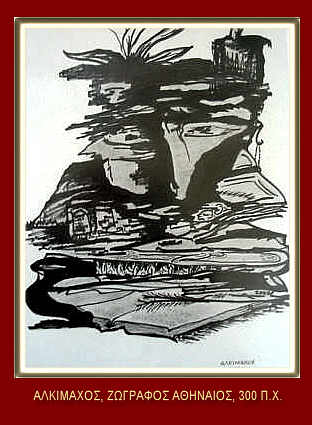
Μια όψη ηωσίνης
Κάποτε είχα τον Ήλιο, Φως οφθαλμών
τον Υπερίωνα, Πρωταθλητή στης νιότης
τ’ άφοβα νερά.
Κι επιπροσθέτως,
τον Ποσειδώνα, βαπτιστή και ναυτικό
στις βαθιές ανάσες, του Αιγαίου.
Έκτοτε,
Στολές αλλάξανε τα όνειρα
κι άρχισαν την θητεία τους
σε φωτεινά χειρόγραφα
μιας άλλης ευλογίας.
Madina Khalifa
Abu Dhabi, 2009
***
Εφιαλτικό
Τα κίτρινα φώτα
μη τα βλέπεις πια
παντού υπάρχουν
εραστές του σκότους.
Οι καλές ώρες θρυμματίζουντε
τα είδωλα γιορτάζουνε
την θλίψη της καρδιάς
Δυο δάκρυα παιδικά
φοράνε ακόμα τ’ αποφόρια
της όμορφης ευημερίας.
Ο ονειροπόλος της θεάς καλλής
κουράστηκε να καταγράφει
τις φθορές, κι αξόδευτους αφήνει
τους πάμφυλλους ροδώνες.
Σεπτ. 2010
*Από τη συλλογή “Πορεία της βαθιάς πηγής”, Μελβούρνη 2010. Το σχέδιο της ανάρτησης είναι έργο του ίδιου του ποιητή.
Amy Brown reviews Π.O.’s Fitzroy: the biography
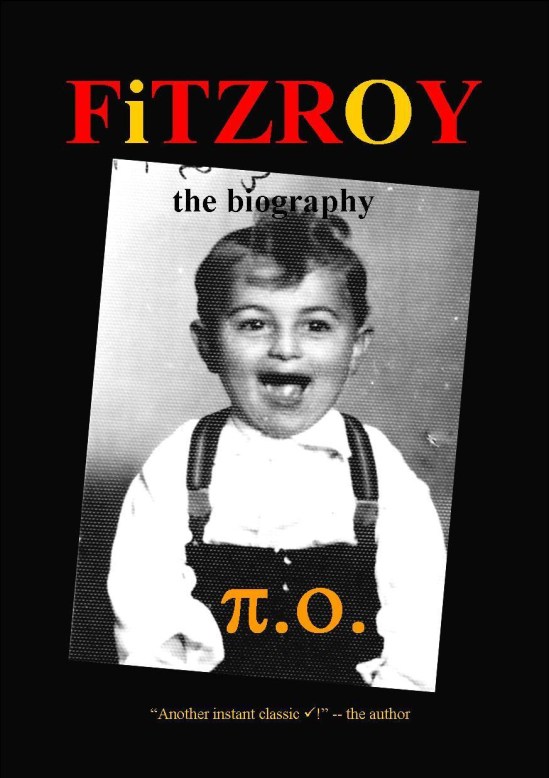
Fitzroy: the biography
by Π.O.
Collective Effort Press, 2015
For Π.O., ‘Fitzroy is what you, bump into/ when you leave home’ (599). It was outside his family’s first front door after they escaped the Bonegilla migrant reception centre in 1954. After sixty years and homes in other suburbs, it is still the place that his poems gravitate towards. If anyone were to attempt writing the biography of Melbourne’s first suburb, Π.O. is the poet.
It’d be reasonable to assume that Fitzroy: the biography is about a person rather than a place. On the cover is a photo of Π.O. as a grinning infant, about the age he would have been on first moving to the suburb. The vowels of the title (Fitzroy) are highlighted yellow signalling that the poet, Π.O. (or Pi.O.), is integral to this version of the suburb. The 740-page epic (the same length as his 1996 Fitzroy-based poem, 24 Hours) recounts the life of Π.O.’s Fitzroy. While acknowledging that the suburb has many different selves – is a palimpsest; a space of competing narratives – this study is as much autobiography as biography.
With a contents page arranged alphabetically like a scholarly index, the poem initially appears to be performing as a reference item. Really, it is a catalogue (like Ovid’s Metamorphoses) of the suburb’s changes. Roughly chronological, beginning with a series of portraits and imagined monologues from 19th century settlement and ending with the poet’s own memories, the poem’s scale is vast. In between is a series of ‘creation myths’. We hear how the streets got their names (Young, Webb, George) and the origin of Alcock’s Billiard Table store, on Gertrude Street since 1854 and miraculously still there. We see the Builder’s Arms Hotel, before it was painted white and turned into a restaurant called Moon Under Water. We learn about the Fitzroy childhoods of chocolate millionaire, Macpherson Robertson, and second prime minister of Australia, Alfred Deakin. The advent of footie in Fitzroy, the rise and fall of Squizzy Taylor, the extraordinary role of Pastor Doug Nicholls, and the erection of the council flats (‘Modernism destroyed my whole life’ [607]) are all described with Π.O.’s idiosyncratic specificity, rhythm, and unabashed bias. The same ghostly resonances that were achieved in 24 Hours are present here; the layers of stories convey how contested the space of the suburb is.
In ‘Geoffrey Eggleston (1944–2008)’, Π.O. writes, ‘i wanted to see/ everything, in Melbourne’ (673). As well as wanting to see everything, he appears to want to share with his readers everything he sees. While this is impossible, the mad, kaleidoscopic rush of details gives a sense of infinite completeness. In the fragments, psychic associations and rapid digressions, there is always something new to notice.
Although the structure and scale of Fitzroy: a biography are different to that of its predecessor, 24 Hours, the sensibility behind the poem is recognisable. Even in the imagined monologues of historical figures, and faux archival materials (letters, lists, advertisements, and crime records, which remind me of Charles Reznikoff’s Testimony), there is a latent autobiography. The collaging effect of abruptly juxtaposing miscellaneous facts, and the deliberate (Tarantino-like) anachronisms, stamp the work with Π.O.’s style. Often, the facts that are layered together to create an impression of an historical figure’s life also serve as a commentary on the poet’s writing process. For example, ‘The Latin verb “cogito” (for “to/ think”) etymologically, means “to shake together”./ To smash, to break, to kick down stairs’ (367).
In the later, explicitly autobiographical, poems, there is an openness that is less apparent in the imagined historical monologues, and it is this unmasked storytelling that I think is Π.O.’s forte. From leaving Bonegilla, to being forced to read racist Biggles as a schoolkid, to recalling Allen Ginsberg’s reading at the Town Hall, we see the poet and the suburb of Fitzroy aging in tandem. There are tall stories in which names are dropped (Ted Hughes at the Adelaide Writers’ Festival, whom Π.O. interrogates over Sylvia Plath’s death; Tom Waits, whom Π.O. interrupts while having sex), but also poignant vignettes. At the arrival of ‘students and artists’ in Fitzroy, Π.O.
wrote a poem: Get Out of Fitzroy, and (at night) put
copies of it under / their doors; past their Land Rovers
parked on the footpath, past their Afghan-dogs and
plush-orange carpets; dodging Night watchmen’s torches (in
the only suburb i knew)
(692).
Throughout the collection is the conviction that ‘the future is just “the past” with a bit of a twist’ (45). These changes that Π.O. witnesses in the suburb in his early twenties have always been happening in Fitzroy’s oldest suburb: ‘“Omne vivum ex ovo” (the complete/ description of the organism, is already/ written, in the egg’ (59). But, despite the inevitability of change, there is a sense of grief in these pages at the corrosive effects of gentrification on Fitzroy. Early in the poem, Π.O. writes, ‘The grit must of course, be in/ the oyster’ (133). In The Age this morning (Saturday 27th February, 2016), an article titled ‘Is this hipster heartland losing its cool?’ laments the addition of a Coles supermarket and Subway franchise to Smith Street. According to Fitzroy: a biography, the suburb started to lose its ‘cool’ decades ago, at the arrival of the first hipsters.
Π.O.’s love of his version of Fitzroy, evident on every page, is palpable in ‘Granite Terrace’, in which he wonders about the granite blocks that were removed from a vacant lot and replaced with ‘some shitty little brown-brick factory’ (78). He suggests that the Council should return the granite blocks and ‘scatter them at random (up and/ down) Gertrude and Nicholson Street, as part of/ some public art project’ (79). If this ever happens, Π.O.’s lines should be engraved in them. Meanwhile, perhaps copies of Fitzroy: a biography could be scattered instead, to remind the Coles- and Subway-goers of their suburb’s origins, to put a bit of grit back in the oyster.
*Amy Brown teaches creative writing at the University of Melbourne. Her first poetry collection, The Propaganda Poster Girl, was shortlisted for Best First Book at the 2009 New Zealand Book Awards. The Odour of Sanctity, a contemporary epic poem that formed the creative half of her doctoral thesis, will be released in July 2013.
**From Cordite Poetry Review at http://www.cordite.org.au
Συνέντευξη Γιώργου Δάγλα στον Νίκο Λέκκα

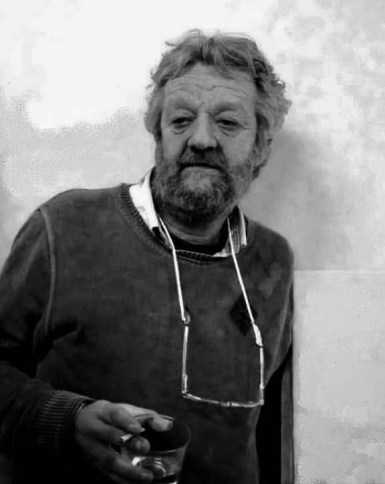
Τον Γιώργο Δάγλα -δυστυχώς για μένα- τον γνώρισα εξ αποστάσεως τα τελευταία χρόνια. Και αυτό χάρη σε ένα λεύκωμα cd για την Κατερίνα Γώγου που κυκλοφόρησε από τον εκδοτικό οίκο «Οδός Πανός». Εκεί συμμετείχε με ένα ποίημα για την δική του Κατερίνα και τον είδα να ποζάρει σε φωτογραφίες εποχής στο σπίτι της.
Η φίλη Λ.Κ. με πληροφόρησε ότι επρόκειτο για ελλάσων ποιητή, κολλητό της Κατερίνας, συνεργάτη του «Ιδεοδρομίου», που στην δεκαετία του ‘80, κυκλοφόρησε από τον «Ελεύθερο Τύπο» την πρώτη του ποιητική συλλογή. (Τα τεύχη του «Ιδεοδρομίου», αν και προσιτά σε μένα, δεν τα έχω φυλλομετρήσει πλήρως. Και το «Ιδεοδρόμιο» ήταν ένα περιοδικό που βήμα βήμα εξελισσόταν όπως ακριβώς και η κουλτούρα. Αν διάβαζες «Ιδεοδρόμιο» ήξερες την πορεία της κουλτούρας).
Έψαξα για αυτόν. Το καιρό εκείνο είχε μόλις κυκλοφορήσει την τρίτη του συλλογή από τις εκδόσεις «Φίλντισι». Μια δεύτερη, σχεδόν μυστική, κυκλοφόρησε στα ‘90 από επαρχιακές εκδόσεις. Κάποιες από…
View original post 1,760 more words
Poetic inspirations @ Emerald is on again – April 2, 11.45am-1.45pm
Poetic inspirations @ Emerald is on again
Calling all poets and lovers of poetry
Especially all those who write in another language than English and/or have their work in a bilingual or a translated form
First reading of the year is in
April 2, 11.45am-1.45pm
with
Mary Chydiriotis
Lee Kofman
Rumi Komonz

Mary Chydiriotis

Lee Kofman

Rumi Komonz
plus open mic
Every first Saturday of the second month
With guest poets every month and open mic
at Emerald Hill Library & Heritage Centre
195 Bank St.,
South Melbourne
(opposite South Melbourne Town Hall)
11.45am- 1.45pm
(Library closes at 2pm on Saturdays)
The room can seat up to 30 persons. There is a kitchen available to use, with the usual facilities, including crockery and a hot water urn. The room also has audio visual equipment and screen if it will be required.
The following Reading dates through out 2016 are as follows:
June 4, 11.45AM-1.45PM
August 6, 11.45AM-1.45PM
October 1, 11.45AM-1.45PM
December 3, 11.45AM-1.45PM
For more information:
– Dimitri Troaditis troaditisdimitris@gmail.com and/or 0432 094 342
– Emerald Library and Heritage Centre
Art & Heritage Programs | Arts & Culture 9209 6416
Στρατής Φάβρος, 7 ασκήσεις
Να κάνω ειρήνη με τον εαυτό
Να μάθω να ζω με την οδύνη της ύπαρξης
Να ξεχάσω το άφευκτο του θανάτου
Να θητεύσω στην ηδονή του ελάχιστου
Να κάνω ένα βήμα εμπρός
Να αγωνιστώ για το άδικο
Να ακινητώ, να βαδίζω, να στοχάζομαι
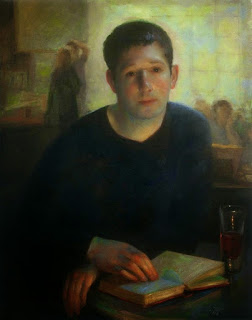
*Το ποίημα και η φωτογραφία της ανάρτησης αναδημοσιεύονται από το Greek Poetics στο http://greekpoetics.blogspot.com.au/2016/02/7.html
Ορχάν Βελί Κανίκ, Δωρεάν
Ζούμε δωρεάν∙
τ’ οξυγόνο είναι δωρεάν∙
τα σύννεφα, επίσης.
Λόφοι, κοιλάδες: δωρεάν∙
βροχή και λάσπη: δωρεάν.
Το αμάξωμα του αυτοκινήτου,
η είσοδος στον κινηματογράφο,
οι βιτρίνες, όλα είναι δωρεάν∙
δυστυχώς, δεν ισχύει το ίδιο
για το ψωμί και το τυρί.
Όμως, το θαλασσινό νερό είναι δωρεάν∙
η ελευθερία κοστίζει τη ζωή σου,
μα η σκλαβιά είναι δωρεάν∙
ζούμε δωρεάν,
δ ω ρ ε ά ν.
*Μετάφραση: Μιχάλης Παπαντωνόπουλος.
 To Koskino