Τρίτη, σχεδόν ξημέρωμα,
και στην απέραντη ακτή
σημάδι μελανό, προκλητικό,
μόνο το μπλε σακίδιο
να περιμένει.
Μέσα ο χρόνος καιροφυλακτούσε
στο παλιό ρολόι,
που οι δείχτες του δεν ξέραν πώς
να σταματήσουν στις οκτώ και πέντε.
Μια καθαρή τσατσάρα
τυλιγμένη προσεκτικά
σ’ ένα φτηνό χαρτί,
μία τυρόπιτα, λίγο νερό μεταλλικό,
δέκα ευρώ,
σε μια ζελατίνα η ταυτότητα,
να σε αναγνωρίσουνε αμέσως.
Λιτό περιεχόμενο,
ένας μικρόκοσμος λιτός,
λιτή ζωή.
Κι εκείνο εκεί το χτένι
να μην μπορεί με τίποτα
τον κόμπο που ’χω στον λαιμό μου
να ξεμπλέξει.
Reading Greece: Efstathia P. (tria epsilon) on Bringing the Voices of Women to the Forefront as a Means to Reshape Reality
Efstathia P. (pen name: tria epslion) was born in Thessaloniki in 1994. She speaks fluently English and Spanish from which she translates poems and essays in Greek. She has a Bachelor degree in Greek Literature and a MA degree in General and Comparative Literature. She is working as an educator, an editor and a translator. Her first writing venture I know those women who weave in the middle of the sea [γνωρίζω αυτές που πλέκουν στη μέση της θάλασσας] received the First Unpublished Poetry Collection Award by Thraka in 2022. The collection has also been shortlisted for the Award of the literary journal Anagnostis. Poems and translations of hers have been published in several digital and print magazines.
Last spring, when I was thinking about a potential title for my collection of poems, I realized that it is essentially a book that speaks about women trying to survive (literally and figuratively) on an island or in a country that is amidst the sea. Historically, women have found their power through telling stories. This was especially valuable for women who didn’t have a house (or a room) of their own. They resorted to creating a home, symbolically, with their voices and their presence. Until today, one of the most powerful tools a woman can use to reshape reality is her voice, as it is something that nobody can take away from her.
Your first writing venture I know those women who weave in the middle of the sea received the First Unpublished Poetry Collection Award by Thraka in 2022. Tell us a few things about the book. What about the title?
For me, this book is an attempt to depict and combine thoughts, images, and moments that were crucial to me. I brought them together to compose an image of a collective life with the Mediterranean landscape as its background. Its two parts reflect two aspects of life – social and personal. Sea, from this perspective, resembles a thin line in a child’s drawing, a border between what is visible and what is not. Above the sea, our everyday life, all these things that make us go on. Under the sea, people who didn’t make it, or at least, this part of the history that people don’t want to listen to.
Poet Tonia Tzirita Zacharatou has recently commented that contemporary poetry is characterized by a new sensitivity, by poems that talk about “the transformative dimension of friendship, the politics of love”. How is this new solidarity expressed in your poetry?
In the last decade, many female authors thematized the healing potential of female friendship, and it became a part of the debate about literature in the literary world. Rightfully so, because the moments in women’s everyday lives in which we express solidarity with other women, were neglected from the literary discussions for a long time. And, for me, the only way to survive and prosper is with solidarity: by forming safe spaces and fostering communities that position love as their primary goal. Friendship, especially women’s friendship, is radical: through strong bonds, it creates new forms of existence, reshaping the way of living. Women have always been kind and supportive to me and that’s how I am trying to be; not just to pay them back, but mostly as a means of survival. In this violent reality, it feels as if we only have each other. That is why we need to be gentler and kinder to our friends. We also need to talk and write more, making a statement about the current state of living, which is not functional any more.
Which are the main themes your poetry touches upon? How does the social and the political converse with the personal and the individual in your poems?
In my poems I mostly speak about what makes me feel. Inequality, migration, and social violence, but also love, hope, and friendship. I want to open up to readers and let them in – to speak about what I consider important. I am trying to share with others my perspective on things. Personal is always political and vice versa. I write about a lot of different topics such as surpassing cultural and physical borders, creating bonds with people, and living in solidarity. This is why I would say that my poetry mostly speaks about my reality, my experience as a human being, a woman ‘living in Greece’, and all the other realities that intersect with mine, primarily those of my students, friends, and fellow citizens.
What about language? What role does language play in your writings?
Language is a vehicle. I work as a teacher, mostly teaching Greek and English as second languages, while at the same time, I am an editor. For me poetry is sharing a point of view, making experience a common ground. So I try to write my thoughts, with a lot of detail, for the reader to recreate a moment, a moment in which I was present. Probably it might have been easier to become a photographer, but with poetry, I enjoy the fact that there is only language, it’s more direct. Language is a tool, and its primary goal is the transmission of ideas. For me, art for art’s sake is a dead end. We write things because we want people to read them, hoping that they will like them or at least that we will have the slightest interaction with them.
Which are the main challenges new writers face nowadays in order to have their work published? What role do the social media play in the promotion of new literary voices?
We should not forget that writing literature is usually a privilege. It requires time and resources. These are conditions that are not easily created, and also it’s becoming more and more difficult to strike a balance between being a partner, a worker, a political subject, and also an active artist. I won Thraka’s award, and I received a lot of support and care both from the publishing house but also from my editor Katerina Iliopoulou. I know that many people, including a lot of friends of mine, don’t face the same reality when they try to publish something.
The best way to share your work is through writing networks, festivals, fanzines, and other literature-related events. The Internet is also one of the tools that help young authors share their work. It makes literature more accessible and inclusive, both for authors and the readers. However, it would not be good for our reading practices to entirely move to an online sphere because, on the internet, texts are decontextualized and mass-produced. We need structural changes, but until then, the internet is a good coping mechanism.
How do young writers converse with global literary trends? Where does the local meet the national and the universal?
When I was studying Greek Literature, I was wondering why it is so important to identify the trends, topics, common motifs, and styles in poetry, since poetry was for me more of a diary back then. I was lucky enough to change my perspective through the years. I believe that it is important to create maps of the literary field because it is an alternate form of History, it expresses the unsaid. When we see certain topics becoming more common, such as gender or crisis, that means that the majority of the writers are probably affected by them and they wish to share their experience through literature.
But at the same time, talking about global literary trends is a very complex task, especially regarding poetry, which is usually less visible outside of its country of origin. Poetry is highly personal, as it comes from an author, but it is also a product of a collective. Thus, it is subjective, but it also relies on the shared understanding between a poet and the readers from the context it stems from. For instance, a woman in Greece that works in retail will face different problems than a migrant woman from an eastern country that works as a maid in a hostel, and their poetry will carry in itself the implications of different experiences in everyday life.
Of course, when women write to claim their rights through poetry, it is feminist poetry, but at the same time it is not a trend, it is simply a need that is being expressed; it is the way people are trying to survive, through their art, creating space for them in History, trying to find a place in the map. And that’s when the local meets the universal, and poetry becomes the language of our mutual understanding.
*Interview by Athina Rossoglou
Poetry Commentary: Antigone Kefala — Voice from Another Shore
By James Provencher*
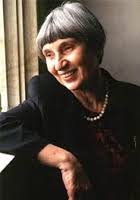
Like her sisters in the art of crystalline complexity, Australian poet and novelist Antigone Kefala persevered through years of isolation, obscurity, and critical neglect.
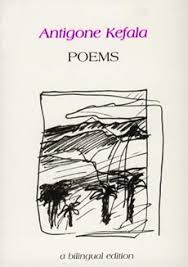
Commemorative Edition: Fiction/Poetry by Antigone Kefala. Two Volumes: Fiction (375 pages), Poetry (287 pages). Paperback/Boxed Set: $80 (AUD), available singly for $34.95 (AUD), Giramondo Publishing.
The long-neglected and often marginalized Australian poet and novelist Antigone Kefala died in 2022 in Sydney at the age of 91. Thankfully, her publisher, Giramondo, has recently gathered a life’s work of seventy years into a Boxed Commemorative Set Edition.
It is a gift to have her complete works available in two immaculate, compact volumes: two hundred poems, six novellas, and ten short stories. A somewhat slim oeuvre, some would say, but Kefala’s formidably distilled vision resonates with considerable lyric power. Her prose and the poetry are spare, elliptical, and minimalist. Highly compressed force-fields, Kefala’s creations are primed to detonate, to release what she believed to be deeper nurturing forces and energies. Reading her work, one is put in mind of Sappho, Emily Dickinson, Anna Akhmatova, and Elizabeth Bishop. Like her sisters in the art of crystalline complexity, Kefala persevered through years of isolation, obscurity, and critical neglect.
A newcomer from an old country, a High Modernist European type who was out of step with Australia’s vogue in the ’50s for social realism, Kefala was early on labelled an ‘outsider’ because of her gender and ethnicity, excluded because she was pursuing an immigrant aesthetic. Summing up the early years, Kefala recalled: “I always felt that I was trespassing, that I was left waiting by the wayside, passed by, shunted to the side of the road.”
Recognition would come, but late. In 2005 she finally won Australia’s most esteemed poetry prize, The Judith Wright Calanthe Award. Then, shortly before her death, she won the country’s highest literary honor for her body of work: The Patrick White Award. That must have been ironically gratifying for a monastically modest artist who wryly maintained: “Reputation is something one must avoid at all costs.”
Kefala’s backstory is an archetypal journey to find a new home in a new world. Born in 1931 in Brailia, Romania to a Greek family that originally hailed from near Ithaka, she grew up speaking French at school and Romanian at home. Her father spoke Greek. The Germans invaded at the beginning of World War II. Then, with their retreat, the Russians marched in, forcing the family to live for three years in Greece, first in an abandoned orphanage, then in a displaced persons camp. Waiting for transit to somewhere, anywhere, Kefala learned Greek, her third language. She called this her refugees-in-waiting period: “Foreign here, there, foreign everywhere.” It was 1950 and she was sixteen when she finally traveled to another dislocation, another hemisphere, down under in New Zealand.
The Promised Land
The roads were of candy
the houses of ice cream
the cattle of liquorice.
Pretty, we said,
drinking the green air,
as in a fairy tale we said,
eating the green water, brackish,
breathing the smoke that rose
from the greenstone hills
and the moon alone
nailed to the bottom of the sky.
In the ’50s, when Kefala, as part of the post-war Greek Diaspora, reached New Zealand and then Australia, she found both countries firmly in the cultural grip of Western empire, colonialism’s long hangover: “I found these places to be more English than English, a people merely shifting from a small to a larger island.” “The Dominant Culture,” she observed, “complains there are too many voices while the minority one complains there are too few.”
Working for the Maori Cultural Council in New Zealand, and then for the National Arts Council in Australia, Kefala fought for a number of causes. They included broadening official definitions and categories of aesthetic-creative pursuits by immigrant artists, as well as challenging patronizing expectations of ethnic writing. She had arrived at a propitious time; Australia was beginning to undergo a questioning of its national identity — there were intimations of a great sea-change.
Responding to socio-political pressures as well as political realities, the government embraced diversity as a national program, welcoming a wide range of refugees, encouraging European and Asian-Pacific immigration. The influence exerted by this foreign influx was deep and dramatic: it expanded the confines of the country’s Anglophile arts culture. Australia’s cultural coming of age paralleled Kefala’s own rite of passage as a young female writer trying to find a place to belong.
Understandably, Kefala’s early work — the novellas and short stories — fits into the Bildungsroman genre. In her case, Kefala traces migrant female characters who are navigating the travails of growing up challenged by cultural dislocation, linguistic estrangement, and aesthetic and gendered restrictions. The titles of her early fiction are telling: The First Journey, The Boarding House, The Island (a tri-lingual edition in Romanian/French/Greek), Alexia (Kefala’s child-persona), Intimacy, and Waiting.
Strangers in a strange land, Kefala’s fictional personae are forced to negotiate a life as they decipher alien mores, maneuvering their way across the minefields of English. This was the writer’s fourth acquired tongue, and she pronounced it to be a rather pragmatic instrument. These fictional transits into female adulthood are unsettling, at times wrenching, but always enlightening. Kefala’s vulnerable, questing protagonists learn to tread carefully — a misstep can lead to alienation, loneliness, and emptiness. Scenes of serene stability for these characters prove to be false; a sharp tear, a rent, arrives and suddenly the bottom falls out. These are tales of tenuous footholds in a fragile world; their detached, understated tone casts a spell of twilit expectancy.
The heroine of Alexia, for instance, is a young girl caught between two cultures. She arrives in New Zealand with a small suitcase of memory, a few books, and a violin. Kefala called New Zealand, her first home, a place where “the Elders had read the signs and buried the magic.” These Elders, of course, were the Maori, and it was this very ‘magic’ she sought to absorb and display in her fiction and poetry.
Departing New Zealand for Australia in 1959, Kefala sailed through Sydney Harbor, where she was first struck by the light: “numinous, Grecian-bright, a palpable honey-apricot, milky and powdery. The platinum bay aglitter, sandstone cliffs at the Gap, glowing amber.” She felt buoyed, almost at peace. Sydney would be her residence for the next 70 years. Settled in a home at the edge of the harbor, she primarily wrote poetry. These are the books for which she is the most admired: The Alien, Thirsty Weather. European Notebook, Absence, Journeys, and Fragments.
She had undergone considerable difficulties, but now, on a farther shore, where the First Peoples sang to keep everything alive, her feet were planted on hard but fertile ground. In her verse she embarked on mapping journeys into her interior zones. She called these explorations of consciousness “serious business”: “Everyone forgets that writing arises out of an inner necessity, that each piece has its own measure, determined by itself, which no one can alter without altering its nature.” In other words, one had to bring a tenacious sense of organic form to the task of probing inner landscapes. In his poem “The Next Life,” William Carlos Williams articulated the point compactly: “The sea is not our home—Inland we must go.”
Out on the very edges of South Australia, in a terrain so rough and hostile that the early explorers gave up and turned back, the last small rise was named Mt Hopeless. That is where Kefala’s poems begin, and press further on: tracing primal journeys, leaping from outer to inner landscapes, from the known into the unknown, from the earth into the metaphysical, from charting the space in dreamtime to speculating about existence in the afterlife.
As a child, while searching for shells on the beach with her mother, Kefala listened carefully to the susurrus of the sea within herself. And that inspired questions: “Do you hear the sea inside me? Does your heart open to my voice?” These interrogatives are at the center of Kefala’s elemental questing vision — humanity’s search for a home.
Coming Home
What if
getting out of the bus
in these abandoned suburbs
pale under the street lights,
what if, as we stepped down
we forgot who we are
became lost in this absence
emptied of memory
we, the only witness of ourselves
before whom shall the drama be enacted?
*James Provencher, a U.S. expat living in Canberra, Australia, is a former teacher/poet in residence at The Frost Place, Robert Frost’s farm and museum in Franconia, NH.
Erich Mühsam, The Prisoner / Ο φυλακισμένος
Never in my life have I learnt
To submit to anyone
Here I am locked up,
Far from my home,
My wife, my workshop.
And even if they kill me,
If I must die,
To give up is to lie!
But if the chains broke
Then I would breathe in sunshine
At the top of my lungs – Tyranny!
And I would cry to the people: be free!
Forget to submit yourselves!
To give up is to lie!
Ο φυλακισμένος
Ποτέ στη ζωή μου δεν έμαθα
Να υποτάσσομαι σε κανέναν
Εδώ είμαι κλειδωμένος,
Μακριά από το σπίτι μου,
τη γυναίκα μου, το εργαστήριό μου.
Και ακόμα κι αν με σκοτώσουν,
Αν πρέπει να πεθάνω,
Το να παραιτηθώ είναι σαν να λέω ψέματα!
Αλλά αν έσπαγαν οι αλυσίδες
Τότε θα ανέπνεα στη λιακάδα
Στην κορυφή των πνευμόνων μου – Τυραννία!
Και θα φώναζα στο λαό: Ελευθερωθείτε!
Ξεχάστε να υποταχθείτε!
Το να παραδοθείτε είναι σαν να λέτε ψέματα!
*Απόδοση: Δημήτρης Τρωαδίτης.
Kareemok Ghafour, Τραχιά βροχή
1
Όταν ο πόλεμος πέρασε από εδώ
Τότε σκέφτηκα τους φράχτες των κήπων
Απέναντι από το σπίτι μας υπάρχει ένας κινηματογράφος
Που προβάλλει ταινίες τρόμου
Στα αριστερά του σπιτιού μας υπάρχει ένα τζαμί
Ο ιμάμης του αφηγείται αφηγήσεις για το πώς να πας στον παράδεισο
Πόλεμος και τρόμος και παράδεισος
Γέμισαν τους κήπους με σκοτάδι..!
2
Η ζωή μέσα από το θάνατο
Ο παράδεισος μέσα από την κόλαση
Το κύμα μέσα από το εμπόδιο
Η αγνότητα μέσα από το μίσος
και την εκδίκηση
Η αδικία μέσα από την καρέκλα εξουσίας
Η τήξη μέσα από τη φωτιά
Ο Θεός μέσα από τη μοναξιά
Γνώρισε…!
3
Το άστρο του πολέμου και،
Το άστρο του ονείρου،
Όλα αυτά τα άστρα،
Τι κάνουν μέσα στην τραχιά παλάμη τ’ ουρανού؛
*Ο Kareemok Ghafour είναι διακεκριμένος Κούρδος ποιητής, συγγραφέας και κινηματογραφιστής. Γεννήθηκε το 1972 στο Ερμπίλ του Κουρδιστάν. Είναι κάτοχος μεταπτυχιακού διπλώματος στη Κινηματογραφική Σκηνοθεσία και διδάσκει Κινηματογράφο στο Πανεπιστήμιο της Σουλεϊμανίας.
**Μετάφραση από τα κουρδικά στα ελληνικά: Omed Qarani
Diane Di Prima, Revolutionary Letter #1 / Επαναστατική επιστολή #1
I just realized that I am the prize
i have nothing else
money for ransom, nothing else to break or trade but life
my spirit dosed, fragmented, scattered
on the roulette table paying back what I can
nothing else to put under the nose of Maitre de Jeu
nothing to push out the window no white flags
this meat is all I have to offer, play with
this head here and now, and what comes after, my move
as we crawl over this edge, going on and on
(hopefully) between the lines.
Μόλις συνειδητοποίησα ότι εγώ είμαι το βραβείο
δεν έχω τίποτα άλλο
χρήματα για λύτρα, τίποτα άλλο να σπάσω ή να ανταλλάξω παρά μόνο τη ζωή
το πνεύμα μου με δόσεις, κατακερματισμένο, διασκορπισμένο
στο τραπέζι της ρουλέτας πληρώνοντας πίσω ό,τι μπορώ
τίποτα άλλο να βάλω κάτω από τη μύτη του Maitre de Jeu
τίποτα να σπρώξω έξω από το παράθυρο καμία λευκή σημαία
αυτό το κρέας είναι το μόνο που έχω να προσφέρω, παίξτε με
αυτό το κεφάλι εδώ και τώρα, και τι θα ακολουθήσει, η κίνησή μου
καθώς σέρνεται πάνω από αυτό το χείλος, συνεχίζοντας και συνεχίζοντας
(ελπίζω) ανάμεσα στις γραμμές.
*Απόδοση: Δημήτρης Τρωαδίτης.
Vasilka Pateras, Samovar / Σαμοβάρι
Soviet metal urn
transported from Uzbekistan
sputnik falling to earth
landing like a piece of
space junk
in the gulag of the new world
a memento
gifted to me
on the passing of two
former Soviet citizens
good people
I wonder about the hours it sat simmering
smoky Russian tea
for noble workers
in the workplace canteen
walls lined with glorious images –
a goose step into a five-year plan
a lamp carried into the coalmines of Donbass
a sickle gathers the harvest in Kuban
the hammer of a carpenter in Moscow
a flashback to the coronation scene
Eisenstein’s Ivan the Terrible
Prokofiev’s Orthodox hymn
voices loom
icons watch, dissenters plot
crowns himself Tsar
showered in gold coins
autocrat of all Russia
the great nobility long banished
summer and winter palaces
museums of excess
but revolution’s harvest yielded
new dictators and oligarchs
thievery continues
in a modest apartment
workers arrive home
wipe their brow
on their shirt collar
the samovar boils on
Σαμοβάρι
Σοβιετική μεταλλική λάρνακα
Μεταφέρεται από το Ουζμπεκιστάν
σπούτνικ που πέφτει στη γη
προσγειώνεται σαν κομμάτι
διαστημικών σκουπιδιών
στο γκουλάγκ του νέου κόσμου
ένα ενθύμιο
που μου χαρίστηκε
για το θάνατο δύο
πρώην σοβιετικών πολιτών
καλών ανθρώπων
Αναρωτιέμαι για τις ώρες που σιγόβραζε
αχνιστό ρωσικό τσάι
για ευγενείς εργάτες
στην καντίνα του χώρου εργασίας
τοίχοι στρωμένοι με ένδοξες εικόνες –
ένα βήμα χήνας σε ένα πενταετές πλάνο
μια λάμπα που μεταφέρεται στα ανθρακωρυχεία του Ντονμπάς
ένα δρεπάνι μαζεύει τη σοδειά στο Κουμπάν
το σφυρί ενός ξυλουργού στη Μόσχα
μια αναδρομή στη σκηνή της στέψης
Ο Ιβάν ο Τρομερός του Αϊζενστάιν
Ορθόδοξος ύμνος του Προκόφιεφ
φωνές ξεπροβάλλουν
εικόνες παρακολουθούν, διαφωνούντες συνωμοτούν
στέφεται τσάρος
κατακλύζεται από χρυσά νομίσματα
αυτοκράτορας Πασών των Ρωσιών
η μεγάλη αριστοκρατία εξαφανίστηκε εδώ και καιρό
καλοκαιρινά και χειμερινά παλάτια
μουσεία της υπερβολής
αλλά η συγκομιδή της επανάστασης έδωσε
νέους δικτάτορες και ολιγάρχες
η κλοπή συνεχίζεται
σε ένα ταπεινό διαμέρισμα
οι εργάτες φτάνουν στο σπίτι τους
σκουπίζουν το μέτωπό τους
στον γιακά του πουκαμίσου τους
το σαμοβάρι βράζει
*Απόδοση: Δημήτρης Τρωαδίτης
Κώστας Κουτσουρέλης, Αριθμοί
Στη Νέα Υόρκη κατοικούν οκτώμισι εκατομμύρια άνθρωποι
και δύο εκατομμύρια αρουραίοι
(según las últimas estadísticas).
Στα κράτη μέλη του ΟΟΣΑ
το ένα στα δύο ζευγάρια κάνουνε παιδιά
(τα δύο στα τρία κάνουν γάτα ή σκύλο).
Η Γενιά του ’30 είχε τρεις μείζονας ποιητάς –
Του ’70 έχει είκοσι και βάλε
(κρίνοντας από τις τιμές και τις βραβεύσεις).
Άλλα στοιχεία ενδιαφέροντα:
Μέση διάρκεια γυναικείου οργασμού: 11 δεύτερα
Μέση θητεία υπουργού: 9 μήνες
Μέση διάρκεια της ιδεώδους αϋπνίας:
Όσο κρατάει η ανάγνωση του Οδυσσέα (του Τζόυς).
Στοιχεία από ερωτηματολόγια:
Τί μας τρομάζει πιο πολύ:
Αράχνες, φίδια, η νύχτα, η μοναξιά
Τί μας χαροποιεί: εξαρτάται
Τί καταπολεμά το άγχος δραστικά: η αγχόνη.
Στατιστικά που εν μέρει εκπλήσσουν:
Οχτώ στους δέκα αλκοολικούς διαθέτουν άδεια οδηγήσεως
(από τους μη αλκοολικούς μόλις επτά στους δέκα)
10.000 φορές περισσότερα:
τα άστρα του Σύμπαντος απ’ τους αμμόκοκκους της Γης.
Βέλτιστο εμβαδόν οικείος κατα κεφαλήν:
Στις ΗΠΑ: 1.000 τετραγωνικά
Στην Ηνωμ.ένη Ευρώπη: 150
Σε ιδρύματα (άσυλα, φυλακές, γηροκομεία): 8
Στον Κάτω Κόσμο: 2.
Από την ενότητα “Κατάλογοι” που συμπεριλαμβάνεται στη συλλογή “Ταριχευτήριο Ευρώπη”, Εκδόσεις Κίχλη, 2024.
Στέλιος Ροΐδης, Ο λόγος
Λοιπόν ποιός ανεβαίνει αυτόν τον δρόμο
Μέσα στο ψέμα ενός ολόκληρου κόσμου
Δίχως καμιά ελπίδα να είναι αυτός που ήταν
Μεταμφιεσμένος με κάθε πρόχειρο λόγο
Για να κρύψει την αιτία,
Την δια γυμνού οφθαλμού και εμφανής αιτία,
Αυτός που παλεύει μπροστά στην ηδονή με το φιλολογικό του
Και με την γύμνια του μέσα στο κρύο
Συγκρίνοντας ένα αστείο που σπάνια κολλάνε δύο
Ποιός άλλος βρίσκεται σε αυτόν τον δρόμο
Ποιός κομπάρσος διορθώνει τον πρώτο ρόλο
Ποιός σε εμποδίζει να περάσεις τώρα από εδώ
Την νύχτα ο υπαίθριος μουσικός
Γεμάτος από ένα όνειρο που περνάω από μπρος
Για να πάω να δω ένα άλλο
Μα θα σε θυμηθώ
Από μια κουβέντα στο προηγούμενο επεισόδιο
Που την διέκοψα νόμιζα μα την συνεχίζω εδώ
Δύο τρία χρόνια πίσω
Καθώς το ένα πρόσωπο αλλάζει τα ρούχα του
Μπροστά σε ένα άλλο πρόσωπο
Που παραμένει διστακτικά και προσωρινά
Μέχρι να αντικατασταθεί
Στο χρονικό του περιθώριο και αυτό
Χρόνια θυμάται τον άλλο καπνό
Κανείς εδώ δεν κοροιδεύει πια τον χρόνο
Πρέπει να χαίρεσαι για αυτό
Μόνο το σώμα των ανθρώπων
Και το χαμόγελο κάποιων άλλων που δεν μπορώ να δω
Δια γυμνού οφθαλμού τα πάντα λοιπόν
Η πόρτα που ανοίγει, το ύψος των περιστάσεων
Μέσα στην ψιλή βροχή
Η ομίχλη έχει μπει παντού και κρυφτεί
Φτιάχνεις την εικόνα σου για να σε δει
Σε αφήνει να περάσεις
Κοιτάζεις πίσω, και έχει χαθεί
Και έχεις χαθεί μέσα σε αυτήν.
Άρης Αλεξάνδρου, Δάκρυ χαράς
Όπως μια νύχτα του Αυγούστου που περπατάς στους κεντρικούς
φωταγωγημένους δρόμους
κι ακούγοντας ν’ ανοίγει ένα παντζούρι στο τελευταίο πάτωμα
σηκώνεις το κεφάλι κι αντικρύζεις τον ουρανό να γαλαζώνει
όπως ανεβαίνει το νερό μέρες και μέρες
κ’ ένα πρωί λαμποκοπάει σταγόνες φως πάνω στα φύλλα
όπως ένα χέρι γυναικείο που το σφίγγεις κάθε τόσο τυπικά
φτάνει μια μέρα π’ αχνοτρέμει μιαν ιδέα μέσα στην παλάμη σου
τόσο αχνά λες κι άξαφνα το κράτησες ολόγυμνο
έτσι αργά κρυφά κι ανεπαίσθητα.
Κάτι θα πρέπει μέρες τώρα μήνες ίσως χρόνια
ν’ αργοκυλούσε μες στις κουρασμένες στις σκουριασμένες φλέβες μου
κάποιο αιμοσφαίριο που ‘φτασε ξάφνου ως τα μάτια και κύλησε
σαν δάκρυ
δάκρυ χαράς που χύνει ο ισοβίτης
όταν μαθαίνει πως κατέβηκε
με χάρη
στα εικοσιπέντε.
*Από τη συλλογή “Ευθύτης οδών”, που περιλαμβάνεται στο βιβλίο “Άρης Αλεξάνδρου Ποιήματα (1941-1974)”, Εκδόσεις ύψιλον/βιβλία, 1991.