*Χρόνια πολλά Σπύρο
Κάποιες φορές
ο στίχος θέλει να παίξει κρυφτούλι
πίσω από καταρράκτες,
στο φως της σκιάς,
στη θαμπάδα του μπλε-πράσινου
και να μιλά με συνεχή σιωπή…
*Χρόνια πολλά Σπύρο
Κάποιες φορές
ο στίχος θέλει να παίξει κρυφτούλι
πίσω από καταρράκτες,
στο φως της σκιάς,
στη θαμπάδα του μπλε-πράσινου
και να μιλά με συνεχή σιωπή…
Poetry@fedsquare
Saturday 15 March 2-4pm
Federation Square
Beer DeLuxe upstairs
With the International Women’s Day just a week before this event (8 March) we think we still can celebrate this Day for the women and by the women through as much as many languages, colours and poetic dimensions.
So, come and enjoy four amazing poetesses in an absolute multicultural spirit
Our guests for the Day are
Emily Cullen
Jeltje Fanoy
Cece Ojany
thalia
plus a really rich line up of open mic readers
EMILY CULLEN
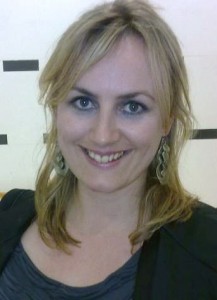
Emily Cullen is an Irish poet, scholar and harpist based in Melbourne. She is the author of two collections of poetry: No Vague Utopia (Ainnir Publishing, 2003) and In Between Angels and Animals, which was published last year by Irish literary press, Arlen House.
In 2004, Emily was selected for Poetry Ireland’s ‘Introductions’ series – a national platform for new voices in Irish poetry. Also in the same year, she curated the Centenary Celebrations for renowned Irish poet, Patrick Kavanagh.
Emily gained a PhD from the National University of Ireland, Galway in 2008 and continues to publish extensively on aspects of Irish cultural history. She relocated to Melbourne in July 2012, and in September her poem ‘Primavera’ won ‘poem of the week’ on the Australian Poetry Organisation website. She recently started teaching Creative Writing at the University of Melbourne.
JELTJE FANOY
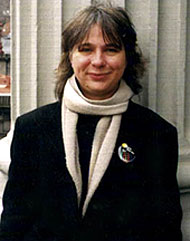
Jeltje Fanoy (jeltje) is a Melbourne migrant poet. She has been published nationally and internationally, and has been involved with poetry and small presses since the 1970s. Her publications include her collections Living in Aboriginal Australia, Poetry Live in the House, her translation of De Zon en de Wereld (The Sun and the World) by the Netherlands poet Arjen Duinker, and the anthologies Blowing out the Candles (1988), Poetry for Peace (CD, 2003) and Heart to Heart (CD, 2008), a compilation of Reconciliation poetry performances at La Mama Poetica (2004-2007). jeltje was convenor of poetry performances at La Mama Poetica from 2004-2010.
During the last decade she has collaborated with improvising musicians, on the poetry and music CDs So be It and Dreaming in English, and in various performances and recordings with Unamonus Quorum. She has performed at the Melbourne Writers Festival, the Melbourne International Arts Festival, Literaturfestival Berlin (Authors for Peace) and Krikri polypoetry festival in Ghent (Belgium). Her forthcoming collection, Princes by night, is based on the journey of her Dutch-Indonesian migrant family coming to grips with some very complex postcolonial realities.
jeltje’s reading, as a tribute to International Women’s Day, will include poems from the creative component of her Master of Arts Thesis (Women’s Studies)/
CECE OJANY
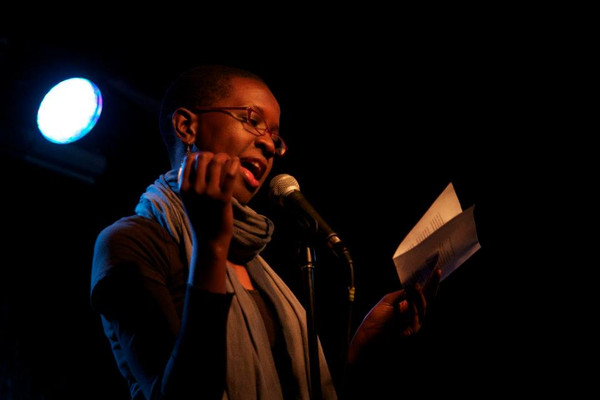
Cece Ojany is a life coach and the founder of The Main Protagonist. Cece teaches individuals how to live purposefully and passionately in the key areas of career, relationships and health & wellbeing.
Cece is also the Writers-In-Prison Officer for PEN Melbourne, an organisation passionate about the art of writing and freedom of expression.
Apart from creativity, which Cece knows to be vital to health and wellbeing, she also loves photography and travel. Her and her partner of ten years are united by, among other things, their love of good food and good music.
THALIA
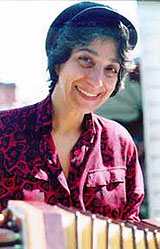
Thalia. Born in Katerini, Greece: a ’52 baby. Migrated to Australia in ’54. Grew up, and Worked in, sly grog & gambling cafes – Kafenia, in Melbourne. Also worked as a typist/secretary. Started writing lexikon and visual poetry in ’72. Publications: Has been published in various magazines and anthologies within Australia, and overseas.
Has read in: Prisons. Pubs. Libraries. Schools. Concerts. Strikes. Gatherings. ABC & community radio stations. Folk clubs & festivals in cities and towns. A co-editor of 9.2.5 – a mag of poetry for the workers by the workers, about the workers’ work. A founding member of the Poets’ Union of Australia.
Has published: New & Selected Poems printed by Collective Effort Press. 1998. Interplay a CD recording of Poetry, Songs & Music, with musician/composer Alan Musgrove. 1996. Night Flowers – A6 Books, No. 3. printed by Collective Effort Press. 1988.
With the support of Federation Suare

And under the auspices of Multicultural Arts Victoria

For more info
https://www.facebook.com/PoetryAtFedSquare
@poetryfedsquare (Twitter)
troaditisdimitris@gmail.com and poetryfedsquare@gmail.com
Writers for refugees is a small grass-roots organisation committed to protesting the treatment of asylum seekers and refugees in the current political climate; we want prominent writers, academics and journalists to join us in speaking out against policies of mandatory detention, offshore processing and the elimination of the prospect of permanent resettlement in Australian for people who arrive here by boat. The group was founded in December 2013 by fiction writer Kalinda Ashton and poet and spoken word artist Benjamin Solah. We welcome new members and ask writers to use their public profiles to draw attention to this issue and to foreground their dissent to these policies.
You can help by signing on to our online statement and committing to reading this statement at your public events, book signings, launches and author talks. We also have a forum forthcoming to launch writers for refugees. Stay tuned for more details.
We are opposed to government policies of indefinite mandatory detention and believe we should welcome refugees, many of who are fleeing war, poverty, persecution and oppression, to our communities. We are worried about the number of children already in on-shore and offshore detention centres and the mental health of refugees who have already endured years in detention.
I’ve had no man
To guard and shelter me,
Guide and instruct me
From mine infancy.
No lord of earth
To show me day by day
What things a girl should do
And what she should say.
I have gone free
Of manly excellence
And hold their wisdom
More than half pretence.
For since no male
Has ruled me or has fed,
I think my own thoughts
In my woman’s head.
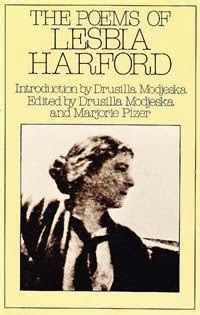
Lesbia Harford was an Australian poet, novelist, lawyer and political activist. She was born in 1891, had delicate health all her short life and died in 1927. Nevertheless she packed a lot of living into her 36 years. Of the online biographies, the one I like best is at PoemHunter.com, where you will also find her poems.
We are told:
She was the eldest of four children and was born with defective heart valves which restricted her mobility and caused her to tire easily, a continual problem that was to amplify with age.
Raised firstly within the middle classes and then with the family bankruptcy and the consequential departure of her father who ran off to the West Australian goldfields, the fact that her mother entered paid work to make sure her children had an education ascribed Harford with a view of society based around both class struggle and feminism.
She seemed a good pick for this week, with International Women’s Day coming up, and of course I’ve chosen this particular poem for the same reason, as it celebrates her freedom to think her own thoughts without male influence — even if that was because her father abandoned the family. She evidently chose to find some benefit in that!
Searching in the anthologies on my shelves, some inherited from my parents, it was surprisingly hard to find a suitably feminist poem from the past. In fact I was confronted with the awful invisibility of women poets in the older anthologies — which led to the belief, still current when I was growing up, that women didn’t make ‘great’ poets (or artists, musicians, novelists…). Well, at least that belief has been thoroughly discredited by now, when women artists and writers can no longer be ignored or their work hidden.
(Where I did find early women poets from non-English cultures, such as Chinese, the translations were by men, which didn’t seem quite suitable to use this week.)
By Lesbia Harford’s time, some women — a determined minority — were able to make their mark, and later generations of women writers made sure their work was preserved. Harford’s poems were published during her lifetime; also the Australian writers Nettie Palmer (1885-1964), Marjorie Pizer (1920-) and Drusilla Modjeska (1946-) were instrumental in publishing posthumous collections. The Palmer collection (the earlier and smaller, with 74 poems) is available for free download.
She was a brave woman who, despite poor health, fought against injustice and walked her talk. And she was an interesting poet — an original thinker who used direct language in a striking way to tell her truths. She still speaks to us today with great immediacy.
*From Poets United
**The poems are available for downloading here
v00033
Απαγγελία: http://f.cl.ly/items/232d2N3Q2f3T2O1G052B/567-1.mp3
έλιωσε
στον αέρα
το τέχνασμα ελπίδας
και σταγόνες
σάρκας,
σκέπασαν
το δρόμο
των μυρμηγκιών:
εμφυτεύματα
μαύρων φτερών
στα στόματα των ματιών:
κόρες
να χαζεύουν
τη γυμνή λαιμαργία των αρπακτικών,
σε μπρούτζινα κεφάλια,
και σώματα
άγονα:
καθημερινοί
κήρυκες,
τα χαϊδεύουν με θάνατο βολικό:
χειροπέδες
σε δανεικές ώρες,
ημίωρα αγωνίας
σε συσκευασίες του ενός:
τα τατουάζ
της βιωμένης
αίσθησης,
να διαπερνούν το αίμα
με λογχοφόρους
αποικιοκράτες:
ένας
πόλεμος,
μέσα στο φως του σκοταδιού,
η ζωή
σε αγάλματα σκιών
και όλοι μας,
υπόλογοι,
εντάλματα πληρώνουμε,
ματωμένα,
φωνές
αιμορραγούσες,
εμφυτευμένες
στους τύμβους των διαταγών τους:
έντομα
είναι,
ανθρώπινα•
© ΑlexMil 7-3-2014
απόπειρα δέκατη
σέρνεσαι μαζί
με την ομίχλη
στα πάρκα
στο λασπωμένο χώμα
στις φλόγινες λωρίδες
της δύσης
στα μυστικά ραντεβού
στο τέλος του χρόνου
απόπειρα ενδέκατη
φοράς ατάραχος
τ’ όνομά σου
περιφέροντάς το
με ευτελή κοσμήματα
κειμήλιο σε φωτιές
που τρεμοκαίνε
ασήμαντο στολίδι
προς εξαφάνιση
κι ας διατείνονται
οι μετεωρολόγοι
ότι χρειάζεται τόλμη
ν’ αγαπήσεις ακόμα
και την ύστατη
σταγόνα δάκρυ
απόπειρα δωδέκατη
στις καταποντισµένες
αυτές στιγµές
η κάθε ευχή µοιάζει
επαναστατικό µανιφέστο
η κάθε αύρα
ανοίγει το δρόµο…
άλλωστε δεν πεθαίνει κανείς
από ασάφεια
αλλά από κρύο
και µοναξιά
*Από τη συλλογή “υπολήψεις – απόπειρες”. Για να διαβάσετε ή κατεβάσετε τη συλλογή αυτή πηγαίνετε εδώ: http://www.apostaktirio.gr/index.php?option=com_content&view=article&id=2738:test&catid=57:e-books&Itemid=66

Θυσιάζω τη ζωή για την αλήθεια
Φ. ΝΙΤΣΕ
Οι φωτεινές διαθλάσεις τ’ ουρανού
ακουμπούν πάνω στην αυτόματη γραφή
μακάβρια η ψυχή βουτάει στους βόθρους,
μια μπότα από φτερά
δεμένη στον επιθανάτιο βρόγχο μου,
Πάω να φτύσω τον τελευταίο τάφο της ανθρωπότητας.
*Από την ποιητική συλλογή “Αλτρουίτα”, εκδ. Γκοβόστης 1991.
Έγραφα.
Έπινα.
Ξεκληριζόμουν από μια γενιά.
Και το στασίδι μου τα πόδια της.
Και οι αντοχές μου σε άλλη εποχή.
Και ο καρπός από τα στήθη της,
σφραγισμένος στη κοιλιά μου.
Και τα μάτια μου μαύρα.
Κι ένας φίλος να μου κρατά το χέρι.
Έγραφα.
Έπινα.
Ξορκιζόμουν σε γόνιμα πεζοδρόμια.
Ειρκτή που μ’ επωάζει και ύστερα με διώχνει.
Χείλη που τσακώνονται με τη βραχνάδα του πρωινού.
Και μια φυγή,
Και τα φιλιά που δε λένε να μοχθήσουν για τίποτα.
Άκληρος πόνος.
Και πάντα κατάφορος.
Και για να ωριμάσεις,
πρέπει να είσαι ικανός,
για πολλά ξημερώματα,
στο ικρίωμα της ζητιανάς μας.
*Από τη συλλογή “Άννα”. Εκδ. Εριφύλη, Αθήνα 2005.

2ο ΠΑΝΘΕΣΣΑΛΙΚΟ ΦΕΣΤΙΒΑΛ ΠΟΙΗΣΗΣ
στις 20 Μαρτίου 2014 στο Stage (ΗΡΑΣ & ΦΙΛΙΠΠΟΥ 8, ΛΑΡΙΣΑ)
με καλεσμένους Θεσσαλούς ποιητές
αλλά και ομότεχνούς τους από όλη την Ελλάδα
Την εκδήλωση πλαισιώνουν οι ηθοποιοί: Βασίλης Καρμίρης, Χρυσούλα Χρήστου, Ρούλα Καραφέρη
και οι μουσικοί: Γιώργος Δραγάζης (κιθαρίστας), Δημήτρης Λαπούσης (τενόρος), Κωνσταντίνος Μάτης (πιανίστας), Μαρία Ρουκά (σοπράνο)
Για την ιστορία Το 1ο Πανθεσσαλικό Φεστιβάλ Ποίησης διεξήχθει ανήμερα της Παγκόσμιας Ημέρας Ποίησης τον Μάρτιο του 2013 και έκλεισε με την υπόσχεση να γίνει θεσμός.
Φωτογραφίες: Απόστολος Ντόμαλης
Συμμετέχουν οι ποιητές (αλφαβητικά και κατά πόλη):
Βόλος
ΚΑΤΕΡΙΝΑ ΑΓΙΩΤΗ
ΝΙΚΟΣ ΒΑΡΑΛΗΣ
ΣΤΕΡΓΙΟΣ ΝΤΕΡΤΣΑΣ
ΛΙΝΑ ΦΥΤΙΛΗ
Ελασσόνα
ΓΙΩΡΓΟΣ ΣΑΡΑΤΣΗΣ
ΒΑΣΙΛΗΣ ΣΙΟΥΖΟΥΛΗΣ
ΕΥΑ ΣΠΑΘΑΡΑ
Καρδίτσα
ΕΛΕΥΘΕΡΙΑ ΚΥΡΙΤΣΗ
ΔΑΝΑΗ ΣΙΩΖΟΥ
Λάρισα
ΧΡΥΣΑ ΑΛΕΞΙΟΥ
ΘΑΝΟΣ ΓΩΓΟΣ
ΣΤΑΘΗΣ ΙΝΤΖΕΣ
ΔΗΜΗΤΡΗΣ ΚΡΑΝΙΩΤΗΣ
ΚΩΣΤΑΣ ΛΑΝΤΑΒΟΣ
ΓΛΥΚΕΡΙΑ ΜΠΑΣΔΕΚΗ
ΣΩΤΗΡΗΣ ΠΑΣΤΑΚΑΣ
ΑΓΓΕΛΟΣ ΠΕΤΡΟΥΛΑΚΗΣ
ΠΕΤΡΟΣ ΣΚΥΘΙΩΤΗΣ
ΑΝΤΩΝΗΣ ΨΑΛΤΗΣ
Τρίκαλα
ΓΕΩΡΓΙΑ ΚΟΛΟΒΕΛΩΝΗ
ΝΙΚΗ ΧΑΛΚΙΑΔΑΚΗ
ΒΑΣΩ ΧΡΙΣΤΟΔΟΥΛΟΥ
Προσκεκλημένοι από την υπόλοιπη Ελλάδα
ΣΟΦΙΑ ΓΙΟΒΑΝΟΓΛΟΥ
ΠΕΤΡΟΣ ΓΚΟΛΙΤΣΗΣ
ΒΑΣΙΛΗΣ ΔΑΣΚΑΛΑΚΗΣ
ΑΦΡΟΔΙΤΗ ΛΥΜΠΕΡΗ
ΑΛΕΞΙΟΣ ΜΑΪΝΑΣ
ΔΗΜΗΤΡΗΣ ΠΑΠΑΣΤΕΡΓΙΟΥ
ΚΥΡΙΑΚΟΣ ΣΥΦΙΛΤΖΟΓΛΟΥ
ΗΛΙΑΣ ΤΣΕΧΟΣ

Portrait of writer and playwright Amiri Baraka (aka LeRoi Jones), 2005. Photo: Chris Felver, Getty Images
” don’ matter was it
yr left foot went bad
or yr right
don’ matter yr lungs
or yr heart
don’ matter if that
mass
on yr liver was
malignant
or what’s been wrong
so long
w/yr kidneys
don’t matter
drugs
or herbs
or acupuncture
or why you didn’t
go
to those appointments
don’t matter how much you drank o
r if you drank
don’t matter you did or you didn’t
take drugs
meaning meds
or take drugs
meaning drugs
what matters now
what matters &
what’s gonna matter
a hundred
a thousand years
what matters when
what we wrote
what we thought
is lost
(& don’t kid yourself,
Ginsberg
it’s all of it
gonna be lost)
what matters:
every place
you read
every line
you wrote
every dog-eared book
or pamphlet
on somebody’s shelf
every skinny hopeful kid
you grinned that grin at
while they said
they thought they could write
they thought they could fight
they knew for sure
they could change the world
every human dream
you heard
or inspired
after the book-signing
after the reading
after one more
unspeakable
faculty dinner
after that god-awful flight
& the drive to the school
what matters:
the memory
of the poem
in thousands of minds
that quantum
of energy
passed over
passed
all the way over
to the other
to thousands
of others
what matters
Revolution
what matters
Revelation what matters
the poem
taking root in
thousands
of minds …
Portrait of writer and playwright Amiri Baraka (aka LeRoi Jones), 2005. Photo: Chris Felver, Getty Images
*”The great poet Amiri Baraka died Jan. 9 2014. While he was in the hospital, I spoke daily to his wife, Amina, my dear friend. I wrote the poem below the day after Amiri died. He and I became friends in the New York art scene of the 1950s. We were drawn to each other by our work as poets and activists. We fell in love and had a daughter, Dominique. We remained friends all the rest of our lives” Diane di Prima.

