Eleni Vakalo, Two poems translated in English by Karen Emmerich

1*FjswI_uUcOAVHTBPpdNC2A

The water

A the water’s edge
The fish moves
Images foundered and fearful from before
In seaweed
In muddy sand
In cracks in the rocks
Grown slimy in the water.

The fish: reptile
The fish: hanged man’s tongue
Membrane still held by a slaughters beast
Hazy plucked-out star the fish in the shallows.

—-

Digression about the spider

Striking the spider
The spasm of its legs
That falling contract and tangle together
In three closed corners
The whole spider shrinking
Death when it suddenly comes
With a swift pain from the strike
And that strength you have in your hands
The image collects for a few moments
As passing you saw it on the wall
Walking with its eight legs
In a strange rhythmical arrangement
The rapid change
In the sight, starting with the strike,
Transforms what was innocent in intent.

*From the “Diary of Age”.
Πάνος Καπώνης, Δύο ποιήματα

5330_1130936228200_1071072359_30386219_3562719_n

After dark

Εκρηκτικά φαινόμενα εκλάψεων
μετά τη νύχτα
που λάμπει αδιάκοπα
στα μαύρα ηχητικά συστήματα
ώθησαν σπασμούς
στο πεζοδρόμιο
και στις πέριξ ανταύγειες οφθαλμών.

Οι προβολείς άναψαν
στη ροή των διαχωρισμών των ήχων
φύλλα που σκέπαζαν
τα ευτυχισμένα λουλούδια.

Σ’ ένα μπαρ στα Εξάρχεια, 2006

Ρεύματα

Στο μήκος του ήχου προεξείχε η διαδήλωση
αναλώσιμη στη φλόγα των φλογοβόλων

Ανάμεσα στα γυμνά πόδια των λαμπρών φεγγαριών
οι υπόγειοι ρυθμοί ούρλιαζαν στο βάθος
ρεύματα οινοπνεύματος.

Αθήνα, 2006

*Από τη συλλογή “Κύβος”, εκδ. Κοινωνία των (δε)κάτων, 2011.

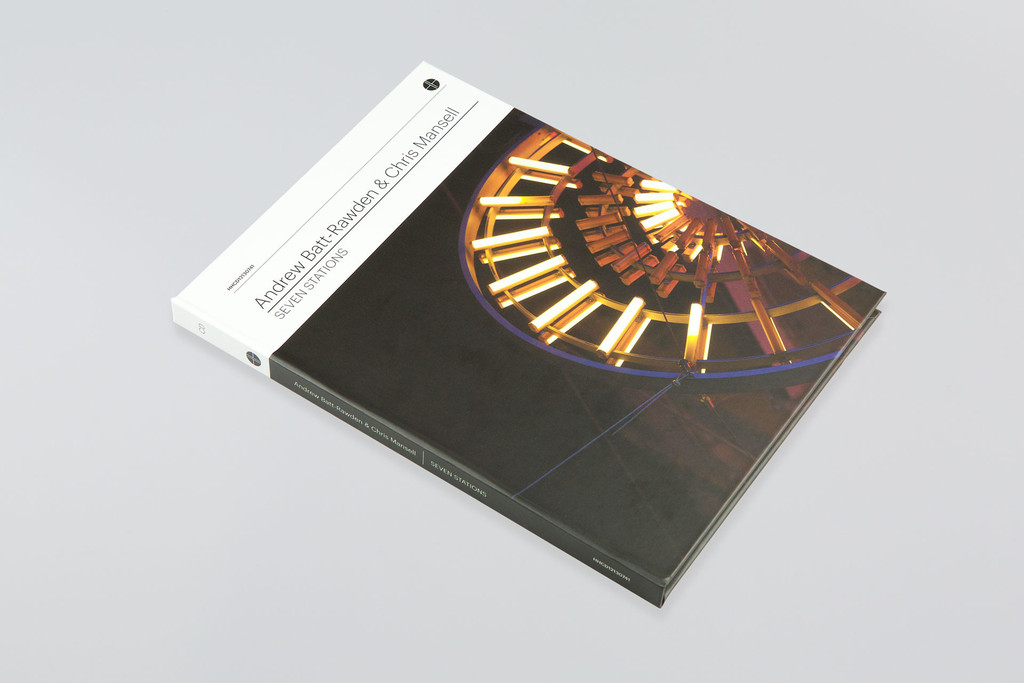
Andrew Batt-Rawden (music) and Chris Mansell (poems), Seven Stations

ABR-Front_1024x1024

Hospital Hill has just released Seven Stations, the CD of the song cycle written by Andrew Batt-Rawden (magnificent music) and Chris Mansell (poems). You can get it as a download or as a hold-in-your-hand CD which also includes a booklet with the text of the poems.

The premiere of the song cycle was in Sydney last year, then it was expertly recorded at Trackdown by the geniuses of Hospital Hill, Matt McGuigan and Jake Craig (you had to see them in action to know just how good they really are). Alison Morgan and Anna Fraser (Halycon) were the sopranos, Josh Hill was on percussion, Joe Manton bass, Stefan Duwe viola, and Ezmi Pepper on cello. It was a pleasure to work with such a gifted group of people. A seriously talented bunch.

The work came about when Charles Davidson, friend, music patron all round good bloke, introduced Andrew and me to each other over lunch. It was the beginning of a series rewarding collaborations of which Seven Stations is the first. Andrew and I decided that we’d write a work which celebrated Sydney and chose as our stepping off points seven inner city stations which epitomise certain aspects of the city – from the Town Hall with the intersection of commerce and the official centre of power, to the complexities of Redfern, and the outrageousness of the Cross.

Have a look at the Hospital Hill site, and if you’d pass this note on to interested folk, that would be great.
Here’s the Hospital Hill site:
http://store.hospitalhill.com.au/products/seven-stations
Andrew Batt-Rawden’s site:
http://www.andrewbattrawden.com.au/cover.html
Chris Mansell
http://www.chrismansell.com

Δημήτρης Τρωαδίτης, αγώνας

Φώτο: Paul Martin

Φώτο: Paul Martin

αγωνιζόμαστε να προσπεράσουμε
τις άφατες μεταμορφώσεις μας
καθώς τα πρωινά μας
ξεκινούν βουρκωμένα
και δεν είναι σίγουρο
κατά πόσο μια ηλιαχτίδα φωτός
θα μας επισκεφθεί
έστω και προσωρινά

Θάνος Πάσχος, Κάλεσμα

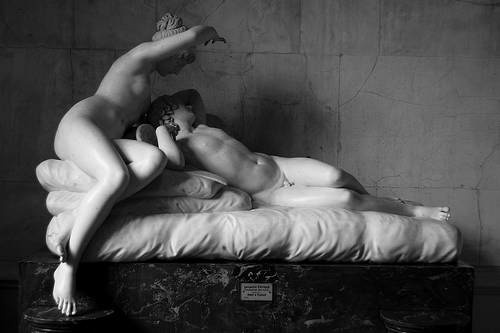
410522-l amour et psyche in hermitage

Περιορίζω την αιωνιότητα
σε δώδεκα χαραγμένα όνειρα.
Ο χρόνος περιδίνητος
απ’ τους έλικες του σώματος
δίχως εξουσία
στον καιάδα του γκρεμίζεται
με ένα δικό μας χτύπημα στον άνεμο.
Φαντάζει η ζωή
λίγη για να μετρήσει τους σιωπηλούς αντίλαλους
της αγάπης μας.

Σ’ αυτή την παύση
ξεκινάω κι αναποδογυρίζω αριθμούς,
για να σβήσω στη σκιά σου.

*Από τη συλλογή “Έρως ονειρευόμενος”, εκδ. Γαβριηλίδης, 2012.

Justin Clemens
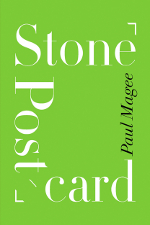
 reviews Paul Magee’s Stone Postcard

stone-postcard

Stone Postcard
by Paul Magee
 John
Leonard Press, 2014

Unlike the recent Australian governmental fervour for signs of title (British, monarchist, hierarchical) and their accompanying anathemas contra entitlement (Australian, social democratic, welfarist), poetry titles struggle with self-authorization and singularisation. A poet’s title is not ‘Lord’ or ‘Lady,’ nor a state certificate legitimating territorial possession, but established by the fiat of the verse itself. Nor are poetry titles like those of narrative fiction. As Franco Moretti proves in ‘Style, Inc.: Reflections on 7,000 Titles (British Novels, 1740-1850),’ reprinted in Distant Reading (London: Verso, 2013): the ‘major metamorphosis of eighteenth-century titles is simple: in the space of two generations, they become much, much shorter … they also become much more similar to each other.’ With the development of a significant publishing ecology, novel titles no longer needed to be explanatory, but brief, attention-grabbing and memorable. Yet for poetry a title must be neither governmental nor novelistic. It must be impossible.

So, then – Stone Postcard? Magee’s previous book (John Leonard, 2006) bore a strongly oxymoronic title: Cube Root of Book. A striking phrase, drawing its provenance from a mathematical operation patently misapplied to the wrong kind of material and medium altogether: poetry as category error. As Jen Webb put it in Text (October 2008): ‘Cube root of book … in mathematical terms, roots are the inverse or opposite of powers.’ Poetry’s powers derive from its burrowing into the radicles of impotence.

Continue reading →

Μανώλης Μεσσήνης, Εδώ θα σταθώ

Εικόνα του Roberto Paletti

Εικόνα του Roberto Paletti

Λιγόστεψε το φως,
χαμήλωσε ο ουρανός το πρόσωπό του,
κρεμάστηκε το φεγγάρι μεσίστιο
στον ιστό των ματιών μου
Στο στήθος μου κατοικεί ένα πουλί,
αλαφιασμένο, χωρίς φτερά και κράζει
Μοιάζω του Σίσυφου,
φορτωμένος μια πέτρα
να τη στηρίξω προσπαθώ στην κορυφή,
μα όλο κατρακυλά
Εδώ θα σταθώ,
σε τούτη την πέτρα,
στην πέτρα που με γέννησε
Αγωνιώντας για του ανθρώπου τις ρωγμές,
λουσμένος ιδρώτα, φορτωμένος μνήμες
Σηκώνοντας το βάρος της νυκτός
Εξουσιάζοντας τη θέληση, κι ανάβοντας φωτιές
Εδώ θα σταθώ,
με το αγκάθι στο στήθος μου σφηνωμένο,
άγρυπνος μες στο σκότος που με περιβάλλει,
γυμνός από λάμψη – σαν φλόγα ασχημάτιστη,
όρθιος πάνω στον σταυρό,
καταρρίπτοντας με όνειρα τους εφιάλτες
Κι αν μέρα τη μέρα βαδίζω
σε λιμνασμένα νερά
και δρόμους φλογισμένους
Κι αν καίω το βλέμμα μου
σε αδιάβατες κορφές
Εδώ θα σταθώ,
ανάβοντας φωτιές σε πλατείες,
κτυπώντας καμπάνες
για να ξυπνήσουν του κόσμου οι γειτονιές
Εδώ θα σταθώ,
μαστιγώνοντας τον φόβο
έξω απ’τις κατοικίες της σιωπής,
με τα μάτια στραμμένα στα βέλη που με σημαδεύουν
Εδώ θα σταθώ,
στην πέτρα που με γέννησε

© Μανώλης Μεσσήνης

Dan Disney 
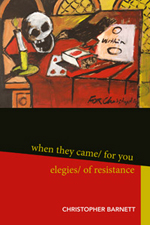
Reviews Christopher Barnett’s when they came/ for you elegies/ of resistance

barnett

when they came/ for you elegies/ of resistance

by Christopher Barnett,
Wakefield Press, 2013

Christopher Barnett is an enigmatic figure: an exile and outsider, an active and proud Socialist, Australian but long based in Europe because of feeling, as Mark Roberts asserts in the book’s foreword, ‘profound disillusionment with Australian society’ (ix). This deeply aggrieved, political book is a 300-page anti-paean purporting to eulogise Furkan Doğan, the North American teenager killed alongside eight others by Israeli forces storming the Gaza Peace Flotilla in 2010.

But this book also contains the perceptions of an ageing poet grieving the loss of their own youth. Barnett’s memorialising is in the mode of a musical manifesto, in which the dramatis personae (Faust, Marx, Althusser, Apollinaire, Dick Cheney, Jeremiah, Trần Đức Thảo, Gregory Peck, et al) traverse either ideological or remembered space (Leningrad, Golgotha, Wangaratta, Babylon, Haiphong, Jerusalem, Salzburg, etc) in an effort for the poet to better display the ‘state of things// things of state’ (287) by which we are interpellated, instrumentalised, and commodified or, worse, in the way of monstrous and mobilised forces.

Continue reading →

Πάνος Κουτρουμπούσης, το τοπίο τη νύχτα / the landscape at night

10488294_884327568250479_226000556105083585_n

Πες πως βλέπεις σαν σε όνειρο
το αγρόκτημα, τον ανεμόμυλο,
τη σιδηροδρομική άμαξα,
το πολεμικό αεροπλάνο, το τανκ,
τη βυζαντινή εκκλησία, τη Φάτνη, το ζέπελιν,
σαν σε όνειρο
την έξοδο του Μεσολογγίου, την Έπαυλη,
τη Χιονάτη και τους 7 Νάνους,
την Κοκκινοσκουφίτσα, τη Σταχτοπούτα,
τον Κοντορεβυθούλη, τους 40 Δράκους,
τον παπουτσωμένο Γάτο,
τις ελληνικές ενδυμασίες, το Κρυφό Σχολειό,
σαν ζωντανή οπτασία
τα 3 Γουρουνάκια, το θέρος,
τα ζώα του αγρού και του βάλτου,
τα ζώα της αυλής,
τον Λευκό Πύργο,
τον Μυστικό Δείπνο.

the landscape at night

Say you see as in a dream
the farm, the windmill,
the train carriage,
the warplane, the tank,
the byzantine church, the Manger, the airship,
as in a dream
the sally out of Messolonghi, the Mansion,
Snow-White and the 7 Dwarfs,
Red Riding Hood, Cinderella,
Tom Thumb, the 40 Ogres,
Puss-in-Boots,
greek costumes, the Secret School,
as a vision alive
the 3 Little Pigs,
summertime, animals of field and swamp,
animals of the yard,
the White Tower, the Last Supper.

*Από τη δίγλωσση συλλογή “Η εποχή των ανακαλύψεων”, εκδόσεις Futura 2002 / From the bilingual poetry collection “the age of discoveries”, Futura editions Athens 2002.