Tuli Kupferberg, Bohemian and Fug, Dies at 86

Tuli Kupferberg, right, with his comrade Ed Sanders in 2003. Credit Chris Ramirez

Tuli Kupferberg, right, with his comrade Ed Sanders in 2003. Credit Chris Ramirez

By BEN SISARIO*

Tuli Kupferberg, a poet and singer who went from being a noted Beat to becoming, in his words, “the world’s oldest rock star” when he helped found the Fugs, the bawdy and politically pugnacious rock group, died on Monday in Manhattan. He was 86 and lived in Manhattan.

He had been in poor health since suffering two strokes last year, said Ed Sanders, his friend and fellow Fug.

The Fugs were, in the view of the longtime Village Voice critic Robert Christgau, “the Lower East Side’s first true underground band.” They were also perhaps the most puerile and yet the most literary rock group of the 1960s, with songs suitable for the locker room as well as the graduate seminar (“Ah, Sunflower, Weary of Time,” based on a poem by William Blake); all were played with a ramshackle glee that anticipated punk rock.

With songs like “Kill for Peace,” the Fugs also established themselves as aggressively antiwar, with a touch of absurdist theater. The band became “the U.S.O. of the left,” Mr. Kupferberg once said, and it played innumerable peace rallies, including the “exorcism” of the Pentagon in 1967 that Norman Mailer chronicled in his book “The Armies of the Night.” (The band took its name from a usage in Mailer’s “Naked and the Dead.”)

The Fugs was formed in 1964 in Mr. Sanders’s Peace Eye Bookstore, a former kosher meat store on East 10th Street in Manhattan. By then Mr. Kupferberg, already in his 40s, was something of a Beatnik celebrity. He was an anthologized poet and had published underground literary magazines with titles like Birth and Yeah.

He had also found notoriety as the inspiration for a character in Allen Ginsberg’s poem “Howl.” As Ginsberg and Mr. Kupferberg acknowledged, he was the one who “jumped off the Brooklyn Bridge this actually happened and walked away unknown and forgotten,” a reference to a 1945 suicide attempt (off the Manhattan Bridge, not Brooklyn) that had been precipitated by what he called a nervous breakdown.

The fame that episode earned him caused Mr. Kupferberg a lifetime of chagrin and embarrassment. “Throughout the years,” he later said, “I have been annoyed many times by, ‘Oh, did you really jump off the Brooklyn Bridge?,’ as if it was a great accomplishment.”

The Fugs’ first album, “The Village Fugs Sing Ballads of Contemporary Protest, Points of View and General Dissatisfaction,” was released in 1965. The band became a staple of underground galleries and theaters, as well as antiwar rallies. In concert Mr. Kupferberg was often the group’s mascot or harlequin, acting out satirical pantomimes — an American soldier who turns into a Nazi, for example — or sometimes not singing at all.

On subsequent albums the band changed its lineup many times and acquired a more professional sound, though its scatological themes got it kicked off at least one major record label.

With his bushy beard and wild hair, Mr. Kupferberg embodied the hippie aesthetic. But the term he preferred was bohemian, which to him signified a commitment to art as well as a rejection of restrictive bourgeois values, and as a scholar of the counterculture he traced the term back to an early use by students at the University of Paris. Among his books were “1,001 Ways to Live Without Working” — and for decades he was a frequent sight in Lower Manhattan, selling his cartoons on the street and serving as a grandfather figure for generations of nonconformists.

Beneath Mr. Kupferberg’s antics, however, was a keen poetic and musical intelligence that drew on his Jewish and Eastern European roots. He specialized in what he called “parasongs,” which adapted and sometimes satirized old songs with new words. And some of his Fugs songs, like the gentle “Morning, Morning,” had their origins in Jewish religious melodies.

Naphtali Kupferberg was born in New York on Sept. 28, 1923. He grew up on the Lower East Side and became a jazz fan and leftist activist while still a teenager. He graduated from Brooklyn College in 1944 and got a job as a medical librarian.

“I had intended to be a doctor at one point, like any good Jewish boy,” he recalled to Mr. Sanders in an audio interview in 2003. Instead he began to write topical poems and humor pieces, contributing to The Village Voice and other publications.

After the Fugs broke up, in 1969, Mr. Kupferberg performed with two groups, the Revolting Theater and the Fuxxons, and continued writing. The Fugs reunited periodically, first in 1984. Recently, Mr. Sanders said, Mr. Kupferberg had completed his parts for a new album, “Be Free: The Fugs Final CD (Part Two),” and had also been posting ribald “perverbs” — brief videos punning on well-known aphorisms — on YouTube.

Mr. Kupferberg is survived by his wife, Sylvia Topp; three children, Joseph Sacks, Noah Kupferberg and Samara Kupferberg; and three grandchildren.

*From http://www.nytimes.com/2010/07/13/arts/music/13kupferberg.html?smid=fb-share&_r=2

Di-Verse-City — A new friendly poetry venue in Surrey Hills

diversecity

A new friendly poetry venue in Surrey Hills

2.30-4.30pm First Sunday of the month

Sunday 7 August: Open Mic, Feature: Gayelene Carbis
Internationally recognised award winning poet, playwright, librettist, dramaturg, teacher
“a passionate and compelling performance, Gayelene is a poet of extraordinary versatility. She will make you laugh and cry” – Banff, Canada

Sunday 4 September: Open Mic, Feature: Anna Fern
“ a unique, blended style of performance – partmusic, partsound, partpoetry, partjoy”

Rear courtyard, Watts Cooking , 147 Union Road
(5 min walk from Surrey Hills Station, parking at Station)

Come early for meals & drinks, order at counter (cafe licensed)

Entry: $5, $3 unwaged

We look forward to meeting & hearing you.

Enquiries: Fran: 0405 765 075

Poetic inspirations @ Emerald – Saturday 6 August

tumblr_o0rxxhOEHE1rv33k2o10_500

Poetic inspirations @ Emerald is on again

Next reading is in

Saturday 6 August, 11.45am-1.45pm

at Emerald Hill Library & Heritage Centre

with

Alix Phelan


Mary Jones

George Genovese

plus open mic

195 Bank St.,
South Melbourne
(opposite South Melbourne Town Hall)
11.45am- 1.45pm
(Library closes at 2pm on Saturdays)

Every first Saturday of the second month
With guest poets and open mic

The room can seat up to 30 persons. There is a kitchen available to use, with the usual facilities, including crockery and a hot water urn. The room also has audio visual equipment and screen if it will be required. 
 
The following Reading dates through out 2016 are as follows:

October 1, 11.45am – 1.45pm
December 3, 11.45am -1.45pm

For more information:
– Dimitri Troaditis troaditisdimitris@gmail.com and/or 0432 094 342
– Emerald Library and Heritage Centre
Art & Heritage Programs | Arts & Culture 9209 6416

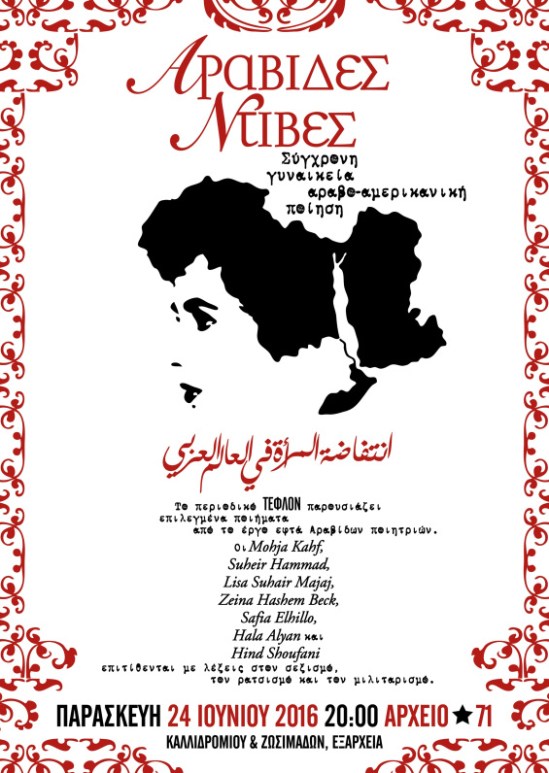
Αραβίδες ντίβες – Μια παρουσίαση του Τεφλόν

Το περιοδικό Τεφλόν παρουσιάζει μια εκδήλωση αφιερωμένη στη σύγχρονη γυναικεία αραβο-αμερικανική ποίηση:

ΑΡΑΒΙΔΕΣ ΝΤΙΒΕΣ
Παρασκευή 24 Ιουνίου 2016 και ώρα 8μμ
στο Αρχείο 71, Ζωσιμάδων & Καλλιδρομίου, Εξάρχεια

Κατάγονται από την ελιά, την πικροδάφνη, το αμύγδαλο και το σύκο. Κουβαλούν τη σκόνη του ταξιδιώτη στα μαντίλια τους. Μιλάνε τη γλώσσα των βασιλισσών. Αρνούνται να χορέψουν στους ρυθμούς των πολεμικών τυμπάνων. Αγαπάνε σαν να δένουν σκοινί, μετρώντας το πάτωμα από το ταβάνι. Διηγούνται ιστορίες για τους νεκρούς που γυρίζουν σπίτι με τα πόδια. Ξέρουν καλά πως ο Απρίλης φτιάχτηκε για μάχη, ο Μάης για ταφή. Γίνονται μάρτυρες των πληγωμένων φωνών που αλλιώς θα έμεναν ατραγούδιστες. Επιτίθενται με λέξεις στον σεξισμό, τον ρατσισμό και τον μιλιταρισμό. Είναι Αραβίδες Ντίβες.

troikans attack1

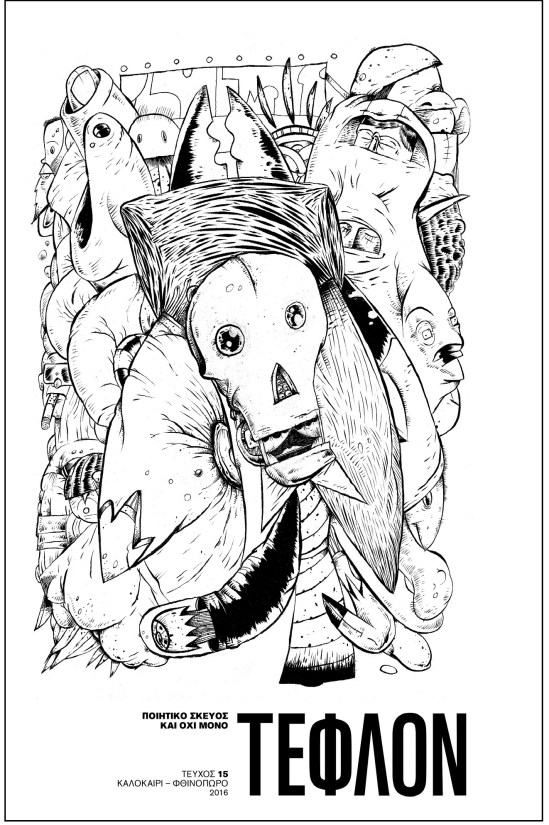
ΤΕΦΛόΝ – Ποιητικό σκεύος και όχι μόνο /// Τεύχος 15 / Καλοκαίρι–Φθινόπωρο 2016

Teflon15_cover

ΘέΜΑΤΑ

Érica Zíngano: Στόμα που σκέφτεται, νους που χαμογελά
Η Βραζιλιάνα ποιήτρια αναρωτιέται πόση ζωοτροφή είναι τελικά απαραίτητη για να ξεκινήσει μια εξέγερση, δίνει μια οριστική απάντηση στο ερώτημα αν το αυγό έκανε την κότα ή η κότα το αυγό, σαρκάζει τον Πάουλο Κοέλιο, οικτίρει τους ανθρώπους που δεν ξέρουν πού να τοποθετήσουν τα χέρια τους, και επιλέγει λέξεις που μιλούν οι ίδιες για τις εαυτές τους. Κείμενο-Μετάφραση: Σπύρος Πρατίλας

Urs Böke: Με τη γροθιά στην τσέπη
Ο Ουρς Μπέκε σιχτιρίζει τους μπάτσους, τσαμπουκαλεύεται στα μπαρ, ειρωνεύεται τους κυριλέδες, επιμένει ότι «η ασθένεια ονομάζεται Γερμανία». Βιωματική και ειλικρινής, η ποίησή του μιλάει τη γλώσσα της εργατικής τάξης, εκφράζει τις αγωνίες, τα αδιέξοδα και την αυτοκαταστροφικότητά της, εξιστορεί τα πάθη και τους πόθους της. Κείμενο-Μετάφραση: Jazra Khaleed

Linn Hansén: Πέρασμα στην ιστορία
Στα βιβλία ιστορίας της Λιν Χανσέν δεν θα συναντήσετε μεγάλους άνδρες, περιγραφές μαχών και ονόματα βασιλιάδων. Η Σουηδή ποιήτρια ισχυρίζεται ότι «η ιστορία ξεκινά και τελειώνει επί πληρωμή», σημειώνει την αναγκαιότητα να μην αποτελεί η ιστορία ένα σώμα αφηγήσεων που αποκλείουν κάποιες άλλες αφηγήσεις, και προτείνει ένα νέο είδος ιστορικής γραφής. Κείμενο-Μετάφραση: Kyoko Kishida, Karna-Irini Mårtensson

Elisa Biagini: Από μια ρωγμή
Με αφαιρετική, σχεδόν χρησμική γλώσσα η Ιταλίδα ποιήτρια μάς μιλά για τη βροχή που μαζεύτηκε μέσα στο αυτί, για το φως που αναβοσβήνει κάτω από το δέρμα, για το ατσάλινο νήμα της αναμονής. Εστιάζει στο μικρό, στην ελάχιστη νοηματικά δομική μονάδα, και συνομιλεί με τον Πάουλ Τσέλαν και την Έμιλι Ντίκινσον για τη φωτιά που σβήνει κάθε μέρα με το γάλα. Κείμενο-Μετάφραση: Αλκιβιάδης Ζαλαβράς

Kai Pohl: 1964 ή Η εναρμονισμένη με την αγορά σιωπή της ψυχής του αρσενικού υποκειμένου εξουσίας
Τρία κείμενα για τις μυρωδιές μετά τη βροχή, που σε κάνουν να ξεχάσεις για μια στιγμή την οικονομική τρομοκρατία, για το χορτάρι που ανατινάζει τους δρόμους όταν οι άνθρωποι δεν εξεγείρονται. Υβρίδιο μεταξύ φιλοσοφικού δοκιμίου, ημερολογίου και δυστοπίας, η πρόζα του Κάι Πολ μάς υπενθυμίζει ότι «η εξουσία κυριαρχεί όταν απουσιάζει η αρνητική απάντηση». Μετάφραση: Entehrendame

Ποιήματα: Χαρά Αηδόνη, Λίντα Ακέντε, Βικτώρια Άλεξ, Δημήτρης Γκιούλος, Γιώργος Δομιανός, Elefant, Αλκιβιάδης Ζαλαβράς, Πηνελόπη Ζαρδούκα, Κατερίνα Ζησάκη, Μανώλης, Χρήστος Μαρτίνης, Βερονίκη Περσεφόνη Μπουφέ, Παναγιώτης Νικολαΐδης, Χριστίνα Παλάντζα, Ελίζα Παναγιωτάτου, Δήμητρα Πέπυγκα, Σαμσών Ρακάς, Τάσος [ΜήνυμαL] Σταυρουλάκης, Νόπη Φουντουκίδου.

Εξώφυλλο & εικονογραφήσεις: lef kiort

Κοπιάστε στα:
Αρχείο 71, Καλλιδρομίου & Ζωσιμαδών [με κουτί ενίσχυσης]
Φαρφουλάς, Μαυρομιχάλη 18 [με κουτί ενίσχυσης]
Βιβλιοπωλείο Ναυτίλος, Χαριλάου Τρικούπη 28 [με κουτί ενίσχυσης]
Μπερντές, Aράδου 55 [με κουτί ενίσχυσης]
Κατάληψη κτήματος Πραπόπουλου, Προφήτη Ηλία 49 [με κουτί ενίσχυσης]
Κ*ΒΟΞ, Αραχώβης & Θεμιστοκλέους [με κουτί ενίσχυσης]
Αυτόνομο Στέκι, Ζωοδόχου Πηγής 95-97 [με κουτί ενίσχυσης]
Εναλλακτικό Βιβλιοπωλείο, Θεμιστοκλέους 37
Βιβλιοπωλείο Πολιτεία, Ασκληπιού 1-3 & Ακαδημίας
Βιβλιοπωλείο Λεμόνι, Ηρακλειδών 22
Βιβλιοπωλείο Πλειάδες, Σπύρου Μερκούρη 62
Βιβλιοπωλείο Μωβ Σκίουρος, Πλατεία Καρύτση 3
Βιβλιοπωλείο Σπόρος, Δροσίνη 7
Οι Εκδόσεις των Συναδέλφων, Καλλιδρομίου 30
Αλφειός, Χαριλάου Τρικούπη 22

Διανέμεται δωρεάν
Τα σημεία διανομής εκτός Αθηνών θα ανακοινωθούν σύντομα στο http://teflon.wordpress.com

Fathers from the Edge – Greek-Australian writers participate at the Williamstown Literary Festival

Fathers-from-the-Edge-Willy-Lit-Fest-2016

Saturday, 18 June at 2.00pm 

(Session titled Fathers from the Edge)

Venue: Williamstown Town Hall, 104 Ferguson Street, Williamstown

Enquiries at http://www.willylitfest.org.au

Father-child relationships can be testing at the best of times, but what happens when migration adds a whole new dimension to it? Greek-Australian writers Konstandina Dounis, Dmetri Kakmi, Dean Kalimniou and Helen Nickas discuss their funny and sad stories published in the new anthology Fathers from the Edge, edited by Helen Nickas.

The four panelists are a diverse mix of writers, two born overseas and two in Australia of Greek parents, with equally diverse experiences. But what binds them together is the common thread of living within, or between, two cultures and two languages, and having to grapple with the realities of living ‘on the edge’. They will share with each other, and the audience, how their own bitter-sweet experience with their fathers has shaped their lives through the various stages of assimilation, integration and multiculturalism in Australia. 

Helen Nickas
Owl Publishing
22 Rooding Street, Brighton 3186
Tel 9596 6064   Mob 0400 202 187
Email: owlbooks@bigpond.com
Website: http://www.owlpublishing.com.au

Father-child relationships can be testing at the best of times, but what happens when migration adds a whole new dimension to it? Greek-Australian writers Konstandina Dounis, Dmetri Kakmi, Dean Kalimniou and Helen Nickas discuss their funny and sad stories published in the new anthology Fathers from the Edge.

The four panelists are a diverse mix of writers, two born overseas and two in Australia of Greek parents, with equally diverse experiences. But what binds them together is the common thread of living within, or between, two cultures and two languages, and having to grapple with the realities of living ‘on the edge’. They will share with each other, and the audience, how their own bitter-sweet experience with their fathers has shaped their lives through the various stages of assimilation, integration and multiculturalism in Australia.

Despite the sadness and regret, or the ironic humour expressed in their stories, telling and discussing this important topic should prove a cathartic experience for both the writers and the audience. As with ancient Greek tragedy, and right up to our times, through the telling of adversity and great loss, comes catharsis. And since Australia has been a country of many waves of immigrants, their stories will keep on adding to the grand narrative of the history of this country.
 
Fathers from the Edge is a companion book to Mothers from the Edge (an anthology about the relationship between mothers and daughters within the Greek-Australian migrant experience).

Fathers from the Edge now comes to complement what began as an exploration of family relationships and the effect on them by the migrant experience. It includes a collection of narratives that examines the complex relationships between Greek-Australian writers (men and women) and their fathers. These 24 stories are aimed not just at the Greek-Australian reader, but anyone who is interested in how people, who live between cultures, untangle the complexities of dual lives and pave the way for understanding and compassion.

Contributing writers:
George Alexander, Claire Catacouzinos, John Charalambous, Anna Couani,
Konstandina Dounis, Eleni Elefterias-Kostakidis, Zeny Giles, Dimitri Gonis,
Tina Haralambakis, Efi Hatzimanolis, Hariklia Heristanidis, Dmetri Kakmi,
Dean Kalimniou, Vrasidas Karalis, Victoria Kyriakopoulos, Emilios Kyrou,
Peter Lyssiotis, Despina Michael, Martha Mylona, Olympia Panagiotopoulos,
Melissa Petrakis, Tom Petsinis, N.N. Trakakis, Eleni Frangouli-Nickas.

DADA LIVES!!! – 23rd of June – Melbourne City Library

13418887_586148841559492_7427364530694988395_n

DADA LIVES!!!

City Library: 253 Flinders Lane Melbourne

For more information visit “Events” on http://www.ftloose.com.au

On the 23rd of June it will be exactly a 100 years ago Hugo Ball first performed a series of sound poems as part of the regular “Cabaret Voltaire.

To celebrate this event a number of Melbourne based sound-poets will performs some “classics” as well as more recent examples of this genre of poetry

Featuring: Peter Murphy, Dimitris Troaditis, Sjaak de Jong, Jeltje Fanoy, Warren Burt, Anna Fern, Razor Hope, Santo Cazzati, Ashley Higgs with Forbes Hawkins, Abe Dunovits and Pierre van Osselaer

Φύλλα Τέχνης | Τεύχος #01

flyer-κυκλοφορίας-ΟΛΟ-1024x457

Κυκλοφορεί το Τεύχος #01 της νέας σειράς εκδόσεων «Φύλλα Τέχνης» του ανεξάρτητου περιοδικού Τέχνης & Γραμμάτων Παλινωδίαι/Palinodiae

|Δοκίμιο – Παρουσιάσεις – Νέοι Καλλιτέχνες – Μικρές Αναφορές|

σε 48σέλιδο έγχρωμο τεύχος |

Αυτοέκδοση Παλινωδίαι 2016

■ Xειμερινό Αστικό Τοπίο | Διαγωνισμός Φωτογραφίας

■ Το Γυμνό του Jules De Bruycker

■ Ο ζωγράφος Vaughn Beneteau

■ Nicolai Ivanovich Fechin

■ H Aurore Lephilipponnat και το Butoh

■ Oι Νόμοι της Ινδιάνικης Ζωγραφικής

■ Ο ωραίος Μοντιλιάνι

■ Η ζωγραφική της Στυλιάνας Κατσιάρης

■ Ο γλύπτης Kiko Urrusti, κ.ά.

___ ΠΡΟΛΟΓΟΣ

Αντί προλόγου το ποίημα «Όλο το 24ωρο» του Νάνου Βαλαωρίτη, από τη συλλογή «Εστίες Μικροβίων» που κυκλοφόρησε στο San Francisco το 1977:

Μισός αιώνας απογεύματα με τη γιαγιά μου
Σύννεφα σαύρες παρδαλές και άλλα τέρατα
Κορίτσια ελαφρόμυαλα σαν τα σπουργίτια
Με βάδισμα ενοχοποιητικό μες στα παλτά τους
Ένα σεντόνι ερημιάς πάνω στο πρόσωπό μου
Συναντήσεις καθημερινές σαν γκρεμισμένες εκκλησίες
Λιμουζίνες με περίεργες βλοσυρές εκφράσεις στο τιμόνι
Άγνωστοι στις γωνίες των δρόμων περιμένοντας
Άγνωστες που περνάνε στον πληθυντικό
Ζαχαροπλαστεία γεμάτα ερωτηματικές ματιές
Φάρμακα αντίδοτα για αισθήματα ασφυξίας
Ώρες που δεν ξανάρχονται και καφενεία φαντάσματα
Ξύπνημα πρωινό βαρύ ασήκωτο ή ευδιάθετο
Ξεκίνημα για μιας καρδιάς την πόρτα τη στενή
Αλλά κανείς στο σπίτι που είπανε πως έμενε
Τρελή Σουηδέζα με μάτια σα φανάρια
Αγώνες για τη Δημοκρατία αγώνες δρόμου και αγωνία
Μισός αιώνας παρά τέταρτο και κάτι ακόμα παραλίγο επάνω μου.

♠♠♠ Κείμενα: Αγγελική Λυδάκη | Μαρία Μ. | Γιάννης Καφούρος | Μιχάλης Μιλώνης Άλλων: Γιάννης Τσαρούχης

Σημεία διακίνησης

AΘΗΝΑ _______________________________________
Εξάρχεια • Κ*ΒΟΞ (Κατειλημμένο Κοινωνικό Κέντρο) Αραχώβης & Θεμιστοκλέους ______________________________________________
Δάφνη • ΦΥΣΙΚΟ ΚΙ ΕΠΟΜΕΝΟ (Καφενείο) Αντιόπης 43 & Λεωφόρος Αλ. Παπαναστασίου ______________________________________________
Ν. Σμύρνη • ΕΡΓΑΤΙΚΗ ΛΕΣΧΗ Ν. ΣΜΥΡΝΗΣ Ελευθερίου Βενιζέλου 12 & Αιγαίου ______________________________________________
Μπραχάμι • ΠΙΚΡΟΔΑΦΝΗ (Ελευθεριακό Στέκι) Αγ. Βασιλείου και Π.Π.Γερμανού 22
• ΓΑΙΑ (Καφεποτείον) Στρ. Αλ. Παπάγου & Ναυάρχου Νοταρά ______________________________________________
Άνω Ιλίσια • ΜΠΕΡΝΤΕΣ (Αυτοδιαχειριζόμενος Κοινωνικός Χώρος) Aράδου 55, πλατεία Κύπρου ______________________________________________
Περιστέρι • ΕΡΓΑΤΙΚΗ ΛΕΣΧΗ ΠΕΡΙΣΤΕΡΙΟΥ Θηβών 227 ______________________________________________
ΜΕΣΟΓΕΙΑ ΑΤΤΚΗΣ ______________________________________________
Κορωπί • ΟΠΤΙΚΑ ΒΑΣΙΛΙΚΗ ΣΑΚΚΟΥ Λ. Βασιλέως Κωνσταντίνου 134 ______________________________________________
ΘΕΣΣΑΛΟΝΙΚΗ _______________________________________ σύντομα ______________________________________________
ΠΡΟΣΟΧΗ: Οι χώροι διακίνησης μπορεί να αλλάξουν ανά πάσα στιγμή

∅ Contact: Info@Palinodiae[dot]com