Meet the Greek writers revolutionising poetry in the age of austerity

Clockwise from top left: Yiannis Efthymiades, Glykeria Basdeki, Eftychia Panayiotou, Yannis Stiggas, Danae Sioziou, Thomas Tsalapatis, Yiannis Doukas and Elena Penga.

Clockwise from top left: Yiannis Efthymiades, Glykeria Basdeki, Eftychia Panayiotou, Yannis Stiggas, Danae Sioziou, Thomas Tsalapatis, Yiannis Doukas and Elena Penga.

By Marta Bausells and Eleni Stefanou*

A new group of poets is changing the arts landscape in Greece. Fearless, global and with an artistic fervour unseen since the dictatorship, they tell us their hopes, the culture that excites them – and the Greek myths they’d like to debunk

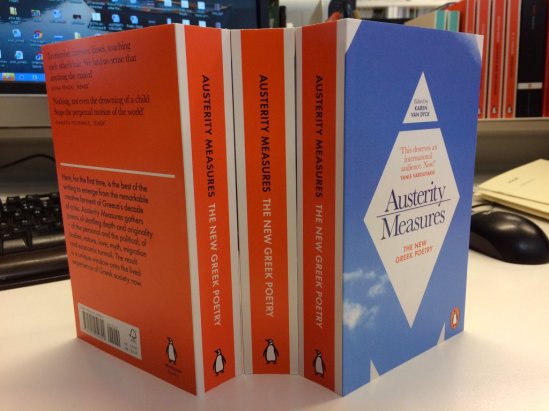
A new kind of poetry is flourishing in Greece’s streets, bars and cafes. It is popping up not just on magazines, small presses and websites, but on graffiti walls, and in music, film, and art. Not since the dictatorship that shook the country in the 1970s has there been such an abundance being written. A new anthology in English translation, Austerity Measures, compiles some of the most revolutionary.

Former finance minister Yanis Varoufakis is a fan, calling it a “silver lining”, the one good upshot from austerity policies that have shattered the country. “Along with the mass unemployment and the rise of neo-Nazism that it engendered, austerity also occasioned a cultural renaissance,” he writes. “This volume is … living proof that the Greek crisis is of global significance.”

In a country where there is less to go around across the board – including fewer young people – poetry is “the one thing there is more of,” writes editor Karen Van Dyck. Despite the title, and the fact that many of the poems respond to the social and economic crisis, Van Dyck emphasises this is not a homogenous phenomenon. “A lot of these poets don’t even know the others exist. It’s a very disperse scene.” Nor are they really a generation. They are multicultural, multiethnic, multigenerational; some of them aren’t even Greek, just writing in it.

“They don’t even think they need to belong to Greek poetry. They have access to the whole world,” says Van Dyck. From the small pleasures of suburban gardens to the viciousness of streetfights, they use pop culture and post-capitalism, images of domestic machines and the internet and mix them all up with ancient myths. We talked to some of them about what drives them to create, and what hopes and fears they have for their country.

Eftychia Panayiotou, 36, Athens

An extract from The Outside of My Mind (translated by Karen Van Dyck):

I woke at sunrise to change

the window, warped from looking

across, slicing my view.

I open the shutters, wild

from the wind and misfortune.

What were you trying to convey with the poems in this collection?

Most of the poems in Austerity Measures were published nine years ago; they were my debut as a poet. They expose the suspicion that what we call “personal identity” is socially constructed. In these short poems the subject realises that pain and grief is part of the process of wanting to be free.

What has been your creative inspiration?

Entering a society that looked a lot like a bad movie and fear that I might end up playing a predetermined role in it.

What is the myth surrounding the Greek crisis you’d like to debunk?

I hear a lot of whispers that “the Greeks” have been really naughty and, most of all, very lazy. So they all have to be punished, like in Dante’s Purgatory.

What is giving you hope?
That we’ve managed so far to create a desirable life out of simplicity: love, friendship, knowledge, art. A bare life that is precarious, passionate, influential and rewarding.

How would you like your art to be remembered in a hundred years?

As poetry that isn’t just remembered, but also read and reread. As very much alive art with a positive impact on strangers.

Thomas Tsalapatis, 31, Athens

An extract from Word Monday [translated by Karen Van Dyck]:

Boiling water, always boiling water

Learning that what is scarce is what takes charge

Learning how Π and T lose their flat roofs

How ζ and ξ dry up at the roots

How vowels get murdered

How language bubbles up
An offering of the silent

For those who grew silent

How do you define your poetry?

An attempt to construct a personal modern poetical mythology, with sometimes non-poetical elements (borrowing from theatre, stand-up comedy, graphic novels, journalism or cinema) based in the absurd, slapstick of words, and expressed mainly in a prose poetry form, in dialogue with the rich Greek poetry tradition.

What were you trying to convey with the poems in Austerity Measures?

Word Monday is the first day of a journal. The poem speaks about the process of a boiling language, of losing words, letters and meanings in the steam, in grief and in silence. Regardless of that, the last word always belongs to the reader. I could be wrong about the meaning of my poems. He can’t. He is always right.

Which myth about the Greek crisis would you like to debunk?

I think that it is our duty to debunk the legions of stereotypes that fill newspapers every day (both Greek and European newspapers). The racist myth of the lazy Greek. The myth of the ouzo-drinking, opa-screaming Balkanian. The myth that the poor used to live above their means.

What is giving you hope?

The work of small groups, the creativity of small artistic cells. The never-ending conversations between a group of friends about art, politics or whatever. And of course the help given to refugees from volunteers (Greeks or non-Greeks) and common people every day in Athens and the islands.

How would you like your art to be remembered?

I hope to be remembered as a small handmade ark of a feeling and an era. Both old and (hopefully) new, open to new meanings.

Which other Greek poets and artists do you admire?

I strongly recommend George Prevedourakis. His book Kleftiko is a take on Allen Ginsberg’s Howl set in Greece amid the crisis; it’s a great book. In theatre, the director Theodoros Terzopoulos –he’s the most important Greek artist of our times. I would highly recommend younger directors like Savvas Stroubos and his Simeio Miden theatrical group; Aris Biniaris and his ‘holy goat’ performance; Stelios Faitakis’s mural paintings; Dimosthenis Papamarkos’s short stories; Mode Plagal’s blend of traditional music with jazz and funk elements; and the directors of the so-called ”weird wave’’ in cinema, which started with Giorgos Lanthimos’s Dogtooth in 2009.

Danae Sioziou, 29, Athens

An extract from Around the House (translated by Rachel Hadas):

imprisoned in a filthy cage

a ceiling without sunrise

little beetles on the floor

in the sink a dark lake

How would you like your art to be remembered
?
As heartfelt, I guess.

Which is the myth surrounding the Greek crisis you’d like to debunk?

That anything good can come out of such a crisis. Good things occur, but despite of it.

What is giving you hope?

Concerning the crisis? Lately, fewer and fewer things. People are being hunted, deprived, excluded. Walls, actual walls, as well as social and political ones are built upon. People who help bring them down give me hope.

What Greek cultural trends do you find most interesting?

The various voices emerging in poetry. The foundation of new publishing houses and literary journals. The experimentations of musicians and bands. The neighbourhood solidarity networks, which promote art among other things. The emergence of young artists who elaborate on the current condition in their own terms.

Which other Greek poets and artists do you admire?

Women poets of older generations who write and publish vivid poetry. There is a vast plurality trying to continue making art and survive. From opera and theatre to circus, music, poetry, filmmaking, photography, performance and more. Most of them collaborate with others. I especially admire those who reinvent themselves without betraying who they are.

Jazra Khaleed, 37, Athens

630

An extract from Words (translated by Peter Constantine):

My words are homeless

They sleep on the benches of Klafthmonos Square

covered in IKEA cartons

My words do not speak on the news

They’re out hustling every night

My words are proletarian, slaves like me

They work in sweatshops night and day

Can poetry be political?

Poetry can be part of the anti-fascist discourse and the working class discourse in Greece. There are autonomous anti-fascist groups and working class groups who publish magazines, do demonstrations, put posters on the walls.

What would you say to people who believe what is happening to Greece has been caused by external factors?

I blame the Greek middle class and the Greek capitalist system. I live in Greece so I don’t know what is going on in Germany or in England, I just know what’s going on in Greece. What’s called the crisis is used by the Greek state and the Greek middle class to push all the burden to the working class.

How is poetry perceived in Greece?

In Greece poetry is considered a high-class art. If you want to publish a poetry book, you have to pay a publishing house. So many publishing companies say that they are brands and they ask for £3,000 euros to publish your book. That means that most people who publish poetry in Greece belong to the middle class or are very rich. One important thing about Austerity Measures is that it includes poets that are not very well known in the poetry circles and who don’t have access to publishing houses.

What’s happening on the streets of Athens that you find exciting right now?

Many second-generation groups doing hip-hop and they’re really underground, doing self-organised free concerts. I can sense there are more people from a working class background that write poetry nowadays. There is a guy called Omega who writes about his experiences as working class or unemployed. His poetry is very direct, which is not very common in Greece.

Elena Penga, 50, Athens

An extract from Nightmare Pink (translated by Karen Van Dyck):

I open the balcony doors.

You’re singing.

But the rain is louder.

It comes into the house.

Hits the lampshades.

Knocks over the lights.

Collides with reality.

How would you define your poetry?

It uses fragments of personal memories to challenge our perception of what we are as a species and what we do here.

What were you trying to convey with the poems in Austerity Measures?

In this time of crisis what is the role of the personal, of the senses, of the body? Do people trust their body? Do they listen to it? How can they stop being just consumers, but active members of society who care about their environment? How do our senses and our body want us to live, work, relate, create?

How would you like your art to be remembered?

As meaningful and exciting and beautiful.

What is giving you hope?

In politics and society? Nothing. We are all shaken up and blinded by the shock. We have lost perspective and see no horizon.

Which Greek cultural trends do you find most interesting?

There is culture in Greece, but no money or real support for it. People worry about survival. This has killed all spirituality, inspiration, beauty. I find it remarkable that people want to work and do keep working in arts and culture, despite the hostile environment. All cultural trends in Greece are a kind of resistance to giving up.

Yiannis Doukas, 35, Galway (Ireland)

An extract from The Children of Abel (translated by Chloe Haralambous and Moira Egan):

The Danny F bound for Syria

Like an arc; for slaughterhouses

But it flounders with the waves

Of the sea that does not wash out

How do you define your art?

As bearing a sense of nostalgic irony towards the Greek and European cultural and political history.

What were you trying to convey with the poems in Austerity Measures?

They are attempting to encapsulate how my generation experiences reality and develops emotion in the digital age.

What has been your creative inspiration?

Interacting with memory, literature and the urban landscape. Also, trying to distil the times and the news.

Which myth of the Greek crisis would you like to debunk?

That the Greeks are a nation of lazies on a permanent vacation; that austerity measures, as they were implemented, were proportionally distributed or worth the sacrifice. But also, the over-simplistic populism that there was no need for reform in Greece; that we’d be better off outside the EU, trading in drachma. And, obviously, the neo-Nazi rhetoric that the foreigners – immigrants and refugees – are to blame for everything.

What is giving you hope?

Naïve as it may sound, the turning wheel of history: things are due to eventually get better. Also, whatever the disappointments and frustrations, the idea of a better world and a fairer society is still something worth fighting for.

What cultural trends in Greece do you find most interesting?

A hopeful moulding of community; people brought together around local and regional bookshops, publishing houses, galleries, concert venues; vibrant hubs and meeting points, new spaces and, hopefully, new ideas.

Which other current Greek poets and artists do you admire or recommend? 

For poets my age this anthology offers a balanced and representative specimen. From previous generations, I would have to single out Kiki Dimoula, Nasos Vayenas, Jenny Mastoraki, Christoforos Liontakis and Haris Vlavianos. In other fields: the films of Syllas Tzoumerkas, Yorgos Zois and Alexander Voulgaris (also the latter’s music, under the alias The Boy); the powerful photography of Enri Canaj and Myrto Papadopoulos, reinventing realism and reframing reality; finally, the marvellous theatrical work produced by the National Theatre of Greece, the Neos Kosmos Theatre and the Onassis Cultural Centre, featuring many young directors and thespians.

Glykeria Basdeki, 47, Ksanthi

An extract from Mama’s a Poet (translated by Karen Van Dyck):

Oh, yeah – Mama’s
an important poet
all day she cooks up commas

sweeps tenses under the rug

What were you trying to convey with the poems in Austerity Measures?

My poetry insists on being dark, ironic and sad. My poems are a kind of personal talisman that protects me from my evil self.

What has been your creative inspiration?

Family deaths, family births, sad sex memories. I turn the Greek folksongs into an autistic modern universe.

What is giving you hope?

My children, my friends, my faith in the revolution and life after death.

What Greek cultural trends do you find most interesting?

The dynamic Greek theatre groups (such as bijoux de kant, who I collaborate with) that survive without financial assistance. It’s a kind of miracle nowadays.

Which other current Greek poets and artists do you admire?

I love the post-Cavafian poetry of George Le Nonce, Stathi Tsagarousianos’s sad editorials in Lifo magazine, the wild romanticism of the bijoux de kant theatre group, Ersi Sotiropoulos, Maria Mitsora and Alexandro Kypriotis’s prose. And of course all of Jenny Mastoraki’s poetry, which is forever current.

Yannis Stiggas, 39, Athens

An extract from The Labrynth’s Perfect Acoustics (translated by Stephanos Papadopoulos):

Because

as much as I smoked

I never found my inner thread

so many loves

so many breathlessness
and the Minotaur,

my God, what a fiddler

If you had to define your poetry in one sentence, what would you say?

My poetry functions as a multitool: a pickaxe, a compass, a parachute, perhaps a first aid kit. Any of these is useful stuff for exploration. Poetry seems to involve all three dimensions of time: past, present and future. If someone is trying to comment only on current events, I suggest they would be better off using a polaroid camera.

What were you trying to convey with the poems in Austerity Measures?

They all bear the element of urgency and an agony for human destiny.

What is the myth surrounding the Greek crisis you’d like to debunk?

That Greeks are corrupted people. There are no corrupted nations, only corrupt power.
What cultural trends in Greece do you find most interesting?
After two decades of drought, poetry seems to blossom again, especially since 2004. It is very encouraging to see young people reading poetry, something which I regard as a political act.

Yiannis Efthymiades, 47, Athens

An extract from 9/11 or Falling Man (translated by Karen Van Dyck):

all of you think I was scared shitless that’s why I dove
head first into the abyss
god what idiots for once I took my life into my own hands
and let myself
drop provocative like in front of their eyes immense
ghoulish I stick my tongue out
then in that last moment I see a girl with a sad look in the
midst of the crowd

What has been your creative inspiration?

The thousands of people, my fellow citizens, who suffer from the austerity measures imposed on us, most of which threaten our dignity and our very existence. The source of my inspiration is the ominous future of young children, the frustrated life of older people and the puzzlement of us all against a ruthless technocratic monster that eats away our lives on a daily basis.

Which myth of the Greek crisis would you like to debunk?

That we are all to blame for the irregularities that have led us to this misery, that the Greeks do not work as hard as the rest of the Europeans and that all these austerity measures have been imposed with the sole purpose of purifying the economy and not to work as an experimental basis for undermining the institutions and manipulating the people.

Which other current Greek poets and artists do you admire or recommend?

The Greek poetic tradition happens to be one of the oldest and most important in Europe and the whole world. Great poems are still written today, poems that will define our future – poetic or not. I deeply admire Jenny Mastoraki, Christoforos Liontakis and many other younger poets of my generation, as I feel that my poetry interacts with theirs.
How would you like your art to be remembered in a hundred years?
As a testimony of truth and beauty.

• Austerity Measures: The New Greek Poetry is published by Penguin Books.

*http://www.theguardian.com/books/2016/may/11/meet-the-greek-writers-revolutionising-poetry-austerity

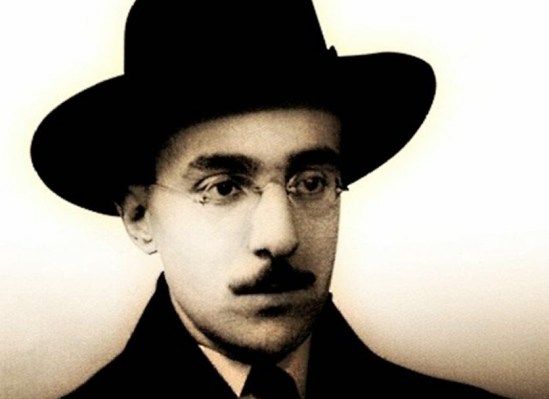
Ειρήνη Παραδεισανού, Ο Φερνάντο Πεσσόα και η ηλιθιότητα των ευφυών

F.+Pessoa

«Δεδομένου ότι ο Φερνάντο διαθέτει μια ευαισθησία σε υπερβολική ετοιμότητα καθότι συνοδεύεται από μια ευφυΐα σε υπερβολική ετοιμότητα, αντέδρασε πάραυτα στο Μεγάλο Εμβόλιο – το εμβόλιο που προστατεύει από την ηλιθιότητα των ευφυών».
Αυτά γράφει ο Άλβαρο Ντε Κάμπος, ένας από τους ετερώνυμους του Φερνάντο Πεσσόα για τον δημιουργό του.

Τη βλέπω γύρω μου αυτήν την ηλιθιότητα.

Στην κλειδωμένη ματιά του νέου ανθρώπου που στα είκοσι νομίζει πως βρήκε όλες τις απαντήσεις και δεν καταδέχεται να θέσει ερωτήματα.

Στην αλαζονεία του «επιτυχημένου» μεσήλικα που, αυτάρεσκα κλειδωμένος στο κουτί της γνώσης του, απορρίπτει μετά βδελυγμίας – καλά οχυρωμένης πίσω από ένα προσωπείο συναίνεσης και μετριοπάθειας – οτιδήποτε δε χωράει στα κουτάκια της μικρονοϊκής σκέψης του.

Μονάχα τα παιδιά στέκουν αλώβητα από αυτήν. Η ευφυΐα τους είναι στ’ αλήθεια μαγική, γιατί οι αλυσίδες της σκέψης δεν έχουν προλάβει ακόμη να τη μολέψουν. Και υποπτεύομαι πως η παιδική ματιά του είναι που έσωσε τον Φερνάντο Πεσσόα από την ηλιθιότητα των ευφυών.

«Σαν ένα παιδί προτού το μάθουν να είναι μεγάλος,
Υπήρξα αληθινός και πιστός σε ό,τι είδα και άκουσα».

Μονολογεί ο Φερνάντο Πεσσόα μέσα από τα ασύνδετα ποιήματα του Αλμπέρτο Καέιρο.

Το πιο σημαντικό: O ίδιος ο ποιητής δεν επαίρεται για τίποτα. Επινοεί τον ετερώνυμό του, τον Αλμπέρτο Καέιρο, ως τον υπέρτατο δάσκαλο που τον εμπνέει.

Νομίζω πως η ανάγκη του αυτή να επινοεί χαρακτήρες φανταστικούς πέρα για πέρα και αποστασιοποιημένος απ’ τον εαυτό του να γράφει τα ποιήματα που αυτοί του υπαγορεύουν, υπογράφοντας με τα ονόματά τους δεν είναι τυχαία. Πίσω απ’ αυτήν κρύβεται μια βαθιά εντιμότητα, μια αδήριτη ανάγκη για αλήθεια.

«Ο δάσκαλός μου Καέιρο δεν ήταν παγανιστής. Ο Ρικάρντο Ρέις είναι παγανιστής, ο Αντόνιο Μόρα είναι παγανιστής. Ο ίδιος ο Φερνάντο Πεσσόα θα ήταν παγανιστής, αν δεν ήταν ένα κουβάρι μπερδεμένο από μέσα».

Γράφει ο Άλβαρο Ντε Κάμπος.

Ο Πεσσόα έχει την εντιμότητα να σκάψει βαθιά μέσα του, να κοιτάξει την έρημο της ψυχής του και να παραδεχτεί πως «είναι ένα κουβάρι μπερδεμένο από μέσα».
Έχει όμως παράλληλα μέσα του τη σφραγίδα της δωρεάς που λίγοι εκλεκτοί έχουν, το κεντρί της αμφιβολίας, την ακόρεστη ανάγκη για αναζήτηση της αλήθειας. Κι όταν αυτή τον πληγώνει;

Ο αυθεντικός ποιητής φτιάχνει τη δική του αλήθεια. Γίνεται ο προφήτης της και την κηρύσσει μέσα από το έργο του. Εναγώνια προσπαθεί να την προστατεύσει από τα βρώμικα χνώτα των άλλων.

Και η αλήθεια του ποιητή Φερνάντο Πεσσόα δεν υπήρξε ποτέ μονοδιάστατη. Από κει και η ανάγκη του να υποδυθεί ρόλους, να επινοήσει τόσους ετερώνυμους όσα και τα πρόσωπα της αλήθειας του.

«Δεν αλλάζω. Ταξιδεύω (…) Εμπλουτίζω την ικανότητά μου δημιουργώντας νέες προσωπικότητες. Συγκρίνω αυτήν την πορεία προς τον ίδιο μου τον εαυτό όχι με κάποια εξέλιξη αλλά με κάποιο ταξίδι».

Πάνω απ’ όλα όμως υπερασπίζεται την παιδικότητα, τη ματιά την μπολιασμένη με το όνειρο.

«Έχουμε όλοι δυο ζωές:
Την πραγματική, αυτή που ονειρευόμαστε
Στην παιδική μας ηλικία, αυτή
Που συνεχίζουμε να ονειρευόμαστε, μεγάλοι,
Στο βάθος της ομίχλης
Και την ψεύτικη, αυτή που ζούμε
Στις συναλλαγές μας με τους άλλους.
Που είναι η πρακτική, η χρήσιμη,
Αυτή που την τελειώνουμε στο φέρετρο.

Στην άλλη δεν υπάρχουν φέρετρα, θάνατοι,
Μόνο εικόνες των παιδικών μας χρόνων:
Μεγάλα βιβλία χρωματιστά, για να δεις κι όχι για να διαβάσεις
Μεγάλες σελίδες χρωματιστές, για να θυμάσαι αργότερα.
Στην άλλη είμαστε εμείς,
Στην άλλη ζούμε.
Σ’ αυτή πεθαίνουμε, και ζωή σημαίνει αυτό ακριβώς.
Αυτή τη στιγμή, λόγω αηδίας, ζω στην άλλη…»

(Δακτυλογραφία, απόσπασμα, μετάφραση Γιάννης Σουλιώτης, εκδόσεις Printa)

Πόσοι τη νιώθουν αυτήν την αηδία; Ή μάλλον πόσοι είναι ικανοί να τη νιώσουν; Σ’ αυτούς απευθύνεται ο ποιητής. Ο ποιητής «με τη διανοητική πάντα ευαισθησία του, την έντονη και ανέμελη προσοχή του, τη θερμή λεπτότητα που δείχνει στην παγερή ανάλυση του εαυτού του».

Ο Φερνάντο Πεσσόα, ένας διανοητής με βλέμμα που στοχεύει στην ψίχα των πραγμάτων ανέγγιχτος από τις μικρονοϊκές θεωρήσεις των ευφυών ηλιθίων.

(Τα αποσπάσματα είναι από τα βιβλία: «Τα ποιήματα του Αλμπέρτο Καέιρο», μετάφραση, σημειώσεις Μαρία Παπαδήμα, εκδόσεις Gutenberg και «Fernando Pessoa, Ποιήματα», εισαγωγή-μετάφραση Γιάννης Σουλιώτης, εκδόσεις Printa)

*Αναδημοσίευση απο τον Ποιητικό Πυρήνα http://ppirinas.blogspot.com.au/2014/11/blog-post_30.html Η Ειρήνη Παραδεισανού διατηρεί το ιστολόγιο “Παρείσακτη” στη διεύθυνση http://wwwpareisakth.blogspot.com

Οδός Κατερίνας Γώγου

942795_770211283084643_2142839881530591821_n

ΤΟΥ ΓΙΩΡΓΟΥ ΠΑΠΑΧΡΙΣΤΟΔΟΥΛΟΥ*

Το όνομα της ποιήτριας και ηθοποιού Κατερίνας Γώγου (1940-1993), ενός από τα εμβληματικότερα πρόσωπα του αναρχικού χώρου στα πρώτα του βήματα στην ταραγμένη μεταπολιτευτική Ελλάδα κι ευρύτερα ενός προσώπου που διαμόρφωσε το πολιτιστικό ρεύμα που συνδέθηκε με το διεθνές κι εγχώριο αντιεξουσιαστικό κίνημα, θα δοθεί σε δρόμο της πόλης των Ιωαννίνων στη συνοικία του Λασπότοπου.

Η σχετική πρόταση της επιτροπής ονοματοθεσίας οδών και πλατειών του Δήμου Ιωαννιτών (καταλήχτηκε στις 5 Δεκεμβρίου 2012) εγκρίθηκε από το Δημοτικό Συμβούλιο στη συνεδρίαση της 21ης Μαρτίου και έχει το δικό της, ιστορικό βάρος, όπως συμβαίνει με την κάθε ονοματοδοσία δρόμου.

Κι αυτό επειδή τα ονόματα που δίνουμε στις πλατείες και τους δρόμους αποτυπώνουν (ή δεν αποτυπώνουν) τους κοινωνικούς συσχετισμούς-είναι ένας καλός δείκτης για το ποια είναι τα σύμβολα της πόλης, ποιους επιλέγει να τιμήσει η εκάστοτε εξουσία, ποια κομμάτια της ιστορικής μνήμης επιλέγει να αποσιωπήσει, ποια επιλέγει να αναδείξει, ακόμη και κόντρα στα ιστορικά γεγονότα.

Για παράδειγμα, την κεντρική πλατεία κοσμεί ο ανδριάντας του Συρρακιώτη πολιτικού Ιωάννη Κωλέττη (πρώτος συνταγματικός Έλληνας πρωθυπουργός) που αμφιβάλλουμε κατά πόσο θα πρέπει να τιμάται όταν υπήρξε ένας από τους πολιτικούς που θεμελίωσε το πελατειακό κράτος με τα περίφημα ρουσφέτια, ενώ καταμαρτυρούν για αυτόν τα μύρια όσα οι αγωνιστές του ’21 για τον βίο και την πολιτεία του στην ελληνική επανάσταση.

11863437_10152950246150957_247798389147488940_n

Αντίστοιχα, με δεδομένη την στρατιωτική επικράτηση της Δεξιάς στον ελληνικό εμφύλιο πόλεμο (1946-1949), η πλειοψηφία των κεντρικών δρόμων της πόλης πήρε τα ονόματα πολιτικών και προσώπων της πλευράς των νικητών. Όταν οι ηττημένοι αργότερα “αποκαταστάθηκαν”, εκπληρώθηκε, το 1983- αν θυμόμαστε καλά- ένα πάγιο αίτημα της δημοκρατικής παράταξης της πόλης, ήδη από τη δεκαετία του ’60: στήθηκε ο ανδριάντας του Ελευθερίου Βενιζέλου στην κεντρική πλατεία (μεταφέρθηκε από την κάτω πλευρά, το 2005, μπροστά από την σημερινή περιφέρεια όταν ξεκίνησαν οι εργασίες για το γκαράζ). Ή αργότερα, δόθηκε το όνομα του αριστερού εξόριστου Δημήτρη Χατζή στην πλατεία των Αμπελοκήπων.

Σαν να μαλάκωσε η μνήμη ή έστω αρχίσαμε με λιγότερους δισταγμούς να συζητάμε για την υπόθεση Πρίντζου.Ας επιστρέψουμε στη Γώγου όμως η οποία, εκτός από το να αποτελεί, μαζί με τον Άσιμο και τον Σιδηρόπουλο,ακόμη ένα από τα σταθερά σύμβολα αναφοράς και έμπνευσης του αντιεξουσιαστικού ρεύματος και στην πόλη μας (“Εμένα οι φίλοι είναι μαύρα πουλιά..”, ένα από τα ποιήματα της που έγινε τραγούδι), δάνεισε τον τίτλο της ποιητικής της συλλογής“Τρία Κλικ Αριστερά” στη δημοτική παράταξη του ΣΥΡΙΖΑ στις δημοτικές εκλογές του 2010 με επικεφαλής τον Χρήστο Μαντά.Εντούτοις, η πρόταση να δοθεί το όνομή της σε ένα από τα δρομάκια του Λασπότοπου ήρθε από έναν…πρώην του ΣΥΡΙΖΑ και νυν της Δημοκρατικής Αριστεράς: τον αντιδήμαρχο Βασίλη Μασαλά!

Μία πρόχειρη θεωρία των τύψεων θα εξηγούσε την επιλογή του κ. Μασαλά (ο υπογράφων δεν την ασπάζεται). Υπάρχει κάτι άλλο πιο απλό, πέρα από την ευρύτερη κουλτούρα ποιυ κουβαλά η Γώγου και η οποία σίγουρα πότισε με αντιεξουσιαστικό πνεύμα την ελληνική αριστερά (ειδικά την ανανεωτική): ο αντιδήμαρχος τυγχάνει πρόεδρος της Επιτροπής ονοματοδοσίας του Δήμου στην οποία επίσης συμμετέχουν ακόμη οι δημοτικοί σύμβουλοι κκ. Μ. Ελισάφ, Φ. Τσουμάνης, Φ. Μπουραντάς και ο αντιπρύτανης του πανεπιστημίου Ιωαννίνων Γιώργος Καψάλης.

Όπως εξήγησε ο κ. Μασαλάς, μιλώντας στην “Ε”, η ονοματοδοσία των δρόμων γίνεται με δύο τρόπους: είτε αξιολογούνται προτάσεις πολιτών είτε κατατίθενται προτάσεις από τα μέλη της Επιτροπής. Στη συνέχεια οι προτάσεις εγκρίνονται από επιτροπή της Αποκεντρωμένης Διοίκησης κι επιστρέφουν στο Δήμο ώστε να παρθεί σχετική απόφαση του Δημοτικού Συμβουλίου.

Η γενικότερη λογική είναι σε μία συνοικία τα ονόματα να έχουν μία ενότητα μεταξύ τους- πχ. άνθρωποι της τέχνης με ανθρώπους της τέχνης. Για παράδειγμα, η οδός Κατερίνας Γώγου θα έχει “γείτονες” ορισμένους από τους εκπροσώπους της γενιάς του ’30: Καραγάτσης, Γκάτσος, Θεοτοκάς, Καββαδίας, Πρεβελάκης, Μυριβήλης.
Η ίδια μπορεί να διαφωνούσε- άντε να τα έβρισκε με τον Καββαδία (λησμονημένος κι αυτός για καιρό) ή τον Γκάτσο. Ίσως θα ήθελε “γείτονες” τον Παύλο, τον Γιάννη, την Πάολα, τον Φίλιππο, το Νίκο, τον Μήτσο, την Μυρτώ…

 Είτε έτσι είτε αλλιώς, η επιλογή του Δήμου Ιωαννιτών είναι ιστορική: είναι ενδεχομένως ο πρώτος δήμος στην Ελλάδα που τιμά μία αναρχική ποιήτρια, ένα πρόσωπο των δαιμονοποιημένων Εξαρχείων τα οποία τόσο συκοφαντούνται, αλλά κανείς δεν μπορεί να τα αγνοήσει…

Γιατί γνωρίζουν όπως έλεγε και η Γώγου: “Ξέρω πως ποτέ δε σημαδεύουνε στα πόδια./ Στο μυαλό είναι ο Στόχος, το νου σου ε;”. 

*Αναδημοσίευση τη Δευτέρα, 9 Απριλίου 2012, από την τοπική εφημερίδα των Ιωαννίνων “Ενημέρωση”. Πρώτη δημοσίευση Babylonia.gr
http://www.babylonia.gr/news/topika-nea/politismos-texnes-istoria/istorika/to-onoma-tis-katerinas-gogou-se-dromo-ton-ioanninon.html

10393578_621281744644265_1820119378365130330_n

Νίκος Παπαστεργιάδης: «Αξιοθαύμαστο και σημαντικό το έργο του Γιάννη Βασιλακάκου»

FullSizeRender (2)

Layout 1

Την Τετάρτη, 25 Μαΐου 2016 έγινε η παρουσίαση των δύο τελευταίων βιβλίων του συγγραφέα Δρα Γιάννη Βασιλακάκου την οποία διοργάνωσε το Πολιτιστικό Κέντρο της Ελληνικής Κοινότητας Μελβούρνης, σε συνεργασία με το Πανεπιστήμιο Μελβούρνης. Το πρόγραμμα παρουσίασε ο κ. Νίκος Ντάλλας. Πρώτος ομιλητής ήταν ο καθηγητής κ. Νίκος Παπαστεργιάδης (επικεφαλής της Σχολής Πολιτισμού κι Επικοινωνίας) του Πανεπιστημίου Μελβούρνης, ο οποίος έκανε μία εις βάθος ανάλυση του πρώτου βιβλίου: «Χρήστος Τσιόλκας: Η Άγνωστη Ιστορία – Η Ζωή και το Έργο του» (εκδ. Οδός Πανός, Αθήνα 2015). Ένα χαρακτηριστικό απόσπασμα της ομιλίας του:

«Είναι μεγάλη τιμή που μιλώ σήμερα για το βιβλίο του Γιάννη Βασιλακάκου για τη ζωή και το έργο του Χρήστου Τσιόλκα. Το βιβλίο του Γιάννη είναι όντως ένα καταπληκτικό και αξιοθαύμαστο επίτευγμα. Το διάβασα με τεράστιο ενδιαφέρον και θαυμασμό και είμαι πραγματικά περήφανος που μου δίνεται η ευκαιρία να μιλήσω γι’ αυτό το πολύ σημαντικό έργο. Αναφερόμενος στην ποιότητα του βιβλίου, ξεκινώ από το Α΄ Μέρος (που αποτελείται από μια σειρά συνεντεύξεων με τον Χρήστο) το οποίο θεωρώ πολύ σημαντικό διότι τεκμηριώνει την όλη εξέλιξη του Τσιόλκα ως άτομο (από παιδί ως ενήλικα). Κι επίσης διότι, στη συνέχεια, επιχειρεί μια διερεύνηση ορισμένων σημαντικών ζητημάτων που τον απασχόλησαν στη ζωή, όπως για παράδειγμα: την πολιτική, τη θρησκεία, την ταυτότητα, τον πολιτισμό, το ρατσισμό κτλ. Ο Γιάννης διαθέτει αυτή την εκπληκτική ικανότητα να θέτει κάποιες ουσιωδέστατες ερωτήσεις, με τέτοιο άμεσο κι ευφυή τρόπο, έτσι που ο Χρήστος να αναγκάζεται να σκάψει βαθιά στην προσωπική του ιστορία και στις σκέψεις του προκειμένου να απαντήσει όσο πιο αυθεντικά και ειλικρινά γίνεται. […] Οι ερωτήσεις αυτές αγγίζουν τόσο ευαίσθητες χορδές, σε σημείο που να μην υπάρχουν εύκολες κι ετοιμοπαράδοτες απαντήσεις. Εξού και ο Χρήστος αναγκάζεται να αναγνωρίσει τα γνωσιολογικά του όρια καθώς και αυτά της ίδιας της γλώσσας. Εξυπακούεται ότι οι συνεντεύξεις αυτές δεν αποτελούν ρεπορτάζ ιδεών, αλλά δίνουν μια αίσθηση όχι μόνο για το ποια ήταν η πορεία του Χρήστου, αλλά επίσης και για το έργο που αναγνωρίζει ο Χρήστος ότι απομένει να γίνει. Κι αυτό είναι ένα απίστευτο επίτευγμα εκ μέρους του Γιάννη Βασιλακάκου – χωρίς να αναφερθώ ακόμη στα άλλα πλεονεκτήματα του βιβλίου αυτού – για το οποίο αξίζει να τον χαιρετίσω και να τον συγχαρώ…».

Ο καθηγητής Νίκος Παπαστεργιάδης

Ο καθηγητής Νίκος Παπαστεργιάδης

Δεύτερος ομιλητής ήταν ο δημοσιογράφος και ποιητής κ. Δημήτρης Τρωαδίτης, ο οποίος αναφέρθηκε στο δεύτερο βιβλίο του Βασιλακάκου με τίτλο: «Η άγνωστη αλληλογραφία του Κώστα Ταχτσή – και η σχέση του με αυστραλιανούς καλλιτεχνικούς κύκλους» (εκδ. Οδός Πανός, Αθήνα 2014). Ο κ. Τρωαδίτης, αφού έκανε μια σύντομη αναδρομή κι επισκόπηση στην πολυτάραχη ζωή και το έργο του Ταχτσή και τον μυστηριώδη θάνατό του, αναφέρθηκε λεπτομερειακά στο περιεχόμενο του εν λόγω βιβλίου, τη ζωή και τις περιπέτειες του συγγραφέα του «Τρίτου Στεφανιού» στην Αυστραλία, την θυελώδη απέλασή του και τη σπουδαιότητα των επιστολών του προς τον Αυστραλό ζωγράφο Καρλ Πλάτε και τη σύζυγό του Τζόσελιν. Επίσης, στη σχέση του Ταχτσή με τον Αυστραλό νομπελίστα Πάτρικ Γουάιτ και ιδιαίτερα τον σύντροφο του τελευταίου Μανόλη Λάσκαρη, και γενικότερα το αυστραλιανό καλλιτεχνικό συνάφι. Χαρακτήρισε τον Βασιλακάκο ως «κατ’ εξοχήν βιογράφο του Ταχτσή, αφού ήταν ο πρώτος που συνέγραψε την επίσημη βιογραφία του “Κώστας Ταχτσής: η αθέατη πλευρά της σελήνης” που εξέδωσαν οι εκδ. Ηλέκτρα το 2009 κι έγινε μπεστ σέλερ στην Ελλάδα, αλλά και χαλκέντερο ερευνητή-μελετητή αφού ξόδεψε χρόνια ερευνώντας τη ζωή και το έργο του μεγάλου δημιουργού». Ιδιαίτερη μνεία έκανε στον «Απόρρητο φάκελο Ταχτσή» ο οποίος, χάρη στο ενδιαφέρον και τις ενέργειες του Βασιλακάκου αποδεσμεύτηκε από τα Εθνικά Αρχεία της Αυστραλίας (τέλη του 2015), μετά από 55 ολόκληρα χρόνια. «Σημαντικότατο επίτευγμα», τόνισε, «καθώς ο εν λόγω “φάκελος” ρίχνει άπλετο φως στην πολυτάραχη ζωή και δράση του επίμαχου συγγραφέα στους Αντίποδες».

Μια άποψη του ακροατηρίου. Σε πρώτο πλάνο (από δεξιά) οι Γιάννης Βασιλακάος και Δημήτρης Τρωαδίτης

Μια άποψη του ακροατηρίου. Σε πρώτο πλάνο (από δεξιά) οι Γιάννης Βασιλακάκος και Δημήτρης Τρωαδίτης

Τρίτος ομιλητής που ανέβηκε στο βήμα ήταν ο Δρ Γιάννης Βασιλακάκος, ο οποίος, στην αντιφώνησή του, αφού ευχαρίστησε όλους τους συμβαλλομένους στη διοργάνωση της εκδήλωσης – την Ελληνική Κοινότητα για το κάτερινγκ και την άψογη φροντίδα της διοργάνωσης, αλλά και τους έξοχους ομιλητές για τις οξυδερκείς αναλύσεις τους, μεταξύ άλλων τόνισε: «Πάντα με γοήτευε η ζωή των μεγάλων προσωπικοτήτων της τέχνης και των γραμμάτων – Ελλήνων και ξένων. Κυρίως των πρώτων, και ιδιαίτερα όσων υπήρξαν απόδημοι, ή παιδιά αποδήμων, οι οποίοι έζησαν την περιπέτεια του ξεριζωμού από πρώτο χέρι, όπως κι εγώ. Καθόλου τυχαίο λοιπόν που καταπιάνομαι με συγγραφείς που έζησαν εκτός Ελλάδας. Το κριτήριο της αποδημίας όμως δεν είναι το μόνο που λαβαίνω υπόψη. Εννοείται ότι πρωτίστως είναι η ποιότητα, σπουδαιότητα και γοητεία του έργου τους που με έλκει. Αλλά βεβαίως και η ζωή τους με αφορά άμεσα, καθώς, συχνά, είναι εξίσου ενδιαφέρουσα και σημαντική όσο και η δουλειά τους – ιδίως όταν υπάρχουν αχαρτογράφητα νερά όσον αφορά το ερευνητικό πεδίο». Και κατέληξε λέγοντας: «Παρακολουθώντας την αυτοεξομολογητική πορεία συγγραφέων σαν τους Τσιόλκα και Ταχτσή, εμμέσως πλην σαφώς, ιχνηλατώ, αναπόφευκτα, και τη δική μου συγγραφική πορεία. Είναι σα να πορευτήκαμε μαζί χέρι-χέρι όλα αυτά τα χρόνια, σα να συν-γράψαμε από κοινού, κομμάτι-κομμάτι τούτα τα βιβλία…»

Ακολούθησαν ερωταπαντήσεις από το ακροατήριο ενώ, στη συνέχεια, ο Γιάννης Βασιλακάκος υπέγραψε βιβλία του για το κοινό κατά τη διάρκεια της δεξίωσης.

Ο Δημήτρης Τρωαδίτης

Ο Δημήτρης Τρωαδίτης

Ποίηση και ψυχολογία: ο ρόλος της ηθικής ομορφιάς

manos-564x272

Της Μαριάννας Πλιάκου

18/5/2016

Η ποίηση, ως «μητρική γλώσσα της ψυχής» (Romanyshyn, 2014), σχετίζεται άμεσα με την ψυχολογία. Κοινότοπο παράδειγμα η κληρονομιά της τελευταίας στην ποίηση της αρχαίας Ελλάδας (μίμηση, κάθαρση κ.τλ.). Πιο πρόσφατα η χρήση της ποιητικής αναπαράστασης στην ποιοτική έρευνα της ψυχολογίας (δηλ. η ανάλυση ποιητικών κειμένων προς ανάδειξη διακριτικών μορφών εμπειρίας, συναισθημάτων, σκέψεων), όπως στη διερεύνηση της έννοιας της πολιτισμικής ταυτότητας (ιδιαίτερα στα σημερινά συμφραζόμενα της μετανάστευσης) (Guzzardo, 2016).

Ως προς την επιρροή της ποίησης στον αναγνώστη μπορεί κανείς να γράψει πολλά (η ποίηση ως μορφή θεραπείας, ανάπτυξη της ενσυναίσθησης και του εαυτού κτλ.), αλλά πολύ σύντομα θα αναφερθώ στον ρόλο της ηθικής ομορφιάς (πράξεις αγάπης, δικαιοσύνης, ελέους, αυταπάρνηση κτλ.). Η ηθική ομορφιά (στην ποίηση, εδώ) προκαλεί συναισθήματα ανάτασης στον αναγνώστη και τον κάνει να θέλει να γίνει καλύτερος άνθρωπος (Haidt, 2008). Αυξάνει την οξυτοκίνη (νευροδιαβιβαστής που δημιουργεί αισθήματα αγάπης κι συναισθηματικών δεσμών), ώστε το άτομο (συνείδηση) να υπερβαίνει τα στενά όρια του εαυτού του.

Η υπέρβαση αυτή χαρακτηριστική στο παρακάτω ποίημα της Lucille Clifton:

εσύ με ποιον είσαι;

με τη γυναίκα στη στάση που
σέρνει τη τσάντα της
πάνω στο λεωφορείο προτού οι πόρτες
κλείσουν μ’ αυτήν είμαι
τής δίνω τα ψιλά που χρειάζεται
κι εκείνο το γέρο που κρατιέται απ’
το χερούλι το σακατεμένο χέρι του κλειστό
σα τις πόρτες μ’ αυτόν είμαι
όταν θέλει να κατέβει
το κουδούνι χτυπώ μ’ αυτούς είμαι
πάνω στο νυχτερινό λεωφορείο για το ίδιο
όποιο-νά ’ναι μέρος με το σκοτάδι πάντα
με τις κόρες μου
με τους κουρασμένους γιους μου

Guernsey, 17 Μάη 2016

*Αναδημοσίευση στο ηλεκτρονικό “Φρέαρ” στο http://frear.gr/?p=13820 (πρώτη δημοσίευση). Η μετάφραση του ποιήματος είναι της συγγραφέως. Φωτογραφία: Κωνσταντίνος Μάνος.

Κώστας Δεσποινιάδης, Ο Κάφκα ως αξιοθέατο

kafka-cover

Τριγυρνάμε σκοντάφτοντας απ’ την μια οφθαλμαπάτη στην άλλη, αποπροσανατολισμένα θύματα προφητών και τσαρλατάνων, που τα θαυματουργά γιατροσόφια τους για φτηνή ευτυχία δεν κάνουν τίποτα άλλο παρά να μας βουλώνουν τα αυτιά και τα μάτια
Φραντς Κάφκα

Τυχαία ενημερώθηκα ότι στο βιβλιοπωλείο Free Thinking Zone των Αθηνών οργανώνεται από κάποια λέσχη «Φιλελεύθερης Ανάγνωσης», στις αρχές Ιούνη παρουσίαση του βιβλίου μου «Φραντς Κάφκα. Ο ανατόμος της εξουσίας» που κυκλοφορεί από τις εκδόσεις Πανοπτικόν.

Ασφαλώς, κάθε βιβλίο που κυκλοφορεί ο καθένας μπορεί να το χρησιμοποιήσει όπως θέλει, ακόμα και ως σουβέρ για ποτήρια σαμπάνιας στη Μακρόνησο.

Ας είναι, ούτως ή άλλως είμαι από θέση αρχής ενάντια σε όλες τις απαγορεύσεις.

Απορώ όμως πώς κάποιος επιλέγει να παρουσιάσει το βιβλίο ενός εν ζωή συγγραφέα δίχως να μπει στον κόπο έστω και τυπικά να τον ενημερώσει για αυτό;

Ας πω λοιπόν, για την ιστορία, ότι ουδεμία ανάμειξη έχω στην εν λόγω παρουσίαση (για την οποία διαδικτυακά ενημερώθηκα) κι ας υπενθυμίσω ότι αυτό που επίμονα λέει το βιβλίο μου στις 110 σελίδες του είναι πως ο Κάφκα είναι αναρχικός (και όχι… φιλελεύθερος), κι ότι αυτό που σχεδόν επί έναν αιώνα αποσιωπάται και διαστρεβλώνεται είναι ότι το έργο του συνιστά μια ανατινακτική κριτική κάθε εξουσίας.

Όπως κι αν την διαβάσει κανείς, «η πρόζα του τάσσεται με το μέρος των απόκληρων, με τα αποπαίδια της οικονομικής ανάπτυξης»· από το Κολωνάκι ως την Μακρόνησο, κι από το Σίτι του Λονδίνου μέχρι την Τσιάπας.

Κώστας Δεσποινιάδης

The mastery of Π.Ο.

BY IVOR INDYK*

Fitzroy-book-picture-small-100x142

Fitzroy: The Biography by π.O.
Collective Effort Press
740pp
$55.00AU
Published September, 2015
ISBN 9780958772679

TTO-picture-small

π.O.portrait Les Murray is the contemporary Australian poet one most associates with the celebration of a particular place, but with the publication of the monumental Fitzroy: The Biography, that mantle must surely pass to π.O. Murray’s 40 acres at Bunyah on the north coast of NSW is one-sixth the size of the inner city Melbourne suburb of Fitzroy, though considerably larger, and much more sparsely populated, if you take into account the memory of the larger family territory commemorated in poems like ‘Their Cities, Their Universities’, and ‘Aspects of Language and War on the Gloucester Road’. At little more than 240 acres, π.O.’s Fitzroy is the smallest suburb in Australia, and the most densely populated.

In 740 pages, and over 400 biographical and autobiographical portraits, Fitzroy: The Biography covers a period of over 150 years, from the surveying of the area, then largely forest, and inhabited by the Wurundjeri people, to recent times. Fitzroy is the place to which π.O. was brought as a child by his father, from the displaced persons camp at Bonegilla – the place where he grew up, and made his name as a poet and publisher, until rising rents and the gentrification of the suburb, forced his relocation. This new book is a companion to π.O.’s equally monumental 24 Hours, published 20 years ago, which subjected Fitzroy to a similarly detailed scrutiny, over the period of a day rather than through its history, also in exactly 740 pages. To this massive oeuvre – massive by the standards of prose, let alone those of poetry – we need to add the many poems set in Fitzroy and gathered in earlier collections like Fitzroy Brothel, Fitzroy Poems and Panash, and magazines like Fiztrot and 925. Statistics of this kind are one of π.O.’s favourite compositional devices in Fitzroy: The Biography, so it is appropriate that the claim made for his determination to render the sense of this place, should refer, not just to the intensity of his obsession, but to its scale as well.

It is in the nature of the provincial poet to see the whole world in the details of the place he or she celebrates. This place is the world, that is the assumption from which the poet proceeds. In the case of Fitzroy, where the population has been drawn from everywhere, the presence of the larger world in the smaller needs no special demonstration. The four hundred biographies, which constitute the biography of the place itself, cover a vast range of lives, occupations, histories, identities, classes and cultures. The material for these, drawn from public archives, court records, newspapers and other historical documents, ensures that gangsters and thieves take their place alongside politicians, footballers, artists, businessmen, local identities and more generally, ordinary people, whose distinction was that they crossed the law at some point, or dreamt of a better life, or were victims of violence or theft or misfortune or poverty. There are biographies of libraries, banks, hotels, cafés, ‘the flats’. π.O.’s own background emerges more fully from this broad canvas in the later stages of the book – with its experience of war, migration, poverty, gambling, the criminal demi-monde, madness, anarchism and poetry, the book seems to contain the multitudes it portrays, rather than simply to offer them as subjects.

The range of characters presented, and the poet’s involvement with each figure in turn, is remarkable in itself, but the real principle of totality lies elsewhere, in the manner in which each biography is presented. At the beginning of a biography, and in the course of its development, the reader is suddenly subject to a cascade of facts, which may be statistical (‘there are about 6,000 miles / of veins in the body’), proverbial (‘Truth has a good face, but / a bad set of clothes’), take the form of a riddle (‘A chair’s got / 4 legs, but can’t run’), or be drawn from slang (‘A basin of / gravy, is a baby’), dictionary definitions (‘a comet, is a star with a tail’) or other kinds of reference books, like concordances, the Guinness Book of Records, the Encyclopaedia of Comparative Iconography (‘Folly is a man, biting stones’) and even household manuals (‘A bowl of cool water, and / eucalyptus oil, will repel a cockroach’). Though these are not necessarily facts in the empirical sense of the word, they all make assertions about how things are, and draw their mandate from common sense, or the stock of common knowledge.

Sometimes the catalogue of facts provides a larger context for the biography it introduces, as in this collection of details associated with the various stages of road building, which opens the portrait of Sam Brailsford, who laid down many of the roads in Fitzroy, and ‘left his mark, all over / the Municipality, in his time’:

One loose pebble can
cause a landslide. Geometry is at the root
of everything. A road, is a thoroughfare.
Road construction, the creation of a continuous
right-of-way. Old shoes, are easiest to work in.
A work in progress, is posted with a sign: MEN AT WORK.
The process begins, with the clearing of
all the vegetation on the site, then earth, and rock –

Elsewhere, the application is oblique, the creation of a certain kind of impression or anticipation, rather than a specific context, as in the portrait of the murderer George Hotton, who later suicided in gaol:

A canary is a convict.
A sudden trauma, can cause the whole
body to tremble. A broken piece of glass, can’t
be hurt any further. 22 balls scatter across a billiard table.
George Hotton walked, with a wooden leg.
Conclusions, follow premises; he came
home after the pub, and assaulted his wife.
He assaulted his wife, quite often. A mantis leg
slashes / down, on an insect. A habit at 3
can continue until 60. Terror causes the body, to tremble.
There are 13 muscles, in the human leg. George was
arrested, for assaulting his wife.

A caged canary is carried into a coalmine to warn of danger; to the extent that it is caged, it is a prisoner, a convict. This allusion to danger combines with the subsequent references to disturbances of different kinds – the trembling body, the broken piece of glass, the scattered billiard balls – to create the sense of a gathering crisis. The convict reference points to the prison to which Hotton will be committed (for all we know he may already have a record). ‘Conclusions, follow premises’: he has a wooden leg, potentially a weapon of assault. What really drives these implications home is the analogy, through Hotton’s wooden leg, with the praying mantis, only it is not praying here: ‘A mantis leg / slashes / down, on an insect.’ You feel the violence of it even more strongly than if it was Hotton’s leg, wooden or otherwise, with or without the 13 muscles, that did the damage. This is because the analogy, indeed all the ‘facts’ cited, bring their own resonances to bear on the situation, though they are not causally connected with it. It is as if all the worlds from which these facts are drawn register the shock that is about to be brought down on Mrs Hotton’s head by her inebriated husband.

‘Discovery, is the result of / seeing an analogy, where none / existed before’, as π.O. notes in the poem ‘William Moonby’, echoing Arthur Koestler. Though it is illogical to assert identity by analogy – the fact that something is like something else, doesn’t mean it is alike in all respects – nevertheless an analogy, once it is accepted as such, does encourage you to draw conclusions. Indeed, it is difficult not to do so, particularly in poetry, where disjunction and elision are normal to the process of understanding, as is a willingness to cross the gap between elements through the interpretive acts of metaphor or association. Even where you feel a conspicuous lack of connection, you still make the attempt.

π.O.’s biography of Harry Evans, the champion billiards player, is a case in point. The first of two cascades of fact in the poem registers, in a comic way, his pride at being the champion, and also the sense that he is about to take a fall. ‘To show one’s form, is to show how good one is. / There are 31,000 quills, on the back of a porcupine. (No / doubt) but no one’s that great! Everything, is always / up for grabs. A battle royal, is a free for all. (The koalas / get restless, around dusk). Kookaburras are famous / for their laugh. Yabbies stick their eyes, on the ends of stalks / and have a good look around. A barracuda can strike with / a mighty force…’ And sure enough, along comes a challenger for his title, Charley Memmott. The second cascade occurs in the middle of the game, when challenger and champion have been sparring and have reached something of an impasse:

A powerful punch, can
shake the foundations of a building. A healthy rat will
stand up and sniff the air. “R” is 2½ times louder, than “Sh”.
An isosceles triangle, has 2 equal sides. To break
wind, in polite company, is not the done thing.
Nice work is an expression of humour. Bankrupts, are broken!
Idiots, cracked! Its bad luck to see a cross-eyed man
before placing, a bet. Men change their minds, 2, 3, times
a day, more often than women. Sometimes the toupee, is too
big for the head…

With the best will in the world, the reader will be hard put to apply these disparate facts to the matter in hand. Yet there is an application here, which becomes clearer when the poet finally observes, ‘The game / between Memmott + Harry wasn’t going anywhere’. You know the truth of this observation because, as far as the list of facts is concerned, you aren’t getting anywhere either. That is to say, even when the facts don’t add up, they still serve an expressive function, holding the beat, marking an impasse, enacting frustration.

What is this obsession with facts, so insistent in Fitzroy: The Biography, that their enumeration appears to be fundamental to the composition of the book? One obvious explanation would be that the foregrounding of fact dramatises the encounter with history, which after all presents itself primarily in the form of documents and testimonies. But this can’t be a full answer, first because while the outlines of the featured characters are drawn from historical sources, the facts that embellish them generally are not; and second because π.O.’s interest in the poetic use of facts and statistics goes back decades, well before the writing of Fitzroy: The Biography. The kind of poem that makes up the bulk of this new book π.O. calls ‘the everything poem’, which is an accurate description, because everything has the potential to appear in it. Earlier versions, collected as parts of a sequence called ‘The Everything Poem’, appeared in Big Numbers, π.O.’s New and Selected Poems, published in 2008. In that sequence you can see the poet exploring the possibilities of a new poetic language – some of the poems are concerned with history, but the main interest is in the power and variety of the material itself, the statistics, definitions, proverbs, empirical descriptions and the like, and what they can be made to do.

A larger explanation for the appeal of this material, which includes history as one of its sources, is that it constitutes the substance of our social life, our general knowledge and our common sense, and the assumptions which influence our actions. These ‘facts’ – conjectured, assumed, postulated or proven – compose the milieu in which we live. To parade them, to bring them into the foreground of the poem and to display their potential for transformation and reinterpretation, as π.O. does, suggests a political purpose, not only the desire for an aesthetic that might prove all-encompassing. His first ‘everything poem’ occasioned by a visit to the Australian Bureau of Statistics in 1985, and collected in Big Numbers begins, ‘I’ve studied the situation / I’m not sure we can win’, and then gives a list of things that could be surveyed statistically (including ‘Gas / Gates / Geese / Gherkins’), before culminating in a set of dramatically presented figures which suggest the subjugation of women, discrimination against migrants, and the exploitation of the unemployed.

π.O.’s education as an anarchist is documented in Fitzroy: The Biography, and his political sympathies are clear, not just in portraits of fellow-anarchists like Chummy Fleming and Geoffrey Eggleston, but in his sympathy for the poor, the eccentrics and dreamers, those who live outside or against the system, the Indigenous inhabitants of the suburb, and the many women who are the subject of violence and abuse throughout Fitzroy’s history. But there is also a more general wariness, in his writing, about the domination of facts, which goes beyond the suspicion of how they might be used for the purposes of coercion, surveillance or intimidation. ‘The mind, is graffitied all over by the facts’, he writes in his portrait of the poet Frank Williamson, referring to his occupation as a teacher, and then by contrast, goes on to celebrate his achievement as a poet, quoting Williamson’s words, and then adding one of his own, in affirmation of a kind of fact that speaks for itself, without making any claim for its validity:

Where is Marie? Where is Rose? Ah…

the robber years… those.

In one of the Fitzroy poems the poet goes backstage before a Tom Waits concert and discovers his hero in congress with a groupie. The shock is registered with a spilling of fact – ‘Mercury makes a full circuit of the Sun / every 88 days. Headlines: RUNAWAY COW / LANDS ON ROOF.’ – and then by another spillage when Waits appears on stage minutes later, to the poet’s astonishment:

An audience at the movies, blinks ////// in sync.
Marcel Marceau once released a record – 40 minutes of
silence, followed by ////// applause! We are being
buried alive, under an avalanche of information.
An octopus has 8 (and squid, 10) tentacles,
each with 100s of suction cups, powerful enough to
burst an artery

We know more than we need to know – more is known about us than needs to be known. The welter of information is represented, in the poems, precisely as a cascade or an avalanche. The multi-tentacled octopus appears repeatedly in the book, to suggest both the pervasive reach, and the power, of this over-heated information economy.

The widespread anxiety about ‘information overload’ presents it as a contemporary phenomenon, but the 12-page poem ‘Suburbicide’, which is entirely made up of the slogans, invocations, proclamations, regulations, memories, opinions, sayings and all the other forms of assertion and avowal that define the life of Fitzroy, suggests that this kind of oppression has always been the case, at least in the modern period. One of π.O.’s most fertile sources of information is the newspaper, particularly in the nineteenth century – its power, as an encyclopaedic medium, now that it is waning, is not sufficiently recognised. The poem ‘1875’, composed of newspaper snippets from that year, portrays the suburb in terms of assertions about hats, drains, transvestites, thistles, boots, snake-oil cures, dogs and haircuts, the last of which Professor Higginbotham, of 215 Smith St Fitzroy, respectfully offers in the following compendium of fashionable styles: ‘Rifle Corps, Garibaldi, Palmerston, / Horse shoe, Byron, Brutus, Oxford, American, / French, Cambridge, West End, Dandreary, and / // Military.’ There’s an octopus in this poem too, along with the assertion that it has plenty of rocks to hide beneath.

I imagine that π.O. would see capitalism, rather than the internet, as the cause of information overload. It’s interesting, in this respect, that he specifically denies the internet as a source for his facts, preferring instead to garner them from books remaindered or dumped in second-hand and thrift shops as time and the internet wreak havoc on the printed word. Judging by the nature of the facts, these include encyclopaedias, popular science books, thesauri and dictionaries of various kinds (including slang, quotations and proverbs), concordances, and reference books on such subjects as etiquette, body language, flowers and animals, household hints, martial arts and so on. It is appropriate that the poet should find his materials amongst the remnants and cast-offs of the capitalist economy, since now that they have dropped out of use, their facticity – the assumptions that make them facts – becomes more apparent. Freed from use – or rather, crystallised out of use – they offer themselves to appropriation and recombination. No doubt the quaintness of the appearance of old books, and the second-hand shops in which they are found, also works as an incitement to curiosity and discovery. You can find facts on the internet, but you have to know what you are looking for. The facts to be found in second-hand books offer themselves with a power similar to that described by Walter Benjamin, who saw quotations as fully-armed highwaymen, ready to leap out and rob the reader of their convictions.

π.O.’s quotations aren’t really like highwaymen – or bushrangers – though they have plenty of energy, and they leap out at you at unexpected moments. Given the poet’s pride in his Greek antecedents, particularly Homer and Aeschylus, it would be more suitable to see them as particularly dynamic versions of the epic simile (in the sense that they offer a series of evaluative analogies), or as a chorus whose voice is that of common sense or common knowledge, providing moral perspectives on the action. It’s surprising to think of π.O.’s facts in this way, because they are, after all, usually inert, deposited in dictionaries and handbooks and reports, brought out occasionally to embellish a speech or an argument, when they seem to verge dangerously on cliché, or to serve only to bolster the authority of the speaker. On the other hand, π.O.’s design, in foregrounding the citation of facts in Fitzroy: A Biography, seems calculated to set them free from the orders they belong to, and to give them an expressive power that they cannot otherwise claim. (They are presented as assertions of fact after all, and even a proverbial assertion – ‘a fire in the heart can make the eyes smoke’ – surrenders any emotional charge it might have for the sake of seeming right.) You’re made aware of the inertness of facts, if they are not invigorated in this way, when they are juxtaposed with an assertion you can’t deny an emotional charge to, because it is associated with a death, or an accident, or a particular case of injustice.

A family of 4, washes a ton of
laundry a year. A lack of clarity, leads to confusion.
A supply of water, can either be constant
or intermittent. Walter Hume was 12 when
they told him, he no longer had a father.
On a level road, a small stone can upset an apple cart.

There is another example in the opening to the portrait of Anthony Crocker, one of the many characters in the Biography who are punished for the crime simply of being poor:

When the streets, are muddy
shoemakers rejoice. There are 105 calories
in a banana: 20 yards of linen, in a coat.
Over the bags (with the best of luck) is a ///// charge.
Candles made of beeswax, don’t */”# gutter, or spit.
Anthony Crocker (of George St) didn’t have enough to eat.

In both cases, the emotion carried by the reference to a particular death or instance of poverty charges the facts before and after it. Regardless of whether Walter Hume’s father died in a road accident, the proverb about the small stone and the apple cart resonates with the father’s death, even as it maintains its more general application to the unfortunate turn taken by the life of the son. In the second case, the jolt given by the reality of Anthony Crocker’s hunger frees the surrounding facts, about shoes and bananas and coats, from the inertness bestowed on them by their generality, and charges them with concern – the 105 calories contained in a banana now seems like a taunt, to a man who can’t afford any food, let alone a pair of new shoes, or the 20 yards of linen in a coat.

In this way, π.O.’s quotations, like Benjamin’s, make an appeal to the reader’s convictions, as well as to their emotions. Relocated in the poems, they take on an extraordinary power. This is best seen in their capacity to express strong emotions, like indignation and anger. In 1874, two Aboriginals from the mission at Ramahyuck, one of whom, Blind Bobbie, had been denied food for a week by the Reverend in charge, knocked on the door of a nearby settler. A series of otherwise unexceptionable definitions register the settler’s, and the poet’s, shocked response to their condition. ‘All numbers are not created equal. / The eye-lens of a fish, is spherical. . . Air passes up the trachea, and / into the throat. Ellipses are a series of dots, that can / indicate an unfinished thought, a leading statement, a slight / pause or a nervous (or awkward) silence.’ When another Reverend comes to the defence of his colleague by arguing, in a letter to the Argus, that the blind Aboriginal had brought his misfortune on himself, the poet again employs a definition to bring judgement down upon him. ‘Penguin calls, consist of harsh braying, trumpeting, growls, trills, yelps, and duets.’ The abrupt association of priest and penguin demonstrates the power of fact, when it is used analogically, for it is not only the braying of the penguin which makes it similar to a certain class of Reverends, but the fact that, clothed in black and white, you can think of them as looking alike too. All sorts of other possibilities follow. I am reminded of Jonathan Swift’s swipe at readers in A Tale of A Tub, through a homely and unexpected analogy, which compared them to flies:

I am wonderfully well acquainted with the present relish of courteous readers, and have often observed, with singular pleasure, that a fly driven from a honey-pot will immediately, with very good appetite, alight and finish his meal on an excrement.

There are many figures who come in for judgement of this analogical kind in Fitzroy: A Biography – murderers, wife-beaters, criminals, stand-over men, racist thugs, corrupt police officers – but the poet’s greatest anger is reserved for those in authority who wield their power over the poor and the helpless. The portrait of the pederast priest Fr. Fasciale begins:

Raindrops, turn rocks into dirt.
Fr. Fasciale was ordained by Archbishop
Mannix, in 1952. Australo-pithecus learnt, to
walk upright. Bully, once meant “first rate”.
A mirror knows how to reverse an image / from
left to right, but not up and down. The brain, of a rat
weighs about 2 grams. Fr. Fasciale forced children
to play with his genitals. The masculine, includes
the feminine. The origin of leeks is unknown.

The poem ends with a description of Fr. Fasciale’s funeral, at which George Pell delivered the homily, and with the comment, ‘Robert Gardner threw a 5 pound brick, 142 ft. / Fitzroy, is still hurting, from / that / prick.’

In 1938 Professors Agar and Wallace argued for the importance of instituting birth-control in the poorer suburbs, in order to control the reproduction of the inhabitants – a recommendation which, as soon as it is announced in the poem dedicated to the professors, is followed by the assertion, ‘A troglodyte, is a cave-dweller.’ The proposal itself, to issue contraceptives to those ‘unsuited’ to becoming parents, provokes a howl of derision:

“Four legs good, two legs bad”.
8 arms good, 2 brains bad. 4 toes on each fore,
4 toes on each hind! A crooked nose / is best seen, side on.
The upper limit of hearing, is about 20,000 Hz.
Breeding by any standard, is a matter of heir; but…
breeding by the poor + Blacks, resembles “farmyard” sex.
Dick Browning did a double take, then a back-
ward somersault / over a 7 foot fence.

The last detail may need some explanation (it is of the same order as the reference to the brick-throwing prowess of Robert Gardner in the previous poem). There is a Dick Browning, and in the early 1950s he made an historically high backward somersault over a bar – the feat earned him an entry, as ‘the world’s greatest tumbler’, in the Guinness Book of Records (which is likely where π.O. found him, as well as Gardner). Relocated in the poem, however, the fact functions as a cartoon-like ‘double take’, an exaggerated gesture of disbelief at the moral implications of the Professors’ plan.

These judgemental uses of fact, to convey scorn, outrage, anger or condemnation, are at the moral end of π.O.’s expressive range, though none of his applications is ever without a moral dimension. More often, though, it is the expression of emotion itself which is paramount, as if the main task were to capture the emotional registers of history, to restore the cry, the laugh, the voices of protest and grief, the shock and comedy, to an otherwise soundless procession of figures; and to make poetry resound with feeling, something it is not known to do readily in this country. π.O.’s fondness for the thesaurus definition works especially well to give his portraits a percussive effect, as in the biography of Geoff Moriarty, the fullback for Fitzroy in the premierships of 1899 and 1905, who gambled, drank to excess, and beat his wife:

Blow: thump, hit, / slap, cuff, box.
Turn: spin, revolve, reverse, spoil, change, tap
Cajole: persuade, urge, wheedle, coax.
Knock: thwack, tap, thump, run, rap.
Welcome to the House of Violence.

There is a biography of the footballer-bully right there, in the thesaurus repertoire of aggressive and evasive actions. The percussive effect is not unlike that of cartoons or comics, with their exaggerated physical gestures and outbreaks of violence, their strange uses of language (more evident in 24 Hours than here), their mixture of pathos and comedy. π.O. learnt English through reading comics, and they seem to have remained an influence. In the poem called ‘Olive Cuppies’, Olive is ironing her husband’s clothes when the iron goes ‘phut’ and she hands it to him to fix.

Alongside a dream, is a nightmare. He grabbed
the iron; 16 is the 4th power of 2; the first message
transmitted in Morse code (in 1844) was: “What hath
God wrought!” The ring-finger, is the 3rd finger (on the left
hand). In an emergency, 4 horses cannot overtake the tongue!
The iron burnt all the skin off his right hand. 15 is the sum of
the 1st five numbers; he dropped the iron, and
punched her down. The only difference between
a Chimp and us, is 1%.

It is remarkable, the way numbers, abstract in themselves, can be used to register shock, as here. The effect is similar to that achieved through the deformation of syntax, spelling and punctuation, in 24 Hours, where a café acts as the focal point for the pent-up emotions of the migrant inhabitants of Fitzroy who come there for the company or the gambling. As is often the case, a game of cards suddenly erupts in anger

Mahooma puts down his cards . . . . . . . . . . . .

Rong kaala !

RONG KAALA! , a bloke sez :

WAI YOO . . . POOT?

Wai yoo POOT??? N-O YOO TORN !

Wai yoo POOT? ? ? ? !

[He doesn’t know].

Hee n-o!

Hee N-O! , the bloke sez: (Sssmaarti).

Hiz SHITMEN!

BROK mai NERV!

Wai yoo

poot him to plai? !

Eye POOT him to plai ? ? ? ? ? !

( ( ( ( Eye ) ) ) ) POOT HIM? ? ? ? ? ? !

( ( ( Eye ) ) ) ) POOT HIM TO PLAI ? ? ? !

Yoo MED! Yoo MED! he sez .

Yer .

(Yer).

Eye giv yoo mai PRIK!

Giv it ! !

( ( ( Giv it) ) ) ) !

In one of the poems in Fitzroy π.O. notes, ‘The Latin verb “cogito’ (for “to / think”) etymologically, means “to shake together”. / To smash, to break, to kick down stairs…’, and you have a strong sense that his determination to shake up both the facts and figures of an essentially empirical culture, and the language by which it hopes to govern its affairs (and keep its emotions under control), represents a deliberate expressive assault on its restraints and inhibitions.

π.O. has the reputation of being a bit of a wild man, so it is worth stressing the tenderness, affection and humour he is able to capture in his biography of Fitzroy and its characters and situations. If you compare the shock registered when a man prone to violence is scalded by an iron, and beats his wife, to the awe felt by the poet when he enters the Fitzroy library for the first time as a child, to borrow a book, and is overwhelmed by the wonder of the place, you get a sense of the range and complexity of feeling that his analogical use of ‘facts’ can convey:

I walked up
the bluestone //// steps, and saw all the chandeliers
on the ceiling and thought it “magical”.
Courage goes on ahead, and the wind (some-
times) gives you just enough of a push to
get you in thru, the doors. Beethoven’s 32nd piano
sonata in C minor, represents the opening of
the Gates of Heaven. Valentino’s funeral
resulted in scenes of mass hysteria. When someone
looks up at you, the rule is they generally focus
on your eyes. The Old codger, behind the wooden counter
saw me, and went back to what he was doing.
A lizard closes its eye ( ), and blocks out the World.

The facts are deliberately over-stated, I would say – there is a comic self-consciousness mixed in with the fanfare which announces the poet-to-be’s first entry into the world of literature, and very quickly a familiar note of protest too, for ‘The Old codger’ who guards this world picks the boy as the son of a Fitzroy tenant, and refuses him borrowing rights, since they are only accorded to property-owners. There is a similarly complex reaction portrayed in the poem about the Fitzroy-born sculptor Bertram MacKennal, who after a stint in London with Tom Roberts, and a successful commission to do the relief for the façade of Parliament House in Melbourne, sets up a studio in the city, only to find himself completely ignored. That’s a feeling – of withheld recognition, and the puzzlement and self-doubt that comes with it – the writer knows well. ‘To raise one’s “eye-brows”, is / to be ))) surprised. “I don’t know” was the most / amazing piano-solo ever waxed. To delude, is to “befool / the mind”. To know one’s groceries, is to know the score. / The moon, does not heed the barking of a lone dog. / So he went back to Europe, where he was hailed for his skills.’

Fitzroy: The Biography has many such moments, delicate in their expressions of feeling, though the choice of elements through which they are conveyed may at first seem surprising. One example is Tom Trudgeon’s attempt to evade custody by doing a runner while on the way to the lockup – ‘The Constable took / off, after him. 23% of the Cosmos, is composed of / dark matter. Tom disappeared down a lane.’ Tom is a petty criminal, hounded by the cops – but the juxtaposition of the Cosmos and a dark laneway in Fitzroy, has all the hallmarks of sublimity about it. The effect is comic here, but in another example, the description of Gertrude Kane mourning the death of her half-caste son, sublime perspectives of a similar order produce a completely different set of feelings. There is a whole story here which π.O. compresses with great skill at the same time as he attenuates the moments of emotion, so as to draw out their implications. As a younger woman Gertrude had been abandoned by an Aboriginal man, who left her with a crippled child. ‘Unmoral, amoral, non-moral, immoral.’ is π.O.’s unequivocal comment. She takes up with a man called Kane, a fighter and a ship’s steward, who doesn’t want a half-caste sullying the purity of the family he then proceeds to have with her – so the boy is sent away to an orphanage. ‘Conclusions / follow, from premise. A day of sorrow, is longer / than, a month of pleasures.’ Logically speaking, that makes years of sorrow, longer than an eternity. Kane dies at sea, and although she is now living with her eight other children in extreme poverty, Gertrude immediately retrieves her first-born from the orphanage. But the damage has been done to him, and he soon dies, too. The description of the mother’s grieving is one of the most powerful moments in the book.

She sat down beside him, and as the sun set
she gently washed his body, and put
a clean white shirt on him. A capella is singing
without accompaniment: The Earth follows
an elliptical pattern. The Moon, is 5,594 miles across.
Darkness is light, without a fire in it. (The work of God, has
a blemish on it). (Life was brought to Earth
by a comet). Moths at night, blunder into street-lights.
To rabbit on, is just to talk nonsense.

And so the narrative resumes, in simple terms, without elaboration. ‘At midnight (under the cover of darkness) she / put his body into a pram, and pushed him / up Alexandra Pde, up to a peppercorn tree / over Reilly’s drain (between Brunswick, and / Napier St).’

The boy’s death, and the mother’s grief, is given an extraordinary intensity by the juxtaposition of such large perspectives – from a standpoint in the solar system, observing the beginnings of life on Earth – with the fragility of moths at night blundering into street-lights, and then the note of personal embarrassment (‘to rabbit on…’), suggesting the poet should just stop, and let the scene speak for itself. The scene is a particularly contemporary kind of pietà, shrouded in the folds of fact. But what really drives the emotion home is the repetition and near repetition of ‘it’ – ‘Darkness is light, without a fire in it. (The work of God, has / a blemish on it). (Life was brought to Earth / by a comet).’ The repetition-rhyme on ‘it’ hammers home the particularity of this scene, insists on the grief and pain of this death, even as the definitions and quotations which allow the repetition open out their cosmic perspectives.

There is an interesting paradox in Fitzroy: The Biography, which has to do with the relatively late emergence of the biography of π.O.’s own family in the work. Since the family’s presence in Fitzroy dates from the early 1950s, and the book begins in the 1830s, the late appearance is chronologically appropriate. But these late autobiographical poems are also different from the historically-based portraits that come before and after, in that they are largely free of the expressive elaborations that are such an important feature of the book as a whole. Given their late appearance, unadorned, against the encyclopaedic array of fact and historical detail which is all about them, the poems about the family’s life in Fitzroy, and the poet’s life in particular, seem striking in their modesty. In 24 Hours the poet is largely absorbed by his role as meticulous observer and recorder of the life happening around him – he barely makes an appearance at all.

It may seem odd to talk about modesty or shyness in relation to π.O., given the provocative nature of his public persona, and his ‘crazy wog poet’ reputation – a reputation he addresses directly here in the poem ‘Adelaide Arts Festival’. Nevertheless, there is something in the way he makes ‘the facts’ talk for him, and the huge labour implicit in the gathering and sorting and placing of these citations, that suggests self-effacement. The disavowal of expressive elaboration in the family poems indicates that the personal details given here are of a different order. They do not require invigoration or intensification, because they are alive in the poet’s memory, they are essential to who he is, so the presenting of them is an open and expressive act in itself. But the ground has had to be prepared first: these direct acts of self-presentation draw much of their power from their surroundings, from the dramatic context provided by the other biographies in the book. That is to say, the self-effacement implicit in π.O.’s encyclopaedism is intimately connected with the self-disclosure evident in his autobiographical poems – the one gives licence, and force, to the other.

This distinction, between orders of fact, and the relation between them, is best seen in the poems of tribute to people or places that π.O. holds in the highest regard. The tributes to his encyclopaedic mentors, the quiz maestro Barry Jones and the poet Geoffrey Eggleston, are, as one would expect, encyclopaedic in nature. The poem in praise of the artist Danila Vassilieff fizzes with detail, a suitable tribute to the immense vitality and creativity of the man. But then there are the literary tributes, and here, immediately, the facts are of a different, and more intimate nature. Phillip Hervey was an educated man sent to Van Diemen’s Land for the crime of forgery. The creator of the largest puzzle in the world and a lover of Aeschylus, he blew his brains out after being laid off work. π.O. marks his memory with a bouquet of quotes from Aeschylus, ‘Words are the Physicians / of the mind. Destiny will always / wait for a Free man, but not a Slave. / A great Ox stands upon my Tongue’. Frederick White was a Fitzroy bookseller, charged by police with having an indecent publication – Ovid’s Art of Love – on his sale shelf. π.O.’s tribute to him is almost entirely made up of quotes from Ovid, from the Heroides, the Metamorphoses, the Art of Love, and culminates with his famous claim, in the Epilogue to the Metamorphoses, ‘My name shall never be forgotten’. π.O. changes it slightly, giving it the intimate and resonant note characteristic of his personal poems.

Time, is the devourer of all things. I first
saw Ovid (in Fitzroy). His name, shall
not be forgotten, in this house.

‘Shakespeare & the State Library’ is one of the most moving tributes in this collection, offered in recognition of two of the most important influences on π.O.’s formation as a poet, as indicated by the title. It is a finely wrought piece, which begins with a brief fanfare of fact, to warn (not without irony) of the magnitude, and the personal nature, of the disclosures to follow.

An avalanche, in Alaska (in
1958) caused, a tidal wave 1,740 ft high.
Diane Arbus’s work (in her photographs) violated
all notions of “privacy”. – Kennel-up – stop talking!
Bluish-black lobsters, are made red by boiling…

Thereafter, the dominant mode of citation is quotations from Shakespeare’s Sonnets, which are threaded through the poem, in intricate dialogue with its account of the poet’s ambitions, and the role bestowed on him as the ‘great white hope’ of his family.

I told the parents, i couldn’t study here i.e. at the back of
the shop – i had to go to the State Library (in the City), and
they agreed. (But not to make a famine, where
an abundance lies, it had to be, when the shop wasn’t busy).

Shakespeare might be thought of as a father-figure, since the Sonnets have a decisive early effect on the young poet (‘O change thy thought, / that I may change my minde – i was rapt!’), but there are two other father-figures in the poem: Barry Jones, encountered on the steps of the library; and a real father, the poet’s own, an altogether more pervasive and complicated presence, antagonistic and apparently uncomprehending, and addicted to gambling. When it comes down to it, you understand that the poem is essentially about π.O.’s relationship to his father, and his father’s expectations of him (hence the warning notes in the opening fanfare).

Over dinner one day, my father asked me, what i was reading.
I didn’t know what to say. How could i say, To thee
I send this ambassage, in Greek? Or mine this, mine thus,
mine thee, mine must, or why should i hast
my hence (or some such)? My father wasn’t anything like
Shakespeare’s, who as a decrepit father takes delight
to see his active childe do deeds of youth.
So i said, i’m reading this book by this guy
called Shakespeare…

The poet assumes that his father neither knows nor cares who Shakespeare is, so he explains the Sonnets to him in terms he would understand, as being ‘about a bloke / who’s in love with this woman’, and has taken twenty pages just to kiss her hand. His father’s reply is immediately appealing.

My father, looked up at me, and said “O”

we’re up to, that stage

are we?

The response is funny, and deeply knowledgeable too, in its own way. It takes some guts, and a lot of skill, to open a door on a parent like that. It brings your whole background as a person into play. To allow that to happen, to develop a form which can house all the elements, to give them space and life, is a huge achievement.

Notes
An earlier essay by Ivor Indyk, on π.O.’s 24 Hours, can be found in Southerly, 55, 4 (1995), 66-72.

Copies of Fitzroy: The Biography can be purchased at independent bookshops and directly from the publisher, for $65 including postage within Australia, Collective Effort Press, GPO Box 2430, Melbourne VIC 3001, email: pioh(at)hotmail(dot)com

Ivor-Indyk-1
*Ivor Indyk is the publisher of the Giramondo book imprint and Whitlam Chair in the Writing & Society Research Centre at the University of Western Sydney.

**Republished from Sydney Review of Books at http://www.sydneyreviewofbooks.com/fitzroy-the-biography-review-%CF%80-o/

Γεωργία Τρούλη SANG – Μέχρι τις 20 Μάη 2016 στο Cafe Νίκης 35, Θεσσαλονίκη

6 αντίγραφο

ΤΗΣ ΜΑΡΙΑΣ ΚΕΝΑΝΙΔΟΥ*

Στην ατομική της έκθεση στο χώρο 35, η Γεωργία Τρούλη με το τίτλο « Sang» αποπειράται να μας εισάγει στον εύθραυστο, εικαστικό της κόσμο, έναν ασπρόμαυρο μικρόκοσμο, με υποδόριους δεσμούς τις πνευματικές εσωτερικές διαδρομές που διανοίγουν την υπόστασή του σε μία άλλη διάσταση πέρα από την πρώτη ανάγνωση, πέρα από το εμφανές , το ορατό. Μπορεί στα γαλλικά το « Sang» να σημαίνει «αίμα» αλλά στα Αγγλικά σημαίνει μεταξύ των άλλων «συνθέτω ποίηση». Τίτλος λοιπόν, που από τη μία αφορά άμεσα την καλλιτεχνική πρακτική της σε σχέση με τα υλικά που χρησιμοποιεί από το εργαστήριο αιμοδοσίας στο οποίο καθημερινά εργαζόταν,αλλά από την άλλη αφορά την υπόστασή της ως ποιήτρια.

9

Στην καλλιτεχνική της πρακτική διαπραγματεύεται την επικοινωνία, το φορτίο των λέξεων την οντολογική υπόσταση του κώδικα πάνω σε ακρυλικές πλάκες αιμοδοσίας ή διηθητικό χαρτί εργαστηρίου που σε πρώτη χρήση είχε αίμα . Το αίμα/λέξη με το συμβολικό φορτίο της πρωτογενούς μονάδας ύπαρξής μας, αίμα ως δηλωτικό της σωματικότητας εγγεγραμμένο εκεί που οι λέξεις παίρνουν παλιμψηστικά τη θέση του και γίνεται Λόγος εκείνος ο Λόγος που μπορεί να κυοφορεί ποίηση. Συστήματα γραφής που αποκτούν τη δύναμη του συμβόλου προσωπικά για τον καθένα.

12

Κάθε γράμμα, σύμβολο /μονάδα του ελάχιστου, αποτελεί δομικό στοιχείο της σύνθεσής της, συνθέτει ένα όλο ένα πλήθος που αποκτά νόημα, δυναμική και μεταμορφώνεται σε φορέα νοήματος.Τα αποτυπώνει, τα επαναδιατυπώνει και επαναφέρει μία προσδοκία για το πέρα από το πραγματικό και μέσα στην ενικότητά τους, τη μοναξιά τους, τα μετουσιώνει, υπογραμμίζοντας την εννοιολογική τους υπόσταση. Γράφει στίχους από ποίηματά της σε επανάληψη, ανακόπτοντάς τα από το συμβατικό νόημα έλευσής τους ώστε να επιτελεσθεί η αναγωγή των αφηγημάτων και των επεισοδίων της φόρμας, σε γλώσσα.

10

Ο ρυθμός, η επανάληψη λειτουργούν ως ένας εσωτερικός συνεκτικός δεσμός συμβόλου και μορφής προσδίδοντας την αίσθηση του ταξιδιού μέσα στην ιστορία και το χρόνο. Ενσωματώνει στο έργο της διάφορα είδη γραφής, από σπηλαιογραφίες, γραφές διαφόρων λαών και greeklish, μέχρι μπράιγ και σήματα μορς. Απωθώντας ο,τιδήποτε περιττό, κρατά το ουσιώδες, με μία ιδεαλιστική-ποιητική ερμηνευτική αντιμετώπιση της φόρμας, μία διαλεκτική συλλειτουργία κώδικα/γραφής και σχήματα.

15

Γεννά μοτίβα λιτά και απέριττα, που ενέχουν όλη την ιδιότυπη αισθητική της συνθετικής της γλώσσας, με λιτότητα, απλότητα, αμεσότητα, ουσιώδη στοιχεία τόσο ως προς την ποιότητά τους, όσο και ως προς την συμβολική αναγωγή τους.

1

Ο ελλειπτικός της λόγος με αρχέγονη αμεσότητα, μορφική καθαρότητα, απλότητα στην έκφραση, ποιητική ερμηνευτική αντιμετώπιση, παραπέμπει και διαχέει σε μία ποιητική διάσταση με αφηγήσεις, μέσα από τη σιωπή, την απομόνωση και την μυστική συνθήκη ανάμεσα στο δημιουργό και θεατή. Με έναν χειροποίητο, προσωπικό, υποβλητικό τρόπο, με τρυφερότητα και ευαισθησία και την εσωτερική της ρυθμολογία που αγγίζει την ποιητική διάσταση της φόρμας, δημιουργεί, ένα κοινό μυστικό, ανείπωτο που μόνο ο καλλιτέχνης και ο θεατής ανακαλύπτουν μέσα από τη θέαση του έργου.

*Η Μαρία Κενανίδου Mείναι ιστορικός τέχνης-curator.

sang

Δημήτρης Α. Δημητριάδης, Σκάβοντας τα σοκάκια του κόσμου

air2

Εκτός σχεδίου πάντα η ποίηση

μέσα της
το σχέδιο του σύμπαντος κόσμου.

Μεσσίες και Μεσσίες επαγγέλλονται τον παράδεισο. Η ποίηση τους αποκρούει προχωρώντας στο δικό της δρόμο, σ’ ένα ατέλειωτο ταξίδι εσωτερικής συνομιλίας και καταβύθισης. Γυμνή, θεόγυμνη πάντα, σ’ έναν κόσμο με αρχή και τέλος, χωρίς το χειροφίλημα, το φιλί, τον ασπασμό, χωρίς το ενδιάμεσο κενό που σημαίνει νιώθω και γνωρίζω. Η ποίηση είναι η σωστική μεταμέλεια αυτού του κενού, με όλα τα εμπόδια μπροστά της παράξενα φορτισμένα από την αλήθεια.

Αντίθετα κινούμενη, εκτός σχεδίου, αναζητεί κτερίσματα, θραύσματα. Χτυπάει κουδούνια αξημέρωτα, επισκέπτεται σπίτια που τα στοιχειώνει η απουσία και η μνήμη, συνομιλεί με τις σκιές τους. Ενώνει κρίκους, ηλικίες, γενιές. Αφαιρεί τις μάσκες, τα προσωπεία. Δείχνει τα πράγματα όπως είναι. Ενίοτε καταφεύγει σε χρησμούς. Απλώνει το χέρι στο ανέκφραστο. Ξεσηκώνει τον άγιο αντίλογο, το θεό και το δαίμονα. Ξεσηκώνει το πλήθος με τη δύναμη της ανάγκης, με τη δύναμη της πείνας. Αναπληρώνει την απουσία μόνο και μόνο για να την υπογραμμίσει ακόμα πιο πολύ. Γνωρίζει καλά, πολύ καλά, πως αυτό που λείπει πάντα θα λείπει. Κάθε νύχτα προσφεύγοντας στο θαύμα.

Η φωνή της δεν έχει να κάνει με την ένταση της κραυγής αλλά με τη βαθιά ουσία της ανθρώπινης ύπαρξης, που υπάρχει μόνο στην ελευθερία και στην αξιοπρέπεια, φωνή που δεν μπορούν να την πνίξουν οι ευτελείς και οι διαφθορείς της κάθε είδους εξουσίας. Μέσα στη φαινομική τάξη γίνεται λεπίδα που ανατέμνει τα πράγματα και αποδίδει τα ευρήματά της προσπαθώντας ν’ ανοίξει μονοπάτια, ν’ ανασύρει τους πόθους που ίσως θερμάνουν την ψυχή του σύγχρονου ανθρώπου, αναζητώντας με αγωνία την ουσία της δημιουργίας. Δημιουργώντας με τη στάση της όχι οπαδούς ή πιστούς, αλλά αιωνίως αμφισβητίες. Υπερασπίζοντας και δικαιώνοντας φτωχοδιάβολους, ανυπεράσπιστους, ό,τι έμεινε και μένει αδικαίωτο, ανεκπλήρωτο, άστεγο, τάχα αδύνατο, αλλά τελικά εφικτό, δυνατό και όμορφο. Πανανθρώπινο.

Σκάβοντας τα σοκάκια του κόσμου τεμαχίζεται σ’ εργατικές συνοικίες, φάμπρικες και νταμάρια. Αναλώνεται στους κοινόχρηστους χώρους της ορφάνιας κοντά σε ρημαγμένα ένστικτα και συντρίβεται κάθε στιγμή στα φλεγόμενα πεδία βολής. Χαρακωμένη διαρκώς από σημαίες ξυράφια κατρακυλάει με το βράχο στον ώμο της και ξανά ανηφορίζει στη δόξα της ματαιότητας, καθότι είναι προτιμότερος αυτός ο αγώνας από το να ζούμε ματαίως. Αφήνοντας τη ματαιότητα των ματαιοτήτων στους θεοφοβούμενους του άλλου κόσμου.

Ακροβατώντας ασκείται. Αθλούμενη υπαινίσσεται. Με μάτι άγρυπνο και αυτί ασκημένο στους ψιθύρους αφήνει περάσματα εκεί όπου όλα μπορεί να συμβούν και να ειπωθούν. Συντρίβει αλυσσίδες. Στήνει στον τοίχο του αποσπάσματος τους εκτελεστές που τρομάζουν μπροστά στην αψηφισιά των θυμάτων. Καλώντας μας να πιστέψουμε. Να καλλιεργήσουμε την κοινωνική συνείδηση. Φλεγόμενη μας καλεί σε περιστροφικό χορό στα σταυροδρόμια του κόσμου, ανασαίνοντας από τις παύσεις και τα κενά που αφήνουν οι ρυθμοί της για να γεμίσουν οι άνθρωποι που «πάσχουν» από ζωή.

Η ελπίδα μας είναι. Η μόνο ελπίδα μας. Σ’ αυτήν την πανάρχαια ασυγκράτητη πηγή θα πρέπει να επιστρέφει διαρκώς κι αδιαλλείπτως ο άνθρωπος, αν θέλει να σωθεί από την αποκτήνωσή του. Γιατί, πολύ απλά, μια πολιτική ιδέα χωρίς ποίηση δεν είναι πολιτική, ούτε ιδέα. Ένα φιλοσοφικό σύστημα χωρίς ποίηση είναι μονάχα σύστημα. Μια οποιαδήποτε θρησκεία χωρίς ποίηση δεν έχει θεό.

Περιπλανώμενη πάντα, η «τρελή» του θεού και των ανθρώπων, κραδαίνοντας στίχους πότε σαν λουλούδια και πότε σαν άστρα, έρχεται και φεύγει με άδεια χέρια. Τραυματική αλλά και μάχιμη, μ’ έναν ήλιο καρφιτσωμένο στη θέση της πληγής. Για να μας σώσει. Γιατί σώζει η ποίηση. Ακεραιώνει. Ολοκληρώνει. Μας κάνει ατόφιους. Ολόκληρους. Όλους. Χωρίς την παρουσία της ο βίος θεωρείται αβίωτος.

*Αναδημοσίευση από το Στίγμα Λόγου στη διεύθυνση http://stigmalogou.blogspot.com

Λίνα Φούντογλου: “Δε βρίσκω τίποτα δημιουργικότερο του μηδενός”

12651371_10156506162865416_7351924468899731457_n

ΣΥΝΕΝΤΕΥΞΗ ΣΤΟ ΓΙΑΝΝΗ ΣΤΕΛΙΟ ΠΑΠΑΔΟΠΟΥΛΟ
http://www.thecolumnist.gr/2016/02/blog-post_10.html

Συνάντησα τη Λίνα Φούντογλου σε ένα μικρό ατμοσφαιρικό μπαρ της Αθήνας, πριν από λίγο καιρό. Αέρινη παρουσία, γοητευτική συνομιλήτρια και παθιασμένη με την τέχνη, αρκούν μόλις λίγα λεπτά συζήτησης μαζί της για να καταλάβει κάποιος πόσο μεγάλο ρόλο παίζει η πολιτική, με την ευρεία έννοια, στη σκέψη της.

Απόφοιτος του τμήματος Επικοινωνίας και ΜΜΕ του ΕΚΠΑ, στο τμήμα που όπως η ίδια είπε οφείλει την πολιτικοποίησή της, στη συνέχεια σπούδασε υποκριτική στη Δραματική Σχολή Αθηνών “Γιώργος Θεοδοσιάδης” από το 2009 ως το 2012, τελειώνοντάς την με άριστα και από τότε έχει αφιερωθεί κυρίως στο θέατρο. Ξεκίνησε την πορεία της με τον μονόλογο “Wordwhore” του Γάλλου συγγραφέα Tam Cy Albert από το Urbn Theatr, συνέχισε συμμετέχοντας σε άλλες παραστάσεις του Urbn Theatr, στο “Τρίτο Κύμα” στο Εθνικό Θέατρο ενώ πρόσφατα έγραψε και σκηνοθέτησε την πρώτη της ταινία μικρού μήκους το “Sweet Society”. Εξίσου σημαντική όμως είναι και η σχέση της με την ποίηση καθώς ποιήματα από την πρώτη συλλογή της με τίτλο “δημιουργικό μηδέν” – 19 ποιήματα της Λίνας Φι & 8 σχέδια της orgbalmaria, θα δημοσιευτούν μεταφρασμένα στο γαλλικό περιοδικό “Riveneuve Continents”. Κι όλα αυτά χωρίς να έχει εγκαταλείψει ούτε στιγμή τα ΜΜΕ όπου, ύστερα από ένα σύντομο πέρασμα ως ραδιοφωνική παραγωγός από το “Πορτοκαλί”, πλέον προβληματίζει και προβληματίζεται μέσα από τη στήλη “Απεριορίστων (δια)δρομών” στο περιοδικό 3pointmagazine.gr.

Η πολυτάλαντη Λίνα Φούντογλου μίλησε αποκλειστικά στο “The Columnist” για την υποκριτική, την σχέση τέχνης και πολιτικής, το θέατρο στα χρόνια της κρίσης, τα μελλοντικά της σχέδια και άλλα.

– Ηθοποιός, ποιήτρια, δημοσιογράφος. Ποια από τις τρείς αυτές ιδιότητες πιστεύεις ότι σου ταιριάζει καλύτερα;

Λ.Φ.: “Είμαι ηθοποιός. Στο σχολείο ήμουν καλή μαθήτρια και το να εισαχθώ σε μία υψηλόβαθμη σχολή ήταν σχεδόν επιβαλλόμενο στο πλαίσιο της ελληνικής κουλτούρας “μάθε παιδί μου γράμματα”. Επέλεξα ό,τι βρήκα πιο ενδιαφέρον. Τη σχολή μου βέβαια την αγάπησα πολύ καθώς εκεί πολιτικοποιήθηκα. Γράφω από τα οχτώ. Βαρύγδουπη λέξη αλλά θα μπορούσες να πεις ότι είμαι και ποιήτρια.”

– Η υποκριτική ήταν παιδικό όνειρο ή προέκυψε στην πορεία;

Λ.Φ.: “Ήταν ανάγκη από πάντα. Ποτέ όνειρο. Θα έλεγα πως ήταν πάντα μία πραγματικότητα. Το ήξερα απ’ όταν ήμουν στο δημοτικό.”

– Πριν από λίγο καιρό έγραψες και σκηνοθέτησες την πρώτη σου ταινία μικρού μήκους, το Sweet Society, η οποία στηλιτεύει τόσο την ανισότητα μεταξύ των δύο φύλων όσο και τη σχέση κράτους-πολίτη στις δυτικές κοινωνίες. Μίλησέ μας λίγο για αυτά.

Λ.Φ.: “Νόμος < Κράτος < Σύστημα, υπάρχει μία απαράβατη ιεραρχία όσο και μία απορία, ποιός είναι επιτέλους αυτό το σύστημα. Στην μικρή μου πορεία είδα λίγα κι έμαθα πολλά για αγώνες καταπιεσμένων που εξέλιξαν μεν την ιστορία, κατέληξαν δε στο χωνευτήρι του συστήματος. Το σύστημα, ο καπιταλισμός, δε θα μπορούσε να είναι γυναίκα. Η γυναίκα εξακολουθεί να υφίσταται ρατσισμό, να θεωρείται το αδύναμο φύλο, το αντικείμενο της απόλαυσης κ.λπ. Έπειτα, λόγω της εν δυνάμει μητρότητας έχει πιο έντονο το θυμικό κομμάτι πράγμα που την καθιστά πιο ευάλωτη στο να λυγίσει από το συναίσθημα. Η "σκληρή" καγκελάριος της Γερμανίας με τους ανέκφραστους ήχους που παράγει, δείχνει πως το κράτος σε αντίθεση με το σύστημα θα μπορούσε να είναι γυναίκα. Πρόσεξε όμως, μία γυναίκα άτεκνη, των θετικών επιστημών, από μία τεχνοκρατική κουλτούρα. Και πάλι όμως, δεν είναι το ίδιο το σύστημα! Σημειώνω πως αυτό είναι άποψή μου και πάντα για μια πλειοψηφία. Οι εξαιρέσεις υπάρχουν πάντα και οι ανατροπές είναι για να γίνονται. Για να κλείσω λίγο πιο ανάλαφρα, θα πω ότι αγαπώ πολύ τους άντρες και είμαι από τις τυχερές που έχουν βιώσει ίση μεταχείριση και σεβασμό. Φυσικά δε μιλάω για τους "άρχοντες", για τους άλλους… που αντιδρούνε."

– Πολλοί υποστηρίζουν ότι η πολιτική είναι τέχνη. Από την άλλη πλευρά όμως η τέχνη, σε οποιαδήποτε μορφή, δεν εμπεριέχει κι αυτή το στοιχείο της πολιτικής;

Λ.Φ.: "Ίσως εδώ φανώ λίγο απόλυτη αλλά για μένα αλίμονο αν η τέχνη δεν είναι πολιτική. Φαντάζομαι δε χρειάζεται να διασαφηνίσουμε τι σημαίνει πολιτική κι ότι δεν έχει σχέση απαραίτητα με τα κόμματα, έτσι; Επίσης για μένα είναι το ίδιο πολιτικό ένα έργο του Τσέχωφ με ένα του Πίντερ, όλα δείχνουν έναν δρόμο για μία καλύτερη ζωή και αυτό είναι η ξεχασμένη σημασία της πολιτικής. Η τέχνη καλλιεργεί συνειδήσεις, ποιεί ήθος, ανοίγει ορίζοντες. Για μένα δε θα πρέπει να είναι ένα ξέσπασμα αλλά μία σπίθα προς την κατεύθυνση της κοινωνικής αφύπνισης, της ανθρωπιάς, της απελευθέρωσης."

– Τι είναι πιο επικίνδυνο για την πορεία μιας κοινωνίας, η απολιτίκ στάση ή η λάθος πολιτική επιλογή;

Λ.Φ.: "Και το "απολιτίκ" είναι μία συνειδητή πολιτική θέση που λέει "αποφασίστε εσείς μωρέ, εγώ είμαι κάτι άλλο". Οι περισσότεροι είναι απλώς οπορτουνιστές. Πολύ εγωιστική θέση, κατά τη γνώμη μου. Η λάθος πολιτική κατεύθυνση, χμ… και ποιά είμαι εγώ για να πω τη σωστή; (γέλιο) Πιστεύω σε μία πολιτική κατεύθυνση, άρα τη θεωρώ σωστή ή καλύτερα δίκαιη, δεν την επιβάλλω, τη μοιράζομαι και… μακάρι μια μέρα η κοινωνία να πάρει τη ζωή της στα χέρια της."

– Η "Ισορροπία του Nash" που ανέβηκε πρόσφατα στην Πειραματική Σκηνή του Εθνικού Θεάτρου και στη συνέχεια κατέβηκε για να ξανανέβει, προκάλεσε έντονη πόλωση όχι μόνο στον καλλιτεχνικό κόσμο αλλά και γενικότερα στην ελληνική κοινωνία. Κάποιοι μίλησαν για τεράστια πρόκληση ενώ κάποιοι άλλοι για υστερία. Ποια είναι η δική σου προσέγγιση στην όλη υπόθεση;

Λ.Φ.: "Όταν δημιουργείς κάτι, από μία μπροσούρα έως μία παράσταση, δύο πράγματα είναι σημαντικά, το γιατί το κάνεις -η ανάγκη δηλαδή- και το πού απευθύνεσαι. Προφανώς, η ενόχληση ακούστηκε επειδή ανέβηκε από κρατικό ίδρυμα, που έχει δηλαδή μία συνολική απεύθυνση και συντηρείται από το λαό. Και ναι, ας μην κρυβόμαστε, μπορεί κανείς να πατήσει εκεί. Εγώ προφανώς και είμαι υπέρ της συγκεκριμένης παράστασης, από καλλιτεχνική και πολιτική σκοπιά. Για το μόνο που διατηρώ μία επιφύλαξη, δεν είναι για το αν θα μας κάψουν σαν "μάγισσες" στο Μεσαίωνα αλλά μήπως τελικά δεν είμαστε και τόσοι πολλοί αυτές οι "μάγισσες". Δε θα ήθελα να επεκταθώ ιδιαίτερα."

– Πάμε λίγο στην ποίηση. Το 2014 εξέδωσες την πρώτη σου ποιητική συλλογή με τίτλο "δημιουργικό μηδέν" – 19 ποιήματα της Λίνας Φι & 8 σχέδια της orgbalmaria. "Δημιουργικό" και "μηδέν" δεν είναι αντιφατικά;

Λ.Φ.: "Δε βρίσκω τίποτα δημιουργικότερο του μηδενός. Το μηδέν έχει κίνηση. Κυκλική όπως όλα στη ζωή. Από εκεί ξεκινάς, από εκεί επιλέγεις και αν κουραστείς, νανουρίζεσαι στην εσωτερική του καμπύλη. Όσον αφορά τη συλλογή καθεαυτή, θα ήθελα να μοιραστώ τη χαρά πως έπειτα από πρόταση, κάποια ποιήματά μου θα μεταφραστούν στη γαλλική γλώσσα για το γαλλικό περιοδικό "Riveneuve Continents", στην κατηγορία "Γραπτά και Αγώνες". Πρόκειται για μία πρόταση αυτών των λογοτεχνικών εκδόσεων, να ειδωθεί η ελληνική λογοτεχνία ως ένας από τους αγώνες αντίστασης στις πολιτικές λιτότητας και εξόντωσης και να γίνει κοινωνός όσων περισσοτέρων. Είναι κάτι που μου έδωσε πολλή χαρά καθώς από μικρή αρνιόμουν να κατανοήσω την έννοια των συνόρων, σε οτιδήποτε."

– Από πού αντλείς έμπνευση;

Λ.Φ.: "Από τους ανθρώπους. Από το σώμα. Θαυμάζω ό,τι κινείται σαν να έχω έρθει από άλλον πλανήτη. Από αυτούς που ρισκάρουν. Από το αίμα. Από τη διαφορετικότητα. Από τα μάτια. Από το αρσενικό φύλο. Από τον αναπτήρα μου που έπεσε στον υπόνομο και κάθε βράδυ υποφέρει από μοναξιά."

– Τι συνιστά για σένα ποιότητα;

Λ.Φ.: "Άλλο να ποιείς ήθος και άλλο να καθησυχάζεις το νου. Ξεκάθαρα ποιότητα είναι το πρώτο."

– Πόσο και με ποιο τρόπο επηρέασε το θέατρο και γενικότερα τα πολιτιστικά δρώμενα η κρίση των τελευταίων έξι ετών;

Λ.Φ.: "Για την τέχνη, όποιος ήταν εφησυχασμένος είναι και τώρα. Όσο και να προσπαθεί να απεικονίσει την αλήθεια, ποτέ δε θα έχει το πάθος αυτού που ήδη κολυμπάει μέσα της. Ποτέ δε θα χορέψει μέσα στη φωτιά που έχει αρπάξει στα μέρη μας. Ο αγώνας ήταν πάντα ζωντανός, όσοι τον θυμήθηκαν τώρα, με την ίδια ευκολία θα τον ξεχάσουν. Αυτό χρεώνει περισσότερο τους δημιουργούς παρά τους ηθοποιούς που προσπαθούν να βιοποριστούν. Οι αρνητικές επιρροές αφορούν όλους τους τομείς. Μέχρι και το ψυχολογικό κομμάτι. Για το επάγγελμά μου πάντα ήταν μικρές οι οικονομικές απολαβές και το γνώριζα, οπότε δε θα πω κάτι καινούργιο. Εμείς ζούμε για εκείνη την κυρία που θα πει "σε θυμάμαι από εκείνη την παράσταση, μ' έκανες και δάκρυσα" και για το αγόρι που σου λέει "άρχισα να γράφω". Αυτά τα κάνουμε "ψωμί" και τρώμε."

– Ετοιμάζεις κάτι αυτόν τον καιρό;

Λ.Φ.: "Ναι. Συνεχώς γεννάω ιδέες και ευτυχώς βρήκα άνθρωπο με την ίδια πάθηση. Μαζί με τον σκηνοθέτη Αντώνη Morgan Κωνσταντουδάκη, ιδρύσαμε την ομάδα NAIL και την Hit n' Run Productions. Καλλιτεχνικές παρεμβάσεις στην πόλη με μηνυματικό χαρακτήρα που σύντομα θα μοιραστούμε με όλους. Μετά από μία υπερκόπωση που με ανάγκασε να αρνηθώ ενδιαφέρουσες θεατρικές δουλειές, η NAIL συνδυάζει για εμένα ό,τι θέλω να εκφράσω μέσα από την τέχνη. Στο πλαίσιο αυτών των παρεμβάσεων έρχεται και μία μικρού μήκους ταινία για τον Γ' Παγκόσμιο Πόλεμο. Για αυτήν θα μας γράψει μουσική η αγαπημένη μου και διεθνώς γνωστή μπάντα από τη Μεγάλη Βρετανία, οι Detachments, άξιοι απόγονοι των Joy Division, όπως τους έχει χαρακτηρίσει ο ίδιος ο Peter Hook. Πρόκειται για μία ταινία που θα βασιστεί αρκετά στη μουσική γι' αυτό ψάχναμε αρκετά. Το ότι δέχτηκε ο Bastien μόνο επειδή βρήκε ενδιαφέρον το project, ήταν αναπάντεχο για εμάς. Και ιδιαίτερη χαρά για εμένα που αγαπώ τόσο το είδος της μουσικής που υπηρετεί. Επίσης εν καιρώ, θα κάνω ένα μικρό βήμα να σπάσω το ταμπού που είχα για την τηλεόραση, λαμβάνοντας συμμετοχή σε κάποια γυρίσματα για μία νέα και πολλά υποσχόμενη σειρά. Τέλος, έχω στα σκαριά τη δεύτερη ποιητική συλλογή μου ενώ θα ήταν παράλειψη να μη σημειώσω ότι διατηρώ τη στήλη "Απεριορίστων (δια)δρομών" στο 3pointmagazine.gr."