When the doctor suggested surgery and a brace for all my youngest years, my parents scrambled to take me to massage therapy, deep tissue work, osteopathy, and soon my crooked spine unspooled a bit, I could breathe again, and move more in a body unclouded by pain. My mom would tell me to sing songs to her the whole forty-five-minute drive to Middle Two Rock Road and forty- five minutes back from physical therapy. She’d say that even my voice sounded unfettered by my spine afterward. So I sang and sang, because I thought she liked it. I never asked her what she gave up to drive me, or how her day was before this chore. Today, at her age, I was driving myself home from yet another spine appointment, singing along to some maudlin but solid song on the radio, and I saw a mom take her raincoat off and give it to her young daughter when a storm took over the afternoon. My god, I thought, my whole life I’ve been under her raincoat thinking it was somehow a marvel that I never got wet.
Όταν ο γιατρός πρότεινε χειρουργική επέμβαση και στήριγμα για όλα τα νεανικά μου χρόνια, οι γονείς μου έσπευσαν να με πάνε σε θεραπεία με μασάζ, βαθιά εργασία ιστών, οστεοπαθητική, και σύντομα η στραβή σπονδυλική μου στήλη ξετύλιξε λίγο, μπορούσα να αναπνεύσω ξανά, και να κινούμαι περισσότερο σε ένα σώμα χωρίς πόνο. Η μαμά μου μου έλεγε να της τραγουδάω άσματα καθ’ όλη τη διάρκεια της 45λεπτης διαδρομής προς το Middle Two Rock Road και της 45λεπτης διαδρομής επιστροφής από τη φυσιοθεραπεία. Έλεγε ότι μετά η φωνή μου ακουγόταν απελευθερωμένη από τη σπονδυλική μου στήλη. Έτσι τραγουδούσα και τραγουδούσα, γιατί νόμιζα ότι της άρεσε. Ποτέ δεν τη ρώτησα τι θυσίαζε για να με πάει, ή πώς ήταν η μέρα της πριν από αυτή την αγγαρεία. Σήμερα, στην ηλικία της, οδηγούσα μόνη μου προς το σπίτι μετά από άλλη μια επίσκεψη για τη σπονδυλική στήλη, τραγουδώντας ένα μελοδραματικό αλλά σταθερό τραγούδι στο ραδιόφωνο, και είδα μια μαμά να βγάζει το αδιάβροχό της και να το δίνει στη μικρή της κόρη όταν μια καταιγίδα ξέσπασε το απόγευμα. Θεέ μου, σκέφτηκα, όλη μου τη ζωή ήμουν κάτω από το αδιάβροχό της νομίζοντας ότι ήταν κάπως θαυμαστό που δεν βράχηκα ποτέ.
*Από τη συλλογή “The Carrying”, Milkweed Editions (2018). Απόδοση: Δημήτρης Τρωαδίτης.
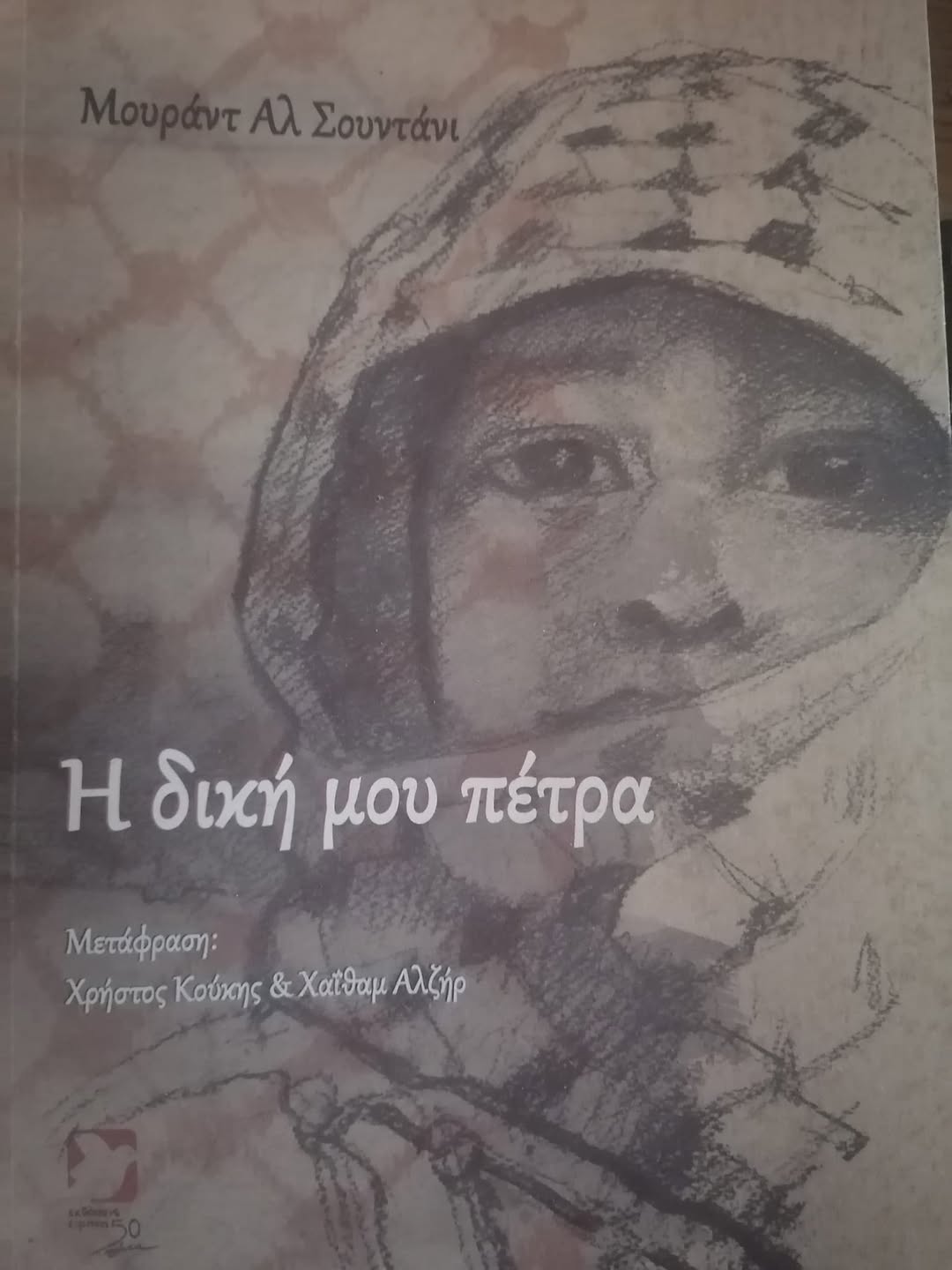
Ας αρχίσει η σφαγή Τα πάντα καίγονται χωράφια και πόλεις Πελώρια μανιτάρια ανθίζουν στους ουρανούς Όχι πια κότες στο κοτέτσι Πτώματα αλόγων και άγριων ζώων Οι γιατροί ψάχνουν τις ψυχές Είναι ακόμη εδώ; Έχουν εγκαταλείψει τα σώματα; Παντού η αψιά μυρωδιά του θανάτου
Εποχή απέραντης θλίψης Ω Παλαιστίνη, του ρόδου και του γιασεμιού με το ένδυμα της αξιοπρέπειας με όνειρα ανέφικτα Μεθυσμένοι από εξουσία κρέμασαν τα απομεινάρια σου πίσω από τα άρματά τους και προέλασαν σχηματίζοντας το V της νίκης για να ολοκληρώσουν τον ακρωτηριασμό σου
Έτσι λοιπόν ζουν οι άνθρωποι και τα φιλιά τους από μακριά ακολουθούν;
Μουσική
*Από ποίημα “Το όνομά σου Παλαιστίνη”. Δημοσιεύτηκε στο περιοδικό Τεφλόν, τεύχος 33, Καλοκαίρι-Φθινόπωρο 2025. Μετάφραση: Τώνια Τζιρίτα-Ζαχαράτου.
με χαιρετάνε οι τρελοί υψώνουν το ποτήρι τους κι εύχονται υγεία προς κάθε κατεύθυνση καθώς εγώ φεύγω αδιαφορώντας για το αν κατάλαβα έστω πόσο αληθινά μόνοι είναι ή πόσο μόνος είμαι κι εγώ
Από αριστερά, Stavroula Kalamaras, Pericles Kalamaras, George Avgerinos, and Helen Avgerinos
Potis Psaltiras, What It Means to Be Called a Minor Poet
You woke one day to discover your body was a mirror. Stéphane Mallarmé wanted to marry your voice. Or was it your sister he wrote letters to in Kalamata on the Peloponnese asking after your mustache? You were considered a minor poet, Potis. What a moniker! At least minor could have been capitalized! Sometimes you woke in the night with a belly of buckshot stars burgeoning from beet broth and bones. They said your poems were nice visual experiments with words, Futurist attempts at disturbing the distance within the generational pull between airplane and tree, but no one wanted to publish the rest of your books at your death. Some said it was the donkey bray of light falling in hees and haws from the stars. Others swore you remained a ghost when you left your body and begged strangers in various hotels to play cards with you all night long to quell the loneliness death exudes. Potis Psaltiras, you had two left ears and a Van Gogh mouth. Moths murdered themselves against your two-way mirror body. Your mother forgave you, you confided, for staring at her buttocks one instant when you were a child and praising the curves of the wet nurse who lovingly dandled you on her lap each morning and fed you sparks of dark Aegean light.
*
Maro Douka and the Habit of Harshness in the Letter H
You were praised by the wind, Sister, when you wrote the alphabet backwards so that its reflection in a mirror could read by the oppressed as secret script, the harshness of the Colonels’ hand at your throat. But the Colonels read it too, putting you in that place of dust and mud. You said your words would survive, each novel somehow rooted in the trumpet vines choking out the light. Your fire ignited the pulse of possum blood you were forced to drink. So when the armadillo restless in your gut exposed its scaly plates as a way for you to arm yourself against defeat, you brought it to your home and made a pet of its journey across the mad Atlantic. In other words, Maro, you found the turbulent waves a salving grace. Yes, you said salve and not save, for you felt no one could be completely saved, only made more and more whole as the flesh wore thin. How a single letter could change things. Like your novel H, which landed you in jail. One of the Colonels most surely cried out for you in his sleep. Wetting his bed. Releasing a mixture of pine sap and sparrow secretions upon the sheets. He knew what you drew out of him was a fear he thought he’d left behind in his childhood home before epaulets and epistrophes ended his sentences, ended his sentences with an end to an ending rough and irregular. O Maro! How a single letter like H could heave so much heft that even a manly mustache was coiled around a lip as if protecting what the men feared you might make them speak. How that letter stood not only for the title of your words but also for how to make the hair in the harsh and haggard habits of proud military men hang unkempt from their heads as their shoulders began to sag from the weight of the harrowing holes they’d sent riddling the vests of the unfortunate, progressive, non-few. Those who had opposed the epistrophes of their epaulettes, the posture of their chest ribbons, the insistence of insignia pins. The overly bold stance of their mustache.
*
The Creation of Menis Koumandareas’s Heroine, Koula
Yes, he invented his heroine, Koula, on a blistering July evening. Because he had an unrequited crush on Irene Papas, who played famous women like Antigone and Electra, especially the Widow in Zorba the Greek. And he loved Irene Papas—her full lips, her dark hair and eyes that seemed to hold the depth of the night— because he saw his Aunt Chrysoula once when he was just eight years old stepping out of a pond among cattails and canebrake, her thin white cotton dress wet and dripping, clinging to her abundant curves. And he adored his Aunt Chrysoula thereafter, lying awake nights thinking about her, imagining holding her hand, touching her cheek, stroking her underarms, eating pastitsio together, reading one another the poems of Dionysios Solomos, because of the way the willows bent suggestively in wind whenever he played, alone, down near that pond or over by the river Kifissos. The willows bent down and into him as well. He knew their strength because of the loyalty of his dog, Titsou, who followed him everywhere, even leaving her pups once when she set out in search of him. And he loved Titsou more than anything because she loved him, almost as much as his mother who spent afternoons sweating over dusty loaves she floured and pounded against the counter for him, her son, calling him sweet things, tender things, that wisp of red hair falling forth seductively across her left eye when she bent to kiss his cheek, dusting him briefly with the flour that had clung to her lips. And he loved, loved his mother, almost as much as the night sky. Starlight coming in milky mists some nights as he began to mature, when—unable to sleep—he went out among the plane trees with Titsou, his dog, and thought over and again about his mother’s sister, his Aunt Chrysoula, stepping out of that pond with all the water of the wet world clinging to her in ways he hoped to one day touch. And so years later he invented Koula, his heroine, as well as the young man who frequented bars. Who flirted with her. The young man who took her from her husband and safe life to hotels because he adored older women. Their scent. Their drift of wind. Their widening hips. Their unmanageable hair falling forth as if parts of themselves were coming unstuck. And, yes, Menis Koumandareas wrote about the sweaty sheets in those hotels, remembering the way his mother perspired when pounding the loaves, baking bread for him, her son. The way his dog, Titsou, panted hot afternoons when lying next to him in shade, tongue lolling, placing her mouth into a perpetual grin, staring up lovingly at him, among cattails, in the canebrake. Where he spent boyhood afternoons by that pond his Aunt Chrysoula had once stepped from or by the river Kifissos dreaming of being a man, even a writer, a novelist perhaps, one day writing the world the way he wanted the world to be.
*George Kalamaras, former Poet Laureate of Indiana (2014–2016), is the author of twenty-seven books of poetry. His book of poems about Greek poets and his family (three of his four grandparents emigrated to the U.S. from Greece), To Sleep in the Horse’s Belly: My Greek Poets and the Aegean Inside Me (Dos Madres Press), won the 2024 Indiana Book Award in Poetry. He is Professor Emeritus of English at Purdue University Fort Wayne, where he taught for thirty-two years.
Δώστε μου χιόνι· βυθίζονται τα πόδια σκύλου ερημιά.
Φέρτε τους πάγους – κρέμονται από τα μάτια ωχρής γυναίκας τη σάρκα έκλεψε πριν η ελπίδα μας μαγέψει.
Αλλάξτε το πρόσωπό μου σε ορυχείο ασήμαντο· το χαμόγελο μάταια περιμένει στερέωμα διάστικτο εμένα.
Επιστρέψτε στις πόλεις σας μ’ ακούτε; Αργές περπατησιές βλέμματα πόθου, φόβος συντριβής.
Σας έφερα το παιδί της νύχτας δεν βλέπετε στο δέρμα του ακίδες και ένα φως από το σκοτεινό καμένο;
Γυρίστε μου τη φιδομάνα· την έβαλα σ’ ένα καλάθι που το αγκάλιαζα στην κόγχη και τρέλανα από τη βία της αγάπης.
Όλα τελειώσαν, άνθρωποι, μέσα σε χύτρες αποφόρια και λιμάνια με τη βρομιά ενός λαδιού από στουπί που βύζαινα πριν δώσω στη σκιά ό,τι οφείλω.
*
Πεινασμένο
Αναμαλλιασμένο σε βρίσκω μες στο μεθύσι των σκουπιδιών στεγνή θάλασσα άλαλες αχιβάδες μυστικός στρατός, βαρήκοε. Κλειδαμπαρωμένοι οι βασανιστές μου για να μη βλέπω και να μη θυμάμαι τον ακέφαλο μύλο που ξεδοντιασμένος αποχαιρετά. Τώρα σ’ αγκαλιάζω επισκέπτη μοναδικέ προστάτη μου έως ότου φύγει για πάντα το φιλέρημο.
*Από τη συλλογή “Καρναβαλιστής”, Εκδόσεις Κέδρος, 2011.
Ο πατέρας μου δούλεψε σε πολλές φάμπρικες στην πόλη. Πουθενά δεν έμεινε πολύ και παντού τον θεωρούσανε ηλίθιο. Ακόμα κι όταν έκανε ακριβώς τη δουλειά που του είχαν αναθέσει. Όχι όμως όσο γρήγορα όφειλε. Στη γραμμή συναρμο- λόγησης, στην αποθήκη, κάποιες φορές στον κήπο. Μπορούσε τα πάντα και δεν μπορούσε τίποτα. Έκανε λοιπόν τα πάντα ποτέ όμως όπως ήθελαν οι διοικούντες, που δεν ήξεραν καν το όνομά του. Ήταν απλά ένας ανειδίκευτος που δεν ήξερε καλά καλά να γράφει. Μπορούσε όμως να διαβάσει τα σπειρώματα, τις ραβδώσεις, τους αρμούς και τις θυρίδες. Παραήταν δυνατός παραήταν αδύνατος, πάντα έβρισκαν τρόπο για να τον ξεφορτωθούν. Ήμασταν ευτυχείς όταν είχε δουλειά, γιατί τότε δεν παρίστανε στο σπίτι το αφεντικό. Δούλεψε στην Busch-Jaeger Στη Phoenix, στη Vossloh, στη Wilesco και κάθε που διασχίζουμε την πόλη με τ’ αυτοκίνητο πάντα μου δείχνει τα μέρη όπλο δούλεψε: “Έχω δουλέψει εδώ, κι εδώ, κι εδώ”. Ποτέ δεν είπε: “Πέθανα Στη δουλειά”, ποτέ δεν είπε: “Δούλευα σαν το σκυλί”. Η δουλειά ήταν αναγκαίο κακό, ποτέ δεν σε καθόρισε ποτέ δεν ήταν έκφραση της ταυτότητάς σου. Αυτό ισχύει ακόμα για μας. Δεν ανήκουμε πουθενά και σε κανέναν. Είμαστε απλά άνθρωποι, απλοί άνθρωποι, που δεν θέλουμε να είμαστε αφεντικά, που δεν ανεχόμαστε τ’ αφεντικά.
Adrian Kasnitz (1974) από τα «Εννέα Ποιήματα», μετάφραση από τα γερμανικά Zazra Khaleed, περιοδικό Τεφλόν, τεύχος 33. Καλοκαίρι-Φθινόπωρο 2025.
την Μποβαρύ αν θέλεις την τολμάς δεν τη δανείζεσαι
*
Ιωνάθαν
Στην ταχυσφυγμία εδρεύει το κλάσμα εξώθησης μικρή είχες μπούκλες ξανθές σε βάζανε στο κεφαλόσκαλο δεν κούναγες ώσπου να σε μαζέψουμε δυο μέτρα ύπαρξη κουκλάρα
σε λένε Ιωνάθαν αρσενικό γλαρόνι με άνοιγμα φτερών