Κατερίνα Φλωρά, Λοξή ματιά

Το διάφανο του βλέμματος
την ξενοιασιά προδίδει
αναδύοντας αβίαστα
της πρώτης νιότης τη δροσιά

Καθώς εικόνες το σκοτάδι του δίνουν
εκείνο μεταμορφώνεται
η φωτεινότητα θαμπώνει, ρυτίδες τη ζυγώνουν

Την αγωνία φανερώνει
όταν της ξενοιασιάς
απρόσμενης επισκέπτριας
η μορφή ξεμακραίνει.

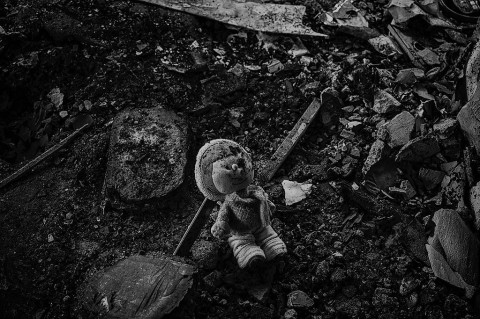
*Στη φωτογραφία artwork: Melissa Zexter.

Αικατερίνη Τεμπέλη, Εξομολόγηση

Τρέφομαι με τηλεοπτικά προγράμματα.
Φορτίζω την καρδιά μου κάθε μέρα.
Οι μπαταρίες πια έγιναν τόσο απαραίτητες, όσο ποτέ δεν υπήρξαν τα οράματα.
Περνάω το χρόνο μου διαβάζοντας e-mail -η ποίηση είναι εξαιρετικά επώδυνη.
Ξεχνάω συνεχώς το password της συνείδησής μου.
Χρειάζομαι τις καταστροφές οπωσδήποτε. Να θυμάμαι ότι είμαι ζωντανή…
Δοξάζω το πλαστικό και το νίκελ, τα κινητά τηλέφωνα και τους σταρ ανεξαιρέτως.
Δεν φαντάζομαι χρόνο χωρίς καλώδια. Πώς να περάσει μια νύχτα στο σκοτάδι;
Έχω εικονικό σπίτι, εικονικά ζωάκια, εικονικούς φίλους κι εικονικό σεξ. Όλο τον κόσμο σε ένα πληκτρολόγιο.
Θα ’θελα να ταξιδεύω αλλά είναι τόσο τρομακτικό, να κουβαλάς παντού μόνο τον εαυτό σου.
Δεν θέλω ν’ απαντήσω σ’ άλλες ερωτήσεις. Απαιτώ την τετράγωνη λογική.
Να μην ακούω πια, για τις σκουριές των δακρύων και για τους ιριδισμούς των νυσταγμένων τρένων.
Η γενιά μου είναι κουρασμένη. Από αναλύσεις, εξηγήσεις, ιδεολογίες, επαναστάσεις, ετεροπροσδιορισμούς και μισαλλοδοξίες.
Κουρασμένη απ’ τα ερωτικά τραγούδια, τις φοβίες, τον αριβισμό και τα πυροτεχνήματα.
Δεν ξέρουμε πως καίει η χαρά το νου και πως σπαράζει η ψυχή στην ωραιότητα.
Απ’ όλα τα χρώματα μας άφησαν το γκρίζο, μα ένα κόκκινο στοιχειώνει τα όνειρά μας.
Λένε πως αυτομόλησε ο Θεός αλλά εγώ πιστεύω σε μιαν Έξοδο Κινδύνου.

Σοφία Περδίκη, Κάτι παιδιά

Ξέρω κάτι παιδιά που παίζουν σε αλάνες
με πυροσβεστικούς κρουνούς.
Λούζονται μ’ εύφλεκτα σαπούνια
χορεύουν γυμνά, αναστενάρηδες
πάνω σε σπασμένα τζάμια
μαζεύονται σε μια γωνιά
κοιτάζονται στα μάτια ώρα πολλή
ώσπου ερωτεύονται μ’ έρωτα οργισμένο
πυρώνουν σταδιακά
πλημμυρίζει η γειτονιά από φως κι εκρήξεις
ανήσυχοι ένοικοι στα μπαλκόνια
-αστραπή θα ‘ταν λένε, κλείσε τα παράθυρα, έρχεται μπόρα.
Κι ύστερα από τα χέρια τους γεννιούνται πουλιά
φλόγες μακριά πετούν
σπέρνουν την κόκκινη σκόνη,
καίνε τα μαύρα νέφη,
καπνός στάζει από ψηλά.

Ξέρω κάτι παιδιά
που εξουδετερώνουν
τους πυροσβεστικούς κρουνούς των δημοσίων χώρων.

Charles Simic, Πέντε ποιήματα

ΑΥΤΟΚΡΑΤΟΡΙΑ ΤΩΝ ΟΝΕΙΡΩΝ
(EMPIRE OF DREAMS)

Στην πρώτη σελίδα του βιβλίου των ονείρων μου
Είναι πάντα βράδυ
Σε μια κατεχόμενη χώρα.
Ώρα πριν την απαγόρευση της κυκλοφορίας.
Μια μικρή επαρχιακή πόλη.
Τα σπίτια κατασκότεινα.
Οι προσόψεις των καταστημάτων κατεστραμμένες.

Είμαι στη γωνιά ενός δρόμου
Όπου δεν θα έπρεπε να βρίσκομαι.
Μόνος και δίχως πανωφόρι
Έχω βγει έξω για να ψάξω
Ένα μαύρο σκυλί που απαντά στο σφύριγμά μου.
Έχω ένα είδος αποκριάτικης μάσκας
Που φοβάμαι να φορέσω.

*

ΡΟΜΑΝΤΙΚΟ ΤΟΠΙΟ
(ROMANTIC LANDSCAPE)

Το να στεναχωριέσαι, πάντα να υποφέρεις
Στη σκέψη του χρόνου που περνά.
Ο έξω κόσμος σκιώδης
Όπως ο βαθύτερος εαυτός σου.
Λιβάδια μελαγχολίας, δέντρα τόσο ασάλευτα,
Φαίνονται να φοβούνται τον εαυτό τους.

Ο ουρανός του ηλιοβασιλέματος για μια σύντομη στιγμή
Ακτινοβόλος με κάποια υπέρτατη ενόραση,
Κι ύστερα τελειώνει. Τραγικό θέατρο :
Αίμα και θρήνος για τα οποία
Ακόμη και τα πουλιά έπαψαν να κελαηδούν.

Πνεύμα, εσύ που είσαι παντού και πουθενά,
Φύλαγε το χαμένο πρόβατο
Τώρα που το στόμα του Απείρου
Ανοίγει από πάνω μας,
Κι η μουγκή του γλώσσα αρχίζει να κινείται απειλητικά.

*

ΠΟΛΗ ΜΕ ΤΑΤΟΥΑΖ
(TATTOOED CITY)

Εγώ, που είμαι μόνο ένα αδιανόητο
Λιγοστό σκαρίφημα του εαυτού μου,
Σε κάποιο τοίχο λαϊκής πολυκατοικίας,
Σε κάποια είσοδο υπόγειου σιδηροδρόμου.

Φιγούρα σαν σπιρτόξυλο,
Καρδιά τρυπημένη από ένα βέλος.
Γρατσουνιά μιας κοπέλας στο χώρο στάθμευσης
Σε μια παρκαρισμένη νεκροφόρα.

ΜΟΥΡΛΟΣ ΤΣΑΡΛΙ με κόκκινη μπογιά σπρέι
Στριμωγμένος για ζεστασιά
Μαζί με άλλες άγνωστες θεότητες
Σε μια υπόγεια διάβαση με τη βροχή να πέφτει.

*

ΤΟ ΣΩΜΑ
(THE BODY)

Αυτή η τελευταία ήπειρος
Που μένει ακόμα να ανακαλυφθεί.

Το χέρι μου ονειρεύεται, κατασκευάζει
Το πλοίο του. Για πλήρωμα παίρνει
Ένα πακέτο κόκαλα, για τροφή
Ένα μπουκάλι μπύρας γεμάτο αίμα.

Γνωρίζει την ανάσα που φυσά βόρεια.
Με την ανάσα απ’ τα δυτικά
Θα αρμενίζει ανατολικά κάθε νύχτα.

Το άρωμα του σώματός σου καθώς κοιμάται
Είναι τα πουλιά της στεριάς που διακρίνονται
Από τη θάλασσα.

Η επαφή μου βρίσκεται στο ψηλότερο κατάρτι.
Ζητά στις τέσσερις το πρωί
Ένα φανάρι για να φωτιστεί
Στο χείλος του κόσμου.

*

ΧΙΛΙΑ ΧΡΟΝΙΑ ΜΕ ΕΡΗΜΙΑ
(A THOUSAND YEARS WITH SOLITUDE)

Προς το βράδυ
Όταν σταματά να χιονίζει
Τα σπίτια μας σηκώνονται
Ψηλά πάνω απ’ τη γη
Μέσα σ’ αυτό το άηχο διάστημα
Όπου μήτε το γάβγισμα του σκύλου
Ούτε η κραυγή του πουλιού φτάνει.

Είμαστε σαν τους αρχαίους ναυτικούς :
Τα σώματά μας είναι ο ωκεανός
Κι η σιωπή είναι η βάρκα
Που ο Θεός έχει προμηθεύσει
Για το μακρύ και άγνωστο ταξίδι μας.

*Μετάφραση: Κώστας Λιννός.

**Πηγή: https://frear.gr/?p=13453

Νίκος Καββαδίας, Kasbah

Τραβούσαμε με βήμα αργό προς την Κασμπά.
Φέσι αλγερίνικο φορούσε ο συνοδός μου.
Το στίχο ποίηση το λαμπρότερό σου δώσμου
για να ιστορήσω κάποια πράγματα θαμπά.

Ο ανήφορος ψηλός πολύ και σκαλωτός,
αρχαία γιομάτος μαγαζιά κι οπλοπωλεία.
Η παραλία κάτου φαινόταν με τα πλοία
κι ένας πολύγλωσσος που ερχόταν συφερτός.

Μαύρες γυναίκες, στολισμένες με λευκά,
Αλγερινές που εθορυβούσαν κι εγελούσαν
και ναυτικοί από ξένες χώρες που φορούσαν
κάσκες παράδοξες και ρούχα τροπικά.

Σπίτια παλιά, δίχως παράθυρα, ψηλά
κι απά σε πέτρινα πεζούλια καθισμένες
πατρόνες γριές, σαν από κόλαση βγαλμένες
παίζανε ζάρια και τραβούσανε λουλά.

Μες σε κοιτώνες χωρισμένους, σκοτεινούς,
απάνου σε φαρδιά και βρώμικα κρεββάτια,
άσπρες και μαύρες, με φρικτά κι άφωτα μάτια
δίχως ορίζοντα και δίχως ουρανούς.

Μέσα στο νούμερο «Ταλαάτ» ένα λευκό
κορμί γυναίκας σ’ ένα ολόμαυρο μεντέρι
στα χέρια της παίζει με τέχνη ένα μαχαίρι
κι ένα χοντρό βιβλίο διαβάζει, παλαιικό.

Με χαιρετά με μιαν ευχήν αραβική
και μου μιλεί από κάθε γλώσσα λίγα λόγια
που της εμάθαν μες τα ξένα καταγώγια
όσοι κοιμήθηκαν μαζί της ναυτικοί.

Ομως κρατά μετά τα χείλη της κλειστά.
Αν μείνεις -μου ‘πε- τ’ όνομά μου μη ρωτήσεις.
Μισώ τις μάταιες εξομολογήσεις
και των αντρών τα μάταια λόγια τα ζεστά.

Μείναμε δίχως να μιλάμε ως την αυγή
κι όταν επλήρωσα και κίνησα να φύγω,
κουδούνισε τα χρήματα στο χέρι λίγο
και μου τα πέταξε στο πρόσωπο με οργή.

Και μου πε: Αν ζήσατε πολύ στους τροπικούς
κι αν εδιαβάσατε παράξενα βιβλία,
μάθατε μόνο να οδηγάτε αργά τα πλοία,
στους χάρτες σκύβοντας τους Μερκατορικούς.

Αλλά το ασάλευτο ταξίδι των πορνών,
ποιός από σας, τυφλοί, ποτέ το βλέπει;
Ο μεσονύχτιος ήλιος πάντοτε το σκέπει
και τ’ άστρο κάποιων άγνωστών σας ουρανών.

Εβγήκα. Απέξω από την πόρτα της σειρά
προσμέναν Γάλλοι, Εγγλέζοι και Σενεγαλέζοι.
Κι αυτή κλεισμένη το μαχαίρι της να παίζει,
πετώντας το στον τοίχο τούτη τη φορά.

Κι ετράβηξα τρεκλίζοντας με βήμα αργό,
ώσπου έφτασα, με τη βοήθεια του κυρίου
απ’ την αρχαία πολιτεία του Αλγερίου
στο ξεβαμμένο μας τεράστιο φορτηγό.

Ana Svetel, Η Γεωμετρία ΤΟ ΤΡΙΓΩΝΟ

Το τρίγωνο είναι που λέει:
“πρέπει να υπάρχουν και κάποιοι κανόνες”
καθώς και: ¨οι συμφωνίες υπάρχουν
για να τηρούνται”.
Το τρίγωνο έχει ρολόι χειρός
πιασμένο μια τρύπα πιο σφιχτά,
η συνέπεια σημαίνει πολλά γι’ αυτό
και ποτέ δεν θυμάται τα όνειρά του.
Κοιμάται μόνο του,
γιατί με τις τρεις λεπίδες του
όλο και κάποιον θα έκοβε.

*Μετάφραση: Λάρα Ουνούκ.

Νούρα, Ημερολόγιο Μιας Αόρατης Πόλης

Μέρα πρώτη

Οκλαδόν, με τη πλάτη ν’ακουμπά στον κίτρινο τοίχο
π’ήλιος ίδιος γίνεται – με σιγοκαίει γλυκά –
κι’αντανακλά τη πλάση.
Τα μάτια ανοιγοκλείνουν,
απαλά υπό τη μέθη του φωτός•
απαλά, όπως αγκαλιάζει η πέρδικα τα νεογέννητά της.
Σκέφτομαι…
Είμαστε όλοι μας στιγμιότυπα.
Θολές εικόνες στη επιφάνεια του καφέ στη κούπα μου.
Ο Βασιλιάς Ήλιος συμφωνεί,
ενώ οι ελαφίσιοι ελιγμοί του ανάμεσα στα σύννεφα – τους στρατιώτες του –
αλλάζουν, σε μια αναλαμπή, την αυλαία•
νέοι πρωταγωνιστές ήρθαν στο φως
της σκηνής του θεάτρου του καφέ μου.
Είμαστε όλοι μας στιγμιότυπα…

Νύχτα πρώτη

Πανσέληνος απόψε,
χρυσαφέννιες σκιές χαϊδεύουν το πρόσωπο.
Πλέει η πόλη σε μια λίμνη από νούφαρα
π’ανοίγουν όταν ολόγιωμο στέκει το φεγγάρι.
Ανοίγουν όπως τα βλέφαρα των ματιών
των ανθρώπων της αόρατης πόλης
που περιμένουν ν’ανταμώσουν το στραφτάλισμα του φεγγαριού
– και των υπηκόων του, των αστεριών –
στη πορεία προς το μέτωπο.
Πλέει η πόλη – κι’οι άνθρωποί της – σε μια θάλασσα από βλέμματα•
μια διαρκής υπνοβασία,
με μόνο προσανατολισμό τη ντόπια πυξίδα,
τις χρυσαφένιες πατημασιές π’αφήνει στη ψυχή τους
η πανσέληνος.

Κάποια μέρα

Τα παράθυρα στα παλιά σπίτια της πόλης
ξεπροβάλλουν όπως οι ρίζες απ’τ’αγριόχορτα•
μα, όπως κι’εκείνα, δε τους φτάνει η φωνή τους,
βγαίνει άλλοτε άχνη, άλλοτε βραχνιασμένη, άλλοτε λαχανιασμένη•
και, όπως και μ’εκείνα, ο ξένος διαβάτης τα ξεριζώνει
απ’τ’οπτικό του πεδίο,
χωρίς ν’ακούσει το τραγούδι τους –
είτ’ειν’γλυκό είτε πικρό.
Αέναη επιθυμία για λήθη;
Αιώνιος πόθος για το προσωρινό;
Παντελής απέχθεια για τη γοητεία της λεπτομέρειας;

Τουλάχιστον,
οι πολίτες της αόρατης πόλης
υποκλίνονται μπροστά σ’ ένα βωμό για τα παραθυρόφυλλα
στην κεντρική πλατεία.

Τουλάχιστον,
οι πολίτες της αόρατης πόλης
ακουμπούν απαλά – όπως το χέρι τ’εραστή στο πρόσωπο του πόθου του –
σε κάθε περβάζι,
κάθε φορά που περνούν από μπροστά,
απ’ένα άσπρο γαρύφαλο.
Φόρος τιμής στις φωνές των γλάρων,
ένδειξη σεβασμού στις ακτίνες τ’ήλιου,
στολίδια της νεκρικής πομπής του χτες,
π’η αόρατη πόλη δε λησμονεί ποτέ.

Άφησα απόψε κι’εγώ
έν’άσπρο γαρυφαλλο•
δάκρυσα,
όταν το ξεχαρβαλωμενο παραθυρόφυλλο
μου ψυθίρισε – μ’ένα τριγμό των μεντεσέδων –
«σ’ευχαριστώ, θα με βρίσκεις πάντα εδώ».

Κάποια νύχτα

Κάθε σούρουπο,
οι γυναίκες της αόρατης πόλης
λούζονται με πορτοκάλι θαλπωρή•
Παίρνουν τις κόκκινες κλωστές τ’ηλιοβασιλέματος
και τις πλέκουν στις άκρες των μαλλιών τους –
τα ιστορικά λάβαρα του αοράτου έθνους.
Ύστερα κρεμούν τις σκέψεις τους
απ’τα σύννεφα αγκίστρια,
ψέλνοντας τον ύμνο των πουλιών,
πλέκοντας το διθύραμβο της πτήσης.

Έπειτα τη σκυτάλη παίρνουν
οι υπάλληλοι της αόρατης πόλης
κι’ένα ένα ανάβουνε τ’αστέρια τ’ουρανού.
Εκείνα τοποθετούν τις καμπύλες τους έτσι
ώστε πλοκάμια φωτός να φτάνουν
σε κάθε γωνιά της κεντρικής βιβλιοθήκης,
ζεσταίνοντας τις ραχοκοκαλιές των γέρικων δερματόδετων βιβλίων•
είναι εκεί που
ο αναγνώστης της νύχτας
– εγώ γι’απόψε –
θα βρει τους ποιητές της αόρατης πόλης
να ξεσκονίζουν ευλαβικά
τα ράφια της ιστορίας,
μαζεύοντας σε μπουκαλάκια τη σκόνη των γραμμάτων,
τη πρώτη ύλη του νομίσματος της αόρατης πόλης.

Εκεί θα τους βρει κανείς,
να νανουρίζουν τους γέροντες της βιβλιοθήκης
σιγοτραγουδόντας τους «μορφωνόμαστε για ν’επαναστατούμε»
μέχρι να χαράξει η αυγή.

Κάποια αυγή

Η αόρατη πόλη δεν έχει ρολόγια•
ο χρόνος εδώ μετριέται αλλιώς –
άλλοτε με το σκίρτημα της καρδιάς τ’ερωτευμένου•
άλλοτε με τον ήχο των κυμάτων της θάλασσας•
άλλοτε με τα βήματα απ’τις καμήλες της πόλης.
Μα, πιο συχνά, μετριέται
βάσει διατάγματος του Βασιλιά Ήλιου•
τις προγραμματικές δηλώσεις του
ακούν, κι’ακολουθούν, πειθήνια οι κάτοικοι της αόρατης πόλης
κάθε αυγή –
με τη πάχνη να τους χαιδεύει τα ματόκλαδα.

Σήμερα ήθελα να τους ρωτήσω γιατί,
μα δε πρόλαβα.
Πένθος έπεσε στη πόλη•
το συναισθηματικό εκκρεμές στη κεντρική πλατεία
σταμάτησε να δουλεύει.
Ο Βασιλιάς δεν εμφανίστηκε,
ούτε κι’οι στρατιώτες του.

Πλέει η πόλη
σε μια λίμνη από μαραμένα νούφαρα.
Φτέρωσε η γνώση, φωνάζει κάποιος•
ιεροσυλία, λέει άλλος•
ξέχασαν ακόμα και τ’άσπρα γαρύφαλλα
ν’αφήσουν στα παραθυρόφυλλα.

Ξάφνου, ένας ποιητής –
αναψοκοκκινισμένος
σα την επίγευση απ’το ξηρό κρασί.
«Εξέπνευσε τα λοίσθια έν’αστέρι», λέει,
«κι’οι γέροντες μου είπαν να σας πω:
αυτός ο κόσμος δεν θα ειν’ποτέ ο ίδιος».

Τότε βγήκε ο Βασιλιάς,
φωτίζοντας τις ράχες των γερόντων,
παρασύροντας τα νούφαρα ν’ανοίξουν,
και είπε:
«Ας ζήσει η αόρατη πόλη
ώστε το φως να μη φτερώσει ποτέ».

Έτσι, το εκκρεμές απευθείας ξύπνησε•
οι ποιητές γύρισαν στις πένες τους•
κι’οι γλάροι στον αφρό της θάλασσας.

Τελικά, η θρησκεία της αόρατης πόλης
δεν ειν’άλλη
απ’το φως.

– ξέχασα τί ήθελα να τους ρωτήσω σήμερα.

Τελευταία μέρα

Περπατώντας ανάμεσα στους λοφίσκους από άμμο
της αόρατης πόλης,
περιτριγυρισμένη απ’τους πύργους και τα σπίτια της,
όλα φτιαγμένα από πολύχρωμα βιτρό,
αποφάσισα να πω το τελευταίο αντίο –
στη κάθε άλλη πόλη που έχω επισκεφτεί.

Η αόρατη πόλη,
με τους κατοίκους με καρδιά από πολύχρωμα βιτρό,
με τις χρυσαφένιες πατημασιές του φεγγαριού στη ψυχή τους χαραγμένες,
με τ’άσπρα γαρύφαλλα στα παραθυρόφυλλα,
με τις αχτίδες νόμους του Βασιλιά Ήλιου,
με κέρδισε.

Βγήκε το φεγγάρι, ολόγιωμο•
πλέω σε μια λίμνη από νούφαρα•
έγινα αόρατος πολίτης –
ώ, η μεγαλύτερη δυνατή ευδαιμονία.

*Από εδώ: https://losinnuendos.com/2023/01/09/journal-of-an-invisible-city-by-noura/#like-5594

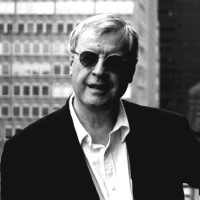
**Στη φωτογραφία έργο του Γιάννη Ηλιάδη, 1978. (Ιδιωτική Συλλογή)

Δημήτρης Τσαλουμάς (1921-2016), Δύο ποιήματα στα ελληνικά και αγγλικά

ΝΥΧΤΕΡΙΝΟ

Γριά γυναίκα τώρα, πρόσφυγας
απ’ τα παλιά της νιάτα.
Χαριεντιστός γιαλός στην πόρτα της
και πέρα τα θαμπά βουνά
της χαμένης πατρίδας.

Τ’ απόβραδο στης αυλής την πεζούλα
τσεμπερωμένη κι αλλοτινή
ψάχνει ακόμα γιο και άντρα
στου κάτω κόσμου τις γειτονιές.

Η νύχτα αφέγγαρη και το κουνούπι
Φαρμακερό στο σκοτάδι.
Αχ και να φέγγανε λέει απόψε
οι γλόμποι της ροδιάς!

Nocturne

An old woman now, a refugee
from her long-gone days of youth.
At her doorstep flirts the sea
and beyond it the dim mountains
of the lost homeland.

At nightfall, on the courtyard stone bench,
olden-time and head kerchiefed
she searches still for husband and son
in the underworld neighbourhoods.

The night is moonless and mosquitoes
venomous in the dark.
Oh, if the globes
of the pomegranate tree
would only shine tonight!

*

ΤΗΣ ΛΥΓΕΡΗΣ

Φτερούγες κόρακα ιριδίζοντας
στην αντηλιά
λουσμένα δεντρολίβανο τα μαλλιά της

περήφανα ωραία

κυπαρισσένια σε νησιώτικη πλαγιά
κυματιστή στα μάτια των ανθρώπων
να προβαίνεις,
σε παίνεσα όσο τίποτα.
Είπα δε θα πεθάνεις ποτέ
δε θα στερέψεις ποτέ
του τραγουδιού μας τη φλέβα –

λόγια απ’ τα χρόνια της σπατάλης,
λόγια πλεούμενα, που αφρόλουστες
της τραμουντάνας οι φοράδες
σπάσανε τις δεσιές τους στο μουράγιο
και πήρανε στην τύχη τ’ ανοιχτά
με δίχως ρότα, με δίχως έρμα.

For Ligeri

Crow’s wings iridescent
in the sun’s reflected glare
her rosemary rinsed hair

proudly beautiful

cypress-slender on an island hillside
wind-swayed
you entered our sight,
I praised you more than anything.
I said you would never die
would never dry up
the vein of our song –

words from the squandering years,
words setting g sail, foam-washed
mares of the tramontana
who broke their shackles on the jetty
and trusted to luck on the open seas
charting no course, carrying no ballast.

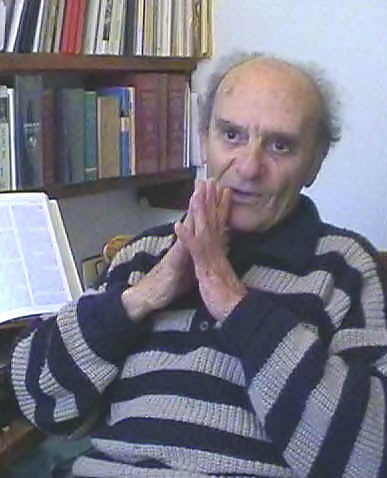
*Τα ποιήματα προέρχονται από την τελευταία συλλογή του -κορυφαίου ίσως- Έλληνα ποιητή της Αυστραλίας, “Δίψα”, εκδόσεις Πλανόδιον, 2010. Μετάφραση στα αγγλικά: Matina Doumos. Δημοσιεύτηκαν στο ετήσιο περιοδικό του Ελληνο-Αυστραλιανού Πολιτιστικού Συνδέσμου Μελβούρνης “Αντίποδες”, στο τεύχος του 2020.

There Is Also This Civil War Inside of Me: A Conversation with Zisis Ainalis

by Adam J. Goldwyn

Zisis D. Ainalis was born in Athens in 1982. A poet, translator, and essayist, his work has been translated into English, French, Italian, and Portuguese. He lives and works in Mytilini (Lesbos), where he is a member of the editorial group that publishes the literary magazine North-Northeast. He has published seven books of poetry: Electrography (2006), Fragments (2008), Michalis Tatsis—Holding up the Stake with the Hands (2011), Sheba’s Silence (2011), Mythology (2013), Desert Tales (2017), and Desert Monody (2019).

Adam Goldwyn: In some ways, Desert Monody, your 2019 verse collection, seems to be a continuation of your poetic trajectory. Like Sheba’s Silence, which uses the story of Solomon as a symbol for discussing other more modern problems, this volume also reaches back to the Bible, particularly the exile from Eden and the stories of early Christian desert ascetics. But it also marks a big shift—less political, less overtly concerned with modernity than, for instance, Electrography, and, of course, also in prose. What was the genesis of this volume, and how do you see it fit with what you’ve done before?

My poetry is—it has always been—about my time, or, better, it is the reflection of a consciousness of my time.

Zisis Ainalis: The genesis of Desert Monody lies in a decisive fact of my life: the birth of my first daughter, and it treats in a more or less hidden manner but one theme—paternity. The alterations in one’s consciousness that the birth of a child brings forward, the individual and collective meaning of paternity, and the difficult psychological proceedings that follow—these are the subjects that I wanted to treat. I think that this is a topic somehow neglected in modern literature.

From this point of view, I dare say that this volume is radically different from my previous works precisely because of its subject, hitherto unknown in my poetry. However, poetically there is a link connecting all my works between them. I like to think of my volumes of poetry as a kind of autobiography in process. But my poetry is not about me, if that makes any sense. My poetry is—it has always been—about my time, or, better, it is the reflection of a consciousness of my time. Thus, the political dimension of my work. Generally speaking, more and more, I head toward a rehabilitation of the meaning.

Goldwyn: Let’s talk about the political dimension of your work. In one of the poems that will accompany this interview, you speak of “this civil war inside of me.” How do you see your politics in your poetry, and do you see yourself in the tradition of Greek political poets like Yiannis Ritsos, the left-wing Resistance fighter during World War II, or George Seferis, who was such a vocal opponent of the junta? What is the role of poetry in politics?

Ainalis: This is a rather complex question that I can’t possibly answer here. However, I believe that, in a sense, all art is political, in an Aristotelian meaning of the word (and I remember here Arendt’s exquisite remarks on polis and society). As far as I am concerned, I have a strong propensity for history. History and literature are inextricably connected in my mind. I think that the political element in my poetry comes either from the presence of history in my work or the way that I treat the present through the spectacles of the past. Take Cavafy, for example. His poems aren’t overtly political. On a first reading they seem to be mainly historical. However, his use of history is what gives his poems a political dimension. But I don’t want to be misunderstood: I am not talking here about some kind of nostalgia of the past. I am talking more about a way of attempting to comprehend the present through the experiences—literary as well—of humanity’s past. And as long as there is a public realm in humanity’s institutionalised life, this will always be a political procedure.

Nevertheless, the role of poetry in modern-day politics is nonexistent, in the sense that poetry, of course, doesn’t affect—despite the ludicrous political ambitions of some poets—the political agenda. However, that doesn’t mean that poetry shouldn’t have or doesn’t have a political perspective, usually wider than the day-to-day politics. As a reader, I like this kind of political reflection, which we can find in much of the literature of the nineteenth and twentieth centuries. Can you possibly think of more intriguing political texts than the epilogue of Tolstoy’s War and Peace or Dostoyevsky’s Demons? Thoreau’s Journals contain a great amount of political reflection. Kafka, T. S. Eliot, and Camus are essentially political authors. You see, I am not talking necessarily about politically engaged authors. Still, I am heavily influenced by the political literature of the Greek postwar generation. The works of Alexandrou, Tsirkas, Hatzis, Alexandropoulos, Katsaros, Anagnostakis, Livaditis, and Leontaris accompanied me throughout my adult life.

Goldwyn: In small font at the end of Desert Monody, you write that the volume was composed in Patras, Paris, and Chios. Reading in between the lines here, what is missing is Athens, the centre of Greek literature and politics. Can we see any general trends in Greek poetry between islanders, expatriates, and Athenians? And can you, having been each of them at different parts of your life, speak to how these locations influence your poetry?

Ainalis: I have always been a stranger no matter where I was living. I was born and raised in Athens, but I haven’t lived there since 2000. Athens is always a part of myself and a part of my poetry as well, in a sense. As is Paris. Two great metropolises of modern Europe. However, this feeling of strangeness, of not belonging somewhere, is following me wherever I’ve lived. I have been living all my adult life as an expatriate, regardless of whether I was living somewhere in Greece or not. But this is probably a personal feeling or even the malaise of modern human beings: the “uprootedness,” as Simone Weil put it some three generations ago.

To answer the question, I don’t feel that there are some general trends in Greek poetry between islanders, expatriates, and Athenians. I think that globalization absorbs a great deal of the local differences. The Greek poets of my age, people in their forties, could have been active all over Greece—or abroad. And they are. You can find poetic circles in many Greek cities: Thessaloniki, Drama, Larissa, Patras, etc., as well as poets living permanently abroad. The strictly speaking “local tradition” seems to influence modern Greek poets less than, let’s say, modern English poetry. This is also why whenever modern Greek poetry is translated into English (or into any other language, for that matter), it reaches comparatively easily—in contrast with the Greek poetry of past generations—an international audience.

So, the locations in the end of the volume have a more or less symbolic value. They are the landmarks of a trajectory, if you will. At the same time, they underline this feeling of not belonging somewhere. And, as I have lived in Mytilini (Lesbos) for the last five years, and before that in Chios, they are also, partly, a kind of ideological declaration: the fact that I consciously and deliberately decided to renounce life in big cities, like Paris, in favour of life in a small town, away from the centre to the borderline of Europe.

I consciously and deliberately decided to renounce life in big cities, like Paris, in favour of life in a small town, away from the centre to the borderline of Europe.

Goldwyn: You say that modern Greek poetry moves internationally with greater ease now than in generations past; that may be great for an international audience, but is something uniquely Greek lost in that? There is a price to translation and globalisation, which is the erasure or alteration—perhaps some would even call it the deformation—of the local. In thinking about it now, that is as much a political question as a poetic one.

Ainalis: Whether we like it or not, we live in a globalised world—at least for the time being (because this may change sooner than we think). And our problems or concerns are global as well. Me, for instance, I feel that I can easily communicate with the literature of Japan or China. This would be inconceivable for a Greek author two generations ago. Certainly, there is a price to pay in globalisation. Many local traditions, mentalities, ways of living all over the world have been trampled down violently during the last thirty years. Crucial social or communal knowledge is lost forever. Social and communal memory is being eradicated systematically, and this has been going on for decades now. And the heavy price that our generation will pay, indeed, will be the price of lost social or communal practices and knowledge, the loss of social memory. Soon enough we will be called to live in a lobotomised, constant present with absolutely no connection to the past (not even the events of our own past), with absolutely no openings to the future.

But, regarding literature, the question is somewhat different, because literature is a living organism with its own kind of memory and its own consciousness. The Latin word literatura originates etymologically from litera (the letter of the alphabet). And as long as there are some people out there capable of reading, they will always have access to the realm of literature, where nothing ever really dies. Of course, “oral literature” (what a contradiction in terms indeed!) is an altogether different question. But old literary works, written works, continue to live in the cognisance of younger authors. And thus, to answer to your question with an invocation taken from George R. R. Martins’s Song of Ice and Fire: “What is dead may never die, but rises again harder and stronger.”

Literature is a living organism with its own kind of memory and its own consciousness.

Goldwyn: If, as you note, “uprootedness” is a modern malaise, is a “rooting” or a “rerooting” possible? And, since it’s a poetry interview, is there a difference in the poetry of rootedness and the poetry of uprootedness?

Ainalis: As I said, when I talk about the past I am not talking about it out of nostalgia. No, I don’t think that a “rooting” or a “rerooting” is possible. One can’t “root” oneself if one doesn’t already have roots. Certainly, one can attempt it for the generations to come, but one can’t do it for oneself, mainly because this should be a collective and not an individualistic procedure. So, in my mind, the greatest modern poetry is a poetry of “uprootedness” in the sense that modern poetry is precisely the result of the poets’ vain attempt to fill the void of “not-belonging.”

Goldwyn: Speaking of loss and roots, I want to talk about Europe: France and Greece. You’ve lived in both, of course, and there has been a long tradition of francophilia in Greek letters. You yourself have translated much French poetry into Greek, particularly the prose poems of Baudelaire. Desert Monody represents your third effort at prose poetry (if I’m not mistaken), so could you tell us a little about what you got from translating Baudelaire, what prose poetry can do that poetry in verse can’t, and why you chose prose poetry for this volume?

Ainalis: I have often said that I strongly believe in the concept of “translatability” that Walter Benjamin develops in “The Task of the Translator.” In a sense, the role and the responsibility of a translator lies essentially in the understanding of the writer’s/poet’s era and, consequently, in the understanding of the writer’s or poet’s psyche. So every time that we translate someone else’s poetry and we understand—or we think that we understand—the essence of their poetry, the essence of this poet’s work, this alien essence becomes part of us, we carry it henceforth with us toward a new consciousness. But was this alien essence really alien in the first place, or had we already the psychological and sentimental predisposition to interpellate it?

I mean that already the choice to translate a certain poet states something (of course, I don’t speak here about translations made for a mere livelihood). Since my first poetry book, Electrography (2006), I was looking for various ways to incorporate narrative and dialogue (or monologue) in my poetry. I respect the historicity of literary genres and forms, but I prefer to see literature as a whole. I wanted—I still want—to combine the structural characteristics of the three great literary genres (poetry, narrative, drama) in a cohesive whole. Prose poetry is a great means of attempting exactly that.

April 2020

“There is also this civil war inside of me”

by Zisis Ainalis

for Christos Martinis

There is also this civil war inside of me
From which there is no retreat
From Mourgkana to Kassidiares a straight march
I signed off and surrendered my weapons
Fascists machine-gunned me on the barricades
Who gives a fuck about Leadership?
Ah, but there is a collaborator I’m hiding in my guts
Who will iron him out?
Who will soothe the child?
Who will drown the grief?

I am a sick bird
crawling
My wings are broken
Who stays awake by my bedside?
Who is washing my wounds?
Who stands a vertical crack in the wailing of memory?
And who shoos the birds
In the cold and scares them off?

There is also this civil war inside of me
Which constantly divides me.
Among the dark crossings and the mountain passes
My soul stands in the high places
(Alone in the cold
Beneath the dense pine forests
Swollen rivers)
Crawling like a snail piercing the darkness

In the motionless night,
Dragging its foot,
The horror, destitute, journeys on,
Devouring flesh.

Previously unpublished
Translated by Adam J. Goldwyn

Untitled

by Zisis Ainalis

Sometimes you stop in the white expanse. The hills are dusted with the sands of time and the moon is broken. Ruined desire stretches toward the horizon, the sad remains of a vanquished army, corpses countless worms jackals dogs—Hermanubis and St. Christopher howling beneath the ring of a bitten full moon that branches ominously toward the firmament. And then your magic stops time and cuts it with a vertical stroke. An oasis—maybe an optical illusion, you can’t tell—appears from nowhere. Lofty trees pure water green grass birds hidden secrets. On its lips millenarian words, and it hungrily breathes an old God. I turn around to see you. Desire is born again, the heavens open and the vision reigns. Man up and wait. I take hold of your hand and walk forward.

Opening poem from Desert Monody
Translated by Adam J. Goldwyn

*Adam J. Goldwyn is an associate professor of English at North Dakota State University. His most recent books include the biography Rae Dalven: The Life of a Greek-Jewish American (2022) and Homer, Humanism, Holocaust: Jewish Responses to the Crisis of Enlightenment During World War 2 (2022).

**Σχετικός σύνδεσμος: https://www.worldliteraturetoday.org/2020/summer/there-also-civil-war-inside-me-conversation-zisis-ainalis-adam-j-goldwyn

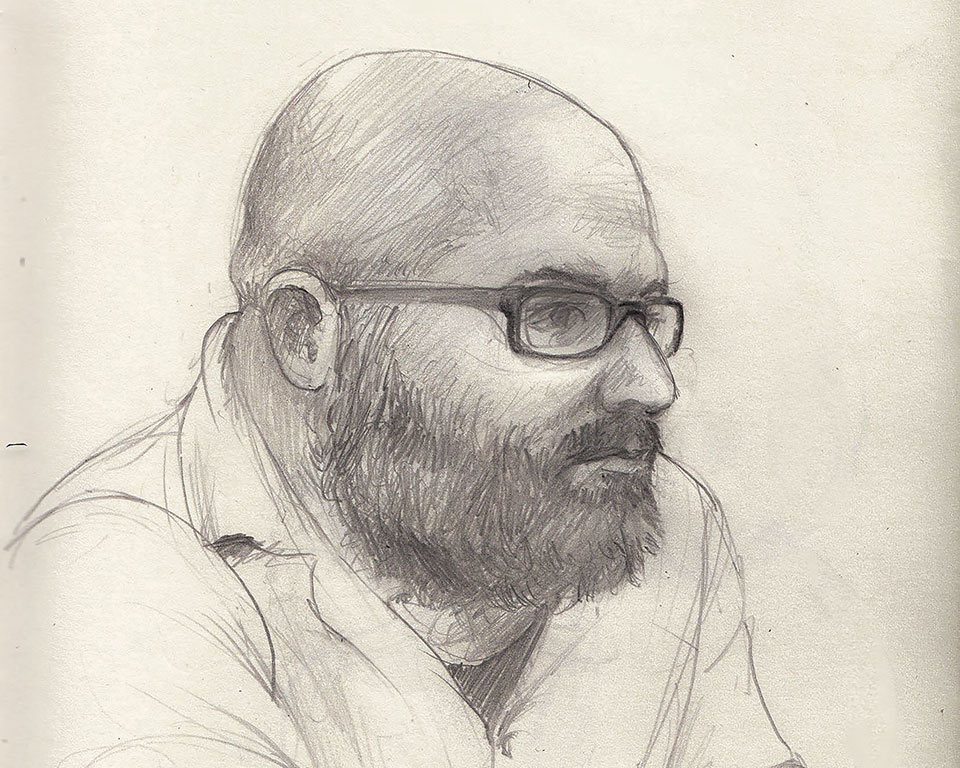
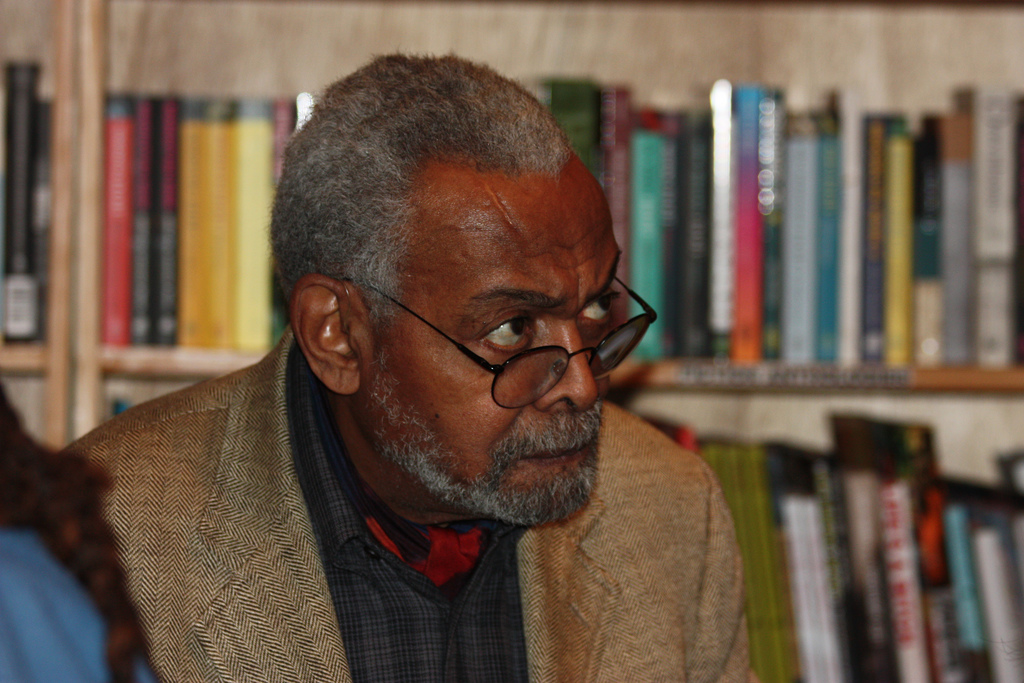
***Στη φωτογραφία, πορτραίτο του Ζήση Δ. Αϊναλή, από τον Αλέξανδρο Καραβά. Μολύβι, 2018.
Amiri Baraka, Σοφός 4

Πανωφόρι δεν είχα
ούτε διπλή μερίδα
ούτε κρεβάτι μαλακό ούτε εύνοια
ούτε σχέση με τον αφέντη

η νύχτα ήταν σκοτεινή
τα μάτια μας δεν είχαν συναντηθεί
πήρα τη ζωή μου στα χέρια μου
και τον δρόμο μου προσπάθησα να βρω

κουβέντες άκουγα
για φωτιές και λαύρες
και για των θεών τον θάνατο

πάνω στη γλίτσα που κοιμόμουν
τέτοια λόγια
με ζέσταιναν

τέτοια λόγια
φώτιζαν τον δρόμο μου

ποτέ μου δεν είχα τίποτα πέρα από ζόρια και τιμωρία
χαρά από μόνος μου βρήκα, και μαύρη γυναίκα,
που με πήρε απ’ το χέρι κι έγινα αυτό που είμαι

ποτέ δεν είχα τίποτα
πέρα από ένα κεφάλι μες στα αίματα
ένα σημάδι, τα δόντια που μου έσπασαν

ποτέ δεν είχα τίποτα παρά
μονάχα του φονιά την αποτυχία / ναι
η νύχτα ήταν σκοτεινή
παγωμένο το χώμα

ποτέ μου δεν είχα τίποτα, και τα λόγια
του ξεσηκωμού
με ζέσταιναν

για μένα το τραγούδι ήταν σκοτάδι
που μέσα του μπορούσα να σταθώ
το προφίλ μου έλιωνε μέσα στον μαύρο αέρα
κόκκινη ήταν η πυρά του αρχοντικού που καιγόταν

σ’ ένα απ’ τα τρελά όνειρα τον εαυτό μου τον έλεγα
Κολτρέην
βουτηγμένος σε μαύρη και κόκκινη φωτιά
σ’ εκείνα τα τρελά μου όνειρα τον εαυτό μου τον έλεγα
Θελόνιους
κι αυτό συνέβη τον 19ο αιώνα!

*Μετάφραση: Γιάννης Λειβαδάς.