Cornelis Vleeskens was born in Scheveningen, Holland on 23rd July 1948 and arrived as a migrant in Australia at the age of ten. Ater a short stay at Scheyville Camp the family moved to Eastern Creek in Sydney’s outer western suburbs.
He was schooled there and at Blacktown and later at the University of Sydney. From the mid 1960s he spent nearly a decade roaming Australia, South-East Asia, Hong Kong and Japan. Returning to Australia in the mid 1970s he resumed university studies and completed an honours degree in English Literature at the University of Queensland, graduating in 1978.
He was on the editorial board of Makar Press between 1977 and 1980 and was an active participant in the
Queensland poetry scene. His irst collection, Hong Kong Suicide & Other Poems (Makar Press, 1976) was well received and from that moment on he entered complete commitment to a creative life. In 1980 he moved to Sydney where he founded his own imprint, Fling Poetry – a vision and agenda for both a magazine
and publishing programme. The following year he moved to Melbourne. Fling’s early list included Chris Mansell, Michael Sharkey, Michael Witts, Ken Taylor, and Phil Motherwell; and Fling the magazine assumed an important role harvesting much of the best among new writing at the time.
While Vleeskens’ early published work was in English, he took up his mother tongue and experimented with compositions in Dutch between 1979 and 1984; from 1987 onwards he produced a considerable proportion
of his written output in the Dutch language.
His second manifestation as publisher was with the imprint Earthdance, where he produced the works of Patrick Alexander, Catherine Bateson, Janice M. Bostock, Peter Bailey, Tim Gaze, Billy Jones, and Jeltje
Fanoy among others. It was during his years in Melbourne, Eltham, and later at Cape Paterson that signiicant collaborations and associations commenced — notably with the artist Jenni Mitchell, and most notably, with the poet Pete Spence.
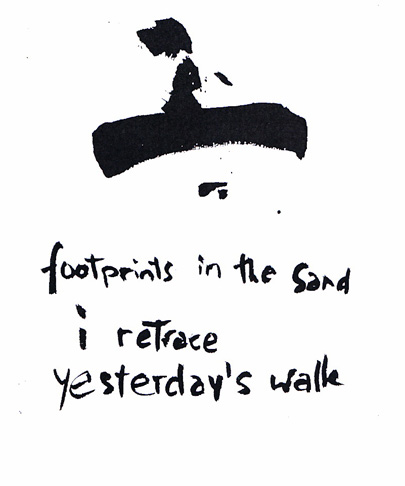
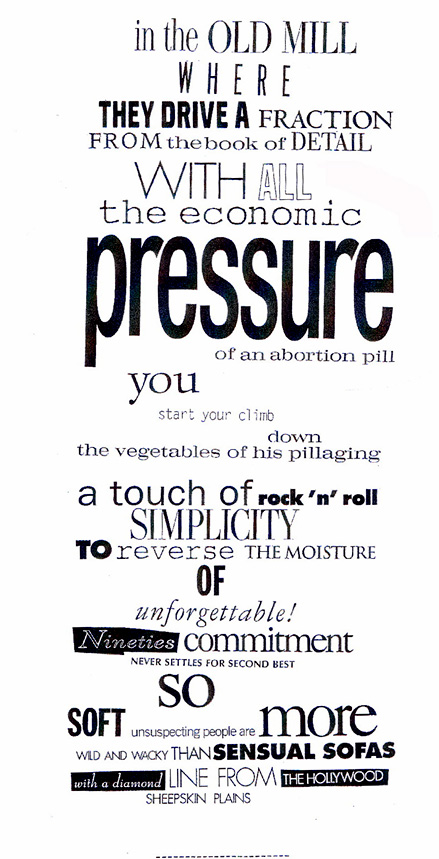
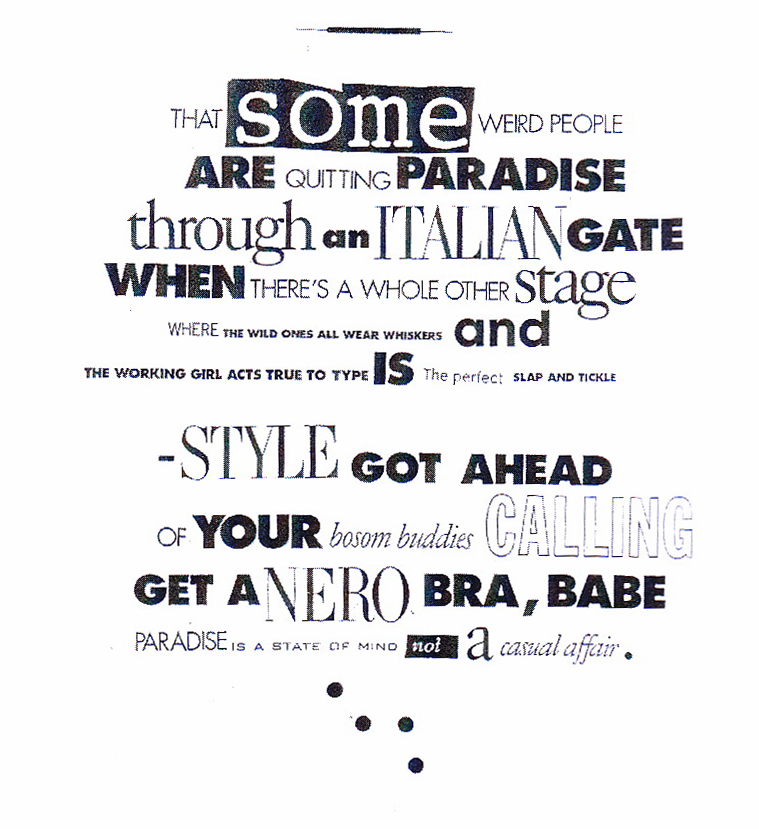
While never completely forsaking conventional poetic technique, Vleeskens’ participation in the international network of mail art was of such a scale that his reputation is substantial in that sphere: in fact there would be little contest to the proposition that he is nationally ranked with the most preeminent within that form. The work of his middle and late period was increasingly graphic, either in the form of visual poetry (where he is regarded locally and internationally as a singularly gited practitioner) or painting, where he displayed the inluence of the Cobra school and imparted his own distinctive edge and thematic preoccupations— the best of it evident in the design and content of his publications.
His achievements as a translator are also worthy of notice: he completed the only substantial English translation of the poems of Simon Vinkenoog, and translated texts for the AGNSW exhibition, Intensely Dutch in 2009. The extent of his other work bilingually is listed below and includes his versions of the
Dutch post-war “Fitiers”, and the writing of Australian poets working in the Dutch language. Proliic, and largely self-published, his output was relentless to the last. Vleeskens’ independence of thought and practice was largely given published form by his own imprints or select collaboration until the last weeks of his life.
Nicholas Pounder
21 February 2014
 To Koskino