Even if the Sun
by Nola Firth
Melbourne Poets Union, 2013
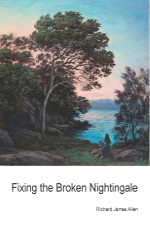
Fixing the Broken Nightingale
by Richard James Allen
Flying Island Books, 2013
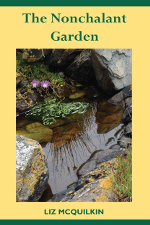
The Nonchalant Garden
by Liz McQuilkin
Walleah Press, 2014
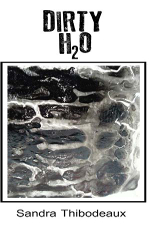
DIRTY H2O
by Sandra Thibodeaux
Mulla Mulla Press, 2014
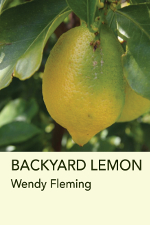
Backyard Lemon
by Wendy Fleming
Melbourne Poets Union, 2014
Whether new or established, it’s part of a poet’s work to ask: How far can my words go; how much can they capture; where are their limits? The five Australian poets reviewed here each have their own methods of asking these questions. As a reader and writer of poetry I’ve learned a lot from the sometimes quiet, sometimes bold and always courageous ways they’ve answered them.
Even if the Sun is Nola Firth’s first poetry collection, taking its title from Shunryu Suzuki’s Zen Mind, Beginners Mind. ‘Even if the sun were to rise from the west the bodhisattva has only one way’, the quote reads, and this sense of singular purpose reverberates through each of the poems in this short book.
Firth divides her twenty poems into those about the past (‘People and memory’), the Australian landscape (‘Country’), and meditative practice (‘Zen’). Using an uncomplicated vocabulary, Firth creates a space where poetry can mirror experience in a direct, unadorned way. For anyone who has tried to untie the knots of their own mind through meditation, Firth’s ‘Zen’ poems will probably speak loudest. In these, she lays bare some of the less-than-transcendent moments of her practice:
And sharp, angry self also comes.
We watch the shadows move over the floor as the earth turns
and want the shadows to hurry up and move to lunch time.
Throughout this section Firth’s clear language leaves room for moments of flair. In the title poem, she describes ‘the door dogs / Sleep and Boredom’ and ‘a green translucent silence’ that comes over her in their wake. But it’s when Firth moves out of the meditation hall and applies her Zen lens to Australian landscapes that intriguing contrasts start to emerge. Corrugated iron, for example, turns delicate as a Japanese maple:
Now time rattled, rain settled,
rouge rusted,
your tin lace lichen
falls in flakes
and lets in the sky.
The clunk filled tank
an empty gong. (‘Ode to Corrugated Iron’)
Firth delights in moulding new adjectives like ‘clunk filled,’ ‘square frisbied’ or even ‘sun-creaking’, which has a fantastic sense of inland heat. These novel combinations create texture alongside lines that are starker:
Water
falling
out of the sky,
sings steady frog songs
on roofs and dimpled windscreens,
wraps me in its wet life mantras,
holds me, child safe (‘Rain’)
The six poems in ‘People and memory’ show Firth equally clear-eyed as she records her own childhood, new generations and the connections and tensions between the two. One of the brightest moments here is ‘Plugged In’, where Firth compares the ‘neat lolly buttons’ of a tablet computer to an earlier learning device:
My Grade One slate
was also black,
slim, neat wood framed,
and independent of cords.
I sat with my friends, cross legged
on the mat, dust dried fingers
pushing chalk, spelling out words.
Even if the Sun operates with the humility and care of a meditative mind. Firth isn’t yet aiming to push poetic boundaries, but working with precision to craft each line, creating poems that record and reflect what is.
Jumping from a first book to a tenth book, it’s worth noticing that the quest for enlightenment is also a concern in Richard James Allen’s Fixing the Broken Nightingale. For Allen, though, there’s no more time to be tentative – this is poetry that lays its subjects bare, asks huge questions and refuses to allow us to read from a safe distance. Allen also divides his work into themed sections, starting with ‘Natural Disasters’ (‘an array of darkly comic verse’, he explains) and ending with ‘A Scheme for Brightness’, which ‘probes and finally affirms the value of art and in particular poetry in the face of the daunting and unanswerable questions.’
Allen doesn’t ever seem daunted. On the contrary, he seems fearless, at times even exposed. ‘Would I be satisfied / if I came inside you?’ he asks in ‘13 Acts of Unfulfilled Love’, which goes on to include the lines: ‘She walks away, letting the come slide down the long / stream from the depths of her cervix to her ankles.’ The love poems that make up this particular section (‘Unanswered Questions’) might be a little too raw for more genteel readers, but Allen’s frankness is refreshing when he starts asking questions about the value of poetry. The poem ‘in the storm’, for example, seethes quietly on the page:
there is some issue of why bother speaking
when no one is listening
there is some issue of exactly what
one is trying to achieve
there is plenty of confusion
enough to go around
This is followed by the even more doubtful ‘Aubade’, where Allen asks, ‘Did I once believe in the power of poetry? Was I swaddled like a baby / in a blanket of words?’ Here, he strives for a definitive answer to that question that follows all poets around, whether they write books, paste-up poems or simply tap lines into their phone: What’s the purpose of doing this?
All that said, Fixing the Broken Nightingale isn’t always under pressure to reveal the inner workings of a relationship or find a purpose for art. When Allen combines his openness with levity, his work feels natural, connected and even more liberated. ‘Famous Person,’ for example, takes only six lines to recreate the horrifying jolt that comes when a friend’s success is discovered:
I got a shock seeing you in the paper
I’d just finished putting you out of my mind
and now where are you
and where’s my mind
the newspaper sits on top of the recycling pile
glaring at me
Even if you’re immune to creative jealousy, it’s still delicious to imagine the details of the story that hangs off these few lines. There’s a similar intrigue to poems like ‘what I did / on my nervous breakdown’ or ‘This poem cost me 24 dollars in cab fare’. When Allen hits this dark yet hilarious note, it’s impossible to stay outside his poems; we take up his invitation to walk right in, without knocking.
‘Always a teacher, never a writer’ is Tasmanian poet Liz McQuilkin’s description of her life up until retirement, when she enrolled in a poetry workshop with former Island editor Gina Mercer. You could argue – and McQuilkin hints at this at times – that it’s a shame to wait so long to start writing, but in McQuilkin’s case, years spent teaching poetry and plays have paid off. The Nonchalant Garden does not read like a first book. Like Nola Firth’s Even if the Sun, the poems in The Nonchalant Garden have a clarity that comes from stripping away unnecessary flourishes. Everything on the page is in its place, and has a reason to be there.
One of the high points of the book is a longer poem called ‘Perfect Timing’, in which an elderly mother’s last trip away from her nursing home is remembered with deeply affecting gentleness:
She turns, smiles as I enter:
I’m never alone, never lonely,
while I can see the river –
spinnakers billowing, white-caps cavorting.
But look, today the river is still
and smooth, like Alice’s glass –
Clutching handbag and stick,
She canters into the foyer, announcing:
This is my daughter. And
today’s my eighty-eighth birthday.
While many of the poems here are personal, McQuilkin’s conversational style invites her readers in, whether she’s talking about the pleasures and difficulties of ageing, the repercussions of war on family, or even a topic as complicated as voluntary euthanasia. In ‘Word Music’, McQuilkin manages to weave thoughtful humour around a passionate argument:
Yet when I say
voluntary euthanasia,
that lyrical term of release,
a hush settles in the room –
the air is leaden, postures stiffen,
talk is trapped in awkward pauses.
So I fill them
With phrases I’ve come to love:
die with dignity,
plan your valediction,
be at peace.
These lilt with alliteration,
Captivate with assonance.
It’s clear from McQuilkin’s precise use of punctuation and unwillingness to leave lines incomplete that she wants her poetry to be immediately intelligible. She’s also keenly aware of her style, and of its pitfalls. At the end of the book, she writes:
I need my muse to loosen up,
take risks, let go, rebel.
He’s too polite, too much the senior-prefect,
smiling with decorum, chortling when appropriate. (‘Writer’s Cramp’)
McQuilkin’s honesty is charming, but her doubts are misplaced. Having waited so long for her turn to speak, she now has the floor, and is ready to remind us why poetry doesn’t always need to take chances to make its mark.
Meanwhile, the challenge in reading Sandra Thibodeaux’s fourth poetry collection is in not finishing it and immediately buying a plane ticket to Darwin. This is writing that it makes you want the experiences behind it. In Thibodeaux’s Australia, ‘The ocean has a lap of gold’, ‘frogs and waves / fight for the last word’ and there’s ‘No distance / between my blood and the stars’. Fellow poet Chris Mansell describes the work as ‘Top End true, by which I mean, true poetry.’ It’s hard to disagree – the uncompromising nature of Thibodeaux’s writing is rare. Thematically, DIRTY H2O has an affinity with disasters, be they natural, personal or political. Written between 2010 and 2014, the poems work as a kind of montage, tracking world events like Obama’s rise, Gillard’s fall and Japan’s cataclysmic tsunami alongside those closer to home: arrests, deaths, and the painful twists of relationships that never quite reach equilibrium. The brutality of artificial environments is also central. Take the first few lines of the book’s title poem:
At the Tennant Creek BP Jurassic cicadas / have been rolled by four-wheel drives / that stalled on flooded strips of the Stuart Highway / just before Wycliffe Well / going under before emerging again / to a camouflaged convoy / cannons and tanks / and I could be in any of a dozen deserts / with an Abrams pointing his cock at my windscreen …
Clearly, Thibodeaux knows how to capture the danger, degradation and plain ugliness of remote Australia, yet she stops short of condemning it. While there are definitely villains here (police, politicians, lovers) there’s also a note of compassion in the way they’re represented. Even a disaster as devastating as Cyclone Yasi has a kind of beauty to it in Thibodeaux’s gaze:
‘Yasi’ is Fijian for sandalwood. British decimated forests before losing strength. Thirty years are needed to swell a heartwood And the rings on this cyclone increase. Yasi are semi-parasitic, draining what’s left of reserves in Queensland. (‘The Decimation of Yasi’)
While DIRTY H2O is closely connected to real events and people, it has a dark, detached humour that keeps the poems from becoming over-sentimental. In ‘An Early Survey of Principles’ Thibodeaux collages wry political statements (‘An Andrew Bolt minus an Andrew Bolt / can only be a good thing.’) with this matter-of-fact outlook on love:
The distance to an extraordinary lover is > 1,000 kilometers. The number of times he texts is < encouraging. A replacement in your bed is less than, or equal to, sweet notes on a horn?
Whether it’s the Top End factor or not, DIRTY H2O feels unpretentious, distinct and decidedly real. This is poetry that has given up any comfortable barrier between itself and the world around it, and dares you to do the same. Compared to the wildness of DIRTY H2O, Wendy Fleming’s Backyard Lemon might seem a little subdued at first. These are poems from a place where encounters happen in ladies change rooms rather than at highway petrol stations, and death comes with less blood and more ‘clinic pallor’. But if this quietness is to be criticised, Fleming has a counter ready: ‘Every continent, every town has a / sacred tree,’ she explains. ‘Mine is the backyard lemon. Crafted descendant from China’s / wild citron on Burma’s border, it has the sunniest place.’ Backyard Lemon is Fleming’s first book and for her, poetry has an essential role in capturing and distilling the significance of everyday experience. She manages to do this with sensitivity along with a solid dose of humour. Take this encounter with ‘Lycra Man’ on a Melbourne train:
Enter Lycra Man, moulded limbs and gonads, berthing his bike like a revved Formula One silver frame, blue-wheeled, an Apollo or a Mercury. He stands a peak above us beside the sliding door
Backyard Lemon keeps mostly to the comfortable walking pace of quatrains and couplets, without leaving much unresolved, even at the line break. But it’s hard to mount a case against these familiar structures when they serve the content of Fleming’s poems so well. Take ‘White Lies’ (and its delightful echoes of Dickinson’s ‘narrow fellow in the grass’):
Thin and pale as a white lie it was harmless we were told. Yet it hissed and menaced with forked tongue just like a whopper black one.
As the subject matter of her poems grows more serious, Fleming’s strength is in capturing personal detail while still leaving room for an outsider’s reading. In ‘The Last Time You Feel Well’ she tells an entirely personal yet completely relatable story in the first couplet: ‘“I’m still here. Isn’t it wonderful?” / Cancer specialists call it a time of grace.’ Looking death in the eye again in ‘The Message Of Flowers’, Fleming’s clear, largely undecorated lines distil a painful reality into something approachable:
We should have chosen different flowers, spiky cultivars, species with long Latinate names, spindles instead of petals out of a tough core. They would still be here like you hardened and scarred but obstinately upright, blooming, blooming; blooming not dying.
Here, again, Fleming’s poetry is generous enough to take in a very personal experience while leaving plenty of room for her readers. It’s this skilful balance of intimacy and expansiveness that makes Backyard Lemon so pleasurable to read. Speaking to Poetry magazine earlier this year, former US poet laureate Louise Glück spoke about there being ‘maybe only 10 people in the world’ who will know her work well enough to see its progression. Perhaps she was only being humble, but it seems to me that when a former poet laureate has such shaky confidence in those who love poetry, it’s a courageous thing to write a first book, let alone a fourth or a tenth. Along with courage, these poets also have skill, restraint, audacity, political savvy and personal insight that will draw in all kinds of readers. They know what their words can do and where their limits are. Surely, they’ll prove Glück wrong.
*Alice Allan is a writer and editor living in Melbourne. Her work has been published in journals such as Rabbit, Going Down Swinging and Offset.
**Taken from Cordite Poetry Review at http://www.cordite.org.au
 To Koskino